
Crypto World
Bitcoin ETF Inflows Rise After Coldcard Hack: Bloomberg ETF Analyst

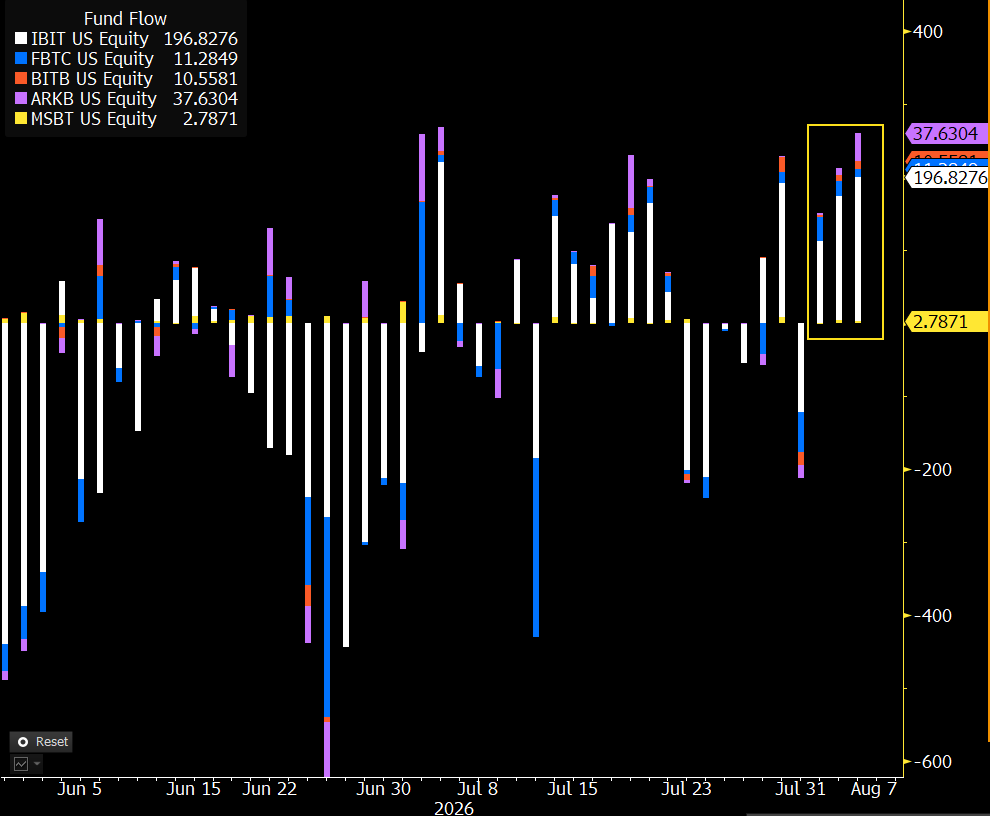
Demand for US spot Bitcoin exchange-traded funds (ETFs) has accelerated over the past week, with a string of daily inflows coinciding with the Coldcard wallet hack — timing that has prompted speculation about whether some investors are reconsidering self-custody.
According to Bloomberg senior ETF analyst Eric Balchunas, BlackRock’s iShares Bitcoin Trust (IBIT), Fidelity Wise Origin Bitcoin Fund (FBTC), Bitwise Bitcoin ETF (BITB), ARK 21Shares Bitcoin ETF (ARKB) as well as Defiance Daily Target 2X Long MSTR ETF (MSBT) have recorded inflows every trading day since the weekend exploit, totaling roughly $620 million. The cumulative figure is consistent with Cointelegraph’s recent reporting on the ETF inflow streak.
The Coldcard exploit drained more than $116 million worth of Bitcoin from over 5,200 wallet addresses, according to blockchain intelligence firm TRM Labs.
“I’m not saying it’s connected, we just don’t know,” Balchunas said in a post on X. “[Although] long-term I can’t imagine there aren’t some who migrate over.”
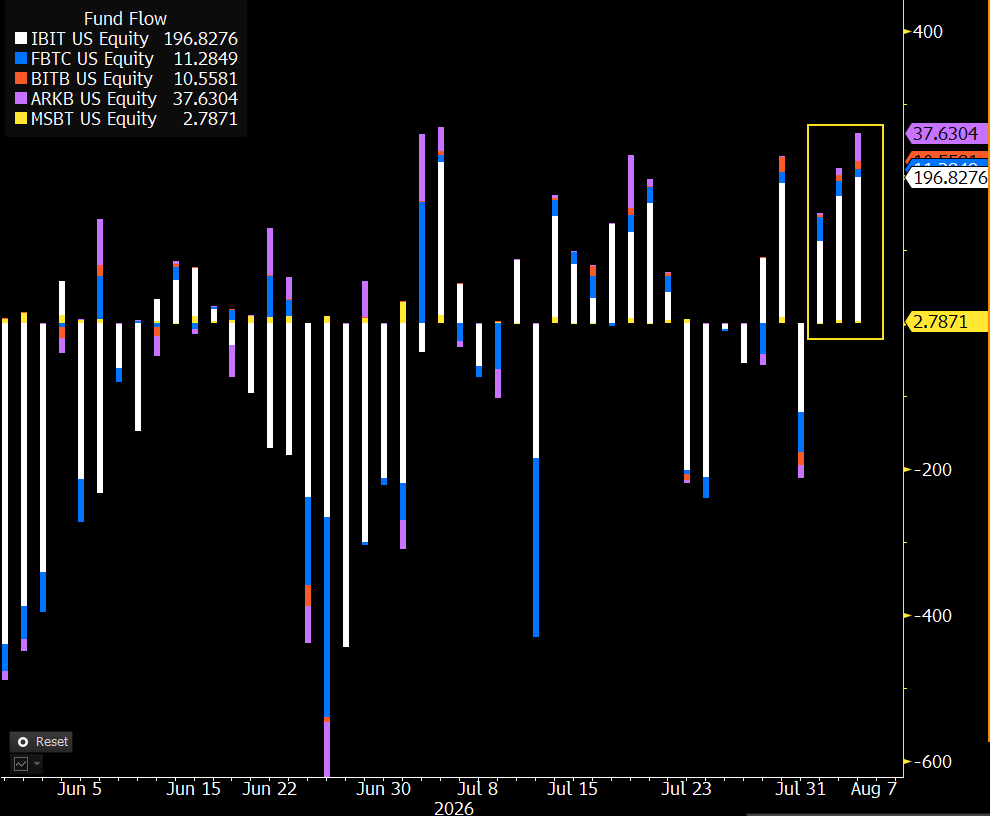
Source: Eric Balchunas
Related: Bitcoin Red Team reports 5K findings in sweeping security audit
Coldcard exploit renews debate over self-custody risks
The Coldcard hack renewed concerns that even hardware wallet users can be exposed to firmware flaws and software vulnerabilities, highlighting the operational risks that come with self-custody.
The incident also reignited debate over the trade-offs between holding Bitcoin directly and gaining exposure through regulated investment products such as spot Bitcoin ETFs, where asset custody and security are handled by institutional providers.
Binance co-founder Changpeng “CZ” Zhao also weighed in on the debate, arguing that storing crypto on centralized exchanges may now be “statistically safer” than self-custody, citing data from analyst Willy Woo that cumulative Bitcoin losses from self-custody incidents have surpassed those from exchange hacks.
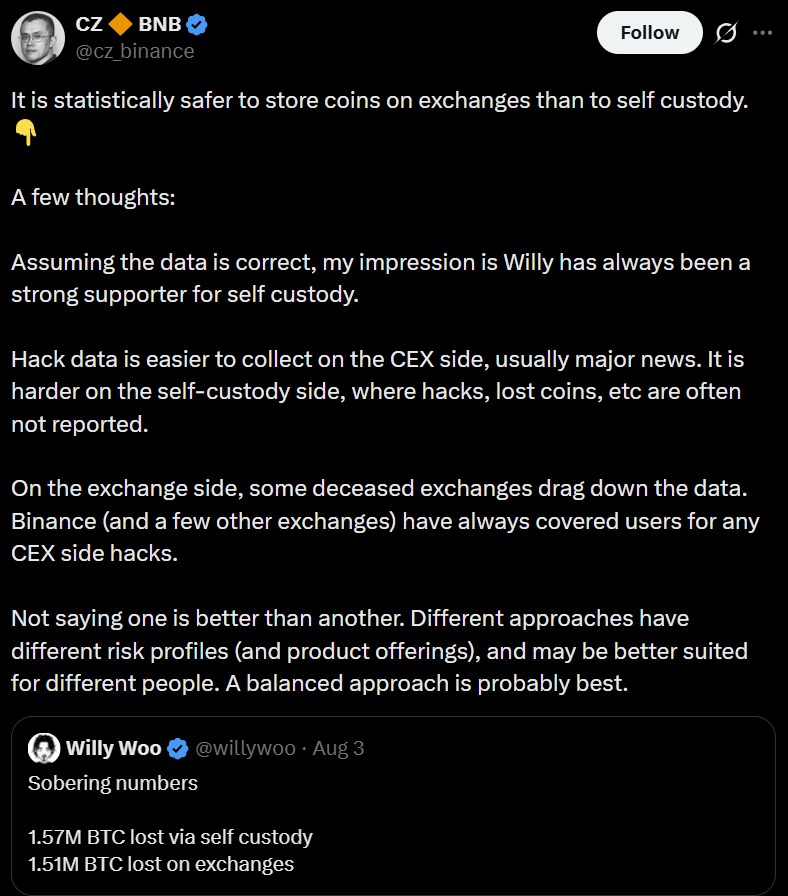
Source: Changpeng Zhao
“Hack data is easier to collect on the CEX side, usually major news. It is harder on the self-custody side, where hacks, lost coins, etc are often not reported,” CZ said.
The debate comes as AI-assisted cyberattacks are becoming increasingly sophisticated. On Monday, Bitcoin swap service Boltz suspended its non-custodial bridge, citing a steady rise in AI-assisted exploits that were allowing attackers to identify and exploit vulnerabilities faster than its team could patch them.
Magazine: Do the Coldcard attacks mean all hardware wallets are now insecure?

Telegram trading bots let users buy and sell tokens directly from a chat interface. This guide explains how they work, which bots dominate the market, and what risks come with handing a bot your private key.
Summary
- Telegram trading bots are automated tools that connect to decentralized exchanges through the Telegram messaging app, letting users swap tokens, snipe new listings, and set limit orders without using a traditional wallet interface
- The leading bots by volume include Banana Gun, Maestro, Unibot, BONKbot, and Trojan, each handling hundreds of millions of dollars in weekly trading volume across Ethereum, Solana, and Base
- These bots generate revenue through transaction fees, typically charging 0.5% to 1% per trade on top of the standard DEX swap fees and network gas costs
- The primary convenience is speed: a trader can paste a contract address into a Telegram chat and execute a buy in under two seconds, compared to the 15 to 30 seconds required to navigate a DEX interface manually
- The primary risk is custody: most Telegram bots generate a wallet for the user and hold the private key on their servers, meaning a bot compromise could result in total loss of funds
Telegram trading bots emerged in 2023 as a response to a specific problem in decentralized finance: the gap between the speed at which opportunities appear and the speed at which a human can execute a trade through a conventional DEX interface. When a new token launches on Uniswap or Raydium, the first buyers often capture the largest gains. By the time a trader opens their browser, connects their wallet, approves the token contract, sets slippage, and confirms the transaction, the price may have already moved 50% or more.
Telegram bots compressed that entire workflow into a single message. Paste a contract address, tap a button, and the bot submits the transaction on your behalf. The interface is a chat window. The execution happens on-chain. The speed advantage turned what started as a niche tool for memecoin traders into an infrastructure layer that now processes billions of dollars in monthly volume.
This guide explains how these bots work under the hood, which ones dominate the market, what they cost, and where the risks hide.
How Telegram trading bots work
A Telegram trading bot is a program that runs on a server, connects to one or more blockchain networks, and accepts commands through the Telegram Bot API. When a user starts a bot for the first time, the bot generates a new crypto wallet (a public-private key pair) and associates it with the user’s Telegram account. The user funds this wallet by sending tokens to the generated address.
Once funded, the user can trade by sending commands to the bot. The most basic command is a buy: the user pastes a token contract address, selects an amount, and the bot constructs a swap transaction on the relevant decentralized exchange, signs it with the user’s private key, and broadcasts it to the network. The entire process typically completes in one to three seconds on Solana and three to ten seconds on Ethereum, depending on network congestion.
The bot handles several technical steps that would otherwise require manual interaction. It automatically detects which DEX has liquidity for the token. It calculates the optimal route through liquidity pools, sometimes splitting the trade across multiple pools to reduce price impact. It sets gas parameters to prioritize transaction inclusion. On Ethereum, many bots integrate with block builders and private mempools to avoid sandwich attacks, a form of MEV (maximal extractable value) that front-runs and back-runs a user’s trade to extract profit.
The user interface is entirely within Telegram. Buttons replace the connect-wallet and approve-token steps of a traditional DEX. Portfolio tracking, profit and loss calculations, and token watchlists are all presented as inline messages or callback buttons within the chat.
The major Telegram trading bots
The Telegram bot landscape has consolidated around a handful of dominant platforms, each with different strengths.
Banana Gun is the highest-volume Telegram trading bot as of mid 2026. It operates on Ethereum, Solana, Base, and Blast. Banana Gun is known for its sniping capabilities: the ability to detect a new token listing and execute a buy transaction in the same block as the liquidity addition. The bot charges a 0.5% fee on manual buys and a 1% fee on snipes. Banana Gun processed more than $8 billion in cumulative trading volume in its first year of operation and has generated hundreds of millions in fee revenue, a portion of which is distributed to holders of the BANANA token.
Maestro was one of the earliest Telegram trading bots, launching on Ethereum before expanding to Solana and other chains. Maestro offers sniping, limit orders, copy trading (automatically mirroring the trades of a specified wallet), and anti-rug protection that attempts to detect and front-run liquidity removals. Its fee structure is 1% per transaction.
Unibot launched in mid 2023 and was among the first bots to gain significant traction. It pioneered the revenue-sharing model where a percentage of trading fees is distributed to token holders. Unibot operates primarily on Ethereum and introduced features like private transactions routed through Flashbots to protect against MEV. Trading fees are 1% for non-token-holders and 0.5% for UNIBOT holders.
BONKbot is the dominant Telegram trading bot on the Solana network. Named after the BONK memecoin community, BONKbot specializes in Solana token trading and benefits from Solana’s low transaction fees and fast confirmation times. A trade on BONKbot costs a fraction of a cent in network fees compared to several dollars on Ethereum, making it the preferred tool for high-frequency memecoin trading where traders execute dozens of small trades per day.
Trojan emerged as a competitor to BONKbot on Solana, differentiating itself through a cleaner interface and additional features such as DCA (dollar-cost averaging) orders and multi-wallet management. Trojan has grown rapidly and regularly competes with BONKbot for the top position in Solana trading volume.
What Telegram bots actually cost
The total cost of a Telegram bot trade includes three components: the bot fee, the DEX swap fee, and the network gas fee.
The bot fee is the primary revenue source for the bot operator. It typically ranges from 0.5% to 1% of the trade value. On a $1,000 trade, this means $5 to $10 goes to the bot.
The DEX swap fee is paid to liquidity providers on the underlying decentralized exchange. On Uniswap V3, this is typically 0.3% for established tokens and 1% for newer, lower-liquidity tokens. On Raydium (Solana), the standard fee is 0.25%.
The network gas fee varies dramatically by chain. On Ethereum, a swap transaction costs $3 to $15 depending on network congestion. On Solana, the same transaction costs less than $0.01. On Base, gas fees typically fall between $0.01 and $0.10.
Adding these together, a $1,000 trade on Ethereum through a Telegram bot with a 1% fee costs roughly $10 (bot fee) + $3 (DEX fee at 0.3%) + $5 to $10 (gas) = $18 to $23. The same trade on Solana costs roughly $10 (bot fee) + $2.50 (DEX fee) + $0.01 (gas) = $12.51. These costs are meaningful for small trades. A $100 trade on Ethereum through a Telegram bot loses 18% to 23% of its value to fees before any price movement occurs.
The fee economics explain why Telegram bot trading has concentrated on Solana, where the low gas costs make small, frequent trades economically viable. On Ethereum, Telegram bot trading is more practical for larger position sizes where the fixed gas cost represents a smaller percentage of the trade.
Sniping and launch trading
Sniping is the feature that originally drove adoption of Telegram trading bots. When a new token launches on a DEX, the token creator adds liquidity to a pool. The first trades against that liquidity get the lowest prices. Sniping bots monitor the blockchain for liquidity addition transactions and attempt to place a buy order in the same block.
The technical mechanics differ by chain. On Ethereum, snipers use private transaction channels such as Flashbots or MEV Blocker to submit transactions directly to block builders, bypassing the public mempool where they could be front-run. The bot must predict the exact block in which liquidity will be added and submit a transaction with sufficient gas priority to be included immediately after the liquidity transaction.
On Solana, sniping works differently because the network uses a leader-based block production model rather than a mempool auction. Bots connect to multiple RPC nodes and submit transactions with optimized compute budgets to maximize the probability of early inclusion. The speed competition on Solana is measured in milliseconds, and the leading bots invest heavily in infrastructure co-located with Solana validators. Some bots maintain dedicated connections to multiple validator operators, paying for priority access that shaves tens of milliseconds off submission times. The infrastructure arms race mirrors the high-frequency trading competition in traditional finance, where firms spend millions on co-location and network optimization to gain microsecond advantages.
Sniping carries substantial risk. Many new token launches are scams, rug pulls, or honeypot contracts that allow buying but prevent selling. A successful snipe on a fraudulent token results in a total loss. The anti-rug features offered by bots like Maestro attempt to simulate a sell transaction before executing the buy, checking whether the token contract allows selling. However, sophisticated scam contracts can pass these checks and then enable restrictions after a set number of blocks or a specific volume threshold.
The custody problem
The most significant risk of Telegram trading bots is the custody model. When a user creates a wallet through a Telegram bot, the bot generates the private key and stores it on its servers. The user receives the public address and sometimes can export the private key, but the bot retains a copy.
This means the bot operator has full access to every wallet created through the platform. If the bot’s servers are compromised, every user’s funds are at risk. If the bot operator decides to act maliciously, they can drain every wallet simultaneously. This is the exact opposite of the self-custody principle that decentralized finance was built to enable.
Several Telegram bots have experienced security incidents. In September 2023, Maestro experienced an exploit through a vulnerability in its token approval router contract, resulting in approximately $280,000 in user losses. The bot reimbursed affected users, but the incident highlighted the concentrated risk. In late 2023, Unibot experienced a contract exploit that affected users who had granted token approvals through the bot.
The practical advice for managing this risk is straightforward: treat the Telegram bot wallet as a hot wallet with limited funds. Transfer only the amount needed for immediate trading. Move profits to a hardware wallet or self-custody solution regularly. Never store a significant portion of your portfolio in a Telegram bot wallet. Some traders set a hard rule: never keep more than they can afford to lose entirely in the bot wallet.
Some newer bots have introduced partial mitigations. A few support connecting external wallets through WalletConnect, so the user retains custody of the private key and approves each transaction through their own wallet app. This approach sacrifices speed (each trade requires a manual approval step) but eliminates the custody risk. The tradeoff reflects the fundamental tension in Telegram bot trading: speed and convenience on one side, security and self-custody on the other.
The custodial risk is compounded by the lack of regulatory oversight. Traditional exchanges that hold customer funds are subject to licensing requirements, capital reserves, and regular audits. Telegram trading bots operate outside these frameworks entirely. There is no deposit insurance, no regulatory body to file complaints with, and no legal obligation for the bot operator to maintain solvency or segregate user funds. Users are trusting anonymous or pseudonymous teams with their private keys, and the only recourse in the event of a loss is whatever goodwill or reputational incentive the bot operator feels.
Revenue, tokens, and the bot economy
Telegram trading bots have created a new category of crypto revenue-generating businesses. The fee revenue is substantial: Banana Gun alone has generated more than $100 million in cumulative fees. Several bots have issued tokens that entitle holders to a share of the fee revenue, creating a form of equity-like exposure to the bot’s trading volume.
The token economics vary by project. Banana Gun distributes a percentage of trading fees to BANANA token holders who stake their tokens. Unibot distributes a share of fees to UNIBOT holders. The yield depends on trading volume, which is highly correlated with market sentiment. During bull markets and memecoin frenzies, daily fee revenue can spike by ten times or more. During quiet markets, revenue can drop to a fraction of peak levels.
This volume sensitivity makes Telegram bot tokens among the most volatile assets in crypto. UNIBOT rose from $3 to $200 during its initial hype cycle in 2023, then declined more than 90% before finding a lower range. BANANA experienced similar volatility. Traders who buy bot tokens are effectively making a leveraged bet on future DEX trading volume, particularly memecoin trading volume, which has historically been the most cyclical segment of the crypto market.
The competitive dynamics are intense. Bots compete on speed (fastest execution wins the sniping market), fees (lower fees attract volume-sensitive traders), features (copy trading, limit orders, DCA), and chain coverage (supporting more chains captures more trading activity). The low barriers to entry mean new bots can launch quickly, but the network effects of user adoption and the infrastructure investment required for competitive sniping speeds create meaningful advantages for established players.
The relationship between Telegram bots and decentralized exchange volume is symbiotic. Bots route a significant share of total DEX volume, particularly on Solana where BONKbot and Trojan together have accounted for more than 30% of all Raydium swap volume during peak memecoin periods. This makes bots a critical distribution layer for DEXs, and some DEX protocols have begun offering fee rebates or priority routing to the highest-volume bots. The arrangement benefits both sides: bots get better execution for their users, and DEXs get more volume and fees.
What this does not cover
This guide does not cover the legal and regulatory status of Telegram trading bots, which remains unclear in most jurisdictions and may evolve as regulators examine unregistered trading platforms. It does not cover the specific token contract risks of memecoin trading, including honeypot contracts, hidden mint functions, and transfer tax manipulation, which are the most common causes of loss for Telegram bot users. It does not cover the broader MEV landscape beyond its relevance to Telegram bot users, nor the technical details of Solana validator operation or Ethereum block building that underpin the sniping infrastructure.
Practical checks before using a Telegram trading bot
Check the bot’s track record. Search for past security incidents, contract exploits, or reports of fund losses. A bot that has been operating for more than 12 months without a major incident has passed a meaningful stress test, though past safety does not guarantee future safety.
Check the fee structure. Calculate the total cost of a round-trip trade (buy and sell) including bot fees, DEX fees, and gas on the specific chain you plan to trade. If the total cost exceeds 3% to 5% of your trade size, the fee drag will make it very difficult to trade profitably.
Check the custody model. Determine whether the bot generates and holds your private key, or whether it supports external wallet connections. If the bot holds your key, plan your fund management accordingly and never keep more in the bot wallet than you are prepared to lose.
Check the withdrawal process. Before trading, test a small withdrawal to confirm that you can move funds out of the bot wallet to an external address without delays or restrictions.
Check the bot’s social channels. Active developer communication, regular updates, and transparent incident response are positive signals. A bot with no public developer presence or communication channel is a higher risk.
Are Telegram trading bots legal?
The legality depends on jurisdiction. In most countries, using a bot to trade on decentralized exchanges is not explicitly prohibited, but the bots themselves may be operating as unregistered broker-dealers or money transmitters. Users should research their local regulations before using these tools.
Can I lose all my money using a Telegram trading bot?
Yes. The two most common ways to lose everything are trading a scam token (honeypot or rug pull) and a bot security breach where the private key is compromised. Limiting the funds stored in the bot wallet reduces the maximum loss from a security breach.
Which Telegram trading bot is best for beginners?
BONKbot on Solana is often recommended for beginners because Solana’s low gas fees make experimentation cheap. A failed trade on Solana costs less than a cent in gas, compared to several dollars on Ethereum. The lower cost of mistakes allows beginners to learn without significant fee-related losses.
How do Telegram trading bots make money?
Through transaction fees, typically 0.5% to 1% per trade. Some bots also earn revenue through priority transaction routing, where they charge additional fees for guaranteed fast execution during high-demand periods such as token launches.
Can Telegram bots protect me from rug pulls?
Some bots offer anti-rug features that simulate sell transactions before executing buys, check for blacklisting functions in the token contract, or monitor for liquidity removal events. These protections catch basic scams but cannot detect sophisticated exploits or delayed rug mechanisms. No bot can guarantee protection against all forms of token fraud.
Do I need to pay taxes on Telegram bot trades?
In most jurisdictions, yes. Each swap is a taxable event, and the high-frequency nature of Telegram bot trading can create dozens or hundreds of taxable transactions per day. Most bots do not provide tax reports, so users need to export their wallet transaction history and use third-party tax software to calculate their obligations.
What is the difference between sniping and copy trading?
Sniping targets new token launches, attempting to buy in the same block as the initial liquidity. Copy trading replicates the trades of a specified wallet address in real time. Sniping is a speed competition against other bots. Copy trading is a strategy that relies on the skill of the wallet being copied.
Can I use multiple Telegram trading bots at the same time?
Yes. Many traders use different bots for different chains or strategies. A common setup is BONKbot or Trojan for Solana memecoin trading and Banana Gun for Ethereum sniping. Each bot generates its own wallet, so funds must be distributed across multiple wallets accordingly.
Disclaimer
This article is for informational purposes only and does not constitute financial or investment advice. Cryptocurrency investments carry significant risk, and you should conduct your own research before making any investment decisions. Information is accurate as of August 6, 2026.

Bitcoin miners are increasingly positioning themselves as providers of artificial intelligence infrastructure and high-performance computing capacity, but the stock-market reaction to fresh AI hosting deals has cooled markedly in the past couple of years. New research suggests that while contract values are growing, investors are paying less attention to the headline announcement and more attention to what happens next—execution, funding, and long-term profitability.
According to an analysis by Blocksbridge Consulting published in TheEnergyMag’s Miner Weekly, deals tied to AI infrastructure have become less “market-moving.” The report reviewed 25 AI and HPC infrastructure contracts announced between June 2024 and August 2026, finding that the average stock move on announcement day fell from roughly 24% for the earliest deals to about 10% for the most recent ones. Median gains also declined by around half over the same period, even as the reported size and value of the contracts increased.
Key takeaways
- Blocksbridge Consulting’s review shows AI/HPC deal announcement-day reactions weakening from ~24% average moves to ~10% in later deals.
- Median gains from these announcements dropped by about half despite larger contract sizes, implying investors value execution more than upfront figures.
- Revenue per contracted megawatt has inched higher over time, suggesting AI hosting agreements are becoming more financially attractive.
- Major early wins for miners tied to notable AI counterparties produced sharp stock jumps, while newer mega-deals have generated smaller, shorter-lived reactions.
- Investor caution is also visible in infrastructure-focused indices, with TheEnergyMag’s TEM AI Infrastructure Growth Index down ~28.5% from its June peak.
Why AI-hosting news is moving stocks less
The central takeaway from the Blocksbridge Consulting analysis is not that AI hosting deals are shrinking—they appear to be growing in economic importance—but that markets have started to anticipate them. As more miners and infrastructure providers offer similar propositions, investors may treat new contracts as incremental confirmation rather than a sudden re-rating of business prospects.
The report points to a nuanced shift. On one hand, annualized revenue per contracted megawatt has edged upward across the sample, an indicator that AI hosting agreements may be improving in value. On the other hand, the reduced market reaction suggests that investors now scrutinize the substance behind those deals: whether capacity can be delivered on time, how projects are financed, and how durable profitability will be once contract ramp-ups and operational costs are accounted for.
In other words, it’s possible for deals to be economically better while still failing to trigger the same stock enthusiasm as earlier announcements—because expectations adjust. When investors believe execution risk is either higher or more variable than the market used to assume, the “surprise” embedded in contract headlines becomes smaller.
Early deal spikes versus muted mega-deal reactions
The difference between early and later announcements stands out in examples cited alongside the Blocksbridge Consulting findings. According to the report’s examples, initial agreements connected to AI infrastructure sparked dramatic moves for certain miners and hosting operators.
Core Scientific’s initial hosting agreement with CoreWeave reportedly pushed its shares up by more than 40%. Applied Digital’s first CoreWeave lease gained nearly 49%, while TeraWulf’s first Fluidstack deal surged almost 60%.
But as the market has absorbed similar news, later mega-deals have tended to elicit more modest reactions. TeraWulf’s 401-megawatt lease with Anthropic lifted its shares by about 5%. CleanSpark’s $6.6 billion AI hosting agreement reportedly gained nearly 9%. Bitdeer’s new Tydal contract briefly pushed its stock up roughly 12%, but the gains reportedly faded by the close.
That pattern fits the report’s broader conclusion: investors appear more likely to react to earlier “proof points” and less likely to reprice rapidly when a company announces a larger continuation of an established AI hosting strategy. For traders and portfolio managers, the implication is straightforward—volatility around announcements may be structurally lower than it was during the market’s earlier phase of AI infrastructure discovery.
Indexes show momentum slowing, not demand disappearing
The cooling enthusiasm is also reflected beyond individual stock moves. The TheEnergyMag TEM AI Infrastructure Growth Index—tracking publicly traded companies developing AI data center and digital infrastructure businesses—has reportedly fallen about 28.5% from its June peak, even though the index remains sharply higher than a year earlier. The implication is that investors have not abandoned the sector, but they have reduced the intensity of the chase.
The same article notes that the slowdown in these AI infrastructure equities has mirrored broader risk appetite. It cites the Philadelphia Semiconductor Index falling nearly 17% from its July peak, suggesting that part of the recent softness could be tied to sector-wide sentiment rather than purely idiosyncratic execution concerns for specific mining or hosting players.
For Bitcoin miners that have broadened into AI workloads and high-performance computing, this matters because their ability to convert new contracts into steady earnings depends not only on deal economics, but also on the capital markets environment. When AI infrastructure equity momentum slows, lenders and equity investors often become more selective about who can finance expansions and meet delivery timelines—exactly the areas the Blocksbridge analysis implies investors are emphasizing more now.
What investors should watch next
If the market is indeed moving toward a more “disciplined” pricing of AI hosting deals, the next signals will likely be less about the size of the headline contract and more about execution milestones: ramp schedules, delivery progress, and evidence that annualized megawatt economics can hold up as contracts scale. Readers should watch whether announcement-day reactions continue to weaken as deals become more common, or whether new structures—potentially with clearer financing and delivery frameworks—can restore stronger sentiment.
ether.fi has removed all restaking exposure from weETH, making its flagship asset a plain liquid staking token and confining restaking to weETHs, a separate token built on Symbiotic. The protocol announced the split on X on Thursday. The change ends the arrangement that made ether.fi the largest… Read the full story at The Defiant

An additional 22 miles of the waterborne barrier system has been constructed since Trump’s return to office.
Challenges in construction
Trump’s Administrations have faced several hurdles in constructing the border wall.
One aspect of the construction that has posed significant challenges has been the need to acquire land that is already owned. Approximately 70% of the border is made up of private, tribal, or state-owned land, according to the GAO. And the federal government has faced pushback from all three fronts.
Among multiple challenges that have been made in response to the government’s attempts to acquire land, the Texas General Land Office in July sent CBP and an agency contractor a cease-and-desist letter after it said it discovered that the contractor had cleared over a mile of state land for construction, using heavy machinery and destroying vegetation.
“Texas sovereignty will not be infringed upon by failure to follow established protocol,” said Commissioner Dawn Buckingham in a statement. “I am committed to maintaining a positive relationship with CBP, but we will not allow rogue actors who breached our agreement to undermine the incredible work we do for Texas.”
Culper Research shorted Nvidia after predicting the $5 trillion AI giant might be re-routing Chinese demand for AI chips through sketchy deals with neighboring countries.
Almost no one believed it at the time, but as it turns out, it called the top.
Despite Nvidia CEO Jensen Huang’s guidance of “assuming zero for China” to comply with US export controls to the country, the company actually benefitted from work-arounds and created big problems for itself in neighboring nations.
“I’m forecasting China’s sales to be zero,” Huang said in November 2025 after US export restrictions halted Nvidia’s chip sales to China. “It’s zero for the next quarter, zero for the quarter after that. We’re assuming it’s going to be zero.”
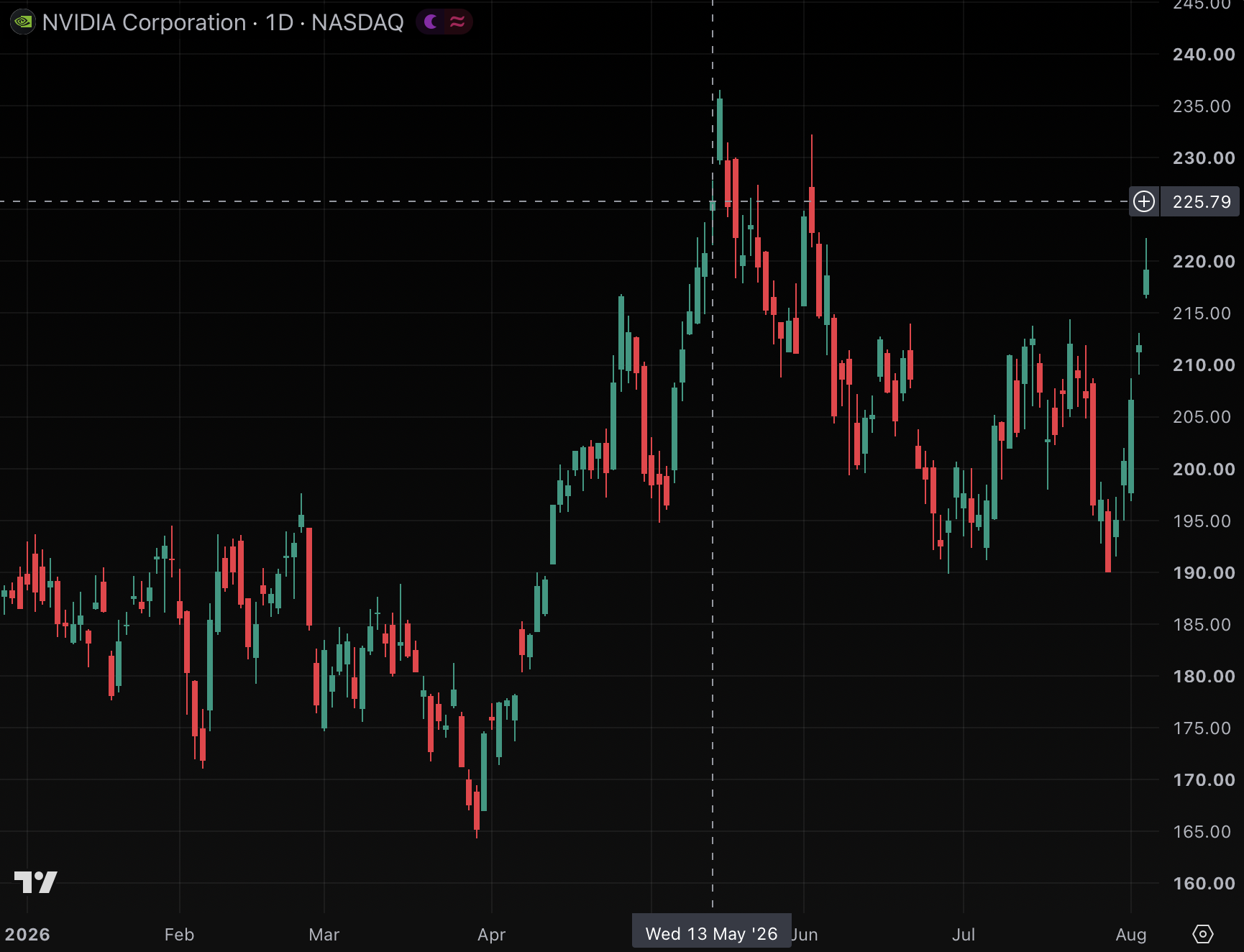
By May 13, however, Culper Research sniffed a problem with that claim and sold-short Nvidia shares. It sensed that Nvidia might be re-routing its Chinese demand for AI chips via Taiwan and places like Malaysia and Singapore.
It also foresaw legal problems as regulators discovered its diversions.
With the exception of one day immediately following that report, Nvidia’s stock has never closed any day higher than its May 13 close.
Calling the top on Nvidia
It was an unexpected and remarkably accurate call in the middle of a bullish mania. The week prior to the report, Nvidia had rallied 13%, and shares were up an impressive 20% year-to-date.
Skeptical, Culper Research wrote, “We are short Nvidia for one reason: The company has a significant China problem.”
As it turns out, Nvidia did have massive, unpublished problems in China and neighboring Taiwan. In the three months since that report, those problems became mainstream news.
On July 24, Taiwanese prosecutors searched the home and workplace of an Nvidia employee suspected of smuggling prohibited chips to China. Investigators also went through his desk at the company’s Taipei office.
It’s the first known legal action against an alleged Nvidia employee in Taiwan’s widening AI chip-smuggling investigation. Prosecutors said the man was “strongly suspected of having committed the offences,” and cited a risk of flight and destruction of evidence.
That story surfaced on July 28. The same day, Jensen Huang quietly sat down with US Commerce Secretary Howard Lutnick in Washington, DC.
Read more: Apple overtook Nvidia as largest public company this morning
Saw these problems coming three months ago
Both events landed 11 weeks after an activist short seller told investors exactly where to look.
On May 13, Culper Research estimated that more than 20% of Nvidia’s fiscal 2026 compute revenue would still run on Chinese demand, even though that demand would, according to its analysis, probably run through Southeast Asian intermediaries and Taiwanese diversions.
The report named those intermediaries: Singapore’s Megaspeed, Malaysia’s Speedmatrix, and a subsidiary of Taiwan’s Gigabyte, Giga Computing.
Crucially, Culper warned that the exposed corridor of Chinese demand routing through Taiwan was “just one of many in what is a complex and far-flung operation.”
It predicted multiple additional Nvidia OEMs, partners, and intermediaries would sustain their Chinese demand through intermediaries in nearby countries.
A former high-level Nvidia employee told the firm that “Megaspeed is just the tip of the iceberg.”
Huang insisted the company wasn’t skirting export restrictions and that it “repeatedly tested and sampled data centers around the world and found no diversion.”
Got a tip? Send us an email securely via Protos Leaks. For more informed news and investigations, follow us on X, Bluesky, and Google News, or subscribe to our YouTube channel.


Wintermute’s US arm has registered as a broker-dealer and already signed exchange-traded fund (ETF) issuers as clients, the Wall Street Journal reported.
The registration clears Wintermute USA to register as a market maker on American stock exchanges. Chief Executive Evgeny Gaevoy said the firm wants to compete with Jump Trading, Jane Street and Citadel Securities within three to five years.
What the Wintermute Broker License Changes
One list frames the whole move. BlackRock’s iShares Bitcoin Trust held $43.2 billion at the end of June. A dozen firms are cleared to create and redeem its shares, the job that keeps an ETF trading close to the value of what it holds.
Not one of them is a crypto company. The fund’s latest prospectus names Jane Street, Citadel Securities, Virtu Americas, Goldman Sachs and JPMorgan among them.
That is the gap Wintermute is stepping into. It says it quotes prices across more than 60 venues, yet it could not touch the plumbing of crypto’s own flagship product. The job needs a broker-dealer license.
Now it has one. It also has customers waiting, according to the Journal.
Registration does not make Wintermute a Wall Street firm overnight. It makes it eligible.
Follow us on X to get the latest news as it happens
Wintermute Takes Aim at Jump, Jane Street and Citadel
Gaevoy gave himself three to five years to catch those three firms, the Journal reported.
The plan runs in stages. Wintermute starts with commodities and digital asset ETFs, the markets closest to what it already trades. Tokenized equities follow, if regulators allow them. Designated market maker status on a major exchange sits at the end.
Each stage needs a separate approval. None of them is automatic.
The numbers show how steep the climb is.
Three firms hold designated market maker status on the New York Stock Exchange, according to the exchange’s own model. They are Citadel Securities, Virtu Americas and GTS Securities.
Every listed stock gets exactly one. Citadel Securities holds that role for more than 1,900 of them, about 62% of NYSE listings, and issuers picked it for more than 80% of NYSE IPOs. A designated market maker must also carry at least $75 million in capital before inventory risk.
Wintermute’s case rests on who it already serves. Institutions drove 72% of its spot over-the-counter (OTC) volume in the first half of 2026, up from 59% a year earlier, according to Wintermute’s institutional flow data.
“At three quarters of volume, institutional flow defines market structure,” Wintermute, H1 2026 OTC flow report.
Those clients already buy equities, commodities and ETFs somewhere else.
The groundwork started early. The firm opened a New York headquarters in May 2025 and hired Ron Hammond, previously of the Blockchain Association, to lead policy work.
The Financial Industry Regulatory Authority (FINRA) has 180 days to act once a membership application is complete. It oversaw 3,184 broker-dealers at the end of 2025, down from 3,394 in 2021.
Wintermute joins a shrinking club, not a crowded one.
Tokenized Stocks Remain the Bigger Prize
The tokenized equities stage carries the most weight.
That market is already forming. The US Securities and Exchange Commission (SEC) cleared a tokenized share trading rule from Nasdaq in March 2026. In June, NYSE owner Intercontinental Exchange backed a tokenized equities venture with OKX.
Wintermute had already made its case. In a September 2025 submission to the SEC’s Crypto Task Force, it argued broker-dealers should be free to trade tokenized securities for their own account and hold them in wallet software.
That was a lobbying position then. It is a licensed firm’s position now.
Two questions remain open. Which securities Wintermute quotes first, and whether any exchange grants it market maker status at all.
Registration buys the ticket. It does not hand over the seat.
The post Wintermute Lands US Broker License and a 5-Year Plan to Rival Citadel appeared first on BeInCrypto.
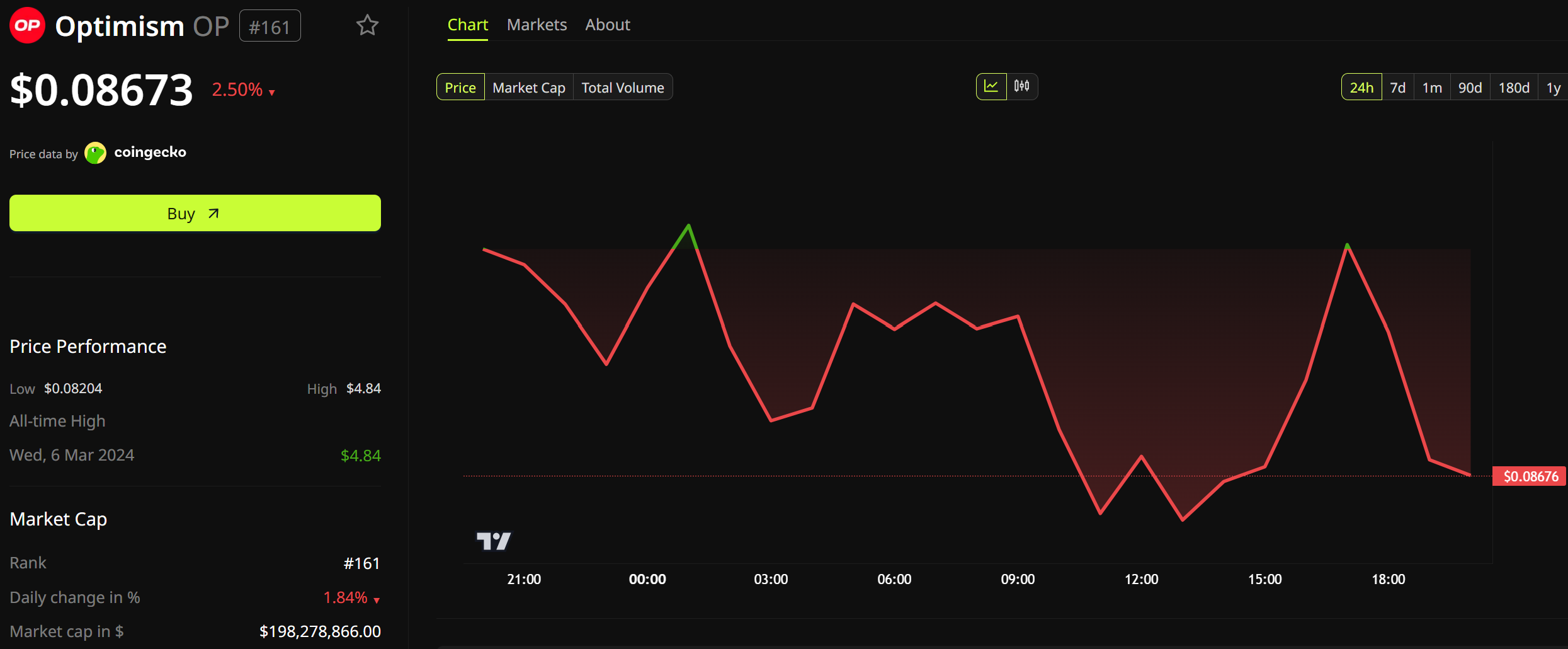
Optimism plans to release about 343 million OP over the next 12 months. Its buyback program has bought back 9 million.
Year 5 runs from May 2026 to April 2027 on the Foundation’s budget calendar. Its outlook for that stretch landed Thursday, five days after OP hit the lowest price in its history.
What Optimism’s Year 5 Outlook Projects
Optimism is an Ethereum layer-2 network. OP is its governance token. Each year the Foundation sets out where new OP will come from. Four sources feed Year 5.
- The Ecosystem Fund supplies the biggest piece at 200 million OP.
- Early core contributors add 47.6 million.
- Investors add 15.3 million.
- The Governance Fund adds 10 million.
Follow us on X to get the latest news as it happens
Airdrops and Retro Funding are both set at zero.
Add those lines together and the total comes to 272.9 million OP. The report’s own supply target implies 343 million. The 70 million difference goes unexplained.
There is a second gap. The report puts circulating supply at 2.16 billion OP. The Foundation’s official tracker, which the same report names as the canonical record, showed 2.29 billion on Thursday. That leaves 125 million OP unaccounted for.
The Foundation describes its numbers as directional estimates. Even the low reading still points to more than 200 million new tokens. Investors already hold 92% of their allocation. Early contributors hold 78%. These large scheduled token unlocks now draw from a shrinking pool.
Buybacks Cover Only a Fraction of New Supply
Governance approved the buyback in January 2026. It routes up to half of Superchain revenue into monthly OP purchases for one year.
The first purchase cleared on March 5. It spent 95.8 ETH and picked up 1.57 million OP, according to the Foundation’s public thread.
Purchases now top 9 million OP, worth roughly $781,000. Set against 343 million in projected unlocks, that is one token bought for every 38 released.
The revenue behind those buybacks is shrinking too. Coinbase’s Base network left the OP Stack in February. OP fell 23% on the news, and Optimism cut more than 20% of its staff weeks later.
OP traded near its record low at $0.0867 on Thursday, down 2.5% on the day. It bottomed at $0.082043 on August 1. The token now sits 98% below its March 2024 peak of $4.84.

Enterprise Bet Now Carries the Token
Optimism has stopped handing tokens to users. No airdrops ran in Year 4. Retro Funding paused after Season 7. The Grants Council budget shrank.
Both programs sit mostly unspent. Retro Funding has used 81.4 million OP of an 859 million pool.
OP Enterprise replaced them in January 2026, selling production-grade infrastructure to exchanges, fintechs and banks. Bitpanda’s Vision Chain, Ink and a Dunamu agreement for GIWA Chain lead the customer list. Base signed on as a paying client in the same post that announced its exit.
The Foundation tied all future spending to that shift.
“token deployment is tied to the OP Enterprise strategy and measured against OP Mainnet growth and enterprise customer acquisition,” the Optimism Foundation said in a report.
OP Mainnet grew monthly transactions by more than 60% in Year 4. The projected unlocks are worth about $29.8 million at current prices, or 15% of the token’s entire market value. For holders, the question is simple. Can enterprise revenue grow faster than the supply still to come?
Optimism did not immediately respond to BeInCrypto’s request for comment.
The post Optimism Year 5 Outlook Raises 5 Red Flags for OP Holders appeared first on BeInCrypto.
Uniswap Labs' launchpad passed Pons on daily token launches within a day of opening on Robinhood Chain, according to onchain data, taking the lead from a product that settles every trade on Uniswap's own automated market maker. Uniswap now runs a product in the same category as applications built… Read the full story at The Defiant

July was the month the market caught its breath. After a June defined by a hawkish Fed surprise, a broken ETF cycle, and one of Bitcoin’s worst monthly candles in years, July delivered the opposite script: a steady grind higher, a World Cup campaign that closed out on schedule, a tennis debut at Wimbledon, and a security backdrop across the industry that made Zoomex’s transparency stack more relevant than ever. The month proved that recovery, like the drawdown before it, tests infrastructure just as hard as a crash does.
Zoomex by the Numbers
Against that backdrop, Zoomex’s value proposition stayed exactly where it was in June: sub-10ms execution, a dual liquidity pool architecture blending internal depth with aggregated external liquidity, and a minimalist interface built to hold up when volatility spikes in either direction. The platform continues to serve over 3 million registered users across 35-plus regions, with a catalogue spanning 700-plus trading pairs across Perpetual USDT, Inverse Perpetuals, Spot, tokenized equities, and now Predict Market contracts.
July’s test looked different from June’s. Rather than a single violent liquidation event, the month asked Zoomex’s infrastructure to hold up through a slower, choppier grind higher punctuated by a contentious Fed decision and an industry-wide spike in security incidents elsewhere. Zoomex’s regulatory stack, Canada MSB, US MSB, US NFA, and Australia AUSTRAC, stayed unchanged and fully active through it, and the platform’s Hacken security audits and Proof of Reserves framework remained the answer to a month where trust, not just speed, was the thing being tested across the sector.
What Zoomex Shipped in July
World Cup Predict Market Series Reaches Its Finale
Zoomex closed out its five-part World Cup Edition X Space series, part of the Zoomex World Cup Impact Pledge, with back-to-back episodes featuring some of football’s biggest names. England goalkeeper David James joined the third episode on July 9.

It was followed by Argentina legend and two-time Olympic gold medalist Javier Mascherano for the #ZOOMEXFootballAMA episode on July 14 hosted from Boston hours before the quarterfinals kicked off.

The series wrapped with a World Cup Final Panel featuring Fernando Llorente in late July. Each episode carried a charity component: Zoomex committed 1,000 USDT per episode to a cause chosen by that episode’s football guest, rising by an additional 5,000 USDT whenever the guest’s match prediction landed.

Zoomex Debuts at Wimbledon 2026
Zoomex extended its sports footprint beyond football and Formula 1, marking its first entry into elite tennis through partnerships with three professional players, Felix Gill, James Duckworth, and Roman Safiullin, timed to Wimbledon 2026.
Alongside the sponsorship, Zoomex launched a dedicated tennis Predict Market and a Grand Slam Trading Challenge, letting users trade to earn Lottery Tickets toward Wimbledon prizing while forecasting match outcomes and key moments as the tournament played out, extending the same Elite Access Platform positioning that has anchored its football and racing partnerships all year.
Home Race Week With Ollie Bearman
Zoomex’s Formula 1 partnership stayed active through the sport’s own headline week, as Silverstone hosted the British Grand Prix with Haas driver, Zoomex partner, and local favorite Ollie Bearman racing in front of a home crowd.

The platform marked the occasion with dedicated content around Bearman’s Silverstone weekend, keeping the F1 partnership visible alongside the month’s football and tennis campaigns rather than treating it as a one-off from earlier in the year.
Regulatory Watch: July’s Countdown Redefines Crypto’s Rulebook

Zoomex closed out July’s regulatory coverage by tracking the CLARITY Act’s stalled momentum, updated text was out and a floor vote was targeted before the August recess, but an ethics dispute kept blocking the final step, dropping the odds of 2026 passage sharply. Against that backdrop, MiCA continued cementing its position in Europe as the only fully operational framework.
Macro Meets Crypto: When the Regime Flips

Zoomex broke down how July inverted the macro playbook that had defined crypto trading through 2025 and early 2026. Instead of tariffs weakening the dollar and the Fed inching rates lower, July brought a strengthening dollar and a new Fed chair talking hikes instead of cuts, forcing traders to rewrite the script mid-cycle.
Grid Trading on Zoomex: How to Profit From Sideways Markets

With July’s price action defined by a choppier, range-bound grind rather than a clean trend, Zoomex published a breakdown of its Contract Grid tool, designed specifically for markets that drift sideways for days or weeks without a decisive move.
Zoomex Predict World: Turning Crypto Markets, Sports, and Global Events Into Live, Tradable Charts

Alongside the World Cup campaign, Zoomex’s Predict Market kept broadening its scope through July, letting users trade not just match outcomes but geopolitical and macro questions from the same interface, from Venezuela-related political scenarios to speculation around a potential Russian nuclear test by a set 2026 deadline. The mix reinforced the product’s core pitch: one prediction venue spanning sports, crypto price action, and world events, rather than a football-only campaign tool.
Zoomex Monthly On-Chain Report: June 2026

Rounding out coverage carried over from June, Zoomex published its monthly on-chain report highlighting a pivotal month for the platform’s on-chain footprint, marked by a dramatic surge in exchange trade volume, sustained multi-chain asset growth, and a diversified pattern of capital flows.
CEX Security Architecture: How Your Funds Are Protected on Zoomex

Zoomex closed the month’s editorial output with a deep dive into its 7-layer security architecture, framed against the industry’s track record of exchange failures, from the FTX collapse to the Bybit exploit that resulted in $1.5 billion in losses in early 2025, positioning Zoomex’s safeguards as the counterpoint to that history.
World Cup Prediction Market Campaign Wraps Up
The World Cup Prediction Market Campaign that opened in mid-June ran through July 18, giving users a full month of task-based Lucky Spin draws for World Cup tickets, gift boxes, airdrop rewards, and trading vouchers before closing out alongside the tournament itself, with Zoomex flagging heating competition on the leaderboard as the window narrowed.
Discord Rewards Campaign
From July 15 to July 25, Zoomex ran a Discord-based promotion offering USDT bonuses, limited community roles, and priority access, with a $500 prize pool for top participants, extending the platform’s community engagement beyond X and into Discord for the first time this cycle.
July Airdrop Carnival
Running from June 30 through July 31, the July Airdrop Carnival targeted new users with tiered onboarding rewards, including up to $770 in combined bonuses and airdrops and a fixed-term product offering competitive fixed-term yield options, structured around KYC completion, deposit tiers, and trading activity, before rolling directly into the August Summer Airdrop at month’s end.
Conclusion
July was the month the macro backdrop finally caught up with crypto, and Zoomex’s response was to keep building rather than retreat. A live Prediction Market timed to the World Cup, a full tokenized equities suite answering the AI rotation directly, two World Cup campaigns running in parallel, and a five part charity series pairing football culture with real donations. Not a pause. Continued output through the sharpest drawdown of the year.
The macro numbers explain why that mattered: Bitcoin down roughly 18% for the month, $2 trillion wiped out across risk assets in minutes on June 17, and the Fear & Greed Index sitting in Extreme Fear for most of the back half of the month. Zoomex’s sub-10ms execution infrastructure and dual liquidity pool architecture were built for exactly this kind of stress, and the platform’s regulatory stack, FINTRAC, FinCEN, NFA, AUSTRAC, FATF Travel Rule, stayed unchanged and fully active through it.
No platform token. No VC entanglements. No user funds at risk.
June confirmed what May suggested: reliability compounds precisely when markets don’t cooperate, and the platforms still shipping through a hawkish Fed surprise and an $18 billion monthly drawdown are the ones building for the World Cup final and beyond, not just for the next bull run.
About Zoomex
Founded in 2021, Zoomex is a global cryptocurrency trading platform focused on derivatives trading. The platform serves over 3 million users across 35+ countries and regions, offering access to 700+ trading pairs. Built around easy to use, transparency, fairness, and speed, Zoomex provides a clear and efficient trading experience for users worldwide.
Through its high-performance matching engine, clear asset and order displays, and transparent fee and rule mechanisms, Zoomex helps users better understand their account status, order execution, trading costs, and results. Zoomex maintains registrations, licenses, and regulatory statuses across multiple jurisdictions, including the U.S. MSB, Canada MSB, U.S. NFA, and Australia AUSTRAC, and has completed security audits conducted by blockchain security firm Hacken. The platform also continues to strengthen its trust framework through Proof of Reserves, Security & Transparency, Compliance Information, and Fees / Rules Transparency initiatives.
Beyond trading, Zoomex builds a refined brand experience through elite sports partnerships, including the TGR Haas F1 Team, World Cup-winning goalkeeper Emiliano Martínez, and world-class tennis events such as Wimbledon. The values of speed, precision, discipline, fair play, and rule-based execution are closely aligned with Zoomex’s approach to derivatives trading.
At Zoomex: Easy to Use. Transparent balance. Fair access to your earnings.
Frequently Asked Questions
What is Zoomex? Zoomex is a global crypto derivatives platform founded in 2021, serving over 3 million users across more than 35 countries and regions with 700+ trading pairs.
How does Zoomex work? Zoomex operates through a high-performance matching engine with transparent asset and order displays, allowing users to execute trades and track outcomes with full visibility into their balances and results.
What can you trade on Zoomex? Zoomex offers 700+ trading pairs spanning cryptocurrencies such as BTC, ETH, and SOL, as well as stock-linked contracts like NVDA and AAPL and gold exposure through XAUT.
How does Zoomex compare to other exchanges? Zoomex differentiates itself by not issuing a platform token, avoiding venture capital or incubation deals, and holding security certifications from Hacken alongside regulatory licenses in multiple jurisdictions, positioning the platform around transparency and fund safety rather than token incentives.
Where is Zoomex headquartered? Zoomex operates as a global cryptocurrency exchange with regulatory registrations including Canada MSB, U.S. MSB, U.S. NFA, and Australia AUSTRAC, reflecting its multi-jurisdictional compliance approach.
Is Zoomex available in my country? Zoomex serves users across more than 35 countries and regions. Availability can vary by local regulation, so traders should check the official Zoomex website for country-specific access and requirements.
The post Zoomex Monthly Transparency Report: July 2026 appeared first on BeInCrypto.

If you look up on any given night, you might be able to see a few meteors each hour under optimal conditions. But meteor showers, which take place when Earth’s path intersects with the dusty trails that comets and asteroids leave behind, are special because you can see many more “falling stars” in that same amount of time.
The Perseid meteor shower occurs around the same time each year, typically starting in mid-July and lasting until late August, when our planet passes through debris from a comet called Swift-Tuttle. During this shower, you may be able to see up to 100 meteors per hour under the right conditions, according to astronomers.
NASA describes the Perseids as “swift and bright meteors,” saying that they “frequently leave long ‘wakes’ of light and color behind them as they streak through Earth’s atmosphere.”
When can you best see it?
The Perseid meteor shower is already underway. But your best chance of seeing the most meteors will come when it’s at its peak level of activity, which is set to occur the night of Aug. 12 into Aug. 13, according to NASA.

The Trade Desk, Inc. 2026 Q2 – Results – Earnings Call Presentation (NASDAQ:TTD) 2026-08-06

What are Telegram trading bots? How they work

Young and the Restless: Victor Clashes with Adam as Fierce Newman Battle Explodes!


-

 Fashion6 days ago
Weekend Open Thread: Wit & Wisdom
-

 Politics6 days ago
Meta enters AI-training agreement with far-right ‘propaganda rag’ Newsmax
-

 Politics4 days ago
Zack Polanski: an incitement to murder Nigel Farage?
-

 Crypto World5 days ago
MicroStrategy Post-Earnings CLARITY Act Push Could Add New Catalyst for Its Stock
-

 Crypto World6 days ago
XRP Ledger v3.3.0 brings five institutional features
-

 Sports7 days ago
Seema Kaliramna Wins Discus Throw Bronze, Takes India’s CWG Medals Tally To 17
-

 Crypto World6 days ago
New York sues Kalshi over prediction market gambling
-

 Crypto World4 days ago
Crypto PAC spending tops $2M in Michigan House race
-

 Business4 days ago
DTCR: Deleveraging And A Hedge Fund Collapse Point To A Possible AI Bottom
-

 Business6 days ago
Trump Announces Hamas Disarmament Agreement as Iran Strikes Kuwait Air Base and US Attacks Pause Overnight
-

 Crypto World6 days ago
3 Fed Officials Just Explained Their Rate Hike Vote: Is Inflation Winning?
-

 Tech5 days ago
ESET tracks rise in malicious AI skills and adaptable malware
-

 Tech6 days ago
Gemini Spark can now use Chrome logins and saved passwords to run errands on your behalf
-
 Tech6 days ago
Building A Reproduction PlayStation Motherboard
-

 Sports5 days ago
France Cricket implodes: letters hidden in a drawer and a board at war
-
Crypto World4 days ago
XRP Ledger urges node upgrade after manifest flood
-

 Crypto World6 days ago
Moneyflip CEO charged in $40K murder-for-hire plot
-
 Sports6 days ago
Bruno Fernandes decision made as Man United ‘discuss’ striker transfer option
-

 News Videos5 days ago
Financial Crash Expert: The 90-Day Collapse Timeline They Are Desperately Hiding.
-

 NewsBeat7 days ago
Spain sending troops as thousands enter enclave of Ceuta from Morocco
You must be logged in to post a comment Login