

Crypto World
Bitcoin Hovers Under $77K as US Bond Yields Near 20-Year Highs

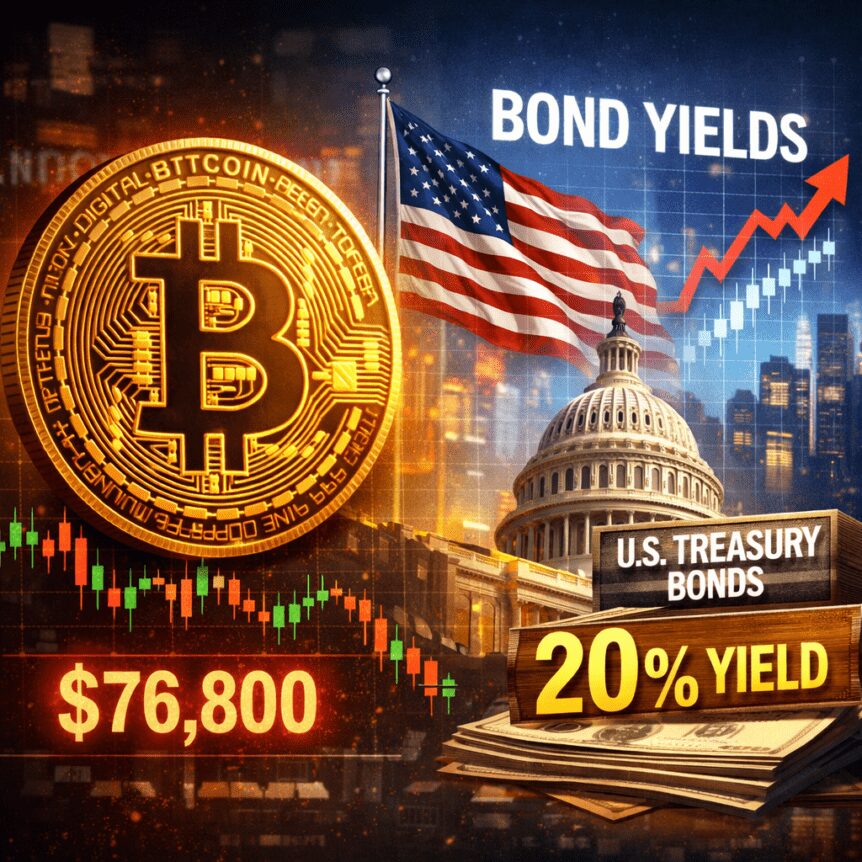
Bitcoin traded around month-to-date lows on Tuesday as a surge in U.S. Treasury yields pressured risk assets and spilled into safe-haven plays. The market backdrop remained dominated by elevated oil prices, war-risk sentiment, and a sense that central-bank dynamics may stay tight longer than anticipated.
Key points:
- Bitcoin moved with other risk assets as U.S. bond yields jumped, amplifying pressure on equities and crypto markets.
- Macro headwinds, including higher oil prices and the ongoing energy-inflation backdrop, pressured sentiment and pushed precious metals lower.
- Bitcoin hovered near a critical technical level, with analysts warning that a break lower could prolong a period of consolidation.
- Geopolitical headlines and policy developments added to the volatility, underscoring the fragility of the current risk-off environment.
US 30-year yields spike to multi-decade highs
Market data indicated BTC/USD was trading just under $77,000 as Wall Street opened, maintaining the prior session’s floor but facing renewed pressure from higher long-dated yields. The 30-year U.S. Treasury yield rose to its highest level since July 2007, a move that reverberated through stocks, gold, and other traditional safe havens.
This shift fueled a broad risk-off mood as investors recalibrated the cost of capital against inflationary pressures and potential escalations in energy-related spending. Gold also weakened, with the XAU/USD pair dipping below $4,500 to mark its weakest level since late March, illustrating how the macro unwind was affecting non-equity assets as well.
Ole S. Hansen, head of commodity strategy at Saxo Bank, framed the move as a response to increased demand for “greater compensation for holding longer-dated debt amid war-driven energy inflation and mounting concerns over widening budget deficits.” He noted the price dynamics showed a market reacting to a confluence of oil momentum, inflation expectations, and central-bank rate outlooks.
In another signal of the day’s risk-off tone, traders and observers pointed to the broader bond-market reaction as a primary driver of the market’s pullback in risk assets, including Bitcoin.
Bitcoin at a crucial support zone, but upside remains uncertain
Within the crypto space, anxiety over the macro setup grew as traders weighed the persistence of high yields against the possibility of renewed liquidity support. Strategy-focused commentator Michaël van de Poppe highlighted a dual drag on Bitcoin from elevated bond yields and firm oil prices, arguing that these factors are not supportive of risk-on assets in the near term.
“Bitcoin is at a crucial level of support and it seems to be that it’s going to be holding.”
He noted that a sustained move below key levels could imply a longer accumulation phase before renewed upside, underscoring the risk-off environment more than a definitive breakout signal. A later post summarized the risk: “Anything lower of $75,000-76,000 might signal that the accumulation needs to take longer.”
Analysts stressed that Bitcoin’s near-term trajectory would likely hinge on how quickly the macro pressures abate—particularly whether yields cool and if oil subsides—before investors gain enough confidence to re-enter risk assets with conviction.
Geopolitics and macro headlines compound market sensitivity
Beyond the bond market, headlines surrounding the U.S. stance on Iran and broader Middle East tensions fed into a tense mood acrossAsset classes. Reported moves and comments from political leaders and influencers contributed to the sense that the risk environment remains prone to sudden shifts, with macro catalysts capable of jolting both traditional markets and crypto markets in tandem.
In a related line of commentary, market observers pointed to the possibility that even brief developments in the conflict landscape or diplomatic engagements could modulate oil prices and inflation expectations, further shaping the path of Bitcoin and other risk assets in the short term.
What to watch next
Market participants will be watching the trajectory of U.S. yields, oil prices, and central-bank signals for any signs of a reversal in the risk-off mood. If long-dated yields resume their ascent or oil remains elevated, Bitcoin could test additional support levels again, delaying any meaningful upside momentum. Conversely, a broad-based risk-on rebound and cooling inflation expectations could help BTC regain traction, particularly if liquidity conditions improve and investors re-enter the market with a renewed appetite for crypto risk assets.
Additionally, traders will be mindful of geopolitical developments and policy remarks that could amplify volatility. Given the current cross-currents, readers should prepare for continued price dispersion across crypto and traditional markets as new data and headlines emerge.



Cardone Capital has purchased another 282 Bitcoin worth about $18 million as the cryptocurrency market has retreated toward recent lows amid rising geopolitical tensions.
Summary
- Cardone Capital bought another 282 BTC worth about $18 million as Bitcoin traded near $62,000.
- The firm uses rental income from multifamily properties to fund ongoing Bitcoin purchases.
- Grant Cardone targets 3,000 BTC by 2026 and 10,000 BTC over the longer term.
In a June 19 X post, Grant Cardone announced that his real estate investment firm added 282 BTC to its treasury. Based on current market prices, the purchase is valued at roughly $18 million and comes as Bitcoin (BTC) trades near the $63,000 level following a broader crypto market decline linked to tensions surrounding the Israel-Lebanon conflict.
The latest purchase follows another acquisition made during a recent market downturn, when Cardone Capital bought 130 BTC valued at approximately $9.7 million. The transaction adds to a growing Bitcoin position that Cardone has continued to expand through a strategy tied directly to income-producing real estate assets.
Cardone continues building Bitcoin position through rental income
Earlier this year, Cardone Capital disclosed that it had accumulated about 1,000 BTC after purchasing $10 million worth of Bitcoin in January. According to the company, those purchases are funded through a dollar-cost-averaging strategy that directs rental income from selected multifamily properties into Bitcoin acquisitions.
Among those assets is a 366-unit apartment complex in Boca Raton. Rather than distributing excess cash flow to investors or using it to acquire additional real estate, the firm channels part of that income toward Bitcoin purchases.
According to comments previously made by Cardone, the company intends to hold 3,000 BTC by the end of 2026 and ultimately accumulate 10,000 BTC across multiple investment vehicles.
Speaking at the Consensus 2026 conference in Miami, Cardone revealed that the company had recently increased its Bitcoin allocation by another $100 million. He said the purchase formed part of a broader transaction that also included roughly $235 million worth of real estate acquisitions.
During the event, Cardone described the firm’s structure as a combination of Bitcoin and real estate held within the same limited liability company. He argued that the model differs from traditional real estate investment trusts, which generally do not hold Bitcoin directly on their balance sheets.
Real estate and Bitcoin strategy expands beyond treasury purchases
Cardone has repeatedly linked the company’s Bitcoin strategy to its real estate portfolio. In earlier remarks, he estimated that combining the two asset classes could generate annual returns ranging between 22% and 32%, while noting that many investors in the firm’s products had no previous Bitcoin exposure.
According to Cardone, roughly 80% of investors in one of the firm’s Bitcoin-linked real estate funds did not own Bitcoin before participating.
The company has also introduced investment products built around the same concept. As reported earlier by crypto.news, Cardone Capital launched the 10X Miami River Bitcoin Fund in May 2025, pairing a 346-unit apartment complex on the Miami River with $15 million in Bitcoin. The fund also directs a portion of rental income toward additional Bitcoin purchases.
Cardone’s involvement with blockchain-based assets extends beyond treasury accumulation. In early 2024, he listed his $42 million Golden Beach property on Propy, a blockchain-powered real estate marketplace that supports transactions in both Bitcoin and U.S. dollars through a decentralized title registry and escrow system.

WhiteBIT has secured authorization under the EU’s Markets in Crypto-Assets Regulation (MiCA) from Austria’s Financial Market Authority, enabling the exchange to provide regulated crypto services across the European Economic Area using a single passported regime. The authorization positions WhiteBIT to operate within the harmonized EU framework as transitional national arrangements near their end.
MiCA’s cross-border “passporting” mechanism is designed to reduce the need for repeated licensing across member states. For institutions and market participants, the development is consequential: it affects how exchanges structure compliance programs, customer communications, and operational continuity in jurisdictions where legacy registrations may no longer be sufficient.
Key takeaways
- WhiteBIT received MiCA authorization from Austria’s Financial Market Authority, supporting regulated service delivery across the EEA.
- MiCA allows authorized firms in one member state to passport services across the EEA, reducing duplicative licensing.
- Austria has not extended grandfathering for virtual asset service providers beyond Dec. 31, 2025, accelerating migration to MiCA.
- EU deadlines are tightening: after July 1, legacy operators may need to hold MiCA authorization or cease EEA client services.
- Regulators and oversight bodies are emphasizing wind-down and client migration planning for firms that remain unauthorized.
Austria authorization and the MiCA passporting framework
WhiteBIT’s authorization under MiCA was granted by Austria’s Financial Market Authority. Under MiCA, a crypto-asset service provider licensed in one EU member state can provide services throughout the EEA without securing separate authorizations in each jurisdiction.
The exchange indicated that the authorization will support the rollout of a dedicated European platform at whitebit.eu. In practice, passporting can streamline geographic expansion while also increasing the importance of centralized compliance controls—such as transaction monitoring, risk management, and supervisory reporting—aligned to MiCA requirements.
WhiteBIT is part of W Group, which the company says serves more than 35 million customers globally. The exchange was founded in 2018.
Why Austria’s MiCA transition matters: grandfathering and regulatory timing
Austria’s approach underscores the timetable confronting many European crypto businesses. Austria did not extend “grandfathering” provisions for virtual asset service providers beyond Dec. 31, 2025, according to information referenced in comments provided to Cointelegraph by the Financial Market Authority. As a result, Austria has become one of the earlier EU jurisdictions to fully shift operating models to MiCA.
MiCA’s transition rules are pivotal for compliance departments because they determine which firms can lawfully continue serving customers and under what conditions. For exchanges and other regulated service providers, the end of grandfathering increases the operational consequences of delayed approvals—especially where customer onboarding, marketing claims, and service delivery are tied to licensing status.
According to the Financial Market Authority’s previously provided comments cited in the coverage, the regulator has licensed nine crypto-asset service providers under MiCA and characterized application volume as “significant.” This suggests a relatively active supervisory pipeline, but it also signals that authorization throughput may vary across regulators and categories of services.
Approaching July 1 deadline and enforcement posture
WhiteBIT’s approval arrives less than two weeks before the EU’s MiCA transition period expires on July 1. After that date, firms operating on legacy national registrations must either obtain MiCA authorization or stop serving clients within the EU/EEA.
The proximity of the deadline has intensified scrutiny on exchanges that have not yet secured authorization. Reuters has reported that Greece’s market regulator was preparing to reject Binance’s MiCA application. Separately, reporting referenced that France may represent a remaining route for certain exchanges seeking authorization before the deadline.
The compliance significance of these developments is not limited to licensing outcomes. Where authorizations are rejected or delayed, firms may face operational constraints affecting custody arrangements, marketing and advertising practices, and customer support processes. For institutional stakeholders, this increases the need to validate counterparties’ regulatory status and to assess the continuity of access to services during wind-down scenarios.
In its reporting shared with Cointelegraph, OKX Europe suggested the transition could affect a meaningful portion of European activity. The company pointed to data indicating that approximately 7.6 million of 18.5 million crypto app downloads in Europe between May 2025 and May 2026 were linked to exchanges not listed on public MiCA authorization registers. While download data is not a direct proxy for user balances or revenue, it can provide a directional sense of where operational risk may concentrate as firms transition away from legacy permissions.
ESMA guidance: wind-down and client migration plans
Beyond national regulators, EU-level oversight has been explicit about what unauthorized firms should do once transitional periods end. The European Securities and Markets Authority (ESMA) has stated that companies remaining unauthorized after July 1 should implement wind-down and client migration plans rather than continue operating while applications are under review.
This guidance is particularly relevant for compliance monitoring because it frames expected conduct after the regulatory line is crossed. Wind-down planning typically requires firms to consider customer asset handling, disclosure obligations, operational timelines, and coordination with service providers responsible for order handling, custody, and payment-related workflows.
For institutions assessing risk exposure to crypto service providers, ESMA’s posture supports a practical checklist: confirm whether the counterparty is on public MiCA authorization registers, understand the scope of authorized activities, and evaluate whether the firm has contingency plans that align with EU expectations for client migration rather than ongoing service delivery.
Closing perspective
WhiteBIT’s MiCA authorization illustrates how passporting under the EU framework is beginning to reshape the competitive and compliance landscape for European exchanges. As July 1 approaches, the key question for market participants is whether remaining applicants can obtain authorization or will shift toward ESMA-aligned wind-down and client migration. The next phase will likely hinge on supervisory capacity across member states and the clarity of operational requirements for firms transitioning under the end-of-transitional timeline.

TLDR
- BlackBerry shares declined after reaching a 52-week peak of $10.93, with the retreat viewed as profit-taking following overbought conditions
- First quarter fiscal 2027 results scheduled for pre-market release on June 25, with Wall Street forecasting $0.03 earnings per share on $137.7M revenue
- Previous quarter exceeded projections with $0.06 EPS compared to $0.04 estimate and $157.96M revenue, marking 10.1% annual growth
- Street consensus stands at Hold with $5.73 average target; CIBC upgraded to Outperform with $10.00 price objective
- Chief executive and senior vice president liquidated shares in early April at $3.56; insider transactions totaled 73,171 shares valued at approximately $260K over three months
Shares of BlackBerry (BB) began Thursday’s session at $8.84, declining approximately 3.6% as investors took profits following an aggressive advance that carried the stock to its 52-week peak of $10.93. The security has surged 133% since the beginning of the year.
The decline doesn’t seem connected to unfavorable corporate developments. Market observers attribute the move to a classic technical pullback after an extended rally drove BB into overbought conditions.
Attention is shifting toward the upcoming quarterly report. BlackBerry plans to release first quarter fiscal 2027 financial results before Thursday’s opening bell on June 25. The earnings conference call is slated for 8:00 AM Eastern Time.
Analysts project earnings of $0.03 per share on sales of $137.65 million for the period. This represents a decline from the previous quarter’s impressive performance.
The company’s latest quarterly results, disclosed on April 9, significantly exceeded forecasts. BlackBerry delivered $0.06 per share versus the Street’s $0.04 projection and revenue totaling $157.96 million compared to anticipated $144.27 million — representing a 10.1% increase from the prior year period.
For the complete fiscal year 2027, executives have provided earnings guidance ranging from $0.15 to $0.19 per share. The first quarter outlook calls for $0.02 to $0.03 EPS.
Analyst Targets Show Wide Dispersion
The research community remains fragmented on BB. Canadian Imperial Bank of Commerce has emerged as the most bullish, elevating its price objective from $8.50 to $10.00 recently while assigning an Outperform rating.
This stance contrasts sharply with other coverage. Canaccord Genuity reduced its target from $4.60 to $4.40 in April while maintaining a Hold recommendation. Royal Bank of Canada kept a Sector Perform rating with a $4.50 objective. Weiss Ratings lowered BB marginally to Hold (C-) on June 4.
The Street consensus reflects a Hold rating with a mean price target of $5.73 — significantly beneath current trading levels.
Insider Transactions Show April Sales Activity
Chief Executive John Giamatteo divested 27,066 shares on April 2 at a price of $3.56 each, trimming his holdings by 2.92%. Senior Vice President Jennifer Armstrong-Owen sold 29,908 shares on April 4 at the identical price point, decreasing her stake by 23.96%.
Total insider dispositions during the trailing 90-day period reached 73,171 shares with an aggregate value near $260,000. Company insiders currently maintain just 0.51% ownership.
Among institutional investors, Creative Planning boosted its holdings by 87.5% during Q2, while multiple funds including Scientech Research and Man Group established fresh positions.
The equity’s 50-day moving average stands at $6.76 with its 200-day average at $4.77 — both substantially beneath the present price, highlighting the velocity of BB’s year-to-date appreciation.
BB trades at a price-to-earnings multiple of 110.50, exhibits a beta of 2.29, and maintains a debt-to-equity ratio of 0.26. The trailing 12-month low registered at $3.12.
The upcoming June 25 earnings announcement represents the next significant event, where management’s Q1 projection of $0.02–$0.03 EPS will face comparison against reported outcomes.


A security incident led to the loss of about $4.7 million worth of assets on the Axelar cross-chain interoperability protocol, which has since shut down its bridge functionality with the Secret Network.
Exploit Traced to Secret Network’s ICS-20 Smart Contract
The hacker exploited assets being moved from the Axelar network to the Secret network via the Cosmos IBC (Inter-Blockchain Communication) protocol, according to Axelar. Initial findings indicate that the vulnerability was not in Axelar’s core infrastructure, but instead in the Secret-side ICS-20 smart contract that is managing IBC transfers between the two networks.
For the incident, Axelar’s emergency committee closed down the connections of the Secret and Secret-SNIP bridge to prevent further losses and contain the attack. The protocol also confirmed that it has engaged relevant cryptocurrency exchanges and relevant authorities in its investigation.
The Secret Network is a blockchain that supports privacy and allows data associated with transactions to be encrypted, but not lose the ability to verify on-chain execution of smart contracts. The network has been used to create private cross-chain applications, such as confidential decentralized finance (DeFi) services, privacy-preserving NFT transactions, and anonymous governance mechanisms, among other applications.
Axelar Says Exploit Was Limited to Bridged Assets
According to Axelar, the attack seems to be confined to funds that were transferred to the Secret Network from the Axelar network. There is no evidence so far that any Secret-native assets have been compromised, nor any other IBC connections, nor any additional Axelar integrations, the company said.
The protocol stressed that its wide network was not compromised during the event. The issue is thought to be limited to the Secret-side contract that handles inbound transfers to the Secret ecosystem from Axelar.
Bridge routes in the affected area will continue to be closed until the attack vector has been investigated in detail and the extent of the damage assessed. Once it has finished its investigation, Axelar will be publishing a detailed post-mortem report, the company said.
The attack is part of a number of recent security incidents targeting cryptocurrency infrastructure projects in the past few weeks.
Earlier this month, Humanity Protocol announced its recovery efforts after it suffered an exploit on June 8, which prompted the project to withdraw its original H token from Ethereum, BNB Chain, and Humanity Mainnet. Those affected will be able to receive a replacement token in the form of an “airdrop” based on a new and audited ERC-20 contract deployed on the Ethereum network, the company stated.
Humanity Protocol said the attack occurred due to stolen credentials and noted that there was no breach to the token contracts, bridge infrastructure, or Safe wallet setup.
Binance Research Highlights Growing Security Pressures
Other operational implications have resulted from security incidents. This week, crypto payments platform Pyra announced that it would end its operations after it decided that it could not recover from the losses it suffered due to the Drift exploit.
In this context, Axelar’s attention is now on finding out how the attack was carried out and how to limit the spread of the Secret Network exploit. As of now, the company said, there is no evidence that other parts of the Axelar ecosystem were affected.
The latest hack follows a series of other attacks on DeFi that have been driven by increasing security concerns. Binance Research recently estimated that the amount of funds stolen through DeFi exploits across the sector during April resulted in nearly $13 billion of total value locked (TVL) outflows in the sector.
The on-chain leverage ratio also increased to approximately 38%, which is around the same time since the 2021 downturn, when TVL started to contract more than borrowing.
Market participants will be keenly observing Axelar as investigations proceed to see if the company will provide a final verdict and take any action to enhance the security of cross-chain infrastructure.
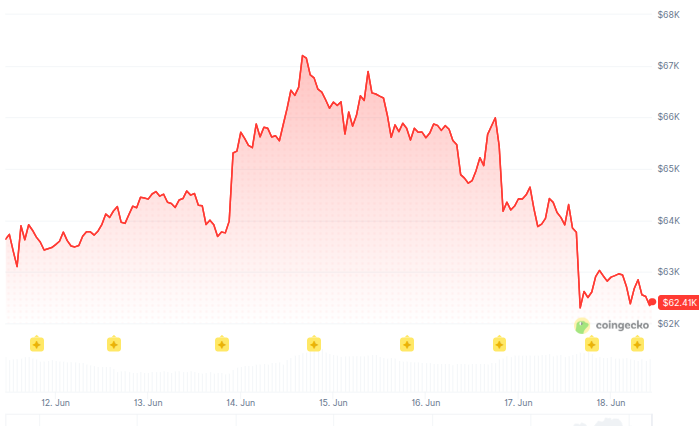
Bitcoin’s biggest threat may not come from a sudden selloff but from prolonged stagnation, according to CryptoQuant chief executive Ki Young Ju.
The warning arrives as institutional adoption expands while investor enthusiasm becomes increasingly difficult to sustain.
What is Bitcoin boredom risk?
Bitcoin boredom risk refers to extended periods of flat price movement that gradually weaken investor conviction and reduce market participation. Unlike sharp corrections, stagnation can quietly erode narratives, suppress demand, and limit capital formation.
Ki Young Ju argues that volatility itself is rarely Bitcoin’s most dangerous force. Historically, dramatic drawdowns have often been followed by renewed optimism and fresh inflows. Extended sideways markets create a different dynamic because they reduce emotional engagement and make future upside feel less immediate.
“Bitcoin was supposed to be digital gold, but when it needed to act like one, it often traded like a tech stock. It was supposed to be freedom money built by cypherpunks, but many Bitcoin OGs are now shilling other coins. And as AI advances, concerns around quantum computing are becoming harder to ignore. I still believe the pool of capital that could flow into Bitcoin is massive. I also believe more financial institutions will enter, and that Bitcoin will trend higher over the long run,” CryptoQuant CEO said on X.
Bitcoin currently trades below $62,500 after cooling considerably from highs above $126,000, according to CoinGecko data. While price stability may appear constructive on the surface, Ju believes long periods without meaningful momentum can create structural pressure.
Follow us on X to get the latest news as it happens

This concern extends beyond sentiment. Institutional strategies increasingly depend on sustained confidence and access to capital. Strategy, formerly known as MicroStrategy, built its Bitcoin expansion model around raising capital through sophisticated financial products tied to market optimism.
Recent pressure surrounding STRC preferred stock has renewed questions about whether institutional accumulation remains equally attractive if Bitcoin enters a prolonged low-excitement cycle.
According to Ju, a stagnant market compresses premiums, weakens participation, and slowly removes the urgency that previously fueled adoption.
“Saylor’s STRC structure becomes truly dangerous not when Bitcoin simply crashes, but when Bitcoin spends years moving sideways and the bear market drags on. A sharp drawdown can be survived if the market still believes in the next leg up. But long stagnation kills the story. It weakens demand, compresses MSTR premium, and makes Saylor’s capital-raising machine much harder to sustain,” Ki Young Ju highlighted.

Why Bitcoin may need a new narrative
Bitcoin’s growth has historically been driven by stories that captured broad attention. The digital gold thesis attracted investors seeking scarcity and inflation protection.
The cypherpunk vision appealed to users pursuing financial independence and decentralization. More recently, spot exchange-traded funds (ETF) and discussions of strategic reserves have created institutional legitimacy.
Ju suggests many of those narratives have matured. Today, institutional frameworks continue evolving. Concepts such as Bitcoin banking and digital credit create sophisticated investment cases, yet they may not resonate with retail audiences as strongly as earlier ideas did.
“…So what narrative does Bitcoin have ready for the next wave of liquidity? And will people really be convinced by Saylor’s digital credit narrative? Even if financial institutions buy into it and Bitcoin goes up because of it, it will be hard to say Bitcoin is still going up because of cypherpunk values. Bitcoin does not just need another catalyst. It needs a new center of gravity that can unite believers again,” CryptoQuant CEO said.
This disconnect matters because markets rarely move on capital alone. They also depend on belief, participation, and cultural relevance.
Recent discussions across crypto communities increasingly reflect concerns that institutional demand cannot indefinitely replace broad market enthusiasm. If retail participation remains subdued, even strong corporate buying may struggle to generate sustained momentum.
“$BTC is starting to lose strength. The rising channel that supported price for the last two weeks is breaking down. If this breakdown continues, BTC could move toward the $53K support zone. For now, bears are in control. Bulls need to reclaim the channel quickly, otherwise more downside may follow,” analyst Master of Crypto warned.
At the same time, Ju maintains a constructive long-term view. Large pools of capital remain underexposed to Bitcoin, and institutional adoption continues expanding. The challenge is creating a narrative that can simultaneously connect professional investors and everyday participants.
Bitcoin’s next phase may depend less on surviving volatility and more on rediscovering relevance.
Subscribe to our YouTube channel to watch leaders and journalists provide expert insights
The post CryptoQuant CEO Reveals the Hidden Risk Behind Bitcoin’s Future appeared first on BeInCrypto.

Key Takeaways
- FedEx will announce Q4 fiscal 2026 results after trading ends on June 23
- Analyst consensus calls for earnings per share of $5.96 alongside $24.04 billion in sales
- Shares of FDX have surged approximately 40% since January, hovering near record territory
- The recently finalized FedEx Freight separation on June 1 remains a central discussion topic
- Morgan Stanley reduced its valuation target to $160 amid concerns over profit margins
FedEx (FDX) is preparing to unveil its fourth-quarter fiscal 2026 financial results after the closing bell on June 23, drawing significant investor attention.
Shares of FDX have climbed roughly 40% throughout the current year, approaching all-time peak levels. According to the TipRanks Options Tool, market participants are anticipating a potential swing of approximately 7.73% in either direction once earnings are released.
Analyst projections point to earnings per share of $5.96, representing growth from the $4.89 reported during the comparable quarter last year. Revenue forecasts stand at $24.04 billion, up from $22.2 billion recorded in the prior-year period.
Zacks Investment Research presents slightly varying figures — projecting $5.91 per share and $24.18 billion in revenue — though the overall trajectory aligns. The Zacks earnings projection has been adjusted upward by 1.9% during the previous 60-day window.
The Earnings ESP registers at +3.76%, while the Most Accurate Estimate reaches $6.13 — exceeding consensus by 22 cents. This pairing of a Zacks Rank #3 alongside a positive Earnings ESP suggests strong probability of an earnings surprise.
Freight Division Separation Takes Spotlight
The headline development preceding this earnings announcement is the finalized separation of FedEx Freight, which commenced independent public trading on June 1. Company leadership is anticipated to discuss the division during the conference call, though Morgan Stanley analyst Ravi Shanker highlighted that comprehensive standalone transparency for both the Parcel and Freight operations won’t materialize until late October as regulatory filings unfold progressively.
This ambiguity contributes to Shanker’s decision to trim his price objective to $160 from a previous $230. His outlook anticipates Q4 operating income and earnings per share falling somewhat short of Street expectations as margin challenges continue overshadowing what he characterizes as consistent revenue performance.
However, not all analysts share this conservative stance. On TipRanks, FDX maintains a Strong Buy consensus rating derived from 17 Buy recommendations, 3 Hold positions, and 1 Sell rating. The average price objective stands at $412.45, suggesting approximately 26% appreciation potential. The most bullish forecast reaches $479.
Efficiency Initiatives and Technology Innovation Power Momentum
Much of FDX’s impressive year-to-date performance stems from strategic internal transformations rather than favorable macroeconomic conditions. The DRIVE efficiency program — encompassing reduced flight schedules, grounded fleet capacity, and headcount optimization — has served as the primary catalyst.
Artificial intelligence has emerged as another contributing factor, with FedEx deploying machine learning to enhance route optimization, strengthen capacity forecasting, and reduce operational expenses.
The logistics giant has simultaneously prioritized high-margin business-to-business and direct-to-consumer shipments, particularly within the healthcare sector, to bolster profitability.
One development likely to surface during the earnings discussion is FedEx’s extended partnership with Amazon, established last year, through which FedEx manages delivery services for specific bulky items. This agreement materialized shortly after competitor UPS announced plans to scale back its Amazon-related volume.
Looking at the complete fiscal 2026 outlook, Zacks consensus projections indicate $19.78 in earnings per share, reflecting 8.7% year-over-year expansion, while revenue is anticipated to advance 6.6%.
FDX currently trades at an attractive valuation compared to both industry peers and UPS on a forward Price/Sales metric, earning a Value Score of B.

WhiteBIT has received authorization under the EU’s Markets in Crypto-Assets Regulation (MiCA) from Austria’s Financial Market Authority, enabling the exchange to provide regulated crypto services across the European Economic Area using a single authorization passport. The approval comes as firms across Europe race to align with MiCA ahead of the bloc’s key transition deadline.
Under MiCA, a crypto-asset service provider authorized in one EU member state can offer services across the EEA without having to obtain separate licenses in each jurisdiction. WhiteBIT said the authorization will support the launch of a dedicated European platform, whitebit.eu.
Key takeaways
- WhiteBIT’s MiCA authorization from Austria allows cross-EEA service “passporting” without separate local licensing.
- MiCA’s transitional period ends on July 1, after which legacy registrations must either obtain MiCA authorization or stop serving clients in the bloc.
- ESMA says firms still unauthorized after July 1 should move to wind-down and client migration plans, rather than continue operations while applications are pending.
- OKX Europe data cited by Cointelegraph suggests millions of app downloads in Europe may be tied to exchanges not listed on public MiCA authorization registers.
Why WhiteBIT’s authorization matters for Europe’s exchanges
For crypto businesses operating in multiple European jurisdictions, MiCA is designed to standardize licensing and reduce regulatory fragmentation. WhiteBIT’s approval from Austria’s regulator is therefore not only a compliance milestone, but also a commercial lever: the company can expand service availability across the EEA through passporting, provided it adheres to the MiCA framework.
WhiteBIT is part of W Group, which the exchange says serves more than 35 million customers globally. Founded in 2018, WhiteBIT has also highlighted partnerships with major brands and sports organizations, including Visa and football clubs such as FC Barcelona and Juventus, as well as Ukraine’s national football team.
Austria’s stance and the looming end of transitional coverage
The timing of WhiteBIT’s approval is notable because Austria is described as having moved quickly to fully transition to MiCA. The country did not extend “grandfathering” provisions for virtual asset service providers beyond Dec. 31, 2025, making it one of the first EU jurisdictions to complete the shift into the MiCA regime.
According to comments previously provided to Cointelegraph by Austria’s Financial Market Authority, the regulator has licensed nine crypto-asset service providers under MiCA. The same source characterized the application pipeline as “significant.” For market participants, that suggests both regulatory capacity and a steady pace of licensing—factors that become increasingly important as the July 1 deadline approaches.
July 1 deadline increases pressure on exchanges without MiCA status
The authorization arrives with less than two weeks remaining before the EU’s MiCA transition period ends on July 1. After that date, crypto-asset service providers operating solely under legacy national registrations must either secure MiCA authorization or cease serving clients in the EU.
This deadline has intensified regulatory and operational scrutiny across Europe. Earlier this week, Reuters reported that Greece’s market regulator was preparing to reject Binance’s MiCA application. Separately, The Big Whale said France may be Binance’s last remaining potential route to a MiCA license before the deadline.
In this environment, WhiteBIT’s move provides a concrete example of what “getting licensed in time” can unlock: cross-border operations backed by a MiCA authorization rather than temporary or legacy arrangements.
What regulators want after the deadline: wind-down and migration
Beyond individual licensing decisions, EU regulators are also addressing what happens when companies miss the transition window. In an ESMA statement on the end of transitional periods under MiCA, ESMA indicated that firms remaining unauthorized after July 1 should implement wind-down and client migration plans rather than continue operating while applications are under review.
This guidance is significant for investors and users because it frames the compliance approach for late applicants: the expected path is orderly exit and client transition, not indefinite continuation under regulatory limbo. For exchanges, it also increases the urgency of operational planning—contract renewals, onboarding processes, custody arrangements, and user communications may all need rapid adjustment if authorization timelines slip.
Cointelegraph reported data shared by OKX Europe suggesting that the MiCA transition could affect a meaningful share of European crypto activity. According to that data, roughly 7.6 million of the 18.5 million crypto app downloads recorded in Europe between May 2025 and May 2026 were associated with exchanges not listed on public MiCA authorization registers.
While the metric reflects downloads rather than trading volume, it nevertheless points to a potential gap between user access and regulatory status. In practice, a large installed base tied to exchanges that have not been authorized could face restrictions, changes in service availability, or forced migration depending on each firm’s licensing outcome.
What to watch next across the EU
As July 1 approaches, the most important signal for the market will be whether additional exchanges secure MiCA authorization quickly enough to avoid triggering ESMA’s wind-down expectations. For users, the practical question is whether services remain available uninterrupted through the transition, and for investors, whether authorization progress (or delays) leads to sharper regulatory consolidation and operational churn across European platforms.


Europe’s Markets in Crypto-Assets (MiCA) regime fully takes effect on July 1. Fewer than 60 firms hold a license across the bloc, while a backlog leaves many applicants in limbo.
Germany has emerged as the clear outlier. BaFin has authorized roughly 18 Crypto Asset Service Providers (CASPs), accounting for about 36% of all licenses issued. Other national regulators have moved at a fraction of that pace.
Regulatory Bottleneck Mounts as July Deadline Approaches
Industry advisers now describe a realistic MiCA timeline of 8 to 12 months from submission to authorization. Regulators across France, Ireland, and Malta have struggled to clear queues. These queues have built up since the regime took effect on December 30, 2024.
France’s AMF has issued a final warning to firms still operating without a license. The agency said many applications require significant rework, and poor documentation quality is slowing approvals.
Roughly 30% of French crypto firms had still not filed as of late 2025.
Lithuania shows a similar picture. Fewer than 10% of registered firms have applied to Lietuvos Bankas, roughly 30 companies in total. The central bank has signaled fines, website blocks, and possible criminal referrals for stragglers.
The European Securities and Markets Authority (ESMA) added pressure last summer. It’s peer review of Malta’s MFSA, back in July 2025, found that the regulator fell short in a CASP authorization. The recommendations apply to every national competent authority across the EEA.
ESMA’s findings also flagged business model assessments, conflicts of interest, and ICT architecture as areas of weakness. The regulator urged NCAs to review compliance with the Digital Operational Resilience Act (DORA) during the authorization process.
Germany Sets the Pace
Germany cut its grandfathering window to 12 months, closing on December 31, 2025. The shorter runway forced firms to file earlier with BaFin. The regulator added 16 new MiCA-licensed institutions in the fourth quarter alone.
In January, DZ Bank secured a MiCA license. Germany’s second-largest lender will use it to launch the meinKrypto retail trading platform. The approval reflects how aggressively BaFin processes applications from incumbent banks. The regulator also rejected Ethena’s USDe stablecoin filing last year.
Critics argue that Germany applies MiCA more strictly than the regulation requires. The approach has pushed exchanges, including Bybit, KuCoin, and AMINA, to base operations in Austria. Compliance costs of €250,000 to €500,000 have also weighed on smaller firms.
Despite the criticism, BaFin’s pace gives Germany a passporting advantage. Licensed firms can now serve clients across all 27 member states.
Slower regulators effectively cede that cross-border business to German-supervised competitors. The 36% share far outstrips the Netherlands and Malta, the next-largest issuers.
About two weeks remain before the July 1 transition expires. The gap between Germany and slower NCAs will determine which CASPs can passport services across the EU.
The coming weeks will show how many applicants the laggards can clear before the cliff edge.
The post MiCA Licensing Chaos: Why German Firms Sprint Ahead While the EU Lags Behind appeared first on BeInCrypto.
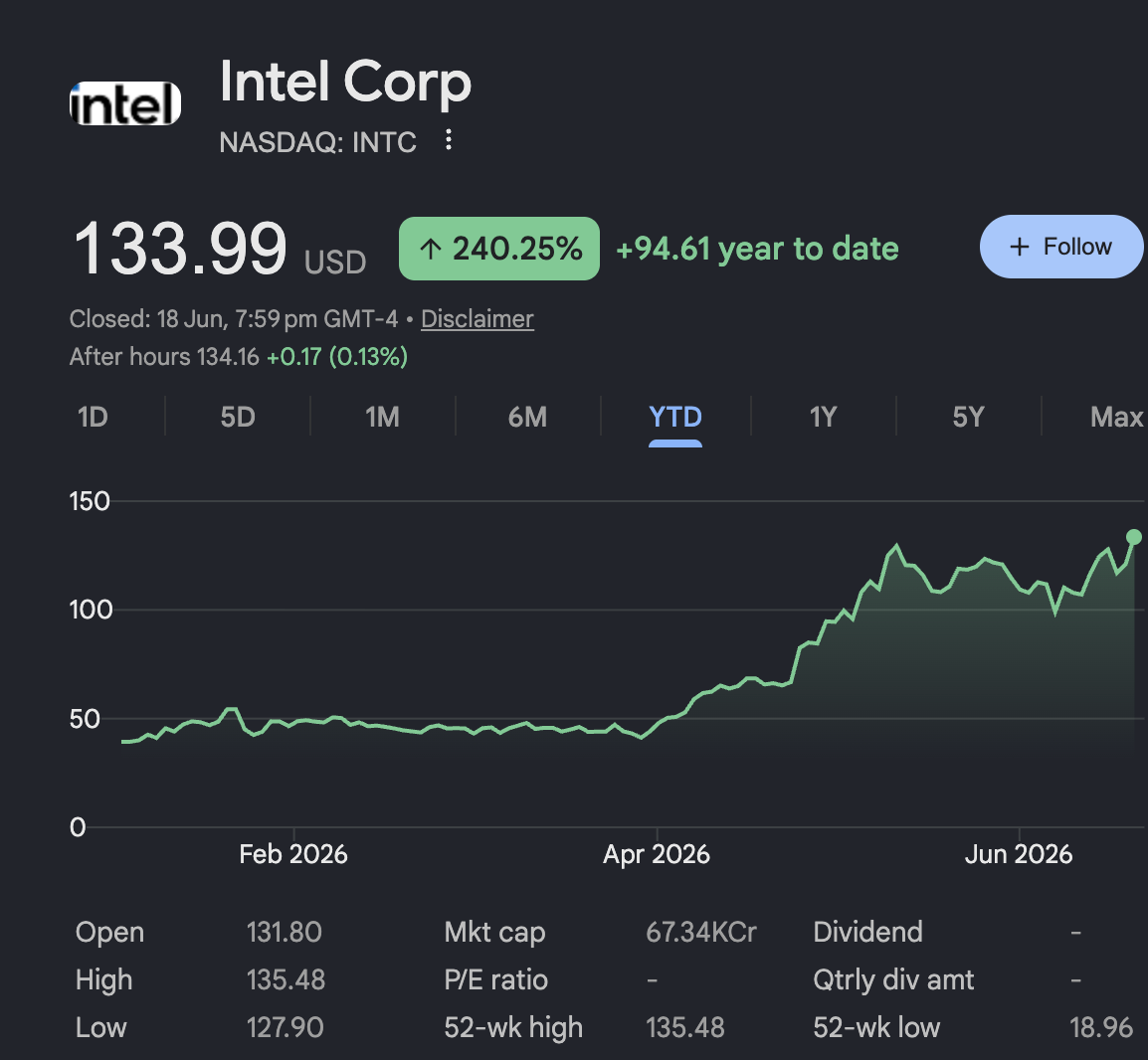
Intel stock jumped about 10% after President Trump said Apple will make chips with the company. The surge pushed Intel (INTC) past a ceiling it had failed to clear twice.
The breakout looks promising on the chart. But money flow, crypto traders, and the options market each tell a more cautious story underneath.
Why Intel Stock Gapped Up on the Apple News
Intel Corporation (INTC) gapped higher on Thursday. President Trump posted on Truth Social that Apple (AAPL) agreed to design and build chips in the US.
However, neither company has formally confirmed the deal at press time. The caveat matters because Washington owns a piece of Intel. The US government bought about 10% of the company in August 2025.
The move caps a strong run. Intel stock has roughly tripled in 2026, helped by ties with Nvidia (NVDA) and Tesla (TSLA). Demand from Agentic AI, software that acts on its own, has also lifted sales of Intel’s chips.

Risks still linger. Intel’s foundry arm stays unprofitable, and the PC market faces headwinds.
The INTC chart tells the first part of that story.
INTC Breaks a Ceiling That Capped It Twice
The rally cleared $132.70, a level that had blocked Intel twice. That kind of pattern is a double top, where price stalls at the same high two times.
INTC stock broke above it with force. Thursday’s 233.91 million shares topped the volume behind the late-May push to the same area.
Money flow is turning, too. The Chaikin Money Flow (CMF), a gauge of institutional buying and selling pressure, climbed back to zero from negative territory. The recovery suggests selling has eased and larger buyers may be stepping back in.

However, CMF sits at neutral, not clearly positive. So the buying interest is not yet confirmed. That’s one market remaining cautious.
Price and volume lean bullish, yet positioning tells another story, starting with crypto traders.
Crypto Traders Are Still Betting Against Intel
Crypto desks are not buying the breakout yet. On Hyperliquid, an exchange that offers perpetual futures on stocks, smart money stays net short Intel. Perpetual futures are contracts that track a price with no expiry date.
Nansen data shows $7.41 million in shorts against $2.90 million in longs. That leaves a net short of $4.51 million across 21 wallets.

Still, the bet against Intel is smaller than the crowd’s shorts on Nvidia and Micron. Intel’s long-to-short ratio sits at 0.39. That balance of bullish to bearish bets ranks among the least bearish in the group.
It is also rising, which suggests some traders are trimming shorts after the Apple news. Even so, the group has not flipped to net long.
The options market shows the same hesitation, with a twist.
The Options Market Sends a Mixed Message
Intel’s put-call ratio tells a split story. It compares puts, which profit when a stock falls, to calls, which profit when it rises. A reading below one leans bullish, above one leans bearish.
By daily volume, the ratio fell from 0.68 on June 17 to 0.51 on June 18. Traders bought calls hard as the stock gapped up. By open interest, the ratio rose from 1.02 to 1.04 over the same days. Standing positions tilted a little more toward puts.

The split makes sense. Short-term traders chased the move with calls, betting on fast follow-through. Meanwhile, longer-term holders added puts as protection against a failed breakout.
So fresh flow looks bullish, while standing positioning stays defensive. Buying puts while the stock pops is classic hedging, not a vote of confidence. Another sign of caution.
That defensive tilt matters most when the price levels come into view.
Intel Stock Levels That Decide the Price Path
Now the INTC stock levels sharpen the picture. The $132.70 ceiling aligns with a key technical level at $132.63. That overlap makes $132.70 a strong floor while it holds.
On the upside, $140.69 is the 0.618 Fibonacci level, a strong historical marker about 5% away. A clean break there opens $152.16, then $166.76.
The risk is a bull trap, a false breakout that traps buyers before price reverses. If CMF rolls back below zero and market sentiment weakens, the move could fail. A drop would expose $124.58, then $114.62, with $98.51 deeper below. The risk lingers, and that explains why all markets are somewhat cautious.

For now, the breakout is real but thin. Price cleared the level, yet CMF sits at neutral, crypto traders stay net short, and put open interest is rising. The Apple news lifted Intel stock, but it has not turned institutions or crypto traders outright bullish.
Hold above $132.70 with CMF turning positive, and the $140 zone comes into play. Lose $132.70 as CMF fades, and the breakout risks becoming a trap toward the $124 zone.
The post Trump Handed Intel Stock a 10% Pop, but Markets Are Hedging appeared first on BeInCrypto.
Despite some community backlash and doubt over their ability to produce a long-lasting product, the Pi Network team continues to work on improving the broader ecosystem with new updates and features.
The latest, introduced just hours ago, focuses on staking and could simplify and enhance the overall process for users.
Staking Update Deployed
With less than 10 days left until Pi2Day (June 28), the team behind the project published a post on X focusing on the benefits of staking. The project’s Ecosystem Directory Staking, which was originally introduced during last year’s edition of Pi2Day, just got a “new look and improved user experience,” reads the post.
Staking through it allows users to increase their apps’ exposure to the Pi community, which, in theory, should result in more impressions and “potentially more user traffic.” Pioneers who stake their coins can collectively support apps and services. At the same time, developers and creators can promote their apps and take advantage of Pi Network’s engaged community of over 60 million Pioneers to acquire more users.
According to the team, the new update “prepares the feature for further utilization by developers, creators, vibe coders, and Pioneers as more apps onboard to the ecosystem.”
It’s worth noting that, unlike other typical staking within the cryptocurrency industry, Pi Network’s alternative provides no rewards at the protocol level. However, the post reassured that the original staked amount will be “returned once the staked duration has ended.”
PI Fights for $0.13
No matter the significance of the ecosystem updates announced by the team or in which niche of the project they are, the underlying asset just doesn’t seem to be able to catch a break. The token exploded to $0.30 in mid-March as hype around the Kraken listing built up. However, it was quickly and violently rejected, plunging below $0.20 within days.
The subsequent market correction in June resulted in fresh declines, and PI ultimately dumped below $0.12 to mark a new all-time low. Although it tried to succeed at recovering to an extent, it was still stopped at $0.14 earlier this week and now sits inches above $0.13.
The token unlock schedule for the next month is not as painful, with the average daily number of coins to be released sitting below 4.3 million. This could alleviate some of the immediate selling pressure and help PI recover, especially if the broader market halts its free-fall.

The post This New Pi Network Update Makes Life Easier for Pioneers appeared first on CryptoPotato.

The Best Art TVs | WIRED

#xrparmy #cryptocurrency #investing

Pollo al ajillo (Spanish garlic chicken)


-

 Business5 days ago
No Jackpot Winner as $257 Million Prize Rolls Over to $269 Million Monday Draw
-
 Crypto World5 days ago
Zimbabwe Requires Crypto Businesses to Register Annually Under New FIU Regulations
-

 Crypto World7 days ago
Bitget enters Argentina’s regulated crypto market through PSAV registration
-

 Tech7 days ago
NanoClaw integrates JFrog registries to secure AI agent downloads
-
 Entertainment5 days ago
Matt Damon’s Viral Sci-Fi Thriller Has Taken Over HBO Max
-

 Business5 days ago
Anthropic staff to meet White House officials next week, Axios reports
-

 Tech5 days ago
As AI companies race to go public, who else is along for the ride?
-
 Crypto World5 days ago
Bitcoin could crash to $48,000, if this historical pattern is triggered
-

 Politics5 days ago
“Israel’s” ban on ICRC visits ruled illegal, but Knesset moves to stop them permanently
-
 NewsBeat5 days ago
Warning of disruption as Cardiff Crossrail works to start
-

 News Videos5 days ago
Financial Accounting | Last Day Revision Strategy and Booster | CMA Inter – June 2026
-
 NewsBeat5 days ago
Tributes to former deputy head teacher at Cambridge school among death and funeral notices
-
 NewsBeat5 days ago
what doctors are seeing in ebike crashes
-

 Entertainment6 days ago
Deion Sanders Shares Powerful Post After Viral Advice To Deiondra
-
 Entertainment5 days ago
Kate Middleton Glare Goes Viral After Kids Booed At Royal Event
-

 Crypto World5 days ago
XRP ETFs Outperform As Bitcoin And Ethereum Funds Extend Outflow Trend
-
 Crypto World5 days ago
Market Preview: SpaceX (SPCX) IPO Record, Federal Reserve Meeting, and Iran Nuclear Agreement
-

 Tech5 days ago
Over 400 Arch Linux packages compromised to push rootkit, infostealer
-

 Fashion6 hours ago
Weekend Open Thread: Miami – Corporette.com
-

 Business5 days ago
Invesco Quality Income Fund Q1 2026 Commentary
You must be logged in to post a comment Login