
Crypto World
Bitcoin Plunges in One of Its Fastest Crashes Ever


Bitcoin (CRYPTO: BTC) trading action suggests a rebound is becoming increasingly likely, even as the asset tests downside extremes. Data show BTC is about 2.88 standard deviations below its 200-day moving average—the kind of deviation that has not occurred in a decade of data, according to Martin Leinweber of MarketVector Indexes. A dip below $60,000 intensified the narrative that this is macro-driven rather than a breakdown of the technology or the network’s fundamentals, with analysts framing the move as a potential prelude to mean reversion. While official bottoms remain uncertain, the long-term thesis for Bitcoin’s role in diversified portfolios remains intact, keeping attention on what happens next as liquidity and risk sentiment evolve.
Key takeaways
- Bitcoin (BTC) sits about 2.88σ below its 200-day moving average, an extreme not seen in roughly ten years of data.
- BTC plunged more than 22% in a single week, placing the move among the fastest drawn‑down episodes in its history.
- Analysts describe the current bear market as macro-driven rather than a tech failure, with the long‑term thesis for BTC still intact.
- Ethereum (ETH) and Solana (SOL) have underperformed BTC during this episode, underscoring broad risk-off conditions across major crypto assets.
- Despite the drawdown, some observers see signs of mean reversion ahead, though a definitive bottom remains elusive.
Tickers mentioned: $BTC, $ETH, $SOL
Sentiment: Bearish
Price impact: Negative. A steep weekly loss reinforces risk-off sentiment and pressures near-term liquidity dynamics.
Market context: The move aligns with broader risk-off environments where macro factors drive volatility in crypto markets, shaping trading ranges and participant behavior rather than signaling a systemic breakdown of the asset class.
Why it matters
Bitcoin’s recent performance has spotlighted the fragility and resilience of crypto markets at the intersection of macro stress and digital asset hedging. On one hand, the unprecedented distance from the 200-day SMA underscores how stretched sentiment and liquidity can become during risk-off phases. On the other hand, the fact that the long-term investment narrative remains intact—often cited by researchers and institutions—suggests that the drawdown may eventually be absorbed as traders reprice risk rather than reallocate away from the asset class entirely.
Analysts point to the speed and magnitude of the move as a catalyst for renewed interest among long-term holders and “cash-heavy” buyers prepared to accumulate during volatility. In the near term, the market is watching whether the price reverts toward trend lines and whether any technical floor emerges around historically meaningful levels. The divergence between BTC and altcoins like Ethereum (CRYPTO: ETH) and Solana (CRYPTO: SOL) during this period also matters: a widening dispersion could indicate selective risk appetite among institutional players or hedged traders recalibrating exposure across chains.
Macro factors continue to loom large. When bear markets crest on macro-driven dynamics, the consensus often shifts between “this is a pause before a recovery” and “this is the start of a longer review of risk premia across digital assets.” The sentiment readings have been grim at moments, such as the episode’s rapid liquidation cycles and the perception of liquidity shortages in stressed markets. Yet within this volatility, the potential for mean reversion persists because the observed distances from trend lines are statistically extreme. In the view of Leinweber and others, the dataset suggests that outsized deviations can produce sharp, corrective rebounds when liquidity and risk tolerance normalize.
Historical context remains a persistent theme. The drawdown scenario recalls prior stress events but stokes caution against assuming a bottom has formed. While the macro narrative dominates near-term moves, participants continue to scrutinize on-chain signals, exchange flows, and the behavior of large holders to gauge whether capacity is forming for a technical bounce or if further declines could unfold before any stabilization.
What to watch next
- Monitor Bitcoin’s proximity to the 200-day SMA and any early signs of mean reversion, including turnover in liquidity metrics and order-book dynamics.
- Track hedging and accumulation patterns among large traders and institutions, particularly any shifts in funding rates and open interest on BTC-denominated derivatives.
- Assess sentiment indicators, such as the Crypto Fear & Greed Index, for any uptick from extreme readings as prices stabilize or bounce.
- Compare performance across BTC, ETH, and SOL to determine whether the macro backdrop is driving broad risk-off or if assets begin to decouple in a stabilization phase.
Sources & verification
- Martin Leinweber’s X thread detailing BTC’s distance from the 200-day SMA and the sub-$60,000 dip (via New analysis).
- BTC’s weekly drawdown exceeding 22% and its ranking among the fastest declines in history.
- Crypto Fear & Greed Index reading at 9/100, signaling extreme market pessimism (via Alternative.me).
- Reported dip-buying activity and commentary from traders discussing potential opportunities for cash-rich buyers (via buying the dip).
- On-chain and market observations cited in discussions around BTC’s move and altcoin relative performance (via linked analyses and price pages for ETH and SOL).
Market reaction and key details
Bitcoin (CRYPTO: BTC) has moved into a territory that market technicians label as extraordinarily rare: a sustained deviation from the 200-day moving average that has not appeared in roughly ten years of data. The data show BTC trading below the 200-day SMA by about 2.88 standard deviations, a statistic that Leinweber describes as a once-in-a-decade event. The price fragment below the $60,000 level has arrived amid a weekly slide of more than 22%, a pace that places the move among the most rapid drawdowns in the currency’s history. In practical terms, the slide has undertaken both the breadth of a market-wide risk-off mood and the depth associated with cascading liquidations across leveraged positions.
Despite the severity of the move, the analyst notes that Bitcoin’s long-term investment thesis remains intact. He stresses that the bear market at hand appears macro-driven rather than a sign of systemic weakness in the protocol or in its underlying economic model. In his perspective, the combined signals—distance from the 200-day SMA, an outsized daily drawdown, and the persistence of macro headwinds—point toward a high probability of mean reversion as liquidity conditions normalize and market participants recalibrate risk appetites. This framing resonates with the broader interpretation that the current episode is more about macro dynamics than a fundamental failure of Bitcoin’s supply-demand mechanics.
The broader market also reveals differentiated performance among major crypto assets. Ethereum (CRYPTO: ETH) and Solana (CRYPTO: SOL) have not kept pace with Bitcoin’s decline, reinforcing the narrative that capital follows risk-off trends with selective dispersions across chains. The distances from trend lines for these assets underscore how volatility has affected the sector as a whole, even as some observers argue that BTC’s unique status as a market anchor can drive sharper moves in its wake. The juxtaposition between BTC’s outsized deviation and altcoins’ responses provides a window into how market participants are weighing potential rebounds versus the risk of renewed downside momentum.
Market participants have also been watching the buy-and-dump cycles that have characterized recent weeks. Several commentators described how large‑volume liquidations have created pockets of opportunity for those with dry powder, especially among hedge funds and major exchange ecosystems. One trader emphasized that the “middle” of 2024’s range could offer attractive entry points for those prepared to accumulate while volatility remains elevated. Yet even as accumulation narratives gain traction, the scale of the current decline and the magnitude of the deviation suggest that any reprieve could be inherited with caution rather than enthusiasm, as investors assess where the next catalyst might come from and whether a longer-term stabilizing phase can emerge from the micro- and macro- forces at play.
As observers parse the data, the emphasis remains on risk management and disciplined positioning. While the macro backdrop remains unsettled—characterized by inflation dynamics, central bank policy expectations, and liquidity considerations—the consensus among several researchers is that Bitcoin’s core narrative persists. The asset’s scarcity, its history of resilience, and the belief that it still acts as a portfolio hedge for some traders anchor a case for eventual recovery, even if the near term remains volatile and uncertain. In short, the market is braced for a potential rebound, but the path there will be shaped by evolving macro signals and the behavior of market participants navigating a complex risk environment.
https://platform.twitter.com/widgets.js

Crypto World
A $293 Million Hack Wiped $8 Billion From Aave Crypto TVL: Is the DeFi Protocol in Crisis?
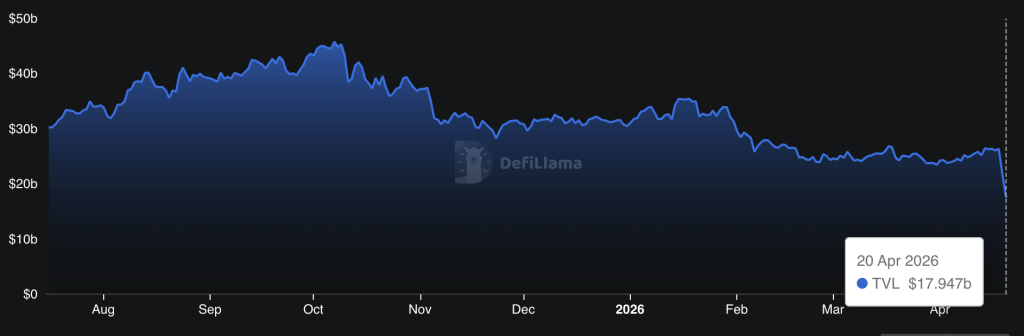
Aave crypto is bleeding. The DeFi lending giant has shed nearly 21% over seven days, with AAVE trading around $90–$91 after a weekend that exposed just how quickly contagion spreads through interconnected DeFi protocols.
Volume spiked 50.20% to $539.45M in 24 hours, but that’s panic volume, not accumulation. Whether this selloff represents a buying opportunity or the start of a deeper unwind depends entirely on what happens next with protocol confidence.
The incident that triggered the collapse began Saturday when hackers drained 116,500 rsETH tokens worth approximately $293 million from Kelp DAO’s LayerZero-powered bridge.
The stolen funds were posted as collateral on Aave v3 to borrow wrapped Ether, leaving roughly $195 million in bad debt on the protocol.
Crypto analytics platform Lookonchain flagged the largest withdrawals: MEXC pulled $431 million, Abraxas Capital followed at $392 million.
Aave’s total value locked collapsed from $26.4 billion to $17.94 billion, stripping it of the top DeFi protocol ranking it held going into the weekend. Curve Finance, Ethena, and BitGo’s Wrapped Bitcoin all paused LayerZero bridge usage as a precaution.
The broader macro environment for crypto was already fragile. Now AAVE faces a protocol-specific credibility crisis layered on top of market-wide pressure — a combination that rarely resolves quickly.
Discover: The best pre-launch token sales
Can AAVE Crypto Price Recover to $120 This Week?
The honest answer: not easily. AAVE sits near $91 on major exchanges, down roughly 6% on Kraken in 24 hours and over 20% on the week, a significant deviation from the broader market’s comparatively mild -0.50% seven-day performance.
The all-time high of $661.69 feels like a different asset entirely from this distance (54% drawdown at current levels).
Volume surging alongside price decline is a classic distribution signal. It suggests sellers are finding liquidity into any bounce rather than buyers absorbing the dip with conviction.
The $90–$92 zone is acting as immediate support; a clean break below $89, which AAVE crypto briefly touched during the initial panic, opens the door toward the $78–$80 range where structural demand last materialized.
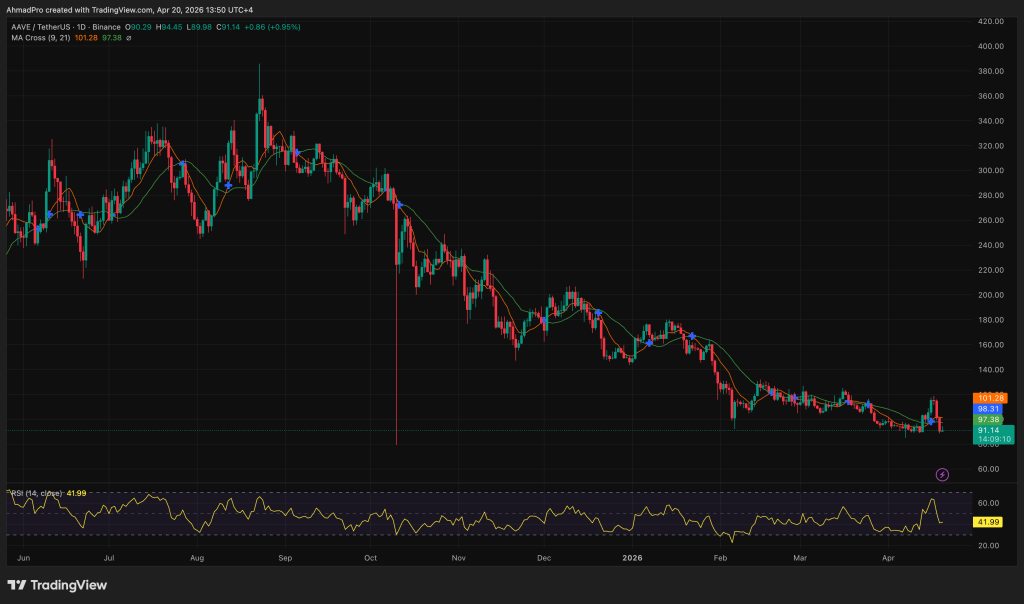
More realistically though, it usually takes time to rebuild trust after something like this, so price likely sits between $88 and $100 while the market processes the damage and watches how users react, which keeps any recovery slow and capped.
The real risk is if capital keeps leaving, because if TVL drops under $15B and withdrawals continue, that pressure shows up directly in price, and once $85 breaks, the structure weakens fast and opens the door toward $70.
Discover: The best crypto to diversify your portfolio with
Maxi Doge Eyes Early-Mover Upside as AAVE Absorbs Protocol Shock
Watching an established DeFi blue chip shed $8 billion in TVL over a weekend raises a reasonable question: when protocol risk can wipe out gains this fast, where does smart money rotate for asymmetric upside? The answer, increasingly, is early-stage presales, where market cap is microscopic, and the exploit risk of a $26B lending protocol simply doesn’t apply.
Maxi Doge ($MAXI) is one of the more unconventional entries in the current presale cycle — a meme token built on Ethereum that leans hard into the 1000x leverage trading mentality through what it calls “Lever King Culture.”
The project has raised $4,745,091.23 at a current presale price of $0.0002814, with dynamic staking APY available to participants.
Features include holder-only trading competitions with leaderboard rewards and a Maxi Fund treasury allocated to liquidity and partnerships.
The gym-bro branding is deliberate, viral meme marketing has driven outsized returns in this cycle before (Dogecoin, Shiba Inu, and their descendants all started somewhere).
Risk is real: meme tokens are high-volatility, high-failure-rate instruments. DYOR is not optional here. For those with risk appetite suited to early-stage exposure, research Maxi Doge before the presale window closes.
The post A $293 Million Hack Wiped $8 Billion From Aave Crypto TVL: Is the DeFi Protocol in Crisis? appeared first on Cryptonews.
Onchain investigator ZachXBT publicly challenged MemeCore on Monday to justify the valuation and supply distribution of its M token, asking the project to explain its market cap and why “insiders hold >90% of supply.”
“Please provide a single data point to support your $6B mkt cap at a top 20 token and why insiders hold >90% of supply,” wrote ZachXBT in a Monday X response to Memecore, a project advertising itself as the layer–1 blockchain for the “Meme 2.0 economy.”
The comments add fresh scrutiny to MemeCore after a sharp rally, though live valuation metrics differed across major trackers. CoinMarketCap ranked the token No. 21 at about $4.33 billion on Monday, while CoinGecko ranked it No. 20 at about $5.97 billion.
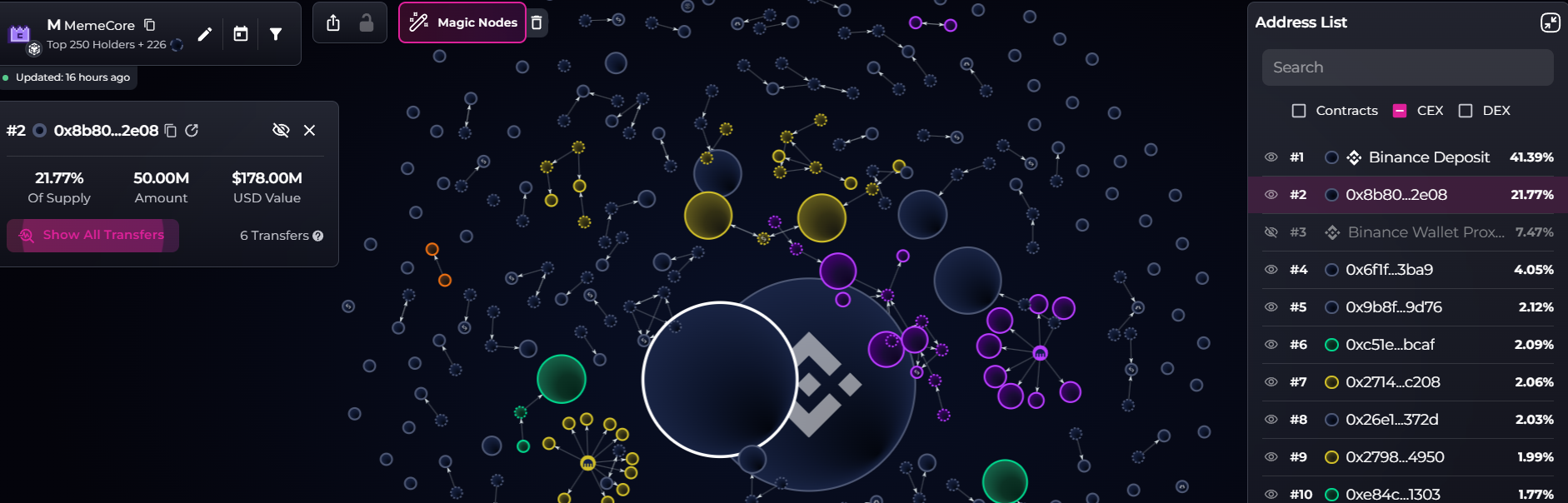
The second-largest holder, wallet “0x8b8,” held 50 million M tokens currently worth $178 million, representing 21.77% of the supply, according to blockchain data visualization platform Bubblemaps, which listed the Binance Deposit address as the largest holder with 41.3% of the supply.
However, the token holdings don’t necessarily point to coordinated activity, according to Bubblemaps blockchain data analyst 0xToolman, who told Cointelegraph that the “pattern looks like team holdings,” which may not be in circulation yet.

Cointelegraph has contacted MemeCore for comment on the matter and details surrounding the token’s distribution.
ZachXBT has not posted definitive blockchain data proving that 90% of the supply is held by insiders, but pledged to investigate the token after the recent meltdown of the Rave DAO (RAVE) token sent shockwaves across the industry.
Related: Suspected insider wallets rack up $1.2M betting on ZachXBT’s Axiom exposé
RAVE token’s 90% meltdown sparks insider concerns
On Saturday, ZachXBT accused RaveDAO of orchestrating a pump-and-dump scheme, citing concentrated token holdings and suspicious exchange flows, after the RAVE token soared from $0.25 to nearly $28 within days before crashing over 80%.
RaveDAO has denied any role in the token’s surge and collapse, Cointelegraph reported on Sunday. Both Binance and Bitget confirmed they are reviewing the situation.
The RAVE token fell 92% during the past week and was trading above $0.69 at 12:46 p.m. UTC on Monday, CoinMarketCap data shows.

ZachXBT claimed that RAVE was just one of several tokens spotting “manipulation” signs on major exchanges.
“Other projects with highly questionable price action recently include: SIREN, MYX, COAI, M, PIPPIN, RIVER,” he wrote in a Saturday X post, pledging to investigate these price movements to identify the responsible parties.
Magazine: Meet the onchain crypto detectives fighting crime better than the cops
Crypto World
LayerZero Post Mortem Shows Lazarus Group Stole $290M From KelpDAO via RPC Node Compromise


North Korea’s Lazarus Group exploited a single-verifier LayerZero setup to drain $290M in rsETH on April 18 by compromising RPC infrastructure and poisoning the bridge’s data feeds.
On April 18, 2026, North Korea’s Lazarus Group (TraderTraitor unit) executed a $290M theft from KelpDAO’s rsETH bridge by compromising two LayerZero RPC nodes that feed data to the protocol’s verifier. The attacker hacked the nodes, deployed malware to feed false transaction data exclusively to LayerZero’s verifier while maintaining honest responses to monitoring systems, then DDoS’d legitimate RPC endpoints to force the verifier to rely on the poisoned nodes. Once the verifier signed off on a fabricated transaction, the bridge released $290M in unbacked rsETH before the malware self-destructed and deleted all traces.
LayerZero Labs confirmed KelpDAO used a 1-of-1 DVN (Decentralized Verifier Network) setup—a single point of failure the protocol had repeatedly warned against—limiting contagion to KelpDAO’s bridge with no reported impact on other assets. Security researchers noted the attack vector raises unanswered questions about how the attacker obtained the RPC node list and achieved root-level access to production infrastructure, suggesting either a prior unreported LayerZero compromise, a breached deployment pipeline, or insider access rather than a Kelp-side misconfiguration.
Sources: LayerZero
This article was generated automatically by The Defiant’s AI news system from publicly available sources.
Crypto World
DeFi Contagion Spreads Beyond Aave as LayerZero, Lido, Ethena Suffer Sharp Declines: Santiment


AAVE, ZRO, LDO, and ENA tokens plunged 10–22% as market repriced risk across DeFi protocols exposed to a bad debt event, with LayerZero priced as equally culpable as the originating lender.
DeFi tokens suffered steep declines over a recent window as contagion from a bad debt event spread across multiple protocols. AAVE declined 22%, LayerZero’s ZRO fell 22%, Lido’s LDO dropped 19%, Ethena’s ENA slid 13%, and Compound’s COMP lost 10%, according to Santiment. ETH remained flat over the same period, highlighting the sector-specific pressure on DeFi assets.
LayerZero, which operated the bridge connecting the affected protocols, was repriced by markets as equally culpable to Aave, which held the bad debt. Notably, Ethena—which held zero exposure to the underlying rsETH collateral—still experienced a 13% decline, suggesting contagion fears extended to protocols with no direct exposure. Compound, with only minor rsETH exposure, fell 10%, indicating cascading risk reassessment across the broader DeFi ecosystem.
Sources: Santiment
This article was generated automatically by The Defiant’s AI news system from publicly available sources.

TLDR:
- Nike stock has fallen 76% from its 2021 all-time high of $179.10, now trading between $42 and $46 per share.
- China sales are projected to drop 20% as local brands like Li-Ning capture the mid-to-high-tier footwear market.
- Converse recorded a 35% revenue plunge, reflecting Nike’s broader loss of relevance in lifestyle and streetwear segments.
- Tim Cook and Director Bob Swan purchased a combined $3.5M in Nike shares, signaling boardroom confidence at decade lows.
Nike stock has fallen to its lowest level in over a decade, trading between $42 and $46 following an April 2026 earnings shock.
The decline represents a 76% drop from its 2021 all-time high of $179.10, erasing 12 years of gains for long-term shareholders.
Meanwhile, board members are purchasing shares at these levels, creating a split between public sentiment and insider conviction.
Overseas Pressure and Brand Challenges Drive Nike’s Decline
Nike faces a projected 20% sales drop in China, one of its highest-margin markets. The shift stems from Guochao, a cultural movement among Chinese millennials and Gen Z embracing domestic brands and national identity.
Local competitor Li-Ning sold over 26 million pairs of professional running shoes last year, moving firmly into the mid-to-high-tier segment.
As Li-Ning and similar brands gain ground, Nike’s premium positioning in China is becoming harder to defend. Analyst Ali Charts observed on X, noting that Nike is “currently weathering its most significant structural challenge since 2014,” with the stock retreating to a decade-low and erasing 12 years of gains for long-term holders.
The pressure is not limited to performance footwear. Converse, Nike’s lifestyle subsidiary, recorded a 35% revenue plunge, pointing to a broader loss of cultural relevance in the casual and streetwear segments.
This decline serves as a clear signal that the market is moving away from the classic aesthetics Nike has long relied on.
In response, CEO Elliott Hill has moved to rebuild wholesale partnerships with retailers like Foot Locker and Dick’s Sporting Goods.
This shift reverses the Direct-to-Consumer strategy that previously supported Nike’s higher profit margins. While it helps clear inventory, it marks a structural retreat for the brand.
Board Members Buy Shares as Stock Hits Oversold Territory
On the technical side, Nike’s monthly RSI has reached its most oversold reading since the company went public. Historically, Nike’s corrections have ranged from 24% to 73%. The current 76.5% drawdown from its all-time high is the steepest in company history.
Ali Charts further noted that the stock appears to be in the “Anger Phase” of the market cycle. This is the period when negative news feels heaviest, often just as a price floor begins forming. The zone between $35 and $42 is being watched as a potential long-term support area.
Against this backdrop, two Nike board members made notable open-market purchases. Tim Cook, Apple’s CEO and a Nike director, bought approximately $3 million in Nike shares. Director Bob Swan added $500,000 to his position at similar price levels.
Insider purchases of this size, made during a period of broad pessimism, tend to attract attention from value-oriented investors. They suggest that those closest to the company view current challenges as correctable rather than permanent.

LayerZero has attributed the Kelp DAO exploit to North Korea’s Lazarus Group, identifying a single-point-of-failure in the protocol’s verifier setup as the technical root cause that made the attack possible.
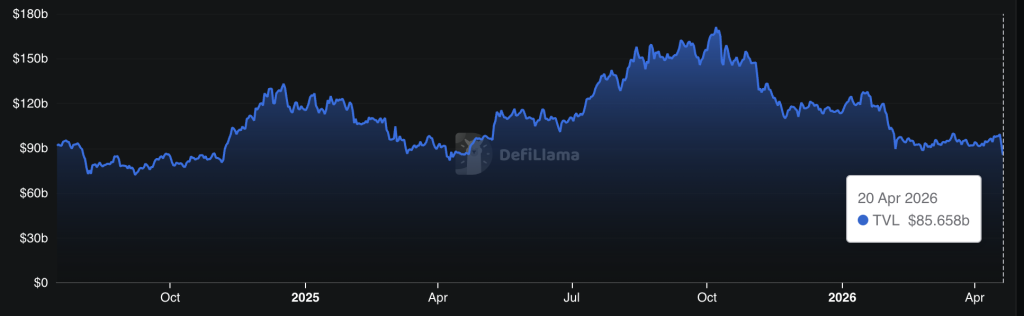
The breach drained an estimated $292 million from Kelp DAO’s rsETH pool on April 18, marking the largest DeFi hack of 2026 to date – and sent total value locked across the DeFi sector down 7% in 24 hours to $85 billion, according to DefiLlama.
The attribution lands not as a closed finding but as a probabilistic claim: LayerZero says Lazarus is the likely perpetrator, not a confirmed one. What that distinction means for the protocol, its users, and the cross-chain security model is the question this story answers.
- Attribution source: LayerZero conducted the post-incident investigation and named North Korea’s Lazarus Group – specifically the TraderTraitor subgroup – as the likely perpetrator.
- Technical root cause: Kelp DAO operated a 1-of-1 DVN (single decentralized verifier node) setup, ignoring LayerZero’s repeated recommendations for multi-verifier redundancy.
- Exploit amount: Approximately $292 million drained from Kelp DAO’s rsETH pool; no LayerZero protocol code or private keys were compromised.
- Market impact: DeFi TVL fell 7% in 24 hours to $86 billion following the incident.
- Response: LayerZero decommissioned affected RPC nodes and restored full DVN operations; law enforcement collaboration is ongoing for fund tracing.
- Watch: Whether Kelp DAO announces a compensation mechanism and whether additional cross-chain protocols operating single-DVN configurations move to remediate before the next attack.
Discover: The best pre-launch token sales
LayerZero’s Kelp DAO Lazarus Findings: What a Single-Point Failure Actually Means in Cross-Chain Architecture
The exploit’s mechanism was multi-step and precise. Attackers poisoned the RPC infrastructure feeding LayerZero’s decentralized verifier network, then launched a DDoS attack designed to force failover to compromised backup nodes.
With the verifier network redirected, the system validated fictitious cross-chain transactions, and $292 million in rsETH exited Kelp DAO’s pool before the fraud was detected.
The critical enabler: Kelp DAO ran a 1-of-1 DVN configuration, meaning a single verifier node stood between the protocol and catastrophic failure. LayerZero had flagged this architecture as inadequate – multiple times, according to the investigation – and recommended a multi-DVN setup consistent with industry best practices for redundancy. Kelp DAO did not act on those recommendations.
A multi-DVN setup would have required attackers to compromise several independent verification nodes simultaneously, a substantially harder technical lift. The 1-of-1 setup collapsed that barrier entirely. As Ripple CTO David Schwartz put it on X: “The attack was way more sophisticated than I expected and aimed at LayerZero infrastructure taking advantage of KelpDAO laziness.”
LayerZero’s response was surgical: the team decommissioned all affected RPC nodes post-incident and fully restored DVN operations without broader contagion to other protocols using the same infrastructure. No LayerZero protocol code was compromised. No private keys were exposed. The failure was architectural, not foundational – a distinction that matters enormously for the protocol’s credibility but does nothing to recover the $292 million.
Why North Korea Attribution Changes the Threat Model for All of DeFi
LayerZero’s Lazarus Kelp DAO attribution, framed as likely, not confirmed, is consistent with an established and accelerating pattern.
The TraderTraitor subgroup, a known Lazarus operational unit, was preliminarily identified in the forensic analysis. LayerZero is actively collaborating with global law enforcement on fund tracing, suggesting the attribution carries enough evidentiary weight to involve state-level investigative resources.
Lazarus has been tied to some of the largest crypto thefts on record, including the $625 million Ronin Network hack in 2022 and a string of DeFi protocol exploits that have collectively funneled billions into DPRK’s weapons programs, according to U.S. Treasury and UN assessments.
North Korea’s crypto operations extend well beyond direct exploits – the regime has also embedded operatives inside Web3 companies under fabricated identities, a parallel track that widens the attack surface beyond infrastructure alone.
Cross-chain protocols are structurally attractive targets for this class of actor. They sit at high-value junctions between multiple chains, often carrying pooled liquidity that dwarfs any single application’s balance, and their security depends on verifier networks that can become single points of failure when misconfigured. RPC poisoning as a tactic against verifier networks represents a novel escalation – one that security researchers say is now documented and replicable.
Discover: The best crypto to diversify your portfolio with
The post LayerZero Says Lazarus Group Likely Behind Kelp DAO Exploit appeared first on Cryptonews.


Tangem Pay lets users spend USDC directly from their self-custodial Tangem wallets, settling all transactions on Polygon.
Switzerland-headquartered hardware wallet company Tangem today announced the global rollout of its retail payments product, Tangem Pay, per a press release shared exclusively with The Defiant.
The new feature lets Tangem wallet users spend stablecoin USDC anywhere where Visa is accepted, using virtual Visa cards that can be added to Apple Pay and Google Pay.
The wallet manufacturer also announced today that it is partnering with Polygon for the new product, with the blockchain providing on-chain settlement for all transactions.
As of today, Tangem Pay is available to users in the U.S. (excluding some states), Latin America, and select countries in the Asia-Pacific region. The global rollout follows an early-access phase for waitlisted users that began in November, the press release notes.
Tangem is a self-custodial hardware wallet founded in 2017. Unlike crypto hardware wallet giants Trezor and Ledger, Tangem only offers NFC-powered devices for crypto storage, which come in two forms: a card that’s about the size and shape of a bank card, as well as a wearable ring.
How It Works
To pay with Tangem Pay, users need to convert funds they want to spend into USDC first, before transacting, the firm clarifed to The Defiant. “Over time, we will expand supported assets and settlement options,” Tangem Pay CEO Marcos Nunes told The Defiant.
Currently, the wallet only lets users create virtual Visa cards that they can add to payment services like Apple Pay. But the firm plans to launch physical cards as well.
“A large part of the world still relies on physical cards, and we want to support that fully,” said Nunes. Tangem Pay’s CEO told The Defiant that the physical Visa card launch is expected this year.
Why Polygon?
Tangem said that the firm selected Polygon for its transaction speed, predictable fees, and ability to handle the high transaction volumes required for global payments. “Payments are a scale game, not a theory exercise,” Nunes told The Defiant, continuing, “You need near-zero fees, fast finality, and reliability under load. Polygon delivers that today in a way that supports real daily spending.”
Nunes also added, “We are not dogmatic about chains. This is an infrastructure decision. If something better emerges, we will adapt.”
Per the press release, Polygon will cover gas fees for users, at least for the initial rollout period. There are no fees from Tangem’s side, Nunes clarified to The Defiant. “It should feel like using money in a regular account.”
Aishwary Gupta, head of global business development at Polygon Labs, said in a statement: “With Polygon as the settlement layer, Tangem Pay makes self-custody practical for real-world spending, combining the transparency of blockchain with the speed and reliability users expect.”
Polygon is an Ethereum sidechain with $1.27 billion in total value locked in DeFi across 775 protocols, per DefiLlama. That makes it the 11th-largest chain in DeFi by TVL, while it’s currently the 4th-largest chain by 24-hour active addresses.
In January, Polygon Labs announced its acquisition of two U.S. regulated crypto companies, Coinme and Sequence, adopting their licenses and enabling Polygon’s operations as a regulated payments platform across 48 U.S. states.
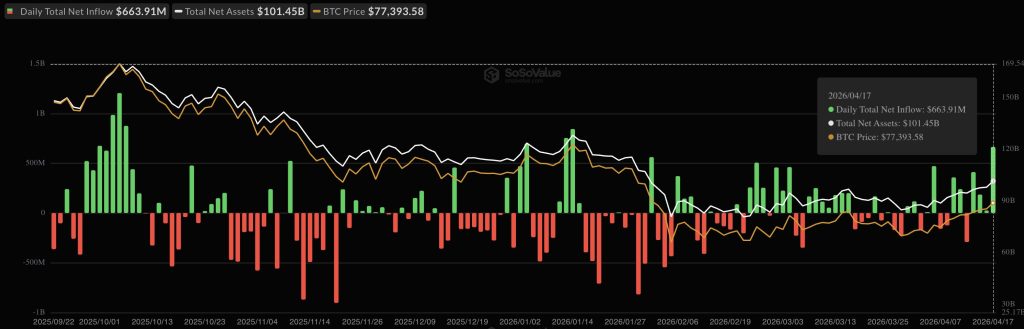
Spot Bitcoin ETFs logged nearly $1 billion in weekly net inflows last week, their strongest seven-day stretch since mid-January, per CoinGlass flow data.
BlackRock’s IBIT alone absorbed $612 million of that total, confirming institutional concentration in the dominant fund. The core question now: does this flow momentum translate into durable price support, or does tactical resistance cap the rally again?
Year-to-date Bitcoin product inflows have turned positive for the first time since January, a threshold Bloomberg ETF analyst Eric Balchunas flagged as signaling “extraordinary institutional acceptance” of Bitcoin as an asset class.
Total net assets across all U.S. spot Bitcoin ETFs surpassed $101 billion by Friday’s close, with daily trading volumes approaching $4.8 billion.
- Weekly inflows: Nearly $1 billion – highest since mid-January
- IBIT dominance: BlackRock captured $612 million of total flows
- Total net assets: Surpassed $101 billion by end of week
- YTD flows: Turned positive for first time since January per Bloomberg’s Balchunas
- Global share: U.S. institutions captured 96.4% of $1.1 billion in global crypto product inflows
- ETH ETFs: $275 million net inflows; XRP ETFs added $11.75 million; Solana lost $5.6 million
Discover: The best crypto to diversify your portfolio with
What $1 Billion in Weekly Bitcoin ETFs Inflows Actually Signals
The weekly flow breakdown reveals a Friday-heavy pattern: $663.9 million hit on Friday alone, roughly two-thirds of the total, with Tuesday contributing $411.5 million and Wednesday adding $186 million. Thursday brought just $26 million, and Monday registered a $291 million outflow. That volatility in daily flows suggests opportunistic accumulation rather than a steady institutional drip.
IBIT’s $612 million weekly haul pushed its market cap to $159.22 billion, placing it among the world’s largest ETFs by assets. Fidelity’s FBTC also contributed meaningfully to inflows, while Grayscale’s GBTC continued to bleed – a split that reflects sustained conviction in lower-fee products and residual exit pressure from legacy holders.
U.S. institutions captured 96.4% of global crypto product inflows last week, absorbing $1.06 billion of a $1.1 billion global total. That concentration matters: it signals that Bitcoin demand is increasingly centralized in regulated U.S. vehicles, making ETF flow data the most reliable leading indicator for near-term BTC price direction.
If weekly inflows sustain above $750 million, BTC’s support floor around current levels strengthens materially. If flows revert toward the $200–$300 million range seen during January’s plateau, the bid thins out fast.
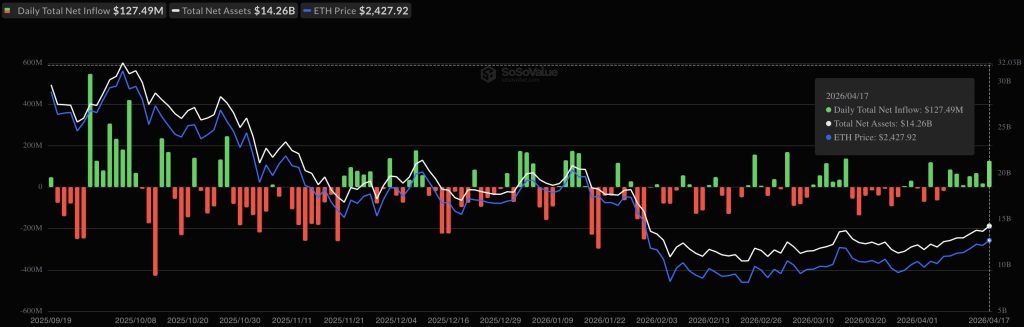
Ethereum spot ETFs pulled in $275 million net last week, XRP ETFs added $11.75 million, and Solana shed $5.6 million; this was selective altcoin rotation, not a broad risk-on flush.
Discover: The best pre-launch token sales
The post Spot Bitcoin ETFs Near $1 Billion in Weekly Inflows, Best Stretch Since Mid-January appeared first on Cryptonews.
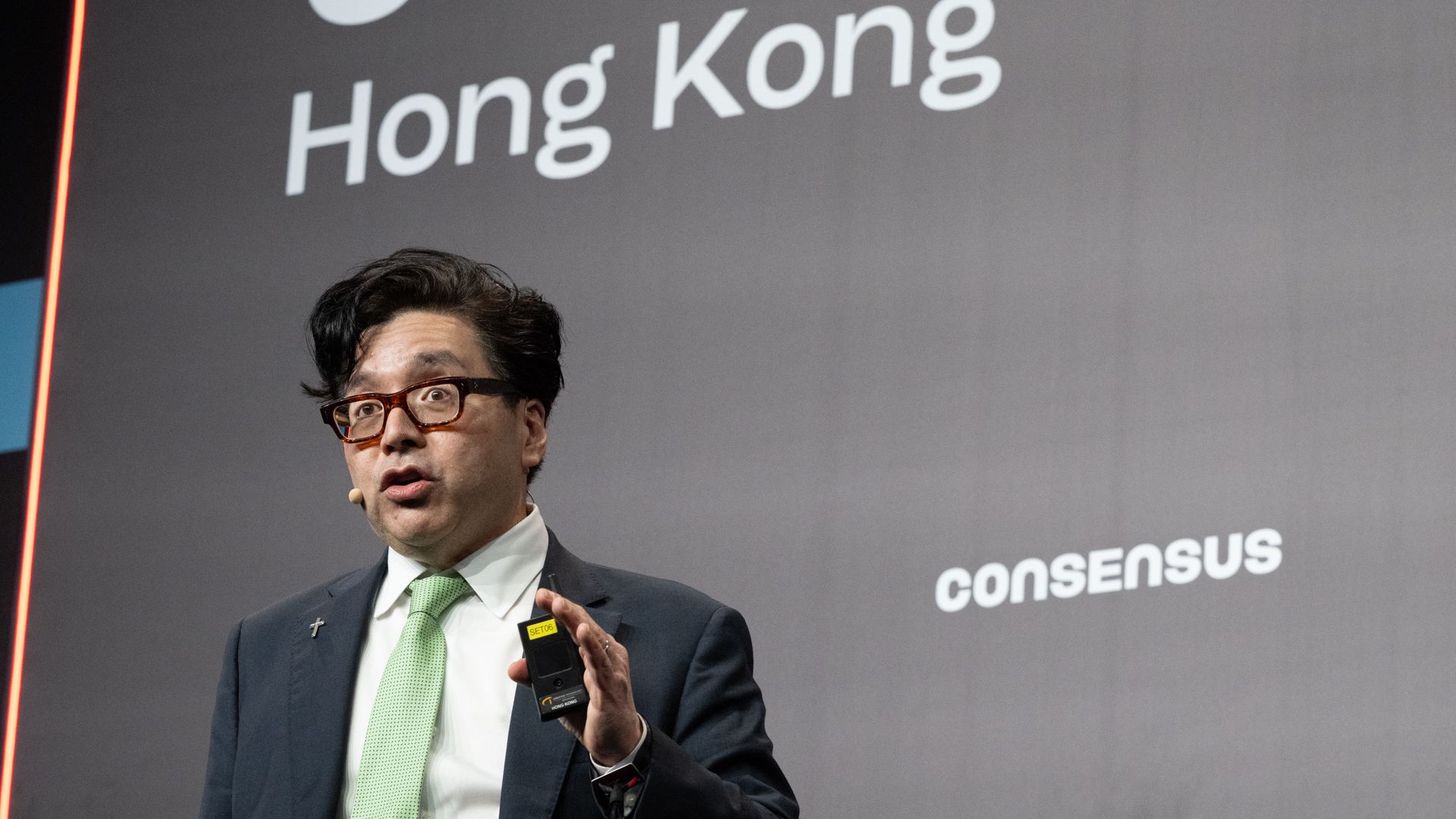
BitMine Immersion Technologies (BMNR), the largest Ethereum-focused digital asset treasury firm, sped up its crypto purchase pace as chairman Tom Lee sees growing signs of the crypto “mini-winter” ending.
The firm reported Monday it acquired 101,627 ether (ETH) last week, its largest weekly haul since December 15. The purchase, worth roughly over $230 million at current ETH prices, lifted BitMine’s total holdings to 4.97 million ETH.
The move comes as most digital asset treasuries — except Michael Saylor’s bitcoin-focused Strategy (MSTR) — have slowed or halted buying in recent months. BitMine remains among the last large-scale buyers of ether-focused treasuries, continuing to provide a steady source of demand for ETH.
BitMine’s total crypto and cash holdings stand at $12.9 billion. In addition to its ETH treasury, the firm holds 199 bitcoin, $1.12 billion in cash and equity stakes including investments in Beast Industries and Eightco Holdings.
Chairman Thomas Lee said the firm sees signs that the recent downturn is nearing an end, pointing to ETH’s rebound and broader market dynamics.
“Bitmine has maintained the increased pace of ETH buys in each of the past four weeks, as our base case ETH is in the final stages of the ‘mini-crypto winter,’” Lee said.
He added that ether has risen sharply from its early February lows and has outperformed equities since the start of the Iran conflict, supported by demand tied to tokenization and AI-related use cases.
BitMine has also continued expanding its staking operations. The firm has staked more than 3.3 million ETH, or about two-third of its holdings, generating roughly $221 million in annualized revenue.


Michael Saylor’s Strategy (MSTR) added 34,164 bitcoin to its treasury over the past week at an average price of about $74,395 per coin, for a total cost of roughly $2.54 billion, according to a Monday filing.
The purchase brings the company’s total holdings to 815,061 BTC, acquired for approximately $61.56 billion at an average cost basis of $75,527. With BTC currently trading at around $75,000, Strategy’s stash is currently break even. Strategy is the world’s largest publicly-listed bitcoin holder. It began acquiring BTC as a balance sheet asset in 2020.
Last week’s acquisitions were funded by $2.2 million raised through sales of the company’s preferred stock, Stretch (STRC), and $366 million from common stock offerings.
MSTR shares are down more than 2.5% in pre-market trading.

Company discards 32GB server RAM sticks worth $20,000

Raoul Pal: A Major Whale Just Went ALL IN On Crypto

Greggs fans learn ‘best time’ to visit for fresh bakes – and it’s not early morning


-

 Crypto World7 days ago
The SEC Conditionalises DeFi Platforms to Be Avoided for Broker Registration
-

 NewsBeat6 days ago
Trump and Pope Leo: Behind their disagreement over Iran war
-

 Fashion3 days ago
Weekend Open Thread: Theodora Dress
-

 Crypto World7 days ago
SEC Signals Exemption for Crypto Interfaces From Broker Registration
-

 News Videos5 days ago
Secure crypto trading starts with an FIU-registered
-

 Sports3 days ago
NWFL Suspends Two Players Over Post-Match Clash in Ado-Ekiti
-

 Crypto World6 days ago
SEC Proposes Certain Crypto Interfaces Don’t Need to Register as Brokers
-

 Business23 hours ago
Powerball Result April 18, 2026: No Jackpot Winner in Powerball Draw: $75 Million Rolls Over
-

 Crypto World3 days ago
Russia Pushes Bill to Criminalize Unregistered Crypto Services
-

 Politics3 days ago
Palestine barred from entering Canada for FIFA Congress
-
 Business4 days ago
Creo Medical agree sale of its manufacturing operation
-

 Politics1 day ago
Zack Polanski demands ‘council homes not luxury flats for foreign investors’
-
 Entertainment6 days ago
Brand New Day’ Footage Reveals the Devastating Impact of ‘Now Way Home’
-

 Crypto World3 days ago
Russia Introduces Bill To Criminalize Unregistered Crypto Services
-

 Tech6 days ago
Microsoft adds Windows protections for malicious Remote Desktop files
-
 Entertainment7 days ago
Karol G’s ‘Ultra Raunchy’ Coachella Set Gave ‘Satanic Vibes’
-

 Sports7 days ago
Aaron Judge says Yankees need to ‘simplify’ approach amid offensive slump
-

 Entertainment7 days ago
How Babylon 5 Turned Brief Side Story Into Emotional Masterpiece
-

 Tech7 days ago
What was the first ransomware attack to demand payment in Bitcoin?
-

 Tech5 days ago
‘Avatar: Aang, The Last Airbender’ Leaked Online. Some Fans Say Paramount Deserves the Fallout
You must be logged in to post a comment Login