

Crypto World
Bitcoin Rebounds From 21-Month Low as Leverage Data Warns of Risk

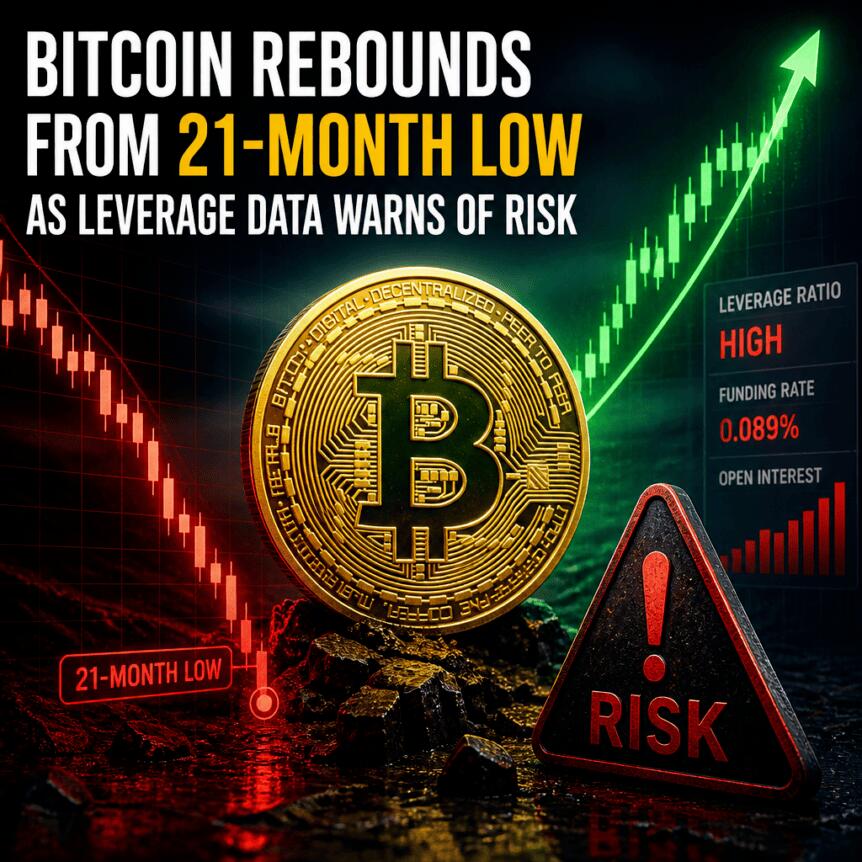
Bitcoin rebounded on Wednesday after tagging a 21-month low, with BTC rising as high as $60,200 and gaining roughly 2.7% over the past 24 hours from earlier losses. The bounce lifted major alternatives as well: Ether (ETH) rose about 3%, while Solana (SOL) climbed roughly 4.85%.
Still, the recovery is happening against a backdrop of persistent caution. According to the Crypto Fear & Greed Index maintained by Alternative.me, sentiment is around 11 out of 100—an “Extreme Fear” reading—suggesting many market participants remain nervous about what comes next. Even with today’s uptick, Bitcoin is still down about a third since the start of the year.
Key takeaways
- Bitcoin’s intraday bounce followed a fresh 21-month low near $57,737, but broader confidence remains weak with the Fear & Greed Index in “Extreme Fear.”
- US spot Bitcoin ETF flows have been net negative recently, including a reported $4.5 billion outflow in June—the largest since the funds launched—indicating cautious institutional positioning.
- On-chain data points to strength from long-term holders, with an estimated addition of roughly 270,000 BTC over the past two weeks.
- Funding rates have stayed positive for three straight days, implying leverage is still leaning toward long exposure even as price remains under pressure.
- Liquidation risk appears heaviest in the $57,000 to $60,500 band, meaning sustained moves beyond roughly $61,000 or below $56,000 could accelerate volatility.
Fear remains elevated even after the rebound
Market pricing today reflects a tug-of-war between dip-buyers and the fear of further downside. The latest sentiment readings underline that many traders are still operating defensively, despite Bitcoin’s recovery attempt from the yearly low area.
This matters because fear can shape how quickly the market absorbs negative news. When sentiment is extremely negative, rebounds often face selling pressure not just from those who missed the decline, but from participants who are using rallies to reduce risk. The result is a market that can rally sharply—then struggle to build follow-through.
ETF outflows versus long-term accumulation
One of the clearest contrasts in the data is between institutional product flows and on-chain holder behavior.
US spot Bitcoin exchange-traded funds (ETFs) have seen more money leaving than entering in recent weeks, including a reported total outflow of $4.5 billion in June, described as the largest since the funds began launching. That pattern typically suggests that, at least for now, some traditional investors are not convinced enough to add exposure during a drawdown.
At the same time, on-chain indicators show long-term holders accumulating. According to the on-chain data referenced in the analysis, long-term wallets added about 270,000 BTC over the past two weeks. In crypto market interpretation, that kind of accumulation is often read as evidence that bigger investors view the recent decline as an opportunity rather than a prompt to sell.
The tension between these two signals—net outflows from ETFs versus accumulation by long-term holders—helps explain why the market can bounce without fully transitioning into a sustained uptrend. Flows may stay cautious while deeper capital continues to build positions more quietly.
Funding rates stay positive as leverage crowds in
Another point to watch is leverage. The analysis highlights that Bitcoin’s funding rate has remained positive for three consecutive days. In practical terms, that means the prevailing derivatives positioning has continued to lean toward bets that prices will rise.
Positive funding while spot prices are weak can be a volatility risk. When one side of the market becomes overcrowded with leveraged longs, a further downside move can force liquidations that amplify the drop—especially if price breaks key support levels. Conversely, if the market stabilizes or turns upward while longs remain funded, the same mechanism can also support rallies through short-covering and stop-trigger effects.
As of now, the key point is that leverage appears active, but price confirmation has not yet clearly followed through in a way that would suggest the market has fully flipped from fear to conviction.
Liquidations cluster around current trading levels
Where liquidation risk sits is often central to understanding how quickly price can move during stressful periods. Using a three-exchange, three-day liquidation heatmap (as cited in the analysis, sourced from Hyblock), the highest concentration of leveraged positioning appears roughly between $57,000 and $60,500. That zone closely overlaps with the trading range Bitcoin has held since late June.
Above that area, the density of liquidation risk thins out noticeably between approximately $61,000 to $62,000. Below, a similar reduction appears around $55,000 to $56,000. This distribution suggests that a move breaking out of the present range could encounter less immediate “magnet” pressure from nearby liquidations—while a move that stays within or slightly beyond the clustered zone could lead to sharper, more abrupt price reactions.
In the near term, the analysis argues that most forced unwind potential sits close to current prices rather than far away. That is why decisive movement beyond roughly $61,000 to the upside—or below about $56,000 on the downside—could create room for accelerated liquidation-driven volatility.
Looking ahead to the next 24 hours, the outlook described here is neutral. A meaningful change would likely require stronger evidence that leveraged positioning is both rising and aligning with a rising spot price—an interaction the analysis notes has not clearly emerged yet.
Traders and investors should monitor whether ETF flow weakness persists alongside continued long-term accumulation, and whether derivatives conditions evolve—particularly funding rate direction and liquidation clustering—as these factors together will determine whether this bounce becomes a trend or fades back into range-bound action.

Ethereum’s push to win broader institutional involvement just gained a new coordinating body. On Wednesday, a new independent nonprofit called Ethereum Institutional was launched with backing from Ether treasury companies BitMine Immersion Technologies and SharpLink, along with Joe Lubin and other contributors, aiming to build a more formal “front door” between Ethereum and mainstream financial firms.
The timing reflects a familiar tension in the market: Ethereum remains the leading platform for institutional-facing crypto use cases like stablecoins and tokenized real-world assets (RWAs), yet the ecosystem is also facing intensifying competition from other blockchains that are actively courting banks and asset managers.
Key takeaways
- Ethereum Institutional is designed to coordinate outreach to financial institutions with education, standards development, research, and industry events.
- The nonprofit plans to expand beyond early hubs including New York, London, Hong Kong, and Singapore to additional financial centers.
- Ethereum’s institutional narrative is supported by market concentration in stablecoins and tokenized RWAs, according to DeFiLlama and Token Terminal.
- Launches arrive while parts of Ethereum’s treasury-heavy constituency face ETH price pressure, underscoring how institutional strategy and token volatility remain intertwined.
- Industry observers link the new organizations to renewed efforts around Ethereum’s long-term ecosystem development alongside layer 1, layer 2, and DeFi.
A new “front door” for TradFi engagement
According to a Wednesday announcement from Ethereum Institutional on X (available at https://x.com/ethereuminsti/status/2072304960142729373?s=20), the group was created because the Ethereum ecosystem lacked what it described as a “credible, independent front door” for engaging financial institutions.
Ethereum Institutional says it intends to support institutional adoption by offering multiple layers of engagement: education for traditional finance participants, standards development work, industry research, and institutional events. The organization also signals an outward geographic push, with plans to go beyond its initial focus on New York, London, Hong Kong, and Singapore.
For investors and market participants, the practical value is less about a single announcement and more about what institutional firms typically need before they allocate resources: clear points of contact, consistent educational material, and credible pathways for discussing standards and risk. An independent nonprofit structure may also help reduce perceived conflicts of interest that can arise when outreach is perceived as coming directly from token-driven incentives.
Ethereum’s institutional use cases remain hard to ignore
While other networks have been increasingly vocal about winning institutional attention, the underlying activity on Ethereum continues to anchor the institutional narrative. The article’s data points emphasize that Ethereum retains strong market share in tokenized finance.
According to Token Terminal, Ethereum hosts nearly 58% of the tokenized RWA market. In parallel, DeFiLlama data cited in the report indicates Ethereum accounts for roughly half of the $311 billion stablecoin market—a scale that matters because stablecoins remain one of the most direct onchain interfaces for many financial institutions.
That dominance can influence how institutional outreach groups prioritize where to engage. Even if traders respond quickly to price moves, institutions often plan more slowly, following the liquidity and settlement rails that already exist. Ethereum’s concentration in these categories—stablecoins and tokenized RWAs—helps explain why an institutional coordination effort targeting mainstream finance is arriving now, rather than after a competitor has already established similar entry points.
ETH volatility adds urgency to the strategy
Institutional expansion is happening alongside continued uncertainty around ETH itself. The same report notes that Ether prices have been under pressure, weighing on the balance sheets of companies that hold large ETH treasuries.
It states that BitMine and SharpLink are both facing “sizable unrealized losses,” and references ETH trading around $1,620 at last check on Wednesday, with market cap data of $195.4 billion from CoinGecko (https://www.coingecko.com/en/coins/ethereum). It also points out that ETH had been above $4,000 as recently as Oct. 27.
For readers, this matters because institutional outreach and token performance are not independent variables. When large holders see drawdowns, it can shift internal priorities toward risk management, governance questions, and long-horizon development—yet it can also strengthen the case for structured engagement with traditional finance, where firms often expect clearer frameworks around custody, compliance, and operational reliability.
The report also cites 21shares, arguing that current asset prices have not fully reflected growing demand from portfolio managers, asset managers, and financial institutions.
Governance shake-ups and new ecosystem organizations
Ethereum Institutional’s launch comes while the Ethereum Foundation is undergoing internal changes. The report describes a broad organizational overhaul, including leadership turnover, internal debates over governance and development priorities, increased competition from other blockchains, and criticism tied to ETH market performance.
Earlier coverage referenced in the report notes that Hsiao-Wei Wang, co-executive director of the Ethereum Foundation, stepped down last month. It also highlights reported departures from the foundation this year and a restructuring that included laying off 20% of staff, as covered previously by Cointelegraph.
At the same time, the report frames the emergence of additional independent efforts as part of a broader shift: rather than consolidating all ecosystem-facing work under one umbrella, multiple specialized nonprofits are taking on distinct roles. It points to Ethlabs, launched in June by backers associated with Ethereum Institutional—also supported by BitMine, SharpLink, and Joe Lubin—described as a nonprofit research organization focused on advancing Ethereum’s scalability.
In other words, Ethereum Institutional appears to focus on institutional readiness and engagement, while Ethlabs targets technical R&D. The combination suggests a coordinated attempt to separate “market-facing trust building” from “protocol and performance development,” even as governance and staffing transitions continue within the Foundation itself.
Banking eyes: “commercialisation” as TradFi scales in
Standard Chartered’s Geoff Kendrick highlighted the potential overlap between these nonprofit efforts and Ethereum’s broader ecosystem roadmap. In a Wednesday note to clients cited in the report, Kendrick said the announcement—paired with the earlier launch of Ethlabs—has “direct positive implications for both Ethereum layer 1, layer 2s and the Ethereum originated DeFi protocols.”
Kendrick also pointed to the composition of the anchor funders, calling them “the three commercial giants in the Ethereum ecosystem,” and argued their expertise should help drive commercialization of Ethereum as “TradFi is entering at scale.”
Separately, the report notes Kendrick reaffirmed ETH price forecasts of $4,000 at the end of 2026 and $40,000 at the end of 2030—figures that remain predictions rather than commitments, but they reinforce the bank’s bullish framing around Ethereum’s institutional trajectory.
What to watch next is how Ethereum Institutional operationalizes its stated mission: which standards it prioritizes, what education or research outputs it produces, and how quickly it can translate outreach into measurable commitments from banks and asset managers. Equally important will be whether governance turbulence inside core institutions (like the Ethereum Foundation) stabilizes enough to ensure these new nonprofit tracks complement rather than compete with each other.


Several US states have tightened cryptocurrency ATM rules, with Tennessee and Georgia having brought new restrictions into force as bans and compliance measures continue to expand across the country.
Summary
- Tennessee has banned crypto ATMs while Georgia has introduced new operating limits and consumer protection rules.
- Indiana has already enforced a ban, Minnesota is set to follow in August, and similar proposals are advancing in Delaware and New Jersey.
- Growing state restrictions have added pressure on crypto ATM operators with some shutting down their business.
According to state laws that took effect on July 1, Tennessee has prohibited the installation and use of cryptocurrency ATMs, while Georgia has introduced new operating requirements that include transaction limits, customer warnings and refund obligations for certain fraud victims.
New rules enforced in Tennessee and Georgia
Under the Tennessee law signed by Governor Bill Lee in April, cryptocurrency ATMs and kiosks can no longer be installed or operated anywhere in the state.
Georgia has taken a different approach by allowing the machines to continue operating under stricter consumer protection rules. The law requires operators to cap the amount users can send, provide fraud warnings before transactions and, in certain cases, reimburse customers who were deceived by scammers.
These measures add to a growing list of state actions targeting crypto ATMs. Indiana’s statewide ban came into force in March, while Minnesota is scheduled to begin enforcing its own prohibition on Aug. 1. Delaware and New Jersey have also advanced legislation that would prohibit crypto ATMs, although those proposals have not yet become law.
Fraud complaints have remained central behind these legislative actions. According to previously released data from the FBI, the agency received 13,460 crypto kiosk complaints during 2025 involving more than $388.9 million in reported losses, with people over the age of 50 accounting for more than half of all complaints.
Outside the United States, similar concerns have emerged in Canada. Earlier this year, CBC News reported that the Canadian federal government proposed a nationwide ban on crypto ATMs after describing the machines as a major channel used by scammers to obtain money from victims and process illicit cash.
The proposal followed investigations cited by CBC News and earlier findings from the Financial Transactions and Reports Analysis Centre of Canada, which linked crypto ATMs to recurring fraud schemes.
As a result of these state actions, many crypto ATM operators have also come under financial strain. For instance, in May, Nasdaq-listed crypto ATM operator Bitcoin Depot filed for Chapter 11 bankruptcy protection after citing increasing regulatory requirements, litigation, and enforcement actions. The company had previously warned that changing state regulations could significantly reduce revenue before shutting down its ATM network during the bankruptcy process.

Key Points
- OpenAI is negotiating to provide the U.S. government with a 5% ownership position
- Sam Altman has engaged in discussions with President Trump, Treasury Secretary Scott Bessent, and Commerce Secretary Howard Lutnick
- Additional American AI companies may be requested to provide comparable equity stakes, though their participation remains uncertain
- This development aligns with Senator Bernie Sanders’ advocacy for public participation in AI-generated prosperity
- The current administration has previously acquired stakes in Intel, MP Materials, Lithium Americas, and Trilogy Metals
According to a Thursday report from the Financial Times, OpenAI is negotiating a deal that would grant the U.S. government a 5% ownership stake in the company. This initiative represents part of a strategic effort to strengthen relationships with the current administration.
Sam Altman, the company’s CEO, has conducted meetings with high-ranking government figures, including President Donald Trump, along with Commerce Secretary Howard Lutnick and Treasury Secretary Scott Bessent. Sources indicate Altman has also engaged in conversations with Senator Bernie Sanders regarding this equity arrangement.
Reuters was unable to independently confirm these details. Neither OpenAI nor the White House provided responses to inquiries.
Expanding the Framework for AI Profit Sharing
The equity offer extends beyond OpenAI alone. This framework could potentially require other U.S.-based artificial intelligence companies to provide comparable 5% stakes to the federal government, although whether these companies would voluntarily participate remains undetermined.
This proposal ties into larger discussions surrounding AI wealth distribution. Back in April, OpenAI suggested establishing a public wealth fund designed to provide every American citizen with ownership in AI-fueled economic expansion.
Sanders has actively championed legislation supporting these principles. His American AI Sovereign Wealth Fund Act could potentially reach approximately $7 trillion in value. He has consistently maintained that profits generated by AI technology should not remain concentrated among a limited circle of tech executives.
AI corporations are simultaneously encountering increased scrutiny from lawmakers concerning data center proliferation, workforce automation concerns, and cybersecurity vulnerabilities.
Government Equity Acquisitions Under Current Administration
This wouldn’t mark the first instance of the Trump administration securing ownership stakes in private enterprises.
During 2025, the government obtained a 9.9% ownership position in Intel through the purchase of 433.3 million shares priced at $20.47 per share. This $8.9 billion transaction was connected to CHIPS Act funding.
Given Intel’s current trading price near $127, that investment has grown to approximately $55 billion in value — representing roughly a 6.2x return on the initial capital deployed. Trump has publicly expressed regret about not negotiating for a more substantial ownership percentage.
The administration has also secured a 15% stake in rare earth mining company MP Materials, alongside a 10% position in Lithium Americas, a 10% stake in Trilogy Metals, and a “golden share” arrangement in U.S. Steel that provides veto authority over significant corporate decisions without traditional equity ownership.
These discussions with OpenAI remain in preliminary phases. As of Thursday morning, neither OpenAI nor the White House has provided official confirmation regarding these negotiations.



Metaplanet has added 2,823 Bitcoin to its treasury, raising its total holdings to 43,000 BTC while second-quarter revenue from its Bitcoin income business fell.
Summary
- Metaplanet bought 2,823 more Bitcoin, raising its total holdings to 43,000 BTC at an average overall cost of 15.3 million yen per coin.
- The company’s Bitcoin income business generated ¥1.747 billion in Q2 FY2026, down about 41% from the previous quarter.
- The latest purchase came as Metaplanet’s stock remained under pressure near its 52 week low, keeping investor focus on its Bitcoin NAV and capital strategy.
According to Metaplanet’s July 2 disclosure, the Tokyo-listed company purchased 2,823 BTC at an average price of 12.7 million yen per coin, lifting its total Bitcoin balance to 43,000 BTC. The company said its overall average purchase price now stands at 15.3 million yen per Bitcoin.
The latest purchase keeps Metaplanet among the largest public corporate holders of Bitcoin, alongside companies such as Strategy and Twenty One Capital. The company had ended the first quarter with 40,177 BTC, bought for roughly $4.18 billion at an average cost of $104,000 per coin.
Bitcoin income revenue slows in Q2
Alongside the new Bitcoin purchase, Metaplanet disclosed that its Bitcoin Income Generation business recorded ¥1.747 billion in operating revenue for the second quarter of the fiscal year ending December 31, 2026. The figure was down from ¥2.969 billion in the first quarter and far below the ¥4.242 billion recorded in the fourth quarter of FY2025.
The second-quarter result represented a decline of roughly 41% from the previous quarter and nearly 59% from the Q4 FY2025 peak, based on the company’s disclosed figures. First-half FY2026 revenue from the business stood at ¥4.717 billion.
On a trailing-twelve-month basis, Metaplanet reported ¥11.396 billion in Bitcoin Income Generation revenue, up from ¥10.780 billion in the previous quarter. The company uses the trailing-twelve-month figure to present the business over a longer period rather than through a single quarter.
The income business has become a closely watched part of Metaplanet’s Bitcoin strategy because the company has used Bitcoin options as part of its treasury operations. The latest numbers show weaker quarterly revenue even as the longer-period figure remained higher than the previous quarter.
Metaplanet has set a long-term target of holding 210,000 BTC by the end of 2027, equal to about 1% of Bitcoin’s fixed supply. At the end of June, the company said it planned to accumulate roughly 170,000 more Bitcoin to reach that target, including the latest purchase.
The company has continued adding Bitcoin even as its stock has come under pressure in recent weeks and was seen touching a 52-week low.
The valuation debate has centered on Metaplanet’s mNAV ratio, which compares the company’s market value with the value of its Bitcoin-backed asset base.
In comments published on June 9, CEO Simon Gerovich said management would strongly consider common share buybacks if the company traded below the value of its underlying Bitcoin holdings, though he said the comments were not a formal buyback announcement.
Beyond Bitcoin accumulation
Metaplanet is also moving to build services around its Bitcoin treasury. In a June 12 announcement, the company said it agreed to acquire Siiibo Securities for JPY 2.1 billion and convert the Japanese securities firm into a wholly owned subsidiary. The transaction is expected to close on July 13, after which Siiibo Securities will be renamed Metaplanet Securities.
Company documents described the deal as the first major acquisition under Project Nova, Metaplanet’s plan to build a Bitcoin-focused financial services ecosystem. The acquisition gives Metaplanet control of a Type I Financial Instruments Business Operator in Japan, which the company plans to use for Bitcoin-linked investment products and yield-focused offerings.
Metaplanet has also said it is pursuing Japan’s first listed perpetual preferred share product while building systems for recurring dividend distributions. The company has previously identified preferred shares, additional fundraising, and possible buybacks as capital allocation tools tied to its Bitcoin strategy.
[PRESS RELEASE – Florida, United States, July 1st, 2026]
Streamex is making commodities easy to acquire and trade, and the latest step puts it in regular brokerage accounts.
Buying gold has long meant choosing between two inconveniences: take physical delivery and pay to store and insure it, or buy a fund and accept the fees and market-hours trading that come with it. A run of moves by Streamex Corp. (NASDAQ: STEX) is aimed at dissolving that trade-off, and the latest landed on June 29, when the company announced its gold-backed, tokenized yield-bearing security $GLDY can now be bought through an ordinary brokerage account. This brings Streamex another step closer to offering exposure with modern features & benefits to the $13 trillion global gold market, like yield, 24/7 markets and digital self-custody.
A trusted broker now offers it like any stock or bond.
The collaboration brings together three names from different corners of finance. Firstly, Siebert Financial, a FINRA-member broker that oversees roughly $20 billion in client assets, handles distribution. Secondly, tZERO, a regulated digital-securities platform, custodies the asset. Finally, Streamex issues $GLDY to accredited investors. The practical effect is that a Siebert broker can now offer yield bearing tokenized gold to a client in the same conversation as any stock or bond, with no crypto onboarding, no wallet and no blockchain knowledge required.
Your gold pays you in more gold, so what you own grows.
The client gets a holding that grows. $GLDY pays a yield of up to roughly 3.5% per year, distributed monthly and paid in additional gold, generated by lending the underlying metal to commercial users such as jewellers, mints and refiners. Because the yield arrives as more of the asset, the holder’s quantity of digital gold increases over time.
“Our goal has always been to make gold something everyone can own, easily, in whatever form suits them. Putting $GLDY into a brokerage account is a major step toward that, because it meets traditional investors exactly where they already are. It’s one of several moves we’re making to bring digital commodities to a global audience.” Henry McPhie, Co-Founder & CEO, Streamex
Step by step, Streamex keeps opening commodities up to more people.
This brokerage play is the latest step in Streamex’s plan to bring digital gold and other tokenized commodities to the wider market. $GLDY launched in February, soon began paying its monthly yield in additional gold, and in May gained round-the-clock secondary trading through the Solana decentralized exchange Orca. Each move has opened the asset to a new kind of buyer and improved accessibility for existing holders: first direct buyers, then on-chain traders, and now the wealth-management and institutional clients a broker like Siebert serves.
Right now it is for accredited investors. The doors keep widening.
It is worth being clear about today’s boundaries. $GLDY is a regulated security available to verified accredited investors. The brokerage channel broadens who can reach it within that framework.
Soon anyone could buy yield-paying gold, through a broker or their own wallet.
That fuller opening is what Streamex says comes next. The company is building a tokenization platform for real-world assets, beginning with commodities, which anyone can access. Digital gold will be the first offering in its range of accessible commodities. This retail-focused digital gold will be able to trade across a number of decentralized exchanges (likely Jupiter, Meteora and Orca) allowing everyday investors to trade the commodity from anywhere in the world via their mobile phone or laptop. The retail version of $GLDY is also expected to pay the same yield, up to roughly 3.5% a year, so everyday buyers benefit the same way. The vision is one where owning gold is as simple as holding any mainstream asset, whether someone comes through a broker or through their own wallet.
What are the benefits of digital gold vs buying a gold ETF or physical gold?
- Most gold holders pay for the privilege. Streamex allows you to earn yield (in gold) instead, allowing investors to stack their asset over time by simply holding.
- Trade your asset anytime, anywhere.
- Trade your self-custodial asset in a permissionless manner with no broker required.
Gold is having a moment, and Streamex is building for both Wall Street and crypto users.
The market context gives the strategy room to run. Tokenized gold has been one of the fastest-growing categories in digital assets, and demand has broadened from crypto-native traders toward more conventional investors looking for a hard-asset hedge that can also generate a return. By distributing through a FINRA-member broker, custodying on a regulated platform, and building toward an open retail product at the same time, Streamex is trying to meet both audiences at once. There were over 26million active wallets on Solana last week (22nd-29th June 2026 – https://tokenterminal.com/explorer/projects/solana/metrics/active-addresses-monthly) and Solana RWA volume has increased sharply in 2026 (https://defillama.com/rwa/chain/solana) so far due to newly available products and platforms. Solana users already benefit from incredibly high speed trade finalisations with very low fees, so by bringing gold to the masses with Solana rails, commodities can be truly democratized.
AboutStreamex
Holding Streamex’s digital gold allows you to stack more gold, and soon almost anyone can buy it.
For investors, the through-line is accessibility. A year ago, a yield-bearing, blockchain-based gold product was a niche instrument for a small group. As of June 29 it sits, for eligible clients, alongside stocks and bonds at a mainstream broker, and Streamex says the next step is to make a version of it reachable by almost anyone. For more information visit Streamex.
This article is for general information only and is not investment, financial, legal or tax advice. $GLDY is offered as a security to verified accredited investors under Rule 506(c) of Regulation D and is a restricted security. Stated yields are variable, not guaranteed, and may change. References to a future retail product describe plans that are not yet available and are subject to change. Products may not be available in all jurisdictions. Trading digital assets involves significant risk, including loss of capital. Streamex Corp. is a publicly traded company (NASDAQ: STEX); statements about future products are forward-looking and involve risk.
The post Streamex is making digital gold accessible appeared first on CryptoPotato.
[PRESS RELEASE – Tortola, British Virgin Islands, July 1st, 2026]
VCT combines blockchain transparency, agribusiness intelligence, export-finance infrastructure and real-world asset tokenization on BNB Smart Chain.
Valle Capital Token (“VCT”) today announced the development and expansion of its blockchain-powered ecosystem designed to connect global digital capital with Brazilian agribusiness operations and international commodity exports.
Built on BNB Smart Chain, Valle Capital Token combines utility-token functionality with a real-world asset-focused model intended to support greater transparency, operational visibility and digital infrastructure across agricultural production, commodity financing, logistics and export activity.
The project is structured around a British Virgin Islands tokenization entity and aims to create a bridge between traditional agribusiness, international trade and the global Web3 economy. Through EVM smart contracts, digital dashboards, monitoring tools and on-chain records, Valle Capital intends to support a more transparent and connected ecosystem for producers, commercial partners, exporters, international buyers and eligible global participants.
Connecting Global Capital to the Real Economy
Brazilian agribusiness and commodity exports represent one of the country’s most important economic engines. The sector depends on continuous access to capital, operational intelligence, logistics coordination, documentation control and reliable reporting across every phase of the production and export chain.
From advance commodity purchases and crop financing to storage, shipment preparation and international settlement, agricultural and export operations often involve multiple parties, including producers, buyers, warehouses, logistics providers, exporters, financial partners, insurers and international counterparties.
Valle Capital Token is designed to help address this operational complexity by creating a technological layer that organizes information, improves visibility and supports digital integration across the agro-export chain.
The project’s market opportunity is driven by the increasing demand for:
- More transparent agribusiness and export operations
- Better access to structured working capital
- Reliable contract and document monitoring
- Digital traceability from field to shipment
- Operational intelligence through data and artificial intelligence
- Blockchain-based auditability for selected commercial milestones
- New technology infrastructure connecting real assets and global digital capital
VCT is positioned at the intersection of agribusiness, commodity trading, export finance and real-world asset tokenization.
A Technology Layer for the Entire Agribusiness Chain
Valle Capital Token is not designed solely as a digital asset. It is being developed as a broader ecosystem of digital tools and operational infrastructure for the agribusiness and export sector.
The platform is expected to include:
- Satellite Monitoring and Field Intelligenc: The ecosystem plans to use imagery and field data to monitor agricultural areas and track the evolution of production cycles. These tools are intended to support improved operational visibility across the agricultural chain.
- Climate Mapping: Territorial and climate indicators are planned to support decision-making throughout crop cycles, helping participants monitor environmental and operational conditions relevant to agricultural activity.
- Logistics Tracking: Valle Capital Token plans to provide visibility into commodity movement, storage, commercial preparation and shipment-related milestones, helping reduce fragmented information among partners in the supply chain.
- Irrigation and Field Mapping: The platform is expected to include tools for mapping and visualizing irrigated areas, soil information and field infrastructure, supporting operational analysis and agricultural planning.
- Operational Artificial Intelligence: VCT plans to integrate AI-based tools for operational analysis, sector intelligence and data interpretation, strengthening the ability of participants to understand trends, monitor activity and make more informed decisions.
- Digital Traceability: Digital traceability tools are intended to support the monitoring of production-chain information, operational milestones and product-origin data. This can create a clearer historical record for selected activities within the agro-export ecosystem.
- Information Panels and Operational Alerts: The project plans to provide dashboards for users and partners, combining field data, operational progress, real-time alerts and relevant ecosystem information in a single digital environment.
- Smart Contracts and On-Chain Transparency: A central component of Valle Capital Token is its use of EVM-compatible smart contracts to support auditable records of selected capital flows, commercial structures and operational milestones.
The project intends to register hashes and references associated with real-world operations, which may include:
- Agricultural agreements
- Commodity purchase contracts
- Export and international trade agreements
- Invoices
- Packing lists
- Bills of Lading
- Certificates
- Logistics milestones
- Delivery confirmations
- Settlement status
This structure is designed to improve auditability and transparency without replacing the legal, financial, and commercial processes required for real-world operations.
According to the project’s model, financing flows are expected to be formalized through legal structures and recorded on-chain to create a more transparent operational record.
Agribusiness and Export Finance Strategy
Valle Capital Token’s ecosystem is designed around two primary operational areas.
Valle Capital: Agribusiness Operations

The project plans to support infrastructure connected to:
- Agricultural financing for producers
- Advance commodity purchases
- Working-capital support
- Crop financing
- Future-contract structuring
- Agricultural supply-chain operations
Grupo CGM: Export Operations
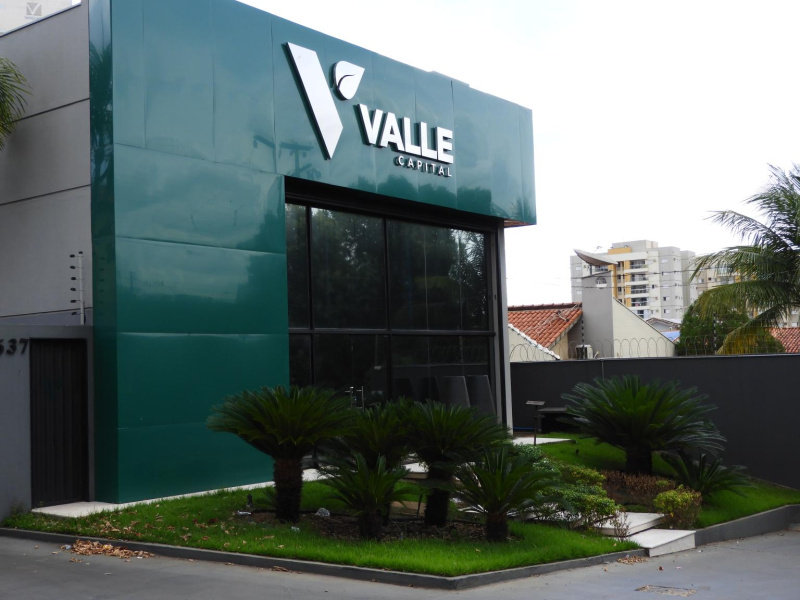
The export-finance structure may support:
- Pre-shipment financing
- Logistics and shipping costs
- Operational cost coverage
- Commodity-export preparation
- International trade activities
- Export-volume expansion
The project states that international capital may be transferred to Brazilian operating entities through formalized legal mechanisms, including capital contributions and structured private-loan agreements, subject to applicable law, regulatory requirements and project compliance procedures.
VCT Token and Ecosystem Utility
VCT is positioned as an RWA-focused utility token intended to connect eligible global participants to a growing ecosystem of digital tools, services, programs, benefits and future platform modules.
The current website identifies a total supply of 650,000,000 VCT on BNB Smart Chain. The token allocation is structured across presale, operations and treasury, liquidity and listings, marketing and ecosystem development, team and advisors, and strategic reserve and legal allocation.
Current token allocation includes:
- 35% — Presale: 227.5 million VCT
- 25% — Operations and Treasury: 162.5 million VCT
- 15% — Liquidity and Listings: 97.5 million VCT
- 10% — Marketing and Ecosystem: 65 million VCT
- 10% — Team and Advisors: 65 million VCT
- 5% — Strategic Reserve and Legal: 32.5 million VCT
The presale is structured across 15 rounds of 10 days each. The website states that presale allocations include 10% at token-generation event, with the remaining 90% released over 12 months.
Roadmap Toward Global RWA Expansion
Valle Capital Token has outlined a phased roadmap focused on moving from token infrastructure and presale activity to real operational deployment and broader ecosystem expansion.
Phase 1 — Foundation and Presale includes the BVI tokenization entity, smart-contract development, audit preparation, BNB Smart Chain deployment and the 15-round presale structure.
Phase 2 — Capital Deployment focuses on agribusiness financing through Valle Capital, export-finance activity through Grupo CGM, formalized capital flows and investor dashboards.
Phase 3 — Smart Operations includes satellite and climate monitoring, logistics-tracking modules, AI operational analysis, digital traceability and staking-related ecosystem tools.
Phase 4 — RWA Scale targets on-chain commodity tokenization, card-gateway and fiat on-ramp integration, international partnerships, exchange-listing preparation and the development of a global RWA marketplace.
Why Valle Capital Token Stands Out
Valle Capital Token is designed around a differentiated proposition: combining blockchain technology with real agribusiness and commodity-export operations rather than focusing exclusively on speculative digital-asset use cases.
The project’s main advantages include:
- Focus on Brazilian agribusiness and global commodity exports
- BVI tokenization structure and BNB Smart Chain deployment
- Utility token with an RWA-focused ecosystem model
- Smart contract-based transparency and auditability
- Satellite, climate and logistics intelligence tools
- Digital traceability for the agro-export chain
- AI-driven operational analysis
- Investor and partner dashboards
- Structured capital deployment for agro and export operations
- Long-term roadmap toward global RWA marketplace infrastructure
“Valle Capital Token is being developed to connect technology, capital and real operational activity. Our goal is to create a more transparent digital ecosystem where agribusiness, exports, blockchain infrastructure and global participants can operate together,” said Luan Coimbra Correia Responsible Representative, Valle Token.
Important Notice
VCT is a utility token and does not represent equity, ownership participation, a security, guaranteed returns, guaranteed yield or guaranteed token appreciation. Participation in digital assets involves risks, including market volatility, liquidity risk, technology risk, operational risk, regulatory changes and potential loss of capital.
The project states that participation is subject to applicable laws, jurisdictional restrictions, KYC/AML verification and legal review. The VCT presale is not marketed to persons located in, or citizens or residents of, the United States, Brazil or OFAC-sanctioned jurisdictions.
About Valle Capital Token
Valle Capital Token is a blockchain-powered agribusiness, export-finance and real-world asset ecosystem. The project aims to connect global digital capital with Brazilian agricultural operations and international commodity exports through EVM smart contracts, blockchain transparency, digital traceability, operational intelligence and scalable Web3 infrastructure.
Official Links
Website: https://valletoken.com
Whitepaper: https://whitepaper.valletoken.com
Telegram: https://t.me/vallecapitaltoken
X / Twitter: https://x.com/valletoken_
The post Valle Capital Token Launches RWA and Agribusiness Ecosystem appeared first on CryptoPotato.
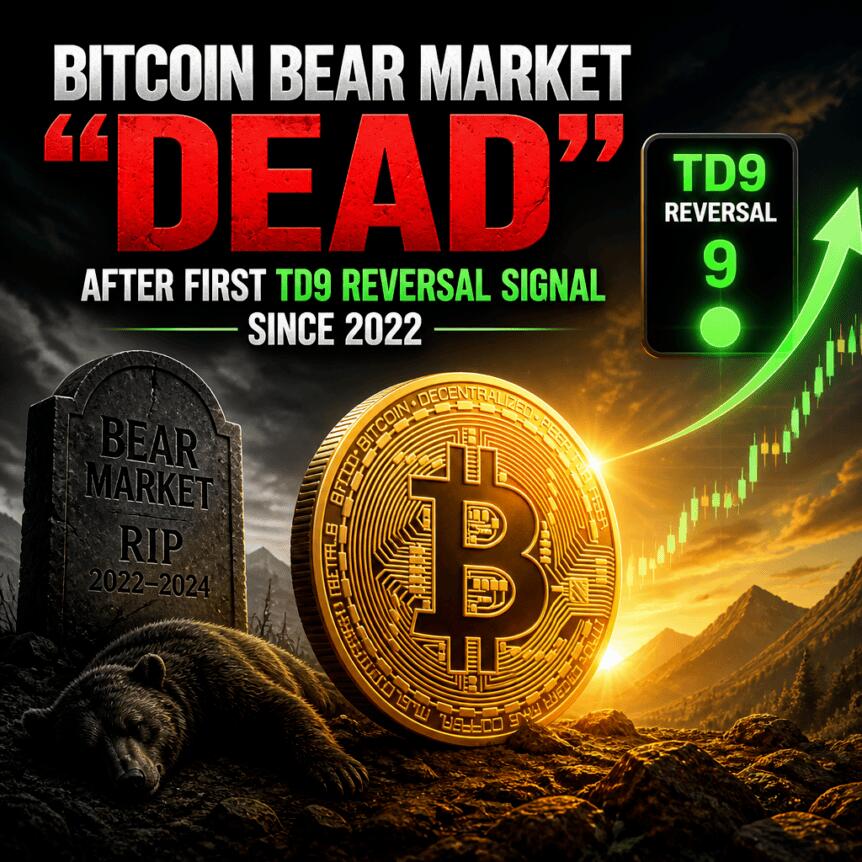
Bitcoin is flashing an important technical “trend change” setup on the monthly chart, with analysts pointing to a newly completed TD9 downtrend pattern as the clearest bearish-to-neutral inflection cue in years. The timing matters because many traders are watching for signs that the 2026 macro downcycle may be moving toward its final phase rather than extending indefinitely.
Separately, momentum measures are increasingly focused on relative strength index (RSI) divergences across multiple time frames—an approach commonly used to gauge whether downside pressure is losing control. While neither development guarantees a bottom, the combination is giving market participants a more structured reason to watch for bullish rotation if key closes hold.
Key takeaways
- Analyst Tony Severino says Bitcoin has “perfected” a TD9 buy setup on the monthly chart, with the last similar downtrend TD9 signal dated to July 2022.
- TD9 patterns are derived from the Tom DeMark Sequential framework and are used to flag potential trend changes when specific candle-count conditions are met.
- A completed TD9 setup is not, by itself, a guaranteed bottom—analysts stress it must be confirmed by where the month closes.
- Traders are also citing bullish RSI divergences across multiple time frames as evidence that trend change may be approaching.
TD9 “perfected” on the monthly chart: what it means
In a Tuesday post on X, analyst Tony Severino flagged a “perfected” buy signal on the TD9 indicator for Bitcoin on the monthly timeframe. He cited TradingView chart data and described the setup as the first of its kind on monthly charts in several years.
TD9 is a derivative of the Tom DeMark Sequential market timing indicator. In simplified terms, it looks for a sequence of nine candles meeting a specific relationship to a reference point from four candles earlier: in an uptrend, nine candles close higher than the close from four candles prior; in a downtrend, they close lower than that same reference. When the conditions are fully satisfied—rather than merely forming partway through—the setup is referred to as “perfected.”
Severino’s observation is that this monthly TD9 downtrend setup has now “perfected,” which would typically be interpreted as an early warning that bearish momentum may be reaching a transition point. Importantly, the analyst also frames the signal as a shift in timing rather than an immediate buy directive.
As he notes, the most recent monthly TD9 downtrend signal occurred in July 2022. In that earlier stretch, BTC/USD required additional months to work through the bear-market bottom—suggesting that even a completed TD9 does not necessarily mean selling pressure ends immediately.
Why “perfected” matters more than the label
One of the key practical details in the discussion is the difference between a setup forming versus a setup being confirmed. A TD9 completion is typically judged by how candles close on the timeframe in question. In the current case, participants are watching the monthly close because a non-confirming close can invalidate the “perfected” status.
That perspective aligns with comments from Proof of Pain podcast host Tony Carrera, who cautioned that a TD9 completion is “not a buy signal by itself,” but still something traders should pay attention to if the setup holds into the close. Carrera’s point effectively reframes TD9 from a single-action trigger into a higher-timeframe checklist item: evidence of exhaustion and transition risk rather than a standalone entry plan.
For investors and traders, this distinction is crucial. Monthly indicators tend to move slowly, and misreading them as imminent reversal calls can lead to premature positioning. But when monthly conditions change, even if the final bottom is months away, it can improve the probability math behind risk-managed strategies—especially those focused on capital preservation during bear phases.
RSI divergences build: traders look for trend-change confirmation
Beyond TD9, attention has also intensified around RSI divergences, a widely used technical concept where price makes a lower low while RSI forms a higher low (or shows other forms of divergence). This is often interpreted as bearish momentum weakening even if price has not yet rebounded meaningfully.
Earlier coverage from Cointelegraph highlighted that market participants still expect additional macro lows before the bear market truly reverses, with different forecasts circulating for where those lows could occur. The same broader reporting also pointed to RSI-related “signals” and how much of the current bear-market cycle may have already played out, including the idea that the downturn could be nearing its later stages.
In the current wave of commentary, Scott Melker—trader, analyst, and podcast host—told followers on X that he hasn’t seen the same level of confirmed and potential bullish divergence with oversold RSI across multiple time frames “ever,” describing the setup as offering “good odds.”
While “good odds” is not the same as certainty, the emphasis on multiple time frames matters. When divergences appear simultaneously on daily, four-hour, weekly, or other layered charts, it typically suggests that sellers are not just pausing—they may be losing incremental momentum across horizons. That can be the kind of condition traders look for right before a range breakout or a more sustained recovery attempt.
What to watch next: confirmation beats prediction
For now, the central question is whether Bitcoin can hold the monthly TD9 completion into the close and whether RSI divergence keeps strengthening rather than reversing. If both trends persist, the technical picture would support the idea that the macro downtrend is shifting toward a transition—but traders should still expect volatility and avoid treating “perfected” patterns as instant proof of a bottom.
Robinhood is pushing deeper into tokenized markets and perpetual trading, partnering with the team behind the dYdX decentralized exchange to relaunch the protocol as Arcus on Robinhood Chain. The move links a retail-focused trading brand with on-chain derivatives infrastructure, aiming to bring around-the-clock access to US equity exposure and perpetual products.
According to posts from Arcus on X, dYdX is now Arcus and the protocol will launch on Robinhood’s Arbitrum-based layer 2 network, which went live the same day. The dYdX Foundation said the dYdX blockchain itself is not affected, adding that Arcus is a separate offering built through infrastructure created by dYdX Labs in partnership with Robinhood.
Key takeaways
- dYdX is rebranded into Arcus and positioned for a launch on Robinhood Chain, Robinhood’s Arbitrum-based layer 2.
- dYdX Foundation says the original dYdX blockchain remains unchanged and continues to be community-owned.
- Arcus plans tokenized stock trading and perpetuals, including the ability for tokenized stocks to be used as collateral.
- Robinhood Chain is being marketed as a venue for expanded tokenized-asset access as regulators show interest in bringing such products to market.
- Early ecosystem integration efforts are already forming, with wallet and swap-platform partners announcing support for Robinhood Chain.
Arcus launches on Robinhood Chain with tokenized stocks and perps
Arcus describes its goal as removing access barriers for traditional market participants who—according to the protocol—have historically been “shut out” of equities, commodities, and index exposure due to geography, market hours, and institutional restrictions. In a blog post titled “Arcus x Robinhood: Trade Stocks & Perpetuals 24/7”, Arcus says the protocol was built specifically to reduce those barriers.
The protocol states that it will support perpetual products and tokenized stock trading, with the initial products scheduled to go live this month. Arcus also says tokenized stocks can be used as collateral for perpetuals—an approach that, if it scales, could connect retail stock-like exposure to continuously traded derivatives.
In addition, Arcus claims it will provide access to “pre-IPO markets.” The details of which tokenized instruments qualify for that claim are not specified in the provided materials, so users will likely need to watch the protocol’s product rollout and collateral eligibility before assuming full parity with traditional pre-IPO access channels.
dYdX Foundation: dYdX blockchain remains community-owned and “not affected”
While the product is branded as Arcus, the dYdX Foundation sought to clarify that the broader ecosystem is not being rewritten around Robinhood. In its statement, the Foundation said that Arcus is a distinct, independent product built on separate infrastructure and that the dYdX blockchain is not affected in any way. It also reiterated that the dYdX blockchain would continue operating and remain community-owned.
That distinction matters for existing users and liquidity providers who associate dYdX with a specific chain and governance structure. Instead of a direct migration of the original chain, Arcus appears positioned as a parallel protocol offering—one that Robinhood’s users can reach through Robinhood Chain.
Arcus also said Robinhood’s crypto technology arm, Robinhood Crypto, made an investment in Arcus, though it did not disclose further terms or figures in the materials provided.
Robinhood’s tokenized-assets and perp push meets competitive pressure
This development arrives as tokenized assets and on-chain derivatives move from “niche” to mainstream attention. The article framing points to renewed momentum as regulators in the US have shown interest in allowing tokenized products to come to market more easily. (For context, the provided coverage references SEC-related proposals around tokenized US stocks.)
Robinhood’s interest in perpetual trading also reflects how quickly trading formats can shift user behavior in crypto markets. The provided material notes that traders have been increasingly active on the crypto perpetual futures platform Hyperliquid, whose token reportedly climbed nearly 150% so far this year, as earlier coverage highlighted a surge in open interest and market attention. Robinhood’s bet appears to be that tokenized equities plus perpetual mechanics—traded on a familiar retail rail—could draw demand beyond traditional spot-only approaches.
More broadly, the competitive dynamic is not limited to crypto exchanges. Major retail-oriented trading platforms have expanded their offerings to remain competitive, and the provided coverage points to examples such as Coinbase expanding access to thousands of stocks. It also notes Coinbase’s earlier 2023 move into building its own Ethereum layer-2, Base, which has grown significantly, according to DeFiLlama data referenced in the provided text.
Robinhood Chain now adds another front in this trend: blending a consumer brand’s market access with on-chain infrastructure built for tokenized instruments and derivatives.
Ecosystem signals: wallets, swaps and first movers on Robinhood Chain
Alongside the Arcus announcement, additional ecosystem support was highlighted. The provided materials report that Bitget Wallet partnered with Robinhood Crypto to integrate Robinhood Chain, enabling users to trade tokenized stocks. Separately, decentralized exchange aggregator 1inch said it would be among the first major swap platforms to support Robinhood Chain.
These integrations are important because they determine how quickly new assets and liquidity can become accessible to end users. Tokenized stocks and perpetuals are only as practical as the rails that let retail participants reach them—through wallets, swaps, and routing infrastructure—without unnecessary friction.
The combination of an exchange-like retail pathway (Robinhood) and DeFi-style liquidity tools (wallet integrations and aggregators) suggests Robinhood Chain is aiming to be more than a closed ecosystem. However, the true depth of support—such as which specific tokenized stocks will be available first, how collateral is handled across markets, and what the onboarding experience looks like—will only become clear after the protocol’s rollout begins.
As Arcus products go live on Robinhood Chain this month, the key details to watch are collateral rules for tokenized stocks, the breadth of available perpetual markets, and whether liquidity and execution quality improve quickly enough for retail traders accustomed to centralized-style trading speed. The dYdX Foundation’s assurance that the original dYdX chain remains unchanged should reduce concern about existing governance and infrastructure, but users will still want to confirm how Arcus will function as a separate, Robinhood-connected product.
TL;DR
- Tether froze USDT held in 131 TRON wallets after OFAC linked the addresses to ISIS-K.
- The updated U.S. sanctions list added 134 crypto wallet addresses, including 131 on TRON and three on Monero.
- Chainalysis said the sanctioned TRON wallets received more than $1.4 million since 2023 and sent over $880,000.
- The latest action expands Tether’s compliance efforts as regulators tighten oversight of illicit crypto transactions.
Tether has frozen USDT balances held in all 131 TRON wallets linked to the terrorist group ISIS-K after the U.S. Department of the Treasury’s Office of Foreign Assets Control (OFAC) expanded its sanctions list to include 134 cryptocurrency wallet addresses. The updated designation covers 131 TRON addresses and three Monero addresses believed to be associated with the group’s financial activities.
According to blockchain analytics firm Chainalysis, the sanctioned TRON wallets have received more than $1.4 million since 2023 and have transferred over $880,000 during that period. The action follows OFAC’s latest sanctions update targeting ISIS-K, the Islamic State’s affiliate operating in Afghanistan, Pakistan, and parts of Central Asia.
OFAC Expands Sanctions as Tether Blocks ISIS-K-Linked Wallets
The latest sanctions update adds 134 cryptocurrency wallet identifiers to OFAC’s existing designation of ISIS-K, a group that has previously used cryptocurrency to support fundraising efforts. Historical investigations have shown that the organization’s media arm, al-Azaim Media Foundation, solicited crypto donations through online campaigns using multiple digital assets, including TRON, Monero, and Bitcoin.
Chainalysis points out that the 131 TRON wallets at the center of the sanctions have interacted with mainstream crypto services and, in some cases, transferred funds to cryptocurrency exchangers based in Syria. In response to the designation, Tether froze the USDT balances held in all of the sanctioned TRON addresses.
The sanctions update comes as regulators continue to strengthen oversight of cryptocurrency transactions linked to terrorism financing and other illicit activities. Following the latest designation, financial institutions and virtual asset service providers are expected to update their sanctions screening and transaction monitoring systems to identify exposure to the newly listed wallet addresses.
Tether Continues to Expand Compliance Efforts
The latest wallet freeze comes just days after Tether, currently providing custodial wallets, blocked $344 million in USDT held across two TRON wallets that had been flagged by U.S. authorities over suspected illicit activity. That action ranked among the company’s largest compliance operations and reflected its ongoing coordination with law enforcement agencies.
According to Tether, the company has frozen more than $4.4 billion in digital assets since it began working with authorities, including approximately $2.1 billion linked to requests from U.S. agencies. The stablecoin issuer says it has supported more than 2,300 investigations involving 340 agencies across 65 countries.
The latest enforcement action highlights the growing role of stablecoin issuers in enforcing sanctions on public blockchain networks. While blockchain transactions remain transparent and traceable, issuers such as Tether, which is also one of the biggest Bitcoin holders, can freeze tokens when wallet addresses are linked to sanctioned entities or criminal investigations, making compliance measures an increasingly important part of the digital asset ecosystem.

French Interior Minister Laurent Nuñez says authorities have recorded 77 incidents involving kidnapping, extortion, or attempted extortion linked to crypto in the first half of 2026—an increase from 45 cases recorded across all of 2025. Speaking to the Association for the Development of Digital Assets (ADAN), Nuñez pledged a “more ambitious” government response to tackle the so-called “crypto wrench” attacks, where criminals use physical violence to force victims into handing over cryptocurrencies.
France is among the countries most frequently targeted for these attacks, in part due to the scale of retail adoption. ADAN estimates that about 11% of the French population owns cryptocurrencies—roughly 7.3 million people—making the country a major pool for criminals seeking both visibility and leverage.
Key takeaways
- France recorded 77 crypto-linked kidnapping/extortion incidents in the first half of 2026, up from 45 across all of 2025, according to figures cited by BFM Business.
- Nuñez says France’s dedicated prevention platform and rapid-alert/protection system has attracted 724 sign-ups so far.
- Emergency measures have reportedly led to 200 arrests, including an attacker detained within eight hours after a victim used an emergency identification hotline.
- Nuñez outlined a three-part plan focused on better intelligence-sharing, deeper coordination with ADAN, and improved operational alignment between security services.
- CertiK reports wrench attacks rose 41% globally in the first four months of 2026 versus the same period in 2025, with Europe accounting for most activity.
A sharp rise in crypto-linked extortion and kidnapping
Nuñez’s remarks underscore how quickly crypto crime involving physical coercion appears to be scaling in France. The 77 incidents reported so far this year, as cited by BFM Business, represent a steep year-over-year acceleration: 45 incidents were logged over the entire previous calendar year of 2025.
Nuñez told ADAN that authorities regard these cases as serious and that public concern is justified. That framing matters for both policy and investor sentiment, because it signals that the state is moving beyond general warnings and into more structured prevention and enforcement.
France expands prevention and emergency response
Earlier in 2026, French authorities reportedly launched a prevention platform alongside a rapid-alert and protection system for crypto holders and professionals. Nuñez said the initiative has already reached 724 sign-ups, suggesting that at least some in the sector are willing to use formal reporting channels and risk-reduction tooling.
According to Nuñez, the emergency approach has also translated into enforcement outcomes. He said it has resulted in 200 arrests, and highlighted a recent case where an attacker was arrested within eight hours on Friday—helped, he said, by a victim using an emergency identification hotline.
For victims and service providers, the practical value of such a hotline is that time-to-response can determine whether coercion ends with a transfer or with the attack interrupted. For the industry, higher sign-up rates may also improve the quality of reporting data, helping law enforcement target networks rather than individual incidents.
Three-part plan: intelligence, coordination, and operations
Nuñez promised a “more ambitious” three-part plan designed to strengthen security across the crypto sector. The plan includes:
- Stronger intelligence-sharing, reflecting Nuñez’s view that criminal networks often operate from abroad.
- Deepened partnership with ADAN, aiming to align the government’s approach with the sector’s infrastructure and reporting mechanisms.
- Better operational coordination between security services, intended to streamline how cases are investigated and responded to.
While the government’s prevention measures are already in place, the emphasis on intelligence-sharing and cross-agency coordination indicates officials see wrench attacks as a transnational criminal problem—not simply isolated cases. That framing can influence how exchanges, custody providers, and other compliant market participants think about operational readiness and incident reporting.
Why France is a focal point for wrench attacks
Broader reporting from blockchain security firm CertiK adds context to Nuñez’s announcement. In a report released in May, CertiK said wrench attacks globally increased 41% in the first four months of 2026 compared with the same period in 2025, with most attacks occurring in Europe.
CertiK also described France as the “epicenter” of these attacks. In its assessment, factors include the presence of prominent industry companies and their executives, what it characterizes as a culture of public “flexing” and voluntary doxxing within parts of the crypto community, and “proven exposure” from multiple sensitive data leaks.
The human and industry consequences are not theoretical. French hardware wallet maker Ledger co-founder David Balland was kidnapped and held for ransom in January 2025, alongside his partner, before police rescued them. The incident followed a damaging earlier event: CertiK-linked coverage points to Ledger’s 2020 data breach, in which its customer database was hacked and more than 270,000 personal records were leaked—an episode that the firm says contributed to subsequent phishing and wrench attacks that continue to this day.
“France ranks among the most targeted countries in the world for this type of breach,” CertiK said, connecting the country’s risk to both criminal targeting and the downstream effects of data exposure.
What to watch next for holders and the sector
Nuñez’s plan suggests France intends to scale enforcement and prevention further, but readers should watch whether sign-ups to the rapid-alert system continue to grow and whether intelligence-sharing and operational coordination lead to sustained disruption of the networks behind these attacks. With CertiK’s data indicating Europe is driving much of the year’s rise, the next measure of success will likely be fewer incidents alongside faster intervention when threats emerge.

Today’s NYT Mini Crossword Answers for July 2

M60 LIVE as all traffic held on motorway with huge queues building

At Close of Business podcast July 2 2026

No Jackpot Winner as $257 Million Prize Rolls Over to $269 Million Monday Draw

Renter of Home in Anne Heche Crash Denies Settlement With Son

Weekend Open Thread: Staud – Corporette.com

Trump verdiende miljard met crypto, bijbels en parfum. #jeugdjournaal #trump #geld

Having a quick financial backup like InstaMoney really helps when any unexpected expense shows up

NSF FINANCE SECY. ALLEGEDLY INVOLVED IN PRYSM LOUNGE VANDALISM OVER FINANCIAL ASSISTANCE DEMAND
-
 Fashion6 days ago
Weekend Open Thread: Staud – Corporette.com
-

 Politics6 days ago
The House | Manchesterism won’t survive the painful trade-offs unless it gets citizens on board
-

 Crypto World2 days ago
Strategy authorizes up to $1.25B in Bitcoin sales under new capital plan
-

 Politics6 days ago
Potential 2028er World Cup attendee leaderboard
-

 Business6 days ago
Asia stock markets slide as tech shares slump
-

 News Videos4 days ago
MAJOR BITCOIN & MARKET UPDATE!!!! (MUST WATCH ASAP!!!)
-

 Tech7 days ago
A Look At A Gaggle Of Transputer Boards
-
 Crypto World7 days ago
Dell (DELL) Shares Tumble Over 5% Following Analyst Downgrade to Hold
-

 Crypto World5 days ago
Coinbase, Circle Deepen Crypto Stock Losses Despite Resilient S&P 500
-

 Business2 days ago
Australia treasurer says alleged access of prime minister’s bank data ’incredibly concerning’
-

 Crypto World5 days ago
Kraken's xStocks Opens Bending Spoons IPO Registration to EEA Retail
-

 Sports5 days ago
FIH Pro League: India defeat Pakistan 7-1, register biggest win of campaign | Other Sports News
-

 Crypto World6 days ago
Bitcoin Sparks $600M Hourly Liquidations With $65,000 Set To Become Resistance
-

 Tech4 days ago
Bluekit phishing kit adopts browser-in-the-middle for login theft
-

 Tech2 days ago
Anonymous researcher drops 0-day ‘exploitarium’ repo
-

 Tech5 days ago
Russian hackers now target Signal backup recovery keys
-
Crypto World6 days ago
Hyperliquid Named on Singapore MAS Investor Alert Register
-

 Crypto World6 days ago
RTX holders must register wallets before token distribution begins
-

 Sports19 hours ago
Broncos roster: OL Ben Powers (No. 74) entering final year of contract
-
 Business3 days ago
The AI boom won’t burst all at once. It will pop in ‘rolling bubbles’: Macquarie
You must be logged in to post a comment Login