

Crypto World
Bitcoin rebounds slightly above $81k amid institutional caution



Key takeaways
- Bitcoin recovers slightly on Wednesday after finding support below $80,000.
- US-listed spot ETF saw outflows of $233 million on Tuesday,
Bitcoin finds support at a key level
Bitcoin (BTC) has slightly rebounded and is currently trading above $81,000 on Wednesday, following a retest of a critical technical support level the previous day.
The price surge is attributed to a recent correction and support found near the psychological $80,000 mark. As market participants await the Senate Banking Committee’s vote on the Clarity Act on Thursday, there are early indications that this could be a near-term catalyst for Bitcoin’s future price action.
Institutional demand appears to be showing some caution this week. Spot BTC Exchange-Traded Funds (ETFs) recorded a notable outflow of $233.25 million on Tuesday, after a modest inflow of $27.29 million the previous day, according to CoinGlass data.
If these outflows persist or intensify in the coming days, Bitcoin may experience a price correction. However, the focus remains on the Senate Banking Committee’s upcoming vote on the Clarity Act, which is anticipated to have a significant impact on the crypto market.
Bitcoin’s recent price action has lost momentum as it faces resistance around the 200-day Exponential Moving Average (EMA), hovering near $82,000.
The ongoing consolidation suggests that Bitcoin is taking a breather after a strong rally since early April. However, the outlook remains bullish, with the largest cryptocurrency by market capitalization potentially poised to resume its upward trend. Analysts are optimistic that the Clarity Act, which is expected to be voted on Thursday, could trigger a breakout for Bitcoin.
Bitcoin price forecast: BTC consolidating above key EMAs
Despite some caution in institutional demand, Bitcoin is showing a bullish near-term bias, with support holding above the 50-day and 100-day Exponential Moving Averages (EMAs).
These EMAs are clustered just below $76,800 and are part of a parallel channel, suggesting ongoing consolidation in the price action.
The Relative Strength Index (RSI) on the daily chart is near 61, indicating positive momentum without being overextended.
Meanwhile, a slightly negative Moving Average Convergence Divergence (MACD) reading points to moderating upside pressure, rather than a reversal, as Bitcoin remains below the 200-day EMA near $82,100.
If the rally persists, Bitcoin will face initial resistance at the 200-day EMA around $82,100, followed by the 61.8% Fibonacci retracement level near $83,440 and a horizontal barrier at $84,410.

A sustained break above this resistance zone could open the door for a run toward the January peak of around $97,925.
However, if the bears regain control, support is seen at the psychological $80,000 level, with further support zones near the 50% retracement at $78,960 and the 100-day and 50-day EMAs around $76,730 and $76,420, respectively.



Robert Kiyosaki has again urged followers to move away from cash and into hard assets.
Summary
- Robert Kiyosaki renewed his cash warning while promoting gold, silver, Bitcoin, and Ethereum as alternative assets.
- Bitcoin and Ethereum remain under pressure after June’s selloff, ETF outflows, and broader macro stress.
- Market attention continues to rise on growing fear, but stronger demand still requires confirmation from sustained buying activity.
In a June 13 post on X, the Rich Dad Poor Dad author asked how much a trillion dollars is, then used the answer to attack dollar savings.
Kiyosaki wrote that “cash is trash” and said savers of dollars lose purchasing power. He told followers to consider gold, silver, Bitcoin, and Ethereum. His post framed the U.S. dollar as vulnerable because, in his view, the Federal Reserve and U.S. Treasury can create money quickly.
His trillion-dollar example also served as a simple visual for readers. By comparing one dollar per minute with the creation of new money, Kiyosaki tried to make a large number feel personal. The post did not include a detailed investment plan. It focused on the idea that cash loses value when supply expands. That framing matches his usual criticism of fiat money. It also fits his asset-focused brand publicly online.
Bitcoin and Ethereum remain under pressure
The warning arrived during a weak period for crypto markets. Bitcoin traded near $64,569 on June 14, while Ethereum traded near $1,674, according to market data. Both assets remained far below their 2025 cycle highs after a sharp June selloff.
As previously reported by crypto.news, the June crypto crash came from several pressures at once. The report cited a hawkish Federal Reserve, U.S.-Iran tensions, ETF outflows, and a leverage unwind. Bitcoin fell from above $80,000 to below $62,000 during that period, while Ethereum moved toward $1,500.
Gold and Bitcoin split safe-haven debate
Kiyosaki has often grouped gold, silver, and Bitcoin as alternatives to fiat money. His latest post also added Ethereum to that list. The argument fits his long-running view that inflation and monetary expansion reduce the value of cash savings over time.
Crypto.news has also tracked the changing relationship between Bitcoin and gold. In May, crypto.news reported that Bitcoin had outperformed gold by roughly 35% to 36% on a relative basis since the start of the 2026 Iran conflict. That report said Bitcoin acted more like a risk-sensitive alternative store of value than a classic crisis hedge.
Market stress keeps investors cautious
Recent fund flows still show caution. As previously reported, U.S.-listed spot Bitcoin ETFs recorded 13 straight trading days of net outflows from May 15 through June 3. About $4.37 billion left the products during that streak.
Ethereum also faced pressure from weak demand. As crypto.news reported on June 12, spot Ethereum ETFs lost $15.89 million on June 11, extending outflows for three sessions. ETH traded near $1,652 at that time as geopolitical risk and weak technical structure kept buyers cautious.
Kiyosaki’s post adds a familiar voice to the wider debate over cash, inflation, and scarce assets. It does not change the short-term market setup. Bitcoin and Ethereum still need stronger demand, calmer macro conditions, and better fund flows to confirm a steadier recovery.


Strategy CEO Phong Le said the company’s 32 BTC sale was a test of its process and not a sign that the firm needed cash for dividends.
Summary
- Phong Le said Strategy’s 32 BTC sale tested internal systems, not a dividend funding need.
- Strategy still bought 1,550 BTC afterward, lifting total holdings to 845,256 Bitcoin by June 7.
- Saylor’s CEBE BPS metric shifts investor focus toward debt, preferred stock and common shareholder risk.
In a June 13 interview, Le said the sale helped “inoculate the market” and gave Strategy a way to check how an internal Bitcoin sale would work.
The company sold 32 Bitcoin between May 26 and May 31 for about $2.5 million, according to its SEC filing. The average sale price was $77,135 per BTC. The filing said proceeds were expected to fund preferred stock distributions, which led some investors to question whether Strategy might need to sell more Bitcoin later.
Strategy says sale not tied to dividend pressure
Le pushed back on that reading. He said Strategy did not sell Bitcoin because it needed to meet cash dividend obligations. He said the company still has other funding channels, including equity and preferred stock tools, to support its capital structure.
He also said the sale created tax losses that may offset related taxes in future periods. The point, according to Le, was to test the process, reduce market shock around the idea of selling, and keep the company ready if a small sale later benefits common shareholders.
The CEO said Strategy would use math over ideology when choosing between selling Bitcoin and issuing stock. If a Bitcoin sale improves Bitcoin per share for common holders, the company may choose that path. If share issuance works better, it can use that route instead.
Forced selling remains an edge case
Le also addressed the chance of a forced Bitcoin sale. He said the most realistic case would involve about $3.5 billion of preferred obligations due in 2028. If Bitcoin fell sharply and Strategy’s share price stayed weak, the company could sell Bitcoin to meet those obligations.
Le described that outcome as an “edge case.” He said Strategy could also refinance or convert those obligations into equity. That means a Bitcoin sale is not the only available path if market conditions worsen.
As previously reported by crypto.news, Strategy bought 1,550 BTC for about $101.3 million between June 1 and June 7 after the 32 BTC sale. The purchase lifted its total holdings to 845,256 BTC. Strategy also raised its U.S. dollar reserve to $1 billion.
Saylor metric puts risk in focus
The debate comes as Michael Saylor has tried to clarify how investors should measure Strategy’s Bitcoin exposure. Earlier today, crypto.news reported that Saylor said Bitcoin Per Share tracks common equity growth, while Common Equity Bitcoin Exposure BPS, or CEBE BPS, tracks Bitcoin exposure after debt and preferred stock claims.
Saylor said CEBE BPS is the conservative risk metric. That matters because Strategy’s Bitcoin model now includes debt, preferred stock and dividend costs. The gap between Bitcoin per share and CEBE BPS can widen when senior claims grow.

TLDR:
- CoinFund’s Brukhman says Anthropic’s export control compliance confirmed AI models are the biggest target for government control.
- Distributed GPU compute already exists to train frontier AI models, but new algorithms are needed to make decentralized use viable.
- Teams like Gensyn, Prime Intellect, and Pluralis are proving that distributed AI training is feasible and cost-competitive.
- Pluralis proposes tokenizing AI model weights among participants to create a sustainable business model for decentralized AI.
Decentralized AI could serve as a critical counterweight to growing government control over artificial intelligence models.
CoinFund founder Jake Brukhman made this argument following Anthropic’s compliance with U.S. AI export controls. He warned that centralized AI development poses increasing risks of unilateral censorship.
Brukhman pointed to distributed GPU networks and open decentralized systems as viable alternatives. His comments have reignited debate about the future governance of frontier AI models.
Brukhman Links Anthropic’s Export Control Move to Centralization Risk
Jake Brukhman has been tracking the intersection of AI and decentralized networks since 2020. He argues that AI models are, by nature, a centralizing force in the technology landscape. Anthropic’s compliance with U.S. export controls, he says, confirmed what many in the space already suspected.
In a post on X, Brukhman wrote that the development became “market fact” overnight. He framed it as a turning point for how the industry should think about AI governance. His concern centers on the risk that AI could fall under unilateral state control.
Brukhman noted that commodity GPU compute already exists in sufficient quantity to support frontier model training.
The barrier, he argues, is not availability of hardware but rather the algorithms needed to use it efficiently. Several research teams are now addressing that exact problem.
He cited Gensyn, Prime Intellect, Bagel, Pluralis, Nous Research, Macrocosmos, and Covenant AI as teams working on distributed training.
Their research, he said, was once widely dismissed as impossible. Today, it shows that distributed training is not only feasible but can be cost-competitive with centralized approaches.
Tokenized AI Models Emerge as a Potential Business Model
Open source AI models have gained wide adoption, yet they face a persistent challenge around economic sustainability.
Without a viable business model, open models struggle to attract long-term investment and development resources. Brukhman acknowledged this gap directly in his commentary.
Among the teams he cited, only Pluralis has proposed a concrete solution to this problem. The approach involves splitting model weights among network participants through a tokenized structure. This creates a financial incentive for contributors while maintaining decentralized control of the model.
The tokenized model structure means no single entity holds full control over the AI system. Participants share ownership of the weights, making unilateral censorship or control significantly harder to execute. Brukhman sees this as a foundational step toward economically sustainable decentralized AI.
Brukhman closed his argument with a direct question to the broader industry. He asked whether AI would become fully centralized under government oversight or whether public, open networks would prevail.
The answer, he suggested, depends on whether the industry acts on the momentum now building in decentralized AI research.

The U.S. Securities and Exchange Commission (SEC) has approved NYSE Arca’s proposal to list and trade shares of the T. Rowe Price Active Crypto ETF.
Summary
- SEC approval brings actively managed multi-asset crypto exposure closer to NYSE Arca investors this year.
- The fund may hold Bitcoin, Ethereum, XRP, Solana, Dogecoin, Shiba Inu and other qualified assets.
- ETF demand remains mixed across Bitcoin, XRP, Solana and Ethereum investment products.
The order, dated June 12, covers the fund under NYSE Arca Rule 8.201-E for commodity-based trust shares.
The product gives investors a single listed vehicle for several crypto assets. It is not limited to Bitcoin or Ethereum. The filing says the fund seeks long-term capital growth by investing in a basket of eligible crypto assets selected by the sponsor. The approval clears the exchange listing rule, but trading details still depend on the issuer’s launch process.
How the active fund works
The T. Rowe Price Active Crypto ETF will use the FTSE Crypto US Listed Index as a benchmark. However, the fund will not simply copy that index. The SEC order says the sponsor intends to use an active strategy and aims to “outperform the Index.”
Under normal market conditions, the ETF is expected to hold between five and fifteen eligible assets. The filing also says the fund may hold fewer than five or more than fifteen assets at certain times. That gives the sponsor room to change exposure as market conditions shift.
Because the ETF is actively managed, NYSE Arca added extra requirements. The order refers to firewall rules for sponsor staff and related broker-dealer affiliates. It also says trading can halt if portfolio holdings are not shared with all market participants at the same time.
Eligible assets include BTC, XRP and SHIB
The eligible asset list includes Bitcoin, Ethereum, Solana, XRP, Cardano, Avalanche, Litecoin, Polkadot, Dogecoin, Chainlink, Stellar, Hedera, Bitcoin Cash, Shiba Inu and Sui. The fund may also hold cash, cash equivalents and some stablecoins for operational use.
The inclusion of Dogecoin and Shiba Inu makes the product broader than many earlier crypto ETFs. Most U.S. crypto ETF attention started with spot Bitcoin and spot Ethereum funds. This approval adds a regulated path for exposure to large-cap altcoins and selected meme coins inside one active product.
As previously reported by crypto.news, T. Rowe Price’s amended filing had already placed XRP beside Bitcoin, Ethereum and Solana as possible holdings. That earlier filing came as exchanges and issuers were seeking faster paths for crypto products under updated listing standards.
ETF demand remains mixed
The approval arrives during a busy period for crypto ETF filings. As previously reported, BlackRock filed a Form 8-A for its iShares Bitcoin Premium Income ETF, moving that product closer to a possible Nasdaq launch.
Investor demand has not moved in one direction. Crypto.news also reported that XRP exchange-traded products drew about $10.68 million in the week ended June 12, while Bitcoin and Ethereum products posted outflows. Earlier coverage showed U.S. spot Bitcoin ETFs suffered 13 straight trading days of net outflows from May 15 to June 3.
Crypto World
Crypto exchanges are morphing into stock brokerages to stop capital from fleeing to Wall Street


A significant transformation is currently underway across the established cryptocurrency market. The top crypto exchanges are morphing into multi-asset financial platforms, breaking down the traditional barriers that once kept crypto and Wall Street completely apart.
Crypto exchange OKX rolled out 13 new “X-Perp” markets for European traders on Tuesday, giving retail users direct access to “Magnificent 7” tech stock futures, alongside major commodity indices like gold, silver, and crude oil. The platform also added perpetual markets for major index funds like the SPY and QQQ, enabling users to trade exposure to the largest U.S. equities outside standard market hours.
Exchanges like OKX are deliberately expanding their services to stop cash from leaving their platforms, while catering to everyday traders who now want to bet on more than just crypto.
Kraken, for example, rolled out 24-hour perpetual futures for synthetic U.S. stock tokens, offering non-U.S. retail traders up to 20x leverage on equities outside standard Wall Street operating hours. Onchain perpetual platform Hyperliquid also moved aggressively into TradFi, putting Wall Street on alert.
Retaining trader fees
Centralized exchange trading volumes recently dropped more than 11% to $4.61 trillion, hitting their lowest performance level since late 2024, according to CoinDesk Data’s April 2026 market reviews. “Retail participation across crypto has moderated, but the demand for trading has not disappeared,” said Behrin Naidoo, founder of Neutral DeFi Protocol. Naidoo, an alumnus of London Business School who previously managed global market strategies and fintech investments at J.P. Morgan, PwC, and RMH, told CoinDesk that the problem isn’t a lack of interest, but rather an infrastructure gap.
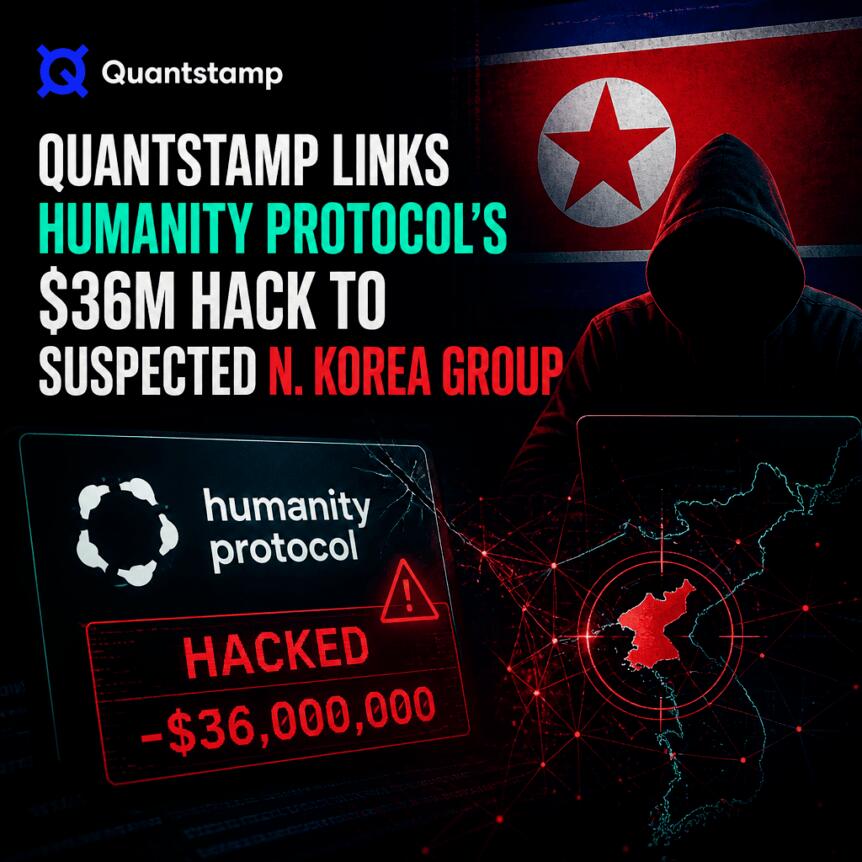
Humanity Protocol’s latest security incident appears to be tied to North Korea-linked cyber activity, according to an investigation by Quantstamp. The blockchain security firm says a phishing email carrying a malicious attachment compromised an employee device and enabled the theft of $36 million worth of Humanity (H) tokens.
The attack chain, as described by Quantstamp, started with a message that masqueraded as a “token lockup schedule” update reportedly from South Korean exchange Bithumb. Once delivered, the malware granted full remote access to the compromised laptop and ultimately facilitated access to sensitive cryptocurrency wallet materials tied to a project executive.
Key takeaways
- Quantstamp attributes the Humanity Protocol compromise to a phishing attachment that installed remote-access malware on a staff member’s laptop.
- The incident led to theft of $36 million in Humanity (H) tokens, tied to unauthorized access of MetaMask credentials and private keys.
- Quantstamp says the malware was signed with a South Korean Hancom digital certificate, a pattern it associates with DPRK intrusion activity.
- Recent reporting and research link North Korea-linked threat actors to a large share of crypto theft losses and incidents, emphasizing “precision and scale.”
- The broader pattern reinforces that operational security—especially around email and endpoints—remains a primary weak point even for decentralized projects.
Phishing to wallet theft: how the compromise worked
Quantstamp reported that a compromised employee’s laptop was the entry point for the attackers. In its incident response, the firm said the phishing email delivered a malicious attachment that was disguised as a token-related schedule update.
Crucially, the malware did more than trigger basic compromise indicators. Quantstamp said it gave the attackers full remote access to the laptop and enabled them to copy Humanity Protocol director Chong Yee Wai’s MetaMask wallet credentials and private keys. That access, according to the firm’s account of events, was leveraged to steal $36 million in Humanity (H) tokens on Monday.
From an investor and user standpoint, the incident highlights a persistent reality in crypto security: even when projects operate on decentralized infrastructure, centralized operational practices—like handling attachments and securing staff devices—can still determine whether funds remain protected.
Why Quantstamp points to DPRK-linked activity
Quantstamp did not rely solely on the phishing technique itself. The firm also analyzed the malware’s signing and behavior, stating that the malicious software was signed with a South Korean Hancom digital certificate.
Quantstamp characterized this detail as “characteristic of DPRK intrusions,” suggesting the attackers used tooling and operational steps commonly observed in past North Korea-linked campaigns. The combination of targeted social engineering (fake Bithumb-related content), endpoint takeover (remote access), and credential harvesting (MetaMask credentials and private keys) forms a cohesive attack narrative consistent with the firm’s attribution.
For readers tracking attribution in cyber incidents, the key takeaway is that this is not a generic accusation: Quantstamp’s conclusion is based on specific technical artifacts found during its incident response.
North Korea-linked theft: large numbers across recent years
The alleged DPRK connection to Humanity Protocol comes amid a broader set of statistics from blockchain security research. In a May report, CertiK linked the same category of actors to about $2 billion of the $3.4 billion lost to crypto exploits in 2025, and said they accounted for 12% of total incidents. CertiK described these losses as reflecting a focus on “precision and scale.”
Looking further back, the report cited an estimate that North Korea-linked actors stole about $6.75 billion in cryptocurrency across 263 documented incidents over the past decade. While such totals naturally depend on methodology and classification criteria, the report’s underlying message is consistent: DPRK-associated operations have repeatedly translated cyber capabilities into high-value thefts.
CertiK further argued that North Korea has “industrialized” crypto theft into a core state revenue mechanism, framing these activities as a meaningful share of the regime’s external income. That characterization matters because it suggests sustained institutional investment rather than isolated criminal hacking.
Denials and the persistence of cyber allegations
North Korea typically does not respond in a sustained way to cybercrime allegations. However, the reporting also referenced a denial carried by Korean Central News Agency coverage on May 3, in which a North Korean Foreign Ministry spokesperson rejected claims about crypto hacks.
In that statement, the spokesperson accused the United States of circulating “incorrect” narratives about a “non-existent ‘cyber threat’” from North Korea. The denial underscores a recurring tension in attribution: while investigators and researchers present technical evidence and pattern-based assessments, state actors continue to reject the framing publicly.
For users and teams building in crypto, the practical implication is to treat attributions as indicators of threat models rather than as proof of political intent. Regardless of who denies what, the operational lesson remains the same—phishing and endpoint compromise can rapidly convert into on-chain losses when wallet access is taken.
Next, readers should watch for updates from Humanity Protocol and Quantstamp on remediation steps and security controls—particularly any changes to how wallets are secured, how staff devices are hardened against social engineering, and what indicators will be shared publicly to prevent similar follow-on attacks.
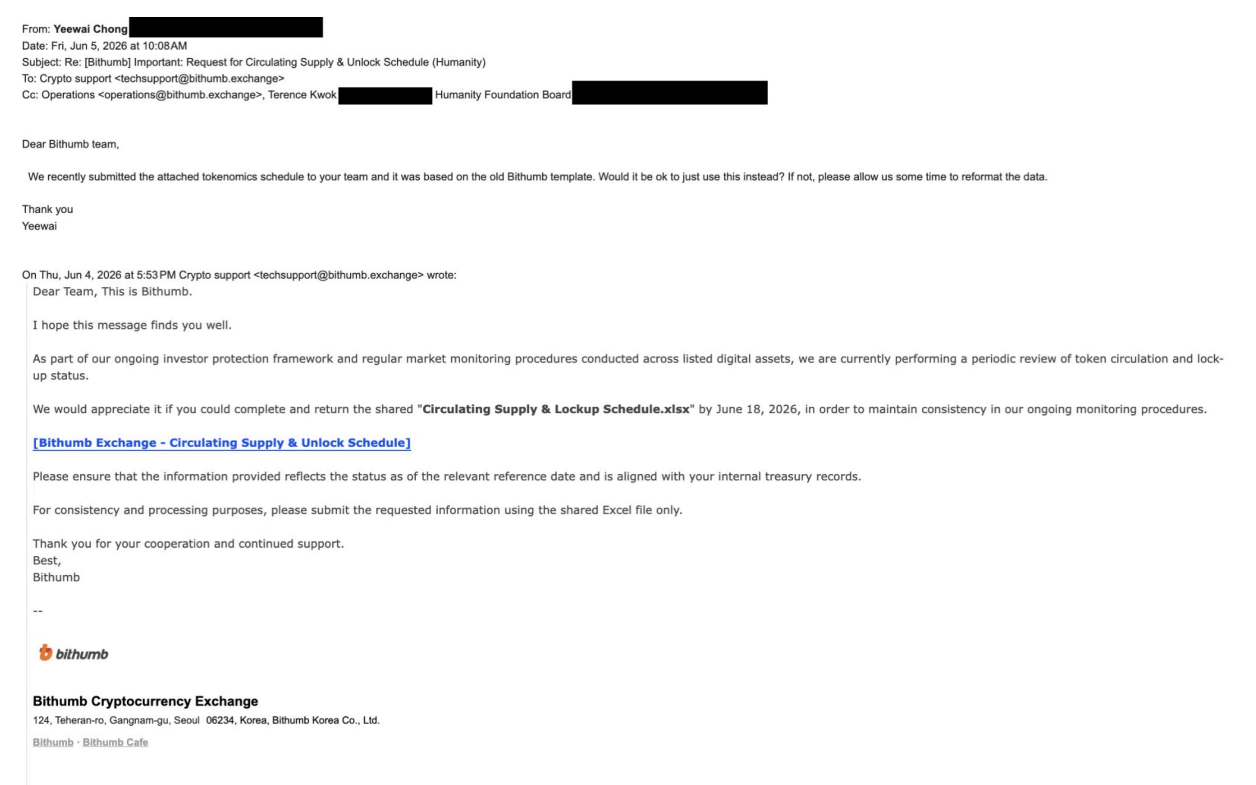
A malicious attachment delivered through a phishing email points to the involvement of North Korea-linked threat actors in Humanity Protocol’s recent hack, according to blockchain security company Quantstamp.
The decentralized identity company said a compromised employee’s laptop enabled attackers to steal $36 million in Humanity (H) tokens on Monday.
The malicious attachment was disguised as a token lockup schedule update from South Korean cryptocurrency exchange Bithumb. It installed malware that gave attackers full remote access to the laptop, Quantstamp said in its incident response.
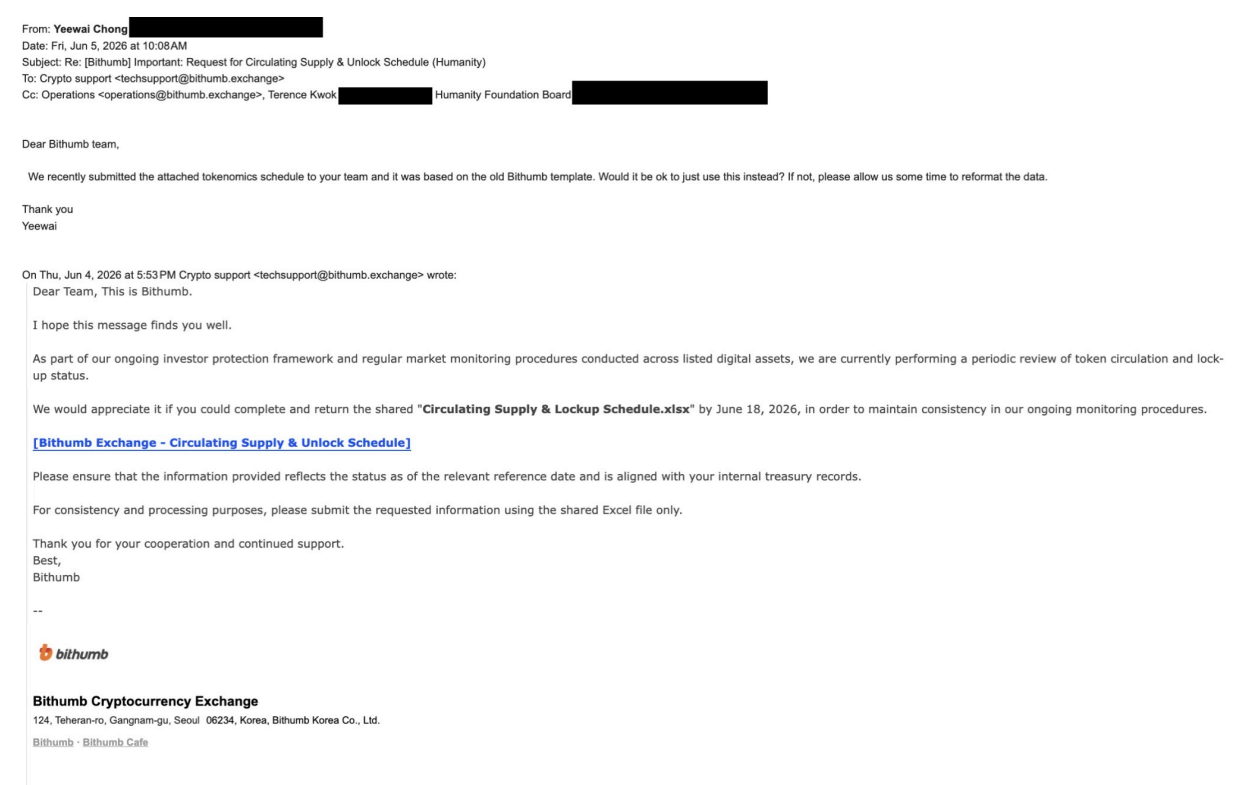
The phishing email that led to the Humanity Protocol compromise. Source: Quantstamp
Quantstamp added that the malware was signed with a South Korean Hancom digital certificate, a pattern it described as “characteristic of DPRK intrusions.” The malware enabled attackers to copy Humanity Protocol director Chong Yee Wai’s MetaMask wallet credentials and private keys.
The suspected North Korean link would add to a series of major crypto thefts attributed to the country. North Korea-linked threat actors were tied to at least $578 million of the $634 million stolen in crypto-related incidents in April.
North Korean hackers tied to some of the largest crypto hacks
According to a May report by blockchain security company CertiK, the same actors have been linked to about $2 billion of the $3.4 billion lost to crypto exploits in 2025, while accounting for 12% of total incidents. CertiK said the figures reflect a focus on “precision and scale.”
Over the past decade, North Korea-linked actors stole an estimated $6.75 billion in cryptocurrency across 263 documented incidents, the report said.
Related: CZ sounds alarm as ‘SEAL’ team uncovers 60 fake IT workers linked to North Korea
CertiK added that North Korea has “industrialized” crypto theft into a core state revenue mechanism, making these operations a substantial share of the regime’s external income.
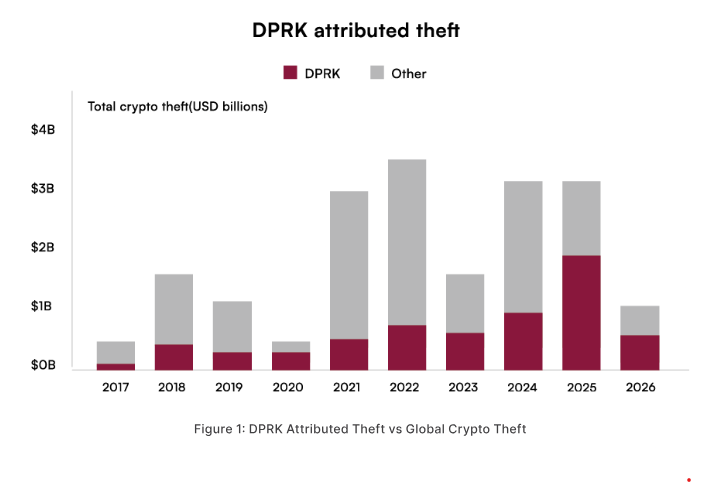
Total DPRK crypto theft over the years. Source: CertiK/Skynet
North Korea rarely responds to cybercrime allegations, but on May 3, a Foreign Ministry spokesperson rejected them in a statement carried by the Korean Central News Agency, the country’s state media.
The spokesperson accused the US of spreading “incorrect” narratives about the “non-existent ‘cyber threat’” from North Korea.
Magazine: Coinbase hack shows the law probably won’t protect you — Here’s why

The landscape of artificial intelligence has shifted dramatically over the past two years. Generative AI platforms, automation tools and agentic AI systems have moved from experimental technology to mainstream business infrastructure at a pace that has surprised even the most optimistic observers. Enterprise adoption is accelerating, investment is flowing into the sector at record levels and the number of companies building in these categories has multiplied rapidly.
With that growth has come intense competition for media attention, investor interest and customer awareness. For companies building generative AI products, automation platforms and agentic AI systems, getting consistent press coverage in the right publications is one of the most effective ways to stand out in a crowded market. It builds the kind of credibility and visibility that drives investment conversations, enterprise sales cycles and developer adoption in ways that other marketing channels cannot replicate.
Kooc Media is a specialist PR and media distribution agency that has been operating in the technology, crypto and fintech space since 2017. The agency has launched dedicated PR services specifically for companies building in the generative AI, automation and agentic AI space, bringing its proven model of guaranteed placements, owned media and wide distribution to one of the fastest-growing sectors in technology.
Why Generative AI and Agentic AI Companies Need Specialist PR
Generative AI, automation platforms and agentic AI systems are not straightforward products to communicate about. They involve complex technical concepts that need to be translated into compelling stories for non-technical audiences. They are often solving problems that potential customers have not yet fully articulated. And they are operating in a sector where the media coverage landscape is still evolving — with some publications deeply engaged with AI developments and others still catching up.
Getting PR right in this environment requires more than a standard press release and a list of journalist contacts. It requires an agency that understands the technology, knows which publications are authoritative in the generative AI and automation space, and has the distribution infrastructure to reach the finance, technology and business audiences that matter most to companies in these categories.
This is precisely the gap that Kooc Media’s specialist PR service for generative AI, automation and agentic AI platforms is designed to fill. The agency understands the sector, has built its distribution network within the finance and technology media ecosystem, and has the owned media assets to guarantee results rather than simply promise them.
Owned Media Guarantees Coverage From Day One
The foundation of Kooc Media’s PR service for generative AI and automation companies is a portfolio of owned publications that enables guaranteed placements for every client on every campaign.
Blockonomi, CoinCentral, MoneyCheck, Parameter, Beanstalk and Computing are established Kooc Media brands with real editorial authority and genuine readerships across the finance, cryptocurrency and technology sectors. These publications are read by the investors, developers, enterprise buyers and technology decision-makers that generative AI and agentic AI companies are trying to reach.
Every client receives confirmed placements across these in-house publications as part of their campaign. There is no pitching to editors, no waiting for journalist responses and no uncertainty about whether coverage will appear. When a press release is approved by the client it goes live across the owned network the same day, providing immediate, guaranteed visibility in established finance and technology publications.
For generative AI companies announcing new model releases, automation platforms launching enterprise features, and agentic AI systems entering new markets, same-day guaranteed publication is a critical operational advantage. News in the AI space moves fast and coverage needs to move just as quickly. All of Kooc Media’s media properties are listed on the Kooc Media sites page.
Wide Distribution Across Partner Networks and Premium Media Channels
Guaranteed owned media placements are the foundation. Kooc Media’s PR service for generative AI and automation platforms builds on that foundation through two additional layers of distribution that dramatically expand the reach and impact of every campaign.
The partner distribution network extends coverage across hundreds of websites and thousands of syndicated outlets in the finance and technology media space, ensuring that press releases circulate across the full ecosystem of publications relevant to generative AI, automation and agentic AI audiences. This broad partner syndication gives every campaign a reach that extends well beyond the owned portfolio and ensures the story travels across all relevant industry media.
Premium distribution packages unlock access to the most authoritative and widely read business and financial media platforms in the world. Through these channels, press releases from generative AI and automation companies can appear on Business Insider, Bloomberg, Benzinga, MarketWatch, USA Today, Dow Jones feeds and a range of other globally recognised outlets. For agentic AI platforms targeting enterprise clients, automation companies seeking investment from institutional funds and generative AI businesses operating in international markets, placements on platforms of this scale deliver validation and reach that no other marketing channel can provide.
Michelle De Gouveia, spokesperson for Kooc Media, said: “Generative AI, automation and agentic AI are three of the most exciting and most competitive categories in technology right now. The companies that will define these categories over the next five years are the ones building the strongest media presence today. Our PR service gives them the infrastructure to do that — guaranteed placements in owned finance and tech publications, broad partner distribution across hundreds of relevant outlets, and premium global channel access for the companies that need the widest possible reach. We handle everything from writing to distribution to reporting, so the team can stay focused on building the product while we handle the story.”
PR Coverage Across All Generative AI and Agentic AI Subcategories
Kooc Media’s PR service is designed to serve the full breadth of the generative AI, automation and agentic AI space. The categories within these broader verticals are diverse, and the agency’s distribution network is suited to reaching the relevant audiences across all of them.
Generative AI companies building large language model applications, image and video generation platforms, AI writing tools, code generation software and multimodal AI products all have distinct audiences and distinct stories to tell. Automation platform companies working on workflow automation, robotic process automation, intelligent document processing and business process AI need to reach enterprise buyers and technology decision-makers who follow specific business and technology publications. Agentic AI platform developers building autonomous AI systems, multi-agent frameworks, AI workflow orchestration tools and AI agent infrastructure are operating in one of the newest and most rapidly evolving subcategories in the entire tech sector.
Kooc Media’s PR service is positioned to serve all of these subcategories effectively, with distribution that reaches the finance, technology and business media that the relevant audiences for each are following.
AgentLocker.ai — Free Directory Listing for Every Client
Alongside its PR distribution service, Kooc Media operates AgentLocker.ai, a dedicated directory for AI tools and agents that has been built specifically for the generative AI, automation and agentic AI ecosystem.
AgentLocker.ai provides a structured, searchable resource where businesses, developers and individuals can discover, compare and evaluate AI-powered products across a comprehensive range of categories. For the generative AI, automation and agentic AI space specifically, the directory covers AI writing and content tools, coding assistants, automation platforms, AI agents and agent frameworks, workflow orchestration tools, productivity applications, data analysis tools, marketing AI and much more.
The audience that visits AgentLocker.ai is one of the most valuable that any generative AI or automation company can reach. These are people who have come to the directory specifically because they are looking for AI tools. They are in active discovery or evaluation mode, searching for a product that meets a defined need. Being listed in this directory puts a company directly in front of potential customers at the exact moment they are most receptive to finding a new tool.

Every Kooc Media AI PR client is included in AgentLocker.ai automatically as part of their campaign at absolutely no additional cost. The listing is created during the campaign process and remains permanently active, providing ongoing discoverability that continues to generate value long after the initial press distribution has concluded. For generative AI and agentic AI companies that are building for the long term, this sustained directory presence complements the immediate impact of press coverage to create a more complete and durable approach to building market visibility.
The combination of a press release that generates immediate coverage across established publications and a permanent directory listing that keeps the company discoverable on an ongoing basis is a genuinely powerful combination for companies in fast-moving AI categories.
Complete Campaign Management From Brief to Report
Kooc Media handles every element of the PR campaign internally, from initial content creation through to final reporting. Companies building generative AI products, automation platforms and agentic AI systems do not need to arrive with finished press releases or any prior understanding of how media distribution works.
The agency’s editorial team works with each client to understand the announcement, the product and the key messages that need to be communicated. A professionally written press release is produced and shared with the client for review and approval before anything is distributed. Once approved, the press release goes live across the owned network the same day and distribution through partner and premium channels follows according to the selected package.
Every campaign concludes with a detailed report listing every placement with a live link to each published article. These links serve as investor-facing evidence of media traction, website press mentions, backlinks that build search engine authority and credibility signals that support enterprise sales conversations and funding applications.
The Right Time to Build Media Presence in Generative AI and Agentic AI
The generative AI, automation and agentic AI categories are being defined right now. The companies that establish strong media profiles in these categories early will find it significantly easier to attract investment, win enterprise customers and build the kind of industry recognition that compounds over time. Waiting until the market matures to start investing in PR means entering a much more competitive media landscape with less to show for it.
Kooc Media’s PR service gives companies in these categories a fast, reliable and guaranteed route to the coverage that builds that kind of presence — starting with the very first campaign.
Kooc Media’s AI packages are available now through the company’s website at https://kooc.co.uk/ai-pr/.
Disclaimer: This is a Press Release provided by a third party who is responsible for the content. Please conduct your own research before taking any action based on the content.
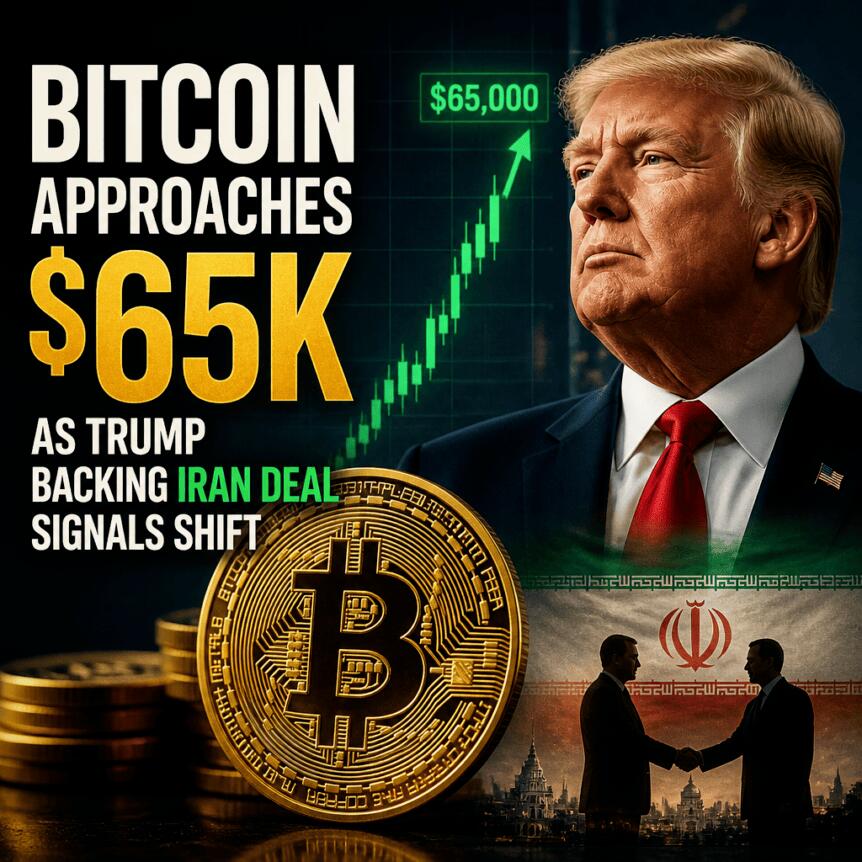
Bitcoin edged around the $64,000 mark as markets closed out the week, with momentum supported by a developing US–Iran diplomatic signal. Traders pointed to expectations that a peace deal would be signed on Sunday, alongside technical stability after a brief push to around $64,750 on Bitstamp.
While the move looks more like consolidation than a breakout, the narrative matters: in the short term, easing geopolitical risk can improve risk appetite for liquid assets such as crypto, especially when traders believe the downside case is losing traction on key chart and derivatives metrics.
Key takeaways
- Bitcoin held above $64,000 near Sunday’s weekly close after trading briefly around $64,750 on Bitstamp.
- US President Donald Trump said the Strait of Hormuz would be “open to all” immediately after a scheduled peace deal signing on Sunday.
- Traders cited the 200-week simple moving average (SMA) as a still-functioning support level, despite historical skepticism around its reliability.
- Derivatives conditions—rising open interest alongside falling funding rates, per trader analysis—were framed as a setup associated with more durable bottoms.
Geopolitics supports the tone as Bitcoin stabilizes
According to price action reviewed on TradingView, BTC settled after local highs of about $64,750 on Bitstamp. That intraday strength followed a message from US President Donald Trump, who wrote on Truth Social that the “Deal is scheduled to get signed tomorrow” and that, “immediately after it is signed,” the Hormuz Strait would be “OPEN TO ALL.”
The potential implication for markets is straightforward: the Strait of Hormuz is a critical global shipping corridor, and any sign—credible or not—of reduced disruption risk can ripple through expectations for energy prices and broader economic volatility. In crypto, that kind of macro relief often shows up first in liquid trading conditions before it reflects in longer-term positioning.
Traders watch the 65,000–67,000 zone closely
On the charts, some traders interpreted the rebound as technically constructive. In a post on X, trader SuperBro said the 200-week SMA was holding as support and described low-timeframe BTC price behavior as “constructive.”
SuperBro also argued against immediate bearish breakdown risks, pointing instead to a level linked to the point of control (nPOC) on exchange order books sitting above current spot prices. Their view framed $65,000 to $67,000 as a major “test,” anchored to the area of the last swing low and volume point of control. They added that if BTC can decisively break through that supply zone, the bearish case would weaken significantly.
Notably, earlier Cointelegraph coverage had discussed skepticism about the 200-week SMA as a “safety net,” saying its historical track record can be “unreliable” in bear markets. That creates a clear tension for investors: the same indicator that looks supportive in the present can fail to protect during prior downturn regimes. Traders appear to be treating the current holding as a useful signal—but not a guarantee.
Open interest and funding rates hint at a “bottom-style” setup
Beyond spot price levels, attention has shifted to derivatives behavior. Trader Cryptic Trades highlighted a combination of rising open interest and falling funding rates on exchanges, arguing that it may reduce the likelihood of longs getting trapped into a new downturn.
In a post on X, Cryptic Trades said, “It’s finally happening,” describing current conditions as signaling a lack of aggressive bullish chasing. Their interpretation was that the market was not behaving as if bulls were confidently adding risk at higher prices; instead, they suggested bears were “doubling down,” increasing short exposure while betting the downtrend wasn’t over.
That distinction is important because it changes how traders read the risk of a reversal. Cryptic Trades argued that when sentiment remains heavily bearish while leverage dynamics improve—specifically with falling funding rates alongside open interest rising—markets can transition from persistent downside pressure into short-squeeze territory. They described the pattern as one that “generally marks durable bottoms,” where price begins moving higher even as most participants keep leaning bearish.
“This is exactly the kind of setup that generally marks durable bottoms. The market starts moving higher, sentiment remains overwhelmingly bearish, and the most keep leaning the bearish. This is how aggressive short squeezes are born.”
Liquidation maps align with the rebound’s timing
CoinGlass liquidation heatmap data, referenced in the article, showed that the local highs coincided with a thick band of potential short liquidations. In practical terms, that means some of the price strength may have been amplified by forced exits: when price rises into areas with crowded short positions, liquidations can accelerate the move.
Even so, liquidation-driven strength can be fragile if it doesn’t transition into sustained demand. That is why traders are focusing on both nearby resistance—such as the $65,000–$67,000 test highlighted by SuperBro—and broader derivatives conditions that would signal whether the market is merely bouncing or genuinely shifting structure.
For now, investors should watch whether Bitcoin can hold gains above the key $65,000–$67,000 zone and whether funding rates continue trending lower while open interest stays elevated, as those together would support the “bottom-style” interpretation. If those conditions reverse—or if the market fails to clear the order-book and volume concentrations—then the rebound may remain constrained rather than marking a durable change.
MUFG Bank, Mizuho Bank, and Sumitomo Mitsui Banking Corporation have established a formal joint council to develop and co-issue a yen-backed crypto stablecoin by the end of Japan fiscal year 2026, March 2027.
The stablecoin will be issued under a trust agreement, with all three banks acting as joint settlors and a trust bank or similar institution serving as trustee. This is not a pilot. Three systemically important institutions have committed shared infrastructure.
The initiative operates under the FSA’s Payment Innovation Project and follows a late-2025 pilot examining whether multi-bank stablecoin co-issuance could be carried out, in the banks’ words, “legally and appropriately.”
The answer, evidently, was yes. Collectively, MUFG, Mizuho, and SMBC oversee more than $7 trillion in assets, making this the largest institutional Japan stablecoin initiative in Asia to date.
Japan Payment Services Act: The Regulatory Architecture Behind the Joint Issuance
Japan’s stablecoin regulation crystallized in June 2023, when amendments to the Payment Services Act introduced a formal licensing regime for fiat-pegged stablecoins, classifying them as electronic payment instruments.
The law restricts domestic issuance to three categories of entities: licensed banks, trust companies or trust banks, and registered fund transfer service providers. That restriction is the structural moat the megabanks are stepping through.
The FSA’s Payment Innovation Project, housed within the FinTech Proof-of-Concept Hub operational since 2017, provided the formal channel for the late-2025 pilot.
Updated PSA 2026 amendments took full effect June 13, 2026, tightening travel-rule obligations for cross-border transactions and reinforcing the FSA’s enforcement posture. From June 1, 2026, foreign trust-type stablecoins can also operate in Japan as electronic payment instruments under a revised Cabinet Office Ordinance, provided they clear FSA licensing, collateral management, and audit standards.
Reserve rules are specific: trust stablecoin issuers may invest up to 50% of reserves in short-term Japanese government bonds. The megabank yen stablecoin is expected to be fully reserved, backed by cash and JGBs held in trust, aligning precisely with the FSA’s asset-segregation and redemption-at-par requirements.
Discover: The Best Crypto to Diversify Your Portfolio
Japan Yen Crypto Stablecoin Field: JPYC, JPYSC, EJPY, and Now the Megabanks
The megabanks are entering a yen stablecoin market that has moved fast since 2023’s regulatory clarity. JPYC Inc. launched Japan’s first legally recognized yen-denominated stablecoin, JPYC, in October 2025.
The FSA subsequently classified it under the same regulated payment services framework as PayPay and Rakuten Pay in April 2026, a signal of how mainstream the product has become.
SBI Holdings and Startale Group followed in February 2026 with JPYSC, a trust bank-backed yen stablecoin issued by SBI Shinsei Trust Bank and targeting institutional and cross-border use cases.
The Japan Blockchain Foundation announced EJPY in May 2026, to be issued on Japan Open Chain and Ethereum.
On the dollar side, major financial institutions are racing to establish bank-issued crypto footholds, USDC became the first dollar-pegged stablecoin approved in Japan in March 2025, issued by SBI, and Ripple and SBI Holdings have announced plans to launch RLUSD in Japan.
What distinguishes the megabank co-issuance model is regulatory weight, not technology. JPYC and JPYSC are compliant products. A jointly branded yen stablecoin from all three of Japan’s dominant banking groups carries a different order of institutional credibility, and a different scale of potential settlement volume.
Discover: The Best Token Presales
The post Japan Three Biggest Banks Unite to Launch Yen Crypto Stablecoin by March 2027 appeared first on Cryptonews.

Date, Time, Matches and How to Watch

We turned an old council house into one of Wales’ best homes

The Job That AI Was Supposed to Kill Needs More Humans Than Ever

BloFin War of Whales 2026 Grand Prix opens registration for $5M trading championship

Blockchain.com files with SEC for U.S. IPO

Israel says it has killed new Hamas military leader in Gaza City airstrikes

CMA Inter | Financial Accounting | MCQ Solutions | Paper Review | June 2026

Crypto in India: Can Indians Trade Legally or Is Cryptocurrency Banned? Full Explanation Ankit Sir

Elon Musk’s Bank Balance vs Your Mindset: How Money Changes Life!
-

 NewsBeat7 days ago
Alexander Zverev wins the French Open to finally earn a 1st Grand Slam title
-

 Crypto World6 days ago
Anatomy of the June crypto crash: Fed, Iran, Saylor
-

 Crypto World3 days ago
Oppenheimer backs SpaceX as $70 billion retail frenzy builds
-
 NewsBeat7 days ago
Alexander Zverev conquers demons and outlasts Flavio Cobolli to win French Open for first major title
-

 Crypto World3 days ago
Markets Rally as SpaceX IPO Looms Amid Iran Tensions and Inflation Surge
-

 Business6 days ago
High Stakes for Wembanyama as New York Pushes for 3-0 Lead
-

 Sports6 days ago
FIFA WC 2026 Group C: Morocco, Scotland challenge Brazil’s hunt for glory | FIFA World Cup 2022
-

 Tech7 days ago
Notion restores access to Anthropic after service disruption
-
 Crypto World6 days ago
Eli Lilly (LLY) Stock Surges 4% Following Breakthrough Sleep Apnea Trial Results
-
 Sports5 days ago
Bangladesh beat Australia after 20 years in ODIs, register only their second win over six-time world champions | Cricket News
-

 Fashion2 days ago
Weekend Open Thread: Tuckernuck – Corporette.com
-

 Tech1 day ago
NanoClaw integrates JFrog registries to secure AI agent downloads
-

 Crypto World1 day ago
Bitget enters Argentina’s regulated crypto market through PSAV registration
-

 Tech2 days ago
This Week In Security: Microsoft On Microsoft, Register Your Domains, Linux On ARM, And FreeBSD Joins The File Cache Club
-

 Politics3 days ago
Politics Home | Healey Resignation Is “Colossal Failure Of Government”, Says Former Labour Defence Secretary
-

 Sports3 days ago
First Time Since 1971: Australia Register Historic Low In ODI Cricket
-
 Entertainment3 days ago
Donnie Wahlberg & More Heat Up Las Vegas at Circa’s Barry’s Downtown Prime
-

 Entertainment5 days ago
The Ryan Gosling True Crime Thriller On Netflix That Gets Even Stranger, Stream It Now
-

 Tech4 days ago
‘This is Seattle’s position on AI’: City Council votes unanimously to pause big new data centers
-
 Tech3 days ago
Opendoor Ends India Operations, Fueling a Bigger Conversation About AI and Outsourcing
You must be logged in to post a comment Login