

Crypto World
Paybis Wins MiCA and Latvia Licenses, Signals Stablecoin Compliance


Latvia-based cryptocurrency platform Paybis has been granted two licenes by Latvijas Banka, expanding its EU-regulated footprint under the European Union’s Markets in Crypto-Assets Regulation (MiCA) and the Payment Services Directive 2 (PSD2). The licences, issued on May 12 to SIA Paybis Europe—the company’s EU entity—mark a notable milestone in Latvia’s bid to host MiCA-compliant crypto businesses, according to an announcement from the central bank. Latvijas Banka noted that Paybis is the third Latvian firm to receive a MiCA crypto-asset service provider (CASP) licence.
The MiCA licence encompasses custody and administration of crypto assets on behalf of clients, the exchange of crypto-assets for funds or other crypto assets, the execution of orders, transfer services, and crypto asset advisory services, Latvijas Banka stated. The PSD2 payment institution licence, meanwhile, enables Paybis’s EU entity to execute payments and transfers to payment accounts.
Paybis CEO and co-founder Innokenty Isers described the dual licensing as enabling a broad, future-focused offering, including collaboration with stablecoins.
Related: MiCA has made euro stablecoins safe but weak, new report argues
Paybis eyes B2B crypto infrastructure push
Konstantins Vasilenko, Paybis’s co-founder and chief business development officer, told Cointelegraph that the company is pursuing a white-label crypto infrastructure stack aimed at business clients. The proposed stack would cover on/off-ramps, buy/sell/swap functions, payment acceptance, and stablecoin payouts, all delivered through a single API. The goal is to enable non-crypto firms to offer crypto services to their own customers without having to establish their own regulated framework from scratch.
“This is where the combination of MiCA CASP authorisation and PSD2 PI licensing is particularly important, because it allows us to connect crypto asset services with regulated payment rails,” he said.
Paybis, founded in 2014, currently supports 90 cryptocurrencies and serves roughly seven million users across 180 countries. The company also holds money services business licences in the United States and Canada, highlighting its cross-border regulatory posture as it pursues deeper EU integration.
Related: MiCA-licensed Banking Circle joins bank stablecoin settlement race in Europe
EU regulatory backdrop: MiCA evolution and cross-border oversight
The licensing news arrives as EU policy makers and industry participants consider how MiCA should evolve as the market matures. In April, a European Commission adviser suggested MiCA regulation is likely to evolve over time, with the Commission planning a public consultation to determine whether the rules are functioning as intended for market participants. Speaking at Paris Blockchain Week 2026, Peter Kerstens stated that it would be “rather unusual” if there were no “MiCA 2” at some point, noting that EU financial legislation typically develops in stages.
The dialogue around MiCA 2 has coincided with ongoing industry scrutiny and debate. Stablecoin issuer Circle has pushed back on euro stablecoin thresholds, and policymakers continue to debate whether oversight of major crypto firms should be centralized under the European Securities and Markets Authority (ESMA). These discussions underscore the tension between advancing a unified European regulatory framework and addressing concerns about competitiveness, innovation, and cross-border compliance.
From a practical standpoint, the Latvia licensing milestone illustrates how a MiCA-approved CASP and PSD2-compliant payment institution can be combined to deliver regulated, cross-border crypto services. For Paybis, the integration of regulated payment rails with crypto-asset services could streamline onboarding for institutions seeking to offer crypto products to their client bases without bearing the full burden of building a compliant infrastructure from scratch. For policymakers, the development signals both the effectiveness of MiCA’s licensing regime in attracting compliant players and the need for ongoing assessment of how the rules map onto evolving payment and settlement ecosystems.
As the EU contemplates MiCA 2 and related supervisory paradigms, the Paybis milestone raises questions about licensing timelines, international interoperability, and the degree to which national regulators can harmonize with centralized EU oversight. Financial institutions and crypto firms monitoring these trajectories should consider not only the immediate regulatory approvals but also the implications for licensing pipelines, cross-border operations, and the bank-crypto nexus as stablecoins and other digital assets move closer to mainstream payment rails.
Looking ahead, the Latvian licensing development exemplifies a broader EU trend toward harmonized, regulated crypto infrastructure that can accommodate institutional clients while preserving safeguards around payments, custody, and asset transfers. The continued evolution of MiCA, including any prospective enhancements under MiCA 2, will shape how firms design cross-border products and coordinate with traditional financial rails, with significant implications for licensing strategies, regulatory compliance, and market structure in Europe.

Cross-border payout platform MassPay and Coinbase announced a partnership on Thursday to offer stablecoin cross-border payouts.
The partnership connects MassPay’s network in 180 countries with the US-based exchange’s crypto infrastructure, allowing customers to move between fiat, USDC and other digital assets, the companies said in a joint statement shared with Cointelegraph.
MassPay CEO Ran Grushkowsky told Cointelegraph that stablecoins are still a small slice of the company’s transaction volume. Still, the company expects the new rails to support nine-figure payouts in the first year.
He added that clients using the system have seen costs fall by about 40% to 70% versus international wires, while settlement is near instant instead of taking days on traditional payment rails.
MassPay and Coinbase partner on stablecoin cross-border payments. Source: MassPay
The partnership adds to a broader trend of established payments and financial infrastructure providers embracing stablecoins.
Stripe and Circle, for example, have also moved to expand stablecoin-based infrastructure for cross-border payments.
MassPay deepens stablecoin payout push
Under the partnership, Coinbase provides wallet infrastructure, custody and onchain settlement, while MassPay orchestrates last-mile payouts over bank transfer, mobile wallet and digital asset channels.
The companies split compliance responsibilities, with Coinbase providing regulated custodial infrastructure and licensing, while MassPay handles know-your-customer checks, sanctions screening and tax documentation across its network.
Related: Coinbase to launch token-backed mortgage down payments this summer
Grushkowsky said MassPay already offers stablecoin payout capabilities via other providers and is now expanding capacity and credibility by adding Coinbase.
Stablecoins spread across payment rails
Beyond MassPay and Coinbase, other large payments players are also building stablecoin-based infrastructure for cross-border flows.
Stripe acquired Bridge in February 2025, a startup focused on scaling stablecoins to businesses, and said it expects stablecoin infrastructure to play a critical role in accelerating cross-border commerce.
Circle, meanwhile, announced its Circle Payments Network in April 2025 to connect banks, payment companies and digital wallets for real-time cross-border settlement using USDC, EURC and other regulated payment stablecoins.
Magazine: Guide to the top and emerging global crypto hubs — Mid-2026

The pair behind a $389 million cryptocurrency laundering service dubbed “AudiA6” have been arrested following international investigations between the US, Europol, and 10 other countries.
According to a press release from the US Attorney’s Office, Eastern District of Pennsylvania, both Ruslan Igorevich Tkachuk, 37, Ukrainian, and Alexander Vladimirovich Ledenev, 25, Russian, are residents of Georgia, where they are currently in custody.
The US will be seeking the pair’s extradition, after which they could each face a maximum sentence of 20 years.
Europol called the platform the “most trusted by ransomware gangs and cybercriminal networks” and links it to “over 15 international cybercrime investigations.”
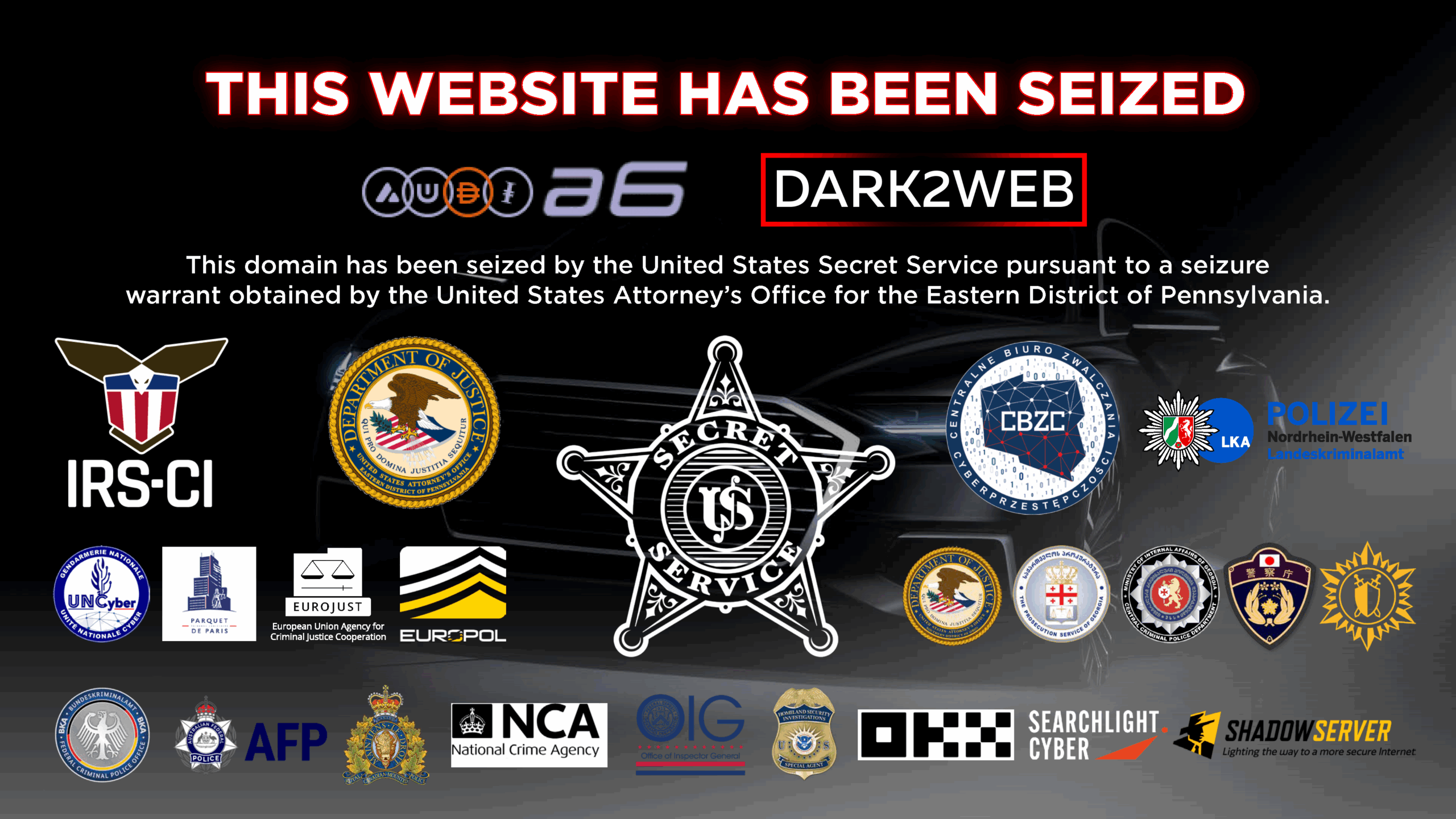
In what is described as a “coordinated international takedown,” properties were searched, cryptocurrency was frozen, and online infrastructure was targeted, with the organization’s websites replaced by a law enforcement seizure banner.
Read more: Crypto hack goes political as Grinex blames ‘Western special services’
As well as running AudiA6, the pair allegedly ran the cybercrime forum Dark2Web. On the forum, AudiA6 “explicitly offers to conceal and disguise” cryptocurrency linked to criminal activity “for a fee of up to five percent.”
According to US law enforcement’s blockchain analysis, over 10,000 bitcoin (BTC) are estimated to have been deposited into AudiA6 since its launch in 2021.
Of these, almost 400 BTC were deposited directly from illicit sources, with additional funds indirectly linked to illicit activity.
KuCoin catches strays
Prolific blockchain investigator ZachXBT called AudiA6 “one of the top” users of centralized crypto exchange KuCoin where it ran a “centralized mixing services for cybercriminals.”
He believes AudiA6 laundered funds stolen from Swissborg last year, and LastPass users, which began in December 2022.
In April, the sleuth questioned why Kucoin would “allow” the laundering of crypto stolen via a fake Ledger app and from crypto ATM Bitcoin Depot.
Read more: KuCoin criticized for helping ‘launder’ $9.5M from fake Ledger app
Another blockchain sleuth is similarly critical of KuCoin in its alleged failure to prevent AudiA6’s operations.
SEAL contributor Nick Bax claims that KuCoin “facilitated” the laundering of “a very large amount of LastPass stolen funds.” He adds that “in rare cases” the exchange temporarily froze funds, but “would often release the funds back to the launderers.”
He also points out that AudiA6 “literally advertised key sweeping,” the mass draining of crypto from stolen seed phrases, such as from a compromised password manager.
Got a tip? Send us an email securely via Protos Leaks. For more informed news and investigations, follow us on X, Bluesky, and Google News, or subscribe to our YouTube channel.
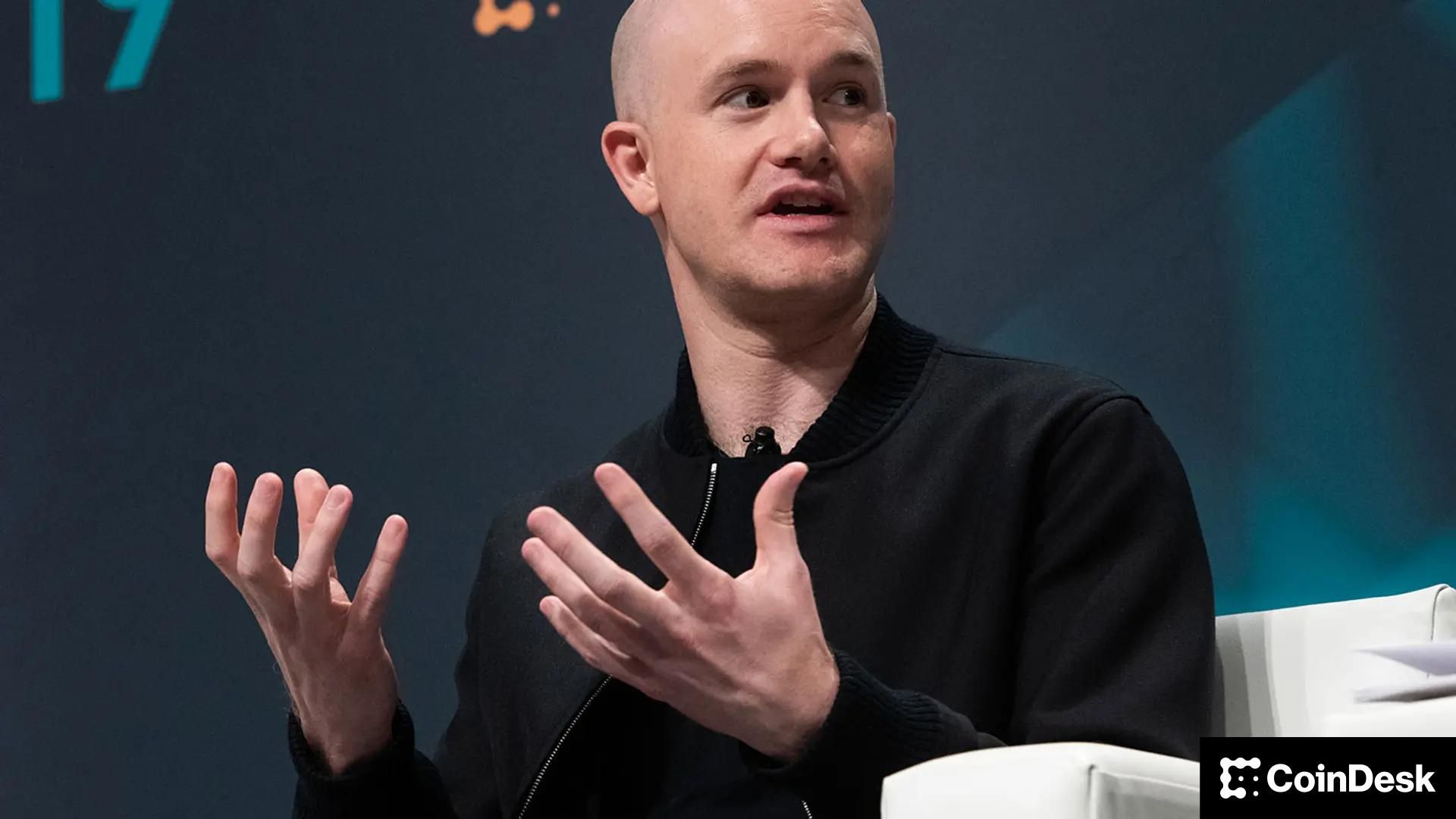
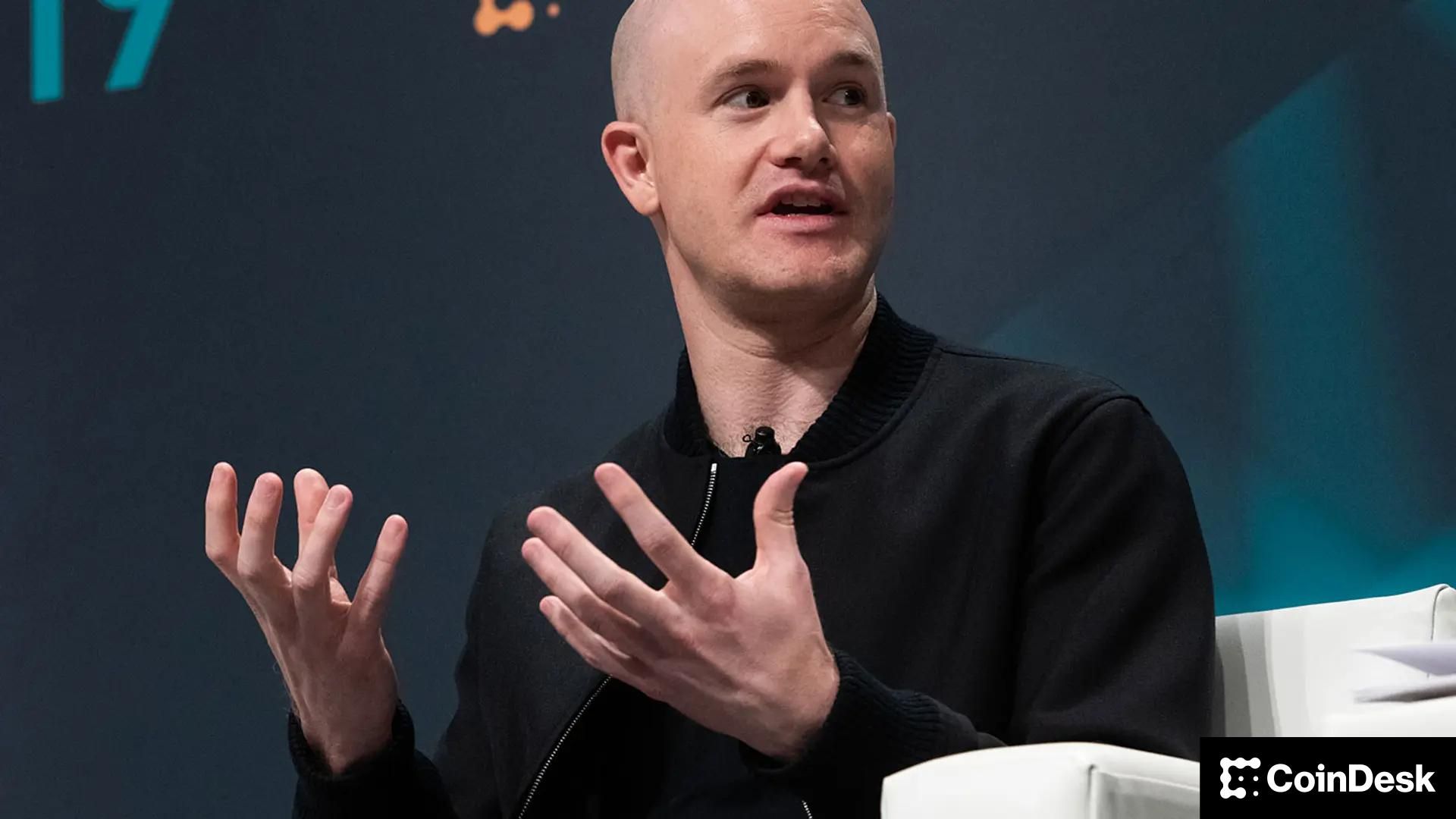
Coinbase has launched a new product called Coinbase for Agents, a platform that allows artificial intelligence agents such as ChatGPT and Anthropic’s Claude to connect directly to users’ Coinbase accounts and carry out financial transactions on their behalf.
The product, which went live on Wednesday, enables AI agents to trade cryptocurrencies, access market data, pay for online services and eventually make purchases, all within user-defined spending and risk limits.
Coinbase said the platform gives agents access to its advanced trading tools through natural language commands, allowing users to authorize tasks ranging from portfolio rebalancing to automated strategy execution. At launch, agents can trade spot crypto and derivatives markets, with support for equities and prediction markets planned for the future.
The company is also integrating support for x402, an open machine-to-machine payments protocol developed at Coinbase, which allows agents to make small payments for services such as premium research, data APIs and computing resources without subscriptions or manual checkout processes.


Delaware and New Jersey each advanced bills this week to ban cryptocurrency ATMs statewide, citing mounting scam losses that have overwhelmingly hit older residents. Delaware's House Bill 441 cleared the House Economic Development Committee on Monday after Rep. Cyndie Romer, Chair of the House… Read the full story at The Defiant
Crypto World
Gold slumps to 6-month low even as inflation fears rise. Here’s why bullion is out of favor

Gold bars are displayed in a photo illustration, reflecting recent movements in gold prices driven by inflation concerns and central bank policy outlooks in Brussels, Belgium, on December 23, 2025. (Photo by Jonathan Raa/NurPhoto via Getty Images)
Nurphoto | Nurphoto | Getty Images
Gold fell to a fresh six-month low on Thursday as investors dump the once-hot trade on growing concern that higher inflation will force the Federal Reserve into possibly raising rates later this year, or at least keep them steady.
There are other factors at play as well.
August gold futures touched $4,046.20 on Thursday, their lowest level since November. Gold is down 6.3% this week alone, putting it on pace for a second straight weekly loss and its worst week since mid-March, when gold fell 9.62%.
It was last down 0.5% to $4,111.10.
Fed reversal
As a safe-haven asset, investors gravitate towards the yellow metal during times of market uncertainty and in hopes that it will act as a hedge against inflation. But because gold doesn’t yield anything, the metal is also especially sensitive to expectations for long-term, real interest rates.
The Iran war, now in its fourth month, has fueled inflation by pushing energy and other prices higher.
U.S. consumer inflation in May increased at its fastest pace in three years in May, mainly from the surging prices of energy-related products. Together with a stronger-than-expected May jobs reports, expectations have grown that the Fed may need to raise interest rates by the end of the year to slow down price increases.
Next week, the Federal Reserve is expected to hold its benchmark lending rate steady at 3.50% to 3.75% during Kevin Warsh’s first meeting as Fed chair. A majority of economists in a Reuters poll expect interest rates to remain unchanged this year after many were penciling in multiple rate cuts to start the year.
Traders less sanguine, and are currently pricing in a 67% chance of a Fed rate hike by December, according to the CME Group’s FedWatch tool. Higher rates, if they help stamp out inflation, can make dollar-denominated assets such as Treasury securities more attractive.
The technical breakdown
Based on price chart analysis, the overall technical picture for gold remains weak.
Gold recently broke below its 200-day moving average for the first time since September 2023, which Citigroup flagged as a major negative signal. The bank has been cautious near-term on gold ever since the war escalated in March, partly due to higher energy costs springing from the closure of the Strait of Hormuz.
Long-term, Citi was more bullish, however. “Despite the negative near-term momentum, we expect gold price to eventually rebound when the Strait situation deescalates,” its analysts said.
JPMorgan is more pessimistic, saying retail and institutional investors have retreated from the so-called “debasement trade” based on a belief that the U.S. dollar would continue to depreciate. The bank cited outflows from gold exchange-traded funds and weaker futures positioning as evidence of the move, tied also to concern about the size of government debt, inflation and geopolitical risks.
Key Takeaways
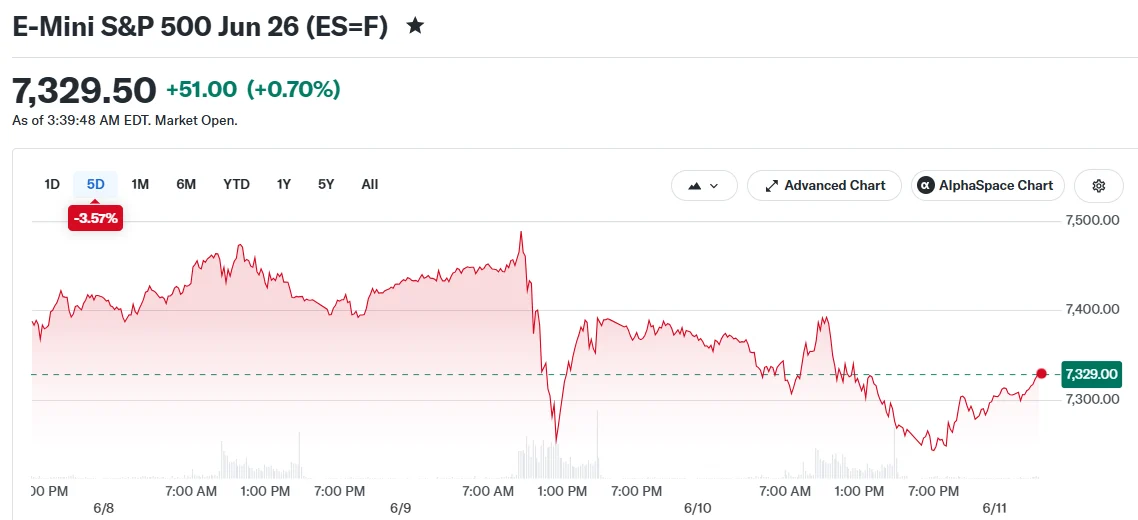
- Major U.S. equity indexes opened with solid gains Thursday, shaking off heightened U.S.-Iran geopolitical tensions
- SpaceX’s anticipated Friday market debut could become the largest initial public offering ever recorded
- Oracle (ORCL) shares plummeted more than 11% following cloud revenue disappointment despite surpassing earnings forecasts
- Producer price inflation accelerated to 6.5% annually in May, marking the steepest climb since late 2022
- Weekly unemployment filings exceeded forecasts at 229,000 for the period ending June 6
U.S. equity markets posted solid advances Thursday as traders shifted attention away from escalating Middle East hostilities toward the highly anticipated SpaceX public offering scheduled for Friday.
The Dow Jones Industrial Average surged approximately 310 points, representing a 0.7% increase. The S&P 500 advanced 0.5%, while the Nasdaq Composite climbed 0.7%.
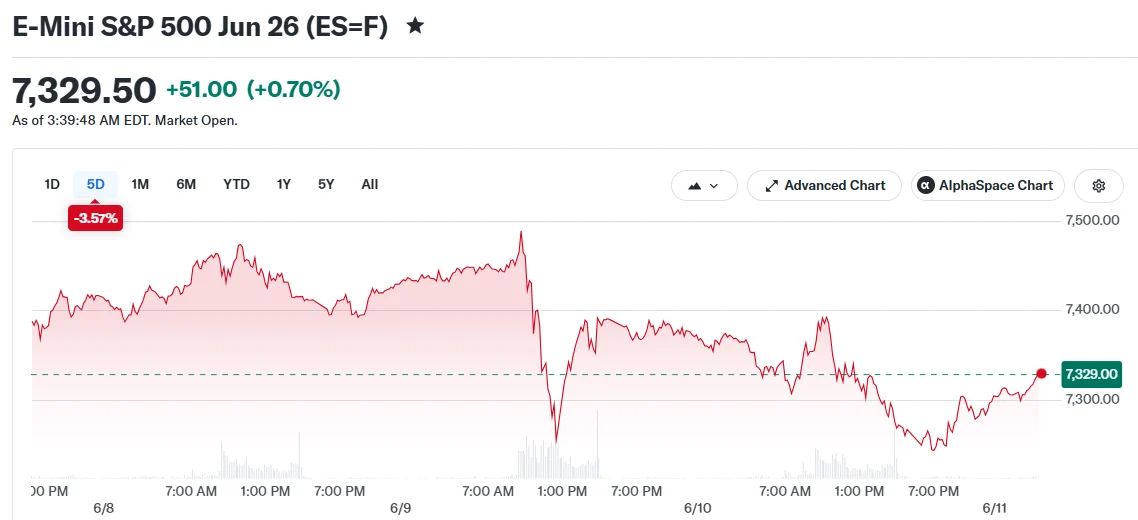
The positive momentum persisted even as the United States executed additional military operations against Iranian targets. Market participants demonstrated resilience, with energy commodity prices remaining relatively stable.
West Texas Intermediate crude edged up merely 0.3% to reach $90.30 per barrel. Brent crude held steady. This price stability indicates that market participants aren’t anticipating significant further conflict escalation.
President Trump communicated via Truth Social that U.S. forces would conduct another strike Thursday evening and assume “total control” of Kharg Island—a critical Iranian petroleum export facility. He further indicated intentions to commandeer Iran’s entire energy infrastructure.
Despite these dramatic pronouncements, equities maintained their upward trajectory. Market strategists at Bespoke Investment Group observed that recent sessions have frequently witnessed early strength fade as investors shift capital from outperforming sectors toward more defensive holdings.
SpaceX Market Entry Anticipated Friday
Investor attention is firmly fixed on Friday’s expected public market introduction of Elon Musk’s SpaceX. The offering is broadly anticipated to shatter records as the most substantial IPO in financial history.
SpaceX will begin trading under the symbol SPCX. While official valuation and pricing information remains unconfirmed, the forthcoming debut has captured significant interest throughout the financial community.
Oracle (ORCL) Tumbles Following Cloud Revenue Shortfall
Oracle emerged as a significant decliner Thursday. The enterprise software giant delivered quarterly results that exceeded analyst profit estimates, yet shares dropped more than 11% during premarket hours.
The selloff followed Oracle’s disclosure of cloud infrastructure revenue that fell short of investor expectations. Additionally, capital spending figures came in above projections, sparking concerns regarding profit margin compression.
Market participants had anticipated robust cloud business expansion, making the revenue miss sufficient to trigger a sharp downturn despite the company’s bottom-line performance exceeding forecasts.
Wholesale Price Pressures Reach Highest Point Since 2022
Economic data released Thursday revealed wholesale inflation running hotter than economists projected. The producer price index jumped 1.1% on a monthly basis and climbed 6.5% compared to the previous year.
This represents the most significant annual acceleration since November 2022. Elevated petroleum costs connected to the Iranian military situation constitute a primary catalyst behind the surge.
Consumer inflation figures had already registered above expectations earlier in the week, making Thursday’s wholesale price report the second consecutive inflationary surprise.
Initial unemployment insurance applications for the week concluded June 6 totaled 229,000, surpassing the consensus estimate of 220,000. Continuing claims expanded to 1.795 million.
Investors will monitor how these inflation readings influence monetary policy expectations approaching the Federal Reserve’s upcoming policy deliberation.



Citigroup is rolling out tokenized shares of private companies for its wealth-management and institutional clients, the Wall Street Journal reported Thursday. The bank is already in discussions with private firms about joining the platform and hopes the model becomes an industry standard. The… Read the full story at The Defiant

On June 2nd, the BeInCrypto x Proof of Talk Institutional 100 Awards brought the leading names in institutional digital finance to the Louvre Palace in Paris.
The ceremony took place on the main stage of the Proof of Talk summit, in front of an audience of 2,500 decision-makers, 85% of whom hold C-level, collectively responsible for more than $18 trillion in AUM. The same audience the Institutional 100 was built to recognize.
Hosted by BeInCrypto CEO and Founder, Alena Afanaseva, Global Head of News, Brian McGleenon, and Chief Strategy Officer, Jessica Lloyd, the evening honored the 100 companies and individuals leading the convergence of traditional finance and digital assets in 2026.

The Night’s Winners
Representatives from Visa, Coinbase, Moody’s Ratings, Franklin Templeton, Chainalysis, Wintermute, and others took the stage to receive their awards in front of an audience of institutional investors, fund managers and industry executives.


How the List Was Built
The Institutional 100 is an independent media awards programme built on a single principle: if you made the list, you earned it. Over 500 candidates were screened across 26 categories and six segments through a two-stage evaluation, a quantitative screen using publicly verifiable data followed by independent judge scoring.
Several of the judges presented the awards in person, including Clem Chambers (Founder, ADVFN), Fabian Dori (CIO, Sygnum Bank), Michael Walsh (Chair, Kraken DA Exchange), Charles Kerrigan (Partner, CMS) and Arnaud Bader (Wintermute). The wider panel brought together Charlie Morris (CEO, ByteTree, formerly HSBC), Iggy Ioppe (CIO, Theo, formerly Credit Suisse), Tal Elyashiv (Founder, Securitize and SPiCE VC) and Dr. Christina Zhang (Co-Chair, UN Task Group on CitiVerse), among others.


The Full Institutional 100
The complete list of winners, across capital markets, tokenization, regulation, enterprise blockchain, and retail access to digital assets, is live, alongside the full photo gallery from the evening.
Explore the Institutional 100 2026: https://awards.beincrypto.com/
Congratulations to our winners, and to everyone who’s building the next phase of finance. Thank you to the judges of the BeInCrypto Expert Council, who gave their time and judgment to this year’s list.
The Institutional 100 returns in 2027. We look forward to seeing many of you there.
The post Inside the Institutional 100 Ceremony at the Louvre appeared first on BeInCrypto.
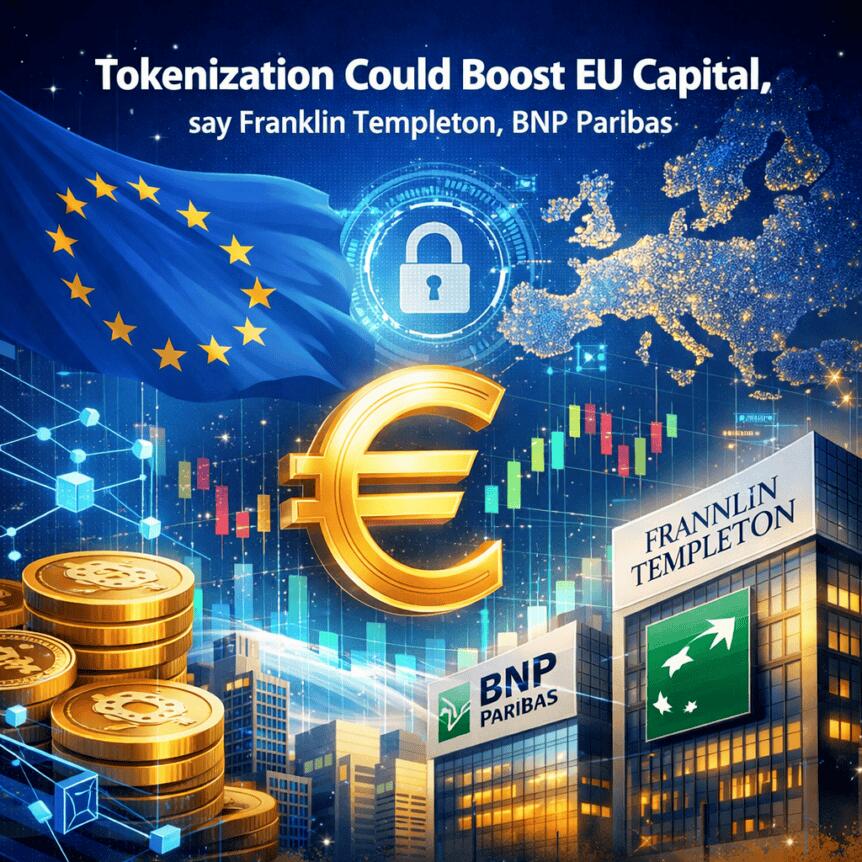
Institutional interest in tokenization is accelerating as large banks, asset managers and market infrastructure players explore how on-chain assets and stablecoins can lift capital efficiency and liquidity. At the WAIB Summit 2026 in Monaco, executives from Franklin Templeton and BNP Paribas outlined how tokenized assets could modernize Europe’s capital markets by streamlining settlement, improving collateral mobility, and enabling more seamless cross-border activity.
Rafael Mastroberardino, head of digital assets partnership development at Franklin Templeton, framed tokenization as a path to greater “optionality and flexibility” for both banks and corporate treasuries—and as a catalyst for institutions to roll out their own offerings. Julien Clausse, head of BNP Paribas CIB’s tokenization platform, emphasized that blockchain can host multiple asset types on a single chain, provided those assets can interact meaningfully, unlocking new institutional use cases.
The momentum reflects a broader shift: tokenization is moving from experimentation to scalable infrastructure, with major US banks reportedly pursuing tokenized deposit networks to preserve regulated channels while delivering the speed and programmability associated with blockchain-based assets. JPMorgan Chase and Bank of America were cited in industry coverage as planning a tokenized deposit network for a launch in the first half of 2027.
Key takeaways
- European institutions see tokenization as a strategic lever to boost capital efficiency, settlement speed, and cross-border activity, underscored by executives from Franklin Templeton and BNP Paribas at WAIB Summit 2026.
- Regulators and exchanges are moving from pilots to on-ramp infrastructure for tokenized securities, with Nasdaq’s trading pilot approved by the SEC and NYSE partnering with Securitize to build blockchain-based trading for stocks and ETFs.
- Investment is fueling the rails for on-chain settlement, notably Digital Asset Holdings’ $355 million funding round to expand Canton Network for private, privacy-preserving tokenization and settlement of traditional securities.
- Industry pilots already span major banks and custodians; the Canton Network has been tested with Goldman Sachs, BNY Mellon, BNP Paribas, Standard Chartered, Societe Générale and Deutsche Börse, signaling growing institutional readiness.
Europe’s tokenization momentum deepens
Across Europe, the prospect of tokenized assets and stablecoins reshaping capital markets is gaining political and commercial traction. The WAIB Summit in Monaco drew executives keen to connect tokenization with real-market outcomes—faster settlement cycles, more fluid collateral movements, and the potential for cross-border collateral reuse and liquidity flows. The underlying idea is to move beyond isolated pilots and toward interoperable rails that can handle multiple asset classes on a shared distributed ledger.
For Franklin Templeton’s Mastroberardino, tokenization brings tangible “optionality and flexibility” that could influence how institutions structure funding, manage liquidity and deploy capital. BNP Paribas’ Clausse echoed the sentiment, arguing that multi-asset on-chain platforms could unlock use cases that traditional rails struggle to accommodate, so long as those assets can interact in a coherent, governance-driven environment.
Regulatory and market infrastructure momentum
Beyond Europe, regulatory and exchange moves are ramping up the momentum behind tokenized markets. On March 18, the U.S. Securities and Exchange Commission approved Nasdaq’s pilot proposal to enable trading of tokenized versions of high-volume stocks and other securities. Days later, the New York Stock Exchange announced a partnership with tokenization platform Securitize to build blockchain-based trading infrastructure for Wall Street, including tokenized shares and exchange-traded funds.
The broader aim, as articulated by Intercontinental Exchange (ICE), is to create a tokenized securities venue with 24/7 trading, instant settlement, stablecoin-based funding, and on-chain settlement. This signals a push toward a more programmable, continuous market for traditional assets, subject to regulatory guardrails and privacy considerations.
In parallel, the sector is attracting substantial venture and strategic capital. Digital Asset Holdings recently closed a $355 million funding round led by Andreessen Horowitz’s crypto arm, with the round valuing the company at about $2 billion. The fresh capital is earmarked to expand Canton Network, a platform designed to enable financial institutions to tokenize and settle traditional securities while preserving data privacy on-chain. Canton has already been piloted by a roster of major banks and custodians, including Goldman Sachs, BNY Mellon, BNP Paribas, Standard Chartered, Société Générale and Deutsche Börse.
Building the rails for on-chain settlement
The Canton Network represents a focused effort to reconcile the needs of regulated institutions with the benefits of blockchain-based settlement. Canton’s approach centers on privacy-preserving tokenization and settlement workflows that can coexist with existing custody and compliance regimes. The platform’s early deployments with large incumbents suggest a path toward real-world, cross-institutional use cases—from private placements and securitized products to more fluid asset tokenization across borders.
As with any frontier technology, the path to broad adoption hinges on a mix of clarity from regulators, interoperability between networks, robust risk controls, and proven operational performance at scale. The current wave of pilots and funding activity indicates serious intent from both banks and market infrastructure players to translate tokenization from a theoretical upgrade into a practical, market-wide framework.
Investors and practitioners should watch upcoming pilot results and interoperability milestones closely. Questions remain about data leakage, cross-border governance, and how custody and settlement constraints will adapt to on-chain processes. Yet the trajectory is clear: tokenization is moving from niche experiments toward the core plumbing of capital markets, promising faster settlement, enhanced collateral mobility, and new possibilities for cross-border finance.
What comes next will hinge on regulatory alignment and the speed with which institutions can demonstrate secure, scalable, and compliant on-chain workflows. For now, the industry appears intent on turning tokenized assets from novelty into a durable, parallel rail for traditional securities.

Key Takeaways
- Realty Income (O) delivers monthly dividends with a yield exceeding 5% and a history of over 120 dividend increases
- Verizon (VZ) maintains an impressive track record of consecutive annual dividend growth spanning nearly 20 years
- Pfizer (PFE) offers an elevated yield following share price declines after pandemic-related revenue normalization
Income-focused investors looking ahead to 2026 have three compelling dividend options worth examining. These stocks each provide unique advantages for those seeking dependable cash flow.
Realty Income (O): The Monthly Dividend Company
Realty Income has earned its reputation as “The Monthly Dividend Company” through decades of consistent income delivery. The real estate investment trust operates a diversified portfolio of thousands of commercial properties backed by long-term lease agreements with established tenants.
Since its public debut, the company has implemented dividend increases on more than 120 occasions, currently offering shareholders a yield north of 5%. The REIT’s property mix spans retail locations, industrial facilities, and gaming establishments, providing sector diversification that mitigates concentration risk.
What distinguishes this stock from competitors is its monthly distribution schedule rather than the traditional quarterly approach. This payment frequency appeals to investors who prioritize consistent cash flow for living expenses or reinvestment opportunities.
Wall Street analysts maintain a balanced outlook with 7 Buy ratings, 7 Hold recommendations, and 1 Sell rating. The consensus price target hovers around $67.35 per share.
Verizon (VZ): Blue-Chip Telecom Reliability
Verizon stands as a dividend aristocrat in the telecommunications sector, having increased its annual payout for nearly two consecutive decades. The company’s wireless networks and broadband infrastructure generate consistent cash flows supported by an extensive customer base across the United States.
Verizon Communications Inc., VZ
While expansion has been measured rather than explosive, the essential nature of communication services ensures revenue stability that surpasses more economically sensitive industries. This defensive characteristic provides reassurance during market volatility.
The telecommunications giant ranks among America’s highest-yielding large-capitalization stocks. Shareholders typically select Verizon for its income generation and reduced volatility profile rather than aggressive price appreciation potential.
For those seeking a battle-tested income vehicle with minimal surprises, Verizon delivers exactly that proposition through its time-tested business model.
Pfizer (PFE): Elevated Yield With Turnaround Potential
Pfizer’s stock valuation contracted significantly as COVID-19 vaccine revenues normalized from their pandemic peaks. This price decline mechanically increased the dividend yield, capturing attention from value-oriented income investors.
Despite near-term headwinds, the pharmaceutical giant maintains a robust development pipeline and continues allocating substantial capital toward research initiatives. Market participants are closely monitoring emerging products to assess whether they can offset the revenue gap left by declining pandemic-related sales.
Notably, Pfizer has maintained its dividend policy throughout this challenging period, signaling management confidence despite the top-line pressures. This commitment has secured its position on income investor watchlists, particularly for those comfortable with turnaround scenarios.
Investors with longer time horizons may find opportunity if the company’s next-generation therapies achieve commercial success in coming years.
Both Murray and McCarthy Need to Talk More Vanilla while Focusing on Job at Hand

Anthropic launches powerful Fable 5 model publicly, while keeping Mythos restricted over cybersecurity concerns

‘Eye-opening’ Cambridge mystery to replace Channel 4 Taskmaster



-

 Fashion6 days ago
Weekend Open Thread: Evereve – Corporette.com
-
 Crypto World6 days ago
Jensen Huang Approves Samsung, SK Hynix, and Micron for NVIDIA (NVDA) HBM4 Memory Supply
-

 Crypto World3 days ago
Anatomy of the June crypto crash: Fed, Iran, Saylor
-
 Entertainment5 days ago
The Best Mystery Series of All Time Is Surging on Streaming 30 Years After It Ended
-

 NewsBeat4 days ago
Alexander Zverev wins the French Open to finally earn a 1st Grand Slam title
-

 Tech6 days ago
Suspicious Polyfill login prompts pop up on Toshiba, Muji websites
-
 Crypto World5 days ago
Senator Cynthia Lummis Calls CLARITY Act the Most Consequential Financial Legislation of This Generation
-

 Tech4 days ago
Microsoft unveils seven homegrown AI models in new bid for ‘long term self-sufficiency’
-

 Tech6 days ago
Microsoft launches MXC, an OS-level sandbox for AI agents, with OpenAI and Nvidia already on board
-

 Business6 days ago
(VIDEO) Justin Bieber Delivers Surprise Happy Birthday Serenade to Diners at Los Angeles Mexican Restaurant
-
 Business5 days ago
The Pain Points Taking a Fragile Tech Rally Down a Notch
-

 Business3 days ago
High Stakes for Wembanyama as New York Pushes for 3-0 Lead
-
 Crypto World3 days ago
Eli Lilly (LLY) Stock Surges 4% Following Breakthrough Sleep Apnea Trial Results
-

 Tech6 days ago
Von der Leyen’s AI envoy pick draws conflict-of-interest fire
-

 Tech6 days ago
Meta steals a tactic from Tesla and builds data centers in tents
-
Crypto World6 days ago
LBank Surpasses 25 Million Users Worldwide as AFA Partnership Continues to Drive Global Growth
-

 Tech5 days ago
Hackers now exploit SolarWinds Serv-U flaw to crash servers
-
 NewsBeat4 days ago
Alexander Zverev conquers demons and outlasts Flavio Cobolli to win French Open for first major title
-

 Crypto World4 days ago
Trump’s AI Ownership Plan Could Benefit Anthropic at OpenAI’s Expense
-
 Sports2 days ago
Bangladesh beat Australia after 20 years in ODIs, register only their second win over six-time world champions | Cricket News
You must be logged in to post a comment Login