
Crypto World
Bitcoin's $14,775 Weekly Surge Is the Biggest in Its History, Powered by ETF Flows



Bitcoin (BTC) gained $14,775 in a single week, the largest one-week dollar increase in its history. Galaxy Research says the rally also drove the strongest US spot Bitcoin ETF inflow week since October 2025.
The weekly close jumped from $62,818 to $77,593, a 23.5% move ranked 41st by percentage increase since 2010. By percentage increase, it was Bitcoin’s best week since March 2023.
What Drove Bitcoin’s Record Week
Galaxy Research linked the rally to two catalysts. The US Treasury said it would double its long-bond buyback operations, used to ease pressure on Treasury yields.
President Trump also urged Congress to pass the CLARITY Act. The bill would set federal rules for classifying digital assets as securities or commodities.
The move also triggered a short squeeze. Traders who had bet against Bitcoin were forced to close positions, accelerating Bitcoin’s fastest bull flip in a year.
Roughly $2.7 billion in short positions were liquidated across crypto markets that week, according to CNBC.
Sentiment also swung sharply. The Crypto Fear and Greed Index reached 74 on August 25, its highest level since October 2025.
ETF Inflows Confirm the Rebound
Spot Bitcoin ETF demand returned at the same time. Weekly inflows reached their strongest level since October 2025, Galaxy Research data shows.
August is on track to post the biggest monthly net inflow since Bitcoin’s prior all-time high. That would reverse months of ETF outflows that left the funds as net sellers in 2026.
ETF holders remain about 6% underwater even after the rebound. Their average cost basis sits at $84,029, against a $78,955 spot price, Galaxy Research data shows.
Bitcoin’s spot price traded above $80,000 on Thursday.
Whether the rebound continues may depend on ETF inflows holding into September. Traders will also watch if last week’s short squeeze proves lasting or temporary.
The post Bitcoin's $14,775 Weekly Surge Is the Biggest in Its History, Powered by ETF Flows appeared first on BeInCrypto.



Tokenized deposits have raised concerns that faster movement of bank money could reduce U.S. banks’ capacity to fund long term loans by hundreds of billions of dollars if the technology reaches widespread adoption.
Summary
- Dallas Fed researchers said tokenized deposits could shorten how long customer funds remain at banks and make deposits more sensitive to interest rates.
- A 10% reduction in the average life of deposits could cut U.S. banks’ maturity transformation capacity by about $580 billion.
- Faster tokenized transfers could increase deposit volatility and push banks to hold more liquid assets such as reserves and U.S. Treasuries.
- Major banks are already developing shared tokenized deposit networks as blockchain based payment infrastructure moves toward wider use.
According to an Aug. 25 research paper by Federal Reserve Bank of Dallas economists Rosie Levy and Srini Ramaswamy, large scale adoption of tokenized deposits could shorten the period that customer funds remain at banks and make those deposits more sensitive to interest rates. The authors said both effects could weaken banks’ ability to use deposits to fund assets with longer maturities.
The paper examines the potential effects of large scale adoption without making a judgment on whether such adoption will occur. The views expressed belong to Levy and Ramaswamy and should not be attributed to the Dallas Fed or the Federal Reserve System.
Tokenized deposits represent commercial bank deposits on blockchain infrastructure while keeping the underlying funds within the regulated banking system. Unlike stablecoins, they remain claims against the issuing bank and can pay interest, although moving them between different issuers remains more difficult.
Crypto.news has previously explained how a tokenized bank deposit maintains a one to one relationship with money held on the issuing bank’s balance sheet. For adoption to expand substantially, Levy and Ramaswamy said deposit tokens would need to circulate outside the bank that issued them, with financial institutions already exploring consortium and association models that could allow such transfers.
Tokenized deposits could reduce bank lending capacity
The researchers focused on the characteristics of conventional deposits that allow banks to use customer funds to finance assets with longer maturities.
Demand deposits can legally be withdrawn at any time, but balances tend to remain at banks for considerably longer than overnight. Banks account for that behavior through a weighted average life, or WAL, which measures how long deposits are expected to remain on their balance sheets.
Deposits tend to have relatively low sensitivity to changes in market interest rates as well. Levy and Ramaswamy said the combination of longer weighted average lives and low deposit betas makes those balances behave like longer duration liabilities, allowing banks to hold longer maturity fixed rate loans.
Tokenization could affect both characteristics. Instant settlement would let customers seeking higher yields move funds between institutions almost immediately, potentially shortening the average life of deposits while increasing competition between banks for those balances.
Programmable deposit tokens could accelerate the process. The researchers said agentic artificial intelligence combined with smart contracts could theoretically allow funds to move toward higher yielding accounts without requiring customers to initiate every transfer themselves.
Tokenized money market funds could compete directly with deposits as friction around moving funds declines. Corporate deposits may remain harder to move because businesses often maintain banking relationships for clearing, custody and cash management, though real time payments could let companies manage intraday liquidity more precisely.
Using Federal Reserve H.8 data, Levy and Ramaswamy calculated that U.S. commercial banks held about $25.7 trillion in assets as of July 15. Applying assumed durations to different asset classes produced roughly $7.03 trillion in 10 year equivalent duration exposure.
Deposits support most of that exposure. The researchers estimated that approximately $5.8 trillion, or about 80% of the $7 trillion in duration risk carried by banks, is supported by the duration characteristics of deposits.
Under their calculations, a 10% reduction in the weighted average life of deposits would cut the banking system’s aggregate maturity transformation capacity by about $580 billion in 10 year equivalents. A 10% increase in deposit rate sensitivity could reduce banks’ duration risk appetite by around $700 billion, assuming a four year weighted average deposit life.
Banks could preserve a similar lending portfolio by relying more heavily on term debt. Levy and Ramaswamy said funding more lending through wholesale debt would make the economics resemble those of nonbank financial firms and could increase credit costs for consumers and businesses.
Faster transfers could increase bank liquidity needs
Liquidity presents a separate concern because banks maintain high quality liquid assets to manage withdrawals and meet regulatory requirements such as the liquidity coverage ratio.
Different deposit categories receive different assumed outflow rates in bank stress tests. Operational deposits tend to receive lower assumptions because companies maintaining clearing, custody or cash management relationships are considered less likely to move those funds quickly.
Real time tokenized transfers could increase volatility in deposit balances and uncertainty over potential withdrawals. If tokenization changes the composition of a bank’s deposit base, expected outflows during periods of stress could rise even when the overall amount of deposits remains unchanged.
Without changes in the use of intraday credit or the Federal Reserve’s discount window, Levy and Ramaswamy said banks could respond by holding larger portfolios of high quality liquid assets. Reserves and U.S. Treasuries could receive priority because they provide immediate or almost immediate liquidity.
The researchers pointed to Brazil’s Pix instant payment network as one comparison for how faster movement of money can affect bank balance sheets.
Launched in 2020, Pix allows individuals to make free interbank transfers around the clock. The system had around 200 million active users by the first quarter of 2026, while monthly transactions totaled roughly $650 billion.
A 2025 study using Brazilian regulatory data found that heavier Pix usage increased banks’ demand for liquid assets, particularly government bonds, while reducing credit intermediation. Within their remaining loan books, banks increased the share of subprime loans as they sought higher returns and capital efficiency.
U.S. banks are building shared tokenized deposit networks
The research comes as major U.S. banks work on infrastructure that would allow tokenized deposits to move between financial institutions instead of remaining inside individual bank networks.
JPMorgan Chase, Bank of America, Citigroup and Wells Fargo are developing a shared tokenized deposit network through The Clearing House, with a launch targeted for the first half of 2027.
The network is expected to initially serve multinational companies, with potential uses including programmable treasury operations, real time liquidity management and cross border payments. More than a dozen other institutions, including BNY, HSBC, PNC, Santander, TD Bank, Truist and U.S. Bank, have backed the project.
JPMorgan and Citigroup already operate their own blockchain based payment infrastructure, but the planned network would allow tokenized bank money to move between participating institutions.
Wells Fargo is moving ahead with a separate rollout and plans to launch tokenized deposits for corporate and commercial clients this fall. The initial pilot will support U.S. dollar to British pound transactions for selected customers before the bank expands to more clients, countries and currencies during 2027.
The bank said the service will allow customers to move, program and settle funds around the clock without leaving the regulated banking system.
SWIFT has taken another route toward continuous blockchain based payments. The financial messaging network moved its blockchain ledger into deployment in July, with 17 banks preparing to test tokenized deposit payments for round the clock cross border settlements.
HSBC, Citi, BNP Paribas, UBS, ANZ, DBS and Standard Chartered were among the institutions participating in the initial rollout after nine months of development. The system is designed to support weekend and overnight payments while retaining existing compliance, credit, risk and control standards.
Project Agorá tests tokenized bank money across borders
Central banks and commercial lenders have been testing another model through Project Agorá, a joint initiative involving the Bank for International Settlements and the Institute of International Finance.
Levy and Ramaswamy cited the project as an example of work exploring a unified ledger that combines tokenized central bank money and commercial bank deposits for cross currency transactions.
The Bank of Korea completed tokenized reserve transfer tests under Project Agorá in July, processing transactions across six currencies and several cross border payment scenarios.
The exercise involved the Korean won, U.S. dollar, euro, British pound, Swiss franc and Japanese yen. South Korean commercial banks participating in the tests included KB Kookmin Bank, NongHyup Bank, Shinhan Bank, Woori Bank and Hana Bank.
Participating institutions processed transactions worth about 800,000 Swiss francs across 17 payment scenarios. The tests covered single and dual currency settlements between companies and banks, payment versus payment foreign exchange settlements and transfers within the same financial group.
For one domestic test, the Bank of Korea worked with NongHyup Bank and Shinhan Bank to transfer 20 million won between the lenders using tokenized reserve funds. The central bank received payment instructions from both institutions before issuing, transferring and redeeming the tokenized reserves on the Project Agorá platform.
Kula co founder Chris Turner separately cautioned that the speed of a blockchain transfer does not necessarily mean the underlying financial claim settles at the same speed. A token can move across a blockchain within seconds, while the payment, ownership right or legal claim can still depend on banks, custodians, clearing systems and regulatory registries to complete settlement.
Tokenized deposit development remains at an early stage, leaving limited real world evidence for estimating how banks would respond to widespread adoption. Levy and Ramaswamy said market participants and policymakers should consider potential effects on payment systems, monetary policy transmission and implementation, differences across bank sizes and types, and the central bank’s role as lender of last resort in a heavily tokenized financial system.
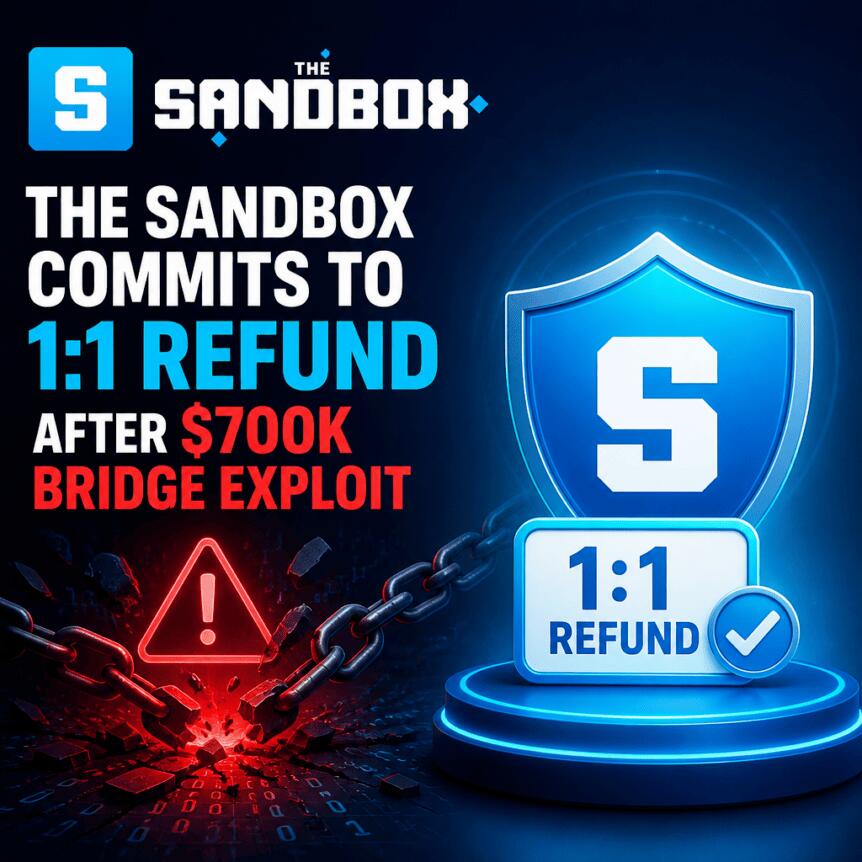
The Sandbox has moved to unwind losses from a bridge exploit that hit SAND holders using the Base and BNB Smart Chain networks. In a post-mortem published this week, the blockchain gaming platform said it will repay eligible users 1:1 in Ethereum-based SAND after an Aug. 21 attack drained 14.744 SAND—valued at roughly $700,000 at the time—from an Ethereum vault.
The project emphasized that compensation will be funded from The Sandbox treasury, with no new SAND tokens minted. The reimbursement process is expected to begin within two weeks and remain open for an additional two-week window, while two centralized exchanges are set to distribute funds directly to customers who hold eligible bridged balances.
Key takeaways
- The Sandbox will compensate eligible SAND holders who had bridged tokens on Base or BNB Smart Chain with an equal amount of Ethereum-based SAND.
- Payments will come from The Sandbox treasury, explicitly without minting new tokens.
- The claims window is expected to open within two weeks and run for two weeks after that.
- The attacker’s method involved a configuration flaw that enabled control of bridge message verification, allowing minting of unbacked tokens.
- Compromised bridge contracts will be permanently retired; future bridges will use newly deployed contracts.
Bridge exploit triggers treasury-backed reimbursement
According to The Sandbox’s post-mortem, the Aug. 21 incident stemmed from an exploit involving the SAND bridge infrastructure connected to Base and BNB Smart Chain. The company said the attacker drained 14.744 SAND from an Ethereum vault, which at the time was worth about $700,000.
To make affected users whole, The Sandbox stated it will repay users who “legitimately held bridged SAND” on those networks with a 1:1 amount of SAND on Ethereum. Compensation will be sourced from the project’s treasury, and the company said it will not mint new tokens to fund the reimbursement.
For operational execution, The Sandbox indicated that the claims process should start within two weeks and continue for two more weeks. It also said two centralized exchanges hold more than 72% of eligible balances and will distribute compensation directly to their customers, reducing the need for all users to submit individual claims.
What the attacker did—and what was affected
The post-mortem describes the root cause as a configuration flaw in SAND’s bridge-related contracts on Base and BNB Chain. The issue allowed the attacker to become the sole verifier of incoming bridge messages—an abnormal condition that enabled the minting of unbacked tokens.
The Sandbox confirmed that the drained amount was about 14.7 million SAND tokens. While that figure is large in absolute terms, the company noted it represented approximately 0.5% of SAND’s 3 billion maximum supply.
The impact was not uniform across all networks connected to SAND. Although the exploit resulted in more than 339 trillion unbacked SAND being minted on the two impacted networks, The Sandbox said those tokens have been isolated. In its description, the unbacked tokens cannot be bridged or redeemed, limiting the practical risk of continued circulation.
Separately, the company said SAND on Ethereum and Polygon was unaffected.
Compromised contracts retired; future bridges to use new deployments
Beyond compensating users, The Sandbox said it would address the technical vulnerability at the source. The compromised bridge contracts will be permanently retired, according to the post-mortem.
The company added that any future bridges from Base or BNB Chain would rely on newly deployed contract versions. That change matters for users because it reduces the chance that attackers can reuse the same misconfiguration or interface behavior to repeat similar minting and drainage patterns.
At the same time, the arrangement leaves an important question for holders: how quickly and transparently new bridge contract deployments can be audited, monitored, and integrated across exchanges and user workflows. While the immediate risk of redeemable tokens appears constrained by The Sandbox’s statement that unbacked tokens are isolated, bridge security typically depends on ongoing contract monitoring and operational checks—especially when liquidity and user balances are concentrated across centralized platforms.
Market reaction and what holders should monitor
At the time The Sandbox published the update, SAND was trading at roughly $0.04, down 10.4% over the prior seven days, according to CoinGecko.
Token-price moves around major exploits can reflect broader investor concerns—ranging from temporary liquidity issues to general trust in bridge infrastructure—rather than only the direct magnitude of drained funds. In this case, the project’s plan to reimburse eligible holders 1:1 using treasury funds is designed to blunt that uncertainty, particularly for users who bridged via Base or BNB Smart Chain.
Looking ahead, the key variables for impacted SAND holders will be whether eligible balances are identified accurately by the exchanges and the project, how smoothly the claims process runs for the remaining users, and whether the newly deployed bridge contracts are integrated without introducing new failure modes. The coming weeks should also clarify whether any additional operational or technical findings emerge after the initial post-mortem.
For now, users should watch the start of the reimbursement window and follow The Sandbox’s guidance on eligibility, while monitoring any updates on the newly deployed bridge contract approach—because that is where long-term bridge safety will be tested after an exploit like this.


The Sandbox has pledged to reimburse eligible SAND holders 1:1 after an Aug. 21 bridge exploit drained about 14.7 million tokens worth roughly $700,000 from an Ethereum vault.
Summary
- The Sandbox will repay eligible SAND holders 1:1 after an Aug. 21 bridge exploit drained about 14.7 million tokens worth $700,000.
- Compensation will come from The Sandbox treasury without minting new SAND, with claims expected to open within two weeks.
- The attacker exploited a configuration flaw in the Base and BNB Chain contracts to mint more than 339 trillion unbacked SAND.
- The compromised bridge contracts will be permanently retired, while SAND on Ethereum and Polygon was unaffected.
According to The Sandbox’s Aug. 27 post-mortem, users who legitimately held bridged SAND on Base or BNB Smart Chain before the attack will receive an equivalent amount of Ethereum-based SAND. The project plans to cover the payments from its treasury without minting new tokens.
Claims are expected to open within two weeks and remain available for another two weeks. Two centralized exchanges account for more than 72% of the eligible SAND balances, and The Sandbox said the exchanges will distribute replacement tokens directly to affected customers.
The Sandbox will repay SAND holders from its treasury
The repayment plan covers legitimate bridged SAND balances that existed on Base and BNB Smart Chain before the exploit. Eligible users will receive SAND issued on Ethereum, replacing the tokens affected by the compromised bridge infrastructure.
The Sandbox said its treasury already holds the tokens required for the process, meaning the compensation will not increase SAND’s circulating or maximum supply. Users who held eligible balances through the two centralized exchanges handling most of the affected tokens will not need to submit individual claims.
For other holders, the project plans to launch a claims portal once the required infrastructure is ready. The two-week submission period is expected to begin within two weeks of the post-mortem, though the project did not provide a specific opening date.
The compensation plan follows an attack that targeted the contracts responsible for moving SAND between Ethereum and Base and BNB Smart Chain. While the exploiter was able to create an enormous quantity of unbacked SAND on the destination networks, the project said the damage to assets backing legitimate bridged tokens amounted to about 14.7 million SAND.
The stolen amount represented roughly 0.5% of SAND’s maximum supply of 3 billion tokens.
Configuration flaw gave the attacker control of bridge verification
The Sandbox traced the incident to a configuration problem in the SAND contracts deployed on Base and BNB Smart Chain. The flaw allowed the attacker to become the sole verifier for incoming bridge messages, giving the address the ability to approve fraudulent messages without the authorization normally required by the bridge.
With control of that verification process, the attacker could mint SAND on the destination chains even though corresponding tokens had not been legitimately locked on Ethereum.
More than 339 trillion unbacked SAND tokens were eventually minted across Base and BNB Smart Chain, according to the post-mortem. The Sandbox said the fraudulent supply has since been isolated and cannot be bridged back to Ethereum or redeemed against legitimate SAND reserves.
SAND deployed directly on Ethereum and Polygon was not affected by the configuration flaw.
The distinction between legitimate and unbacked tokens is central to the reimbursement process because bridge systems commonly depend on assets being locked on one network before a corresponding representation is issued elsewhere. A crypto.news explainer published Aug. 3 detailed how lock-and-mint and related bridge designs rely on verification mechanisms to ensure destination-chain assets remain backed by value held elsewhere.
Crypto.news previously reported that bridge exploits have resulted in more than $4 billion in losses since 2021, with failures involving validator credentials, message verification and smart contracts among the methods attackers have used to compromise cross-chain infrastructure.
Compromised SAND bridges will be permanently retired
Following the Aug. 21 attack, The Sandbox decided not to restore the affected Base and BNB Smart Chain bridge contracts. Both will instead be permanently retired.
Any future bridge connecting SAND with either network would require newly deployed contracts, according to the project. The Sandbox did not provide a timetable for restoring bridge access to Base or BNB Smart Chain.
Similar decisions to isolate or replace compromised bridge infrastructure have followed several attacks this year. In June, Humanity Protocol disclosed losses exceeding $36 million after attackers obtained administrative keys and took control of bridge systems spanning Ethereum and BNB Smart Chain.
The attackers in that incident were able to drain tokens from the Ethereum bridge and mint additional H tokens on BNB Smart Chain. A subsequent forensic investigation traced the compromised keys to a malware-infected developer machine that contained backups for seven private keys.
Another bridge incident in July hit Wanchain infrastructure connecting Cardano and BNB Chain. Blockchain security firm BlockSec said roughly 515 million NIGHT tokens were removed from the Cardano-side treasury in the Wanchain bridge exploit, worth about $9 million at the time. Midnight said its core network remained secure and described the incident as isolated to the bridge infrastructure.
Bridge exploits have continued through 2026
Cross-chain infrastructure has faced a series of attacks during 2026 involving different verification and security failures.
Axelar disabled bridge connections with Secret Network in June after an exploit resulted in approximately $4.7 million in losses. The incident affected Axelar-bridged assets on Secret Network while Axelar said its core protocol remained unaffected.
A month later, AFX suffered a $24.15 million USDC loss through a bridge operated by the trading protocol. The affected infrastructure was separate from Arbitrum’s native bridge, and the attacker subsequently moved the stolen USDC to Ethereum before converting it into about 12,467.5 ETH.
AFX later prepared a goodwill plan for users after its investigation linked the attack to a social engineering campaign that compromised internal development infrastructure. The protocol said it rebuilt key infrastructure and introduced new security measures following the incident.
The Sandbox’s reimbursement process is expected to begin once its claims system is ready. Eligible balances held through the two centralized exchanges will be handled directly by those platforms, while remaining holders will have two weeks to submit claims after the portal opens.
SAND was trading near $0.04 at the time of the post-mortem, down about 10.4% over the previous seven days.
All three proposals have cleared quorum, but a plan to slow new SOL creation is only narrowly passing while a separate vote to sharply increase token burns remains below the two-thirds support needed.


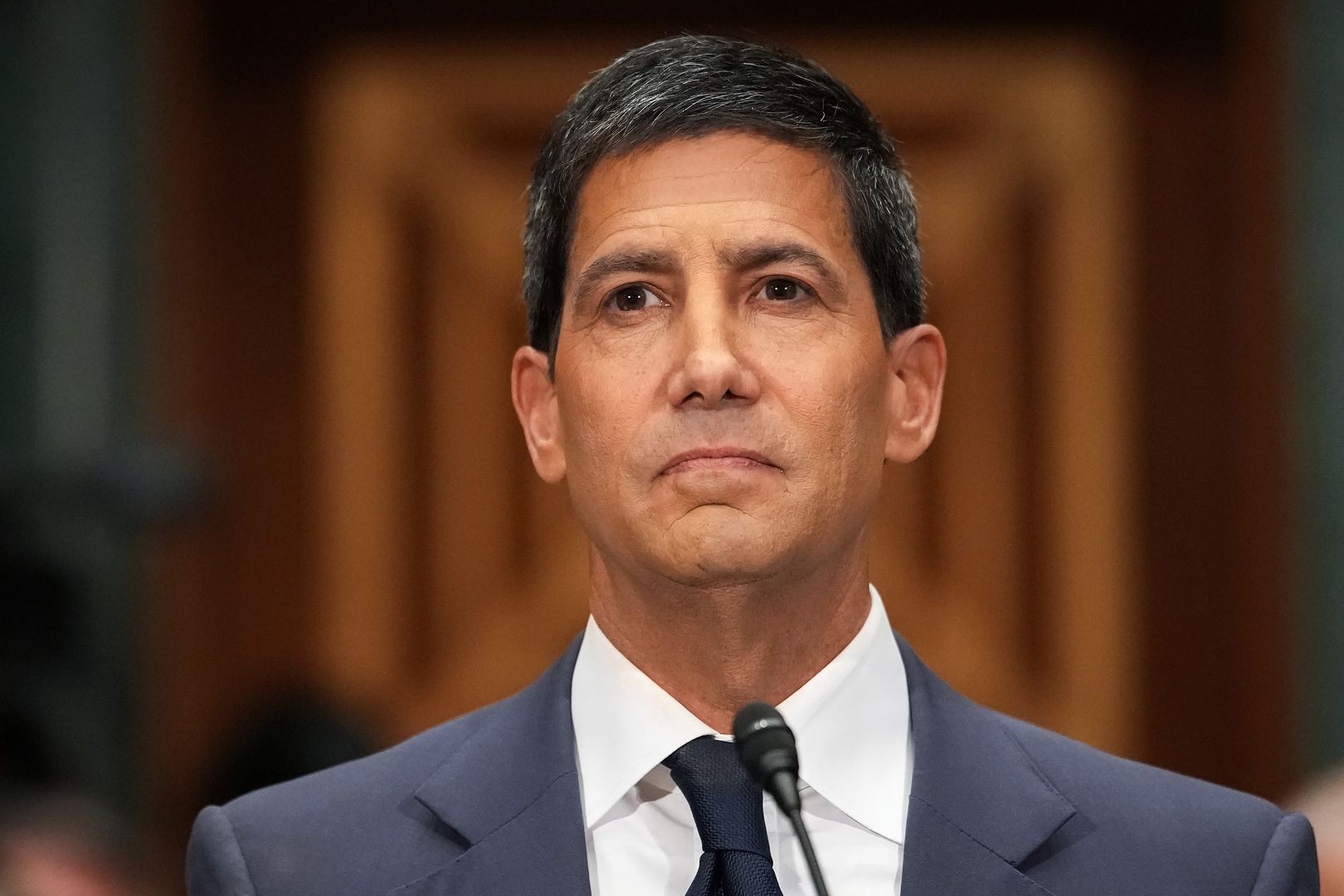
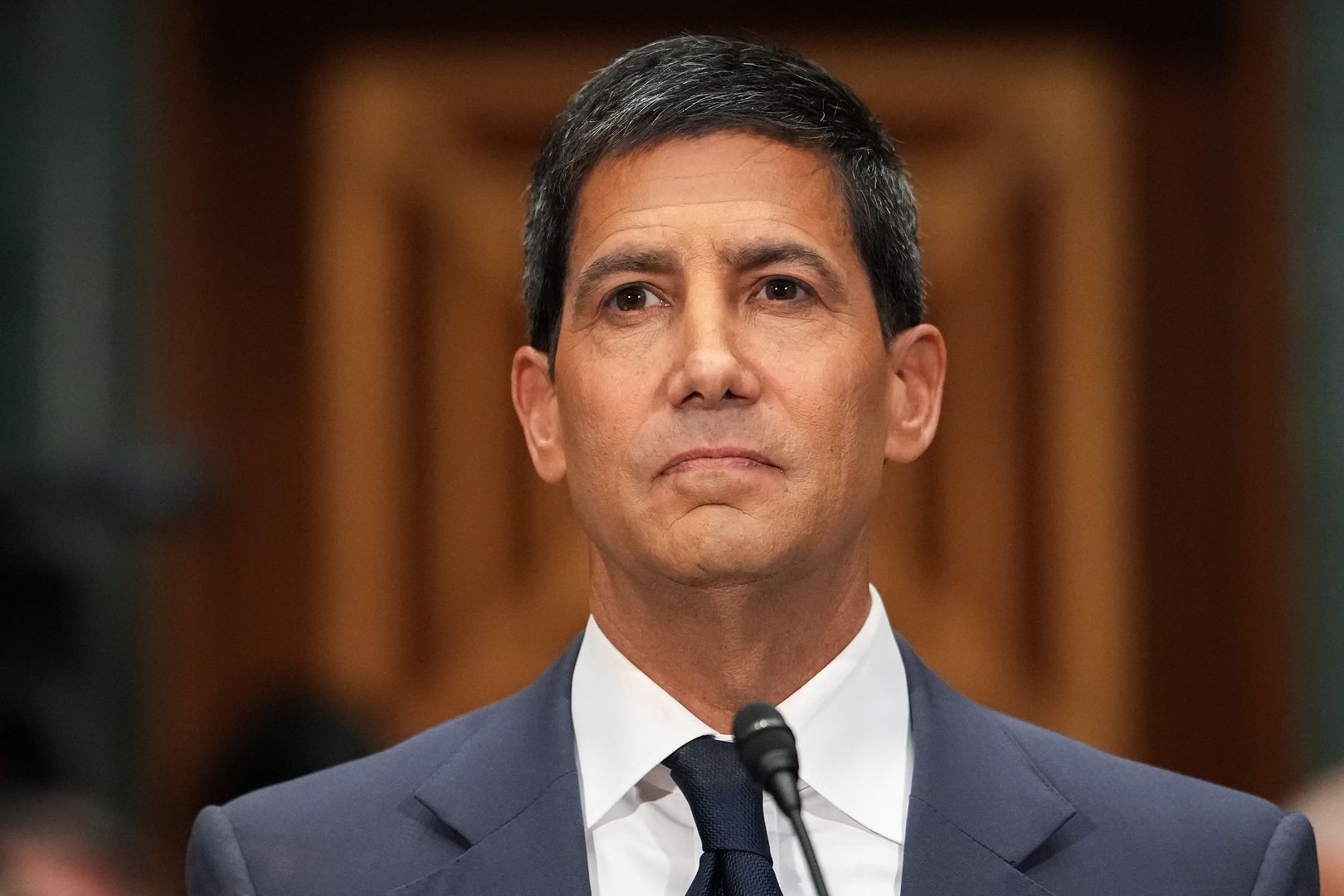
Warsh’s Jackson Hole speech could shape expectations for Fed support of Treasury buybacks, with implications for bitcoin, gold and long-term yields.



The AI race has increasingly become an electricity race, as companies sprint to build the power infrastructure necessary to power data centers. Joe Dominguez, president and CEO of Constellation Energy, is betting that nuclear energy will be one of the most important sources of that power.
To do that, Constellation has signed a series of agreements with hyperscalers to provide long-term nuclear power to their data centers. No such deal has received more attention than Constellation’s partnership with Microsoft to restart a reactor at Three-Mile Island nuclear facility. The deal will provide Microsoft carbon-free power for the next 20 years. (The facility, renamed the Crane Clean Energy Center, is best known for the infamous 1979 meltdown, though it occurred at a different reactor).
The project is part and parcel of a broader transformation Dominguez has helped drive. For decades, nuclear plants struggled to compete with cheap natural gas and renewable energy. Now the relentless, around-the-clock electricity needs of AI have made existing reactors enormously valuable assets.
Spot Bitcoin (BTC) exchange-traded funds (ETFs) added $242.30 million in net inflows on Aug. 27. The gain extended their streak to nine consecutive trading days.
Spot Ethereum (ETH) ETFs matched the pace. The category added $235 million on the same day, marking its own ninth straight inflow session.
Bitcoin And Ether Funds Move In Lockstep
The parallel streaks follow a stretch of heavy institutional buying. BlackRock’s iShares Bitcoin Trust (IBIT) contributed $209 million of a $338 million Bitcoin ETF inflow on Aug. 24. Its Ethereum fund, ETHA, added $90.92 million of that day’s $116 million Ethereum ETF haul.
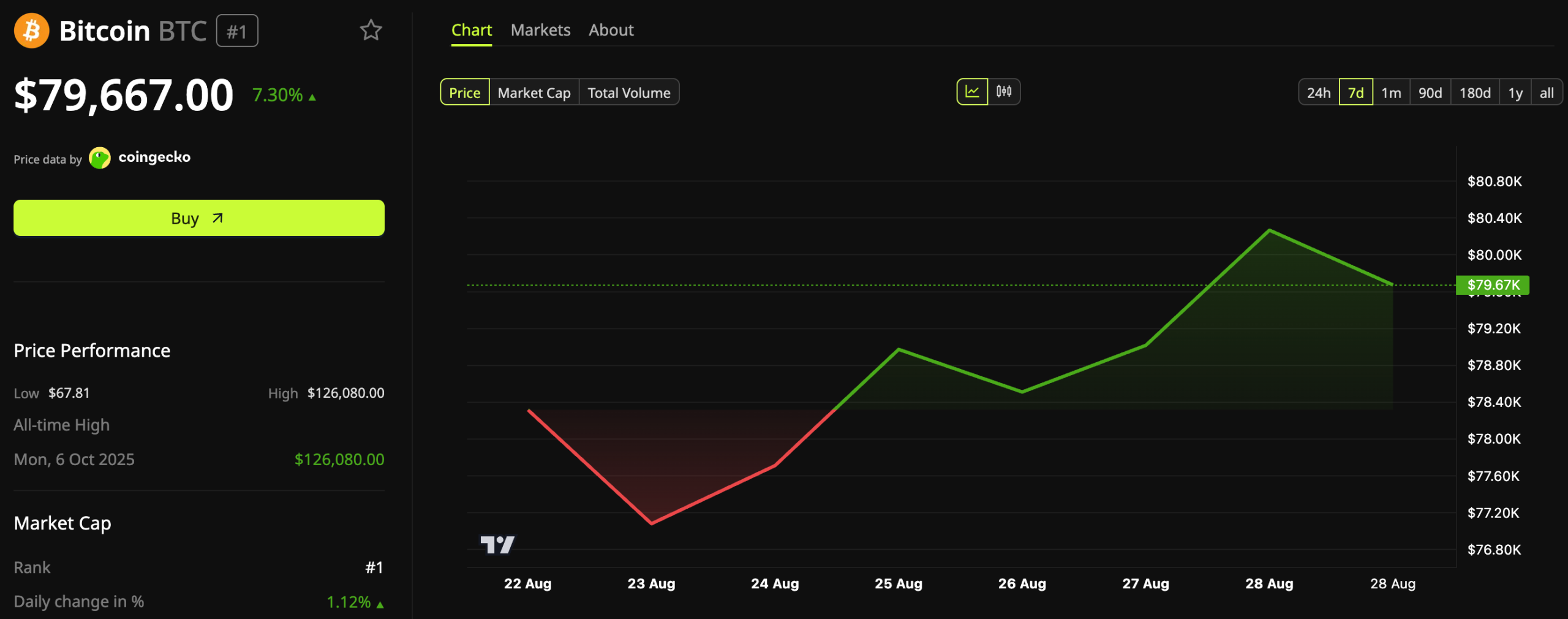
Bitcoin traded near $80,000 on Thursday, up 2.12% over 24 hours. Ether changed hands near $2,480 over the same period.
Total net assets across spot Bitcoin ETFs stood at $79.16 billion. Trading volume across the category reached $8.23 billion, according to CoinGlass data.
The two categories also posted their biggest combined week since October last week, drawing $2.3 billion between them. That run suggests institutions are building positions across both assets rather than rotating between them.
The current streak traces back to Aug. 17, when both categories began a run that reached four days by Aug. 20. It has continued uninterrupted through Aug. 27.

Smaller crypto funds joined the advance. Spot Solana (SOL) ETFs added $60.91 million, and spot Hyperliquid (HYPE) ETFs drew $24.42 million, both on Aug. 27.
Both smaller funds remain far behind Bitcoin and Ether in scale. The same-day gains suggest institutional demand extends beyond the two largest crypto assets.
Sustained ETF demand can matter beyond the daily headline. Steady inflows reduce available supply on spot exchanges, a dynamic that has historically supported price during past accumulation phases.
Nine straight days of buying across both major categories signals broad, not narrow, institutional appetite. Whether that appetite holds into next week may depend on whether Bitcoin and Ether can extend their recent price gains.
The post Bitcoin ETFs Extend Inflow Streak to 9 Days With $242M Added appeared first on BeInCrypto.


Blockchain gaming platform The Sandbox has pledged to repay eligible SAND holders 1:1 after an Aug. 21 bridge exploit drained 14.744 SAND, worth about $700,000, from an Ethereum vault.
On Thursday, the company published a post-mortem, saying users who legitimately held bridged SAND on Base or BNB Smart Chain before the attack will receive an equal amount of Ethereum-based SAND. Compensation will come from The Sandbox treasury, with no new tokens minted.
The claims process is expected to open within two weeks and remain open for another two weeks. Two centralized exchanges hold more than 72% of eligible balances and will distribute compensation directly to their affected customers, according to The Sandbox.
The project said the attacker exploited a configuration flaw in SAND’s Base and BNB Chain contracts, allowing them to become the sole verifier of incoming bridge messages and mint unbacked tokens. The Sandbox confirmed that about 14.7 million SAND tokens were drained, equivalent to about 0.5% of the token’s 3 billion maximum supply.
Although more than 339 trillion unbacked SAND was minted on the two networks, those tokens have been isolated and cannot be bridged or redeemed. SAND on Ethereum and Polygon was unaffected.
The compromised bridge contracts will be permanently retired. The Sandbox said any future Base or BNB Chain bridges would use newly deployed contracts.
SAND traded at about $0.04 at the time of publication, down 10.4% over the previous seven days, according to CoinGecko.
Related: Hugging Face hack exposes the open-weight AI cybersecurity paradox

Tejas Networks shares zoom 13% after TCS’s Rs 1,537-crore LOI for BSNL 4G rollout

Tokenized deposits could cut U.S. bank lending capacity by $580 billion: report

‘Silo’s Tim Robbins Discusses the Show’s Major Change to Bernard’s Book Ending in Season 3





-

 Fashion7 days ago
Weekend Open Thread: Madewell – Corporette.com
-

 Crypto World2 days ago
SpaceX stock could rise 75% to $240, JPMorgan says
-

 Business6 days ago
Musk’s Tesla, SpaceX Confirm $16.8 Billion ‘Terafab’ Chip Plant as World’s Largest Building in Texas
-

 Crypto World6 days ago
anatomy of crypto’s biggest liquidation event since 2021
-

 Crypto World3 days ago
A $30 Billion AI Fund Implodes, Now the SEC Is Investigating Wall Street’s Role
-

 Politics6 days ago
6 months on, Irish renters crushed by effects of government housing bill
-

 Crypto World2 days ago
Did Trump Just Move SpaceX Stock With One Truth Social Post?
-

 Business5 days ago
Mystery AI Model ‘Ox Alpha’ Draws Developers With Free Access as Chinese Lab Origins Remain Debated
-
 NewsBeat6 days ago
The ‘Lucky Dip Gang’ causing carnage for clicks: After five thugs were killed speeding in the wrong direction on a motorway, GUY ADAMS investigates a sick new trend… and why police aren’t even allowed to pursue them
-

 Crypto World2 days ago
Warsh Jackson Hole keynote puts financial innovation first
-
 Crypto World6 days ago
Nvidia Stock Suffers Longest Losing Streak Since 2022: Will Q2 Earnings End It?
-

 Business4 days ago
Moderna CEO warns China is pouring state money into mRNA technology
-

 Business2 days ago
Walmart takes aim at younger shoppers with new fashion brand
-

 Business3 days ago
NVIDIA Stock Drops Nearly 2 Percent to $210 on Seventh Losing Day Ahead of Critical AI Earnings
-

 Tech6 days ago
Unitree’s New Superman Robot Claims to Outjump and Outrun Every Human, Usain Bolt Included
-

 Sports5 days ago
Deshaun Watson fires back at Browns fans after being booed: ‘It’s a disrespectful thing’
-

 Business7 days ago
UK firms in critical financial distress rise 9% to 53,756
-

 Business6 days ago
Will Tesla Stock Be Higher or Lower a Year From Now? Here’s What Wall Street Analysts Are Saying
-
 Crypto World5 days ago
Google Gemini AI Predicts Ethereum Could Become the Trade Retail Misses in 2026
-

 Tech7 days ago
Faster chip in a familiar form factor
You must be logged in to post a comment Login