
Crypto World
Bitmine Posts $3.82 Billion Quarterly Loss as Ether Prices Hit Holdings Value


Bitmine Immersion Technologies posted a $3.82 billion quarterly loss as digital asset values swung widely. The loss occurred despite revenue growth, primarily driven by ether staking rewards.
The company said most of the quarterly loss came from unrealized losses on its digital asset holdings. Bitmine also kept buying ether during the recent market weakness.
Loss Widens as Digital Asset Values Fall
Bitmine reported a net loss of $3.82 billion for the quarter ended Feb. 28, 2026. A year earlier, it posted a net loss of $1.15 million.
For the six months ended Feb. 28, the company reported a net loss above $9 billion. In the same period last year, the loss was $2.1 million.
The latest quarterly result was driven by $3.78 billion in unrealized losses on digital asset holdings. Those losses reflected the change in market value of the company’s crypto assets.
Ether Holdings Keep Growing Despite Market Weakness
Bitmine said it held 4.87 million ETH as of April 12. The holding was worth about $10.7 billion at that date.
The company said that amount represented more than 4% of the total ether supply. It also said it had reached 4.04% of supply as of Monday.
Bitmine’s average purchase price for its ether was $2,206 per coin. According to the report, it aims to control 5% of total ether supply.
Chairman Tom Lee said in March, “Bitmine has been buying Ethereum, as we view this pullback as attractive, given the strengthening fundamentals.” He also said, “In our view, the price of ETH is not reflective of the high utility of ETH and its role as the future of finance.”
On Monday, Lee said the company had increased the pace of ether purchases over the prior four weeks. He added, “The Iran war enters its seventh week and this war remains the most important driver of global markets.”
Revenue Rises on Staking and Other Business Lines
Bitmine reported $11.04 million in revenue for the quarter. That was up from $1.5 million in the same period in 2025.
About $10 million of that total came from ether staking rewards. The rest came from leasing, consulting, and self-mining activities.
Lee said the company had staked 3,334,637 ETH, or about 68% of total holdings. He said that level could support $212 million in annualized revenue, based on a 2.89% seven-day yield.
Beyond ether, Bitmine held $719 million in cash as of April 12. It also held 198 bitcoin, a $200 million stake in Beast Industries, and an $85 million stake in Eightco Holdings.
Last week, Bitmine moved its listing to the New York Stock Exchange from NYSE American. Its shares closed down 0.14% at $21.48 on Tuesday.
Market observers noted that the results reflect volatility in digital asset prices, and that Bitmine’s ether accumulation program remains a focal point for its strategy.

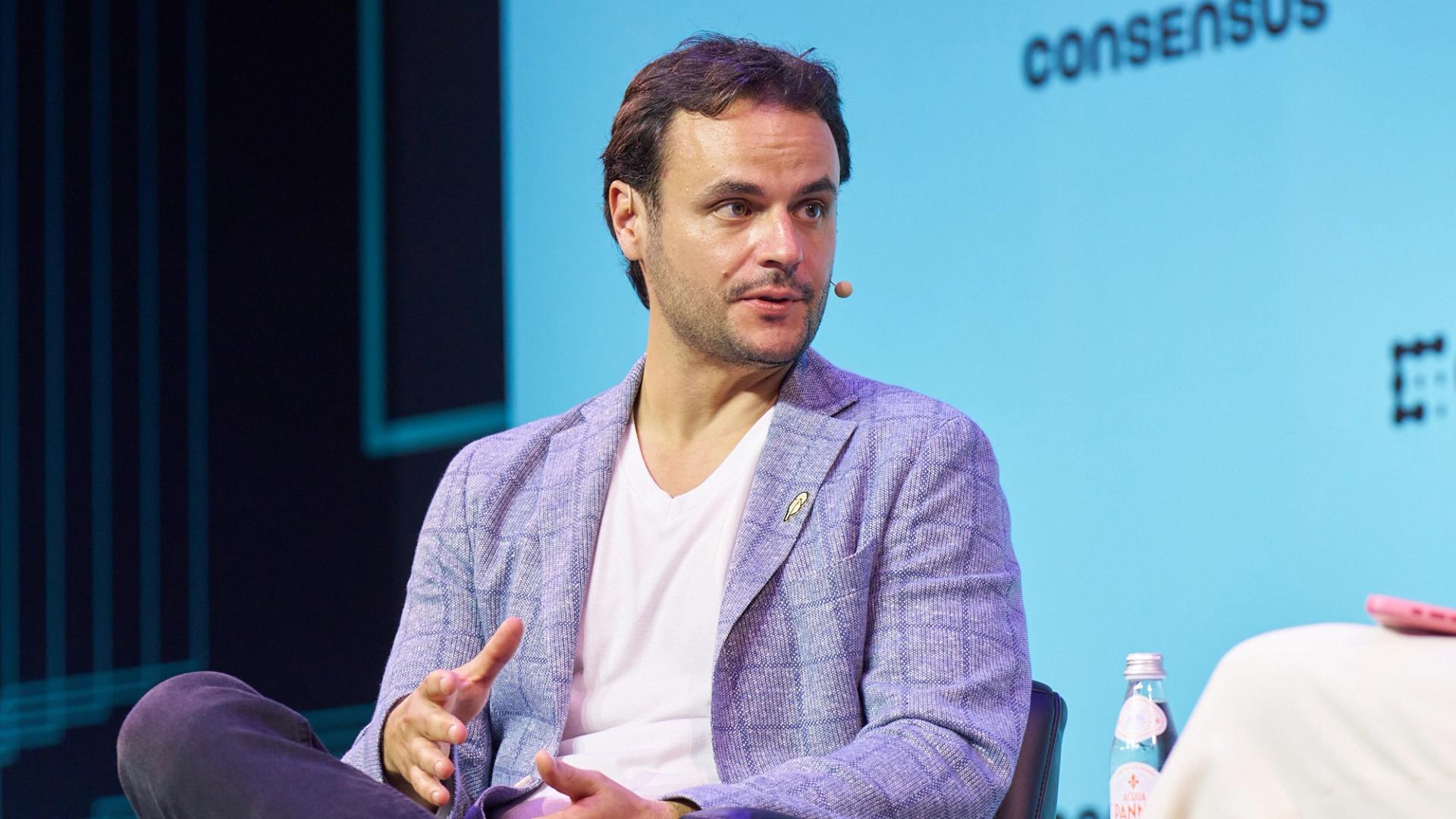
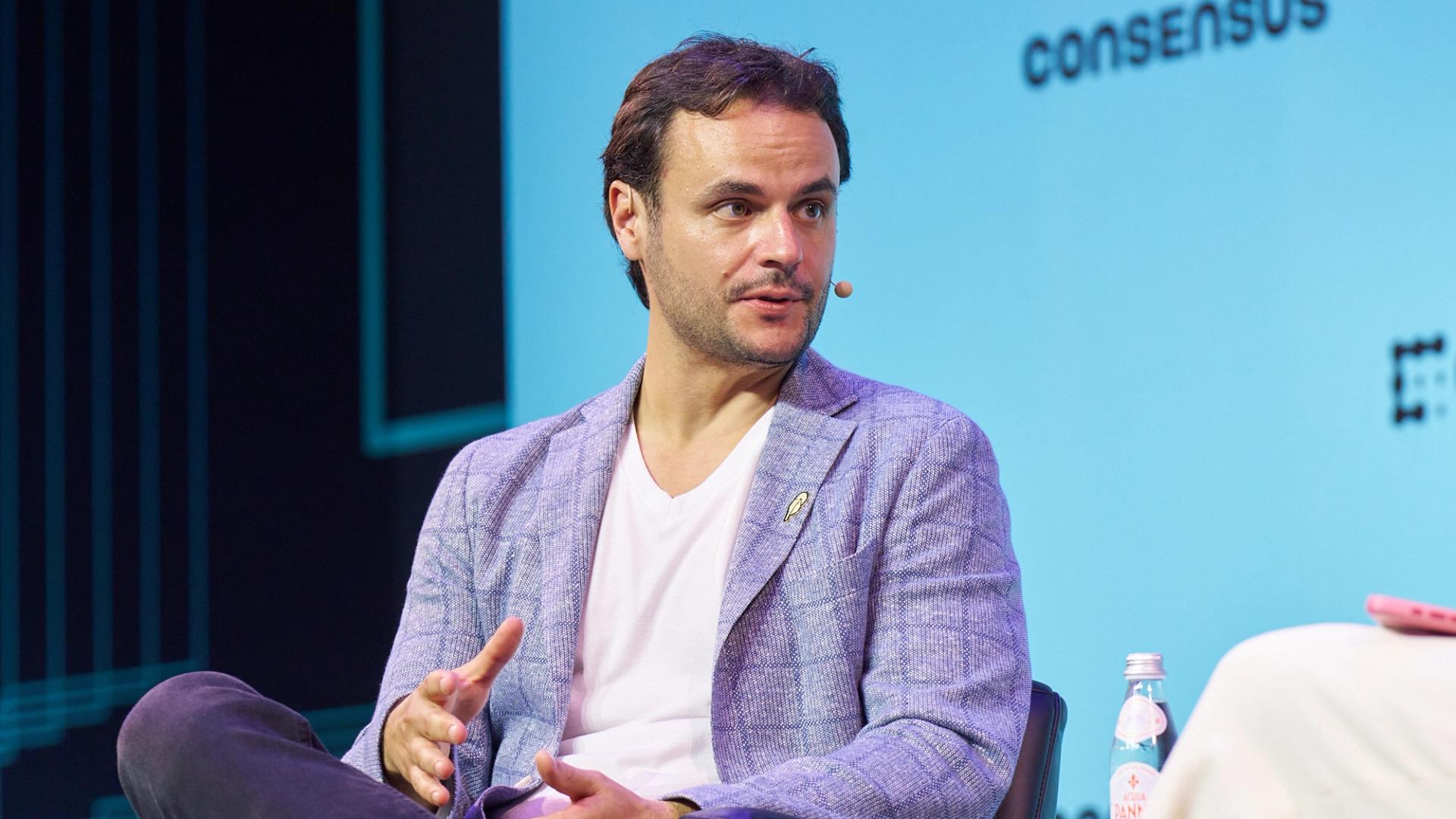
Demand for U.S. equities is rising globally, pushing investors to look beyond domestic markets, Robinhood senior VP and general manager in charge of crypto, Johann Kerbrat said during a Fireside chat at Consensus 2026 in Miami.
“We are seeing a lot of demand for U.S. stocks from overseas investors, particularly tied to AI-related companies,” Kerbrat said, adding that access remains limited in many regions compared with the United States.
Kerbrat said investors should shift from country-specific strategies toward global allocation now that international 24/7 trading platforms are available to them. “It is time for a lot of investors to really think about not just how to invest in one specific country, but also how to have a global portfolio,” he said.
The Kraken executive pointed to tokenization and around-the-clock trading as key enablers. “We think it is going to be 24/7. We think it is going to be instant settlement,” he said, describing features that could differentiate tokenized assets from traditional brokerage products.
The discussion, moderated by Crypto in America host Eleanor Terrett, also addressed regulatory constraints in the United States. Kerbrat said “regulation in the U.S. has been less than friendly in the past,” though he noted recent engagement with policymakers has improved.
Robinhood has launched tokenized stock products in Europe using a derivative model that tracks underlying assets, with plans to expand access to additional asset classes including private equity. Kerbrat said the goal is broader participation in markets that have historically been limited to accredited investors.
“I think it is really important to give them the choice to be able to invest in it before it goes public,” he said, referring to private companies.
Kerbrat said adoption will depend on offering new functionality rather than replicating existing brokerage services, with lending, collateralization and continuous trading cited as areas of development.
Kraken, which trails platforms like OKX, Bybit and Coinbase (COIN) in spot trading volumes but remains a major player in the crypto derivatives market. is a U.S.-based crypto exchange where users can buy, sell, and trade digital assets like bitcoin and ether using fiat or crypto. It has expanded into services such as derivatives, staking, and custody, positioning itself as a more full-service trading platform beyond a basic retail app.
Crypto World
Aave Price Prediction Hits $92.48 While Pepeto Could Be the Last Presale Before a 100x Listing
DeFi lending is growing faster than any Aave price prediction expected, but AAVE still sits 86% below its all time high of $666.
The protocol launched V4 on Ethereum, locked $25 billion in contracts, and still trades around $92.48. That gap between adoption and returns tells a story about where the real upside lives.
Pepeto has pulled in more than $9.78 million during its presale with a Binance listing on the horizon that could deliver what the AAVE forecast will take years to match.
Aave deployed V4 on Ethereum mainnet on March 30, introducing a hub and spoke system that splits risk into separate liquidity pools according to CoinMarketCap. The upgrade divides assets into Core, Plus, and Prime hubs for tighter risk control.
The protocol also froze markets within hours of the $292 million KelpDAO bridge exploit in April, shielding $25 billion in locked value from wider damage according to CoinDesk. Both moves lifted the Aave price prediction outlook, but AAVE at $92.48 still needs a 620% climb to touch its 2021 peak.
Top DeFi and Presale Tokens to Watch: Pepeto and AAVE
Pepeto
When an Aave price prediction shifts after a big protocol upgrade, attention usually pulls capital toward tokens that can ride the same growth cycle. But as DeFi lending grows, finding the entry that delivers the biggest return gets harder every month.
That is one reason wallets have been loading into Pepeto.
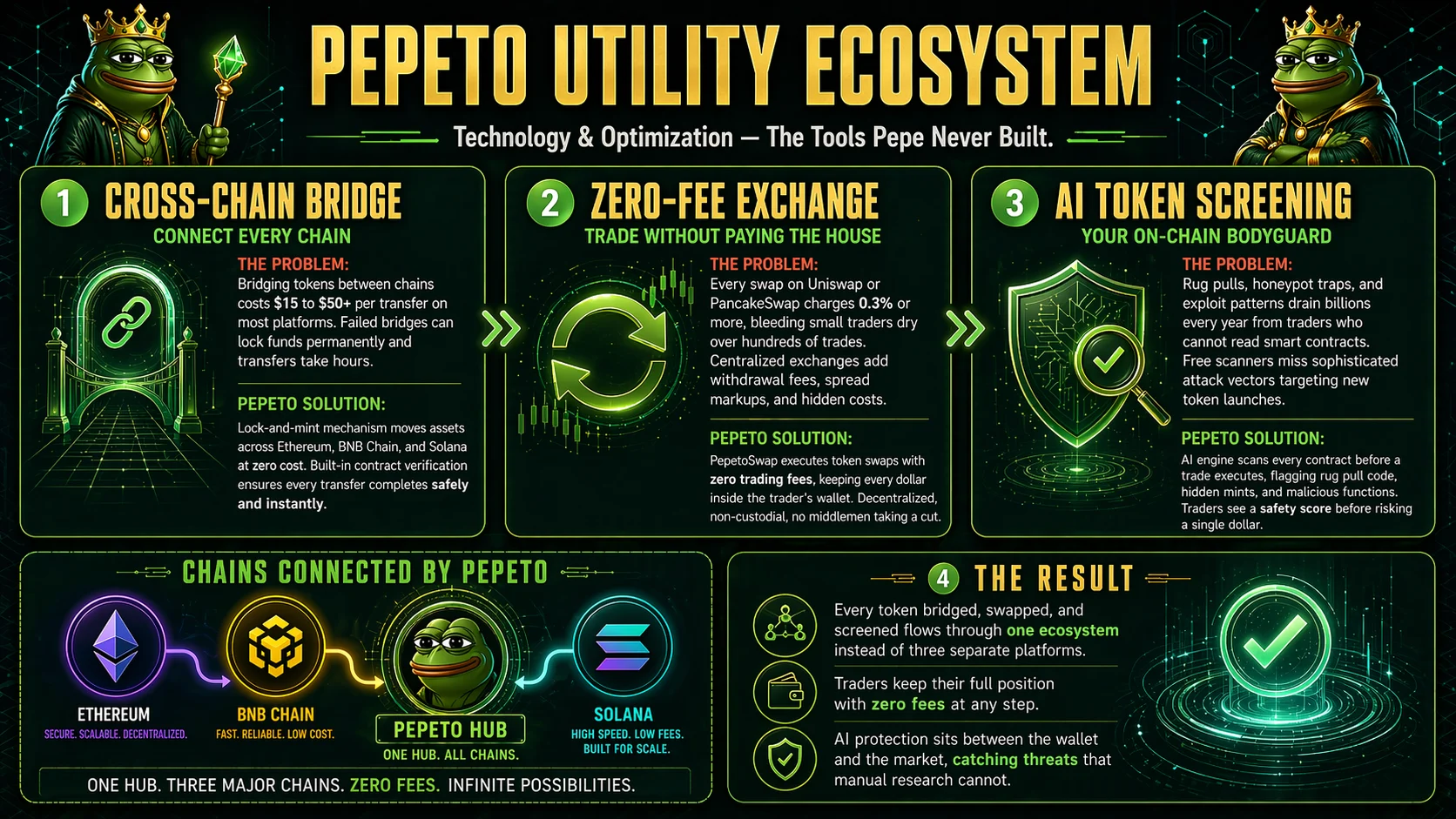
The cofounder who built the first Pepe token leads the Pepeto team, and a developer with Binance experience works on the build side. These are people who shipped a token that reached billions in market cap with zero products. Pepeto has products. PepetoSwap gives holders fee free swaps, so the spread that eats into small positions disappears. The cross chain bridge carries holdings across chains without fees, so money reaches the best opportunity on another network without gas costs.
SolidProof ran a full audit on the code before the presale opened, and more than $9.78 million of capital followed that verification. The price sits at $0.0000001868 per token, and staking pays 175% APY while holders wait for the listing. But that yield is just the bonus on top of what the listing itself produces.
As AAVE headlines bring fresh focus to DeFi, buyers start looking for presale entries that carry the kind of upside established tokens no longer offer. Pepeto is built to capture that rotation, and analysts project 100x or more from this entry because a live trading platform behind a meme coin at presale price has not appeared before. The expected Binance listing is the single event that turns presale wallets into winning positions, and the Aave price prediction ceiling does not apply at this stage.
AAVE
AAVE trades at $92.48 as of May 2026, down 86% from its all time high of $666 from 2021. V4 brought stronger technology, but the price has not followed. Support holds near $90, and resistance sits at $110 according to CoinMarketCap.
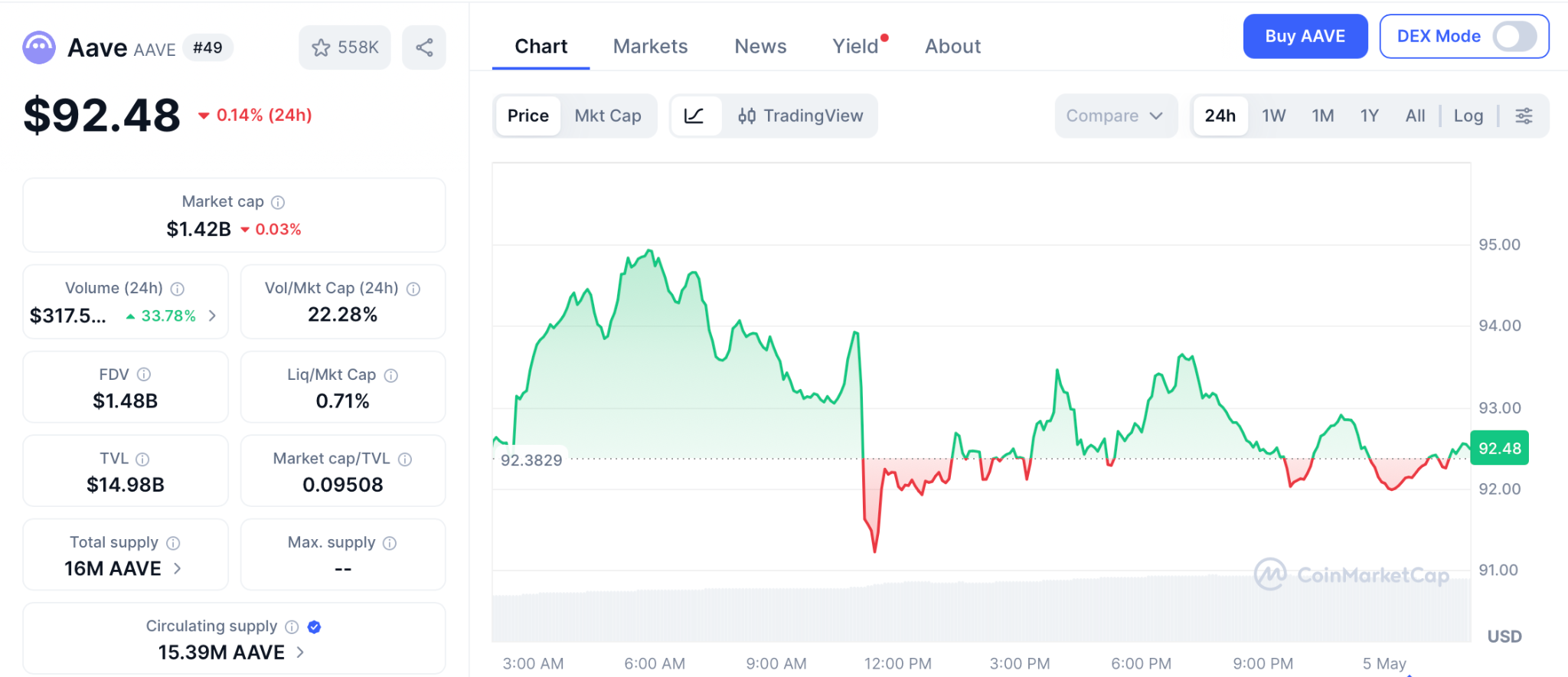
Coinpedia projects a high of $650 for 2026 if DeFi activity surges, while Cryptopolitan caps the best case at $200 by mid year. The realistic AAVE forecast range sits between $90 and $130 for May given current levels and falling open interest.
Even at $650, AAVE would need a 600% move from today. That is strong, but it falls short of what presale entries deliver before a first listing. The math tells the story.
Conclusion
Today’s DeFi space is moving in two directions at once. Protocols like Aave roll out V4 upgrades and pull in billions, while early movers rotate into the presale that no Aave price prediction can match. Pepeto crossed $9.78 million because the holders inside understand exactly what the Binance listing produces, and the Pepeto official website is where that entry still exists right now.
The listing can land without warning, and the moment it does, the presale price disappears permanently. The last five cycles all produced one presale that minted millionaires, and five times over, millions of people who read about it early chose to wait and then spent years calculating what a $500 entry would have returned.
That is not a small missed trade. That is watching $500 turn into $50,000 or more from the outside, knowing the only thing missing was clicking the buy button while it was still available.
Click To Visit Pepeto Website To Enter The Presale

FAQs
How does Aave V4 affect the Aave price prediction for 2026?
Aave V4 adds stronger risk controls and higher locked value that lifts the AAVE outlook, but AAVE at $92.48 still needs a 620% climb to reach its $666 peak. Coinpedia projects a $650 high while Cryptopolitan caps the best case at $200 by mid year.
Is Pepeto a better entry than AAVE before the Binance listing?
Pepeto raised $9.78 million at $0.0000001868 with a SolidProof audit, fee free swap tools, and a Binance listing expected that gives presale holders upside no established DeFi token can match. The presale price disappears the moment listing arrives, making the current window the only chance to enter at this level.
Disclaimer: This is a Press Release provided by a third party who is responsible for the content. Please conduct your own research before taking any action based on the content.



MicroStrategy Inc posted a $12.54 billion net loss for the first quarter of 2026, the largest in the firm’s history. The deficit reflects a $14.46 billion unrealized markdown on its Bitcoin (BTC) holdings.
Despite the headline loss, the company raised $11.68 billion year-to-date, the biggest US equity issuance of 2026. Bitcoin holdings now total 818,334 BTC, up 22% since January.
Bitcoin Position Expands During Bear Market
MicroStrategy’s digital assets reached a market value of $64.14 billion as of May 3. The average cost basis sits at $75,537 per coin against a May 1 market price near $78,374.
The firm reported a 9.4% BTC Yield year-to-date under its proprietary key performance metrics. That translates to 63,410 added bitcoin and roughly $4.97 billion in illustrative gains for shareholders.
STRC Scales Past $8.5 Billion in Nine Months
STRC, the company’s Variable Rate Series A Perpetual Stretch Preferred Stock, now carries an $8.5 billion market capitalization. Daily trading volume sits near $375 million with realized volatility at 3%.
The instrument raised $5.58 billion year-to-date, a 189% jump. Cumulative dividends across all preferred series total $692.5 million, paid over 23 consecutive distributions without interruption.
Shareholders are voting on a proposal to shift STRC payments to a semi-monthly schedule, which management argues will improve liquidity and price stability.
Software Business Steady
Analytics revenue rose 11.9% to $124.3 million in the quarter. Gross margin held at 67.1%, while cash reserves closed Q1 at $2.21 billion.
Strategy’s next quarterly print will hinge on bitcoin’s price trajectory and continued demand for its preferred stock issuance.
The post MicroStrategy Posts $12.5 Billion Q1 2026 Loss on Bitcoin Slide appeared first on BeInCrypto.
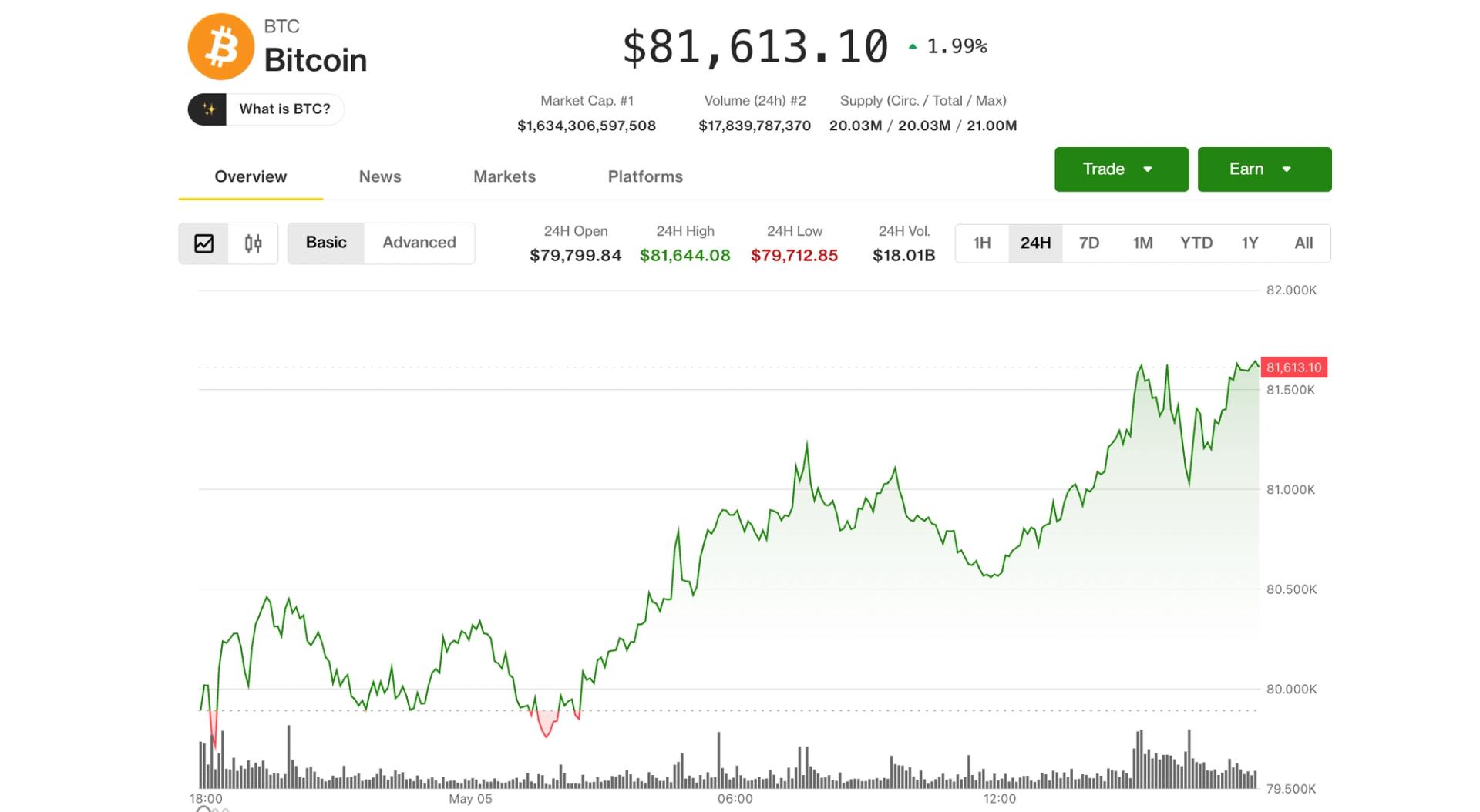
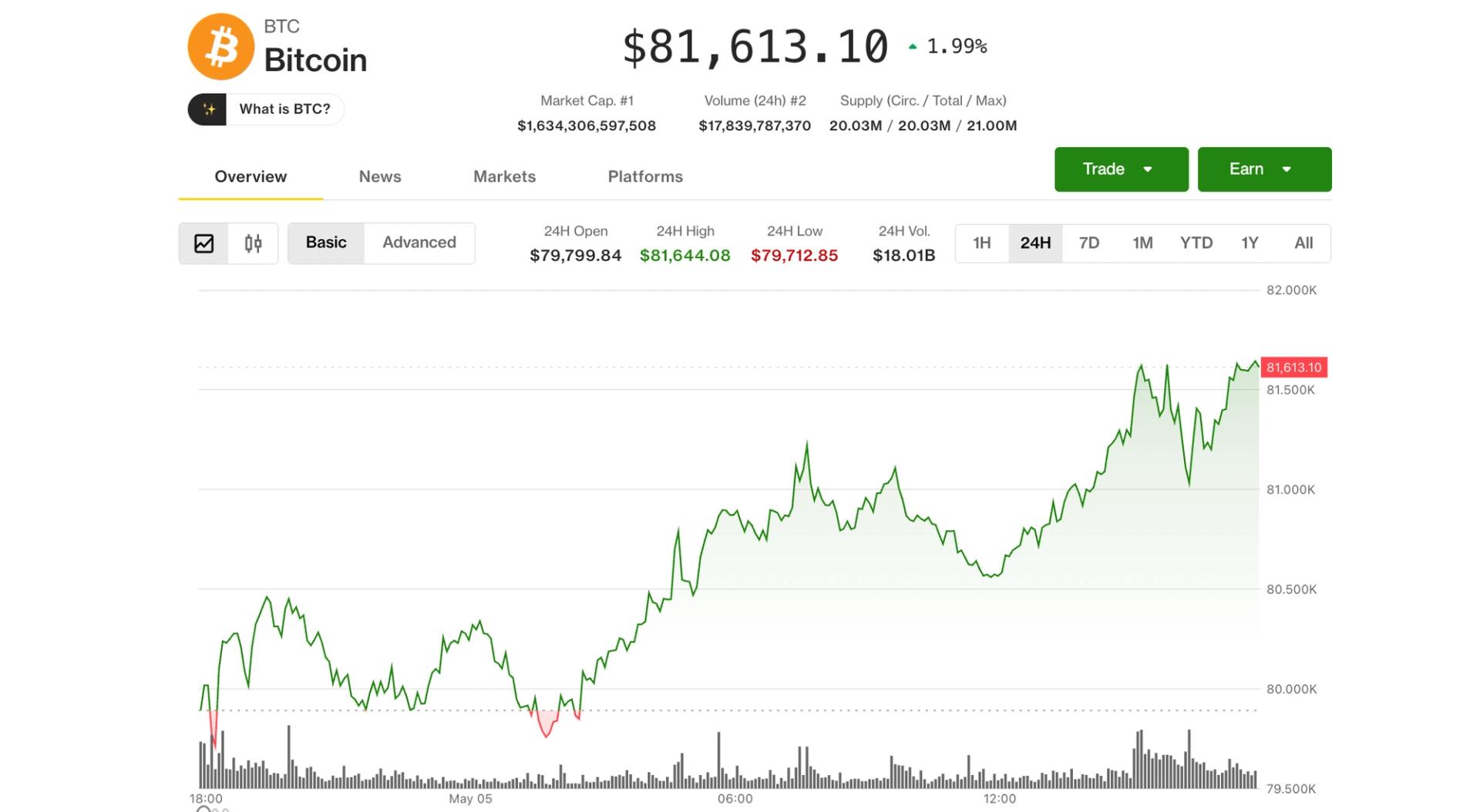
Bitcoin pushed higher Tuesday, climbing to $81,500 to its strongest level since January as the latest leg of the rally spread beyond major tokens into tokenization-focused plays.
The largest cryptocurrency rose another 2% over the past 24 hours and is now up more than 35% from its early February lows. Ether (ETH), XRP (XRP) and Solana (SOL) also advanced, though they lagged bitcoin’s pace.
Feeding that momentum is strong demand for spot bitcoin ETFs, according to Paul Howard, senior director at Wincent. More than $500 million has flowed into spot BTC funds led by BlackRock’s and Fidelity’s products on the Monday session, reflecting continued interest from large investors, he said.
The positive sentiment is likely to stay constructive unless geopolitical conditions deteriorate materially, he said.
Tokenization theme gains traction
The move coincided with renewed momentum in tokenization — the effort to bring traditional financial assets onchain.
In equities, Bullish (BLSH) surged 12% after announcing the $4.2 billion acquisition of transfer agent Equiniti, a move that positions the company deeper into capital markets infrastructure. Bullish is CoinDesk’s owner.
The deal marks a shift beyond trading, said Owen Lau, analyst at Clear Street.
“Strategically we see this acquisition as a big push to transform Bullish from a crypto exchange to a capital market infrastructure provider capturing the tokenization trend,” said Lau. He added that the move could drive more recurring revenue and stronger margins over time, with the key question being timing rather than viability.
Galaxy Digital (GLXY), which just unveiled with State Street a tokenized cash-management fund for large investors, climbed 3.6%. Other digital asset infrastructure-linked stocks also moved higher.
Among tokens, tokenized real-world asset protocol Centrifuge’s native crypto (CFG) jumped 15% after Coinbase (COIN) tapped the protocol as a partner to help bring ETFs, credit and structured products onto blockchain rails, signaling growing institutional interest in the space. Coinbase also took an equity stake in Centrifuge.
What makes tokenization compelling to investors that it’s one of the fastest-growing sector at the intersection of blockchain tech and traditional finance. The market of tokenized assets, including stablecoins, is projected to reach $18.9 trillion by 2033, according to Ripple and BCG.
Not all crypto stocks participated in the rally. Circle (CRCL) and Coinbase (COIN) slipped 3-4%%, respectively, paring some of their Monday gains, suggesting some rotation within the sector.
Meanwhile, the broader equity market also pushed higher: the tech-heavy Nasdaq 100 climbed 1.2% to a fresh record and the S&P 500 advanced 0.8% during the session.


Aave court motion filed today in New York asks a federal judge to unfreeze $71 million in ETH.
Summary
- Aave LLC filed an emergency motion in the Southern District of New York to unfreeze 30,765 ETH worth approximately $71 million.
- The filing argues the funds belong to users victimized in the April 18 Kelp DAO exploit, not to North Korean hackers.
- Plaintiffs holding $877 million in unpaid terrorism judgments against North Korea claim the ETH is recoverable DPRK property.
Aave LLC filed an emergency motion today in the Southern District of New York to vacate a restraining notice blocking 30,765 ETH, worth roughly $71 million, from returning to exploit victims.
The filing argues the assets belong to users of the Aave Protocol harmed in the April 18 Kelp DAO bridge exploit, not to North Korea or its alleged Lazarus Group hackers.
The restraining notice was served on May 1 by Gerstein Harrow LLP, representing three sets of judgment creditors holding $877 million in unpaid terrorism awards against North Korea. Their argument: because the attackers are linked to Pyongyang’s Lazarus Group, the recovered ETH qualifies as DPRK property subject to seizure.
Aave calls that theory “flatly wrong.” Aave founder Stani Kulechov said: “The global DeFi community came together to recover assets stolen from users, and we are not going to let those assets be wrongfully redirected.”
Why the legal theory matters for DeFi
Aave’s filing draws a clear legal line: “A thief does not gain lawful ownership of stolen property simply by taking it.” The motion argues that on-chain movement between addresses does not determine ownership, and that treating recovered funds as belonging to the thief would punish innocent users while rewriting basic property law.
As crypto.news reported, Arbitrum DAO had already secured more than 99% governance support for a plan to route the frozen ETH into the DeFi United recovery fund, which has raised over $314 million across multiple DAOs to restore rsETH’s backing. That plan now depends on the court’s decision.
The stakes extend beyond this case. If courts allow unrelated creditors to intercept DeFi recovery funds based on alleged state-actor attribution, future rescue efforts could be deterred entirely.
Aave’s motion asks the court to lift the notice immediately or require plaintiffs to post a $300 million bond while the case is heard. No hearing date has been set.
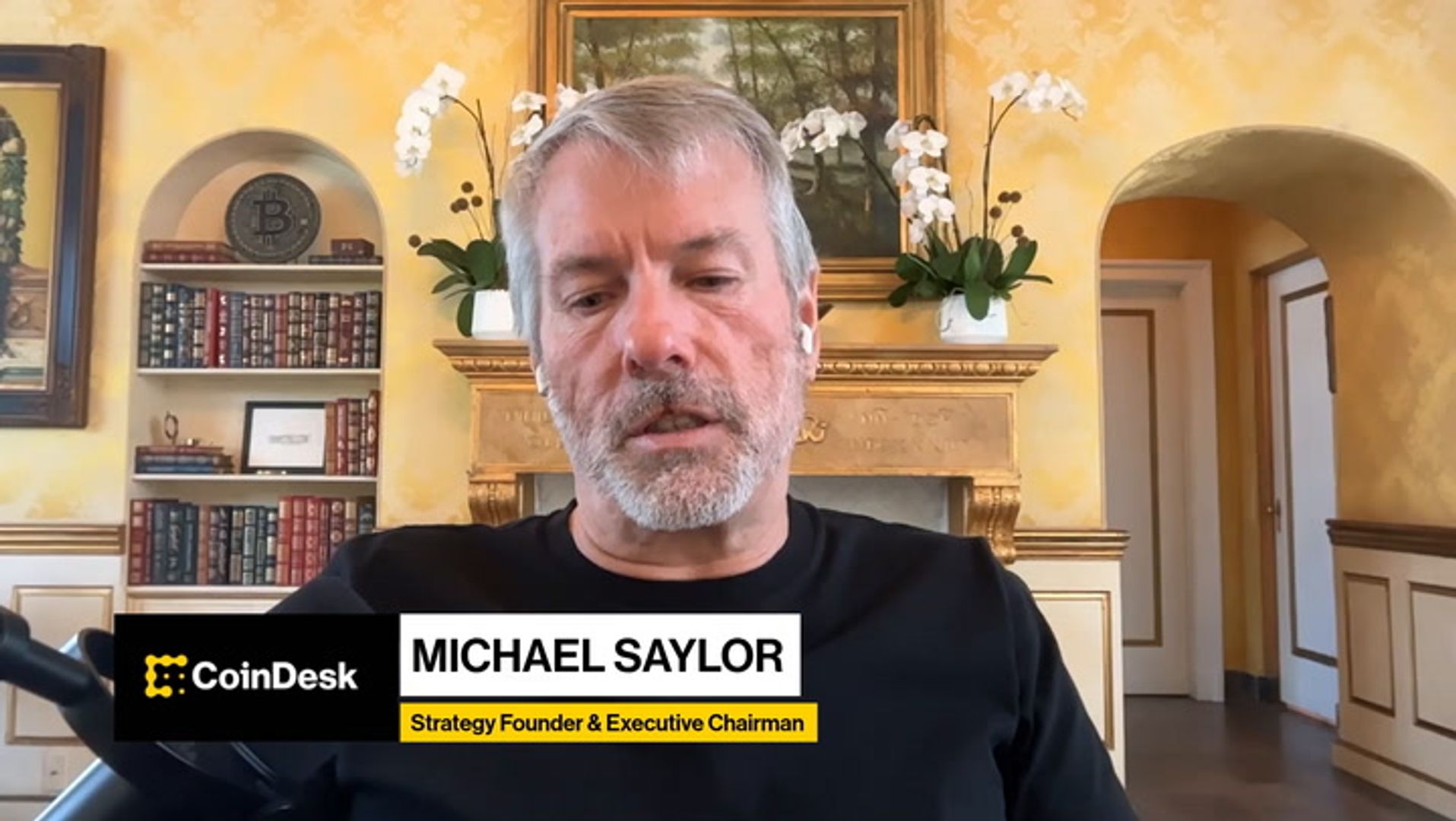
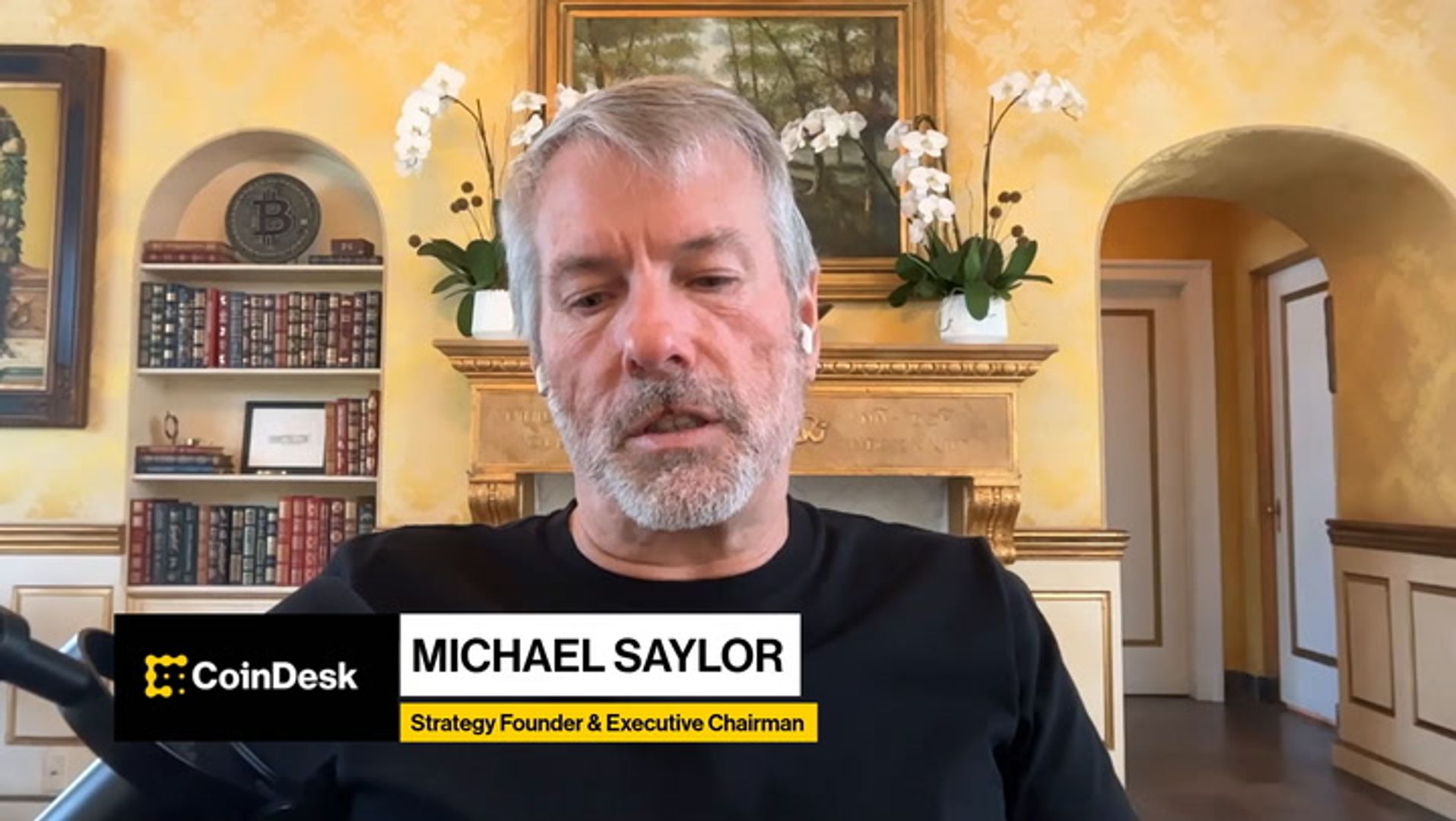
Strategy (MSTR) reported a net loss of $12.54 billion in the first quarter of 2026, as bitcoin fell from around $87,000 on Jan. 1 to roughly $68,000 by March 31.
Since the start of the second quarter, bitcoin has rebounded to above $80,000, while Strategy has continued to accumulate coins at a rapid pace, potentially setting the company up to post a sizable profit in the April-June period.
Led by Executive Chairman Michael Saylor, the company, the largest corporate holder of bitcoin, currently owns 818,334 BTC, acquired at an average price of $75,537.
Strategy ended the first quarter with $2.25 billion in cash, enough to cover approximately 18 months of preferred stock dividends.
MSTR shares are higher by nearly 20% year-to-date, though they remain lower by more than 50% on a year-over-year basis.
With first-quarter results largely expected and likely long ago priced in, investor focus will shift to the 5 p.m. ET earnings call, where Saylor and his leadership team are likely to outline their strategy.


The liquid restaking protocol argues that the 1-of-1 verifier setup at the center of the April 18 exploit was LayerZero’s own documented default.


Kelp DAO claims that LayerZero personnel approved the 1-of-1 verifier setup, a decision LayerZero has since cited as the reason a North Korea-linked attacker drained roughly $292 million from Kelp’s rsETH bridge.
The claim runs counter to LayerZero’s April 19 postmortem, which said Kelp’s rsETH application relied on LayerZero Labs as its sole verifier and that the setup “directly contradicts” LayerZero’s recommended multi-DVN model.
Kelp’s memo says LayerZero personnel reviewed its configurations for over 2.5 years and in eight integration discussions, without warning that a 1-of-1 setup posed a material security risk.
The memo, titled “Setting the Record Straight Around the LayerZero Bridge Hack,” includes screenshots of Telegram exchanges that document LayerZero’s awareness and lack of objection to Kelp’s verifier setup.
One screenshot shows a LayerZero team member saying: “No problem on using defaults either — just tagging [redacted] here since he mentioned you may have wanted to use a custom DVN setup for verifying messages, but will leave that to your team!” Kelp says the “defaults” referenced in the exchange were the 1-of-1 LayerZero Labs DVN configuration later cited by LayerZero as the application-level setup that enabled the exploit.
CoinDesk could not independently authenticate the screenshot.
LayerZero’s templates
Kelp also points to LayerZero’s bug bounty scope, OFT Quickstart and developer examples as evidence that LayerZero treated verifier-network choices as application-level configuration while showing builders a one-DVN setup.
LayerZero’s published bug bounty scope on Immunefi excludes from rewards “impacts to OApps themselves as a result of their own misconfiguration,” including verifier networks and executors.
The LayerZero OFT Quickstart and the official OFT example configuration on GitHub show LayerZero Labs as the required DVN, with no optional DVN set.
Kelp’s memo cites an April 19 post from Spearbit security researcher Sujith Somraaj, in which Somraaj said he had submitted a bug bounty report describing the same attack pattern and that LayerZero rejected it.
“My bug bounty: not a vuln, requires all DVNs,” Somraaj wrote on X. “Their deployment: removes the ‘all’ part. Hackers: collects $295M bounty instead.” Somraaj is a prior LayerZero auditor, according to his Cantina profile.
Kelp moves to Chainlink
Kelp also said it is moving rsETH off LayerZero to Chainlink’s Cross-Chain Interoperability Protocol. The shift moves rsETH from LayerZero’s OFT standard to Chainlink’s Cross-Chain Token standard.
The exploit drained 116,500 rsETH, worth roughly $292 million, from Kelp’s LayerZero-powered bridge. Two additional forged transactions totaling more than $100 million were signed and processed by the LayerZero Labs DVN before Kelp paused its contracts, the protocol said.
LayerZero said attackers are likely linked to North Korea’s Lazarus Group, who accessed the list of RPCs used by the LayerZero Labs DVN, compromised two RPC nodes and swapped out the binaries running on them.
The attackers then launched a DDoS attack against uncompromised RPC nodes, forcing a failover to the poisoned ones. LayerZero said the DVN then confirmed transactions that had not occurred.
Kelp argues the 1-of-1 setup was widespread. CoinGecko, citing Dune Analytics data, said 47% of roughly 2,665 active LayerZero OApp contracts ran a 1-of-1 DVN configuration over a 90-day period ending around April 22, with more than $4.5 billion in associated market value exposed to the same class of risk.
LayerZero’s postmortem said the protocol “functioned exactly as intended.” The company said it would no longer sign messages for any application running a 1-of-1 configuration, a policy change that took effect after the hack.
Kelp alleges that its team had to flag the exploit to LayerZero rather than the other way around, raising questions about LayerZero’s monitoring.
The memo also alleges substantial overlap in addresses granted ADMIN_ROLE on both the LayerZero Labs DVN and the Nethermind DVN, listing ten on April 8, 2026 and five additional on February 6, 2025. CoinDesk has not independently verified the onchain claim.
LayerZero did not respond to a request for comment by publication.
On at least two integrated chains, Dinari and Skale, the LayerZero Labs DVN is still listed as the only available attestor, according to the documentation.


Crypto asset ETPs just notched a fifth straight week of inflows, lifting five-week net flows above $4B and pushing AUM near $155B despite sharp midweek outflows.
Summary
- CoinShares’ latest weekly report shows global crypto asset ETPs recorded $117.8 million in net inflows last week, marking a fifth consecutive positive week and pushing cumulative five-week inflows above $4 billion.
- Total assets under management now stand near $155 billion, but flows were highly volatile: $619 million in net outflows from Monday to Thursday flipped to a $117.8 million weekly inflow thanks to a single $737 million surge on Friday.
- Bitcoin products led with $192.1 million in inflows, largely driven by U.S. spot ETFs, while Ethereum products saw $81.6 million of net outflows, underscoring a sharp midweek pullback in risk appetite before a late recovery.
CoinShares said that digital asset ETPs took in $117.8 million last week, extending their inflow streak to five weeks and bringing cumulative inflows over that period to more than $4 billion, as total industry AUM climbed to around $155 billion.
Inflows mask sharp intraweek reversal
Beneath the headline, however, flows were choppy. From Monday through Thursday, products collectively saw $619 million in net outflows, before a $737 million influx on Friday alone swung the weekly balance back into positive territory, a pattern CoinShares interpreted as a late‑week rebound in risk appetite.
Regionally, U.S. crypto ETP inflows slowed to about $47.5 million — a steep deceleration compared with roughly $1.1 billion the previous week — while Germany and Canada posted steadier gains of $43.8 million and $16 million, respectively, helping keep the global tally in the green.
CoinShares noted that only four assets saw meaningful inflows last week, down from nine in prior reports, which it said reflected “a significant weakening in sentiment midweek” before buyers returned to close out the period.
Bitcoin ETFs dominate while Ethereum stumbles
By asset type, Bitcoin-linked products once again led the pack, attracting $192.1 million in net inflows over the week, with U.S. spot ETFs accounting for roughly $162.8 million of that figure according to flow trackers cited in the report.
Those flows add to year‑to‑date Bitcoin ETP inflows that already exceeded $4 billion by late April, with CoinShares previously highlighting U.S. spot ETF demand as the primary driver behind the recent five‑week inflow streak.
Ethereum products moved in the opposite direction, suffering $81.6 million of net outflows as traders rotated away from ETH exposure, a reversal from earlier weeks in April when Ether ETPs enjoyed three consecutive weeks of inflows above $190 million.
CoinShares analysts suggested that the narrowing set of assets attracting fresh capital — combined with the midweek outflows and Friday’s outsized rebound — indicates a fragile but still positive backdrop, where institutional investors are selectively adding Bitcoin risk while remaining cautious on the rest of the market.


Australian rapper Iggy Azalea has been hit with a class action lawsuit accusing her of falsely promoting the use cases of her cryptocurrency MOTHER and causing investors financial losses.
Azalea, real name is Amethyst Amelia Kelly, was named today by crypto legal firm Burwick Law in a suit filed in the New York Southern District Court.
The suit details how the rapper promoted MOTHER as an exclusive means of accessing her online casino, MOTHERLAND, and as a means of securing discounts with mobile firm Unreal Mobile.
However, it claims that the casino was never entirely dependent on MOTHER, and often dealt with stablecoin tether (USDT). It also notes that the Unreal Mobile MOTHER integration never occurred.
Read more: N3on promised ‘up, up, up’ memecoin without any risk — it’s down 96%
Another luxury marketplace launched by Kelly, Dream Vault, made similar exclusivity promises regarding MOTHER’s usage, but these were never present, according to the lawsuit.
Overall, the lawsuit alleges that the promises surrounding MOTHER’s utility uses, market support, and access rights were “limited, incomplete, contradicted, temporary, or not delivered.”
It also claims that buyers were misled, and that Kelly misrepresented the token’s economics and the amount of tokens owned by insiders. She claimed to only hold 3% of the supply.
However, crypto analysts like Bubblemaps noted that 20% of the supply was bought by insiders before Kelly’s public launch, and they sold their holdings for $2 million.
The lawsuit’s various claims for relief accuse the defendants of deceptive practices, false advertising, negligent misrepresentation, and unjust enrichment. It seeks various compensatory damages to cover the losses the victims have allegedly suffered.
Burwick Law’s Azalea suit shows signs of AI usage
Burwick Law was recently forced to apologise for and correct various citations and grammatical errors, including multiple misplaced quotation marks, in its lawsuit against memecoin platform Pump Fun.
The firm wrote that the errors “do not affect any substantive legal argument in the opposition,” and that it “regrets these errors and any inconvenience to the court or opposing counsel.”
However, these flaws could point to signs of potential AI usage, something which also appears to be present in its Azeala lawsuit.
Read more: ‘Hawk Tuah’ star pulled into expanding memecoin lawsuit
Indeed, the suit is littered with complex sentence structures, colons, and em dashes. There are also multiple short sentences that open paragraphs while adding little to no extra information.
Protos has reached out to Burwick Law and Azalea’s talent agency, United Talent Agency, for comment and will update this piece should we hear anything back.
Got a tip? Send us an email securely via Protos Leaks. For more informed news and investigations, follow us on X, Bluesky, and Google News, or subscribe to our YouTube channel.

Multiple Questions, Real Cash Rewards! | #win #finance

Newscast – Is the US-Iran War Restarting?

Overseas demand for U.S equities is growing, says Kraken senior VP Johan Kerbrart

Manchester United reach agreement with Casemiro over contract clause amid transfer speculation

US brings back mandatory military draft registration

Steven Gerrard disagrees with Gary Neville over ‘shock’ Chelsea and Arsenal claim | Football


-

 Business7 days ago
Most Commercial Energy Audits Miss the Real Losses
-

 NewsBeat2 days ago
Channel 5 – All Creatures Great and Small series 7 new post
-

 Fashion7 days ago
Kylie Jenner’s KHY Enters a New Era with ‘Born in LA’
-
 Tech4 days ago
Trump’s 25% EU auto tariff breaches Turnberry Agreement that also covers semiconductors and digital trade
-
 Sports4 days ago
Paul Scholes issues Marcus Rashford reality check as agreement emerges over Man United star
-

 Business6 days ago
Barclay Brothers Avoid Bankruptcy: HSBC Drops High Court Petitions After IVA Deal
-
 Business6 days ago
Tesla Officially Registers Elon Musk’s Stock: What Investors Need to Know
-

 Entertainment6 days ago
Celebrities Who Are Attending the 2026 Met Gala Event
-

 Entertainment6 days ago
Insider Claims Reason Behind Key & Peele Split
-

 Entertainment4 days ago
Met Gala 2026 Rumored Guest List Is Turning Heads
-

 Tech6 days ago
Texas Instruments made a new flagship graphing calculator: the TI-84 Evo
-

 Business5 days ago
Two Powerball Tickets Split $143 Million Jackpot in Indiana and Kansas
-

 Business6 days ago
Strait of Hormuz Remains Heavily Restricted on April 29 Amid Iran Conflict
-
Business2 days ago
Winning Numbers Drawn as Jackpot Resets to $20 Million
-

 Crypto World6 days ago
Meta (META) starts stablecoin payout to creators in Circle’s USDC on Polygon, Solana via Stripe
-
 Crypto World5 days ago
CoreWeave (CRWV) Stock Climbs 8% Despite $45M Insider Share Dump
-
 Crypto World6 days ago
Securitize and Computershare Enable Tokenized Equity Issuance for Over 25,000 U.S.-Listed Stocks
-

 Entertainment4 days ago
Kylie Jenner Hit With Second Lawsuit From Ex-Housekeeper
-

 Crypto World6 days ago
Gibraltar Proposes Tokenized Funds Regulation to Bolster Compliance
-

 Sports6 days ago
Saudi Arabia set to withdraw LIV Golf funding after 2026 season, per reports
You must be logged in to post a comment Login