
Crypto World
Bitmine’s ETH treasury hits 4.8 million tokens BMNR stock uplists to NYSE

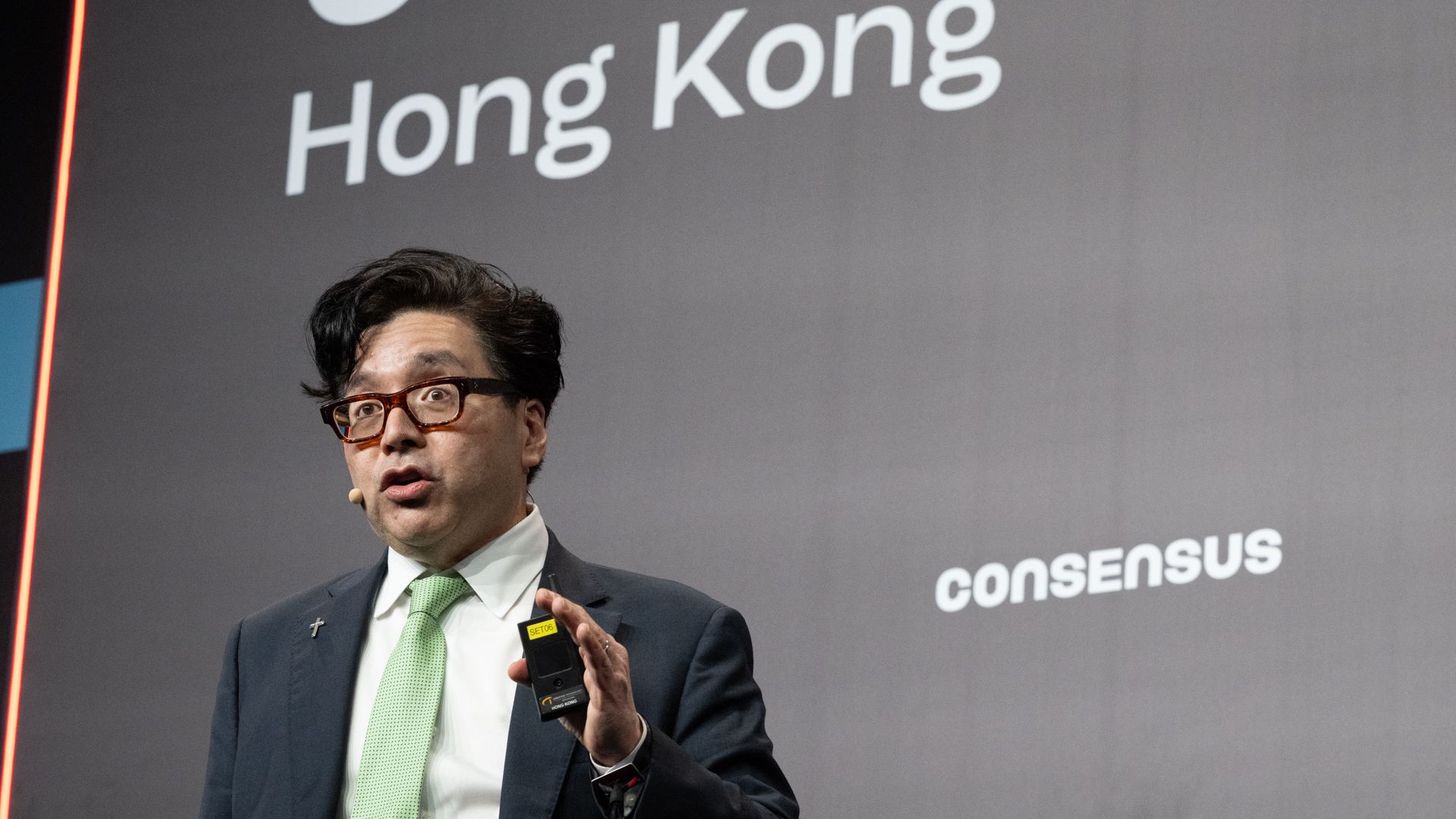
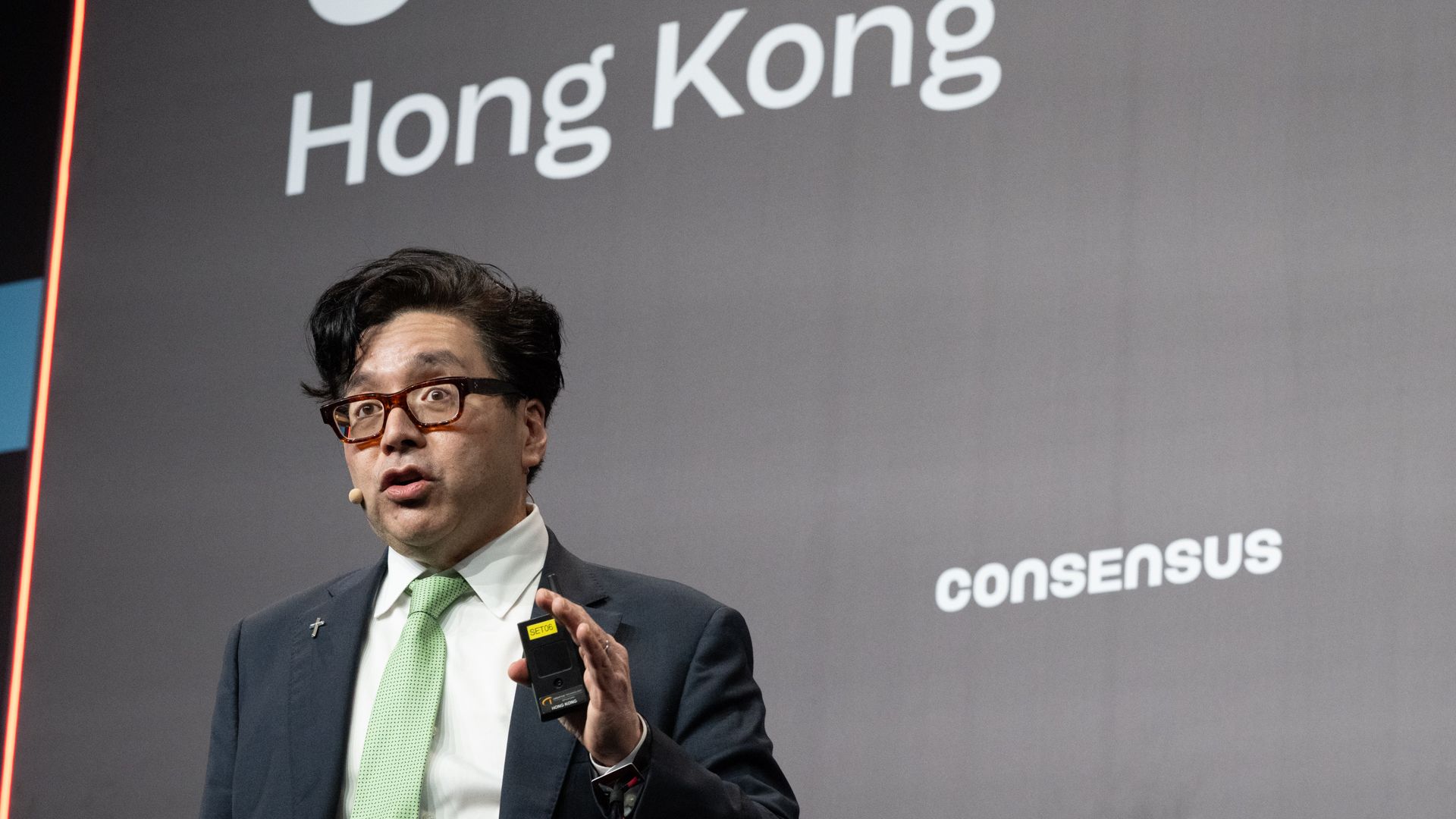
Bitmine Immersion Technologies (BMNR) said it now holds 4.8 million ether (ETH) worth roughly $10.2 billion at current prices, putting the company within reach of its stated goal of accumulating 5% of the total ether supply.
In a Monday statement, the company also said its shares will start trading on the New York Stock Exchange, uplisted from NYSE American, starting April 9.
Bitmine holds 3.98% of ether’s 120.7 million circulating supply, compared with Strategy’s 3.8% of bitcoin’s 20 million. Both companies have turned treasury accumulation into a stock market narrative, and both are buying aggressively as prices decline.
Bitmine acquired 71,252 ETH in the past week, its highest pace of purchases since late December, according to Chairman Tom Lee, who framed the buying as a bet that ether is in “the final stages of the mini-crypto winter.”
Total crypto and cash holdings are now $11.4 billion, including $864 million in cash, 198 BTC, and smaller positions in Beast Industries and Eightco Holdings.
Bitmine’s model diverges from Strategy when it comes to staking, or depositing tokens to help secure the Ethereum blockchain in exchange for a reward. Of the 4.8 million ETH held, 3.33 million are staked through Mavan, the company’s institutional-grade validator network that started operating Monday.
That staked position is worth roughly $7.1 billion and generates $196 million in annualized staking revenue at a 2.78% yield, giving Bitmine a recurring income stream that Strategy’s bitcoin treasury does not have.
At full deployment, when all of Bitmine’s ETH is staked, the company projects $282 million in annual staking rewards.
Lee made a wartime case for ether in the announcement, noting that ETH has gained 6.8% since the Iran conflict began, outperforming the S&P 500 by 1,130 basis points and gold by 1,840 basis points. “ETH is the wartime store of value,” Lee said, a framing that would have been difficult to argue six months ago but has data behind it now.
Bitmine is now the 96th most traded stock in the U.S. with average daily volume of $987 million, ranking between Schlumberger and Adobe. The investor base includes ARK Invest, Founders Fund, Pantera, Galaxy Digital, and Kraken.

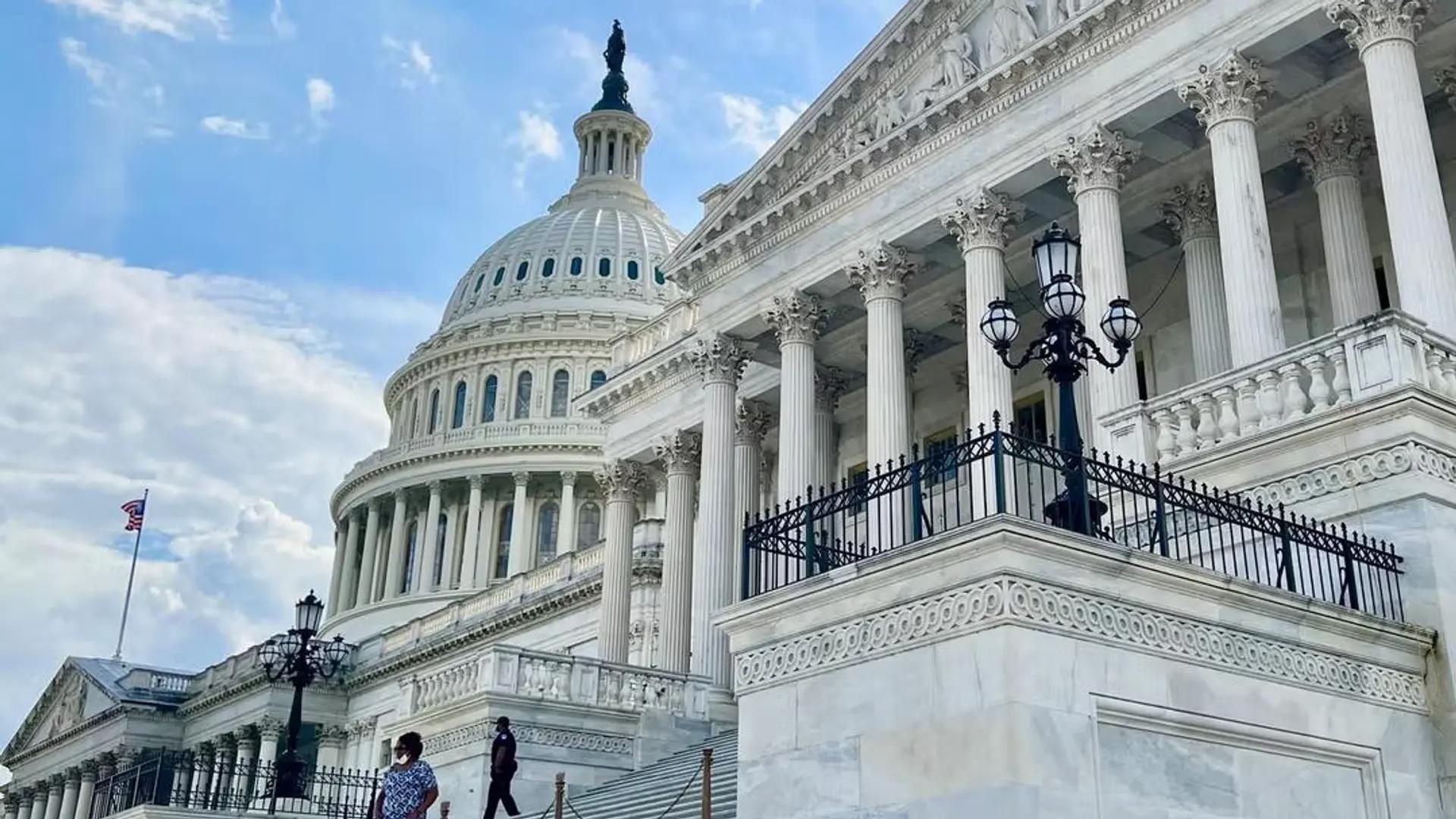
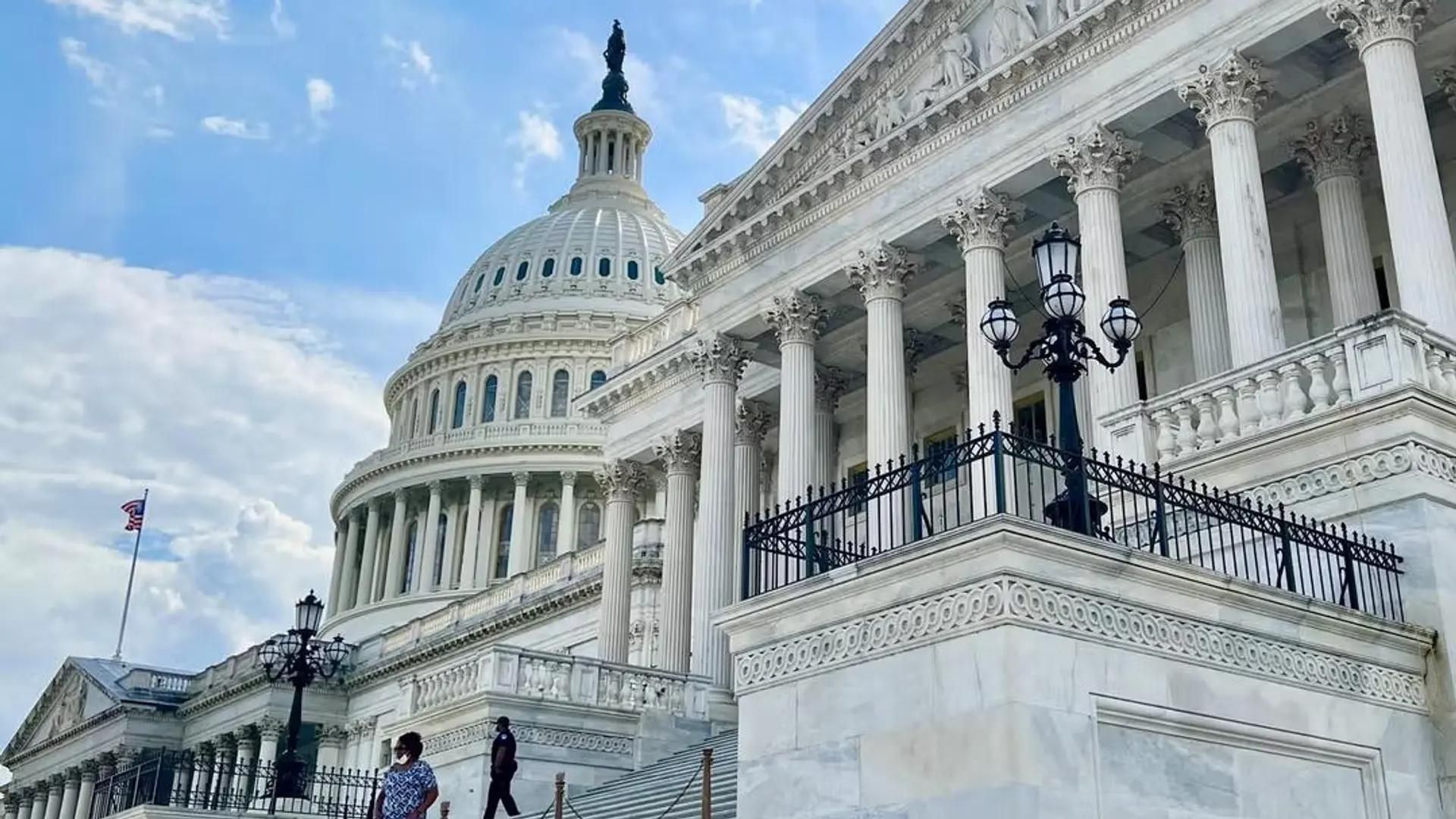
The crypto market structure bill has not made much public movement in a month. While making a prognosis on the bill is difficult, it’s not hard to see that the clock for passage is running out.
You’re reading State of Crypto, a CoinDesk newsletter looking at the intersection of cryptocurrency and government. Click here to sign up for future editions.
The narrative
We won’t get the crypto market structure bill this month. That’s not the end of the process, but we’re approaching a timeline that’ll surely increase the amount of gray in people’s hair.
Why it matters
Much of what’s happened around market structure issues — Securities and Exchange Commission staff statements, for example — are not permanent guidance. The SEC has time to come up with rules that go through a notice-and-comment period, but that’ll take time. Market structure legislation was aimed at cementing crypto industry goals and regulations into law, making it that much more difficult for a future administration to undo those rules. In other words, without the Clarity Act, it’s entirely possible that we’ll have this same conversation in a few years. To be clear, this isn’t advocating for this bill, much as I might wish to write about anything else. This is just stating a likely future scenario.
Breaking it down
Memorial Day — May 25, or just about a month from now — has been seen since at least last December as a “drop-dead” date for legislation to advance, if it is to have a chance at passage before the election. As we get into the summer, lawmakers are going to leave town to run their campaigns and won’t have time to worry about a crypto bill (or much other legislation).
Before Congress leaves, it’s going to take up a bill to fund the Department of Homeland Security (House) and figure out if Kevin Warsh will become the next Fed chair (Senate).
CoinDesk’s Jesse Hamilton laid out the other steps necessary to get Clarity across the finish line — i.e. President Donald Trump’s desk — last week.
The crypto industry desperately wants this bill; more than 100 signed an open letter last week urging a markup hearing in the Senate Banking Committee, which would be the first step toward overall passage.
Still, at this point it’s unclear how close the committee is to moving forward. Stablecoin yield continues to dominate the conversation, but other outstanding issues have not been resolved either, at least publicly.
Even when these issues are resolved, the House will need to vote again on the bill.
Congressman French Hill, who chairs the House Financial Services Committee, told CoinDesk earlier this month that many of the outstanding issues around sales practices for stablecoins and decentralized finance had already been sorted out by the House in its version of the bill, meaning the Senate should be able to find common ground.
“I think the Senate’s relayed quite a bit on the House work on both FIT21 [the Financial Innovation and Technology for the 21st Century Act] from the previous Congress and CLARITY in this Congress,” he said. “I think you see that quite clearly in the Senate Agriculture markup, I think you see that in the basic draft of many of the components in the Senate bill.”
And, well, not to plug Consensus Miami again, but we are going to be discussing this next month. It’ll be a party, you should swing by.
This week
If you’ve got thoughts or questions on what I should discuss next week or any other feedback you’d like to share, feel free to email me at nik@coindesk.com or find me on Bluesky @nikhileshde.bsky.social.
You can also join the group conversation on Telegram.
See ya’ll next week!
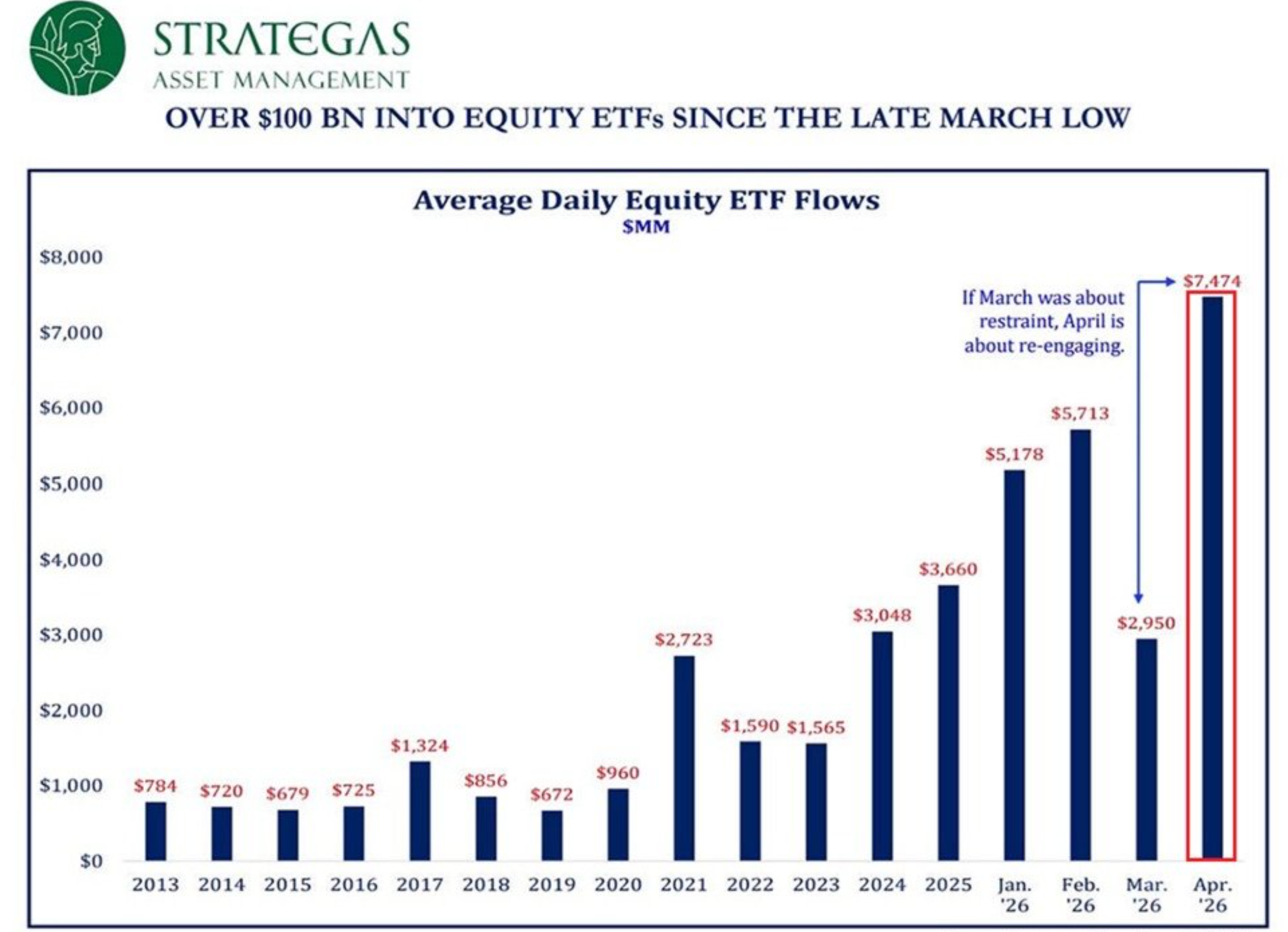
US equity ETFs (exchange-traded funds) drew a record $7.5 billion in average daily inflows during April. The pace more than doubles the $2.9 billion March average, according to Strategas Asset Management.
The data shows cumulative inflows above $100 billion since the March 30 low. The reading reflects institutional risk appetite that historically supports crypto ETF flows and tokenized asset adoption.
Equity ETF Demand Reflects Post-March Risk-On Rotation
Strategas figures show April 2026 daily flows averaged $7,474 million versus $2,950 million in March. Aggregate US-listed ETF inflows across all categories now track near $524 billion year-to-date through mid-April.
The acceleration follows a March pullback driven by tariff-related volatility. April flows run more than double the 2025 daily average of $3.7 billion. The shift signals a sharp sentiment reversal among allocators.
“Investors are pouring more capital into equity funds than ever,” wrote analysts at the Kobeissi Letter.
Outflows from active mutual funds and modest reductions in money market balances have funded part of the surge.
Fixed income ETFs continue attracting capital alongside equities, indicating broader deployment rather than rotation.
Follow us on X to get the latest news as it happens
Same Capital Pools Drive Bitcoin and Ethereum ETF Demand
Spot Bitcoin (BTC) and Ethereum (ETH) ETF products have rebounded alongside equities since the March bottom.
BlackRock’s iShares Bitcoin Trust IBIT holds cumulative lifetime flows above $63 billion. The fund draws the same allocator base that rotated into broad equity indices.
BlackRock’s Ethereum ETF has shown similar institutional interest in recent weeks. Large managers including Apollo and Hamilton Lane have begun directing 1% to 2% of portfolio allocations toward digital assets.
The convergence is also visible on the TradFi side. Pensions, endowments, and family offices increasingly treat regulated crypto ETFs as portfolio components similar to broad equity trackers.
“Banks. Pensions. Insurers. Asset managers. 79% plan to invest in digital assets. Over 50% allocating within one year. Most targeting 2–5% allocations. Trillions are coming…..,” remarked TradFi researcher Ryan Solomon.
Tokenization Brings Equity Demand On-Chain
Strong appetite for accessible equity exposure has reinforced the case for tokenization of real-world assets (RWAs). Total tokenized RWA value sits above $30 billion, with US Treasuries, private credit, and equities forming leading categories.
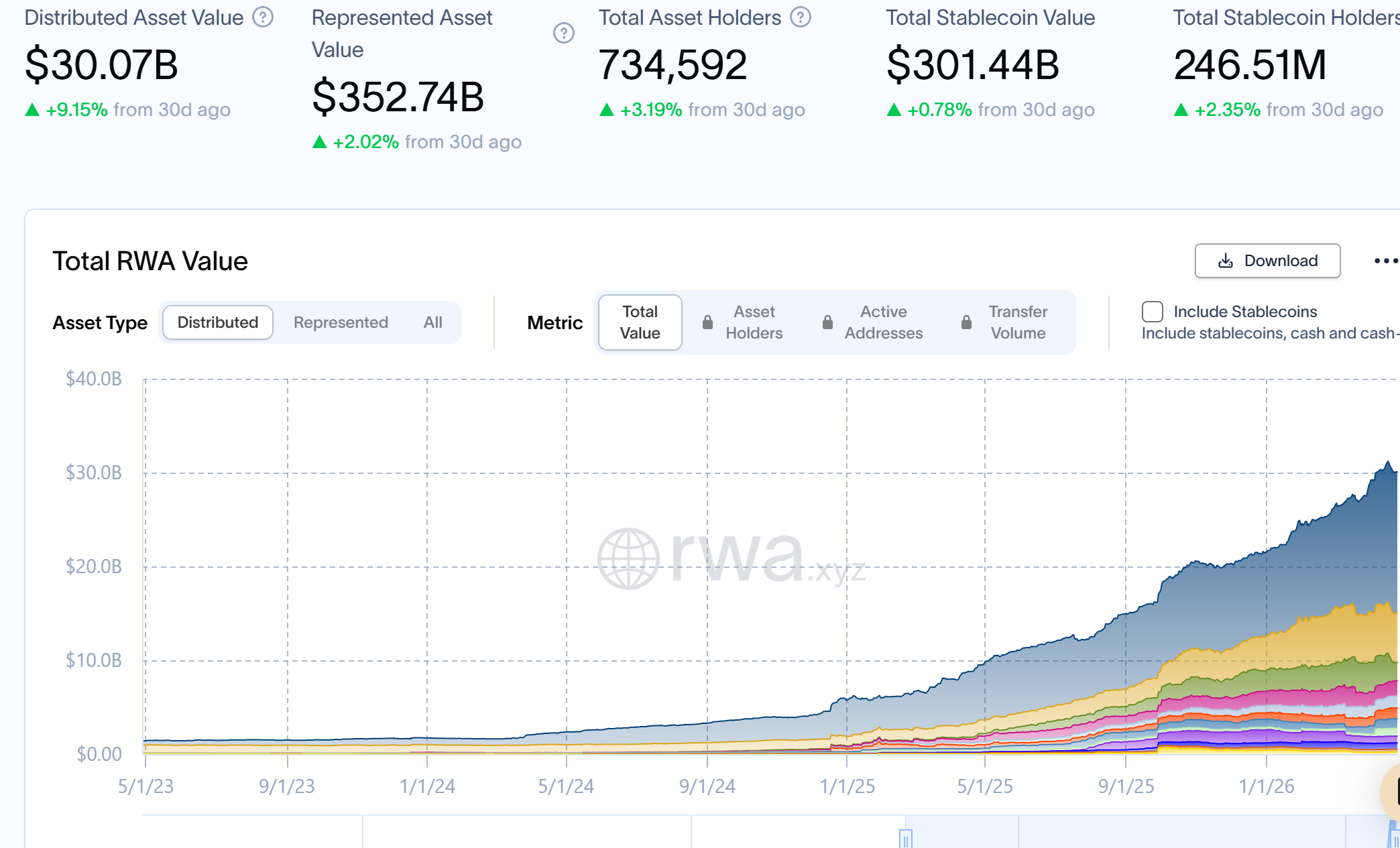
Platforms including Kraken xStocks, Ondo Global Markets, and Backed Finance already offer tokenized US equities and ETF exposure.
Issuers such as BlackRock, Fidelity, and JPMorgan continue advancing tokenization pilots tied to settlement and custody.
Risks remain. Procyclical flows can reverse if macro conditions sour. Concentration in mega-cap technology still drives index performance.
“A key implication is that macro now has to be filtered through flows. If hedge funds are running unusually low net exposure and retail flips from loading puts to chasing calls, price can overshoot well beyond what underlying growth, earnings, or valuation would normally justify. Markets are increasingly driven by flows and market structure idiosyncrasies that makes timing harder, not easier,” noted analysts at Forward Guidance.
Operators in custody, prime brokerage, and on-chain settlement face a key question. Can record equity demand translate into hybrid TradFi-crypto products in coming quarters?
Subscribe to our YouTube channel to watch leaders and journalists provide expert insights
The post Risk-On Surge Lifts Crypto Outlook as Equity ETFs Hit Record $7.5 Billion Daily Pace appeared first on BeInCrypto.

Litecoin’s network, a long-standing layer-1 proof-of-work chain, faced a notable disruption over the weekend as a vulnerability triggered a 13-block reorganization. The Litecoin team described a denial-of-service event on mining pools running recently updated software, which temporarily suppressed their hash power. This allowed older nodes to peg out coins to decentralized exchanges and cross-chain swap protocols, resulting in invalid transactions appearing on the network’s MimbleWimble Extension Blocks (MWEB) privacy layer. Once upgraded nodes recovered hashing power, the chain reorganized by 13 blocks and reversed the invalid transactions. The Litecoin project says the issue has now been fully patched.
The episode arrives amid heightened attention on zero-day vulnerabilities—entirely new code exploits that software makers have not yet identified or mitigated. Industry observers have also noted that AI systems are increasingly adept at spotting such attack surfaces, underscoring the accelerating risk environment facing crypto networks.
The incident prompted discussion about whether the bug was truly a zero-day. In a separate thread, Alex Shevchenko, co-founder of Aurora, a layer-2 scaling network, pointed to evidence suggesting some actors may have known about the vulnerability beforehand. He wrote that the protocol’s automatic reorg once the DoS attack subsided implied that portions of the hashrate were already running updated code, indicating the issue was not a genuine zero-day. Alex Shevchenko on X.
Other observers have framed the episode as part of a broader pattern. Vadim Zacodil, a blockchain developer, argued that the timing and targeting pointed to a deliberate operation, warning that low-hashrate layer-1s may no longer be reliable collateral for cross-chain value. Vadim Zacodil on X.
The wider crypto ecosystem has repeatedly highlighted cross-chain bridges as an attractive attack surface. In recent years, such bridges have been linked to billions of dollars in losses, as attackers exploit interoperability layers to move assets across protocols with varying security guarantees. The latest Litecoin incident arrives alongside ongoing scrutiny of how cross-chain activity interacts with privacy-focused features like MWEB and how relays, bridges, and liquidity providers respond to transient outages or reorgs.
For context, the crypto press and researchers have noted recent high-profile bridge-related incidents. In April, the Kelp restaking protocol experienced a significant breach that drained about $293 million, underscoring how interconnected DeFi layers can amplify risk when a single vulnerability is exploited. Kelp restaking attack was one of the clearest recent reminders of the ongoing fragility in non-isolated DeFi lending and staking architectures. Kelp exploit.
Beyond isolated incidents, the broader security landscape has drawn attention to how future-proof crypto infrastructure is against evolving attack methods. The industry is also watching for how exchanges and miners coordinate during DoS or reorg events to prevent cascading loss of confidence or asset disruption. Some researchers have argued that robust fallback mechanisms and more frequent, transparent patching cycles are essential as attack surfaces expand with greater cross-chain functionality.
Key takeaways
- Litecoin experienced a DoS-induced 13-block reorganization after updated mining pools encountered a vulnerability, with older nodes briefly enabling invalid transactions on the MWEB privacy layer.
- The network’s attackers reportedly manipulated cross-chain and DEX interactions during the event, before the upgraded miners reclaimed control and the invalid transactions were reversed.
- There is a debate about whether the bug represented a true zero-day or a pre-known vulnerability, bolstered by analysis suggesting some miners were running updated code during the attack.
- The episode highlights persistent risks around cross-chain bridges and DeFi interoperability, where compromised hash power or timing can enable mispriced or invalid states to propagate briefly.
- Industry observers point to recent high-profile bridge exploits and ongoing AI-driven vulnerability discovery as signals that crypto security remains an active and evolving frontier requiring vigorous patching and coordination.
Litecoin’s patch and the path forward for cross-chain security
In the immediate aftermath, Litecoin said the vulnerability has been patched and that the network returned to normal after updated nodes re-established hashing power. The incident serves as a reminder that even well-established PoW networks can suffer transient disruptions when edge-case bugs intersect with evolving mining software and cross-chain activity. The team’s public update, and the subsequent 13-block reorg to remove invalid transactions from the chain, demonstrate that rapid reorganization can contain damage when participation from updated nodes is sufficient to reassert consensus.
Analysts and developers will be watching how quickly miners and exchanges propagate the corrected software, how cross-chain protocols respond to similar disruptions, and whether any retroactive security reviews prompt broader changes to how MWEB transactions are validated during reorgs. The Binance-linked activity cited in discussions around the incident adds another layer to the narrative, suggesting that attackers may coordinate across on-chain and off-chain resources to maximize impact or exploit uncertainty around patch timing.
Looking ahead, the industry’s evolving risk landscape will likely intensify emphasis on monitoring, patch cadences, and the resilience of cross-chain value transfers. As bridging and interoperability expand, so too do the potential vectors for disruption, making ongoing vigilance and coordinated response plans essential for users, developers, and infrastructure operators alike.
Readers should keep an eye on how Litecoin and other networks refine their emergency response playbooks, how mining pools coordinate during DoS events, and whether more rigorous, standardized disclosures accompany major software updates that affect consensus-critical components. The ongoing conversation about zero-day discovery, pre-knowledge indicators, and the role of non-native funds in exploiting vulnerabilities will shape how markets price risk in the months ahead.
For additional context on the broader security conversation, researchers have highlighted AI-assisted vulnerability discovery as a double-edged sword—accelerating discovery but potentially accelerating exploitation as well. See discussions around Claude Mythos and related analyses of zero-day surfaces in OS and browser ecosystems. Claude Mythos zero-day vulnerabilities.
Key Takeaways
- Three-year projections place SOL anywhere from $50 to $900+ based on varying market scenarios
- Bearish conditions could drive SOL down to $50–$100 if crypto adoption stalls
- Central forecast estimates $200–$300 assuming Solana maintains approximately 3% market dominance in a $5T industry
- Optimistic projections reach $500–$700 with expanded use in gaming, payments, and institutional portfolios
- Weighted probability analysis suggests a median price around $250–$300
Solana has established itself as a leading high-performance Layer 1 blockchain, recognized for exceptional transaction speeds and minimal fees. These characteristics have positioned it as a formidable alternative to Ethereum and competing networks.
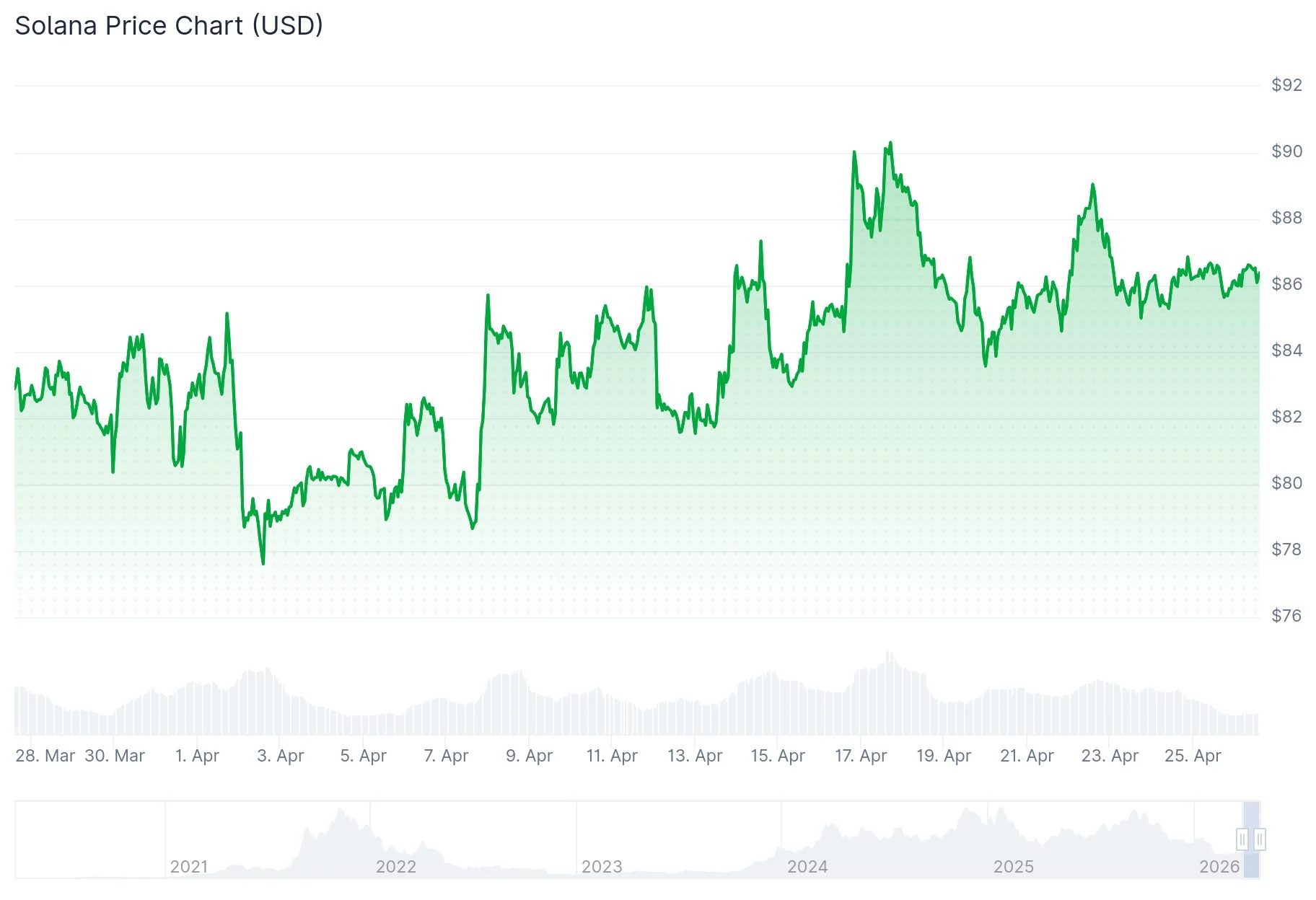
The critical question remains: what price levels might SOL achieve within the next three years?
A market share analysis offers a data-driven framework for this projection. The methodology is straightforward: estimate total cryptocurrency market capitalization, apply Solana’s anticipated market share percentage, then calculate per-token value based on circulating supply. This approach emphasizes fundamental analysis over pure speculation.
The framework operates on several core assumptions: total crypto market valuation expanding to between $2.5 trillion and $10 trillion, Solana’s circulating supply reaching approximately 650 million tokens, and market share ranging from 1.5% to 6% depending on the scenario.
Under pessimistic conditions, the cryptocurrency sector achieves only $2.5 trillion in total value, with Solana capturing merely 1.5% market dominance. This yields a network valuation around $37 billion, translating to a SOL price between $50–$60. Such an outcome would indicate constrained institutional participation and intensified competition from rival Layer 1 platforms.
Central Projection: $200–$300
The moderate scenario represents the most realistic pathway. Total cryptocurrency market capitalization expands to $5 trillion, while Solana secures approximately 3% of that value. This positions the network at a $150 billion valuation, suggesting SOL prices in the $200–$300 range, centered around $230.
Achieving this outcome requires Solana to maintain developer engagement, experience continued DeFi ecosystem growth, and demonstrate operational reliability. Market share sensitivity is significant at this scale. Within a $5 trillion total market, a shift from 2.85% to 3.15% share translates to approximately $20 price variation.
The optimistic projection envisions total crypto market capitalization reaching $8 trillion with Solana commanding 5% market share. This scenario implies a $400 billion network valuation and positions SOL at $600 or above. Realizing this trajectory demands substantial expansion in blockchain gaming, payment infrastructure, and institutional capital allocation beyond Bitcoin and Ethereum.
Extreme Upside Scenario
The supercycle hypothesis contemplates a $10 trillion total market where Solana secures 6% dominance. Under these conditions, SOL could approach $900 or exceed it. This outcome requires exceptional network execution and comprehensive global integration across diverse application verticals.
Multiple variables will influence which trajectory materializes. Critical factors include on-chain activity metrics, developer ecosystem vitality, competitive dynamics with Ethereum and emerging platforms, institutional capital flows, and overarching macroeconomic conditions.
Aggregating probabilities across all scenarios yields a weighted three-year price estimate around $250–$300 for SOL.

Quick Overview
- The cryptocurrency market capitalization stabilizes around $2.6 trillion with Bitcoin maintaining strong dominance
- Bitcoin (BTC) and Ethereum (ETH) lead as premier long-term investments backed by institutional interest and smart contract leadership
- Solana stands out for its high throughput, minimal transaction costs, and expanding consumer application ecosystem
- Chainlink serves as essential infrastructure supporting DeFi protocols and real-world asset tokenization initiatives
- BNB completes the top tier thanks to robust ecosystem utility and sustained market demand
The cryptocurrency landscape maintains stability with overall market capitalization hovering around $2.6 trillion. Bitcoin’s continued dominance signals investor preference for established digital assets over speculative alternatives.
This market condition creates favorable circumstances for blockchain projects demonstrating genuine utility, developed ecosystems, and sustainable growth trajectories. Below are five digital assets that analysts recommend for strategic long-term accumulation.
Bitcoin (BTC): The Foundation Asset
Bitcoin serves as the cornerstone for strategic cryptocurrency portfolios. The leading digital asset continues drawing institutional capital through exchange-traded funds and corporate treasury adoption.
The scarcity model supporting Bitcoin remains straightforward and compelling. With a permanent ceiling of 21 million coins, the supply constraint provides fundamental support for long-term value appreciation.
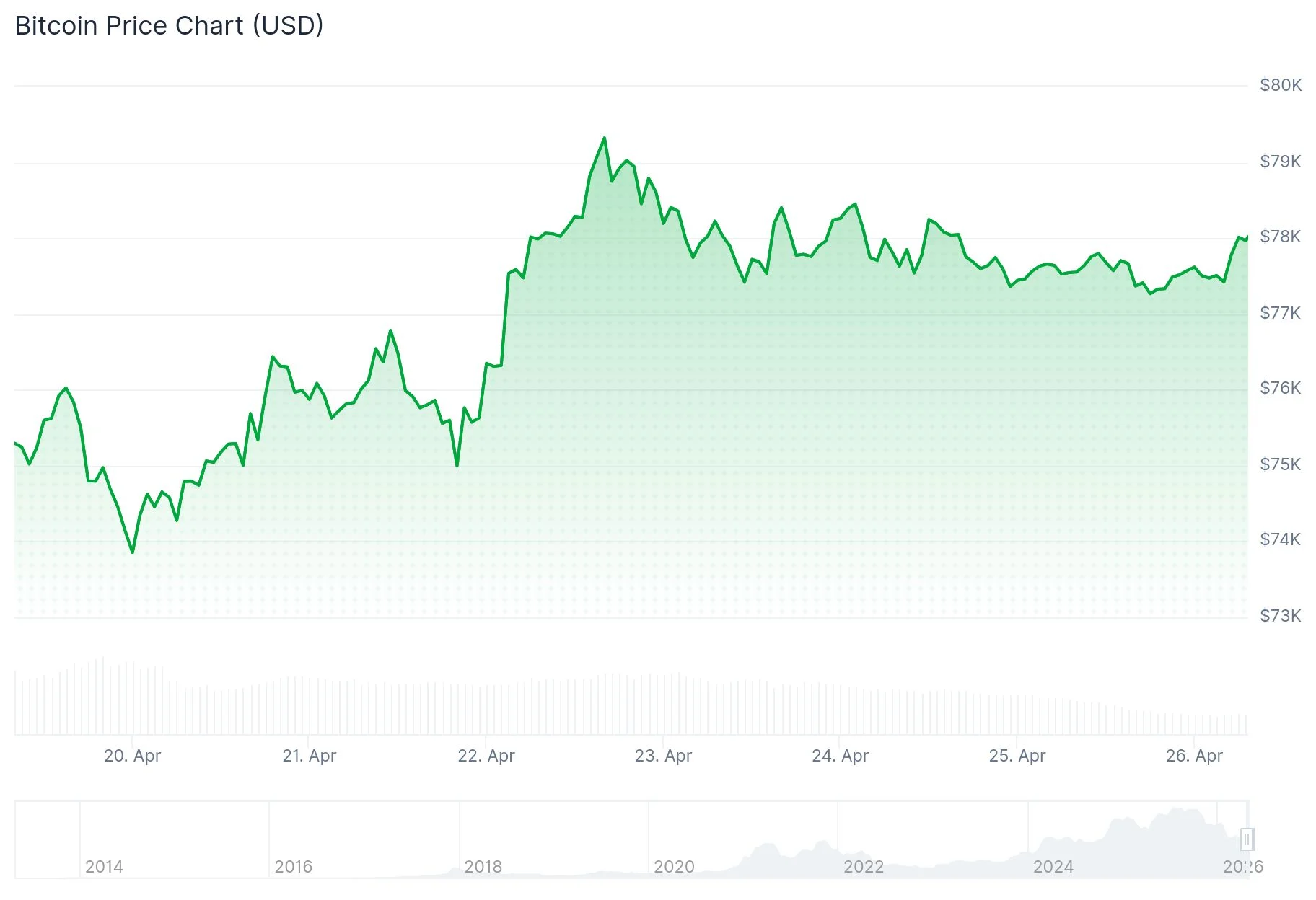
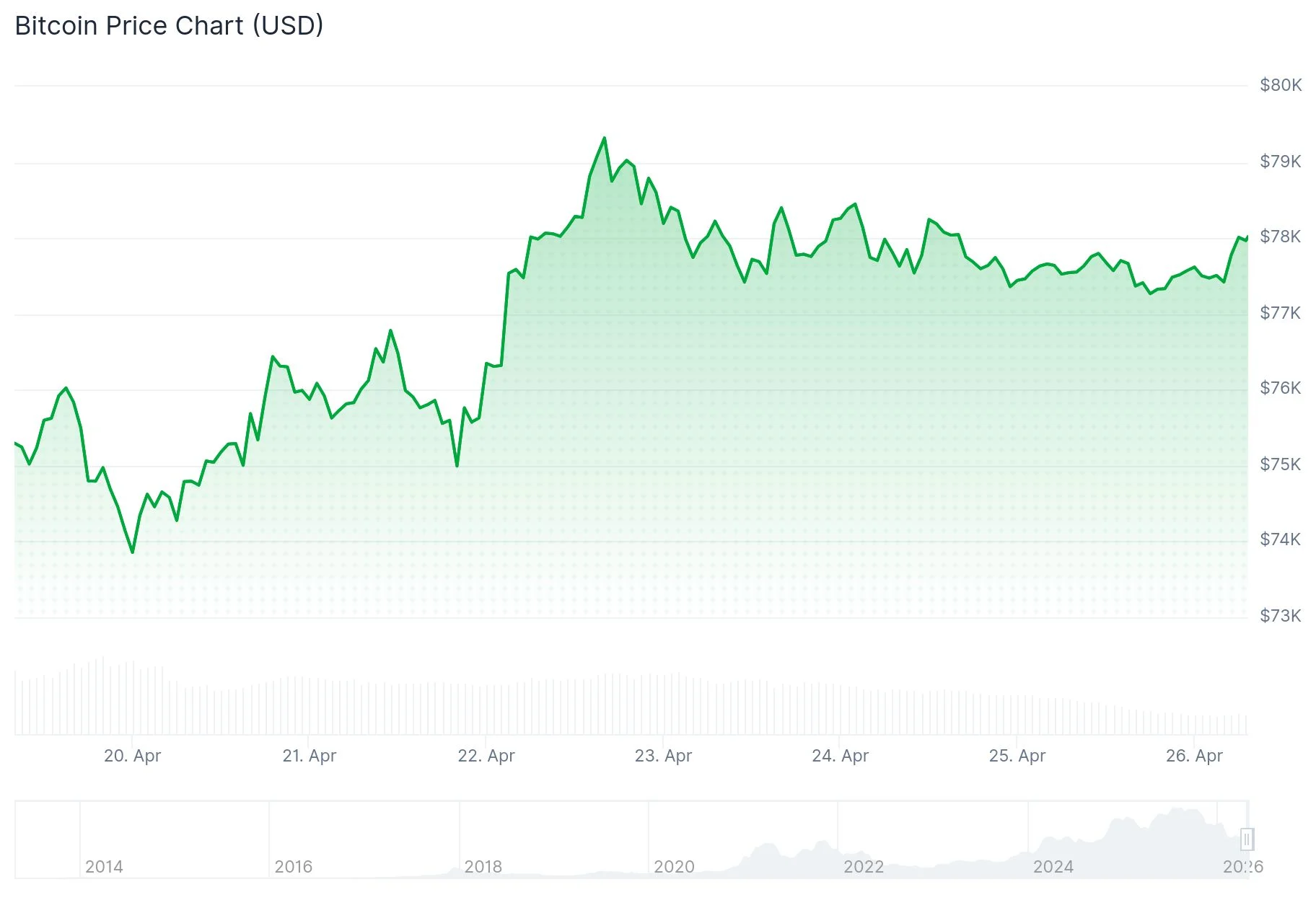
Among all cryptocurrency assets, Bitcoin delivers the most reliable downside protection. Market analysts view accumulation opportunities in the $70,000 to $78,000 range as favorable entry points for extended holding periods.
Ethereum (ETH): Dominant Smart Contract Platform
Ethereum maintains its position as the leading platform for smart contracts, decentralized finance applications, and digital asset tokenization. The network’s developer community surpasses all competing blockchain platforms in size and activity.
The investment thesis centers on the tokenization of traditional assets and increasing staking participation. These catalysts remain in nascent development stages with substantial room for expansion.
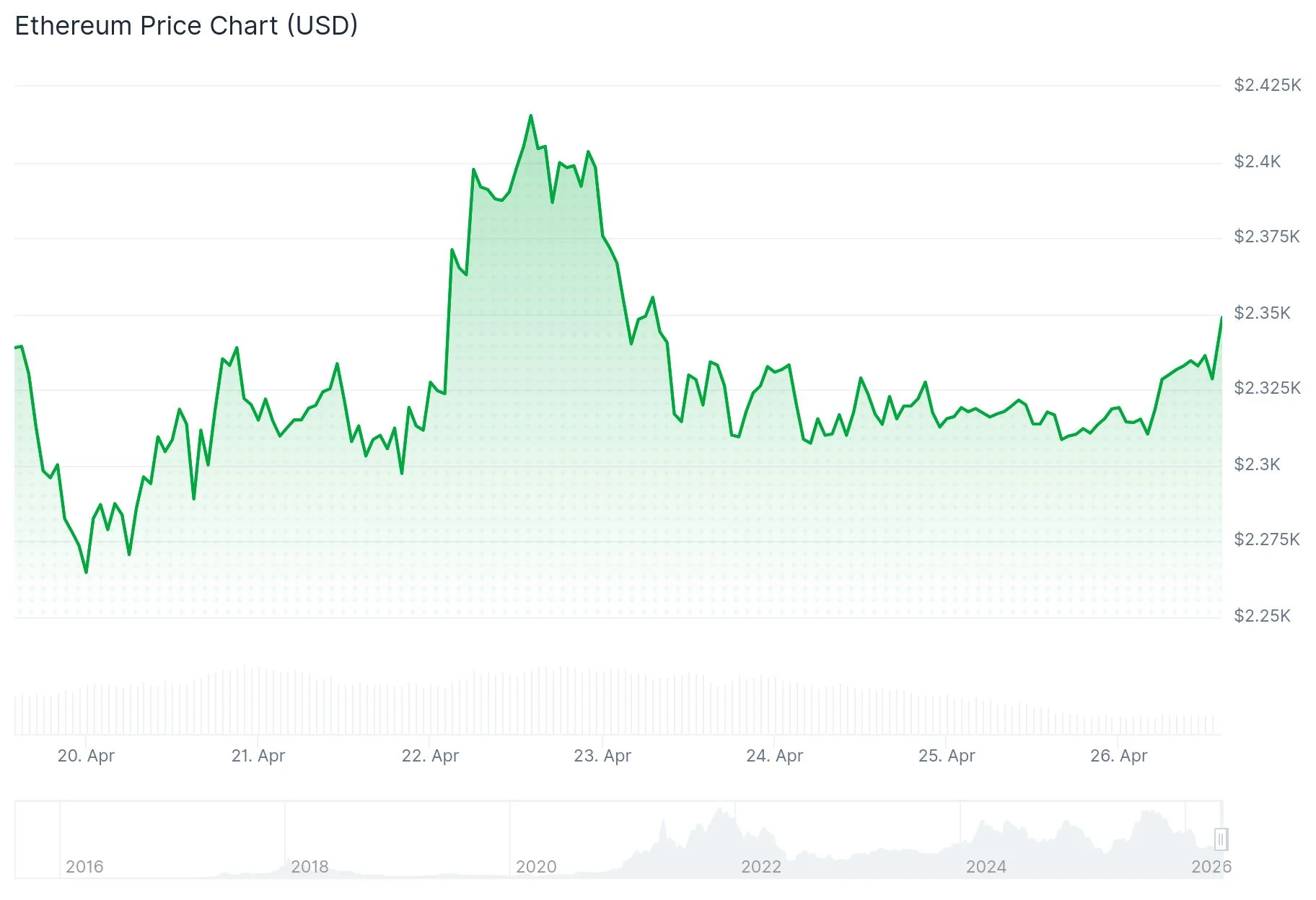
Competitive threats include emerging high-performance blockchains and persistent scalability limitations. For long-term portfolio construction, accumulation between $2,000 and $2,350 represents a prudent entry zone.
Solana (SOL): Performance-Focused Blockchain
Solana has established itself as the preferred platform for applications requiring high throughput and minimal transaction expenses. The network has emerged as a primary destination for consumer-facing applications and decentralized finance protocols.
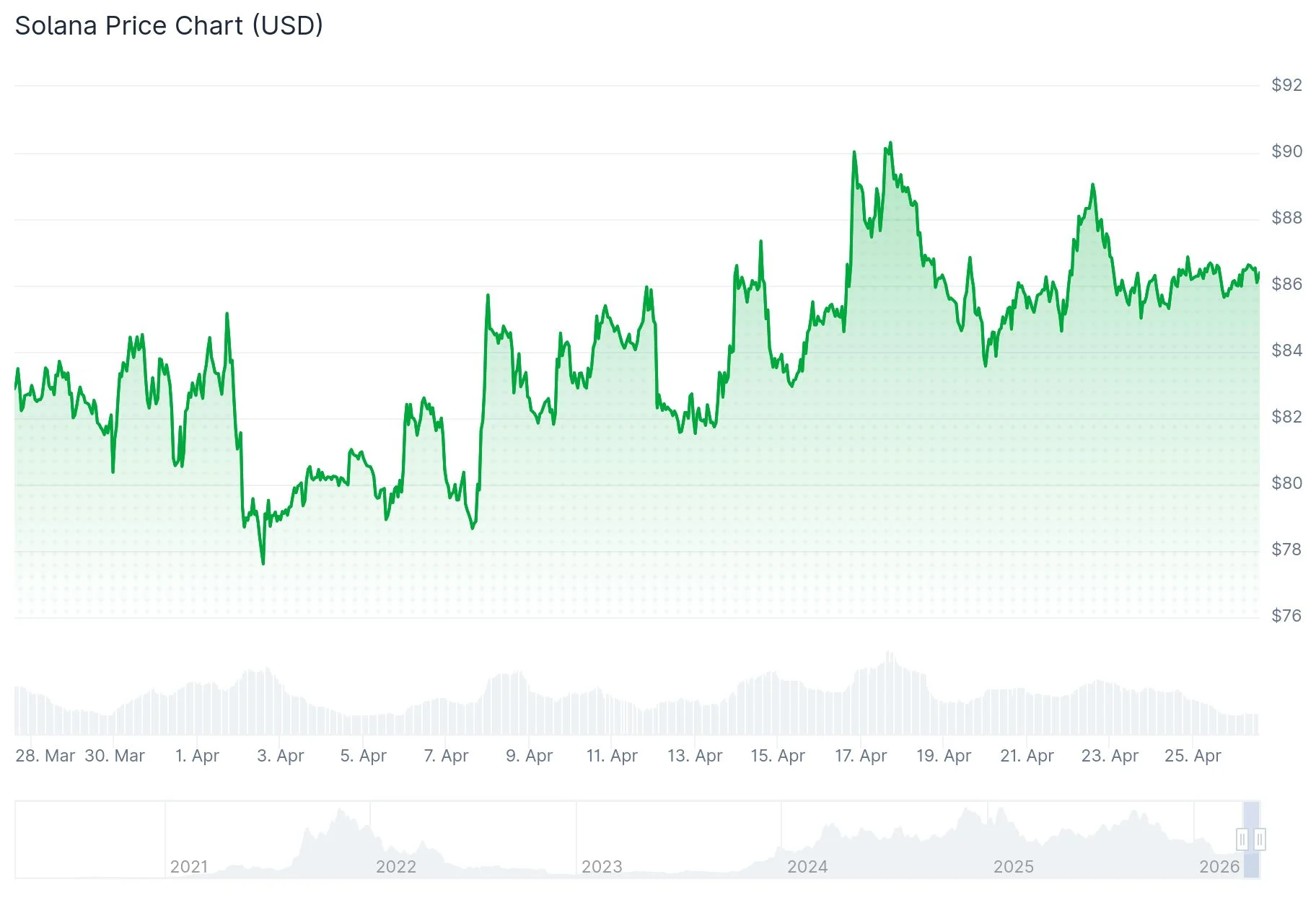
The investment case rests on sustained adoption as the blockchain of choice for high-frequency, user-oriented applications. Analysts recommend dollar-cost averaging within the $75 to $88 range for long-term positions.
Primary concerns include historical network reliability issues and significant dependence on retail user activity rather than institutional adoption.
Chainlink (LINK): Critical Infrastructure Layer
Chainlink provides oracle services and cross-chain interoperability solutions throughout the cryptocurrency ecosystem. The protocol functions as fundamental infrastructure supporting DeFi applications and tokenized real-world assets.
As traditional assets increasingly migrate on-chain, Chainlink occupies a strategic position within this transformational trend. The primary uncertainty involves the degree to which token value will reflect protocol adoption and usage.
Analysts identify the $8.50 to $10 zone as an attractive accumulation range for patient investors. Among these five assets, Chainlink currently presents the most compelling risk-adjusted opportunity.
BNB: Integrated Ecosystem Token
BNB serves multiple functions including exchange fee discounts, DeFi participation, staking rewards, and transaction settlement on BNB Chain. The token derives value from its connection to Binance, the world’s largest cryptocurrency exchange by volume.
The long-term investment case depends on Binance maintaining market leadership while expanding into payment processing, decentralized finance, and Web3 infrastructure. Persistent utility generates reliable demand dynamics.
Regulatory scrutiny targeting Binance represents the primary downside risk for BNB token holders. Strategic accumulation between $520 and $600 provides reasonable entry positioning for multi-year time horizons.
Recommended Portfolio Construction
The proposed allocation strategy across these five cryptocurrencies is: Bitcoin comprising 35%, Ethereum at 25%, Solana representing 15%, Chainlink also at 15%, and BNB accounting for 10%.
This distribution creates equilibrium between stability, growth opportunity, and infrastructure exposure across the broader cryptocurrency market landscape.


The Office of the Comptroller of the Currency (OCC) closes its GENIUS Act comment window on May 1. The four-day countdown ends 18 months of regulatory uncertainty for U.S. banks weighing payment stablecoin issuance.
The deadline marks a turning point for corporate treasurers who have weighed stablecoins as a primary payment rail. Many lacked formal federal guidance from the agency that supervises national banks.
Two-Tier Framework Puts the Compliance Burden on Issuers
The OCC opened the 60-day window on February 25 with a 376-page proposed rule.
“After that, the regulatory uncertainty that’s been keeping corporate treasury teams from making stablecoin their primary payment rail has an official federal answer —> from the same agency that supervises national banks,” stated investor Abhinav Kumar.
That rule translates the Guiding and Establishing National Innovation for U.S. Stablecoins (GENIUS) Act into operational requirements. It spans reserve standards, custody rules, capital thresholds, and supervisory authority.
A two-tier licensing structure anchors the proposal. Issuers with more than $10 billion in outstanding stablecoins fall under federal licensing.
Smaller firms can operate under state regimes certified by the Treasury, Federal Reserve, and FDIC.
The compliance burden lands on issuers, not on payment infrastructure operators or merchants.
That distinction matters for corporate adoption, where the missing piece has been formal legal cover rather than merchant skepticism.
Corporate Treasuries Eye the Switch to Stablecoin Rails
An EY-Parthenon survey found that 13% of financial institutions and corporates globally already use stablecoins. Another 54% of non-users plan to adopt them within six to 12 months.
Kumar argues the gap between interest and execution comes down to legal cover. He says the OCC framework will turn the opinion letter from general counsel into a form document.
“The companies ready to receive that demand will have a structural advantage that’s very hard to replicate 18 months later,” he added.
The American Bankers Association has asked regulators for an additional 60 days to review the proposal.
That request signals the final rule may take longer to publish even after May 1 closes the comment period.
Fed leadership questions are also moving in parallel. Senator Thom Tillis said this week he will support Kevin Warsh’s Federal Reserve confirmation after the Justice Department closed its Powell investigation.
The Fed helps certify state stablecoin regimes alongside Treasury and the FDIC, tying central bank leadership to how the framework rolls out under federal stablecoin policy.
The post US Banks Have Only 4 Days Left to Shape GENIUS Act Stablecoin Rules at OCC appeared first on BeInCrypto.
Key Takeaways
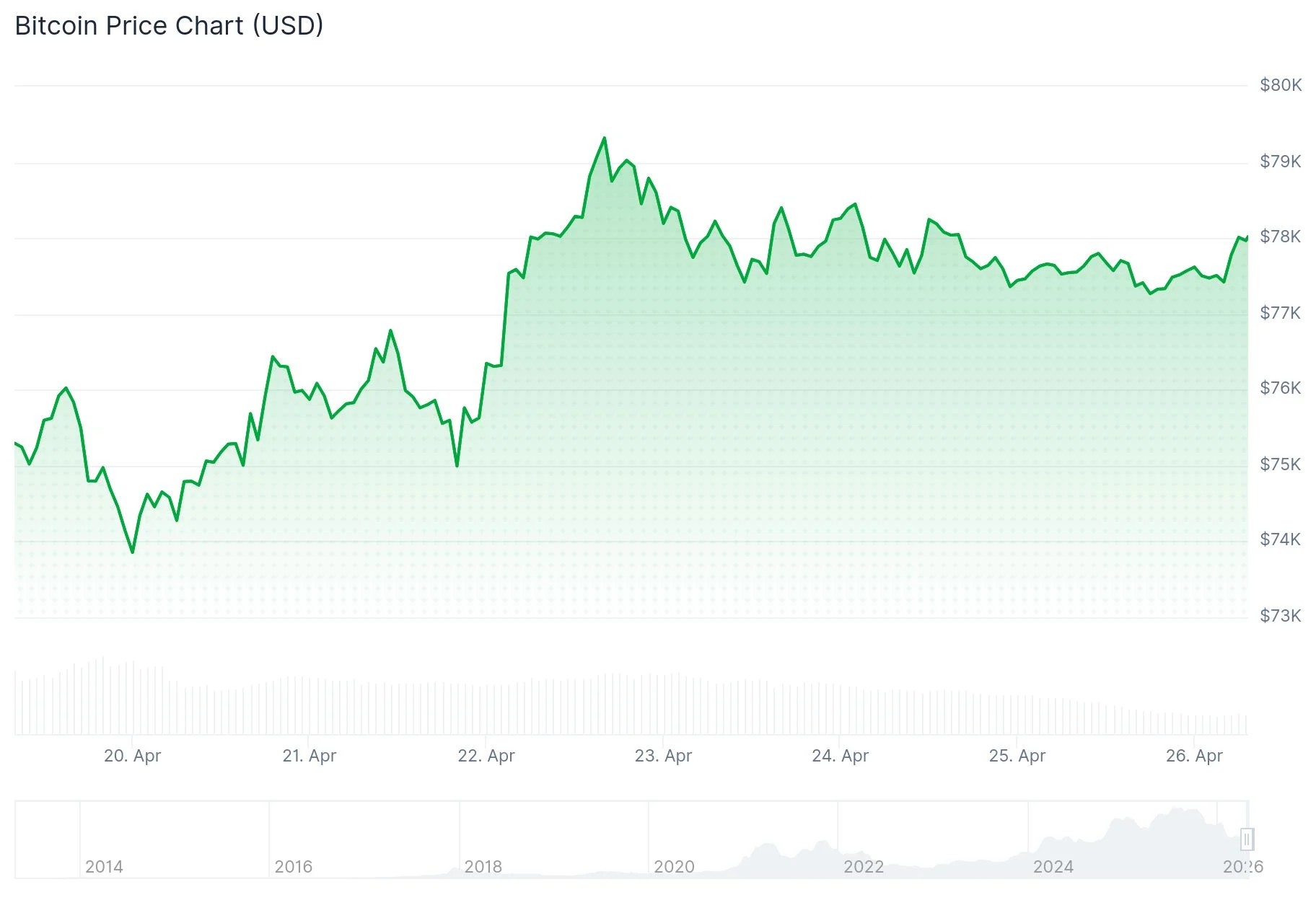
- Bitcoin’s market capitalization stands at approximately $1.56 trillion compared to Ethereum’s $281.8 billion, providing ETH with greater percentage growth potential
- Bitcoin continues to dominate as the more secure, institutionally-backed cryptocurrency with its hard cap of 21 million coins
- Ethereum supports approximately $166.7 billion in stablecoin value and serves as the foundation for DeFi, asset tokenization, and blockchain-based finance
- The Pectra network upgrade enhanced Ethereum’s blob capacity by 2x and streamlined validator operations
- Citigroup reduced its 12-month forecasts for both cryptocurrencies, highlighting concerns about Ethereum’s declining network engagement
Bitcoin maintains its position as cryptocurrency’s undisputed leader. However, when evaluating potential returns over the coming five years, Ethereum presents compelling advantages.
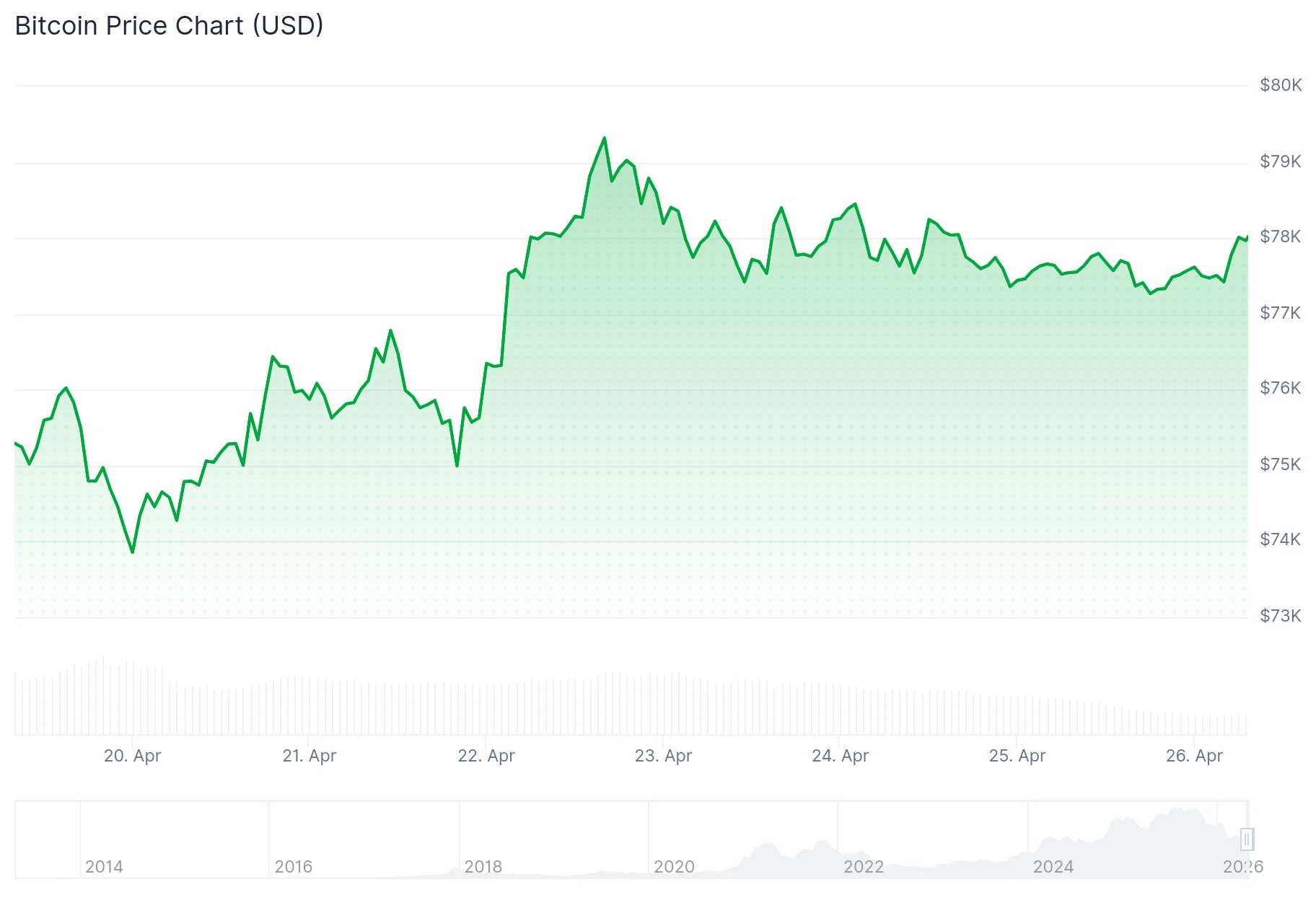
According to CoinGecko data, Bitcoin commands a market capitalization near $1.56 trillion, while Ethereum sits at approximately $281.8 billion. This substantial valuation difference has direct implications for investor returns.
Smaller-cap assets require significantly less capital inflow to generate meaningful price appreciation. This fundamental principle positions Ethereum favorably when evaluating potential percentage returns moving forward.
Bitcoin’s value proposition remains robust. The protocol’s maximum supply of 21 million coins creates fundamental scarcity that anchors its long-term investment narrative.
Spot exchange-traded fund products have experienced renewed capital inflows throughout recent months. Corporate treasuries continue accumulating Bitcoin holdings. These dynamics have supported Bitcoin’s valuation near recent peak levels.
These factors explain why Bitcoin remains the lower-risk cryptocurrency option. It offers the most straightforward investment thesis and commands the broadest institutional acceptance.
Ethereum’s Value Proposition Centers on Utility
Ethereum operates under a fundamentally different model. Its valuation derives primarily from network utility rather than supply constraints.
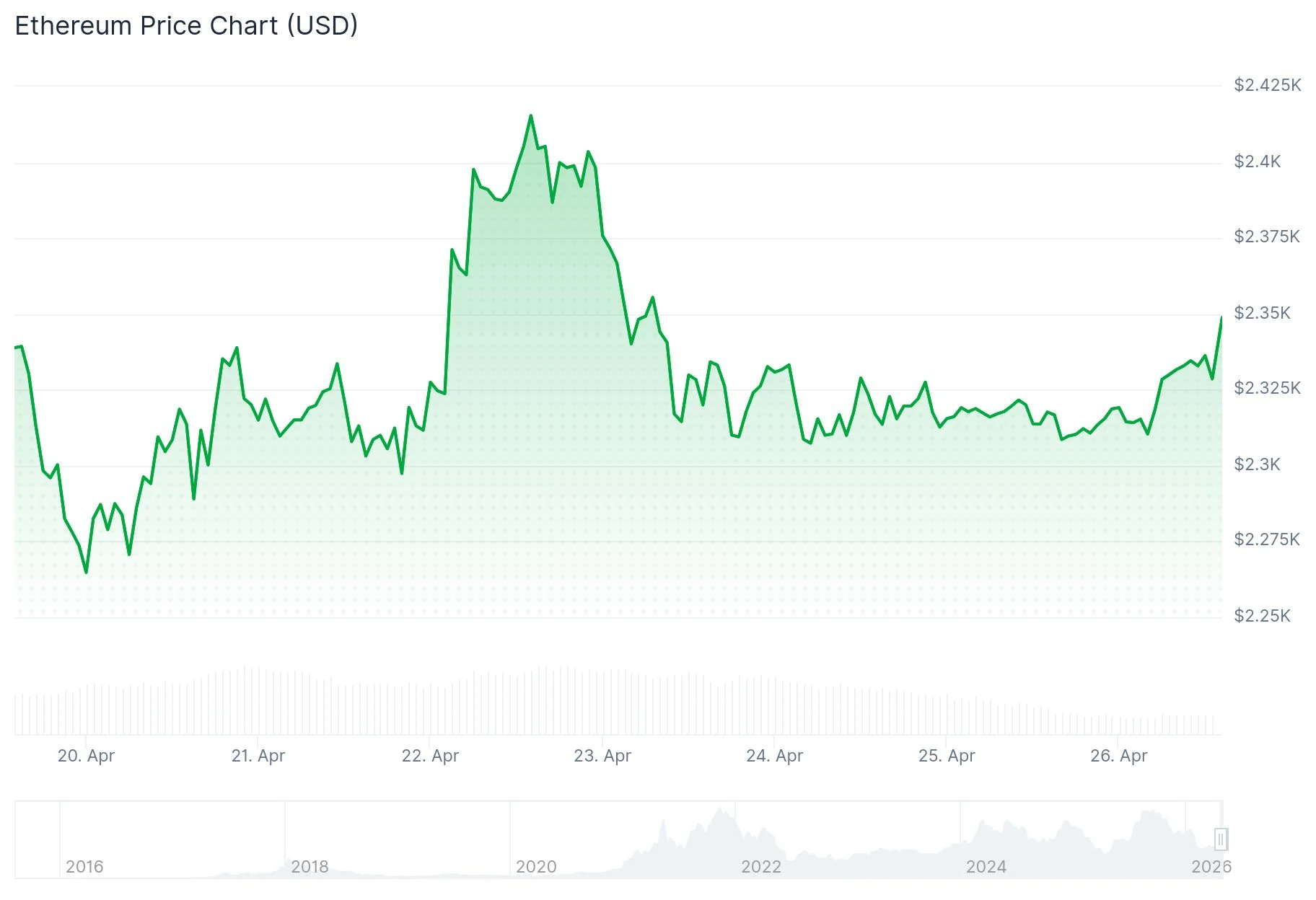
According to DefiLlama metrics, Ethereum currently secures roughly $166.7 billion in stablecoin value. This positions it as the dominant infrastructure for blockchain-based dollar transactions and cryptocurrency settlement operations.
Stablecoins, real-world asset tokenization, and decentralized finance represent some of the most rapidly expanding sectors within digital assets. Continued expansion in these areas directly benefits Ethereum as the primary value-capture layer.
The Ethereum network continues evolving through protocol improvements. Ethereum.org documentation confirms Pectra and Fusaka are operational, while Glamsterdam and Hegotá remain under active development.
The Ethereum Foundation’s announcement highlighted that Pectra doubled blob processing capacity, increased maximum validator balances, and accelerated validator activation timeframes.
These technical enhancements boost network scalability and staking accessibility. Such improvements can drive increased user adoption and capital deployment across the ecosystem.
Ethereum Faces Meaningful Challenges
Ethereum’s growth potential carries elevated risk factors. A March Reuters report noted that Citigroup reduced its 12-month price projections for both Bitcoin and Ethereum.
Citigroup’s analysis specifically identified declining user engagement as a significant concern for Ethereum. This represents the critical distinction. Ethereum’s success depends on sustained growth across its application ecosystem. Bitcoin faces no such requirement.
Investment Perspective
Looking across a five-year timeframe, Ethereum provides multiple growth catalysts. Its potential stems from stablecoin adoption, DeFi expansion, tokenization initiatives, staking participation, and ongoing protocol enhancements—all beginning from a substantially lower valuation base.
Bitcoin can continue appreciating as digital gold, institutional treasury reserve, and ETF-accessible store-of-value asset.
Both cryptocurrencies maintain viable growth trajectories. Ethereum simply offers more potential catalysts.
Citigroup’s recent target reductions for both assets represent the latest institutional warning that near-term prudence remains appropriate for Bitcoin and Ethereum positions alike.
The best cryptos to buy now are gaining clarity fast. Over 120 cryptocurrency organizations led by the Crypto Council for Innovation and the Blockchain Association urged the Senate Banking Committee on April 24 to move forward with a markup on market structure legislation according to CoinDesk. A formal framework would define how digital assets trade on regulated platforms, opening the door for trillions in institutional capital currently on the sideline.
And the presale already drawing $9.45 million during heavy market uncertainty is where this capital hits hardest. Pepeto, a new crypto still in presale, is drawing most of the attention in the space as analysts target 100x returns after its Binance listing.
A coalition of more than 120 groups from across the digital asset industry sent a joint letter to the Senate Banking Committee on April 24, calling for an immediate markup of market structure legislation according to CoinDesk. The Crypto Council for Innovation and the Blockchain Association led the effort, arguing years of bipartisan work have built enough foundation for a floor vote this year.
Regulated market structure channels institutional liquidity directly onto public blockchains, and this flow lifts every project in its path. The presale entries positioned before this capital arrives are where a single listing event delivers the kind of return large caps need years to produce.
Best Cryptos to Buy Now: Sui (SUI), Pepeto, and the Tokens With Real Tools Worth Holding
Pepeto
The projects worth holding right now share one quality: live products already running while the competition was still drawing up plans. Pepeto, considered the best crypto to buy, built a full meme exchange guarding capital during price swings, and the platform already handles trades while most projects have nothing running.
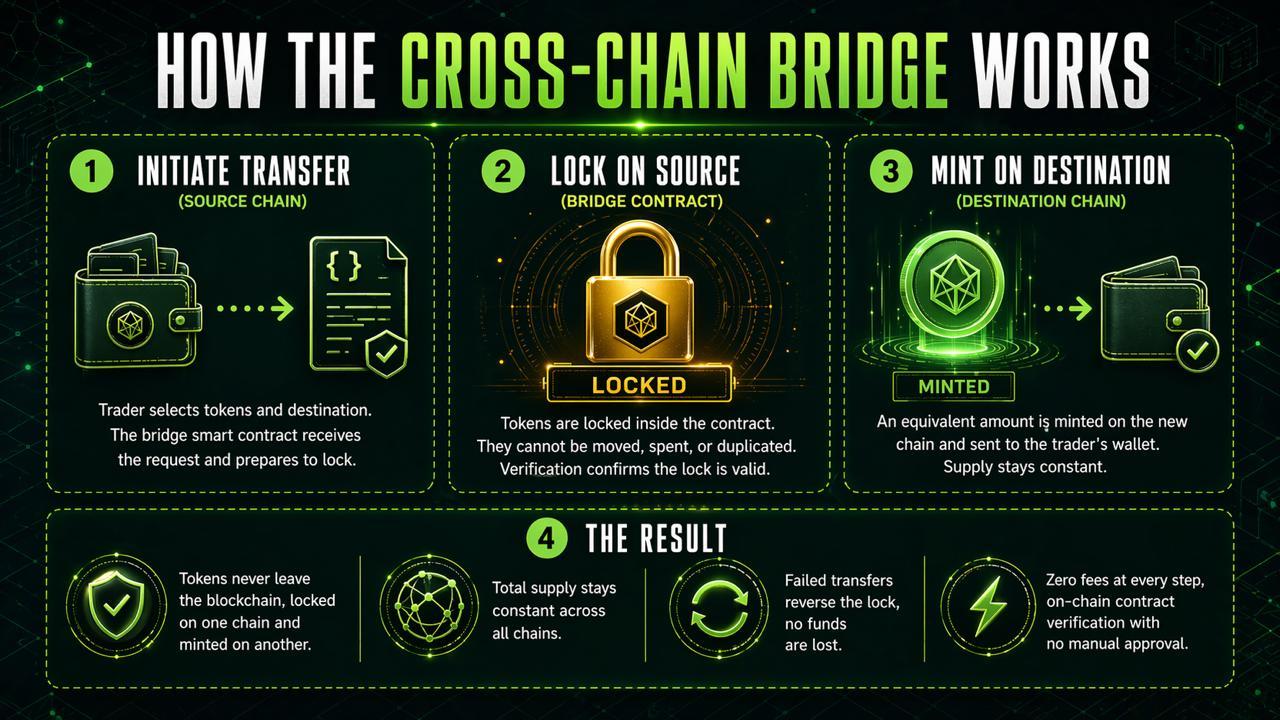
The Pepeto swap tool completes trades with no fee deducted, meaning nothing leaves the wallet except what the holder intended to trade. The built-in network bridge routes tokens between Ethereum, BNB Chain, and Solana without deducting a fee, and the smart contract scanner identifies risky permissions and flags dangerous code before any capital enters a compromised listing. SolidProof completed a full audit of the contract before presale launch.
That is why $9,450,000 poured in across presale stages while uncertainty gripped the market. The entry holds at $0.0000001866 with large upside ahead, as analysts target 100x from the Binance debut, and 178% APY staking compounds every position while the countdown tightens.
Sui (SUI) Price at $0.9372 as RedotPay Integration Reaches 7 Million Users
Sui (SUI) trades at $0.9372 per CoinMarketCap.SUI sits 82% below its all-time high of $5.35 from January 2025, with support near $0.85 and the $1.00 level acting as resistance.
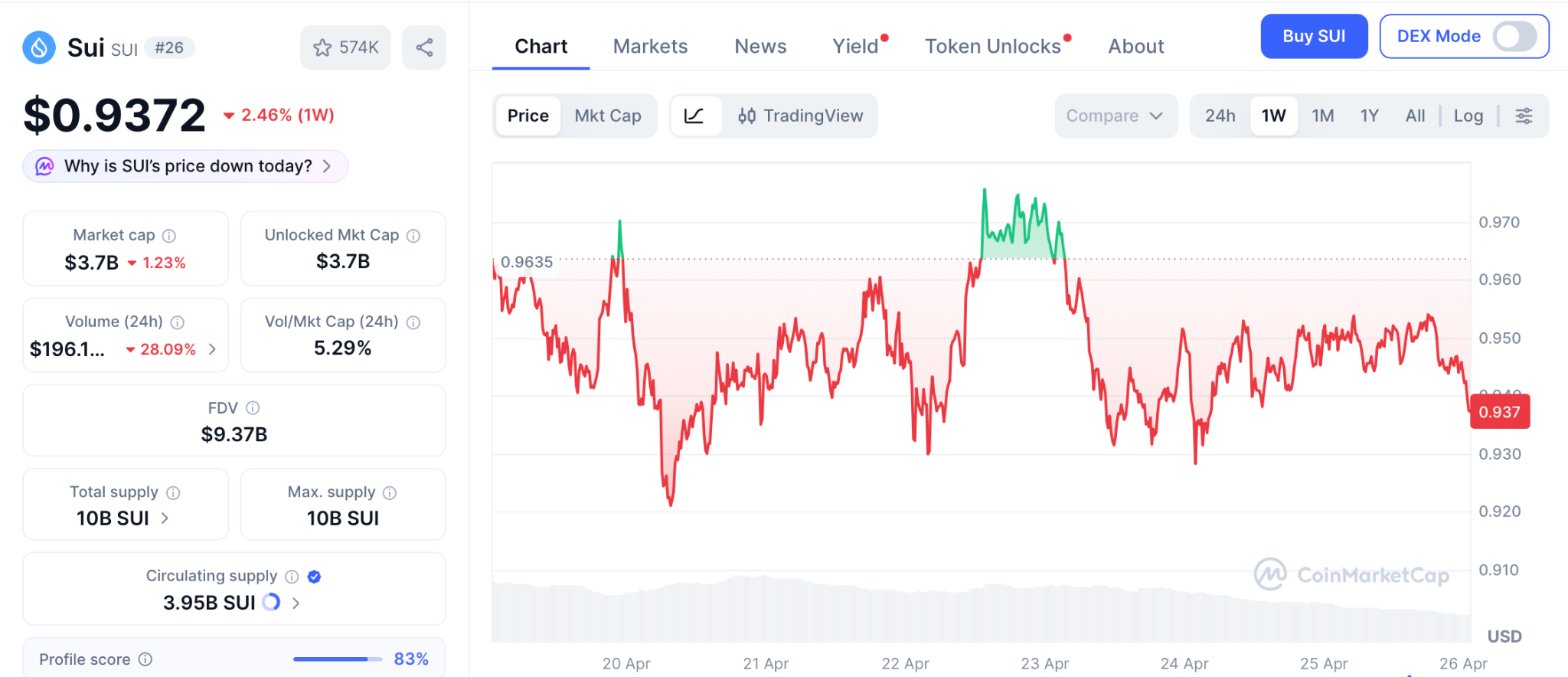
RedotPay integrated SUI and USDC-Sui this week, bringing stablecoin payments to over 7 million users on traditional payment rails.
The move to its $5.35 peak from $0.9372 would deliver a 462% return, but a rally like this needs sustained ecosystem growth and months of favorable conditions. Pepeto at its current presale price projects 100x from one Binance debut, and the holders committing right now are locking in the position one listing event pays off in full.
Conclusion:
Over 120 industry groups just pressed the Senate Banking Committee to pass market structure rules, and the top projects already have live exchange tools handling real volume. The investors who entered Sui (SUI) at $0.36 during the early launch turned modest capital into strong returns.
They had no inside edge and no private access. They placed capital while the broader market stayed on the sideline, and one decision is the only line between wealth changing a life and the regret replacing it. Very few people in crypto ever land the kind of return rewriting their entire financial position, and Pepeto still holds this opening right now.
But the Pepeto Binance debut is approaching fast, and across every cycle the wallets entering at the presale stage collected the largest gains. Taking a position in Pepeto ahead of the event is the highest-conviction early entry available in crypto today, the same category of move responsible for every major fortune this market has ever produced.
Click To Visit Pepeto Website To Enter The Presale

FAQs
What makes Pepeto one of the best cryptos to buy now as market structure legislation advances?
Pepeto operates a working exchange with fee-free swaps, multi-chain bridging, and a SolidProof-audited codebase while the presale holds at $0.0000001866 with the Binance debut ahead. Over $9.45 million committed during heavy market uncertainty confirms strong early conviction.
Is Sui (SUI) a strong position at $0.9372 compared to presale entries like Pepeto?
Sui (SUI) offers 462% upside to its $5.35 all-time high from January 2025, but that gain takes months to develop. Pepeto projects 100x from one Binance debut at the current entry of $0.0000001866.
Disclaimer: This is a Press Release provided by a third party who is responsible for the content. Please conduct your own research before taking any action based on the content.


A White House-linked official has warned that failure to pass clear crypto rules in the United States could help China gain ground in digital assets.
Summary
- Patrick Witt warned that failing to pass clear US crypto rules could benefit China’s digital asset ambitions.
- The CLARITY Act remains stalled as lawmakers debate stablecoin yield rules and market oversight.
- The Senate Banking Committee’s narrow GOP majority leaves the bill dependent on full Republican support.
The comments came as debate over the proposed CLARITY Act continues in Washington. Patrick Witt said the United States risks losing leadership if lawmakers fail to approve a full crypto market framework. He linked the delay to wider concerns about foreign rivals and digital finance.
“What are the odds the anonymous sources cited in this article have deep ties to China?” Witt said. “Because if the US fails to lead on crypto by passing a comprehensive regulatory framework, the prime beneficiary will be the CCP.”
CLARITY Act faces resistance
The CLARITY Act seeks to create a national rulebook for digital assets. Supporters say the bill would bring crypto firms closer to the standards used by banks and other financial companies.
Republican Senator Tim Scott has backed the proposal. The bill would require crypto businesses to follow clearer rules on disclosures, operations, and market conduct.
However, some conservative and crypto-aligned voices have opposed the bill. They argue that it could weaken protections linked to the GENIUS Act and give large companies too much control over the sector.
Stablecoin yield dispute slows progress
The bill remains stalled in the Senate Banking Committee. Senator Thom Tillis has pushed to delay action until May as lawmakers debate language tied to stablecoin yield rules.
Stablecoin yield has become one of the main points of dispute. Banks have raised concerns that yield-bearing stablecoins could compete with deposits, while crypto firms want room to build new financial products.
The committee’s narrow Republican majority adds pressure to the process. Since the GOP holds only a one-vote edge, the bill needs full Republican support to move forward.
Leadership questions add pressure
The debate has also raised questions about policy coordination inside the administration. Reports say there is no dedicated West Wing coordinator handling the crypto legislation push.
That gap could make it harder to settle disputes between lawmakers, banks, and crypto firms. For now, the CLARITY Act remains one of the most closely watched crypto bills in Congress.
Supporters say clear rules could keep crypto activity in the United States. Critics say lawmakers must avoid a framework that favors large firms over market competition.
Crypto World
Lockheed Martin (LMT) Stock Plummets 12% Following Disappointing Q1 Results and Analyst Downgrades

TLDR
- Lockheed Martin shares declined 11.67% following a disappointing first-quarter earnings release that missed analyst projections
- First-quarter earnings per share reached $6.44, falling short of the $6.74 consensus forecast; revenues totaled $18.02B versus $18.38B expectations
- The company reported negative free cash flow of -$291 million during the period
- Several Wall Street firms reduced their price objectives; overall sentiment remains neutral with average targets near $635
- Company executives maintained their full-year 2026 earnings outlook of $29.35–$30.25 per share despite first-quarter weakness
Lockheed Martin experienced a difficult trading week following its first-quarter 2026 financial results. The aerospace and defense contractor saw its shares tumble 11.67% as investors reacted to multiple disappointments in the quarterly report.
Lockheed Martin Corporation, LMT
The defense manufacturer reported earnings of $6.44 per share, falling short of analyst expectations of $6.74 and significantly below the $7.28 delivered during the comparable quarter in 2025. Total revenues reached $18.02 billion, essentially flat compared to the prior year and beneath the $18.38 billion Wall Street had anticipated.
A notable headwind for revenue performance: the first quarter of 2026 contained one fewer business week compared to the same timeframe last year. This calendar quirk reduced the top line by several hundred million dollars.
Cash generation deteriorated significantly, with free cash flow registering at -$291 million. Management attributed the negative figure to margin erosion, fluctuations in working capital requirements, and challenges related to fixed-price contracts.
New orders also disappointed, with the book-to-bill ratio landing at just 0.6x for the quarter. While the company blamed timing factors, the weak bookings metric added to investor concerns surrounding the report.
Wall Street Firms Lower Price Objectives, Neutral Stance Prevails
The earnings disappointment prompted several brokerage firms to reduce their price targets. RBC Capital lowered its objective from $650 to $575 while maintaining a Sector Perform rating, citing “incremental negative estimated costs at completion” and uncertain near-term growth visibility.
BNP Paribas Exane, Morgan Stanley, Deutsche Bank, and Susquehanna similarly reduced their targets. The Street consensus now stands at Hold, with average price objectives hovering around $635 — suggesting potential upside exceeding 25% from current trading levels near $510.
TD Cowen and TipRanks–xAI also kept Hold ratings in place, with targets ranging between $575 and $600. Even with the substantial implied upside from these targets, the prevalence of neutral ratings continued to weigh on shares.
LMT began trading Friday at $513.21. Shares currently trade well beneath the 50-day moving average of $628 but remain above the 200-day moving average of $553.
Fundamental Outlook Remains Unchanged
Beyond the quarterly volatility, Lockheed’s backlog and program portfolio remain robust. The Department of Defense has outlined plans to expand F-35 acquisitions through 2030–31, providing visibility for production schedules.
Peru finalized an agreement to acquire 12 F-16 Block 70 aircraft through a direct commercial transaction. The company also secured positions in U.S. missile defense initiatives, including the “Golden Dome” contracts, and obtained Department of Defense awards to replenish Patriot missile systems.
Executives stood by their full-year 2026 guidance, forecasting earnings per share between $29.35 and $30.25. Analyst consensus for fiscal 2026 currently centers around $29.97 per share.
The company maintains its quarterly dividend of $3.45 per share, translating to an annual yield of approximately 2.7%. The current payout ratio stands at roughly 66.8%.
Vanguard Group reduced its stake by 17,369 shares during the fourth quarter but continues to hold 21.27 million shares, accounting for approximately 9.19% of outstanding shares with a market value near $10.29 billion.
Institutional ownership comprises 74.19% of total shares outstanding. LMT’s 52-week trading range extends from $410.11 to $692.00, with current prices positioned near the lower portion of this band.
RBC Capital’s updated $575 price target and Sector Perform rating represent the most recent analyst commentary on the stock.

22 Years Later, This 2000s Cult Classic Is Taking Over Streaming

Failed OF Model In Debt For Taylor Swift | Financial Audit

How I learned stand-up in 30 days ahead of Consett Comedy Festival

Manchester United reach agreement with Casemiro over contract clause amid transfer speculation

US brings back mandatory military draft registration

Steven Gerrard disagrees with Gary Neville over ‘shock’ Chelsea and Arsenal claim | Football


-

 Fashion2 days ago
Weekend Open Thread – Corporette.com
-

 Politics6 days ago
Gary Stevenson delivers timely reminder to register to vote as deadline TODAY
-
 Crypto World23 hours ago
Hyperliquid $HYPE Rally Builds Momentum as AI Sector Enters Prove-It Phase
-
Entertainment7 days ago
NBA Analyst Charles Barkley Chimes in on Ice Spice McDonald’s Fiasco
-
Crypto World6 days ago
Bank of Hawai’i (BOH) Q1 2026: Net Income Drops to $57.4M as Net Interest Margin Expands
-

 Politics4 days ago
Making troops accountable for war crimes threatens US alliance, ex-SAS colonel warns
-

 Politics4 days ago
Disabled people challenge government SEND proposals over segregation concerns
-

 Business4 days ago
Rolls-Royce Voted UK’s Most Iconic Trade Mark as IPO Register Hits 150
-

 Politics4 days ago
Zack Polanski responds to home secretary’s taser threat
-

 Politics4 days ago
Starmer handler McSweeney to be dragged from shadows by Foreign Affairs Committee
-
 Sports6 hours ago
IPL 2026: Ruturaj Gaikwad registers slowest fifty of the season, enters all-time unwanted list | Cricket News
-

 Business3 days ago
Patterson-UTI Energy, Inc. (PTEN) Q1 2026 Earnings Call Transcript
-
Politics4 days ago
Wings Over Scotland | How To Get Away With Crimes
-
 Crypto World5 days ago
Five Value Stocks with Recovery Potential in 2026: PayPal (PYPL), Nike (NKE), and More
-

 Crypto World5 days ago
New York sues Coinbase, Gemini over prediction market offerings
-

 Politics4 days ago
‘Iran is still a nuclear threat’
-
 Sports4 days ago
Tim Bradley names the current best in the world: “Better than Inoue and Usyk”
-
 Business5 days ago
HCL Tech share price tank over 9% after weak Q4. JPMorgan, HSBC & 3 others cut target price
-

 NewsBeat10 hours ago
LK Bennett closes all stores after entering administration
-

 Crypto World5 days ago
Crypto’s great hope in Senate’s Clarity Act still has a path to survive tight calendar
You must be logged in to post a comment Login