

Crypto World
BlackRock joins DTCC’s $114T tokenization push for stocks and Treasurys



BlackRock has joined a Depository Trust & Clearing Corporation pilot that has begun tokenizing stocks and U.S. Treasuries within a market infrastructure that safeguards about $114 trillion in assets.
Summary
- DTCC has launched a tokenization pilot with BlackRock, JPMorgan, Goldman Sachs, and nearly 40 financial firms.
- Microsoft, Circle, QQQ, SPY, and BlackRock Treasury ETF are among the first assets being tokenized.
- The pilot uses Hyperledger Besu and Canton, while Stellar-based custody tokenization is planned for 2027.
According to a Wall Street Journal report, BlackRock, JPMorgan, Goldman Sachs, Vanguard, the New York Stock Exchange, and nearly 40 financial firms are participating in DTCC’s latest tokenization initiative.
The pilot focuses on securities already held at the clearinghouse, allowing participating firms to test blockchain-based versions of traditional financial assets while keeping them within DTCC’s existing custody framework.
Live tokenization begins with major public market assets
The first phase of the pilot has started with DTCC tokenizing shares of Microsoft and Circle alongside the Invesco QQQ Trust, the State Street SPDR S&P 500 ETF, and BlackRock’s iShares 0–3 Month Treasury Bond ETF. DTCC has stated that these tokenized assets will be stored at the clearinghouse using blockchain infrastructure.
Participating firms will use the assets in live blockchain transactions covering collateral transfers, repo agreements, and equity trades during the trial. The program is expected to move into its formal operational phase in October after the current testing period.
Separately, DTCC confirmed through a live update that JPMorgan completed the first conversion in the pilot by turning shares of the Invesco QQQ Trust ETF into a tokenized real-world asset.
According to DTCC, the conversion demonstrates that tokenized versions of traditional securities can function inside existing market infrastructure while preserving the same liquidity, investor protections, transparency, and ownership rights as the underlying assets.
Private blockchain leads current rollout while public network plans continue
Rather than using public layer-1 blockchains such as Ethereum or Solana, DTCC has chosen to settle transactions on either its private Hyperledger Besu blockchain or the Canton Network, depending on the infrastructure selected by participating institutions. The approach keeps settlement within permissioned blockchain environments designed for regulated financial markets.
Meanwhile, the project arrives as tokenization continues to gain traction across major financial institutions. The United Kingdom’s Treasury is also advancing a £33 billion tokenization initiative through its Wholesale Digital Markets Taskforce, with BlackRock, Morgan Stanley, and Goldman Sachs among the firms participating in that effort.
Additional plans extend beyond the current pilot. As previously reported by crypto.news, DTCC and the Stellar Development Foundation are preparing DTC custody asset tokenization services on the Stellar public blockchain.
The partners have targeted the first half of 2027 for the launch of live tokenized assets, introducing Stellar as one of the public blockchain networks in DTCC’s developing multi-chain tokenization strategy.
For now, however, the active pilot remains centered on permissioned blockchain infrastructure, giving participating firms an opportunity to test tokenized securities within DTCC’s existing clearing and custody system before the program expands further.



A faulty oracle that caused a $9 million exploit over the weekend was patched on 11 chains in the days leading up to the attack, with the exploited Hedera deployment left vulnerable.
The affected protocol, Bonzo Lend, explained that the oracle accepted an extreme mispricing of the attacker’s collateral asset, which allowed them to borrow funds far in excess of the collateral’s true value.
A further $1 million was extracted by a white-hat hacker.
The vulnerable oracle was created by blockchain infrastructure developer Supra Network, which boasts oracles “live on 67 mainnets.”
Shortly after the exploit, Plasma’s Usmann Khan noted that Supra had upgraded many of its oracles in the days leading up to the exploit, but not the contract on Hedera, which Bonzo Lend used.
Read more: These crypto chains raised $500M but generate just $360 in daily fees
In an incident report published approximately 12 hours after the attack, Supra called the bug a “cryptographic edge case” and doesn’t mention having fixed deployments on other chains.
It simply states, “We have also reviewed every other Supra oracle deployment that shares this verifier pattern to confirm the same guards are in place.”
Supra’s co-founder and CEO Josh Tobkin blamed “AI-assisted hacking” for discovering “what human eyes had missed” for two years.
Patching the bug
However, following Khan’s post, HSuite founder Tomachi Anura analysed Supra’s on-chain activity.
Read more: Cap ‘stabledrop’ U-turn sees cUSD drop $23M, founder denies self dealing claims
Anura’s post details the firm’s “cross-chain fix rollout”, with proxy upgrades on 11 chains between June 29 (Base) and July 3 (Polygon), with a further two fixes (on Hedera and Fuse taking place post-exploit).
Anura insists that, while some upgrade addresses vary, “every one whose source is verified resolves to the same 17,354-char guarded SupraSValueFeedVerifier.”
It remains unclear why the fixes stopped on July 3, leaving the Hedera deployment vulnerable.
Protos has reached out to Supra for clarification, and will update this article should we hear back.
Read more: Oracle error adds to turmoil at DeFi giant Aave
Oracles’ costly misfires
Third-party oracles are used by many DeFi projects’ smart contracts to price assets, or for other external data feeds.
Oracle manipulation attacks are commonly used, like in this case, to inflate the value of a collateral asset and drain available borrow liquidity on DeFi lending platforms.
Oracle exploits have led to a further $3.5 million in losses in recent months. In one incident, the critical change to Moonwell’s “vibe-coded” oracle was co-authored by Claude.
While not strictly an exploit, a timestamp mismatch error in Chaos Labs’ Correlated Asset Price Oracle led to a staggering $27 million worth of erroneous wstETH liquidations on Aave’s Ethereum markets in March.
Got a tip? Send us an email securely via Protos Leaks. For more informed news and investigations, follow us on X, Bluesky, and Google News, or subscribe to our YouTube channel.
Bitcoin has slipped below $65,000 after Iran rejected renewed prospects for peace talks with the United States, adding fresh pressure to risk assets as military operations continue.
Summary
- Iran rejected U.S. peace talks despite Trump’s claim that Tehran wants a deal.
- Bitcoin fell below $65,000 as renewed U.S.-Iran tensions weighed on markets.
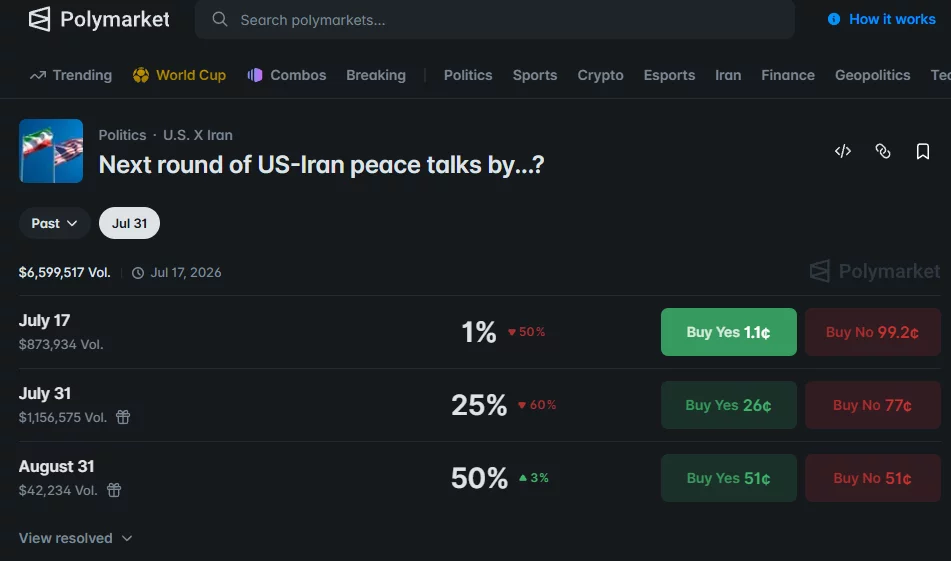
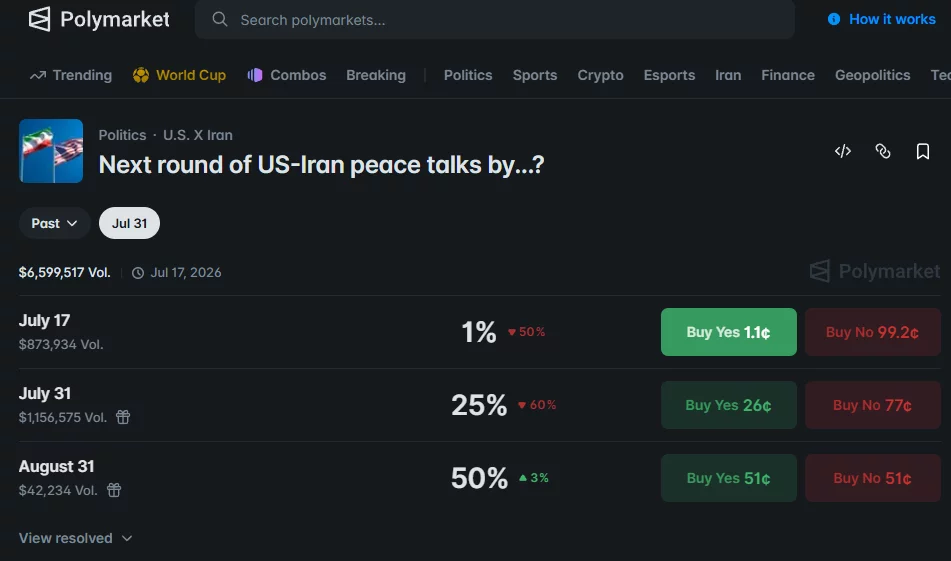
- Polymarket traders see only a 20% chance of peace talks resuming this month.
Iran’s Foreign Ministry said there are currently no plans for negotiations with the United States, with the country’s immediate priority remaining its defense efforts. The statement came after U.S. President Donald Trump claimed during a FOX interview that Iran had reached out earlier and wanted to make a deal, suggesting diplomatic contact could resume.
The conflicting messages have arrived as the U.S.-Iran conflict intensifies once again. Over recent days, both countries have continued exchanging strikes, while Trump has reinstated the Iranian blockade in the Strait of Hormuz and warned that Washington could expand military operations if Tehran does not return to negotiations.
According to data from crypto.news, Bitcoin (BTC) briefly gave up earlier gains and fell below the $65,000 level, changing hands at around $64,800, down less than 1% on the day. The decline interrupted a rally that had followed softer-than-expected U.S. Producer Price Index (PPI) data earlier in the session.
Fresh military operations keep risk appetite under pressure
While inflation data initially supported cryptocurrencies, renewed military developments shifted investors’ attention back to geopolitical risks.
Earlier in the day, the U.S. Central Command (CENTCOM) announced on X that it had completed a 90-minute wave of strikes targeting coastal defense systems and cruise missile storage and launch sites on Greater Tunb Island. According to CENTCOM, the operation was intended to reduce Iran’s ability to threaten commercial shipping through the Strait of Hormuz.
Hours later, CENTCOM announced another escalation. In a separate post on X, the command said U.S. forces launched a second wave of strikes at 3 p.m. ET, targeting Iranian military capabilities used to threaten vessels transiting the Strait of Hormuz. CENTCOM described the waterway as vital to global commerce and said the operation was carried out under the direction of the U.S. Commander in Chief.
CENTCOM stated that the strikes further reduced Iran’s capability to threaten commercial shipping passing through the Strait of Hormuz, one of the world’s most important energy trade routes. The latest operation follows several days of escalating military exchanges between Washington and Tehran, adding another layer of uncertainty for global financial markets.
crypto.news had earlier reported that cryptocurrencies strengthened after U.S. PPI inflation figures came in below economists’ expectations, reinforcing hopes that inflation pressures may continue easing. However, those gains faded as developments surrounding the U.S.-Iran conflict became the dominant market catalyst.
Prediction markets point to limited optimism for diplomacy
Beyond price action, prediction markets continue to indicate low expectations for a diplomatic breakthrough this month.
Data from crypto-based prediction platform Polymarket shows traders currently assign only a 25% probability that another round of U.S.-Iran peace talks will take place before the end of July. Although prediction markets do not guarantee future outcomes, they offer a real-time view of participant expectations based on active trading.
Attention is also turning toward Iran’s senior leadership for additional guidance on the country’s position. Mohammad Qalibaf, identified as Iran’s top negotiator in the referenced reports, is expected to issue a statement later today addressing the ongoing conflict and recent military developments.
For now, financial markets remain caught between improving U.S. inflation data and rising geopolitical uncertainty. While softer inflation initially supported demand for Bitcoin and other digital assets, Iran’s rejection of negotiations, continued U.S. military strikes, and uncertainty surrounding future diplomatic efforts have kept traders focused on geopolitical headlines as the next major driver of market sentiment.


UK-based financial company Revolut has received approval from the Virtual Assets Regulatory Authority (VARA) of Dubai to offer crypto-related services in the United Arab Emirates (UAE).
In a Wednesday notice, Revolut said that, following a green light from the Central Bank of the UAE for payment activities, VARA gave in-principle approval for the company to offer broker-dealer, management and investment, and exchange services in the UAE. The company said its services via the app and the Revolut X exchange would allow UAE-based users to buy, sell and hold digital assets.
“This approval lays the foundation for Revolut to introduce its trusted virtual asset services within a regulated environment,” said Revolut’s head of digital assets in the UAE free zone establishment, Joseph Khair.
The UAE regulatory approval followed Revolut receiving a UK banking license in March. The company still has similar applications pending for a US banking charter and licensing in Peru as part of its expansion plans.
Related: ECB picks 36 payment providers to test digital euro ahead of 2027 pilot
At the time of publication, VARA listed 51 companies licensed to offer crypto-related services in the UAE, with 22 entities granted in-principle approval. In May, the regulator preliminarily approved cryptocurrency exchange Kraken’s parent company, Payward. The company is expected to fully launch in the region soon.
Revolut to delist USDT next month amid regulatory concerns
Last week, a Revolut spokesperson told Cointelegraph that the company planned to delist the Tether USDt (USDT) stablecoin starting in August for the European Economic Area and Switzerland. The move followed a review of Revolut’s crypto services and risk considerations under the European Union’s Markets in Crypto-Assets (MiCA) framework, which required companies offering digital asset services to be licensed by July 1.
Magazine: Is Robinhood Chain’s success bullish or bearish for ETH the asset?
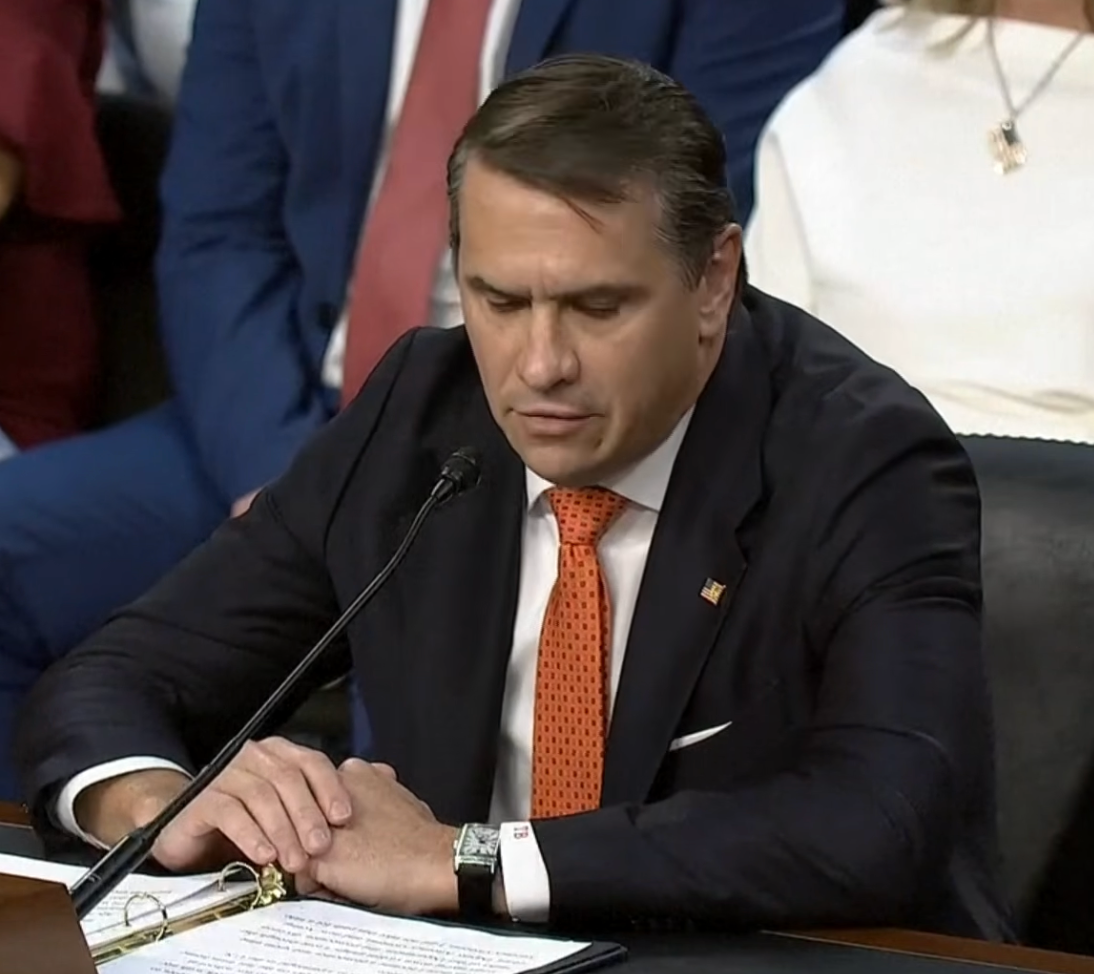
Acting US Attorney General Todd Blanche faced backlash Wednesday over the Justice Department’s (DoJ) enforcement of crypto-related crimes and other actions as President Donald Trump’s former personal attorney appeared before a Senate hearing considering his nomination to lead the agency.
The ranking Democrat, Senator Dick Durbin, used part of his opening statement at the Senate Judiciary Committee hearing to criticize Trump’s AG pick for what he described as “dismantling DoJ’s enforcement team and shutting down ongoing criminal investigations of the crypto industry.”
Blanche was reportedly behind the disbanding of the Justice Department’s crypto enforcement unit in April 2025 as deputy attorney general.
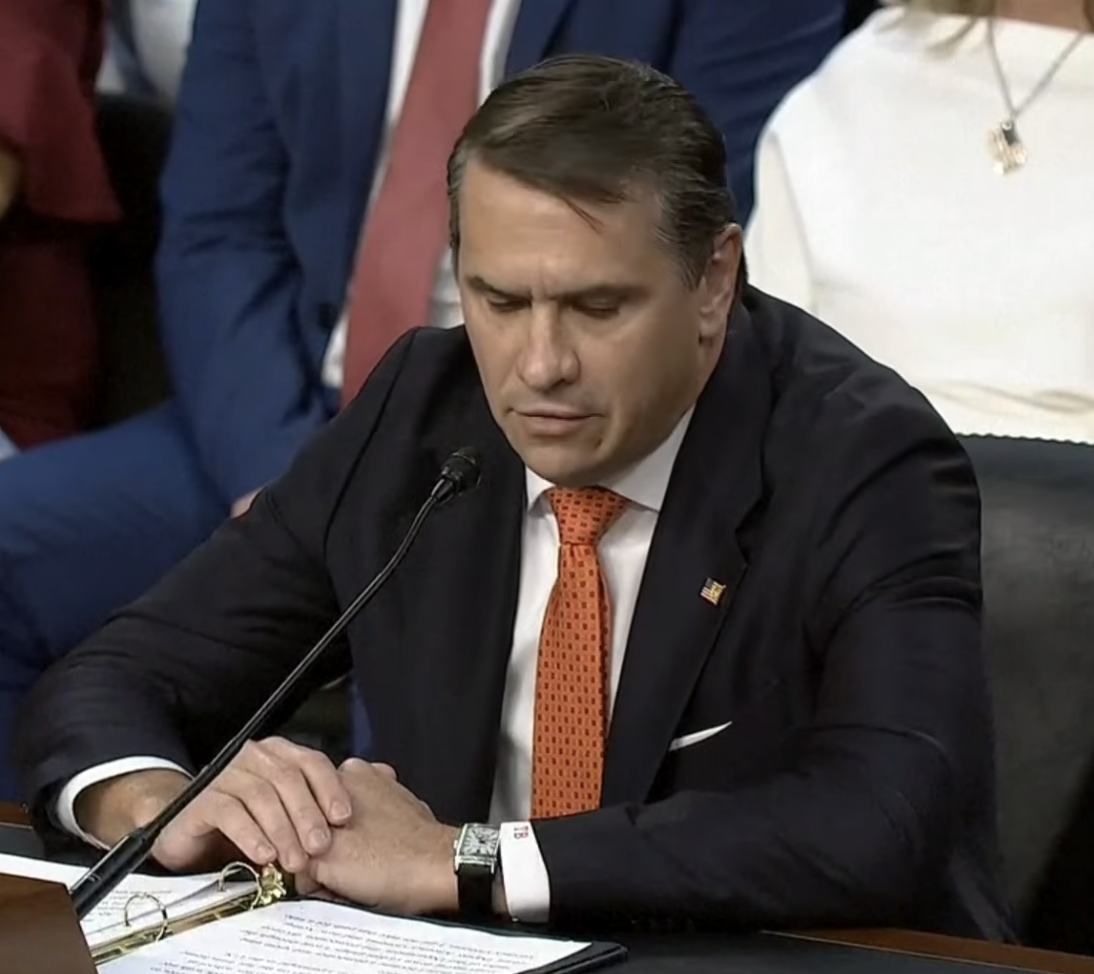
Todd Blanche speaking at his confirmation hearing before the Senate Judiciary Committee on Wednesday. Source: Associated Press
The Illinois lawmaker said that Blanche’s order dismantling the DoJ’s crypto unit enable Trump to earn $1.4 billion from his ties to the industry, including his family’s business World Liberty Financial.
He also accused former Binance CEO Changpeng “CZ” Zhao of “broker[ing] a deal to channel $2 billion” into World Liberty, which led to a presidential pardon. The former CEO agreed in 2023 to plead guilty to one felony charge related to the Anti-Money Laundering (AML) regime at the exchange.
“Every smarmy, suspect deal in this administration has cryptocurrency behind the curtain,” said Durbin.
Senate Republicans need a simple majority of lawmakers present to confirm Blanche as AG should his nomination advance in the judiciary panel. With Senator Mitch McConnell still hospitalized after what his team described as a fall that led to pneumonia, the party has a slim 52-47 margin to confirm Blanche, who faces pushback over the DoJ’s actions on immigration and its crypto policies, claims that he would facilitate Trump’s attacks on perceived enemies and the handling of the Jeffrey Epstein files.
Related: Three US senators oppose CLARITY Act on ethics grounds with vote expected soon
Blanche also faced crypto-related questions from Republican Senator Thom Tillis who said he was “concerned that the Binance CEO got pardoned.” Blanche said that he would review the pardon process if confirmed.
Blanche signals DoJ shift on pursuing coders
The Trump AG pick was behind a 2025 memo “ending regulation by prosecution” in the crypto industry and previously held at least $159,000 worth of digital asset-related investments before divesting them to his children and grandchildren.
He has been serving as acting US Attorney General since Pamela Bondi’s firing in April, telling crypto holders shortly after his appointment that officials would not pursue cases into blockchain developers who were not responsible for illicit activity on platforms.
”[I]f you are developing software, if you are a coder, if you are part of that process and you are not the third-party user, and you are not helping and knowing the third party is using what you developed to commit crimes, you are not going to be investigated and not going to be charged,” Blanche said at the Bitcoin 2026 conference.
The department still has ongoing cases against developers behind platforms allegedly used for illegal activities. Federal prosecutors are expected to retry Tornado Cash co-founder Roman Storm later this year after a jury failed to reach a verdict on two charges in 2025.
Magazine: Will the crypto lobby’s $189M campaign get CLARITY over the line?
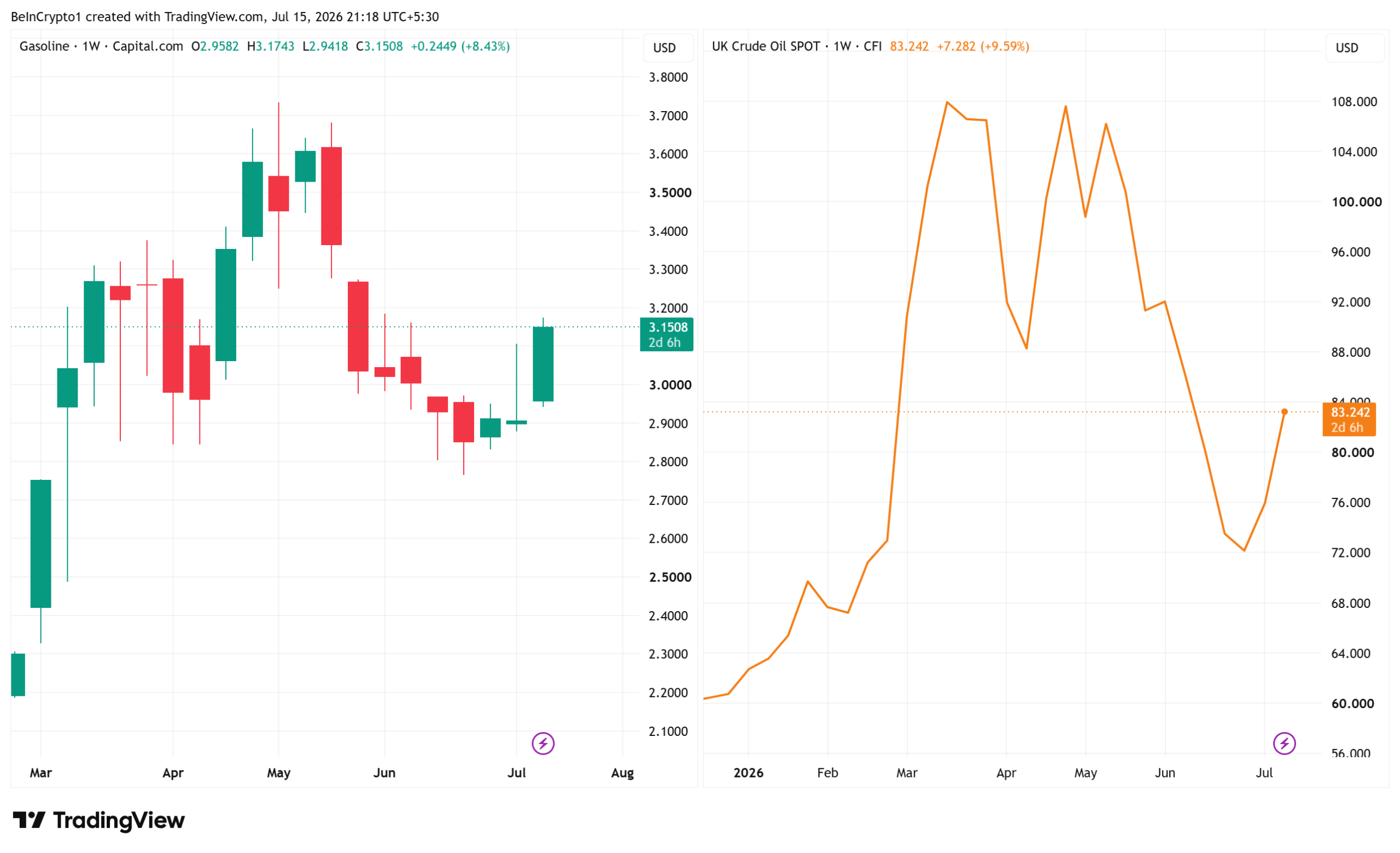
June’s inflation slowdown came largely from one source: cheaper fuel. Gasoline prices fell 12% during the month, helping pull both producer and consumer prices lower. But that relief may already be fading. Brent crude has risen 18% in one week since the Strait of Hormuz blockade returned.
The producer price index fell 0.3% in June, while consumer prices dropped 0.4%. Both figures benefited heavily from lower energy costs, which renewed fighting between the US and Iran is now reversing.
How Gasoline Drove June’s Price Decline
Gasoline’s 12% drop accounted for almost two-thirds of the 1.4% fall in prices for final demand goods. Without cheaper fuel, producer prices would have increased slightly.
The decline spread further through the supply chain. Prices for processed goods used by businesses fell 1.2%, according to the Bureau of Labor Statistics. Unprocessed materials dropped 4.1%.
Services remained more resistant to price declines. Trade margins rose 0.4%, while core producer prices increased 0.2% from the previous month.
Much of the energy relief followed the Islamabad Memorandum, a June 17 ceasefire that paused the US-Iran war. Brent crude had surged 63% during the first month of the conflict and reached $118 in late March.
By July 1, it had fallen back to $70, wiping out its wartime gains. The latest escalation is now pushing prices higher again.

Follow us on X to get the latest news as it happens
The Hormuz Blockade Rewrites the Energy Math
That foundation cracked on July 8, when the truce collapsed after Iran allegedly struck commercial ships. President Donald Trump then announced a reinstated naval blockade on Monday.
US Central Command said the blockade took effect at 4 p.m. ET on Tuesday. Brent rose 9.6% on Monday alone and traded above $85 by Wednesday.
The strait carries roughly a fifth of the world’s oil. MarineTraffic recorded 57 transits from Friday through Sunday, down more than 50% from the prior week. Before the war began in February, Hormuz handled roughly 130 transits a day.
Washington disputes the shortage story. The Department of Energy said 8.5 million barrels crossed the strait on Sunday with military assistance, matching typical flows.
However, the usual shock absorber is missing this time. The Strategic Petroleum Reserve sits at its lowest level since 1983. Sparta Commodities analyst June Goh warns the remaining buffer is nearly empty.
“The mini-glut of oil has now evaporated, with a fresh eye of a potential of disruptions from the Bab el-Mandeb Strait if Houthis are joining the attacks,” she noted.
Governments have few cushions left. A G7 discussion earlier this year weighed releasing up to 400 million barrels during a previous spike. Meanwhile, TD Securities strategist Bart Melek sees $100 oil as possible if physical shortage risks become real.
What It Means for the Fed
Fed Chair Kevin Warsh, in office since May, told Congress this week that he will not tolerate persistently elevated inflation. Markets currently price an 87.7% chance of a July 29 hold.
A renewed oil shock could revive the Fed hike bets that faded after this week’s soft data. The base effect cuts the same way. Gasoline remains nearly 43% higher than a year ago, so June’s relief came off an elevated base.
“There’s no near-term pressure on the Fed, but oil is in the driver’s seat over the longer term. Energy saved the day in June, but that might become ancient history if the Strait of Hormuz doesn’t open soon,” said David Russell, global head of market strategy at TradeStation, via AP
The July prints will settle the question. If Hormuz stays closed, the disinflation that crushed hike odds may prove a truce artifact, not a trend.
The post US Inflation Fell on Cheap Gas, But That Relief is Already Fading appeared first on BeInCrypto.
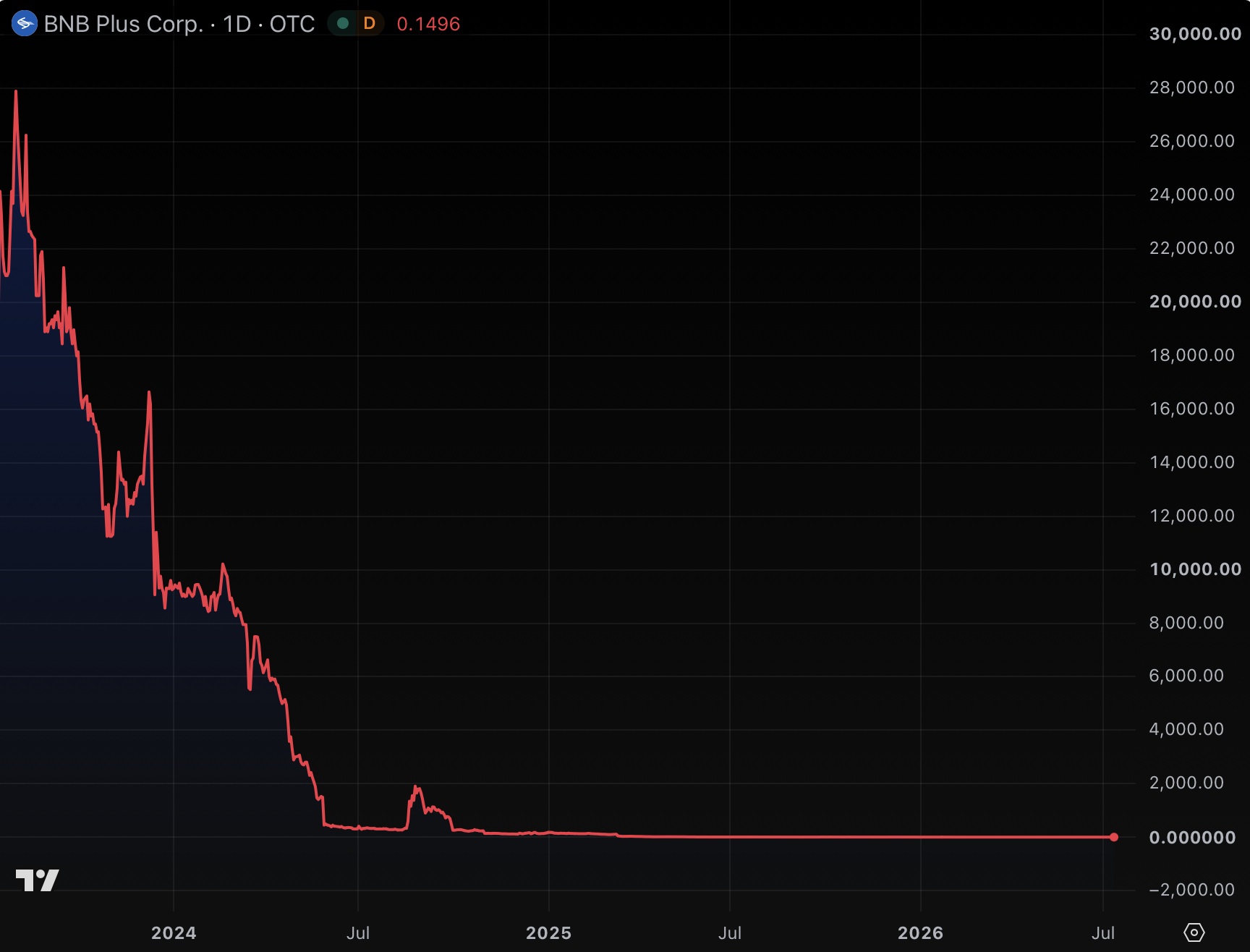
Nasdaq has suspended trading in BNB Plus, a digital asset treasury (DAT) company that burned shareholders on the dream of making money on Binance’s blockchain.
The stock closed its final session at $0.16, down 99.99% on a split-adjusted basis in three years.
Its reinvention from a biotech stock to a BNB-holding DAT lasted less than 10 months and cost common shareholders nearly everything.
Shares are now downlisted onto OTC Markets Group’s venture tier, under the same ticker symbol. It plans to appeal the delisting via Nasdaq’s Listing and Hearing Review Council, but the suspension is immediate while that appeal is underway.
Not embarrassed, BNB Plus’s delisting announcement stubbornly describes its continued intention to pursue “sophisticated DeFi yield generation with Binance-native opportunities, unlocking access to high-performance digital assets.”
The opportunities that its operations are excluded from now includes the Nasdaq stock exchange.
Read more: After crashing 99.9%, this BTC treasury stock crashed 99.9% — again
‘Innovation is in our DNA’
BNB Plus was formerly known as Applied DNA Sciences. It spent years selling DNA tags that authenticated textiles and other products in supply chains.
James Hayward, its chief executive of two decades, retired in June 2025 with a $450,000 separation payment. Days later, the company cut 27% of its workforce.
By late September, the company announced $27 million in financing to amass a BNB treasury. Investors paid in cash, stablecoins, and trust units in exchange for new shares and warrants.
SkyBridge Capital founder Anthony Scaramucci signed on as an advisor. Multi-year service deals promised asset manager Cypress LLC fees on BNB Plus’s assets and a cut of its assets, while a second deal handed Cypress Management LLC stock warrants over nearly a tenth of the company.
New CEO Clay Shorrock said at the time, “We’re proud to integrate our digital asset treasury strategy with our best-in-class PCR-based nucleic acid production solutions to accelerate growth and deliver long-term shareholder value.”
Needless to say, those two businesses failed to complement one another. Surprising no one, BNB has almost nothing to do with DNA.
The BNB treasury strategy was obviously an attempt to capitalize on a momentary fad for DATs that peaked in early summer 2025.
For a brief moment, investors were bullish about the bizarre pivot. Shares surged more than 50% the day before the formal announcement in late September 2025, then jumped another 70% once the press release landed.
Late to the party, its stock price soon settled back near where it started and then continued its downward slide.
Five reverse splits couldn’t prevent a Nasdaq delisting
After its BNB-focused financing placement closed in October, the company assembled about 15,500 BNB in tokens and trust units.
It swapped its ticker from APDN to BNBX in October, putting BNB front and center. It renamed to BNB Plus Corp by November. By December, it deployed an additional $3 million into BNB.
The price drifted lower. By March, BNBX had spent weeks below $1, and Nasdaq issued a deficiency notice, per the company’s own disclosure.
The fall below $1 was in spite of years of efforts by the company to manufacture a share price above $1. In fact, Applied DNA has reverse split five times: 1:60 in 2014, 1:40 in 2019, 1:20 in 2024, 1:50 in March 2025, and 1:15 in June 2025.
Even after all those adjustments, it last traded below $0.15 anyway.
BNB Plus’s mNAV: 0.09x
DAT companies grade themselves on a so-called multiple-to-Net Asset Value or “mNAV,” the ratio of their market capitalization to the value of their crypto holdings.
At an mNAV above 1x, investors are paying a premium for the company relative to its treasury. Below 1x, they are bearish on the company’s ability to grow.
BNB Plus’s own dashboard shows roughly 18,700 BNB and $3.9 million in cash against a market cap near $814,000, grading itself an embarrassing mNAV of 0.09x.
In April 2026, its board launched a strategic review contemplating another pivot to AI. In May, the company secured commitments for $4.1 million of convertible preferred financing to keep the lights on while it decides.
The company’s X account has been silent since January 5. Its bio still promises that “$BNBX is built to outperform simple BNB buy-and-hold strategies, delivering investors more BNB tokens over time.”
Got a tip? Send us an email securely via Protos Leaks. For more informed news and investigations, follow us on X, Bluesky, and Google News, or subscribe to our YouTube channel.

Ostium, a decentralized perpetual futures exchange, has been hacked on the Arbitrum network via a suspected private key compromise of its oracle signer.
A number of crypto security firms flagged suspicious outflows, with estimates loss estimates ranging from $18 to over $23 million.
Ostium’s official X account confirmed an “issue” with its OLP vault shortly thereafter.
Read more: Supra patched oracle on 11 other chains before $9M Hedera exploit
Ostium allows for trading perpetual futures of stocks, commodities, and forex, and held approximately $63 million of assets, pre-hack, according to DeFiLlama data.
Its OLP vault acts as the protocol’s settlement layer, into which users deposit USDC to open trades on the platform.
Decurity, highlighting an example transaction, explained that “the attacker fed self-signed favorable prices to open and immediately close trades at a profit, draining ~11.86M USDC from the OstiumVault.”

Read more: Cap ‘stabledrop’ U-turn sees cUSD drop $23M, founder denies self dealing claims
DeFi dangers
The loss comes just four days after $9 million was lost from Bonzo Finance on the Hedera network, also due to an exposed price oracle.
Supra, the firm behind the vulnerable oracle had previously patched deployments on 11 other chains in the days leading up to the exploit.
Last week, Summer Finance was hacked, also via a price manipulation attack, losing $6 million. It’s announced today that it will not be able to recover from the incident and will be winding down.
Read more: DeFi platform Summer Finance loses $6M in vault exploit
In the first half of 2026, the DeFi sector has seen over $900 million lost in 87 incidents, with over 80% of the losses caused by compromised private keys or bridge hacks.
Of these, two incidents make up the majority, Drift Protocol and LayerZero/KelpDAO. Following the latter, the contagion threat led Arbitrum’s Security Council to step in and freeze over $70 million of stolen funds.
It remains to be seen whether Ostium’s loss warrants a similar reaction.
Got a tip? Send us an email securely via Protos Leaks. For more informed news and investigations, follow us on X, Bluesky, and Google News, or subscribe to our YouTube channel.
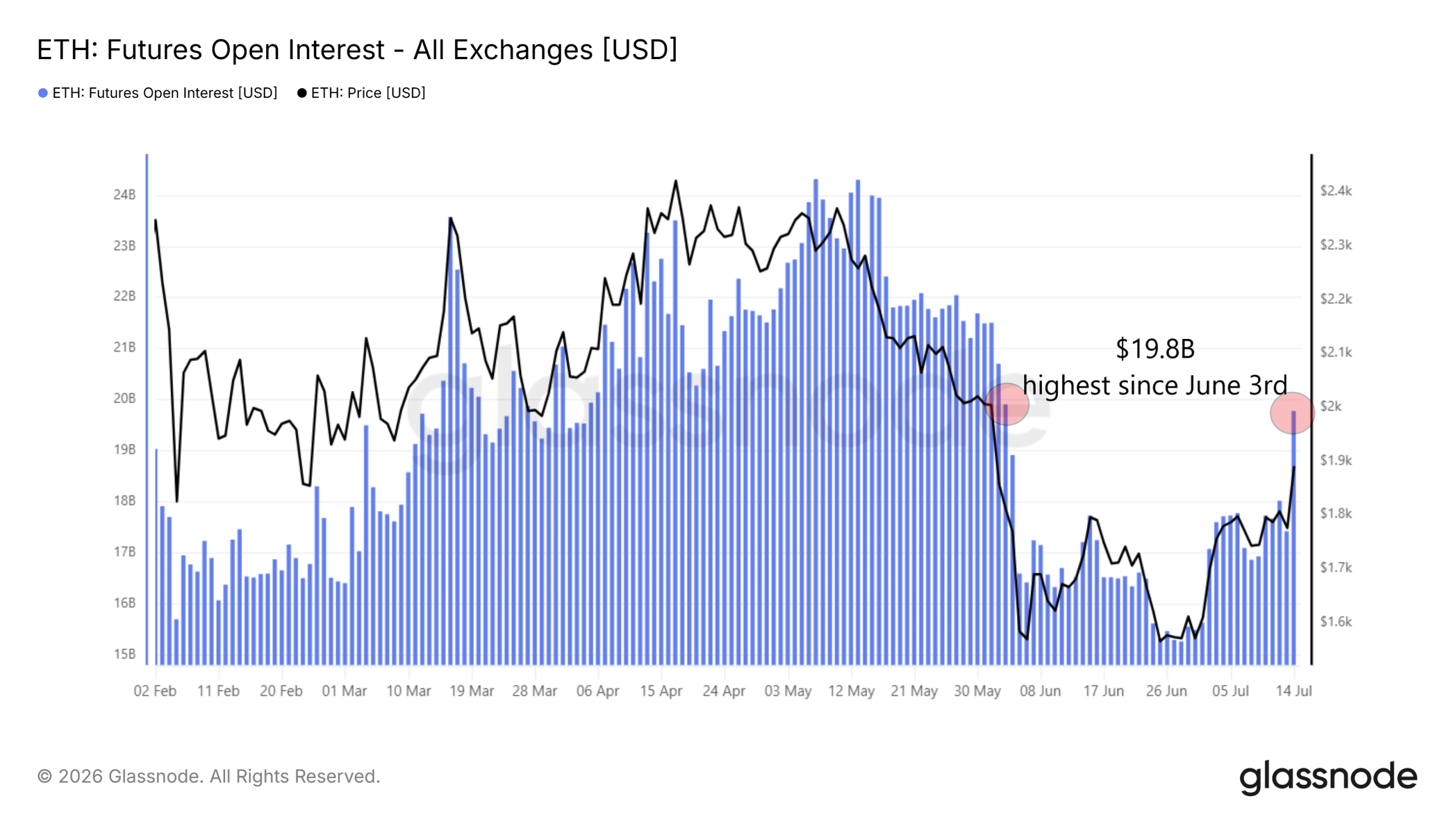
The Ethereum (ETH) price broke out of a descending trendline that had capped it since the all-time high, while futures open interest climbed to $19.8 billion. ETH trades near $1,928, up 5.2% in the last 24 hours.
Derivatives positioning, liquidation data, and long-term chart structure now point in the same bullish direction. However, one missing ingredient still keeps the breakout unconfirmed.
Futures Traders Return as Open Interest Nears $20 Billion
Glassnode data shows Ethereum futures open interest across all exchanges spiked to $19.8 billion on July 14. That is the highest reading since June 3, when a market-wide deleveraging event reset positioning.
Open interest measures the total value of outstanding futures contracts. Rising open interest alongside a rising price suggests new capital is entering the market rather than shorts simply covering.

The metric had collapsed to approximately $15.5 billion in late June. Its sharp recovery indicates traders are returning to ETH derivatives with conviction. Elevated positive funding on Ethereum supports the same reading.
Whale trader Machi Big Brother reportedly opened a $24.3 million ETH long at 25x leverage, with liquidation set at $1,833.
A drop back below the June range would flip this signal and suggest the new positioning was short-lived.
Long Liquidations at a Yearly Low of 4% Point to a Short Squeeze
The composition of recent liquidations strengthens the bullish case. Ethereum futures long liquidations dominance fell to 4%, its lowest level in a year, according to Glassnode.
In plain terms, only 4% of liquidated positions were longs. The remaining 96% were short traders forced out as the price pushed higher.

Still, squeeze-driven rallies carry a caveat. Forced short covering can exaggerate upside moves, as the June 3 liquidations cascaded to exaggerate the downside. Spot demand must follow for the move to hold.
A return of dominance above 50% would indicate that longs are absorbing damage again and would weaken the momentum signal.
Ethereum Price Holds the Trendline From the 2022 Bottom
The weekly chart shows why the current level matters so much. An ascending trendline drawn from the June 2022 bottom, respected throughout the previous bull market, held near $1,600 once again.
The bounce also occurred inside a long-term green demand zone that has served as support four times since early 2023. Moreover, the area coincides with the 0.786 Fibonacci retracement of the entire cycle at $1,754.

This triple confluence of trendline, horizontal support, and Fibonacci level makes the zone a structural line in the sand. The next major resistance sits far above, at the 0.618 Fibonacci retracement of $2,438.
ETH Price Prediction as the $2,000 Test Looms
On the daily chart, Monday’s 6.5% green candle broke above a descending trendline in place since the all-time high. That line had rejected the ETH price five times before this breakout.

The daily Relative Strength Index (RSI) confirms the shift in momentum. It broke out of its own descending trendline, drawn from July 2025, and now sits just below 65.

One warning sign remains. Volume has been declining during the recovery, so the breakout lacks confirmation from participation. Analysts watching the ETH/BTC ratio see early signs of a broader Ethereum comeback that could fill the missing demand.
Immediate resistance lies between $1,900 and $2,000. A confirmed daily close above that zone on rising volume could open the way toward $2,438, nearly 30% above the current price.
On the downside, $1,754 is the critical support. Losing it would expose the trendline near $1,600, and a weekly close below that level would invalidate the bullish structure entirely.
Either volume arrives to validate the breakout, or ETH returns to the zone that has saved it four times already.
The post Ethereum Breaks Key Resistance Toward $2,000: How Far Will ETH Rally? appeared first on BeInCrypto.

Solana has developed into a high-throughput network recognized for rapid transaction processing and minimal fees. Here, Claude AI predicts an explosive Solana price rally that could drive notable price increases by the end of 2026.
Recent on-chain data shows Solana maintaining high levels of activity, with weekly transaction volumes reaching record figures and strong participation in decentralized exchanges. Memecoin trading has contributed significantly to this activity, drawing both retail users and increased liquidity into the network.
Analysts have published various projections for Solana in 2026, including scenarios where the price could reach $500 under favorable conditions such as greater institutional adoption and continued technical improvements. These outlooks are based on Solana’s existing infrastructure advantages and its role in supporting fast and low-cost applications.
Don’t Miss Out on Our $1,000 USDT Airdrop on ByBit
Solana’s Ecosystem and What Claude AI Predicts
Solana processes thousands of transactions per second at very low cost. This technical profile has supported strong activity in memecoins. One recent example is The Black Bull (ANSEM), which recorded a nearly 20,000% increase in seven days during late June 2026 and later reached a market capitalization above $95 million.
Claude AI predicts that the combination of network performance and ongoing memecoin activity could contribute to further price momentum through the remainder of the year. Claude AI also predicts that Solana’s established advantages in speed and cost may continue to attract users and developers as market conditions evolve.

Current analyst projections for Solana in 2026 show a range of possible outcomes. Some models place SOL between $75 and $500 by the end of the year, with the higher end representing a bullish scenario that would require sustained institutional inflows, wider payments adoption, and successful delivery of network upgrades such as Alpenglow. From recent trading levels near $75–$85, reaching $500 would represent a substantial increase driven by continued ecosystem growth.
Discover: The Best Token Presales
Bitcoin Hyper Combines Bitcoin Architectures with Solana Throughput
Bitcoin Hyper is a Bitcoin Layer 2 solution that uses Solana’s Virtual Machine for execution. It aims to provide faster and lower-cost transactions on a Bitcoin-secured base layer through zero-knowledge proofs and settlement on Bitcoin Layer 1. The project supports use cases including payments, decentralized applications, and memecoins.
As of today, the presale is currently active. Participants can purchase HYPER tokens through easy steps. Hold SOL or another accepted asset in a compatible wallet.
Visit the presale page, connect the wallet, select the purchase amount, and complete the transaction. A buy-and-stake option is also available at a huge 35% APY. Card payments are also supported as an alternative method.
Token allocation includes 30% for development, 25% for treasury, 20% for marketing, 15% for rewards, and 10% for exchange listings. Over $32 million has been raised to date. The presale remains open but is subject to change based on demand.
Claude AI predicts that projects built on high-performance infrastructure may see increased relevance if market conditions improve, as outlined in recent analyses.
Research Bitcoin Hyper at the official presale page.
Discover: The Best Crypto to Diversify Your Portfolio
The post The Most Powerful Claude AI Model Predicts Explosive Solana Price Rally appeared first on Cryptonews.
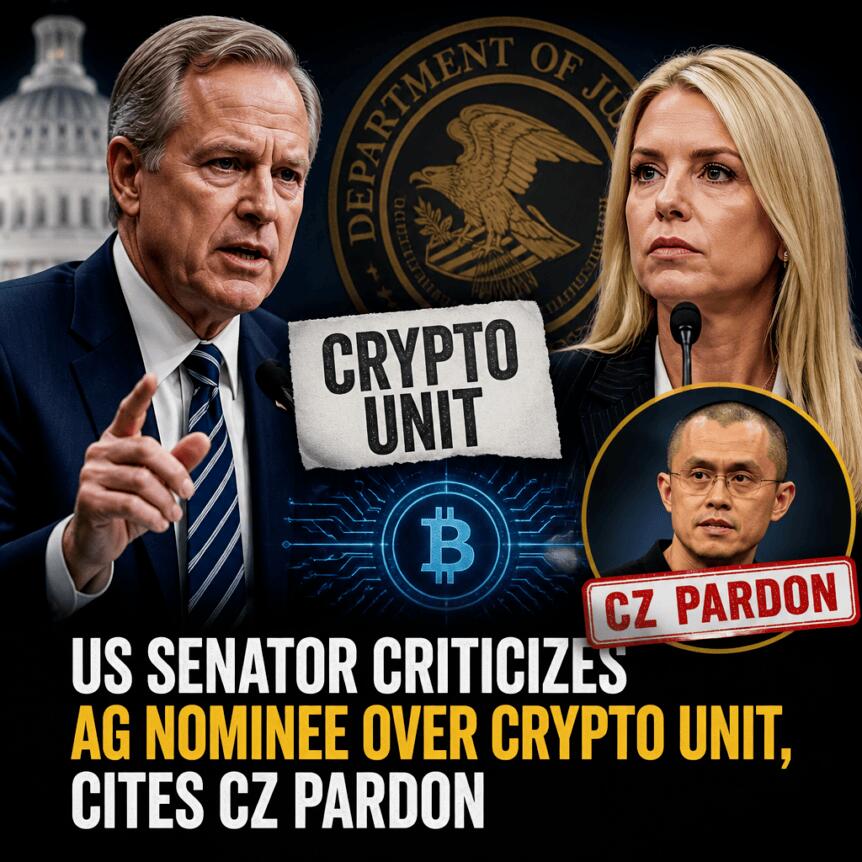
Acting U.S. Attorney General Todd Blanche faced sharp criticism at a Senate Judiciary Committee hearing on Wednesday as lawmakers weighed his nomination to lead the Justice Department. The backlash centered on how the department has pursued— or deprioritized—crypto-related enforcement, particularly in cases involving the broader developer ecosystem.
Senator Dick Durbin, the ranking Democrat on the committee, used portions of his opening statement to accuse Blanche of weakening DOJ’s crypto enforcement capacity. Durbin referenced Blanche’s reported role in dismantling a DOJ crypto enforcement unit in April 2025 while he was deputy attorney general, arguing that the move left ongoing investigations effectively “shut down” during the Trump administration’s push toward different enforcement priorities.
Key takeaways
- Durbin’s criticism ties Blanche’s prior DOJ actions to a broader shift in crypto enforcement, including alleged “dismantling” of the department’s crypto unit.
- Questions from Republicans—including concerns about Changpeng “CZ” Zhao’s presidential pardon—highlight ongoing political scrutiny of crypto outcomes.
- Blanche signaled a framework that aims to avoid charging developers who are not implicated in third-party wrongdoing.
- The committee vote math remains tight, with the confirmation process dependent on the Senate session’s practical majority rules.
Durbin’s attack on Blanche’s crypto enforcement record
At Wednesday’s hearing, Durbin argued that Blanche’s decisions as deputy attorney general enabled President Donald Trump to benefit financially from ties to the crypto industry. Durbin referenced reports that Blanche helped disband DOJ’s crypto enforcement unit in April 2025, citing Fortune’s reporting on the restructuring.
Durbin also alleged that Trump’s business interests, including family-linked World Liberty Financial, were connected to deals involving cryptocurrency. He further accused Binance’s former CEO Changpeng “CZ” Zhao of “broker[ing] a deal to channel $2 billion” into World Liberty—an accusation Durbin tied to Zhao’s later presidential pardon. The hearing remarks referenced Zhao’s 2023 agreement to plead guilty to a felony charge related to the exchange’s Anti-Money Laundering (AML) compliance.
Blanche’s nomination comes as the political stakes around DOJ leadership and enforcement priorities remain high. In addition to crypto policy, Republicans and Democrats are also disputing DOJ’s broader approach to issues such as immigration enforcement and how the department is handling sensitive political matters.
Confirmation dynamics: narrow path in the Senate
Blanche’s path depends on committee progress and then a Senate confirmation vote if his nomination advances. As of the hearing, the Senate Republican leadership, including Senator Mitch McConnell, faced an operational challenge: McConnell was still hospitalized after a fall described by his team as resulting in pneumonia. That uncertainty contributes to a slim margin in the Senate—described as 52-47 in favor of Republicans—meaning procedural details about attendance could become decisive for confirmation.
While Republicans hold the majority needed for a confirmation if a simple majority of lawmakers present supports the nominee, the nomination also faces targeted scrutiny. The hearing record suggests that lawmakers are not only debating the technical enforcement posture toward crypto, but also broader concerns about whether DOJ leadership will align with the administration’s political goals.
Blanche’s response: avoiding cases against “coders” not tied to wrongdoing
In addition to the political debate, Blanche addressed how DOJ intends to treat crypto software developers. According to a DOJ memo referenced at the hearing and later described in related coverage, the administration’s approach was framed as moving away from enforcement that “regulates by prosecution,” with the memo focused on shifting how the DOJ engages with the crypto sector. The memo was published by DOJ (see this DOJ document).
Blanche told crypto holders shortly after taking the acting role that officials would not pursue cases into blockchain developers who were not responsible for illicit activity on platforms. In remarks carried during industry coverage—specifically at the Bitcoin 2026 conference—Blanche indicated that DOJ would not investigate software developers when the developer is not a third-party user and is not knowingly helping someone commit crimes.
As quoted in the underlying reporting, Blanche described the distinction as follows: if someone is developing software or coding as part of the process, and is neither a user nor knowingly enabling third parties who commit crimes, then DOJ would not investigate or charge them. That is a notable signpost for developers and open-source contributors, because it suggests DOJ’s enforcement posture may be more carefully calibrated around scienter and direct involvement rather than broader theories that could sweep in peripheral actors.
What remains uncertain: ongoing prosecutions and “platform” cases
Even with Blanche’s emphasis on limiting charges against uninvolved coders, the department is not abandoning crypto enforcement altogether. The reporting around the hearing notes that DOJ still has ongoing cases against developers tied to platforms allegedly used for illegal activities. In other words, the line Blanche drew in public comments appears designed to narrow where DOJ looks for culpability, rather than eliminate enforcement.
Federal prosecutors are also expected to retry Tornado Cash co-founder Roman Storm later this year after a 2025 jury failed to reach a verdict on two charges. That procedural detail matters because it indicates that core enforcement actions connected to sanctioned or laundering-linked services are continuing through the courts, even as lawmakers debate whether the DOJ’s approach to developers is shifting.
For readers, the next watchpoint is whether Blanche’s confirmation will lead to measurable changes in charging decisions—especially how prosecutors apply intent and involvement standards to developers. The hearing made clear that political conflict and enforcement strategy will run in parallel, but the real test will be in the cases that move forward and those that get narrowed or dismissed.

‘It’s about standing up to invaders’: Argentina Vice President sparks controversy, calls England ‘pirate usurpers’ ahead of FIFA World Cup clash | Football News

OpenAI’s First Hardware Device Could Be a ChatGPT Speaker With a Camera

The truth about Jodie is finally exposed leaving the Platts reeling | Soaps

No Jackpot Winner as $257 Million Prize Rolls Over to $269 Million Monday Draw

Renter of Home in Anne Heche Crash Denies Settlement With Son

Weekend Open Thread: Staud – Corporette.com

What is Cryptocurrency? Difference in Digital Currency and Cryptocurrency explained | Economy UPSC

Low Salary Build Wealth with These 3 Smart Money Habits | Financial Tips #shorts#youtubeshorts

Speak Proverbs Over Your Finances | Prayer For Financial Breakthrough and Provision | Morning Prayer
-

 Fashion6 days ago
Loro Piana Fall 2026 Enters Houston’s Art Scene
-

 Fashion5 days ago
Weekend Open Thread: Nutriplenish Leave-In Conditioner
-
 Sports6 days ago
2026 Genesis Scottish Open Thursday TV coverage: Round 1
-

 Sports6 days ago
Super Eagles star Moses Simon opens up on Liverpool transfer regret
-

 Tech6 days ago
Character.AI enters the microdrama arena with its own productions, but there’s a twist
-

 Politics8 hours ago
Young campaigners urge incoming PM to act on outdoor junk food ads
-

 News Videos1 day ago
XRP BOMBSHELL… XRP OMBOARDED FOR TRANSACTIONS!!!
-

 Tech2 days ago
Get Your ESP32 Sunny Side Up With This Solar Dev Board
-

 Tech24 hours ago
Dark Secrets Emerge When Jailbreaking LLMs
-

 News Videos7 days ago
Crypto Just Entered Its Most Important 6-Month Candle (Could Decide Everything!)
-

 Tech6 days ago
Level Infinite Launches Gangstar Mirage City in India with Pre-Registrations
-
 NewsBeat6 days ago
Major update after Huntingdon train attack as man enters plea
-

 News Videos2 days ago
how to make coin bank box with cardboard #scienceproject #money #diy #shorts
-
 Tech2 days ago
Cloudflare Precursor Watches Your Mouse and Keyboard To Decide If You Are Human
-
 Entertainment3 hours ago
Disney’s Most Ambitious Failed Star Wars Attraction Is Coming to SDCC
-

 Tech7 days ago
Entra passkey enrollment vishing targets Microsoft 365 users
-
 Crypto World7 days ago
DeFi Dashboard Zapper to Shut Down After 7 Years
-
Crypto World1 day ago
Ripple, Coinbase, Circle Join Linux x402 Foundation to Help Shape AI Payments
-
 Entertainment1 hour ago
Vicki Gunvalson Defends Discussing Heather Dubrow’s Money
-
 Crypto World7 days ago
Mark Cuban-Backed DeFi Dashboard Zapper Shuts Down After 7 Years
You must be logged in to post a comment Login