
Crypto World
BNY, Galaxy Launch Institutional Crypto Staking Service



Cointelegraph is committed to providing independent, high-quality journalism across the crypto, blockchain, AI, and fintech industries.
All news, reviews, and analyses are produced with full journalistic independence and integrity. For more details on our standards and processes, please read our Editorial Policy.


Bitdeer, a publicly traded Bitcoin mining and infrastructure firm, has agreed to a 16-year data center lease that could be worth up to $4.7 billion, tying its next phase of growth to artificial intelligence (AI) and high-performance computing capacity. The deal highlights a broader shift in the crypto mining industry: companies built around energy and compute are increasingly positioning themselves as AI data center providers as demand for GPU-based workloads rises.
Under the agreement, Bitdeer will supply 121 megawatts (MW) of IT capacity at its Tydal, Norway AI data center. The facility is expected to be configured for Nvidia GPU-based AI workloads, though Bitdeer did not publicly identify the tenant beyond describing it as a subsidiary of Volta Infra.
Key takeaways
- Bitdeer signed a 16-year lease for up to $4.7 billion to secure AI/high-performance computing data center capacity.
- The agreement covers 121 MW of IT capacity at Bitdeer’s Tydal, Norway facility, configured for Nvidia GPU-based AI workloads.
- Volta Infra is linked to the tenant, and Bloomberg reported its $10 billion cloud contract is with Anthropic.
- The lease is subject to customary closing conditions and is not yet effective; letters of credit are expected to back tenant payments.
- Bitdeer also stands out for having fully liquidated its Bitcoin treasury to zero earlier this year, to fund expansion.
A long-term compute bet tied to AI workloads
Bitdeer’s announcement says it will provide 121 MW of IT capacity at its Tydal, Norway AI data center to a tenant described only as a subsidiary of Volta Infra. The company’s release specifies that the site will be configured to support Nvidia GPU-based AI workloads, but it stops short of clarifying whether Volta Infra is the ultimate end customer or acting as an intermediary.
For investors and operators, the significance is less about a single facility and more about the contract’s structure and longevity. A lease spanning 16 years aims to lock in a long runway for revenues tied to compute demand—an area where AI infrastructure providers are facing intense competition for energy, cooling, and GPU capacity.
Volta Infra and Anthropic in the background
While Bitdeer did not name the tenant, Bloomberg News reported that Nvidia-backed Volta’s $10 billion cloud contract is with Anthropic, citing people familiar with the matter. The disclosure adds context to the strategic logic of the lease: if Volta’s cloud commitments involve Anthropic’s AI workloads, then the compute capacity Bitdeer will supply becomes part of a wider chain serving major AI model developers.
Still, the details that matter for due diligence remain partly opaque. Bitdeer has not confirmed whether Anthropic is the end customer for the contracted capacity or whether the tenant arrangement includes additional layers. Traders and analysts will likely watch for further clarification when the deal clears closing conditions and when operational timelines come into focus.
Deal mechanics: closing conditions and payment security
Bitdeer said the lease agreement is subject to customary closing conditions and is not yet effective. To help secure the tenant’s payment obligations, affiliates of JP Morgan and another unnamed global financial institution are expected to issue approximately $1.3 billion in letters of credit (or bank guarantees). In practical terms, letters of credit reduce counterparty risk for the landlord by providing a way to recover funds if contractual payments are not met.
That risk-control detail matters because long-duration infrastructure contracts can carry operational and commercial uncertainty—ranging from construction or configuration delays to changes in customer demand. The use of substantial financial guarantees suggests both parties are attempting to ensure the agreement is durable through the transition from contract signing to delivery.
Bitdeer’s pivot beyond Bitcoin mining
This lease is the latest step in Bitdeer’s broader effort to diversify beyond its core Bitcoin mining business. Alongside AI and high-performance computing infrastructure, the company has also been expanding into mining hardware manufacturing to lessen reliance on third-party suppliers.
Last month, Bitdeer announced a $36 million investment in a manufacturing facility in Nevada as part of that strategy, reinforcing the theme that the company wants more control over the full compute supply chain—whether the end use is mining or AI acceleration.
Notably, the market response to the lease announcement appeared immediately. Bitdeer shares reportedly jumped about 8% in early Nasdaq trading following the announcement, indicating investors may be treating the AI infrastructure expansion as a meaningful rerating driver rather than a side project.
Why selling the Bitcoin treasury may be part of the same plan
Bitdeer’s approach to capital allocation also differs from many publicly traded miners. Earlier in the year, the company reduced its Bitcoin holdings to zero—reportedly after holding roughly 943 BTC in early February—while stating it remains committed to the Bitcoin ecosystem. According to Bitdeer executive Ross Gann, the sales were made to help fund the company’s broader expansion strategy, including acquisitions of powered land for AI and Bitcoin mining infrastructure.
In contrast, several other major Bitcoin miners continue to hold large Bitcoin treasuries. BitcoinTreasuries.NET data cited in the coverage indicates that MARA Holdings, Riot Platforms, CleanSpark, and Hut 8 each hold at least 10,000 BTC, with MARA holding more than 36,000 BTC.
The contrast underscores a strategic asymmetry among miners: some treat Bitcoin holdings as a balance-sheet bet on future upside, while Bitdeer has chosen to convert its treasury into liquidity to finance expansion. For readers tracking the sector, this raises a key question going forward—whether compute-driven revenue growth can offset the absence of treasury exposure, and how that trade-off influences risk profiles during different phases of the crypto and AI cycles.
As the lease moves toward effectiveness, the next items to watch are the completion of closing conditions, further clarity on the tenant and end-customer structure, and whether Bitdeer’s AI infrastructure buildout scales alongside its existing diversification efforts.
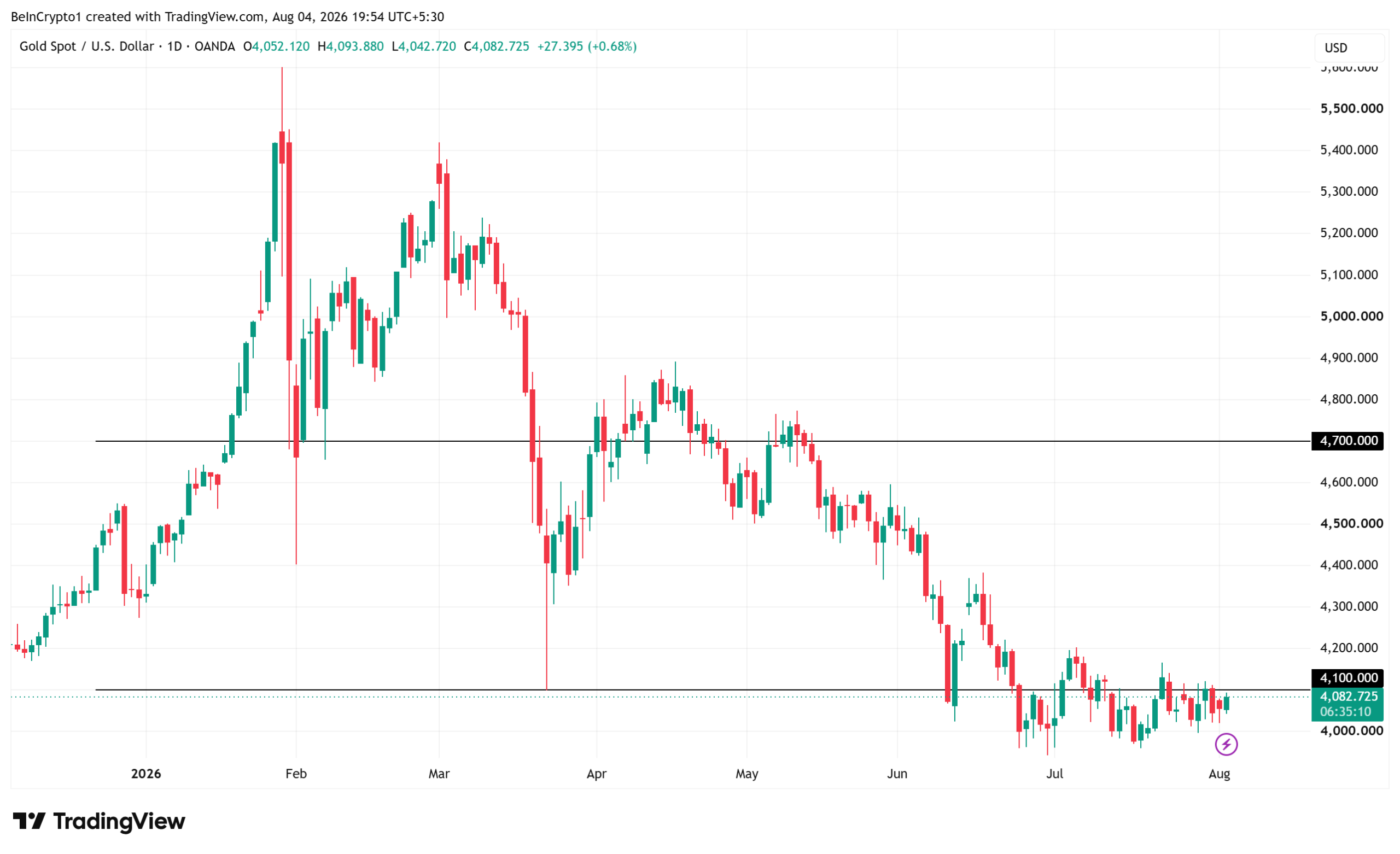
The Bank of Korea will buy physical gold again after 13 years. Central banks bought 289 tonnes in the second quarter, their strongest second quarter on record.
Gold traded near $4,086 an ounce on Tuesday, up 0.8%. It sits 27% below its January record. It is still up about 20% on the year.

Korea Gold Purchases Resume After 13 Years
Seoul stopped buying gold in 2013. It was mocked for the timing. The bank bought 90 tonnes between 2011 and 2013, at an average $1,629 an ounce. That came to about $4.7 billion, figures from Korea Economic Daily show.
Then gold fell apart. The price had peaked at $1,920.30 in September 2011. By June 2013 it hit $1,180.71, a drop of 38.5%. That year was gold’s worst since 1981.
At that low, Korea’s gold was worth 27.5% less than it paid. Lawmakers dragged in then-governor Kim Choong-soo. By 2015 the paper loss reached about 1.8 trillion won. Buying stopped.
Here is the twist. Those same 90 tonnes are now worth roughly $11.8 billion. That is $7 billion more than Korea paid.
So the bank is careful about how it explains itself. Jung Hee-sub, who runs its Reserve Management Group, denies any link to the recent price drop.
“We did not decide the timing of purchases by looking at a specific price… we decide whether to proceed at that time based on domestic and international gold prices and market conditions,” local media reported.
Follow us on X to get the latest news as it happens
The plan itself is tiny. Korea digs up 40 to 45 tonnes a year, mostly as a leftover from smelting copper and zinc. Only 4 to 5 tonnes get sold abroad. The bank will bid for that slice alone.
So its reserves stay near 104.4 tonnes, ranking Korea 39th. It also bought its first gold exchange-traded funds (ETFs) last quarter, as South Korea’s equity turmoil grips policymakers.
Central Bank Gold Buying Hit a Record 289 Tonnes
Korea is late to a crowded party. Central banks bought 288.9 tonnes in the second quarter, World Gold Council data show. That is 62% more than a year earlier.
Poland bought the most, at 51 tonnes. Its stockpile hit a record 632 tonnes. It wants 700.
Governor Adam Glapiński is blunt about how he does it.
“We’ve been consistently buying gold, taking advantage of the recent price drops.”
China added 33 tonnes, keeping up a long buying streak. Russia sold 22.
The rebound hides a slow start, though. Just 56.5 tonnes came in the first quarter. At 345 tonnes, the first half was the weakest since 2022.
They are not losing interest. A record 45% plan to buy more within a year, and demand held firm through the price slump.
Gold Is Quieter Than at Any Time Since August 2025
Bollinger Bands track how widely a price swings around its average. When they squeeze together, the market has gone quiet. Quiet markets rarely stay quiet.
Barchart figures show the tightest squeeze on the biggest gold ETF since August 2025. That date matters. Gold closed August 2025 near $3,443, then ran 62% to its January peak.
One example is not a pattern, however. A squeeze tells you a move is coming. It does not tell you which way.
So Will Gold Break Out?
The evidence leans up, but not back to January’s record. Deutsche Bank analysts Michael Hsueh and Bryant Xu say gold is worth about $4,700 by year end. JPMorgan’s lowered target still puts the fourth quarter at $4,500.
The World Gold Council will not pick a number. Its mid-year outlook sees gold within 5% of $4,100 for the rest of 2026, if nothing much changes.
Here is the catch. Central banks are better at putting a floor under gold than pushing it up. Record buying did not stop a 29% fall from January to June. They buy to a plan, and they buy dips, as Glapiński said.
A real rally needs ordinary investors and funds to come back.

So watch $3,959, the June low. Gold sits less than 3% above it. Break that, and the idea that central banks hold up the price falls apart.
The post Bank of Korea Just Bought Gold After 13 Years: Is a New Rally Coming? appeared first on BeInCrypto.
SpaceX has picked Nvidia to design the compute payload inside its Starmind AI1 satellites. Both stocks rose Tuesday. The news landed hours before SpaceX reported its first quarterly results as a public company.
Starmind is SpaceX’s plan to put data centers in orbit. Each satellite will carry Nvidia Rubin GPUs and Vera CPUs, the chipmaker’s newest generation. Nvidia calls the market space computing.
Follow us on X to get the latest news as it happens
SpaceX Taps Nvidia for Starmind AI
Nvidia launched its space computing line on March 16. It named six early partners that day. Aetherflux, Axiom Space, Kepler Communications, Planet Labs, Sophia Space and Starcloud all made the list.
SpaceX did not. That gap closed on Tuesday, and it closed with the biggest customer on the board.
In January, SpaceX asked the Federal Communications Commission (FCC) for up to one million orbital data center satellites. The application covers altitudes from 500 to 2,000 kilometers. SpaceX describes the design as a petabit laser mesh.
For scale, roughly 15,000 satellites orbit Earth today. SpaceX wants to multiply that by 66.
How NVDA and SPCX Stocks Reacted
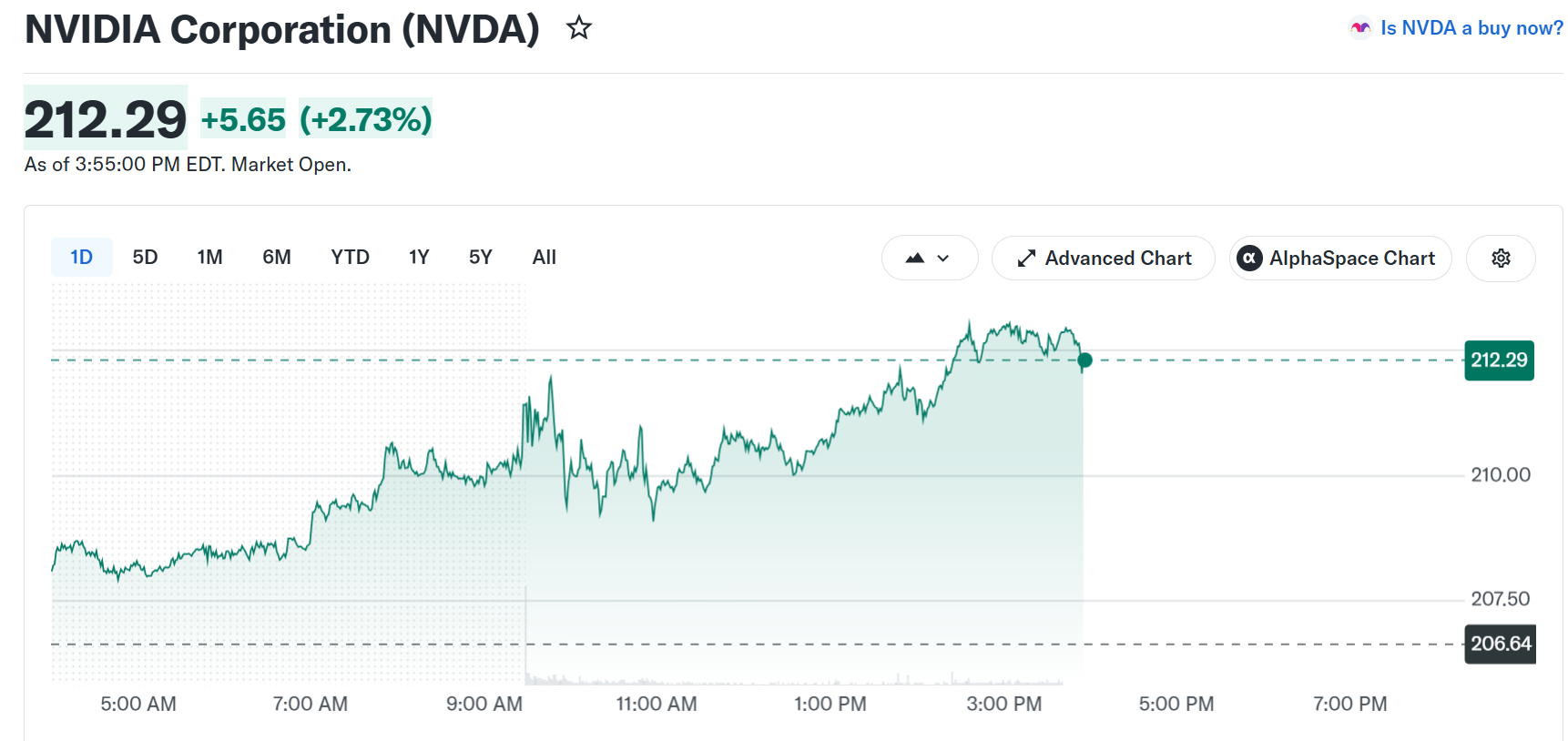
Nvidia (NVDA) traded at $212.91 on Tuesday afternoon, up 3.03%. SpaceX (SPCX) climbed 8.67% to $124.46.

SpaceX needed the lift. The stock sat 35% below its peak in early July, even after joining the Nasdaq-100.

The chips lend the plan weight. Nvidia says its Space-1 Vera Rubin Module delivers up to 25 times the AI compute of an H100 GPU. Volume shipments start this fall.
What the SpaceX Nvidia Starmind Deal Needs Next
Money is the open question. SpaceX’s AI unit lost $6.4 billion on $3.2 billion of revenue last year.
Tuesday’s 4:30 p.m. ET webcast offers the first real read. Analysts have mapped three earnings call scenarios, and Starlink cash flow sits at the center of each.
Opinion is split. Cathie Wood named SpaceX her favorite holding in July. NYU finance professor Aswath Damodaran has warned of a coming AI shakeout.
Regulators still hold a veto. The FCC accepted the filing in February and has yet to rule. Until it does, Starmind is a chip order without a licence.
The post SpaceX Joins a Club It Was Missing From In New Nvidia Deal: How Will Stocks React? appeared first on BeInCrypto.
SpaceX beat Wall Street estimates in its first quarterly report as a public company. Revenue reached $7.8 billion against forecasts near $6.81 billion, while digital asset holdings fell to $1.098 billion.
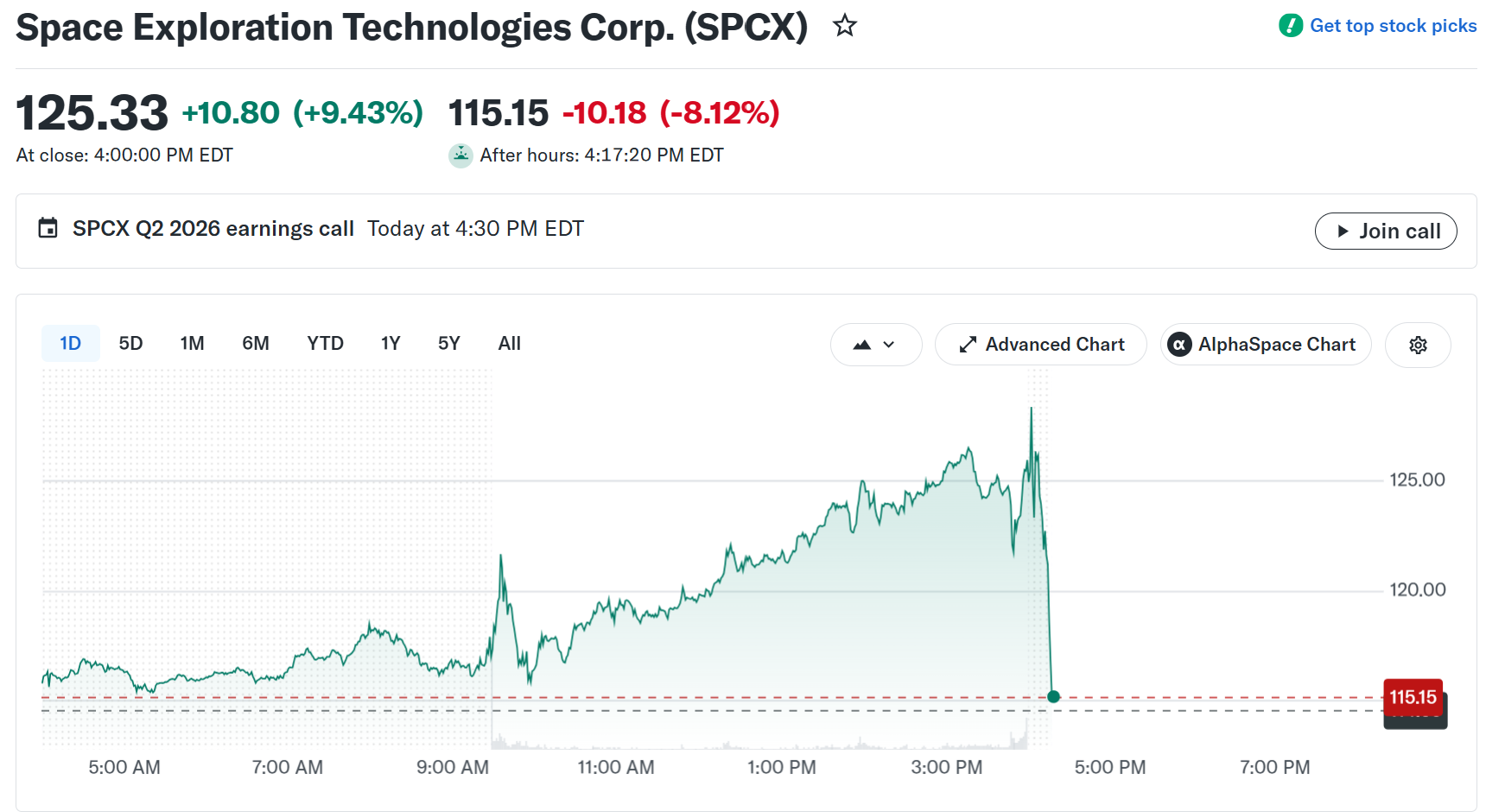
The beat did not hold investor confidence. Shares closed 9.43% higher at $125.33, then dropped more than 8% in after-hours trading as the earnings call approached.

Starlink Carries the Quarter While AI Losses Narrow
Connectivity revenue reached $4.291 billion, up 66% from a year earlier. Operating income for the unit climbed 79% to $1.656 billion.
Starlink subscribers doubled over 12 months to 12 million. Average revenue per user held at $66 a month, unchanged from the first quarter.
The artificial intelligence segment brought in $2.561 billion, a 247% annual increase. New cloud services agreements worth $14.1 billion in contracted sales drove much of that gain.
Its operating loss narrowed to $1.257 billion, roughly half the $2.39 billion analysts had penciled in. Loss per share landed at $0.09, against expectations near a $0.24 loss.
Adjusted earnings before interest, taxes, depreciation and amortization (EBITDA) rose 191% to $3.538 billion. Analysts had modeled about $2 billion, according to the scenarios Wall Street tracked before the print.
Follow us on X to get the latest news as it happens
SpaceX Crypto Holdings Shed $539 Million
The balance sheet tells a different story. Digital assets stood at $1.098 billion on June 30, down from $1.637 billion at the end of December.
That marks a 33% decline over six months. SpaceX does not break out coin counts in the release.
Grayscale has pegged the company’s stack at 18,712 BTC, the largest diversified public holder of the asset. Against that count, the June figure implies a carrying value near $58,700 per coin.
Bitcoin (BTC) changed hands near $64,073 on Tuesday, up 1.24% over 24 hours. The math therefore points to price weakness behind the drop rather than selling.
Sale rumors flared in July when the company moved $88 in bitcoin after months of dormancy. That small test transfer drew close attention from on-chain analysts.
Tesla showed a similar split in July. Its Bitcoin holdings lost value even as revenue topped forecasts.
Capital Spending Remains the Overhang
Second-quarter capital expenditure hit $18.369 billion. The AI segment absorbed $15.828 billion of that figure.
Compute capacity expanded to 1.4 gigawatts from 1 gigawatt in the first quarter.
SpaceX closed June with $100 billion in cash and securities, plus $47.5 billion in backlog. Management issued no formal guidance.
The company also disclosed a $60 billion agreement to buy Cursor, an AI coding tool, with closing expected this quarter.
Space revenue rose 29% to $962 million. However, the unit widened its operating loss to $542 million on Starship research spending.
Investors now face a familiar tension. Revenue growth is accelerating, yet capital intensity is climbing faster still.
The after-hours slide suggests the market wants a funding roadmap before it pays up for the numbers. Whether the call delivers one will shape the next leg for the stock.
The post SpaceX Crypto Holdings Drop $539 Million as Debut Earnings Beat Wall Street appeared first on BeInCrypto.

“As some blue states are considering more active involvement in oversight of facilities, I think the logical solution to much of that is federal ownership of the facilities,” George Zoley, CEO of GEO Group, said during the company’s earnings call in May. Zoley made clear his thinking on the advantage of federal ownership was all about reducing “unprecedented” lawsuits and oversight. He claimed that transferring the private facilities to the federal government would provide “stronger protections” under the Supremacy Clause in the Constitution.
In a statement to TIME, a DHS spokesperson attributed the acquisition of the two facilities to “sanctuary politicians” who push legislations that make privately-owned prisons “financially infeasible.”
“Now, with federal ownership of these detention centers, which are crucial to ICE’s detention network on the West Coast, ICE retains the detention capacity needed to arrest, detain, and remove illegal aliens,” the statement added.

Bitcoin mining companies with existing operations in Texas are likely to face limited direct disruption from a new state-level pause on certain data center approvals, according to Bernstein analysts. The move centers on heightened scrutiny of how quickly new data center projects are being lined up to connect to Texas’ power grid.
Governor Greg Abbott ordered the Public Utility Commission of Texas (PUCT) and the Electric Reliability Council of Texas (ERCOT) to conduct an audit of data centers seeking to connect to the grid, The Texas Tribune reported. Bernstein said many Texas miners are already covered by electric capacity agreements that have been approved, which could reduce near-term operational risk.
Key takeaways
- Bernstein expects most Texas-based Bitcoin miners to be minimally affected because many are contracted for approved power capacity.
- The audit and moratorium are expected to slow or throttle speculative data center “pipeline” projects, potentially increasing the value of sites with development history.
- Miners most exposed may include those whose future growth depends on converting existing pipeline assets into grid-connected capacity during ERCOT’s approvals.
- Bernstein highlighted Texas operations of Cipher Digital, Core Scientific, CleanSpark, IREN and Riot Platforms as relevant to how the approval process evolves.
Texas audit targets data center grid connections
On Monday, Governor Abbott directed regulators to audit all data centers attempting to connect to the state’s electric grid system. The directive is linked to mounting public backlash over the pace of data center development in Texas, as The Texas Tribune noted in reporting on the order.
While the article describing the order did not specify how long the audit would run, the practical effect is already clear: new or pending grid-connection approvals are likely to slow while regulators review the pipeline. For electricity-intensive industries—data centers and Bitcoin mining in particular—grid access timing can be as important as total contracted capacity.
Why Bernstein says active miners may be spared
In a client note released Tuesday, Bernstein analysts argued that the direct impact on Bitcoin miners with Texas operations should be limited. Their central point: most miners operating in the state are under contracts for electric capacity that has already been approved.
That distinction matters for investors and operators. An audit that primarily affects approvals for new connections is less likely to interrupt existing operations tied to already-cleared power supply, especially where miners have scheduled energy use and infrastructure already in place.
Bernstein also suggested that throttling new approvals could create a different kind of market effect. The analysts wrote that the audit “throttles speculative data center pipeline” and, in turn, “makes genuine sites with development history more valuable.” They linked that value proposition to mining sites typically having “longest gestation” characteristics, self-funding infrastructure, and management at the local level.
Which miners Bernstein flags as more vulnerable
Even if day-to-day production is less likely to be disrupted for capacity that is already approved, growth plans can still run into delays. Bernstein pointed to miners it believes could be more exposed—particularly if their path to expansion depends on ERCOT approval processes to convert pipeline assets into grid-connected power capacity.
The analysts specifically named Cipher Digital, Core Scientific and CleanSpark as candidates that could face greater sensitivity to future public opposition and the timeline pressures created by moratoriums or directives affecting new capacity approvals.
They also highlighted IREN and Riot Platforms, noting that both have Texas mining operations that are described as fully ERCOT grid approved. In Bernstein’s framing, that approved status may matter more as new capacity becomes harder or slower to obtain.
From data center controversy to mining capacity economics
At the heart of the story is an electricity allocation question. Texas’ grid-connection process is a bottleneck for any load expansion, and public opposition can influence political and regulatory outcomes—especially when state leadership orders audits or pauses.
Bernstein’s view effectively reframes the risk from “immediate operational shutdown” to “capital planning and future capacity accessibility.” If ERCOT’s approvals become slower, and if speculative data center projects are paused or delayed, then existing—especially already-approved—capacity may retain or increase its relative value versus projects still in the queue.
For miners, this can change how the market evaluates expansion-stage assets. If new MWs (megawatts) are throttled by policy actions, then entities able to monetize power access sooner—either because they are already grid approved or because they have stronger development histories—may face fewer timing disadvantages.
Stock reaction and company updates
In Tuesday’s premarket trading, Cipher Digital shares were down more than 7%, according to Yahoo Finance data. Separately, Cipher Digital reported second-quarter results earlier Tuesday, showing a loss of $0.65 per diluted share that widened from last year’s loss of $0.12 per diluted share, according to the company’s posted update.
While the stock move is not automatically attributable to the Texas audit by the information provided, it underscores how quickly market participants can price in regulatory uncertainty, especially for firms tied to the broader data center and power-capacity conversation.
Going forward, readers should watch how long the audit lasts and how ERCOT and the PUCT handle conversion of pipeline assets into approved grid-connected capacity—because that timeline will likely determine whether the near-term “freeze” stays contained or begins to affect future miner expansion plans.

The Hell’s Kitchen megaproject on the shore of California’s Salton Sea is a $1.8 billion bet on a massive, first-of-its-kind geothermal power and lithium-extraction facility. Developers aim to start up the facility’s new geothermal power production first, with lithium mining to follow. While the county and Controlled Thermal Resources, the mine’s owner, last year defeated a lawsuit that attempted to halt operations there, community opposition remains strong and opponents are appealing. The project sits in a low-income, heavily Latino, environmentally over-burdened valley with some of the worst air quality in the country. Tensions are also rife over the mine’s water consumption and the terms of its community-benefit agreement. Meanwhile, as demand for lithium for EV batteries has softened, the company has emphasized that both its geothermal energy and minerals can serve the AI-driven data-center boom.
Wells Fargo plans to launch tokenized deposits this fall, allowing corporate and commercial clients to move and settle funds outside traditional banking hours.
Summary
- The initial pilot will support U.S. dollar-to-British pound transactions for selected corporate clients.
- Tokenized deposits will enable 24/7 fund transfers, settlement and programmable payments on the bank’s blockchain platform.
- Wells Fargo plans to add more clients, countries and currencies throughout 2027.
- The rollout follows its WFUSD trademark filing and growing exposure to crypto-linked investment products.
Wells Fargo tokenized deposits will support 24/7 settlement
Per an Aug. 4 WSJ report, Wells Fargo said the service will allow participating clients to transfer, program and settle funds around the clock within a regulated banking framework. The initial rollout will cover transactions between the U.S. dollar and British pound.
Unlike conventional bank transfers, which can face market-hour restrictions and settlement delays, tokenized deposits represent customer funds as digital tokens on a blockchain. This structure can support near-continuous settlement while keeping the deposits within the banking system.
The program will run on Wells Fargo’s proprietary blockchain platform, which supports internal custodial wallets. The bank said future offerings could also use its interchain connectivity technology to communicate with other blockchain networks.
“The program will roll out this fall with a limited U.S. dollar (USD) to British pound (GBP) exchange and will expand over the course of 2027 to more clients, countries, and currencies,” the bank said.
Chief Financial Officer Mike Santomassimo described the launch as an “important step forward” in expanding the bank’s payment options. Wells Fargo will determine additional currencies and markets based on client demand.
Why banks are turning to tokenized deposits
Tokenized deposits allow banks to offer some of the speed and programmability associated with stablecoins without moving customer funds outside the regulated deposit system. Banks retain control over issuance, transfers, and compliance checks.
Wells Fargo joins JPMorgan and Citigroup in developing blockchain-based settlement services. JPMorgan has expanded its deposit-token infrastructure across blockchain networks, while Citi has developed tokenized deposit and securities services for institutional clients.
The new product could help Wells Fargo serve businesses that require cross-border settlement outside normal banking hours. Corporate treasury teams could also use programmable transactions to automate payments when predefined conditions are met.
For U.S. companies, the first USD-to-GBP corridor could reduce delays between American and British banking hours. However, Wells Fargo has not disclosed pricing, transaction limits, or eligibility requirements for the pilot.
WFUSD trademark preceded the tokenized deposit plan
The announcement follows Wells Fargo’s March trademark application for “WFUSD,” which prompted speculation that the bank was preparing a dollar-linked digital asset.
The U.S. trademark filing covers cryptocurrency payment processing, electronic transfers of virtual currencies, and software used to tokenize assets. It also includes blockchain-based payment verification and platforms capable of processing stablecoin transactions.
Wells Fargo has not confirmed whether WFUSD is the name of its planned tokenized deposit product. A trademark application also does not guarantee that a commercial service will launch under that name.
Still, the filing showed that the bank was evaluating blockchain-based financial services months before disclosing its tokenized deposit rollout.
Wells Fargo deepens its digital asset exposure
Wells Fargo has also increased its exposure to crypto-related investment products. A regulatory filing reported by crypto.news in July showed that the bank raised its Strategy position by 125% to nearly 726,000 shares, adding about $41.5 million in exposure.
The bank simultaneously reduced its position in BlackRock’s iShares Bitcoin Trust by 75,102 shares. It also opened a new IBIT call position, increased its put exposure and added investments linked to Ethereum and Solana.
Those holdings are separate from the tokenized deposit initiative, but they reflect Wells Fargo’s widening involvement across digital assets and blockchain infrastructure.
The bank plans to begin with selected corporate and commercial clients before broadening access during 2027. The rollout’s next phase will depend on demand, regulatory requirements and the platform’s ability to connect with other private tokenized deposit networks.


In a July 8 meeting, US and UK regulators highlighted the implementation of the GENIUS Act, payment modernization and cross-border cooperation, reinforcing a shared framework for digital asset oversight.
The United States and the United Kingdom reaffirmed their commitment to closer financial regulatory cooperation during a recent bilateral working group, signaling continued policy alignment on digital assets as US authorities move to implement landmark stablecoin legislation.
During the 13th meeting of the UK-US Financial Regulatory Working Group (FRWG), held in London on July 8, officials discussed stablecoin regulation, digital asset market structure in the United States, tokenization and the UK’s Wholesale Financial Markets Digital Strategy.
An Aug. 4 joint statement summarizing the meeting said US officials updated their UK counterparts on implementation of the GENIUS Act, the country’s landmark stablecoin law, as well as ongoing work on digital asset market structure. Participants also discussed payment modernization and the G20 Cross-border Payments Roadmap, an international initiative to improve cross-border payments.
Although the meeting did not produce new policy measures, it underscored a shared commitment to coordinating regulation across key areas of the digital asset industry. The statement struck a broadly supportive tone toward “responsible” digital asset innovation while emphasizing financial stability and international regulatory cooperation.
That commitment was also reflected on July 14, when the Transatlantic Taskforce for Markets of the Future — a joint US-UK initiative focused on strengthening cooperation on financial innovation and capital markets — published its initial recommendations alongside a joint statement on stablecoins. The governments said the measures would lay the foundation for continued US-UK leadership in digital assets and capital markets.
Related: UK government defers capital gains on certain crypto with ‘no gain, no loss’ approach
UK rethinks stablecoin rules as US moves ahead
The UK’s renewed emphasis on stablecoins comes as some industry observers argue the country is losing ground to the United States, where the GENIUS Act has accelerated momentum behind regulated dollar-backed stablecoins.
The Bank of England has also softened its stance on stablecoin regulation. As Cointelegraph reported in May, the BoE is considering alternatives to temporary limits on stablecoin holdings and is reviewing whether its proposal requiring at least 40% of reserve assets to be held as non-interest-bearing deposits at the central bank is too restrictive.
Separately, the UK’s Financial Conduct Authority said earlier this year that cross-border payments represent one of the clearest near-term use cases for stablecoins, underscoring growing regulatory recognition of the technology’s potential.
Magazine: Coldcard exploit sparks Bitcoin flight, ‘bullish’ crypto consolidation: Hodler’s Digest, August 2


The SBF appeal mandate issued on August 4 closes Sam Bankman-Fried’s (SBF) case at the Second Circuit appeals court. The one-page order affirms the judgment and adds no new reasoning.
A mandate returns a case to the trial court and makes an appellate ruling fully effective. This one leaves the former FTX chief’s 25-year prison term in place.
What the SBF Appeal Mandate Actually Says
The US Court of Appeals for the Second Circuit logged it as entry 77 in case No. 24-961. It names the three judges who heard the appeal, Barrington D. Parker, Eunice C. Lee and Maria Araújo Kahn.
Then comes the operative line. The court “ORDERED, ADJUDGED and DECREED that the judgment of the district court is AFFIRMED.”
Nothing else is decided. Catherine O’Hagan Wolfe, clerk of court, signed it for the panel. A stamp at the foot records the mandate issuing on 08/04/2026.
Why the June Ruling Still Governs
The substance landed almost two months earlier. On June 12, the panel rejected the FTX founder’s appeal and left the seven-count conviction intact. It also kept the sentence Judge Lewis Kaplan imposed in March 2024.
Parker wrote for the panel, describing what the jury had heard.
“While he was publicly reassuring customers, investors and regulators that FTX customer funds were safe, he was simultaneously using FTX as his own personal piggy bank, spending customer funds on real estate, political contributions and investments,” Barrington D. Parker, Circuit Judge, Second Circuit opinion.
Follow us on X to get the latest news as it happens
The panel also upheld the roughly $11 billion forfeiture, finding Congress may tie forfeiture to a defendant’s gains. Kaplan had already denied a retrial motion in April.
The One Strand Left
Only one judicial route survives. Bankman-Fried may petition the US Supreme Court for a writ of certiorari, generally within 90 days of judgment. The court hears a small fraction of such petitions.
He has separately filed a pardon application with the Justice Department. Senators Cynthia Lummis and Ruben Gallego have since introduced a resolution opposing any SBF pardon.
Meanwhile, the money moves on a separate track. FTX creditors received a fifth round of repayments at the end of July. The mandate settles the appellate question, and what the Supreme Court makes of it is the only one still open.
The post Sam Bankman-Fried (SBF) Appeal Mandate Issued, Only One Strand of Hope Left appeared first on BeInCrypto.

Ripple XRP: Did Another Korean Exchange Experience An XRP Glitch Of +$2,250/XRP?

How rewilding could help stop the spread of Britain’s wildfires

Former US official warns China is closing AI gap as Huawei expands globally


-

 Business6 days ago
Why Trees Belong on the Risk Register
-

 Fashion4 days ago
Weekend Open Thread: Wit & Wisdom
-

 Politics4 days ago
Meta enters AI-training agreement with far-right ‘propaganda rag’ Newsmax
-

 Politics6 days ago
Reform UK betrays West Mids residents by running from party pledges
-

 Crypto World3 days ago
MicroStrategy Post-Earnings CLARITY Act Push Could Add New Catalyst for Its Stock
-

 Business7 days ago
Major shareholder moves on Canyon
-

 Crypto World4 days ago
XRP Ledger v3.3.0 brings five institutional features
-

 Politics2 days ago
Zack Polanski: an incitement to murder Nigel Farage?
-

 News Videos5 days ago
Bitcoin Enters the 3rd Stage of the Bear Market
-

 Crypto World7 days ago
Kraken Enables Retail Access to Jersey Mike’s IPO via Tokenized Shares
-

 Politics5 days ago
Luke Littler’s dominance sparks GOAT debate
-

 Sports5 days ago
Seema Kaliramna Wins Discus Throw Bronze, Takes India’s CWG Medals Tally To 17
-

 Crypto World4 days ago
New York sues Kalshi over prediction market gambling
-

 Crypto World2 days ago
Crypto PAC spending tops $2M in Michigan House race
-

 Business7 days ago
Johnson & Johnson agrees to $5.5B settlement over talc cancer claims
-

 Business4 days ago
Trump Announces Hamas Disarmament Agreement as Iran Strikes Kuwait Air Base and US Attacks Pause Overnight
-

 Tech6 days ago
Gemini can now summarize the messiest comment threads in Google Docs
-

 Tech3 days ago
ESET tracks rise in malicious AI skills and adaptable malware
-

 NewsBeat5 days ago
Four people die trying to cross Channel in small boats
-

 Tech4 days ago
Gemini Spark can now use Chrome logins and saved passwords to run errands on your behalf
You must be logged in to post a comment Login