

Crypto World
Breez Lets Bitcoin Wallets Send USDC and USDT Without Holding Stablecoins

Bitcoin infrastructure company Breez has added a feature to its developer toolkit that lets users send USDC (USDC) and USDt (USDT) across more than 30 blockchain networks directly from a Bitcoin balance, without first converting or holding stablecoins.
According to an announcement shared with Cointelegraph, the feature uses the Lightning Network alongside automated conversion to route payments from Bitcoin (BTC) to USDC or USDT before delivering funds to the recipient’s preferred blockchain.
When a user enters a recipient’s wallet address, the Breez SDK identifies the destination blockchain, calculates a conversion route and displays the amount, network and fees before the payment is confirmed. The transaction is then routed through liquidity providers, including Flashnet and Boltz, which convert the sender’s Bitcoin into stablecoins and deliver it on the recipient’s chosen blockchain.
Roy Sheinfeld, CEO of Breez, told Cointelegraph the feature does not require USDT or USDC to be issued on the Lightning Network. Instead, it relies on “interoperability” to let users spend from a Bitcoin balance while recipients receive stablecoins on supported blockchain networks.
Breez said users continue holding Bitcoin until they initiate a payment, while recipients receive stablecoins on their preferred blockchain without requiring the sender to manage separate stablecoin balances. The feature is non-custodial and initially supports only outbound stablecoin payments, with support for receiving stablecoins from external blockchain networks planned for a future release.
The feature is designed to allow developers to add stablecoin payments without integrating multiple blockchain networks or requiring users to manage separate Bitcoin and stablecoin balances.
Related: Credit unions managing $25B in assets join stablecoin infrastructure program
Bitcoin payment infrastructure expands
The launch comes as companies expand Bitcoin and the Lightning Network, a layer-2 payment network designed to make Bitcoin transactions faster and less expensive, into new financial and commercial applications.
In February, Secure Digital Markets, an institutional trading and lending desk, completed a $1 million Bitcoin payment to Kraken over the Lightning Network in less than half a second, demonstrating the protocol’s potential for high-value institutional transfers. The transaction illustrated how Lightning is increasingly being tested for use cases beyond small retail payments.
That same month, Bitcoin infrastructure company Voltage introduced a US dollar-settled revolving credit line that embeds business credit into Lightning payment flows, allowing companies to settle repayments in either US dollars or Bitcoin. The product is intended to enable businesses to access working capital using Lightning for payments, without holding crypto on their balance sheets.
Event platform Satlantis also launched a Bitcoin-native ticketing platform with embedded Lightning wallets, allowing organizers to sell tickets and accept BTC alongside traditional payment methods.
In March, Tether-backed Bitcoin infrastructure startup Ark Labs in a $5.2 million funding round to develop technology supporting stablecoin issuance, transfers and settlement on Bitcoin.
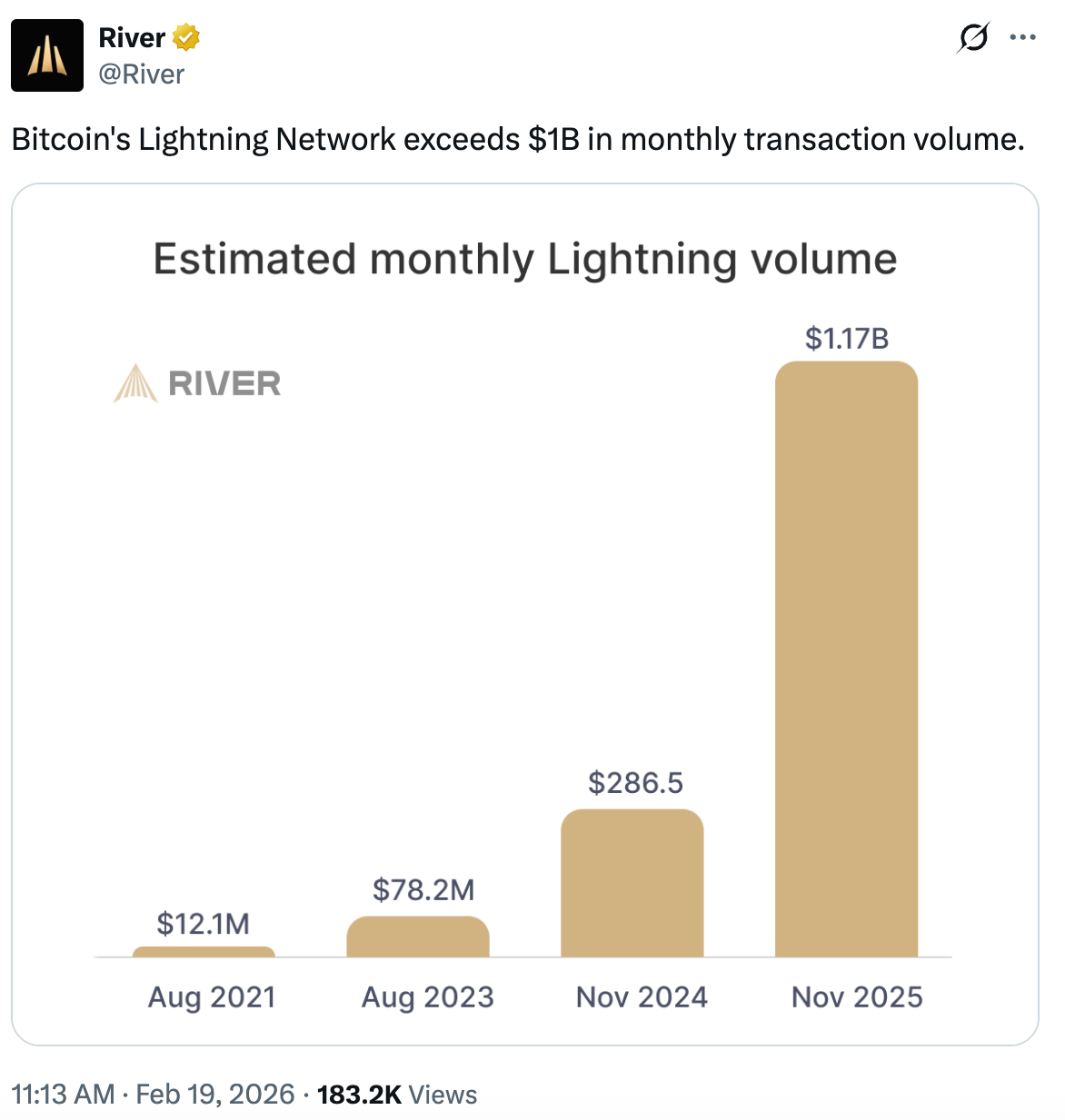
Lightning adoption has continued to grow. A February report from River estimated the network surpassed $1 billion in monthly transaction volume in late 2025, up from around $12 million in 2021.
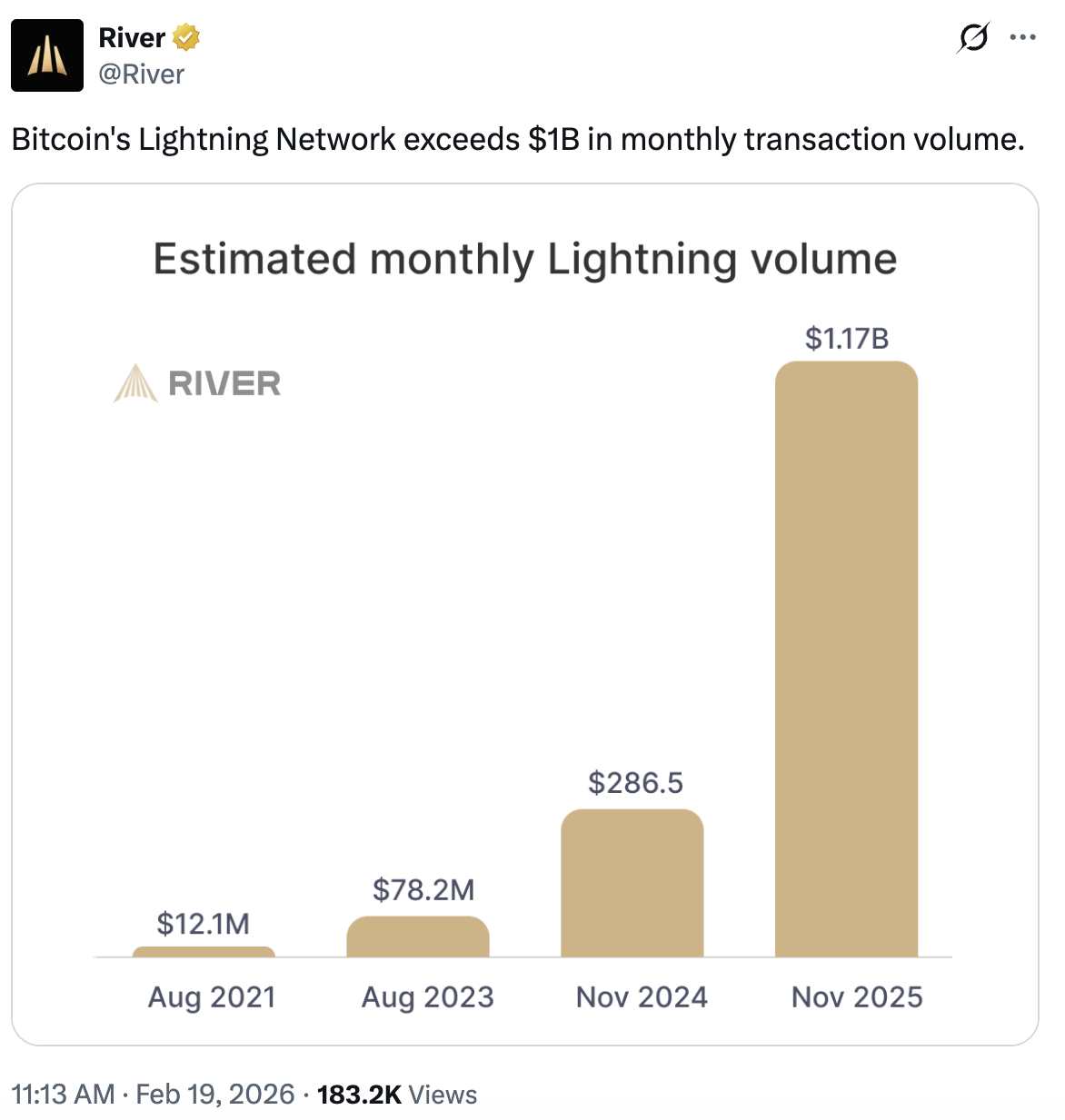
Lightning Network transaction volumes continue to grow. Source: River
Magazine: Bitcoin decouples from tech stocks, Ether eyes ‘selling wave’: Market Moves

Almost every phone and laptop runs on memory chips called DRAM. A US lawsuit says the three firms that make almost all of them keep prices high by limiting supply.
This is not the first accusation against them. Days later, the same firms unveiled a $650 billion spending plan and blamed the shortage on the AI boom.
DRAM Lawsuit Revives Old Cartel Claims
In 2005, Samsung admitted it fixed memory prices and paid a $300 million fine. It was the second-biggest penalty of its kind in US history. Some bosses went to prison. The new lawsuit says the companies later reinstated those same people in their jobs.
The new case is in a California federal court. The buyers suing include 14 people and three small computer shops. One of their law firms, Hagens Berman, won the payout from the original case years ago.
Here is the trick the lawsuit describes. Chips made for AI computers sell for far more than ordinary memory. Plaintiffs say the firms shifted factories toward AI memory chips and let everyday supplies run short. Ordinary memory prices then jumped about 700% in four years.
Shoppers cannot just buy elsewhere. These three firms (Samsung, SK Hynix, and Micron) make about 90% of the world’s DRAM. Building a new factory costs more than $15 billion and takes years.
Record AI Spending Lands Days Later
The lawsuit landed just before a big show. On June 29, Samsung Group promised about $650 billion of spending over 10 years. SK Group added its own similar chip plan.
The companies say the spending proves demand is real, not a scheme. Samsung and SK Hynix will each build two new factories. Together, they account for about 80% of the specialized memory that powers AI.
Micron made the same defense for an odd choice. In December, it closed its popular Crucial brand after 29 years, just as prices were peaking. Analysts still debate Micron’s AI bet.
“Micron has made the difficult decision to exit the Crucial consumer business in order to improve supply and support for our larger, strategic customers in faster-growing segments,” said Sumit Sadana, EVP and Chief Business Officer at Micron.
Follow us on X to get the latest news as it happens
Plaintiffs see it differently. Why quit a popular business when profits are highest, they ask, unless the aim is to keep supply tight?
What Comes Next for Memory Prices
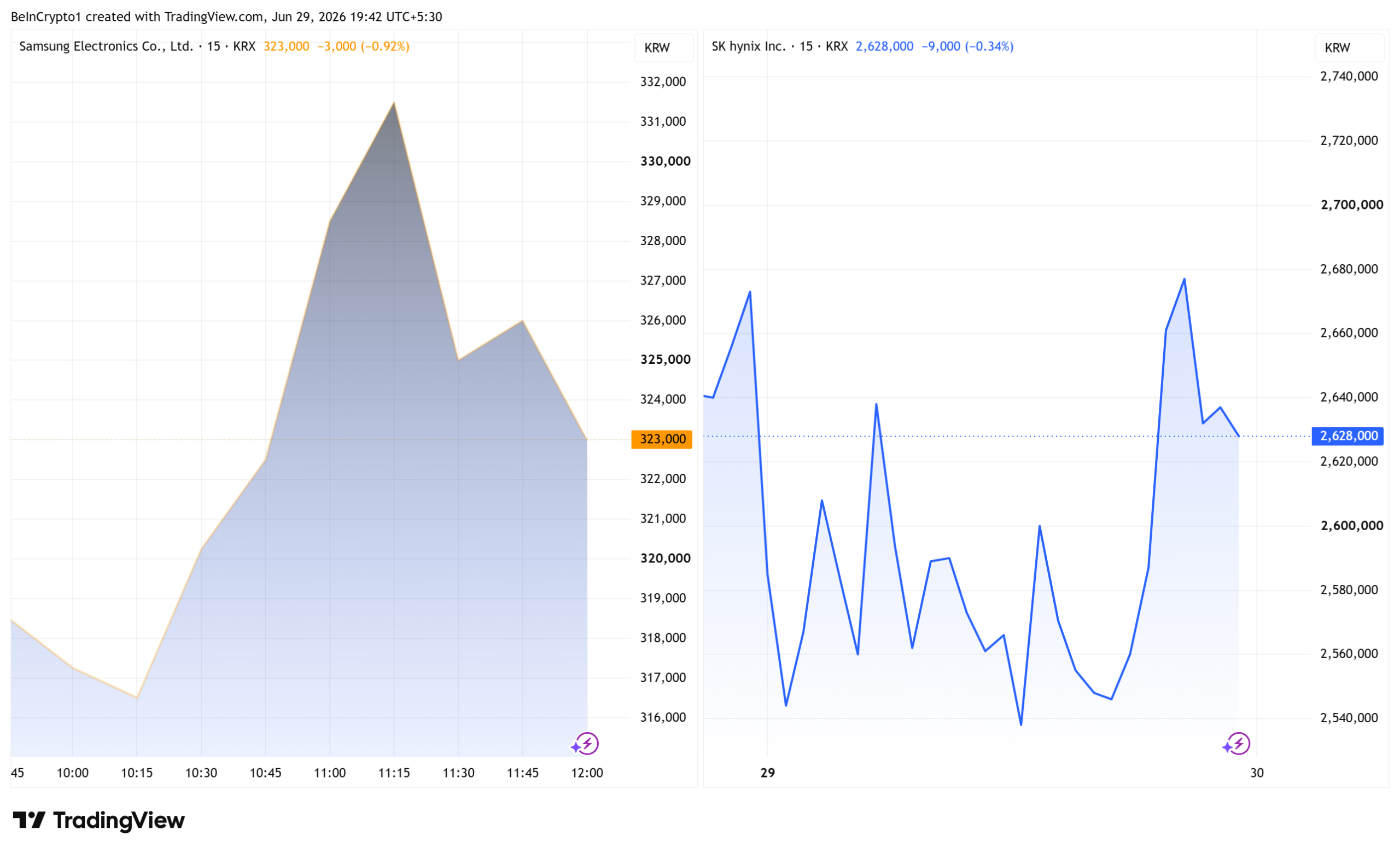
Investors were not impressed. Samsung stock fell 5.3% and SK Hynix dropped 3.4%. Apple has already raised some prices to cover higher chip costs.

The squeeze is not ending soon. The bank Jefferies expects memory prices to rise about 50% this quarter and 40% the next. It sees no real relief before 2028.
Winning will be hard. Two earlier versions of this lawsuit failed. Courts ruled that rising prices alone do not prove the firms planned it together.
This time, the plaintiffs say they have more. They point to the same companies, the same product, and some of the same bosses once sent to prison.
The post Memory Chip Giants Face Lawsuit Over 700% DRAM Price Spike appeared first on BeInCrypto.
The growth case rests on a simple dynamic: as bitcoin ownership broadens and prices rise, holders increasingly want to borrow against appreciated collateral for tax efficiency, working capital or lifestyle needs, while lenders gain comfort underwriting overcollateralized loans secured by a highly liquid asset.
The bitcoin lending industry was reshaped by the failures of Celsius, BlockFi, and Genesis during the 2022–2023 crypto credit crisis. While each firm had different business models, they shared common vulnerabilities: maturity mismatches, excessive leverage, concentrated counterparty exposure and the rehypothecation of customer assets.
Their collapses underscored the importance of conservative underwriting, transparent risk management, and fully collateralized lending-principles that have become the foundation of the next generation of BTC-backed lenders, the SVB report said.
Landmark transactions, including Ledn’s $188 million asset-backed security, the first bitcoin-collateralized deal to receive an investment-grade rating from a Nationally Recognized Statistical Ratings Organization, underscore growing confidence in BTC-backed credit structures, according to SVB.
While bitcoin-backed loan rates still generally range from 7.5% to 16% annual percentage rate (APR), well above comparable traditional financing, SVB expects increased participation from banks and private credit funds to narrow spreads over time. Early signs are already emerging, including Strike’s recently announced 7.5% rate on term loans larger than $5 million, backed by a $2.1 billion credit facility from Tether.
Crypto World
Ukraine transfers $8.3 million in seized crypto amid potential plans for strategic reserve


“This is the first time that seized crypto assets have actually been handed over to state management,” the statement reads. The funds came from wallets controlled by a member of an alleged international hacker group, the office said.
However, fund management involves custody of the digital assets, not ownership. The USDT sits in a wallet ARMA controls but has not been formally confiscated, a step that requires a conviction. ARMA already manages seized homes and cars, yet has no record of taking crypto onto its books.
Investigators accused the group of attacking people and companies in Europe and the U.S., stealing private data, demanding ransoms and laundering proceeds in Ukraine through real estate, cars and other high-value property.
Four suspects, including the alleged organizer, have been detained and remain in custody, the statement adds, and have not yet been convicted. Investigators estimate the damage from the group’s activities at more than $100 million.
Authorities have so far seized assets worth over $11.1 million, including homes, apartments, cars, $1 million in cash and virtual assets equal to more than $8.3 million.
The blog comes as the Senate races to advance the Digital Asset Market Clarity Act before lawmakers break for their August recess. While the bill cleared the Senate Banking Committee, negotiators are still trying to resolve several contentious issues, including ethics rules for senior government officials with crypto ties, liability protections for decentralized finance developers, stablecoin yield provisions and concerns from Senate Agriculture Committee Democrats.
Industry groups remain optimistic that the legislation can reach the Senate floor in July, but analysts have warned that failing to pass it before the August recess would sharply reduce its chances of becoming law this year.
In JPMorgan’s view, assets that function like securities should continue to follow securities laws regardless of whether they are issued on a blockchain. Likewise, decentralized trading platforms that serve as exchanges or brokers should be held to the same standards for market integrity, disclosure and customer protection.
JPMorgan also devoted considerable attention to stablecoins, an area where many banks see both commercial opportunity and competitive pressure. While stablecoins and tokenized deposits could improve payment efficiency, the executives warned against allowing products that resemble bank deposits to operate outside the capital, liquidity and consumer protection rules that apply to banks. Features such as rewards or cashback for holding balances, they wrote, could lead consumers to assume they have protections that may not exist, increasing the risk of rapid withdrawals during times of market stress.
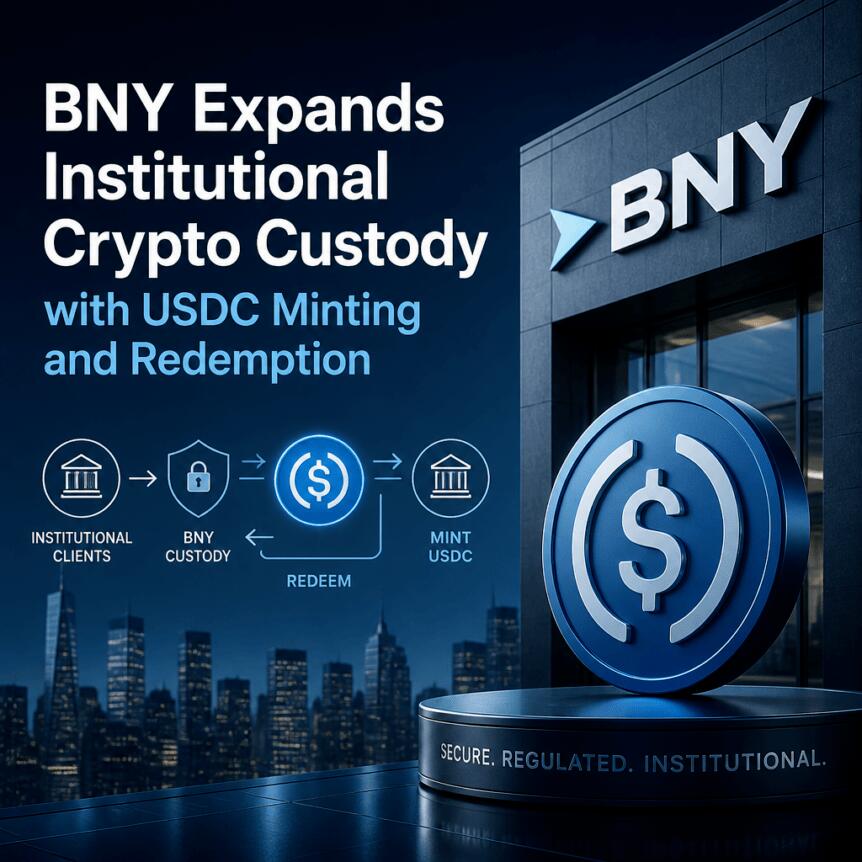
BNY has upgraded its Digital Asset Custody platform to support client use of Circle’s USD Coin (USDC), adding the ability for institutional users to convert US dollars to USDC, store it, and later redeem it back into dollars through the bank.
The bank says this makes USDC the first stablecoin available on its custody service, with plans to expand to other stablecoins and related “digital cash” workflows over time. The move follows BNY’s broader push into crypto-adjacent infrastructure, including custody offerings for major tokens.
Key takeaways
- BNY’s Digital Asset Custody now supports USDC for institutional clients, including storage, transfers, and redemption into USD through the bank.
- Clients can convert dollars into USDC and redeem back into dollars directly within BNY’s platform workflow.
- BNY positions the upgrade as an extension of its existing role as custodian of assets backing USDC reserve arrangements.
- DefiLlama data referenced by BNY puts USDC at more than $73.8 billion in circulation, making it the world’s second-largest stablecoin by market capitalization.
- BNY’s step aligns with a broader wave of stablecoin-related product launches by major banks and asset managers.
BNY turns custody into a stablecoin cashflow tool
BNY’s announcement goes beyond basic custody support. According to the bank, the platform enables institutional clients to convert USD into USDC and redeem USDC back into USD, with storage and transfers of USDC handled through BNY’s custody rails.
For investors and treasury teams, the practical value is that stablecoin operations can be consolidated inside an institution’s existing banking relationship rather than requiring separate workflows across multiple counterparties. While many crypto platforms can hold stablecoins, BNY’s framing emphasizes continuity with traditional banking functions—especially the ability to move between dollars and USDC.
BNY also said the service is intended to expand. Over time, it plans to add additional stablecoins and broader “digital cash” use cases, indicating this is the start of a wider product roadmap rather than a one-off integration for USDC.
Building on BNY’s USDC reserve-custodian role
The expansion is also positioned as a deepening of BNY’s existing partnership with Circle. BNY has previously served as the primary custodian of the assets backing USDC, and it is now extending that relationship from reserve safeguarding into client-facing stablecoin custody and operations.
BNY states that it oversees $59.3 trillion in assets under custody and administration and serves more than 90% of Fortune 100 companies. In its filing to contextualize the move, the bank also cited DefiLlama data showing USDC as the second-largest stablecoin by market capitalization, with more than $73.8 billion in circulation.
That matters because stablecoin adoption has often depended not only on token liquidity and ecosystem growth, but also on credible institutional infrastructure—particularly for regulated participants who want compliance-friendly custody, transfer controls, and clearer operational processes.
Stablecoin infrastructure is becoming a mainstream banking product
BNY’s latest upgrade lands in the middle of a wider trend: major financial institutions are developing products that sit alongside stablecoin issuance, reserve management, and—critically—compliance-aligned investment vehicles.
In May, JPMorgan filed to launch a tokenized money market fund aimed at stablecoin issuers, designed to allow reserve assets to be held in a regulated investment vehicle while earning interest. The proposal described an Ethereum-based fund investing in US Treasury bills and overnight repurchase agreements used to back payment stablecoins.
Earlier in the month, State Street launched a government money market fund for stablecoin issuers aligned with the GENIUS Act. According to the coverage cited in the article, the fund invests in US government securities and repurchase agreements and lists State Street Bank and Anchorage Digital among its initial investors.
Large firms are also exploring other angles of the stablecoin ecosystem. The article notes that Bank of America said it was exploring stablecoins to modernize payments infrastructure, while Fidelity Investments launched a US dollar-backed stablecoin (FIDD) after receiving conditional approval to operate a national trust bank.
While these initiatives are not identical—some target reserve investment structures and others focus on payments modernization—the underlying pattern is clear: traditional institutions are treating stablecoins less as an experimental fringe product and more as an infrastructure layer that can be standardized for regulated use.
Where the market stands for stablecoins
BNY’s move also fits the scale of the stablecoin market itself. The article cites DefiLlama estimates valuing the stablecoin sector at about $313 billion, with Tether’s USDT accounting for roughly 60% of that market.
USDC’s prominence is reflected in BNY’s cited circulation figure, and its position as a large, widely supported stablecoin helps explain why institutional custodians are prioritizing it. However, the next question for market participants is whether BNY’s platform expansion beyond USDC will concentrate on a handful of other major stablecoins or broaden across more issuers and tokens over time.
Investors and operators should watch how quickly BNY rolls out additional stablecoins and whether it extends the platform’s “digital cash” workflows into more payment or treasury use cases, since the pace of expansion will signal how seriously big banks are committing to stablecoin settlement as an operational standard rather than a pilot feature.
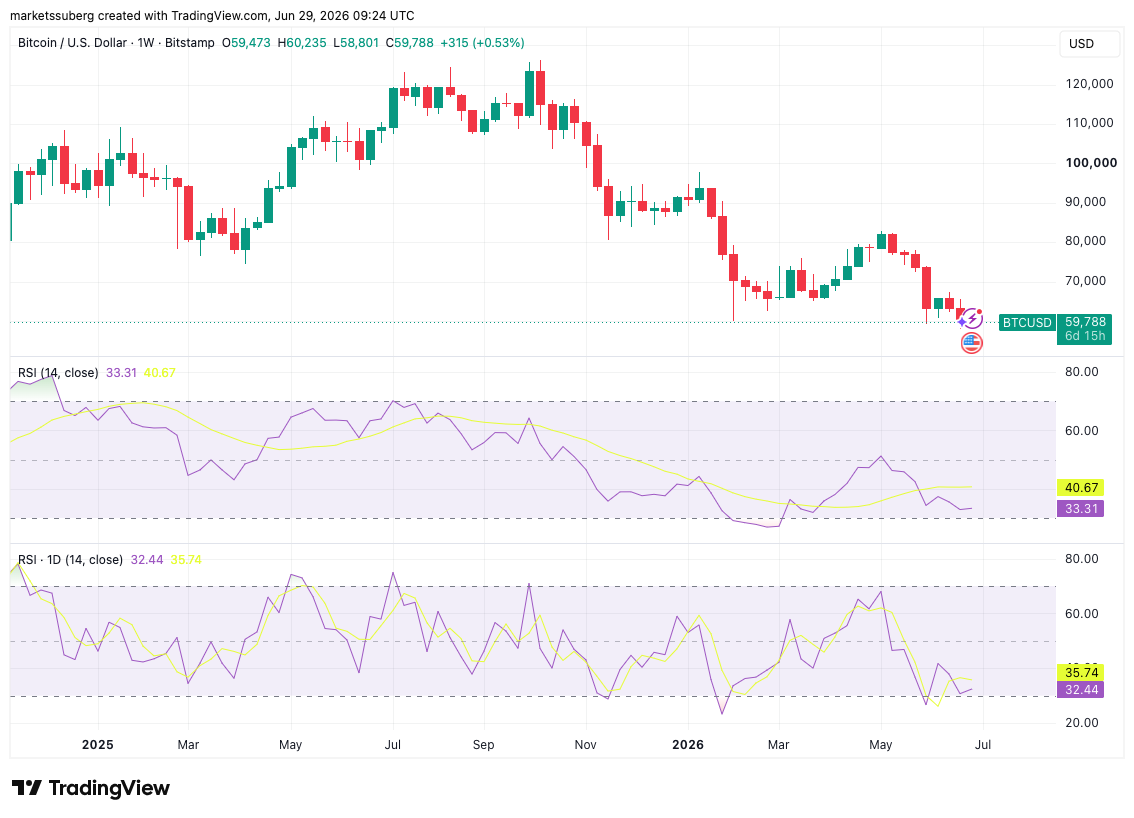
Bitcoin (BTC) nears the end of June and Q2 2026 threatening to lose $60,000 support. Can RSI divergences save bulls?
Key points:
- Bitcoin RSI data is printing key bullish divergences that were absent from previous dips in 2026.
- Traders remain concerned about a support collapse as analysis makes a key 2022 bear-market comparison.
- Macro data hinges on the labor market and Iran peace deal, with a potential crypto tailwind due.
- Where June fails, July historically comes through for Bitcoin bulls.
- Onchain data sees Bitcoin’s “first bottoming flag” already present.
Bitcoin RSI divergence stands out in 2026 bear market
A classic BTC price leading indicator continues to boost the odds of a recovery as June comes to an end, TradingView data shows.
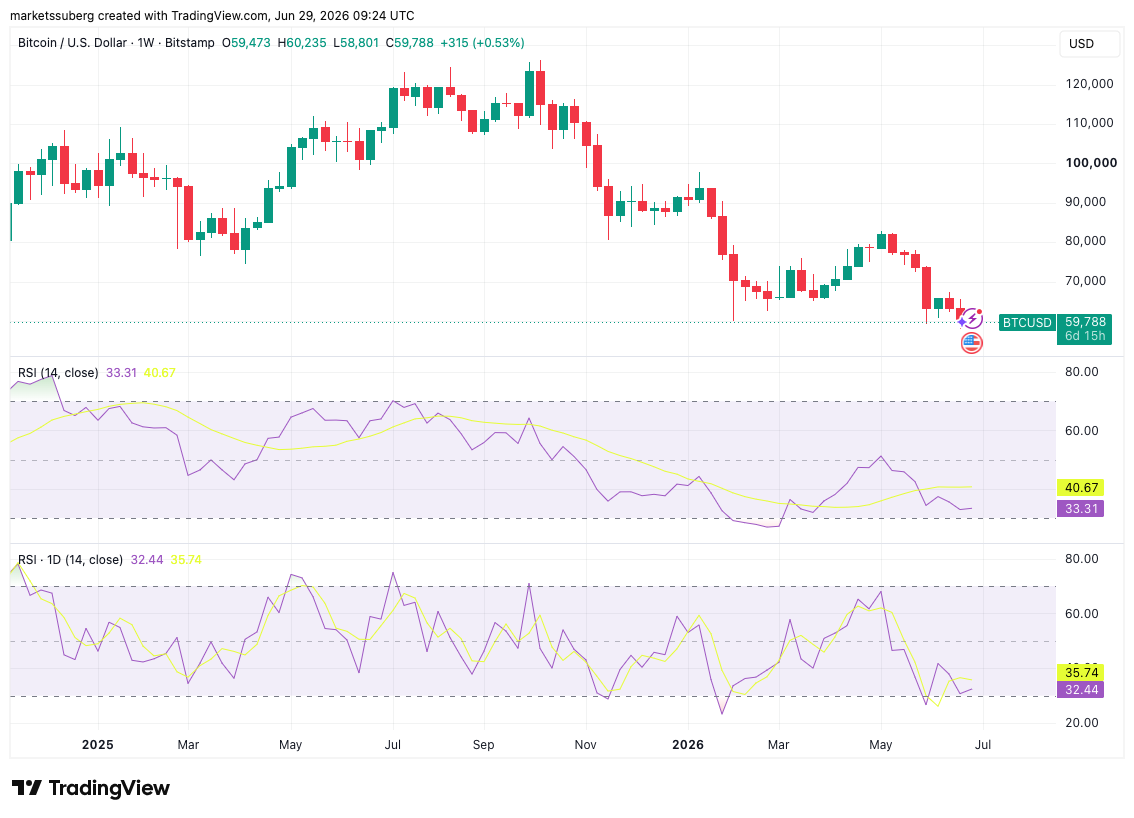
BTC/USD one-week chart with daily, weekly RSI. Source: Cointelegraph/TradingView
As Cointelegraph reported, relative strength index (RSI) cues across multiple time frames are locking in bullish divergences with price.
“$BTC is printing a bullish RSI divergence while a potential double bottom forms,” Bitcoin whale Gerla, owner of the Gerla trading group, told X followers about the four-hour chart on Sunday.
“This is getting interesting.”
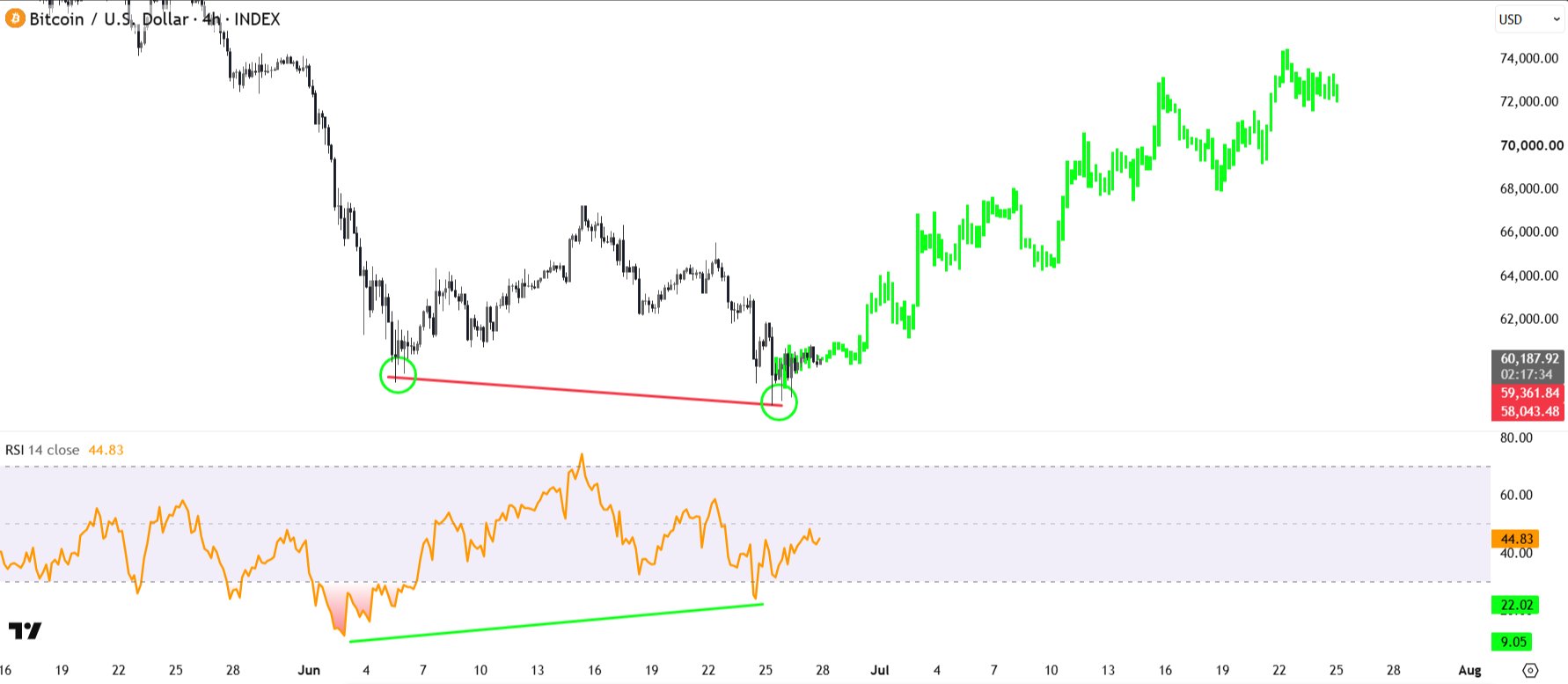
BTC/USD four-hour chart with RSI data. Source: Gerla/X
The sense of anticipation is increasing across the trading community, with pseudonymous trader and commentator Heisenberg noting a key divergence between Bitcoin’s latest macro lows and previous dips in 2026.
“Small sample size but still noteworthy. Notice the last two oversold RSI divergences (in orange) formed bottoms,” they wrote alongside a chart on X.
“The last two recent drops (in blue) had no RSI divergences… UNTIL NOW… Is this the one?”
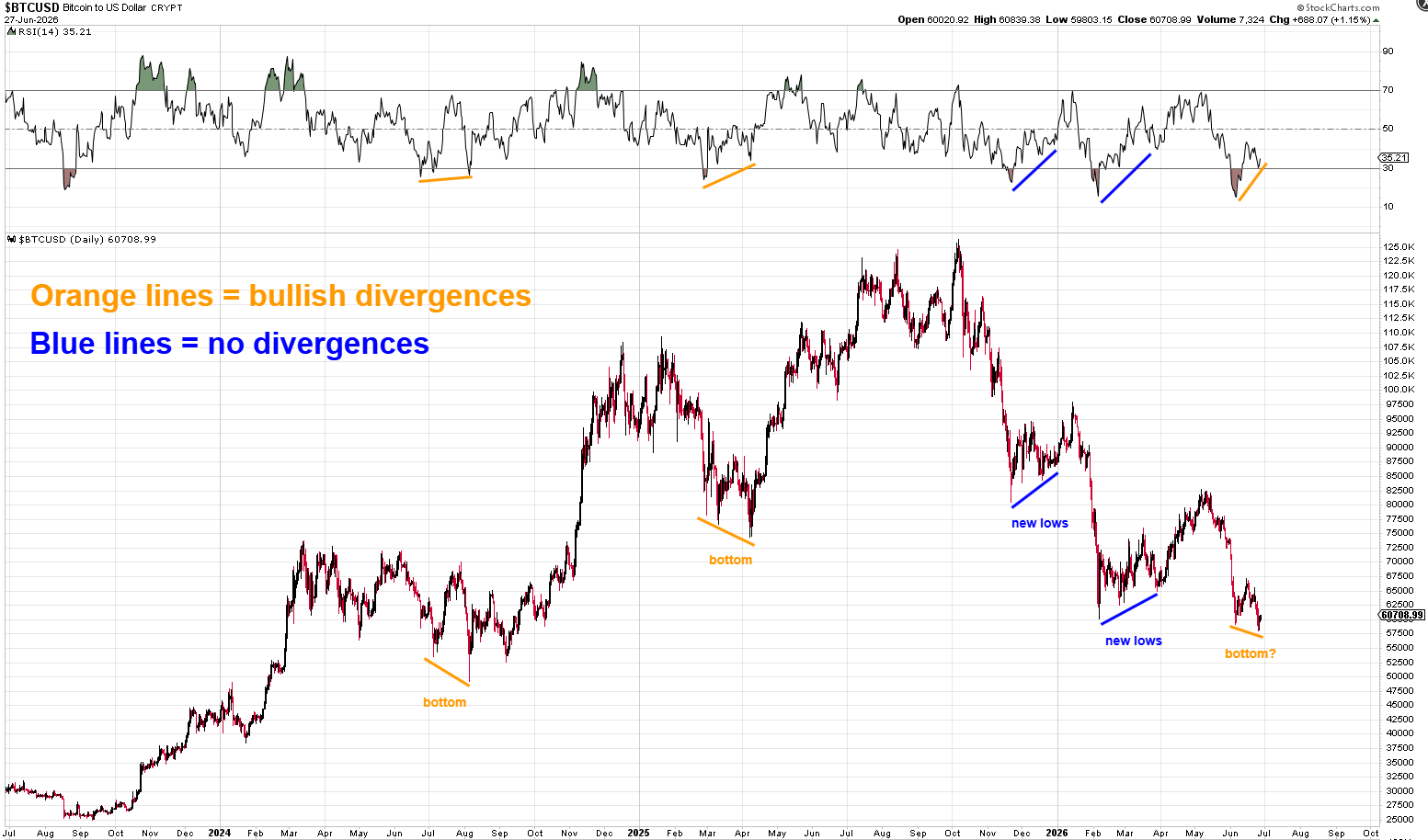
BTC/USD one-day chart with RSI data. Source: Heisenberg/X
RSI divergences have accompanied some of the most significant trend changes in Bitcoin history, including the end of its previous bear market in late 2022.
$60,000 sparks mid-2022 comparison
Bitcoin saw modest upside as the week began after sealing a weekly close below $59,500 — its first since September 2024. $60,000 is now increasingly acting as resistance, with bulls unable to exert significant momentum.
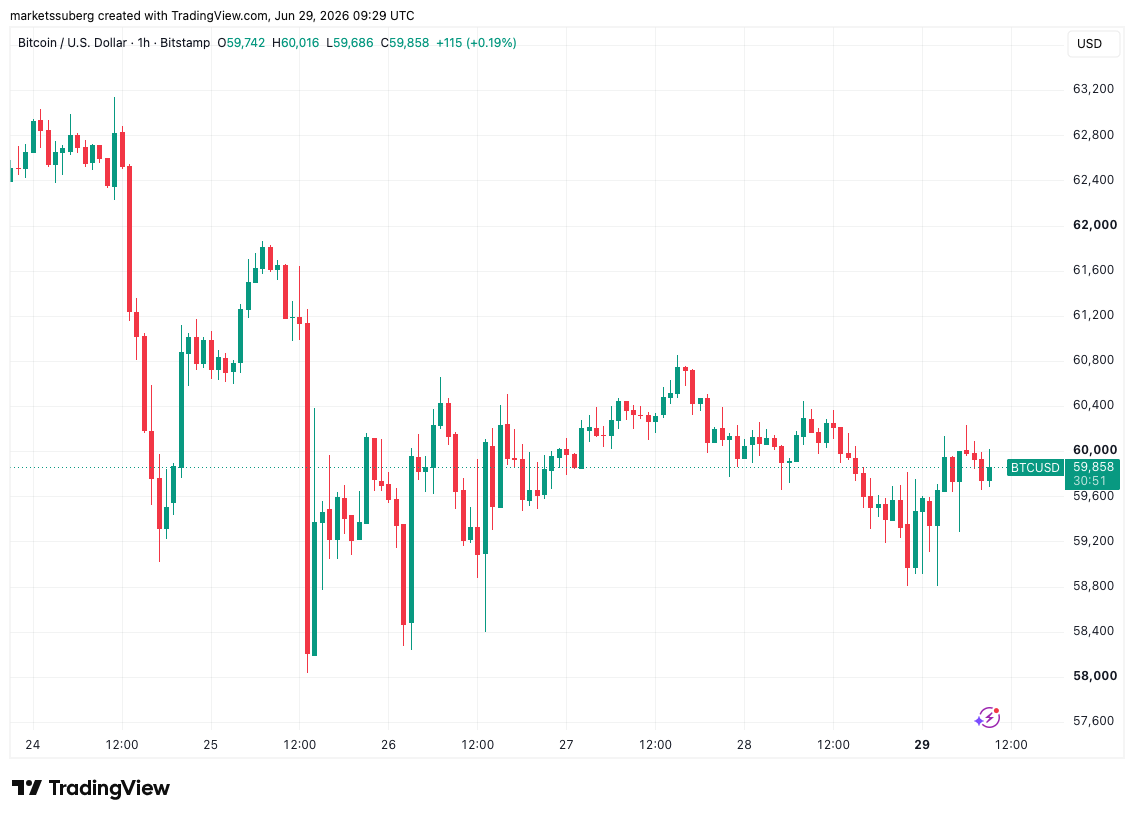
BTC/USD one-hour chart. Source: Cointelegraph/TradingView
“Quite funny enough, this is not a bad start of the week for Bitcoin as it bounces upwards,” crypto trader and analyst Michaël van de Poppe responded in his latest X analysis.
“We need to see way more momentum, and a clear break above $61,000, however, the bullish divergence is there and shouldn’t be ignored.”
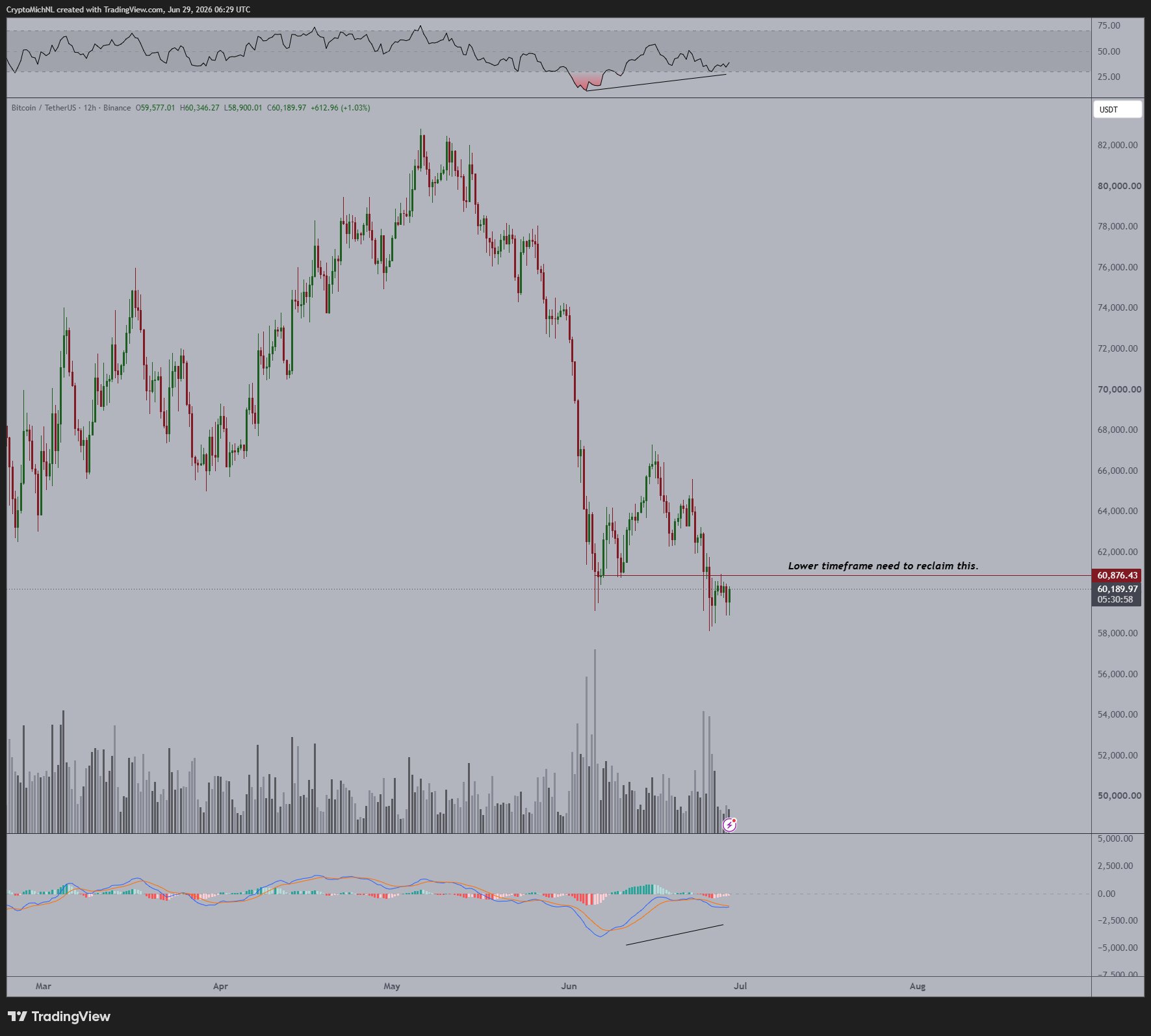
BTC/USDT 12-hour chart with RSI, volume, MACD data. Source: Michaël van de Poppe/X
With the monthly and quarterly closes approaching, trader Killa suggested that upcoming BTC price action would be particularly significant within the long-term trend.
“A few more days and $BTC reaches my 5th pivot. For the past 18+ months, we’ve consistently seen major directional shifts around this point at the start of each month,” the explained on Monday.
“Whether it’s a pivot low or a pivot high, this is a key time to start paying close attention.”
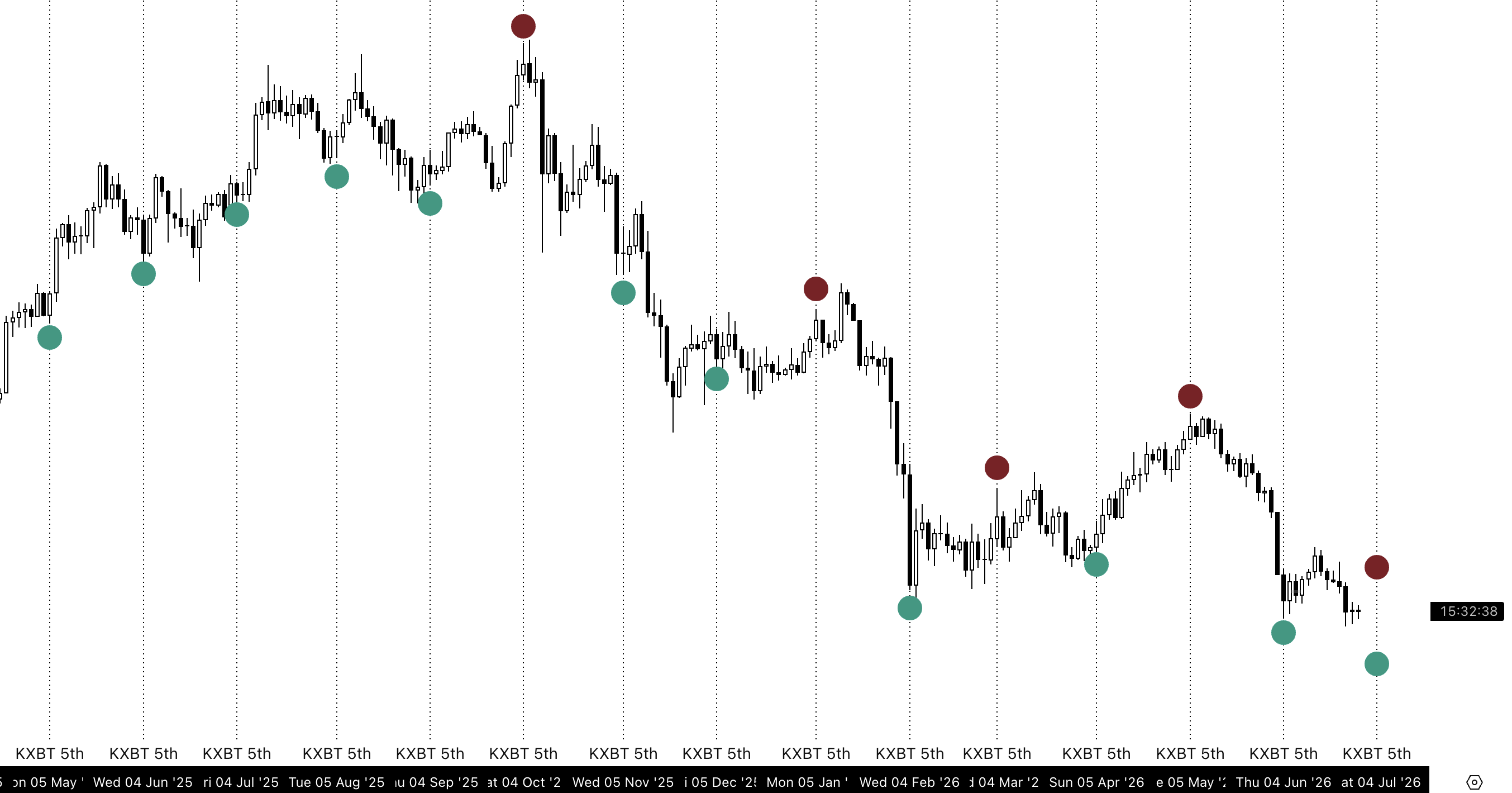
BTC/USD chart. Source: Killa/X
Data from monitoring resource CoinGlass puts June losses for BTC/USD at nearly 19% — the worst since the 2022 bear market and the sharpest of the year so far.
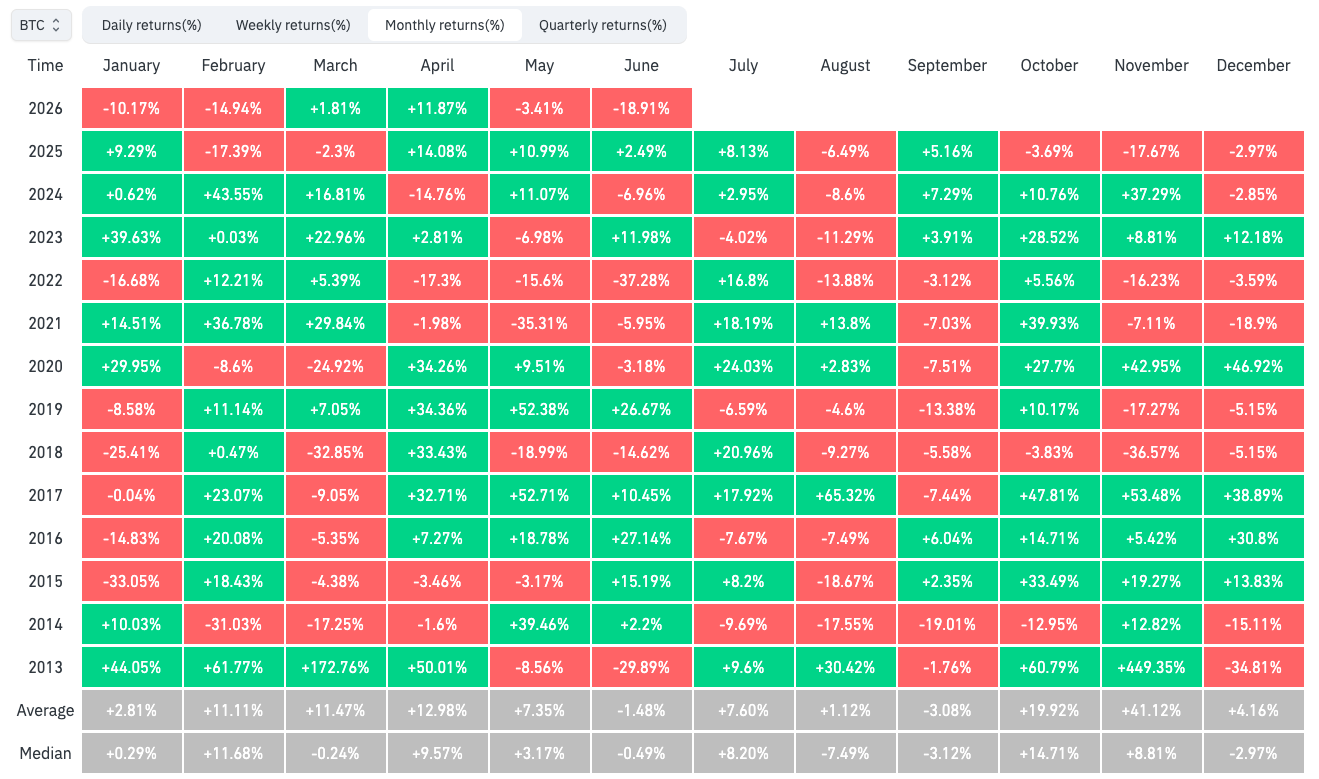
BTC/USD monthly returns (screenshot). Source: CoinGlass
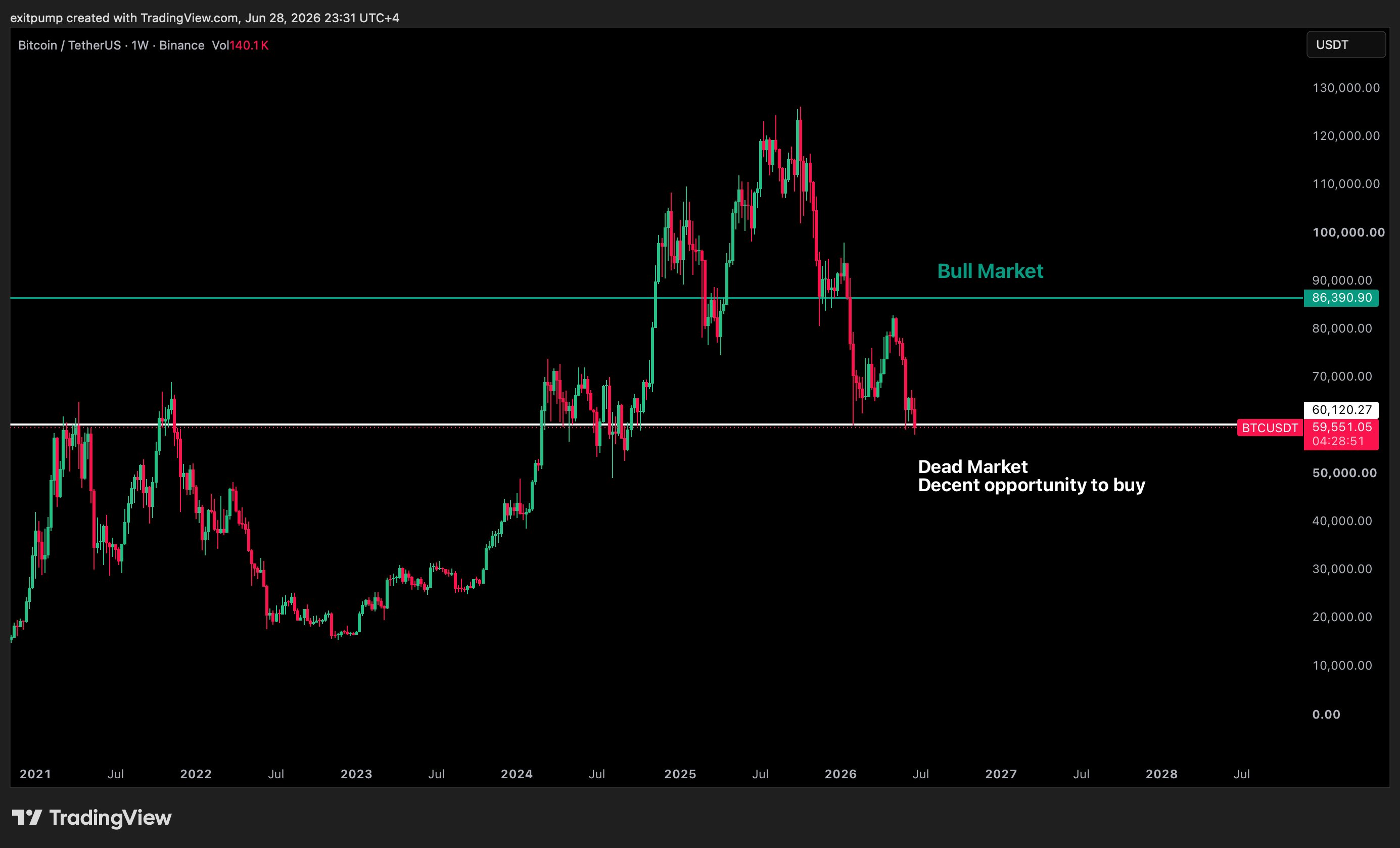
On the fate of $60,000, meanwhile, commentator Exitpump argued that patience was required.
“Significant support and resistance levels rarely break on the first attempt. They usually require a lot of time, effort, and repeated tests before finally giving way,” they wrote at the weekend.
“60K now reminds me of 30K in 2022.”
BTC/USDT one-week chart. Source: Exitpump/X
Bitcoin spent several months interacting with the $30,000 mark in mid-2022 before finally losing it as support, putting in its bear-market low around five months later.
To the upside, Exitpump expected that a “full blown bull market will be back” once $86,000 reappears.
PMI stands out for crypto in week’s macro prints
A mixed bag of US macro data makes for a “short but busy” four-day trading week to end Q2.
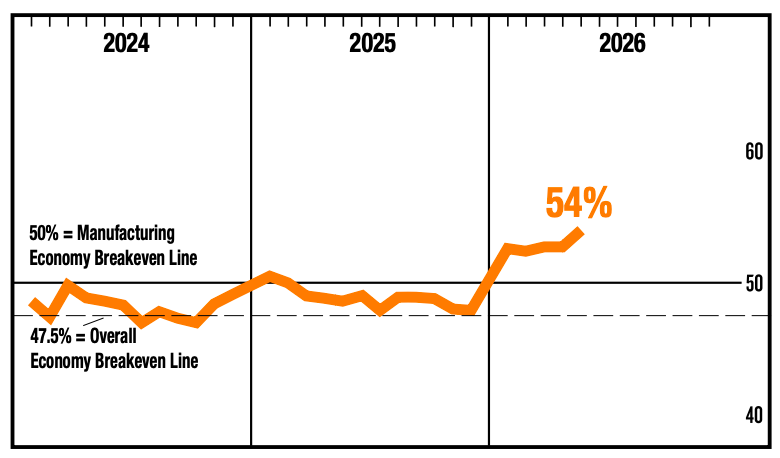
Wednesday will see the latest Manufacturing Purchasing Managers Index (PMI) report from the Institute of Supply Management (ISM) — a potential tailwind for crypto markets.
This continues its breakout from a multiyear downtrend, and estimates see bullish data continuing with a score of around 54, albeit with a potential mild decrease versus last month.
US manufacturing PMI data (screenshot). Source: ISM
Another focus is the labor market as the market reacts to various employment numbers, including the June nonfarm payrolls report on Thursday.
“We have a short but busy week ahead,” trading resource The Kobeissi Letter summarized in a thread on X.
Kobeissi noted that the week would start with a reaction to geopolitical developments as the US and Iran agree to discuss their fragile peace agreement.
“This week also marks the end of Q2 2026 with earnings season on the horizon,” it added.
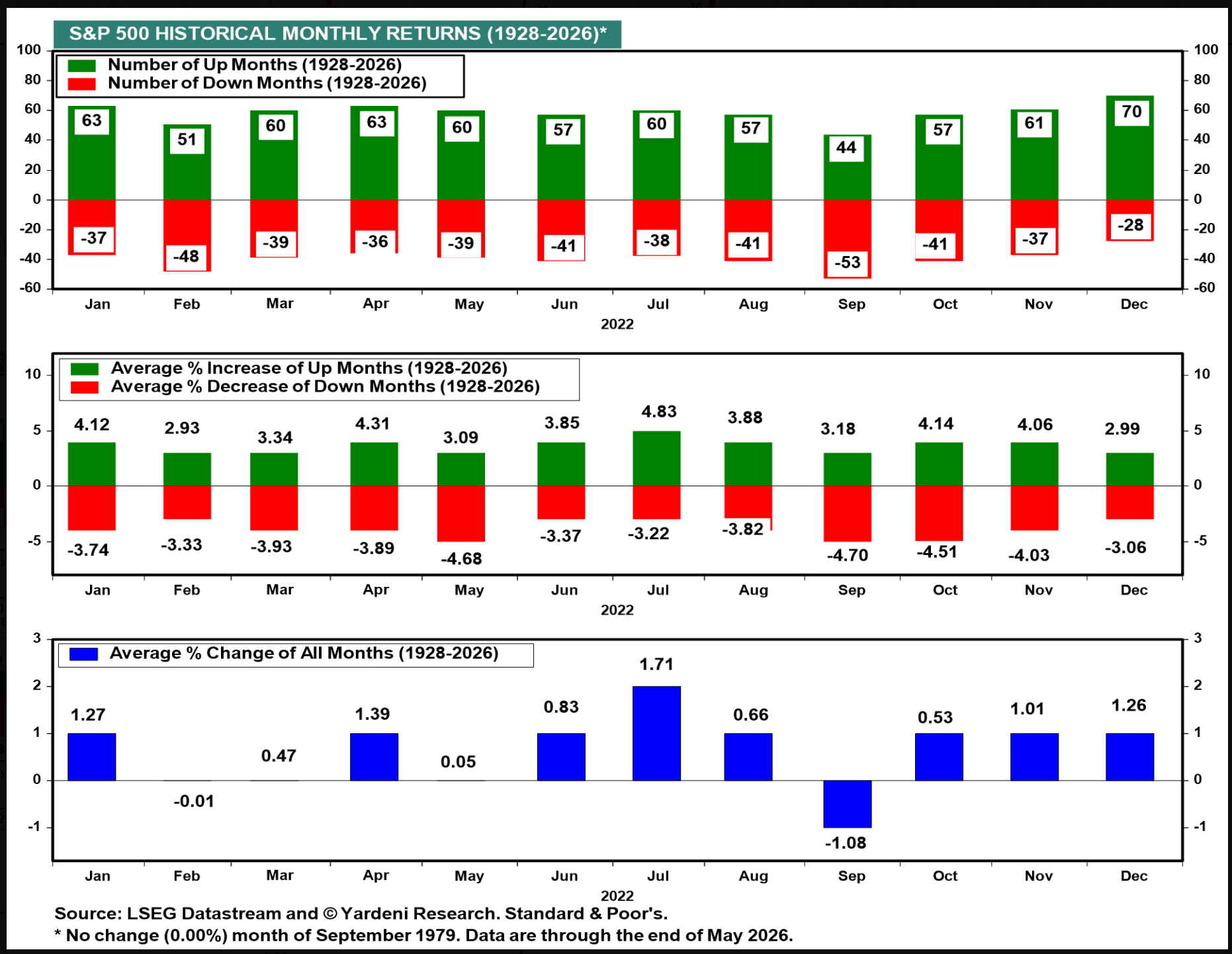
In the latest edition of its regular newsletter, The Market Mosaic, trading resource Mosaic Asset Company suggested that seasonality could boost stocks next.
“The S&P 500 is about to enter one of the best months of the year for calendar seasonality,” it explained.
“While weakness in the back half of June is common, July ranks as the best performing month based on data going back nearly 100 years.”
S&P 500 seasonality data. Source: Mosaic Asset Company
Bitcoin has seen mixed correlation activity versus equities in recent months, with even crypto-industry analysis calling the BTC-tech stock relationship “overblown.”
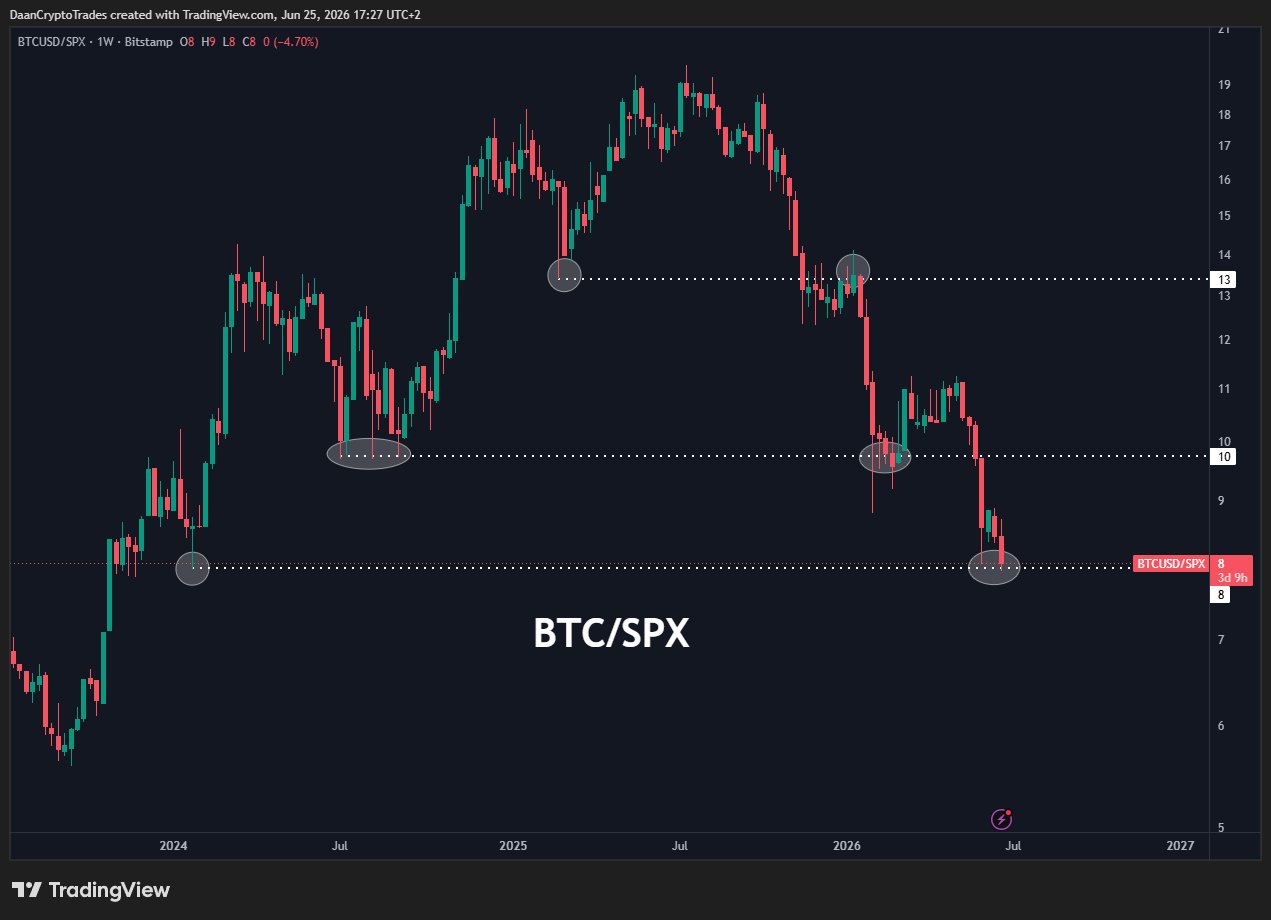
“$BTC vs S&P 500 back at the level it held during the Yen Carry trade blowup and the initial June low,” trader Daan Crypto Trades observed this weekend, referring to BTC price downside triggers over the past year.
“If you believe in people trading relative values or ratios on different assets, then you will see that this is an important level to hold for $BTC relative to stocks. Because down here there is not much support left until you’re at the late 2023 pre spot ETF rally levels.”
BTC/USD vs. S&P 500 one-week chart. Source: Daan Crypto Trades/X
Analysis expects July BTC price relief
While a copycat move by Bitcoin in the face of a stocks rebound is anything but guaranteed, history favors a return to strength as July begins.
Recent research by trader and analyst Rekt Capital reveals that in previous years, July price performance tends to offer a counterpoint to what occurred in June.
“If history repeats for Bitcoin, then the pattern may be as follows for next couple of months: June ends as a red month, July could be green in response, And August could therefore be red to cancel out July’s upside completely,” he told X followers last week.
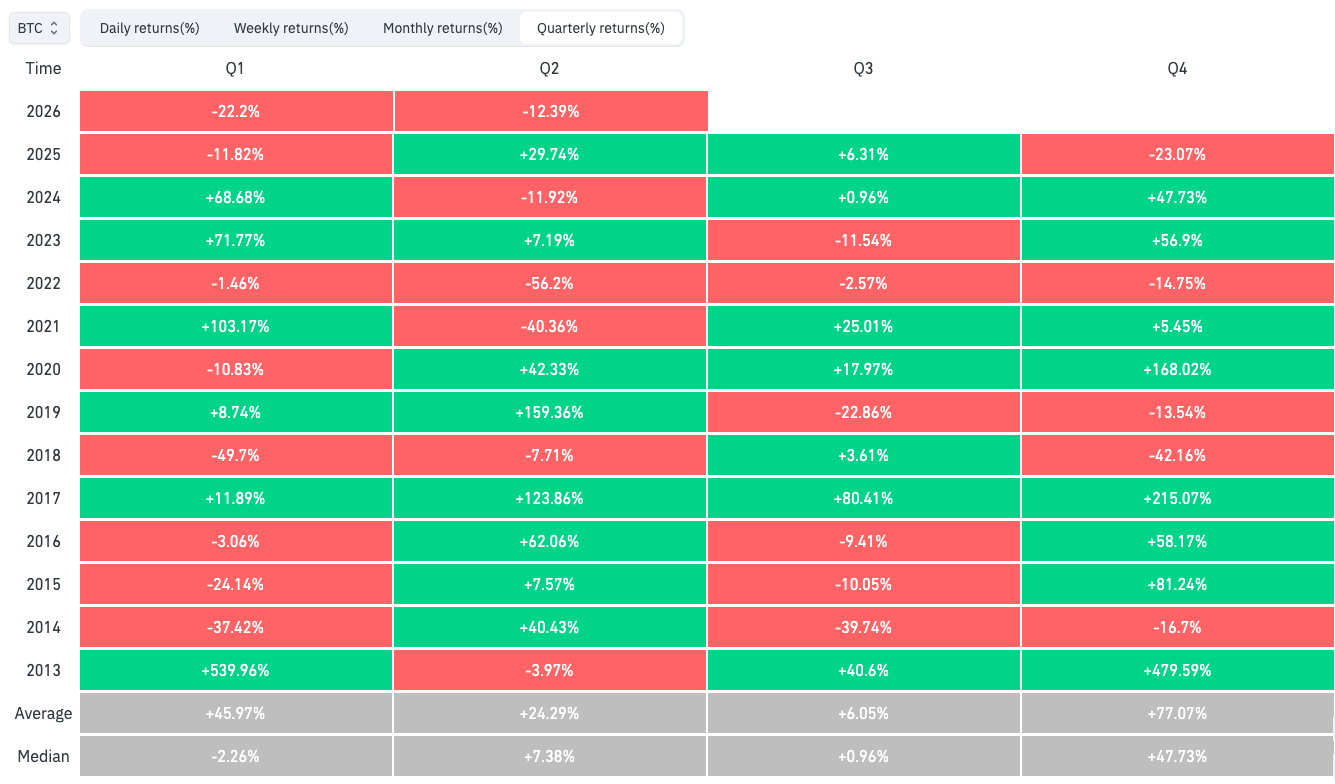
BTC/USD quarterly returns (screenshot). Source: CoinGlass
CoinGlass data confirms the divergence between June and July moves, with only three exceptions since 2013. Among them is 2025, when BTC/USD finished both months in the green.
So far this year, the pair is down 18.4% in June, its worst performance since the 2022 bear market.
As Cointelegraph reported, Rekt Capital believes that the latest bear trend still has months left to play out, with new lows possible as a result before a long-term floor is in. A chart uploaded to X put the bear market as 71% complete as of June 22.
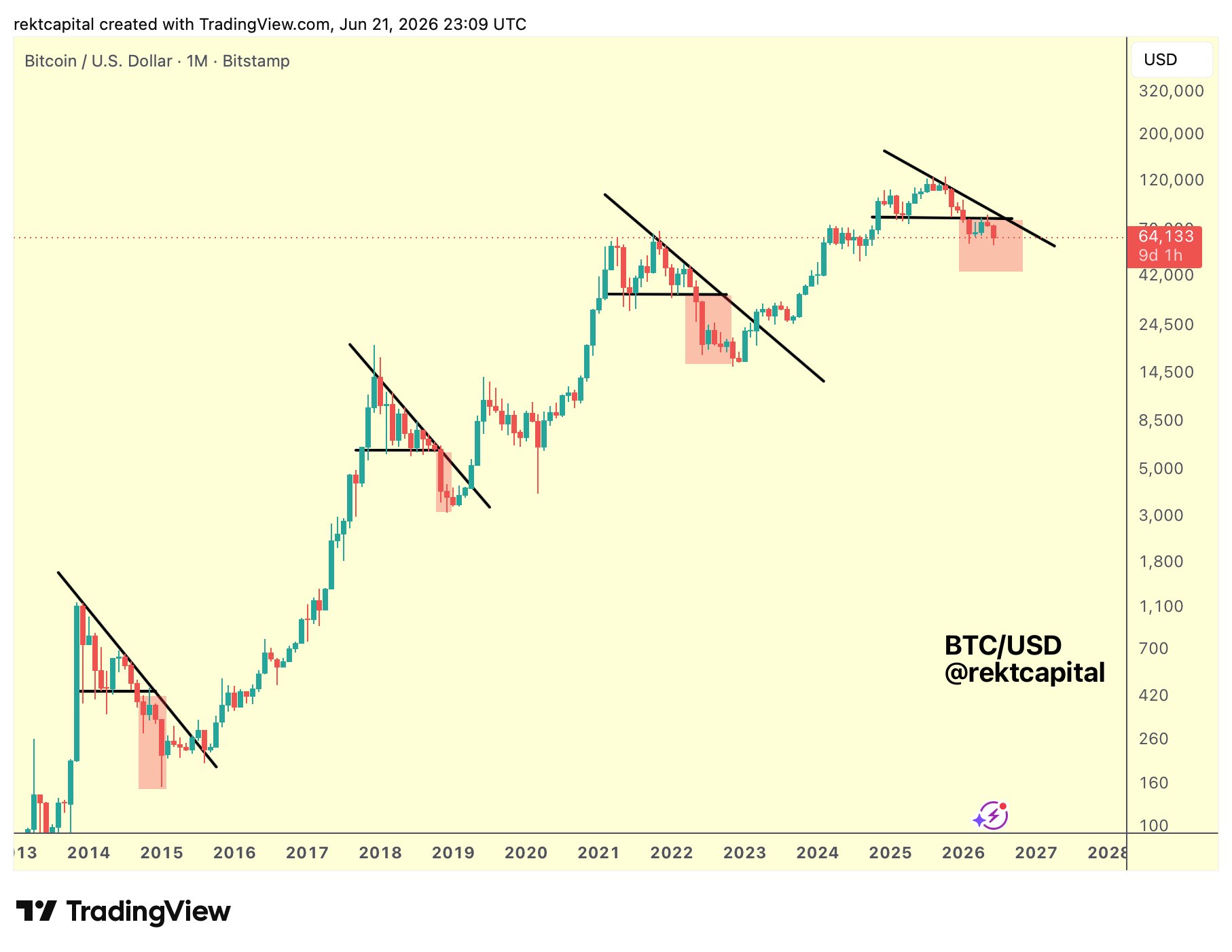
BTC/USD one-month chart. Source: Rekt Capital/X
Bitcoin metric produces “first bottoming flag”
Opinions still differ when it comes to whether Bitcoin has already seen its bear-market bottom.
Related: Bitcoin falls under $60K, but traders anticipate 15% bounce
As Cointelegraph continues to report, market participants broadly agree that more progress is required before a convincing downtrend reversal enters.
In its latest research, onchain analytics platform CryptoQuant adds to that consensus — but with an early silver lining for Bitcoin bulls.
“Bitcoin is starting to show the first clear sign of a deeper market clean-up,” contributor I. Moreno wrote in a QuickTake blog post on Sunday.
Moreno referenced a lesser-known onchain indicator, the UTXO Block P/L Count Ratio Model. This compares the aggregate profitability of blocks of unspent transaction outputs, or UTXOs.
“In simple terms, it measures how broad the market’s profit base is beneath price. When the ratio is high, most UTXO blocks remain in profit. That usually reflects a market still carrying a large amount of unrealized gains, which also means higher distribution risk,” the post explains.
“When the ratio collapses toward the lower range, the opposite happens: profitability compresses, losses become more widespread, and the market starts moving into a more advanced reset phase.”
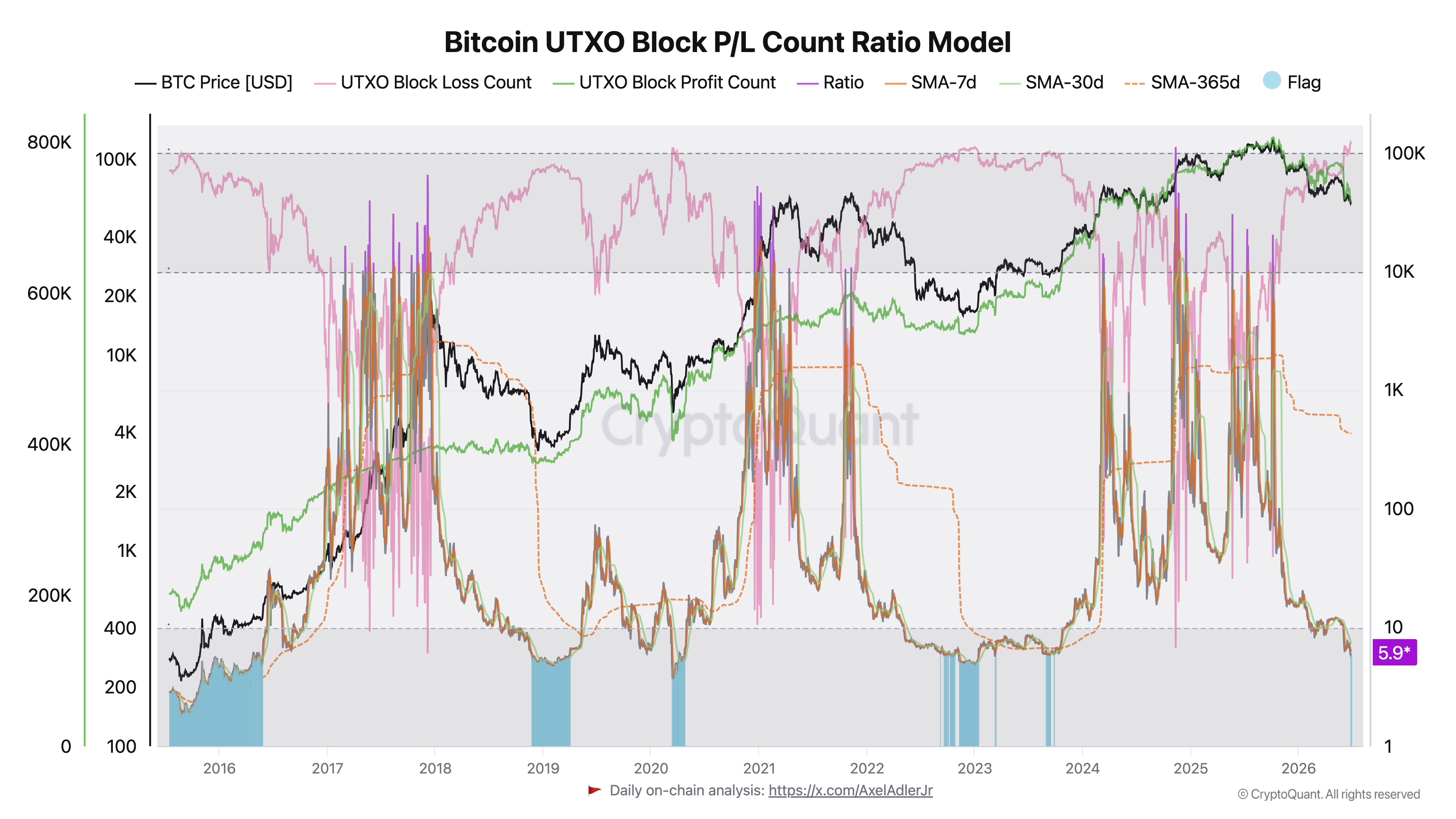
Bitcoin UTXO Block P/L Count Ratio. Source: CryptoQuant
The Ratio currently measures 5.9, marking its lowest level since 2022 and one of its lowest on record. Moreno called it “Bitcoin’s first bottoming flag” of the current bear market.
“The main takeaway is that BTC is finally showing evidence of a meaningful internal clean-up. But if history is a guide, the market may still need to absorb more stress before the bearish phase can fully exhaust itself,” he concluded.
Crypto World
Wall Street’s BNY expands stablecoin ties with Circle, lets institutions mint and hold USDC
Unlike cryptocurrencies such as bitcoin, stablecoins are designed to maintain a fixed price pegged to a fiat currency, typically to the U.S. dollar and backed with cash and short-term U.S. Treasuries. Originally used primarily by crypto traders on exchanges, they are increasingly finding broader uses in payments, cross-border transfers and securities settlement.
Institutions see significant room for growth. Standard Chartered projected the stablecoin market could expand from roughly $300 billion today to $2 trillion by the end of 2028, while Citigroup estimated it could reach $4 trillion by 2030 in its base case. Circle’s USDC is the second-largest stablecoin with a market capitalization of over $73 billion.
“As digital assets become increasingly integrated into financial markets, institutions need infrastructure that seamlessly works across traditional and blockchain-based systems,” said Carolyn Weinberg, chief product and innovation officer at BNY.
Ethena says it has integrated USDe, its synthetic dollar, into BlackRock’s Aladdin platform. The move targets the institutions that run portfolios and risk on the system.
The announcement also named BlackRock’s tokenized fund as the white-label backing. BlackRock has not published a matching statement.
USDe Gains a Path to Aladdin’s Institutions
USDe is one of the larger dollar-pegged tokens, with a supply near $4.5 billion as of June 29. It holds its peg with a delta-neutral strategy that pairs staked Ether (ETH) with short perpetual futures. That structure sits at the core of Ethena’s synthetic dollar model.
Ethena pitched the integration as institutional distribution. Its post pointed to the scale of capital that Aladdin already touches.
“The integration of USDe on Aladdin provides unique institutional access for the >$20 trillion of assets managed by financial institutions on Aladdin,” Ethena wrote in the announcement.
Follow us on X to get the latest news as it happens
BlackRock does not publish a single Aladdin asset figure, so that scale reflects the company’s own claim.
Native support would let those institutions track and analyze USDe inside tools they already run. For now, Ethena has not detailed how deep the integration goes.
BUIDL Deepens an Existing BlackRock Tie
The relationship is not new. BUIDL, the BlackRock USD Institutional Digital Liquidity Fund, launched in March 2024 and ranks among BlackRock’s largest tokenized funds.
BUIDL already provides most of the reserves behind USDtb, the stablecoin backed by BUIDL that Ethena launched in late 2024. Naming it the primary asset for a white-label product lets other firms issue branded versions of Ethena’s dollars.
A new liquidity facility will connect BUIDL with USDe and USDtb for on-chain transactions. It builds on earlier work with Securitize that enabled around-the-clock swaps between the fund and Ethena’s tokens.
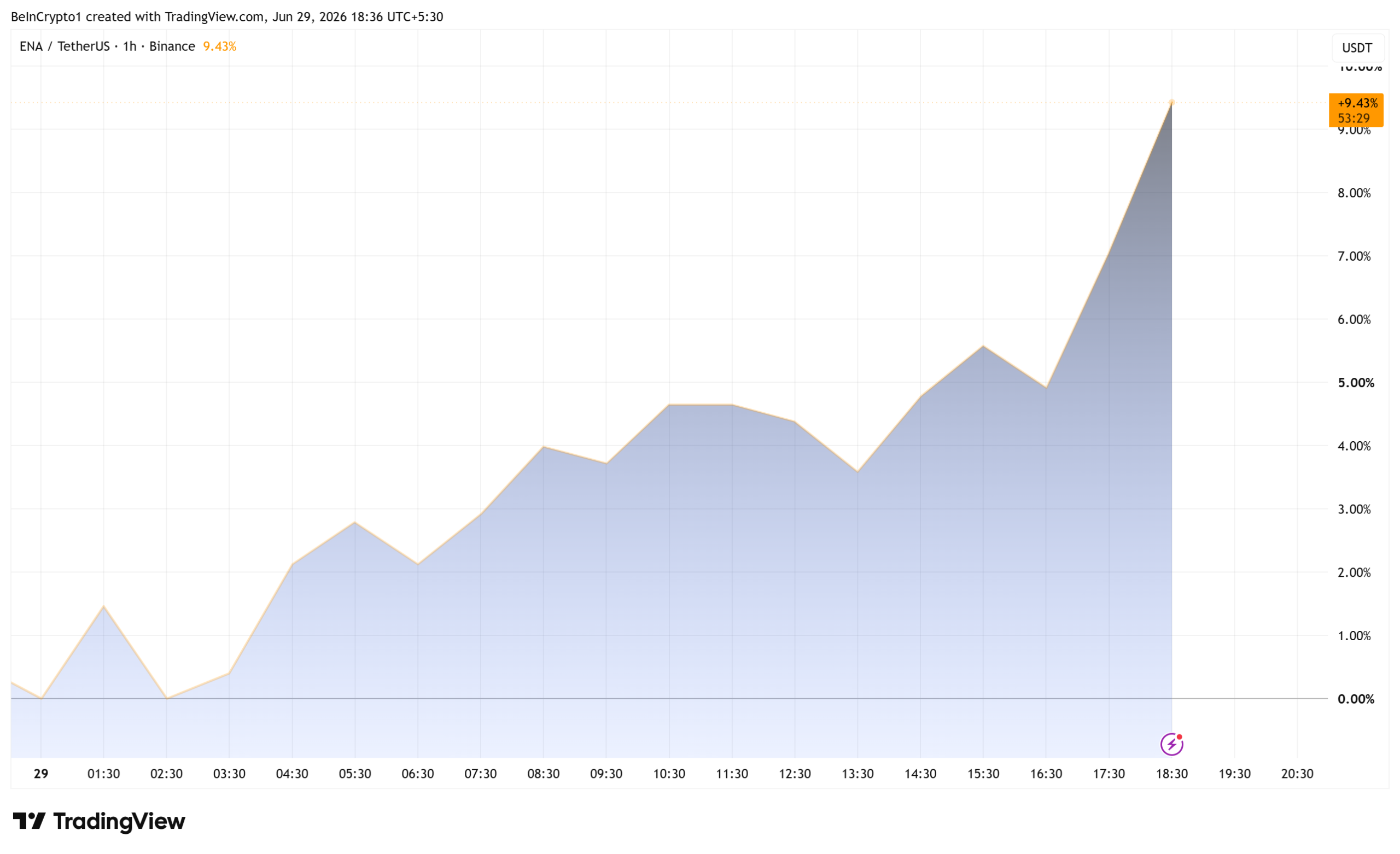
Ethena’s ENA token rose on the news, rising almost 10% in the immediate aftermath of the news, with the token near $0.0811 as of this wrting.

The bounce stands against a steep slide. ENA has fallen about 17% in a week and roughly 70% over the year.
The reaction echoes earlier institutional deals. An investment from a Wall Street asset manager lifted ENA before.
However, USDe still carries regulatory baggage. In April 2025, Germany’s BaFin ordered Ethena’s local entity to wind down USDe issuance. It was the regulator’s first action under the EU’s MiCA rules.
Whether Aladdin’s institutions allocate to USDe, rather than simply monitor it, will be the clearer test in the coming weeks.
The post BlackRock Fuels 10% Surge for Ethena as USDe Joins $25 Trillion Aladdin Platform appeared first on BeInCrypto.
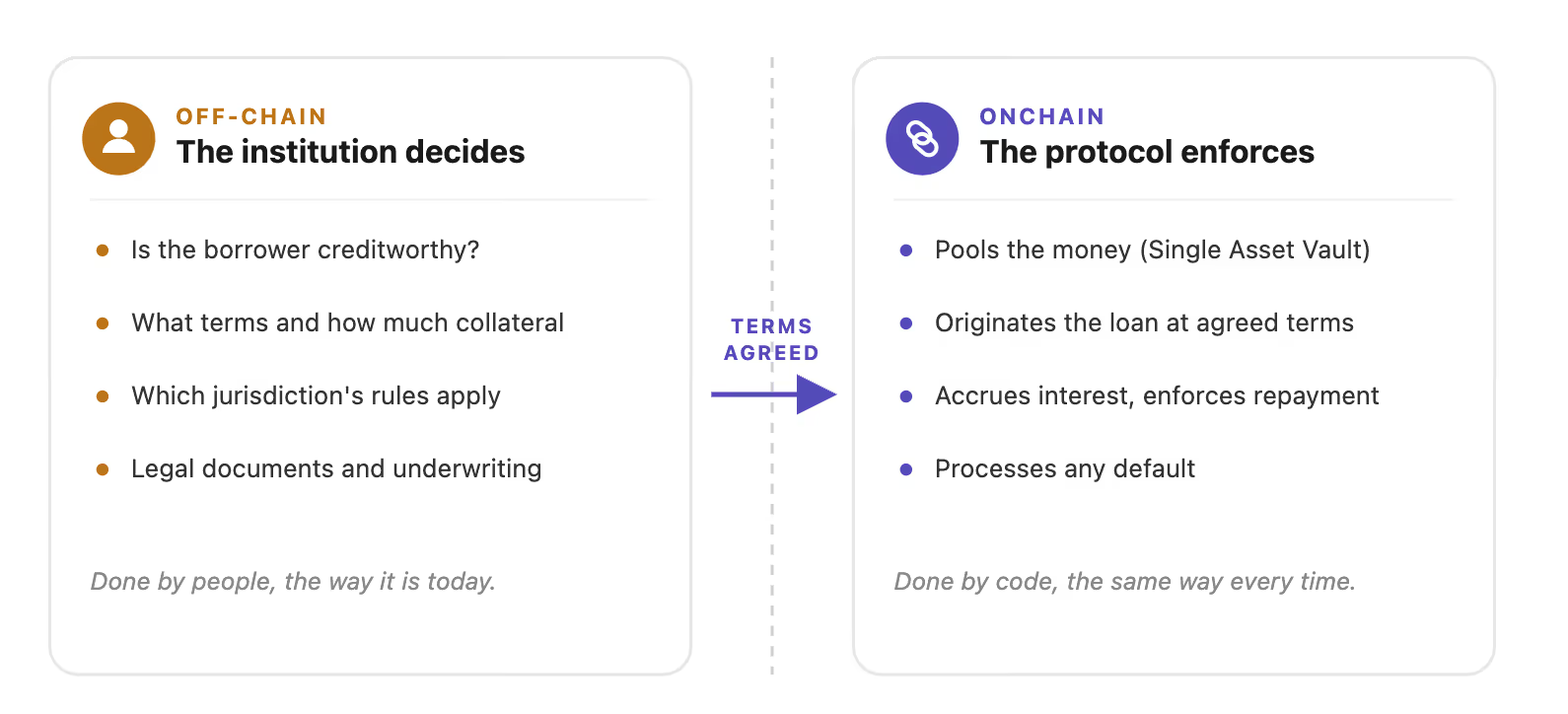
The protocol has two parts. A Single Asset Vault pools a single asset, and the lending layer turns that pooled money into loans with set terms. Both are still proposals, defined in technical drafts known as XLS-65 and XLS-66, and remain subject to approval by the validators who run the network. The features are available to test on a development network but are not live.

The use Ripple leads with is short-term financing. A payment company holding reserves in RLUSD, its US dollar-pegged stablecoin, might need cash to fund outgoing payments before a cross-border settlement clears two days later.
Instead of drawing on a bank credit line or selling assets, it could borrow against the incoming settlement through an approved pool, with repayment enforced automatically.
This is separate from XRP, the token the network is best known for, and from RLUSD, which is one of the assets such a system could lend against. It is infrastructure aimed at institutions rather than a product retail users would touch directly.
Ripple is also walking into a crowded field, however. Onchain lending already runs at scale through protocols like Aave, Compound, Maple and Clearpool, which collectively hold billions in deposits.
However, Ripple says that those systems were built around crypto-native governance, where a protocol can change its risk rules through community votes, which it says institutions cannot underwrite in advance. Its counter is to fix the lending mechanics at the network’s base layer so the behavior does not shift underneath a lender, while keeping the network public rather than walling it off to a closed group as some permissioned systems do.
The U.S. Supreme Court has blocked President Donald Trump’s bid to remove Federal Reserve Governor Lisa Cook, preserving the Fed Board’s current balance as the administration continues pushing for lower interest rates.
Summary
- The U.S. Supreme Court has blocked President Trump’s attempt to remove Federal Reserve Governor Lisa Cook in a 5-4 ruling.
- Chief Justice John Roberts said the Court’s decision addresses legal standards, not whether Cook can ultimately be removed for cause.
- The ruling leaves Trump without a majority on the Fed Board as he continues to push for lower interest rates.
According to the Court’s 5-4 decision, the justices rejected Trump’s effort to dismiss Cook over allegations of mortgage fraud, ruling that the legal dispute must proceed under the proper standards rather than allowing the president to remove a Fed governor without judicial review.
Court says removal powers remain subject to legal review
Writing for the majority, Chief Justice John Roberts said accepting the administration’s position would effectively allow a president to dismiss a Federal Reserve governor at any time and for any reason, reducing statutory “for-cause” protections to little more than at-will employment.
Roberts added that the Court was not deciding whether Trump ultimately has legal grounds to remove Cook. Instead, he said the ruling addresses the legal framework that lower courts must apply before reaching that question.
“To be clear, the ultimate question of whether the President can remove Cook for cause will depend in part on the underlying facts,” Roberts wrote. “In this opinion, we have not addressed the facts, as they have yet to be found or analyzed under the relevant legal standards.”
The decision keeps Cook on the Federal Reserve Board while the legal proceedings continue, leaving Trump without a majority of governors despite changes elsewhere in the central bank’s leadership.
Ruling complicates Trump’s push for lower interest rates
Soon after the ruling, Trump responded on Truth Social by arguing that the Supreme Court had sent the case back on procedural grounds rather than ruling on the merits. He added:
“We will take appropriate action immediately to make sure that someone who has committed wrongdoing will not be making vital decisions concerning the Welfare of the United States of America!”
The decision also comes as Trump continues to call for lower interest rates. Although he appointed Kevin Warsh to succeed former Fed Chair Jerome Powell, Trump previously said he would not pressure Warsh over monetary policy and would leave interest-rate decisions to the Federal Reserve.
During his Senate confirmation hearing in April, Warsh reinforced that position by telling the Senate Banking Committee that Trump had never asked him to predetermine, commit to, or decide any interest-rate action before taking office. He added that he would never agree to such a request.
Even under Warsh’s leadership, the Federal Reserve kept interest rates unchanged at its June FOMC meeting while maintaining a cautious stance on inflation, underscoring that policy decisions continue to be driven by economic conditions rather than White House preferences.
Cook’s continued presence on the Board means Trump still lacks the majority needed to reshape the Federal Reserve’s policy direction through appointments alone, making future interest-rate decisions dependent on votes within the central bank.
The ruling arrives as inflation remains a key concern for policymakers. As crypto.news previously reported, the Fed left interest rates unchanged in June despite relatively hawkish economic projections from many officials.
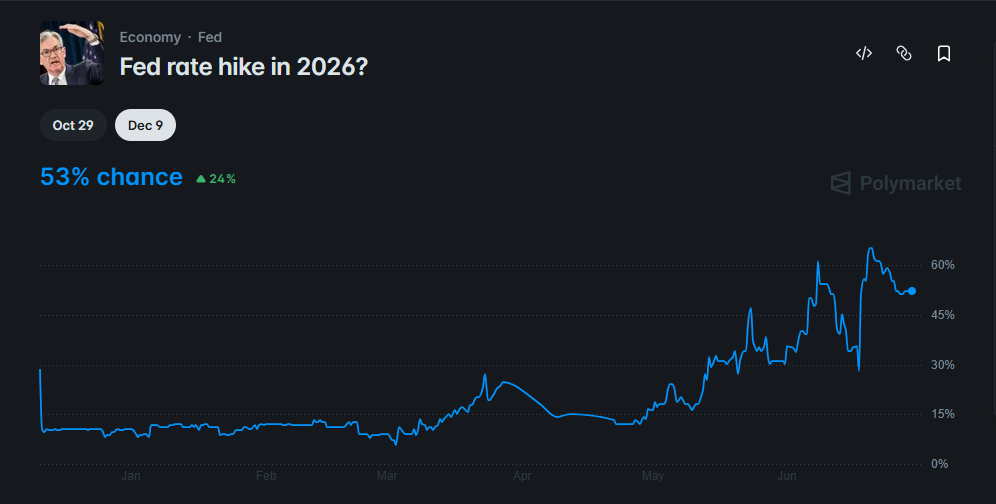
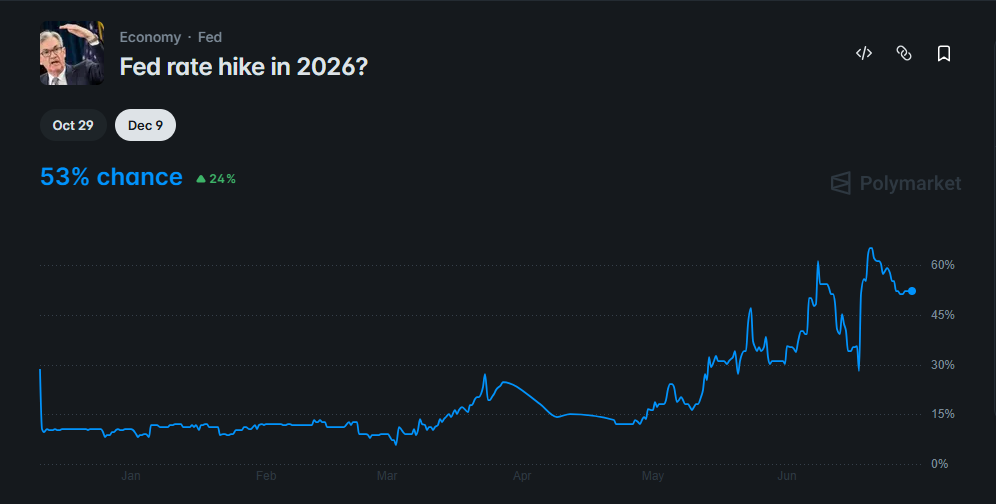
Separate crypto.news reporting also noted that the latest Personal Consumption Expenditures inflation reading reached 4.1%, its highest level since 2023. Against that backdrop, Bank of America has forecast three rate hikes beginning later this year, while Polymarket currently assigns a 53% probability that the Federal Reserve raises rates before year-end.

Man United transfer news LIVE – Aurelien Tchouameni boost, Ayyoub Bouaddi plan, Alex Scott race

‘No 10 North’ will help power flow into West Country, says Labour leader hopeful Andy Burnham

Memory Chip Giants Face Lawsuit Over 700% DRAM Price Spike


-
 Sports6 days ago
Two goals and an assist by sheer aura: Cristiano Ronaldo just entered the World Cup chat
-

 Fashion3 days ago
Weekend Open Thread: Staud – Corporette.com
-

 Politics3 days ago
The House | Manchesterism won’t survive the painful trade-offs unless it gets citizens on board
-

 Politics4 days ago
Potential 2028er World Cup attendee leaderboard
-

 Business3 days ago
Asia stock markets slide as tech shares slump
-

 News Videos23 hours ago
MAJOR BITCOIN & MARKET UPDATE!!!! (MUST WATCH ASAP!!!)
-

 Tech4 days ago
A Look At A Gaggle Of Transputer Boards
-
Crypto World6 days ago
Bitcoin (BTC) Dips Below $62K, Ethereum (ETH) Plunges 6% Daily: Market Watch
-
 Crypto World4 days ago
Dell (DELL) Shares Tumble Over 5% Following Analyst Downgrade to Hold
-

 Crypto World5 days ago
Securitize Wraps Roubini's SEC-Registered ETF as Dubai VARA Digital Security
-

 Crypto World2 days ago
Coinbase, Circle Deepen Crypto Stock Losses Despite Resilient S&P 500
-
Business6 days ago
Entergy settles forward sale agreements, raises $672 million in cash proceeds
-

 Crypto World3 days ago
Kraken's xStocks Opens Bending Spoons IPO Registration to EEA Retail
-

 Sports3 days ago
FIH Pro League: India defeat Pakistan 7-1, register biggest win of campaign | Other Sports News
-

 Tech2 days ago
Russian hackers now target Signal backup recovery keys
-

 Crypto World3 days ago
RTX holders must register wallets before token distribution begins
-
 Crypto World3 days ago
Hyperliquid Named on Singapore MAS Investor Alert Register
-

 Tech2 days ago
Bluekit phishing kit adopts browser-in-the-middle for login theft
-
 Crypto World4 days ago
Bitcoin Sparks $600M Hourly Liquidations With $65,000 Set To Become Resistance
-
 Crypto World4 days ago
AAVE price tests 9-month trendline after 17% rebound as breakout hopes build
You must be logged in to post a comment Login