

Crypto World
Can ZEC hit $750 as leverage risk builds under the rally?

ZEC traded near $515 as analysts split over a $750 bullish setup and warnings that weak spot demand may expose the rally to leverage risk.


TLDR:
- Kalshi traders are increasing bets on XRP reaching $1.60 before May ends amid stronger bullish sentiment.
- XRP continues trading inside an ascending channel, keeping the short-term bullish structure intact.
- Market probabilities weaken above $1.80, showing traders expect resistance despite rising optimism.
- Ripple’s improving regulatory clarity is strengthening confidence in XRP’s broader market outlook.
Kalshi traders are increasingly bullish on XRP, with prediction markets signaling the token could reach $1.60 this month.
The forecast comes as XRP regains momentum, supported by improving sentiment and growing optimism around its short-term market structure.
XRP Price Prediction Gains Strength as Kalshi Traders Turn Bullish
Kalshi’s prediction market is showing growing confidence in XRP’s short-term upside. Traders are increasingly positioning for the asset to test the $1.60 level before the monthly close.
Unlike analyst forecasts, prediction markets reflect real-money conviction. This gives investors a direct view into collective sentiment as capital flows into bullish XRP contracts.
Current market probabilities suggest traders see $1.60 as a realistic near-term target. However, enthusiasm cools noticeably above the $1.80 and $2.00 zones.
This pricing pattern signals measured optimism rather than speculative excess. Market participants expect upside continuation but remain cautious about immediate breakout extensions.
A recent crypto market tweet reinforced this narrative, showing Kalshi traders aggressively favoring contracts linked to XRP’s move toward $1.60. The data quickly gained traction among market watchers.
The shift in sentiment follows improving confidence around Ripple’s regulatory position. After years of legal uncertainty, traders increasingly view XRP as entering a more investable phase.
This renewed optimism is also being supported by speculation around potential XRP-based exchange-traded products. Institutional accessibility remains a major theme driving attention back to the token.
Technical Setup Points to Possible XRP Breakout Toward $1.60
From a chart perspective, XRP continues trading inside a long-term ascending channel. This broader structure has historically supported strong impulsive rallies.
Price is currently consolidating near an important support area after cooling from recent highs. This compression phase is attracting technical traders looking for continuation signals.
The $1.50 region has emerged as the immediate trigger zone. Analysts believe a decisive move above this level could force short liquidations and accelerate momentum.
A widely circulated chart on social media displayed XRP’s projected breakout path, with an upward move targeting the next liquidity zone near $1.60.
The setup resembles earlier XRP accumulation phases. Similar technical behavior preceded explosive rallies during previous market cycles.
Momentum indicators are also stabilizing. The Relative Strength Index has reset from overheated conditions and is now positioned around neutral territory.
This development is viewed positively by traders. It suggests bullish structure remains intact while allowing room for fresh upside expansion.
Although prediction markets show declining probabilities above $2, the current outlook remains constructive. Traders appear focused on a more realistic short-term move instead of pricing extreme scenarios.
With sentiment improving and technical conditions aligning, XRP is once again becoming a closely watched asset across the crypto market. A clean breakout could place the $1.60 target firmly within reach before month-end.



Best On-Chain Finance Infrastructure is a category within the BeInCrypto Institutional 100, an annual research-driven program recognising institutional digital asset excellence across 26 categories and six pillars.
This category sits under Pillar 4: Tokenization & On-Chain Finance. The 15 firms below are listed alphabetically and are not ranked. A shortlist will be named in May 2026, with the winner announced at Proof of Talk in Paris on June 2–3, 2026.
Key Facts
- Long list: 15 firms across embedded wallets, bank-grade settlement, oracle middleware, interoperability protocols, developer platforms, programmable key management, payments APIs, staking infrastructure, and financial OS platforms
- Initial pool: More than 25 firms screened; 15 advanced to the long list
- Order: Listed alphabetically, not ranked
- Scoring: 50% quantitative data · 50% Expert Council
- Criteria assessed: Institutional client roster, regulatory licensure, on-chain scale, security record, capital backing, regulated partnerships, governance maturity, innovation signal
- Boundary scope: Custody, stablecoin issuance, tokenization platforms, and pure DeFi protocols are evaluated in separate categories
| Firm / Flagship Product | HQ & Listing | Reach | Infrastructure Layer | Representative Work |
|---|---|---|---|---|
| Alchemy — Supernode, Smart Wallets, x402 | San Francisco, USA Private |
$10.2B last priced valuation $105B+ annualized on-chain transaction value |
Blockchain developer platform Supernode, Smart Wallets, RaaS, NFT/Token APIs, stablecoin orchestration |
AI Agent x402 standard launched in Mar 2026 Sooho.io Asia stablecoin infrastructure partnership announced in Nov 2025 |
| Apex Group — Apex Digital 3.0, Tokeny | Bermuda Private; $3T+ AUA |
13,000+ professionals across 50+ jurisdictions Tokeny has $32B+ RWAs tokenized via ERC-3643 |
Institutional financial OS Fund administration, custody, tokenization, and ERC-3643 infrastructure |
Apex Digital 3.0 launched in Jul 2025 SkyBridge $300M tokenization on Avalanche announced in Aug 2025 |
| BitGo — Bank & Trust, Go Network, USD1 | Sioux Falls / Palo Alto NYSE: BTGO |
Assets on platform: $63B Assets staked: $11.8B |
Federally chartered digital asset infrastructure Go Network settlement and Mint and Burn Center |
Derivatives offering launched in Q1 2026 with $3B notional volume HYPE custody and staking added in May 2026 |
| Blockdaemon — Builder Vault, Earn Stack | United States Private |
$110B+ digital assets secured 400+ institutions; 60+ protocols supported |
Institutional Web3 gateway Staking, validators, RPC nodes, and self-hosted MPC wallet |
Taurus partnership announced in Feb 2026 for banking custody Earn Stack staking-as-a-service launched in Jun 2025 |
| Chainlink — CCIP, Data Feeds, CRE | Cayman Islands / Global LINK publicly traded |
CCIP processed $18B+ Q1 2026 cross-chain volume $30T+ cumulative transaction value enabled |
Oracle and cross-chain interoperability platform CCIP, Data Streams, Proof of Reserves, CRE |
SWIFT integration went live in Nov 2025 Sibos 2025 corporate-actions work involved 24 institutions |
| Fnality — £FnPS, EUR/USD expansion | London, UK Private; UK FMI |
$136M Series C in Sep 2025 £FnPS live since Dec 2023 |
Bank-led wholesale on-chain payment system Central-bank-money-backed DLT settlement |
Series C led by BofA, Citi, WisdomTree, KBC, Temasek, and Tradeweb Broadridge intraday repo collaboration announced in Mar 2026 |
| Hyperlane — ISMs, Warp Routes | United States Private; HYPER publicly traded |
150+ chains supported 10,000+ cross-chain messages validated daily |
Permissionless cross-chain messaging framework Interchain Security Modules and Warp Routes |
TRON Network integration added in Apr 2026 V3 modular mailbox launched with Hyperlane Hooks in Sep 2025 |
| J.P. Morgan Kinexys — JPMD, TCN, MONY | New York Operated by JPMorgan Chase |
Daily volume of $5B–$7B in Apr 2026 More than $3T cumulative volume since 2020 |
Bank-grade on-chain settlement unit Deposit tokens, tokenized collateral, and fund-flow infrastructure |
JPMD live on Base and moving toward Canton integration Cross-chain DvP work with Ondo Chain and Chainlink CCIP |
| Magic Labs — Embedded Wallets, Newton Protocol | San Francisco, USA Private |
50M+ wallets created since 2018 200,000+ developers across 180+ countries |
Email and SSO-based embedded wallet infrastructure TEE-based API wallets with no seed phrases |
Primary wallet provider for Polymarket Newton Protocol integration added programmable compliance in Nov 2025 |
| Mesh — SmartFunding, Crypto Payments | San Francisco, USA Private |
$1B valuation after Jan 2026 Series C About $10B monthly payments volume |
Unified crypto payments network SmartFunding: any asset in, preferred stablecoin out |
Series C led by Dragonfly Capital and Paradigm Partners include PayPal, Revolut, Ripple, Paxos, and Rain |
| Partior — Unified Ledger | Singapore Private; MAS-anchored |
USD, EUR, and SGD live Founding shareholders include DBS, JPMorgan, Standard Chartered, and Temasek |
Singapore bank-consortium blockchain settlement Atomic PvP settlement across tokenized instruments |
Deutsche Bank platform agreement signed in May 2025 Nium became first PSP on the Partior network |
| Privy — Embedded Wallets, AgentCore | New York, USA Stripe subsidiary |
120M+ accounts 2,000+ developer teams |
Embedded wallet infrastructure for fintech and treasury Custodial and non-custodial wallets via single API |
AWS Bedrock AgentCore Payments integration in May 2026 MAJORITY digital asset accounts launched on Solana with Privy |
| Pyth Network — Pyth Pro X, Lazer, Data Marketplace | Cayman Islands / Global PYTH publicly traded |
100+ blockchains supported 3,000+ low-latency price feeds |
Institutional-grade price oracle network Pull-oracle model, Pyth Lazer, and Pyth Pro X |
Pyth Data Marketplace launched in Apr 2026 US Department of Commerce GDP data brought on-chain in Mar 2025 |
| Turnkey — Programmable Key Management | New York, USA Private |
Powers 50M+ embedded wallets Millions of weekly transactions |
TEE-only key management in AWS Nitro Enclaves Programmable signing and QuorumOS |
Series B closed in Jun 2025 led by Bain Capital Crypto Flutterwave integration added merchant stablecoin balances in Jan 2026 |
| Wormhole — NTT, Guardian Network | United States Private; $2.5B valuation |
40+ chains supported $60B+ cumulative value transferred; 1B+ cross-chain messages |
Cross-chain messaging and Native Token Transfers Guardian validator network and ZK proofs |
Tokenized asset corridors support BUIDL, ACRED, VBILL, and SCOPE NTT adopted by Sky/MakerDAO, Agora, Lido, and Ethena |
About This List
The BeInCrypto Institutional 100 — On-Chain Finance Infrastructure (2026 Long List) identifies the infrastructure layer that lets regulated finance operate on public and permissioned blockchains.
The category covers embedded wallet infrastructure, bank-grade on-chain settlement networks, oracle and data middleware, interoperability protocols, developer tooling, programmable key management, embedded crypto payment APIs, staking infrastructure, and integrated financial operating systems.
Custody is covered separately under Category 2.4: Best Custody Provider. Stablecoin issuance and orchestration, tokenization platforms, and pure DeFi protocols are also evaluated in their own categories. BitGo appears here as a partner-override entry because of its federal trust bank charter, Go Network settlement, USD1 stablecoin issuance, and broader integrated infrastructure role.
Methodology
This category is evaluated under Track A of the BeInCrypto Institutional 100 methodology: 50% quantitative metrics and 50% Expert Council scoring.
Assessment spans seven criteria: institutional client roster, regulatory licensure and certifications, on-chain scale and reach, security record and audit history, capital backing and runway, partnership depth with regulated entities, and innovation signal.
Data was verified using SEC EDGAR, FCA, BaFin, FINMA, MAS, Bermuda Monetary Authority, OCC, NYDFS, SOC 2 and ISO 27001 attestations, audited reports, Messari interoperability reports, DefiLlama, on-chain analytics, partnership announcements, and private-market sources including PitchBook, Tracxn, and Crunchbase.
Every firm on the list underwent a May 2026 verification pass to confirm active product status, current funding, and the absence of unresolved material legal or security overhangs.
The post BeInCrypto Institutional Research: 15 Firms Leading On-Chain Finance Infrastructure appeared first on BeInCrypto.
Crypto World
BeInCrypto Institutional Research: 15 Stablecoin Infrastructures Powering Crypto Offerings

Best Stablecoin Infrastructure is a category within the BeInCrypto Institutional 100, an annual research-driven program recognising institutional digital asset excellence across 26 categories and six pillars.
This category sits under Pillar 4: Tokenization & On-Chain Finance. The 15 firms below are listed alphabetically and are not ranked. A shortlist will be named in May 2026, with the winner announced at Proof of Talk in Paris on June 2–3, 2026.
Key Facts
- Long list: 15 firms across fiat-backed dollar stablecoins, MiCAR-compliant euro and multi-currency issuers, Asian dollar stablecoins, DeFi-native stablecoins, white-label platforms, yield-bearing stablecoins, bank-issued stablecoins, and payment networks.
- Initial pool: More than 30 stablecoin issuance and infrastructure firms screened; 15 advanced to the long list
- Order: Listed alphabetically, not ranked.
- Scoring: 50% quantitative data · 50% Expert Council.
- Criteria assessed: Stablecoin market capitalization, on-chain volume, institutional adoption, reserves posture, regulatory status, multi-chain distribution, enterprise integration, innovation, ecosystem dominance
- Data sources: NYDFS, OCC, BaFin, ACPR, CSSF, FCA, FINMA, MAS, SFC, HKMA, FIN-FSA, FSRA, MiCA-CASP registers, reserve attestations, SEC EDGAR, exchange disclosures, CoinGecko, CoinMarketCap, and DefiLlama.
| Firm | Stablecoin Sub-Segment | HQ | Reach | Top Licensure / Platform | Representative Work |
|---|---|---|---|---|---|
| Aave Labs | DeFi-native overcollateralized stablecoin | London, UK | GHO about $584M market cap sGHO yield variant at 4.25% APR; Aave V3 TVL $26.8B+ across Ethereum, Arbitrum, Base, and Gnosis |
DeFi protocol governed by Aave DAO UK-incorporated operating entity; no centralized charter |
Horizon institutional RWA market live with about $550M net deposits sGHO launched; GHO V2 rebuild completed in Apr 2026 |
| AllUnity | MiCAR multi-currency stablecoin JV | Frankfurt, Germany | EURAU and CHFAU live on Ethereum, Solana, Stellar, and Arc testnet Multi-bank reserve model |
BaFin E-Money Institution licence MiCAR-compliant stablecoin issuer |
EURAU launched in Jul 2025 as Germany’s first MiCAR-compliant EUR stablecoin CHFAU launched in Feb 2026 as first MiCAR-compliant Swiss franc stablecoin |
| Bridge | Stablecoin orchestration and issuance platform | San Francisco, USA | Stablecoin Financial Accounts live in 101 countries Transaction volume quadrupled in 2025 per Stripe annual letter |
Bridge National Trust Bank conditional approval from US OCC State money transmitter licences |
Acquired by Stripe for $1.1B in Feb 2025 Open Issuance powers Phantom CASH, MetaMask USD, Hyperliquid USDH, and Sui USDsui |
| Circle Internet Group | Major fiat-backed dollar stablecoin issuer | New York, USA | USDC about $77B in circulation On-chain volume $21.5T; Circle Payments Network at about $10B annualized TPV |
NYDFS BitLicense OCC conditional trust bank approval; MiCAR-compliant via Circle Mint Europe; NYSE: CRCL |
Arc L1 token presale completed at $3B valuation in May 2026 Meta selected USDC for creator payments; USYC and EURC live |
| First Digital Labs | Asian regulated dollar stablecoin issuer | Hong Kong | FDUSD about $400M market cap as of May 2026 Multi-chain on Ethereum, BNB Chain, Sui, TON, and Arbitrum |
Hong Kong-based issuer FD121 Limited HKMA stablecoin licence application pending under Hong Kong Stablecoin Ordinance |
OpenPayd payments integration added USD and EUR settlement rails Canza Finance integration and SPAC merger plans disclosed |
| Frax Finance | Hybrid algorithmic and collateralized DeFi stablecoin | Delaware, USA | frxUSD and FRAX live with LayerZero cross-chain composability Modular smart-contract infrastructure |
DeFi protocol No centralized charter |
Sonic Labs deployed Frax framework to launch USSD backed by tokenized Treasuries GENIUS-compatible white-label infrastructure positioned for partner issuance |
| M0 Foundation | Decentralized white-label stablecoin platform | Zug, Switzerland | About $180M issued through the platform Multi-chain deployments across Ethereum, Solana, and Cosmos |
Decentralized federated issuance model Permissioned Minter set |
Closed $40M Series B in Aug 2025 M0 underpins MetaMask USD, Noble, Usual Labs, and Playtron Game Dollar |
| Mastercard | TradFi payment network with stablecoin infrastructure | Purchase, New York, USA | NYSE: MA Crypto Partner Program ecosystem of 85+ firms; operates in 200+ countries and territories |
Regulated global card network Works with regulated banking partners across major jurisdictions |
Agreed to acquire BVNK for up to $1.8B in Mar 2026 SoFiUSD settlement integration, Multi-Token Network, and Mastercard Move expansion |
| Ondo Finance | Yield-bearing stablecoin and tokenized treasury | New York, USA | USDY about $2.1B OUSG tokenized Treasury fund live |
Oasis Pro Markets acquisition added SEC broker-dealer, ATS, and transfer-agent registration | Oasis Pro Markets acquisition closed during the award window DTCC consortium member; SEC investigation closed without charges in Dec 2025 |
| OSL Group | Hong Kong regulated digital asset platform | Hong Kong | HKEX: 863.HK 50+ licences across 10+ countries; FY2025 core operating income up 150% year-on-year |
First SFC Type 1 and Type 7 licensed VATP HKMA stablecoin licence second-wave applicant; MAS Singapore licensed |
USDGO regulated USD stablecoin launched in 2025 OSL BizPay B2B stablecoin payments live; Banxa acquisition added onramp and offramp distribution |
| Paxos | Multi-stablecoin US trust company issuer | New York, USA | PYUSD about $3.4B; USDG above $1B; USDP $40.5M More than $180B cumulative tokenization activity since 2018 |
Paxos Trust Company N.A. under OCC national trust charter MAS MPI, FIN-FSA Finland, and FSRA Abu Dhabi coverage |
Global Dollar Network includes Anchorage, Bullish, Galaxy, Kraken, Robinhood, Nuvei, and Worldpay Withum and KPMG attest reserves across product lines |
| Ripple | US-regulated dollar stablecoin issuer | San Francisco, USA | RLUSD market cap about $1.5B to $1.8B as of May 2026 Multi-chain on XRP Ledger and Ethereum |
Standard Custody and Trust Company under NYDFS trust charter FCA EMI, CSSF Luxembourg EMI, MiCA passport, ADGM accepted token, OCC conditional charter |
BlackRock and VanEck selected RLUSD as redemption rail for tokenized Treasury funds Deutsche Bank integration, SBI Japan rollout, and Deloitte attestations |
About This List
The BeInCrypto Institutional 100 — Best Stablecoin Infrastructure (2026 Long List) identifies firms that underwrite, issue, settle, and distribute stablecoins at an institutional scale.
The list spans fiat-backed dollar issuers, MiCAR-compliant euro and multi-currency issuers, regulated Asian dollar stablecoin issuers, DeFi-native decentralized stablecoins, white-label issuance platforms, yield-bearing stablecoins, tokenized treasuries, and payment networks operating stablecoin settlement rails.
Tether USDT, Tron USDD, World Liberty Financial USD1, Plasma Network, and Ethena Labs are excluded under reputational and enforcement filters applied across the program.
Methodology
This category is evaluated under Track A of the BeInCrypto Institutional 100 methodology: 50% based on quantitative metrics and 50% on Expert Council scoring.
Assessment spans seven criteria: stablecoin market capitalization and on-chain volume, institutional adoption, regulatory and reserves posture, multi-chain distribution, enterprise integration depth, innovation signal, and ecosystem dominance.
The 50/50 split reflects the availability of quantitative stablecoin data, including on-chain market capitalization, transaction volume, and reserve attestations, balanced against Expert Council assessment of regulatory durability, reserve quality, governance, and product innovation.
Data was verified using regulatory registers, issuer reserve attestations, audited filings, SEC EDGAR, exchange disclosures, partnership announcements, and on-chain analytics providers including CoinGecko, CoinMarketCap, and DefiLlama. Nominees were also reviewed against negative-signal queries covering enforcement, security breaches, depegs, active litigation, and reputational controversy during the award window.
The post BeInCrypto Institutional Research: 15 Stablecoin Infrastructures Powering Crypto Offerings appeared first on BeInCrypto.

Best Autonomous Agentic Payments Platform is a category within the BeInCrypto Institutional 100, an annual research-driven program recognising institutional digital asset excellence across 26 categories and six pillars.
This category sits under Pillar 4: Tokenization & On-Chain Finance. The 10 firms below are listed alphabetically and are not ranked. A shortlist will be named in May 2026, with the winner announced at Proof of Talk in Paris on June 2–3, 2026.
Key Facts
- Long list: 10 firms across stablecoin agent stacks, x402 protocol ecosystems, full-stack agent payment platforms, agent identity standards, settlement layers, agentic onramps, and network-level payment rails
- Initial pool: More than 30 firms screened; 10 advanced to the primary long list
- Order: Listed alphabetically, not ranked
- Scoring: 30% quantitative data · 50% Expert Council · 20% disclosed company data
- Criteria assessed: Agentic transaction volume, agent integration depth, programmability, developer adoption, security and compliance, funding and viability, innovation signal
- Eligibility: Each firm must have a verifiable AI-agentic product, program, fund, standard, or pilot live or announced during the award window
| Firm | HQ | Agentic Platform / Sub-Segment | Reach | Representative Work |
|---|---|---|---|---|
| Ant Digital Technologies | Hangzhou, China | Agent-to-agent economy infrastructure platform | Anvita platform: Anvita TaaS and Anvita Flow Supports x402 payments, Agent Store modules, OpenClaw, and Claude Code |
Anvita launched Mar 31, 2026 at Real Up Cannes USDC integration with Circle in progress; stablecoin licences pending in Hong Kong, Singapore, and Luxembourg |
| Circle Internet Group | New York, USA | Stablecoin issuer Agent Stack on USDC rails | USDC settles 99.8% of x402 agentic payments Live on 11 EVM chains; Agent Marketplace launched with 500+ endpoints |
Circle Agent Stack launched May 11, 2026 Includes CLI, Agent Wallets, Marketplace, Nanopayments, and Circle Skills |
| Coinbase | San Francisco, USA | x402 protocol layer and AgentKit developer ecosystem | About 69,000 active AI agents on x402 167M+ transactions and $50M volume as of Apr 21, 2026 |
x402 V2 launched Dec 2025 under Linux Foundation umbrella Selected protocol layer for Amazon Bedrock AgentCore Payments |
| Crossmint | New York, USA | Full-stack agent payment platform | About $23.6M raised 40,000+ companies and developers; live across 40+ blockchains |
Smart contract wallets across EVM, Solana, and Stellar Virtual Visa and Mastercard cards for agents with spending caps |
| Ethereum Foundation (dAI Team) | Zug, Switzerland | Standards body for AI agent on-chain identity | Dedicated AI initiative launched Sept 15, 2025 Two-track mandate: AI Economy on Ethereum and Decentralized AI Stack |
ERC-8004 finalized at Devconnect Buenos Aires Creates on-chain identity and reputation layer for AI agents |
| Mesh | San Francisco, USA | Settlement layer for agentic commerce | $75M round in Jan 2026 at $1B valuation 400M users via partners across 100+ countries |
Integrates Google AP2 for natural-language agent purchases Visa Intelligent Commerce Connect launch pilot partner |
| MoonPay | Miami, USA | Agentic onramp and card-rail spending product | 30M+ customers across 180 countries NYDFS Trust Charter, BitLicense, and MiCA Netherlands registration |
MoonAgents Card launched May 1, 2026 MoonPay Agents launched Feb 2026 with non-custodial AI wallets |
| Skyfire | San Francisco, USA | Agent identity and payment protocol | $9.5M raised Customers include Anthropic, Cohere, Replicate, and Hugging Face |
KYAPay built for verifiable agent identity and USDC settlement F5 Networks partnership for enterprise agentic commerce |
| Solana Foundation | Zug, Switzerland | Network-level agentic payments rail | $650B stablecoin volume in Feb 2026 15M+ on-chain agent payments cleared to date |
Pay.sh launched May 5, 2026 with Google Cloud Solana Agent Kit provides 60+ pre-built actions |
| TRON DAO | Geneva, Switzerland | Sovereign agentic AI fund and payment rail | 977M transactions in Q1 2026 $86B stablecoin supply and $26B TVL |
AI Fund expanded from $100M to $1B in Mar 2026 B.AI launched on TRON with 8004 identity and x402 standard support |
About This List
The BeInCrypto Institutional 100 — Autonomous Agentic Payments (2026 Long List) identifies firms that enable AI agents to hold assets, access wallets, sign transactions, and settle payments on crypto rails with minimal human intervention.
Coverage spans network-level rails, stablecoin issuer agent platforms, full-stack payment platforms, settlement layers, agent identity protocols, and agentic onramp or card-rail products. Pure AI agent frameworks without a dedicated payment module are out of scope.
Methodology
This category is evaluated under Track B of the BeInCrypto Institutional 100 methodology: 30% quantitative metrics, 50% Expert Council scoring, and 20% disclosed company data.
Assessment spans seven criteria: transaction volume on agentic rails, integration depth across AI frameworks, wallet programmability and policy controls, developer adoption, security and compliance, funding and viability, and innovation during the award window.
The higher Expert Council weighting reflects the early stage of the agentic payments category, where on-chain data exists for some platforms but many launches remain too recent for traditional financial metrics to capture their market importance.
Data was verified using regulatory registers, audited filings, on-chain analytics, x402 Foundation metrics, public company earnings transcripts, partnership announcements, and direct company disclosures.
The post BeInCrypto Institutional Research: 10 Firms Powering Autonomous Agentic Payments appeared first on BeInCrypto.
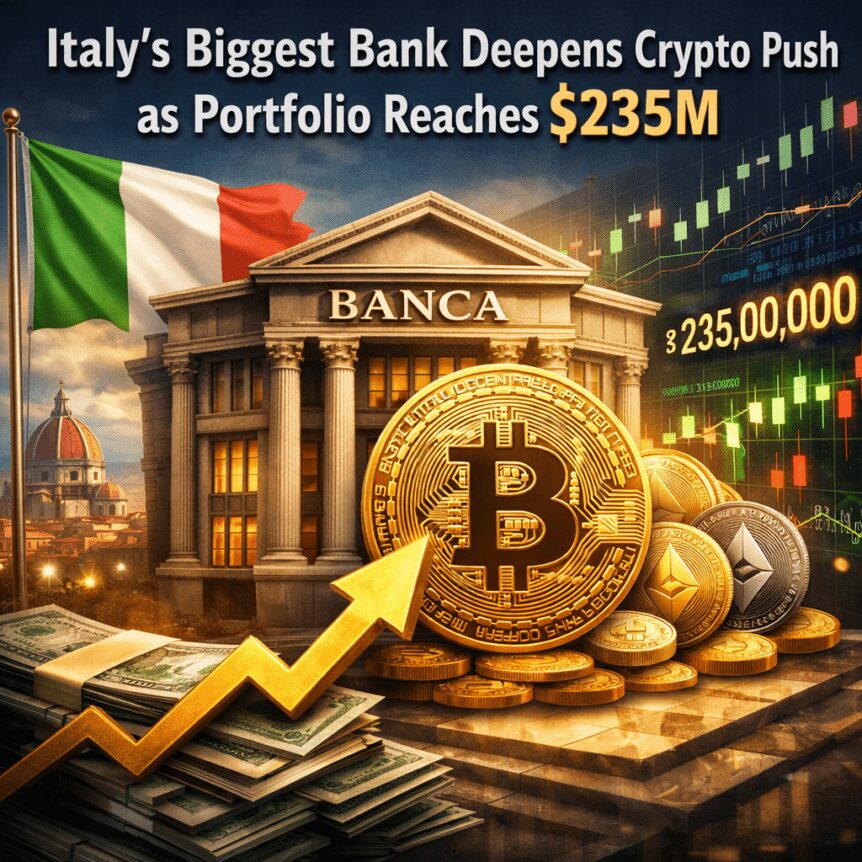
Intesa Sanpaolo, Italy’s largest bank, significantly expanded its exposure to crypto assets in the first quarter of 2026, more than doubling its holdings to about $235 million as of March 31 from roughly $100 million at the end of 2025. The increase was driven primarily by Bitcoin allocations through the bank’s positions in the ARK 21Shares BTC ETF and BlackRock’s iShares Bitcoin Trust ETF. For the first time, Intesa also added Ethereum exposure via BlackRock’s iShares Staked Ethereum Trust and acquired a new stake in Ripple’s XRP through the Grayscale XRP Trust ETF, totaling around $26 million, according to a report by Criptovaluta.it.
The Italian lender also ventured into derivatives, opening a new position in iShares Bitcoin Trust call options—the bank’s initial foray into crypto derivatives. Intesa has previously confirmed that its crypto positions are held for proprietary trading purposes, though it has not disclosed whether these assets are used to hedge products offered to professional clients.
Source: Criptovaluta.it
In a related shift, Intesa pared back its Solana (SOL) exposure, which had been a notable feature of its prior quarter. The bank slashed its stake in the Bitwise Solana Staking ETF from 266,320 shares to just 2,817, effectively a near-total exit from Solana-related exposure.
Related: Banking Circle Joins Europe’s Stablecoin Settlement Race
Intesa’s equity moves broaden crypto participation
On the equities side of its crypto book, Intesa adjusted several positions, signaling a broader tilt toward crypto-focused equities. It opened a new stake of 165,600 shares in BitGo, a fintech and custody provider active in the digital asset space, while disposing of its Bitmine position. The bank also exited its put options on Strategy and trimmed its stake in Cantor Equity Partners II, the vehicle through which tokenization firm Securitize is planning a listing. Coinbase shares rose from 1,500 to 10,357 in Intesa’s portfolio, underscoring a preference for exposure to well-known crypto infrastructure and exchange equities.
Intesa’s crypto moves align with a broader strategic push into digital assets that gained momentum after Ripple announced a custody partnership with the bank. Ripple said it would offer its custody services to Intesa, a development that could streamline the handling of institutional crypto assets for the Italian lender and potentially for its professional clients.
As of the latest trading session, Intesa Sanpaolo’s stock closed at €5.74 per share on Friday, down 1.56% for the day and roughly 3% lower for the year to date, according to Yahoo Finance data.
Related: Europe Bitcoin Treasury Model Won’t Mirror Strategy: PBW 2026
Europe’s banking sector accelerates crypto offerings
The broader European banking sector is increasingly embedding crypto services into mainstream retail and custody workflows. Spain’s BBVA has started offering 24/7 Bitcoin and Ether trading through its mobile app, expanding access for retail customers. In France, BPCE rolled out in-app crypto trading via its regulated subsidiary Hexatrq, aiming to reach around 12 million customers by 2026. These moves reflect a growing push to combine familiar banking channels with regulated crypto access, a trend that could shape adoption trajectories across the region.
On the infrastructure front, a consortium of 12 major European banks—including BNP Paribas, ING, UniCredit and Deutsche Bank—formed Qivalis to issue a MiCA-compliant euro-backed stablecoin, targeting a launch in the second half of 2026. The initiative mirrors efforts in other parts of the continent to establish a more integrated, regulated euro-denominated digital asset settlement and payments rail, potentially reducing settlement times and increasing cross-border interoperability for institutional clients.
These developments sit within a larger regulatory backdrop that continues to define how banks manage crypto exposure. The MiCA framework has been a guiding force in Europe, encouraging banks to adopt stablecoins and other digital assets in a regulated context and setting clear governance, custody, and consumer protection standards. As European institutions test and deploy crypto services, observers will be watching how custody capabilities, risk management frameworks, and client disclosures evolve in practice.
Magazine: Guide to the top and emerging global crypto hubs — Mid-2026
What the shifts mean for investors and traders
Intesa Sanpaolo’s Q1 2026 move signals more than a simple portfolio reallocation; it reflects a broader shift among traditional lenders toward regulated crypto access and digital-asset exposure that is increasingly anchored in blue-chip ETFs, established custody players, and regulated staking vehicles. For investors and traders, the development highlights several noteworthy angles:
- Institutional appetite persists for regulated exposure: The combination of Bitcoin exposure via major ETFs, Ethereum staking through a regulated vehicle, and XRP via a trusted trust structure suggests a deliberate alignment with regulated, diversified crypto access rather than opportunistic, unregulated bets.
- Derivatives enter the toolkit: Intesa’s foray into iShares Bitcoin Trust call options marks a step toward using crypto derivatives to improve risk management and potential alpha generation within a conservative institutional framework.
- Shifts in alt-coin exposure: The near-complete exit from Solana indicates reprioritization toward what the bank perceives as higher-conviction or more liquid assets within the regulated product ecosystem.
- Queue of European adoption signals: The broader push by banks like BBVA and BPCE, along with the Qivalis stablecoin initiative, points to a more cohesive and potentially scalable European pillars for crypto custody, settlement, and payments, which could influence liquidity and price discovery across the region.
Despite the optimism, questions remain about how banks will balance proprietary trading with client-facing offerings and how custody arrangements will evolve under evolving regulatory expectations. The presence of Ripple’s custody partnership with Intesa suggests a practical path for institutions seeking integrated, compliant digital-asset operations, but the extent to which these shifts translate into tangible on-ramp activity for end users will depend on regulatory clarity, product offerings, and consumer demand.
For readers watching the market, the next several quarters will be telling as European banks scale regulated crypto services, test new custody and settlement rails, and refine risk management for digital assets within traditional banking architectures. The momentum in 2026 points to a structurally evolving landscape where crypto exposure is becoming a standard feature of diversified, advisors-led portfolios rather than a fringe allocation.
TLDR:
- ERC-4626 established a universal vault interface, eliminating the need for custom code in every DeFi integration.
- Share tokens issued by compliant vaults can serve as collateral, traded assets, or inputs into higher-order strategies.
- Two ERC-4626 vaults can share identical interfaces while carrying entirely different underlying risk profiles.
- Meta-vaults built on the standard can allocate across multiple strategies behind a single user-facing deposit interface.
ERC-4626 has become a foundational layer in decentralized finance, establishing a universal interface for tokenized vaults. Before its adoption, every vault protocol operated with its own isolated deposit and withdrawal system.
Custom engineering was required for each integration. The standard changed that by creating a consistent accounting and access interface, enabling protocols to interact with any compliant vault through a single, shared framework.
How ERC-4626 Vaults Work
A user deposits one asset into an ERC-4626 vault and receives a share token in return. This token represents a proportional claim on the vault’s total assets. The exchange rate between the deposited asset and the share starts at one-to-one.
As the vault generates yield, total assets grow relative to shares outstanding. This causes the share price to rise over time. When a user exits, they redeem shares for their proportional portion of the vault’s current assets.
Sentora Research put it plainly: “ERC-4626 guarantees consistency of interaction, not quality of management. Two vaults can present identical interfaces while operating under entirely different risk profiles.” That distinction matters for every depositor evaluating a vault.
Three core functions define the standard’s accounting logic. The convertToShares function calculates how many shares a given asset amount would produce.
The convertToAssets function returns the asset value of a given number of shares. The maxWithdraw and maxRedeem functions indicate how much a user can currently access. Any protocol reading these functions correctly can interact with any compliant vault.
What the Standard Made Possible
ERC-4626 opened three clear benefits for the broader DeFi ecosystem. Vault share tokens became composable building blocks that could serve as collateral, traded assets, or inputs into higher-order strategies.
Integration complexity dropped sharply, since dashboards and risk tools no longer needed custom code for each vault.
Secondary market liquidity also improved, as standardized share tokens are easier for market makers to price reliably.
Lending markets began accepting ERC-4626 shares as collateral. A user can deposit USDC, receive shares, and borrow against them, all while the collateral continues earning yield.
Meta-vaults built on this infrastructure can distribute deposits across multiple compliant vaults and rebalance automatically. The user sees only one deposit interface, regardless of how many underlying strategies are running.
However, the standard does not govern what a vault does with deposited assets. Two fully compliant vaults can carry very different risk profiles.
A simple lending vault and a leveraged multi-strategy vault both meet the technical standard. Depositors who treat interface compliance as a safety signal take on unexamined risk.
ERC-4626 functions as infrastructure, not assurance. It creates the conditions for reliable interaction across the DeFi ecosystem, but the quality of what is built within that infrastructure depends entirely on the decisions of those building it.
Crypto World
BeInCrypto Institutional Research: 15 Firms Setting the Standard for Crypto Corporate Governance

Best Crypto Corporate Governance is a category within the BeInCrypto Institutional 100, covering firms whose public-market discipline, banking charters, board structure, audit maturity, and crisis-response record set governance standards for digital assets.
This category sits under Pillar 5: Regulation & Governance. The 15 firms below are listed alphabetically and are not ranked. A shortlist will be named in May 2026, with the winner announced at Proof of Talk in Paris on June 2–3, 2026.
Key Facts
- Long list: 15 firms across public crypto companies, federal crypto banks, regulated custody firms, TradFi banks, and digital asset infrastructure providers
- Order: Listed alphabetically, not ranked
- Initial pool: More than 30 firms screened; 15 advanced to the long list
- Scoring: 20% quantitative data · 80% Expert Council
- Criteria assessed: Public-market discipline, banking charter strength, board independence, audit maturity, incident response, disclosure quality, leadership credibility
- Data sources: OCC, SEC EDGAR, NYDFS, FCA, FINMA, BaFin, MAS, MiCA-CASP registers, audited reports, company disclosures, PitchBook, Tracxn, and Crunchbase
| Firm | Governance Sub-Segment | HQ | Reach | Top Listing / Charter | Representative Work |
|---|---|---|---|---|---|
| Anchorage Digital | Federally chartered crypto bank | SF / NY / Sioux Falls / Singapore / Porto | $4.2B valuation Backed by a16z, GIC, Goldman Sachs, KKR, Visa, Tether |
OCC national trust bank charter since Jan 2021 Longest-tenured federally chartered crypto bank |
Subject to ongoing OCC examination Resolved 2022 OCC AML consent order after remediation |
| BitGo | Public and federally chartered custody | Sioux Falls / Palo Alto | $104B+ AUC $2.08B valuation at IPO |
NYSE: BTGO since Jan 22, 2026 OCC final national trust bank charter |
NYSE IPO raised $212.8M in Jan 2026 First publicly traded federally chartered digital asset infrastructure company |
| Block | Long-tenured public fintech | San Francisco, USA | Cash App and Square ecosystem 57M Cash App monthly actives in Q4 2025 |
NYSE: XYZ, formerly SQ Public since Nov 2015 |
Decade-plus public-company governance record Spiral continues Bitcoin core development support |
| BNY | Global bank with crypto custody surface | New York, USA | $55.8T total AUC/A Founded in 1784 as the oldest US bank |
NYSE: BK OCC-regulated bank |
Co-custodian on Morgan Stanley Bitcoin Trust Live BTC and ETH custody operational since 2022 |
| Bullish | Public institutional exchange | George Town, Cayman Islands | Institutional spot and derivatives trading platform Public-market exchange governance |
NYSE: BLSH Listed via SPAC merger in Aug 2025 |
NYSE listing brought public-market governance to the venue Led by Tom Farley, former NYSE President |
| Circle Internet Group | Public stablecoin issuer | Boston / NYC, USA | USDC $73B market cap Monthly Deloitte reserve attestations |
NYSE: CRCL since Jun 2025 OCC conditional national trust bank charter |
First publicly traded stablecoin issuer OCC conditional charter granted Dec 12, 2025 |
| Coinbase | Public crypto-native company | Wilmington / SF, USA | S&P 500 inclusion in 2024 Full SOX compliance; Deloitte auditor |
NASDAQ: COIN since Apr 2021 First US-listed crypto-native firm |
SEC enforcement action dismissed in Feb 2025 Board includes Marc Andreessen, Fred Wilson, Tobias Lütke, and Gokul Rajaram |
| Fidelity Digital Assets, NA | Asset-manager operated federal trust | Boston, USA | Backed by Fidelity’s $15T+ AUA platform Custody for FBTC and FETH ETFs |
OCC conditional national trust bank charter Approved Dec 12, 2025 |
FDAS LLC converting from NY state trust to federal trust bank Inherits Fidelity’s institutional governance framework |
| Galaxy Digital | Public multi-product crypto investment firm | New York / Delaware | Trading, asset management, investment banking, and mining US public-market governance framework |
NASDAQ: GLXY since May 16, 2025 Re-domiciled from Toronto to Delaware |
Completed re-domiciliation and Nasdaq uplisting in May 2025 Moved into full US-listed SOX governance regime |
| Kraken (Payward) | Multi-charter crypto bank and IPO-track firm | San Francisco, USA | Krak app reached 450K+ downloads across 130 countries Profitable with positive EBITDA per Co-CEO disclosure |
Wyoming SPDI charter OCC trust application filed May 8, 2026 |
Filed OCC national trust charter application Deutsche Börse made $200M secondary share purchase in Apr 2026 |
| Robinhood Markets | Public retail broker with crypto stack | Menlo Park, USA | 26M+ funded customers in Q1 2026 Expanded crypto licence base via Bitstamp |
NASDAQ: HOOD since Jul 2021 MiCAR-CASP operational |
Closed Bitstamp acquisition in Jun 2025 WonderFi acquisition expanded Canadian footprint in Q1 2026 |
| Securitize | SEC-regulated tokenization infrastructure | Miami, USA | $4B+ AUM in tokenized assets Partners include BlackRock, Apollo, Hamilton Lane, KKR, VanEck, BNY |
SPAC merger to NASDAQ at $1.25B valuation SEC-registered broker-dealer, ATS, transfer agent, ERA |
SPAC merger announced via Cantor Equity Partners NYSE selected Securitize for tokenized securities platform |
| Standard Chartered | TradFi global bank with digital asset stack | London, UK | $900B assets 170+ year emerging-markets bank |
LSE: STAN and HKEX: 2888 Multi-jurisdiction CIB governance |
Naveen Mallela joined as payments head in May 2026 Zodia Custody remains majority-owned via SC Ventures |
| Strategy (MicroStrategy) | Public Bitcoin treasury corporation | Tysons Corner, Virginia | World’s largest corporate BTC holder Public company since 1998 |
NASDAQ: MSTR Rebranded from MicroStrategy in Feb 2025 |
Maintains long-running public-company disclosure regime Bitcoin treasury model governed through Nasdaq filings |
| Sygnum | Swiss-licensed crypto bank | Zurich, Switzerland | 2,000+ institutional clients across 70+ countries $5B+ AUM; $1B+ post-money valuation |
FINMA banking licence since 2019 MAS CMS, Liechtenstein bank licence, ADGM |
Reached unicorn status in Jan 2025 Sygnum Connect and Sygnum Protect are live products |
About This List
The BeInCrypto Institutional 100 — Best Crypto Corporate Governance (2026 Long List) identifies firms whose governance structures support institutional confidence in digital assets. Firms are listed alphabetically by name and are not ranked at this stage.
The category covers US-listed crypto-native companies, federally chartered crypto banks, traditional financial institutions with material digital asset operations, and privately held but heavily regulated crypto infrastructure providers. Firms with material unresolved governance concerns were not advanced to the long list, regardless of operational scale.
Methodology
This category is evaluated under Track C of the BeInCrypto Institutional 100 methodology: 20% based on quantitative metrics and 80% based on Expert Council scoring.
Assessment spans seven weighted criteria: public-market discipline and SOX-equivalent disclosure, banking charter or regulatory framework strength, board composition and independence, audit and compliance maturity, response to regulatory or security incidents, transparency and disclosure quality, and leadership credibility.
A negative signal scan operates as a precondition. Firms with material unresolved governance failures are excluded from primary consideration before scoring.
Data was verified using OCC national trust bank charter records, SEC EDGAR filings, NYDFS BitLicense and Limited Purpose Trust Charter registers, FCA, FINMA, BaFin, MAS, and MiCA-CASP records, audited annual reports, firm disclosures, partnership announcements, and private-market sources, including PitchBook, Tracxn, and Crunchbase.
The post BeInCrypto Institutional Research: 15 Firms Setting the Standard for Crypto Corporate Governance appeared first on BeInCrypto.
TLDR:
- Prediction markets jumped from $51B in 2025 to roughly $240B annualized volume in Q2 2026 alone.
- ICE, Coatue, Robinhood, and Coinbase are among major players now building infrastructure around prediction markets.
- Over 19 active lawsuits and growing political pushback put the sector’s regulatory future in serious question.
- A Columbia study flagged roughly 25% of historical Polymarket volume as potential wash activity, raising red flags.
Prediction markets are gaining serious ground in 2026, moving well beyond their early niche appeal. Platforms like Polymarket and Kalshi are drawing in traders, hedge funds, and even casual users who have never placed a bet before.
From $51 billion in 2025, the sector now runs at roughly $240 billion in annualized volume in Q2 2026. That growth is hard to ignore, and institutions are no longer treating the space as an experiment.
Institutional Adoption Reshapes the Prediction Market Landscape
Major financial players have started building real infrastructure around prediction markets. ICE partnered with Polymarket, while Clear Street brought institutional rails to Kalshi.
Coatue recently valued Kalshi at $22 billion, signaling serious confidence in the sector. Robinhood, Coinbase, and Interactive Brokers are all integrating prediction products into their platforms.
Sports leagues are also joining in. MLB and NHL have already partnered with both Kalshi and Polymarket. This brings mainstream legitimacy that the sector previously lacked. It also opens prediction markets to audiences far outside the crypto and finance world.
Crypto analyst Kaff noted on X that even friends who had never opened a bet before were sharing Polymarket links with their own analysis.
That shift in behavior points to something structural. The “prediction market” label carries less social stigma than traditional gambling, making adoption easier across different audiences.
The architecture also plays a role in driving growth. Peer-to-peer matching removes the house edge, positions are tradable before resolution, and the API-native design makes it easy for software and AI agents to consume probability data directly.
Regulatory Risks Still Cloud the Sector’s Long-Term Outlook
Despite the momentum, regulatory pressure remains a serious concern. Over 19 active lawsuits are targeting prediction market platforms across the United States.
Several states are actively working to shut down these platforms entirely. Europe and Asia remain largely restrictive markets for this type of product.
Politicians have grown increasingly uncomfortable with markets tied to elections, wars, and government decisions. One major insider trading scandal could trigger swift regulatory action.
A Columbia University study estimated that around 25% of historical Polymarket volume may have been wash activity, which regulators could use as grounds for a crackdown.
If the Supreme Court confirms federal preemption, prediction markets could gain recognition as legitimate financial contracts rather than gambling substitutes.
That outcome would expand the addressable market well beyond sports and politics. Some analysts point to $1 trillion in annual volume by 2030 as a realistic target under favorable regulation.
However, the more accurate and financialized these markets become, the more scrutiny they will likely attract from governments worldwide. The sector’s path forward depends heavily on how regulators respond to its growing influence.
Sell in May and go away is a popular saying in the financial markets, and renowned analyst Merlijn The Trader outlined a historical pattern that could be even more painful for BTC now.
His targets are quite worrying, with the worst-case scenario predicting a massive plunge to $33,000.
Another 60% Decline Soon?
Following bitcoin’s rejection at $82,000 earlier this week and the subsequent correction to a 15-day low of $78,000, the bearish sentiment in Crypto X skyrocketed, with several analysts outlining different scenarios in which BTC could crash further. The latest to hop on the bear bandwagon was Merlijn The Trader, who noted that the cryptocurrency has significantly underperformed in the three previous midterm election years, such as the current one.
According to his data, the asset fell by 61% in 2014, by 65% in 2018, and by 66% four years ago. He warned: “Three cycles. Three dumps. Zero exceptions.” If this pattern is to play out in the current mid-term year, then BTC could plunge to $33,000.
Although there are a few potentially bullish factors now, such as the advancing CLARITY Act and some deals between the US and China, Merlijn added that “the calendar has never been wrong.”
The most brutal pattern in Bitcoin history.
Nobody wants to hear this. But the pattern is perfect.
Mid-term election years. Bitcoin dumps. Every time.2014: Sell in May. -61%.
2018: Sell in May. -65%.
2022: Sell in May. -66%.Three cycles. Three dumps. Zero exceptions.
2026… pic.twitter.com/jErVlpY4BZ
— Merlijn The Trader (@MerlijnTrader) May 17, 2026
Or Maybe Just $45K
In a separate post, Merlijn talked about a different historical pattern that bitcoin could be mimicking now – the 2021 phase. At the time, BTC experienced similar price moves that eventually led to a bigger crash. He outlined the six steps that the cryptocurrency went through at the time, and said the asset could be in the Accumulation phase now (step 4).
If that’s the case, then BTC could be on the verge of another decline. However, this scenario is slightly less bearish as Merlijn’s targets are somewhere between $45,000 and $59,000. The key to this setup playing out is the $78,000 support, which is currently being tested.
If BTC is to lose that level, it could drop to Merlijn’s targets. However, if it manages to hold, then step 4 could be skipped, and the run might be closer than expected.
The post $33K Could Be Bitcoin’s Next Stop if History Repeats: Analyst appeared first on CryptoPotato.
Crypto World
Nvidia (NVDA) Earnings, Treasury Yields, and Retail Reports Highlight This Week’s Market Focus
Quick Overview
- Nvidia’s first-quarter results arrive Wednesday, with Wall Street forecasting $1.78 earnings per share and $79.2 billion revenue
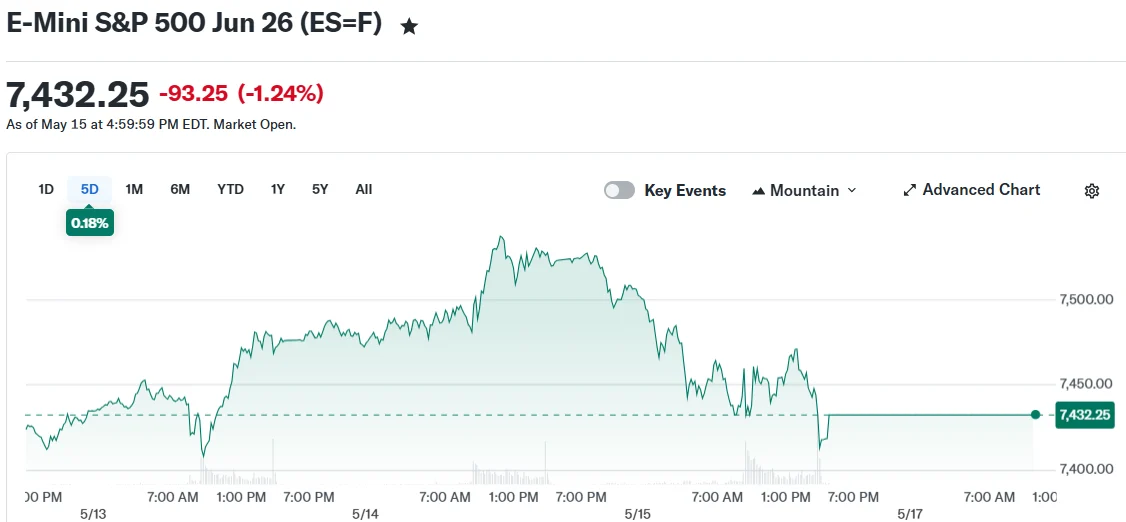
- Major indexes stumbled Friday with the S&P 500 falling 1.2%, snapping a seven-week rally on a sour note
- Treasury yields breached 4.5% on the 10-year note, adding headwinds for equities
- Carlyle Group’s Jeff Currie warns commodities could be starting a prolonged supercycle
- Walmart’s Thursday earnings will illuminate consumer trends after April CPI reached 3.8%
Market participants enter the trading week facing several headwinds. Equities retreated Friday, Treasury rates advanced, and diplomatic fallout from the Trump-Xi discussions continues to cast uncertainty.
The S&P 500 tumbled 1.2% Friday, though it squeezed out a marginal 0.1% gain for the week — marking its seventh consecutive weekly advance. The Nasdaq shed 1.5% on the session, finishing the week fractionally lower by 0.1%. The Dow similarly concluded weekly trading down 0.2%.
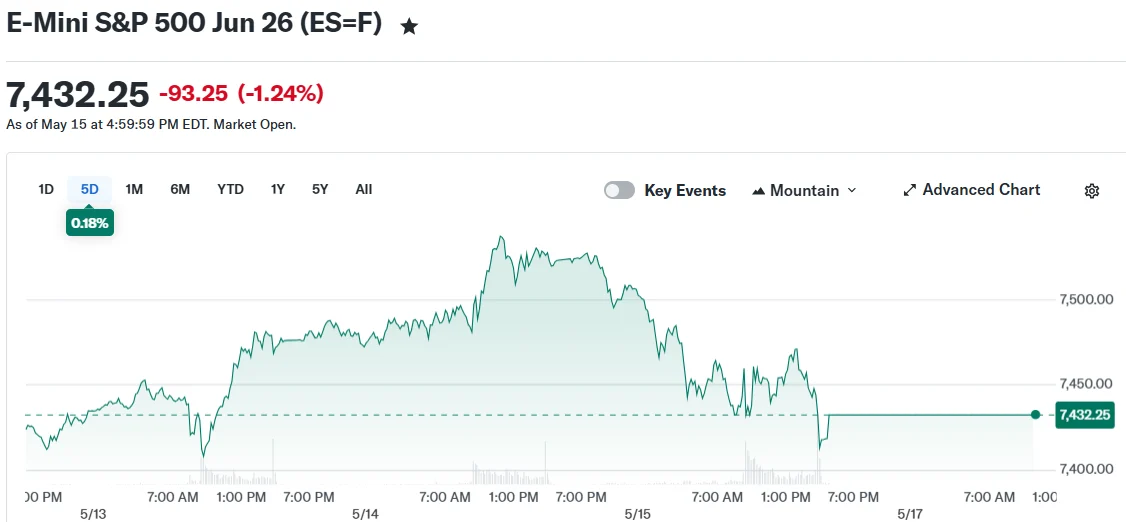
The 10-year Treasury benchmark pushed decisively past 4.5% Friday, a threshold that has traditionally unsettled stock market participants. This rate level will remain a focal point as trading commences.
While this week’s economic schedule appears less crowded than previous periods, one corporate event dominates attention.
Nvidia’s Quarterly Report Commands Spotlight
Nvidia will unveil first-quarter financial performance Wednesday following the closing bell. The chipmaker holds the distinction of being the world’s most valuable enterprise, having surpassed $5.7 trillion in market capitalization last week.
Wall Street consensus calls for adjusted profits of $1.78 per share alongside $79.2 billion in total revenue.
During March, Nvidia’s chief executive Jensen Huang characterized demand for the company’s products as “off the charts.” He expanded forecasts for two major product categories, projecting they could generate over $1 trillion by the conclusion of 2026.
Huang recently accompanied President Trump on a China visit, engaging with government officials and corporate executives. Market observers will listen carefully for any disclosure regarding transactions or arrangements finalized during those meetings.
Reports emerged last week indicating Chinese technology giants Alibaba, Tencent, ByteDance, and JD.com received authorization to purchase Nvidia’s H200 processors. This development propelled shares to fresh record highs Thursday before Friday’s selloff.
Notwithstanding the impressive rally, UBS analyst Tim Arcuri observed that numerous institutional investors have displayed minimal excitement approaching the release, potentially creating conditions for an upside surprise with solid results.
Bank of America analyst Vivek Arya highlighted that market participants will scrutinize any discussion regarding competitive pressure from Advanced Micro Devices, Broadcom, and emerging chipmaker Cerebrus, which debuted publicly last week.
Walmart, Retail Sector, and Consumer Health
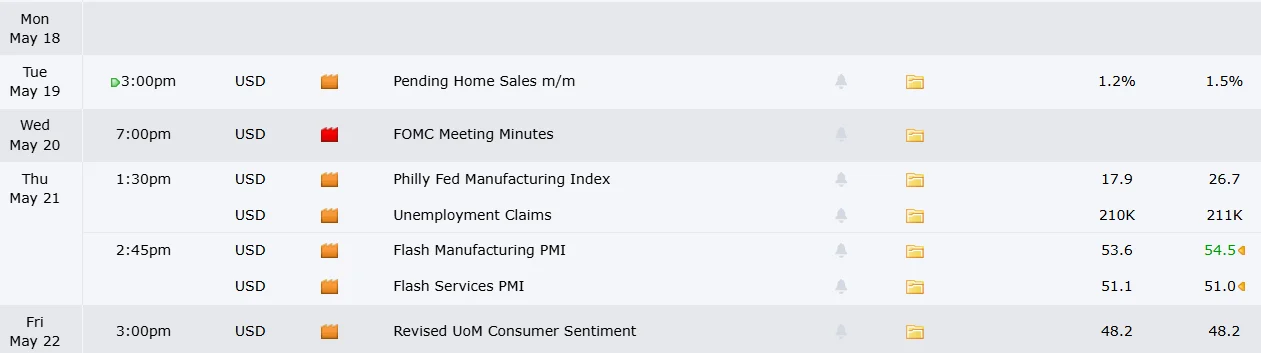
Walmart delivers quarterly results Thursday morning. The report carries heightened significance following April’s Consumer Price Index print showing 3.8% year-over-year inflation, primarily fueled by escalating energy prices.
During the previous quarter, Walmart characterized its customer base as “resilient.” This week’s question centers on whether that assessment still applies.
Target releases results Wednesday. Newly appointed CEO Michael Fiddelke has communicated strategic initiatives aimed at restoring growth momentum. Home Depot and Lowe’s announce earnings Tuesday and Wednesday respectively, though both face challenges from stagnant housing market conditions.
The University of Michigan releases consumer sentiment and inflation expectations data Friday, completing the week’s economic landscape.
Are Commodities Starting a Prolonged Supercycle?
Carlyle Group energy strategist Jeff Currie published extensive analysis Friday suggesting markets may be witnessing the initial phase of an extended commodity bull market.
Currie highlighted artificial intelligence’s escalating requirements for tangible infrastructure — power generation, industrial metals, and processing capability — as a primary catalyst. He also referenced the Iran situation, which Goldman Sachs estimates has withdrawn over 13.7 million barrels daily from global markets, representing the largest energy supply disruption historically.
Currie contends capital has concentrated on the AI trade while the underlying physical resources essential for operating AI systems have suffered from underinvestment. He believes this disconnect is beginning to resolve itself.

Yung Miami & Her Dad Go Viral After Turning Up To ‘Spend Dat’

CLARITY Act Finalized THIS Is Why Crypto Market Will Explode!

NY governor pleads with unions to resume talks over transit strike

Manchester United reach agreement with Casemiro over contract clause amid transfer speculation

US brings back mandatory military draft registration

Steven Gerrard disagrees with Gary Neville over ‘shock’ Chelsea and Arsenal claim | Football


-
 Crypto World2 days ago
BloFin War of Whales 2026 Grand Prix opens registration for $5M trading championship
-

 Fashion2 days ago
Weekend Open Thread: Theory – Corporette.com
-

 Crypto World2 days ago
E-Estate Announces 1 Year Live: Washington DC Summit as Real Estate Tokenization Enters Its Next Phase
-

 Fashion6 days ago
Coffee Break: Travel Steam Iron
-

 Fashion7 days ago
What to Know Before Buying a Curling Wand or Curling Iron
-

 Politics6 days ago
What to expect when you’re expecting a budget
-

 Tech3 days ago
Tech Moves: Microsoft AI leader jumps to OpenAI; former AI2 exec joins Meta; and more
-

 Tech6 days ago
GM Agrees To Pay $12.75 Million To Settle California Lawsuit Over Misuse Of Customers’ Driving Data
-
Crypto World5 days ago
Bitcoin Suisse expands with Digital Asset License and Investment Business Act Registration Approval in Bermuda
-

 Tech6 days ago
GM agrees to $12.75M California settlement over sale of drivers’ data
-

 Politics5 days ago
Pakistan to enter Chinese capital market as war inflation bites
-

 Crypto World5 days ago
Bitcoin Suisse expands with Digital Asset License and Investment Business Act Registration Approval in Bermuda
-
 Crypto World3 days ago
Google’s Gemini AI Predicts Incredible Solana Price by the End of 2026
-

 Tech2 days ago
Google reimburses Register sources who were victims of API fraud
-

 Business2 days ago
H&R Real Estate Investment Trust (HR.UN:CA) Q1 2026 Earnings Call Transcript
-
 Entertainment7 days ago
Prime Video’s Forgotten but Brilliant 2-Part Horror Anthology Is a Perfect Binge
-
 Entertainment7 days ago
‘Rivals’ Season 2 Is Bigger, Better, and Raunchier Than Ever
-
 Tech7 days ago
University of Michigan’s $20M early OpenAI investment now worth $2B as Musk trial documents reveal endowment bet
-
 Tech6 days ago
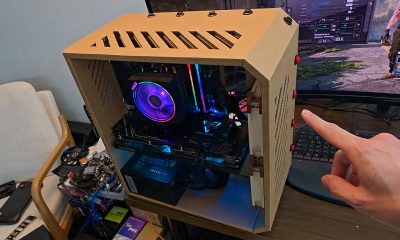
Over-Engineered Cardboard PC Case Houses a Full Computer Without Compromising Style or Performance
-

 Sports2 days ago
Napoleonic enters 2026 Doomben 10,000 field via Abounding withdrawal
You must be logged in to post a comment Login