

Crypto World
CoinMENA Partners With Standard Chartered to Use UAE Payment Rails


CoinMENA, a cryptocurrency exchange operating in the United Arab Emirates, has signed a banking agreement with Standard Chartered to enhance how customers move between crypto and fiat. The deal is designed to strengthen fiat payment infrastructure, with Standard Chartered set to support key functions including on- and off-ramps and transaction management through virtual account arrangements.
In a separate development, Bloomberg reports that the Central Bank of the UAE has approved Revolut’s applications for Stored Value Facilities and Retail Payment Services licenses—another sign that mainstream fintech is preparing for deeper involvement in the UAE’s regulated financial landscape, even as questions remain about whether digital-asset services will be included at launch.
Key takeaways
- CoinMENA says Standard Chartered will support fiat on- and off-ramps, client money accounts, and virtual-account transaction management in the UAE.
- The exchange frames the partnership as a way to improve transparency and liquidity settlement with approved global counterparties.
- CBUAE approval of Revolut’s Stored Value Facilities and Retail Payment Services licenses indicates regulatory progress for broader fintech payments in the UAE.
- Revolut’s reported licenses cover payments and stored value; they do not amount to a clear, explicit green light for digital-asset trading or related services.
CoinMENA links fiat rails to Standard Chartered
CoinMENA announced that it has entered a banking agreement with Standard Chartered, aiming to “strengthen fiat payment infrastructure” for customers in the UAE. According to a press release shared with Cointelegraph, the exchange will use Standard Chartered to facilitate fiat on- and off-ramps as well as client money accounts.
The agreement also covers virtual account-based transaction management, which CoinMENA says is intended to bring more structured handling of transfers. The exchange believes this will help improve transparency and liquidity settlement when transacting with approved global counterparties.
The move comes as the UAE’s digital asset ecosystem continues to mature and attract more institutional participation. For many exchanges, reliable access to regulated banking infrastructure is increasingly treated as a prerequisite for scaling fiat volumes, reducing operational friction, and meeting compliance expectations tied to customer funds handling.
Standard Chartered emphasizes the UAE’s regulatory pull
Standard Chartered UAE, Middle East and Pakistan CEO Rola Abu Manneh said in the announcement that the UAE has positioned itself as a leading regulatory environment for digital assets. She suggested this creates collaboration opportunities for financial institutions and regulated firms.
That emphasis matters because crypto firms increasingly rely on bank partnerships not just for payment convenience, but for settlement reliability and compliance processes that can be difficult to replicate through non-bank alternatives. In this context, CoinMENA’s choice to anchor parts of its fiat flow around a major global bank reflects a broader trend in which exchanges seek “bank-grade” rails as they expand.
CoinMENA co-founders Dina Sam’an and Talal Tabbaa underlined the strategy in a joint statement, arguing that the industry’s future hinges on banking, regulatory, and operational foundations—not solely on technology.
Why bank agreements are becoming a competitive lever
For UAE-based exchanges, fiat rails are often the difference between frictionless onboarding and a payment process that can be slow, inconsistent, or difficult to scale. While the press release does not quantify outcomes such as reduced settlement time or improved throughput, it does outline the operational components involved: fiat on- and off-ramps, client money accounts, and virtual account transaction management.
These elements are particularly relevant for exchanges that want to attract a wider range of users, including those who prefer predictable banking workflows and clear custody or segregation practices for customer funds. The pledge of “improved transparency” also suggests that CoinMENA views clearer transaction handling and settlement processes as critical to trust and compliance.
Investors and users should watch how partnerships like this translate into day-to-day experience—such as deposit and withdrawal reliability, the smoothness of conversion flows, and whether settlement with counterparties becomes more consistent as volumes grow. Over time, exchanges with stronger banking connectivity may be better positioned to handle institutional-level demand that depends on dependable fiat processing.
Revolut’s UAE licenses signal wider payments expansion
Separately, Bloomberg reports that the Central Bank of the UAE has approved Revolut’s applications for Stored Value Facilities and Retail Payment Services licenses. The report frames this as the fintech moving closer to a UAE launch, with Revolut reportedly planning to build out technology, operations, and local capabilities before it makes its services available.
Bloomberg also notes that UAE users are expected to receive multi-currency accounts, physical and virtual cards, and domestic and international transfers through Revolut’s app. The combination of stored value and retail payment services indicates a focus on payments infrastructure and consumer financial utility rather than a direct digital-asset platform at the outset.
At the same time, the scope of authorization remains a key point for readers. The licenses approved in the report relate to stored value and retail payment services, not an explicit waiver for “virtual asset” activity. Revolut has not publicly confirmed—per Bloomberg’s reporting—whether its UAE offering will include digital asset trading, transfers tied to crypto, staking, or access to its Revolut X exchange.
Cointelegraph reached out to Revolut for comment but did not receive a response before publication, leaving details about a possible digital-asset component uncertain.
Bloomberg also reports that Revolut is considering additional expansion across the Middle East and North Africa, including Turkey and Morocco. If so, the UAE could become a test case for how rapidly the firm scales regulated payments in the region ahead of any expanded service offerings.
What to watch next in the UAE’s regulated finance build-out
These two developments—CoinMENA’s banking agreement with Standard Chartered and Revolut’s central bank licensing progress—highlight the UAE’s push toward deeper integration between regulated banking rails and digital finance services. The immediate questions for market participants are whether CoinMENA’s fiat improvements translate into measurable user and liquidity outcomes, and whether Revolut’s UAE rollout stays strictly within payments or eventually broadens into explicitly licensed digital-asset functions.

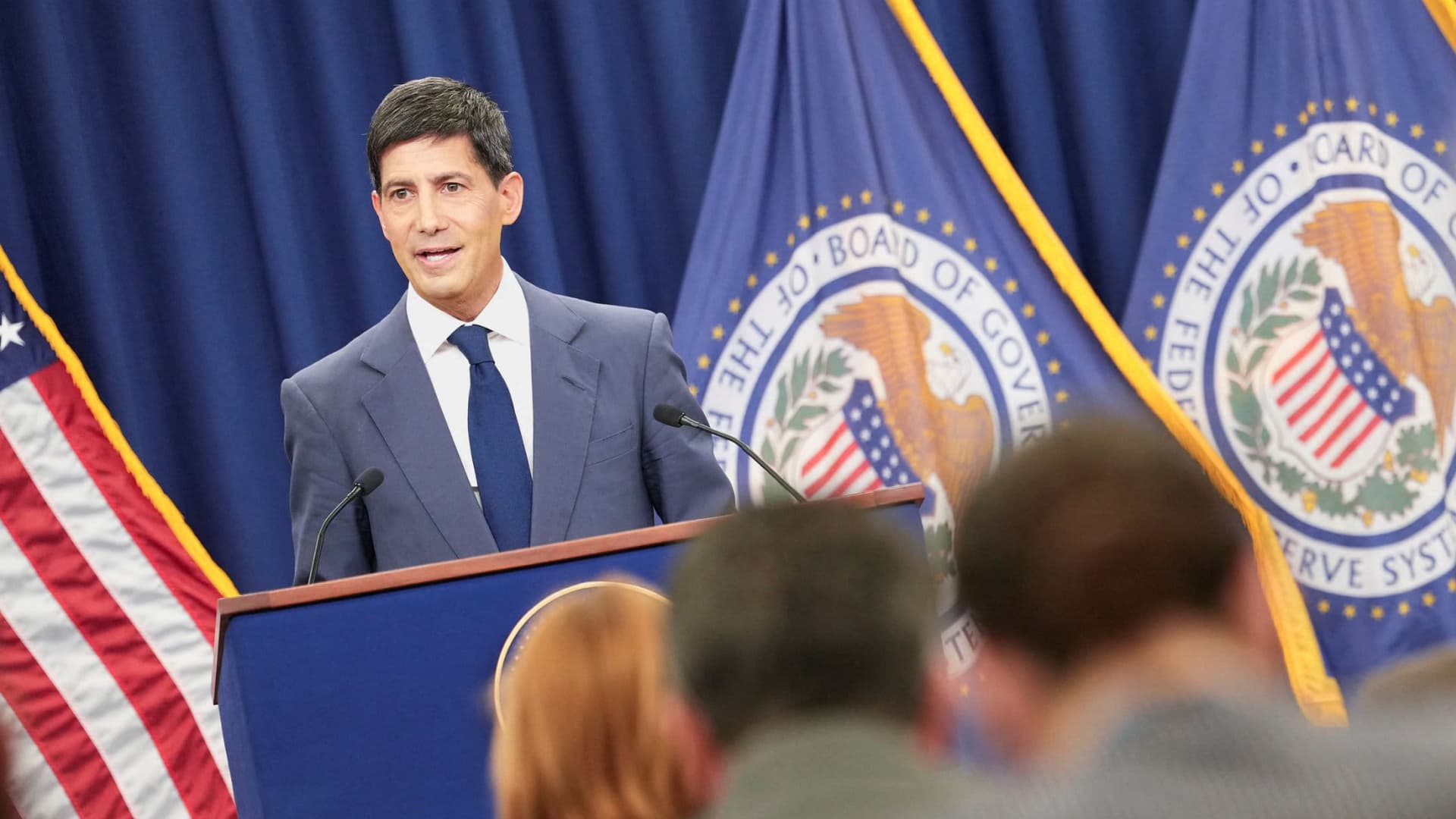
New U.S. Federal Reserve Chairman Kevin Warsh holds a press conference following a two-day meeting of the Federal Open Market Committee (FOMC), at the U.S. Federal Reserve in Washington, D.C., U.S. June 17, 2026.
Eric Lee | Reuters
Wednesday’s Federal Open Market Committee statement looked drastically different than those issued after previous meetings, offering one of the first formal signs of the changes promised by new Federal Reserve Chairman Kevin Warsh.
The statement released Wednesday contained around 130 words, down from figures above 300 recorded in each of the past two meetings, according to a CNBC analysis of the releases.
Warsh acknowledged a “difference” in the statement early in his first press conference as chair on Wednesday. He said there was no forward guidance, as it was “not well suited for the current policy conjuncture.”
“It’s a bit shorter, a bit simpler and it dispenses with some older language,” Warsh said. “That statement just gives you the facts, as best we can judge it.”
Below is a comparison of Wednesday’s FOMC statement with the one issued after the Fed’s previous policymaking meeting in April.
Text removed from the April statement is in red with a horizontal line through the middle. Text appearing for the first time in the new statement is in red and underlined. Black text appears in both statements.
Wednesday’s release contained no information on how members voted, previously an fixture at the end of releases under former Federal Reserve Chairman Jerome Powell. Instead, Wednesday’s statement indicated only that it was a unanimous vote.
The latest statement also includes less color on how the Fed views current inflation trends and where it could be going next. However, the statement did say that the Fed is committed to having stable prices.
“What Kevin Warsh is trying to do with this statement is not use the statement to give forward guidance, and I think he did a pretty good job with that,” said David Wessel, senior fellow at Brookings, on CNBC’s “Power Lunch.”
Fed watchers viewed the change as part of a “regime change” Warsh has promised for the central bank. Warsh has criticized how the Fed communicates, arguing that it leads to policy errors and entagles the central bank in markets.
“Warsh’s first FOMC statement left the clear impression that there is a new chair in town,” said Ian Lyngen, head of U.S. rates strategy at BMO.
“The statement was significantly shortened — eliminating the forward guidance,” he said. It gave “only a cursory characterization of the economy as ‘expanding at a solid pace.’”
— CNBC’s Davis Giangiulio and Yun Li contributed to this report.

TLDR:
- Moody’s brought machine-readable credit ratings to Solana through its integration with Alphaledger infrastructure.
- Solana became the first public blockchain capable of supporting Moody’s ratings directly on-chain.
- Issuers can now embed Moody’s credit data into tokenized fixed-income assets at the asset level.
- The rollout follows Moody’s earlier TIE deployment on Canton Network during March 2026.
Moody’s has expanded its blockchain strategy by bringing machine-readable credit ratings to Solana through a new integration with Alphaledger.
The move places one of the world’s most widely used credit assessment systems directly on a public blockchain network. It also marks the first time Moody’s ratings can operate at scale on a major permissionless chain.
The deployment adds another institutional finance layer to Solana’s growing real-world asset ecosystem.
Moody’s Credit Ratings Reach Solana Through Alphaledger Integration
According to a release from Moody’s Corporation, Moody’s Ratings has extended its Token Integration Engine, known as TIE, to the Solana network. The integration comes through Alphaledger, a platform focused on tokenized fixed-income assets.
The launch follows a proof-of-concept completed on Solana’s devnet in June 2025. That earlier test explored how credit ratings could become part of tokenized securities issued on-chain.
With the deployment now live, issuers using Alphaledger can choose to attach Moody’s Ratings data directly to tokenized fixed-income instruments. The information becomes available within the asset’s digital infrastructure rather than through separate external systems.
Moody’s stated that the rollout makes its ratings ready for large-scale deployment on a major public blockchain. The company also noted that TIE was designed to function across different blockchain environments rather than a single network.
The development follows Moody’s first blockchain-based ratings deployment on the Canton Network in March 2026. At the time, the company introduced ratings delivery capabilities on a permissioned institutional blockchain.
Solana RWA Market Gains Institutional Credit Infrastructure
The latest integration brings Moody’s credit data into Solana’s expanding real-world asset sector. Credit ratings play a central role in traditional fixed-income markets by helping investors evaluate risk.
Moody’s said investors increasingly transact on blockchain networks and require access to independent credit assessments in those environments. The company described TIE as a network-agnostic framework built to support that transition.
Alphaledger stated that embedding ratings directly into tokenized assets removes the need for separate credit lookups. The platform highlighted municipal debt markets as one area where integrated ratings could support institutional participation.
The Solana Foundation also addressed the launch. According to information shared by the foundation, the network now becomes the first public permissionless blockchain capable of supporting Moody’s machine-readable credit ratings directly on-chain.
The release noted that credit information can now travel alongside tokenized assets throughout their lifecycle. Market participants can access independent credit analysis within the asset structure itself rather than relying on disconnected data sources.
Moody’s indicated that additional blockchain integrations remain under consideration as digital finance adoption grows. The company plans to expand TIE coverage across more networks, business lines, and financial instruments over time.

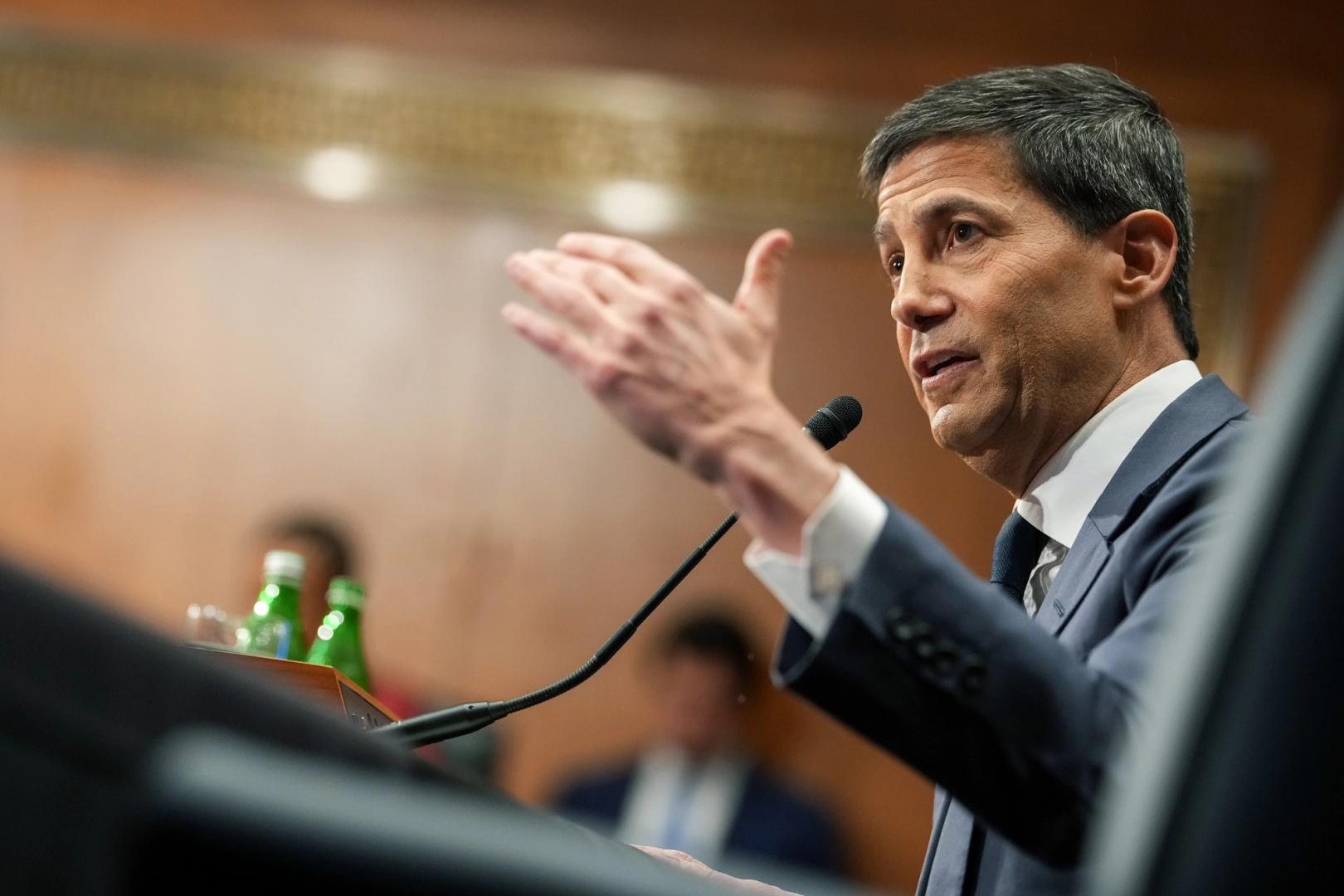
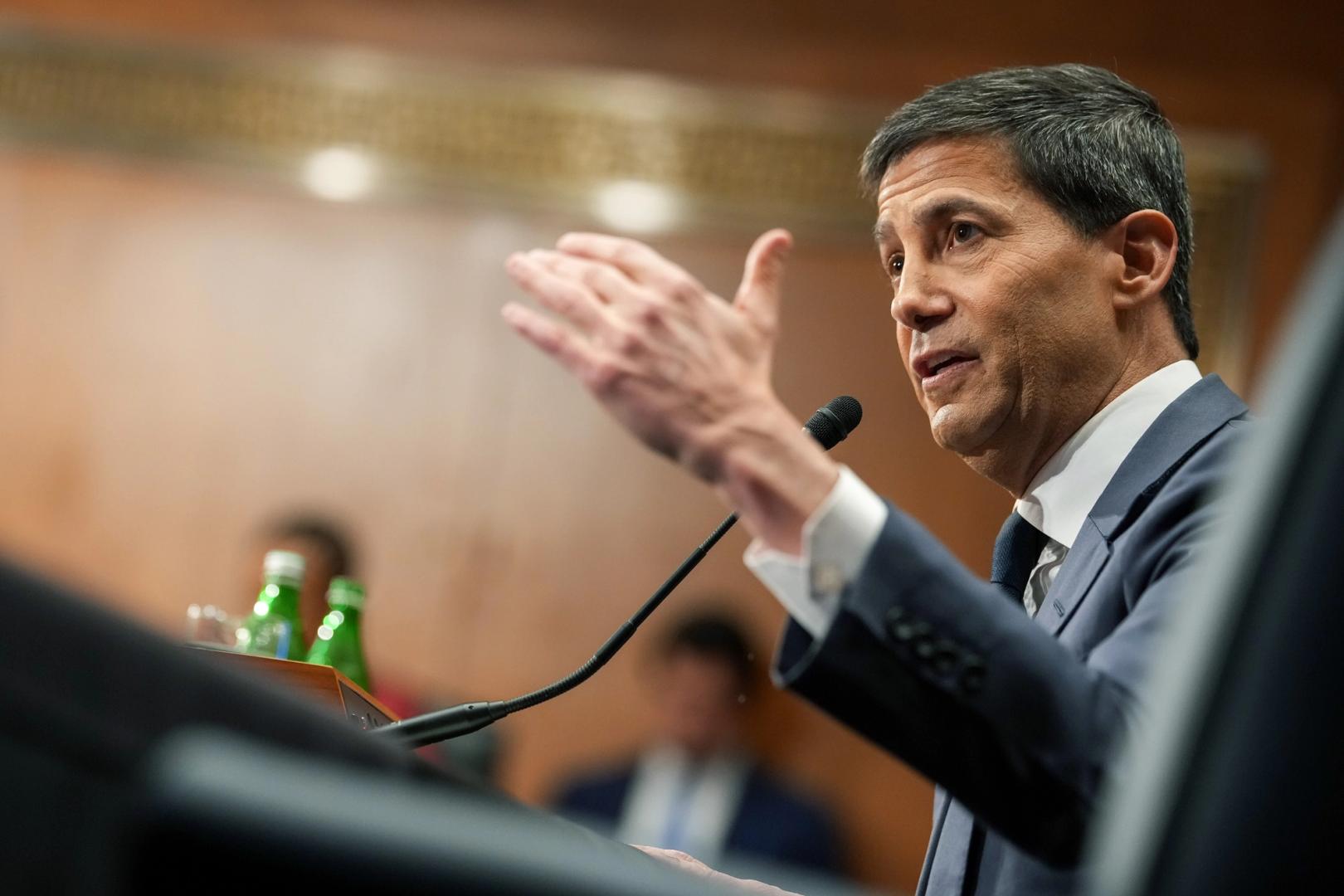
The Federal Reserve left its benchmark fed funds rate range unchanged at 3.50%-3.75% on Wednesday, a move markets had expected nearly unanimously.
“Economic activity is expanding at a solid pace despite elevated uncertainty that owes, in part, to the conflict in the Middle East,” the press release said. “Inflation remains elevated relative to the Committee’s 2 percent goal, in part reflecting supply shocks that have driven price increases in certain sectors, including energy.”
“The Committee will deliver price stability,” it added.
Policymakers are increasingly lean towards a rate hike this year, expecting the fed funds rate at 3.8% at the end of 2026, versus a 3.4% in the March projection. Easier monetary policy will not come anytime soon as they expect rates at 3.6% for 2027 and 3.4% in 2028, both higher than their previous guidance.
They also see higher inflation, with personal consumption expenditure (PCE) rising 3.6 this year and core PCE inflation at 3.3%, compared to a forecast of 2.7%-2.7% in March.
Trading around $66,000 earlier, bitcoin fell to $64,800 in the minutes following the decision, and recently stabilized around $65,300. The S&P 500 and Nasdaq 100 both dropped nearly 1%, erasing earlier gains.
Crypto World
Gaming Industry, Tribes and Unions Press Senate to Ban Sports Prediction Markets in Crypto Bill


The American Gaming Association is leading a coalition of tribal groups and hospitality unions urging the Senate to insert language into pending crypto market-structure legislation that would bar prediction markets from offering sports wagers. The push squarely targets Kalshi and Polymarket. The… Read the full story at The Defiant


Former Ripple CTO David Schwartz challenged the popular claim that stock markets and prediction markets are just casinos, arguing on X that the comparison ignores a fundamental economic divide.
Schwartz stepped back from daily operations at Ripple at the end of 2025 and became CTO Emeritus. He entered the debate on June 17, 2026, responding to users who argued that “trading” is a euphemism for gambling.
Gambling Moves Value, and Investing Grows It
The exchange began when X users argued that prediction markets and stock markets operate like casinos. Their core claim was that “trading” serves as a polished cover for placing bets. Schwartz rejected that framing.
He separated the two by their economic function. Gambling moves existing value between participants. Investing generates new value.
“A key way to see the difference is this: If you have positive expected value in gambling, something has gone very wrong. If you have negative expected value in investing, something has gone very wrong,” says Schwartz
The logic works symmetrically. A gambler who consistently beats the house reveals a flaw in the system, not a feature. An investor who consistently loses in a functioning market faces a problem with their approach or the market itself. That test shifts the burden of proof onto the system’s design.
A casino’s purpose is to redistribute money among players. A market’s purpose is to direct capital toward productive use and generate returns across the broader economy over time.
Schwartz’s Long View on Markets
The remarks carry added weight from someone who co-architected the XRP Ledger. Schwartz served as Ripple’s CTO for more than a decade before transitioning to an advisory board role at the end of 2025. He remains one of the most prominent technical voices in the XRP ecosystem.
The Ripple EX CTO also drew significant attention earlier this year for his XRP escrow price views, directly challenging viral price targets. He used market-cap math to show that many community projections rest on valuations exceeding the entire global money supply.
XRP (XRP) trades at $1.19 at the time of writing, down 3.64% over the past 24 hours. The asset holds a top-six market rank with total capitalization near $74.2 billion.
The comments also land as prediction markets face state bans across the US. At least 12 states have moved to classify event contract platforms as gambling under state law.
Whether policymakers adopt Schwartz’s value-creation framing or the casino label favored by his critics could shape how these markets are regulated in the months ahead.
The post Former Ripple CTO Draws a Sharp Line Between Investing and Gambling appeared first on BeInCrypto.
Quick Summary
- Federal Reserve Chair Kevin Warsh conducted his inaugural policy meeting with rates unchanged; investors analyzed signals about monetary direction
- SpaceX completed its acquisition of Cursor, an AI-powered coding platform, following its historic public offering
- Crude oil prices hovered near quarterly lows amid easing US-Iran tensions and improved diplomatic relations
- Commercial space companies including Rocket Lab and AST SpaceMobile sustained significant investor momentum
- Leading equity benchmarks maintained positions close to all-time peaks despite persistent inflation and monetary policy uncertainties
Investors juggled multiple significant developments today. Federal Reserve policy, a transformative SpaceX transaction, declining energy costs, and commercial space enthusiasm all captured market focus. Here’s a breakdown of the key catalysts driving today’s trading action.
Warsh Navigates Inaugural Fed Policy Meeting
Federal Reserve Chair Kevin Warsh presided over his first monetary policy gathering today.
The consensus anticipated no change to interest rates. However, market participants scrutinized every detail for clues about upcoming policy trajectory.
Price pressures continue exceeding the central bank’s desired threshold. Meanwhile, economic activity has demonstrated greater resilience than forecasters predicted.
Market observers focused intently on Warsh’s perspective regarding price stability, employment conditions, and the timeline for potential rate adjustments. His approach to leadership may define market trends through the remainder of 2026.
Central bank policy reverberates across all asset classes, influencing everything from growth equities to real estate and fixed income securities.
SpaceX Expands Technology Footprint with Cursor Acquisition
SpaceX captured attention once more, only days following its record-shattering initial public offering.
The aerospace giant revealed it has purchased Cursor, a cutting-edge AI coding platform. This transaction demonstrates Elon Musk’s ambition to expand SpaceX’s reach beyond launch vehicles and orbital infrastructure.
Market watchers are evaluating how SpaceX plans to deploy AI capabilities throughout its software systems, engineering workflows, and production operations.
This purchase reinforces the perception that SpaceX is evolving into a diversified technology conglomerate rather than remaining solely focused on aerospace.
Its stock performance since going public continues generating intense scrutiny among institutional and retail investors alike.
Energy Markets React to Diplomatic Progress
Commodity traders remained engaged as crude oil maintained prices close to three-month floor levels.
Ongoing negotiations between Washington and Tehran have diminished concerns about potential supply interruptions. Should diplomatic progress continue, additional barrels could flow into international markets.
Reduced oil prices offer multiple economic benefits, including downward pressure on inflation, decreased transportation expenses, and enhanced consumer purchasing capacity.
Companies with substantial energy dependencies also gain from reduced operational costs.
Conversely, declining crude values create financial stress for exploration and production firms requiring elevated price levels to maintain profitability.
Commercial Space Sector Sustains Investment Appeal
The SpaceX public debut has maintained heightened attention across the broader aerospace industry.
Rocket Lab, AST SpaceMobile, and Planet Labs all experienced continued robust demand from market participants throughout this trading week.
Numerous investors view these equities as vehicles for gaining exposure to commercial space expansion without direct SpaceX ownership.
While the sector has experienced significant price swings lately, buyer enthusiasm remains elevated.
Satellite connectivity, launch infrastructure, government contracts, and remote sensing applications are attracting capital from diverse investor categories.
Equity Benchmarks Hold Near Peak Valuations
Despite persistent worries surrounding monetary policy and inflation dynamics, major indexes continue trading close to historic peaks.
Technology shares have provided leadership, propelled by substantial artificial intelligence investment and strengthening market sentiment.
Numerous strategists anticipated that elevated interest rates would apply greater pressure on equity valuations.
Instead, investors have maintained their concentration on sustainable growth opportunities within AI, chip manufacturing, enterprise software, and aerospace sectors.
As 2026’s second half unfolds, the market’s dominant investment themes continue driving asset allocation decisions.
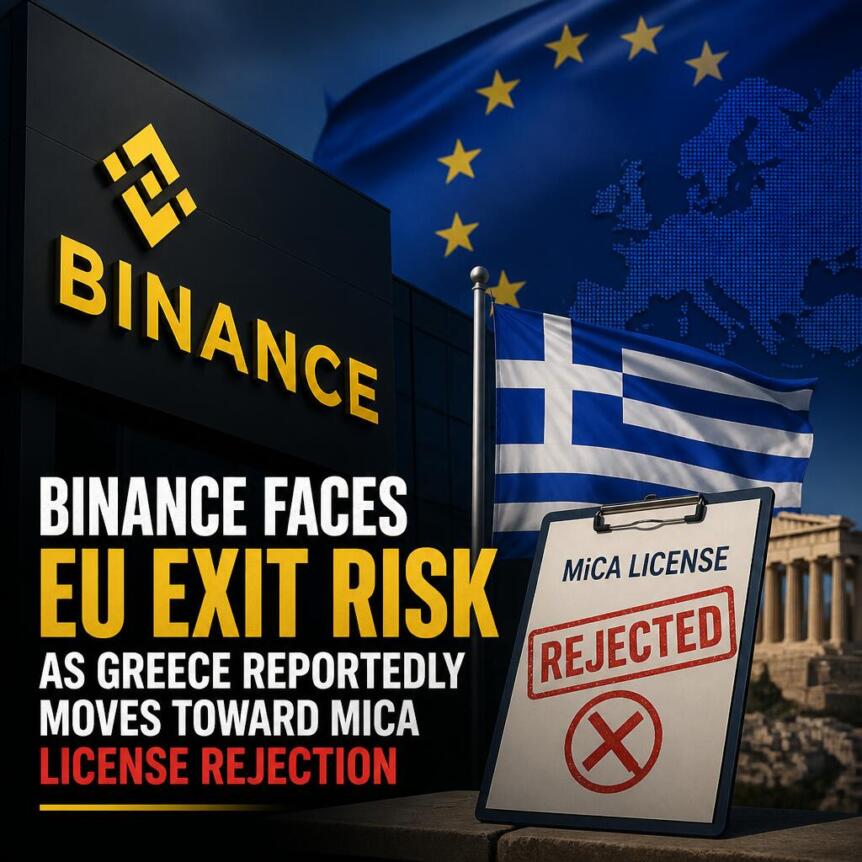
Binance risks losing EU market access after a reported Greek license setback. The MiCA deadline could force many crypto firms to halt European services. Greece’s decision may become the biggest test of MiCA enforcement.
Binance traded near $742 at the time of reporting, while the exchange faced a significant regulatory challenge in Europe. The company may lose its ability to serve European Union customers after reports emerged about its license application in Greece. Consequently, the development places Binance under pressure ahead of a key regulatory deadline.
Greece License Decision Threatens EU Operations
Binance selected Greece as its European regulatory base earlier this year. The company submitted an application under the European Union’s Markets in Crypto-Assets Regulation framework. However, reports indicate that Greece’s Hellenic Capital Market Commission may reject the request.
The decision could prevent Binance from securing authorization before the June 30 deadline. Under MiCA, crypto firms need approval from one member state regulator. They can then offer services throughout all 27 EU countries. Failure to obtain authorization would block Binance from legally serving customers across the bloc. The exchange would need to halt regulated operations from July 1. As a result, millions of users could face service disruptions and account changes.
MiCA Reshapes Europe’s Crypto Regulatory Landscape
The European Union introduced MiCA to create a unified regulatory structure for digital asset companies. The framework became effective in December 2023 and established common compliance standards. Regulators designed the rules to strengthen oversight and consumer protection.
Crypto firms operated under separate national registration systems. However, MiCA requires firms to obtain formal authorization through a member state’s regulator. Therefore, companies must satisfy stricter operational, compliance, and reporting requirements.
The transition has already transformed the European crypto market. Several major exchanges secured approvals before the deadline. Meanwhile, many smaller firms continue to face challenges completing the authorization process.
Binance Maintains Compliance Position Amid Uncertainty
Binance stated that it has worked with regulators throughout the licensing process. The company spent approximately 18 months pursuing authorization and believes it satisfied all requirements. Nevertheless, the final outcome remains uncertain.
The exchange chose Greece due to workforce availability and operational advantages. However, Greece had not issued any MiCA licenses when Binance filed its application. This situation increased attention on the country’s review process.
Greek regulators have not publicly commented on the application. Confidentiality rules continue to limit official statements regarding the review. Binance has committed to providing additional updates before the June 30 deadline.
Broader Impact on Europe’s Crypto Market
The reported setback highlights growing regulatory scrutiny across the digital asset sector. European authorities continue to strengthen oversight as the market matures. Consequently, compliance has become a central requirement for long-term operations.
Industry data shows that only a portion of crypto firms have secured MiCA authorization. Many companies that previously operated under national systems may lose market access. Therefore, the transition period marks a major shift for the sector.
Binance’s case could become a defining example of MiCA enforcement. The outcome may influence how regulators and companies approach compliance in the future. It may also shape the competitive landscape of Europe’s regulated crypto market.
Prediction market Kalshi has partnered with compliance software provider StarCompliance to launch a monitoring platform designed to help financial companies oversee employee activity on prediction markets, as the sector faces increased scrutiny over insider trading and the use of non-public information.
According to Wednesday’s announcement, the system is intended to flag employee activity based on transaction volume, trading patterns, market categories and work-hour activity, while giving firms a centralized way to manage investigations and audit records tied to prediction market exposure across onchain and offchain environments.
The launch comes days after a federal judge set a December trial date for US Army Master Sgt. Gannon Ken Van Dyke, who prosecutors allege used non-public information about a military operation targeting Venezuelan President Nicolás Maduro to earn more than $400,000 on prediction market platform Polymarket. Van Dyke has pleaded not guilty to the charges.
StarCompliance said the product is designed to address potential risks around material non-public information, as employees at financial firms may be able to use sensitive business or market information to trade event contracts.
The new monitoring capability extends StarCompliance’s existing employee compliance platform, which already tracks traditional securities and digital asset activity, to include prediction market trading through Kalshi.
Related: Coinbase eyes World Cup boost as prediction markets surge: Bernstein
Prediction markets face growing regulatory and lawmaker scrutiny
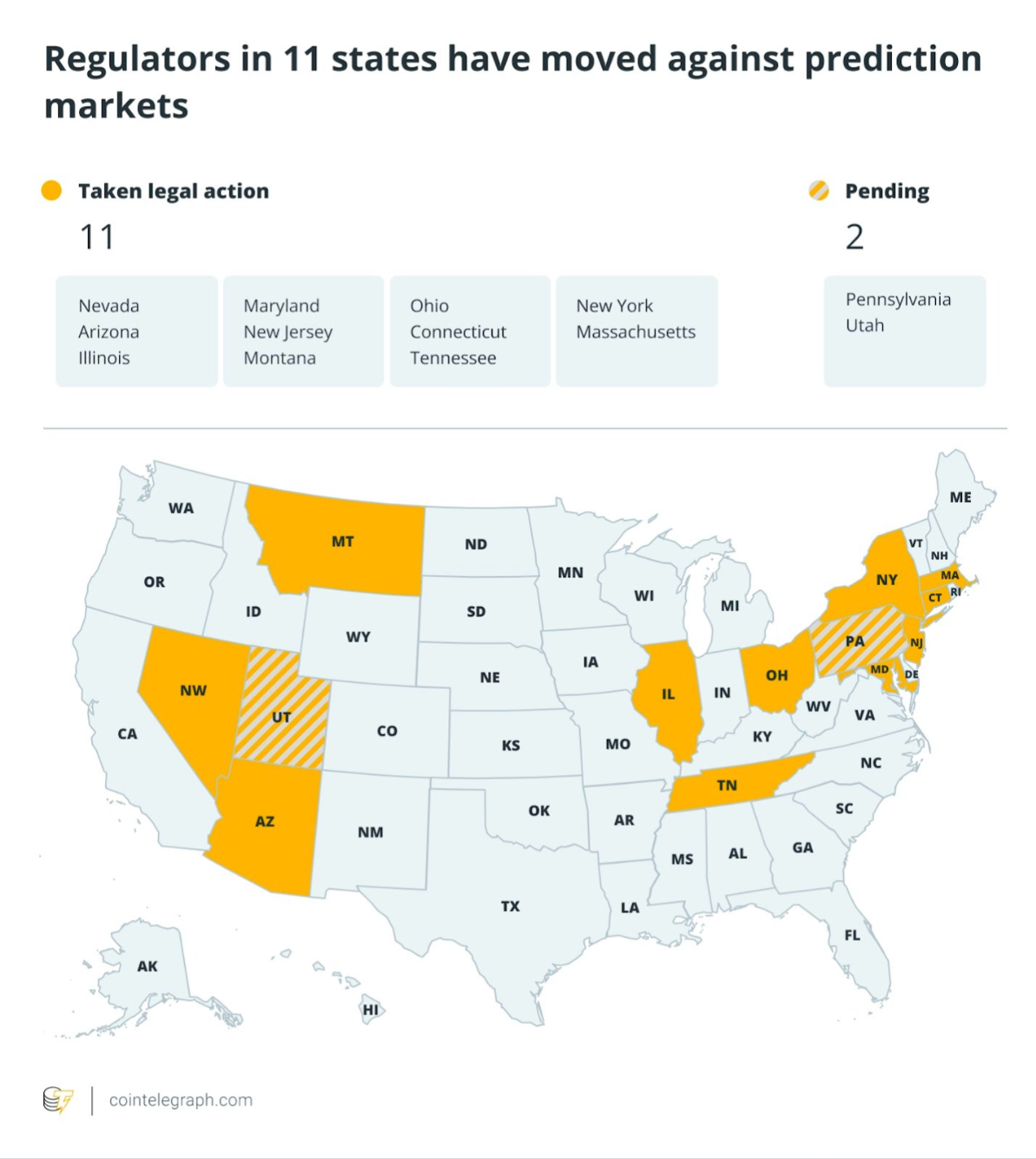
The launch comes as prediction markets face increasing scrutiny in the United States, where at least 11 states have taken legal or regulatory action against platforms such as Kalshi and Polymarket.
At the center of the dispute is whether event contracts should be regulated under state gambling laws or as federally regulated derivatives overseen by the Commodity Futures Trading Commission (CFTC).
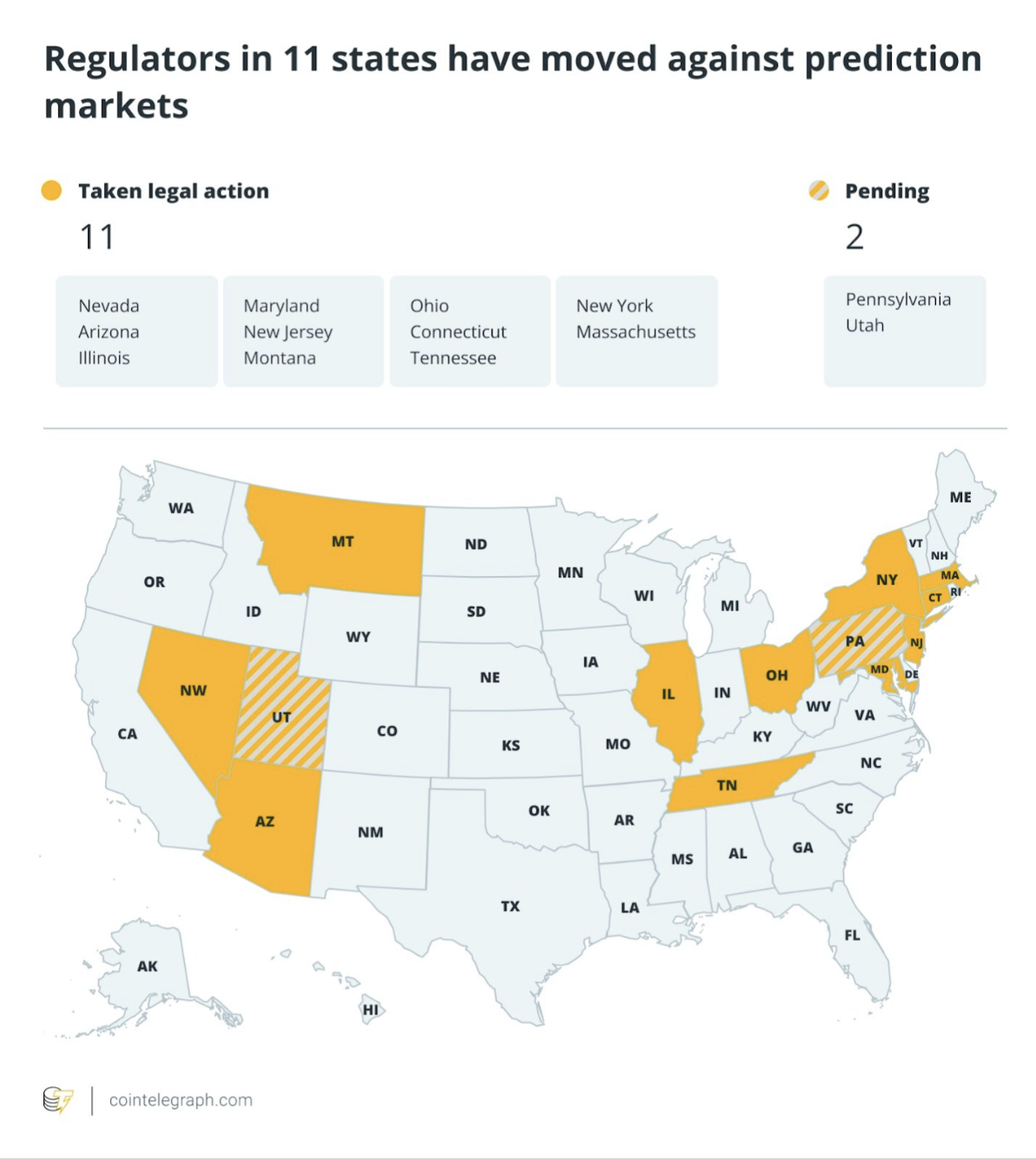
The conflict has produced a patchwork of lawsuits, cease-and-desist orders and proposed legislation. Nevada became the first state to temporarily block Kalshi’s operations earlier this year, while Arizona accused the company of operating an illegal gambling business by offering event contracts to state residents.
Prediction market operators and the CFTC have pushed back. At the end of May, Kalshi sued Minnesota after the state enacted what CFTC Chair Michael Selig described as the country’s first outright ban on prediction markets. Around the same time, the CFTC joined Kalshi in a separate legal challenge against Rhode Island officials over the regulation of event contracts.
Last week, the CFTC sued New Mexico officials after the state accused Kalshi of offering unlicensed sports betting. The case marked the eighth state targeted by the agency as it seeks to block state-level restrictions on prediction market platforms.
Last month, Representative James Comer asked CEOs of Kalshi and rival Polymarket for information on their responses to insider trading after “suspiciously timed trades” related to US military actions against Iran.
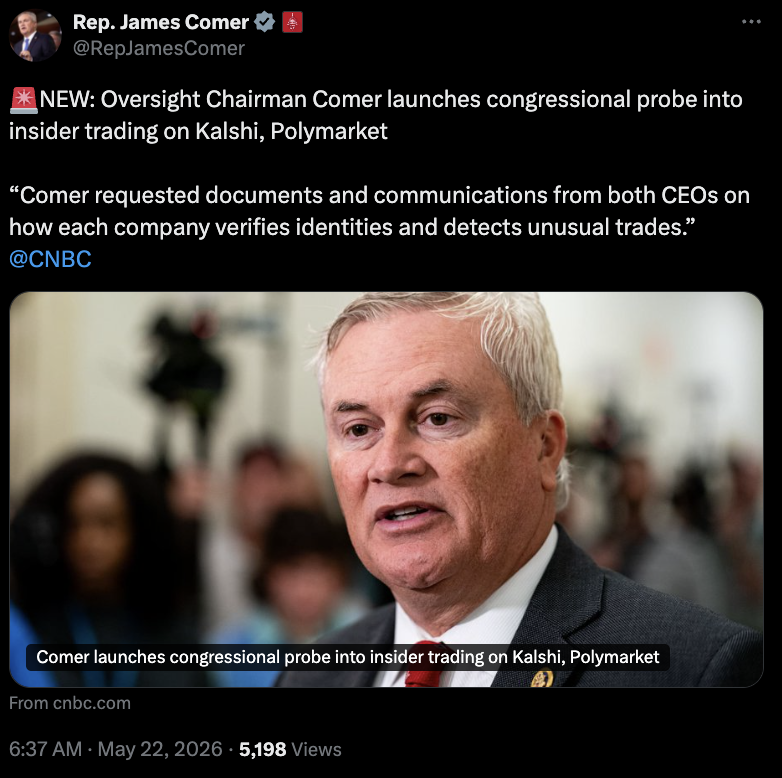
Source: Representative James Comer
Prediction market jurisdiction fight could reach Supreme Court
Speaking on a panel at Bitso’s Stablecoin Conference in Mexico City on June 16, industry advocacy group Digital Chamber’s CEO Cody Carbone said the dispute between federal regulators and state authorities will likely play out over the next few years. He said:
It’s going to be a very heated battle that the courts are going to have to weigh in on.
The advocacy executive said the Trump administration has broadly backed Selig’s efforts to position the CFTC as the primary regulator of prediction markets, though he expects ongoing disputes with state gambling regulators to eventually reach the US Supreme Court.
He added that US lawmakers are also debating what types of event contracts should be permitted, including markets tied to politics and war, while insider trading concerns are likely to remain a focus of future legislation and regulatory oversight.
Magazine: The end of anon? AI could unmask crypto’s hidden identities
Alleged human trafficker Andrew Tate has been liquidated 108 times on decentralized perpetual futures exchange Hyperliquid and he’s now also facing fresh trafficking charges from Romania.
Tate’s combined losses are now almost $890,000, and have been on this downward trajectory since December last year.
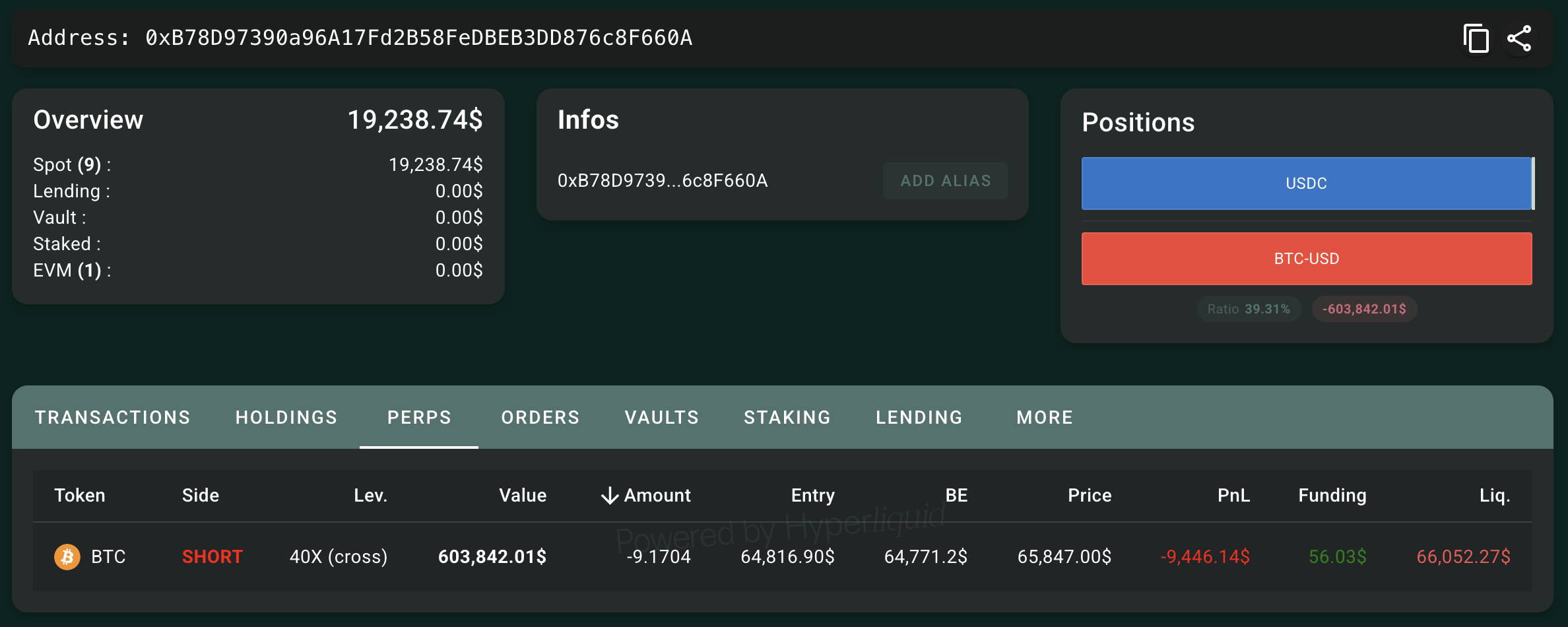
Crypto analyst Lookonchain noted that he opened another 40x LONG bitcoin (BTC) position today worth $3.75 million, and that he had so far been liquidated 107 times.
This position was set to liquidate at $65,215.
However, BTC’s price fell to $64,500 today, and his LONG was liquidated.
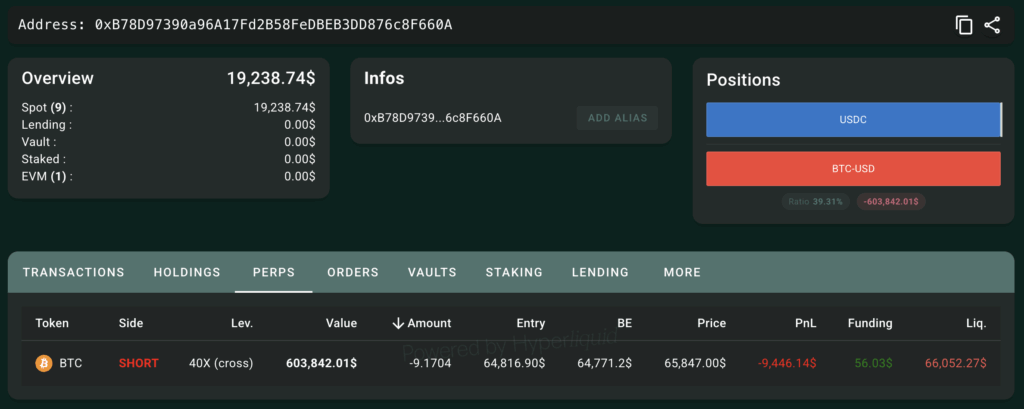
Tate has since opened a 40x SHORT BTC position. At the time of writing, this is down $9,400 and is set to liquidate when BTC hits $66,052.
Read more: Why was crypto so quick to embrace Andrew Tate?
The controversial influencer and self-proclaimed misogynist has previously bragged online about highly leveraged bets on ether before being subsequently liquidated and deleting his posts in embarrassment.
Romania expands Tate investigation
On Wednesday, Romanian prosecutors announced further investigations into the 39-year-old, who is already charged with human trafficking, rape, sexual intercourse with a minor, and forming a criminal gang focused on sexually exploiting women.
The latest allegations involve a Romanian woman who claims Tate trafficked her into his pornographic webcam operations in 2017.
Prosecutors say he used “emotional blackmail” and misleading relationship promises to coerce the vulnerable woman, who lacked any family support or material resources, and had suffered psychological trauma, into his porn business.
Read more: Andrew Tate struggles to pump memecoin amid Florida criminal inquiry
The UK has charged the brothers with 21 similar offences, including human trafficking, rape, and bodily harm.
They can only be extradited to the country once their proceedings in Romania conclude.
Got a tip? Send us an email securely via Protos Leaks. For more informed news and investigations, follow us on X, Bluesky, and Google News, or subscribe to our YouTube channel.


Fed Chair Kevin Warsh held rates steady in his debut FOMC meeting but delivered a sharply hawkish surprise, with nine of 18 participants projecting a 2026 rate hike and the statement stripping out its easing bias.
The Federal Reserve left the federal funds rate unchanged at 3.50%-3.75% on June 17, 2026 — the fourth consecutive hold, fully priced by markets.
Statement Shifts to Neutral
The FOMC removed previous references to “additional rate adjustments,” adopting a purely data-dependent neutral stance.
This marks a clear policy pivot amid persistent inflation hovering around 4.2% YoY.
Nine of 18 FOMC participants now pencil in at least one rate hike for 2026, a dramatic shift from prior projections that leaned toward cuts or extended holds.
This validates warnings from Citadel Securities about rising September hike risks fueled by strong wages, resilient demand, supply strains, and AI-driven investment.
Warsh’s Debut Under Scrutiny
In his first press conference, Warsh leaned into his preference for a “quieter” Fed with reduced forward guidance.
Fidelity managers had warned of potential bond market volatility from tone uncertainty, early reactions showed higher Treasury yields and USD gains.
The outcome challenges dovish expectations tied to Warsh’s appointment and highlights a vigilant committee focused on inflation control.
Market Impact: Stocks and Bonds Sell Off
Wall Street turned lower after the decision as investors digested the more hawkish tone.
The S&P 500 fell 0.6%, the Nasdaq Composite dropped 0.7%, and the Dow Jones Industrial Average lost 160 points (0.3%) by mid-afternoon.
Treasury yields climbed on the news. The 2-year yield rose nearly 11 basis points to 4.153%, while the 10-year yield increased 4 basis points to 4.469%.
The outcome highlights ongoing division risks at the Fed amid the Iran-related energy shock, which is driving both higher inflation and growth uncertainty.
The post Warsh Hawkish Shock: 9 Fed Officials Signal 2026 Rate Hike appeared first on BeInCrypto.

World Cup one-day attendance record broken Tuesday

“Dangerous” AI models are coming no matter what

PSNI issue appeal to identify three people in connection with Belfast disorder


-

 Business3 days ago
No Jackpot Winner as $257 Million Prize Rolls Over to $269 Million Monday Draw
-

 Crypto World6 days ago
Oppenheimer backs SpaceX as $70 billion retail frenzy builds
-

 Fashion5 days ago
Weekend Open Thread: Tuckernuck – Corporette.com
-

 Crypto World6 days ago
Markets Rally as SpaceX IPO Looms Amid Iran Tensions and Inflation Surge
-
Crypto World3 days ago
Zimbabwe Requires Crypto Businesses to Register Annually Under New FIU Regulations
-

 Tech5 days ago
NanoClaw integrates JFrog registries to secure AI agent downloads
-

 Crypto World5 days ago
Bitget enters Argentina’s regulated crypto market through PSAV registration
-

 Tech5 days ago
This Week In Security: Microsoft On Microsoft, Register Your Domains, Linux On ARM, And FreeBSD Joins The File Cache Club
-
 Tech6 days ago
Dutton Ranch star claims they ‘didn’t see any disruption’ on set following Chad Feehan’s exit from Yellowstone spinoff fueled by Taylor Sheridan clash rumors
-

 NewsBeat6 days ago
El Nino has formed in the Pacific and could set records, forecasters say
-

 Politics6 days ago
Politics Home | Healey Resignation Is “Colossal Failure Of Government”, Says Former Labour Defence Secretary
-
 Entertainment6 days ago
Donnie Wahlberg & More Heat Up Las Vegas at Circa’s Barry’s Downtown Prime
-
 Tech6 days ago
Opendoor Ends India Operations, Fueling a Bigger Conversation About AI and Outsourcing
-

 Politics6 days ago
Belfast burns, while Met chief points finger at Iran and Russia
-

 Sports6 days ago
First Time Since 1971: Australia Register Historic Low In ODI Cricket
-

 NewsBeat5 days ago
FBI searches office of Ohio voter registration group
-

 Business6 days ago
AT&T: Verizon's 27% Outperformance Sets Up A Solid Entry Point
-
 Tech6 days ago
Anthropic is spending $150M to embed 1,000 AI fellows inside nonprofits. No degree required.
-

 Politics6 days ago
Modi thanks Trump for wishes as US attacks Indian seafarers
-
 Entertainment6 days ago
‘The Pitt’s Fan-Favorite Doctor Confirms Noah Wyle Gave His Blessing to Return [Exclusive]
You must be logged in to post a comment Login