
Crypto World
Could Pepeto Be the Best Crypto to Buy in 2026 While BTC Tests $80K and ETH Holds Above $2,300?


The crypto market just flipped into greed territory for the first time in weeks, and the Fear and Greed Index hitting 60 has every trader asking which token carries the biggest returns from here.
Finding the best crypto to buy in 2026 means looking past coins that already ran and finding entries that still carry distance between where they sit and where they go.
BTC is testing $80,000 with $996 million in weekly ETF inflows, and a presale launched by the mind behind the first Pepe token has gathered more than $9.5 million from wallets that verified the live tools before sending capital.
Bitcoin touched $79,388 on April 22 before pulling back to $77,800 as profit taking hit altcoins harder than the leader.
Weekly ETF inflows reached $996 million with Bitcoin products leading the charge according to 24/7 Wall Street, and growing expectations around the CLARITY Act markup in the Senate added a regulatory tailwind that the market had not priced in.
The rally is real, but the question now is whether the best returns from here come from large caps or from entries that have not hit the open market yet.
Tokens Positioned for the Next Leg of the Recovery
Pepeto
While the market watches BTC test resistance, the best crypto to buy in 2026 might be sitting in a presale most traders have not found yet. Pepeto is a marketplace that turns meme coin trading into a verified ecosystem where every tool runs live and every contract carries a SolidProof audit. It was built by the cofounder who created the original Pepe coin, with 420 trillion supply matching the same token structure that went from zero to billions the first time.
The risk scorer scans contracts for warning signs before capital gets committed, catching scams that move faster than news so the wallet stays protected during fast rotations that follow big BTC moves. PepetoSwap handles zero fee trades across tokens, keeping the full value of each position inside the wallet instead of leaking to platform charges.
178% APY staking layers returns above the presale position, and the expected Binance listing draws closer while that reward compounds. The presale sits at $0.000000186, and more than $9.5 million has been gathered from wallets that ran through the live platform before committing.
The 100x target from one expected Binance debut holds because presale to exchange is the window where every previous crypto fortune started, and the wallets buying now join that group before the crowd pays full price. Visit Pepeto to check the tools live.
Ethereum (ETH)
ETH trades near $2,316 according to CoinMarketCap, holding above $2,300 while BTC leads the rally.
The network still dominates smart contract development with over 31,000 active developers, but ETH needs to reclaim $2,800 before the recovery pattern confirms.
From $2,400 the path to the $4,800 peak is a 2x, solid for a portfolio anchor but far from the multiplier math that presale entries carry ahead of a listing event.
Bitcoin (BTC)
BTC sits near $77,258 according to CoinMarketCap, testing the $80,000 level that has acted as resistance since the pullback from the October 2025 peak of $126,000. Weekly ETF inflows at $996 million show institutional demand is real, and the CLARITY Act could open the door to bigger allocations.
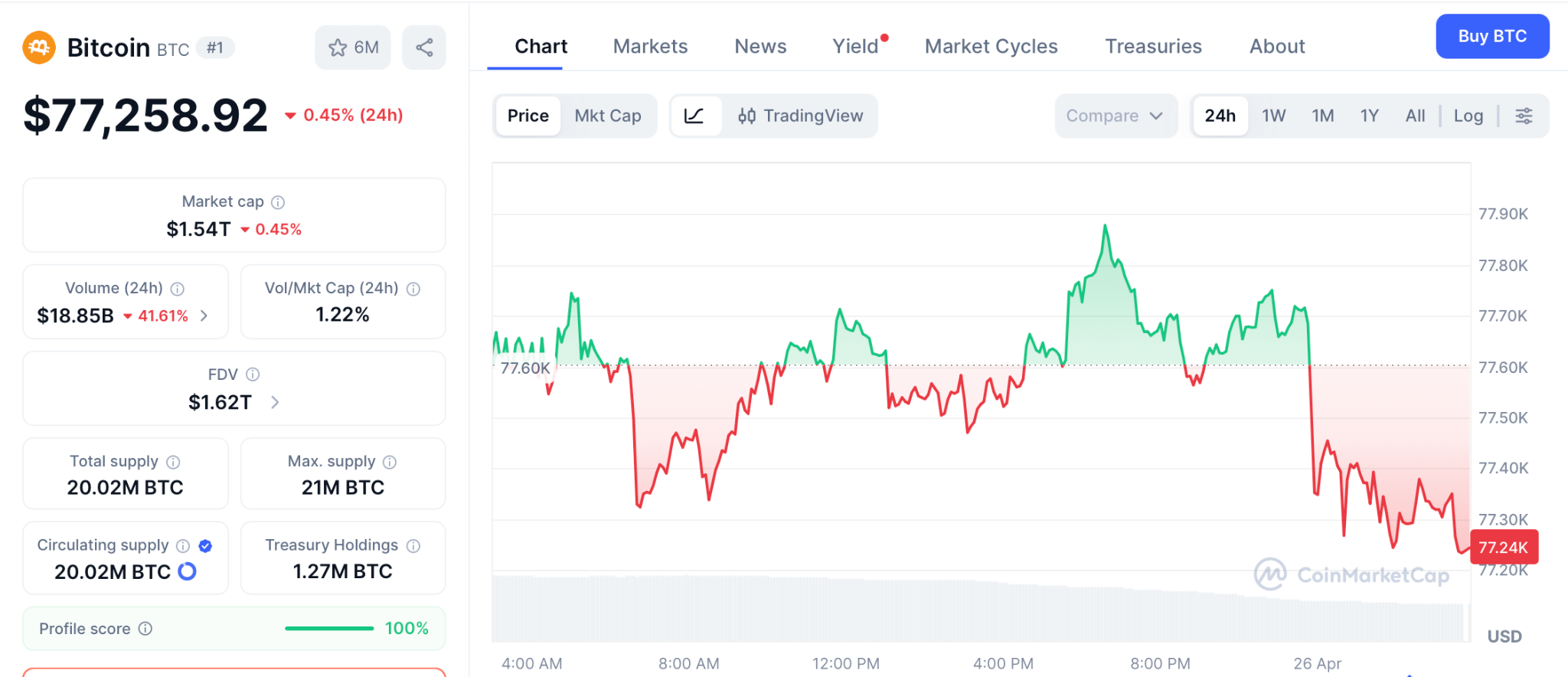
The math from $77,258 to a new high above $126,000 is a 1.6x, strong by traditional standards but modest compared to presale entries that carry 100x projections from a single listing event.
Conclusion
Will BTC break $80,000? The signals point toward higher levels as ETF demand and regulation clarity build across the market. But the signals for Pepeto point at something beyond a market recovery, they point at the same setup that produced every early buyer success story in crypto.
Every cycle creates winners who entered during fear and collected wealth during recovery, and the expected Binance listing will separate the wallets that entered from everyone who reads about them afterward.
Entering the Pepeto official website enow is how those wallets plan to be on the right side of that line when trading opens.
Click To Visit Pepeto Website To Enter The Presale

FAQs
What is the best crypto to buy in 2026 right now?
BTC and ETH carry strength, but presale entries like Pepeto offer the distance between current price and listing that large caps cannot match.
Why are traders choosing Pepeto over large caps?
A SolidProof audit, zero fee trading, and an expected Binance listing at presale pricing explain why more than $9.5 million entered the Pepeto official website.
Will BTC reach $100,000 this year?
That is a real possibility if ETF inflows continue and the CLARITY Act passes, but the timeline depends on broader market conditions.
Disclaimer: This is a Press Release provided by a third party who is responsible for the content. Please conduct your own research before taking any action based on the content.




The Office of the Comptroller of the Currency (OCC) closes its GENIUS Act comment window on May 1. The four-day countdown ends 18 months of regulatory uncertainty for U.S. banks weighing payment stablecoin issuance.
The deadline marks a turning point for corporate treasurers who have weighed stablecoins as a primary payment rail. Many lacked formal federal guidance from the agency that supervises national banks.
Two-Tier Framework Puts the Compliance Burden on Issuers
The OCC opened the 60-day window on February 25 with a 376-page proposed rule.
“After that, the regulatory uncertainty that’s been keeping corporate treasury teams from making stablecoin their primary payment rail has an official federal answer —> from the same agency that supervises national banks,” stated investor Abhinav Kumar.
That rule translates the Guiding and Establishing National Innovation for U.S. Stablecoins (GENIUS) Act into operational requirements. It spans reserve standards, custody rules, capital thresholds, and supervisory authority.
A two-tier licensing structure anchors the proposal. Issuers with more than $10 billion in outstanding stablecoins fall under federal licensing.
Smaller firms can operate under state regimes certified by the Treasury, Federal Reserve, and FDIC.
The compliance burden lands on issuers, not on payment infrastructure operators or merchants.
That distinction matters for corporate adoption, where the missing piece has been formal legal cover rather than merchant skepticism.
Corporate Treasuries Eye the Switch to Stablecoin Rails
An EY-Parthenon survey found that 13% of financial institutions and corporates globally already use stablecoins. Another 54% of non-users plan to adopt them within six to 12 months.
Kumar argues the gap between interest and execution comes down to legal cover. He says the OCC framework will turn the opinion letter from general counsel into a form document.
“The companies ready to receive that demand will have a structural advantage that’s very hard to replicate 18 months later,” he added.
The American Bankers Association has asked regulators for an additional 60 days to review the proposal.
That request signals the final rule may take longer to publish even after May 1 closes the comment period.
Fed leadership questions are also moving in parallel. Senator Thom Tillis said this week he will support Kevin Warsh’s Federal Reserve confirmation after the Justice Department closed its Powell investigation.
The Fed helps certify state stablecoin regimes alongside Treasury and the FDIC, tying central bank leadership to how the framework rolls out under federal stablecoin policy.
The post US Banks Have Only 4 Days Left to Shape GENIUS Act Stablecoin Rules at OCC appeared first on BeInCrypto.
Key Takeaways
- Bitcoin’s market capitalization stands at approximately $1.56 trillion compared to Ethereum’s $281.8 billion, providing ETH with greater percentage growth potential
- Bitcoin continues to dominate as the more secure, institutionally-backed cryptocurrency with its hard cap of 21 million coins
- Ethereum supports approximately $166.7 billion in stablecoin value and serves as the foundation for DeFi, asset tokenization, and blockchain-based finance
- The Pectra network upgrade enhanced Ethereum’s blob capacity by 2x and streamlined validator operations
- Citigroup reduced its 12-month forecasts for both cryptocurrencies, highlighting concerns about Ethereum’s declining network engagement
Bitcoin maintains its position as cryptocurrency’s undisputed leader. However, when evaluating potential returns over the coming five years, Ethereum presents compelling advantages.
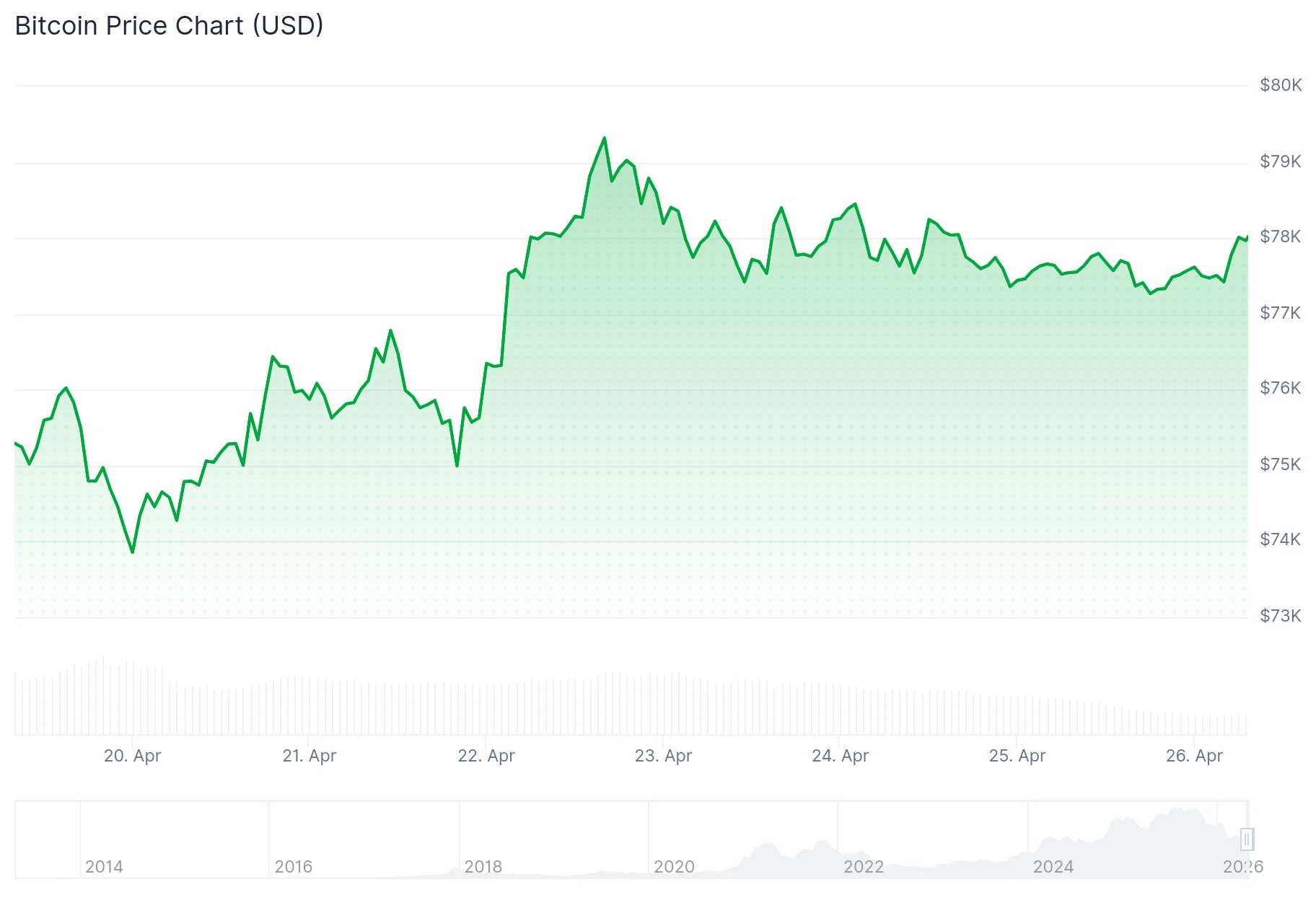
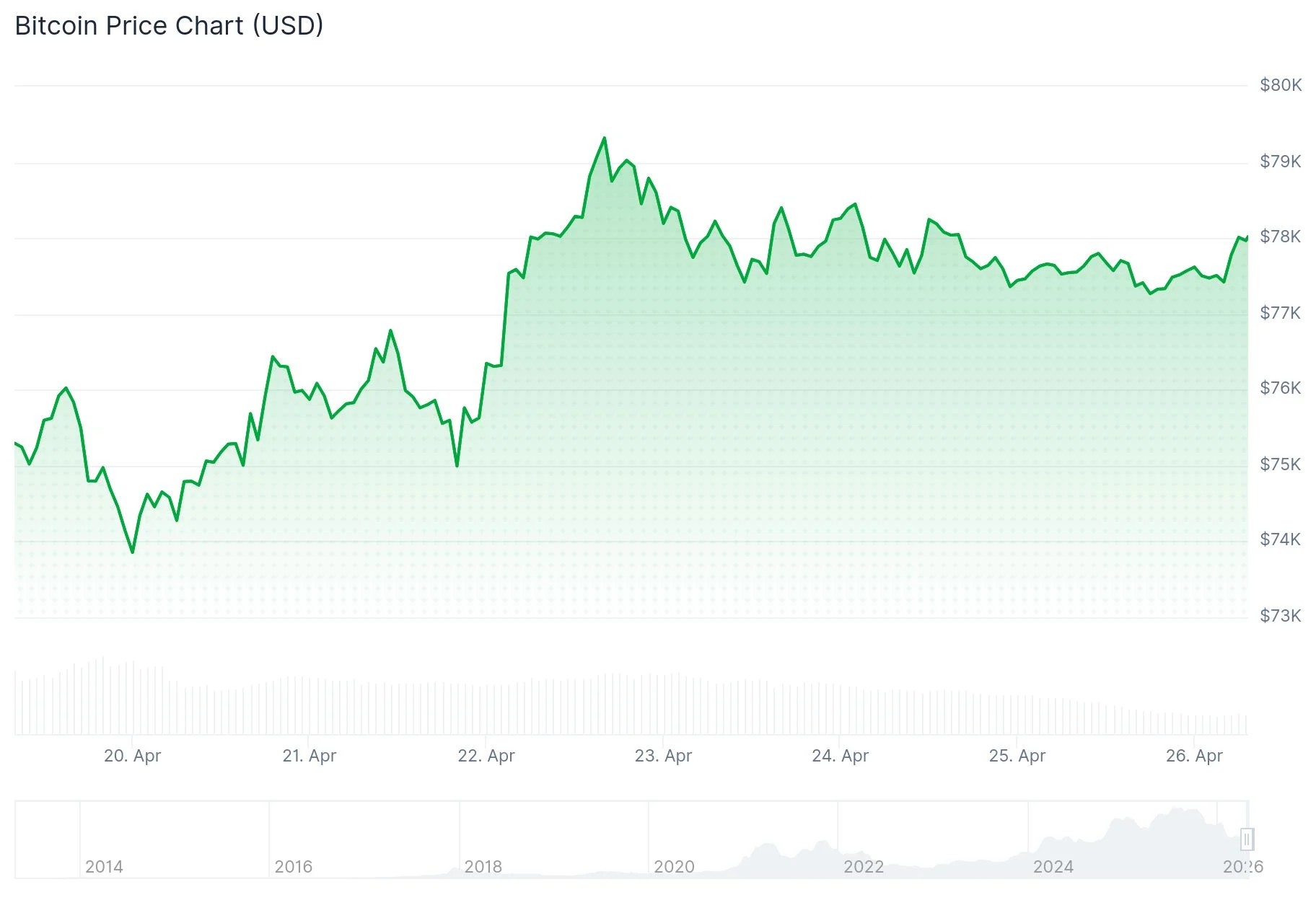
According to CoinGecko data, Bitcoin commands a market capitalization near $1.56 trillion, while Ethereum sits at approximately $281.8 billion. This substantial valuation difference has direct implications for investor returns.
Smaller-cap assets require significantly less capital inflow to generate meaningful price appreciation. This fundamental principle positions Ethereum favorably when evaluating potential percentage returns moving forward.
Bitcoin’s value proposition remains robust. The protocol’s maximum supply of 21 million coins creates fundamental scarcity that anchors its long-term investment narrative.
Spot exchange-traded fund products have experienced renewed capital inflows throughout recent months. Corporate treasuries continue accumulating Bitcoin holdings. These dynamics have supported Bitcoin’s valuation near recent peak levels.
These factors explain why Bitcoin remains the lower-risk cryptocurrency option. It offers the most straightforward investment thesis and commands the broadest institutional acceptance.
Ethereum’s Value Proposition Centers on Utility
Ethereum operates under a fundamentally different model. Its valuation derives primarily from network utility rather than supply constraints.
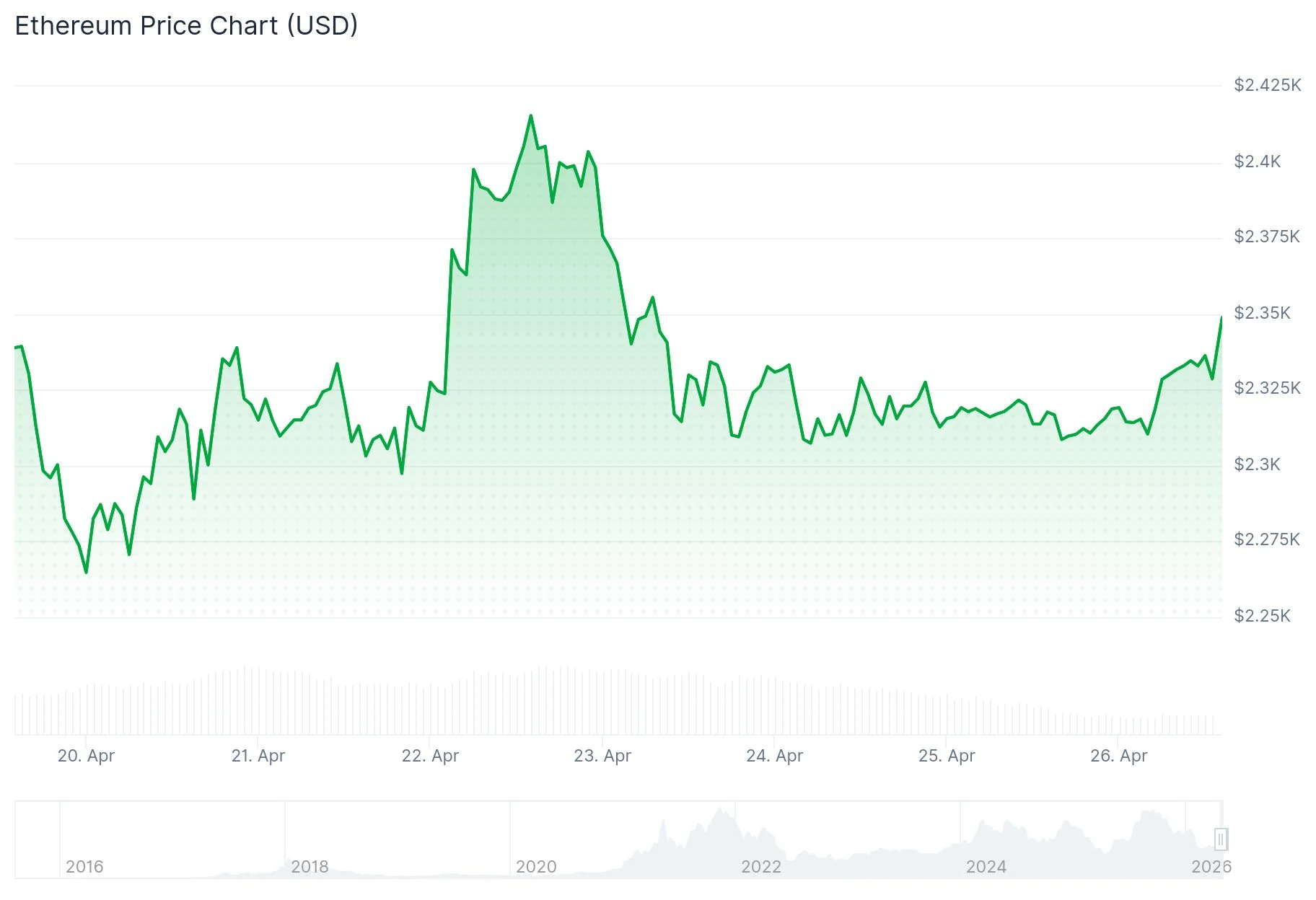
According to DefiLlama metrics, Ethereum currently secures roughly $166.7 billion in stablecoin value. This positions it as the dominant infrastructure for blockchain-based dollar transactions and cryptocurrency settlement operations.
Stablecoins, real-world asset tokenization, and decentralized finance represent some of the most rapidly expanding sectors within digital assets. Continued expansion in these areas directly benefits Ethereum as the primary value-capture layer.
The Ethereum network continues evolving through protocol improvements. Ethereum.org documentation confirms Pectra and Fusaka are operational, while Glamsterdam and Hegotá remain under active development.
The Ethereum Foundation’s announcement highlighted that Pectra doubled blob processing capacity, increased maximum validator balances, and accelerated validator activation timeframes.
These technical enhancements boost network scalability and staking accessibility. Such improvements can drive increased user adoption and capital deployment across the ecosystem.
Ethereum Faces Meaningful Challenges
Ethereum’s growth potential carries elevated risk factors. A March Reuters report noted that Citigroup reduced its 12-month price projections for both Bitcoin and Ethereum.
Citigroup’s analysis specifically identified declining user engagement as a significant concern for Ethereum. This represents the critical distinction. Ethereum’s success depends on sustained growth across its application ecosystem. Bitcoin faces no such requirement.
Investment Perspective
Looking across a five-year timeframe, Ethereum provides multiple growth catalysts. Its potential stems from stablecoin adoption, DeFi expansion, tokenization initiatives, staking participation, and ongoing protocol enhancements—all beginning from a substantially lower valuation base.
Bitcoin can continue appreciating as digital gold, institutional treasury reserve, and ETF-accessible store-of-value asset.
Both cryptocurrencies maintain viable growth trajectories. Ethereum simply offers more potential catalysts.
Citigroup’s recent target reductions for both assets represent the latest institutional warning that near-term prudence remains appropriate for Bitcoin and Ethereum positions alike.
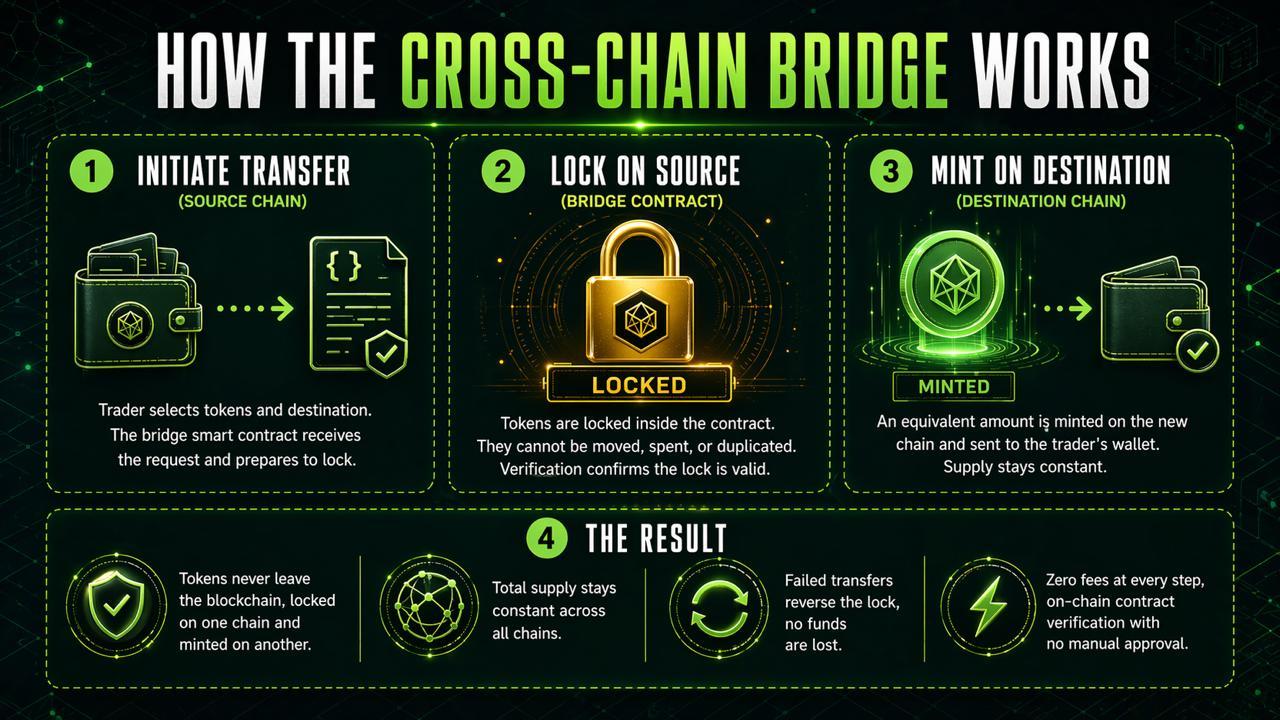
The best cryptos to buy now are gaining clarity fast. Over 120 cryptocurrency organizations led by the Crypto Council for Innovation and the Blockchain Association urged the Senate Banking Committee on April 24 to move forward with a markup on market structure legislation according to CoinDesk. A formal framework would define how digital assets trade on regulated platforms, opening the door for trillions in institutional capital currently on the sideline.
And the presale already drawing $9.45 million during heavy market uncertainty is where this capital hits hardest. Pepeto, a new crypto still in presale, is drawing most of the attention in the space as analysts target 100x returns after its Binance listing.
A coalition of more than 120 groups from across the digital asset industry sent a joint letter to the Senate Banking Committee on April 24, calling for an immediate markup of market structure legislation according to CoinDesk. The Crypto Council for Innovation and the Blockchain Association led the effort, arguing years of bipartisan work have built enough foundation for a floor vote this year.
Regulated market structure channels institutional liquidity directly onto public blockchains, and this flow lifts every project in its path. The presale entries positioned before this capital arrives are where a single listing event delivers the kind of return large caps need years to produce.
Best Cryptos to Buy Now: Sui (SUI), Pepeto, and the Tokens With Real Tools Worth Holding
Pepeto
The projects worth holding right now share one quality: live products already running while the competition was still drawing up plans. Pepeto, considered the best crypto to buy, built a full meme exchange guarding capital during price swings, and the platform already handles trades while most projects have nothing running.
The Pepeto swap tool completes trades with no fee deducted, meaning nothing leaves the wallet except what the holder intended to trade. The built-in network bridge routes tokens between Ethereum, BNB Chain, and Solana without deducting a fee, and the smart contract scanner identifies risky permissions and flags dangerous code before any capital enters a compromised listing. SolidProof completed a full audit of the contract before presale launch.
That is why $9,450,000 poured in across presale stages while uncertainty gripped the market. The entry holds at $0.0000001866 with large upside ahead, as analysts target 100x from the Binance debut, and 178% APY staking compounds every position while the countdown tightens.
Sui (SUI) Price at $0.9372 as RedotPay Integration Reaches 7 Million Users
Sui (SUI) trades at $0.9372 per CoinMarketCap.SUI sits 82% below its all-time high of $5.35 from January 2025, with support near $0.85 and the $1.00 level acting as resistance.
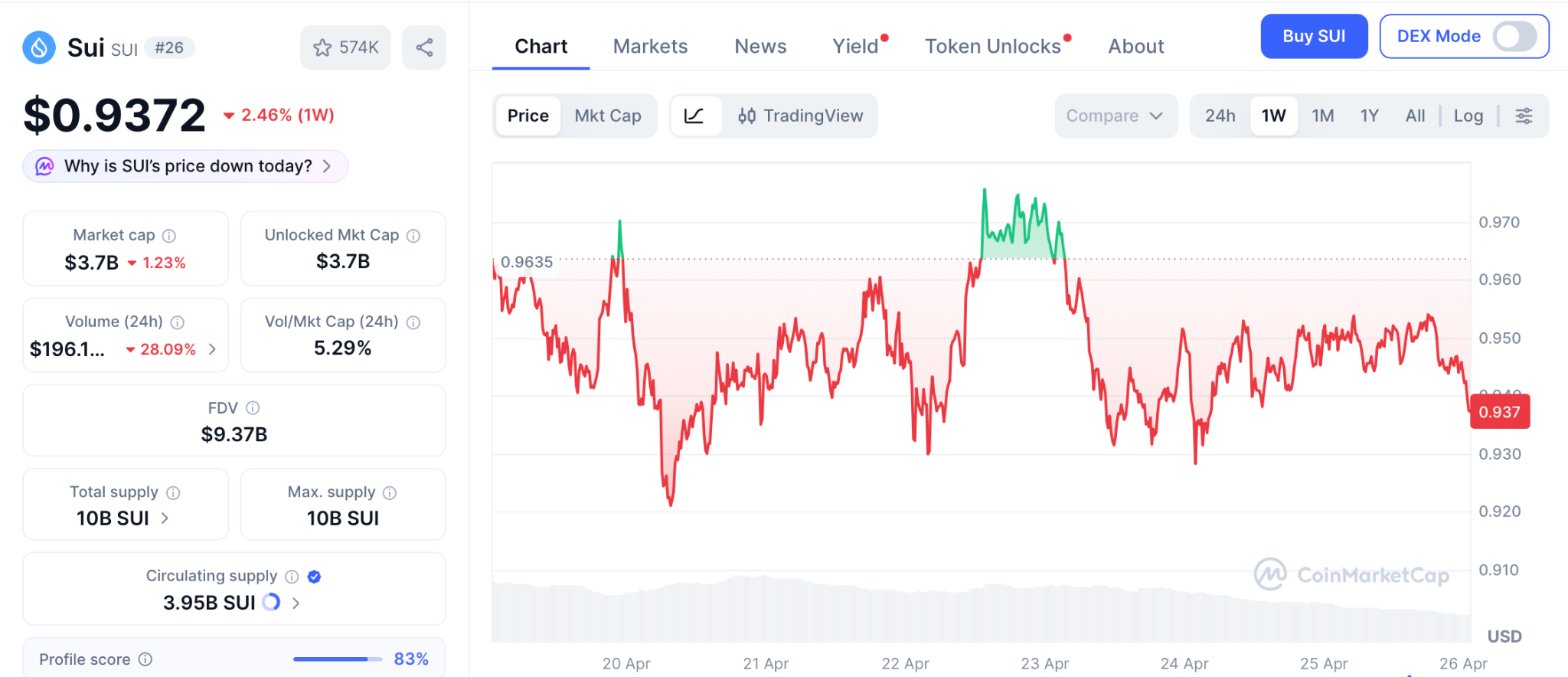
RedotPay integrated SUI and USDC-Sui this week, bringing stablecoin payments to over 7 million users on traditional payment rails.
The move to its $5.35 peak from $0.9372 would deliver a 462% return, but a rally like this needs sustained ecosystem growth and months of favorable conditions. Pepeto at its current presale price projects 100x from one Binance debut, and the holders committing right now are locking in the position one listing event pays off in full.
Conclusion:
Over 120 industry groups just pressed the Senate Banking Committee to pass market structure rules, and the top projects already have live exchange tools handling real volume. The investors who entered Sui (SUI) at $0.36 during the early launch turned modest capital into strong returns.
They had no inside edge and no private access. They placed capital while the broader market stayed on the sideline, and one decision is the only line between wealth changing a life and the regret replacing it. Very few people in crypto ever land the kind of return rewriting their entire financial position, and Pepeto still holds this opening right now.
But the Pepeto Binance debut is approaching fast, and across every cycle the wallets entering at the presale stage collected the largest gains. Taking a position in Pepeto ahead of the event is the highest-conviction early entry available in crypto today, the same category of move responsible for every major fortune this market has ever produced.
Click To Visit Pepeto Website To Enter The Presale

FAQs
What makes Pepeto one of the best cryptos to buy now as market structure legislation advances?
Pepeto operates a working exchange with fee-free swaps, multi-chain bridging, and a SolidProof-audited codebase while the presale holds at $0.0000001866 with the Binance debut ahead. Over $9.45 million committed during heavy market uncertainty confirms strong early conviction.
Is Sui (SUI) a strong position at $0.9372 compared to presale entries like Pepeto?
Sui (SUI) offers 462% upside to its $5.35 all-time high from January 2025, but that gain takes months to develop. Pepeto projects 100x from one Binance debut at the current entry of $0.0000001866.
Disclaimer: This is a Press Release provided by a third party who is responsible for the content. Please conduct your own research before taking any action based on the content.


A White House-linked official has warned that failure to pass clear crypto rules in the United States could help China gain ground in digital assets.
Summary
- Patrick Witt warned that failing to pass clear US crypto rules could benefit China’s digital asset ambitions.
- The CLARITY Act remains stalled as lawmakers debate stablecoin yield rules and market oversight.
- The Senate Banking Committee’s narrow GOP majority leaves the bill dependent on full Republican support.
The comments came as debate over the proposed CLARITY Act continues in Washington. Patrick Witt said the United States risks losing leadership if lawmakers fail to approve a full crypto market framework. He linked the delay to wider concerns about foreign rivals and digital finance.
“What are the odds the anonymous sources cited in this article have deep ties to China?” Witt said. “Because if the US fails to lead on crypto by passing a comprehensive regulatory framework, the prime beneficiary will be the CCP.”
CLARITY Act faces resistance
The CLARITY Act seeks to create a national rulebook for digital assets. Supporters say the bill would bring crypto firms closer to the standards used by banks and other financial companies.
Republican Senator Tim Scott has backed the proposal. The bill would require crypto businesses to follow clearer rules on disclosures, operations, and market conduct.
However, some conservative and crypto-aligned voices have opposed the bill. They argue that it could weaken protections linked to the GENIUS Act and give large companies too much control over the sector.
Stablecoin yield dispute slows progress
The bill remains stalled in the Senate Banking Committee. Senator Thom Tillis has pushed to delay action until May as lawmakers debate language tied to stablecoin yield rules.
Stablecoin yield has become one of the main points of dispute. Banks have raised concerns that yield-bearing stablecoins could compete with deposits, while crypto firms want room to build new financial products.
The committee’s narrow Republican majority adds pressure to the process. Since the GOP holds only a one-vote edge, the bill needs full Republican support to move forward.
Leadership questions add pressure
The debate has also raised questions about policy coordination inside the administration. Reports say there is no dedicated West Wing coordinator handling the crypto legislation push.
That gap could make it harder to settle disputes between lawmakers, banks, and crypto firms. For now, the CLARITY Act remains one of the most closely watched crypto bills in Congress.
Supporters say clear rules could keep crypto activity in the United States. Critics say lawmakers must avoid a framework that favors large firms over market competition.
Crypto World
Lockheed Martin (LMT) Stock Plummets 12% Following Disappointing Q1 Results and Analyst Downgrades

TLDR
- Lockheed Martin shares declined 11.67% following a disappointing first-quarter earnings release that missed analyst projections
- First-quarter earnings per share reached $6.44, falling short of the $6.74 consensus forecast; revenues totaled $18.02B versus $18.38B expectations
- The company reported negative free cash flow of -$291 million during the period
- Several Wall Street firms reduced their price objectives; overall sentiment remains neutral with average targets near $635
- Company executives maintained their full-year 2026 earnings outlook of $29.35–$30.25 per share despite first-quarter weakness
Lockheed Martin experienced a difficult trading week following its first-quarter 2026 financial results. The aerospace and defense contractor saw its shares tumble 11.67% as investors reacted to multiple disappointments in the quarterly report.
Lockheed Martin Corporation, LMT
The defense manufacturer reported earnings of $6.44 per share, falling short of analyst expectations of $6.74 and significantly below the $7.28 delivered during the comparable quarter in 2025. Total revenues reached $18.02 billion, essentially flat compared to the prior year and beneath the $18.38 billion Wall Street had anticipated.
A notable headwind for revenue performance: the first quarter of 2026 contained one fewer business week compared to the same timeframe last year. This calendar quirk reduced the top line by several hundred million dollars.
Cash generation deteriorated significantly, with free cash flow registering at -$291 million. Management attributed the negative figure to margin erosion, fluctuations in working capital requirements, and challenges related to fixed-price contracts.
New orders also disappointed, with the book-to-bill ratio landing at just 0.6x for the quarter. While the company blamed timing factors, the weak bookings metric added to investor concerns surrounding the report.
Wall Street Firms Lower Price Objectives, Neutral Stance Prevails
The earnings disappointment prompted several brokerage firms to reduce their price targets. RBC Capital lowered its objective from $650 to $575 while maintaining a Sector Perform rating, citing “incremental negative estimated costs at completion” and uncertain near-term growth visibility.
BNP Paribas Exane, Morgan Stanley, Deutsche Bank, and Susquehanna similarly reduced their targets. The Street consensus now stands at Hold, with average price objectives hovering around $635 — suggesting potential upside exceeding 25% from current trading levels near $510.
TD Cowen and TipRanks–xAI also kept Hold ratings in place, with targets ranging between $575 and $600. Even with the substantial implied upside from these targets, the prevalence of neutral ratings continued to weigh on shares.
LMT began trading Friday at $513.21. Shares currently trade well beneath the 50-day moving average of $628 but remain above the 200-day moving average of $553.
Fundamental Outlook Remains Unchanged
Beyond the quarterly volatility, Lockheed’s backlog and program portfolio remain robust. The Department of Defense has outlined plans to expand F-35 acquisitions through 2030–31, providing visibility for production schedules.
Peru finalized an agreement to acquire 12 F-16 Block 70 aircraft through a direct commercial transaction. The company also secured positions in U.S. missile defense initiatives, including the “Golden Dome” contracts, and obtained Department of Defense awards to replenish Patriot missile systems.
Executives stood by their full-year 2026 guidance, forecasting earnings per share between $29.35 and $30.25. Analyst consensus for fiscal 2026 currently centers around $29.97 per share.
The company maintains its quarterly dividend of $3.45 per share, translating to an annual yield of approximately 2.7%. The current payout ratio stands at roughly 66.8%.
Vanguard Group reduced its stake by 17,369 shares during the fourth quarter but continues to hold 21.27 million shares, accounting for approximately 9.19% of outstanding shares with a market value near $10.29 billion.
Institutional ownership comprises 74.19% of total shares outstanding. LMT’s 52-week trading range extends from $410.11 to $692.00, with current prices positioned near the lower portion of this band.
RBC Capital’s updated $575 price target and Sector Perform rating represent the most recent analyst commentary on the stock.
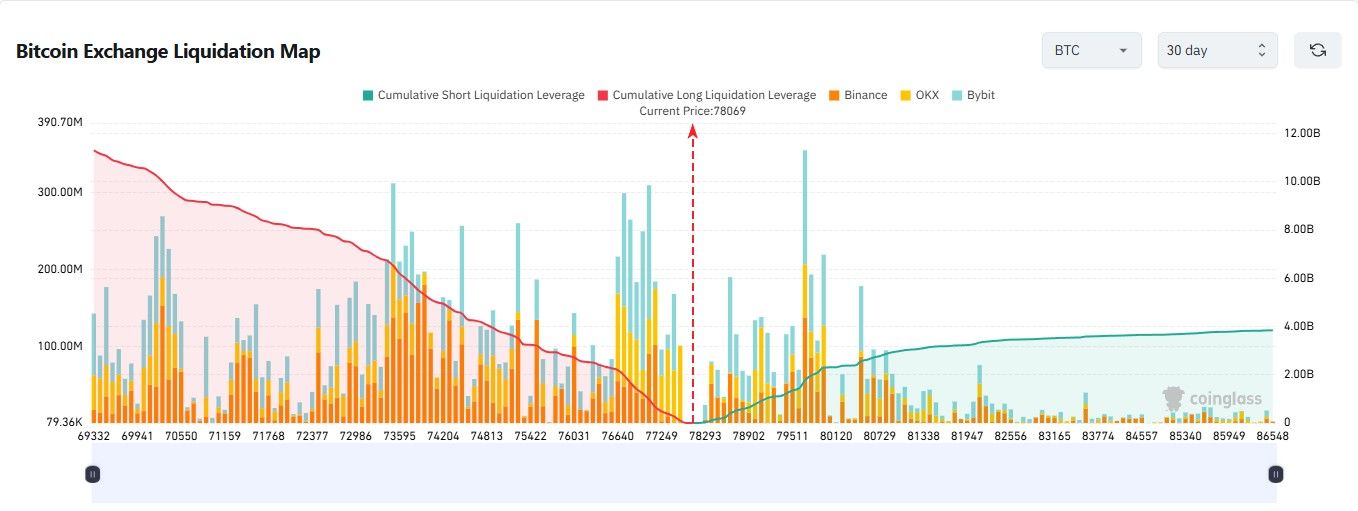
Bitcoin (BTC) traders are stacking the long side of futures by more than three to one, according to Coinglass. The skew points to bullish conviction near $77,500 but raises the threat of forced selling on a sharp pullback.
The lopsided positioning led to open interest in BTC perpetuals sliding roughly 6% to 744,300 BTC over 24 hours. Traders are starting to trim leverage, but long bias still holds across major venues.
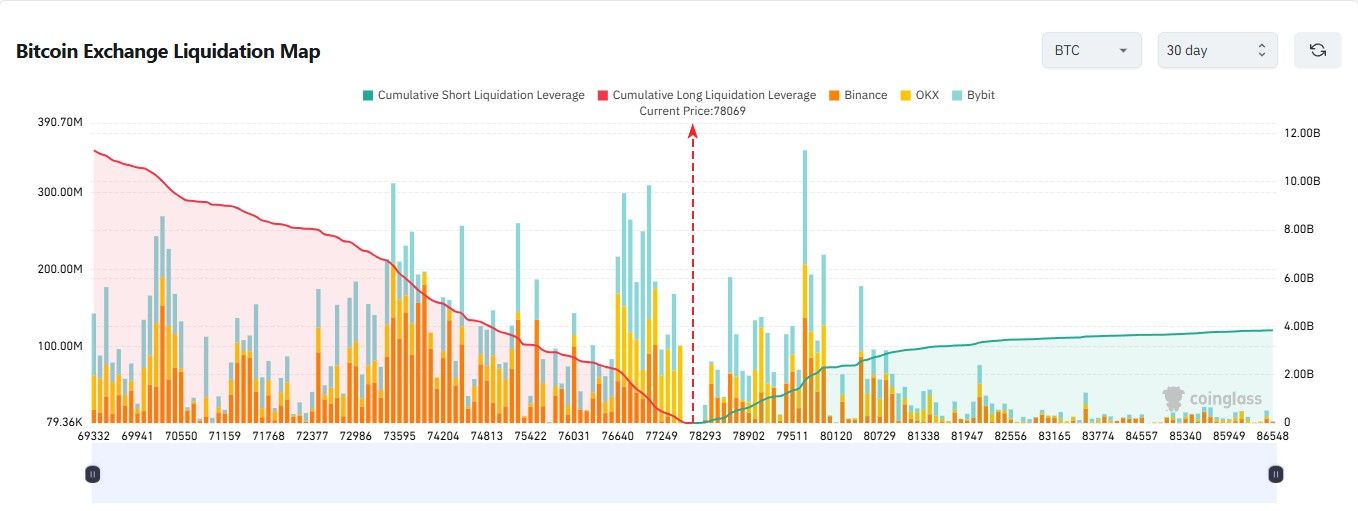
Long Bias Meets a Stalling Spot Price
Bitcoin failed to clear $80,000 earlier this week and has since drifted toward $77,500, according to Yahoo Finance. That stall has done little to shake long-side conviction. The long/short ratio on Coinglass still shows more than 3 longs per short.
History shows that extreme imbalances often precede contrarian moves. Crowded one-sided trades become easy fuel for short-term reversals.
Coinglass logged $22.44 million in long liquidations on April 25 against $11.60 million on the short side. The roughly two-to-one wipeout hints bulls are absorbing more pain even as account-level positioning stays heavily long.
Bitcoin Liquidation Map Flags Concentrated Risk Pockets
The Coinglass map shows dense clusters of leveraged long positions stacked beneath the current spot price. The arrangement historically amplifies downside moves through cascading liquidations.
Each liquidated long adds market sell flow that can push the price into the next cluster.
Earlier in April, $71 million in long positions sat at risk under $77,300. Above $78,000, short-squeeze conditions fueled a sweep that wiped out millions in bearish bets. Rising leverage and open interest have repeatedly preceded sharp corrections this cycle.
Whether spot defends $77,000 may decide if the next move is a controlled cool-off or a sharper liquidation cascade. For now, the imbalance leaves the market structurally fragile despite the bullish optics.
The post Bitcoin Leverage Builds as Price Stalls Below $80,000 appeared first on BeInCrypto.
Crypto World
Arkham says Aave raised $160 million of the $200 million it needs to cover exploit damage


Lending platform Aave has raised about $160 million it needs to cover the $200 million in bad debt left behind by the year’s largest decentralized finance (DeFi) exploit, Arkham posted on X on Saturday.
“AAVE have so far raised $160M to cover the bad debt from the Kelp DAO Exploit, at defiunited.eth,” the blockchain analytics platform wrote. “The largest contributors are Mantle and AAVE DAO, who together raised 55,000 ETH or $127M.”
Last week, Aave and several major crypto firms announced a coordinated recovery effort to stabilize DeFi markets after a $292 million security breach left the crypto borrowing sector’s largest lender facing a financial crisis.
Called DeFi United and led by Aave service providers, the effort’s goal is to restore support for rsETH, the yield-bearing derivative token of ether (ETH) at the core of the exploit.
“I’m personally contributing 5,000 ETH to DeFi United as we continue working together with partners,” said Aave founder Stani Kulecho. His personal contribution at ether’s current price of roughly $2,346 is worth $11,730,000.
The exploit is traced back to a KelpDAO integration vulnerability with LayerZero, where an attacker minted 116,500 unbacked rsETH tokens. That left Aave with impaired collateral, triggering a run on deposits as lenders rushed to exit, ultimately withdrawing $10 billion.
The effort to erase the bad debt is focused mostly on stabilizing the system with a coordinated bailout to recapitalize rsETH and mitigate losses.
The second-largest exploit this year took place late March, when an attacker drained at least $270 million from the Drift Protocol on Solana by abusing a legitimate feature called ‘durable nonces,’ rather than exploiting a code bug or stolen keys.

Key Highlights
- Major technology companies including Alphabet, Amazon, Meta, Microsoft, and Apple release quarterly results this week
- Federal Reserve policy decision scheduled for Wednesday, with rates anticipated to remain between 3.5% and 3.75%
- Justice Department concluded criminal probe into Fed Chair Jerome Powell, paving way for Kevin Warsh’s confirmation process
- Analysts project 25% net income growth for Magnificent Seven in 2026 versus 11% for remaining S&P 500 constituents
- Major oil producers Exxon and Chevron announce results Friday amid geopolitical tensions
Markets enter the most packed earnings period of the reporting season as Monday launches a week featuring financial results from five global corporate behemoths.
Wednesday brings quarterly announcements from Alphabet, Amazon, Meta, and Microsoft, while Apple closes the sequence Thursday.
#earnings for the week of April 27, 2026 https://t.co/hLn2sKQhEY $MSFT $AMZN $AAPL $META $SNDK $SOFI $GOOGL $HOOD $CLS $BE $VZ $STX $TER $V $WDC $UPS $COP $ENPH $CAT $APH $OPK $RDDT $QCOM $CMG $CVX $F $VLO $W $AXTI $HUM $KGC $LLY $MA $KO $RIVN $GLW $CL $RMBS $SPOT $REGN $RIOT… pic.twitter.com/LNFadBAIBQ
— Earnings Whispers (@eWhispers) April 24, 2026
This quintet represents the core of the Magnificent Seven, an influential collection of technology leaders credited with powering substantial equity market appreciation over recent periods.
Tesla previously disclosed its numbers. Nvidia remains the sole member scheduled to announce later this earnings cycle.
The opening months of 2026 proved challenging for the Magnificent Seven. During March’s final trading days, the collective shed approximately $850 billion in capitalization. Every member posted negative year-to-date performance by month-end.
Recent weeks have delivered a reversal. The Roundhill Magnificent Seven ETF has climbed 13% across the trailing month, outpacing the S&P 500’s 9% advance.
Morgan Stanley’s analysis forecasts 25% net income expansion for this group in 2026, substantially exceeding the 11% projection for the S&P 493 constituents.
Artificial Intelligence Capital Expenditures Under Scrutiny
Market participants will scrutinize commentary regarding artificial intelligence infrastructure investments. Recent actions from Meta and Microsoft have sparked questions—Meta implemented 8,000 workforce reductions while Microsoft extended voluntary separation packages to certain employees.
Alphabet previously indicated plans to approximately double capital allocation. Amazon CEO Andy Jassy characterized the company’s semiconductor operations as experiencing exceptional demand.
Apple stakeholders await commentary from incoming CEO John Ternus, who assumes leadership responsibilities from Tim Cook.
Equity markets concluded the previous week with upward momentum. The S&P 500 advanced 0.8% Friday, securing a 0.6% weekly increase. The Nasdaq climbed 1.6% Friday for a 1.5% weekly advance. The Dow slipped 0.2% on the session and declined 0.4% across the week.
FOMC Maintains Course as Powell Investigation Concludes
The Federal Open Market Committee convenes Tuesday through Wednesday, delivering its interest rate determination at 2 p.m. ET Wednesday. Market pricing reflects a 99.5% probability that rates remain within the 3.5% to 3.75% band.
Fed Chair Jerome Powell received positive developments Friday when the Justice Department terminated its criminal inquiry into Powell concerning expense overages during Federal Reserve facility renovations.
The Senate Banking Committee scheduled Wednesday morning proceedings that may include voting on Kevin Warsh’s appointment as forthcoming Fed chair. Warsh represents President Trump’s selection to succeed Powell upon his May term conclusion.
Thursday delivers the March PCE inflation measurement, anticipated to register 3.5% on an annual basis, increasing from the prior 2.8% reading.
Energy sector leaders Exxon and Chevron publish Friday results, with observers monitoring potential impacts from Iranian tensions affecting petroleum transit through the Strait of Hormuz.
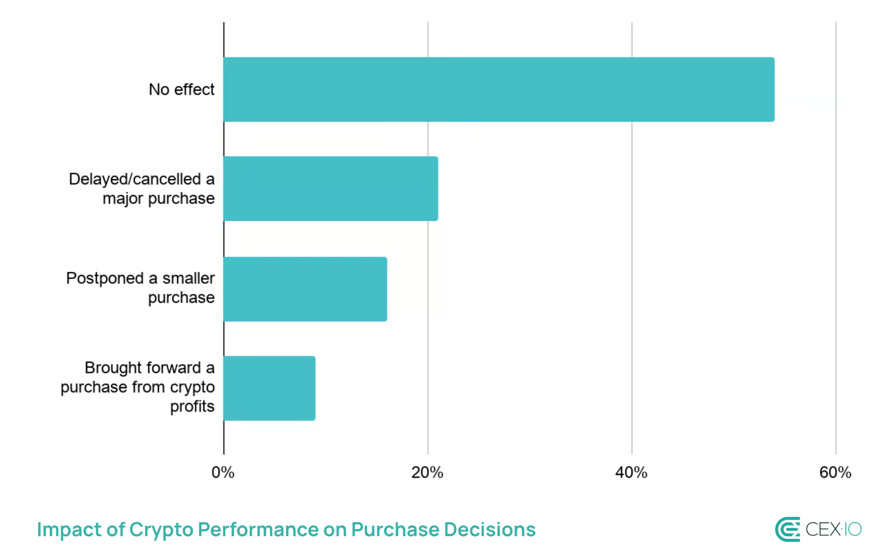
The recent crypto market downturn has forced more than one in three crypto traders to cut everyday spending, according to a new survey by CEX.IO.
The survey, conducted among 1,100 US-based active CEX.IO users, shows the current market slump is straining household finances, though it remains less severe than 2022, when Bitcoin fell by roughly 75% from its peak. Bitcoin is still about 40% below its October 2025 high, leaving many retail investors sitting on unrealised losses.
36% of respondents said they reduced everyday spending as a direct result of market conditions, with 10% describing those cuts as significant sacrifices made to maintain their positions. 37% also reported delaying or cancelling purchases due to crypto losses, including 21% who postponed major financial commitments such as buying a home, car or undertaking renovations.
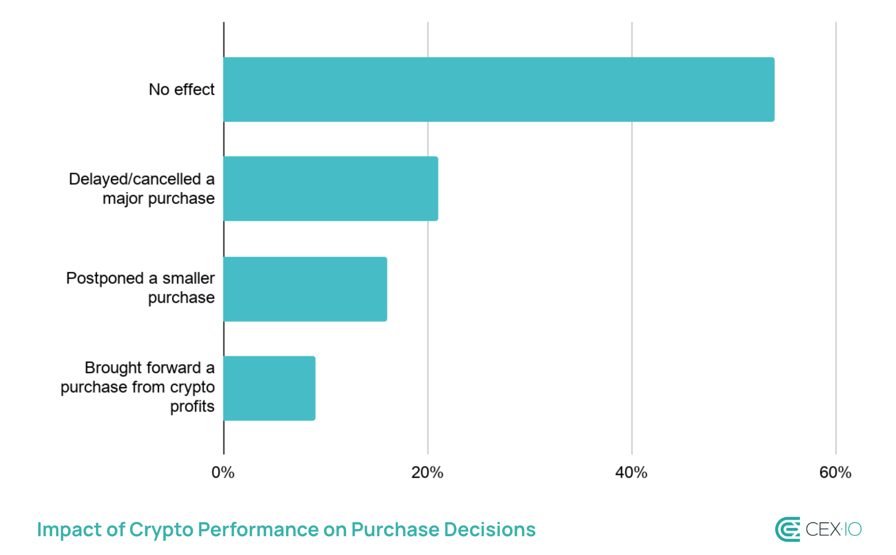
“The 2025–2026 bear market has not produced the kind of systemic shock seen in past cycles (at least for now), but its effects appear to be showing up in quieter ways at the household level,” CEX.IO wrote.
Related: Crypto Market Sentiment Reaches 3-Month High
Crypto traders navigate downturn alone
The survey revealed that many traders are managing the downturn in relative isolation. Only 5% said someone else knows the full extent and value of their holdings, while the majority either share limited information or keep their positions entirely private.
Financial strain is also evident in cash flow trends. While 77% said they did not take on debt tied to crypto, 38% reported some form of financial disruption since October 2025. A quarter said they relied on savings to maintain stability, and 12% admitted to missing or delaying payments.
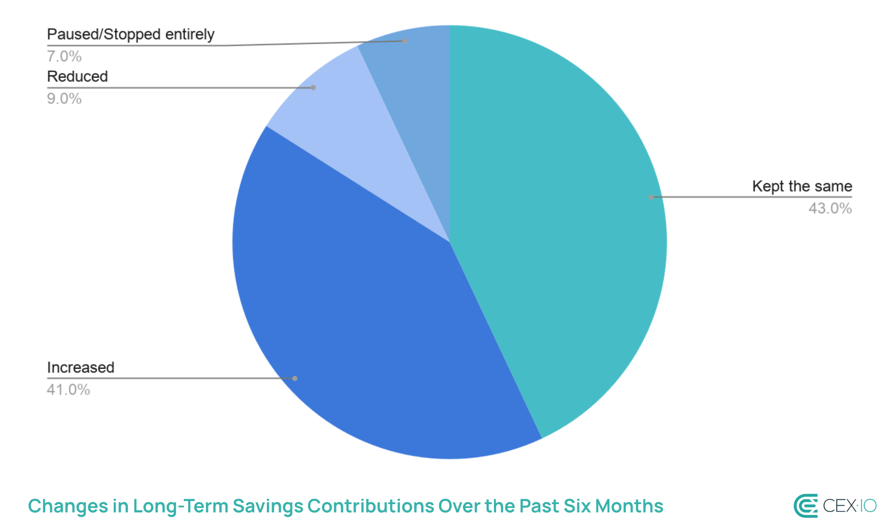
Even so, most respondents have not changed plans dramatically. Nearly half reported that crypto makes up more than 30% of their investable assets, yet 73% said their approach to earning income remains unchanged.
Looking ahead, a combined 79% said they plan to either hold or increase their positions over the next six months.
Related: Bitcoin Price May Go Under $70K Despite Strategy’s Latest Big BTC Buy
Crypto offerings shape bank choice
Another survey by Börse Stuttgart Digital earlier this week found that cryptocurrency services are starting to influence how European investors choose their banks, with 35% saying they would consider switching institutions for better crypto offerings.
The poll of around 6,000 investors across Germany, Italy, Spain and France also found that nearly one in five expects their primary bank to provide crypto access within three years, pointing to a gradual shift toward integrating digital assets into mainstream banking.
Magazine: How to fix suspected insider trading on Polymarket and Kalshi


Michael Saylor has hinted at another Strategy Bitcoin purchase ahead of the company’s expected Monday update.
Summary
- Saylor hinted at another Bitcoin purchase after Strategy raised holdings to 815,061 BTC last week.
- Analysts expect a smaller buy because MSTR share issuance paused while shares traded below par.
- Strategy still has ATM capacity, but funding conditions may limit near-term Bitcoin accumulation size.
The Strategy executive posted his usual Sunday signal on X, writing, “The ₿eat Goes On.” The post drew attention because Strategy made a large Bitcoin purchase last week. The company added 34,164 BTC, lifting its total holdings to 815,061 BTC.
Market watchers do not expect another billion-dollar Bitcoin buy this time. The latest report said Strategy’s main funding route slowed after MSTR-linked issuance paused during the week.
The company has often used share sales to fund Bitcoin purchases. However, the report said the funding engine weakened as MSTR traded at $99.46, slightly below par.
That situation may limit how much Bitcoin Strategy can buy in the next update. Saylor has often avoided issuing shares when market terms may hurt existing shareholders.
Strategy weighs funding options
Strategy still has other funding routes available. The company retains about $26.7 billion in common stock capacity through its at-the-market program.
This tool allows the company to sell shares when conditions support it. Strategy may use the program only when the stock trades at a strong premium to its Bitcoin holdings.
The report also cited SATA, or Strive Series A, as another small funding source. It said only 0.72 BTC was acquired through SATA-linked activity this week.
Bitcoin strategy faces fresh scrutiny
The expected update comes as Strategy’s Bitcoin treasury model faces more public debate. Supporters see the model as a long-term Bitcoin accumulation plan.
Critics say the model depends on steady access to capital markets. They argue that weaker funding conditions could slow future Bitcoin purchases or raise pressure on the company’s balance sheet.
Last week’s purchase showed that Strategy can still add large amounts of Bitcoin when funding conditions allow. This week’s update may show whether the company has shifted to a more selective pace.

Daniel Farke singles out Chelsea star for praise after Leeds’ FA Cup semi-final defeat | Football

Sawe Shatters Sub-2 Barrier in Historic London Marathon Triumph

US Banks Have Only 4 Days Left to Shape GENIUS Act Stablecoin Rules at OCC

Manchester United reach agreement with Casemiro over contract clause amid transfer speculation

US brings back mandatory military draft registration

Steven Gerrard disagrees with Gary Neville over ‘shock’ Chelsea and Arsenal claim | Football


-

 Fashion2 days ago
Weekend Open Thread – Corporette.com
-

 Politics6 days ago
Gary Stevenson delivers timely reminder to register to vote as deadline TODAY
-
Crypto World22 hours ago
Hyperliquid $HYPE Rally Builds Momentum as AI Sector Enters Prove-It Phase
-
Entertainment7 days ago
NBA Analyst Charles Barkley Chimes in on Ice Spice McDonald’s Fiasco
-
Crypto World6 days ago
Bank of Hawai’i (BOH) Q1 2026: Net Income Drops to $57.4M as Net Interest Margin Expands
-

 Politics4 days ago
Making troops accountable for war crimes threatens US alliance, ex-SAS colonel warns
-

 Politics4 days ago
Disabled people challenge government SEND proposals over segregation concerns
-

 Business4 days ago
Rolls-Royce Voted UK’s Most Iconic Trade Mark as IPO Register Hits 150
-

 Politics4 days ago
Zack Polanski responds to home secretary’s taser threat
-

 Politics4 days ago
Starmer handler McSweeney to be dragged from shadows by Foreign Affairs Committee
-
 Sports5 hours ago
IPL 2026: Ruturaj Gaikwad registers slowest fifty of the season, enters all-time unwanted list | Cricket News
-
Politics4 days ago
Wings Over Scotland | How To Get Away With Crimes
-
 Crypto World5 days ago
Five Value Stocks with Recovery Potential in 2026: PayPal (PYPL), Nike (NKE), and More
-

 Crypto World5 days ago
New York sues Coinbase, Gemini over prediction market offerings
-

 Politics4 days ago
‘Iran is still a nuclear threat’
-
 Sports4 days ago
Tim Bradley names the current best in the world: “Better than Inoue and Usyk”
-
 Business4 days ago
HCL Tech share price tank over 9% after weak Q4. JPMorgan, HSBC & 3 others cut target price
-

 NewsBeat9 hours ago
LK Bennett closes all stores after entering administration
-

 Crypto World5 days ago
Crypto’s great hope in Senate’s Clarity Act still has a path to survive tight calendar
-

 Business4 days ago
The Job Benefits Most Men Don’t Know to Negotiate
You must be logged in to post a comment Login