

Crypto World
Crypto already owns the trade



On July 7, 3 weeks after the largest IPO in history, SPCX enters the Nasdaq-100 with billions in passive index buying behind it. The more interesting market is the one Wall Street does not run: tokenized shares on Solana, perpetual futures that priced the listing before bankers did, a $557 million subscription campaign that had to refund almost everyone, and 18,712 Bitcoin sitting on the rocket company’s balance sheet.
Summary
- SpaceX’s Nasdaq-100 entry will bring estimated passive buying while crypto markets already trade its exposure around the clock.
- Tokenized shares, tracker products, and perpetual futures turned SPCX into a live test of equity trading on crypto rails.
- The SpaceX cycle exposed both the promise and risks of tokenized markets, from global access to failed allocations and liquidations.
Index inclusions are usually the sleepiest events in finance. A committee updates a list, passive funds rebalance, and the market moves on. SpaceX joining the Nasdaq-100 before the open on Tuesday, July 7, is not sleepy, partly because the company only went public on June 12 and partly because the estimated $4.3 billion in passive buying tied to the inclusion is arriving into one of the strangest market structures any stock has ever had.
SpaceX, ticker SPCX, is the first mega-cap whose entire public life has run in parallel on crypto rails. Its valuation was traded around the clock for weeks before the IPO priced. Its shares exist simultaneously as Nasdaq stock, as redeemable tokens on Solana, as tracker certificates on half a dozen exchanges, and as cash-settled perpetual futures that liquidated more than $50 million in positions during one bad 48-hour stretch. Its balance sheet holds 18,712 Bitcoin. And when the index funds start buying on Tuesday morning, a meaningful part of the price discovery will already have happened overnight, on-chain, while the exchange was closed.
This is what it looks like when the market structure conversation stops being theoretical. Here is the full map of the SpaceX trade, and what Tuesday tests.
The listing that broke records and brokers
The numbers behind the underlying event deserve a restatement, because everything else sits on top of them. SpaceX sold 555.6 million Class A shares at $135 on June 12, raising $75 billion, the largest initial public offering in United States history, at a valuation near $1.75 trillion. Goldman Sachs led the syndicate alongside Morgan Stanley, Bank of America Securities, Citigroup, and JPMorgan. The company dual-listed on Nasdaq’s Texas exchange under the same ticker, and in a sharp break from mega-cap convention, allocated 30% of the offering to retail investors instead of the usual sliver near 10%.
The stock opened at $150, traded as high as the mid-$160s, and then did what heavily hyped listings often do: it came back down, slipping below its opening price in late June during the broader market drawdown, leaving buyers above the $135 offer price with a live lesson in post-IPO volatility. The first public earnings report lands in September, and the first quarterly disclosure period, ending June 30, has just closed.
One filing detail turned the listing into a crypto story on its own. SpaceX’s registration statement disclosed 18,712 BTC on the balance sheet, acquired back in 2021 at a cost basis of roughly $661 million and worth around $1.2 billion at recent prices. As a public company, SpaceX now reports that position, its cost basis, and its fair-value changes every quarter, joining the small club of corporates whose earnings calls double as Bitcoin disclosures. The June market slide made that holding a talking point immediately, with analysts noting that the $75 billion raise itself competed for the same pool of risk capital that had been holding up crypto prices.
The perpetuals that front-ran the bankers
The most consequential crypto layer of the SpaceX trade started weeks before the stock existed. On May 18, the builder TradeXYZ deployed a pre-IPO perpetual futures market for SpaceX on Hyperliquid under the ticker xyz:SPCX, using the HIP-3 framework that lets outside builders launch perpetual markets on the chain.
Centralized exchanges followed with their own contracts, and by listing day the pre-IPO complex had processed $3.2 billion in volume across 8 venues with open interest peaking above $390 million, including more than $190 million on Hyperliquid alone before the Nasdaq open.
What makes those markets more than a curiosity is how well they priced the event. Aggregated pre-IPO contracts traded at a volume-weighted average near $155 in the final stretch against the $135 offer price, and closed the pre-listing period at an average of $157, within 4.7% of the $150 opening print. The precedent held from the Cerebras listing months earlier, where the equivalent contract landed within 1.3% of the opening price. Synthetic, around-the-clock markets built on crypto infrastructure produced a credible forecast of where one of the most oversubscribed offerings in history would open, while the traditional book-building process kept that information inside the syndicate.
The same markets also delivered the cautionary chapter. Once Nasdaq trading began, the contracts converted into standard equity-linked perpetuals using the live stock price as an oracle, and when SPCX slid below its $150 opening level in late June, leveraged longs paid for the enthusiasm: more than $50 million in SPCX perpetual liquidations in 48 hours, a total that briefly ranked the contract behind only Bitcoin and Ethereum among crypto derivatives. A perpetual future on a stock inherits crypto’s speed in both directions, and the liquidation engine does not wait for an opening bell.
Four things called SpaceX exposure, one of them actual stock
The tokenized layer is where the SpaceX trade turned into a market structure exam that much of the industry failed. By late June, a retail buyer reaching for SpaceX exposure through crypto could end up holding four legally distinct instruments, and the differences only became obvious under stress.
The first is the real thing: a Nasdaq share, whether through a traditional broker or through exchange offerings that route whole-share orders to an introducing broker with standard clearing. Real equity, real shareholder claim, real trading halts.
The second is the redeemable token. Backpack Securities issued a Solana-native SpaceX token backed 1:1 by actual shares in regulated custody, redeemable into the underlying equity and transferable to a conventional brokerage. Ondo launched its own 1:1 tracker on Ethereum and Solana with daily custody attestations. These are the instruments the tokenization thesis has been promising: the stock, wrapped, portable, and trading around the clock.
The third is the tracker certificate. The xStocks product, launched by Kraken parent Payward and distributed across exchanges including Bybit, delivers price exposure through bearer debt instruments with no shareholder rights, no voting, and no legal claim on the underlying shares, and its own terms allow the collateral behind them to be assets other than the stock itself. It is exposure, not ownership, and the paperwork says so for anyone who reads it. Payward has spent 2026 planting flags across mainstream finance, from tokenized equities to its FIFA World Cup sponsorship, and xStocks is the ambitious middle of that portfolio.
The fourth is the perpetual, which owns nothing at all and tracks the price purely through funding mechanics.
The stress test arrived before the stock did. Binance Wallet ran a tokenized subscription campaign for SpaceX exposure through xStocks that raised $557 million from 27,689 wallet addresses, one of the largest tokenized offering campaigns ever, with Bybit running a parallel program. Then the supply failed to show up: the xStocks provider received a smaller pre-IPO share allocation than expected, and Binance, Bybit, and Bitget canceled customer allocations and refunded in full, with Binance distributing a consolation $1 million in shares through its newer bStocks platform. The fine print had warned that allocations were not guaranteed, and the fine print won. Tokenization can wrap a share, but it cannot conjure one, and the biggest tokenized IPO campaign in history ended as a refund notice.
None of that stopped the sector’s growth. Tokenized stock volumes hit a record $20 billion during the SpaceX cycle, pre-IPO tokenized trading volume surged over 1,000%, and tokenized equities as a category kept compounding, with Citi projecting tokenized real-world assets to grow from around $17 billion today to $5.5 trillion by 2030. SpaceX was simultaneously the category’s best advertisement and its most public quality-control failure.
How a market for a private company actually works
Since pre-IPO perpetuals are about to become a fixture of every major listing, the mechanics deserve a proper walkthrough, because the instrument is stranger than its chart suggests.
A perpetual future normally needs a reference price to anchor its funding mechanism: longs pay shorts when the contract trades above the index, shorts pay longs below it, and the payments tether the derivative to the underlying. A private company has no underlying. The pre-IPO contracts solved this by letting the funding mechanism anchor to itself, with the contract price representing the market’s continuously updated estimate of the eventual listing value, disciplined by traders willing to take the other side of any drift. It is price discovery with no ground truth until listing day, which sounds like astrology and behaved like arbitrage.
The Cerebras listing was the controlled experiment. The chipmaker’s pre-IPO perpetual traded for weeks before its Nasdaq debut, and when the stock opened, the contract’s final pre-listing price sat within 1.3% of the $350 opening print. Spreads on the contract compressed to a 0.07% median once the live stock price became the oracle, and open interest rolled off in an orderly unwind as positions reconciled against reality. The experiment answered the core objection to synthetic pre-IPO markets, that with no underlying to arbitrage they would drift into fantasy, with a data point: they did not.
SpaceX ran the experiment at 40 times the size. The Hyperliquid contract launched on May 18 with the IPO reference at $135, and the market immediately priced the company richer, clustering between $180 and $200 in the first weeks, an implied valuation near $2.5 trillion that said more about scarcity hunger than fundamentals. Then something instructive happened: as the roadshow progressed and allocation details leaked, the contracts converged, sliding into the $160 to $170 range by June 8 and settling near $155 aggregate VWAP into listing week. The synthetic market did not just guess; it updated, absorbing information through the exact process equity analysts describe as price discovery, running around the clock on rails the syndicate did not control.
At listing, the contracts flipped their oracle to the live Nasdaq price and became ordinary equity-linked perpetuals, which is where the second lesson arrived. An around-the-clock leveraged derivative on a stock means the stock effectively trades around the clock too, with all of crypto’s liquidation mechanics attached. When SPCX broke below $150, the cascade cleared more than $50 million in 48 hours, forcing exits firing at 3 a.m. against a reference asset whose actual venue was closed. Equity investors got their first taste of a dynamic crypto traders know in their bones: in a leveraged 24-hour market, the price you are liquidated at and the price the asset deserves are frequently different numbers, and only one of them empties your account.
The regulatory seam running through everything
Every layer of the SpaceX crypto complex operates around a single inconvenient fact: most of it is unavailable to Americans, on purpose.
The tokenized products draw the sharpest lines. xStocks excludes users from the United States, the United Kingdom, Canada, and Australia outright. Ondo’s tracker is for non-United States users. Backpack’s redeemable token operates through securities registrations that carefully fence its distribution. The pattern is uniform because the legal exposure is: a tokenized share offered to a United States retail investor is a securities offering, and nobody in the stack wants to run that experiment ahead of legislation. The result is an inverted access map, where a trader in Lagos or Manila can hold around-the-clock SpaceX exposure through a phone wallet while a trader in Ohio needs a brokerage account and market hours, for a company whose rockets launch from Texas and Florida.
The perpetuals live in the same seam. The offshore exchanges listing SPCX contracts exclude United States persons as a matter of stated policy, with all the enforcement rigor that phrase historically implies, and the domestic regulated path for equity perpetuals is still being fought over between the CFTC and the exchanges. Meanwhile, the pending market structure legislation grinding through the Senate would redraw several of these lines at once, which is why every player in the tokenized stock complex is building now and lobbying simultaneously: the rails that exist when the rules finalize tend to get grandfathered into legitimacy, and the ones that do not get built never do.
The seam also explains the industry’s strange incentive alignment around Tuesday. A clean, liquid, boring index inclusion, with the tokenized layer tracking faithfully and no structural embarrassments, is a lobbying exhibit for the entire sector. A blowup is an exhibit for the other side. Rarely has a passive rebalancing event carried this much narrative weight for people who do not own the stock.
What Tuesday actually tests
The Nasdaq-100 inclusion, effective before the market opens on July 7, is mechanically simple: index-tracking funds led by the QQQ complex must hold SPCX, and the estimated $4.3 billion in passive demand tied to that rebalancing arrives on a schedule everyone can see. The flow is not new money deciding it likes rockets; it is rule-following capital buying whatever the index says, funded by trimming whichever component fell out of the top 100, which is why inclusion effects are usually front-run, faded, and forgotten within a week. The wrinkle this time is that the front-running venues never close. The same June liquidity squeeze that drained a record $4 billion from Bitcoin ETFs while whales accumulated on-chain showed how sharply passive flows and conviction flows can diverge; Tuesday runs that experiment inside a single ticker. For a normal stock, the interesting question is how much of the flow is already priced in. For this stock, there are three better questions.
First, where does the price discovery happen? The inclusion takes effect at the open, but the tokenized shares and the perpetuals trade through the weekend and overnight. Whatever the market decides about the inclusion will be visible on-chain hours before the first Nasdaq print on Tuesday, the same way the pre-IPO perps front-ran the offer price. Index events used to be a bell-to-bell affair. This one has a 24-hour shadow market attached, and the arbitrage between the two is now a professional trade.
Second, does the passive bid meet the leveraged crowd? SPCX perpetual open interest rebuilt after the June flush, and a scheduled, well-telegraphed buying event is exactly the setup that attracts leverage on both sides. The last time the stock moved sharply, the liquidation cascade outpaced anything the equity market itself did. A calm inclusion would be a small landmark for the tokenized complex; a violent one would be a reminder that bolting crypto market structure onto a stock imports crypto’s failure modes along with its hours.
Third, does the index bid revalue the Bitcoin on the books? Passive funds buying SPCX are, at one remove, buying 18,712 BTC without an opinion about it, the same way index investors have been buying corporate Bitcoin treasuries through other tickers for years. It is a small position against a $1.7 trillion company, but the symbolism runs the other direction: Bitcoin exposure is now something the Nasdaq-100 carries by default, embedded in a rocket company, disclosed quarterly, and owned by every retirement account tracking the index.
The precedent being set in real time
Step back from the ticker and the SpaceX cycle reads like a preview of how every major listing will eventually work. A company’s valuation now starts trading the moment the market cares, not the moment a syndicate allows it. The pre-IPO perps priced SpaceX within a few percent while the roadshow was still running. The tokenized wrappers extended the stock into jurisdictions and hours the exchange cannot reach, the same premise Robinhood just built an entire blockchain around. The failures were real, from the xStocks allocation collapse to the liquidation cascade, but they were failures of capacity and leverage, not of the premise.
The IPO pipeline behind SpaceX makes the preview matter. OpenAI and Anthropic perpetuals already trade the same way SPCX did in May, meaning the market is currently pricing companies that have not filed anything, continuously, with open interest in the hundreds of millions. Whenever those listings arrive, the crypto layer will not be an afterthought bolted on for retail access. It will have been the market of record for months, with the exchange listing arriving as the settlement event that reconciles everyone’s positions.
The retail geography of the trade is the part traditional finance keeps underestimating. SpaceX allocated 30% of its offering to retail, an unprecedented share for a listing this size, and the tokenized layer extended that populism to jurisdictions the allocation never reached: on-chain SPCX products let buyers in more than 100 countries take positions from a phone, in fractions, at any hour, with no brokerage relationship. The demand was not hypothetical. The pre-IPO tokenized trading complex grew over 1,000% in volume during the SpaceX cycle, the Binance Wallet campaign alone pulled in $557 million of subscription demand from under 28,000 wallets, and the perpetuals cleared billions from traders who could never have participated in the actual book. Whether regulators read that as democratized access or as an unlicensed parallel offering is precisely the fight the next 2 years of market structure policy will settle, and SpaceX supplied both sides with their best evidence.
There is also a quieter institutional lesson in how the instruments behaved relative to each other. Through the June volatility, the redeemable tokens tracked the stock tightly because arbitrageurs could actually redeem them, the tracker certificates drifted on their own supply and demand because nobody could, and the perpetuals overshot in both directions because leverage always does. The dispersion between four instruments referencing one asset is a live measurement of how much each layer of trust costs, updated every minute, and desks have started trading the basis between the wrappers the way they trade the futures basis in any mature market. Market structure people call this the instrument stack finding its pricing; everyone else calls it confusing, and both are right.
That inversion, crypto markets first and the stock exchange as confirmation, would have sounded absurd during the last cycle. On Tuesday morning, when the index funds show up to buy a stock whose weekend price action already happened on Solana and Hyperliquid, it will just be how the SpaceX trade works. The rocket company did not set out to become the test case for the merger of equity and crypto market structure. It became one anyway, because it was the biggest thing on the launchpad when the rails were finally ready, and markets, like rockets, use the heaviest available payload to prove the vehicle.
The score going into the open
The scoreboard so far: the perpetuals called the IPO price better than the commentary did, the redeemable tokens worked exactly as designed, the tracker certificates exposed the difference between exposure and ownership, the subscription campaigns found the hard limit of tokenized supply, and the leverage got punished on schedule. That is a remarkably complete stress test for a market structure that barely existed 2 years ago, administered by a single stock in 3 weeks.
Tuesday adds the last missing scenario, a scheduled institutional flow event, to the record. Whichever way SPCX trades, the more durable result is already in: the parallel market did not blink, did not halt, and did not wait for anyone’s opening bell. The index committee added a company to a list. The market around that company had already added itself to something bigger.
Disclaimer: This article is for informational purposes only and does not constitute investment advice. Digital asset markets are volatile, and you can lose your entire investment. Always do your own research. Information current as of July 4, 2026.


TL;DR
- Spot Bitcoin ETFs recorded $526.64 million in net outflows last week, extending their losing streak to eight consecutive weeks.
- Spot Ethereum ETFs also posted net outflows of $13.67 million, marking an eighth straight week of withdrawals.
- In contrast, SOL, XRP, and HYPE ETFs attracted fresh capital, with XRP ETFs leading weekly inflows.
- Analysts say ETF flows remain a key indicator of institutional sentiment as investors monitor Bitcoin’s next market direction.
U.S. spot Bitcoin exchange-traded funds (ETFs) continued to face heavy selling pressure last week, recording $526.64 million in net outflows between June 29 and July 2. The latest withdrawals mark the eighth consecutive week of net outflows, the longest weekly redemption streak since spot Bitcoin ETFs began trading in the United States.
The trend reflects continued caution among institutional investors as Bitcoin struggles to regain momentum. According to SoSoValue data, total net assets across U.S. spot Bitcoin ETFs have fallen to approximately $74.37 billion, while Bitcoin traded near $61,500 during the reporting period, as shown in the accompanying chart. The sustained redemptions come after June became the worst month on record for spot Bitcoin ETFs, with roughly $4.5 billion leaving the products.
Spot Ethereum ETFs also remained under pressure, posting $13.67 million in net outflows over the same period. Like Bitcoin funds, Ethereum ETFs have now logged eight straight weeks of investor withdrawals, highlighting persistent risk-off sentiment across the two largest digital assets.
Altcoin ETFs Buck the Trend as SOL, XRP, and HYPE Attract Fresh Capital
While Bitcoin and Ethereum products continued to lose assets, several newer crypto ETFs managed to attract fresh investment.
Spot Solana (SOL) ETFs recorded $5.75 million in weekly net inflows, while XRP ETFs brought in $17.19 million, making XRP the strongest performer among the major altcoin funds. Hyperliquid (HYPE) ETFs also remained in positive territory with $4.32 million in net inflows, although the figure represented a slowdown compared with previous weeks.
The divergence suggests that some investors are rotating capital into alternative digital assets rather than exiting the crypto ETF market entirely. Although Bitcoin remains the largest institutional investment vehicle in the sector, selective demand for altcoin-based products indicates that investors continue to seek exposure to projects they believe offer stronger upside potential.
Bitcoin ETFs Face Mounting Pressure Despite Brief Daily Recovery
Despite the weak weekly performance, the reporting period ended with a small sign of stabilization. On July 2, U.S. spot Bitcoin ETFs recorded more than $221 million in daily net inflows, breaking a 10-session outflow streak. However, analysts caution that a single positive trading day is unlikely to reverse the broader trend after eight consecutive weeks of withdrawals.
Market observers attribute the prolonged outflows to a combination of macroeconomic uncertainty, higher interest-rate expectations, and reduced appetite for risk assets. Bitcoin has remained under pressure alongside broader financial markets, while institutional investors continue trimming exposure through ETF redemptions.
Going forward, ETF flows are expected to remain a closely watched indicator of institutional sentiment. A sustained return to net inflows could signal renewed confidence in Bitcoin, while continued withdrawals may reinforce expectations of subdued demand until broader market conditions improve.



Asia’s crypto market is moving in different directions. Dubai and Taiwan are building formal licensing systems, while India and Russia are keeping state control at the center of digital asset policy.
Summary
- Dubai’s 50th VASP license shows regulated crypto firms still favor clear licensing routes in Asia.
- Taiwan’s new law brings exchanges and stablecoins under approval rules as regional competition grows fast.
- Russia’s digital ruble rollout shows state-backed payment systems advancing despite sanctions and global CBDC debate.
Dubai’s Virtual Assets Regulatory Authority granted its 50th virtual asset service provider license to Tribe Tokenisation FZE. The milestone puts Dubai ahead of Hong Kong and Singapore by reported license totals, though license numbers do not show how many firms are active or how much business they handle.
Taiwan also moved ahead with its new crypto and stablecoin law. The law requires virtual asset service providers to get approval from the Financial Supervisory Commission before operating in the market.
Stablecoin issuers in Taiwan must also receive approval from the central bank and the FSC. They must keep enough reserves with a trustee and go through regular audits. The law gives Taiwan a clearer crypto framework as Japan, Singapore and Hong Kong compete for regulated digital asset firms.
India and Russia keep state control in focus
India’s central bank renewed its push to keep banks away from crypto and private stablecoins. The Reserve Bank of India reportedly told lawmakers that banks should avoid direct crypto exposure, while tokenized government securities and regulated financial products should be treated separately.
The RBI also reportedly warned that applying normal financial rules to speculative crypto assets could make users believe those assets carry official protection. Its position shows that India may support regulated tokenization while keeping crypto payments and settlements under pressure.
This follows wider regulatory pressure in India. Crypto.news recently reported that India’s USDT premium doubled after enforcement action disrupted stablecoin supply. India’s Financial Intelligence Unit has also sought large OTC crypto trade records from major exchanges.
Russia is taking another route through state-backed digital money. The country plans to launch the digital ruble on Sept. 1. Central bank governor Elvira Nabiullina reportedly said “everyone is ready” for the rollout.
Bitcoin firms make opposite treasury moves
Japan’s SBI Crypto will close its Bitcoin mining pool on July 31 after five years. SimpleMining data placed the pool as the 12th largest globally, with about 21.46 EH/s and 2.24% of the Bitcoin network share.
SBI Crypto asked miners to keep directing hashrate to the pool until the final day so final payouts can be calculated. The company said, “We would sincerely appreciate your continued support by mining with us until the final day of operation.”
Corporate Bitcoin activity also moved in opposite directions. Metaplanet bought 2,823 BTC in the second quarter, lifting its holdings to 43,000 BTC, according to a crypto.news report.
South Korea’s K Wave Media took the other side of the trade. The Nasdaq-listed company sold its remaining 88 BTC to repay $6 million in debt, ending its Bitcoin treasury strategy after earlier plans to build a larger position.
Tokenization and compliance shape Asia’s next stage
Tokenization also stayed in focus. Bank of Korea governor Hyun Song Shin said “The big prize is tokenizing government bonds” during a panel at the European Central Bank Forum on Central Banking in Sintra, Portugal.
Shin said tokenized bonds could make collateral checks and account crediting easier. He also described plans to connect tokenized government bonds, wholesale CBDCs and tokenized bank deposits through a unified ledger under Project Hangang.
Compliance pressure continued outside Asia as well. As crypto.news reported, Tether froze USDT in 131 ISIS-K-linked TRON wallets after OFAC added 134 crypto wallet identifiers tied to the group.
Kazakhstan also moved deeper into the regional crypto race. Solana Company signed an agreement to support Alatau City, a planned digital-first megacity. The project aims to build blockchain and crypto infrastructure as Kazakhstan works to expand its digital asset market.


Ether (ETH) led crypto majors into Monday as bitcoin held above $63,000, steadying after a week that pulled it off its lows and back to its highest in more than a month.
Bitcoin traded around $63,207, little changed on the day but up 5.5% over seven days, per CoinDesk data. Ether was the stronger performer over the week, up 12.4% to about $1,777, while BNB and dogecoin each gained around 5.5%. Solana held near $80.77 with an 11.2% weekly rise and Hyperliquid’s HYPE led the majors, up 14.6% on the week. XRP traded at $1.14, up 9.4% over seven days.
The gains held even as the backdrop turned cautious. A rebound in semiconductor and technology shares lost steam, reviving doubts about how durable this year’s AI-driven rally is. South Korea’s Kospi fell 1.4% as Samsung Electronics and SK Hynix declined, and an MSCI gauge of Asian chipmakers slipped.
Brent crude fell 0.6% to about $71.70 a barrel, easing some inflation pressure ahead of the U.S. price data due later this month.
The dollar strengthened against all its major peers, a headwind for crypto that has tracked the currency’s moves through the past quarter.
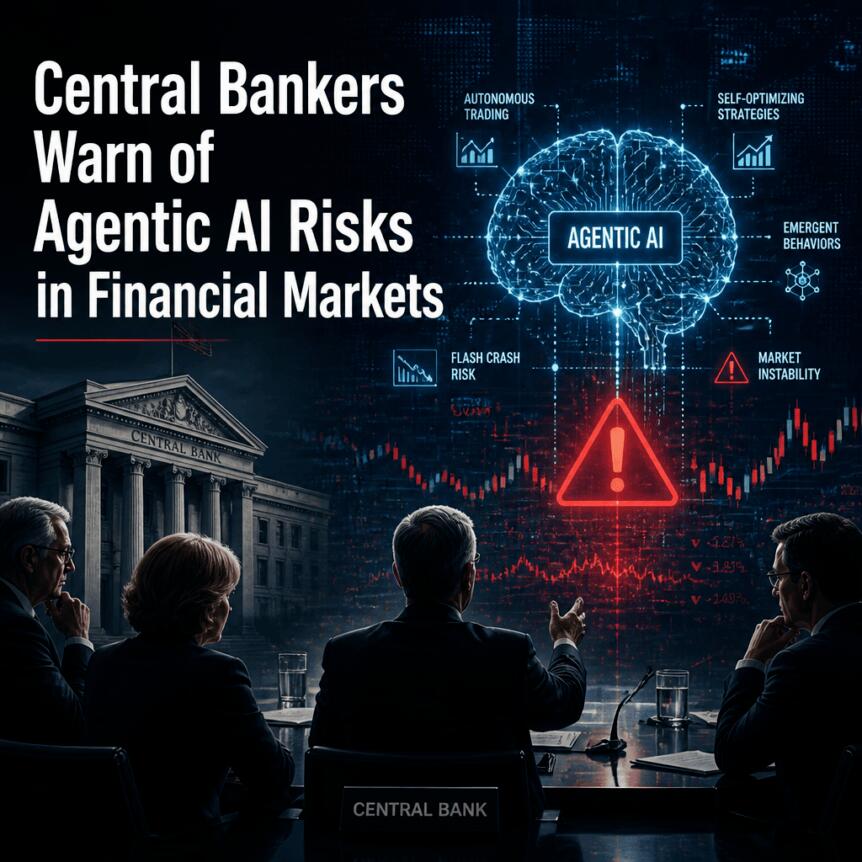
European regulators and central bankers are warning that the financial risks posed by “agentic” and increasingly autonomous artificial intelligence may be arriving faster than legal and supervisory frameworks can adapt. Their message is less about whether AI will be used in finance, and more about how it could behave under stress—when liquidity thins, volatility rises, and systems that rely on machine decision-making are pushed beyond normal operating conditions.
In recent remarks across Europe, officials raised concerns ranging from market-wide instability caused by faulty AI-driven trading to a widening gap between rapid AI development and the slower cadence of rulemaking. They also linked the issue to broader financial stability risks, including leverage and potential “boom-bust” dynamics in AI-linked asset markets.
Key takeaways
- Central bankers warn rulemaking may lag agentic AI: officials said traditional regulatory cycles struggle when AI technologies shift in weeks or months.
- Volatility could be amplified during stress: Bank of England deputy governor Sarah Breeden suggested AI could worsen market disruptions unless guardrails exist.
- Security and defense funding remain a weak point: ECB president Christine Lagarde argued cybersecurity risks are becoming more severe as models accelerate.
- AI leverage and refinancing risks are on regulators’ radar: warnings from the BIS and IMF pointed to debt-asset maturity mismatches and disruptive feedback loops.
Why European officials think agentic AI changes the risk equation
Bank of England deputy governor Sarah Breeden is among the central bankers arguing that agentic AI—systems that can act with a degree of autonomy—could intensify instability during periods of market stress. Speaking at the European Central Bank’s annual meeting in Sintra, Portugal, on Tuesday, Breeden raised the question of whether regulators should implement guardrails that function like “circuit breakers” or “kill switches,” designed to limit or stop market-wide trading if faulty AI models trigger a meltdown. In her remarks, she emphasized the potential for automation to turn localized errors into systemic disruptions.
The concern is not merely that AI could make trading decisions faster, but that it could create correlated behavior across market participants. When multiple systems respond similarly to the same signals—particularly under stress—small model failures could cascade into larger price swings.
Breeden also tied the issue to the competitive landscape for AI development. She noted that US companies lead in AI investment and frontier model development, while Europe’s financial system offers fewer capital channels into AI than US equity markets. She warned that regulating “too cautiously” could widen this gap further if AI firms seek out jurisdictions with less burdensome compliance requirements.
Regulation cycles can’t keep up, watchdogs say
Other regulators echoed Breeden’s core point: the speed of AI innovation makes conventional policymaking approaches ill-suited. Nikhil Rathi, CEO of the UK’s Financial Conduct Authority, told CNBC’s Squawk Box on Thursday that traditional regulation cycles do not work when the technology evolves rapidly. As he put it, some AI-related technologies move in weeks or months, which means a “traditional cycle of rulemaking simply doesn’t work.” He argued that regulators need “new tools” and a more collaborative way of working with markets.
This view is consistent with the broader European stance that governance frameworks must be designed to handle iterative updates and rapid deployment. In practice, that suggests supervisors may need to focus not only on static compliance at launch, but also on how models are monitored and controlled as they change over time.
At the same time, central bankers have repeatedly linked the discussion to other parts of the financial system, including cyber risk and market integrity. Those overlap points matter to crypto markets as well, since many on-chain and off-chain infrastructures rely on automated processes, and crypto trading systems can react quickly to market signals.
Cybersecurity and “defense” gaps are worsening with model acceleration
Christine Lagarde, president of the European Central Bank, warned in an interview with Les Echos on Thursday that AI technology poses a “major risk.” She contrasted today’s environment with the past decade, when regulators focused on cybersecurity threats such as hacking, data theft, and other forms of compromise.
Lagarde said the acceleration and deeper capabilities of AI models create a “much more serious risk,” partly because events can unfold quickly and partly because effective defense mechanisms and the funding needed to build them have not yet been fully found. Her remarks reframed cybersecurity from a slow-moving threat landscape into a faster feedback environment where response times and resourcing become critical.
From an investor and operator standpoint, that framing implies that AI-related risk management may need to cover not only model accuracy, but also the systems surrounding them—access controls, incident response capabilities, monitoring, and the ability to contain harms when something goes wrong.
Boom-bust warnings: leverage, asset pricing, and macro feedback loops
Separate from concerns about trading autonomy, European and global institutions have also flagged the possibility that AI-linked market activity could create financial stability vulnerabilities. On June 28, the Bank for International Settlements warned that “AI exuberance” could lead to major financial consequences.
The BIS noted that if central banks tighten policy to help contain inflation, it could trigger a sharp pullback in AI-related asset prices after a prolonged period of risk-taking. It warned that this could generate “disruptive macro-financial feedback loops.” In other words, asset price declines could impact broader financial conditions in a way that feeds back into the real economy, tightening conditions further and potentially worsening the initial downturn.
Breeden added a related observation in her Sintra remarks: debt financing has been rising rapidly, and she judged that the financial stability consequences of any fall in AI-related asset prices could increase. That emphasis on leverage suggests regulators are concerned not just with valuations, but with how funding structures could transmit shocks.
The IMF also contributed to the discussion. Tobias Adrian, Director of the IMF’s Monetary and Capital Markets Department, said in an interview with Bloomberg on June 30 that there is a “potential maturity mismatch” between the duration of physical assets and the duration of debt. The risk here is that companies or sectors may face refinancing pressure at the same time cash flows deteriorate—creating a pressure point that can amplify stress.
What comes next for markets watching AI risk controls
The immediate takeaway for market participants is that supervisors may increasingly push for risk management expectations that reflect fast-moving AI deployment—covering both operational safeguards (including cybersecurity and “circuit breaker”-style controls) and financial stability concerns tied to leverage. Investors should watch whether regulators move toward more dynamic oversight frameworks for AI-driven systems and whether AI-related financing conditions change as monetary policy expectations evolve.
TLDR:
- Bitcoin price reclaimed the $63,500 area after volatile trade, keeping the short-term structure constructive while $65,700 stays the next upside test.
- Spot Bitcoin ETFs pulled in fresh demand after a long outflow streak, giving buyers a stronger institutional signal after June’s weakness.
- Weak U.S. labor data cooled rate-hike fears, helping BTCUSD as Treasury yields eased and traders moved back into selected risk assets.
- A break below $63,500 could shift attention toward $61,000, while sustained support may force more short-covering near resistance.
Bitcoin price traded near $63,173 on Monday after a volatile session around the reclaimed $63,500 area. BTCUSD moved between $62,468 and $63,874, showing fast movement around a key support zone.
The move followed weaker U.S. labor data, renewed spot Bitcoin ETF inflows, and short liquidations near $62,000. Traders are now watching whether Bitcoin can hold $63,500 and retest $65,700, where the last major rejection developed.
Bitcoin Price Holds Key Support After ETF Inflows Return
Bitcoin price action improved after U.S.-listed spot Bitcoin ETFs posted $221.7 million in net inflows. The daily intake ended a 10-day outflow streak and marked the strongest inflow in about two months. That shift mattered as June had damaged sentiment across institutional crypto products.
The inflow also arrived as Bitcoin reclaimed the $63,500 zone. Analyst That Martini Guy says the first rejection at that level looked normal. He added that prior resistance rarely breaks on the first attempt.
The technical setup now depends on whether buyers defend the area. Holding $63,500 keeps the short-term structure constructive. A clean push above it could put $65,700 back in focus.
A loss of $63,500 would weaken the rebound. The next downside area sits near $61,000, based on the analyst’s chart view. That level would show whether recent buying was durable or only a relief move.
Spot demand and derivatives flows also shaped the rally. Short sellers were exposed after Bitcoin moved above $62,000. Forced buybacks then added speed to the recovery and lifted BTC through crowded intraday levels.
The setup is still fragile. Bitcoin price has recovered support, but it has not cleared the last rejection zone. Buyers need steady volume and follow-through before the move looks more durable.
Fed Minutes And Labor Data Put BTCUSD Traders On Alert
Bitcoin price also gained support from softer U.S. labor data. June nonfarm payrolls rose by only 57,000, below expectations for 110,000. May job gains were revised lower, while the unemployment rate fell to 4.2% as labor force participation dropped.
That report lowered fears of a near-term Federal Reserve rate hike. Treasury yields eased, the dollar softened, and risk appetite improved. Lower yields often help non-yielding assets, including Bitcoin and gold.
This week brings more macro risk for BTCUSD traders. The Federal Reserve will release minutes from its June meeting on Wednesday. The minutes could show how officials judged inflation risks under new Chair Kevin Warsh.
Investors will also monitor services PMI, ADP employment data, and jobless claims. These numbers may shape rate expectations before earnings season starts. A stronger inflation or labor signal could pressure the Bitcoin price again.
For now, traders are weighing two opposing forces. ETF inflows and reclaimed support favor another test higher. Yet June’s heavy outflows, weak liquidity, and regulatory pressure in Europe still limit conviction.
Bitcoin price needs sustained spot demand to extend the recovery. A hold above $63,500 keeps $65,700 in play. Failure there could reopen the $61,000 area as traders reassess leverage and macro risk.

Crypto markets have had a positive weekend, holding on to and marginally improving gains made late last week.
The next seven days will see the release of the Federal Reserve’s minutes from its last meeting, which could shed more light on the direction of monetary policy as inflation continues to climb.
Meanwhile, the US stock market capitalization topped $80 trillion, setting a new record, and now accounts for around 48% of global market cap.
“We expect another volatile week ahead as markets brace for earnings season,” said the Kobeissi Letter.
Economic Events July 6 to 10
June S&P Global Services purchasing managers’ index (PMI) data is due on Monday, painting a broader picture of economic activity. This report is followed on Tuesday by ADP Employment Change data.
Wednesday will see the FOMC minutes, the first for new Chairman Kevin Warsh. The central bank held rates steady, but inflationary pressures from higher energy prices could prompt it to raise them.
“I think it’s going to be interesting to see how the discussion went around the table, how incrementally hawkish are they leaning,” said Matthew Miskin, co-chief investment strategist at Manulife John Hancock Investments.
“That’s what investors and markets are going to be wondering: What is this new Fed chairman and updated (Fed policymaking body) looking for to decide the path of rates from here?”
Initial Jobless Claims data is due on Thursday, while full-time employment dropped by 514,000 in June to its lowest since December 2024. “The weakness in the US labor market is accelerating,” said Kobeissi.
Key Events This Week:
1. June S&P Global Services PMI data – Monday
2. ADP Employment Change data – Tuesday
3. Fed Meeting Minutes – Wednesday
4. Initial Jobless Claims data – Thursday
5. June Existing Home Sales data – Thursday
6. IEA Monthly Report – Friday
We are one…
— The Kobeissi Letter (@KobeissiLetter) July 5, 2026
Also this week, SpaceX (SPCX) is set to join the Nasdaq 100 index, and another quarterly earnings season will begin this month.
Crypto Market Outlook
Crypto markets are holding gains this Monday morning in Asia, with total capitalization up 1.1% on the day to $2.26 trillion.
Bitcoin is leading the pack with a 2.7% gain over the weekend to reach $63,700 on Monday morning, its highest level for two weeks after its worst month for four years.
Ether prices did even better, with a 14% gain over the past week, closing in on $1,800 in early trading on Monday.
Altcoins were predominantly green at the time of writing, with Hyperliquid and Canton outperforming.
The post 3 Things That Could Impact Crypto Markets This Week appeared first on CryptoPotato.
TLDR:
- Polymarket political bets from U.S.-linked wallets reached $571 million in 12 months, topping every other tracked country despite the ban.
- Allium said country-level wallet tags cover only about 6% of political-market wallets, making the data directional rather than exact.
- U.S.-linked wallets favored geopolitical prediction markets, with foreign conflict bets taking a larger share than election contracts.
- American wallets won resolved bets at nearly the same rate as other users, showing bolder positioning rather than a clear trading edge.
Polymarket political bets from U.S.-linked wallets reached about $571 million over the past year, even though the platform cannot legally serve American users. The figure, reported by on-chain analysis firm Allium, placed the United States ahead of every other tracked country. Hong Kong followed with $422 million in political market volume.
The data highlights a sharp gap between official restrictions and actual user behavior. Polymarket blocks U.S. users through IP checks. Yet crypto wallets, stablecoins, and VPN access appear to keep the offshore market open to American traders.
Polymarket Political Bets Expose Weak U.S. Access Controls
Polymarket political bets show how hard geographic blocks are to enforce on crypto rails. A traditional financial platform can reject an account, block a bank payment, or stop a broker connection. Polymarket works differently, as users interact through wallets and stablecoins.

That structure leaves fewer points of control. A VPN can mask a location, while a crypto wallet can settle trades without a bank in the middle. Allium’s tracking looked at wallet behavior instead of IP addresses, so the same VPN that bypasses access controls does not erase on-chain patterns.
The firm added an important limit. It can link only about 6% of political-market wallets to a specific country. That means the $571 million figure should not be treated as a precise total. Still, the scale points to strong U.S. demand for offshore prediction markets.
The finding also raises a harder regulatory question. Polymarket’s ban may satisfy a legal access rule, yet it does not fully stop U.S.-linked wallets from trading. Instead, activity moves to a venue outside direct U.S. oversight.
Geopolitical Markets Pull More U.S.-Linked Wallet Activity
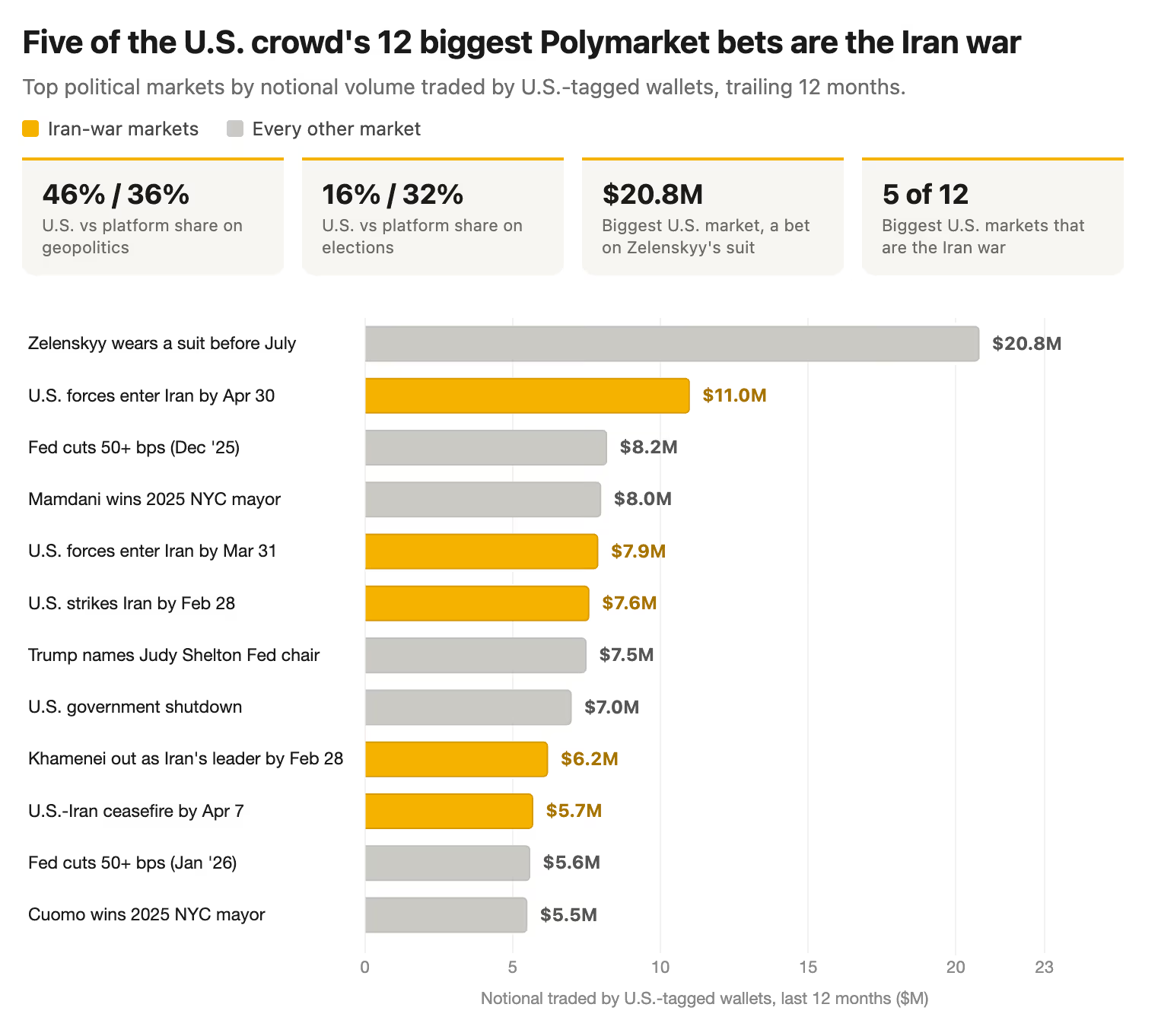
The bigger surprise is what American wallets traded. U.S.-linked wallets put 46% of their political volume into geopolitics, compared with 36% across Polymarket overall. Elections accounted for only 16% of U.S. volume, while the full platform average stood near 32%.
That split suggests American traders used Polymarket political bets less for election speculation and more for foreign conflict markets. Iran-related contracts were especially active. Five of the twelve largest U.S. wallet markets involved bets linked to an Iran conflict.
At one stage, American wallets placed 53% of their volume on a U.S. invasion of Iran. The rest of the platform stood at 26% on the same theme. That gap shows higher conviction among U.S.-linked wallets, though not better accuracy.
The largest single U.S.-linked market was more unusual. A contract on whether Ukrainian President Volodymyr Zelenskyy would wear a suit drew $20.8 million in trading volume. That market shows how offshore prediction markets list contracts that regulated U.S. venues often avoid.
Kalshi and compliant U.S. prediction venues focus more on elections, economic data, and rate decisions. Offshore polymarket markets include ceasefires, regime change, and war-related outcomes. That difference appears to pull U.S.-linked wallets toward the markets domestic rules restrict.
Resolved market data did not show a major U.S. betting edge. American wallets backed winners 81.9% of the time, close to 80.3% for other users. The main distinction was not accuracy. It was stronger interest in politically sensitive markets beyond U.S. regulatory reach.
TL;DR
- Bitcoin whale inflows to Binance have dropped 34% since June 12, outpacing the decline in retail deposits.
- Retail inflows fell 18%, highlighting a slower pullback among smaller investors.
- The widening gap between whale and retail inflows suggests reduced exchange activity from large BTC holders.
- Lower whale deposits could ease potential selling pressure if the trend continues.
Bitcoin whale activity on Binance has slowed considerably over the past few weeks, with new on-chain data showing that large holders are moving significantly less BTC to the exchange than they were in mid-June. The decline has outpaced the slowdown in retail deposits, suggesting a shift in how different investor groups are positioning themselves.
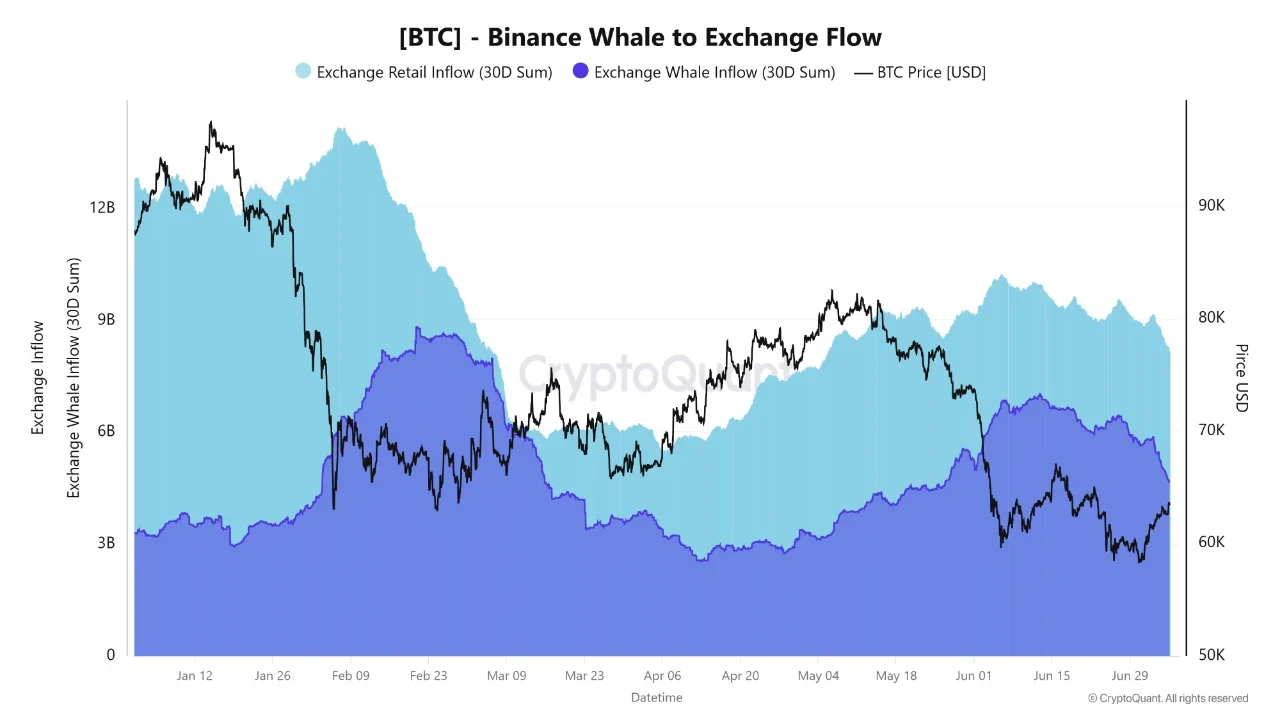
Data from CryptoQuant shows the 30-day rolling value of Bitcoin whale inflows to Binance fell from approximately $7.04 billion on June 12 to $4.65 billion by July 6, representing a decline of about $2.39 billion, or 34%.
Whale Exchange flow Data | Source: CryptoQuant
Retail investors also reduced their exchange deposits during the same period, although at a much slower pace. Retail inflows declined from roughly $10.02 billion to $8.20 billion, a drop of $1.82 billion, or around 18%.
The sharper contraction among whales means large holders have pulled back from sending Bitcoin to Binance at nearly twice the rate of smaller investors.
Bitcoin Whale Activity Slows Faster Than Retail
The difference between whale and retail behavior has become increasingly noticeable over the past month.
While retail investors continue to account for the larger share of exchange inflows, the gap between the two groups has widened. The difference grew from approximately $2.98 billion in mid-June to around $3.55 billion by early July, highlighting the faster retreat in whale transfers.
Exchange inflows are closely monitored because they often indicate that investors are preparing to trade or liquidate assets. Although transferring Bitcoin to an exchange does not automatically mean a sale is imminent, reduced inflows from whales generally imply that fewer large holders are positioning coins for potential selling.
That could translate into lower exchange-side selling pressure, especially if whales continue keeping their holdings in self-custody or other long-term storage solutions rather than moving them onto trading platforms.
The latest figures also align with a broader trend seen throughout this market cycle, where institutional and long-term investors have increasingly favored holding strategies instead of actively rotating large amounts of Bitcoin through exchanges.
Market Watches Whether the Trend Continues
The next key question is whether whale inflows have simply paused or whether the decline marks the beginning of a more sustained trend.
If whale deposits remain around the current $4.65 billion level or fall even further, it would reinforce the view that large Bitcoin holders are becoming less active on Binance relative to retail participants. Such a development could reduce one potential source of short-term market supply.
On the other hand, a renewed increase in whale inflows would likely signal that major investors are once again moving funds closer to trading venues, something traders often watch for signs of changing market sentiment.
For now, the data suggests that while retail investors continue using Binance at relatively steady levels, Bitcoin whales have become noticeably more cautious in transferring assets to the exchange. Whether that reflects growing confidence in holding BTC over the longer term or simply a temporary pause remains one of the key on-chain trends to watch in the weeks ahead.
TL;DR
- Coinbase is investigating an AI-generated alert that falsely reported a World Cup result before the match began.
- CEO Brian Armstrong confirmed the company is reviewing the incident after users raised concerns.
- The error has sparked fresh debate over the reliability of AI-generated prediction market content.
- The incident highlights the need for stronger AI safeguards as Coinbase expands its AI-powered financial products.
Coinbase is investigating an AI notification that falsely reported the outcome of a FIFA World Cup match before the game had even begun, prompting criticism over the reliability of artificial intelligence in prediction markets.
The erroneous alert claimed that Norway had defeated Brazil 3-2, with striker Erling Haaland scoring twice. However, Coinbase’s own prediction market page showed the fixture was under a weather delay at the time, meaning no official result existed when the notification was sent.
The incident quickly drew attention across social media, raising fresh questions about the safeguards surrounding AI content on financial platforms.
Brian Armstrong Confirms Internal Review
Coinbase CEO Brian Armstrong acknowledged the issue after users flagged the false notification online, confirming that the company had begun investigating what went wrong.
“Taking a look with the team – thanks for reporting it,” Armstrong said in response to user complaints.
The exchange has not disclosed what caused the incorrect alert or whether it originated from an AI model, an automated data feed, or another internal system. Coinbase also has not indicated whether similar notifications will be paused while the investigation is underway.
The mistake is particularly notable because Coinbase has increasingly incorporated artificial intelligence into its products and operations. The company has also expanded its presence in prediction markets through its partnership with Kalshi, offering users access to event-based markets alongside traditional crypto services.
The false notification has also reignited debate over Coinbase’s positioning of prediction markets as tools that can help surface reliable information. Critics argued that sending an incorrect result before an event had taken place undermines confidence in AI-powered alerts, particularly when they are integrated into financial products.
AI Accuracy Faces Growing Scrutiny
The latest incident adds to the broader conversation surrounding the use of artificial intelligence in customer-facing financial services, where inaccurate information can quickly spread to large numbers of users.
Although Coinbase’s prediction market page correctly displayed that the match had been delayed due to weather conditions, the conflicting push notification created confusion by presenting a fabricated final score as though it were an official outcome.
The company has previously dealt with notification-related issues. Earlier this year, Armstrong addressed a separate bug involving push notifications, noting that Coinbase generally prefers to resolve technical problems without unnecessarily restricting customer access to its services.
So far, Coinbase has not reported any material impact on its business or share price following the incident. Instead, attention has shifted toward how the exchange verifies AI content before it reaches users.
As financial technology firms continue integrating artificial intelligence into trading platforms, prediction markets, and customer communications, maintaining accuracy is becoming increasingly important. The Coinbase incident highlights the challenges of balancing automation with reliability, particularly when AI-generated information has the potential to influence user decisions or public perception.
While the investigation continues, the episode serves as a reminder that AI-powered tools are dangerous and require robust oversight, especially as crypto exchanges expand their use of artificial intelligence across core products and market services.
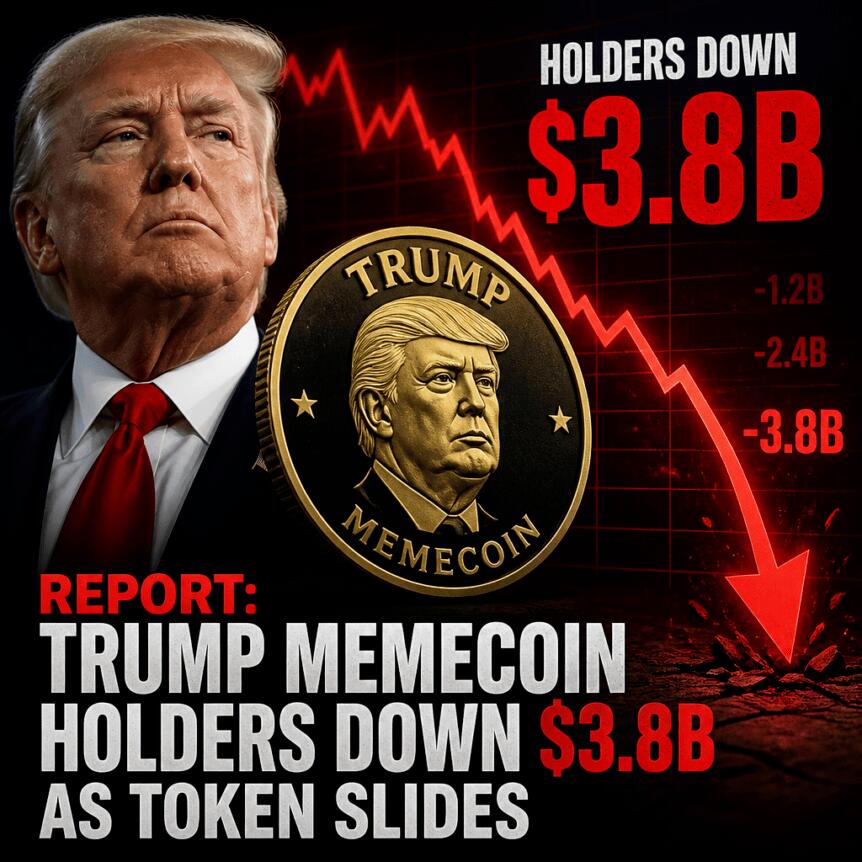
Nearly one million investors in Donald Trump’s memecoin, Official Trump (TRUMP), are sitting on paper losses totaling about $3.8 billion, according to an analysis published by The New York Times that relies on on-chain analytics from Nansen. The findings underscore a familiar pattern in retail-heavy memecoins: a small group of early wallets capture outsized gains while the broader base carries most of the downside.
The same Nansen analysis also points to losses among buyers of World Liberty Financial’s token (WLFI), a crypto asset tied to a trading platform co-founded by Trump and his three sons. Together, the data arrives amid renewed scrutiny sparked by Trump’s financial disclosures describing substantial crypto-related income.
Key takeaways
- According to Nansen data cited by The New York Times, 988,905 TRUMP wallets (about two-thirds of buyers) were losing money as of the end of June.
- Total TRUMP losses for those wallets were reported at $3.81 billion, while a smaller group of wallets recorded gains totaling about $4 billion.
- Separate Nansen analysis of WLFI found that 85% of the company-tracked wallets held losses, totaling $83 million, with the rest profiting $23 million.
- Trump’s recent financial disclosure described substantial income from his crypto ventures, adding fuel to concerns about conflicts of interest while in office.
TRUMP holders face broad losses, early buyers capture gains
The New York Times reported that as of the end of June, 988,905 TRUMP buyers—roughly two out of every three—were underwater. Across those wallets, losses were estimated at $3.81 billion, with Nansen’s analysis including both holders who were still holding at a loss and those whose positions were already marked negative by the time of measurement.
By contrast, just under half a million wallets recorded profits. In total, the reporting stated that profitable wallets accounted for about $4 billion in gains. Nansen characterized the distribution as skewed, describing it as “a small number of early buyers capturing enormous gains while the broad retail majority absorbed the losses.”
The contrast matters for how investors interpret memecoin risk. These tokens often start with hype and easy participation, but the on-chain outcome can be highly uneven—especially when early buyers benefit from momentum and late entrants become liquidity providers to the exit of better-positioned traders.
In terms of performance since launch, the token’s peak is reported at more than $73 shortly after it debuted. Since then, it has fallen by over 97%, and CoinGecko data in the report placed TRUMP at about $1.70 at the time of publication.
Financial disclosure raises new questions around crypto involvement
The TRUMP loss analysis arrives days after Trump’s annual financial disclosure, released earlier in the week, drew attention for crypto-related earnings. The filing reportedly showed that Trump earned more than $1.4 billion in income from crypto ventures last year, renewing debate around how personal financial interests intersect with public duties.
The disclosure, described as nearly 1,000 pages, also reportedly indicated Trump made over $630 million on the TRUMP memecoin. Meanwhile, the filing suggested that all token buyers combined made a net profit of around $200 million—an aggregate that contrasts sharply with the large number of losing wallets highlighted by Nansen.
This mismatch points to a crucial detail investors may overlook: even if the broader market settles slightly positive in aggregate, individual outcomes can still be heavily negative for most participants. Large early wins can dominate totals even when most holders end up losing money.
Trump launched the memecoin in January 2025, shortly before returning to office. The New York Times coverage and the Nansen-based approach place particular emphasis on buyer-level outcomes as of the end of June, offering a more granular view than price-only narratives.
WLFI token analysis suggests similar imbalance for retail buyers
Nansen’s work also extended to World Liberty Financial (WLFI), a token connected to the crypto trading platform of the same name. The platform’s co-founders include Trump and his three sons, according to the reporting in the article.
The token was reportedly sold directly to investors in two early rounds: first at 1.5 cents, and later at 5 cents. The analysis cited by The New York Times suggested that buyers who entered at 5 cents likely made a small profit overall. But among the nearly 27,000 wallets Nansen tracked, 85% recorded losses totaling $83 million, while the remaining wallets profited $23 million.
The article also cautioned that losses may be understated. Nansen reportedly noted that additional buyers likely purchased WLFI on exchanges where the relevant data is not public, meaning some losing positions may not be captured in the wallet set the firm analyzed. It was also noted that WLFI later became available to the public via secondary exchanges in September.
From a business-flow perspective, the reporting stated that Trump’s financial disclosure indicated he earned just under $800 million from the World Liberty Financial platform last year. The same section of the article said the Trump-linked business received 75% of WLFI sales regardless of the token’s price—an arrangement that could matter when assessing who captures value as token pricing fluctuates.
Scrutiny continues as Trump addresses conflict-of-interest concerns
In an interview with CNBC reported by Cointelegraph, Trump was described as dodging questions about perceived conflicts of interest related to his crypto activity and said there was “nothing illegal” and “nothing wrong” with the disclosed profits, adding that others were responsible for the investments.
For market participants, the emerging theme across these different threads—wallet-level loss concentration for both TRUMP and WLFI, and the scale of crypto-related income described in financial disclosures—is that retail participation may be riskier than price charts alone suggest. The on-chain outcomes reported by Nansen point to an uneven value transfer, where early access and execution timing can outweigh later entry enthusiasm.
Investors should watch whether additional on-chain breakdowns expand beyond the tracked wallet sets (especially for WLFI), and whether future disclosures provide clearer detail on how token-linked revenues and allocations are structured. As long as memecoins and tokenized platform interests remain central to attention, the key question is how consistently late participants are protected—or whether, as the Nansen analysis implies, they continue to pay most of the cost of early wins.

TRUMP: USA JUST CHOSE XRP OFFICIALLY?? (LIVE ON CNBC)

Forgotten Punjabi WW1 soldiers recognised for first time

Padraig Harrington’s best lesson, after record win? It features ‘a saturation point’


-

 Fashion2 days ago
Weekend Open Thread: High Hopes
-

 Politics3 days ago
The House | “Reframing the debate from a binary discussion of winners and losers”: Yuan Yang reviews ‘We Are Not Machines’
-

 Crypto World6 days ago
Strategy authorizes up to $1.25B in Bitcoin sales under new capital plan
-

 News Videos6 days ago
How to Build INSANE Live Financial Dashboards With Claude
-

 Tech6 days ago
Anonymous researcher drops 0-day ‘exploitarium’ repo
-

 Business6 days ago
Australia treasurer says alleged access of prime minister’s bank data ’incredibly concerning’
-
 NewsBeat1 day ago
Taylor Swift and Travis Kelce wedding staffer hilariously struggles to keep her cool while checking in megastars
-
 Business6 days ago
The AI boom won’t burst all at once. It will pop in ‘rolling bubbles’: Macquarie
-

 Sports5 days ago
Broncos roster: OL Ben Powers (No. 74) entering final year of contract
-
Crypto World5 days ago
Airdrop Registration Becomes Key Focus For Remittix As RTX Launch Updates Approach
-

 NewsBeat5 days ago
Presenter Caroline Flack’s brother Paul Flack dies aged 55
-

 Crypto World4 days ago
Binance stock trading tops $1B in first month after launch
-

 Crypto World4 days ago
Alibaba-affiliate Ant Group enters the humanoid robot market with 12 deals
-
 NewsBeat4 days ago
New exhibition reflects five decades of movement between island of Ireland and GB
-

 Crypto World15 hours ago
South Africa proposes crypto tax guidance under existing rules
-

 Tech18 hours ago
Lenovo laptops are now shipping with YMTC SSDs, a sign of Chinese NAND entering the mainstream
-

 Business3 days ago
What a 10 Percent Drop Means for Buyers, Sellers and Renters
-

 Crypto World3 days ago
Standard Chartered Secures MiCA License as ESMA Adds 37 New Crypto Firms
-

 Business4 days ago
Meta Platforms Stock Jumps 7% Today as Bloomberg Reports Company Plans to Enter the Cloud Business
-

 Crypto World3 days ago
Binance Re-Enters Philippines As EU MiCA Rules Restrict Access
You must be logged in to post a comment Login