
Crypto World
Crypto custodian Taurus moves straight into EU capital markets with MiFID license in Cyprus



Cryptocurrency custody firm Taurus has been granted a MiFID II investment license in Cyprus under the regulatory ambit of Mediterranean island’s regulator, the Cyprus Securities and Exchange Commission (CySEC).
The license enables Taurus to offer MiFID-regulated investment services for tokenized financial instruments to banks and asset managers across the European Union (EU), as well as secondary trading for tokenized bonds, fund shares, equities, and structured products, according to a press release on Wednesday.
“Banks like to face fully regulated entities that are similar to the one they used to work with,” Sébastien Dessimoz, co-founder and Managing Partner at Taurus, said in an interview.
“All the brokers in Europe are MiFID licensed firms, and Taurus is a broker also and now a MiFID licensed firm. So those banks and institutions can be sure we are subject to all the necessary guarantees – on top of that we’re onshore in Europe, which is also highly appreciated,” he added.
MiFID II (Markets in Financial Instruments Directive II) is the European Union’s core regulatory framework for investment services, trading venues, and financial assets such as equities, bonds, derivatives, and structured products. It is designed for traditional capital markets, meaning a MiFID license effectively allows firms to operate as regulated investment service providers across the EU.
The license, therefore, will help Taurus bridge its crypto-native infrastructure with the regulatory perimeter used by banks and asset managers, allowing it to offer tokenized securities to institutional clients in their preferred format.
Taurus already works on crypto custody and tokenization with the likes of Deutsche Bank, ClearBank, KBC, Santander, State Street, CACEIS, Pictet, and Swissquote. The firm also has a licence from Swiss regulator FINMA, and an EU Markets in Crypto Assets (MiCA) application is in the pipeline too, said Dessimoz.
As a fully regulated entity incorporated in Europe, Taurus can offer classical investment services for transferable securities, Dessimoz said, and also give clients the possibility to buy or sell distributed ledger technology (DLT) financial instruments such as tokenized equity, tokenized debt, tokenized fund shares; in other words, crypto-assets that qualify as MiFID financial instruments.
Several other firms, such as OKX, Gemini, Crypto.com, Kraken, Bitstamp, and Perpetuals.com, hold MiFID II licenses.

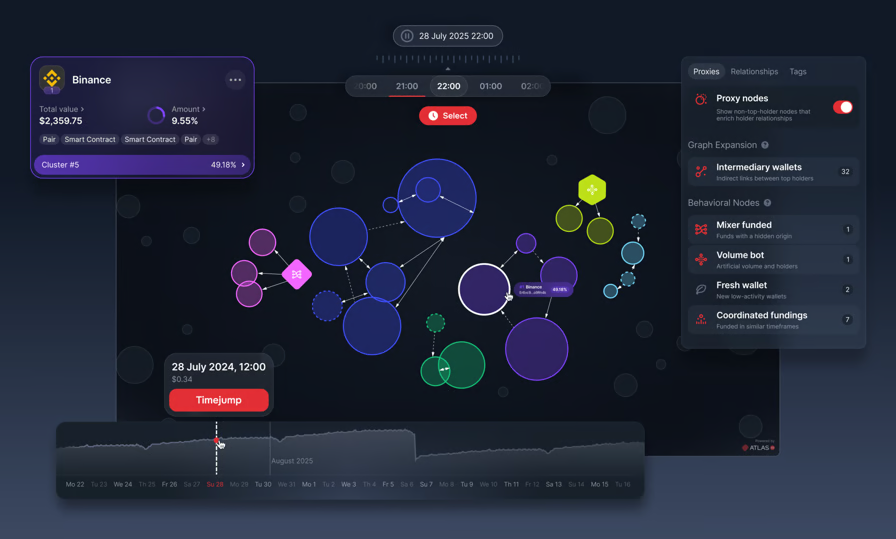
A new era of on-chain trading transparency. Atlas Live enables traders to analyze token concentration and spot potential rug pulls. Now in real time.
Odense, Denmark, May 6, 2026 – InsightX, the on-chain safety and analytics platform, launches Atlas Live, the world’s first real time token holder map.
InsightX is best known for Atlas, a holder visualization tool used by millions of traders each month. It simplifies token ownership at a glance, with clustering patterns revealing potential coordinated wallet activity. Atlas is integrated across major platforms including Pump.fun, Axiom, Terminal and GMGN.
The launch of Atlas Live transforms the research tool into a decision-making engine for live trading. Until now all holder maps required manual refreshing, leaving traders a step behind the true token distribution. In a market where scams unfold in seconds this delay was critical. Atlas Live changes this, turning static analysis into real-time insights.
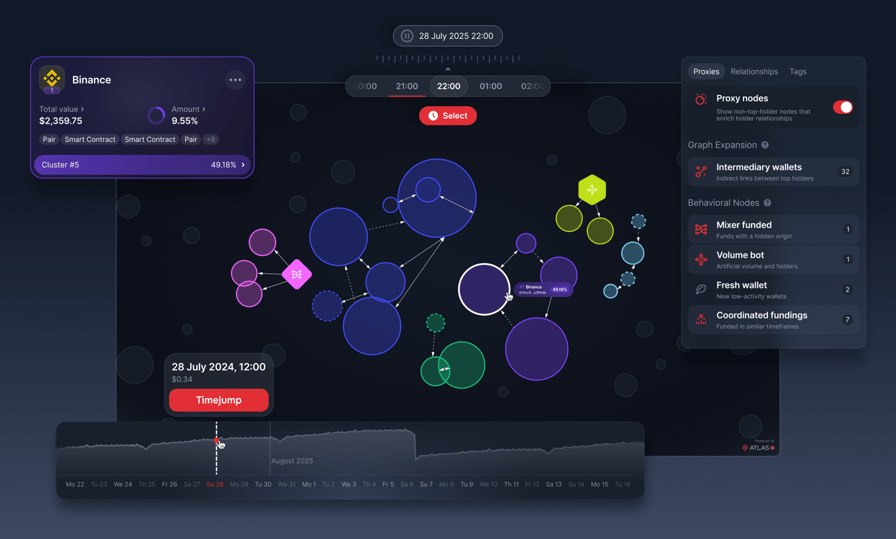
What’s new
Live holder map
Atlas Live introduces the world’s first live token holder map. Traders can now watch wallets buy, sell and transfer tokens in real time, revealing patterns that were previously invisible. This can make the difference between getting out early or being left with an empty bag.
“The word ‘real-time’ gets used a lot in crypto, but it rarely means truly instant.” said Lasse Møller, CEO of InsightX. “With Atlas Live, there’s no refresh button, no delay. The data is just there – live, as it happens.”
Historical mode
With Historical mode traders can rewind any token’s distribution and analyze how early holders behaved. Most importantly, it enables the investigation of any given moment, not just snapshots.
This makes it possible to:
- Identify insider accumulation before a pump
- Detect coordinated wallet clusters
- Understand how a token evolved over time
AI powered detection
Identifying true ownership has become increasingly difficult. Tokens may appear decentralized on paper, yet remain controlled by a small group of holders. Funds can be routed through intermediary wallets that may never interact directly but are linked via shared funding sources. AI powered detection uncovers these hidden links, helping traders separate normal activity from suspicious behavior.
“Not everything is black and white.” Møller added. “Large clusters of wallets can represent normal exchange flows, but they can also indicate coordinated behavior. Atlas Live helps traders understand that difference in seconds. That’s why context is so important.”
Built for speed and real-time insights
Atlas Live combines real-time data with contextual insights to help traders read token distribution and react faster. It highlights large holder movements and early liquidity shifts that may signal sell-offs or potential rug pulls.
Atlas Live is available cross-chain on 15 ecosystems: Solana, Ethereum, BNB Chain, Base, Abstract, XLayer, Monad, HyperEVM, Sonic, Avalanche, Sui, Tron, Polygon, Arbitrum and Unichain.
About InsightX
InsightX is an innovative Web3 transparency and security platform, transforming how traders and ecosystems navigate on-chain markets. The InsightX product suite combines smart contract security scanning with live holder maps to deliver clarity, trust and alpha across the DeFi space. Best known for its holder map, Atlas, InsightX powers major platforms like Pumpfun and Axiom, serving more than 2M traders each month.
Website | Atlas Live App | X | Telegram | Docs | Whitepaper
Media contact:

A suspected $150 million crypto Ponzi scheme centered on BG Wealth Sharing has seen its domain seized by U.S. law enforcement, following reports of a large-scale rug pull and mounting investor losses. The operation’s online presence was brought down as part of a joint initiative involving federal authorities and specialized task forces, underscoring ongoing efforts to disrupt scam networks that rely on social media to lure retail investors into high-yield promises.
On-chain sleuthing by ZachXBT indicated that illicit actors tied to BG Wealth Sharing attempted to launder more than $92 million in cryptocurrency between April 27 and this week. In a coordinated response, investigators managed to freeze more than $41 million of those assets, with cooperation from industry players including Tether, Binance and OKX, as well as U.S. law enforcement. The influencer’s update also framed the scheme as potentially responsible for losses well above the $150 million mark, based on activity since 2025 and the thousands of victim withdrawals identified to date.
“While these Chinese investment frauds are obvious to most, they purposely target unsophisticated retail investors via social media,” ZachXBT commented, noting the difficulty of convincing victims that they were scammed even after the fact.
Key takeaways
- Domain seized: BG Wealth Sharing’s website was taken down by U.S. authorities as part of a joint operation involving Level Up and the Scam Center Strike Force, signaling a broader crackdown on unlicensed crypto investment platforms.
- Asset recovery and laundering: investigators reported laundering attempts exceeding $92 million, with more than $41 million frozen in cooperation with major exchanges and law enforcement partners.
- Scale of impact: the scheme reportedly operated since 2025 and is linked to thousands of withdrawals, suggesting total losses could exceed $150 million.
- Regulatory warnings and cautions: regulators had long warned investors away from BG Wealth Sharing, including the FCA and the Central Bank of Samoa, highlighting the risks of unregistered crypto investment offers.
- Investor-facing red flags: descriptions of daily profits, referral schemes, and a claimed IPO for a related exchange were later tied to deceptions, culminating in a public rug pull narrative and warnings from state regulators.
Crackdown context: enforcement, warnings, and the scale of risk
The seizure of BG Wealth Sharing’s domain comes amid heightened vigilance from regulators and law enforcement against crypto investment platforms that promise high returns with minimal friction. In multiple jurisdictions, authorities have warned that BG Wealth Sharing presented itself as a crypto-trading advisor while peddling guaranteed yields and referral commissions—a combination commonly associated with sophisticated advance-fee scams and Ponzi-like structures.
Regulators’ warnings were not limited to one territory. The UK Financial Conduct Authority issued formal warnings about BG Wealth Sharing, while the Central Bank of Samoa cautioned investors that the group represented an investment scam. In the United States, the action aligns with broader joint efforts—Operation Level Up and the Scam Center Strike Force—designed to disrupt cross-border scams that rely on social media amplification to reach unsophisticated retail investors.
Investors have faced a difficult truth as authorities step up enforcement: schemes that promise regular, outsized returns often collapse once new inflows stall. The Washington State Department of Financial Institutions reiterated concerns by noting a pattern consistent with advance-fee fraud, a warning echoed in official statements that highlight how new funding is often required to access any withdrawn funds.
A company that requires an investor to deposit additional external funds in order to withdraw their investment is highly likely to be operating an advance fee scam.
Context for this crackdown is supported by broader crime data. The U.S. Federal Bureau of Investigation reported in April that Americans lost $21 billion to cyber-enabled crime last year, with crypto investment scams accounting for a substantial portion of those losses. The scale of the problem underscores why authorities continue to pursue operators like BG Wealth Sharing and why investors must scrutinize platform claims, licensing, and regulatory status before committing capital.
What BG Wealth Sharing advertised—and what regulators say happened
BG Wealth Sharing presented itself as a crypto-trading guidance service, heavily promoted on social media with promises of “daily profit opportunities” and a structured compensation plan featuring referral commissions and rank-based bonuses. It also advertised a daily yield range of about 1.3% to 2.6%, a promise that rarely survives the realities of a market where liquidity and withdrawal policies can hinge on the platform’s ability to attract new funds.
As the scheme unfolded, purported leadership and marketing claims around a related DSJ Exchange surfaced in a late-stage address to users. A video message from a figure identified as the company’s CEO suggested the exchange would be pursuing an initial public offering, with a requirement of a 12% tax on account balances as part of the regulatory process. When users began warning each other that a rug pull was in progress, regulators stepped in with formal alerts—reiterating that the platform’s claims did not align with licensed, compliant financial activity.
The grim arc of BG Wealth Sharing is consistent with other scams that leverage social-media reach to lure retail investors who may be drawn by the prospect of fast gains. ZachXBT’s reporting emphasizes the tension between the perceived legitimacy of online promotions and the reality that many participants may not realize they are dealing with an unregistered or fraudulent operation until well after losses mount.
Why this matters for the market and for participants
Criminal actions against BG Wealth Sharing illustrate the persistent threat of Ponzi-like crypto investment schemes that mix aggressive marketing with questionable licensing. For traders and investors, the case highlights several practical considerations: the importance of verifying licensing and regulatory status, the risks of platforms that offer unusually high yields with little transparent risk management, and the need to consider on-chain evidence and official cautions before committing funds.
For builders and infrastructure players, the episode underscores the ongoing need for clearer provenance and due diligence tools in the crypto ecosystem. Projects that emphasize transparent treasury management, auditable yield models, and verifiable investor protections are more likely to gain trust in a crowded market where scams can leave lasting reputational damage.
From a policy perspective, the BG Wealth Sharing case reinforces the imperative for coordinated enforcement across jurisdictions. The joint seizure and the public warnings from regulators in multiple regions may deter would-be scam operators and provide a blueprint for future takedowns, even as new schemes continue to adapt their narratives to evade detection.
Looking ahead, readers should monitor updates from U.S. law enforcement and regulatory agencies for any further recoveries, charges, or civil actions related to BG Wealth Sharing and similar entities. Investors should also remain vigilant for warning signs—unlicensed status, guaranteed returns, and sudden changes in withdrawal policies—especially when paired with aggressive social-media marketing and referral incentives.
As enforcement actions unfold, the broader market will likely see continued emphasis on vetting practices, more explicit disclosures around risk and compensation structures, and a push for faster cross-border information sharing among regulators and exchanges. The ongoing investigation and any subsequent asset recovery efforts will be crucial to understanding how effectively these networks can be disrupted and deterred in the future.
Readers should stay tuned for updates on the DSJ Exchange-related aspects of the saga, additional regulator statements, and any new data on the total scope of losses tied to BG Wealth Sharing. The case remains a salient reminder that high-yield promises on crypto platforms often conceal a higher likelihood of losses, and that vigilance—both by users and by the systems designed to protect them—remains essential.
Cointelegraph is committed to independent, transparent journalism. This news coverage adheres to established editorial standards, and readers are encouraged to verify details through official sources and ongoing reporting.

TLDR:
- KelpDAO lost 116,500 rsETH in an April 18 exploit tied to North Korea’s Lazarus Group via LayerZero.
- LayerZero’s 1-of-1 DVN setup was used by 47% of OApp contracts, contradicting claims it was unique to Kelp.
- KelpDAO intervened to block $100M in additional forged transactions before pausing its bridge contracts.
- KelpDAO is now migrating to Chainlink CCIP, which has processed over $30 trillion in value over 7 years.
KelpDAO is migrating to Chainlink’s Cross-Chain Interoperability Protocol following a major exploit on April 18, 2026.
The attack, linked to North Korea’s Lazarus Group, targeted LayerZero’s infrastructure and drained 116,500 rsETH from KelpDAO’s bridge.
The total losses across DeFi protocols exceeded $300 million. KelpDAO has since disputed LayerZero’s framing of the incident, calling the infrastructure failure a systemic issue within LayerZero’s own operations.
The Attack and Its Impact on DeFi
The April 18 exploit originated within LayerZero Labs’ off-chain infrastructure. Attackers compromised two RPC nodes used by LayerZero’s DVN and launched a DDoS attack on the remaining nodes.
This forced DVN signers to validate a non-existent transaction, producing fake token burns and flooding markets with unbacked rsETH.
Aave and other DeFi platforms were among the protocols affected by the unbacked rsETH. Two additional forged transactions worth over $100 million were also signed by the LayerZero Labs DVN.
KelpDAO’s team intervened in time to pause contracts and block those transactions before further damage occurred.
KelpDAO also flagged the exploit to LayerZero directly, as the latter’s monitoring systems had not detected it. According to KelpDAO, LayerZero’s team appeared unaware of any issue when first contacted. This raised concerns about the reliability of LayerZero’s internal alerting processes.
The Dispute Over the 1-of-1 DVN Configuration
LayerZero attributed the exploit to KelpDAO’s use of a 1-of-1 DVN configuration, calling it a risky manual setup. KelpDAO pushed back firmly on this claim.
According to Dune Analytics data, 47% of roughly 2,665 LayerZero OApp contracts used the same 1-1 DVN setup at the time.
KelpDAO also shared Telegram exchanges showing LayerZero team members explicitly approving the 1-1 configuration during pre-deployment reviews. Over 2.5 years of integration discussions, LayerZero reportedly raised no objections to the setup.
KelpDAO followed LayerZero’s own documentation and quickstart guides, which defaulted to the 1-1 LayerZero Labs DVN configuration.
A post from @CatfishFishy on April 24 drew attention to a December 2024 statement from LayerZero’s Bryan, who claimed no applications were using the LayerZero DVN as a 1-1 setup.
At that point, rsETH already held roughly $200 million in TVL across L2 deployments under that exact configuration. Independent security researchers, including @banteg, also confirmed through public reports that the exploit originated from LayerZero’s own infrastructure, not from KelpDAO’s settings.
KelpDAO’s Migration to Chainlink CCIP
Following the exploit, KelpDAO announced a full transition away from LayerZero. The protocol is now moving to Chainlink’s Cross-Chain Interoperability Protocol and adopting Chainlink’s Cross-Chain Token standard for rsETH. The migration is currently being finalized by KelpDAO’s engineering team.
Chainlink’s decentralized oracle network has processed over $30 trillion in value across more than seven years of operation.
The network also remained functional during several major global outages, making it a more established option for cross-chain security.
KelpDAO stated that all rsETH cross-chain transfers will soon run through Chainlink CCIP across all supported chains.
After the exploit, LayerZero announced it would stop attesting messages for any app using a 1-1 DVN setup. KelpDAO noted that this policy change came only after the configuration had already caused hundreds of millions in losses.
The 1-1 configuration, however, reportedly still appears in LayerZero’s own documentation and default OFT deployment templates.



RootData’s new map shows 30 core Web3 partners plugging custody, trading, wallets, and infra into Hyperliquid’s L1 as it pushes toward an on-chain liquidity OS.
Summary
- Web3 data platform RootData has published an overview of 30 business partners in the Hyperliquid ecosystem, spanning stablecoins, cross-chain infra, wallets, DeFi, institutional custody, and trading venues—together forming a more complete on-chain financial stack.
- Hyperliquid now counts 145 “high‑quality” projects in its broader ecosystem, signaling that more applications are choosing to build directly around its on-chain liquidity rather than treating it as just another venue.
- Custodians such as Anchorage Digital, BitGo, and Fireblocks, plus trading firms and exchanges like Bybit, trade.xyz, and IMC Trading, are helping plug larger institutional capital and market‑making into Hyperliquid’s L1.
RootData’s latest ecosystem map shows Hyperliquid positioning itself as a performant L1 “optimized from the ground up” to run a full on-chain financial system, with user‑built applications plugging into native components like its orderbook perpetuals DEX.
How Hyperliquid’s partner network is structured
At the funding and settlement layer, Hyperliquid has integrated with major stablecoin issuers—Circle (USDC), Tether (USDT), and Ethena’s synthetic dollar stack—to ensure that its derivatives and DeFi rails are natively dollarized.
Under the hood, it connects to cross-chain and oracle infrastructure such as Chainlink, Axelar, deBridge, and Ripple‑related rails, giving external capital and data feeds standardized ways to reach Hyperliquid while keeping latency low enough to maintain its sub‑second block times.
On the user entry side, RootData highlights wallets and interfaces including Phantom, Rabby Wallet, and DeBank as key partners, lowering friction for both retail and power users to interact with Hyperliquid’s L1 and its DeFi protocols.
DeFi protocols and institutions around Hyperliquid liquidity
RootData notes that more native DeFi protocols have begun to cluster directly on Hyperliquid, including Pendle-style yield products, Felix, HypurrFi, and HyperBeat, which collectively extend the chain’s use cases from perpetuals into structured yield, credit, and other on-chain instruments.
Across its ecosystem map, RootData counts 145 “quality projects” integrated with or built on Hyperliquid, from cross‑chain bridges and oracles to trading tools and prime brokers such as HyperLink and Hybra Finance, indicating that builders increasingly treat Hyperliquid as a base liquidity layer rather than a single‑app venue.
On the institutional side, custodians like Anchorage Digital, BitGo, and Fireblocks appear among the 30 highlighted partners, a sign that Hyperliquid connectivity is being wired into the same infrastructure large funds use to hold and move assets across chains.
Trading platforms, quant shops, and market‑making firms—including Bybit, trade.xyz, and IMC Trading—are listed as ecosystem participants, helping deepen order books and making it easier to route size into and out of Hyperliquid markets.
More detail on the partner breakdown and categories is available in RootData’s Chinese-language archive entry: Hyperliquid Crypto Business Partner.
Toward an on-chain CEX-style operating system
Taken together, RootData argues that Hyperliquid is “continuously expanding around on-chain liquidity,” effectively trying to replicate the ecosystem model of a centralized exchange—market structure, funding currencies, custody, front-ends, and institutional access—but with the core no longer being an internal account ledger.
Instead, every order, cancel, trade, and liquidation is executed on-chain at Hyperliquid’s base L1, with external partners plugging into that shared state rather than into siloed CEX databases, aligning custody providers, wallets, and DeFi protocols around the same liquidity backbone.
RootData places this Hyperliquid map alongside earlier ecosystem illustrations for players like Mastercard and Crypto.com, arguing that public visualization of partner networks has become a key way for crypto projects to improve transparency and market trust.
The platform explicitly “welcomes Web3 projects to claim their information” and continues to open more disclosure channels for business relationships, using ecosystem maps to nominate Web3 partners for upstream clients such as Visa, Mastercard, Stripe, Coinbase—and now, increasingly, on-chain liquidity hubs like Hyperliquid.
BlackRock, JPMorgan, Stripe, and PayPal all launched crypto products. The game changed. And the opportunity window you thought was still open? It already closed.
The Moment Everything Changed
In 2025, something unprecedented happened. It wasn’t Bitcoin hitting a new all-time high. It wasn’t another bull run or a promising new altcoin.
It was JPMorgan Chase offering crypto products to clients. It was BlackRock managing hundreds of billions in Bitcoin and Ethereum ETFs. It was Stripe and PayPal integrating crypto payments. It was Mastercard, Visa, and traditional finance institutions treating blockchain like critical infrastructure.
The crypto era didn’t begin. It ended.
Not in the way the pessimists meant—crypto isn’t failing. It’s the opposite. Crypto has become so integrated into traditional finance that it’s no longer revolutionary. It’s just… finance.
And everyone who’s still talking about ‘getting in early’ missed the moment they should have been watching.
The Numbers That Tell The Story
The data is overwhelming:
$175 billion sits in Bitcoin and Ethereum spot ETF products alone. These aren’t speculative crypto exchanges. These are traditional financial institutions managing institutional capital in crypto assets.
$46 trillion in annual transactions flow through stablecoins. That’s not retail trading. That’s institutional settlement. That’s the financial system actually using blockchain.
3,400+ transactions per second on major blockchains—100x growth in the last five years. This isn’t a niche technology anymore. This is infrastructure.
The institutions that spent years dismissing crypto as a bubble are now racing to offer it to their clients. BlackRock doesn’t launch products in categories that are about to crash. Fidelity doesn’t build infrastructure for failing technology.
What Mainstream Adoption Actually Means
Here’s what most people miss: when crypto goes mainstream, the game fundamentally changes.
Early adoption was about finding the next Bitcoin. About believing in something different. About risk and conviction and willingness to look stupid for a few years until you were right.
Mainstream adoption is about safety. Regulatory clarity. Integration with existing financial systems. Lower returns because the risk premium evaporated.
When JPMorgan offers crypto to their wealth management clients, those clients aren’t getting rich. They’re getting portfolio diversification. The explosive 10x, 100x returns that defined early crypto? Those are gone.
You can’t make life-changing money when the thing you’re buying is offering the same returns as traditional assets. And that’s what’s happening now.
The early crypto adopter who bought Bitcoin at $100 and held to $100,000 made life-changing money. The person buying Bitcoin at $70,000 through a BlackRock ETF is just… diversifying their portfolio. Same outcome. Completely different risk/reward ratio.
The Institutions Won
This is the moment that matters: traditional finance didn’t lose to crypto. Crypto lost to traditional finance.
Bitcoin didn’t replace the dollar. Ethereum didn’t disrupt banking. Blockchain didn’t eliminate middlemen—it became a tool that middlemen use.
Instead of crypto being a revolution against the system, crypto became part of the system. The revolutionaries got hired by the incumbents. The radical technology became enterprise infrastructure.
And now JPMorgan’s clients can buy Bitcoin through the same brokerage interface they use to buy Apple stock. With the same regulatory protection. The same insurance. The same boring, predictable, institutional-grade safety.
It’s elegant, actually. The institutions couldn’t kill crypto, so they integrated it. They took the technology, stripped away the revolutionary messaging, and turned it into a commodity they could offer their clients.
What This Means For Getting In Early
If you’re still hearing people talk about ‘getting in early’ to crypto, they’re playing a different game than they think.
Because here’s what ‘early’ meant:
- 2011-2012: Bitcoin was $5. You were insane to buy it. Now you’re a genius.
- 2013-2014: Ethereum didn’t exist. You were a cultist to invest in a technology that didn’t work yet. Now it’s a $3 trillion asset class.
- 2017-2018: ICOs were obviously scams. You were stupid to participate. Some people became billionaires.
- 2021-2022: Everyone thought crypto was dead. You were an idiot to buy the dip. The market recovered.
But 2025? When JPMorgan is offering crypto and regulatory clarity exists and stablecoins settle $46 trillion annually?
That’s not ‘early.’ That’s normal. That’s the market that exists.
‘Getting in early’ now means finding the next emerging blockchain category that institutional finance hasn’t integrated yet. Decentralized physical infrastructure (DePIN). Real-world assets (RWAs) tokenized on-chain. Decentralized AI.
But even then—once those categories get Big Money attention, the explosive returns evaporate. Because the risk premium collapses the moment you have regulatory clarity and institutional capital.
The Category That Won
If crypto went mainstream, something else happened simultaneously: traditional finance learned how to extract value from it.
The institutions that offer crypto products aren’t trying to disrupt themselves. They’re capturing the upside of blockchain technology while eliminating the downside (volatility, regulatory risk, operational complexity).
A traditional investor can now get Bitcoin exposure through a Fidelity ETF. Zero volatility shock. Zero learning curve. Zero community idealism. Just… returns.
That’s efficient. That’s stable. That’s boring.
And boring is what kills revolutionary returns.
What Comes Next
This is the inflection point where crypto transformed from a revolutionary technology into enterprise infrastructure.
The people who made generational wealth from crypto did it before 2023. The ones who got rich between 2023-2025 were either early enough on specific emerging sectors or lucky enough to time volatility perfectly.
But if you’re reading this in 2025, thinking ‘I should get into crypto,’ you’re already late. Not because crypto isn’t valuable. It is. But because the explosive upside that defined the first era of crypto is mathematically impossible now that institutional capital has integrated.
You can still make returns. But you’ll make them like traditional assets—steady, correlated to broader markets, with the risk premium already priced in.
The question isn’t whether to get into crypto. You probably should, via a Fidelity ETF, as a portfolio hedge.
The question is: what’s the next frontier? What technology is currently dismissed as a scam/dead-end/too risky but will be integrated into institutional finance in 5 years?
That’s where the early adoption opportunity actually lives now.
But it won’t be crypto. That era already happened.
The Uncomfortable Truth
Here’s what the crypto community doesn’t want to admit: crypto won by losing.
We wanted to disrupt the financial system. Instead, the financial system adopted our technology and turned it into a tool that reinforces their control.
Bitcoin was supposed to be ‘digital gold’ that couldn’t be censored or controlled. Now it’s a holding in institutional portfolios, priced in USD, traded through traditional brokers, regulated by the SEC.
Ethereum was supposed to be a decentralized world computer. Now it’s a blockchain infrastructure platform that processes institution-grade transactions.
The technology won. The revolution failed.
And everyone who’s still waiting for crypto to go to the moon is waiting for something that already happened. The moon landing occurred in 2024-2025. Now we’re just building infrastructure.
The Real Opportunity
If you missed early crypto, you didn’t miss the opportunity. You missed an opportunity.
The fact that JPMorgan now offers crypto products means the barrier to entry collapsed. You can get Bitcoin or Ethereum exposure today through any major brokerage. That’s incredible.
But you need to accept that the returns from here will look like traditional assets, not speculative bets. Because the risk is priced in. The regulatory uncertainty is gone. The volatility is dampened.
What you should actually be looking for: what’s the technology that’s currently where crypto was in 2015? What’s the thing that’s obviously stupid but might be revolutionary?
DeFi protocols? Too obvious now. NFTs? Already tried that. Privacy coins? Increasingly regulated.
DePIN (decentralized physical infrastructure)? Possibly. AI agents on-chain? Maybe. Decentralized prediction markets? Gaining traction.
But even then—the moment you identify the next frontier, you have maybe 2-3 years before institutions catch on. Then the explosive returns compress.
That’s the crypto cycle. Not Bitcoin going to $1M. The cycle of each new frontier being discovered, adopted by believers, integrated by institutions, and priced into normalized returns.
What This Means For You
If you’re reading this and feeling late: you are. But not to crypto. You’re late to the revolution. Crypto as a technology that would disrupt finance didn’t happen.
But you’re not late to making returns. Bitcoin and Ethereum will probably outperform traditional assets over the next decade. Not because they’re going to take over the world. Because they’re mature technology with real utility that’s now integrated into institutional portfolios.
That’s boring. That’s also realistic.
The people telling you that crypto is still a bet on revolution are selling you something. The people telling you it’s already over and you missed it are also selling you something.
The truth: crypto went mainstream. The revolution failed. The technology won anyway.
Your job now is to separate the narrative from the actual opportunity. And accept that the era of 100x returns from pure conviction is gone.
The next 100x will come from something else entirely. Something that’s currently impossible. Something that doesn’t exist yet.
That’s actually the bigger opportunity. But it’s not crypto anymore.
What technology looks like crypto did in 2015? Drop your predictions below—but make them grounded in fundamentals, not hype.

Rapper Iggy Azalea is facing a class-action lawsuit in the US, accusing her of misleading investors about the real-world utility and future development of her Solana-based memecoin Mother Iggy (MOTHER).
The complaint filed by plaintiff Kenneth Kolbrak in a Manhattan federal court on Monday claimed Azalea, whose real name is Amethyst Amelia Kelly, made representations about the token having real-world utility, commercial integrations and continuing development that never materialized.
“Those representations were limited, incomplete, contradicted, temporary, or not delivered in a durable way,” the complaint said. “The terms and effects of the market support arrangements were never disclosed to consumers.”
Azalea’s MOTHER was one of the buzzier tokens launched amid a frenzy of celebrity-tied memecoins in 2024. The token was launched in May 2024 and reached a peak market value of over $136 million by mid-June. Its market capitalization is now sitting at $1.3 million, according to CoinGecko.
Unlike other celebrities who launched memecoins, Azalea has remained involved with the token, interacting with supporters on social media and promoting it on X.
Kolbrak, the lead plaintiff, claimed he lost “several hundred dollars” investing in MOTHER, which the lawsuit said he would not have done, or would have paid less for, if not for Azalea’s promotions.
According to the complaint, Azalea promoted the token as “the native currency of an expanding ecosystem of real businesses controlled or co-founded by Azalea, including a telecommunications company, an online casino, a luxury gifting marketplace, a merchandise store, and entertainment integrations.”

Source: Burwick Law
The lawsuit claimed that Azalea promoted the online casino MOTHERLAND, which was marketed as being “powered by $MOTHER,” but when it launched in January 2025, the platform used Tether (USDt) for its “wagering, bonus accounting, and settlement.”
The complaint also claimed that Azalea said MOTHER could be used to buy phones and mobile plans through the provider Unreal Mobile, however, “no durable, publicly observable MOTHER payment integration exists on the Unreal Mobile platform” as of the filing of the lawsuit.
It further accuses Azalea of not telling tokenholders about the terms or risks involved when crypto market makers Wintermute and DWF Labs were brought on to manage MOTHER’s trading.
Related: World Liberty sues Justin Sun for defamation in WLFI dispute
The lawsuit seeks damages for MOTHER buyers who lost money, along with attorney fees and costs.
The class is represented by Max Burwick of Burwick Law, who has helped launch multiple class-action lawsuits against crypto projects.
Information on Azalea’s lawyers was not available at the time of writing. Azalea and her management could not be reached for comment.
Magazine: Meet lawyer Max Burwick — ‘The ambulance chaser of crypto’
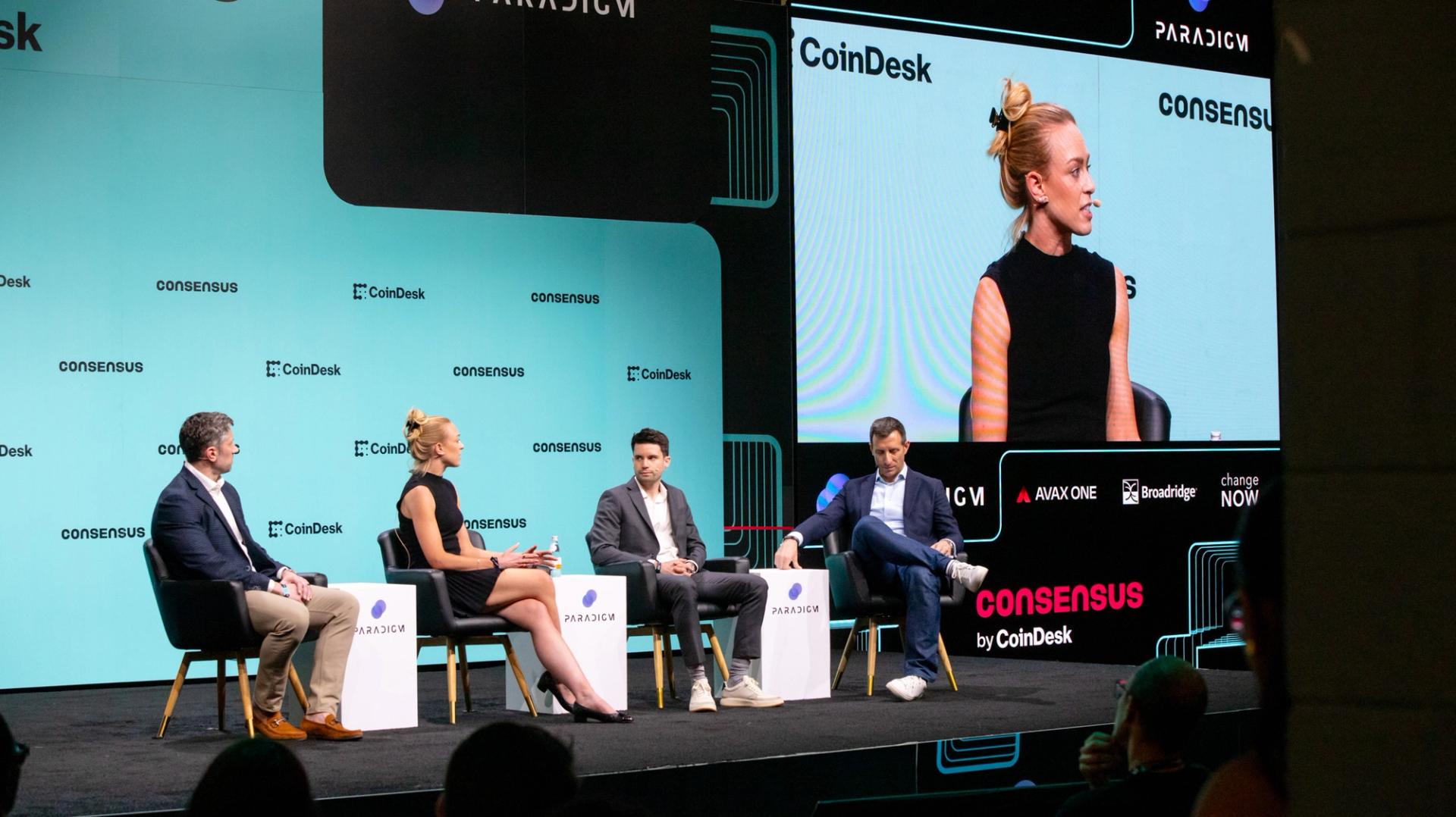
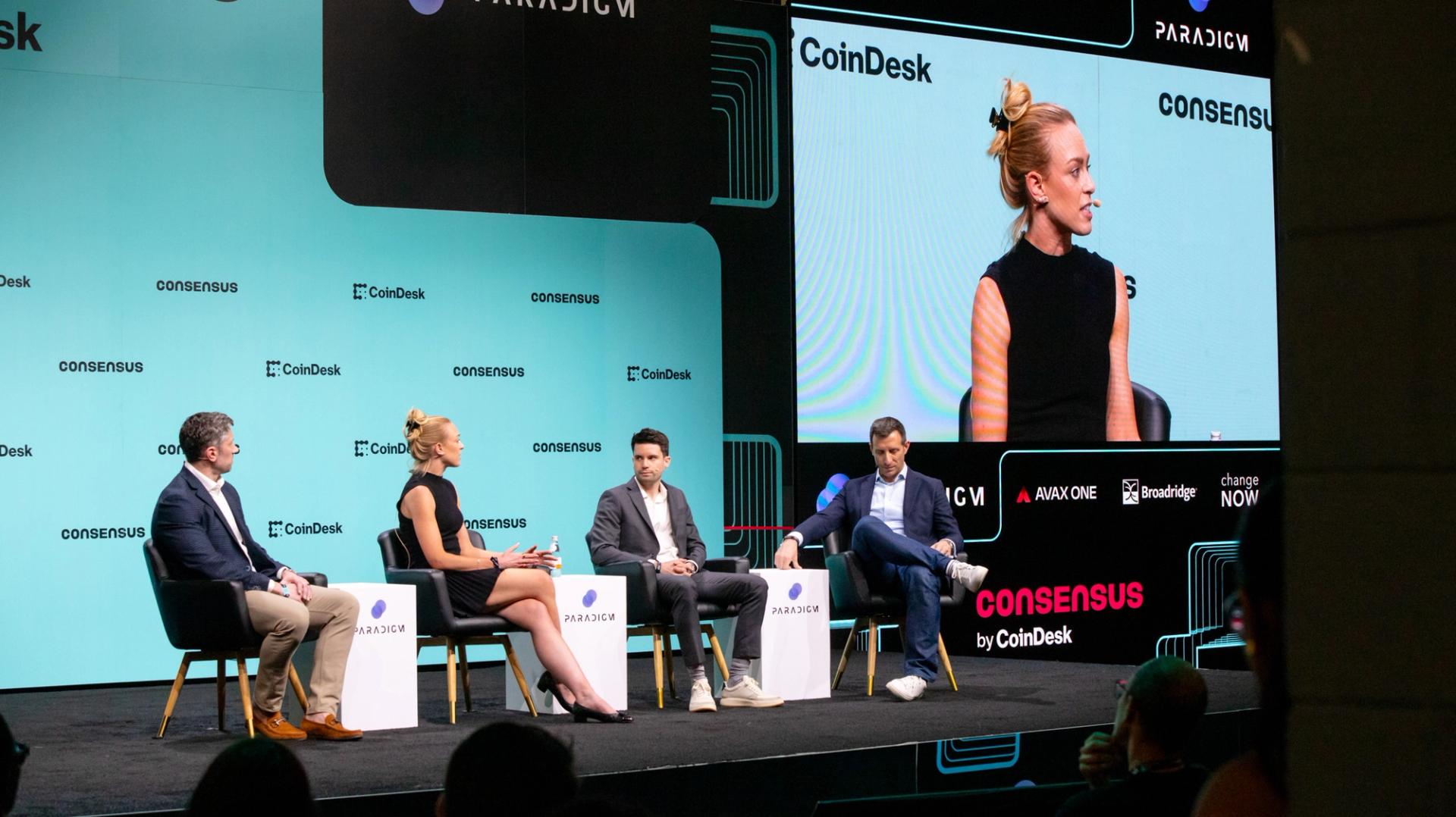
The line separating crypto derivatives from traditional finance has all but dissolved, and the two markets are now so intertwined that perpetuals, once a purely crypto instrument, could soon be as much a stock trading product as a crypto one.
That’s the core takeaway from the panel “Digital Asset Derivatives: Building Ecosystems and Establishing Opportunities” at Consensus 2026 in Miami this week. Krista Lynch, senior vice president of ETF Capital Markets at Grayscale; Mike Harvey, head of Franchise trading at Galaxy and Griffin Sears, head of derivatives at FalconX – three executives from different market lanes – all converged on that same point, with the case grounded in working infrastructure rather than hype or vision.
Harvey made a bold expression of where that convergence leads. “There has been a lot of talk about tokenized equities, and within the next two or three years, the volume of offshore traded equity perps will be greater than crypto perps,” Harvey said.
Perps, a short for perpetual futures, are a type of derivative widely used in crypto markets, especially on offshore unregulated exchanges. They are similar to traditional futures, but with one key difference: they don’t have an expiration date. As the name suggests, you can hold the perpetual contract forever.
By early 2026, derivatives made up more than 70% of global crypto trading, led by perpetual futures. Monthly volumes regularly reach into trillions of dollars. While perpetuals linked to traditional assets like oil, equity indices, and single stocks have seen a pickup in interest on platforms like Hyperliquid and Binance, particularly during periods of geopolitical volatility, their share of total activity remains limited.
Harvey expects this segment to become dominant in the coming years. His point is that the necessary infrastructure to bring equities to blockchain rails is already in place, and it doesn’t care what asset sits on or trades on top of it. Daily operations at Galaxy underscore that reality.
“As dealers, we’re the glue that holds those markets together. We have to have the ability to move natively between an offshore exchange, an onshore exchange, futures, ETFs,” he said.
In other words, the boundaries between different markets and venues have been operationally dissolved, and what remains is for volume to follow.
The regulatory groundwork facilitating convergence is more advanced than most market participants realize, Regular clarity has been the single biggest driver, specifically the Securities and Exchange Commission’s generic listing standards, which she said drew formal attention to the link between derivatives and spot ETF eligibility, Lynch said.
“Having a derivative on an underlying crypto token is kind of indicative that it should also be available in the spot format,” she added. The standards establish three paths for a protocol to become ETF-eligible in spot form, two of which run directly through derivatives. One requires a futures market that has been in existence and under a regulator’s surveillance for a defined period. The other, which Lynch acknowledged, is a “little bit hairier,” allows spot eligibility if an ETF already delivers meaningful exposure to an underlying asset through swaps or similar instruments.
“There’s a lot of continuity between those two worlds,” she said.
FalconX’s Sears pointed in the same direction throughout the panel. Crypto venues, including decentralized exchanges, are already offering contracts tied to precious metals and commodities as an extension of their perpetual offerings, he noted. But the more structural opportunity, Sears said, lies in cross-margining, where a trader can use different asset classes as collateral against each other within the same account. Talk about unlocking capital efficiency by bringing TradFi assets on blockchain rails!
“What’s really powerful for all of the participants in the space is going to be the cross-margining potential that RWA [real-world asset tokenization] can unlock,” Sears said. “And I think that benefits the industry as a whole.”
Sears expects a traditional finance asset to rank among the top five by volume on a crypto exchange. His closing call went a step further. “Not only will the trading volume grow, but I think we’re also going to see direct IPOs, direct listings of equities on chain instead of traditional venues,” Sears said. “And that’s going to be an extremely exciting moment to see billion-dollar IPOs happen completely onchain.”
The panelists also pushed back on the conventional framing of this convergence. The common assumption is that traditional finance is taking over crypto and blockchain, that is, banks, asset managers, and exchanges are adopting digital assets on their own terms.
“It’s crypto actually bringing the TradFi rails on chain and forcing all these traditional exchanges to innovate up to the level of where crypto derivatives are,” he said.
The 24/7 trading and settlement model that crypto markets pioneered is now something every major traditional exchange has publicly aspired to replicate, a sign that the innovation is flowing in one direction.
The IBIT options market offers perhaps the sharpest illustration of that speed. In under two years, options on BlackRock’s spot bitcoin ETF became a top-five ETF globally by options volume, Sears noted.
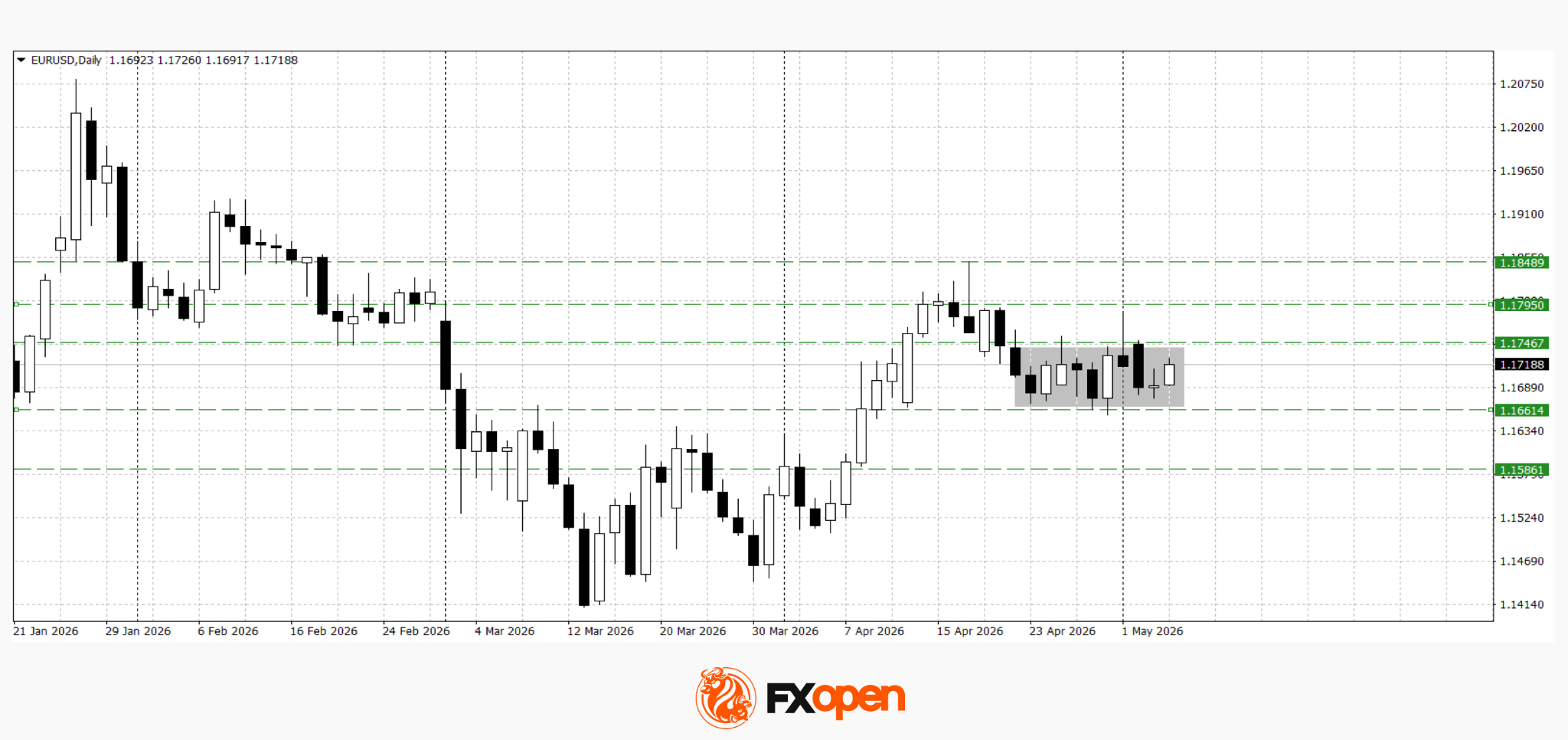
European currencies are showing restrained movement, remaining in a range-bound phase following last week’s heightened volatility. Meetings of the Federal Reserve and the Bank of England, along with comments from policymakers, triggered sharp swings: EUR/USD and GBP/USD initially declined, followed by a rapid rise that pushed them beyond previous ranges. However, this move proved to be a false breakout, and the return of prices into prior corridors points to the formation of market equilibrium after the failed attempt to break higher.
The current fundamental backdrop remains neutral following a reassessment of expectations regarding future Federal Reserve policy. Geopolitical factors have temporarily faded from focus, while market participants have adopted a wait-and-see approach, assessing prospects in the absence of clear catalysts.
EUR/USD
EUR/USD continues to trade within the 1.1660–1.1750 range, holding between key support and resistance levels. The return into the previously broken corridor reinforces the importance of these boundaries, where a zone of balance and liquidity accumulation is forming. The base scenario remains continued sideways movement until a new fundamental driver emerges.
A sustained break above 1.1750 could open the way for a test of the important 1.1800 level. Conversely, a move below 1.1660 in the coming sessions may lead to a deeper downward correction.
Key events for EUR/USD:
- today at 10:15 (GMT+3): Spain services PMI
- today at 10:30 (GMT+3): speech by Bundesbank Vice President Buch
- today at 10:55 (GMT+3): Germany services PMI
GBP/USD
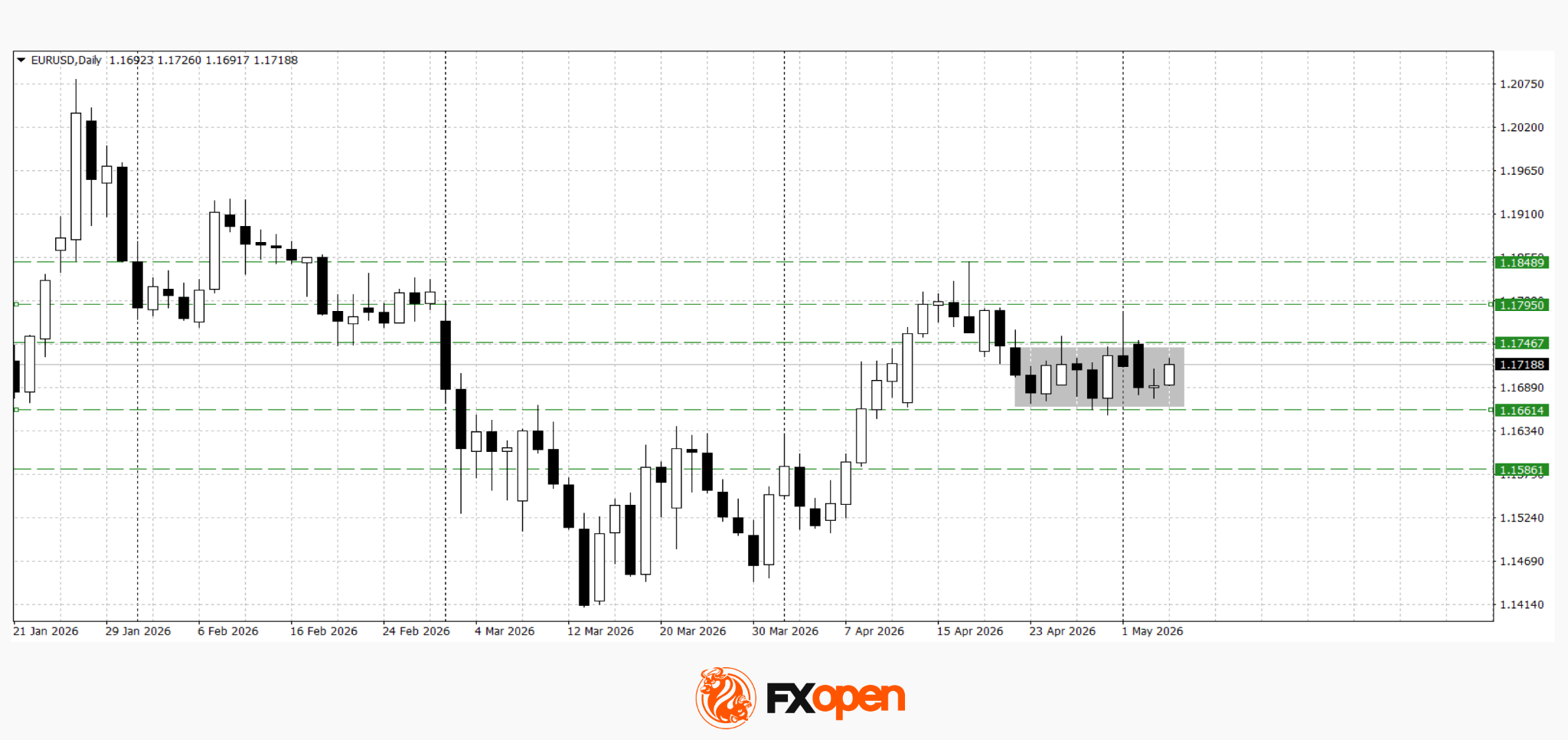
GBP/USD is forming a similar range structure, remaining within the 1.3500–1.3600 corridor after an unsuccessful attempt to break higher. The current price action reflects a balance between buyers and sellers amid the absence of a clear fundamental direction.
If buyers manage to secure a position above the upper boundary, the pair could revisit the recent high near 1.3660. A break below support at 1.3500 may trigger a decline towards 1.3460.
Key events for GBP/USD:
- today at 11:30 (GMT+3): UK services PMI
- today at 15:15 (GMT+3): US ADP non-farm employment change
- today at 20:00 (GMT+3): speech by Chicago Fed President Austan Goolsbee
Overall, the market is in a consolidation phase following a false breakout, forming a period of accumulation ahead of the next impulsive move. Upcoming macroeconomic data could act as a catalyst for a breakout from the range: depending on the outcome, this may lead either to renewed upward momentum or to a resumption of pressure on European currencies.
Trade over 50 forex markets 24 hours a day with FXOpen. Take advantage of low commissions, deep liquidity, and spreads from 0.0 pips (additional fees may apply). Open your FXOpen account now or learn more about trading forex with FXOpen.
This article represents the opinion of the Companies operating under the FXOpen brand only. It is not to be construed as an offer, solicitation, or recommendation with respect to products and services provided by the Companies operating under the FXOpen brand, nor is it to be considered financial advice.
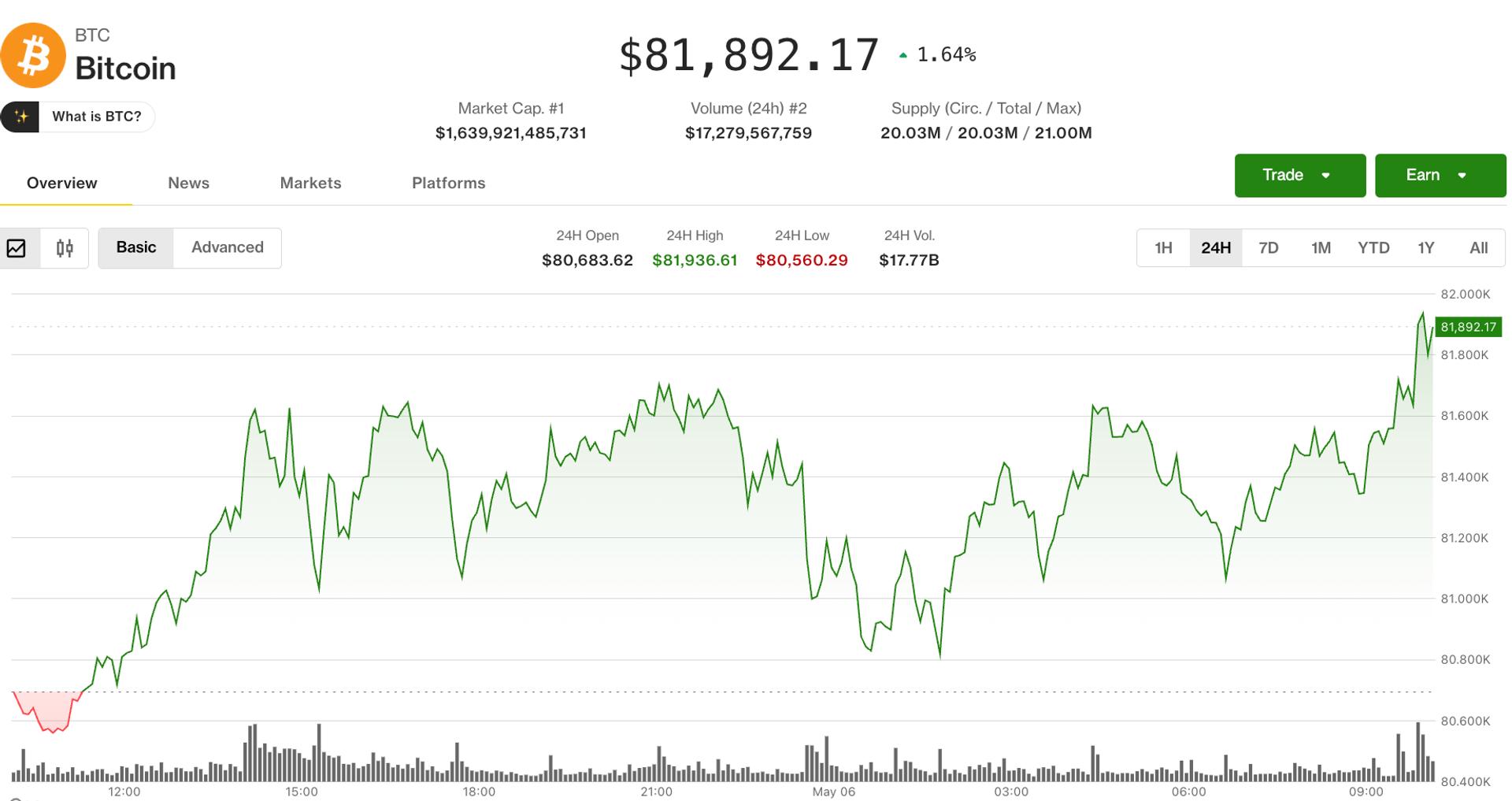
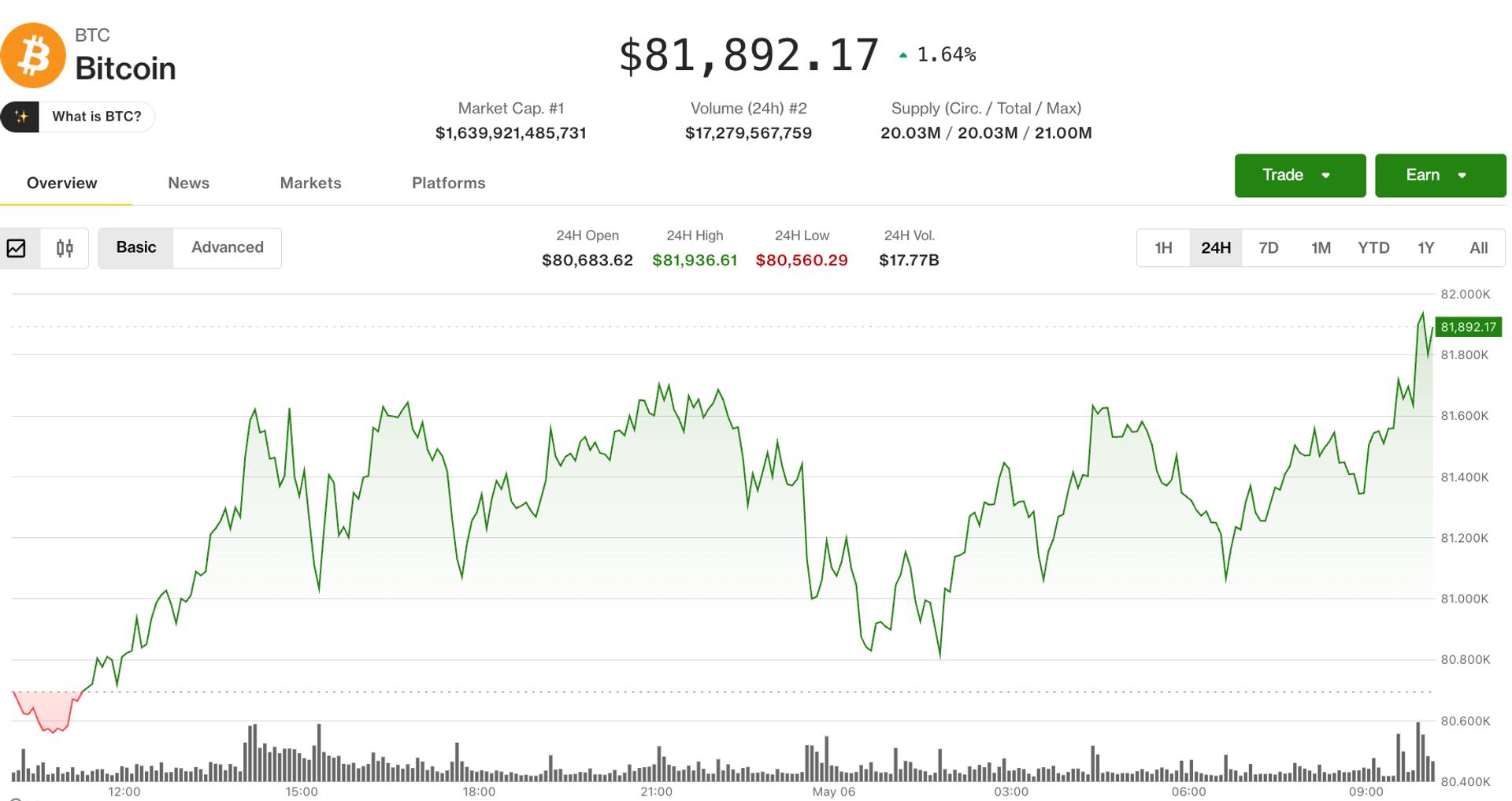
The crypto market was volatile late on Tuesday after Strategy (MSTR) chairman Michael Saylor declared that his company could sell bitcoin in order to pay dividends from the STRC instrument, prompting short-lived panic in price action.
BTC however regained the $82,000 mark during the European morning Wednesday having risen by around 1.3% since midnight UTC, spurred mainly by a weakening U.S. dollar, which is down by 0.5% over the same period.
Dollar weakness comes after U.S. Secretary of State Marco Rubio said America had “achieved its military objectives” and was “not interested in further escalation, leading to a drop in oil prices as well.
Risk assets like the crypto market were poised to react well to the news as it means the Fed could start a rate cutting cycle, as opposed to any hikes being floated at the start of the war to combat inflation.
Ether (ETH) trades at $2,380 having risen by around 0.8%, although it crucially remains below the April 17 high of $2,460 after underperforming against bitcoin.
Derivatives positioning
- Positioning in bitcoin futures remains elevated, with open interest hovering near a record high of 800K BTC. Still, perpetual funding rates remain flat to slightly positive, suggesting the market is anything but overheated or overcrowded. That’s a healthy sign of the market being led higher by steady demand, rather than speculative fervor.
- The same can be said for the ether market, where open interest has jumped to 14.5 million ETH, the highest since March 28.
- The standout among the top five is SOL, where open interest rose 6% over the past 24 hours to 61.79 million tokens. However, zooming out, that level still marks only a three-week high.
- Speaking of the broader market, TON is registering sharp capital inflows, as evidenced by a 6% surge in open interest to 213 million tokens. Open interest has hit a new peak for the third consecutive day. But once again, funding rates remain low and barely positive, pointing to continued hedging by spot buyers.
- The broader picture has flipped from bearish to bullish over the past 24 hours. As of writing, the OI-adjusted cumulative volume delta (CVD) for most coins, except HBAR and CC, is positive. This indicates that buyers are driving trading activity by placing more market orders than sellers, rather than relying on passive limit orders. This marks a sharp contrast to the previous day, when most coins had negative CVD.
- Bitcoin and ether volatility compression continues, with the ETH index, EVIV, falling to 55% earlier today, a level last seen on Jan. 31. The persistent decline supports bullish spot price action.
- On Deribit, bitcoin call options, or bullish bets, at strikes ranging from $82,000 to $115,000 were among the most traded contracts over the past 24 hours. Risk reversals, however, still show a slight overall put bias across time frames.
Token talk
- The altcoin market showed signs of strength on Wednesday with a slew of assets posting double-digit gains. Among those were popular privacy coins zcsah (ZEC) and dash (DASH), which are up by 14% and 16% respectively since midnight UTC.
- Without a clear news catalyst, it appears investor confidence is driving the rally after a period of consolidation between early February and the start of May, which led to persistent oversold conditions.
- The altcoin-dominant CoinDesk 80 (CD80) Index was the top performing benchmark on Wednesday, rising by 3.5% while the CoinDesk 20 (CD20) lagged it at around 1.5%.
- The early week rally in memecoins is now beginning to cool with capital rotating to other sectors, notably components of the CoinDesk Computing Select Index (CPUS) which include chainlink and bittensor (TAO), which are up by 3.1% and 2% respectively.
Colombia’s President Gustavo Petro said the nation’s Caribbean coast has the potential to become a Bitcoin mining hub, leveraging its surplus renewable energy to attract foreign investment and spur economic development.
In a post on X on Tuesday, Petro said the Caribbean cities of Barranquilla, Santa Marta and Riohacha could host Bitcoin (BTC) mining facilities and tap the country’s clean energy sources, following a path similar to Venezuela and Paraguay in recent years.
“It’s an immense boost to the development of the Caribbean,” Petro said, proposing that the Wayúu community — Colombia’s largest Indigenous community, which mainly resides on the Caribbean coast — could be co-owners of the project.
Bitcoin mining analysts such as Hashlabs managing partner Jaran Mellerud have said the industry can have a sizable economic impact on emerging countries looking to convert otherwise unused electricity into cash flow.
There’s also an opening for countries with low electricity costs to capture a larger share of the Bitcoin network hashrate as US commercial miners continue expanding into AI and high-performance computing in pursuit of higher-margin opportunities.
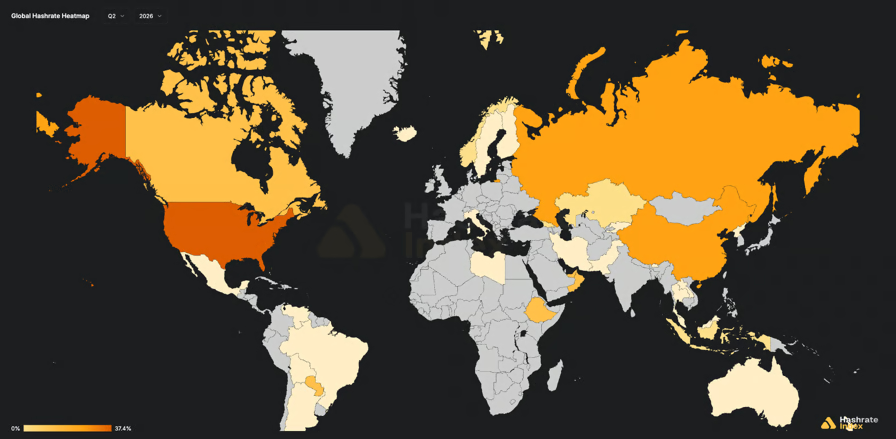
Petro’s remarks were made in response to a post from Luxor Technology’s Alessandro Cecere, who noted that Paraguay’s share of global Bitcoin hashrate has risen to 4.3% since tapping into hydroelectric energy at its Itaipu dam.
The small, landlocked South American country is now the fourth-largest Bitcoin mining country by hashrate, behind the US, Russia and China.
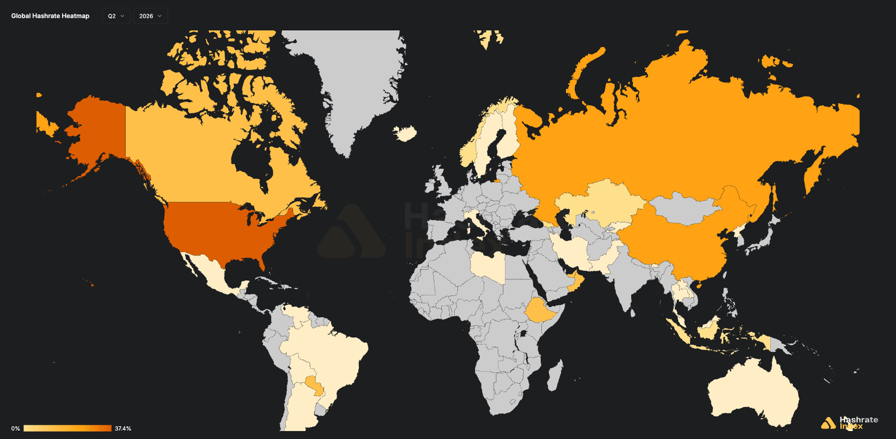
Global Bitcoin hashrate map. Source: Hashrate Index
A World Bank report published in April 2024 found that Colombia generates as much as 75% of its electricity from renewable energy — more than twice the global average.
Tapping these renewable sources would mitigate concerns flagged by Petro that Bitcoin mined with fossil fuels contributes to global warming and potential “climate collapse.”
Petro’s presidential term ends in August
Petro has served as Colombia’s president since August 2022 and has adopted a relatively neutral stance on Bitcoin and the crypto industry.
Related: K Wave Media abandons Bitcoin treasury push for AI infrastructure
Petro only has another three months to lead the Bitcoin mining initiative as his presidential term comes to an end in August.
He is not running in Colombia’s forthcoming presidential election on May 31 due to constitutional limits.
Data from prediction market Kalshi suggests that left-leaning Senator Iván Cepeda Castro and Abelardo de la Espriella, a conservative lawyer and free-market advocate, are the clear front-runners to replace Petro.
Neither candidate has made significant public comments on Bitcoin or digital assets to date.
Magazine: Bitcoin may face hard fork over any attempt to freeze Satoshi’s coins
Hut 8 stock surges 37% on $9.8 billion AI data center lease

Rajakovic Reflects on Season

OPPO Find X9 Ultra Camera Details Revealed Ahead of India Launch

Manchester United reach agreement with Casemiro over contract clause amid transfer speculation

US brings back mandatory military draft registration

Steven Gerrard disagrees with Gary Neville over ‘shock’ Chelsea and Arsenal claim | Football


-
 Business7 days ago
Tesla Officially Registers Elon Musk’s Stock: What Investors Need to Know
-

 NewsBeat3 days ago
Channel 5 – All Creatures Great and Small series 7 new post
-

 Entertainment6 days ago
Insider Claims Reason Behind Key & Peele Split
-
 Tech5 days ago
Trump’s 25% EU auto tariff breaches Turnberry Agreement that also covers semiconductors and digital trade
-
 Sports5 days ago
Paul Scholes issues Marcus Rashford reality check as agreement emerges over Man United star
-

 Entertainment5 days ago
Met Gala 2026 Rumored Guest List Is Turning Heads
-

 Entertainment6 days ago
Celebrities Who Are Attending the 2026 Met Gala Event
-

 Business7 days ago
Strait of Hormuz Remains Heavily Restricted on April 29 Amid Iran Conflict
-
Business5 days ago
Strait of Hormuz Blockade Persists Amid US-Iran Standoff, Sending Oil Prices Soaring
-
 Sports4 days ago
David Benavidez responds to team Canelo saying the fight will never happen
-

 Crypto World7 days ago
Meta (META) starts stablecoin payout to creators in Circle’s USDC on Polygon, Solana via Stripe
-
Entertainment5 days ago
New on Prime Video in May 2026 — Full List of Movies and Shows
-

 Tech7 days ago
Texas Instruments made a new flagship graphing calculator: the TI-84 Evo
-

 Sports4 days ago
Cavaliers vs. Raptors Game 6 live score, updates, highlights from 2026 NBA playoffs first-round series
-

 Entertainment4 days ago
Kylie Jenner Hit With Second Lawsuit From Ex-Housekeeper
-

 Sports6 days ago
Saudi Arabia set to withdraw LIV Golf funding after 2026 season, per reports
-

 Tech6 days ago
Mark Zuckerberg Says Meta Is Working On AI Agents For Personal And Business Use
-

 Sports4 days ago
Plane crash in Wimberley, Texas kills 5 pickleball players at tournament
-
 Sports4 days ago
IPL 2026: ‘Love you darling’- Hardik Pandya’s reaction to MS Dhoni steals the show |Watch | Cricket News
-

 Entertainment4 days ago
Young and the Restless Next Week: Cane Arrested & Matt’s Deadly New Scheme!
You must be logged in to post a comment Login