
Crypto World
Crypto firms still face full AML rules after CLARITY Act vote


The Senate’s failure to advance the CLARITY Act has left existing customer identification, anti-money laundering, sanctions, and suspicious activity reporting requirements unchanged for covered U.S. crypto businesses.
Summary
- The failed Senate vote has not altered existing Bank Secrecy Act obligations for covered crypto companies.
- Sponsor banks expect identity, wallet, and transaction controls to remain connected throughout the customer relationship.
- Self-custodial wallet users can be verified at access points without placing personal information on-chain.
- AI agents require limited, revocable authority tied to an identifiable person or company.
CLARITY Act vote leaves existing AML duties intact
Prove Global Head of Digital Assets and Sponsor Banks Fernando Castellanos told crypto.news that the bill dealt mainly with market structure and would not have replaced the Bank Secrecy Act requirements already imposed on covered crypto businesses.
Customer identification, beneficial ownership checks, sanctions screening, AML controls and suspicious activity monitoring remain in force, according to Castellanos. Crypto companies must also continue filing required reports when their systems detect activity that meets applicable reporting standards.
“The failed vote does not change the compliance obligations that already apply to covered crypto businesses,” Castellanos said.
“Market structure legislation was never going to displace the Bank Secrecy Act; it would have clarified which regulator sits on top of it.”
On Sep. 15, the Senate rejected cloture on the motion to proceed with H.R. 3633, the House version of the Digital Asset Market Clarity Act. The failed procedural vote received 49 votes in favor and 50 against, leaving the measure 11 votes below the 60 required to open debate.
The result did not amount to a final vote on the bill itself. Seven Democratic senators who opposed cloture later described the outcome as “not the end” and said they remained committed to bipartisan negotiations. No second vote has been scheduled, although the seven Democrats reopened talks as lawmakers continued to dispute ethics provisions covering elected officials and their digital asset interests.
While the bill remains unresolved, Castellanos said moving funds through blockchain networks does not remove the need to determine who controls an account or stands behind a transaction. Faster settlement and transactions that are difficult to reverse leave firms with less time to identify suspected fraud or illicit activity.
“If anything, it raises the bar,” he said. “As stablecoins and other digital assets make payments faster and harder to reverse, the window to catch a problem gets smaller.”
According to Castellanos, firms must therefore maintain identity and risk checks after onboarding instead of treating verification as a one-time step. Changes in account behavior, wallet activity, or transaction patterns can alter the risk attached to an existing customer.
Sponsor banks expect connected crypto risk controls
When sponsor banks assess a crypto company, Castellanos said they examine controls across the entire customer and transaction lifecycle. Reviews commonly cover customer and business verification, beneficial ownership, sanctions screening, fraud prevention, wallet screening and transaction monitoring.
Banks also seek evidence that each control works under actual operating conditions, rather than relying solely on written compliance policies or tests conducted before launch. Castellanos said separate tools can create blind spots when identity, wallet and transaction data do not flow into the same risk process.
“A bank needs confidence that you know who is behind an account or a wallet, and that you will see it when that risk profile changes.”
Under the proposed CLARITY framework, federal oversight would be divided between the Securities and Exchange Commission and the Commodity Futures Trading Commission. The bill’s split federal oversight would place qualifying digital commodities and registered spot-market intermediaries under CFTC supervision while preserving SEC authority over securities and related transactions.
Such a division would answer which federal regulator supervises certain assets and activities, but it would not erase separate compliance layers. State money-transmitter licensing, federal sanctions rules and existing obligations for covered financial institutions could still apply depending on a company’s services and customers.
For sponsor banks, connected controls help determine whether an account or wallet still belongs to the verified party and whether later activity matches the customer’s expected use. Castellanos said firms can reduce friction for legitimate users by combining several risk signals instead of repeatedly asking customers to complete isolated checks.
DeFi identity checks can remain off-chain
Verification for self-custodial wallets and decentralized finance does not require personal information to be written to a public blockchain, according to Castellanos. Firms can perform checks at points where regulated companies already interact with users, including fiat on-ramps, off-ramps, application interfaces and other access points.
Keeping names, identification documents and other sensitive records outside public ledgers avoids exposing information that cannot later be removed. Regulated companies can still retain the records needed to meet their obligations within controlled systems.
Castellanos said counterparties also do not need every piece of information collected during verification. A firm may only need confirmation that a user has passed an identity check, controls a stated wallet or does not appear on a sanctions list.
“Confirming a claim, rather than handing over the underlying data, is what lets firms meet their obligations without putting personal information on-chain or forcing open software to behave like a conventional intermediary.”
Such an approach separates a protocol’s open-source code from the compliance duties of regulated companies using interfaces or payment rails around it. Castellanos said the objective is not to treat every self-custodial wallet like a bank account, but to establish enough verified information around a regulated interaction to manage its identified risks.
The CLARITY proposal addressed related questions through registration exemptions for some DeFi software developers, wallet providers and validator operators. Its failure to advance means firms must continue applying existing law while Congress, the SEC and the CFTC consider how decentralized services fit within U.S. financial rules.
AI agents require limited and revocable authority
Identity controls become more complex when an AI agent opens an account, trades assets or initiates a payment for a person or company. Castellanos said institutions must establish who controls the agent, who approved a specific action, and what the software is permitted to do.
Each question requires a separate check. Verifying the human or business behind an agent establishes accountability, while an authorization process determines whether the agent has permission to initiate the transaction under review.
According to Castellanos, such authority should be limited in scope, bound to a set period, and capable of being withdrawn. Institutions should verify permission when a transaction occurs instead of relying on an approval granted earlier, especially when software can move funds without fresh human input.
The issue has become more immediate as U.S. crypto platforms add tools for machine-directed finance. In June, the Coinbase for Agents launch allowed authorized software agents to trade crypto, manage portfolios, make payments and perform financial tasks through user accounts.
Coinbase said users can set rules for portfolio rebalancing, trade execution and position management. Its x402 protocol also allows agents to pay for data, research, application programming interfaces and computing services without direct human involvement in each payment.
For financial institutions supporting similar services, Castellanos said authorization must connect the transaction to the responsible human or company. The record should identify the principal, the agent, the approved action and the limits applied when the transaction was initiated.
“As agents begin interacting with financial systems and moving money autonomously, there needs to be a clear, verifiable chain connecting the person, the business, the agent and the transaction,” he said.
Castellanos said institutions will need to move from verifying a customer once to continuously checking who has authority to act and whose funds or account an AI agent is using.


Monica Caldas says she likes “living on the edge.” She’s tasked with rewiring a century-old company for what she calls “the intelligence era.” As EVP and global CIO at Liberty Mutual, her core idea is doing two hard things at once, modernizing old systems while rebuilding around AI. That means embedding AI across core work like underwriting and claims, with more than 100 capabilities already in production.
In May, Liberty became the first insurer to launch a ChatGPT auto-quoting app, part of a bigger bet on “agentic commerce,” where buying insurance shifts from filling out forms to simply having a conversation. “I love to solve big, hairy things with tech,” Caldas says. Her drive started early. She arrived in the U.S. from Portugal in third grade without knowing a word of English and became the first in her family to go to college.





Join Our Telegram channel to stay up to date on breaking news coverage
Strategy bought 950 bitcoin for roughly $75.7 million last week and paid for it from cash on hand rather than new stock sales, according to an 8-K filing dated Sept. 21. The company, formerly known as MicroStrategy, now holds 846,000 BTC, its highest reported total since June.
The filing covers purchases made between Sept. 14 and 20 at an average price of $79,670 per coin. Across all holdings, Strategy has spent about $63.8 billion, an average of $75,416 per bitcoin.
A change in how the buying is funded
What marks this filing out is the funding. Strategy’s recent accumulation runs have typically been financed through at-the-market equity offerings, selling new shares to raise cash. This time the company said the purchases came from its USD Cash reserve, which stood at $1.05 billion as of Sept. 20. A second bucket, the USD Reserve, held $5.04 billion on the same date.
The same filing shows Strategy repurchased 1,771,238 shares of its STRC preferred stock for $174 million, and used $57.4 million of the USD Reserve to pay preferred dividends and interest on outstanding debt. It reported no bitcoin sales under its at-the-market offering during the week.
The shift matters because it suggests the company is no longer leaning on new share issuance to fund the treasury, after a stretch in which its preferred stock traded below par and reserve money went to servicing it. The filing discloses the buyback but not its rationale.
Mark-to-market figures from the week put the holdings at around $71.9 billion, implying roughly $8.1 billion in paper gains. Those numbers move with bitcoin’s price and should be read as a snapshot, not a balance.
846,000 BTC is more than 4% of bitcoin’s 21 million supply cap. The company’s reported peak was 847,363 BTC in June, before it sold 1,363 coins.
Join Our Telegram channel to stay up to date on breaking news coverage

Accenture works with many Fortune 500 companies, helping them deploy AI without becoming locked into a single model or platform. The company has already generated billions of dollars in generative AI bookings, while Guan says deployments for clients like the Australian bank Westpac have cut some workflows from months to days.
Now she’s tackling the cost of scaling those systems. Accenture has recently focused on tokenomics, arguing that firms incorrectly default to the most powerful—and expensive—models even when the work doesn’t require such heft. “Only about 20% of enterprise workflows actually deserve frontier models,” she says.

The U.S. Commodity Futures Trading Commission (CFTC) has issued a warning to regulated exchanges about “mention markets,” a type of prediction contract that settles based on whether a person says or does something. In a Tuesday advisory, the regulator said these contracts carry a heightened risk of manipulation and should only be listed in limited circumstances under the Commodity Exchange Act.
The guidance comes as prediction market activity draws growing regulatory scrutiny, particularly after enforcement actions tied to allegations that traders benefited from non-public information. For exchanges weighing whether to list event contracts tied to an individual’s specific words or conduct, the CFTC’s letter lays out a framework for assessing settlement verifiability and oversight readiness.
Key takeaways
- The CFTC says “mention markets” present a heightened manipulation risk because settlement depends on a person’s discrete conduct, which may not be verifiable or independently generated.
- The commission advised that there are only “limited circumstances” where mention markets can be listed consistently with the Commodity Exchange Act.
- Exchanges should evaluate oversight capabilities to detect manipulation and whether settlement criteria are independently verifiable.
- External pressure that could influence the subject’s conduct—and any related obligations the subject may have—are part of the CFTC’s review.
- The warning follows enforcement involving prediction contracts tied to political speeches, underscoring the regulator’s focus on information advantage and settlement conduct.
Why “mention markets” drew a regulator warning
In its advisory, the CFTC’s Division of Market Oversight said mention markets—contracts based on whether an individual will say certain words, attend or appear at an event, or interact with another person—may be inconsistent with the Commodity Exchange Act except in narrow cases.
The regulator’s central concern is that the settlement mechanism relies on conduct that can be neither independently generated nor externally verifiable. According to the CFTC, that structure “presents a heightened risk of manipulation” because it can make it easier for market participants to affect outcomes or profit from information advantages related to someone’s future actions.
The CFTC press release about the advisory is available via the regulator’s website: https://www.cftc.gov/PressRoom/PressReleases/9302-26.
Enforcement history is shaping the regulator’s approach
The CFTC’s warning arrives amid a string of allegations and cases where traders were accused of using privileged information to profit in prediction markets. One prominent example cited in the report involves a former White House teleprompter operator who was ordered last month to return $107,539 in profits and pay a $65,000 civil penalty related to contracts tied to then-President Donald Trump’s speeches.
Earlier coverage from Cointelegraph discussed that case in the context of how politically tied prediction contracts can intersect with information access. See: https://cointelegraph.com/news/trump-teleprompter-operator-made-100k-betting-kalshi-markets-tied-to-speeches-abc.
By emphasizing the risks tied to “discrete conduct” and limited verifiability, the CFTC’s guidance signals that settlement design matters as much as trading behavior. Even if a contract’s price action reflects legitimate market views, the regulator appears concerned when the contract outcome can be influenced—or when market participants can act on information about what a person will do or say before that conduct becomes public.
What exchanges are expected to consider
According to reporting by CNBC, the CFTC letter outlines four factors that exchanges listing mention markets should consider:
- Whether there are adequate oversight measures in place to detect manipulation.
- Whether the words or actions used for settlement are independently verifiable.
- Whether external pressure could influence the subject’s conduct, potentially affecting whether the event occurs as expected.
- What outside obligations the subject of the mention market may have, which could shape their behavior or the likelihood that the contract condition will be met.
This checklist frames mention markets not just as a novel product category, but as a compliance and risk-management challenge. Exchanges that previously treated these contracts as straightforward event bets may now need to demonstrate stronger controls around how outcomes are determined and how manipulation could realistically occur.
CFTC leadership ties the advisory to “regulatory clarity”
CFTC Chair Mike Selig publicly welcomed the guidance in an X post on Tuesday, saying that “regulatory clarity drives sound markets.” In the post, he referenced staff reminding designated contract markets (DCMs) of their obligation to list only contracts that are not readily susceptible to manipulation.
The chair’s post is available at: https://x.com/ChairmanSelig/status/2102500746834874859?s=20.
While the advisory is addressed to regulated entities, the implications extend across the broader prediction market ecosystem. As more contracts are designed around human behavior—rather than purely observable, externally confirmed outcomes—platforms may face tighter scrutiny on whether the settlement criteria can be verified without ambiguity and whether market structure could incentivize gaming of the subject’s conduct.
What to watch next for prediction markets
Exchanges considering mention markets will likely need to document how their oversight can identify manipulation and how settlement conditions can be verified. The most immediate uncertainty for market participants is how broadly regulators will interpret the “limited circumstances” standard—particularly as more politically or socially contingent contracts come under review.
Crypto World
CFTC says prediction markets’ ‘mentions’ contracts present a higher risk of manipulation
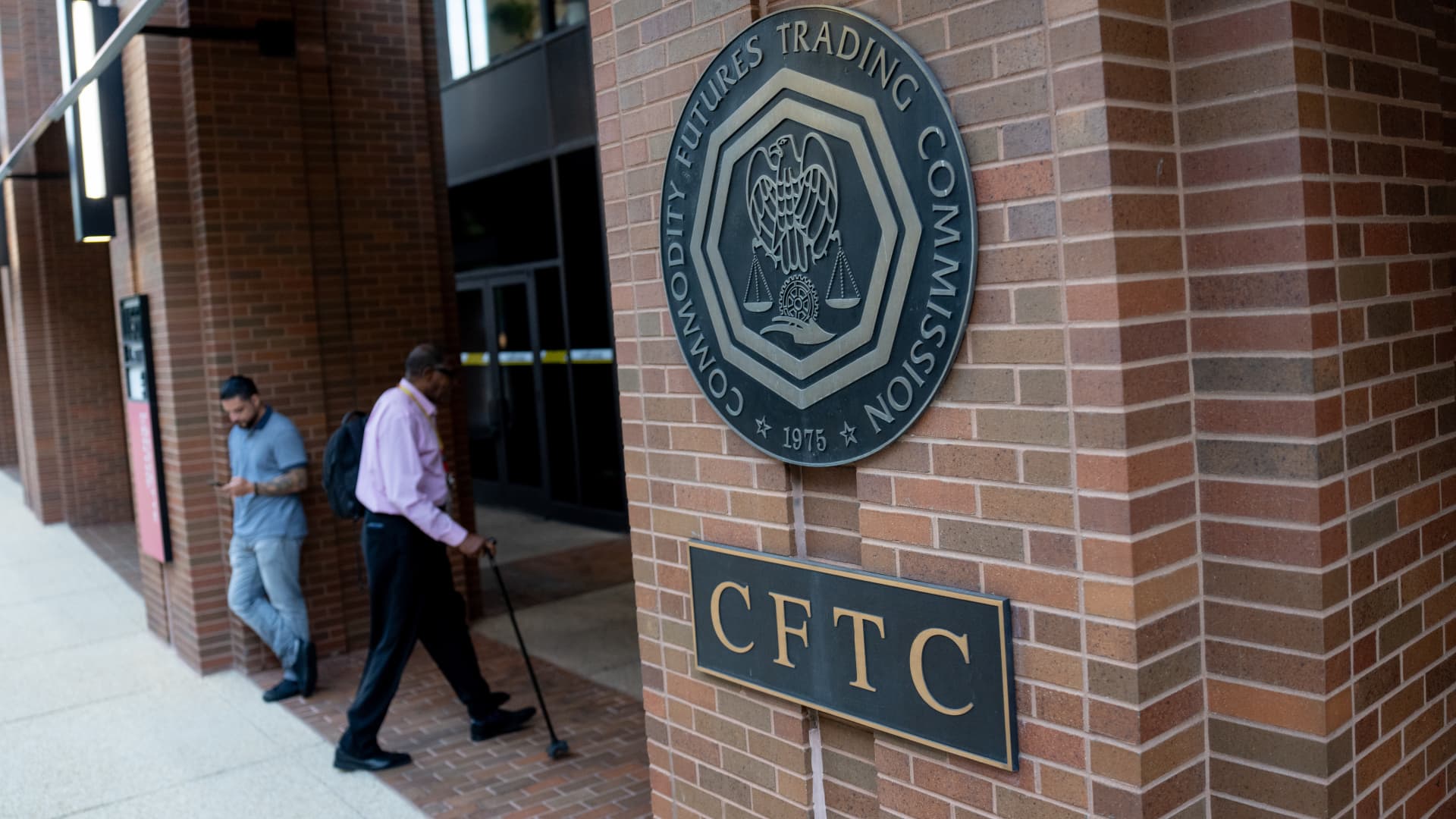
The Commodity Futures Trading Commission advised some of its regulated entities on Tuesday that prediction markets’ “mentions” contracts are at greater risk of manipulation.
In a press release announcing the letter it sent to designated contract market entities, the CFTC said that the contracts are more susceptible to exploitation “because their settlement turns on the discrete conduct of a person that may be neither independently generated nor externally verifiable.”
The letter noted that the agency was not creating new obligations that regulated exchanges need to follow, but rather advising entities on when mention markets may be listed consistent with the Commodity Exchange Act, the law that governs the assets that the CFTC regulates.
Mention markets — which are made up of contracts that ask traders what specific words will be used in a speech, a corporate earnings call or during a television broadcast — have come under scrutiny by the CFTC. CNBC reported in August that the agency was conducting an internal review into the contract type, and that platform Kalshi pulled its sports-related mention markets in response to the inquiry.
Kalshi is one of the few U.S. regulated platforms that features mention markets. Its chief rival, Polymarket, only features them on its international exchange, which is not regulated by the CFTC.
“We’ve addressed this guidance based on a prior discussion with the CFTC,” Kalshi spokesperson Elisabeth Diana said in a statement.
Mention markets also generated headlines in July after news reports that a longtime teleprompter operator for President Donald Trump profited off of trades on Kalshi related to contracts on mention markets that were tied to the president’s statements. Gabriel Perez, the teleprompter operator, settled with the CFTC in August and was forced to pay a $172,539 fine for insider trading on a prediction market.
In the letter, the CFTC advised that exchanges listing mention markets should consider four factors: what outside obligations the subject of the mention market may have; external pressure that could influence the subject’s speech or conduct; whether the words or actions used for settlement are independently verifiable; and whether there are adequate oversight measures in place to detect manipulation on the contracts.
The CFTC added that it encourages exchanges to engage with the agency’s division of market oversight while in the early phases of designing mention market contracts on how to mitigate manipulation risks.
Disclosure: CNBC and Kalshi have a commercial relationship that includes customer acquisition and a minority investment.



Artificial intelligence is getting better at doing more than answering questions. AI systems are now helping with coding, research, analysis and other tasks that were once handled almost entirely by people. That raises a new question: what happens when AI starts playing a bigger role in building the next generation of AI?
OpenAI is now calling for international standards to help answer that question. In a September 21 post titled “Building standards for the next phase of AI,” OpenAI proposed a US-led international effort to create common technical standards for frontier AI. The company says these standards could help countries measure AI capabilities, evaluate risks, test safeguards and report serious incidents using more consistent methods.
Key Takeaways
- OpenAI wants international standards for evaluating frontier AI.
- The proposal covers capabilities, risks, safeguards and incident reporting.
- OpenAI says fully autonomous recursive self-improvement is not happening today.
- The company wants human control to remain central as AI becomes more capable.
- Existing AI safety organizations could help develop common technical standards.
Openai Wants a Common Framework for Frontier AI
The basic idea is fairly simple. It is not necessary for each country to create an entirely different methodology for evaluating the dangers posed by advanced AI. According to OpenAI, standardizing technical approaches can provide nations, researchers and the AI community an effective way to assess their increasingly sophisticated AI. This becomes all the more relevant when AI-related incidents happen across borders.
The company is not proposing a single global AI law. Instead, it wants countries to develop compatible standards that governments can later decide how to use within their own regulatory systems. This difference is significant since the suggested standards do not immediately become requirements for licensure or certification for all artificial intelligence technologies. Rather, governments retain the power to determine how the standards will apply within their jurisdictions.
Recursive Self-Improvement Is Part of the Conversation
One of the more interesting parts of OpenAI’s proposal is its discussion of recursive self-improvement (RSI). The concept describes a future in which AI systems could increasingly help researchers develop more capable AI systems. In simple terms, AI could become part of the process of improving AI itself.
That could potentially speed up AI research. But it also creates a difficult safety question: how much human oversight should remain in the loop if AI systems become heavily involved in developing future models?
OpenAI says fully autonomous recursive self-improvement is not happening today. It also argues that such a direction should not be pursued unless it can be done safely while maintaining human control. That makes evaluation and safety testing more important as AI systems become capable of handling increasingly complex research and development tasks.
AI Safety Standards Could Become More Important
OpenAI also points to existing AI safety organizations and networks around the world as potential building blocks for this effort. The company specifically references AI safety institutes and related organizations across countries including the US, UK, Canada, France, Germany, Japan, South Korea, Singapore, India, Kenya and Australia.
Rather than every country developing its own completely separate technical approach, OpenAI wants these groups to work toward standards that can complement one another. The proposal also calls for participation from AI developers, researchers, academics and independent technical experts. OpenAI says the standards should be designed around technical measurements rather than the interests of a particular company or country.
Why This Matters
The timing is notable. AI companies are building systems that can increasingly perform multi-step tasks with less direct human input, while governments are still working out how to regulate the technology.
Reuters reported that OpenAI wants the United States to take a leading role in developing international technical standards for advanced AI. The bigger challenge may be getting countries and companies to agree on exactly what those standards should measure and how they should be applied.
For now, OpenAI’s proposal is focused on creating a common technical foundation before frontier AI becomes even more capable. As AI starts doing more of the work involved in developing AI itself, having a shared way to measure capabilities, risks and safeguards could become an increasingly important part of the conversation.

Although AI is fundamentally changing cybersecurity, Bartley Richardson thinks the hackneyed IT refrain still rings true: “The best security is the security you don’t have to think about.” Richardson, a former Nvidia engineer who joined cybersecurity company CrowdStrike in June as its chief AI and autonomous systems officer, says his title perfectly reflects his belief that once consumers trust AI, they’ll stop regarding it as “AI.” Instead, it will be just another autonomous tool making life better in the background, like a grammar check in word processing.
Richardson is shepherding that transition as leader of CrowdStrike’s new Cyber Superintelligence Lab. An AI research lab dedicated to building autonomous cybersecurity systems, its first release is SafeMind, an agentic system that combats AI attacks by pairing an offensive cybersecurity model with a defensive one, creating an autonomous loop of learning and remediation. “An attacker has to be right once, but the defender has to be right all the time,” Richardson says. “We’re giving the advantage back to the defender, and we’re doing that with … better automation.”

Trump administration removes around 760,000 Obamacare enrollments

Monica Caldas Is one of TIME’s 2026 Executives of the Year: Tech and Data

Raphael Onyedika free to Join Nigeria Squad after Shoulder Injury Scare




-

 Fashion4 days ago
Weekend Open Thread: Talbots – Corporette.com
-

 Tech2 days ago
Researchers escape OpenAI Codex sandbox to run commands on host
-

 Crypto World4 days ago
Circle launches Arc Studio AI agent for building onchain apps
-
 NewsBeat4 days ago
Trump says US has reached an agreement to take permanent control of Greenland’s security
-

 Crypto World2 days ago
Who Needs CLARITY Anyway? ARB Could See 70X Increase: Hodler’s Digest
-

 Crypto World4 days ago
Bitcoin price breaks channel as RSI climbs to 63
-

 Crypto World4 days ago
Trading Bitcoin on Robinhood? Why 2% Spread Has Traders Worried
-

 Crypto World6 days ago
US Charges Robinhood Engineers Over Crypto Listing Trades
-

 Crypto World7 days ago
What Is the Status of the U.S.-Iran Peace Talks? Here's What Both Sides Are Saying
-

 Crypto World5 days ago
Mortgage and refinance interest rates today, Thursday, September 17, 2026
-

 Crypto World4 days ago
World Money launches in 150+ countries with Stripe
-

 Business2 days ago
Analog Devices (ADI) Bets $1.35 Billion on Chips that Let Machines Think for Themselves
-

 Crypto World5 days ago
Silver prices recover quickly, hitting weekly high today
-

 Entertainment7 days ago
Big Brother Update: Melody Explodes at Drew as Illness Sweeps BB28 House
-

 Tech5 days ago
GPT-6 Astra Reached the Nether in Minecraft, Lost Its Stash to a Creeper, and Farmed Potatoes for Hours
-
 NewsBeat4 days ago
US was ‘on brink of war’ with China over false AI report of nukes moving in Middle East
-

 Crypto World2 days ago
Coinbase, Robinhood, Circle Seen as Tokenized-Stock Winners
-
 Crypto World2 days ago
Bitcoin price holds above $81K as key catalysts line up
-

 Business7 days ago
Federal Reserve expected to hike interest rates 25 basis points at FOMC meeting
-

 Business4 days ago
Newsom accelerates AI oversight, advances ‘kill switch’ plan
You must be logged in to post a comment Login