

Crypto World
Crypto Meets Commodities: OKX and ICE Launch Round-the-Clock Oil Perpetual Futures


Key Highlights
-
Intercontinental Exchange and OKX introduce perpetual futures contracts for Brent and WTI crude oil with 24/7 availability.
-
These contracts enable digital asset traders to gain oil market exposure without dealing with expiration dates.
-
ICE supplies regulated pricing benchmarks while OKX handles crypto-based margin and platform distribution.
-
Initial rollout targets markets outside the United States to comply with current regulatory frameworks.
-
This collaboration represents a significant merger of conventional commodity markets with digital asset trading infrastructure.
Digital asset platform OKX has forged an alliance with Intercontinental Exchange to introduce perpetual futures contracts anchored to international oil pricing standards. These instruments will reference ICE Brent Crude and WTI Crude benchmarks, facilitating uninterrupted trading access for cryptocurrency market participants. Unlike traditional futures, perpetual contracts enable traders to hold positions without expiration constraints, while funding mechanisms maintain price correlation with underlying assets.
This strategic alliance merges ICE’s established regulated futures pricing infrastructure with OKX‘s cryptocurrency margin trading capabilities and global distribution network. The oil perpetual products will initially be available in jurisdictions where the exchange currently maintains regulatory authorization. This framework deliberately separates US-regulated pricing benchmarks from international crypto trading activities to satisfy compliance obligations.
Industry analysts highlight that this agreement reinforces ICE’s strategic relationship with OKX. Intercontinental Exchange maintains an equity position in OKX and obtained board representation through their comprehensive partnership arrangement. This development enables ICE to generate revenue from benchmark licensing while simultaneously extending its reach into crypto-native trading frameworks.
Contract Mechanics and Trading Access
These instruments function as non-expiring swap agreements that derive their value from ICE’s Brent and WTI benchmark prices. Funding rate mechanisms are incorporated to maintain pricing alignment between crypto markets and conventional futures exchanges. The product launch will initially exclude US markets to ensure adherence to applicable jurisdictional regulations.
Both retail and institutional market participants obtain perpetual exposure to globally recognized oil pricing standards. The perpetual contract structure facilitates around-the-clock market access, capitalizing on cryptocurrency market liquidity and existing user infrastructure. Through ICE pricing integration, OKX guarantees that contracts maintain fidelity to recognized market benchmarks.
The cryptocurrency exchange will oversee margin calculations, settlement processes, and user accessibility for these perpetual instruments. This arrangement grants traders commodity benchmark exposure without requiring physical asset custody or delivery. The approach corresponds with emerging patterns where digital asset venues provide derivatives linked to traditional commodities.
Market Impact and Future Development
Intercontinental Exchange and OKX are establishing a framework for incorporating tangible commodities into cryptocurrency markets. These perpetual instruments extend regulated benchmark utilization into digital asset trading environments. The continuous trading capability accommodates crypto leverage frameworks that users already understand and utilize.
This partnership creates pathways for accessing tokenized equity products and futures contracts pending regulatory clearance. ICE intends to introduce US-regulated cryptocurrency futures referenced to OKX spot market pricing. OKX platform users will gain access to ICE’s benchmark-linked instruments across international markets, significantly broadening market participation opportunities.
The perpetual futures offering has potential to capture high-frequency traders pursuing commodity market exposure. This initiative demonstrates the growing convergence between established commodity trading venues and cryptocurrency platforms. It establishes foundational infrastructure for deeper integration of regulated financial instruments within digital asset marketplaces.




Tanya Denisova, chief operating officer of Robinhood Crypto, is leaving the firm, according to two people with knowledge of the matter.
Denisova had been employed by the popular trading platform for over five years, according to her LinkedIn profile.
Neither Robinhood nor Denisova responded to requests for comments.
The departure comes amid Robinhood missing its first-quarter earnings and revenue estimates, mainly due to weaker crypto trading activities. Crypto-related revenue, one of Robinhood’s biggest sources of transaction income, fell 47% year over year to $134 million, down from $252 million. The drop comes as the company works to reduce its reliance on crypto market swings and reposition the business beyond price-cycle volatility.
Robinhood enables users to trade stocks, exchange-traded funds (ETFs), options, and cryptocurrencies through a mobile-first app. The company also offers retirement accounts, cash management services, and market insights designed to simplify investing and broaden access to financial markets.
The firm has expanded its presence in crypto by offering commission-free trading for major digital assets, including bitcoin , ether (ETH), solana (SOL), and , directly within its app.
The company also provides crypto wallets, onchain transfers, staking services in select markets, and educational tools aimed at newer investors. As part of its broader strategy to bridge traditional finance and digital assets, Robinhood has continued to grow its crypto offerings internationally while positioning itself as a simple, low-cost entry point into the crypto market
Read more: Robinhood stock falls 8% after big earnings miss due to weak crypto trading revenue

The exploiter who drained the Verus-Ethereum bridge of over $11 million has returned $8.5 million to the project’s team, while keeping $2.8 million as a white-hat bounty.
This comes barely a day after the Verus community and its developers offered the reward in exchange for the hacker meeting a set of terms.
Hacker Accepts $2.8 Million Bounty
The incident took place on May 17, with the hacker taking advantage of a missing validation step on one of its cross-chain bridge contracts, which allowed them to drain approximately 103.6 tBTC, 1,625 ETH, and 147,000 USDC. Following the hack, the project’s team decided to stop its block-producing nodes to prevent further transfers and issued an emergency patch.
Verus later said on social media that it was offering the Ethereum bridge exploiter a 1,350 ETH bounty in exchange for returning 4,052 ETH within 24 hours, adding that it would stop any investigations and not pursue charges if the conditions were met.
“If you return a total of 4052.4 ETH to the address 0xF9AB…C1A74 within 24 hours specified above, we will understand that as your agreement to these terms, and we will uphold our stated agreement to cease further investigation of you,” wrote the team.
Blockchain security firm PeckShieldAlerts has since reported that the hacker transferred 4,052 ETH back to the team’s address, recovering 75% of the stolen funds while retaining a 25% bounty of 1.350 ETH. However, Verus has yet to issue a formal acknowledgment of the recovery on their platforms as stipulated in their initial statement.
Developer Flags Possible AI Use in Hack
The update comes as the crypto sector is dealing with a rise in the number of bridge exploits, with the Verus incident being the eighth of this kind this year. According to PeckShield, attackers have made off with a total of $328.6 million from several cross-chain protocols like THORchain, ZetaChain, KelpDAO, HyperBridge, CrossCurve, Squid Router, and IoTeX.io as of Mid-May.
But the Verus case is notable because the complexity of the exploit suggests hackers are using AI to help execute it. The protocol’s lead developer, Mike Toutonghi, explained in an article how the technology might have helped them understand the system’s rules closely enough to design transactions that bypassed checks and tricked the Ethereum contract into accepting the malicious cross-chain transfer.
Elsewhere, Vitalik Buterin shared insights on how AI can still be used to strengthen security instead of breaking it. Responding to community concerns about the technology creating non-stop exploitation opportunities, the Ethereum co-founder countered by saying that AI-assisted formal verification could be used as a strong defense against security failures in the crypto industry.
The post Verus Bridge Exploiter Returns $8.5M, Keeps $2.8M as Bounty Reward appeared first on CryptoPotato.


Seasoned crypto investor Kevin Warsh took his oath as the 17th Chair of the world’s most powerful central bank this morning. President Donald Trump presided over the oath at the White House, the first such ceremony there since Alan Greenspan’s initiation in 1987.
Crypto investors are excited.
Warsh is 56 years old and disclosed roughly $190 million worth of assets earlier this year, including stakes in more than 20 crypto projects.
Jerome Powell, his predecessor, had very little interest in crypto and no disclosed crypto investments.
Warsh’s Office of Government Ethics disclosure from April, in stark contrast, was 69 pages long. It cataloged joint holdings with his wife, Estée Lauder heiress Jane Lauder.
Two positions in Stanley Druckenmiller’s funds were worth more than $50 million apiece.
A diversified investor, Warsh’s crypto exposure is smaller by allocation yet broad in scope. His disclosure names Solana, Optimism, dYdX, Compound, Polychain, Polymarket, DeSo, and Flashnet. Warsh holds most of these positions through the venture vehicles.
He’s committed to divest any conflicting positions and will also accept a one-year cooling-off period to ensure his investment management practices are long-term oriented.
Crypto enthusiasts interpreted his portfolio as a resume.
Warsh’s Senate confirmation vote was a slim 54-45, the narrowest margin for an incoming Fed chair since at least the 1970s.
Fascinating Kevin Warsh quotes about crypto
Not only because of his extensive crypto portfolio, fans point to Warsh’s pro-easing and pro-liquidity stances as bullish catalysts for inflows into the crypto sector.
For example, at his April 21 hearing before the Senate Banking Committee, Warsh blamed pandemic-era inflation on “the fatal policy error going back four or five years,” a direct attack on Powell.
He’s also called inflation a “choice” and described the Fed’s overgrown balance sheet, which once peaked near $9 trillion, as “fiscal policy” in disguise.
Specifically on the topic of crypto, Warsh said in a May 2025 Hoover Institution interview that bitcoin “can often be a very good policeman for policy.”
He floated similar logic in a 2018 Wall Street Journal (WSJ) op-ed, comparing the asset to gold.
In that same Hoover Institution interview, Warsh continued, “I think of [bitcoin] as an important asset that can help inform policymakers when they’re doing things right and wrong.”
No US dollar CBDC (except, maybe, for wholesale?)
Like most senior members of the US government, Warsh is generally opposed to a US dollar central bank digital currency (CBDC).
In response to a question by Senator Bernie Moreno in April 2026 as to whether the Fed could legally issue a retail CBDC, Warsh replied, “they don’t have the right and I think it would be a bad policy choice.”
He further agreed to a follow-up question that he would oppose any exploration of a CBDC to the full extent of his power as Fed chair.
Interestingly, in a 2022 WSJ op-ed, Warsh advocated for a digital dollar for wholesale transactions in order to remain competitive with China.
Indeed, a direct quote from Warsh from 2022 remains in print. He said, “The US should announce the essential design features of a digital dollar to be used exclusively for wholesale transactions,” which is apparently superseded by his April 2026 promise above.
Read more: Crypto wants Trump to replace Jerome Powell with a pro-stimulus Fed chair
What the crypto industry expects from Kevin Warsh
During the early days of Warsh’s term, crypto traders are hopeful that he’ll pump their bags.
Obviously, they hope he’ll quickly cut the Fed’s benchmark interest rate to ease liquidity conditions and encourage speculative inflows.
Moreover, stablecoin issuers such as Standard Custody & Trust are hopeful that Warsh will approve their Fed master account banking applications. All stablecoin issuers also hope he holds to his anti-CBDC promise, so that they can continue to compete in the marketplace with their private US dollar proxies.
Prediction markets are also interested in anything Warsh can do to keep regulators from impeding their growth.
Today, the same morning Trump swore Warsh in, the House Oversight Committee opened an insider-trading investigation into Polymarket and Kalshi, demanding documents from Shayne Coplan and Tarek Mansour.
Warsh’s own divested Polymarket investment still sits in the disclosure record. Perhaps he could make some phone calls to calm things down.
The new US central bank chairman will probably spend his first month telling crypto fans that his Fed will be smaller, friendlier, and less inflationary than under Powell. Time will tell if he follows-through on any of their aspirations.
Got a tip? Send us an email securely via Protos Leaks. For more informed news and investigations, follow us on X, Bluesky, and Google News, or subscribe to our YouTube channel.


Kalshi is backing a new advocacy group to fight the gaming lobby over prediction market regulation.
Summary
- Americans for Fair Markets launched with Kalshi support to counter sportsbook and casino opposition to prediction markets.
- The group tapped former Deputy White House Chief of Staff Taylor Budowich as its strategic advisor.
- Prediction markets have grown into a roughly $500 billion asset class with millions of monthly U.S. users.
The new organization, Americans for Fair Markets, launched on May 22 to shape federal policy on prediction markets and federally regulated exchanges. It will run paid and earned campaigns to counter what it describes as false narratives spread by sportsbook and casino interests.
AFM has tapped Taylor Budowich, who most recently served as Deputy White House Chief of Staff under Susie Wiles, as its strategic advisor. The hire signals Kalshi’s deepening ties to Republican political circles as the prediction market industry faces intensifying regulatory scrutiny.
Why Kalshi is escalating its lobbying effort
The launch comes as the gaming lobby mounts its own offensive. FairPredicts, a new group backed by casino interests and led by former Governor Chris Christie through the American Gaming Association, recently began a six-figure ad campaign targeting Kalshi directly.
“We’re not going to be outspent or out-organized by entrenched interests protecting their monopolies,” said John Bivona, AFM board member and Kalshi’s Head of Government Relations.
AFM will join the existing Coalition for Prediction Markets but focus specifically on campaign-style tactics. Kalshi has seen 32x growth in annualized trading volume, and the broader industry now represents roughly $500 billion in assets.
As crypto.news reported, prediction markets have been moving toward institutional adoption, with Bernstein pointing to Kalshi’s first bespoke block trade as a milestone. The company also explored crypto perpetual futures earlier this year.
The regulatory backdrop is shifting rapidly. The bipartisan Gillibrand-McCormick bill dropped earlier this month as the first comprehensive federal framework for prediction markets.
The CFTC is also undergoing a rulemaking process expected to strengthen consumer protections. Kalshi previously secured data partnerships with Fox and CNN, embedding real-time prediction odds into mainstream news coverage.
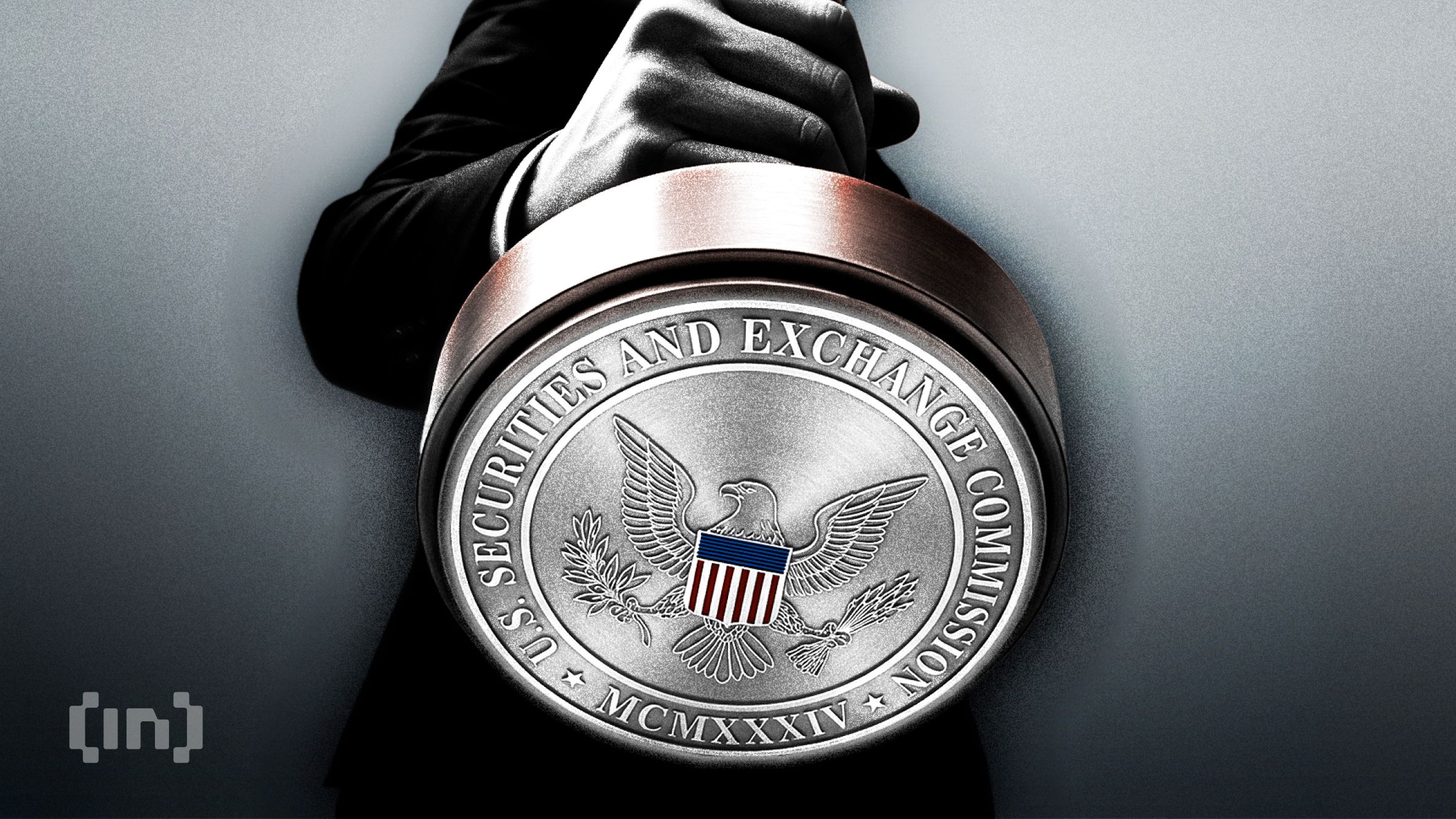

SEC Commissioner Hester Peirce narrowed the scope of the agency’s proposed innovation exemption for tokenized stocks. She ruled out synthetic instruments and limited the carve-out to digital representations of real equity shares.
Her clarification settled a debate that erupted across tokenization firms. A single word in her earlier post had triggered confusion over which on-chain products would qualify.
What Peirce Means for Tokenized Stocks
Peirce wrote on X that the tokenized stock framework would cover only listed equities. The carve-out applies to shares investors can already buy on the secondary market.
“I’ve always expected that it’d be limited in scope & would facilitate trading only of digital representations of the same underlying equity security that an investor could purchase in the secondary market today, not synthetics,” she stated in a her initial statement.
She pointed to the SEC’s January staff statement on tokenization for context. The document separates issuer-sponsored tokens and custodial wrappers from synthetic instruments.
Linked securities only provide economic exposure to the underlying stock. Holders face counterparty risk if the issuer fails, while voting rights and dividends typically disappear.
Why the Wording Stirred the Industry
Galaxy Research’s Alex Thorn highlighted the concern, noting that every policy team and tokenization firm spent the morning parsing Peirce’s chosen word.
The friction reflects how varied product designs have become. Many DeFi-native platforms rely on synthetic wrappers to bypass issuer cooperation and broker-dealer custody.
The structure enables faster launches and composability with lending or derivatives protocols.
Peirce’s framing favors fully-backed tokenization over derivative exposure tokens. It echoes her earlier digital securities sandbox proposal, which emphasized controlled experimentation.
The clarification arrives as SEC Chair Paul Atkins finalizes the broader Project Crypto framework. The exemption now reads as one narrow pilot rather than wholesale deregulation of on-chain equity trading.
The post Crypto Mom Hester Peirce Excludes Synthetic Tokenized Stocks From SEC Exemption appeared first on BeInCrypto.
The U.S. Securities and Exchange Commission has postponed its planned “innovation exemption” for tokenized versions of U.S. stocks, citing concerns from market participants.
Citing people close to the matter, Bloomberg reported that a draft framework, poised for release as early as this week, now faces delays as the agency reviews feedback.
SEC Delays Plan To Allow Crypto Versions of US Stocks
This exemption aimed to let crypto firms and DeFi platforms trade blockchain-based representations of stocks like Apple or Tesla.
It promised 24/7 trading, faster settlement, and easier fractional ownership while keeping tokens classified as securities.
Stock exchange officials and industry players reportedly raised alarms over potential liquidity fragmentation.
Critics worry parallel crypto markets could split trading volume from traditional exchanges, harming price discovery and efficiency.
Investor protection remains a core issue, especially for third-party tokens issued without company consent, which may lack full voting or dividend rights.
Market Context and Momentum
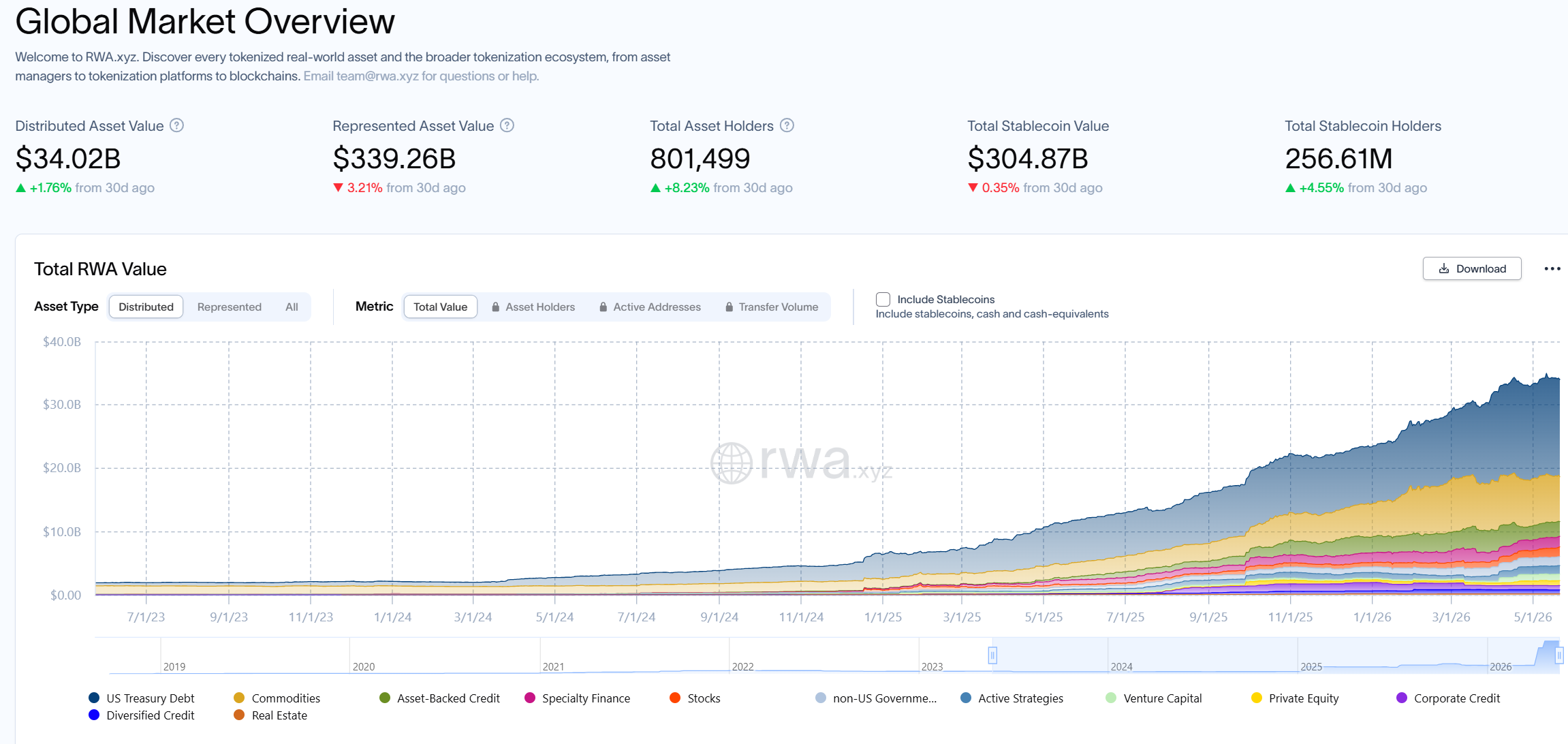
Tokenized real-world assets (RWAs) have surged to over $34 billion, up 1,600% in two years, with tokenized equities alone exceeding $1 billion in market value.
Ethereum leads platforms, followed by Solana. BlackRock’s BUIDL fund and similar products demonstrate strong institutional interest in on-chain assets.

Under SEC Chair Paul Atkins, the agency had consulted hundreds of participants to balance innovation with safeguards. The delay reflects caution even in a more crypto-friendly regulatory environment.
No new timeline has been announced, but the framework remains under active review. A refined version could still advance later this year, potentially reshaping U.S. equity trading.
This pause highlights the tension between ongoing crypto innovation and established market stability, key dynamics for anyone exposed to equities or digital assets.
Follow us on X to get the latest news as it happens
The post SEC Delays Crypto Stock Tokens Amid Wall Street Pushback appeared first on BeInCrypto.
Crypto World
SEC Commissioner Hester Peirce Clarifies Distinction Between Tokenized Securities and Synthetic Instruments
SEC Commissioner Hester Peirce clarified her position on synthetics in crypto markets, directing observers to an SEC staff statement on tokenization that differentiates between multiple categories of token-based securities. Peirce's statement draws a line between tokenized versions of… Read the full story at The Defiant


Federal Reserve Governor Christopher Waller warned that stubborn inflation and surging energy costs now outweigh labor market risks, signaling that rate hikes are “back on the table” and jolting expectations that had been primed for cuts a few months ago.
Summary
- Waller said US CPI hit 3.8% in April with energy prices up 17.9% as oil climbed above $100 per barrel
- Core PCE inflation rose to 3.3%, its highest level in more than two years, while unemployment held at 4.3% and GDP grew 2%
- He urged dropping the Fed’s “easing bias” and said rate increases cannot be ruled out if inflation does not abate soon
In a speech described as “hawkish” by Wall Street Journal economics correspondent Nick Timiraos, Waller argued that “inflation is not headed in the right direction” and that the balance of risks has shifted away from the labor market and toward price stability.
Why is Waller calling for an end to the Fed’s easing bias?
He pointed to April’s 3.8 percent year on year consumer price index reading and a 17.9 percent jump in energy costs, which he tied to Middle East conflicts that have pushed oil above $100 per barrel and filtered into gasoline, transport and production costs across the economy.
On the Fed’s preferred core PCE gauge, which strips out food and energy, Waller noted that inflation has climbed to 3.3 percent, the highest level in more than two years, even as unemployment holds around 4.3 percent and real GDP grows near 2 percent.
“Based on this recent data, I would support removing the ‘easing bias’ language in our policy statement to make it clear that a rate cut is no more likely in the future than a rate increase,” Waller said, in comments relayed by Bloomberg TV’s Annmarie Hordern.
At the same time, he stopped short of demanding an immediate move, with ZeroHedge highlighting his line that he does not think the Fed “should consider hikes in the near future,” framing his stance instead as a live threat if inflation refuses to cool.
Timiraos summed up the shift by saying Waller “comes across as quite troubled by recent inflation developments,” and reported that the governor believes markets are still underpricing the risk that higher energy prices will prove more persistent than investors expect.
What could Waller’s hawkish turn mean for Bitcoin and crypto?
For crypto markets, Waller’s warning hits the same macro channel that has powered Bitcoin’s biggest moves this year, with traders toggling between “higher for longer” yields and recession‑driven rate cuts as they price digital assets against real rates and the dollar.
Earlier this spring, Bitcoin rallied back above $70,000 as a Trump brokered two week ceasefire with Iran and hopes of policy easing sent risk assets surging, a pattern covered when Bitcoin (BTC) steadied while Iran briefly reopened the Strait of Hormuz even as oil markets stayed tight.
More recently, crypto traded in lockstep with Middle East headlines and Fed repricing, with crypto market outlook reports noting how every twist in US Iran tensions and Hormuz blockade threats fed directly into bets on inflation, energy and the path of rates.
If Waller’s shift from a dovish bias to a posture where hikes are explicitly “back on the table” convinces markets that the next move could be up rather than down, higher real yields and a stronger dollar would usually pressure both gold and crypto, just as bullion slid below $4,500 as traders raised the odds of another Fed move.
At the same time, persistent 3.8 percent headline inflation and 3.3 percent core PCE also reinforce the long running narrative of Bitcoin as an alternative hedge against US policy slippage, a theme that resurfaced when Bitcoin reclaimed $70,000 on ceasefire relief even as bond markets priced in a more volatile rate path.
The near term impact is likely to be higher volatility as macro desks reprice the Fed curve into year end and algorithmic flows lean against risk assets on any uptick in rate hike odds, a dynamic that has repeatedly amplified intraday swings across spot Bitcoin, leveraged crypto derivatives and related tokens whenever Fed officials pivot their tone.
Crypto World
Dogecoin Could Become the Second Dog on the Moon After Snoopy as Whales Accumulate Ahead of SpaceX IPO

Dogecoin, the original dog memecoin, is changing hands at $0.105, rallying by 2% over 24 hours, as a wave of whale accumulation collides with one of the most consequential IPO filings in modern financial history.
On-chain data confirms large holders have scooped up 525 million DOGE in just 96 hours, worth approximately $1.99 billion.
This accumulation window overlapped almost exactly with SpaceX submitting its S-1 filing to the SEC, targeting a Nasdaq debut. The launch is targeting June 12 under ticker SPCX at a $1.75 trillion valuation, a figure that would make Elon Musk the world’s first trillionaire.
As we know, Musk’s gravitational pull on DOGE sentiment is well-documented, and SpaceX already holds $1.4 billion in Bitcoin, underscoring the company’s crypto-adjacent positioning heading into its public market debut.
Elon Musk's SpaceX IPO filing discloses holding 18,712 $BTC worth over $1.4 billion — Sir Doge of the Coin
Wen $DOGE? pic.twitter.com/KkXVlgTdck
 (@dogeofficialceo) May 20, 2026
Discover: The Best Crypto to Diversify Your Portfolio
Dogecoin Targets $0.15 Before SpaceX IPO
Analyst identifies the $0.11–$0.12 “golden pocket” as the zone where DOGE has already faced rejection, describing the asset as short-term bullish but embedded in a broader bearish structure. Short-term holders are sitting on elevated profits, raising the risk of real profit-taking at those levels.
On the downside, immediate support rests near $0.095, or 10% below spot.

For Dogecoin, it needs whale accumulation to not stop, with SpaceX IPO euphoria bleeding into Musk-adjacent assets. In a good scenario, DOGE would clear $0.12 and target $0.15 if resistance breaks decisively.
The most likely scenario is for DOGE to grind between $0.10 and $0.11, consolidating ahead of a cleaner catalyst.
The 30-day gain of +8% is real. Momentum exists.
Discover: The Best Token Presales
Maxi Doge to Piggyback the Moon Mission
DOGE, at its current price with a $25.4 billion market cap, offers asymmetry, but not the kind that turns $500 into a life-changing number. The math simply doesn’t work at that size. It’s the gap early-stage memecoin presales are designed to fill.
Maxi Doge ($MAXI) is an Ethereum ERC-20 memecoin built around what its community calls “1000x leverage trading mentality,” a 240-lb canine juggernaut persona that fuses gym-bro culture with on-chain competition mechanics.
The presale has raised $4.7 million at a current price of $0.0002819, with a huge 65% staking APY available to holders. Features include holder-only trading competitions with leaderboard rewards, a Maxi Fund treasury backing liquidity and partnerships, and meme-first viral marketing designed to move fast in social cycles.
Research Maxi Doge before the presale window closes.
The post Dogecoin Could Become the Second Dog on the Moon After Snoopy as Whales Accumulate Ahead of SpaceX IPO appeared first on Cryptonews.


The Wall Street Journal (WSJ) has revealed that crypto exchange Binance has facilitated billions of dollars more in Iran-linked crypto transfers.
The publication reports that an Iranian financier and self-proclaimed “antisanction” operator, called Babak Zanjani, used Binance to action $850 million worth of transactions in 2024 and 2025.
Binance compliance documents indicate that Zanjani did most of this from a single account, and that, despite Binance flagging the account multiple times, it was open for at least 15 months.
Zanjani’s most recent transactions appear to have been made in December, and in 2025 alone, he sent $107 million from his digital wallets to Binance accounts.
In addition to these activities, WSJ reports that foreign law enforcement agencies have found funds continuing to move throughout 2026 to Iran-linked entities via Binance accounts.
It notes that in the two years preceding the US/Israel war with Iran, Binance has facilitated billions of dollars worth of crypto transactions that were sent to entities linked to Iran’s Islamic Revolutionary Guard Corps.
WSJ also reports that last March, US Treasury officials met Binance executives to raise concerns over its compliance with its monitorship agreement that was struck in its 2023 plea deal.
According to the publication and the former compliance employees it spoke to, Binance executives tried to shield its operations from the monitors as they were worried that compliance would slow growth.
Who is Babak Zanjani?
Zanjani is a former sheepskin trader turned wealthy businessman. Iran sentenced him to death in March 2016 after he was found guilty of embezzling billions of dollars from the country’s National Oil Company.
His sentence was later commuted in 2024. One year later, he went on to secure a $750 million government contract for his conglomerate, Dotone Group, to build thousands of rail cars for Iran.
He was first blacklisted by the US in April 2013. Then, in January 2026, he, along with his two UK-registered digital asset firms, Zedcex and Zedxion, were sanctioned by the US for financially backing the Iranian regime and helping it launder funds.
The US claims Zedcex has processed over $94 billion in transactions.
Read more: Nobitex users rush for exit after Tehran airstrikes crash Iranian currency
WSJ reports that Zedcex received funds from Iranian oil sales that were sent via banks in Turkey. It then reportedly used its Binance corporate account to transfer funds to IRGC-linked digital wallets.
It made $830 million in total transactions between 2024 and 2025.
Binance compliance reports show that the account triggered internal alerts when it was accessed from Tehran in late 2024, and went on to trigger 12 more by November 2025.
Dotone Group hasn’t been sanctioned and is behind enterprises involving logistics, ride-share vehicles, and cryptocurrency ventures, such as BitBank. Crypto analysts have noted that his business empire still mirrors sanction-evading infrastructure.
Binance says WSJ is reporting “fundamental inaccuracies.”
The publication reported in February 2026 that Binance fired internal investigators who had uncovered suspicious transactions worth $1 billion being sent to Iran-linked entities.
At the time, Binance demanded that the article be taken down to correct its “false information.” It later sued WSJ.
More recently, a Binance spokesperson told WSJ that its latest article is inaccurate, that Binance didn’t process transactions from sanctioned entities at the time, and that it carried out all appropriate steps.
It said, “It appears the overwhelming majority of these transactions have nothing to do with the Binance platform.”
WSJ noted that Binance wouldn’t answer specific questions about the transactions and the amounts at play.
In response to WSJ’s latest article, Binance CEO Richard Teng claimed today that WSJ’s reporting “continues to contain fundamental inaccuracies about the facts and Binance’s commitment to a strong compliance framework.”
Read more: Binance face ID locked out ALS patient for 5 months
He said, “Binance proactively investigated these issues before WSJ outreach. Binance provided these facts to WSJ and it did not print them.”
WSJ reporting led to US investigation
In March, WSJ reported that the US Department of Justice had launched an investigation into Binance following the publication’s Binance/Iran reporting.
Democrat Senator Richard Blumenthal had already written to Binance demanding information on the company’s role in sanction-dodging transactions to Iranian and Russian entities.
He claimed Binance was acting as a “repeat offender” and revisiting the crimes of its past.
Binance was fined $4.3 billion in 2023 for failing to implement adequate anti-money-laundering and sanctions checks. Its former CEO, Changpeng Zhao, was sentenced to four months in prison.
Read more: Binance founder Changpeng Zhao sentenced to 4 months in prison
As part of this settlement, Binance agreed to onboard a compliance monitor that would ensure the exchange was up to code.
Zhao was pardoned by US President Donald Trump last October. WSJ reports that Binance has enriched the Trump family with $1.2 billion following its backing of World Liberty Financial.
Got a tip? Send us an email securely via Protos Leaks. For more informed news and investigations, follow us on X, Bluesky, and Google News, or subscribe to our YouTube channel.

Kyle Busch, Two-Time NASCAR Cup Champion, Dies Unexpectedly at 41

Robinhood’s chief operating officer of crypto Tanya Denisova is leaving the firm

Bold and the Beautiful: Hope’s Ruthless Scheme Destroys Deacon & Taylor’s Romance!

US brings back mandatory military draft registration

Steven Gerrard disagrees with Gary Neville over ‘shock’ Chelsea and Arsenal claim | Football

Register Renaming | Hackaday

MY TOP 3 CRYPTOS I WOULD START RESEARCHING NOW #xrp #hype #crypto #sui #bitcoin

Crypto’s ‘Godfather’ Is Shorting Bitcoin, Here’s His Downside Target | Michael Terpin

Is the global financial system on the brink of a total collapse?
-

 Crypto World7 days ago
BloFin War of Whales 2026 Grand Prix opens registration for $5M trading championship
-

 Tech7 days ago
Google reimburses Register sources who were victims of API fraud
-

 Sports7 days ago
Napoleonic enters 2026 Doomben 10,000 field via Abounding withdrawal
-
 Crypto World7 days ago
BeInCrypto 100 Institutional Awards Nomination: KAST for Best Digital Assets Neobank and Best Digital Assets Fintech
-
 Crypto World7 days ago
Bitcoin Battles US Bond Nerves With BTC Price Dip Toward New May Lows
-

 Crypto World7 days ago
ICE and CME urge US regulators to curb Hyperliquid energy trading
-

 Fashion6 days ago
On the Scene at Gucci’s Cruise Show in New York City: Mariah Carey, Kim Kardashian, Lindsay Lohan, Iman, and More!
-
 Crypto World7 days ago
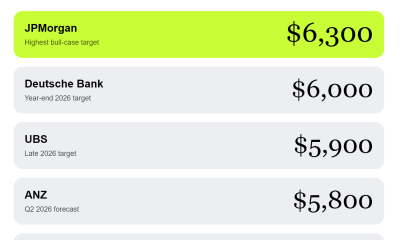
Wall Street’s Boldest Gold Prediction Has Russians Rushing to Buy
-

 Crypto World7 days ago
IREN closes $3 billion convertible notes deal amid AI infrastructure expansion
-

 Fashion6 days ago
Trending Western Style Vests Perfect for Summer
-

 Politics6 days ago
Watch: far-right flag-fanatics run over victim, attack locals – Setup By the Left wing for your entertainment
-

 Crypto World1 day ago
Blockchain.com files with SEC for U.S. IPO
-

 Fashion6 days ago
Amazon Sundays: Memorial Day Hosting
-

 Crypto World7 days ago
Crypto Market Structure Bill Clears Committee; Senate Vote in Focus
-

 Entertainment6 days ago
Off Campus Easter Eggs Explained: Characters, Stories, More
-

 Crypto World7 days ago
BeInCrypto 100 Institutional Awards Nomination: KuCoin for Leader in Digital Asset Adoption and Best Trading Infrastructure
-

 Politics7 days ago
UK’s top intelligence body warns Mandelson files being withheld by government
-
 Crypto World7 days ago
Enphase Energy (ENPH) Stock Rockets 32% This Week: What’s Fueling the Rally?
-

 Politics7 days ago
Voter disenfranchising, bulldozer operations, trampling democracy in India
-

 Business7 days ago
Strategies for Australian Businesses Entering Southeast Asian Markets
You must be logged in to post a comment Login