

Crypto World
Crypto PAC’s $5.5 million Congress pick gets Maryland win, more crypto allies advance



In the same state, Fairshake backed incumbent Representative April McClain Delaney for $516,000, while also contributing ad spending in other states’ Tuesday primaries to Republican incumbent Representative Blake Moore in Utah and $1.3 million for one of the industry’s most reliable allies in the House, Representative Ritchie Torres, a New York Democrat. All of them also won their races or were winning, with McClain Delaney in an early lead with votes still being counted.
The most recent Federal Election Commission filings showed Fairshake with about $126 million still on-hand at the end of last month. But it’s spending heavily on the way to the November general elections in which the two-year destiny of the U.S. Congress will be decided.
If Boafo contributes to the rise of a new Democratic majority in the House, the crypto industry will have a campaign-finance bond with him and other Democrats the PAC has supported. A Democratic majority is set at 79% odds in betting on prediction market platform Kalshi, and if the party earns that status, it’ll have chairmanships of all the committees, complete with control of the chamber’s agenda and subpoena power.
Fairshake’s approach is to flood pro-crypto candidates from both parties with large-scale independent advertising that can’t legally be coordinated with the campaigns. The ads don’t typically mention crypto as a political issues but are instead just calculated to use whatever political message would be most helpful for the candidates.



The US Senate passed sweeping bipartisan housing legislation Monday by a vote of 85-5, sending a package that includes a statutory ban on a Federal Reserve central bank digital currency through December 31, 2030 toward the president's desk. The 21st Century ROAD to Housing Act (H.R. 6644), led by… Read the full story at The Defiant
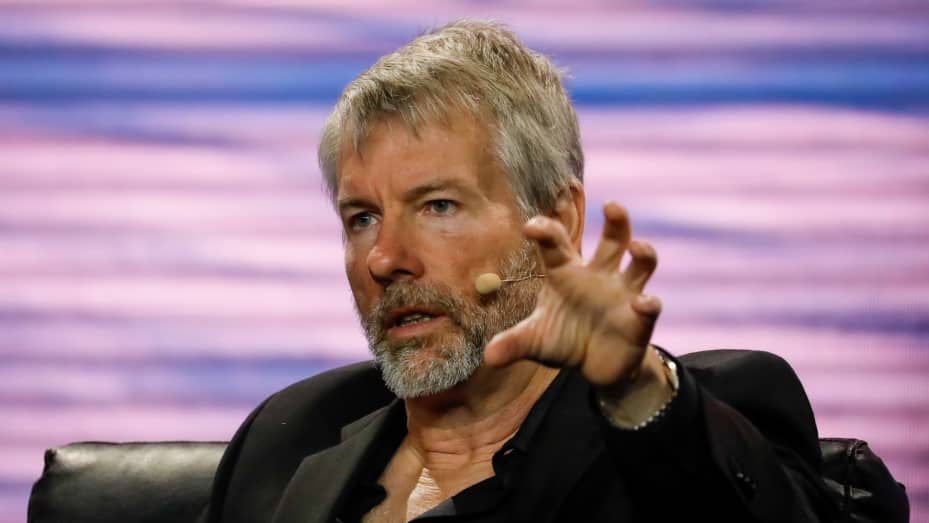
Strategy’s perpetual preferred stock Stretch (STRC) is under serious financial stress due to two simultaneous pressures, reported onchain analytics firm CryptoQuant on Tuesday.
The Bitcoin bear market means that all BTC purchased between 2024 and 2026 is underwater, with $10.6 billion in unrealized losses, and cash reserves are depleted, down 38% since early 2026 after a $1.5 billion convertible senior note repurchase in May.
Strategy pays dividends on its Stretch product, which offers an 11.5% yield and is designed to trade at $100. However, it fell to a record low of $82.5 last week, a record 17.5% below par.
At current prices of $87.4, the current effective yield is 13.2%, according to the STRC tracker.
Stop Buying Bitcoin
The core problem is that Strategy’s dividend obligations have nearly quadrupled to $1.2 billion per year, while the cash to cover them has shrunk, collapsing dividend coverage from more than seven years to just 14 months.
Last week, Strategy claimed that it had 32 years of dividend coverage using its $55 billion Bitcoin stash, but the argument was flawed.
At current dividend obligations, restoring just 24 months of coverage would require a cash reserve of approximately $2.8 billion, roughly twice what Strategy holds today, said CryptoQuant.
STRC issuance has been an effective capital-raising mechanism for Bitcoin purchases, but the rapid growth of dividend obligations has become a structural liability that could weigh on its sustainability.
“The market appears to be pricing this risk; the STRC price decline reflects not only near-term cash reserve weakness but also long-term concerns about the company’s ability to service its growing dividend burden.”
They added that any forced Bitcoin sale at current prices would crystallize its unrealized losses scale, destroy shareholder value, and potentially catalyze another leg down for BTC spot markets.
CryptoQuant recommended that the company “pause Bitcoin purchases until cash reserves and dividend coverage are restored.”
Strategy’s annualized dividend obligations have nearly quadrupled to $1.2B, while its cash reserve has fallen 38% in 2026.
Dividend coverage collapsed from 7+ years to just 14 months.
The company needs to stop buying Bitcoin and rebuild cash. pic.twitter.com/TR0oaAnT5k
— CryptoQuant.com (@cryptoquant_com) June 23, 2026
Saylor seems adamant, however, with the firm’s latest purchase of 520 BTC for $35 million while increasing its USD reserve by $300 million to $1.4 billion on Monday.
STRC, MSTR, and BTC Declining
The move gave some brief respite to STRC, which returned to $88 on Tuesday, but it remains in trouble, trading below par.
Company stock (MSTR) has also taken a beating, tanking a further 5% on Tuesday to end the day trading at $103.84, its lowest level since early 2024, according to Google Finance.
The move coincided with another Bitcoin dip as the asset failed to hold $64,000 and fell to $62,000 on Tuesday. BTC reclaimed $63,000 during the Asian trading session on Wednesday, but had already started to fall back from that level at the time of writing.
The post Saylor Should Stop Buying Bitcoin, Says CryptoQuant appeared first on CryptoPotato.
The Ethereum Foundation has cut 54 employees, roughly 20% of its staff, in the most concrete austerity measure the organization has taken since pledging to reduce its treasury spending rate. The Foundation announced the changes Tuesday, saying the cuts conclude a months-long reorganization tied to… Read the full story at The Defiant
Cboe Global Markets has launched its new prediction markets platform, Cboe Predicts, as the company enters the prediction trading market with a new suite of securities-based products.
The new offering includes binary option contracts tied to the Mini-S&P 500 Index, trading under the symbols XSPBW and XSPBX, which are already available through Interactive Brokers. Access through Charles Schwab is expected in the coming months. Cboe also said additional brokerage firms are likely to add support over time, broadening access to the new contracts.
New Prediction Markets Suite
According to the official press release, the new products allow traders to make predictions on where the Mini-S&P 500 Index, or XSP, will settle at expiration. Traders can take a “yes” position if they believe the index will close at or above a specified level or choose a “no” position if they expect it to finish below that level. The XSP index tracks the performance of the S&P 500 Index but is scaled to one-tenth the size of the larger SPX contract, which makes it a smaller, more retail-friendly alternative.
The new products also expand Cboe’s existing S&P 500 offerings. The company said it plans to add XSP vertical spreads in the future through its Quoted Spread Book system, which is designed to make more complex options strategies easier to understand. The framework aims to help traders who are familiar with simple yes-or-no contracts gradually learn more advanced trading strategies while keeping risks defined.
The products are cleared through the Options Clearing Corporation, which manages the settlement process. According to the company, the contracts will also operate under the same regulatory rules that apply to other options listed in the United States.
Commenting on the latest development, James Kostulias, Head of Trading Services, Charles Schwab, said,
“We support approaches that bring transparency, defined risk, and investor education to financial-related prediction markets. We plan to offer clients access to these binary options contracts in the coming months, building on our existing platform and demand from active traders.”
Earlier Skepticism
The latest development comes months after Charles Schwab CEO Rick Wurster expressed skepticism about prediction markets. In December, Wurster told The Wall Street Journal that event contracts tied to sports or entertainment could blur the line between investing and gambling, while adding that prediction markets were “not high on our list at the moment.”
Charles Schwab has also been expanding into new asset classes in recent months. Earlier this year, the brokerage rolled out Schwab Crypto, allowing retail clients in most US states to directly trade Bitcoin and Ethereum alongside traditional investments through the same platform.
The post CBOE Launches Prediction Markets With S&P 500 Binary Contracts appeared first on CryptoPotato.

Quick Overview
- Meta is building “Arena,” a forecasting platform enabling users to predict outcomes using points rather than actual currency.
- The platform will encompass political events, sporting matches, cultural happenings, and global news, functioning as a standalone product separate from Instagram and Facebook.
- CEO Mark Zuckerberg has designated Arena as a high-level internal initiative, despite its experimental classification.
- The company previously launched and discontinued a comparable service named Forecast between 2020 and 2022.
- While prediction markets continue expanding rapidly, they’re encountering heightened regulatory oversight concerning gaming regulations and potential market manipulation.
Meta, the organization behind Facebook, is constructing a mobile application named Arena designed as a forecasting platform. The service will enable participants to predict results of actual events spanning electoral contests, athletic competitions, and cultural phenomena. The New York Times reported details from two informed employees, noting the application will employ a points mechanism instead of monetary transactions.
Founder and CEO Mark Zuckerberg personally directed Arena’s creation, according to sources. The New York Times’ contacts characterized the initiative as simultaneously experimental and strategically significant for the corporation.
Arena will operate as an independent entity distinct from Meta’s current portfolio, which includes Facebook and Instagram. This standalone approach differs from Meta’s typical strategy of incorporating new capabilities into established platforms.
A Second Attempt at Forecasting
This represents Meta’s second venture into prediction platforms. In 2020, the company introduced Forecast, allowing participants to make predictions about current affairs and developments during the Covid-19 outbreak. The service was discontinued in 2022.
Meta has previously explored cryptocurrency and financial technology initiatives. The company unveiled Libra, a digital currency project, in 2019, which became Diem before being abandoned in 2022. Recently, Meta introduced USDC payment options for content creators in Colombia and the Philippines.
Should Arena launch successfully, it would enter direct competition with established platforms including Polymarket and Kalshi, both experiencing substantial growth. Polymarket attracted significant attention throughout the 2024 presidential election cycle, processing billions in transaction volume. With Meta recording 3.56 billion daily active participants across its ecosystem by March 2026, Arena could access an enormous existing user base.
Additional major technology companies have entered the forecasting sector. Coinbase and Kraken have investigated opportunities in this market, while Robinhood has launched event contracts connected to political developments and economic indicators.
Regulatory Challenges Intensify
The forecasting platform sector faces mounting legal challenges across the United States. The Commodity Futures Trading Commission continues disputes with state-level authorities regarding whether specific event contracts constitute illegal gambling activities.
Congress is evaluating proposed legislation addressing insider trading concerns on forecasting platforms. These efforts intensified following allegations against U.S. soldier Gannon Ken Van Dyke, who reportedly earned over $400,000 through a Polymarket position related to Venezuelan President Nicolás Maduro’s potential capture. Van Dyke’s trial is scheduled for December 2026.
Meta hasn’t announced a definitive launch timeline for Arena, nor has the company dismissed the possibility of incorporating real-money wagering features in the future.

SecondFi, a Cardano ecosystem wallet project, said it has traced a recent security incident to its native Cardano web wallet generation software.
Summary
- SecondFi traced the breach to its Cardano wallet generation software after pausing platform activity Tuesday.
- SlowMist founder Cos said suspected hacker wallets suggest potential losses could exceed $20 million overall.
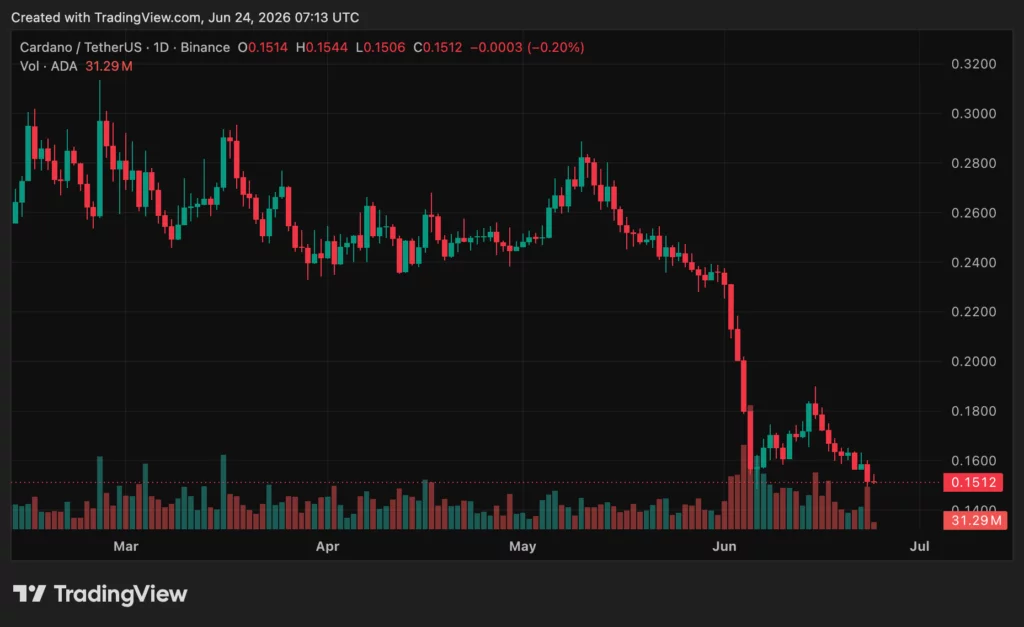
- The incident adds pressure on Cardano as ADA trades near multi-year lows again this month.
The team said it had contained the issue and paused affected services while it reviewed the full scope.
“We have isolated the root cause of the recent security incident,” said SecondFi in a security update. “The issue was confined to our native Cardano web wallet generation software.”
SecondFi said its on-chain review put the preliminary scale at around 16 million ADA. The team also said it was working with a blockchain security firm on an independent technical review.
SlowMist founder sees larger loss risk
SlowMist founder Cos, also known as Yu Xian, said the damage could be far larger than SecondFi’s early figure. He said the estimate depends on whether two Cardano addresses he tracked are confirmed as attacker wallets.
“The users of this wallet have likely lost over $20 million,” said SlowMist founder Cos in an X post. He said the possible loss may involve more than 129 million ADA and other tokens.
Cos later said the transaction pattern suggested an attacker may have obtained a batch of mnemonic phrases or private keys before moving funds over many hours. He said the transfers appeared to move from larger amounts to smaller ones.
Users wait for final review
SecondFi has not yet released a final technical report or a detailed compensation plan. The project said it would continue to share updates as the independent review confirms the scope and cause.
The case has drawn attention because the issue involves wallet generation, not only a smart contract or front-end error. If key generation fails, wallets created through the affected software may face direct risk.
SecondFi is the successor to Yoroi and was launched by EMURGO as a self-custody neofinance app for spending, trading, earning and saving. Cardano’s official app catalog lists SecondFi as a self-custody platform built by EMURGO.
As previously reported by crypto.news, Cardano has already faced market and ecosystem pressure this month. ADA fell below $0.20 in June, while several Cardano projects and governance fights drew wider attention. At press time, ADA traded at around $0.15, down almost 3% in the past 24 hours.
Security concerns spread beyond Cardano
The SecondFi case adds to a wider run of crypto wallet and platform security issues. In a recent update, crypto.news covered Trezor Safe 7 after Ledger Donjon found a chip flaw, though Trezor said user funds remained safe.
Previously, crypto.news explored Bo Shen’s reopened $42 million wallet hack case. SlowMist had linked that theft to a compromised mnemonic seed phrase, showing how seed phrase exposure can leave lasting recovery problems.
SecondFi users now need to follow only official project channels and avoid support scams. Breach events often trigger fake recovery accounts that ask for seed phrases, private keys or transfers.
The final loss figure remains unconfirmed. For now, SecondFi’s public estimate stands near 16 million ADA, while SlowMist’s Cos says suspected hacker activity could push possible user losses above $20 million.
Crypto World
ENS DAO Delegates Call Foundation Proposal a Governance Attack as Johnson Self-Delegates


Delegates to the ENS DAO escalated opposition to a governance proposal that would hand the ENS Foundation broad control over the protocol's treasury Monday, with one Security Council member calling it a governance attack and ENS Labs founder Nick Johnson having already self-delegated enough tokens… Read the full story at The Defiant

The U.S. House of Representatives has approved sweeping housing legislation that also contains a temporary prohibition on central bank digital currencies (CBDCs), delivering a significant policy victory for lawmakers who have sought to limit central-bank involvement in tokenized money. The measure now moves to President Donald Trump, who is expected to sign the bill into law.
According to the official House roll call, the chamber passed the 21st Century ROAD to Housing Act by a wide margin of 358–32 on Tuesday, following a similarly large vote in the Senate the day before. The bill is designed primarily to address housing affordability, but its CBDC provision—and its stablecoin carve-out—has become the most closely monitored part for the crypto and financial-services sector.
Key takeaways
- The House passed the 21st Century ROAD to Housing Act, with a CBDC restriction aimed at preventing the Federal Reserve from issuing or creating a CBDC or substantially similar digital asset until Dec. 31, 2030.
- The ban is not absolute across all crypto activity: the legislation includes a carve-out for certain dollar-denominated stablecoins described as open, permissionless, and private.
- Congressional leaders reached agreement on the bill only after earlier disagreements, indicating that the CBDC language remained a negotiable but preserved feature.
- The legislation now goes to the president for final approval, potentially shaping how financial institutions and crypto firms prepare for compliance over the 2020s.
What the bill does: a time-limited CBDC prohibition
The CBDC clause included in the housing act would bar the Federal Reserve from, “directly or indirectly,” issuing or creating a central bank digital currency—or any digital asset “substantially similar” to a CBDC—until Dec. 31, 2030. While the language is time-bound, it is intended to constrain central-bank experimentation or deployment of a tokenized central-bank form of money during the remainder of the decade.
In practice, such a restriction can influence institutional planning in several ways. Banks and other regulated financial intermediaries typically rely on clear regulatory signals for product development and risk management. By limiting the Federal Reserve’s ability to pursue a CBDC initiative through direct issuance or creation, the statute aims to reduce uncertainty for firms that view CBDCs as a shift toward centrally controlled settlement rails.
At the same time, the clause’s “substantially similar” formulation may raise interpretive questions about what qualifies as prohibited activity. Institutions subject to supervision may need to evaluate not only explicit CBDC proposals, but also any related digital-asset products that could arguably be characterized as CBDC-like. That creates compliance demand even without a CBDC being launched.
Stablecoin carve-out: narrowing the scope of the restriction
The act also incorporates a carve-out for crypto stablecoins, permitting “dollar-denominated currency” that is described as open, permissionless, and private. This drafting choice signals a legislative intent to avoid an outright ban on stablecoin functionality while still constraining the central-bank issuance of a tokenized form of fiat.
From a policy perspective, the carve-out may be read as an attempt to separate the stablecoin market—particularly private-sector dollar-linked tokens—from central-bank-issued digital currencies. For compliance teams, this distinction matters because it suggests that the bill focuses on the Federal Reserve’s role rather than imposing a blanket prohibition on stablecoin issuance or use.
However, the carve-out’s descriptors—open, permissionless, and private—could require further interpretation depending on how regulators treat access, governance, and transaction privacy. Regulated firms generally maintain compliance controls around transparency, recordkeeping, and supervisory reporting; “private” systems may require additional legal and operational review to ensure they do not undermine auditability or AML obligations.
Legislative momentum and the path to law
The bill’s rapid movement reflects a last-minute agreement among House and Senate leadership on the broader housing measure. According to reporting by Cointelegraph, the House passage followed a prior Senate vote, with the CBDC language carried through negotiations and preserved from earlier versions.
Senate Banking Committee Chairman Tim Scott praised the outcome, framing it as a victory for families while emphasizing that Congress had delivered on a long-standing policy objective. The inclusion of the CBDC prohibition has been repeatedly pursued by Republican lawmakers for years, including through earlier legislation that did not advance to enactment.
One notable precursor was a CBDC-focused proposal from Representative Tom Emmer, the Anti-CBDC Surveillance State Act, introduced in June 2025 and passed by the House in July. Despite clearing the House, it did not move forward in the Senate. The housing bill therefore represents a different legislative route—embedding the CBDC restriction within a must-pass or priority bill—suggesting lawmakers may be using vehicle legislation to achieve digital-asset policy goals when standalone bills stall.
Broader compliance and regulatory implications
For regulated entities, the immediate compliance relevance is the signal the statute sends about congressional boundaries around central-bank digital money. Although the restriction targets the Federal Reserve directly, its presence can affect how other regulators interpret the policy environment in which they supervise payments, tokenized assets, and stablecoins.
Institutions also face a multi-jurisdiction landscape. While the U.S. action is domestic, firms with global operations must continue planning for foreign frameworks such as the EU’s Markets in Crypto-Assets (MiCA) regime. Differences in approach—particularly around token classification, issuer obligations, and stablecoin rules—mean the U.S. CBDC ban may not harmonize with European requirements for reserve management, authorization, and ongoing disclosures.
On enforcement and risk, the bill does not replace existing AML/KYC expectations or consumer-protection rules for crypto and financial intermediaries. Rather, it modifies one dimension of the policy map: the ability of the Federal Reserve to issue or create a CBDC-like digital asset. Compliance programs must therefore remain focused on counterparty due diligence, transaction monitoring, sanctions screening, and recordkeeping, while also tracking whether any new regulatory guidance emerges to clarify how “substantially similar” assets will be treated.
What to watch next
The measure’s next milestone is presidential approval. After the bill becomes law, market participants and supervised entities will likely focus on interpretive clarity around the “substantially similar” standard and the stablecoin carve-out descriptors, as well as any downstream guidance from regulators. The longer-term uncertainty is how these constraints interact with future legislative efforts in U.S. crypto market structure—areas where Congress is still debating rules for trading, custody, and market conduct.


The U.S. House of Representatives passed the 21st Century ROAD to Housing Act on Tuesday, sending the bill to President Donald Trump for final approval.
Summary
- Congress passed a housing bill that blocks the Federal Reserve from issuing a CBDC until 2030.
- The measure now heads to President Donald Trump after strong bipartisan votes in both chambers.
- The CBDC clause follows Trump’s policy against a digital dollar and supports private stablecoins.
The measure passed the House by a 358-32 vote after the Senate cleared it 85-5 one day earlier.
The bill focuses on housing affordability, supply and access to homeownership. It seeks to cut red tape, speed up construction, limit large investor control in parts of the housing market and update some federal housing programs.
“Today, Congress delivered a major win for families working toward the American Dream,” said Senate Banking Committee Chairman Tim Scott. “The 21st Century ROAD to Housing Act will help more Americans put down roots, build a better future, and find not just a house, but a home, and I look forward to President Trump signing it into law.”
CBDC ban moves with the package
The housing bill also includes language blocking the Federal Reserve from issuing or creating a central bank digital currency. The restriction would run until Dec. 31, 2030, unless Congress acts again before that date.
The clause bars the Federal Reserve Board or any Federal Reserve bank from issuing a CBDC or a digital asset that is substantially similar to one. It also applies to issuance through a financial institution or other intermediary.
The bill defines a CBDC as a dollar-denominated digital asset that counts as U.S. currency, is a direct liability of the Federal Reserve System and is widely available to the public. The language includes an exception for dollar-denominated digital currency that is open, permissionless and private.
Trump policy backs CBDC freeze
The CBDC clause fits the Trump administration’s position on a federal digital dollar. President Trump signed an executive order in January 2025 that barred federal agencies from taking steps to establish, issue or promote a CBDC unless required by law.
As previously reported by crypto.news, Treasury Secretary Scott Bessent said a U.S. CBDC was “off the table” under Trump. Bessent also urged lawmakers to move ahead with the CLARITY Act as part of a broader push to bring digital asset activity into the United States.
In a recent update, crypto.news covered the Senate vote that moved the housing bill and CBDC ban toward the House. That report noted that the Fed had not launched a digital dollar program and that the idea had remained closer to research than rollout.
Private stablecoins remain outside the freeze
The CBDC language does not ban private stablecoins. The bill’s carveout keeps the restriction focused on Federal Reserve-issued money, not privately issued dollar tokens that meet the bill’s conditions.
Previously, crypto.news reported that the housing deal included a stablecoin carveout while blocking a Fed digital dollar until 2030. That language matters as Congress continues to work on separate digital asset rules covering stablecoins and market structure.
The U.S. stance also differs from other markets. The European Central Bank has continued work on a digital euro, while China has developed the digital yuan. The United States is now moving toward a legal pause on a retail Fed digital dollar through the end of 2030.
If Trump signs the bill, the CBDC restriction will move from executive policy into federal law. The broader package will also place housing reform and digital dollar limits inside the same statute, linking two policy debates that Congress handled through one bill.
Maryland State Delegate Adrian Boafo has won the Democratic primary for Maryland’s 5th Congressional District, putting him on track to compete for the seat held by retiring Rep. Steny Hoyer.
Summary
- Boafo won Maryland’s crowded Democratic primary after Protect Progress backed his campaign through heavy outside spending.
- Protect Progress spent $5.5 million backing Boafo as crypto PACs targeted key congressional races Tuesday.
- His win adds another pro-crypto candidate to November’s race while digital asset bills advance forward.
The Associated Press and Decision Desk HQ called the race Tuesday night after a crowded primary with more than 20 Democratic candidates.
Boafo entered the race with support from Hoyer, Maryland Governor Wes Moore and Senator Angela Alsobrooks. The district is heavily Democratic, giving the primary winner a strong path into the November general election.
Protect Progress spending draws attention
Protect Progress, a Fairshake-linked super PAC that backs Democratic candidates, spent heavily to support Boafo. According to campaign finance coverage citing Federal Election Commission filings, the group spent more than $5.5 million in the race.
“We went big and we went early,” said Geoff Vetter, a Fairshake spokesperson. “We did our part to move Adrian Boafo from fifth place to the halls of Congress. He is poised to be a leader in the largest pro-crypto Congress in history.”
Outside spending became a central issue in the final weeks of the campaign. Maryland Matters reported that outside groups spent about $8.8 million supporting Boafo as of June 3. The spending included funds from Protect Progress and the United Democracy Project, a super PAC linked to AIPAC.
Crypto PACs expand primary push
Boafo’s win gives crypto-backed groups another victory in the 2026 primary season. As previously reported by crypto.news, Fairshake-linked PACs spent more than $8 million ahead of key congressional primaries in Maryland, New York and Utah.
The spending focused on candidates viewed as friendly to digital asset policy. Protect Progress put much of its funding toward Boafo in Maryland and Rep. Ritchie Torres in New York. Defend American Jobs, another Fairshake affiliate, spent in a Republican primary in Utah.
In a recent update, crypto.news covered Fairshake’s wider spending push as lawmakers continued work around the CLARITY Act. The report said Boafo had become one of the largest recipients of crypto PAC support in the current election cycle.
Previously, crypto.news reported that Fairshake and allied crypto PACs raised $193 million by the end of 2024. Major donors included Ripple, Coinbase, Andreessen Horowitz, Gemini, Crypto.com and Kraken.
Results add to broader election pattern
Boafo’s victory follows other wins by candidates backed by crypto-aligned PACs. As crypto.news reported, Christian Menefee won a Texas Democratic primary runoff after Protect Progress spent about $5 million supporting him and $2.8 million opposing Rep. Al Green.
Crypto-backed groups also scored a Senate primary win in Alabama. In a previous article, crypto.news discussed Barry Moore’s Republican runoff victory after Defend American Jobs spent more than $12 million on ads supporting him.
The Maryland result comes as digital asset legislation remains active in Washington. The GENIUS Act and CLARITY Act have kept crypto policy tied to campaign spending, industry lobbying and primary contests.
Boafo will now move to the general election. His primary win shows how crypto PACs are using targeted spending to shape congressional races before the next Congress takes office.
All guns blazing as Messi, Mbappé and Haaland lead World Cup Golden Boot race

does refusing to believe in it make you a ‘bad’ person? Research is challenging this old idea

Conexeu Sciences: Hanging On The FDA 510(k) Pathway Submission


-

 Fashion5 days ago
Weekend Open Thread: Miami – Corporette.com
-

 Entertainment3 days ago
Renter of Home in Anne Heche Crash Denies Settlement With Son
-

 Tech2 days ago
Microsoft accidentally kills epic Outlook email threads
-

 Business3 days ago
Soccer-U.S. defends Iran World Cup travel restrictions, says discussions ongoing
-
 Sports13 hours ago
Two goals and an assist by sheer aura: Cristiano Ronaldo just entered the World Cup chat
-
Crypto World4 hours ago
Bitcoin (BTC) Dips Below $62K, Ethereum (ETH) Plunges 6% Daily: Market Watch
-

 Politics6 days ago
BBC Reporter Discusses Cross Party Criticism Of Trumps Iran Deal
-
Business7 hours ago
Entergy settles forward sale agreements, raises $672 million in cash proceeds
-
 Business4 days ago
Wall Street Week Ahead: Investors see Micron earnings as pulse check of AI rally momentum
-

 Politics4 days ago
Andy Burnham and the meaning of Makerfield
-

 Tech6 days ago
AWS enters the context layer race with a graph that learns from agents, not manual curation
-
 Crypto World4 days ago
Can Charles Hoskinson Really Rescue Cardano?
-

 Crypto World4 days ago
HIVE shares jump as $220M AI deal speeds Bitcoin mining pivot
-

 Crypto World4 days ago
Jake Chervinsky accuses CME of protecting derivatives monopoly
-

 NewsBeat5 days ago
Keir Starmer Allies Question His Chances For No 10
-

 Tech2 days ago
Nearly 7,000 fake Amazon domains registered ahead of Prime Day 2026, researchers warn
-

 Business5 days ago
Brexit cost 6% of UK economy, Bank of England company data suggests
-

 Sports5 days ago
FIFA World Cup 2026: Canada beat 9-men Qatar 6-0 to register first ever win | FIFA World Cup 2026
-
 Tech3 days ago
Signal’s Meredith Whittaker says AI chatbots ‘are not your friends’ and calls Copilot agents a backdoor
-

 Entertainment4 days ago
Jose Alvarado Wants Taylor Swift at More Knicks Games
You must be logged in to post a comment Login