

Crypto World
DeFi Hacks Surge After $280M Drift Protocol Exploit

At least 12 DeFi protocols and crypto businesses have been attacked in just over two weeks since the $280 million Drift Protocol exploit on April 1.
Attacks aimed at crypto protocols or companies since the start of April include CoW Swap, Hyperbridge, Bybit, Dango, Silo Finance, BSC TMM, Aethir, MONA, Zerion and, most recently, Rhea Finance and the Grinex exchange.
The Drift Protocol was hit with one of the largest exploits this year on April 1, losing around $280 million in a long-running social engineering attack suspected to involve North Korean-affiliated actors.
The attacks also come amid growing concerns this month that advancing AI models, such as Anthropic’s Claude Mythos and equivalent models, could eventually make it even easier for cyberattackers in the future.
Rhea Finance exploited for $7.6 million
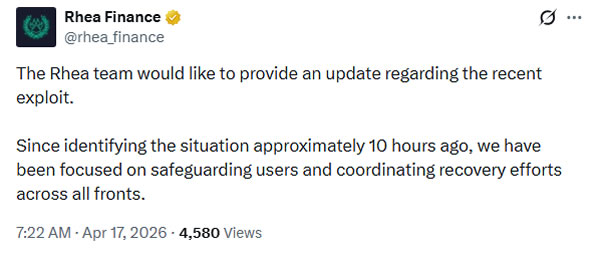
DeFi protocol Rhea Finance reported on Thursday that an attacker “leveraged a vulnerability in Rhea’s Margin Trading feature to execute a coordinated pool manipulation attack,” impacting the Rhea Lend smart contract.

Around $7.6 million was extracted, according to blockchain security firm CertiK.
“The attacker created fake token contracts and added liquidity in fresh pools, likely misleading the oracle and validation layer,” it explained.
Meanwhile, the Russia-linked Grinex exchange suspended operations after a $13.7 million hack on Thursday, blaming “unfriendly states” for the incursion.
Related: Stablecoin issuer Circle faces lawsuit over $280M Drift Protocol hack
Another attack this month was aimed at the Binance Smart Chain TMM/USDT liquidity pool, which suffered a reserve manipulation attack, resulting in the loss of around $1.67 million in early April, R3ACH Network analyst Jussy said on Thursday.
It followed just days after bridge aggregator Dango lost $410,000 from a smart contract bug on April 13.
In the same month, lending protocol Silo Finance lost $392,000 on April 3 from a misconfigured oracle exploit and decentralized GPU cloud computing platform Aethir lost $423,000 in an access control exploit on April 9.
DPRK ups AI social engineering attacks
The Drift Protocol and Zerion wallet exploits were two examples of Democratic People’s Republic of Korea-affiliated groups using AI and social engineering to infiltrate crypto companies to steal credentials and funds.
Malicious actors pilfered over $168.6 million in cryptocurrency from 34 DeFi protocols in the first quarter of 2026, according to data from DefiLlama.
Magazine: Forget stablecoin yield, how does the CLARITY Act treat DeFi?


- XRP Ledger has reached a record 332,230 wallets holding 10,000 or more XRP.
- Growth after a sharp dip earlier in the year highlights long-term holder conviction.
- XRP price eyes a breakout above key resistance around $1.50.
The XRP cryptocurrency continues to navigate choppy waters below $1.50, largely fluctuating alongside top altcoins.
Meanwhile, the XRP Ledger has hit a new milestone, with on-chain data revealing an all-time high in terms of wallets holding at least 10,000 XRP.
But what does this wallet growth suggest? And could broader gains lift prices above the key resistance level?
XRP Ledger wallet growth: Record high for 10,000+ cohort
Whales have largely bought the dip on major altcoins in recent weeks, and on-chain metrics highlight this as the case for XRP Ledger.
Data shows a fresh streak in crypto inflows coincides with an expanding XRP holder base. In particular, addresses with 10,000 XRP or more have climbed to 332,230.
According to data Santiment shared early Wednesday, this is the highest ever recorded mark for this cohort. The expansion has persisted through 2026’s price stagnation, where XRP has so far traded below its recent peak.
Notably, accumulation has picked up after a major dip between February 6 and 8, which saw more than 4,500 wallets drop from the 10k or more XRP category.
The sharp decline as seen in the chart below aligns with the crypto market bloodbath that triggered massive liquidations on February 5.
This resilience points to accumulation by conviction-driven investors.

Analysts say such whales are less swayed by volatility and more focused on XRP’s utility and long-term outlook.
It’s a move that signals increased institutional adoption, especially as crypto funds notch a multi-week streak.
XRP price outlook
As noted, the XRP price currently consolidates below the $1.50 resistance level.
However, it’s forming a tight range amid the latest upswing for risk assets, hovering near $1.45 as of writing on May 13, 2026.
Bitcoin’s push for a retest of $82,000 means muted upward action for altcoins, and XRP could mirror the sentiment as renewed risk appetite slowly sips into the broader market. Yet buyers may have eyes on breaking higher.
In this case, the token faces immediate overhead resistance at the $1.50 level, where prior rejections have capped momentum.
From a technical perspective, XRP exhibits a bullish consolidation pattern on the daily chart, with support holding at the 50-day moving average near $1.35.
Meanwhile, the RSI indicator hovers in neutral territory, meaning further room to manoeuvre before entering overbought conditions.
A breakout could allow bulls to target $2.00 and $2.75. The main focus could be a return to above $3.00.
Conversely, a drop below $1.35 might mean a retest of $1.20 lows.
Decentralized finance mobile “superapp” Legend has announced it is winding down after about two years of operation, adding to a string of crypto apps deciding to shut down this year.
Legend was a DeFi aggregator that aimed to bring DeFi to its users rather than forcing them to sign into multiple different wallets or applications to use their crypto.
“We believed the right interface could put DeFi’s most powerful primitives in front of mainstream users.” Legend co-founder Jayson Hobby said on Tuesday.
However, despite the product finding an audience, it didn’t “grow to the scale the company needed to be sustainable long-term,” said Hobby. “Closing is the right call for our team and our investors.”
Over 20 DeFi, NFT and GameFi protocols have announced they are shutting down this year, including ZeroLend, which said in February that it planned to shut down after three years of operations, citing an unsustainable business model.

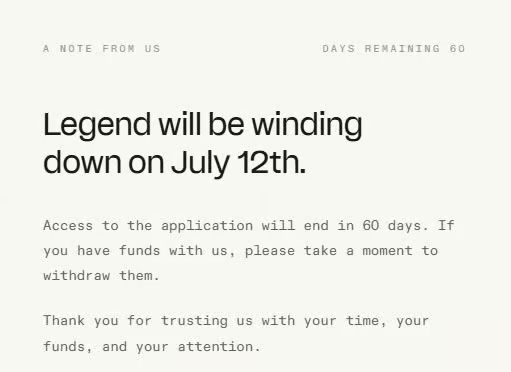
Closure notice on the Legend website. Source: Legend.xyz
Solana DeFi aggregator Step Finance said it was closing down in February after a $40 million treasury wallet breach in January, and DeFi derivatives protocol Polynomial also ceased operations in February.
Balancer Labs, the team behind the DeFi protocol Balancer, shuttered in March after mounting financial pressure following a $116 million hack in November.
Meanwhile, Seamless Protocol, a DeFi lending protocol on Base, said it was winding down in April, blaming volatile market conditions.
Users don’t care whether product is onchain or not
Legend is a non-custodial, mobile-first DeFi aggregator launched around late 2024 by former Compound Finance executives, including CEO Hobby. It is used for earning, trading, borrowing and swapping assets like stablecoins and Ether via integrations with other DeFi protocols such as Aave, Compound and Uniswap.
It aimed to bring DeFi to its users rather than forcing them to sign into multiple different wallets or applications to use their crypto.
It announced its first funding round, raising $15 million from Andreessen Horowitz and Coinbase Ventures, in February 2025.
Related: Kelp DAO eyes unpausing withdrawals after attackers’ rsETH on Arbitrum is burned
However, Hobby said that mainstream users don’t care if a product is onchain or not. “They want outcomes,” he said. “Better yield, faster payments, more control over their money.”
“The product that wins isn’t the one that explains crypto better, it’s the one that hides it completely. The benefits are felt, not explained.”
Legend has not disclosed active user counts or total value locked figures, as it operates as an aggregator, but the TVL for the broader DeFi ecosystem has tanked 50% since October in the wider crypto bear market.
The Legend app will keep running normally for the next 60 days and will go offline on July 12, said Hobby.
Magazine: DeFi’s billion-dollar secret: The insiders responsible for hacks

TLDR
- JPMorgan submitted an SEC filing for JLTXX, its second tokenized money market fund built on Ethereum
- The fund’s portfolio will consist of short-term U.S. Treasury securities and overnight repurchase agreements
- JLTXX specifically targets reserve requirements mandated by the GENIUS Act for stablecoin companies
- This filing comes just days after BlackRock submitted paperwork for a comparable offering
- Tokenized real-world assets have expanded to $32.2 billion, with Treasury-backed products accounting for $15.9 billion
JPMorgan has submitted documentation to the U.S. Securities and Exchange Commission for another tokenized money market fund operating on Ethereum’s blockchain network, marking the bank’s second venture into this space following its MONY fund debut in late 2024.
Dubbed the OnChain Liquidity-Token Money Market Fund, this new offering will operate under the JLTXX ticker symbol. The fund’s investment strategy focuses on short-duration U.S. Treasury securities, cash holdings, and overnight repurchase agreements collateralized by government-backed securities.
According to regulatory documents, the SEC approved the filing effective May 13. However, JPMorgan has yet to disclose an official launch timeline.
The blockchain technology powering this fund will be managed by Kinexys Digital Assets, JPMorgan’s proprietary blockchain division previously operating under the Onyx brand name. Ethereum serves as the sole blockchain network accessible to participants initially, though the financial institution indicated plans to incorporate additional networks down the road.
Designed for Stablecoin Issuers
JLTXX has been deliberately architected to address reserve mandates outlined in the GENIUS Act, federal legislation that establishes regulatory standards for stablecoin providers. This regulatory framework requires stablecoin enterprises to maintain reserves consisting of highly liquid instruments including U.S. Treasury securities, cash equivalents, and FDIC-insured bank deposits.
In its regulatory submission, JPMorgan explicitly stated that the fund aims to “satisfy the requirements for eligible reserve assets that stablecoin issuers are required to maintain” in accordance with the legislation. This positioning could make JLTXX an attractive solution for stablecoin organizations seeking compliant, interest-generating reserve alternatives.
The new fund represents a strategic departure from JPMorgan’s initial MONY offering, which served institutional clients managing on-chain liquidity. JLTXX adopts a more specialized approach by concentrating exclusively on the stablecoin reserve segment.
JPMorgan isn’t operating in isolation within this emerging market. Morgan Stanley introduced a comparable money market fund targeting stablecoin reserves just last month, although that particular product operates outside blockchain infrastructure. Franklin Templeton has also entered the tokenized fund arena with its BENJI product.
Wall Street Moves Into Tokenized Assets
BlackRock, commanding the position as the planet’s largest asset management firm, submitted regulatory paperwork merely days ahead of JPMorgan for a tokenized Treasury reserve instrument. The firm simultaneously filed documentation for blockchain-enabled shares of an existing $7 billion money market fund.
The tokenized real-world asset sector has experienced explosive growth exceeding 200% throughout the previous twelve months. Data from RWA.xyz indicates the market reached approximately $32.2 billion as of May 12. Tokenized U.S. Treasury instruments dominate this landscape, representing roughly $15.9 billion of the total.
Tokenization transforms conventional financial instruments into blockchain-native representations. Proponents argue this technology accelerates settlement processes, enhances operational transparency, and enables continuous trading and collateral utilization across all time zones.
JPMorgan has emerged as among the most progressive traditional banking institutions exploring this domain, previously executing tokenized collateral transactions and settlement operations for institutional participants through its Kinexys platform.
The JLTXX submission reinforces the expanding roster of Wall Street entities developing blockchain-powered solutions serving both institutional clientele and the burgeoning stablecoin ecosystem.

Despite the growing criticism toward some of its features and initiatives, Pi Network’s Core Team continues to make major announcements on the KYC front.
In the latest such statement, they outlined the total number of users who have successfully passed the verification procedures and those who have migrated to Mainnet.
Millions and Millions
The blog post on X from the team reveals that over 18.1 million users have already been approved and verified through Pi Network’s comprehensive Know-Your-Customer procedure. In addition, more than 16.7 million Pioneers have been successfully migrated to Mainnet.
The team has frequently outlined that one person is one account, which is Pi Network’s core belief. This means that each of those millions and millions of accounts represents an actual human. According to them, this is what keeps the ecosystem functioning as mining rewards remain fair, payments rely on real participants, and apps can trust actual user engagement.
However, there’s a bit of a catch. Some users continue to be stuck in “Tentative KYC” status. Although many of them keep complaining on X that it has been months and even years in some rare and extreme cases, the team said this does not mean a complete rejection.
Those Pioneers need to complete additional verification as the system is “double-checking for authenticity.” This ‘cautious’ approach helps filter out bots and fake accounts, protect real users, and maintain long-term network integrity, the post reads.
It’s worth noting that Pi Network’s Core Team recently introduced AI-powered infrastructure that will enhance processing and approval speeds and reduce bottlenecks. Nevertheless, they remain committed to human effort as such input is still a notable part of the entire verification process.
PI Returns to Top 50
The native token’s price performance has been quite controversial, to say the least, in the past few months. Every major breakout attempt has been halted in its tracks, and the subsequent rejection has pushed the asset south to its starting point.
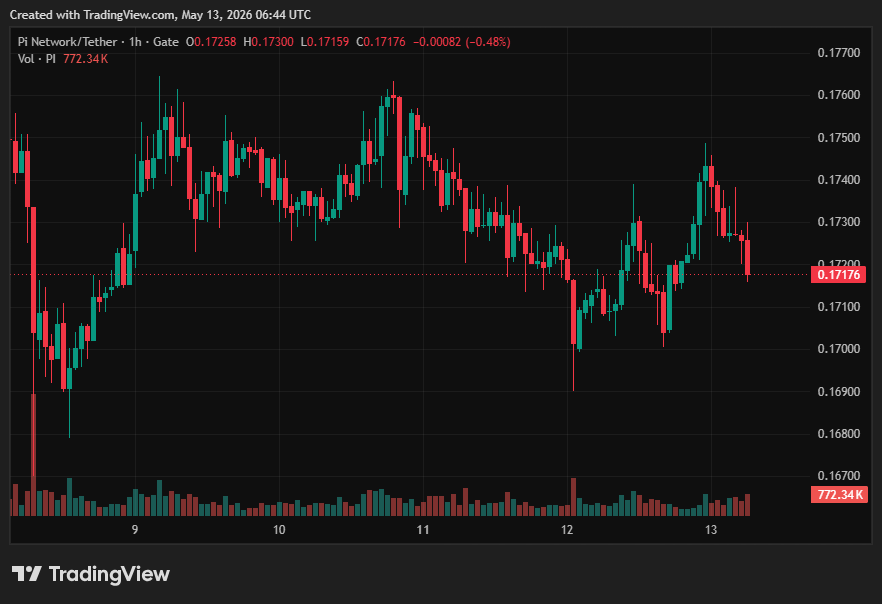
This resulted in a growing selling pressure that drove the token to under $0.17 yesterday, which knocked it out of the top 50 alts by market cap after a 6% weekly decline. Nevertheless, PI has rebounded slightly on a daily scale, though the weekly chart is still well in the red, and the overall market weakness has helped it return to the top 50 alts with a market cap of $1.8 billion.
The post Pi Network’s PI Attempts Comeback as Team Drops Important KYC Announcement appeared first on CryptoPotato.


DeFi mobile platform Legend has announced plans to shut down after nearly two years of operation, adding another closure to a growing list of crypto applications struggling to remain viable.
Summary
- Legend said it will shut down on July 12 after failing to reach a sustainable scale despite raising $15 million from major crypto investors.
- Former Compound Finance executives launched Legend as a mobile DeFi app designed to combine trading, borrowing, and yield services into one platform.
- Step Finance, Parsec, Balancer Labs, and ZeroLend have also announced closures this year amid hacks, weaker activity, and funding pressure.
According to a statement shared Tuesday by Legend co-founder and chief executive Jayson Hobby, the company decided to wind down operations after concluding the product had not reached a scale that could support the business over the long term.
Hobby said the app had managed to attract users, but sustaining the company and meeting investor expectations ultimately proved difficult.
Built by former Compound Finance executives in late 2024, Legend operated as a non-custodial mobile app that combined services from protocols such as Aave, Compound, and Uniswap into a single interface for trading, borrowing, swapping, and yield generation. The platform promoted itself as a simplified entry point into decentralized finance, allowing users to access DeFi products without constantly switching wallets or applications.
In comments posted alongside the shutdown notice, Hobby said the company initially believed mainstream users would engage with decentralized finance if the interface became easier to use. He argued that most users are not focused on whether a product operates on-chain, but instead care about practical outcomes such as better yields, faster payments, and more direct control over their money.
Back in February 2025, Legend raised $15 million in funding from Andreessen Horowitz and Coinbase Ventures. Even with backing from major crypto investors, the company said long-term sustainability remained out of reach.
More DeFi platforms continue to close
Across the crypto sector, several DeFi projects and infrastructure platforms have announced shutdowns this year as lower activity and weaker market conditions continue pressuring business models.
Earlier this year, Solana-based aggregator Step Finance closed its operations after a January breach compromised executive devices and drained assets later estimated at nearly $40 million. Step Finance stated in February that it had explored funding and acquisition options before concluding that continuing operations was no longer possible. The company later confirmed that its smart contracts were not exploited directly, attributing the incident to compromised endpoints and weak device security controls.
Elsewhere, decentralized finance analytics platform Parsec announced its closure in February after five years in operation. In a statement posted on X, Parsec’s leadership said user activity patterns changed substantially after the collapse of FTX, particularly in DeFi lending markets where leverage failed to recover to earlier cycle levels. The company said temporary traffic spikes tied to products such as Friend.tech dashboards and election-related prediction markets did not translate into sustained growth.
Additional closures have followed in recent months. DeFi protocol Balancer Labs shut down in March after dealing with financial strain linked to a $116 million hack disclosed in November, while Base based lending platform said in April that volatile market conditions contributed to its decision to wind down. ZeroLend also announced plans earlier this year to cease operations, citing an unsustainable business model after roughly three years in operation.
For Legend users, Hobby said the application will remain operational for another 60 days before going offline on July 12. The company has not released active user figures or total value locked data tied to the platform.


The Ethereum community has launched Clear Signing, an open standard that aims to replace unreadable transaction prompts with human-readable details before users approve onchain actions.
Summary
- Ethereum Clear Signing turns unreadable transaction data into plain summaries before users approve wallet actions.
- Ledger, Trezor, MetaMask, WalletConnect and Fireblocks are early supporters of the new ERC-7730 security standard.
- The rollout follows Bybit’s hack, where attackers abused signing screens to approve a malicious transfer.
The Ethereum Foundation said a working group of wallet developers, security firms and its Trillion Dollar Security Initiative released the standard on May 12. The change targets self-custody users and institutions that need readable approval records.
The effort targets blind signing, a weak point where users approve calldata or partial transaction data they cannot understand. The Foundation said approvals are often the last defense when users control assets onchain, but “When it is done blindly, that defense does not hold.” It wants “What You See Is What You Sign” to become the default for Ethereum users.
ERC-7730 brings clearer transaction details
Clear Signing uses ERC-7730, a shared JSON description format, a public registry, and independent reviews. The setup lets wallets show what a transaction intends to do without changing existing smart contracts or how transactions settle on Ethereum.
Ethereum.org says a descriptor links a contract deployment to readable labels and field formats. A compatible wallet can then show action details such as the asset sent, the minimum received, the recipient and expiry time, instead of raw function selectors and integer values. Developers can add support to existing protocols without redeploying contracts.
Additionally, Ledger helped start ERC-7730 and early tooling, while teams including ZKnox, Sourcify, Cyfrin, Zama, WalletConnect, Fireblocks, Trezor, Keycard, MetaMask, Argot and independent contributors took part in the wider effort. The Foundation said its security initiative will host the infrastructure and support adoption.
The move follows several wallet and signing attacks that exposed weak approval screens. Earlier reports noted that North Korea’s Lazarus Group stole more than $1.4 billion in ETH from Bybit by exploiting Safe Wallet’s user interface and that Bybit’s CEO could not fully verify transaction details before signing. That case made signing transparency a direct exchange security issue.
Why timing matters
Market updates have tied Clear Signing to the wider rise of phishing and approval scams. As previously reported, ERC-7730 replaces “hex gibberish” with auditable transaction summaries and said Binance security data showed 22.9 million phishing attempts were blocked in the first quarter of 2026.
Related coverage also said crypto protocols lost more than $606 million in the first 18 days of April 2026, the worst month since the Bybit breach. Clear Signing does not remove every attack path, and wallets still choose which registries they trust. But it gives users and institutions a clearer chance to see what they are about to approve before assets move.


Wells Fargo increased its exposure to spot Ether exchange-traded funds in the first quarter of 2026, according to its latest 13F filing.
Summary
- Wells Fargo raised ETHA and ETHW holdings even as Ether posted back-to-back quarterly losses.
- Bitcoin ETFs still led the bank’s crypto ETF exposure, with IBIT valued around $250 million.
- Wells Fargo cut Galaxy Digital shares sharply while more than doubling its Strategy position.
The bank reported larger positions in BlackRock’s iShares Ethereum Trust ETF and the Bitwise Ethereum ETF.
ETHA rose from about 672,600 shares in the fourth quarter of 2025 to roughly 1.1 million shares in the first quarter. ETHW increased from around 186,800 shares to more than 257,000 shares. The filing placed Wells Fargo’s Ether ETF holdings at around $21.5 million.
Ethereum exposure grew during weak prices
The Ether ETF increase came while the underlying asset was under pressure. Ethereum posted two straight quarterly losses, falling about 28% in the fourth quarter of 2025 and about 29% in the first quarter of 2026.
Spot Ether ETFs also faced withdrawals during that period. Still, Wells Fargo reported higher positions at quarter-end. The filing does not state whether the positions were held for clients, internal portfolios or other investment accounts. That point remains important because 13F filings show holdings, not the reason behind each trade.
Meanwhile, Wells Fargo’s Bitcoin ETF exposure moved in different directions. The bank slightly reduced its position in BlackRock’s iShares Bitcoin Trust ETF, while increasing holdings in the Bitwise Bitcoin ETF and the Grayscale Bitcoin Mini Trust ETF.
IBIT still accounted for the largest crypto ETF position in the filing, with a value of about $250 million. Earlier crypto.news coverage noted that Wells Fargo and Bank of America’s Merrill Lynch allowed some brokerage clients to access spot Bitcoin ETFs after the products saw strong early demand.
Strategy rises as Galaxy stake falls
The larger shift appeared in crypto-linked equities. Wells Fargo cut its Galaxy Digital position from about 2.5 million shares in the fourth quarter of 2025 to around 78,600 shares in the first quarter of 2026.
At the same time, the bank raised its Strategy stake from about 322,700 shares to roughly 726,000 shares. Strategy remains the largest public holder of Bitcoin, making its stock a common indirect Bitcoin exposure for some investors. Wells Fargo’s filing does not explain why it reduced Galaxy Digital and increased Strategy.
The update adds to evidence that large financial firms continue to use regulated products for crypto exposure. A recent crypto.news report cited a Coinbase and EY-Parthenon survey showing that many institutions planned to raise crypto allocations in 2026, with exchange-traded products among the preferred routes.


Predict 2026 says it moved to New York from Las Vegas because of “regulatory pressure” from the Nevada Gaming Control Board. A spokesperson for the regulator says otherwise.
“The Nevada Gaming Control Board did not direct, request, or otherwise pressure any licensee or venue to cancel or decline to host any recent or upcoming event or conference, as has been suggested,” a spokesperson told CoinDesk.
Earlier this month, the Prediction Conference, which featured some top traders from Polymarket, took place in Las Vegas – but at a hotel without a casino.
“We had a successful event last month that was attended by several stakeholders and will be hosting a second edition in November again in Las Vegas,” its founder, Ish Milly, told CoinDesk. “Our venue is off the strip and not in a casino.”
A spokesperson for the Nevada gaming regulator also told CoinDesk that “Gaming licensees are expected to adhere to all federal, state, and local statutes and ordinances and prevent any occurrences that may bring discredit to the state or the gaming industry.”
Nevada is one of the states that is locked in a legal battle with the prediction market industry.
In April, a judge in the state ruled that Kalshi’s prediction markets were “indistinguishable” from gambling and ordered an in-state ban on the platform to be extended.
Recently, Michael Selig, chair of the Commodity Futures Trading Commission, told Axios that sports betting and prediction markets are “two separate things.” Selig also said that the CFTC is working with major sports leagues on market surveillance and other market integrity measures.


XRP is back at the top of South Korean trading screens.
The token’s won pair was the most traded market on Upbit over the past 24 hours, with about $110.9 million in volume, ahead of bitcoin’s $88.6 million and ether’s $67 million, CoinGecko data shows. On Bithumb, XRP/KRW recorded about $41 million in volume, ranking second behind USDT/KRW and above both BTC/KRW and ETH/KRW.
That matters because Korea has long been one of XRP’s most active speculative markets. Bitcoin and ether usually dominate global exchange activity, but Korean traders have repeatedly pushed XRP into the top volume slot during periods of heightened interest, often before volatility expands.
Price-action has been muted, however. XRP traded near $1.44 to $1.45 across the two exchanges, up roughly 3% on the week. That beats bitcoin over the same period, but trails stronger gains in BNB and Solana’s SOL, both of which have risen around 8%.
The setup is less about a finished breakout and more about pressure building under a level the market has not been able to clear.
Data from CoinDesk analytics shows XRP is still battling the $1.49 to $1.50 zone, an area that has repeatedly rejected upside attempts since February. The token has continued to compress below that resistance while holding higher lows above the broader $1.40 support floor.
That kind of structure tends to matter when volume starts rotating in. Repeated tests can weaken resistance, and liquidity above current levels appears relatively thin. If sellers are absorbed near $1.50, a sustained move through that level could accelerate faster than the recent price action suggests.
Korean activity also stands out against a choppier local macro backdrop.
South Korea’s Kospi fell sharply Tuesday after comments from a presidential policy aide raised questions over how the government could return part of the country’s AI-driven corporate gains to citizens through tax revenue.
The index remains one of the world’s strongest markets this year, powered by Samsung Electronics and SK Hynix, but the pullback showed how sensitive local risk appetite has become after a steep rally.
That makes the XRP flow more notable. Traders are not simply buying everything tied to Korean risk appetite. They are concentrating activity in one of the market’s most familiar high-beta crypto names.
High volume does not guarantee upside, however. It can also mark aggressive selling or late positioning near resistance. But when XRP starts leading Korean exchange volumes while price compresses below a long-tested ceiling, the market usually pays attention.
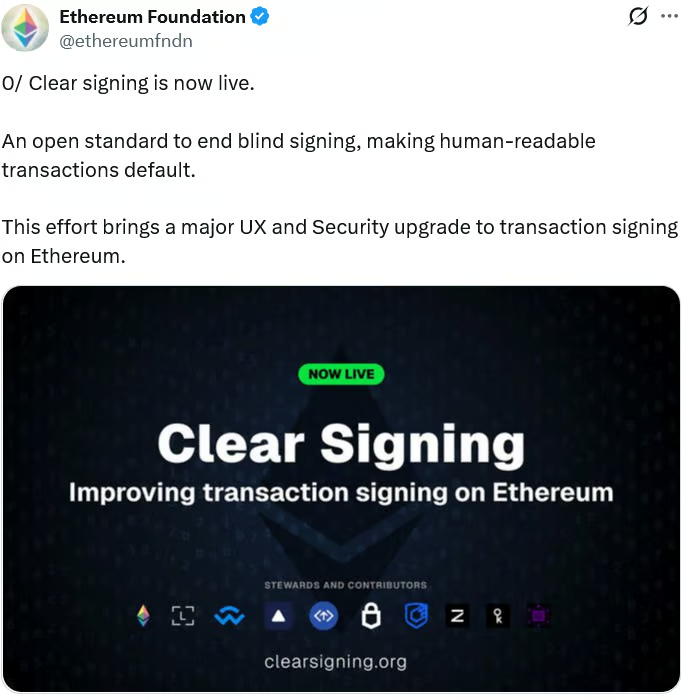
The Ethereum community has introduced Clear Signing, a security feature that ensures users can clearly understand transaction details before signing, replacing unreadable hex data and reducing risks from blind signing attacks.
“Approving a transaction is meant to be the last line of defense when exercising control over what happens to your assets on the blockchain. When it is done blindly, that defense does not hold,” the Ethereum Foundation said on Tuesday, calling blind signing a “structural flaw” that has contributed to billions of dollars in losses, including the $1.4 billion Bybit hack last year.
The “What You See Is What You Sign” security feature aims to address this issue and is being integrated by several self-custody crypto wallets, including Ledger, Trezor and MetaMask.

Source: Ethereum Foundation
The security feature comes as bad actors target the crypto industry with increasingly sophisticated hacks and scams despite considerable improvements in security measures in recent years.
North Korean state-backed workers have stolen over $7 billion in funds alone since 2009, with a large share of that coming from crypto protocols. The Bybit hack was its largest crypto heist by compromising a third-party service provider and manipulating transaction signatures.
Trezor chief technology officer Tomáš Sušánka told Cointelegraph that attackers have been exploiting this relentlessly due to there not being a widely accessible security feature that is capable of distinguishing malicious smart contracts from legitimate transactions.
This issue has led users to “unknowingly sign them, and lose everything,” Sušánka said, adding that the Clear Signing feature “directly addresses this by making transactions human-readable before approval.”
The Clear Signing feature was introduced through the Ethereum Foundation’s Trillion Dollar Security Initiative and initiated by Ledger through the open-source ERC-7730 token standard.
The foundation said the key components of the Clear Signing feature include “human-readable transaction descriptions” and a “neutral, mirrorable descriptor registry.”
Related: Ethereum’s EEZ could pull other blockchains into its orbit
It also includes an attestation framework enabling auditors to verify those descriptors.
A host of crypto platforms are supporting Clear Signing
Several other crypto wallets and Ethereum privacy and security platforms contributed to the Clear Signing feature, including Keycard, WalletConnect, Argot, Sourcify, Zama, ZKnox and Fireblocks.
Sušánka said Trezor seeks to implement the security feature before June 30.
“We’re implementing this standard because it’s the right thing to do for our users,” Sušánka said before calling the Clear Signing feature a “critical security advancement for our entire industry.”
Magazine: Guide to the top and emerging global crypto hubs: Mid-2026

Analysis: Private, independent schools dream big

XRP price forecast as more whales bet on bounce

Cambridgeshire kebab vans named among the best in the UK

Manchester United reach agreement with Casemiro over contract clause amid transfer speculation

US brings back mandatory military draft registration

Steven Gerrard disagrees with Gary Neville over ‘shock’ Chelsea and Arsenal claim | Football


-
 Crypto World5 days ago
HarrisX Poll Found 52% of Registered Voters Support the CLARITY Act
-

 Fashion5 days ago
Weekend Open Thread: Marianne Dress
-

 Crypto World6 days ago
Upbit adds B3 Korean won pair as Base token gains Korea access
-
 NewsBeat6 days ago
NCP car park operator enters administration putting 340 UK sites at risk of closure
-

 Fashion2 days ago
Coffee Break: Travel Steam Iron
-

 Fashion2 days ago
What to Know Before Buying a Curling Wand or Curling Iron
-

 Tech3 days ago
Auto Enthusiast Carves Functional Two-Stroke Engine from Solid Metal
-

 Politics1 day ago
What to expect when you’re expecting a budget
-

 Politics4 days ago
Politics Home Article | Starmer Enters The Danger Zone
-
 Business4 days ago
Ignore market noise, India’s long-term story intact, say D-Street bulls Ramesh Damani and Sunil Singhania
-

 Crypto World7 days ago
BlackRock CEO Larry Fink Discusses a New Asset Class
-

 Tech2 days ago
GM Agrees To Pay $12.75 Million To Settle California Lawsuit Over Misuse Of Customers’ Driving Data
-
 Sports7 days ago
NBA playoff winners and losers: Austin Reaves is not loving Lakers vs. Thunder matchup, but Chet Holmgren is
-

 Entertainment6 days ago
Sarah Paulson Called Out For Met Gala ‘Hypocrisy’
-

 Entertainment6 days ago
General Hospital: Ric & Ava Bombshell – Ric’s Massive Secret Exposed!
-

 Politics6 days ago
Simon Cowell Says He Was ‘Horrible’ To Susan Boyle During BGT Audition
-

 Crypto World6 days ago
Robinhood says Wall Street is building onchain
-

 Sports6 days ago
UEFA Champions League final schedule, teams, venue, live time and streaming | Football News
-

 Entertainment6 days ago
Bold and Beautiful Early Spoilers May 11-15: Steffy Revolted & Liam Overjoyed!
-

 Entertainment6 days ago
Why David Letterman Called CBS ‘Lying Weasels’
You must be logged in to post a comment Login