

Crypto World
Dubai Pushes Toward a Cashless Future as Digital Payments Near 90% of Transactions by 2026


Dubai is rapidly accelerating its transformation into one of the world’s leading cashless economies, with authorities aiming for nearly 90 percent of all transactions across both public and private sectors to become fully digital by the end of 2026.
The initiative, known as the “Dubai Cashless Strategy,” was originally announced in October 2024 during a meeting of Dubai’s Executive Council chaired by Sheikh Hamdan bin Mohammed bin Rashid Al Maktoum. The long-term vision is ambitious: positioning Dubai among the top five cashless cities globally while strengthening its status as a global fintech and innovation hub.
Rather than eliminating money itself, the strategy focuses on replacing physical cash transactions with digital alternatives such as banking apps, contactless cards, QR payments, smart wallets, and AI-powered payment technologies.
According to Dubai Finance, the transition could contribute more than AED 8 billion annually to the emirate’s economy by improving efficiency, reducing operational costs, accelerating commerce, and increasing financial inclusion.
Why Dubai Is Moving Toward a Cashless Economy
Dubai’s push toward a digital-first financial ecosystem is part of a broader strategy to modernize infrastructure, support fintech innovation, and create a more connected economy.
Digital payments offer several advantages for governments, businesses, and consumers:
- Faster and more seamless transactions
- Reduced cash handling and operational costs
- Improved transparency and security
- Better integration with smart city infrastructure
- Enhanced financial tracking and analytics
- Greater convenience for residents and tourists
The strategy also aligns with the UAE’s wider ambitions around artificial intelligence, blockchain adoption, smart governance, and digital transformation.
For years, Dubai has positioned itself as a global testbed for emerging technologies. The move toward becoming a largely cashless society represents another major step in that direction.
Digital Payments Are Already Becoming the Standard
Recent developments show that the transition is already underway across multiple sectors.
One of the clearest examples came with the announcement from Parkin that cash payments at parking meters would begin to be phased out starting June 1, 2026. Drivers are now encouraged to pay using the Parkin app, SMS services, or nol cards instead of physical coins.
This may appear like a small operational change, but it reflects a much larger transformation happening throughout the emirate.
Consumers in Dubai are increasingly relying on:
- Apple Pay and Google Pay
- Contactless debit and credit cards
- Banking apps
- QR-based payment systems
- Instant transfer solutions
- Smart mobility payment integrations
The government is also encouraging businesses to modernize payment infrastructure through partnerships and fintech-focused initiatives.
In 2025, Dubai International Financial Centre (DIFC) and Dubai Finance launched workshops and programs designed to help businesses transition toward digital payment systems while introducing AI-driven financial technologies.
What This Means for Tourists Visiting Dubai
The cashless transition will not only impact residents and businesses, but also millions of tourists visiting Dubai every year.
The Central Bank of the UAE has already introduced initiatives aimed at simplifying digital payments for international visitors.
One of the most notable projects is the Tourist Identity initiative, which will allow tourists to instantly open digital bank accounts upon arrival in the UAE. Visitors will gain access to digital debit cards and essential banking services within minutes, significantly reducing the need to carry physical cash.
Tourists will also be able to access the UAE’s domestic card network, Jaywan, and use the Aani instant payment system for transfers and purchases.
Additionally, airlines including Emirates and flydubai have already partnered on initiatives encouraging digital payment adoption among international travelers.
The result is a smoother and more integrated payment experience across hotels, retail stores, transportation systems, restaurants, entertainment venues, and tourist attractions.
Potential Impact on Fintech, Crypto and Web3
While the Dubai Cashless Strategy itself is focused primarily on digital payments rather than cryptocurrencies, the initiative could indirectly accelerate growth across the broader fintech and Web3 ecosystem.
A population increasingly comfortable with digital wallets, instant payments, and app-based financial services creates an environment naturally more open to innovation in areas such as:
- Stablecoins
- Tokenized payments
- Digital identity systems
- Blockchain infrastructure
- Embedded finance
- AI-powered financial services
Dubai has already established itself as one of the world’s most crypto-friendly jurisdictions, attracting exchanges, blockchain startups, Web3 companies, and fintech entrepreneurs from around the globe.
As digital financial behavior becomes more deeply integrated into everyday life, the gap between traditional fintech and blockchain-based finance may continue to narrow.
A Glimpse Into Dubai’s Future
Dubai’s vision goes beyond simply reducing the use of physical cash.
The broader objective is to build a fully interconnected digital economy where payments, transportation, government services, tourism, commerce, and financial services operate seamlessly together.
If the strategy succeeds, paying with cash in Dubai could eventually become the exception rather than the norm.
From parking and public transport to restaurants, shopping malls, and government services, the emirate is steadily moving toward a future where nearly every transaction happens instantly through digital channels.
For residents, businesses, investors, and tourists alike, Dubai’s transition toward a cashless society may become one of the defining economic and technological shifts shaping the city over the coming decade.



The Federal Reserve, the Office of the Comptroller of the Currency and the Federal Deposit Insurance Corporation on Tuesday jointly reissued 15 interagency supervisory documents with every reference to "reputation risk" stripped out — the latest piece of a methodical Trump-era dismantling of the… Read the full story at The Defiant


Crypto caught a modest bid on Thursday after Wednesday’s inflation report showed underlying price pressures staying contained. Bitcoin rose about 1.9% over 24 hours to roughly $62,600, leading the majors, per CoinDesk data.
Headline inflation rose 0.5% on the month and 4.2% over the year, the fastest annual pace since April 2023, but energy did most of the work, climbing 3.9% on the month and accounting for more than 60% of the increase as oil rose on the Iran conflict.
Core inflation, which strips out food and energy and is the gauge the Federal Reserve leans on, rose just 0.2% on the month, below the 0.3% forecast, and 2.9% over the year.
The bounce is shallow and concentrated in bitcoin. BTC is down less than 1% over the past seven days, holding its 200-week average, while the rest of the top tokens remain deep in the red on the week. Ether is off about 6.5% at roughly $1,651, XRP down 7.5% near $1.12, Solana down 7.4% around $65, and dogecoin off 7%. BNB held up better at a 2.1% weekly loss.
Traders now await Fed’s June 17 meeting, where markets expect no change to rates. The hot headline gives hawks cover to stay restrictive, while the soft core gives doves room to argue the pressure is narrow and energy-driven.
Another widely-cited catalyst is the public offering of Elon Musk-owned satellite, rockets and AI company SpaceX, which prices later Thursday and is expected to start trading on Friday at a $1.8 trillion valuation.
Shares for the company are already four times oversubscribed, with some singular entities bidding as much as $10 billion for the stock, per Bloomberg.

TLDR
- Anchorage submitted a public comment letter supporting Treasury’s GENIUS AML proposal.
- The firm backed classifying stablecoin issuers as financial institutions under the Bank Secrecy Act.
- Anchorage urged clarity on secondary-market sanctions liability tied to smart contract transactions.
- It argued issuers should not face strict liability for unknown sanctioned users on open networks.
- The proposal was issued jointly by FinCEN and the Office of Foreign Assets Control.
Anchorage Digital has backed the US Treasury’s proposed GENIUS AML framework while urging targeted clarifications. The federally chartered crypto bank submitted a public comment letter supporting core compliance provisions. However, it asked regulators to refine secondary-market sanctions exposure and enterprise-wide AML expectations.
Anchorage and GENIUS AML Framework Alignment
Anchorage stated that Treasury’s proposal places AML duties on regulated stablecoin issuers in a workable manner. The firm said the structure balances compliance standards with operational certainty for issuers. It added that clear rules will support payment innovation while maintaining oversight under existing law.
The letter responded to rules issued in April by the Treasury and the Financial Crimes Enforcement Network. The proposal would classify payment stablecoin issuers as financial institutions under the Bank Secrecy Act. As a result, issuers would face AML, customer due diligence, and suspicious activity reporting obligations.
Treasury’s Office of Foreign Assets Control joined FinCEN in issuing the proposed rule. The framework would align stablecoin issuers with US sanctions compliance standards. It would also impose enhanced monitoring and recordkeeping duties across issuer operations.
Anchorage wrote that “a final rule that is clear and workable gives regulated institutions the certainty they need to build.”
The firm said such clarity strengthens US leadership in payments and settlement infrastructure. It therefore endorsed the proposal’s general direction while requesting precise adjustments.
Secondary-Market Sanctions and Compliance Scope
Anchorage urged Treasury to clarify liability tied to secondary-market transactions on public blockchains. It argued that issuers should not bear strict liability for unknown sanctioned users. The firm said smart contract interactions may occur without issuer knowledge or direct customer relationships.
Anchorage stated that issuers cannot independently identify all sanctioned actors transacting through open networks. It therefore asked regulators to define limits around secondary-market sanctions exposure. The letter also sought guidance on enterprise-wide AML programs and correspondent account requirements.
The firm requested clarity on how AML obligations apply across affiliated entities. It asked Treasury to outline expectations for correspondent relationships under the proposed framework. According to the letter, defined boundaries would reduce uncertainty for regulated institutions.
Support for the GENIUS AML proposal has varied across the crypto industry. Hyperliquid and Paradigm also submitted a joint comment letter addressing similar concerns. However, they expressed a more critical view of the sanctions perimeter.
The groups argued that OFAC’s draft language extends issuer liability beyond practical visibility. They said the framework treats smart contract use as an ongoing service provision.
“OFAC sweeps secondary market activity into the issuer’s compliance perimeter,” the letter stated.
They added that the draft could impose sanctions duties without direct user relationships. The comment letter said issuers may lack visibility into parties transacting on secondary markets. Treasury has not yet issued a final rule following the April proposal.

Crypto has moved deeper into the 2026 election debate after a new DCG-Harris Poll showed rising voter interest in digital asset policy.
Summary
- DCG says 40% of voters now view crypto as a major issue in 2026 midterms.
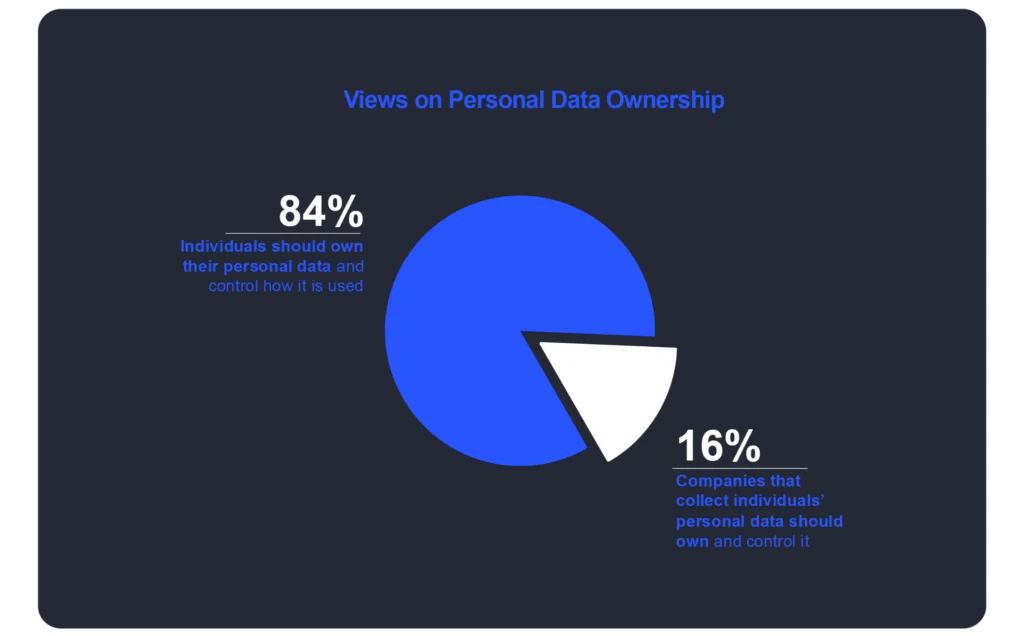
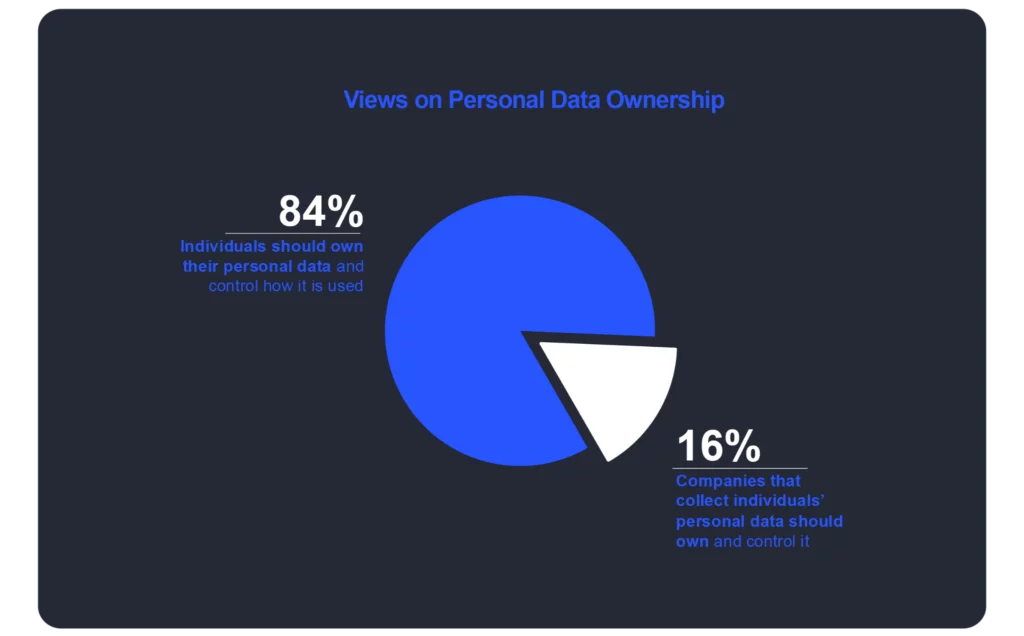
- Privacy stands central, with 84% saying individuals should own their personal data, not companies.
- Congressional debates and rising crypto PAC activity continue influencing the broader 2026 election landscape.
The survey found that 40% of voters now view crypto as a major election issue, up from 20% in 2024.
The poll surveyed 1,874 registered voters from May 8 to May 18. It also included oversamples in Arizona, Georgia, Michigan, Nevada, North Carolina, Ohio, Pennsylvania and Texas.
Crypto support doubles ahead of midterms
DCG said the results show a larger voter bloc watching how candidates discuss digital assets. The company released the findings as Congress debates major crypto rules, including the CLARITY Act.
Julie Stitzel, DCG’s chief policy officer, said voter interest already exists across key races. “Candidates who champion digital asset policy and financial privacy don’t have to look far for voter support. It’s already there,” she said.
Privacy becomes a central voter issue
The survey found that 84% of Americans believe individuals, not companies, should own their personal data. DCG said the result links digital asset policy with wider concerns about financial privacy and data control.
The poll also found that 55% of registered voters are more likely to use a service that does not use their personal data. That finding places privacy near the center of the crypto policy debate, especially as AI and digital finance expand.
Congress faces pressure over crypto rules
The timing matters because lawmakers are still debating how to regulate digital assets. The CLARITY Act has become one of the main bills under review, with supporters saying it would define oversight roles for crypto markets.
As previously reported by crypto.news, Coinbase, Ripple and more than 200 crypto groups urged Senate leaders to schedule a vote on the bill. Other reports said Galaxy Digital lowered its 2026 approval odds to 60% as the Senate calendar tightens before the August recess.
Polling shows mixed voter signals
The DCG poll points to stronger crypto interest, but other surveys show the issue still competes with broader economic concerns. A previous crypto.news report cited a Politico and Public First survey that found only 4% of Americans said a candidate’s crypto stance would shape their vote.
Pew Research Center data also showed that 19% of U.S. adults have used or invested in cryptocurrency. Republican usage rose from 16% in 2021 to 22% in 2026, while overall adoption stayed close to earlier levels.
Crypto-backed political spending adds another layer to the election debate. As crypto.news reported, Fairshake-linked groups have already spent millions in primaries as digital asset policy becomes a sharper dividing line in Congress.


Amazon has expanded its trucking service to businesses beyond its own logistics network.
Summary
- Amazon expanded its less-than-truckload shipping service to businesses beyond its own logistics network.
- Freight carrier stocks fell after the announcement, including Old Dominion, ArcBest, Saia, XPO and FedEx Freight.
- Amazon is turning more of its logistics network into outside services through Amazon Supply Chain Services.
The move sent shares of several major freight carriers lower on Wednesday. The company will now offer less-than-truckload shipping to businesses across the United States.
Amazon opens LTL service to more businesses
Amazon said it will offer less-than-truckload shipping to all businesses through Amazon Supply Chain Services. The service previously supported companies shipping goods into Amazon warehouses and fulfillment centers.
Less-than-truckload shipping lets carriers move freight from several customers on one trailer. The model differs from full truckload shipping, where one customer fills the trailer. Amazon said the service can deliver freight to any destination in the United States. The company is using its logistics network to reach more business customers.
Jim Ruiz, director of Amazon Freight, said sellers wanted wider access to the service. “The feedback from Amazon selling partners using our LTL service was clear,” Ruiz said. He said customers valued the service’s technology, visibility, and reliability. “Now Amazon LTL can move your freight wherever it needs to go,” Ruiz added.
Freight carrier shares fall after announcement
Freight stocks declined after Amazon announced the expanded trucking service. Old Dominion Freight Line fell 5% after the news. ArcBest shares dropped 4%, while Saia slid 3%. XPO Logistics also fell 5% during the market reaction.
FedEx Freight shares fell about 7% on Wednesday. The company started trading earlier this month after its spinout from FedEx. The share declines came as Amazon moved deeper into a market served by long-standing carriers. The company’s freight offer now targets businesses of different sizes.
Amazon has spent years building a large logistics network for its own retail operations. It now uses more of that network to serve outside companies. The company reduced its reliance on external carriers as it pushed faster delivery speeds. That strategy gave Amazon more control over shipping times and costs.
The logistics network becomes an outside service
Amazon’s logistics system now includes cargo planes, delivery vans, trailers, and containers. The company has 80,000 trailers and 24,000 containers in its freight operation. Its network also includes tens of thousands of delivery vans. Amazon-branded cargo planes support longer-distance movement across its supply chain.
The company has started opening more in-house logistics tools to outside businesses. That approach adds competition for carriers that already serve business shippers. Last month, Amazon introduced an end-to-end supply chain service. The package combines several of its freight and logistics services into one offering.
That announcement pushed shares of UPS and FedEx lower at the time. Wednesday’s LTL expansion added another freight service to Amazon’s outside-business program. Amazon said the LTL service will support destinations nationwide. The company’s latest move extends Amazon Supply Chain Services beyond warehouse-bound shipments.


The Securities and Exchange Commission on Tuesday published its Draft Strategic Plan for fiscal years 2026 through 2030, placing a "firm regulatory foundation for digital assets and distributed ledger technologies" as the first objective of its first goal — the most prominent placement crypto… Read the full story at The Defiant
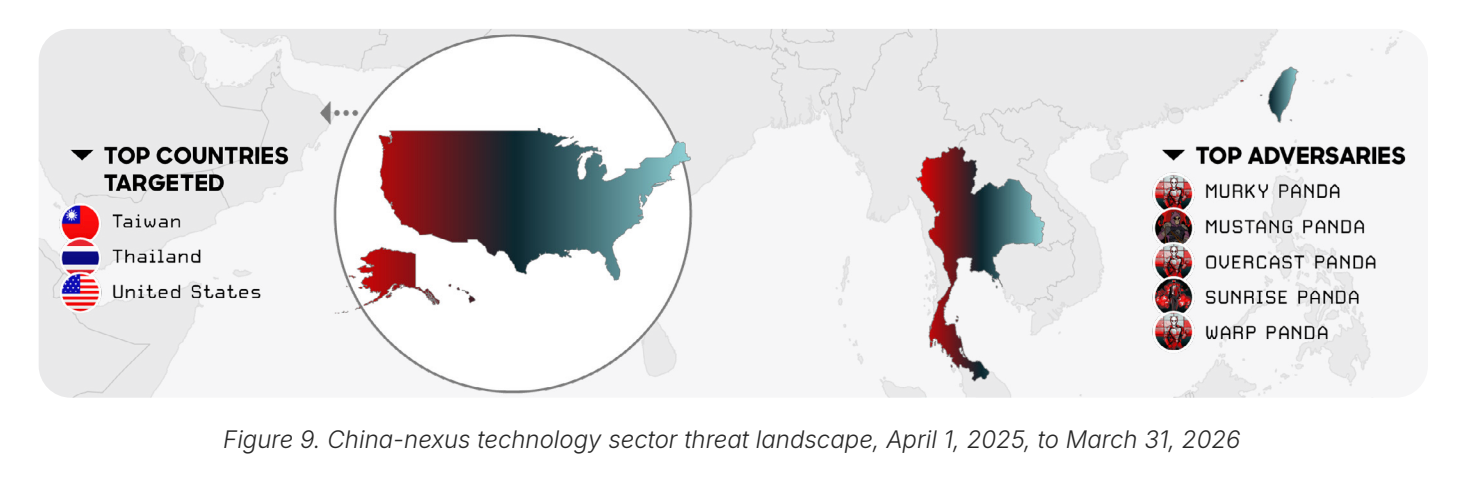
China-nexus adversaries attacked the technology sector more than any other industry over the past year, stealing artificial intelligence (AI) capabilities and intellectual property (IP) that Beijing cannot build fast enough on its own, CrowdStrike said.
The cybersecurity firm tracked activity from April 2025 to March 2026, linking it to Beijing’s drive for technological self-sufficiency and its stated goal of global AI leadership by 2030.
Why China Targets the Technology Sector
Technology firms are where the most valuable AI development now sits. That concentration has pushed the sector to the top of attackers’ target lists. CrowdStrike attributed more than 58% of state-sponsored targeted intrusions against tech to China-nexus groups.
AI capabilities rank as the highest-value intelligence collection target. Beijing can apply those capabilities to military modernization, economic growth, and intelligence gathering.
“Technology entities in general serve as a strategic target for China-nexus adversaries because access to such entities provides high-value intelligence collection as well as access to downstream customer environments that can enable potential supply chain compromises,” the report read.
Several named groups drove the campaigns, including MURKY PANDA, MUSTANG PANDA, OVERCAST PANDA, SUNRISE PANDA, and WARP PANDA. MURKY PANDA’s password-spraying operation alone hit more than 340 US-based entities.
Follow us on X to get the latest news as it happens

The AI Race Driving the Espionage
CrowdStrike frames the espionage as industrial policy aimed at closing China’s AI innovation gap. Adam Meyers, who heads counter-adversary operations at CrowdStrike, explained that each leap in AI capability rewards the developer with an advantage and hands intruders a new way in.
“China runs cyberespionage as an industrial policy to try to close the AI innovation gap, demonstrating that AI capabilities are the prize adversaries are after. Whether you’re building AI or adopting it, security has to be built in from the start,” Meyers said.
The firm expects China to keep prioritizing technology entities for at least 12 months. It cited US-China decoupling, sanctions enforcement, and economic espionage as the main drivers.
The findings sharpen a wider debate over the US lead in AI. Anthropic has argued that Washington could lock in a 12 to 24-month advantage over China through curbs on chip smuggling, offshore data centers, and model distillation.
Therefore, the coming year will test whether export controls and security investments can protect that edge, even as adversaries target the tools used to build AI itself.
Subscribe to our YouTube channel to watch leaders and journalists provide expert insights
The post Technology Becomes Most Targeted Industry as China-Nexus Adversaries Hunt AI appeared first on BeInCrypto.


BlackRock's BUIDL fund, the largest tokenized U.S. Treasury product on-chain, has become the single biggest real-world asset on Avalanche after a multi-hundred-million-dollar allocation that drove the network's distributed RWA total to a record $1.16 billion in late May, with the BUIDL position… Read the full story at The Defiant


Bitwise Chief Investment Officer Matt Hougan said financial advisors are still interested in crypto, but their focus is moving beyond Bitcoin.
Summary
- Matt Hougan said advisors now discuss stablecoins and tokenization more than Bitcoin in recent calls.
- Bitwise survey data already showed advisors ranking stablecoins and tokenization among the top 2026 themes.
- Ethereum, Solana, Chainlink, Avalanche, Circle and Coinbase may benefit if advisor crypto inflows broaden next.
His view came after eight sales calls with teams representing more than 40 advisors in one day.
Hougan wrote in a June 10 memo that advisors asked more about stablecoins and tokenization than Bitcoin. The shift suggests that professional investors are paying closer attention to crypto uses in payments, markets and real-world assets.
Advisors remain active despite the market pullback
Hougan said the main message from the meetings was that advisors have not left crypto during the bear market. He said new crypto cycles have often needed both new products and new investor groups.
“The fact that they remain interested despite the pullback is good news,” Hougan wrote. He said financial advisors and institutions could become the next investor class to support wider crypto adoption.
Bitwise has tracked this interest for months. Its 2026 Bitwise/VettaFi survey found that 56% of advisors owned crypto personally, while 42% could buy crypto in client accounts. Hougan added that advisors manage more than $175 trillion, making their access and product choices important for future crypto flows.
Stablecoins and tokenization lead the discussion
Hougan said Bitcoin has often led crypto recoveries because it is the largest and most established asset. He also said prices around $60,000 looked attractive for long-term investors.
Still, he said advisors showed more curiosity about practical crypto use. “Their eyes are on stablecoins and tokenization more than bitcoin,” Hougan wrote in the memo.
He linked the shift to weaker interest in the fiat debasement trade and stronger public discussion around on-chain finance. Hougan cited comments from SEC Chair Paul Atkins, Goldman Sachs CEO David Solomon and BlackRock CEO Larry Fink on stablecoins and tokenization. The memo did not say advisors have abandoned Bitcoin. It described a change in conversation.
Broader adoption themes
As previously reported by crypto.news, stablecoins have become a larger part of digital payments. Fiat-backed stablecoin supply crossed $319 billion in April 2026, while adjusted transaction volume reached $10.9 trillion in 2025.
Separately, as crypto.news reported, tokenized real-world assets crossed $29 billion by April 2026. Tokenized U.S. Treasuries grew from $380 million in 2023 to $13.4 billion by April 2026.
Hougan said future advisor inflows may first target assets tied to stablecoins and tokenization. He named Ethereum, Solana, Canton, Chainlink and Avalanche as assets raised during the meetings.
He also pointed to Hyperliquid and companies such as Figure, Circle and Coinbase. According to Hougan, advisors now have a broader view of crypto than they had two years ago.
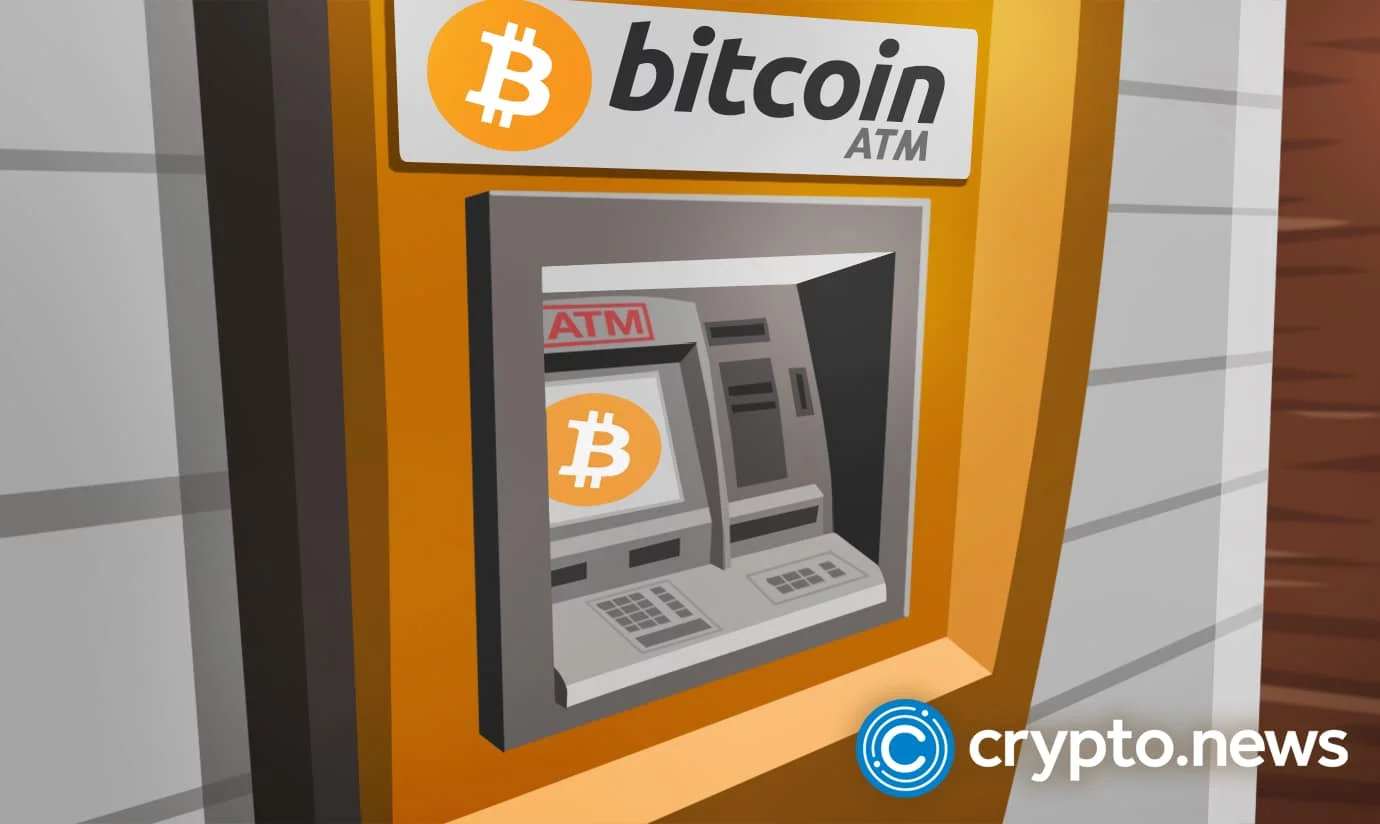
Delaware and New Jersey have advanced bills that would ban crypto ATMs as lawmakers respond to rising scam complaints tied to the machines.
Summary
- Delaware and New Jersey advanced crypto ATM ban bills after lawmakers cited rising fraud complaints.
- FBI data showed 13,460 crypto kiosk complaints and over $388.9m in reported 2025 losses nationwide.
- Regulatory pressure on crypto ATMs is expanding, with Canada considering restrictions and operators facing financial strain.
The moves place both states closer to Indiana, Tennessee and Minnesota, which have already passed total bans.
The push follows new FBI data on crypto kiosks. The agency reported 13,460 complaints in 2025 and more than $388.9m in losses, with people over 50 accounting for more than half of complaints.
Delaware bill would remove crypto ATMs
The Delaware House Economic Committee advanced House Bill 441 on June 9. The bill would ban the ownership, installation and operation of cryptocurrency kiosks across the state.
The proposal would require existing machines to go offline and be physically removed within 90 days after the law takes effect. It also blocks retail point-of-sale or cashier-assisted crypto sales that copy a kiosk.
Representative Cyndie Romer, who sponsored the measure, said crypto ATMs carry high costs and expose residents to fraud. “These kiosks reduce digital currency to a predatory cash grab,” Romer said.
The bill treats violations as unlawful trade practices. Operators could face penalties of up to $10,000, while illegal fees may need to be refunded to users or paid into Delaware’s Consumer Protection Fund.
New Jersey sends ban bill to full Senate
New Jersey’s Senate Commerce Committee advanced Senate Bill 2141 on June 8. The measure would ban businesses from owning, controlling, installing, managing, selling or offering crypto ATMs in the state.
The bill defines crypto ATMs as internet-connected kiosks that let users buy, sell, send or receive digital assets through cash, debit cards or credit cards. Lawmakers linked the proposal to scams involving fake government officials, tech support schemes and bank impersonation.
New Jersey’s measure carries a penalty of up to $10,000 for a first offense. Later violations could bring penalties of up to $20,000, along with other consumer fraud remedies.
The bill would take effect on the first day of the sixth month after enactment. It now awaits action in the full Senate after clearing committee without opposition.
Crypto ATM pressure grows across markets
The bills add to broader pressure on crypto ATM operators in the United States and abroad. Indiana signed the first statewide total ban in March, followed by Tennessee in April and Minnesota in May.
As previously reported by crypto.news, Canada has also moved toward a nationwide crypto ATM ban over fraud concerns. Separate reporting noted that Bitcoin Depot filed for Chapter 11 bankruptcy after facing regulatory pressure, falling revenue and security issues.
Crypto ATM operators have argued that they should not be blamed for crimes carried out by outside scammers. Some operators have added on-screen warnings, identity checks and transaction limits.
Lawmakers in Delaware and New Jersey have taken a different path. Their bills seek to remove the machines rather than regulate them, making crypto ATM bans a growing consumer protection response in 2026.

Wembanyama misses late free throws in Game 4 as Spurs get pushed to brink

Palantir’s Karp says Sanders will regret only asking for 50% of AI companies. Full nationalization is coming.

The Drums – Money (Official Audio)



-

 Fashion5 days ago
Weekend Open Thread: Evereve – Corporette.com
-
 Crypto World6 days ago
Jensen Huang Approves Samsung, SK Hynix, and Micron for NVIDIA (NVDA) HBM4 Memory Supply
-

 Crypto World3 days ago
Anatomy of the June crypto crash: Fed, Iran, Saylor
-
 Entertainment4 days ago
The Best Mystery Series of All Time Is Surging on Streaming 30 Years After It Ended
-

 NewsBeat3 days ago
Alexander Zverev wins the French Open to finally earn a 1st Grand Slam title
-

 Tech5 days ago
Suspicious Polyfill login prompts pop up on Toshiba, Muji websites
-
Crypto World4 days ago
Senator Cynthia Lummis Calls CLARITY Act the Most Consequential Financial Legislation of This Generation
-

 Tech6 days ago
Microsoft launches MXC, an OS-level sandbox for AI agents, with OpenAI and Nvidia already on board
-

 Tech4 days ago
Microsoft unveils seven homegrown AI models in new bid for ‘long term self-sufficiency’
-

 Business6 days ago
(VIDEO) Justin Bieber Delivers Surprise Happy Birthday Serenade to Diners at Los Angeles Mexican Restaurant
-
 Business4 days ago
The Pain Points Taking a Fragile Tech Rally Down a Notch
-
 Crypto World3 days ago
Eli Lilly (LLY) Stock Surges 4% Following Breakthrough Sleep Apnea Trial Results
-
Crypto World6 days ago
LBank Surpasses 25 Million Users Worldwide as AFA Partnership Continues to Drive Global Growth
-
 Tech5 days ago
Von der Leyen’s AI envoy pick draws conflict-of-interest fire
-

 Tech6 days ago
Meta steals a tactic from Tesla and builds data centers in tents
-

 Crypto World4 days ago
Trump’s AI Ownership Plan Could Benefit Anthropic at OpenAI’s Expense
-

 Business3 days ago
High Stakes for Wembanyama as New York Pushes for 3-0 Lead
-

 Tech5 days ago
Hackers now exploit SolarWinds Serv-U flaw to crash servers
-
 Sports2 days ago
Bangladesh beat Australia after 20 years in ODIs, register only their second win over six-time world champions | Cricket News
-
 NewsBeat3 days ago
Alexander Zverev conquers demons and outlasts Flavio Cobolli to win French Open for first major title
You must be logged in to post a comment Login