

Crypto World
ESMA Warns Prediction Market Event Contracts May Breach EU Retail Ban


Europe’s financial watchdog is warning that many prediction market “event contracts” may already be subject to existing binary options rules, regardless of how they are described or marketed. The European Securities and Markets Authority (ESMA) says companies cannot sidestep retail investor protections simply by rebranding certain derivatives-like payouts as “event contracts.”
At the same time, the United States is witnessing its own escalation: state gaming regulators and the Commodity Futures Trading Commission (CFTC) are fighting over whether prediction markets should be treated as gambling or federally regulated derivatives. Together, the two stories underline a central fault line for the sector—what matters legally is the contract’s structure, not its branding.
Key takeaways
- ESMA says event contracts can fall under binary options restrictions based on their characteristics, especially binary outcomes and fixed payouts.
- Even if retail investors are excluded, ESMA warns that offering qualifying event contracts to professional or institutional clients may still require MiFID II authorization.
- ESMA notes the reminder is not new regulation, but a response to increased offerings as prediction markets grow.
- In the U.S., state actions against platforms such as Kalshi and Polymarket continue alongside the CFTC’s position that it has “exclusive jurisdiction” over event contracts.
- Litigation in multiple jurisdictions has intensified speculation that the dispute could eventually reach the U.S. Supreme Court.
ESMA’s reminder: “event contracts” can still be binary options
In a public statement released on Friday, ESMA reminded firms that contracts meeting the definition of financial instruments are already prohibited from being marketed, distributed, or sold to retail investors under national measures implementing ESMA’s 2018 binary options restrictions.
The regulator emphasized that the legal assessment hinges on the contract’s features rather than on marketing language. In particular, ESMA highlighted that event contracts with binary outcomes and fixed payouts are likely to qualify as financial instruments subject to the restrictions.
ESMA also focused on authorization requirements for firms selling into more sophisticated client categories. According to the statement, providing qualifying event contracts to professional or institutional clients still requires authorization under MiFID II, even if retail investors are not directly targeted.
ESMA framed its intervention as enforcement clarity rather than policy change. The regulator said it issued the reminder after observing more event contract offerings and rapid growth in prediction markets, noting that qualifying binary options have been under national restrictions across the EU since 2018.
For readers and market participants, the key implication is that the industry’s current naming conventions may not provide regulatory shelter. ESMA’s approach suggests that product designers and legal teams must evaluate payout mechanics and outcome structures early—before launching—because regulators may treat certain prediction constructs as financial instruments from the outset.
ESMA’s public statement on the application of national binary options measures to event contracts
What ESMA’s approach could mean for European platforms
While ESMA did not claim to introduce new restrictions, the message still carries practical consequences for platforms operating in or distributing into EU markets. ESMA’s insistence on contract-based assessment—binary outcomes and fixed payouts—creates a straightforward but unforgiving compliance test for many prediction-market formats.
In practice, this means firms may face pressure to restructure offerings that resemble fixed-payoff binary options. Alternatively, companies may need to ensure they remain within the boundaries of allowed products and client categories, including meeting MiFID II authorization requirements where applicable.
ESMA also appears to be pushing back against a common industry tactic: presenting payouts as “event-based” rather than as option-like financial instruments. The regulator’s reminder suggests that, from an enforcement standpoint, the distinction may not hold when the economic effect is functionally similar to a prohibited binary option for retail clients.
Builders and investors watching the space should treat ESMA’s statement as a signal about regulatory risk management. In a sector that often iterates quickly, compliance reviews that focus on contract architecture—not UI wording or product naming—may become a gating factor for expansion into regulated markets.
Meanwhile in the U.S., states and the CFTC keep clashing
Across the Atlantic, prediction markets are caught in a jurisdictional fight. The conflict pits state gaming regulators against the CFTC over whether event contracts should be treated as gambling under state law or as federally regulated derivatives under the CFTC’s oversight.
By March, action had already been taken by authorities in 11 states against platforms including Kalshi and Polymarket. Nevada became the first state to temporarily block Kalshi’s operations, while Arizona brought criminal charges alleging the company was running an illegal gambling business.
The following month, the CFTC argued for “exclusive jurisdiction” over prediction markets, saying Congress entrusted the agency with sole authority to regulate commodity derivatives markets, including event contracts. The agency also said it sued several states and filed court briefs supporting platforms such as Kalshi.
The litigation has continued to escalate. On June 30, a Massachusetts judge allowed state authorities to file an amended complaint against Kalshi in an ongoing case alleging the company’s sports-event contracts constitute illegal gambling under state law.
These battles have also driven calls for congressional clarification. Last month, the Indian Gaming Association and the American Gaming Association—joined by tribal and labor groups—urged lawmakers to amend the CLARITY Act to explicitly prohibit sports-related event contracts on prediction market platforms, arguing these products should fall outside the CFTC’s authority and remain governed by state gambling laws.
Legal experts cited in earlier coverage believe the deepening disagreement between federal and state regulators could ultimately be resolved by the U.S. Supreme Court.
CFTC press release asserting its authority over prediction markets
Why both regions are converging on the same legal question
Despite differing regulatory frameworks, the EU and U.S. stories share a similar center of gravity: regulators are focusing on how event contracts work economically, not on the label operators choose. In Europe, ESMA points to binary outcomes and fixed payouts as key triggers for binary options treatment. In the U.S., the dispute turns on whether event contracts are properly categorized as gambling or as derivatives subject to federal oversight.
For operators, the stakes are immediate. In Europe, ESMA’s reminder highlights that retail-facing marketing can quickly trigger product intervention rules, while institutional sales may still require MiFID II authorization depending on contract characteristics. In the U.S., state enforcement and federal claims of exclusive jurisdiction have pushed prediction market firms into a patchwork of legal outcomes.
The practical takeaway for market participants is to treat legal categorization as product design input. The compliance and litigation burden can increase sharply when a platform’s core contract mechanics resemble the category regulators are already prepared to police.
As ESMA’s guidance circulates and U.S. court battles continue—possibly moving toward higher-level review—watch for two things: whether prediction platforms adjust contract structures to better fit regulatory definitions in the EU, and whether the U.S. dispute narrows around a definitive jurisdictional ruling rather than expanding across states and claims.



Robinhood has emerged as a key platform in the rollout of the Trump Accounts program, with U.S. Treasury-backed child investment accounts scheduled to begin transfers ahead of the initiative’s July 4 launch.
Summary
- Robinhood is expected to help roll out the Trump Accounts program ahead of its July 4 launch.
- Eligible children will receive a $1,000 government contribution, with annual private contributions capped at $5,000.
- Trump also floated a possible SpaceX stock donation, though neither Elon Musk nor SpaceX has confirmed any plans.
According to information surrounding the program, Robinhood is expected to help facilitate the new accounts, which are designed to give eligible children access to long-term investment portfolios through federally supported savings accounts.
The transfer process is expected to open through the U.S. Treasury before the official launch, bringing brokerage firms into one of the administration’s newest financial initiatives.
Robinhood is expected to handle access to the new accounts
Under the program, children under 18 whose parents have a valid Social Security number will qualify for an account. The federal government will contribute an initial $1,000, while families and other approved contributors may add up to $5,000 per child each year through IRS Form 4547.
The framework brings together the U.S. Treasury, the Internal Revenue Service, brokerage firms responsible for custody, and retail investment companies that will offer account access. Although officials have not formally named Robinhood as the exclusive provider, the company is widely expected to play a central role in making the accounts available to eligible users.
Because Robinhood already combines stock investing with cryptocurrency trading in a single application, the arrangement could eventually allow users to manage government-backed investment accounts alongside their existing brokerage portfolios if regulators permit such functionality. The current Trump Accounts structure, however, does not include cryptocurrency investments or blockchain technology.
Speaking in an interview with CNBC’s Joe Kernen on Thursday, President Donald Trump also said he believes Elon Musk could contribute SpaceX stock to the Trump Accounts initiative, although he acknowledged he had not recently spoken with the billionaire.
Trump added that business leaders including Michael Dell and Micron have shown support for the children’s investment program. Neither Musk nor SpaceX has announced any plan to donate shares, leaving Trump’s comments as his expectation rather than a confirmed commitment.
Following those remarks, SpaceX ticker SPCX recovered from an intraday low near $155 to close about 3% higher at roughly $162 on July 3 as buyers returned after early selling pressure, as previously reported by crypto.news.
Regulators continue separating traditional investments from digital assets
While the accounts focus on conventional investment products, their launch comes as U.S. regulators continue defining the legal boundaries between securities and digital assets. The program adds another example of regulated custodial investment products becoming part of mainstream financial services, even though cryptocurrencies are not included in the current design.
Research previously published by Messari has identified retail investment applications as an important entry point for individuals investing in risk assets. If brokerages integrate the new accounts into existing investing platforms, regulated long-term investing could become more accessible to younger users through familiar financial apps.
The political backdrop surrounding the initiative remains active. As previously reported by crypto.news, President Trump’s 2025 financial disclosures showed at least $1.4 billion in crypto-related income tied to ventures including his memecoin and World Liberty Financial, prompting continued ethics discussions while lawmakers negotiate the CLARITY Act. Trump later denied knowledge of those earnings and said there was “nothing illegal” about them.
Although the Trump Accounts program currently excludes digital assets, brokerage participation and ongoing regulatory work could influence future discussions about how government-backed investment products and regulated digital asset offerings coexist within the U.S. financial system.

Solana’s SOL token climbed to a level not seen in more than 30 days, briefly trading around $83, and the move is drawing attention because it doesn’t look like a simple altcoin sympathy rally. Instead, market data points to a mix of rising tokenized-asset activity on Solana, renewed memecoin momentum, and improving flows tied to stablecoin liquidity.
The question now for traders is whether this renewed bid can push SOL back through the $90 area—or whether the market is already cooling off as leverage comes off the table. Recent derivative and on-chain indicators suggest enthusiasm may be more selective than it was earlier in the week.
Key takeaways
- SOL hit a 30-day high near $83, showing signs of decoupling from the broader altcoin market’s weakness.
- Tokenized trading activity on Solana accelerated as cumulative tokenized stock transfers surpassed $10 billion around June 23.
- Memecoins and prediction-market activity boosted short-term attention, but leveraged positioning cooled quickly.
- Futures annualized funding fell to about 3% on Friday from an 11% peak earlier, implying less appetite for chasing gains to $90.
Tokenized assets bring a new tailwind to Solana
One of the clearest narratives behind SOL’s strength is the renewed growth in tokenized asset activity on the Solana network. According to data referenced from RWA.xyz, Solana’s tokenized assets rose to a record-high $3.5 billion on Wednesday—up from $2.7 billion about one month earlier.
The same dataset also points to what’s driving that expansion. The article cites tokenization products related to corporate credit and market indexes such as the S&P 500 and the Nasdaq-100. In addition, RWA.xyz data shows Solana leading the tokenized industry by active addresses, with 294,274, compared with Ethereum’s 204,955.
On the “why it matters” side for investors and builders: when tokenized assets expand, it generally increases demand for on-chain infrastructure—settlement, custody, trading venues, and related DeFi rails. Even if tokenized flows don’t translate immediately into SOL spot buying, they can reinforce the perception that Solana is capturing practical usage, not only speculative demand.
Memecoin revival and ecosystem features support short-term momentum
Beyond tokenization, the rally also appears to have been helped by a memecoin resurgence. The article highlights the Sunday airdrop of The Black Bull (ANSEM), which launched on Pump.fun. ANSEM reportedly reached a market capitalization of $60 million by Tuesday, with the developer directing roughly 65% of the supply to Ansem’s public wallet; the launch rollout reportedly involved about 74,000 addresses over the initial three days. The distribution is described as lacking full transparency.
That kind of attention can matter because memecoin activity often spurs retail trading and related network usage—especially on ecosystems where token launches and trading are tightly integrated. In this case, multiple Solana memecoins gained, but the article notes that the biggest winner was the Pump.fun platform token (PUMP). PUMP added about 27% on the week, returning to the top 100 by market capitalization and reaching an estimated $630 million valuation. ANSEM itself reportedly extended gains on Friday, reaching an all-time high market capitalization of $112 million.
Alongside memecoins, the article also ties SOL’s renewed interest to prediction-market functionality. It cites the integration of a “World prediction markets” experience into the Phantom wallet, reporting nearly $890,000 in total value locked over two days, framed as an effort to compete with Polymarket during the World Cup betting cycle. It also mentions that Jupiter has prediction markets under beta testing, with a reference to a June 29 launch.
Leverage cools: derivatives signal traders are less willing to chase
If tokenized-asset growth and memecoins helped ignite the move, derivatives data suggests the market is no longer as eager to press higher prices. The article points to a sharp decline in bullish leveraged appetite after Wednesday, when SOL rose above $75 for the first time in 30 days.
Specifically, the SOL perpetual futures annualized funding rate fell to 3% on Friday from an 11% peak just two days earlier. The piece references Laevitas for those funding figures, and notes that under “neutral conditions,” the funding rate should typically sit in a range from 6% to 12% to balance the capital cost.
That shift is important for traders because funding rates often reflect whether longs are crowding the trade. A cooling funding environment can mean new longs are less willing to pay up for exposure to SOL, which can reduce the momentum needed to sustain a breakout attempt—especially if spot demand doesn’t keep pace.
In other words, the market may be congratulating itself on earlier gains while becoming more cautious about a further push toward $90. The article’s framing emphasizes that investors may not want to bet on SOL widening its performance gap over other altcoins based solely on temporary memecoin-driven attention. Without sustained blockchain activity that converts into durable demand—rather than short-lived hype—there may be fewer reasons for leverage to build again quickly.
What to watch next for SOL and Solana activity
For SOL to realistically challenge the $90 zone, the next signal to track is whether the tokenized-asset expansion and broader on-chain usage can offset any fading retail-driven flows. If tokenized trading volume continues to grow and prediction-market participation sustains, the narrative supporting SOL may broaden beyond memes. Conversely, if leveraged sentiment stays subdued and funding remains below the levels typically associated with healthy upside positioning, SOL may consolidate even if it remains resilient versus the rest of the altcoin market.
Shielded Labs has raised the possibility of delaying Zcash’s Ironwood network upgrade, citing readiness concerns among exchanges, mining pools and wallet providers ahead of the planned late July activation.
Summary
- Shielded Labs says Zcash’s Ironwood upgrade may be delayed as ecosystem participants need more preparation time.
- Exchanges, wallets and mining pools are simultaneously migrating from zcashd to the new Z3 software stack.
- Ironwood is designed to secure Zcash’s shielded supply after the Orchard “infinity” bug was disclosed.
According to a July 3 X post on the Zcash community forum by Shielded Labs executive director Jason McGee, the network is attempting to complete two major changes at the same time. Alongside Ironwood, infrastructure providers are also expected to replace Zcash’s long-running node and wallet software, zcashd, with a new software suite known as the Z3 stack.
McGee said feedback from ecosystem participants showed mixed levels of preparedness. While some operators believe they can complete the migration before the planned activation window, others have indicated they will require additional time to deploy and test the new software. He added that no decision has been made to postpone Ironwood.
Infrastructure migration remains the biggest hurdle
As part of the transition, Zcash is retiring zcashd, which has long been used by exchanges, wallets and other network operators to connect to the blockchain and process transactions. Its replacement consists of Zebra for running network nodes, Zaino for blockchain data services and Zallet for wallet functionality.
According to Zcash’s official migration guidance, some features available in zcashd will not have direct replacements, meaning operators may need to modify their own infrastructure before switching to the new stack. McGee also said both Zallet and Zaino remain under development and are not yet considered production-ready, making deployment timelines uncertain for some ecosystem participants.
The overlap between the software migration and Ironwood activation has created a practical challenge. Delaying Ironwood could extend uncertainty around Zcash’s shielded supply, while proceeding without sufficient preparation could leave exchanges, mining pools, and wallet providers struggling to complete the migration safely.
Ironwood is designed to secure Zcash’s shielded supply
Ironwood was proposed after researchers identified an “infinity” bug in Orchard, Zcash’s primary shielded transaction pool. According to the development team, the vulnerability could theoretically have allowed an attacker to create an unlimited amount of counterfeit ZEC inside Orchard without immediate detection. Developers also said they found no evidence that the flaw had ever been exploited.
Because Orchard’s privacy protections prevent anyone from proving that no counterfeit coins were created, Ironwood introduces a replacement shielded pool and closes Orchard to new activity. Funds leaving Orchard would pass through an accounting checkpoint that prevents more ZEC from exiting than originally entered, allowing users to verify that the circulating supply stays within the protocol’s intended limits.
Earlier this year, developers temporarily disabled Orchard transactions through an emergency network update after disclosing the vulnerability while work on Ironwood continued. The upcoming upgrade forms the permanent solution intended to restore confidence in the network’s shielded supply.
Meanwhile, Zcash founder Zooko Wilcox said recent security reviews have not uncovered any additional serious vulnerabilities in the new implementation. He added that developers are continuing to verify the upgraded system before Ironwood is activated, while discussions remain ongoing over whether additional preparation time is needed for ecosystem participants before the network upgrade proceeds.
A formal complaint has asked Parliament’s standards watchdog to examine whether Reform UK leader Nigel Farage breached lobbying rules. This comes after Farage received donations from billionaire Christopher Harborne, who reportedly holds a 12% stake in Tether’s USDT stablecoin.
Labour MP Phil Brickell filed the complaint on July 2. He asked Parliamentary Commissioner for Standards Daniel Greenberg to review Farage’s private meeting with Bank of England Governor Andrew Bailey in September 2025.
The Rule Behind the Farage Crypto Lobbying Complaint
Official UK parliamentary guidance prohibits MPs from approaching ministers or officials on behalf of recent benefactors.
“Paid lobbying is prohibited. An MP who has received a benefit such as hospitality, a gift or payment must not for 12 months after receipt engage in … any approach to a minister, other MP or public official which would provide (or seek to provide) a financial or material benefit for the person or organisation which provided them with that … payment.”
The restriction is younger than it looks. The British Parliament doubled the ban from 6 to 12 months in March 2023, after Owen Paterson resigned in 2021. The standards committee found he lobbied for two firms paying him more than £100,000 ($133,500) a year.
Brickell, chair of Parliament’s anti-corruption group, reported Farage to Commissioner Daniel Greenberg. This is according to a report by The Guardian,
“This is not simply a debate about cryptocurrency. It is about whether an MP who has received millions from one individual should be lobbying for policies that could increase the value and profitability of that donor’s investments.”
Follow us on X to get the latest news as it happens
How the Timeline Tests the Rule
Farage reportedly accepted a £5 million gift from Harborne before the July 2024 general election. Greenberg is already examining whether that gift should have been declared, according to the BBC.
Farage also received two £25,000 donations from Harborne in January 2025 and February 2026. Reform UK received a further £15 million from the same donor.
The January 2025 donation is central to the lobbying complaint. Around eight months later, in September 2025, Farage met Bailey privately.
During that meeting, Farage reportedly urged the Bank of England to scrap its digital pound plans.
Nine months later, the Bank dropped stablecoin holding caps in favor of a £40 billion ($53.4 billion) issuance ceiling. Industry voices had warned the £20,000 ($26,700) cap could make businesses unworkable.
Farage has since claimed credit for the softer approach, the Telegraph reported.
That meeting fell inside the 12-month restriction period following the January donation. Brickell’s complaint asks whether Farage’s approach to the Bank could have provided a financial or material benefit to Harborne, given his reported Tether stake.

A second Labour MP, Joe Powell, has asked Bailey for details of the meeting.
Denials and No Findings Yet
Reform UK dismissed the claims entirely. Farage and Harborne maintain the gift was unconditional, and the Bank of England called the September meeting a routine engagement.
Greenberg is separately investigating whether Farage should have declared the £5 million gift, per the BBC. He has not yet said whether the lobbying complaint will trigger a formal inquiry. No wrongdoing has been established.
If a breach were found, sanctions range from an apology to suspension. Paterson faced a recommended 30 sitting-day suspension before quitting Parliament.
Farage’s own crypto exposure is growing. He made a £2 million Bitcoin (BTC) purchase in April. Meanwhile, the UK now bans crypto political donations outright.
Greenberg opening a formal inquiry could decide how firmly Parliament polices the 12-month rule in the crypto era.
The post A 12-Month Rule Could Put Nigel Farage’s Crypto Lobbying in Trouble appeared first on BeInCrypto.
Key takeaways:
- Solana’s tokenized assets and memecoin revival drove SOL to a 30-day high at $83.
- Bullish leveraged appetite cooled sharply, suggesting traders are hesitant to bet on further gains to $90.
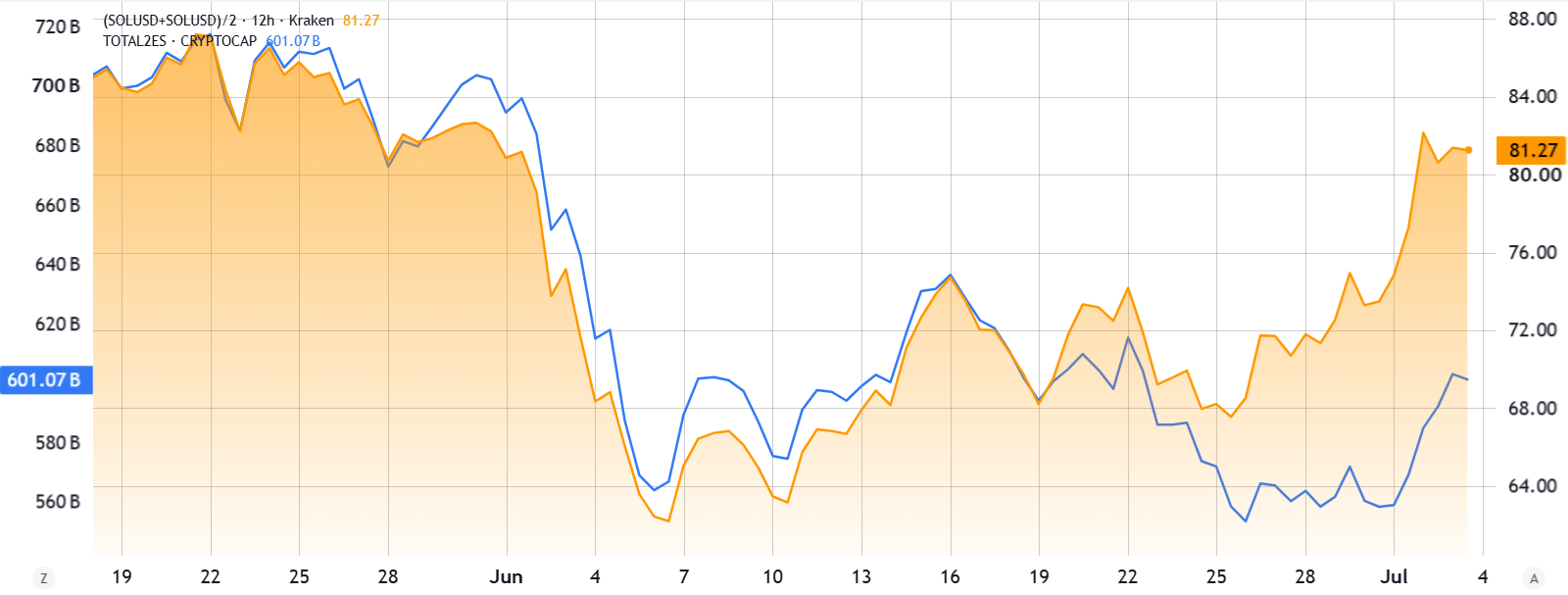
Solana’s SOL token jumped to its highest mark in over 30 days on Friday at $83, marking a decoupling from the altcoin market. SOL’s rally gained steam from a surge in tokenized trading volume on Solana, inflows of stablecoin liquidity, and an unexpected comeback in memecoin activity. Can SOL reclaim the $90 level?
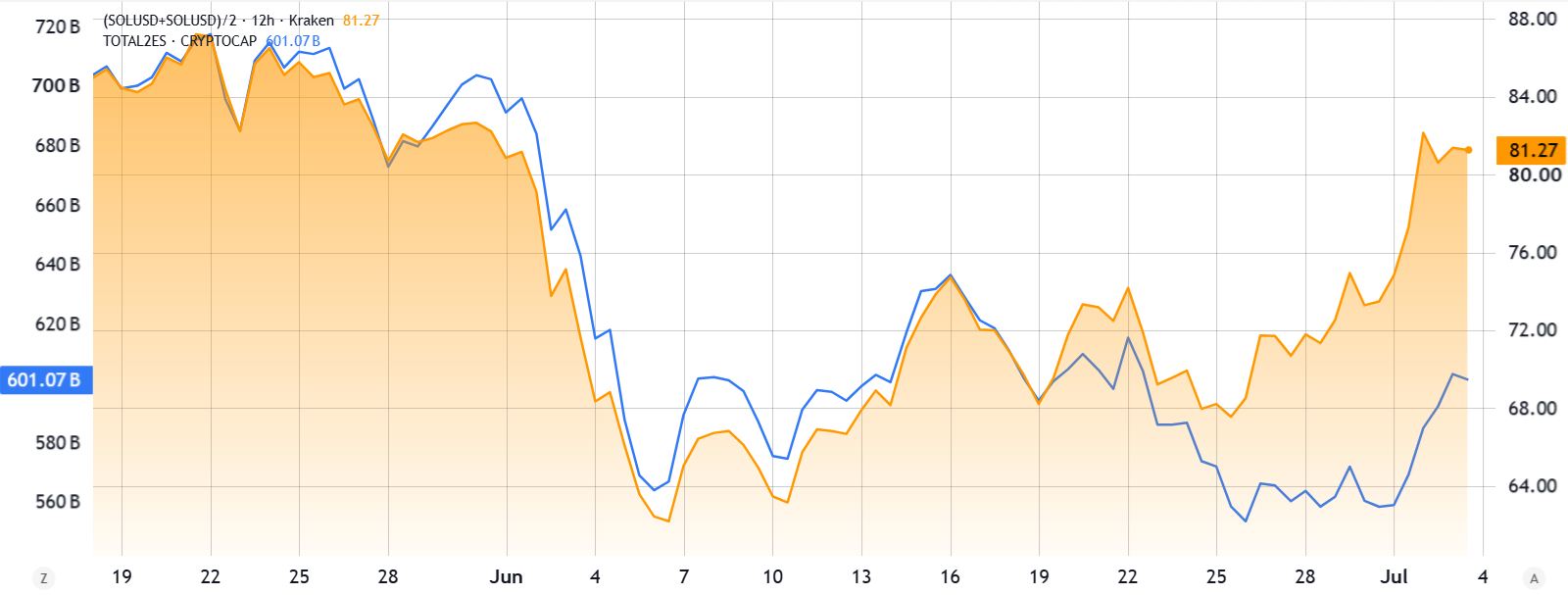
Total altcoin market capitalization, USD (left) vs. SOL/USD (right). Source: TradingView
SOL’s bullish momentum ignited on June 23, coinciding with cumulative tokenized stock transfers on Solana surpassing $10 billion. The launch of SpaceX shares trading by Backpack propelled Solana’s decentralized finance (DeFi) utilization. In contrast, the broader altcoin market extended its downtrend, hitting the lowest level since December 2023.
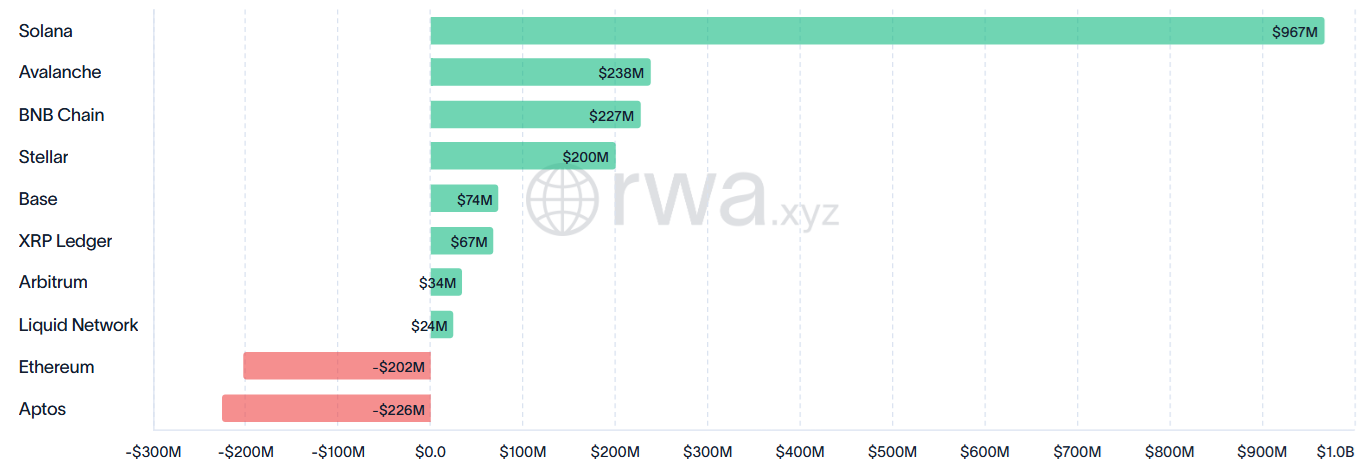
30-day tokenized assets net flows ex-stablecoins, USD. Source: RWA.xyz
Tokenized assets on the Solana network surged to a record-high $3.5 billion on Wednesday, up from $2.7 billion one month prior. The recent boost came from corporate credit tokens and stock market indexes, such as the S&P 500 and the Nasdaq-100. According to RWA.xyz data, Solana leads with 294,274 active addresses in the tokenized industry, followed by Ethereum with 204,955.
Memecoins, prediction markets surge may push SOL toward $90
The airdrop of The Black Bull (ANSEM) memecoin on Sunday re-ignited interest in the sector. The token, launched on Pump.fun, reached a $60 million market capitalization on Tuesday. The anonymous developer directed some 65% of the supply to the crypto influencer Ansem’s public wallet. The distribution lacked transparency, but involved 74,000 addresses over the initial 3 days.
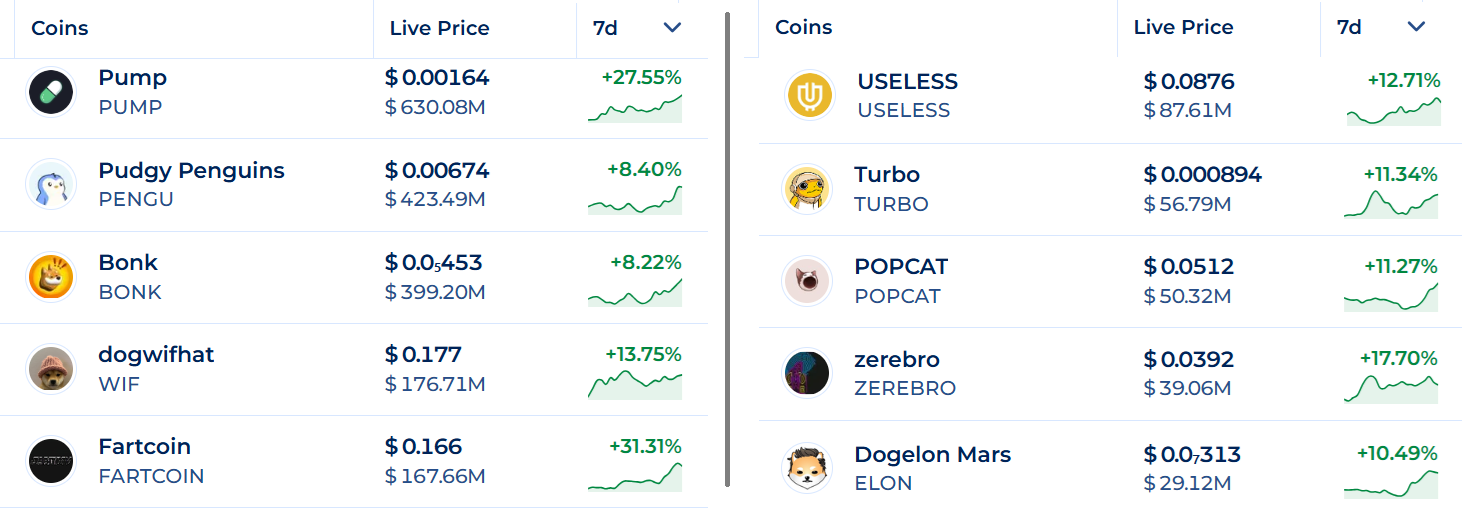
Top 7-day performances of Solana tokens. Source: CoinRanking
Multiple memecoins on Solana surged on the back of the memecoin airdrop, but the biggest winner was the Pump.fun platform token (PUMP). The 27% weekly gains were enough to send PUMP back into the top-100 crypto rankings, with a $630 million market capitalization. ANSEM memecoin extended its gains on Friday, reaching an all-time high market capitalization of $112 million.
The launch of World prediction markets integrated on Phantom wallet has created expectations for increased Solana activity. The project gathered nearly $890,000 in total value locked in two days and aims to compete with the extremely successful Polymarket amid the World Cup betting frenzy. Jupiter has also unveiled its prediction markets under beta test on June 29.
Related: US dominates Polymarket political bets despite geoblock–Report
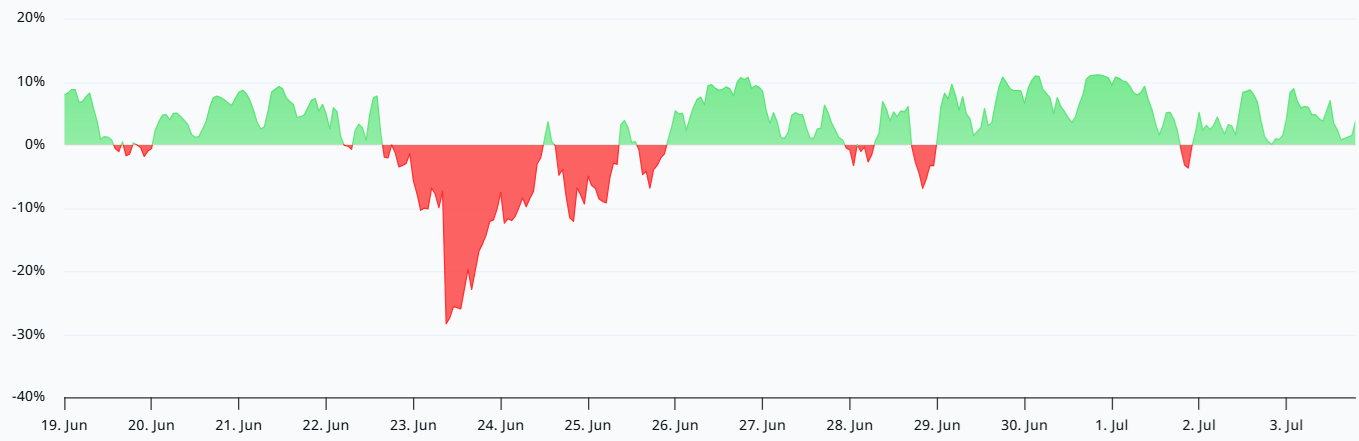
SOL perpetual futures annualized funding rate. Source: Laevitas
The appetite for bullish leveraged positions has vastly declined since Wednesday, when SOL’s price crossed above $75 for the first time in 30 days. SOL futures annualized funding rate dropped to 3% on Friday from an 11% peak two days prior. Under neutral conditions, the indicator should range from 6% to 12% to offset the capital cost.
Investors are not comfortable betting on a SOL rally to $90 merely on the back of a temporary memecoin demand surge. Unless there is sustainable demand for blockchain activity, there are no apparent drivers for SOL to further widen its performance gap relative to the remaining altcoins.
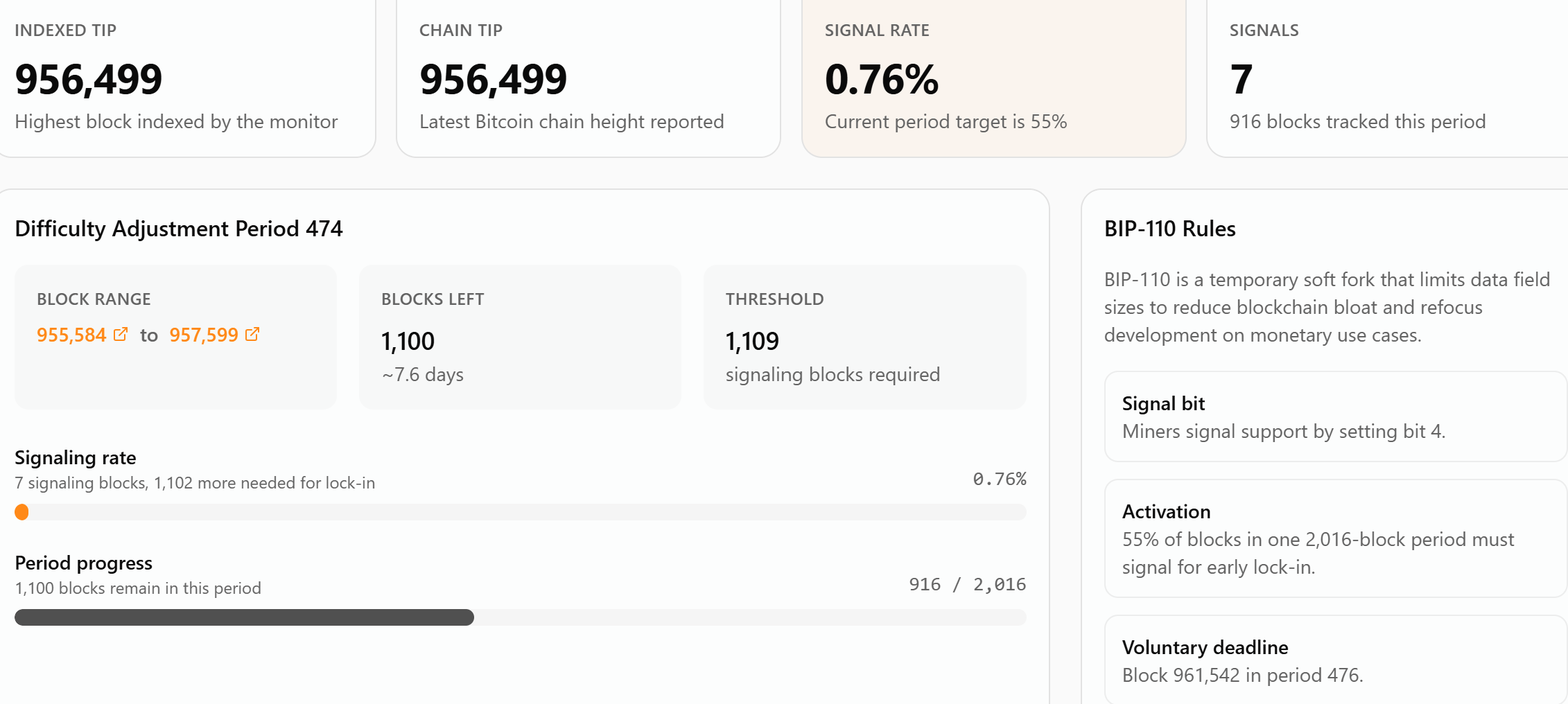
Ordinals developers say their technology will survive BIP-110, a proposed rule change that aims to stop people from storing files on Bitcoin. The fight comes down to one question. Should Bitcoin (BTC) handle only money, or anything users pay for?
Inscriptions let people store images and text on the Bitcoin blockchain, similar to NFTs. BIP-110 would block most of that data for one year. Supporters call it spam, while critics say Bitcoin should stay open to everyone.
What Would BIP-110 Change for Bitcoin?
Every Bitcoin transaction can carry a little extra data, and inscriptions use that space to store pictures and messages forever. The proposal would shrink the allowed space to 256 bytes per piece, about one short paragraph of text.
That limit would break the storage method inscriptions use today. The rule would last for one year, then switch off automatically, and old coins would not be affected.
Its author, who writes under the pen name Dathon Ohm, credits Bitcoin Knots maintainer Luke Dashjr for the first draft.
Miners vote by adding a small flag to the blocks they mine. The plan needs 1,109 flagged blocks out of 2,016 in a two-week window. However, the public monitor counted just three flagged blocks as of June 30, under 1%.

Support has never passed 1% since voting opened in December 2025. The best two-week stretch reached 0.79% in mid-June.
Here is the twist. The plan does not need a majority to activate. From around early August, computers running the BIP-110 software will reject blocks that do not carry the flag.
Blockstream CEO Adam Back has warned of fork risk, meaning Bitcoin could split into two competing versions. MicroStrategy’s Michael Saylor called the plan a self-inflicted risk.
Dashjr, for his part, framed the stakes as existential on Thursday.
“If BIP110 fails, Bitcoin fails with it. I am not interested in any CBDC, much less an unregulated CBDC pretending to be decentralised,” he wrote.
Follow us on X to get the latest news as it happens
A CBDC is a government-issued digital currency. In his view, a Bitcoin that cannot reject spam loses what makes it different.
Ordinals Developers Say They Are Ready
On July 2, Ordinals developer lifofifoX published a fix that stores data in a new way. It cuts files into small, allowed pieces instead of using the method that BIP-110 bans. In short, inscriptions would keep working even if the rule passes.
Ordinals creator Casey Rodarmor approved the fix the same day.
“Looks good to me! Let’s wait until BIP-110 activates to merge this,” Rodarmor wrote on GitHub.
The other side has already hit back, filing a counter-update to Bitcoin Knots, the software most BIP-110 supporters run. He argues the software simply does not notice the new format, letting it slip past the size checks.
The back-and-forth echoes an earlier inscription debate that also split the community.
Money sits at the center of the fight. In October 2024, Runes, a similar data-based format, drove a 32% fee increase that paid miners.
In contrast, supporters say the volunteers who run Bitcoin’s network computers must store all that data forever and get nothing for it.
The forced voting phase is about five weeks away. Back has already dismissed the August deadline as a path to a minority altcoin, a spinoff coin few would follow.
The coming weeks will show whether the miner’s silence means opposition or indifference.
The post Bitcoin Developers are Fighting Over What the Blockchain is For appeared first on BeInCrypto.

A new BeInCrypto Intelligence report, built with market data from RWA.xyz and feedback from BeInCrypto’s Expert Council, tracks roughly $60 billion in tokenized real-world assets across more than 7,000 products and 12 asset classes.
The findings show a market that is growing, but still narrow.
- Just 62 assets hold 88% of total value. Five products account for roughly half the market: Figure HELOC, Circle USYC, Tether Gold, BlackRock BUIDL, and Justoken JMWH.
- The activity gap is just as stark. Across 1,289 tokenized assets valued above $100,000, 910 assets worth $32.9 billion showed zero weekly transfers.
- Access is also limited. The report found that 97% of the market sits outside US retail reach. Only about $1.7 billion is legally accessible to US retail investors.
Meanwhile, tokenized stocks are growing fast by product count, but the report found that 59% of stock tokens provide synthetic price exposure rather than actual ownership of the underlying shares.
These findings raise a direct question: is tokenization failing to deliver on liquidity, or is the market still in an early infrastructure phase?
BeInCrypto asked five industry executives to respond to the report’s findings.

Securitize: The First Phase Was Never About Public Trading
Tal Elyashiv, Co-Founder and Managing Partner of SPiCE Venture Capital and Co-Founder of Securitize, said the report’s finding on tokenized equities points to a real structural issue.
“My stance on what the report shows about tokenizing shares/equity, is that this tokenization needs to be at the source. Tokenization that does not include full ownership is problematic at best, and completely wrong IMHO. This is exactly what Securitize is doing.”

Elyashiv also argued that low transfer activity should not be read as failure in every case. Many early tokenized products were designed for institutional issuance, compliance, and settlement, rather than public secondary trading.
“Many of the first assets tokenized were funds (VC funds, private funds). Tokenization in these cases was not done to facilitate retail/public trading, but rather to upgrade institutional issuance infrastructure, compliance, and settlement. BUIDL for example, was created for institutional TradFi and DeFi use cases (and this is what it serves)”
That view matches one of the report’s central distinctions. Some assets are Distributed and can move across public blockchain rails. Others are Represented, using blockchain mainly as a digital record of an off-chain position.
For Elyashiv, that first stage had to prove resilience before tokenized assets could move into broader distribution.
“The previous stage needed to succeed and show resilience, as well as regulatory clarity, before moving to the public trading stage. But we are entering that phase.”

Raiku: Activity Depends on Predictable Execution
Robin Nordnes, CEO and Founder of Raiku, said the dormancy data points to a deeper infrastructure problem.
The report found that more than half of tokenized market value showed no weekly transfer activity. Nordnes said this is not mainly about asset quality or regulation. He said institutions need predictable execution before they actively manage capital on-chain.

“The dormancy finding doesn’t surprise me, and I don’t think it’s primarily a regulatory story or an asset quality story,” Nordnes asserts. “What we hear consistently from institutional allocators is that they won’t actively manage capital on-chain until they can answer two questions with confidence: will my transaction execute, and when… For passive holding that’s tolerable. For active trading, collateral management or intraday rebalancing, it isn’t.”
That issue becomes more important if tokenized assets are used for active trading, collateral management, or daily fund operations. In those settings, uncertainty around settlement timing can affect spreads, liquidity buffers, and portfolio decisions.
“The transaction fee is actually the smaller part of the problem,” Nordnes explains. “The bigger cost of execution uncertainty is everything that sits around it: the wider spreads you need to run if you can’t guarantee timing, the liquidity buffers you hold because you might not execute when you need to, the positions you simply don’t take because the uncertainty makes the trade unmodelable.”
D3: The Weak Spots Show Where Growth May Come From
The report found that only one of 12 asset classes has reached production-grade maturity: US Treasury debt.
Fred Hsu, Co-Founder and CEO of D3, said that finding should not be read only as a weakness. Instead, he said it shows where tokenization may have the most room to create value.

“Only treasuries have reached production grade so far, and almost every other class is still concentrated or experimental. That looks like a weakness, but it is really a map of where the value is. The classes that never matured are the fragmented, illiquid markets traditional finance never priced well, because tracking ownership and moving value cost too much. The asset was always real, what was missing was a way to reach it. The infrastructure that finally reaches those markets is what decides where the next phase of growth comes from,” Hsu told BeInCrypto.
Treasuries are easier to tokenize because the asset class is liquid, familiar, and easier for institutions to assess. More complex assets, including private credit, commodities, real estate, and tokenized equities, still face legal, operational, and distribution barriers.
TransFi: Stablecoins Show Where Tokenization Already Works
Raj Kamal, Founder and CEO of TransFi, said the report’s findings should be considered alongside stablecoins, which the report excludes from its core $60 billion RWA market figure.
Kamal argued that stablecoins remain the clearest example of tokenization solving real-world problems at scale.

“In my view, the real RWA tokenization that is solving real world problems is stablecoins. Where there is a tokenization happening of a real world asset – the US dollar. Through USDC and USDT, billions of dollars of stablecoins are making remittances, B2B flows, payroll & freelancer payments, ecommerce checkouts, corporate treasury flows and forex flows and many other payments faster, easier, more predictable and cheaper.”
That argument does not erase the liquidity gap in tokenized securities and funds. But it shows that tokenization can work when the product solves a clear workflow problem.
Kamal said the next wave of adoption may come from payments and corporate use cases, where stablecoins already have strong demand.
“And the proof points come from an ever-increasing number of large traditional institutions looking to get into stablecoin issuance, Western Union, PayPal, Banks and others. And the reality is that we are just scratching the surface of the multi-trillion dollar traditional payments that is likely to move on to stablecoins. We should be celebrating this clear game changer in global payments as proof of RWAs working,” Kamal notes.
Brickken: The Market Is Still Building the Access Layer
Edwin Mata, CEO of Brickken, said the report’s numbers reflect a market still early in institutional adoption.
He said the first phase of tokenization focused on trust, regulatory readiness, and compliant infrastructure. The next phase will depend on whether tokenized assets become easier to access and use.

“These numbers make sense and reflect the current state of the market, tokenization is still early in institutional adoption and that’s how it was supposed to be. The first phase was always about trust: proving the tech works, meeting regulatory bars, getting compliant infrastructure in place. In essence, that groundwork isn’t wasted time but rather the foundation on which everything else will be built.”
Mata compared the path ahead to stablecoins. In his view, tokenized assets will grow when they solve practical business problems, not simply because they exist on-chain.
He said the winners will be the platforms that make tokenized assets discoverable, interoperable, and usable in real workflows.
“Tokenized markets are heading the same direction, as regulation clarifies (Clarity Act or MiCA in Europe is a good example) and infrastructure matures, the winners will ultimately be whoever builds the access layer: discovery, interoperability layers, the infrastructure that turns a tokenized asset from a static record into something businesses and institutions can actually rely and build on.”
The Takeaway: Tokenization Has Value, But Not Yet Depth
The report does not show that tokenization is dead. It shows that the market is still early in its structure.
The assets exist. Major institutions are involved. Treasuries have reached production-grade maturity. But much of the market remains concentrated, restricted, or inactive on-chain.
That makes the next phase clear. Tokenization will not scale only by minting more assets. It needs better settlement, compliance, distribution, execution, and access.
The first phase proved that real value can be represented on-chain. The next phase will determine whether those assets can become active financial markets.
Read the full BeInCrypto Intelligence report here.
The post The Real State of Tokenization: Experts React to the RWA Market’s Liquidity Problem appeared first on BeInCrypto.


Israeli prosecutors on Friday indicted Eli Lavon, a 21-year-old US citizen, for allegedly spying on behalf of Iranian intelligence in exchange for roughly $1,379 in crypto. The case shows Iran’s alleged crypto recruitment playbook maturing into gig work for espionage.
Lavon is reportedly the first American indicted in Israel’s spy wave, which counts at least 60 defendants since 2023. In many cases, small payments rather than ideology appear to drive recruits.
A Job Ad, Three Phones, and $1,379
According to the indictment, Lavon answered a Telegram job advertisement in November 2025 while visiting family in the US. A handler working for Iranian intelligence began assigning tasks once he returned to Israel.
He allegedly filmed an abandoned building and a grocery store in Jerusalem. He also left dead drops, including a USB drive wrapped in a 50 shekel note.
The crypto arrived in small batches, first hundreds of dollars, then about $518 from a second handler. The output had real military value, however. Several sites filmed by alleged recruits in this wave were later struck by Iranian missiles.
Arrested on June 9, Lavon faces two counts of contact with a foreign agent and 14 counts of communicating information to the enemy.
“This indictment illustrates how foreign intelligence agencies attempt to exploit the digital sphere to identify, recruit, and operate individuals from within Israel…” Ronit Shentzer Yaakobi of the Jerusalem District Attorney’s Office said in a statement.
Follow us on X to get the latest news as it happens
Crypto Recruitment Moves From Spying to Sabotage
The playbook no longer stops at surveillance. HAYI, a group that surfaced online in March, has claimed 17 arson and sabotage incidents across seven European countries. Analysis suggests it may be a “fabricated front” run by Iran-linked operatives using paid, disposable recruits.
British police have detained at least 28 people over the London attacks alone. A Belgian teenager was reportedly paid to stage an Antwerp arson later claimed by HAYI. Another teen charged over a London synagogue fire told investigators he did not know what the building was.
Each element mirrors gig work. Tasks arrive through consumer apps, payment clears per job, and recruits stay ignorant of the wider operation. Researchers describe the tactic as hybrid warfare because paid intermediaries blur any link to state planners.
The economic factors set this model apart from traditional terrorism financing. When OFAC sanctioned 134 ISIS-K wallets on July 1, analysts traced roughly $1.4 million into them since 2023. Lavon’s alleged payroll was about a thousandth of that, and Tether still froze 131 sanctioned wallets within a day.
Large networks, in other words, have become visible. Courts have secured terrorism financing convictions on onchain records, and probes into Iran-linked crypto networks chased billion-dollar flows.
A $500 gig payout offers far less signal, a gap that US lawmakers have barely addressed in their debate on illicit finance loopholes.
Whether blockchain surveillance built for large transfers can adapt to micro-payments may decide how quickly such networks unravel.
The post Iran’s Alleged Crypto Spy Paid Just $1,379 for Israel Secrets appeared first on BeInCrypto.


South Korean crypto exchange Upbit has rejected claims that it is participating in the issuance of Open USD after being listed among more than 140 organizations associated with the proposed stablecoin.
Summary
- Upbit says it is not participating in Open USD issuance despite Dunamu being listed by Open Standard.
- Samsung, Shinhan, and K-Bank have also said they have not formally agreed to join the stablecoin initiative.
- Unfinished South Korean stablecoin rules continue to delay firm commitments from potential participants.
According to a statement issued by Upbit, the exchange has not agreed to issue or help launch the dollar-backed stablecoin, despite its operator, Dunamu, appearing on Open Standard’s published list of participating businesses. The company said it had only expressed a willingness to consider joining the OpenStandard ecosystem if it expands in the future.
The clarification follows similar statements from several South Korean companies that were also named by Open Standard earlier this week. Those responses have raised new questions about how many organizations have formally committed to the project after Open Standard introduced OUSD as a stablecoin backed by the U.S. dollar.
South Korean firms deny formal participation
Following Samsung Electronics’ earlier response, more companies have now distanced themselves from Open Standard’s announcement. As reported by crypto.news, Samsung said it had not held formal discussions with the project and did not know what role it was expected to play.
Dunamu, Shinhan Bank and K-Bank also confirmed they had received inquiries from Open Standard but said they were still reviewing the proposal and had not approved participation.
Those statements differ from Open Standard’s announcement on Tuesday, which described more than 140 organizations, including Visa, Mastercard, BlackRock, Google, Samsung Electronics and Dunamu, as businesses that had “signed up to use” OUSD.
The project also described many of those companies as founding partners that would participate in governance and share income generated from the stablecoin’s reserve assets.
Open Standard has also said participating businesses would be able to mint and redeem OUSD without paying fees or facing volume limits. According to the project’s announcement, earnings generated from reserve assets would be distributed among participating companies.
Regulatory uncertainty continues to cloud commitments
Outside the consortium debate, industry figures have questioned parts of Open Standard’s proposal. Circle CEO Jeremy Allaire previously raised concerns about whether free, unlimited minting and redemption could be maintained over time.
Separately, ARK Invest research director Lorenzo Valente described the announcement as a “giant” letter of intent, suggesting many of the listed relationships may still be preliminary rather than finalized.
South Korea’s regulatory position has added another layer of uncertainty. The country has not yet passed the Digital Asset Basic Act, leaving unresolved who will be allowed to issue stablecoins and what role different businesses can legally perform within such networks.
As crypto.news previously reported, lawmakers have continued debating whether stablecoin issuance should be limited to banks or extended to qualified non-bank companies. Until those rules are finalized, questions remain over licensing requirements, reserve management standards and the responsibilities of companies joining stablecoin ecosystems.
With several listed organizations now publicly stating that discussions remain preliminary, Open Standard’s published consortium has come under closer scrutiny as companies continue evaluating whether to participate once South Korea’s regulatory framework becomes clearer.

Belgian authorities have arrested a 19-year-old man they say was a central figure in a European phishing and money-laundering operation that netted more than €500,000 by targeting victims with fake government emails and phone calls. The suspected scheme relied on remote-access software to carry out fraud, and investigators say cryptocurrencies were used to move and launder the proceeds.
According to a Federal Judicial Police report cited by Belgian law enforcement, the arrest took place in Antwerp at an Airbnb, where a second suspect was also found. The investigation began in March 2026, when regional authorities escalated phishing as a priority.
Key takeaways
- Belgian police say the suspected phishing crew used fake government communications to trick victims into installing remote-access software.
- The operation allegedly involved money mules and cash carriers before converting proceeds into cryptocurrencies.
- Investigators characterize crypto as serving multiple roles in phishing—both as part of laundering workflows and as an enabling tool.
- Broader industry data cited in the report reinforces that phishing and social engineering remain leading drivers of crypto theft.
- Recent warnings about malicious ads on Google highlight how attackers are continuing to target users through mainstream search advertising.
Arrest in Antwerp and a laundering pipeline using crypto
In the Belgian case, the Federal Judicial Police reported that the suspected mastermind was detained in an Airbnb in Antwerp. A second suspect was discovered at the location as well, and the primary suspect was subsequently brought before an investigating judge, who issued an arrest warrant.
While authorities did not detail the full operational workflow in the cited report, they described the alleged criminal method: victims were contacted via fake government emails and phone calls designed to induce them to install remote-access software. That is a classic social-engineering pattern in phishing campaigns, because it converts a digital entry point into remote control capabilities.
Police also said the network used intermediaries—money mules and cash carriers—to process and move funds before laundering. The critical addition for the crypto angle is that investigators allege the gang ultimately laundered proceeds through cryptocurrencies, demonstrating how digital assets can be integrated into stages of criminal finance rather than remaining isolated as a payment layer.
Why this matters for crypto users and compliance
The Belgian arrest underscores a recurring reality for the crypto ecosystem: many of the highest-impact losses do not begin with vulnerabilities in smart contracts or protocol code. Instead, fraudsters frequently use human-targeted tactics to obtain access to accounts, wallets, or other assets—and then use crypto to obscure trails.
From an investor and operator standpoint, this has practical implications. It suggests that even if a platform’s underlying technology is secure, users may still face outsized risk through phishing campaigns that impersonate trusted entities. It also points to why transaction monitoring and compliance controls remain relevant even when the entry attack is “off-chain.”
For builders and exchanges, the lessons tend to be operational rather than technical: account security, verification processes for high-risk requests, user education, and fraud response playbooks can all influence outcomes when scams target individuals rather than software.
Phishing and social engineering still dominate crypto losses
The broader threat landscape aligns closely with the Belgian case. Phishing and social engineering scams are described as major contributors to crypto theft, including in reported loss figures for early 2026.
According to Hacken, phishing and social engineering accounted for $306 million of the $482 million lost in the first quarter of 2026. That data, as presented in the source reporting, frames phishing as the most prevalent mechanism behind real-world losses—even as decentralized finance security debates often focus on exploits and protocol failures.
Attackers have long exploited predictable human behavior: creating urgency, impersonating authority figures, and using convincing messaging to bypass caution. The persistence of those tactics is why the crypto community continues to treat user manipulation as a top-tier security concern, not a fringe risk.
Malicious Google ads and evolving tactics
Recent warnings show that phishing campaigns are not limited to email and direct calls. On May 25, onchain analyst “b-block” warned that scammers used Google to run malicious phishing ads impersonating decentralized exchange Uniswap, reportedly stealing more than $400,000 from victims. The warning adds another layer to the problem: threat actors may be leveraging established advertising ecosystems to reach users at scale.
In parallel, DeFiLlama said fake ads on Google are a common source of phishing attacks. Separately, Crypto cybersecurity group Security Alliance reported in April that there was a significant uptick in phishing activity on Google Search in March. Together, these points indicate that mainstream discovery channels—search ads and ad placements—can become a distribution method for crypto scams.
Blockchain security company CertiK’s Skynet report also highlighted phishing and social engineering among leading tactics used by malicious actors associated with North Korea-linked operations. The source further notes that CertiK attributed the 2022 Ronin Bridge exploit to a spearphishing campaign that involved a fake LinkedIn recruiter and a malware-laden PDF—an example of how phishing can lead into broader compromise chains.
What to watch next
With Belgian authorities tying phishing directly to crypto laundering techniques, and with multiple reports indicating phishing remains the largest share of reported losses, the next signal to track is whether law enforcement actions and platform security measures reduce scam distribution channels—especially ads and impersonation attempts—or whether attackers continue to shift to new mainstream touchpoints faster than users can adapt.

England World Cup kick off may shift amid storm fears

The Nasdaq 100’s Fear Gauge Just Spiked

Trump taps Robinhood for new child investment account rollout


-

 Tech6 days ago
Claude Code turned every engineer into three. Now companies need more product thinkers
-

 Crypto World4 days ago
Strategy authorizes up to $1.25B in Bitcoin sales under new capital plan
-

 Politics11 hours ago
The House | “Reframing the debate from a binary discussion of winners and losers”: Yuan Yang reviews ‘We Are Not Machines’
-

 Tech6 days ago
Bluekit phishing kit adopts browser-in-the-middle for login theft
-

 News Videos5 days ago
MAJOR BITCOIN & MARKET UPDATE!!!! (MUST WATCH ASAP!!!)
-

 Fashion5 hours ago
Weekend Open Thread: High Hopes
-

 Tech4 days ago
Anonymous researcher drops 0-day ‘exploitarium’ repo
-

 Crypto World6 days ago
Coinbase, Circle Deepen Crypto Stock Losses Despite Resilient S&P 500
-

 Business4 days ago
Australia treasurer says alleged access of prime minister’s bank data ’incredibly concerning’
-

 Crypto World7 days ago
Kraken's xStocks Opens Bending Spoons IPO Registration to EEA Retail
-

 Tech6 days ago
Russian hackers now target Signal backup recovery keys
-
 Business4 days ago
The AI boom won’t burst all at once. It will pop in ‘rolling bubbles’: Macquarie
-

 Sports2 days ago
Broncos roster: OL Ben Powers (No. 74) entering final year of contract
-

 Tech6 days ago
Silicon Valley paid to kill AI regulation, now it wants the rules back
-

 NewsBeat3 days ago
Presenter Caroline Flack’s brother Paul Flack dies aged 55
-

 Crypto World2 days ago
Binance stock trading tops $1B in first month after launch
-

 Tech6 days ago
OpenAI mulls delaying IPO over valuation concerns
-
 NewsBeat2 days ago
New exhibition reflects five decades of movement between island of Ireland and GB
-

 Crypto World2 days ago
Alibaba-affiliate Ant Group enters the humanoid robot market with 12 deals
-

 News Videos4 days ago
How to Build INSANE Live Financial Dashboards With Claude
You must be logged in to post a comment Login