
Crypto World
Ethereum (ETH) Is About to Break a Key Barrier: Good News for All Altcoins?

July was quite successful for the second-largest cryptocurrency, with its price rebounding by 18.5%.
Many market observers expect much stronger upside ahead, with that progress potentially spilling over into the broader altcoin sector.
ETH’s Next Targets
The cryptocurrency made several attempts last month to reach the $2,000 psychological level but couldn’t succeed and currently trades at around $1,850. X user Ted paid special attention to that level, predicting a pump to $2K if that zone holds.
“Spot buying is happening, which is a good sign,” he added.
Michael van de Poppe shared a similar thesis. He assumed that holding $1,800 could lead to breaking the $2,000 barrier, and after that “it’s a fast run to $2,300 and higher.”
For their part, Celal Kucuker argued that ETH has “one of the strongest charts” the analyst has ever seen, envisioning an explosion to as high as $13,000 in 2026-2027. Rising to such a peak seems rather implausible considering the persistent bear market and the current prices, but crypto has surprised the community many times throughout its history.
According to the X user, the CLARITY Act could accelerate that move. The long-awaited US crypto bill is meant to give clear rules for digital assets, but its progress has stalled again after the White House failed to respond to a key counterproposal sent by Senators Thom Tillis and Ruben Gallego.
Meanwhile, the amount of ETH stored on centralized exchanges continues to hover around a 10-year low of 15.1 million coins, which supports the bullish perspective since it leads to reduced selling pressure.

Altcoins to Explode?
The analyst who goes by Dami-Defi on X presented another angle of the situation. They think ETH is about to break a one-year downtrend, which could be a precursor to a substantial rally and might be bullish for the broader altcoin sector.
X users Cup and Gordon also laid out their thoughts on the matter. The former believes that altcoins are poised for a serious pump, forecasting that the biggest breakout of this cycle is coming in the next few weeks.
The latter reminded that gold and silver already had their moments of glory, adding that “bonds are cooked,” while “stocks are looking weak.” That said, they moved their focus to the altcoins, claiming “this is where the biggest gains will be made next.”
The post Ethereum (ETH) Is About to Break a Key Barrier: Good News for All Altcoins? appeared first on CryptoPotato.



Well over $100 million worth of Bitcoin (BTC) has now been stolen through the ongoing Coldcard wallet exploit, said Galaxy Research, but market commentator Joe Consorti has argued that the attacker may struggle to spend much of that haul since every BTC is being tracked on the public blockchain.
Instead of focusing on the size of the theft alone, Consorti said the incident also shows an often-overlooked feature of the OG crypto: while private keys can be compromised, the movement of stolen units remains visible to law enforcement, exchanges, and blockchain analysts.
Transparency Leaves Stolen Bitcoin Under Watch
In a post on X, Consorti wrote:
“The thief who stole $100 million in BTC is going to have a hard time spending most of it. Every coin is sitting in plain sight, tracked by Galaxy, the FBI, and thousands of others.”
He added that Bitcoin “might be the worst money for crime ever invented.” In a video accompanying the post, the analyst pointed out that the exploit was not a failure of the Bitcoin network itself but of wallet software that generated weak seed phrases on affected Coldcard firmware released after March 2021.
He also noted that users who followed recommended self-custody practices still became victims because the underlying randomness used to generate wallet seeds had been weakened.
Galaxy Research has so far identified 1,596 BTC stolen across roughly 7,300 addresses in three confirmed attack waves. If suspected but unconfirmed activity is included, then the losses could reach 2,055 BTC, worth north of $130 million.
According to the firm, about 90% of the stolen Bitcoin has not been moved, while all the coins from the first three confirmed waves are still in wallets controlled by the attacker. It also said that it had shared all the confirmed attacker addresses with US law enforcement agencies, as well as crypto exchanges and blockchain investigation companies.
Despite the scale of the theft and the headlines it has since generated, BTC was trading near $64,000 at the time of writing, up 2% in the last 24 hours, a point Consorti cited as evidence that the market has largely separated the security failure from the Bitcoin protocol itself.
The first confirmed theft emerged on July 31, when 594.5 BTC was swept from about 500 addresses across four blocks. Coinkite, the company behind the Coldcard device, said that the affected seeds carry around 72 bits of entropy instead of the 128 bits they are supposed to have, making them guessable with enough computing power.
The company has since patched newer firmware but cannot fix seeds already generated on vulnerable devices and has advised users of its Mk3, Mk4, Mk5, and Q devices to move their funds to unaffected hardware.
Debate Continues Over Whether the Loot Can Be Laundered
Crypto commentator Shagun had the same idea as Consorti, arguing that blockchain analytics, compliance checks, and operational mistakes would make moving such a large amount of stolen Bitcoin far more difficult than stealing it. Instead, they advised the attacker to return the funds in exchange for a negotiated security bounty.
However, not everyone agreed that the thief would be unable to cash out, suggesting that they could cover their track using privacy tools such as mixers, privacy-focused coins, Taproot transactions, and the Lightning Network.
The post Coldcard Exploit Tops $100M as Expert Says Stolen BTC May Be Hard to Spend appeared first on CryptoPotato.
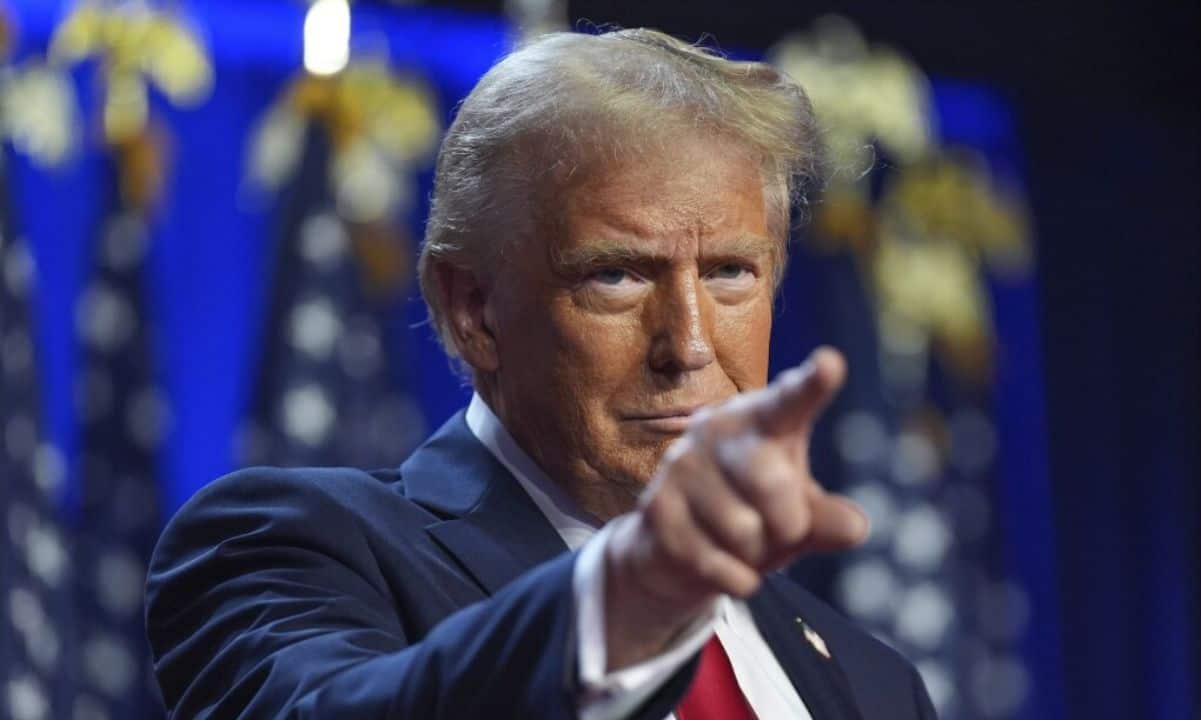
US Senators Elizabeth Warren and Richard Blumenthal have sent a letter to SEC Chair Paul Atkins asking the agency to investigate President Donald Trump’s meme coin, arguing it may have facilitated fraud or unlawful enrichment at the expense of retail investors.
The lawmakers cited reports showing that nearly a million investors collectively lost over $3.8 billion on the token between its launch in January 2025, just days before Trump’s inauguration, and the end of June 2026.
Within the same timeframe, the POTUS and his family have reportedly earned around $636 million through trading fees and other revenue streams connected to the token.
Warren and Blumenthal claimed that the asymmetry between investor losses and insider gains warrants a formal SEC probe into the project’s structure and marketing.
They pointed to allegations that some traders profited from the meme coin’s launch before the broader public could react, which raised some eyebrows about possible insider trading.
They argued that such actions and the subsequent TRUMP price slump of 98% since its all-time high may resemble a “soft rug pull.”
The letter references previous SEC enforcement actions against similar crypto schemes and recent warnings from certain state regulators, such as New York’s, about pump-and-dump and rug pulls in the meme coin niche.
Official Trump skyrocketed to over $70 within hours after launch, but it has crumbled to under $1.50 as of press time. It has also left the top 100 alts by market cap a year and a half after becoming a top 20 asset and the second-largest meme coin.
Meanwhile, the team behind the token has been linked to countless sales as the price tumbled.
The post US Senators Urge SEC to Probe Trump Meme Coin Over Billions in Investor Losses appeared first on CryptoPotato.
The crypto industry’s most important regulatory bill is stuck because of the president’s own memecoin. Senators Elizabeth Warren and Richard Blumenthal just asked the SEC to investigate while the Clarity Act’s ethics provision remains the last unresolved section blocking a vote. The irony is precise: the bill that would bring regulatory clarity to crypto cannot advance because the most powerful person in the country launched a token that embodies exactly the regulatory ambiguity the bill was designed to resolve.
Summary
- Senators Elizabeth Warren and Richard Blumenthal sent a letter to SEC Chairman Paul Atkins on August 4 requesting an investigation into $TRUMP, citing $3.8 billion in estimated investor losses and $636 million in reported profits for the president from the token.
- The Digital Asset Market Clarity Act, the crypto industry’s best prospect for comprehensive US market structure legislation, remains stalled because Democrats and Republicans cannot agree on an ethics provision governing government officials’ involvement in crypto projects.
- The SEC has already declared that memecoins are “generally outside its sphere of influence” and do not qualify as securities under existing law, making enforcement action on $TRUMP unlikely under the current commission.
- President Trump agreed to narrow restrictions on his crypto involvement, but Democrats rejected the proposal as insufficient, and bipartisan negotiators Thom Tillis and Ruben Gallego are attempting to draft compromise language that both parties can accept.
- The $TRUMP token peaked at approximately $46 in January 2025 and currently trades near $1.47, with the vast majority of the nearly one million buyers sitting on losses while the president’s entity collected revenue from transaction fees and initial allocation sales.
The letter arrived on the same day that crypto lobbyists in Washington were counting votes for the Clarity Act, the legislation that would for the first time define which digital assets fall under SEC jurisdiction and which belong to the CFTC. The bill has bipartisan support in principle. It passed committee with votes from both parties. The industry has spent millions pushing it toward a floor vote. And it is stuck, not on a technical question about token classification or a policy disagreement about decentralized exchange regulation, but on the question of whether the president of the United States should be allowed to profit from a memecoin while his appointees regulate the industry.
What the Clarity Act would actually do
The Digital Asset Market Clarity Act is designed to solve the jurisdictional ambiguity that has defined US crypto regulation since the industry’s inception. Currently, there is no clear statutory framework determining whether a given token is a security (regulated by the SEC), a commodity (regulated by the CFTC), or something else entirely.
The bill creates a functional test for determining a token’s regulatory classification. Tokens that are sufficiently decentralized, meaning no single entity controls them, would be classified as digital commodities and regulated by the CFTC. Tokens that function as investment contracts, where buyers depend on the efforts of a centralized team for returns, would remain securities under SEC jurisdiction.
The legislation also creates registration pathways for crypto exchanges, sets disclosure requirements for token issuers, and provides a framework for stablecoin oversight that complements the separate GENIUS Act focused specifically on stablecoins.
For the crypto industry, the Clarity Act represents the difference between operating in regulatory limbo and having a defined set of rules. Projects that have delayed US launches because of enforcement risk would have a path forward. Exchanges that have restricted token listings because of securities law uncertainty would have clearer criteria. Investors would have standardized disclosures that currently do not exist for most crypto assets.
The bill’s journey through Congress has been broadly supported by both parties. The political dynamic that historically divided crypto along partisan lines, with Republicans favoring lighter regulation and Democrats favoring stricter oversight, had begun to shift as both parties recognized the electoral weight of crypto-interested voters. The White House said in April that a deal was “very close.”
Then the ethics provision became the obstacle.
The ethics fight that froze everything
The core dispute is narrow but politically explosive: should the Clarity Act include provisions that restrict senior government officials, including the president, from directly profiting from crypto projects while in office?
Democrats argue that any comprehensive crypto regulation bill must address the conflict of interest created when the president launches a token, profits from it, and simultaneously appoints the regulators who oversee the industry. Without an ethics provision, they contend, the bill effectively legalizes a regulatory framework while leaving the most prominent conflict of interest in the industry unaddressed.
Republicans counter that the ethics provision is scope creep, that the bill’s purpose is market structure regulation, not ethics reform, and that adding restrictions targeted at a specific individual risks turning a bipartisan bill into a partisan weapon. The president agreed to accept limited restrictions, but the proposed language was so narrow that Democrats described it as meaningless in practice.
The negotiation is now in the hands of Senators Thom Tillis, a North Carolina Republican, and Ruben Gallego, an Arizona Democrat, who are drafting compromise language. The White House has been involved in the discussions but has not publicly committed to signing a bill with meaningful ethics restrictions. Every day the bill remains stalled, the industry operates without the regulatory clarity it was designed to provide.
The $TRUMP token: $636 million in, $3.8 billion out
The numbers around $TRUMP are what give the ethics debate its weight. The token launched on January 17, 2025, three days before the presidential inauguration. It peaked at approximately $46 within days and has since declined to roughly $1.47, a 97 percent drop from its all-time high.
According to blockchain data analyzed by The New York Times and confirmed by the president’s 2025 financial disclosure, Trump-linked entities earned approximately $636 million from the token through a combination of initial allocation sales and ongoing transaction fees collected by the protocol.
On the other side of the ledger, nearly one million buyers collectively lost an estimated $3.8 billion. The asymmetry is stark: for every dollar the president’s side earned, buyers lost approximately six dollars. This ratio is not unusual for memecoins, but the involvement of a sitting president in the profit-taking entity is unprecedented.
The token saw brief price spikes around two Mar-a-Lago gala events where top token holders were invited to dine with the president. These events temporarily reversed the price decline but did not sustain any recovery. The galas themselves highlighted the conflict: the president was simultaneously the most powerful figure in crypto regulation and the host of an event that rewarded the largest holders of his personal memecoin.
What Warren’s letter asks and why it probably will not work
The Warren-Blumenthal letter to SEC Chairman Paul Atkins requests a formal investigation into whether $TRUMP involves “potentially fraudulent enrichment schemes with implications for market integrity and stability.” The letter cites the $3.8 billion in estimated buyer losses and the $636 million in presidential profits as evidence of an asymmetry that warrants regulatory scrutiny.
The request faces several obstacles. First, the SEC under Chairman Atkins has taken a materially different approach to crypto enforcement than the Gensler-era commission. The current SEC has paused or dropped numerous crypto enforcement actions and adopted a policy of regulation through rulemaking rather than enforcement.
Second, the SEC issued a staff statement in February 2025 explicitly declaring that memecoins are “generally outside its sphere of influence.” The statement said memecoins have “limited or no use or functionality” and do not qualify as securities under the Howey test because buyers are not investing based on the expectation of profits from the efforts of others. By the SEC’s own published position, $TRUMP is not a security and therefore falls outside the agency’s enforcement jurisdiction.
Third, Atkins was appointed by President Trump. Asking a presidential appointee to investigate the president’s personal financial interests is a political act more than a regulatory one. Warren and Blumenthal know this. The letter’s primary function is political: it creates a public record of the conflict of interest and forces a response (or conspicuous non-response) from the SEC that can be cited in the Clarity Act debate.
The letter is a negotiating tool dressed as a regulatory request. Its real audience is not the SEC. It is the handful of senators whose votes will determine whether the Clarity Act passes with or without meaningful ethics restrictions.
The SEC’s memecoin blind spot
The SEC’s February 2025 memecoin statement created a regulatory gap that the $TRUMP situation has exposed. By declaring memecoins outside its jurisdiction, the SEC effectively created a category of financial product that no federal regulator oversees.
The CFTC regulates commodities and derivatives but has not asserted jurisdiction over memecoins. The FTC regulates consumer fraud but has not acted on memecoin losses. State securities regulators have limited resources and jurisdictional reach for tokens that trade globally.
This gap means that a sitting president can launch a token, collect hundreds of millions of dollars in revenue, watch nearly a million buyers lose billions, and no federal agency has clear authority to investigate or act. The Clarity Act was supposed to fill gaps like this by creating a comprehensive framework for token classification. Instead, the most prominent example of the gap’s consequences is the reason the bill cannot pass.
The irony compounds. If the Clarity Act passes without an ethics provision, it would create a legal framework that implicitly permits government officials to profit from token launches. If it passes with a strong ethics provision, it would retroactively create restrictions that apply to the president’s existing token. If it does not pass at all, the entire industry continues operating without the regulatory clarity that would attract institutional capital, encourage responsible innovation, and protect retail investors from exactly the kind of losses that $TRUMP buyers experienced.
The crypto industry’s impossible position
The crypto industry’s Washington lobby has spent years and hundreds of millions of dollars building bipartisan support for regulatory legislation. The Clarity Act is the culmination of that effort. And it is being held hostage by a conflict of interest that the industry cannot publicly criticize without alienating the president whose administration has been broadly favorable to crypto.
Major industry trade groups have carefully avoided commenting on $TRUMP specifically. Their public statements focus on the importance of passing the Clarity Act and avoid any reference to the ethics provision. Privately, industry leaders acknowledge that the president’s memecoin has complicated their legislative strategy. The token’s existence makes it harder for Democrats to vote for the bill without ethics restrictions, and harder for the industry to argue that ethics restrictions are unnecessary without appearing to endorse a presidential conflict of interest.
Some industry participants have taken a different approach, arguing that the $TRUMP situation is precisely why clear rules are needed. Under a comprehensive regulatory framework, the argument goes, a presidential memecoin would either be subject to disclosure requirements and trading restrictions or it would be clearly categorized as outside the regulated perimeter. Either outcome would be better than the current ambiguity, where no one knows which rules apply and no agency claims jurisdiction.
The problem with this argument is timing. The industry wants the bill passed now, and the ethics provision is the obstacle to passing it now. Any delay risks losing the political window entirely. If the bill carries over into a new Congress, it must restart the committee process, and the bipartisan coalition that brought it this far may not reassemble.
What happens if the bill dies
If the Clarity Act fails to pass this session, the consequences extend beyond the crypto industry’s policy wishlist.
The SEC would continue operating under the enforcement-first approach of previous years or the current hands-off approach, depending on which administration is in power. Neither approach provides the predictable, statute-based framework that institutional capital requires. Major financial institutions that have waited for regulatory clarity before offering crypto products would continue waiting or would structure their offerings under existing securities law, which adds compliance costs that make many crypto products uneconomical.
Token projects would continue launching in offshore jurisdictions and restricting US access, as they have for years. The US share of global crypto innovation and trading volume would continue declining relative to jurisdictions like the EU, which implemented its MiCA framework in 2024 and is already attracting projects that want regulatory certainty.
Retail investors would remain in the current environment where memecoins exist in a regulatory vacuum, where disclosure requirements are absent, and where losses like the $3.8 billion from $TRUMP buyers have no regulatory pathway for investigation or remedy. The Clarity Act does not specifically address memecoins, but its classification framework would at minimum force a determination about whether specific tokens fall under SEC or CFTC jurisdiction, ending the current situation where no agency claims responsibility.
The deepest irony is that the $TRUMP token is the strongest argument for why the Clarity Act is necessary, and simultaneously the reason the Clarity Act cannot pass.
What to watch
The Tillis-Gallego compromise language. The bipartisan pair negotiating the ethics provision will determine whether the bill lives or dies in this Congress. Watch for a draft that restricts government officials from launching new tokens while grandfathering existing ones, a structure that addresses Democratic concerns without requiring the president to divest from $TRUMP.
The SEC’s response to Warren’s letter. A formal investigation is unlikely, but the SEC must respond in some form. The nature of the response, whether a brief dismissal or a detailed explanation of jurisdictional limitations, will signal how the current commission views its role in the memecoin space.
The September legislative calendar. Congress returns from recess with a narrow window before the midterm election cycle consumes legislative bandwidth. If the Clarity Act does not advance in September and October, its chances of passing this session diminish sharply.
$TRUMP token price action. Any significant price movement in $TRUMP, up or down, will reignite media attention on the ethics question. A rally would raise questions about insider trading. A further decline would increase the estimated buyer losses and strengthen the case for an investigation.
Other government official tokens. If $TRUMP’s existence normalizes the practice, other elected officials may launch their own tokens. Each new launch would add pressure to the ethics provision debate and make the Clarity Act’s passage without restrictions increasingly untenable.
What is the Clarity Act?
The Digital Asset Market Clarity Act is proposed US legislation that would create a comprehensive framework for classifying crypto assets as either securities (regulated by the SEC) or digital commodities (regulated by the CFTC). It would also create registration pathways for crypto exchanges and set disclosure requirements for token issuers, providing the regulatory clarity the industry has sought for years.
Why is the Clarity Act stalled?
The bill is stalled because Democrats and Republicans cannot agree on an ethics provision that would restrict senior government officials, including the president, from directly profiting from crypto projects while in office. President Trump’s $TRUMP memecoin has made this provision the central point of contention, with Democrats refusing to support the bill without meaningful restrictions.
What did Warren and Blumenthal ask the SEC to do?
On August 4, 2026, Senators Elizabeth Warren and Richard Blumenthal sent a letter to SEC Chairman Paul Atkins requesting a formal investigation into the $TRUMP memecoin. They cited $3.8 billion in estimated investor losses and $636 million in presidential profits, arguing the asymmetry raises questions about potentially fraudulent enrichment.
Will the SEC investigate $TRUMP?
A formal SEC investigation is unlikely under the current commission. The SEC under Chairman Paul Atkins (appointed by President Trump) has scaled back crypto enforcement, and the agency issued a February 2025 staff statement declaring memecoins generally outside its jurisdiction. The Warren-Blumenthal letter functions more as a political pressure tool in the Clarity Act negotiations than as a realistic enforcement request.
How much did Trump make from $TRUMP?
According to the president’s 2025 financial disclosure and blockchain data analysis, Trump-linked entities earned approximately $636 million from the $TRUMP token through initial allocation sales and ongoing transaction fees. Nearly one million buyers collectively lost an estimated $3.8 billion over the same period.
Is $TRUMP a security?
The SEC’s February 2025 staff statement declared that memecoins generally do not qualify as securities because they have limited or no use or functionality and buyers are not investing based on the expectation of profits from the efforts of others (the Howey test standard). By the SEC’s own published position, $TRUMP falls outside securities law, though critics argue the token’s connection to a sitting president creates unique circumstances not contemplated by the staff statement.
What happens if the Clarity Act does not pass?
If the bill fails, the US crypto industry continues operating without a comprehensive regulatory framework. The SEC and CFTC would continue disputing jurisdiction over various tokens. Projects would continue launching offshore to avoid US regulatory ambiguity. Institutional investors would continue waiting for clarity before entering the market at scale. And memecoins would remain in a regulatory vacuum where no federal agency claims oversight authority.
What is the ethics provision compromise being negotiated?
Senators Thom Tillis (R-NC) and Ruben Gallego (D-AZ) are drafting compromise language for the Clarity Act’s ethics section. The expected approach would restrict government officials from launching new tokens while potentially grandfathering existing positions. The White House has been involved but has not committed to signing a bill with meaningful restrictions on the president’s existing crypto interests.
Disclaimer: This article is for informational purposes only and does not constitute financial, investment, or legal advice. Cryptocurrency investments carry significant risks. Always conduct your own research before making any financial decisions. The information in this article is current as of August 4, 2026.
Just a few days after admitting to a key vulnerability that left millions and millions worth of BTC in jeopardy, the team behind the self-proclaimed ‘best bitcoin hardware wallet’ published a key message urging users to migrate their funds.
Coldcard’s official X account informed customers that they should “treat this as urgent” and move their funds. The posts added that they have to follow the advisory of their models, upgrade their devices, generate a new seed, and “carefully” move their funds.
Please treat this as urgent. Migrate your funds. Follow the advisory for your model, upgrade your device, generate a new seed, and carefully move your funds.
Help spread the word, especially to people who are less online and may not see this update.
The threat is still ongoing. https://t.co/cbJxJles8x
— COLDCARD (@COLDCARDwallet) August 4, 2026
The Coldcard saga unraveled at the end of July. Some users first issued warnings online that their funds, stored on the hard wallet, had disappeared before the team admitted to a critical vulnerability in the code.
According to the latest estimations by Galaxy Research, the confirmed amount stolen is over $100 million. Some reports noted that the actual number could be around $130 million.
Market commentator Joe Consorti argued earlier that the attacker may struggle to spend a large portion of the swiped BTC since every BTC is being tracked on the public blockchain.
The post Coldcard Urges Users to ‘Carefully Move Funds’ as Exploit Losses Mount appeared first on CryptoPotato.




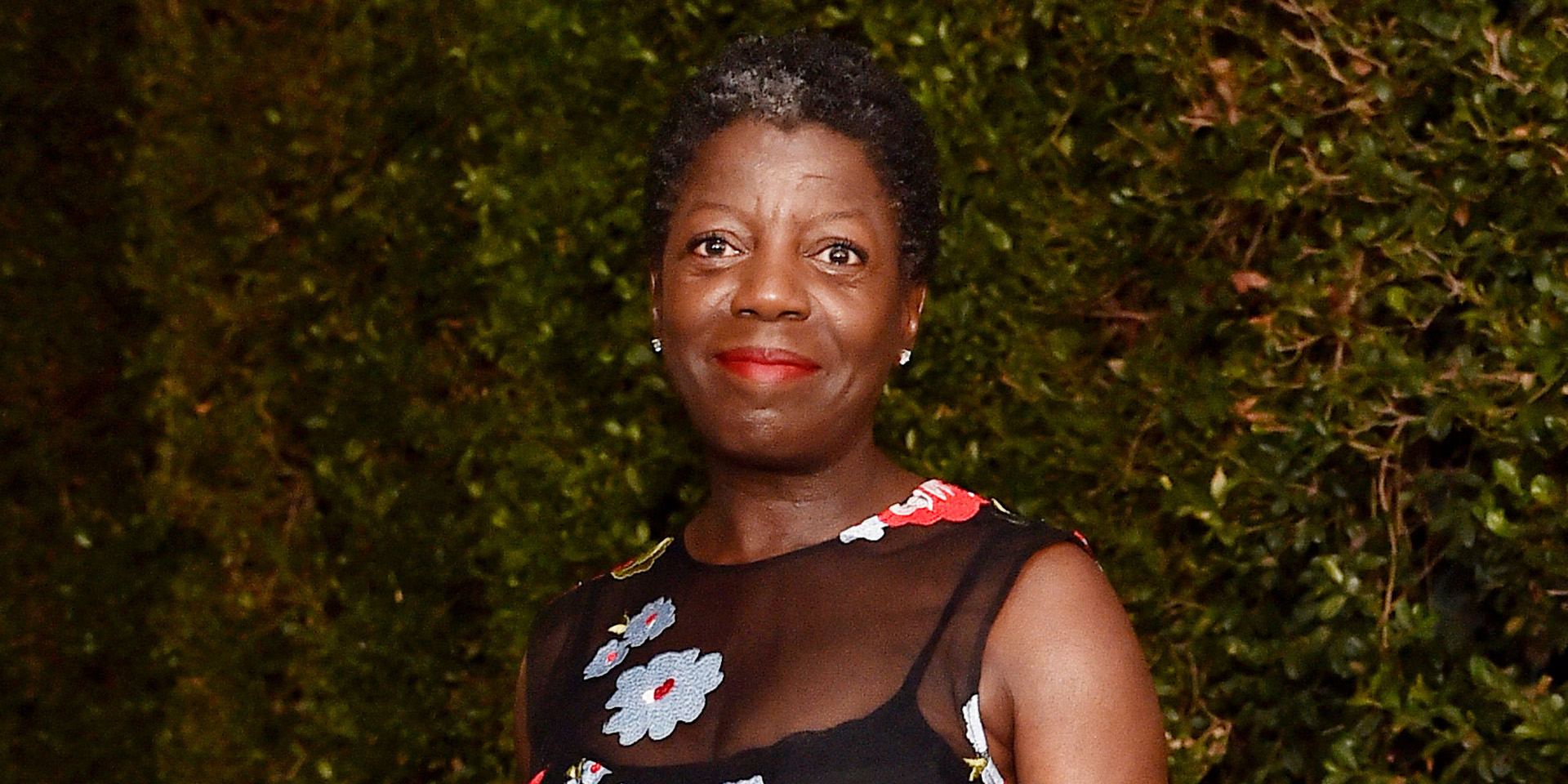
Every once in a while, my good friend Thelma Golden will meet someone who is shocked to learn this tiny, energetic, and dynamic woman is a paradigm-shifting curator. Some would find this disheartening. But not Thelma. She sees it as her chance to show the world exactly what she can do.
As one of the most influential people in art, Thelma knows the power of flipping an assumption on its head. Her exhibits at the Studio Museum in Harlem and, previously, the Whitney not only stop you in your tracks, they also show you so much more about the depth of the Black experience. Her steadfast dedication has given voice to a new generation of artists and curators who are ready to stir our souls too—folks who may have otherwise gone unnoticed had it not been for Thelma’s eye for talent and potential. She has broadened the world of art to better reflect the sum of us, rather than just a few. That’s power. And that’s why, while some folks might go on underestimating her, I’ll never be one of them.




Not only are people unable to tell the difference between stories written by humans or artificial intelligence, they actually prefer it when the stories are created by AI. And that’s especially true when they are told that the stories had human authors, according to a new study from Villanova University.
The study consisted of multiple experiments, all of which indicated a preference for AI. In the first, 1,682 participants were told to rate both the quality of six short stories they were given and how “engaging” they were. They were told, either correctly or incorrectly, who or what had authored each one.
Read More: Is AI Making Our Brains Weaker?
Not only were AI-generated stories found to be higher-quality (by 6%) and more engaging (by 8%), they were rated “even more highly,” researchers concluded, when participants believed that they were written by humans (by an additional 3%).
Deena Weisberg, the senior author of the study and an associate professor from Villanova’s Department of Psychological & Brain Sciences, said in a press release that the finding “reveals a bias towards narratives written by real people.”
That may be because “we assume creative writing requires uniquely human qualities, such as emotional understanding and lived experience,” she said, explaining that it shows how “public assumptions about AI’s capabilities are increasingly out of date.”
Furthermore, people were only able to identify AI-generated content roughly 40% and 52% of the time in two subsequent experiments, each with over 400 participants. People who said they were AI-literate had more success, while people who claimed to have a background in literature were less accurate in their guesses.
“Familiarity with AI systems appeared to help people recognize the patterns typical of AI-generated writing, such as em dashes and sentence structures such as ‘it’s not just X, it’s Y,’” Weisberg said. “That suggests that improving AI literacy would be one way to help people to navigate the new AI-enabled world that we’re living in.”
Cameron Jones, assistant professor of psychology at Stony Brook University tells TIME that the study’s findings are not necessarily surprising, considering the history of research going back years that shows people’s diminishing ability to tell between artificial intelligence and humans.
He also points to the trajectory of his own studies, which look at whether people can differentiate between them in conversation. In those scenarios, he says, “The person actually gets to quiz the model and ask follow-up questions.”
Even then, they had trouble distinguishing between human and generative content partners.
Jones says that this is because the large language models driving the content responses are trained to appeal to users.
“We basically get the model to generate little bits of text, and then we get people to read them, and they give a thumbs up if they like what the model’s saying and they give a thumbs down if they don’t like what the model’s saying,” he says.
It’s no surprise that people prefer the results, he explains, when “we’re optimizing these models’ outputs against our preferences.”
It can oversimplify output, but it leads to writing with higher overall appeal—whereas humans might write something truly exceptional that only caters to select tastes.
“Real humans are weird and idiosyncratic, and they’re very different from one another,” Jones says. “But models can kind of learn to be this kind of milquetoast everyman who appeals to everybody.”
While the findings align with rising exposure to artificial intelligence, along with algorithmic reward systems for broadly approachable content on platforms like TikTok, Weisberg does not think that the current digital landscape is to blame for the results. She says, “Technologies amplify existing tendencies, rather than creating them.”
Plus, she adds, the human-authored content might have simply challenged readers more.
“AI writing tends to be clearer, more direct and easier to process,” she said. And it’s reasonable for participants to find themselves more deeply engaged with content that offers greater predictability and less friction.
In other words, Weisberg says, “Difficult or subtle material requires more brainpower.”

Gianni Infantino-led FIFA Accused Of Blackmailing By Former Vice-President

Lucid’s turnaround plan hinges on $1.4B in cash savings, robotaxis

Can YOU guess which footballer this pet was dressed as at the guinea pig festival?


-

 Business6 days ago
Why Trees Belong on the Risk Register
-

 Fashion4 days ago
Weekend Open Thread: Wit & Wisdom
-

 Politics4 days ago
Meta enters AI-training agreement with far-right ‘propaganda rag’ Newsmax
-

 Politics6 days ago
Reform UK betrays West Mids residents by running from party pledges
-

 Crypto World3 days ago
MicroStrategy Post-Earnings CLARITY Act Push Could Add New Catalyst for Its Stock
-

 Business7 days ago
Major shareholder moves on Canyon
-

 Politics2 days ago
Zack Polanski: an incitement to murder Nigel Farage?
-

 Crypto World4 days ago
XRP Ledger v3.3.0 brings five institutional features
-

 News Videos6 days ago
Bitcoin Enters the 3rd Stage of the Bear Market
-

 Politics5 days ago
Luke Littler’s dominance sparks GOAT debate
-

 Sports5 days ago
Seema Kaliramna Wins Discus Throw Bronze, Takes India’s CWG Medals Tally To 17
-

 Crypto World4 days ago
New York sues Kalshi over prediction market gambling
-

 Crypto World3 days ago
Crypto PAC spending tops $2M in Michigan House race
-

 Business4 days ago
Trump Announces Hamas Disarmament Agreement as Iran Strikes Kuwait Air Base and US Attacks Pause Overnight
-

 Tech6 days ago
Gemini can now summarize the messiest comment threads in Google Docs
-

 Tech3 days ago
ESET tracks rise in malicious AI skills and adaptable malware
-

 Business2 days ago
DTCR: Deleveraging And A Hedge Fund Collapse Point To A Possible AI Bottom
-

 NewsBeat6 days ago
Four people die trying to cross Channel in small boats
-

 Tech5 days ago
Gemini Spark can now use Chrome logins and saved passwords to run errands on your behalf
-

 Sports7 days ago
Sakshi, Arundhati Enter Boxing Semi-Finals. India Assured Of 18 Medals At CWG 2026
You must be logged in to post a comment Login