

Crypto World
Ethereum News: Arthur Hayes Buys $5.4M in ETH After Iran Peace Deal

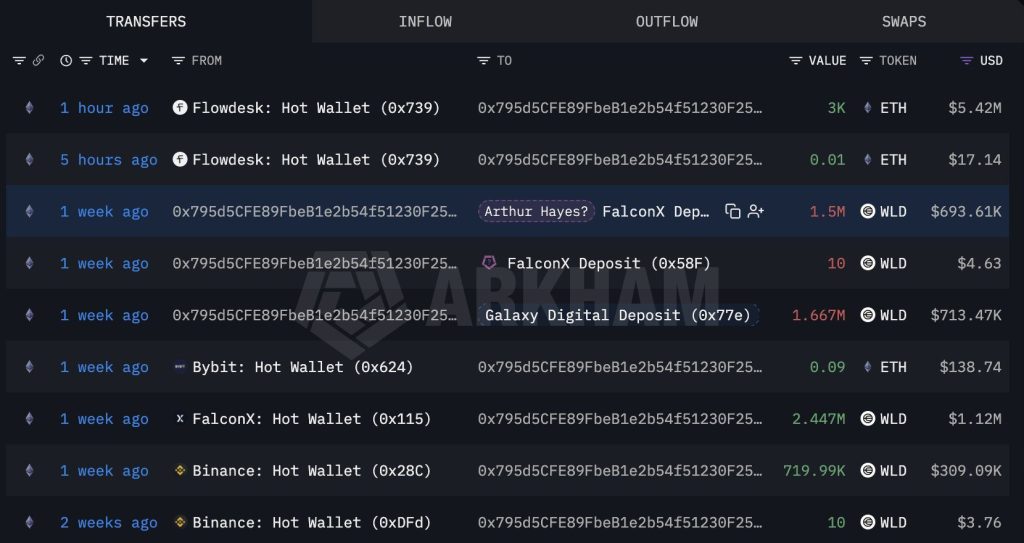
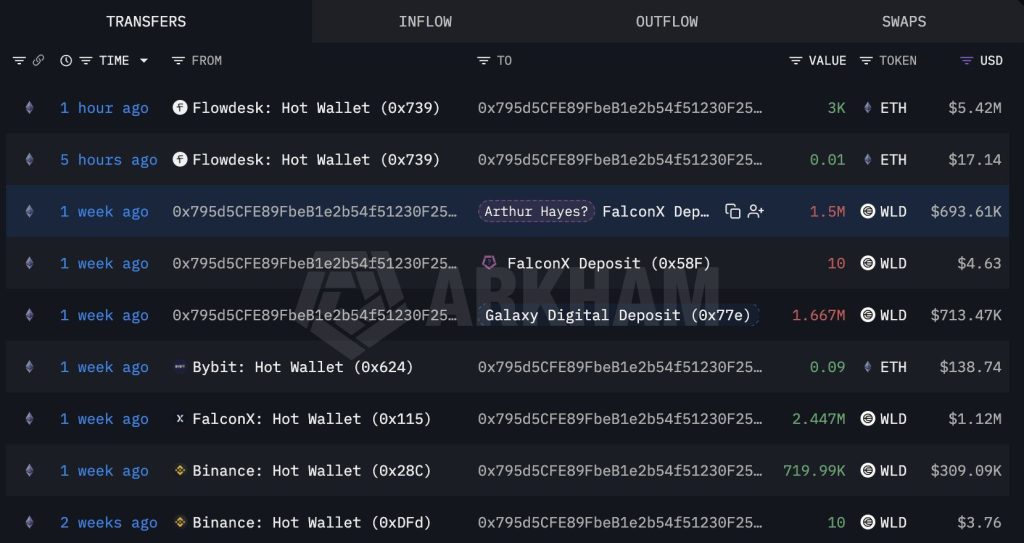
Ethereum News: A wallet linked to Arthur Hayes received 3,000 ETH worth $5.42 million from market maker Flowdesk on June 15, according to on-chain tracker Lookonchain, as Ethereum surged nearly 6% following the announcement of a U.S.–Iran peace agreement.
The ETH purchase signals Hayes is shifting back into direct ETH exposure after weeks of reducing altcoin risk, and doing so at the moment a significant macro headwind has just cleared.
The geopolitical risk removal was decisive. U.S. President Donald Trump announced the completion of the Iran deal and confirmed that shipping traffic through the Strait of Hormuz had resumed, driving crude oil prices up more than 5% to around $80.53 per barrel.
Lower energy prices directly reduce inflation pressure, which improves the macro calculus for high-beta assets. Ethereum’s response was immediate: ETH price climbed to $1,828, its highest level in over a week, outperforming most major cryptocurrencies during the session.
Discover: The Best Crypto to Diversify Your Portfolio
Ethereum News: Whale Buying Extends Beyond Hayes
The whale buying was not isolated to the Hayes wallet. Lookonchain on-chain data showed that the address geministar.eth pulled 21,136 ETH worth approximately $37.05 million from Binance through a series of transactions on the same day.

Combined, the two buyers accumulated more than $42 million in ETH within hours, a scale of accumulation that reflects institutional-grade conviction, not retail momentum chasing.
Hayes’ move follows a deliberate portfolio reset. In his June 8 essay Reality Test, the Maelstrom CIO disclosed selling positions in Hyperliquid, Near Protocol, Worldcoin, and Zcash, framing those exits as defensive responses to macro uncertainty rather than thesis changes.
Bitcoin and Ethereum remained explicit core holdings throughout that rotation, making the Flowdesk-sourced ETH purchase a re-loading of a position he never fully abandoned.
ETH Price Rally Tests Key Technical Resistance
The ETH rally has structural support beyond the macro catalyst. On the daily chart, Ethereum broke above a descending trendline that capped every bounce since late April, clearing the upper boundary of a bearish flag that formed during the decline from roughly $2,400.
The daily MACD has produced a bullish crossover and the Chaikin Money Flow indicator is rising, both consistent with fading sell pressure rather than a sentiment spike that stalls quickly.
The next meaningful level is the 0.618 Fibonacci retracement near $1,858, a zone that has to hold as support on any retest to confirm the bearish flag is invalidated.
Analyst Ali Martinez flagged an ascending triangle on the 4-hour chart projecting a move toward $1,850, placing his target almost exactly at that resistance.
A clean break above $1,858 on volume would significantly shift the near-term structure in ETH’s favor.
Hayes has projected ETH could reach $10,000 to $20,000 before the current cycle ends, citing expected liquidity expansion and Ethereum’s position within decentralized finance.
The June 15 buy, executed through a professional liquidity desk and timed to a macro pivot, is consistent with that thesis playing out in practice rather than just in print.
Discover: The Best Token Presales
The post Ethereum News: Arthur Hayes Buys $5.4M in ETH After Iran Peace Deal appeared first on Cryptonews.



Eight months ago the XRP ETFs launched faster than any product since Ethereum. The bid has since decayed 99%, from $200 million weeks to zero-flow days, leaving $1.49 billion invested, $997 million remaining, and a recovery thesis outsourced entirely to a Senate vote. Here is the full autopsy of a bid, and what its flatline actually prices.
Summary
- US spot XRP ETFs launched in November with $667 million in their first month, reaching $1 billion faster than any crypto product since Ethereum’s funds, on an eight-week inflow streak that ran even while Bitcoin funds bled.
- The bid then decayed by roughly 99%: weekly flows fell from above $200 million to low single-digit millions, the streak ended July 13, and July’s tape shows zero-flow days punctuated by one $7.29 million outflow, the largest since March.
- The wreckage is precise: $1.49 billion in cumulative inflows now marks against roughly $997 million in net assets, an unrealized deficit near $493 million, with 82% of assets concentrated in three funds and several products flatlined entirely.
- The one institutional trophy, Goldman Sachs’s $153.8 million position across four funds, is a December-dated 13F snapshot that Bloomberg analysts read as trading-desk facilitation, inside a complex that remains 84% retail-held.
- The flows have now stabilized at approximately nothing, which the optimistic read calls a floor, and the recovery case has converged on a single external event: the CLARITY Act vote whose odds trade near a coin flip this week.
There is a specific moment in the life of every investment product when its story stops being about demand and starts being about anatomy, and for the US spot XRP ETFs that moment can be dated: Monday, July 13, when the daily flow printed zero and an eight-week inflow streak, the product class’s last living narrative, quietly ended. What launched in November as the fastest-growing crypto fund complex since Ethereum’s, $667 million in month one, a billion dollars faster than anyone forecast, institutional validation in fund form, now trades as a case study. The buyers did not rotate, rebalance, or pause. They stopped: from weeks above $200 million to weeks near $2 million, from streak to zero-days, from launch euphoria to a July whose single best session, $6.78 million, amounts to one percent of the early pace. What remains is $1.49 billion of invested capital marking against $997 million of assets, three funds carrying 82% of everything, and a recovery thesis that no longer references the product at all, only a Senate vote. This piece is the full anatomy: how the bid died, what the wreckage precisely looks like, what the lone institutional trophy in the filings actually shows, and what the flatline, honestly read, prices for the asset underneath it.
The decay curve, dated
The complex’s eight months divide into three phases so distinct they could belong to different products.
Phase one, the launch bid, ran from November into the winter: $667 million in the first month across seven issuers, the fastest accumulation to $1 billion since Ethereum’s funds, weekly prints above $200 million, and the statistic the marketing decks will never retire, an inflow streak that persisted through weeks when Bitcoin ETFs bled, which was read at the time as evidence of a distinct, durable XRP allocator base. The reading had support: the products launched into the afterglow of the SEC’s surrender, the commodity classification, and the first wave of bank-desk research initiating coverage with conditional price targets in the double digits.
Phase two, the decay, occupied the spring: weekly flows stepped down from nine figures to eight to seven, May still collected over $100 million for the month, and by June the run-rate had thinned to low single-digit millions per week, a decline of roughly 99% from peak that no single event explains and one variable tracks perfectly, the token’s price, which fell from above $2.40 in January to the $1.10s, converting every earlier allocation into a loss and every allocator’s quarterly review into an uncomfortable meeting. Fund flows follow performance with a lag in both directions; the launch streak was the up-lag, and the decay was the down-lag arriving on schedule.
Phase three, the flatline, is July: six sessions of exactly zero flows in the month’s first half, a $7.29 million single-day outflow on July 9, the largest since March, the streak’s formal end on July 13, then a stretch from July 10 through July 20 of zeros and small positives, crowned by the month’s best day, $6.78 million on July 16, driven by two issuers’ desks. The freshest coverage frames the stabilization as survival, the product has not seen an outflow day since July 9, and the framing is technically true and proportionally absurd: the bid that defined the launch is not resting, it is absent, and its absence has become stable. That is what the anatomy shows. The interesting questions are in the tissue.
The wreckage, itemized
Four numbers, current as of this week’s data, describe the complex more honestly than any narrative.
$1.49 billion against $997 million. Cumulative net inflows since launch stand near $1.49 billion; total net assets stand near $997 million, roughly 1.45% of XRP’s market capitalization, with about 971 million XRP in custody. The gap, approximately $493 million, is the unrealized loss the allocator base collectively carries, the arithmetic consequence of buying a token averaging well above $1.50 that now trades near $1.10. Every future flow decision the complex’s holders make is made against that deficit, which is the single most important fact in any forecast of the flows resuming: the marginal buyer is being asked to average down into a product whose existing buyers are 33% underwater on invested capital.
82% in three funds. Bitwise holds $312.8 million in assets on $498.3 million of cumulative inflows; Canary $253.2 million on $467.0 million; Franklin $252.2 million on $415.6 million. Together, the top three hold roughly 82% of complex assets, which means the seven-fund complex is functionally a three-fund market with a long tail of products printing zeros. Category-level flow headlines obscure this: an inflow day increasingly means one or two distribution desks had a decent Thursday, and a diversified institutional bid, the launch thesis, would not produce this shape.
84% retail-held. The complex’s ownership base, per the issuer-side analysis that accompanied the spring’s institutional reporting, remains 84% retail, against 48.8% institutional participation in the comparable Solana products, a gap that quantifies how much of the launch narrative, the institutions are here, was distribution, not description. Which frames the trophy correctly.
The Goldman position, read properly. Goldman Sachs’s 13F disclosed $153.8 million across four XRP funds, roughly $40 million in Bitwise, $38.5 million in Franklin, $38 million in Grayscale, $36 million in 21Shares, making it the largest disclosed institutional holder, accounting for 73% of the top 30 institutions’ combined $211 million. The number did real narrative work all spring, and its caveats are the anatomy lesson: it is a December 31 snapshot, disclosed in March, of positions that may not exist today; Bloomberg’s analysts read the four-fund construction as consistent with trading-desk facilitation and client positioning instead of proprietary conviction; and as this publication’s own guide to how to read the Goldman position argues, the form is a rear-view mirror with a 45-day delay, structurally incapable of showing whether the bank held, added, or exited through the subsequent drawdown. The largest institutional XRP position on record is, read strictly, evidence that Goldman’s clients wanted exposure in December. The flows since are evidence of what everyone wanted after.
The geography of the remaining bid
One more layer of the anatomy deserves its own examination, because the aggregate US flow numbers conceal a compositional fact with real information in it: through the American flatline, the marginal bid for exchange-traded XRP exposure migrated abroad.
Through the spring decay, European venues carried a share of global XRP product flows out of proportion to their size, with Swiss and broader European ETP wrappers at times representing the substantial majority of weekly net inflows worldwide while the US complex printed its zeros. The absolute sums are modest, European crypto ETPs are an older, smaller, steadier market, but the composition matters for what it falsifies and what it suggests. It falsifies the strongest form of the exhaustion reading: if the asset’s entire allocator universe were fully purchased, the European bid would have flatlined alongside the American one, and it did not. And it suggests where the marginal buyer actually lives: in jurisdictions where the asset’s legal status was never contested, where MiCA-era frameworks settled classification questions years earlier, and where the products consequently trade as ordinary alternatives allocations, not as bets on a Senate calendar.
Read that way, the geographic split becomes the cleanest natural experiment available on the outsourced thesis. The American flows died in the jurisdiction where the asset’s status remains hostage to legislation; the European flows persisted, modestly, in jurisdictions where it does not. If legal permanence is truly the binding constraint on institutional allocation, the CLARITY experiment has already run abroad, and its result, steady but unspectacular demand, prices the upper bound of what passage realistically unlocks: not the JPMorgan-forecast flood, but a normalization to the European pattern, mid-single-digit millions weekly, compounding quietly, unheroically, forever. That is a real bull case, and it is a fraction of the one being marketed.
The alternative reading restores the American market’s exceptionalism: US wealth-management distribution is an order of magnitude deeper than Europe’s, the RIA channel that turned Bitcoin’s ETFs into a $52 billion complex has no European equivalent, and the launch month’s $667 million showed what that distribution can move when it has a story to sell. On this reading, Europe measures the floor of post-CLARITY demand and America’s launch month measured the ceiling, and the truth, as usual, books a room between them. Either way, the geographic ledger deserves a place in every flow analysis this complex receives, because it is the one dataset showing what XRP demand looks like when Washington is not the variable, and it has been quietly reporting that answer, in Swiss francs, all year.
The regulated-channel counterpoint
One dataset complicates the pure decay story, and honesty requires it: while the spot complex flatlined, the regulated derivatives channel set records.
CME’s XRP futures built to a peak of $1.4 billion in open interest with 29 large open-interest holders, a record for the venue, even as total XRP derivatives open interest across all venues collapsed from its $10 billion peak by margins reported between 75% and 96%, a deleveraging that wiped out the offshore, retail-levered complex. The split matters because the two channels answer different questions: aggregate open interest tracks speculative leverage, which is gone, while CME positioning tracks the institutions that clear through Chicago, which grew through the wreckage. The honest synthesis is narrower than either headline: the levered retail market deflated, a smaller regulated market matured, and neither flow bought spot tokens, which is why the ETF shelf and the price both starved while the derivatives venue celebrated. Institutional infrastructure and institutional demand are different things, a distinction this asset’s whole history keeps teaching. For the underlying distribution picture, crypto.news has also mapped the supply map under the products.
What the flatline prices
Strip the anatomy to its meaning and three readings compete, with the tape currently endorsing the bleakest.
The floor reading, the optimists’ case, holds that the shakeout is complete: outflows never cascaded, the post-July 9 tape shows zero net redemption, the deficit is carried rather than capitulated, and a stabilized base at $1 billion of assets is the platform a catalyst builds on. Its evidence is real, the complex genuinely did not unwind the way GBTC-era products did, and its weakness is that a floor with no bid above it is just a ledge.
The exhaustion reading holds that the launch consumed the entire natural buyer base: the crypto-native allocators, the RIA early adopters, and the bank desks servicing client curiosity all bought in the first two quarters, at prices 40% above the current market, and no second cohort exists at any price the first cohort’s losses will allow advisers to recommend. On this reading the flatline is not a floor but a completed distribution, and the zero-days are what a fully-sold product looks like.
And the outsourced reading, the one the complex’s own defenders now lead with, holds that the flows return when Washington acts: legal permanence unlocks the institutional allocation the launch never actually contained, the 84% retail share inverts, and the JPMorgan-style first-year forecasts the complex undershot get a second life under a market-structure law. This is the reading that matters, because it is the one being priced, and its honest form is uncomfortable: it concedes the product failed to generate durable demand on its own and converts the entire recovery case into a claim about one bill, whose cloture count stands unresolved this very week, whose passage odds trade near a coin flip, and whose own conditional structure, as this publication’s analysis of the conditional targets riding these flows showed, was already the load-bearing wall under every double-digit XRP forecast. The ETF complex, the price targets, and now the flow-recovery thesis have all converged on the same single point of failure. That is not diversification of catalysts. It is concentration, in a legislature, measured at 41% on Polymarket, and the flatline is what an asset looks like while it waits on it.
What to watch
The weekly prints against the zero line. The complex has proven it can avoid outflows; the open question is whether anything above $10 million a week ever returns without a legislative trigger. Sustained mid-eight-figure weeks would falsify the exhaustion reading on their own.
The concentration ratio. Watch whether the three-fund share of assets rises above 82%, consolidation continuing, or whether the tail products show life, the only clean signal of a broadening buyer base instead of two sales desks working.
The CLARITY binary, and the day after. Passage would run the outsourced thesis’s experiment in real time: the flows either arrive within weeks, validating everything, or they do not, which would be the most damaging data point in the asset’s institutional history, because it would exhaust the last explanation. Failure of the bill runs the mirror experiment on the deficit’s holders. That is the event the recovery thesis waits on.
The Q1 13F cycle’s ghosts. The May filings covering the drawdown quarter will show whether Goldman and the top-30 cohort held through the decline. A largely intact institutional roster supports the floor reading; a vanished one completes the anatomy.
Eight months ago the XRP ETFs were the proof that institutional demand existed. The anatomy shows what they actually proved: that distribution existed, that a launch window monetized it, and that demand, the durable kind that buys drawdowns, was never located. The complex now holds $997 million, a $493 million scar, and one hypothesis left to test, scheduled for a Senate floor that has not yet set the time. Products usually die of redemption. This one’s fate is stranger: fully built, fully priced, and waiting, with the rest of its asset class, for Washington to tell it whether the buyers were ever real. For context, crypto.news has explained he flow machinery itself.
Frequently asked questions
What happened to the XRP ETF inflows?
They decayed roughly 99% from launch. The products drew $667 million in their first month from November and sustained an eight-week inflow streak, but weekly flows fell from above $200 million to low single-digit millions by summer. The streak ended July 13, July logged six zero-flow sessions and a $7.29 million outflow day, and the month’s best session brought just $6.78 million.
How much money is in the funds now, and what is the loss?
Cumulative net inflows stand near $1.49 billion, while total net assets are roughly $997 million, about 1.45% of XRP’s market capitalization, with approximately 971 million XRP in custody. The gap of roughly $493 million represents unrealized losses on invested capital, reflecting purchases made at substantially higher token prices than the current $1.10 area.
Which funds dominate the complex?
Three of seven: Bitwise with $312.8 million in assets, Canary with $253.2 million, and Franklin with $252.2 million, together roughly 82% of all complex assets. The remaining products frequently print zero daily flows, meaning category-level inflow headlines usually reflect activity at one or two distribution desks, not broad-based demand.
Does Goldman Sachs’s position change the picture?
Less than headlines suggested. Goldman’s $153.8 million across four funds, disclosed in its Q4 2025 13F, made it the largest institutional holder, about 73% of the top 30 institutions’ combined exposure. But the filing is a December 31 snapshot published in March, Bloomberg analysts read the construction as trading-desk facilitation rather than directional conviction, and the complex overall remains 84% retail-held.
How does the CME futures record fit the story?
As a counterpoint about a different market. CME’s XRP futures reached a record $1.4 billion in open interest with 29 large holders even as total XRP derivatives open interest collapsed as much as 96% from its $10 billion peak. The regulated channel matured while offshore leverage deflated, but neither development bought spot tokens, which is why the ETF flows and the price starved simultaneously.
Is the recent stabilization a positive signal?
It is the debated question. Since the July 9 outflow, daily flows have been zero or slightly positive, no redemption cascade has occurred, and the deficit is being carried rather than capitulated, the floor reading. The skeptical reading calls the same tape exhaustion: the natural buyer base fully purchased during launch and no second cohort exists at current prices. The flatline is consistent with both until something moves.
Why does everything now depend on the CLARITY Act?
Because every other catalyst has been consumed. The SEC resolution, the launches, and the bank coverage all occurred, and the flows died anyway, leaving legal permanence as the last untested explanation for why institutional allocation has not arrived. The recovery thesis for the flows, the analyst price targets, and the asset’s broader institutional case have converged on the same legislative binary, currently priced near a coin flip.
What should investors watch next?
Weekly flows against the zero line, with sustained mid-eight-figure weeks as the falsifier of the exhaustion reading; the three-fund concentration ratio, for any sign of a broadening base; the Q1 13F filings covering the drawdown quarter, to see whether the institutional roster held; and the CLARITY vote itself, whose aftermath in either direction runs the decisive experiment on whether the buyers return. This is not investment advice.
Disclaimer: This article is for information and educational purposes only and does not constitute financial or investment advice. Flow figures and asset values change daily and reflect data available at the time of writing. Nothing here is a recommendation to buy, sell, or hold any asset or fund. Always do your own research. Information is accurate as of July 24, 2026.
Bitcoin mining company Poolin has filed for bankruptcy alongside its two U.S. affiliates Lonestar Dream and Lonestar Taproot with estimated liabilities between $100 million-$500 million, TheEnergyMag reported on Friday.
The Singapore-based firm, which once dominated the industry, filed for Chapter 11 protection in New Jersey on July 22 with debts of around $173 million,
A $52 million bid for two mining sites in West Texas is currently on the table from Thor CALAP LLC. The sites represent the better part of the company’s assets.
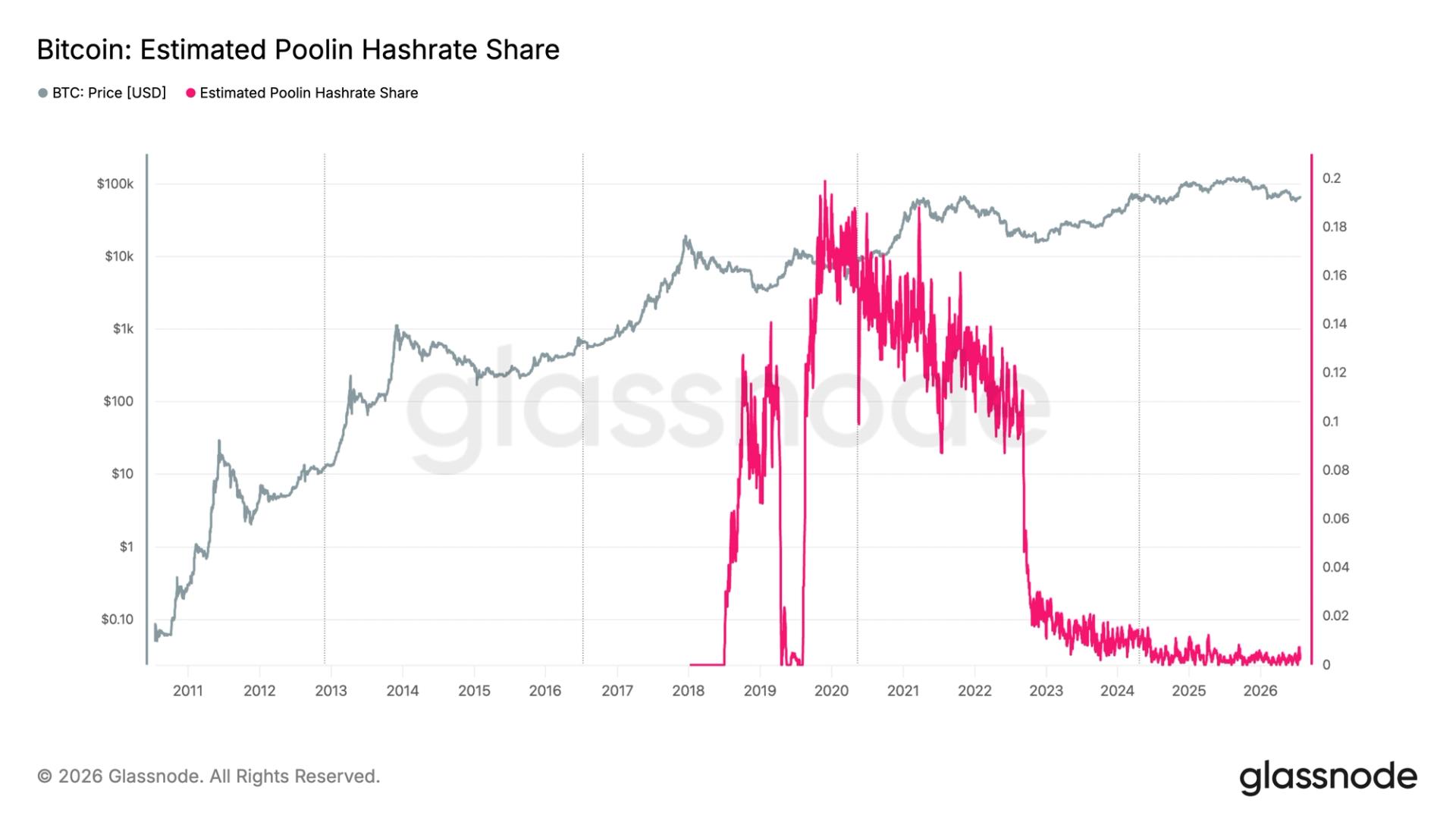
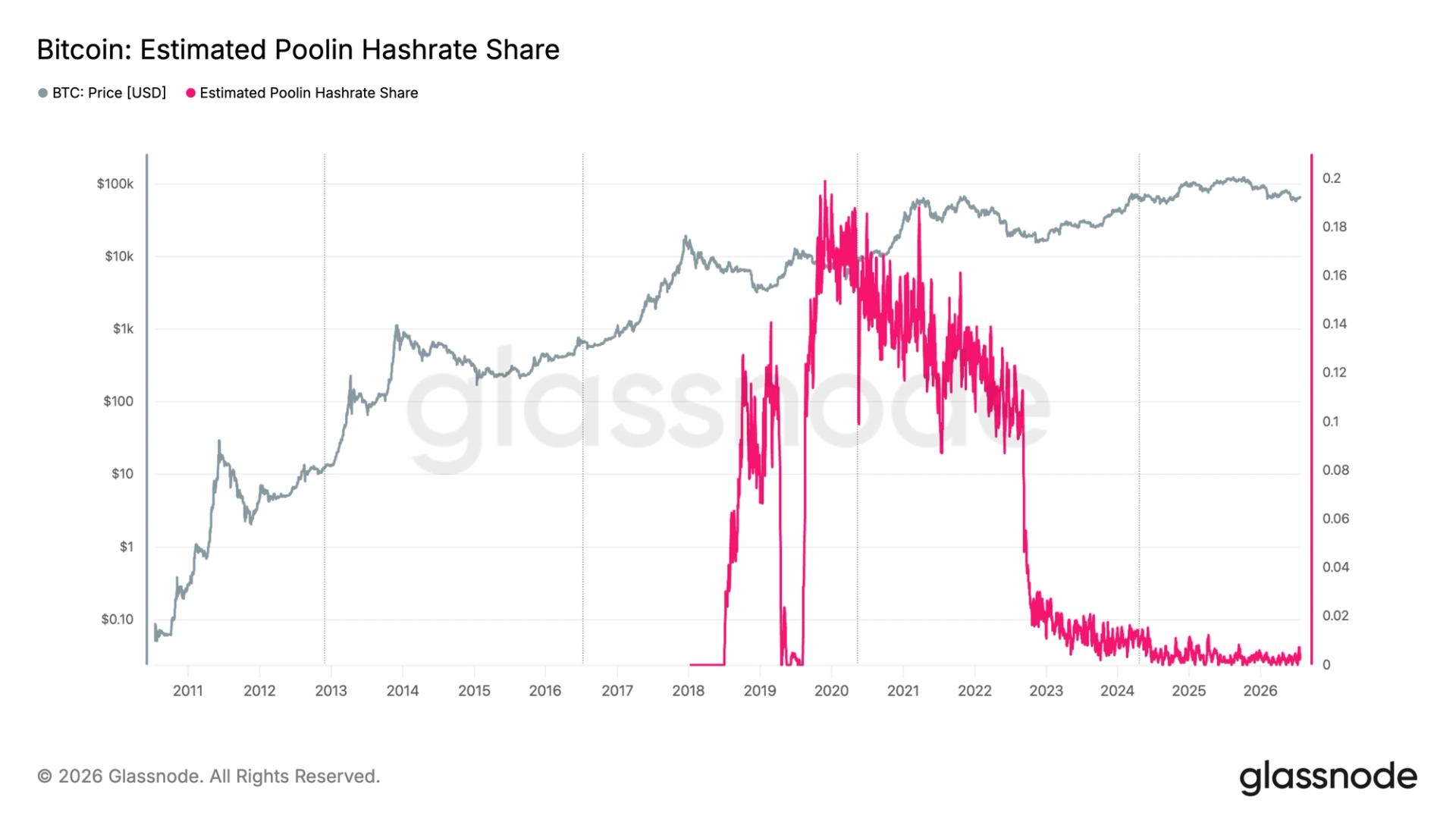
Poolin was one of the biggest mining pools in bitcoin at its peak meaning more bitcoin was being mined through Poolin than through any other single pool on earth. Glassnode data shows its share of global hashrate reached roughly 18-20% in 2019.
Users were already complaining about withdrawal delays on Poolin’s Telegram channels in late 2022, a period plagued by crypto companies facing liquidity squeezes as that year’s market downturn came to a head. Co-founder Kevin Pan acknowledged in a WeChat post that the company was “facing liquidity problems” while insisting user funds were safe.
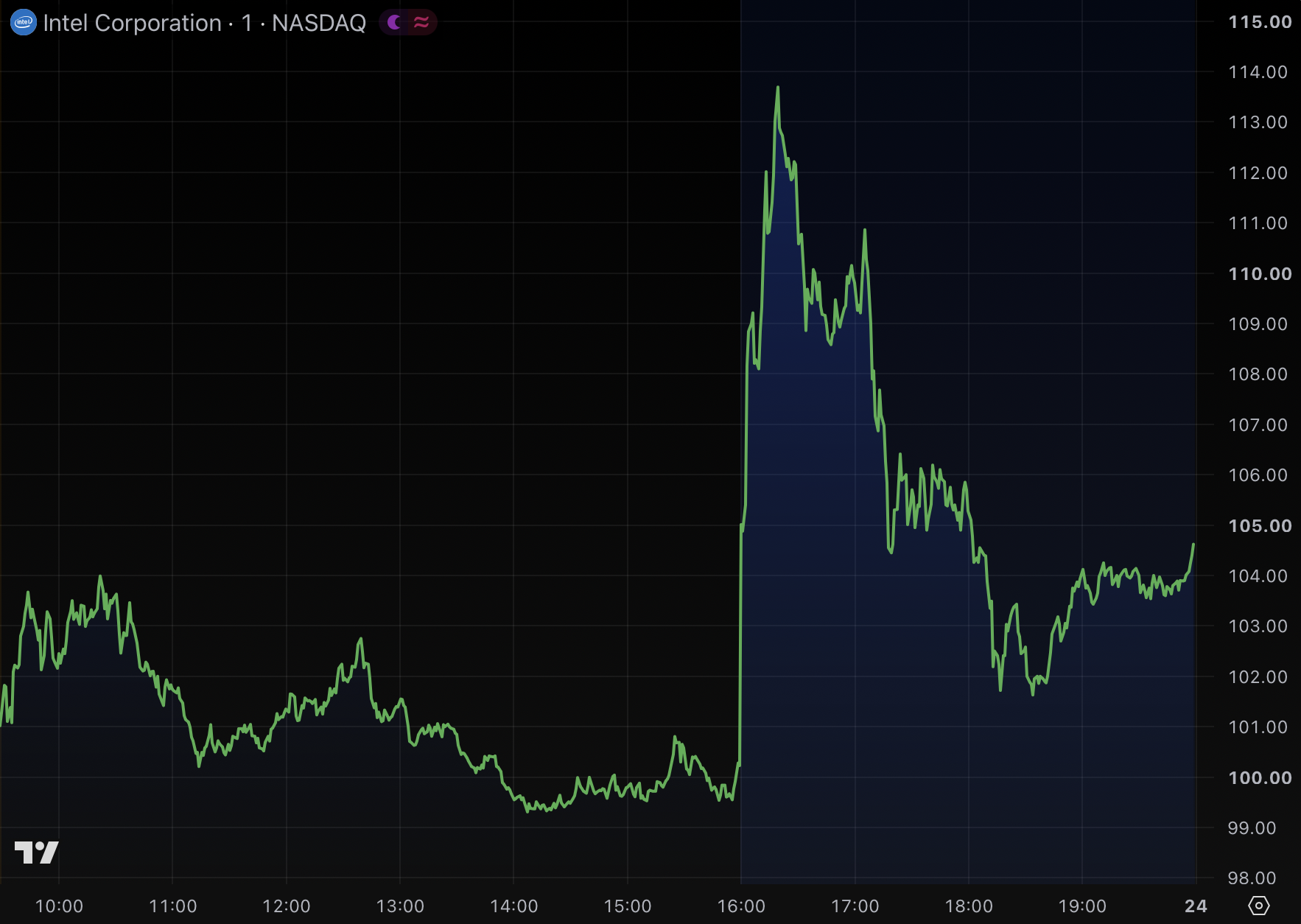
Chipmaker Intel reported this week that quarterly revenue had risen at its quickest pace in more than 15 years — just days after it confirmed a fresh round of layoffs.
Revenue rose to $16.1 billion, up 25% year over year, while revenue from its Data Center and AI segment skyrocketed 59% to $6.3 billion.
However, that same data center segment is slashing headcount per Tuesday‘s announcement. Record data center growth led to job cuts.
Chief Financial Officer Dave Zinsner gushed about yesterday‘s numbers, saying, “AI-driven compute continues to strengthen, and to support expected growth this year and next across products and foundry, we are meaningfully increasing our investments in equipment, clean room space, and substrates.”
Intel’s adjusted results yesterday exclude restructuring and related charges.
Those were, per its Q2 reconciliation, a relatively modest $170 million in restructuring. Yet for the full year, its outlook estimates a staggering $4.3 billion in restructuring and other charges.
Intel has apparently found plenty of money for equipment, not people. And based on that full year forecast, more cuts are probably coming.
Intel’s fastest-growing unit loses workers
The new round of layoffs this week follows a much larger reduction last year that affected thousands of employees.
CEO Lip-Bu Tan wrote last July, “We are implementing a plan to reduce our headcount by approximately 15%, and we plan to end the year with a global workforce of about 75,000 employees as a result of workforce reductions and attrition.”
As part of those layoffs, he also said he was slashing managerial roles by half, a move he characterized as “streamlining.”
Read more: OpenAI chief Sam Altman fired and hired in one weekend
The Oregonian, covering Intel’s largest worksite in the US, reported that the company has eliminated 7,000 Oregon workers’ jobs over the past two years, leaving about 16,000.
Its reporters also confirmed Intel’s plans for data center job cuts, and noted that the company has downsized by approximately 40% across all its global workforce over the past four years.
Got a tip? Send us an email securely via Protos Leaks. For more informed news and investigations, follow us on X, Bluesky, and Google News, or subscribe to our YouTube channel.


The EU just hit Russia’s crypto harder than ever before. Six Russian experts told BeInCrypto the blow is real, but not deadly. They cannot agree on what comes next.
The new sanctions target 14 crypto platforms in other countries. They also hit 94 Russian banks and the Moscow Exchange. And for the first time, the EU can ban any foreign crypto service that helps Russia dodge the rules.
One Group Says the Market Will Cope
Anton Tkachev, a senior Russian lawmaker, has seen this before. Sanctions are normal now, he says. Firms just plan around them. Blocked sites get replaced fast.
He points to Garantex. Police seized the Russian exchange in early 2025. Within days, its team relaunched it as Grinex. And copycat platforms keep appearing.
First-timers still feel it. Wallets get flagged. Transfers abroad raise questions. Users must prove where their money came from. But Tkachev calls this an operational inconvenience, nothing worse. He points to a “hardening effect” that makes Russian teams sharper.
Nadezhda Surova, a Russian digital-economy adviser, agrees the market can cope. It is “demonstrating resilience to sanctions pressure,” she says, after adapting to 20 earlier rounds.
After the EU’s earlier sector-wide ban, she expects trading to move elsewhere. That means decentralized apps, peer-to-peer deals, and stablecoins.
It also flows to friendly countries. Kyrgyzstan is a good example. It had 126 licensed crypto firms and $4.2 billion in volume by late 2024, according to TRM.
Dmitry Zuev, a crypto executive at NGE Farm, says it is “premature to draw conclusions” this early. He thinks the pain will hit cross-border payments most. For normal companies, he adds, Russia’s new crypto law matters more than these sanctions.
The Other Group Sees Isolation
Maria Agranovskaya, a Russian crypto lawyer, is more worried. She calls this the first big, direct strike on Russian crypto. Her verdict is “critical, but not fatal” for now. The EU’s first crypto penalty came last year, on a ruble-backed coin. This time it goes much further.
She says the new rules threaten platforms Russians use in Kyrgyzstan, the UAE, and Georgia. The result, she warns, is isolation and a growing “gray” market. She quotes former minister Andrey Nechayev, who sees a “closed crypto market within the Russian Federation.”
The squeeze is already showing. One ruble-backed coin, A7A5, saw daily transfers crash from over $1.5 billion to about $500 million after sanctions, Elliptic found. A big exchange, Uniswap, blocked the coin. Some traders even had accounts frozen when their funds were linked to it.
Alexey Zyuzin, who heads a Russian crypto-industry group, thinks the market will split in two.
“Two circuits are likely to form. The first is a legal domestic market under the control of the Russian regulator… The second is a cross-border segment, where elevated sanctions and technological risks will persist.”
The most exposed, he says, are firms that rely on foreign payments.
Nikolai Zagvozdkin, a crypto lead at Russian media group RBC, says the full target list is not out yet. Still, he sees a clear signal. Europe now treats crypto as key to Russia’s trade. Exchanges will check harder, with more freezes and refusals.
“Working with crypto will become more expensive, slower, and somewhat less transparent.”
What Will Decide the Damage
Everyone agrees on one thing. It all depends on who the EU actually targets. The full list is not public yet. Early counts put it near 10 or 11 platforms. If the rules touch every service used by Russians, the pain spreads wide. If they stop at sanctioned banks and known evaders, the market adapts. It has done so before, just within tighter limits.
The post Russian Experts Split on EU’s New Crypto Sanctions: Adapt or Isolate? appeared first on BeInCrypto.
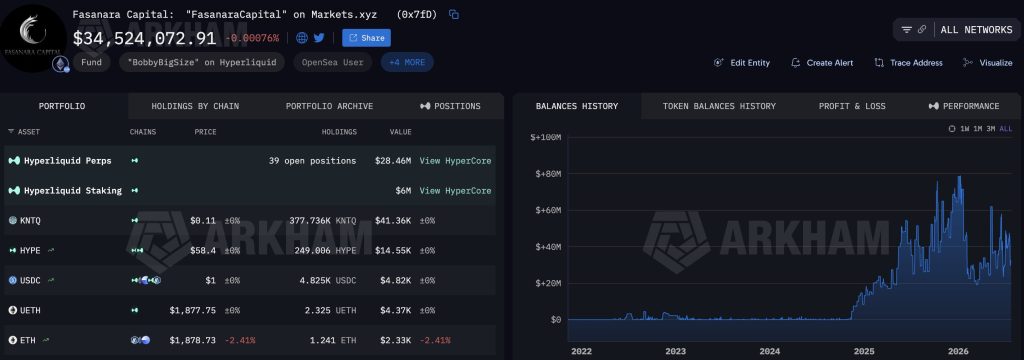
In Ethereum news today, Fasanara Capital, a London-based quantitative asset manager, is holding a $67M ETH short on Hyperliquid via an on-chain wallet labeled “BobbyBigSize,” and the directional bet is almost beside the point.
What matters is that institutional-grade capital is now executing complex, multi-leg crypto derivatives strategies entirely on a decentralized venue, in full public view, in a way that would have looked implausible just two years ago.
The position is visible through Hyperliquid’s on-chain explorer at wallet address 0x7fda..17d1. On-chain analytics providers including Arkham Intelligence and Nansen have linked the wallet to Fasanara Capital.
The short sits on Hyperliquid, one of the most closely watched decentralized perpetuals exchanges in the market, a venue that has grown rapidly by offering execution quality and liquidity depth that professional traders previously expected only from centralized exchanges.
Discover: The Best Crypto to Diversify Your Portfolio
Ethereum News Today: A $67M Short Is Not a Simple ETH Bearish Call
The instinctive read- large ETH short, therefore bearish signal does not survive contact with how quantitative funds actually operate. A short of this size can be a directional bet, but it can equally be a hedge against spot ETH holdings, an offset against options book exposure, one leg of a basis trade, or part of a market-neutral spread.
Fasanara runs systematic, multi-strategy books where relative pricing, funding rates, liquidity, and volatility relationships matter far more than a clean up-or-down call on ETH.
Supplementary on-chain data, reported by Phemex and attributed to Arkham Intelligence, adds another layer: holds an additional ~$41M ETH short on Hyperliquid, and should be treated as supplementary attribution, but if accurate, it reinforces that this is coordinated institutional positioning across multiple regulated managers, not a lone prop desk swing.
This includes approximately $11Bn in cumulative trading volume on Hyperliquid in ETH, BTC, AVAX, HYPE, and other tokens. That is the profile of a systematic, high-frequency institutional book, not a retail trader making a leveraged directional bet.
The current ETH leverage environment and funding dynamics give that short context: in a market where funding rates and open interest are already elevated, a large institutional short of this kind can function as a structural offset rather than a conviction trade.
Trade Ethereum on Bybit and Get a Chance to Win Our $1,000 USDT Airdrop
Hyperliquid Is Becoming Core Institutional Infrastructure
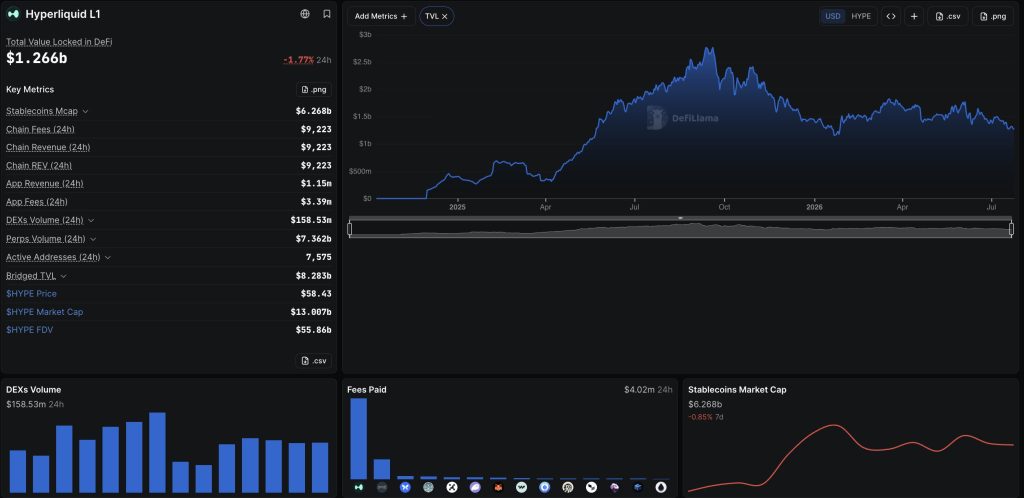
In adjacent Ethereum news, Hyperliquid has compressed the quality gap between on-chain derivatives and centralized exchange execution to the point where a fund managing multi-billion-dollar mandates is comfortable running nine-figure notional exposure natively on-chain.
Fast matching, deepening order book liquidity, and a familiar perpetuals interface have done what earlier DeFi derivatives platforms could not: attract serious derivatives flow rather than just yield farmers chasing incentives. The Hyperliquid trading interface features advanced charting and real-time order book data.
The structural consequence is a new kind of market signal. Centralized exchange positioning has always been inferred indirectly, through funding rates, open interest, liquidation data, and exchange-reported metrics.
Institutional DeFi trading on Hyperliquid makes wallet-level positioning directly observable. Analysts can track when Fasanara adds to or reduces its size and monitor collateral and position changes. That transparency is what DeFi trading was theoretically supposed to create, and now it is arriving at institutional scale.
The fund reportedly holds a concurrent BTC long entered around $75,950, plus shorts across TON, AVAX, and DOGE, a cross-asset relative-value book executed entirely on a decentralized perpetuals venue.
That breadth signals that Hyperliquid is functioning as primary execution infrastructure for at least one major quant manager, not a peripheral experiment running alongside the real book on Binance or OKX.
Discover: The Best Token Presales
The post Ethereum News: How a $67M ETH Short Reveals Hyperliquid’s Institutional Leap appeared first on Cryptonews.
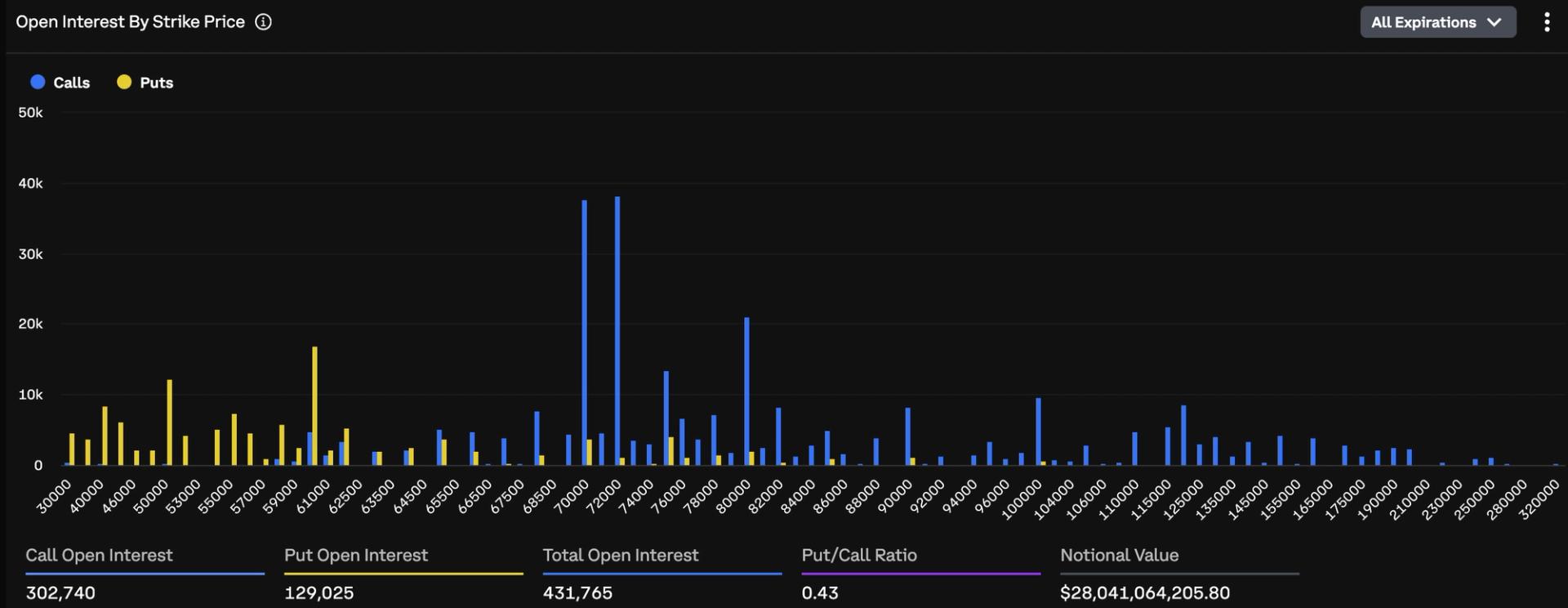
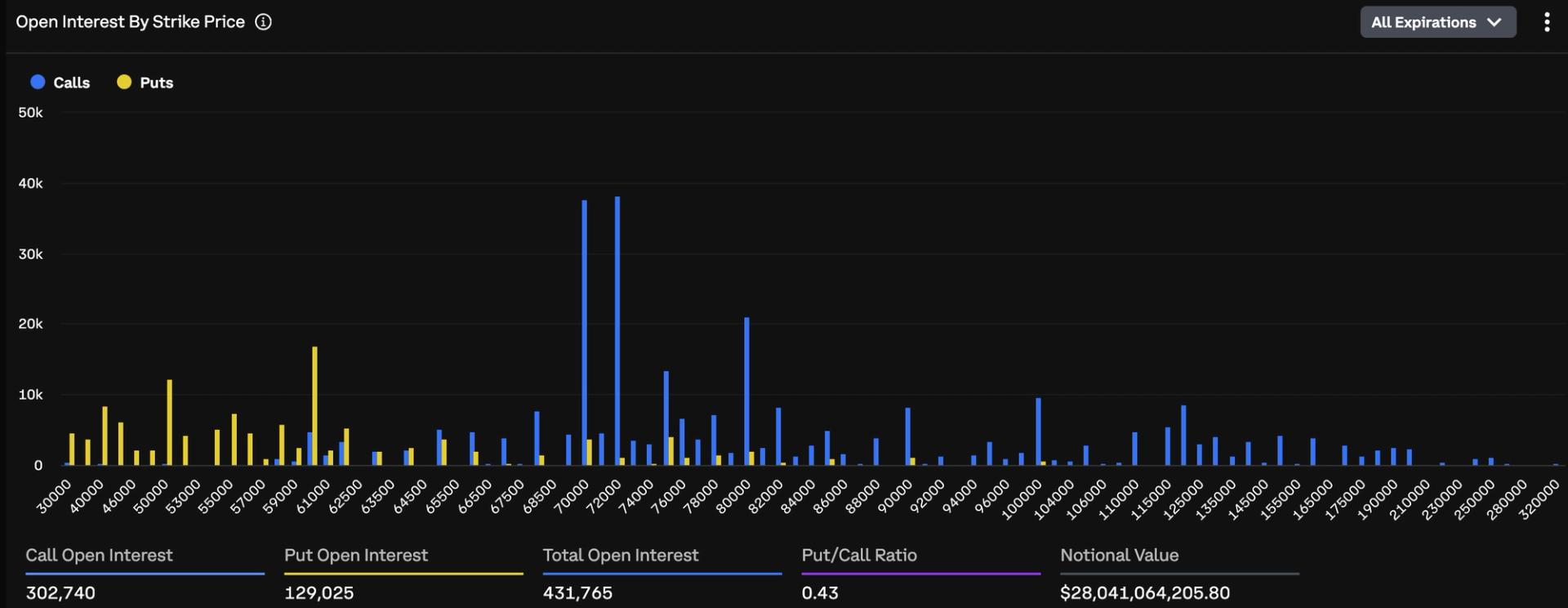
Several large, deliberate trades hit the tape recently, building up this concentration of open interest at $70,000 and $72,000 levels. Laevitas identified a large bull call spread structure, involving buying the $70,000 call and simultaneously selling the $72,000 call.
The bull call spread, as the name suggests, bets on a moderate upswing in prices of the underlying asset, in this case, up to $72,000.
“The structure accounts for approximately 49% and 50% of total call open interest at the $70K and $72K strikes, respectively,” Laevitas noted.
Other notable trades included calendar spreads, a strategy used to profit from volatility changes in short- and near-term expiries.
Another trader or a group of traders bought a large number of calls at $70,000, paying $3.4 million in premium to gain upside exposure.
Jimmy Yang, co-founder of Orbit Markets, an institutional digital asset liquidity provider, pointed out similar trades, saying these have been driven by Clarity Act optimism.
“Earlier this month, we saw decent demand for BTC topside calls, with the 31 July $70,000 and $72,000 strikes being particularly popular. A lot of this positioning was driven by expectations that the CLARITY Act could be passed before the end of the month,” Yang said.


Crypto markets have struggled for much of the year as weaker trading volumes, concerns over the economy and fading risk appetite weighed on digital assets. The tougher backdrop has hurt market makers, whose revenues depend largely on trading flows and providing liquidity. With spot trading volumes subdued, firms across the sector have faced pressure on profitability.
Mergers and acquisitions are expected to remain a defining theme in 2026 as digital asset firms consolidate to achieve scale, expand product offerings and meet growing institutional demand, according to industry analysts.
Exchanges, market makers, custodians and financial technology providers are looking to acquire complementary businesses to build integrated digital asset platforms, reflecting the maturation of the crypto ecosystem into a more institutional and regulated market.
SBI Financial Services, a subsidiary of SBI Holdings, acquired a 90% stake in B2C2 in December 2020, months after investing $30 million in the firm.
B2C2’s financial results are not disclosed separately. They are reported as part of SBI’s broader crypto-asset business segment. For the fiscal year ended March 31, that segment generated 89.6 billion yen ($550 million) in revenue, up 10.9% from a year earlier, while profit before tax was unchanged at 21.2 billion yen.
SBI Holdings said last month it had agreed to buy cryptocurrency exchange Bitbank for around $289 million.


Odos Protocol will shut down on July 30, giving users one week to withdraw assets. The team did not provide a reason for the decision.
Crypto World
EU deploys a 21st sanction package against Russia that escalates bans on 14 crypto firms


The European Union (EU) extended sanctions against Russia to include four designations related to the cross-border A7 network, including its new links to Africa.
The EU is also extending its transaction ban to 14 unnamed crypto-related service platforms based in Georgia, Panama, the United Arab Emirates (UAE), the Marshall Islands, Kyrgyzstan and Belarus.
Chainalysis recently noted that on the A7 network, where the A7A5 stablecoin operates, has processed nearly $120 billion to date and that it is purposely built for Russia’s sanctions evasion.
“We’re hitting over a hundred banks and crypto operators, 40+ vessels in Russia’s shadow fleet, and several oil refineries in Russia and Belarus,” Kaja Kallas, High Representative for Foreign Affairs and Security Policy and chair of the Foreign Affairs Council, said in a statement.
The EU announced its previous package of sanctions against Russia in April, saying it was the “biggest package” of sanctions against the country in two years. In that statement, the EU said “Russia is becoming increasingly reliant on cryptocurrencies for international transactions.”

Cardano’s ADA has rebounded over the past week, with some key factors supporting a more substantial upward trend ahead. Another element, though, suggests a renewed correction might be on the way.
Several analysts believe Bitcoin (BTC) has yet to reach its bottom for this cycle, while the recent exodus from exchanges hints that Ethereum (ETH) might be gearing up for a rally.
ADA Stuck in an Indecisive Zone
Earlier this week, Cardano’s native token soared to a two-week high of around $0.18 before retracing to the current $0.166 (per CoinGecko). This represents a 5% weekly increase, while the latest whale activity hints at a further upswing in the near future.
The large investors recently boosted their total holdings to 25.6 billion coins (the highest level since February). The stash translates into roughly 70% of the token’s circulating supply. Moreover, whales have bought 30 million ADA (worth more than $5 million) over the last 30 days.
These market participants rarely make intuitive decisions, as some believe they enter the ecosystem after careful research or inside information that others lack. That said, their activity may encourage smaller players to hop on the bandwagon, too.
Another bullish ADA element is its Relative Strength Index (RSI), which yesterday (July 23) slipped to 28 and now stands at 31. It remains quite close to the oversold zone that is usually seen as a buying opportunity.
On the other hand, exchange inflows have recently exceeded outflows, meaning that investors have moved some of their holdings to centralized platforms, thereby increasing immediate selling pressure.
Major BTC Warning
The bear market over the past several months has been quite persistent, briefly dragging Bitcoin’s price below $60K. It currently trades at nearly $65,000, and every resurgence gives some investors hope that the bulls might finally regain full control.
However, X user BATMAN poured cold water on these expectations, drawing a parallel between BTC’s current performance and that of the autumn of 2022, which was later followed by a massive collapse to roughly $16,000.
Other short-term skeptics include Kabuki and Ali Martinez. The former predicted a plunge to $47,000 by August, while the latter noted that the following month has historically been an unfavorable period for BTC, resulting in a correction every time since 2022.
ETH’s Next Move?
Earlier this week, the second-largest cryptocurrency made another attempt to surpass the $2,000 psychological level but was rejected and currently trades at around $1,880.
Still, the declining amount of ETH stored on exchanges suggests the bears may soon loosen their grip. Over the past month, investors have withdrawn approximately 1 million units (worth over $1.8 billion at ongoing rates) from centralized platforms. The total figure dropped to a 10-year low of roughly 15.1 million ETH as the development results in reduced immediate selling pressure.
Analysts on crypto X remain largely optimistic about the asset. Not long ago, Arthur Hayes acquired ETH for over $2.5 million, while popular pundits like KALEO think the price could rise toward $2,400 within the next month. However, the latter warned that the pump might be short-lived and followed by a major crash to nearly $1,200 by September.
The post Mixed Cardano (ADA) Signals, Bitcoin (BTC) Price Warning, and More: Bits Recap appeared first on CryptoPotato.

The XRP ETF buyers stopped. What remains is the anatomy

Jurgen Klopp unveiled as new Germany coach: ‘I’m gone the day you don’t want me anymore’

5 Biggest Samsung Launches from Galaxy Unpacked July 2026


-

 Fashion7 days ago
Weekend Open Thread – Corporette.com
-

 Politics6 days ago
The House | The City of London can help the new chancellor deliver growth in every postcode
-

 Crypto World6 days ago
Ripple Payments Joins MiCA With 14 Firms, Does It Mean Anything For XRP?
-

 Politics5 days ago
Democrats look to World Cup watch parties to register thousands of voters
-

 Crypto World7 days ago
Ripple wins EU-wide access as ESMA adds it to MiCA register
-

 Crypto World3 days ago
Grayscale Files For Worldcoin ETF, WLD Registers Sharp Rise
-

 Tech4 days ago
Sail Virtually Aboard The “Itanic” With IA-64 Emulator
-

 NewsBeat4 days ago
Unregistered fitter used Gas Safe logo on business flyers
-
 Tech3 days ago
Turtle Beach Command Series KB7 review: a nifty screen-equipped gaming keyboard
-

 News Videos5 days ago
Big Money Is Entering XRP
-
 Business2 days ago
New Jersey voter registration controversy explained: How 6,600 noncitizens got on the rolls, and what happens next
-

 Crypto World6 days ago
Kaspersky exposes OkoBot’s 20-module crypto wallet attack
-

 Business7 days ago
Airlines warn Sunshine Protection Act could disrupt flight scheduling
-
 Entertainment3 days ago
Johnny Depp’s R-Rated Gothic Cult Classic Gets New Release Ahead of Sydney Sweeney Remake
-

 NewsBeat6 days ago
Durham County Council to send out electoral registration emails
-

 Crypto World6 days ago
MiCA Licensing Faces Delays as ESMA Adds 14 CASPs to Register
-

 Crypto World2 days ago
Ethics, other provisions in crypto Clarity Act to be further discussed
-
 NewsBeat3 days ago
Shanghai science forum photos show China’s AI and robotics advances in rivalry with US
-

 Crypto World6 days ago
Chip Stocks Enter Bear Market After Moonshot Ai Unveils Kimi K3 Model
-

 Tech4 days ago
Watch Flock Safety CEO Garrett Langley discuss the future of surveillance at TechCrunch Disrupt 2026
You must be logged in to post a comment Login