

Crypto World
Ethereum wants to end blind signing with new security feature



The Ethereum community has launched Clear Signing, an open standard that aims to replace unreadable transaction prompts with human-readable details before users approve onchain actions.
Summary
- Ethereum Clear Signing turns unreadable transaction data into plain summaries before users approve wallet actions.
- Ledger, Trezor, MetaMask, WalletConnect and Fireblocks are early supporters of the new ERC-7730 security standard.
- The rollout follows Bybit’s hack, where attackers abused signing screens to approve a malicious transfer.
The Ethereum Foundation said a working group of wallet developers, security firms and its Trillion Dollar Security Initiative released the standard on May 12. The change targets self-custody users and institutions that need readable approval records.
The effort targets blind signing, a weak point where users approve calldata or partial transaction data they cannot understand. The Foundation said approvals are often the last defense when users control assets onchain, but “When it is done blindly, that defense does not hold.” It wants “What You See Is What You Sign” to become the default for Ethereum users.
ERC-7730 brings clearer transaction details
Clear Signing uses ERC-7730, a shared JSON description format, a public registry, and independent reviews. The setup lets wallets show what a transaction intends to do without changing existing smart contracts or how transactions settle on Ethereum.
Ethereum.org says a descriptor links a contract deployment to readable labels and field formats. A compatible wallet can then show action details such as the asset sent, the minimum received, the recipient and expiry time, instead of raw function selectors and integer values. Developers can add support to existing protocols without redeploying contracts.
Additionally, Ledger helped start ERC-7730 and early tooling, while teams including ZKnox, Sourcify, Cyfrin, Zama, WalletConnect, Fireblocks, Trezor, Keycard, MetaMask, Argot and independent contributors took part in the wider effort. The Foundation said its security initiative will host the infrastructure and support adoption.
The move follows several wallet and signing attacks that exposed weak approval screens. Earlier reports noted that North Korea’s Lazarus Group stole more than $1.4 billion in ETH from Bybit by exploiting Safe Wallet’s user interface and that Bybit’s CEO could not fully verify transaction details before signing. That case made signing transparency a direct exchange security issue.
Why timing matters
Market updates have tied Clear Signing to the wider rise of phishing and approval scams. As previously reported, ERC-7730 replaces “hex gibberish” with auditable transaction summaries and said Binance security data showed 22.9 million phishing attempts were blocked in the first quarter of 2026.
Related coverage also said crypto protocols lost more than $606 million in the first 18 days of April 2026, the worst month since the Bybit breach. Clear Signing does not remove every attack path, and wallets still choose which registries they trust. But it gives users and institutions a clearer chance to see what they are about to approve before assets move.


Key Highlights
- Sixt SE delivered Q1 pre-tax earnings of €2.1 million, significantly outperforming consensus forecasts of a €1.5 million loss
- Quarterly revenue reached €928.9 million, representing a 12.6% increase on a currency-adjusted basis and surpassing the €911 million estimate
- Corporate EBITDA surged 40.2% compared to the prior year, reaching €67.7 million
- The company returned to profitability with net income of €1.5 million, a sharp contrast to the €12.6 million loss recorded in Q1 2025
- Management reaffirmed 2026 full-year targets: €4.45–€4.60 billion in revenue with approximately 10% pre-tax profit margin
Shares of Sixt SE (ETR: SIXG) rallied 4.93% during Wednesday trading after the German mobility services provider delivered first-quarter financial results that exceeded market expectations on multiple fronts.
The company reported pre-tax earnings of €2.1 million for the first quarter. This marked a significant outperformance versus the consensus forecast, which had called for a €1.5 million loss, and represented a dramatic improvement from the €17.6 million loss recorded in the corresponding quarter of the previous year.
Quarterly revenue totaled €928.9 million, climbing 12.6% on a currency-adjusted basis and exceeding analyst projections of €911 million.
Net income turned positive at €1.5 million, reversing from a €12.6 million deficit in Q1 2025. This improvement highlights the company’s enhanced operational efficiency and more strategic fleet utilization.
Corporate EBITDA climbed 40.2% year-over-year to €67.7 million, also beating analyst forecasts. The company’s fleet expanded 8.4% to 182,900 vehicles, not including franchise partner operations.
Co-CEO Alexander Sixt attributed the performance to disciplined execution: “a tight, demand-oriented fleet, sustained strong investments in premium vehicles, brand, network, and above all technology.”
Performance Across Key Markets
European markets outside Germany delivered the most robust growth, with revenue climbing 16.2% to €344.7 million. The German domestic market posted solid gains as well, with revenue increasing 11.5% to €271.2 million.
Revenue from North America declined 1.9% to €310.3 million, though this decrease was primarily attributable to currency translation effects. According to Jefferies analysis, the region actually expanded 9.2% on an organic constant-currency basis.
While the foreign exchange headwind in North America warrants monitoring, the fundamental demand trends in the region remain positive.
2026 Outlook Maintained
Sixt retained its full-year 2026 financial guidance without modification. Management continues to project revenue in the range of €4.45 billion to €4.60 billion, accompanied by a pre-tax profit margin “in the area” of 10%.
The midpoint of this revenue guidance stands at €4.525 billion, closely aligned with the €4.54 billion consensus estimate. The implied pre-tax earnings of approximately €453 million exceed the consensus forecast of €446.9 million.
CFO Franz Weinberger emphasized the company’s confidence in maintaining its targets “despite increased geopolitical and macroeconomic uncertainty.”
The first-quarter performance represents a complete turnaround from the losses sustained twelve months earlier. With guidance unchanged and demand remaining resilient across most major markets, these results provide investors with greater visibility as Sixt approaches the peak summer travel period.



Senate Banking Committee members have reportedly filed more than 100 amendments to the CLARITY Act, with Senator Elizabeth Warren alone submitting over 40 proposals ahead of Thursday’s markup vote.
The flood of filings follows the committee’s release of a 309-page draft on Tuesday, expanded from January’s 278-page version.
Warren Files 40+ Amendments as Senate Preps Crypto Bill Markup
According to POLITICO, the list features dozens of amendments put forward by Democrats on the Banking Committee, along with a handful of revisions from the bill’s Republican sponsors.
Follow us on X to get the latest news as it happens
Crypto In America host Eleanor Terrett reported that one of Senator Warren’s amendments would block the Federal Reserve from granting master accounts to crypto companies.
Senator Jack Reed’s amendment “prohibits crypto from being used as legal tender, for example, to pay taxes.”
Committee members filed 137 amendments before the planned markup in January. The current tally signals continued resistance as the bill nears a committee vote.
Meanwhile, the American Bankers Association has sent more than 8,000 letters to Senate offices since last Friday, according to a source cited by Terrett. The campaign focuses on the stablecoin yield compromise brokered by Senators Thom Tillis and Angela Alsobrooks.
The Banking Committee will meet on Thursday morning in Washington to vote on the bill.
Subscribe to our YouTube channel to watch leaders and journalists provide expert insights
The post CLARITY Act Hit With 100+ Amendments Ahead of Senate Banking Markup appeared first on BeInCrypto.

Key Takeaways
- SoftBank’s fourth-quarter net income reached $11.6 billion, representing a three-fold increase year-over-year
- A $45 billion valuation increase in its OpenAI holdings fueled the profit surge
- The company’s OpenAI stake was valued at $79.6 billion at the end of March
- Total OpenAI investment stands at $34.6 billion, with commitments exceeding $60 billion
- S&P Global Ratings downgraded SoftBank’s outlook to “negative” citing debt levels and portfolio concentration risks
SoftBank Group announced net income of 1.83 trillion yen (approximately $11.6 billion) for the quarter that concluded on March 31, 2026. This figure represents a substantial increase compared to the 517 billion yen profit recorded during the corresponding quarter of the previous year.
The performance significantly exceeded Wall Street expectations, with analysts having projected earnings of 295.2 billion yen, based on Bloomberg’s consensus estimates.
The dramatic earnings increase was primarily attributed to a 3.043 trillion yen investment gain recorded during the quarter. The majority of these gains originated from the Vision Fund, SoftBank’s primary investment arm.
The standout performer in the portfolio was OpenAI, the artificial intelligence company responsible for developing ChatGPT. As of March 31, SoftBank’s ownership position in OpenAI reached a valuation of $79.6 billion, marking a cumulative gain of $45 billion on the investment.
To date, SoftBank has deployed $34.6 billion into OpenAI. The Japanese conglomerate has pledged to invest over $60 billion in aggregate, which would secure approximately 13% equity ownership in the AI pioneer.
During February, OpenAI completed a funding round that assigned the company an $890 billion valuation. A subsequent financing round in March, which SoftBank co-led, valued the startup at $852 billion.
The Vision Fund alone recorded gains of approximately $20 billion during the three-month period from January through March, with OpenAI accounting for nearly the entire amount.
Significant Losses Beyond OpenAI Holdings
However, SoftBank’s investment portfolio showed mixed results elsewhere. The company experienced losses across multiple other holdings, including positions in Coupang, DiDi Global, and Klarna.
When excluding Vision Fund performance and accounting for currency fluctuations and operational expenses, SoftBank recorded an investment income deficit of 472.1 billion yen for the complete fiscal year.
Financing expenses during the fourth quarter climbed to 229.4 billion yen, compared with 148.9 billion yen in the prior-year period, demonstrating the increased borrowing costs associated with financing its artificial intelligence investments.
The company maintains $17.5 billion in outstanding obligations from a $40 billion bridge financing facility utilized to fund its OpenAI investment.
Credit Rating Concerns Intensify
To finance its aggressive OpenAI investment strategy, SoftBank has been divesting stakes in portfolio companies. The firm liquidated positions in Nvidia and T-Mobile, generating proceeds of 218.1 billion yen from these asset sales throughout the fiscal year.
S&P Global Ratings adjusted its outlook on SoftBank from “stable” to “negative” in March. The ratings agency expressed concerns that SoftBank’s asset quality and financial flexibility would likely decline due to its substantial OpenAI capital commitment.
According to S&P, SoftBank could mitigate these risks through additional asset monetization.
For the complete fiscal year, SoftBank reported net income of 5 trillion yen. Both the Vision Fund and its telecommunications business segment served as primary profit contributors.
Chief Executive Officer Masayoshi Son has positioned artificial intelligence as the central pillar of SoftBank’s long-term strategic vision. OpenAI continues to face intensifying competition from technology giants including Google and emerging players like Anthropic.
TLDR:
- Compound governance approved an oracle tweak that enabled liquidation of stolen rsETH collateral.
- The attacker used 116,500 rsETH as collateral to borrow ETH and wstETH across Compound v3.
- DeFi United seized nearly $30M after temporary oracle bounds forced undercollateralization.
- The recovered rsETH was redeemed into ETH to help restore KelpDAO’s damaged bridge reserves.
DeFi governance proved capable of acting as an emergency recovery mechanism after the April 2026 KelpDAO exploit. Roughly 116,500 rsETH worth $292 million were stolen and deployed as collateral on Compound v3.
Standard liquidation rules offered no path to recovery, since the stolen rsETH still priced normally. A governance-approved oracle adjustment changed that, eventually enabling DeFi United to seize roughly $30 million. The recovery marked one of the most coordinated on-chain interventions in DeFi’s history.
Why Standard Liquidation Rules Could Not Touch the Attacker’s Position
On April 18, 2026, attackers exploited a vulnerability in KelpDAO’s LayerZero bridge infrastructure. About 116,500 rsETH worth $292 million were released illegitimately from the Ethereum-side escrow.
The attack was widely attributed to North Korea’s Lazarus Group. Rather than selling, the attacker deployed them as collateral across multiple lending protocols.
On-chain data shows the attacker opened a Compound v3 position within minutes of the exploit. ETH and wstETH were borrowed in tranches against the stolen rsETH tokens.
Partial withdrawals helped manage the collateral ratio in the same window. The position was active and borrowing real assets before the protocol could respond.
In the weeks that followed, the position remained technically healthy at market prices. Compound’s rsETH markets were frozen, and loan-to-value ratios were set to zero.
The stolen rsETH still priced normally despite having no legitimate backing. Automated liquidation mechanisms therefore had no grounds to trigger.
DeFi lending liquidations depend on collateral value falling below set thresholds. Because rsETH had not dropped in price, the attacker’s position stayed above water.
There was no admin key or circuit breaker available to freeze the account. DeFi governance was therefore the only available instrument to act.
How a Governance Proposal Triggered Liquidation and Recovered the Collateral
The Compound Foundation engaged risk partners, including Gauntlet, to find a resolution pathway. Gauntlet submitted a proposal for a modified oracle for Compound’s rsETH markets.
The new oracle kept the Kelp DAO exchange rate feed as its primary source. It also added configurable price bounds operable by the Compound multisig.
Santiment Intelligence noted that an oracle adjustment pushed the attacker’s position into liquidation. This allowed DeFi United to seize roughly $30 million in collateral.
Temporarily setting the price floor below market value triggered undercollateralization. A DeFi United Recovery Guardian multisig then repaid the borrowed assets and seized the collateral.
Santiment data recorded $29,044,839 in Compound v3 liquidations on May 9th at 02:30 UTC. The event covered 12,426.70 rsETH at a price of $2,337.29 per token.
Notably, rsETH showed no meaningful price distress during the event. The collateral was removed cleanly without triggering a broader market selloff.
The seized collateral was redeemed through KelpDAO’s system and converted back to ETH. Those funds helped refill the damaged bridge lockbox that backed rsETH.
After completion, the oracle was restored to normal market levels. No persistent changes were made to the Compound protocol.

Members of the US Senate Banking Committee have filed more than 100 amendments to a crypto market structure bill set for markup on Thursday, with the proposed changes mostly related to stablecoins, software developers and ethics.
According to a list obtained by Politico, Democratic senators have proposed dozens of changes, while Republicans are seeking slight adjustments to the bill.
It is not clear what the specific details of each amendment are, but some concern issues the committee has been seeking to solve for months, including stablecoin yield, crypto software developer protections and ethics provisions.
The list offers insight into the issues the committee will likely debate at the bill’s markup on Thursday as it seeks to advance the measure to the Senate floor. The Senate Banking Committee indefinitely delayed a previous markup in January after major crypto lobbyist Coinbase withdrew support for the bill.
The legislation aims to divide how US market regulators oversee crypto, with the House passing a version of it in July called the CLARITY Act. Crypto and banking lobbyists, along with lawmakers, have fought over provisions on stablecoins and whether government officials should be barred from involvement in crypto.
Further restrictions on offering stablecoin yields have been the bill’s most contentious provision, with banking and crypto lobbyists failing to reach an agreement after months of negotiations.
A version of the bill released on Monday banned third-party platforms like crypto exchanges from offering yield on stablecoins in a way that is “functionally equivalent” to the payment of interest on an interest-bearing bank deposit.
The list shows Democratic Senators Jack Reed and Tina Smith introducing an amendment to “strengthen [the] prohibition on interest/yield by using a ‘substantially similar’ test rather than an ‘equivalence’ test.”

An excerpt of the leaked list showing amendments for debate by Senator Jack Reed, with one supported by Senator Tina Smith. Source: Politico
Another planned amendment from Democratic Senator Chris Van Hollen pitches an ethics provision that Democrats and some Republicans have supported, which would bar the president, vice president, senior officials, members of Congress and their families from owning, promoting or being affiliated with crypto.
Related: Seven Democrats seen as ‘key’ to advancing CLARITY Act: Galaxy
Democratic Senator Catherine Cortez Masto also plans an amendment protecting software developers by “creating a safe harbor from criminal liability for not registering as a money transmitter,” a provision that is supported by many crypto groups.
Other amendments concern sanctions, institutions engaging in crypto, and one from Democratic Senator Andy Kim that seeks to reestablish the Justice Department’s National Cryptocurrency Enforcement Team, which the department dismantled in April last year.
Republicans have a majority on the Banking Committee and in the Senate, but some party members, such as Senator Thom Tillis, have said they won’t support the bill without certain provisions.
Republicans also control the Senate, but will need some Democrats onside to pass it with a three-fifths majority to end any potential debate on the bill.
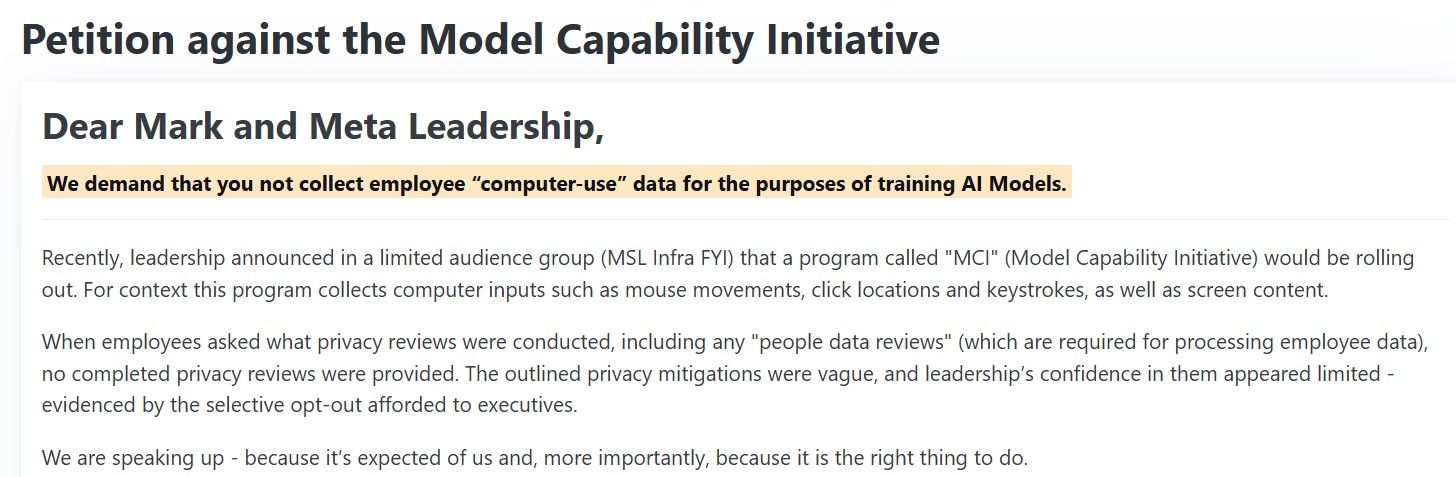
Meta employees at multiple U.S. offices distributed protest flyers. The action targets an internal tool that records mouse movements and keystrokes to train Meta’s AI models.
The flyers appeared in meeting rooms, on vending machines, and atop toilet paper dispensers. They direct staff to a petition demanding Meta withdraw the tool, called the Model Capability Initiative.
Mouse-Tracking Tool Collects Data Across Hundreds of Sites
Meta installed the Model Capability Initiative on U.S. employees’ work computers. The software captures clicks, keystrokes, and periodic screenshots. It runs across hundreds of applications, including Google, LinkedIn, and Wikipedia.
Meta says the data trains AI agents to mimic real human behavior on the web. According to a spokesperson, the models need real examples of how people use software. The company cited button clicks and dropdown menus as key inputs.
Several Meta employees called the program “dystopian” in interviews last month. Workers fear the tool could expose passwords and unreleased product details. They also flagged concerns about personal information, including immigration status, health records, and family details.
Petition Lands Days Before 8,000-Job Layoff
The petition builds on internal opposition that has grown since the April rollout. The flyer campaign on May 12 marked the first coordinated public action by U.S. staff against the program.

Pressure on Meta’s workforce is compounding. Chief people officer Janelle Gale said in late April that the company will cut 8,000 roles on May 20. The move is part of an efficiency drive tied to AI spending. Another 6,000 open positions will go unfilled.
Across the Atlantic, Meta employees in the United Kingdom announced a separate organizing effort this week. They are partnering with the United Tech and Allied Workers union.
Privacy Trade-Off Sits at AI Training Frontier
Meta says safeguards prevent the capture of certain sensitive content. However, it has not detailed the technical scope of those filters. Affected employees argue that consent terms are coercive, given the impending layoffs.
The dispute highlights a wider problem for large AI developers. Quality human behavioral data is increasingly scarce, and companies are turning to their own workforces to fill the gap.
Whether the May 12 protest pressures Meta to alter the program remains unclear. The outcome may signal how much leverage employees retain in an AI-driven cost-cutting cycle.
The post Meta Employees Protest Mouse-Tracking Tool Built to Train AI Models appeared first on BeInCrypto.
Ethereum liquid restaking platform Kelp and decentralized lending protocol Aave have completed a series of steps to restore rsETH backing, including burning the exploiter’s rsETH tokens.
Kelp DAO detailed a post-exploit recovery for its liquid staking token rsETH on Tuesday, confirming that the hacker’s tokens were burned on the layer-2 Arbitrum network.
The 117,132 rsETH — worth about $278 million at current prices — will be progressively restored over two weeks using funds from the Aave Recovery Guardian multisignature wallet, which is controlled by the DeFi United recovery group and Kelp’s own recovery safe.
The funds will be routed through the LayerZero OFT adapter, the smart contract responsible for locking, minting, burning and releasing rsETH during cross-chain transfers.
Kelp DAO confirmed that rsETH on mainnet and layer-2 networks, which has a market capitalization of $1.5 billion, remains fully backed at all times.
The move to recover the liquid staking tokens will bring users impacted by one of this year’s largest DeFi exploits one step closer to recovery.
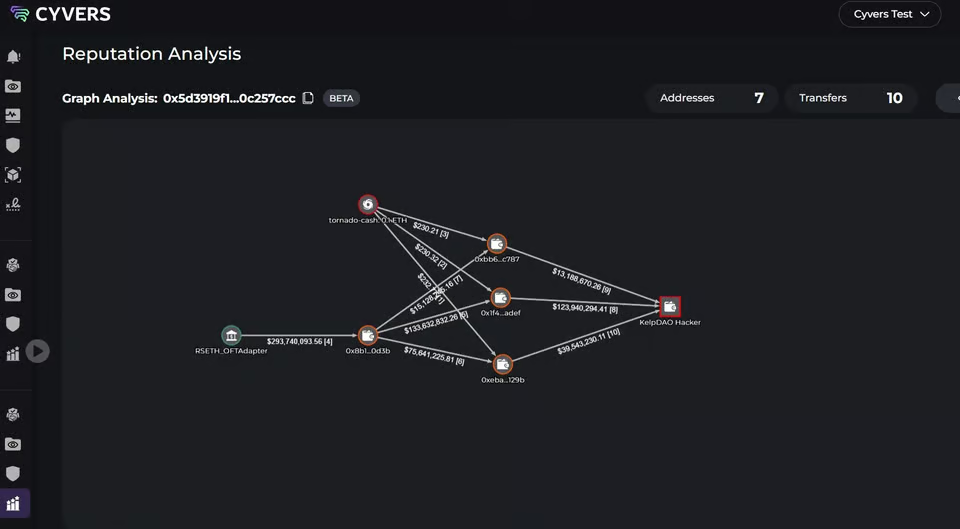
Kelp was hacked in April when attackers widely attributed to North Korea’s Lazarus Group exploited its rsETH adapter bridge contract, the software that manages the platform’s liquid restaking token, and drained about $293 million.
Blockchain security firm OpenZeppelin reported at the time that no smart contract bug had been publicly identified, adding that “the system failed operationally,” and this is a category of risk the DeFi industry has “consistently underweighted.”

Tracking the exploited funds. Source: Cyvers
Withdrawals will resume within 24 hours
Kelp said it will unpause withdrawals, “tentatively within 24 hours,” after the first tranche is returned to the smart contract. All rsETH operations, including deposits, redemptions, bridging and claims, will resume as usual after the contracts are reactivated.
The protocol has also completed a “security hardening pass,” and bridging security now requires four independent attestors and 64 block confirmations, while it has deprecated some layer-2 routes.
Related: At least a dozen crypto entities attacked since Drift Protocol hack
It is also in the process of migrating to Chainlink’s Cross-Chain Interoperability Protocol (CCIP) for “further strengthened cross-chain bridging.”
Derivatives traders undeterred by DeFi hacks
Kelp is a prominent liquid restaking protocol on Ethereum, primarily built on top of EigenLayer, where users deposit ETH or other supported liquid staking tokens for additional yields.
The protocol’s total value locked hit an all-time high of just over $2 billion in September 2025 but has since declined by about 26% to $1.55 billion, according to DefiLlama.
Cointelegraph reported this week that ETH derivatives traders have largely remained unfazed by the recent wave of DeFi exploits, with professional sentiment holding steady despite elevated security concerns.
Magazine: DeFi’s billion-dollar secret: The insiders responsible for hacks

Key Highlights
- Shares of QUBT climbed more than 26% during Tuesday’s premarket session following Q1 revenue of $3.7M that exceeded the $3.1M analyst consensus
- First quarter revenue skyrocketed from a mere $39,000 in Q1 2025, representing a dramatic 12-month transformation
- Rosenblatt Securities maintained its Buy rating with a $22 price objective; Wedbush kept its $12 target intact
- The Arizona-based foundry has transitioned from pure research to revenue-generating operations
- Strategic purchases of Luminar Semiconductor and NuCrypt enhance laser, detector, and quantum encryption technologies
Quantum Computing (QUBT) reported first quarter results that exceeded expectations, propelling shares significantly higher during Tuesday’s session. The firm generated $3.7 million in quarterly revenue, comfortably beating the Street’s $3.1 million projection. The adjusted loss per share of 2 cents also topped analyst estimates.
The year-on-year revenue comparison tells a compelling story. During the first quarter of 2025, the organization recorded merely $39,000 in sales. The current $3.7 million figure represents an extraordinary reversal — although the operational loss expanded to $20 million.
QUBT stock climbed 26.33% in premarket action on Tuesday, building on the previous session’s 6.04% advance. Shares now trade near $13, approaching year-to-date highs, despite remaining down 0.78% for the full year.
Trading activity intensified significantly. Approximately 16.6 million QUBT shares traded hands, well above the three-month average daily volume of roughly 11.59 million.
Wall Street Weighs In
The quarterly report prompted renewed analyst coverage. John McPeake of Rosenblatt Securities confirmed his Buy recommendation while maintaining a $22 price objective, suggesting potential gains exceeding 116% from present levels.
Antoine Legault (four stars) at Wedbush retained his Hold stance with a $12 target, indicating approximately 18% upside potential.
The aggregate Wall Street view registers as Moderate Buy, derived from four Buy recommendations and two Hold ratings issued during the last three months. The mean price objective among these analysts stands at $17.83, translating to roughly 75% upside potential.
CEO Dr. Yuping Huang highlighted photonics as the primary catalyst for expansion. He emphasized the technology’s minimal power requirements and ambient temperature operation as advantages for future data processing applications.
Arizona Manufacturing Facility Milestone
Among the most significant developments from this quarterly report is the Arizona foundry’s performance. The production site, which fabricates the company’s Thin-Film Lithium Niobate (TFLN) chips, had faced scrutiny from short sellers questioning its commercial prospects.
Executive leadership verified the foundry now generates actual revenue. This marks a substantial transition from its previous status as exclusively a research and development center.
The organization also indicated intentions to establish a second production location, implying that TFLN chip demand exceeds present manufacturing capacity.
Unlike numerous rivals dependent on external foundries, Quantum Computing maintains complete control over manufacturing operations spanning hardware through software. This vertical integration strategy minimizes supply chain vulnerabilities and accelerates product development timelines.
The two recently completed acquisitions — Luminar Semiconductor and NuCrypt — incorporate laser and detector technologies alongside quantum encryption capabilities. These additions help reduce expenses associated with constructing room-temperature quantum platforms by internalizing critical component production.
Quantum Computing executives verified that QCi Foundry now contributes to revenue generation for the first time, representing a tangible evolution from development-phase enterprise toward operational commercial business.
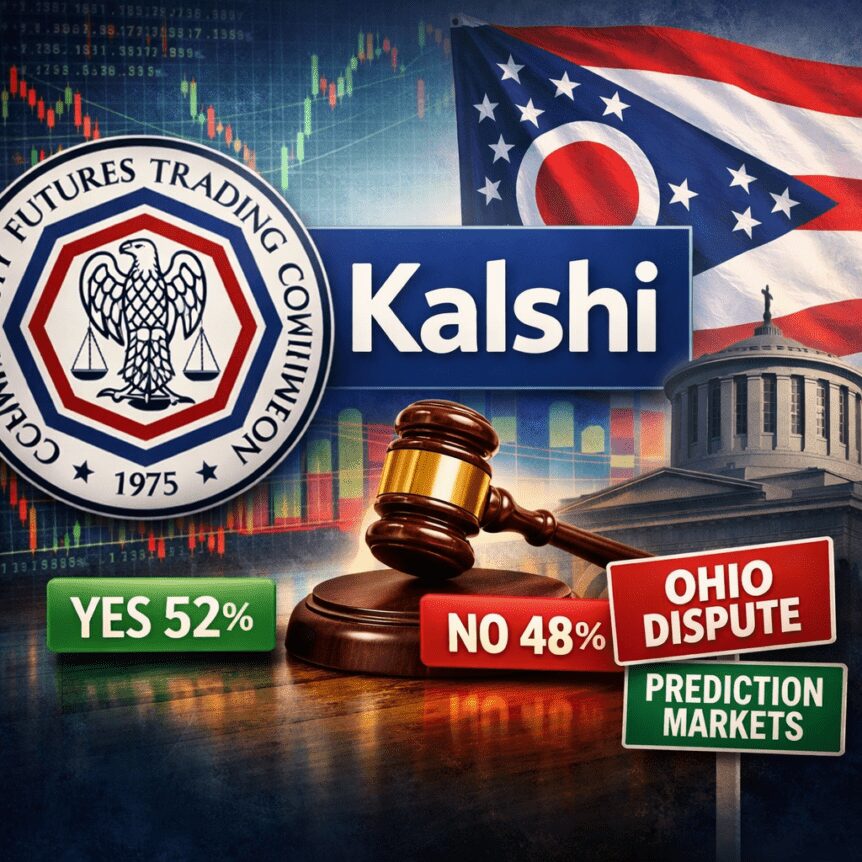
The U.S. Commodity Futures Trading Commission is stepping up its defense of federal authority over prediction markets, as it filed an amicus brief in the Sixth Circuit backing Kalshi in its challenge to Ohio’s regulatory stance. The CFTC argues that Ohio’s actions amount to jurisdictional overreach and threaten to undermine the agency’s exclusive reach over event contracts traded on designated contract markets (DCMs).
Kalshi, a regulated prediction market operator, sought relief in federal court after Ohio authorities told Kalshi last year to halt offering sports event contracts in the state, labeling them unlicensed sports gambling. Kalshi had proceeded with such contracts in other jurisdictions, but Ohio’s position prompted the company to sue the state attorney general and the Ohio Casino Control Commission in October. A federal district court later denied Kalshi’s request to enjoin the state’s actions in March, prompting Kalshi to appeal. The CFTC’s latest amicus brief represents its second public backing of a prediction-market operator in a circuit court battle, following a similar filing in the Ninth Circuit in February supporting Crypto.com in a Nevada regulatory dispute.
“The federal district court in Ohio took an improperly narrow view of the Commission’s jurisdiction, and we are asking the Court of Appeals to correct that error,” CFTC Chairman Mike Selig said in a statement. “As I’ve said repeatedly, the CFTC will not allow overzealous state governments to undermine the agency’s longstanding authority over these markets.”
The dispute sits at the intersection of federal authority and state law, with implications for Kalshi, Polymarket, Crypto.com and other platforms that offer event contracts. The CFTC’s position is that Ohio’s push to regulate and stop Kalshi’s sports-event contracts threatens what the agency regards as exclusive federal oversight of these markets. The agency asserts that event contracts traded on DCMs fall under its swaps or binary options framework, and that allowing state restrictions undermines the federal framework established to regulate capital markets and related products.
The Sixth Circuit fight is one thread in a broader regulatory battle over prediction markets. The CFTC has brought suits against several states in recent months to enforce federal jurisdiction—moves that echo its stance in states such as Wisconsin, New York, Arizona, Connecticut and Illinois. In those actions, regulators argued that the states attempted to apply local gambling or securities laws to platforms offering sports or other event-based contracts. The CFTC has said that such interference risks fragmenting a federally regulated system and creating a patchwork of inconsistent rules that could chill legitimate market activity.
“If States can restrict event contracts on sports, the Commission’s longstanding jurisdiction over these other event contracts could be imperiled too,” the CFTC wrote in the Sixth Circuit filing. “The Court should enforce the Commission’s exclusive jurisdiction and hold that Ohio cannot regulate event contracts traded on DCMs.”
The broader context includes prior CFTC actions and public statements underscoring a push to define and defend the reach of federal regulation over these innovative markets. The agency has described prediction markets as a domain governed by federal rules, not a patchwork of state prohibitions, and has signaled a willingness to go to court to protect that framework. Chairman Selig’s comments reflect a stance that federal law should guide how event contracts are offered, traded and regulated, even as states press their own regulatory theories.
Beyond the Ohio case, the litigation arc this year places Kalshi and other operators under heightened regulatory scrutiny in multiple jurisdictions. In February, the CFTC filed a separate amicus brief in the Ninth Circuit supporting Crypto.com in its Nevada-related dispute, illustrating a pattern of federal regulators backing prediction-market actors across different appellate courts. The agency’s broader strategy is to hinge its defense on the idea that Congress delegated to the CFTC a specific, exclusive remit over event contracts when traded on regulated venues, a remit that would be compromised if states can arbitrarily circumscribe or ban such activity within their borders.
For market participants, the questions at stake go beyond a single lawsuit. Kalshi, Polymarket, Crypto.com, Robinhood and Coinbase—operators offering sports-event contracts or related products on CFTC-regulated platforms—navigate a regulatory landscape that is still taking shape. A ruling in the Sixth Circuit could either reinforce the federal model, or open the door to a wave of state-by-state attempts to curb or reclassify prediction-market activity. The stakes aren’t purely legal; they determine how traders hedge or speculate on future events, how developers structure product offerings, and how investors assess the regulatory risk embedded in these markets.
Analysts and industry observers have noted that the current wave of cases could influence future Supreme Court considerations, given the nationwide reach and the potential for divergent state outcomes. The ongoing legal drama underscores a central tension: whether prediction markets should operate under a unified federal regime or whether states retain meaningful discretion to restrict or redefine them under local gambling or consumer-protection laws. The resolution of the Ohio matter, and related suits in other circuits, will help clarify the balance between state sovereignty and federal market regulation.
As Kalshi and its opponents await the Sixth Circuit’s ruling, market participants will be watching for several telltale signs: how the court interprets the CFTC’s authority over event contracts, whether state actions can be sustained without chilling cross-border platform operations, and how a potential ruling could alter the business models of prediction-market platforms that rely on regulated DCM environments. The outcome will likely influence how other states approach prediction-market products and could shape the pace at which new event-based financial instruments reach broader adoption.
What comes next may hinge on the Sixth Circuit’s process and timing. While the outcome remains uncertain, the CFTC’s dual-front approach—defending federal jurisdiction in multiple appellate venues—signals that the regulator intends to maintain a central role over how event contracts are offered and traded. For investors and operators alike, the evolving jurisdictional calculus will determine not just legal exposure, but the operating feasibility and strategic planning for prediction-market ecosystems in the years ahead.
Readers should monitor upcoming developments in the Kalshi case for the Sixth Circuit, as well as related actions in Wisconsin, New York, Arizona, Connecticut, and Illinois. The convergence of these cases will help define the boundaries of federal authority in prediction markets and set the tone for how these platforms evolve within a regulated, nationwide framework.

More than 100 amendments have been filed to the Digital Asset Market Clarity Act ahead of the Senate Banking Committee’s scheduled markup on May 14, 2026, a volume that signals the bill has entered genuine horse-trading territory, not procedural formality.
Triple-digit amendments at this stage mean the legislative text is live, contested, and being reshaped in real time by competing institutional interests.
The markup, set for 10:30 a.m. in Dirksen Room 538, follows the House’s bipartisan 294-134 passage of the bill on July 17, 2025.
The White House has flagged a July 4, 2026 target for presidential signature, a deadline that gives the Senate roughly seven weeks to resolve disputes that have already derailed two prior markup sessions.
Discover: The best pre-launch token sales
What 100-Plus Amendments Actually Signal About the Clarity ACT Bill’s Fault Lines
The amendment volume is not noise. It maps, with unusual precision, exactly where the bill’s drafters left negotiating room, and where they didn’t.
The most contested provisions cluster around four areas: stablecoin yield treatment, DeFi protocol liability, digital asset mixer classifications, and software developer safe harbors under the Blockchain Regulatory Certainty Act provisions embedded in the Senate’s expanded nine-title structure.
Democrats, including Senators Elizabeth Warren, Chris Van Hollen, Angela Alsobrooks, and Raphael Warnock, have pushed ethics amendments that would bar public officials and their families from profiting on stablecoins or crypto while in office, alongside restrictions preventing big tech firms from issuing stablecoins.
Van Hollen’s “anti-corruption” and “anti-touting” disclosure amendments are framed as consumer protection measures.
Republicans, including Senators Cynthia Lummis, Bill Hagerty, and Thom Tillis, view that framing as a deliberate bill-killer, ethics language broad enough to suppress Democratic floor votes without being negotiable on substance.
The stablecoin yield debate is technically specific: amendments contest whether the bill’s language banning interest payments on stablecoins should include the word “solely,” a single-word distinction that determines whether yield-bearing stablecoin products are structurally compliant or categorically prohibited.
— Eleanor Terrett (@EleanorTerrett) May 12, 2026
 NEW: Since last Friday, @ABABankers members have sent more than 8,000 letters to Senate offices urging lawmakers to fix the stablecoin yield compromise, per a source familiar with the effort. It apparently does not include a separate phone call campaign.
That is not a drafting detail, it is a market-structure decision worth billions in product revenue for issuers already operating in that space.
The CLARITY Act’s jurisdictional architecture, CFTC exclusive authority over spot and cash markets for “digital commodities” on decentralized blockchains, SEC retaining primary oversight over investment contracts and fundraising, remains the bill’s structural core.
Most amendments, analysts note, are negotiating tactics unlikely to survive the markup vote. The real question is which ones are concessions in disguise. That distinction determines the bill’s final shape more than the raw amendment count does.
What Passes the Markup, and What Stalls the Full Senate Floor Vote
If the Banking Committee clears the bill on May 14 with ethics language Democrats can accept, likely a narrowed version targeting Trump-family conflicts rather than a categorical ban, the Senate Agriculture Committee follows with its own markup, and the floor vote timeline toward July 4 holds.
If Warren’s coalition treats the ethics provision as a floor requirement and Republicans refuse to incorporate it, the bill exits committee on party lines and faces a 60-vote cloture threshold it cannot currently clear.
The banking lobby’s opposition to DeFi safe harbor provisions adds a second pressure vector. Banks have argued that developer liability protections create regulatory arbitrage, allowing DeFi protocols to operate without the compliance infrastructure that chartered institutions must maintain.
If that argument gains traction with moderate Democrats, the Blockchain Regulatory Certainty Act provisions get stripped or diluted, which fractures the crypto industry coalition that has been the bill’s most consistent Senate floor lobbying force.
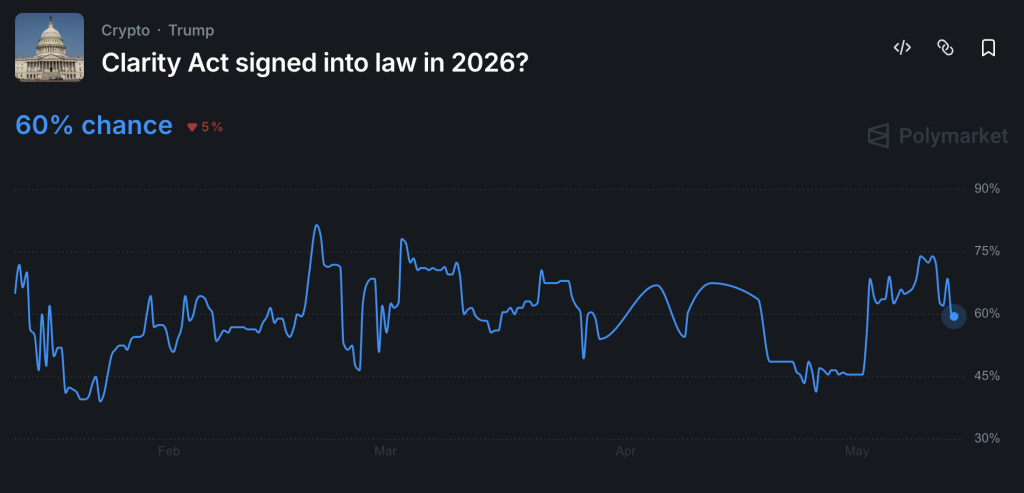
Bipartisan momentum is real, 78 House Democrats voted for the bill, and the CLARITY Act’s stablecoin reserve framework drew support from members who previously opposed crypto legislation. But House votes don’t transfer to Senate arithmetic. The 60-vote math is the decisive variable, and it runs through the ethics amendment.
The May 14 committee vote is the first hard signal on whether this Congress delivers a crypto market structure framework before the legislative calendar tightens. Everything after that depends on what the markup produces,x and which amendments survive it.
The post Senators File 100-Plus Amendments to Crypto Bill Ahead of Senate Markup appeared first on Cryptonews.

Meghan Markle Feels ‘Ashamed’ of Ailing Father Thomas Despite Health Crisis, Royal Expert Claims
Sixt SE (SIXG) Stock Surges Nearly 5% on Strong Q1 Earnings Performance

30 Scariest Horror Movies of All Time, Ranked

Manchester United reach agreement with Casemiro over contract clause amid transfer speculation

US brings back mandatory military draft registration

Steven Gerrard disagrees with Gary Neville over ‘shock’ Chelsea and Arsenal claim | Football

#money #viralvideo #motivation #millionaire #success #viral #money #fyp #wealth #finance #foryou

Gold & Crypto Analysis – Live || 11 May || Trade Time with Pranjal – Pranjal Singh

KERALA FINANCIAL CODE /higher exam /12/5/2026 provisional key
-
 Crypto World5 days ago
HarrisX Poll Found 52% of Registered Voters Support the CLARITY Act
-

 Fashion5 days ago
Weekend Open Thread: Marianne Dress
-

 Crypto World6 days ago
Upbit adds B3 Korean won pair as Base token gains Korea access
-
 NewsBeat6 days ago
NCP car park operator enters administration putting 340 UK sites at risk of closure
-

 Fashion2 days ago
Coffee Break: Travel Steam Iron
-

 Fashion2 days ago
What to Know Before Buying a Curling Wand or Curling Iron
-

 Tech3 days ago
Auto Enthusiast Carves Functional Two-Stroke Engine from Solid Metal
-

 Politics1 day ago
What to expect when you’re expecting a budget
-
 Business4 days ago
Ignore market noise, India’s long-term story intact, say D-Street bulls Ramesh Damani and Sunil Singhania
-

 Politics4 days ago
Politics Home Article | Starmer Enters The Danger Zone
-

 Crypto World7 days ago
BlackRock CEO Larry Fink Discusses a New Asset Class
-

 Tech2 days ago
GM Agrees To Pay $12.75 Million To Settle California Lawsuit Over Misuse Of Customers’ Driving Data
-
 Sports7 days ago
NBA playoff winners and losers: Austin Reaves is not loving Lakers vs. Thunder matchup, but Chet Holmgren is
-

 Entertainment6 days ago
Sarah Paulson Called Out For Met Gala ‘Hypocrisy’
-

 Entertainment6 days ago
General Hospital: Ric & Ava Bombshell – Ric’s Massive Secret Exposed!
-

 Politics6 days ago
Simon Cowell Says He Was ‘Horrible’ To Susan Boyle During BGT Audition
-

 Crypto World6 days ago
Robinhood says Wall Street is building onchain
-

 Sports6 days ago
UEFA Champions League final schedule, teams, venue, live time and streaming | Football News
-

 Entertainment7 days ago
Bold and Beautiful Early Spoilers May 11-15: Steffy Revolted & Liam Overjoyed!
-

 Entertainment6 days ago
Why David Letterman Called CBS ‘Lying Weasels’
You must be logged in to post a comment Login