

Crypto World
Ethlabs Will Overlap with the Ethereum Foundation and Draw Its 'Densest Talent,' Funders Say



Ethlabs, a new Ethereum research lab backed by the network's two largest corporate holders, launched this week with a pitch to complement the Ethereum Foundation. Its own funders concede it will also compete as Ethlabs is “playing to win.” "I think they will be complementary," Joseph Chalom, chief… Read the full story at The Defiant

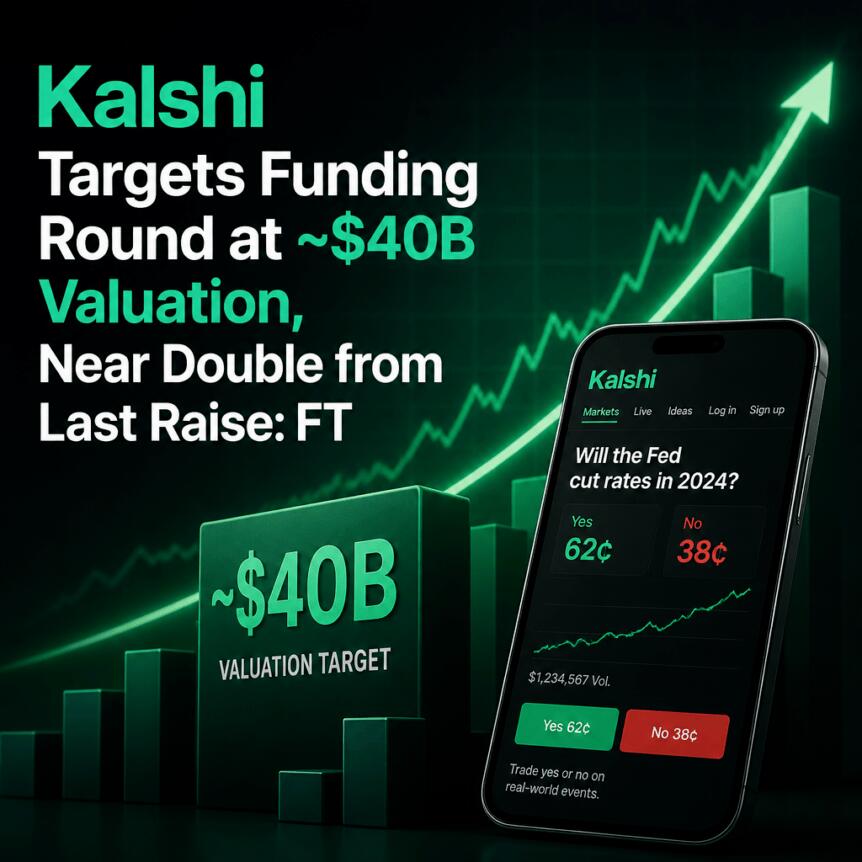
US-based prediction market platform Kalshi is reportedly in talks for a new fundraising round that could value the company at $40 billion—nearly double its $22 billion valuation from a prior financing in May. The Financial Times, citing people familiar with the matter, said the round could be closed as soon as the third quarter of this year.
If the valuation target is reached, Kalshi’s market value would surge sharply in under twelve months, highlighting how quickly investor attention has shifted toward platforms that let users trade on real-world outcomes. The rapid repricing also sets up a more direct competitive comparison with other prediction venues, particularly Polymarket.
Key takeaways
- Kalshi is reportedly seeking a new funding round at a $40 billion valuation, up from $22 billion in May.
- The Financial Times says the round could close as early as the third quarter, pending negotiations.
- Kalshi’s latest financing in May was a $1 billion Series F led by Coatue Management, with participation from multiple major investors.
- Trading activity data cited by Token Terminal shows Kalshi widening the gap over Polymarket in recent months.
- Prediction markets in the US remain under legal pressure, with states and federal regulators clashing over how these contracts should be classified and overseen.
From $22 billion to $40 billion: why the valuation jump matters
Kalshi most recently raised capital via a $1 billion Series F that closed in May. According to the report referenced in the source coverage, the round was led by Coatue Management and included participation from Andreessen Horowitz, Sequoia Capital, Morgan Stanley, and Ark Invest.
That May funding capped a rapid run-up in valuation. Kalshi’s $22 billion valuation in May was reportedly double its $11 billion valuation from December and more than four times its $5 billion valuation in October. In other words, the company has already demonstrated an ability to reset investor expectations within short time spans.
The proposed $40 billion valuation would effectively extend that momentum, implying an even steeper compounding of investor confidence. For market participants, the fundraising storyline is more than corporate finance—larger valuations typically correlate with greater resources for product expansion, partnerships, and regulatory navigation, all of which can influence liquidity and user experience.
What the latest round could signal for prediction-market competition
Valuation milestones are one way to track the sector’s growth, but liquidity and trading velocity are harder signals for how users are actually adopting these platforms.
The source cites Token Terminal data indicating that Kalshi’s monthly notional trading volume reached $17.9 billion as of May, compared with Polymarket’s $7.1 billion. This follows a reported shift in dominance between the two platforms around September last year, when Kalshi partnered with Robinhood to let users trade outcomes of NFL and college football games.
Polymarket had been the clearest leader in trading volume through much of 2024, but the competitive dynamic has reportedly reversed and kept widening over the last nine months. Traders typically follow volume and liquidity, so these numbers can translate into better execution, narrower spreads, and deeper markets—factors that can reinforce network effects for whichever platform remains on top.
If Kalshi is able to secure a large round at the reported level, it may also accelerate the broader pattern of consolidation in prediction-market attention: funds can support more frequent contract listings, improved tooling for event grading, and further integrations that expand the addressable user base.
Momentum draws big tech and mainstream exchanges
The surge in prediction markets has reportedly extended beyond crypto-native circles. The source notes that social media and technology interest has increased alongside the sector’s mainstreaming.
According to the New York Times, Meta CEO Mark Zuckerberg directed staff to build a prediction markets mobile app—described as “Arena”—framed as a challenge to platforms like Kalshi and Polymarket. While such reporting does not confirm launch timelines or product details, it reinforces the view that prediction markets are increasingly seen as a consumer-facing product category rather than a purely niche trading venue.
At the same time, traditional market operators are entering the space. The source reports that Cboe Global Markets launched a new prediction-market platform called Cboe Predicts with binary contracts tied to the S&P 500. This matters because mainstream exchange participation can change expectations for market integrity, participant protections, and potentially the regulatory posture of how contracts are offered to users.
Legal uncertainty: states vs. the CFTC
Despite the growing attention, prediction markets in the United States continue to face legal scrutiny. The source highlights an ongoing dispute over whether event-linked contracts—especially those tied to sports—should be treated as sports betting regulated by state gaming authorities.
Kentucky was the latest state to take action, suing five prediction market platforms last week, including Kalshi and Polymarket, alleging they are “operating unlicensed and illegal sports betting and gambling platforms.”
At the federal level, the US Commodity Futures Trading Commission (CFTC) has argued that it holds exclusive authority over prediction markets and that the platforms operate under CFTC registration. The source further notes that the CFTC has sued state authorities, including Kentucky, to try to prevent states from policing these platforms.
This legal tension is not only a compliance risk for existing operators—it is also a constraint on how fast the category can scale. Investors and users will likely watch for clearer enforcement patterns: whether courts lean toward federal preemption, whether states succeed in carving out additional boundaries, and how platforms adapt contract structures, marketing, and geography.
The fundraising news, in that context, reads as a bet that Kalshi can grow while navigating (or eventually benefiting from) the regulatory direction the courts and regulators choose.
Closing perspective
As Kalshi negotiates a reported $40 billion valuation, the bigger question for the market is whether the company’s growth story can keep outpacing the regulatory friction facing the entire prediction-market category—especially as more mainstream companies and exchanges test the waters.
-
When virality moved off-screen
Memecoins have never pretended to be serious. Other blockchain projects often present themselves through promises of faster payments, scalable infrastructure or decentralized applications (DApps). Memecoins, however, draw their appeal from humor, absurdity and internet culture.
A photo of a dog can become a billion-dollar asset. A frog image can trigger a wave of speculation. Communities come together around shared jokes, catchphrases and collective excitement, often with little logic beyond the energy of participation.
For much of their existence, memecoins were mostly limited to screens. The risks were mainly financial. Speculators could lose money chasing momentum, but the memes themselves rarely moved far beyond social media feeds and trading interfaces.
That boundary is starting to weaken.
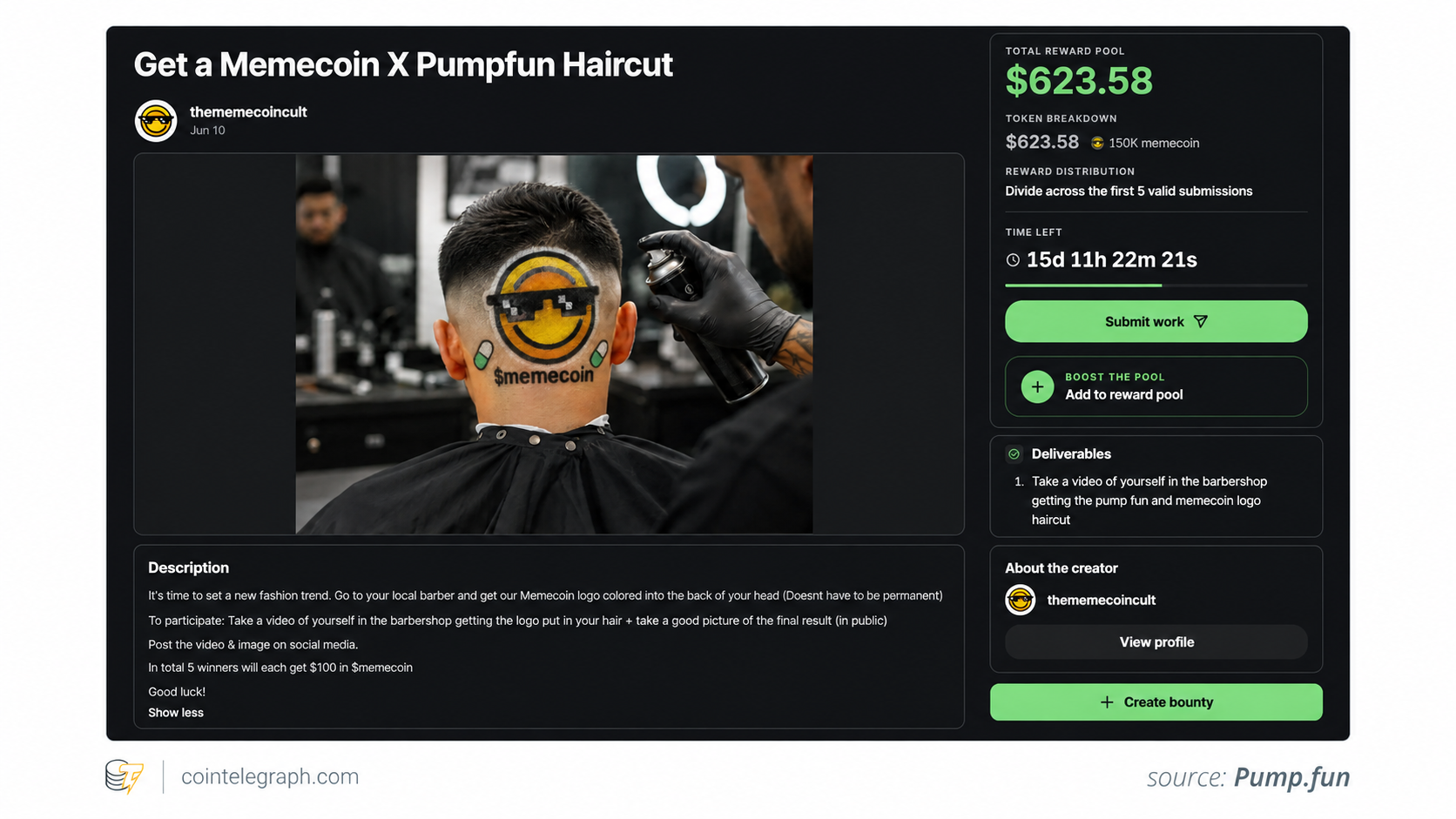
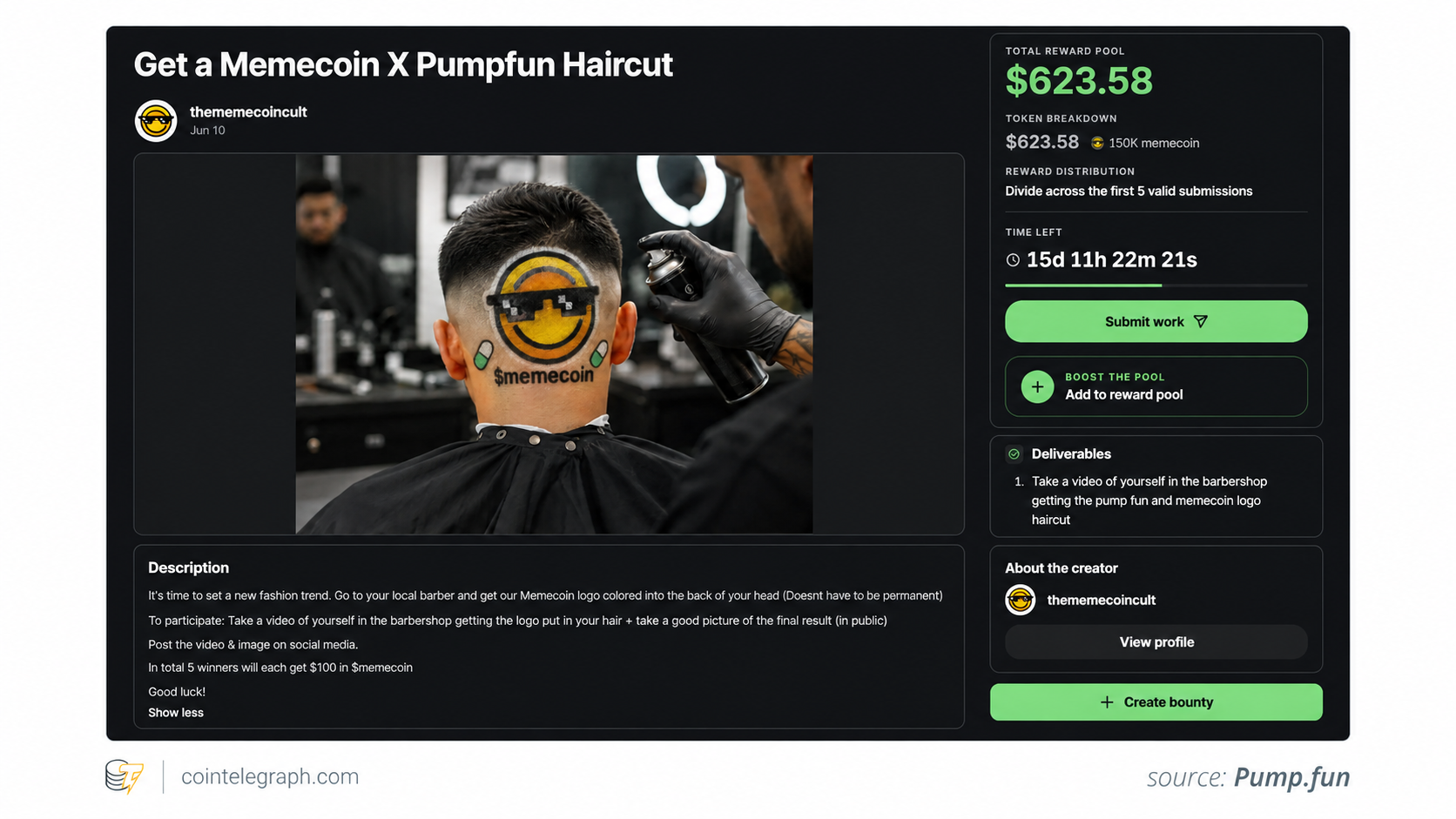
Recent controversies surrounding Pump.fun, a Solana-based token launchpad, suggest that memecoin promotion may be moving in a more troubling direction. People have reportedly accepted cryptocurrency payments in exchange for shaving their heads, drinking large amounts of alcohol and having token names tattooed on their bodies.
What was once the internet’s favorite speculative pastime is no longer simply asking participants to click a buy button. In some cases, it is asking them to turn themselves into living advertisements.
Whether this is a new form of community engagement or a troubling sign of the attention economy deserves serious consideration.
-
Memecoins have always been about attention
Memecoins do not need strong technology or clear utility to attract buyers. Their value often comes from something simpler: how many people are watching, sharing and talking about them.
Most cryptocurrencies try to support their value with utility, such as new technology, better efficiency or new economic models. Memecoins work differently.
Their value depends largely on visibility.
Dogecoin, launched as a joke in 2013, became one of the world’s largest cryptocurrencies mainly through community enthusiasm and celebrity attention. PEPE drew strength from internet meme culture. BONK benefited from momentum within the Solana ecosystem. Countless others have risen and collapsed on social energy alone.
This does not make memecoins illegitimate by default. Markets have long assigned value to things that are not physical, including brands, stories and cultural relevance. But it does mean attention is the scarce resource on which everything else depends.
In memecoin markets, attention brings in traders. Traders create liquidity. Liquidity can push prices higher. Rising prices attract even more attention. The cycle feeds itself. As long as the conversation continues, the asset stays alive.
Did you know? Long before crypto existed, radio stations used outrageous publicity stunts to attract audiences. Some bizarre contests reportedly led to injuries, showing that the chase for attention has always carried hidden risks.
-
How Pump.fun changed the economics of token creation
Pump.fun changed memecoin creation by making launches faster, cheaper and easier for nontechnical users.
Launching a token once required technical knowledge, marketing support and startup capital. Pump.fun made that process much faster. With a small amount of money, almost anyone could create a token within minutes.
The result was dramatic. Millions of tokens have reportedly been launched through the platform. Supporters see this as a major step toward open access.
However, open access also brought unintended effects.
When almost anyone can launch a memecoin, standing out becomes the real challenge. Creation is no longer the main obstacle. Attention is.
This made marketing one of the most valuable parts of the memecoin economy. In markets built around attention, competition often moves toward more extreme behavior.
-
Paying people to go viral
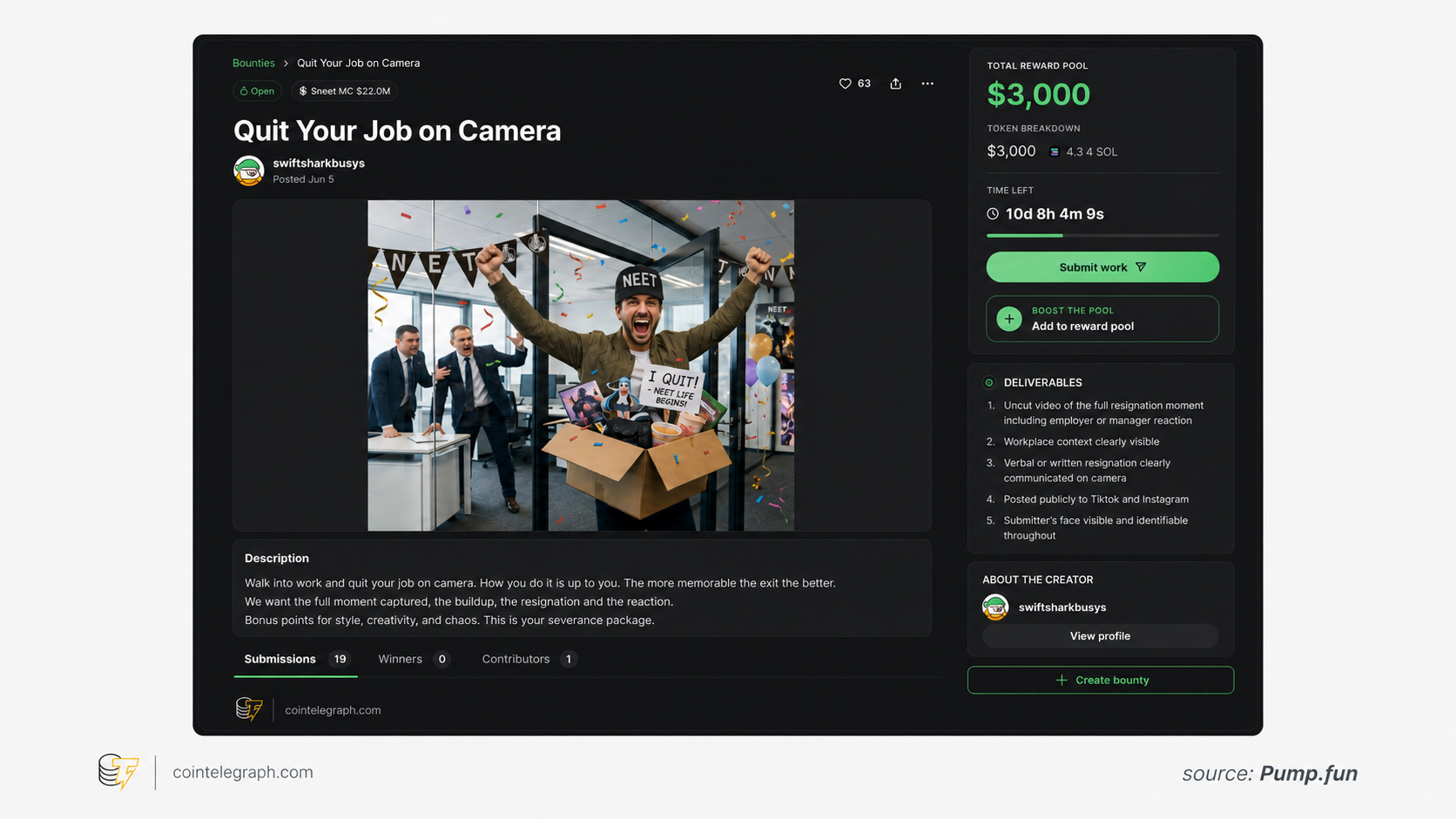
Pump.fun’s GO bounty marketplace turned memecoin promotion into something more direct. It allowed users to pay others for promotional tasks, including stunts designed to attract attention.
The idea was simple. Users could offer rewards in exchange for promotional tasks. Some tasks were fairly harmless. Others moved into more troubling territory, with participants accepting bounties that involved shaving their heads, drinking alcohol on camera and performing increasingly bizarre public stunts.
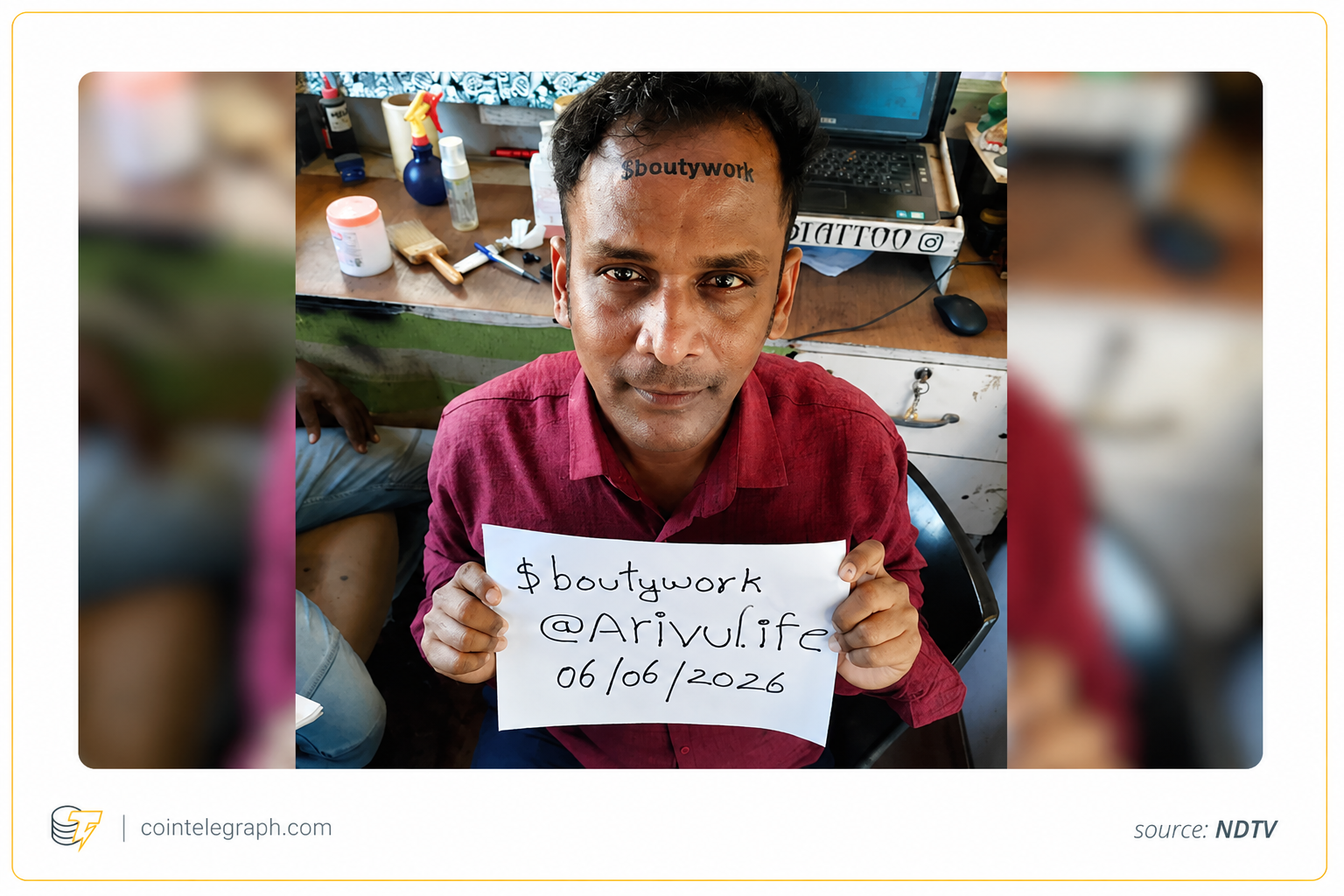
One of the more widely shared examples involved Arivu, a resident of Tamil Nadu, India. He tattooed the ticker “$boutywork” across his forehead in an attempt to complete a bounty. The episode carried a strange irony: The ticker itself contained a spelling error.
What was meant to be a promotional act became a permanent physical mark tied to a short-lived internet moment. Traders continued speculating on the related tokens. The internet moved on to its next distraction, but the tattoo remained.
Did you know? The term “meme” was coined by evolutionary biologist Richard Dawkins in 1976 to describe how ideas spread through culture. Internet memes later became powerful enough to influence financial markets.
-
Why extreme behavior can seem financially rational
On the surface, these examples may look simply absurd. Why would someone permanently change their appearance or take real risks to promote a speculative token?
The answer lies in the economics of attention.
Online audiences adjust quickly. What gets a reaction today can feel ordinary tomorrow. Influencers and advertisers understand this well. To stay visible, creators often feel pressure to raise the stakes.
More extreme behavior can generate stronger reactions. Stronger reactions can lead to wider distribution. That, in turn, attracts more attention. In memecoin markets, attention can directly affect trading activity.
Outrage can also work as promotion. People who criticize extreme stunts may still amplify them by sharing screenshots, publishing commentary and keeping the topic alive. The stunt becomes part of the token’s identity. In some cases, the controversy may be the product from the start.
-
How creator incentives feed risky speculation
Modern memecoin culture now looks like a mix of reality television and high-risk online speculation. Participants are not only chasing financial returns. They are also competing for social recognition, where virality itself can feel like a form of currency.
Several psychological forces help explain this behavior.
The first is asymmetric upside. A relatively small sacrifice can seem reasonable when there is even a small chance of a meaningful financial reward.
The second is financial pressure. For people facing real money problems, crypto rewards can look significant compared with local wages.
Third, internet fame has value of its own. A viral moment can bring followers, influence and future opportunities that go beyond any single token.
Finally, fear of missing out can be powerful. When people see others receiving attention and possible rewards, they may ignore risks they would normally treat with caution.
None of these motivations are unique to crypto. What crypto adds is speed and speculative intensity. Together, they can make each of these forces much stronger.
-
Creative marketing or exploitation?
Supporters of these practices argue that critics are overstating the concern. From their view, participation is voluntary.
People often accept risk in exchange for money, attention or entertainment. Reality television contestants take part in humiliating challenges. Influencers promote questionable products. Professional athletes risk serious injury for income and recognition. The argument is that crypto bounties should not be treated as entirely different.
There is some truth to this view. Not every bounty is malicious. Community-driven campaigns can also be creative, funny and participatory. Some memecoin communities attract attention precisely because they reject traditional corporate marketing.
Critics, however, see a more complicated picture. Consent is not always simple, and financial pressure can affect judgment. Participants may underestimate long-term consequences when immediate rewards are placed in front of them.
Platforms may also benefit indirectly from the higher engagement and trading activity that sensational content creates. Audiences, meanwhile, may start expecting bigger and riskier stunts to stay interested.
This leaves an uncomfortable ethical question: At what point does voluntary participation become exploitation?
-
A pattern crypto has seen before
The current controversies are not entirely new. Pump.fun has faced criticism before over its livestreaming features. Reports suggested that some creators used increasingly extreme behavior to attract investors and viewers.
This allegedly included sexually explicit content, threatening behavior and other sensational performances meant to increase token visibility. The platform later suspended livestreaming before bringing it back with moderation measures.
The broader pattern is familiar. New formats attract audiences. Competition increases. Participants push their behavior further to stand out. Public backlash builds, and platforms tighten their rules in response.
This cycle has played out many times across television, social media and influencer culture. Crypto may simply be repeating a familiar pattern, with token incentives adding another layer of motivation.
Did you know? Behavioral economists have found that social proof can strongly influence decision-making. When people see others joining risky trends, they may view those risks as less serious and be more likely to copy them.
-
The regulatory gray area
These developments raise difficult questions for regulators. Bounty programs are not easy to categorize.
Depending on how they are structured, they could be seen as marketing campaigns, promotional contests, informal work arrangements, high-risk reward systems or something existing laws were not designed to handle.
Consumer protection authorities may ask whether participants are clearly told about the risks. Labor regulators may consider whether people driven by financial need deserve extra safeguards. Securities regulators could examine whether token-based rewards change the legal nature of promotional activity.
The answers are likely to differ across jurisdictions.
Without clearer standards, platforms may face a long period of regulatory uncertainty.
-
The future of memecoin marketing remains uncertain
Optimists see recent incidents as isolated excesses rather than signs of a wider trend. They believe the model can still improve.
In this view, bounty systems could mature into more constructive forms of community engagement. Well-structured bounty systems could reward creativity without encouraging harmful behavior.
Others expect the opposite. They argue that competition for attention will keep pushing participants toward riskier acts until a serious incident forces major regulatory action.
The most likely outcome may fall somewhere in between. Platforms may adopt stricter moderation rules. Some types of challenges may be banned outright. Communities may also reject tactics they see as exploitative.
Over time, the market may learn where audiences draw the line.
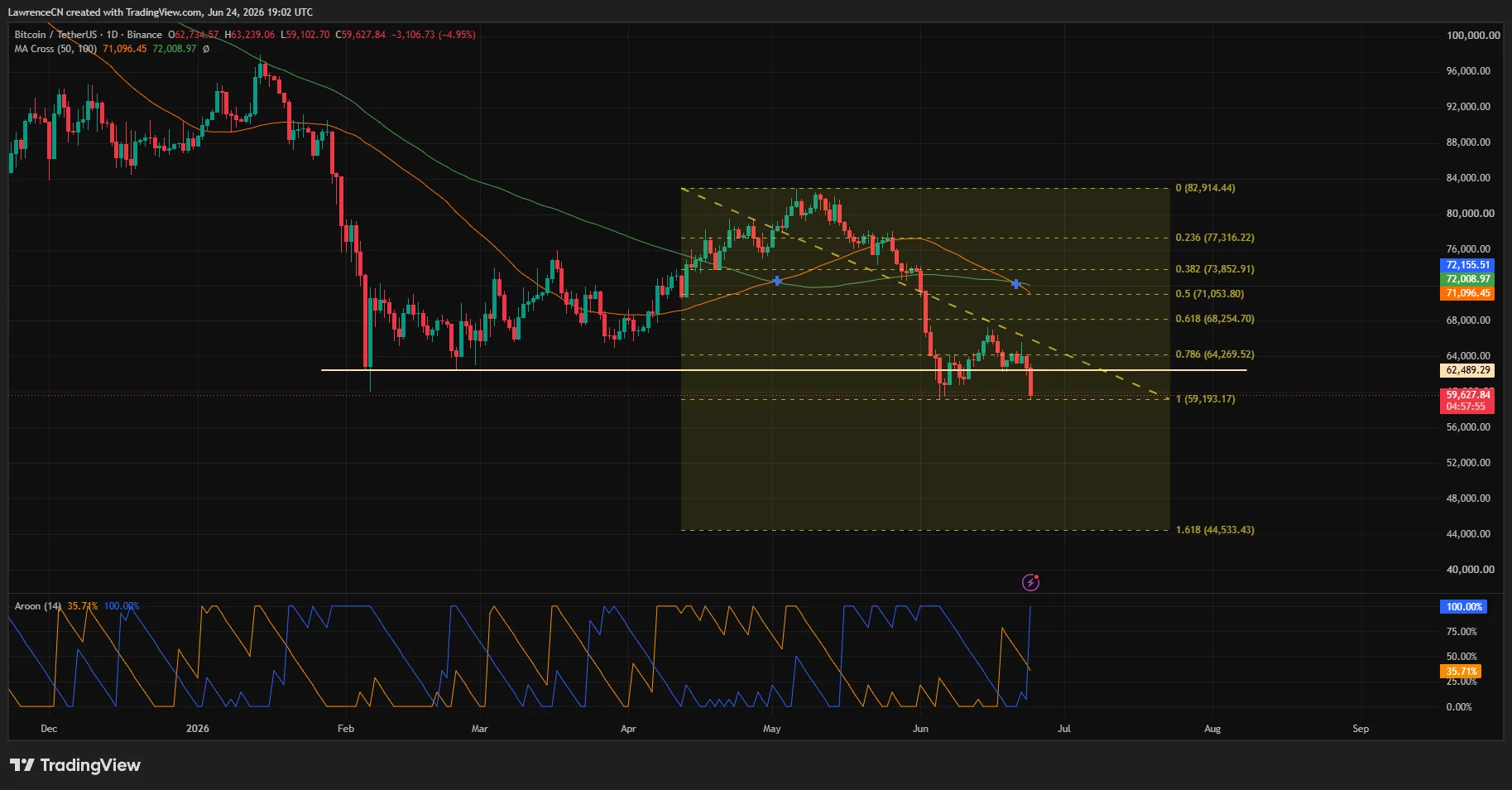
Bitcoin price has fallen to a make-or-break support zone near $59,000 after losing a key Fibonacci level that traders viewed as the last major defense before a deeper selloff.
Summary
- Bitcoin price has fallen back to the June low near $59,000 after losing the critical 78.6% Fibonacci retracement level.
- Technical indicators remain bearish, with BTC trading below key moving averages and sellers dominating momentum.
- Analysts view the $59,000-$60,000 zone as the final major support area before the risk of a deeper correction increases.
According to data from crypto.news, Bitcoin (BTC) price dropped to around $59,175 on June 24, extending a pullback that has erased nearly all of the recovery from this month’s low. The decline came after price failed to hold above the 78.6% Fibonacci retracement level near $64,270, a zone many traders consider the final support before a full retracement of a prior rally.
The move has returned Bitcoin to the 100% Fibonacci level around $59,193, which also coincides with the June low. A break below that area would place the market at its weakest level since the rally that followed the April correction.
Bitcoin price has erased most of its May rebound
The daily chart shows Bitcoin retracing almost the entire advance from its June low to the May peak near $82,900. During the decline, BTC price lost support at both the 61.8% Fibonacci retracement level around $68,250 and the 78.6% retracement near $64,270 before sliding back toward the origin of the move.
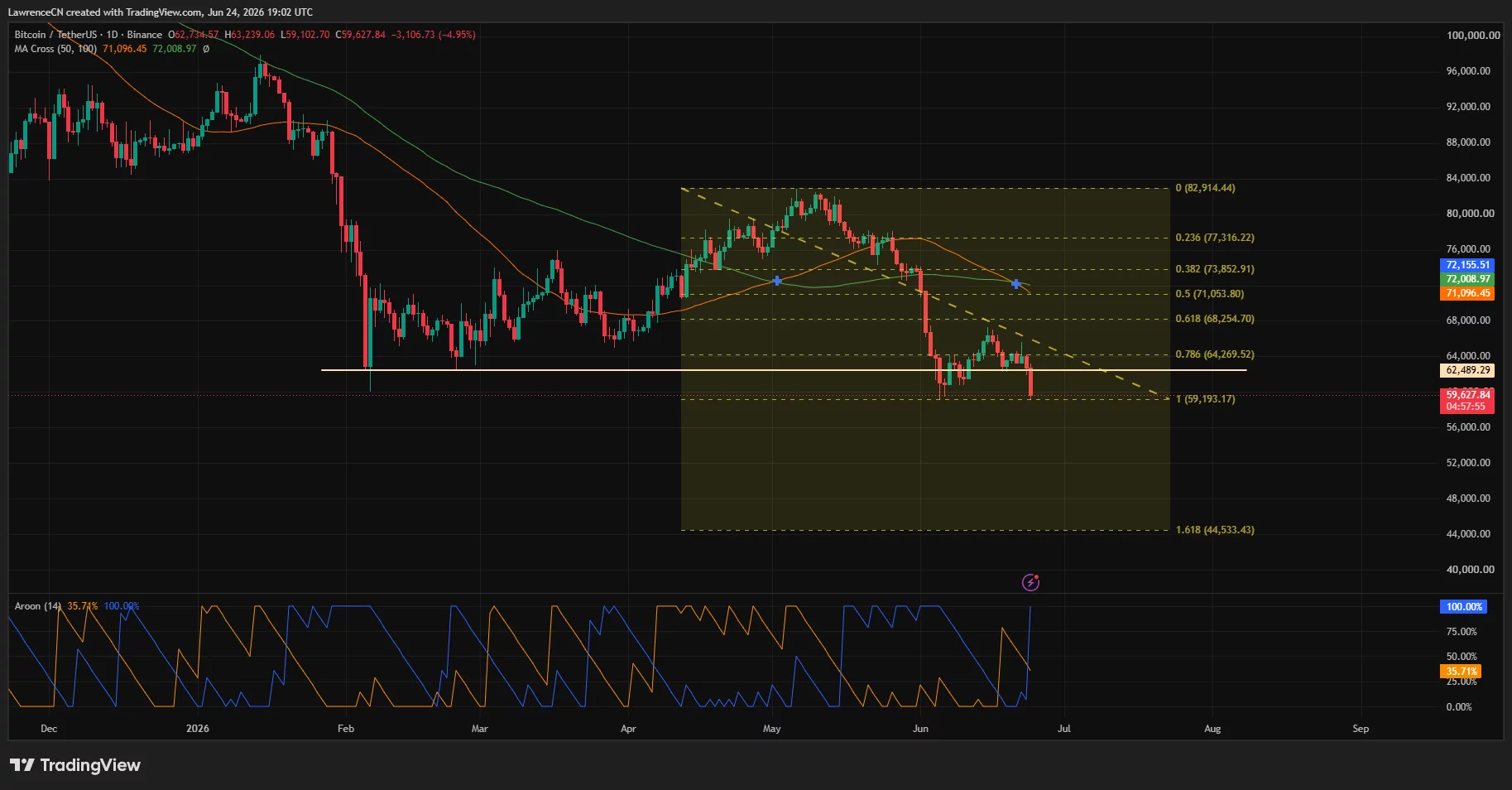
At the same time, Bitcoin remains trapped beneath a descending trendline that has capped every recovery attempt since the May high. Each rebound has produced a lower high, preserving the bearish structure that has defined the market for the past several weeks.
Moving averages also continue to favor sellers. The chart shows Bitcoin trading below its 50-day moving average near $71,100 and its 100-day moving average around $72,000, with the 50-day MA remaining below the 100-day MA in a bearish crossover that signals weakening medium-term momentum.
Previous attempts to reclaim those levels failed, allowing downward momentum to accelerate as support zones gave way.
$60K has become the final line for bulls
Attention has now shifted to the $59,000-$60,000 region, which has emerged as the most important support area on the daily chart. Buyers successfully defended this zone earlier in June, producing a recovery that eventually carried Bitcoin above $70,000 before momentum faded.
Market indicators suggest sellers still hold the advantage. The Aroon indicator shows Aroon Down at 100%, while Aroon Up remains near 36%, a configuration that typically signals persistent downside pressure and continued dominance by recent lows.
Daan Crypto Trades described the 78.6% retracement as the last major support level before the $60,000 area comes under direct pressure. The analyst added that failure to hold this region could open the door to a break of the June low and force traders to look for support at lower levels.
A successful defense could allow Bitcoin to attempt a recovery toward the $64,000 area, where the lost 78.6% Fibonacci level now sits as resistance. Beyond that, buyers would need to reclaim the $68,000 region and break the descending trendline before a broader trend reversal could be considered.
If support fails, however, the chart offers little evidence of strong demand immediately below current levels. Fibonacci projections show a 1.618 extension near $44,500, highlighting the downside risk traders may begin discussing if Bitcoin decisively loses the June floor.
With price now sitting directly on a support zone that previously triggered a sharp rebound, the coming sessions could determine whether Bitcoin forms a durable bottom or extends the correction that has dominated trading since May.
Disclosure: This article does not represent investment advice. The content and materials featured on this page are for educational purposes only.
US-based prediction market platform Kalshi is reportedly in talks to raise funds at a $40 billion valuation, nearly doubling its $22 billion valuation in May.
The company could close the new funding round as soon as the third quarter of this year, the Financial Times reported on Wednesday, citing people familiar with the matter.
Kalshi closed a $1 billion Series F in May, led by Coatue Management, with participation from Andreessen Horowitz, Sequoia Capital, Morgan Stanley and Ark Invest. Its $22 billion valuation at the time was double the company’s $11 billion valuation in December and more than four times its $5 billion valuation in October.
If the new funding round closes at a $40 billion valuation, Kalshi’s value would have increased eightfold in less than a year, underscoring a surge in investor interest in prediction markets. The valuation would also far surpass Polymarket’s last reported valuation of $15 billion in April.
Kalshi declined to comment.
Kalshi was founded in 2018 by Tarek Mansour and launched publicly in July 2021, with prediction markets gaining significant momentum in 2024 in the run-up to the US presidential election.
While Polymarket was the clear leader in trading volume in 2024, the two prediction market platforms flipped around September last year as Kalshi partnered with Robinhood to let users trade on outcomes of NFL and college football games.
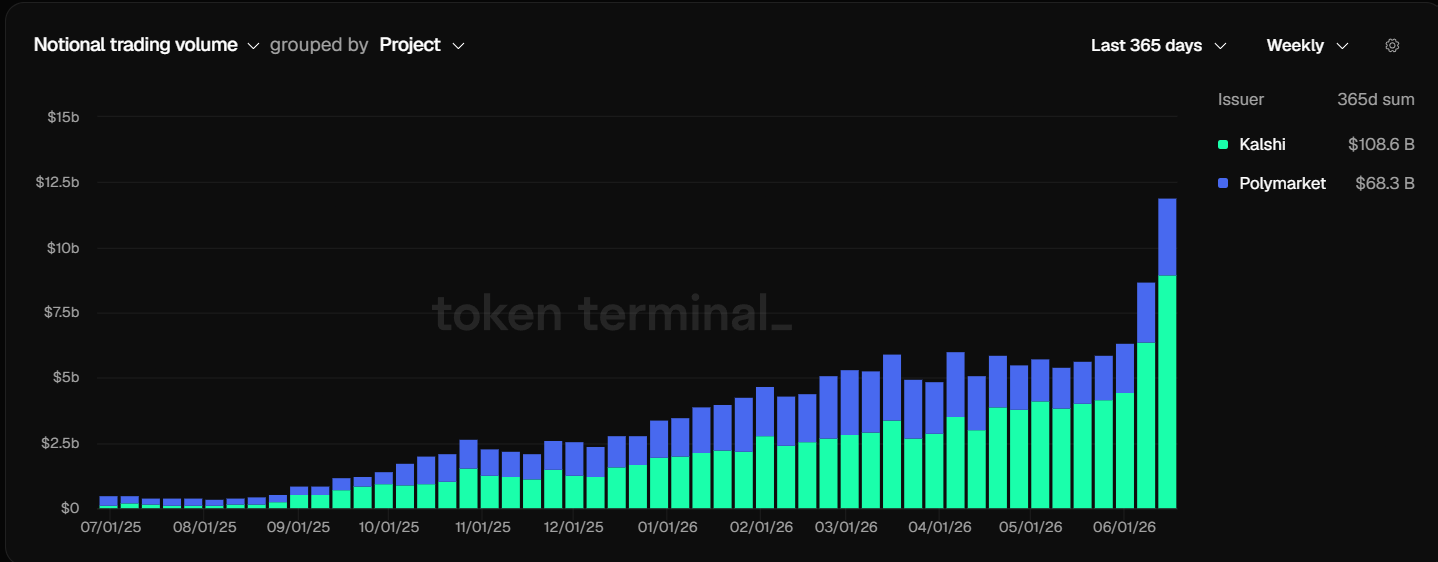
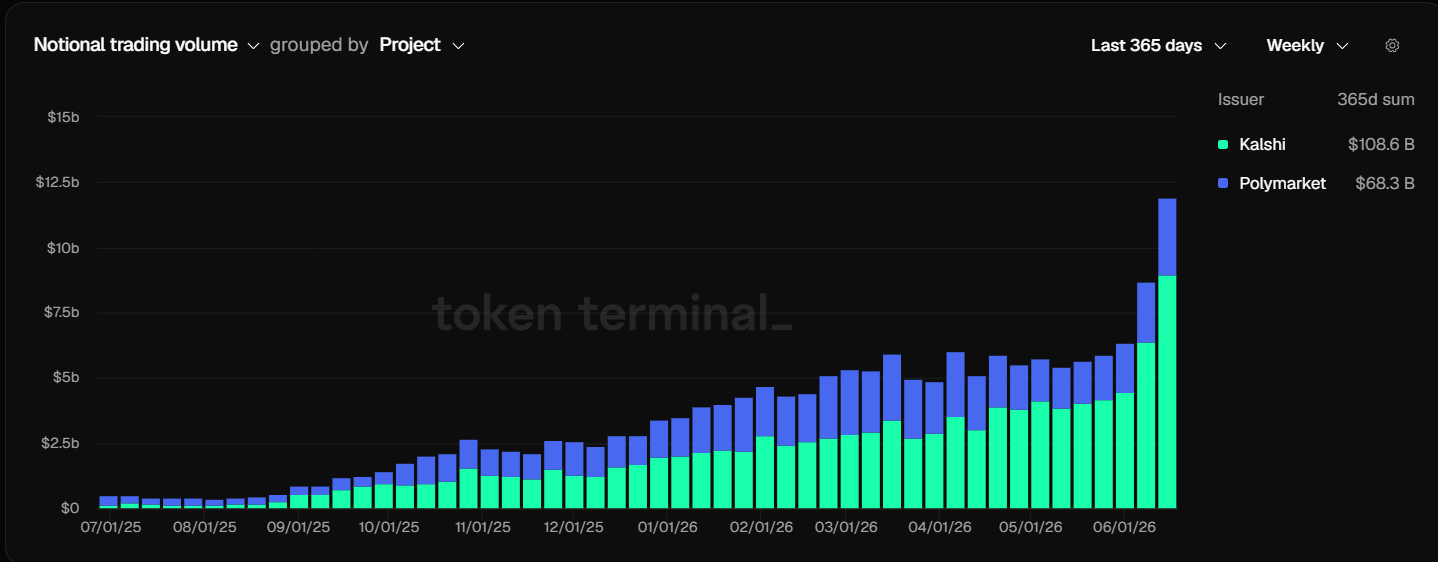
Notional weekly trading volumes of Kalshi (green) and Polymarket (blue). Source: Token Terminal
The gap has continued to widen over the last nine months. As of May, Kalshi’s monthly notional trading volume was $17.9 billion, compared with Polymarket’s $7.1 billion, according to data from Token Terminal.
The success of prediction markets has reportedly drawn interest from social media and tech giant Meta, with CEO Mark Zuckerberg directing staff to create a prediction markets mobile app called “Arena” to challenge Kalshi and Polymarket, according to the New York Times.
Related: Kalshi in early IPO talks with investment banks: Report
Meanwhile, market operator Cboe Global Markets on Tuesday entered the prediction markets business with the launch of Cboe Predicts, a platform debuting with binary contracts tied to the S&P 500.
Prediction markets have been pulled into legal battles across the US, with several states arguing that their event contracts tied to sports are sports betting regulated by state gaming authorities.
Kentucky was the latest state to take action, suing five prediction market platforms last week, including Kalshi and Polymarket, to accuse them of “operating unlicensed and illegal sports betting and gambling platforms.”
The US Commodity Futures Trading Commission has claimed it has exclusive authority over prediction markets, arguing they are registered with the agency.
The CFTC has sued multiple state authorities that have taken action against prediction markets, including Kentucky on Tuesday, in a bid to block states’ attempts to police the platforms.
Magazine: AI is banking the unbanked in Africa… faster than crypto
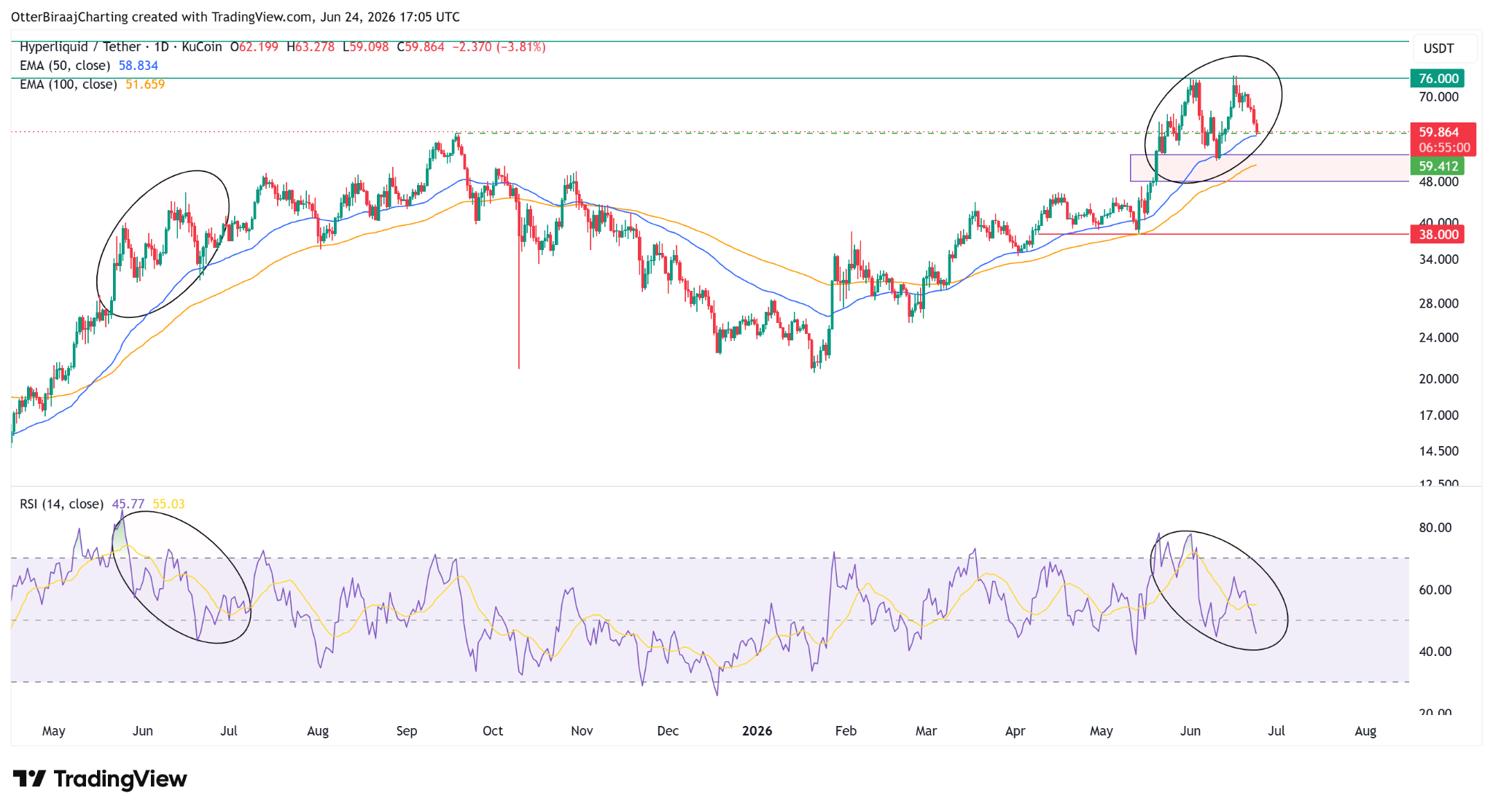
Hyperliquid’s HYPE token is down 22% from its $75 all-time high, bringing its 2026 uptrend to a key test of support. Market participation has cooled across the derivatives markets, while the spot flows show early signs of stabilization after strong selling pressure in early June.
The $50-$54 area now stands out as the most important support zone beneath current prices and the first major trend test since January.
Spot selling begins to ease for HYPE
HYPE fell below $60 on Wednesday after rejecting another retest of its all-time high near $76. The decline has pushed the price toward the 50-day exponential moving average, a level that has acted as trend support throughout the rally from March.
The recent pullback resembles HYPE’s consolidation in May 2025. At that time, the token printed a new high near $40 before entering a multi-week pause that cooled momentum without producing a bearish break on the daily chart.
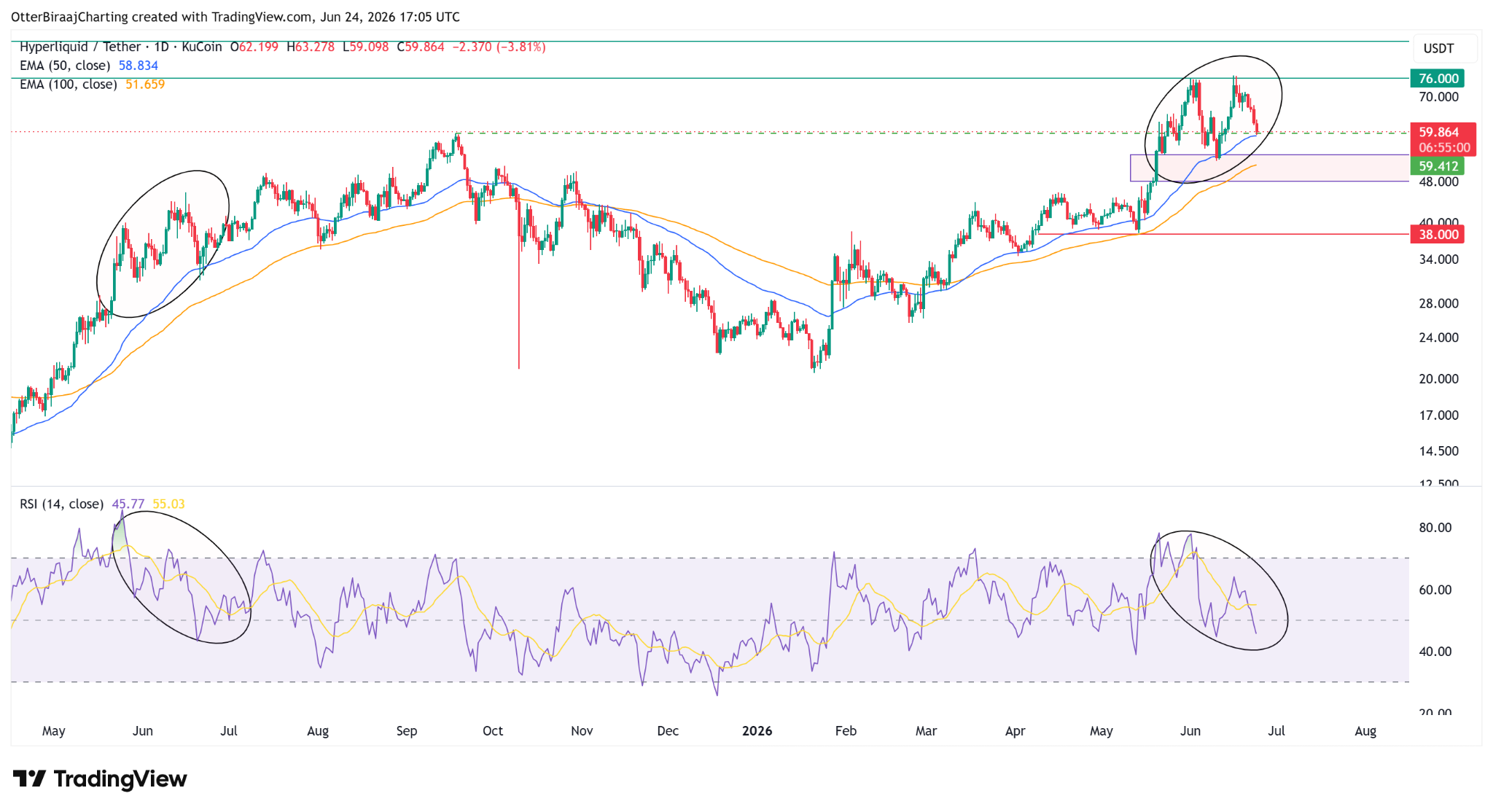
HYPE price comparison, July 2026 and May 2025. Source: Cointelegraph/TradingView
The relative strength index is following a similar setup, rolling over from overbought conditions while remaining above the levels typically associated with trend reversals.
However, onchain data paints a cautious picture. Aggregated spot cumulative volume delta (CVD), which measures net buying and selling activity in spot markets, has improved from recent lows during the correction. The recovery has reduced the earlier sell imbalance, though spot CVD remains deeply negative at nearly $95 million.
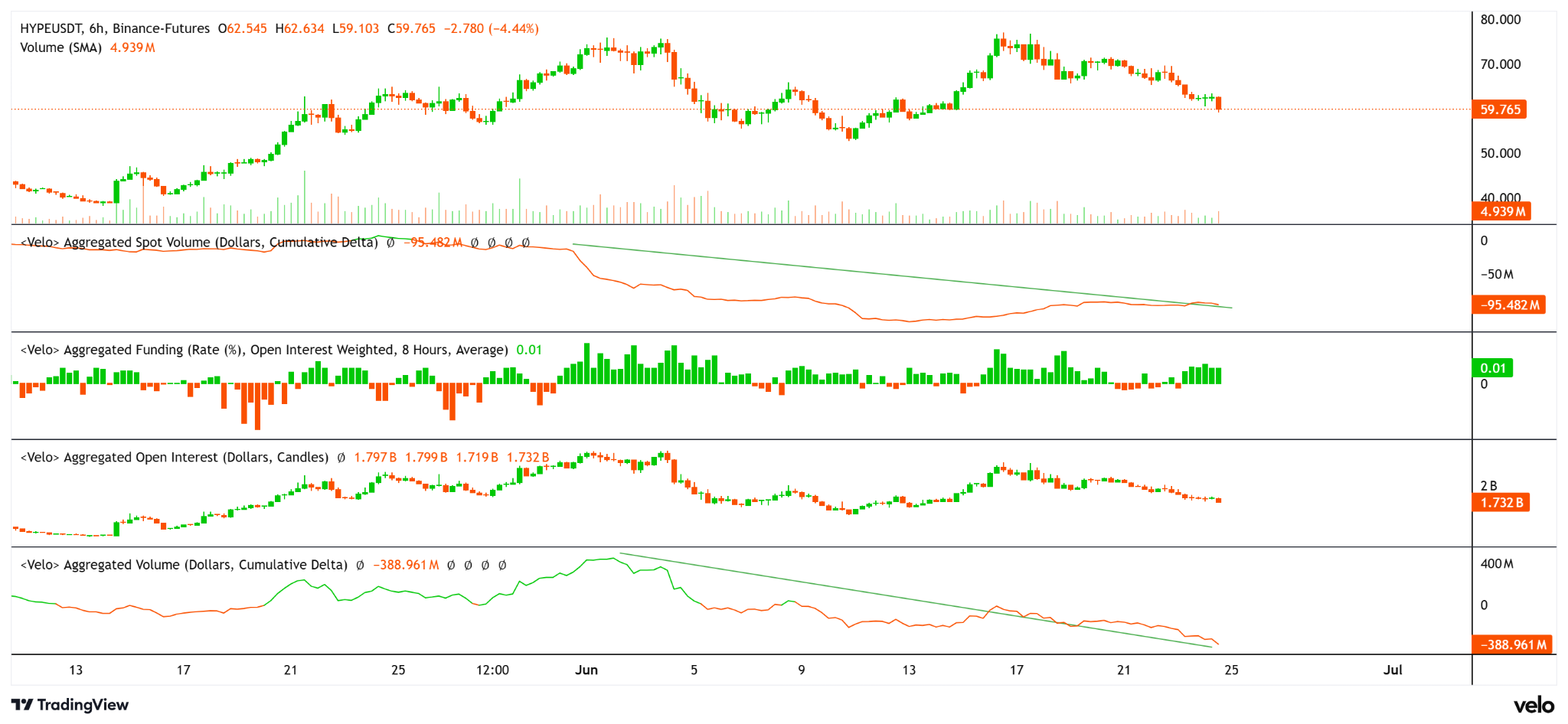
HYPE price, open interest, spot and futures CVD, funding rate. Source: Velo
The shift suggests selling pressure is easing rather than aggressive accumulation. Spot buyers have started absorbing supply near current levels, though the scale of demand remains modest compared to $110 million in selling recorded during HYPE’s decline from $76 in early June.
The derivatives activity continues to weaken. Open interest has fallen to $1.73 billion from $2.2 billion, while derivatives CVD has continued trending lower and now sits near negative $389 million, down from $400 million at the beginning of June. Currently, HYPE traders appear to be reducing exposure rather than opening new positions.
Related: Solana grabs 95% of tokenized equity as traders debate if SOL bottom is in
$50 support comes into focus
The next major test lies between $50 and $54, where the rising 50-day exponential moving average aligns with an unfilled daily fair-value gap. The zone represents the first significant support cluster below the current prices.
Holding above the region preserves HYPE’s sequence of higher highs and lows, which has remained intact since January. It also keeps the current pullback consistent with previous consolidations that developed within the broader uptrend.
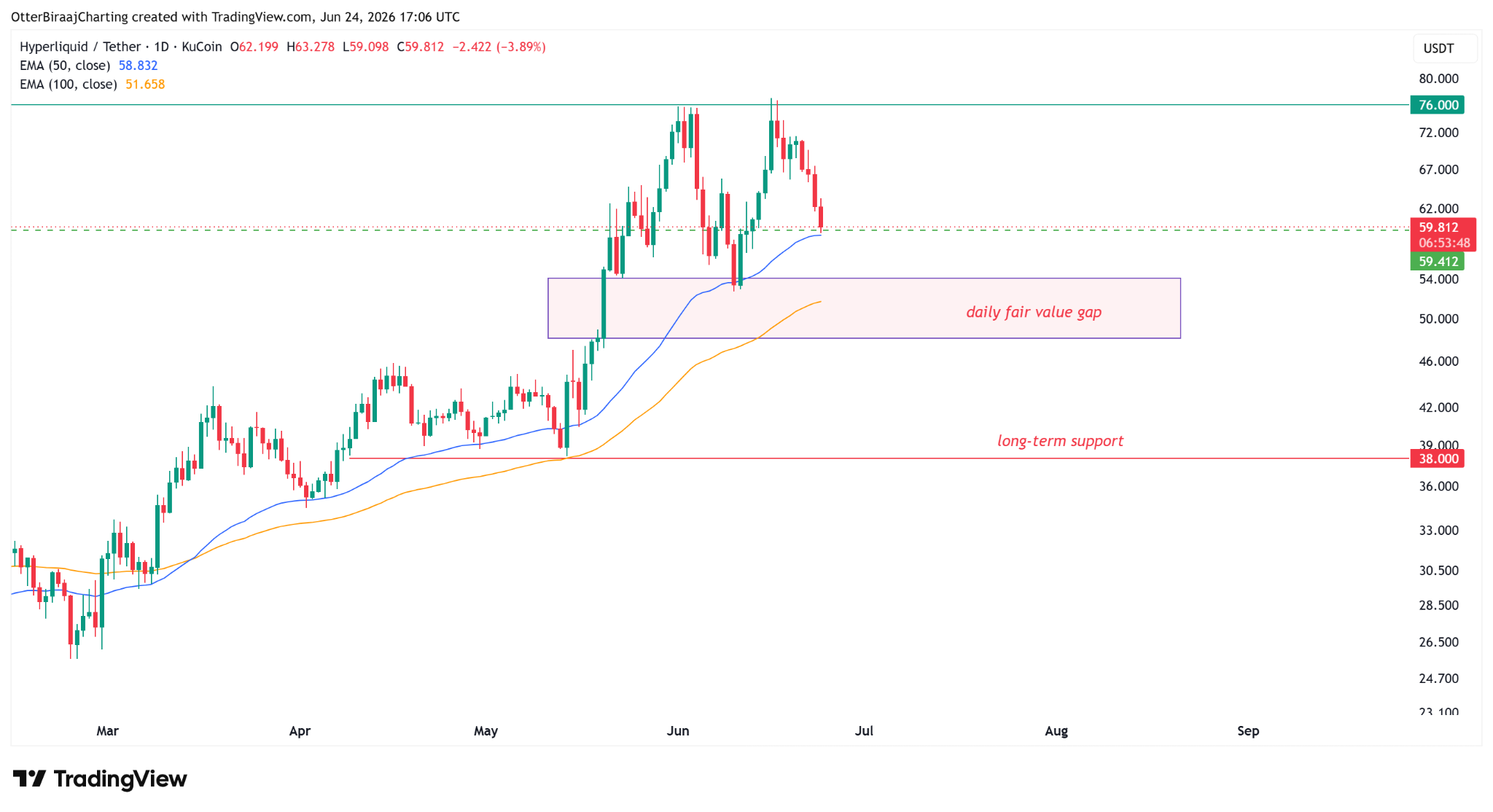
HYPE/USDT, one-day chart. Source: Cointelegraph/TradingView
A daily close below $53 would mark the first meaningful bearish shift on the daily chart this year. The 100-day EMA near $51.6 becomes the next support level, followed by the lower boundary of the fair value gap near $49. Below that, the next notable support area sits near $38.
For now, the most important signal is the gap between improving spot flows and declining participation across leveraged markets. The strength of demand around the $50-$54 support zone may offer the clearest indication of whether HYPE’s correction is nearing exhaustion or preparing for a deeper retracement.
Speaking in terms of accumulation, crypto trader Altcoin Sherpa said,
“HYPE, I think anywhere in the 55-64 area is a pretty good place to accumulate this one. I think it goes to $100 later this year personally and is still the best altcoin…but it’s going to also depend a lot on bitcoin IMO.
Related: Bitcoin crash to $60K opens new $530M demand zone: Will bulls buy in?

Memecoins were once largely confined to the internet: jokes turned into tokens, and trading played out on screens. But recent controversies tied to Solana’s Pump.fun suggest that memecoin promotion is increasingly reaching into real-world behavior—at times by rewarding people in crypto for promotional stunts.
The shift matters because it changes the incentives surrounding token launches and marketing. When attention becomes something participants can monetize directly, the line between entertainment, community engagement, and exploitation can blur—raising new ethical and regulatory questions for an industry already operating with uneven oversight.
Key takeaways
- Memecoin value is closely tied to visibility and social momentum, but Pump.fun-style bounty models intensify the competition for attention.
- Reports around creator bounties describe crypto rewards for attention-seeking behavior that can extend beyond online promotion.
- By lowering the barrier to token creation, platforms can move scarcity from “ability to launch” to “ability to stand out.”
- Supporters argue participation is voluntary, while critics warn that financial pressure and consent can be more complex than it appears.
- Regulators may struggle to classify bounty programs that combine promotion, compensation, and token-related incentives.
From meme culture to on-the-ground stunts
Memecoins have always been different from “serious” crypto narratives. Rather than relying on technical roadmaps or utility, they attract buyers through humor, absurdity, and a shared sense of internet culture. Traditionally, the biggest risk for participants was financial—speculators could lose money chasing hype without the memes themselves leaving the digital realm.
That boundary is increasingly being tested. Earlier coverage cited in Wired describes alleged Pump.fun controversies in which people reportedly accepted cryptocurrency payments for real-world actions such as shaving their heads, drinking large amounts of alcohol, and getting token names tattooed on their bodies. In some cases, promotion is not limited to content creation—it is framed as getting people to become “living advertisements.”
Whether these are best viewed as a new kind of community engagement or as a symptom of a more troubling attention economy remains contested, but the pattern itself is difficult to ignore. The more memecoin marketing resembles direct participation in high-risk public performances, the more it invites scrutiny beyond traders and into consumer protection, labor standards, and safety concerns.
Why attention remains the real “utility”
Memecoins do not require sophisticated technology to find an audience. Their market dynamics often come down to visibility: how many people are watching, sharing, and talking. As Wired notes in discussing memecoin culture and attention-driven markets, attention is treated like the scarce resource that feeds everything else—liquidity, trading activity, and renewed hype.
The attention cycle can be self-reinforcing. When a memecoin trends, it draws traders; when traders return, liquidity can improve; rising activity can generate more visibility; and that visibility can pull in still more market participants. The end result is that conversation becomes a primary driver of market survival.
This also helps explain why extreme promotion can become rational within the attention economy—even if it looks irrational from a distance. Online audiences move quickly, and what shocks viewers today may be forgotten tomorrow. To stay visible, creators often feel pressure to escalate, and audiences may amplify the spectacle by sharing screenshots and commentary rather than ignoring it.
Pump.fun’s launch model and the economics of standing out
One reason Pump.fun and similar systems caught on is that they make token creation faster and easier for nontechnical users. Earlier reporting described how such platforms turn launches into a near-instant process for many newcomers, lowering the initial barrier to participation.
But when token creation becomes cheap and fast, the bottleneck shifts. If almost anyone can launch a token, then differentiation depends less on technical effort and more on marketing reach. In attention-based markets, that often means competition for visibility becomes the central battleground—and promotion can become increasingly direct.
Wired’s earlier reporting on Pump.fun described how some platforms offered livestreaming features and faced criticism over promotional behavior used to attract investors and viewers. That reporting suggested a pattern in which competition led some creators to push boundaries to improve their odds of standing out. Eventually, livestreaming was suspended and later brought back with moderation measures, underscoring how platforms can respond once reputational or regulatory pressure rises.
Where creator incentives meet ethical risk
Supporters of crypto bounties often argue that participation is voluntary: people take part because they are paid, entertained, or both. The comparison to other entertainment industries is common—reality shows run stunts; influencers promote questionable products; athletes accept injury risks for income and visibility. Critics counter that the consent story can be more complicated when money and financial pressure are involved, especially if participants underestimate long-term consequences.
One widely shared example discussed in the source material involves a person in Tamil Nadu, India, who reportedly tattooed the ticker “$boutywork” on his forehead in an attempt to complete a bounty task. The episode highlights a core tension in attention-driven incentives: stunts designed to attract attention can turn into durable personal outcomes that outlast the moment that generated the token’s visibility.
Even when no permanent harm occurs, the incentive structure can still shape behavior. In markets where virality can function like currency, people may prioritize short-term rewards—financial gain, recognition, or both—over risks they might otherwise treat with more caution. The same dynamic can also keep controversial stunts in circulation: backlash and criticism can still generate engagement, which may encourage platforms and creators to chase bigger reactions.
Regulators face a hard classification problem
These developments raise complex questions for regulators because bounty programs don’t fit neatly into existing legal boxes. Depending on how tasks are structured, they can resemble marketing campaigns, promotional contests, work-like arrangements, high-risk reward systems, or forms of token-linked compensation that earlier laws were never designed to address.
Consumer protection authorities may ask whether participants understand the risks and potential consequences. Labor regulators may consider whether financial need and decision-making capacity should trigger stronger safeguards. Securities regulators, in turn, may be forced to examine whether token-based rewards change the legal character of promotion.
The source material emphasizes that answers will likely vary by jurisdiction. Without clearer standards, platforms may continue operating in a regulatory gray zone where enforcement is inconsistent and reputational consequences can outpace legal guidance.
For now, memecoin marketing’s direction remains uncertain. Investors and builders should watch for how platforms modify moderation rules, whether certain bounty categories are restricted, and whether communities begin rejecting exploitative tactics. The key question is whether the next escalation is met with clearer guardrails—or with a serious incident that forces more aggressive intervention.
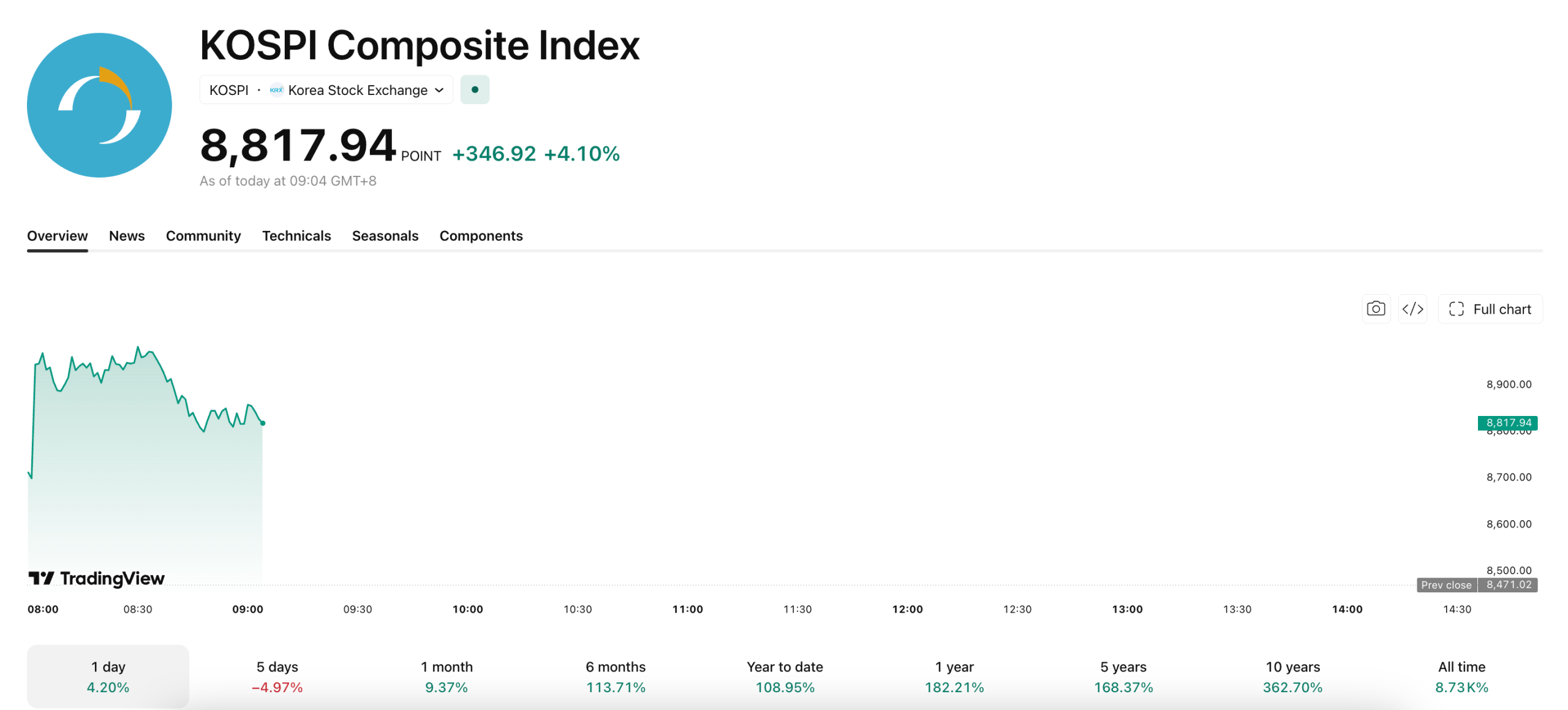
South Korea’s KOSPI surged more than 5% at the open on June 25, pushing back above 8,900 from 8,400 the prior session. Micron Technology’s fiscal Q3 2026 results, which well exceeded Wall Street expectations, drove the move.
The Korea Exchange (KRX) activated a buy-side sidecar shortly after the open, suspending program trading for five minutes. The mechanism triggers when the KOSPI 200 Futures index climbs 5% or more for at least one minute.
Micron Results Catalyze the Move
Micron reported fiscal Q3 2026 revenue of $41.46 billion, more than four times the $9.30 billion it posted in the same quarter a year earlier. Adjusted earnings per share came in at $25.11, well above the analyst consensus of around $20.78. The stock gained roughly 15% in after-hours trading following the announcement.

SK Hynix jumped more than 10% in early morning trading and triggered a static volatility interruption (VI) at the open, briefly switching to single-price trading for two minutes. After the VI lifted, the stock moved quickly back toward its prior level.
Samsung Electronics and SK Hynix reclaimed the 360,000 won and 2.8 million won levels, respectively. As BeInCrypto reported, SK Hynix recently surpassed Samsung in market cap for the first time since 2000.

K Hynix and Samsung Lead the Charge
By investor type, individuals net bought roughly 490 billion won and institutions added around 100 billion won. Foreign investors net sold approximately 600 billion won, extending a streak of net selling that has now totaled around 12.2 trillion won over the past five trading days.
The divergence mirrors the pattern seen after South Korea’s previous market rebound, when retail buyers absorbed foreign selling in the early session.
Han Ji-young, a researcher at Kiwoom Securities, pointed to a combination of macro tailwinds and Micron’s outperformance.
“In a favorable macro environment, including falling oil prices and the U.S. 10-year Government Bonds yield falling below 4.4%, Micron’s earnings surprise and the more than 5% strength in the KOSPI200 night futures combined to send the index surging at the open.” — Han Ji-young, Kiwoom Securities
The post KOSPI Spikes 5% on Opening, Riding Micron’s Surprise Earnings appeared first on BeInCrypto.


Exodus Movement has opened a tokenized-equities storefront inside its self-custody wallet, letting eligible users trade more than 200 tokenized stocks and ETFs on Solana. The product, Exodus Markets, runs on tokens issued by Ondo Finance and pushes a TradFi-style equity menu into an app where users… Read the full story at The Defiant


The Bank of England published its policy statement and draft Code of Practice for systemic stablecoin issuers on Monday, replacing the per-person holding caps it consulted on last year with an issuer-level issuance ceiling and a more generous reserve-asset mix. Industry feedback can be filed until… Read the full story at The Defiant


The U.S. Department of Justice has rejected warnings from four major law enforcement organizations, arguing that the CLARITY Act would not weaken criminal investigations and that claims about enforcement loopholes are factually incorrect.
Summary
- The DOJ rejected claims that the CLARITY Act would create enforcement loopholes, calling the criticism factually inaccurate.
- Four law enforcement organizations warned that Section 604 could reduce oversight and create opportunities for criminal misuse of digital assets.
- Senator Cynthia Lummis said the updated CLARITY Act text will be released on July 4 ahead of a planned Senate vote later in July.
According to the Blockchain Association, a DOJ spokesperson responded on June 24 to concerns raised by the National District Attorneys Association, National Association of Assistant U.S. Attorneys, International Association of Chiefs of Police, and National Sheriffs’ Association. The spokesperson said a recent letter from those groups “contains factual inaccuracies and mischaracterizes Administration policy.”
The dispute comes as lawmakers move closer to finalizing the CLARITY Act, a digital asset market structure bill that Senate negotiators are preparing to release for a final review period before seeking floor consideration later in July.
DOJ says criminal investigations remain unaffected
In a June 23 letter, the four law enforcement organizations urged the White House to reconsider parts of the legislation, including Section 604. The groups argued that certain exemptions could create regulatory blind spots that sophisticated criminal actors might exploit.
According to the letter, broad carve-outs could reduce oversight and accountability for some participants in the digital asset industry. The organizations also warned that the provision could interfere with enforcement structures currently used by investigators and prosecutors.
While raising those concerns, the groups stated that they were not opposed to software development or technological innovation. Instead, they said their objections centered on protections that could shield entities functioning as intermediaries from regulatory scrutiny. The letter also questioned provisions tied to the Blockchain Regulatory Certainty Act.
Pushing back against those arguments, the DOJ spokesperson said the legislation would not limit federal prosecutors or investigators. The spokesperson stated that law enforcement access to relevant information would remain unchanged under the proposal.
The DOJ further said the bill would not restrict its ability to investigate or prosecute criminal conduct involving digital assets, including drug trafficking, human smuggling, and terrorism financing.
Senate review advances as CBDC debate continues
As criticism from law enforcement groups draws attention to the bill, Senate negotiations have entered what lawmakers describe as the final drafting stage.
Senator Cynthia Lummis said negotiators plan to publish updated CLARITY Act text on July 4 after months of discussions involving lawmakers, industry participants, and banking representatives. According to Lummis, the release will allow one final round of feedback before Senate leaders pursue floor action later in July.
Lummis said negotiations have been underway since last Labor Day and have required thousands of hours of work on both the CLARITY Act and the GENIUS Act. She added that lawmakers have spent considerable time addressing concerns raised during the drafting process, including objections from parts of the banking sector.
At the same time, debate over federal digital asset policy continues elsewhere in Washington. President Donald Trump recently postponed signing the 21st Century ROAD to Housing Act, despite the measure passing Congress with 358 votes in the House and 85 votes in the Senate.
Although primarily focused on housing policy, the bill contains language that would prohibit the Federal Reserve from creating or issuing a central bank digital currency through 2030.
Trump said he would instead wait for Congress to advance the SAVE AMERICA Act, while Treasury Secretary Scott Bessent has separately stated that a U.S. CBDC is “off the table” under the current administration and has encouraged lawmakers to continue advancing digital asset legislation, including the CLARITY Act.

LineShine Is Fastest Supercomputer At Over 2 Exaflops

World Cup schedule, what to know June 25

Samsara Inc. (IOT) Analyst/Investor Day – Slideshow


-

 Fashion5 days ago
Weekend Open Thread: Miami – Corporette.com
-

 Entertainment4 days ago
Renter of Home in Anne Heche Crash Denies Settlement With Son
-
 Sports1 day ago
Two goals and an assist by sheer aura: Cristiano Ronaldo just entered the World Cup chat
-

 Tech3 days ago
Microsoft accidentally kills epic Outlook email threads
-

 Business4 days ago
Soccer-U.S. defends Iran World Cup travel restrictions, says discussions ongoing
-
Crypto World23 hours ago
Bitcoin (BTC) Dips Below $62K, Ethereum (ETH) Plunges 6% Daily: Market Watch
-

 Politics5 days ago
Andy Burnham and the meaning of Makerfield
-

 Politics6 days ago
BBC Reporter Discusses Cross Party Criticism Of Trumps Iran Deal
-

 Crypto World20 hours ago
Securitize Wraps Roubini's SEC-Registered ETF as Dubai VARA Digital Security
-
Business1 day ago
Entergy settles forward sale agreements, raises $672 million in cash proceeds
-
 Business5 days ago
Wall Street Week Ahead: Investors see Micron earnings as pulse check of AI rally momentum
-

 NewsBeat5 days ago
Keir Starmer Allies Question His Chances For No 10
-

 Tech7 days ago
AWS enters the context layer race with a graph that learns from agents, not manual curation
-
 Crypto World5 days ago
Can Charles Hoskinson Really Rescue Cardano?
-

 Crypto World5 days ago
HIVE shares jump as $220M AI deal speeds Bitcoin mining pivot
-

 Crypto World5 days ago
Jake Chervinsky accuses CME of protecting derivatives monopoly
-
 Tech4 days ago
Signal’s Meredith Whittaker says AI chatbots ‘are not your friends’ and calls Copilot agents a backdoor
-

 Entertainment5 days ago
Jose Alvarado Wants Taylor Swift at More Knicks Games
-

 Tech2 days ago
Nearly 7,000 fake Amazon domains registered ahead of Prime Day 2026, researchers warn
-

 Business6 days ago
Brexit cost 6% of UK economy, Bank of England company data suggests
You must be logged in to post a comment Login