
Crypto World
France crypto conference doubles security as wrench attacks rise



Paris Blockchain Week, the self-proclaimed “European power forum for the future of digital finance,” has reportedly doubled its security efforts for this week’s event amid claims that France has seen one violent crypto-related robbery attempt every five days on average this year.
The tally for crypto-related attacks in 2026 hit 19 on Monday when a mother and son were abducted from their home in Burgundy, according to The Register.
Franceinfo reports that the pair were held hostage in a hotel room in Val-de-Marne while the attackers attempted to extort the father, a crypto entrepreneur, for hundreds of thousands of euros.
The pair were released unharmed on Tuesday following a successful extraction operation by French counter-terrorism police.
It’s a problem the country can’t quite seem to shake with criminals continuing to regard crypto holders and entrepreneurs as relatively easy and very lucrative pickings.
In February, the president of Binance’s French arm was targeted by three armed crypto robbers. The attackers only managed to steal his phones and, after failing to confront him in person, they decided to pursue a different target.
Read more: Crypto execs hiring private security after high-profile kidnappings, report
In January, a 74-year-old man was tortured for 16 hours by three men attempting to extort $3.5 million worth of crypto from his son. They reportedly gave up when they discovered his son wasn’t a wealthy crypto entrepreneur at all.
The attacks were already bad before this year. Indeed, last June, France’s Interior Minister Bruno Retailleau promised crypto entrepreneurs that they would have a dedicated emergency police line.
One suspected mastermind of several crypto kidnappings in France was arrested in Morocco last year. They allegedly orchestrated the kidnapping and mutilation of Ledger co-founder David Balland.
Paris Blockchain Week rolls out police escorts
Despite the alarming rise in crypto-related attacks in France, the conference firm Chain of Events is hosting Paris Blockchain Week (PBW) at the Carrousel du Louvre.
PBW co-founder Charlie Meraoud told BFM, “We’ve doubled our security measures this year.” This included measures to transport conference goers to a dinner using buses guided by police escorts.
Read more: Mother of Olympics TV host kidnapped for bitcoin ransom
BFM reports that crypto founders are increasingly employing bodyguards and are choosing to keep their personal, financial, and business details on the down-low.
France’s Minister-Delegate to the Minister of the Interior, Jean-Didier Berger, opened the conference by reiterating France’s dedication to stamping out these crypto-related attacks.
According to Berger and Chain of Events’ Chairman Michael Amar, France has enrolled 466 crypto industry members onto “a priority emergency response platform” and arrested 230 people since January via a newly established national organised crime prosecution office.
Berger said, “Cybercrime and organised crime are two worlds that are becoming increasingly porous. That is why we have reinforced our collaboration with platforms and with you. In France, there is freedom, there is stability, there is predictability. And that is why choosing France is always a good idea.”
Artem Sinyakin, CEO of the crypto research firm OAK Research, also warned on X, “Don’t wear your badge outside of the main venue. Don’t scream about crypto in the streets. Try and limit the crypto merch.”
“The wrench attacks in France have been a huge problem and you should take all the necessary precautions. Better safe than sorry,” he added.
Got a tip? Send us an email securely via Protos Leaks. For more informed news and investigations, follow us on X, Bluesky, and Google News, or subscribe to our YouTube channel.

Charles Schwab has begun a phased launch of spot Bitcoin (BTC) and Ethereum (ETH) trading, opening direct crypto access to its retail brokerage clients for the first time.
The product, called Schwab Crypto and operated by Charles Schwab Premier Bank, SSB, will roll out in stages starting in Q2 2026. An initial cohort of employees and early-access registrants will trade first before the platform opens to the firm’s broader client base.
Schwab Integrates Crypto Into Its Brokerage Ecosystem
Unlike standalone crypto exchanges, Schwab is embedding digital asset trading within its existing brokerage, banking, and research infrastructure.
Clients will access crypto alongside equities, ETFs, and fixed-income products through a single platform.
Pricing is set at 75 basis points per trade. Paxos provides the regulated custody, execution, and settlement infrastructure underpinning the service.
The regulated trust company already holds a federal banking charter from the Office of the Comptroller of the Currency.
The service will be available across all US states except New York and Louisiana, which have stricter crypto licensing frameworks.
Clients cannot deposit BTC or ETH from external wallets, and crypto holdings are not eligible for SIPC or FDIC insurance.
How Schwab’s Entry Reshapes the Retail Crypto Market
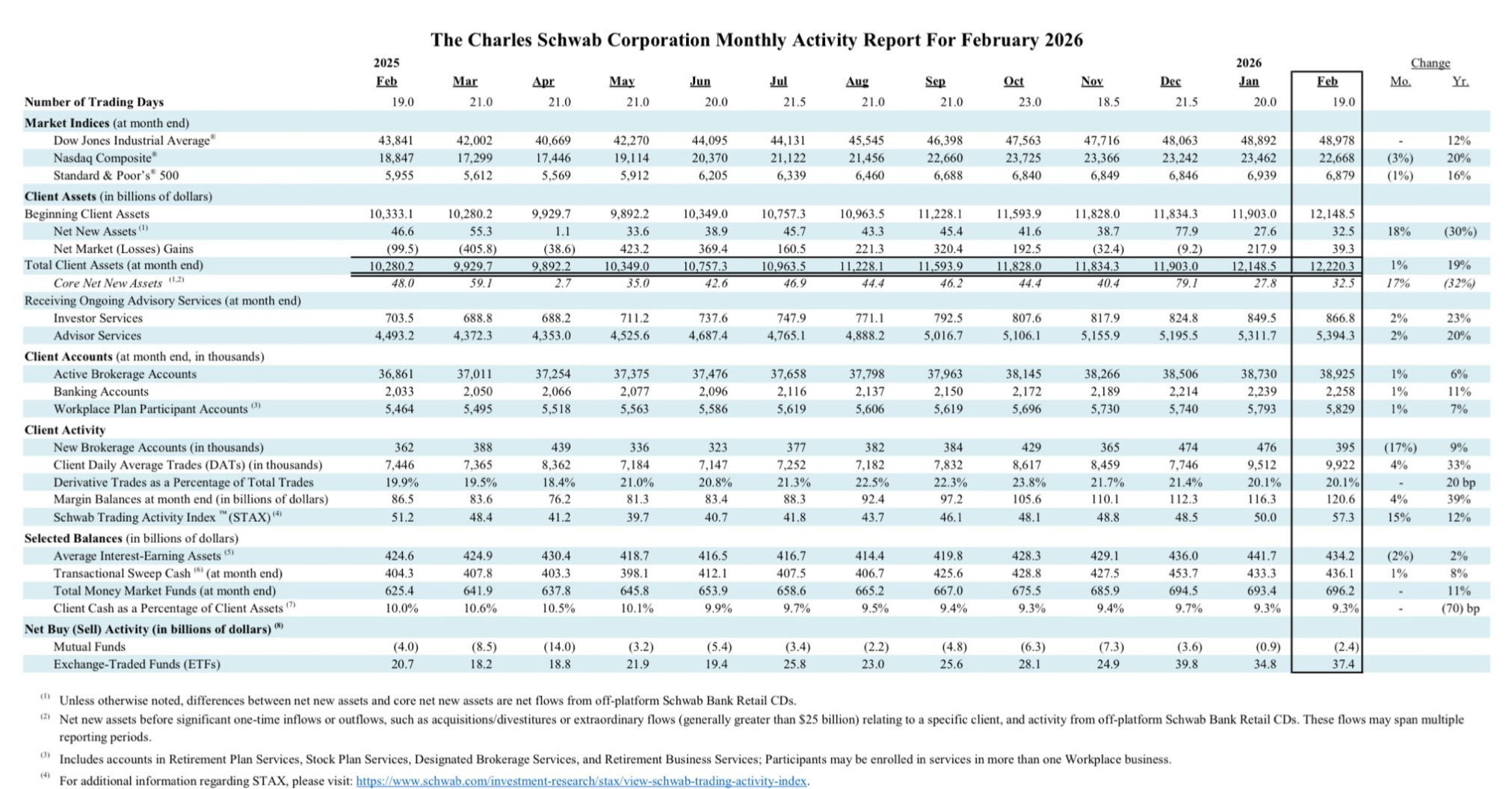
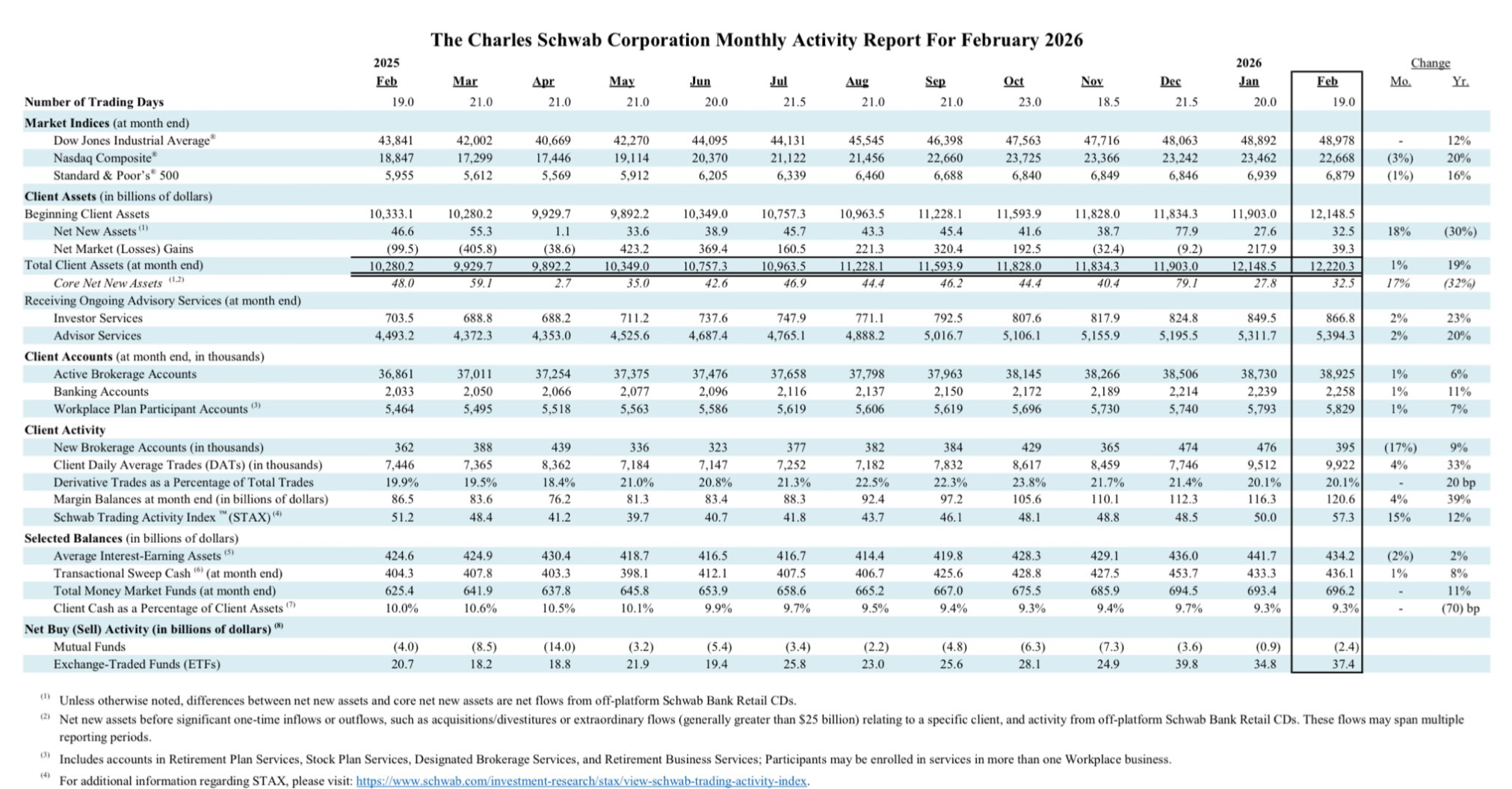
Schwab’s entry intensifies the battle for retail crypto investors. The firm manages approximately $12 trillion in client assets, giving it a built-in distribution advantage over crypto-native competitors like Robinhood and Coinbase.
Previously, Schwab offered digital asset exposure only through crypto-linked stocks, futures, and spot exchange-traded products.
The shift to direct spot trading reflects broader institutional momentum. US spot crypto ETFs drew nearly $670 million in net inflows on the first trading day of 2026 alone.
Regulatory tailwinds have also accelerated the timeline. The SEC rescinded Staff Accounting Bulletin 121 in January 2025, removing the requirement for custodians to record client crypto as balance-sheet liabilities.
The OCC followed in March 2025 by reaffirming that crypto custody and stablecoin activities are permissible for national banks.
Whether Schwab’s conservative pricing and trusted brand can draw crypto volume away from lower-cost platforms with broader token selection remains the central question heading into the second half of 2026.
The post $12 Trillion US Giant Charles Schwab Launches Spot Crypto Trading appeared first on BeInCrypto.


The SEC CLARITY Act roundtable convened in Washington today, April 16, bringing regulators and industry together for a public discussion on digital asset market structure as the Senate Banking Committee targets a late-April markup of the most consequential crypto bill the US has ever seen.
Summary
- The SEC is hosting a roundtable on digital asset market structure today, not a vote or markup, but a signal of where regulators stand before Congress acts on the CLARITY Act.
- The Senate Banking Committee is targeting a late-April markup, with Chair Tim Scott yet to set a firm date as of April 15, while Senator Lummis warns a miss means waiting until at least 2030.
- White House digital assets adviser Patrick Witt said a stablecoin yield compromise “appears to be holding firm,” resolving the central dispute that has stalled the bill twice this year.
The SEC CLARITY Act roundtable opened in Washington today as the US Securities and Exchange Commission convened a public forum on digital asset market structure, placing the bill’s trajectory on full display for the first time since the Senate returned from Easter recess on April 13. Today’s session is not a vote or formal markup, but the commissioners running it are the same ones who will implement the CLARITY Act once Congress passes it.
The Senate Banking Committee markup is targeted for the second half of April. Chair Tim Scott has not yet announced a date as of Wednesday evening.
The CLARITY Act would draw a statutory line between the Securities and Exchange Commission and the Commodity Futures Trading Commission, assigning digital commodities to the CFTC and leaving digital securities under SEC oversight. The House passed the bill 294 to 134 in July 2025 and the Senate Agriculture Committee cleared its version in January 2026, making this the most advanced crypto market structure bill in US history.
SEC Chair Paul Atkins has said publicly that the SEC and CFTC are operationally ready to implement the act the moment Congress passes it. Polymarket currently puts passage odds at 55%.
The Stablecoin Fight That Almost Killed the Bill
The central dispute holding up the legislation has been whether stablecoin issuers can pay yield to holders simply for holding their tokens. White House digital assets adviser Patrick Witt said the stablecoin yield compromise “appears to be holding firm,” describing it as a “must-have” for unlocking the remaining sticking points. The deal bans passive yield on stablecoin balances while permitting activity-linked rewards tied to payments and platform use, a structure that protects DeFi protocols while addressing banking industry concerns about deposit migration.
The bill has stalled twice in 2026 as House Republicans remain split over FISA reauthorization and budget reconciliation, consuming legislative bandwidth the CLARITY Act needs before midterm politics close the window entirely. Senator Cynthia Lummis wrote on X this month that this is “our last chance” until at least 2030 if Congress misses the May window.
What Passes Next Has Trillion-Dollar Stakes
JPMorgan analysts have called midyear passage a positive catalyst for digital assets. Standard Chartered estimated that an uncapped yield provision could redirect up to $500 billion in deposits out of the banking system, explaining the banking lobby’s resistance. A White House Council of Economic Advisers study countered that banning yield would increase total US bank lending by just $2.1 billion while imposing an $800 million welfare cost on households.
The bill must still clear the Senate Banking Committee, pass a full Senate floor vote requiring 60 votes, reconcile with the Agriculture Committee version and the House-passed text, and receive a presidential signature. Today’s roundtable does not shorten that path, but it signals regulators are aligned and waiting for lawmakers to act.

Key Highlights
- Shares of Onfolio Holdings (ONFO) climbed more than 150% Thursday following the announcement of a $100 million equity financing arrangement with an institutional backer.
- The proceeds are primarily designated for purchasing profitable online enterprises the firm considers underpriced.
- Some funding will be allocated to expanding Onfolio’s digital asset holdings.
- CEO Dominic Wells stated the organization dedicated 2025 to achieving profitability and is now prioritizing expansion.
- ONFO shares are trading near their 52-week high, positioned 182.9% above the 20-day moving average.
Shares of Onfolio Holdings (ONFO) skyrocketed Thursday after the firm revealed a $100 million equity financing arrangement with an institutional investor. The stock climbed over 149% to $1.66 during trading, approaching the upper boundary of its 52-week trading range between $0.46 and $1.95.
The financing agreement provides Onfolio with adaptable, on-demand capital that can be utilized at the company’s discretion. The arrangement carries no mandatory drawdown obligations.
The majority of proceeds will support working capital needs and business acquisitions. Onfolio plans to pursue profitable online operations it views as undervalued when managed traditionally but could flourish when integrated with AI-powered infrastructure.
A smaller allocation will support expanding the firm’s digital asset portfolio, which complements its operational holdings as part of an overarching value-creation approach.
CEO Dominic Wells was straightforward regarding the company’s position. “We dedicated 2025 to reaching profitability,” he explained. “Now we’re allocating capital toward expansion.”
Wells characterized the facility as enhanced flexibility rather than emergency funding. It complements an existing convertible note arrangement as part of what the organization describes as an expanding capital infrastructure.
AI-Driven Acquisition Strategy
Onfolio’s acquisition framework is deeply connected to its artificial intelligence services platform. Upon acquiring a business, the company integrates it with pre-existing AI systems covering content creation, marketing automation, data intelligence, and operational efficiency.
The firm describes this methodology as capital-efficient. It expands AI-generated revenue leveraging current advanced model infrastructure while avoiding substantial capital investment.
Wells noted that AI implementation is already progressing throughout its current portfolio. The business-to-business division is experiencing enhanced margins, while consumer-facing operations are benefiting from AI-driven data intelligence tools.
This analytics solution is being developed into a standalone service product for B2B customers, targeting both current clients and prospective accounts.
Technical Analysis and Trading Levels
ONFO was positioned 182.9% above its 20-day simple moving average and 188.2% beyond its 100-day SMA during the rally — representing a dramatic revaluation reflecting the stock’s rapid ascent.
The 20-day SMA currently trades above the 50-day SMA, indicating short-term positive momentum. Nevertheless, a death cross formation from November 2025 — when the 50-day crossed beneath the 200-day — continues to signal longer-term technical weakness.
The MACD indicator remains below its signal line with negative histogram readings, suggesting momentum could begin moderating despite the elevated price level.
Critical resistance exists at the $2.00 mark, where shares have previously encountered selling pressure. Immediate support is positioned around $1.50, a psychological price point that has traditionally attracted buying interest.
The organization submitted an 8-K filing with the SEC providing complete details regarding the financing arrangement.

Crypto World
Spartans.com Hits $1 Billion in Wagers as Chainlink and Avalanche Build Institutional Foundations

The online casino industry thought it understood scale. Spartans.com just redefined it entirely. A platform still in restricted beta, not yet open to the global public, recorded $1,000,000,000 in total wagers in its first 60 days. Legacy platforms spent years chasing that milestone. Spartans casino hit it before most people knew it existed.
Meanwhile, crypto markets are quietly building serious institutional momentum. Chainlink just upgraded its Data Streams infrastructure to feed real-time U.S. stock prices into DeFi, while Avalanche welcomed a brand new NYSE-listed spot ETF as daily transactions hit a 2026 high of 3.5 million.
Spartans.com Post Class Leading Numbers in Beta Stage
Most online casinos spend years building credibility. They acquire players slowly, establish their infrastructure gradually, and hope that volume follows reputation over time. Spartans.com skipped all of that. In just 60 days of restricted beta, February and March 2026, the platform recorded $1,000,000,000 in total wagers, captured $100,000,000 in deposits, generated $40,000,000 in Gross Gaming Revenue, and onboarded 27,000 first-time depositors. All before a single day of full global operation.
The number that makes those figures even more remarkable: Spartans casino is currently ranked the 14th largest crypto casino on earth. In beta. With global access still restricted. The August 1st worldwide launch has not happened yet, and the platform is already sitting inside the top 14 of a fiercely competitive global industry. The strategic target, becoming the world’s number one top crypto casino by the end of 2026, looks considerably less ambitious when framed against those pre-launch numbers.
The platform delivering these figures is built differently from the ground up. Near-instant withdrawals eliminate the friction legacy sites depend on. Uncapped betting limits invite the biggest action online. The $7,000,000 leaderboard, the largest in online casino history, with $5,000,000 for a single first-place winner, is running simultaneously with a $3,000,000 Mansory Koenigsegg Jesko giveaway. Grammy-winner Lil Baby and boxer Conor Benn are locked in as partners. And hardwired beneath all of it is the 33% CashRake system, automatically returning up to 33% of the house edge to the player on every wager. If this is what Spartans casino looks like as a top crypto casino before launch, August 1st changes everything.
Chainlink Feeds Wall Street’s Data Into DeFi
The Chainlink price tells a story of fundamentals and price action moving in opposite directions. LINK is trading near $8.80, down sharply from January 2026 highs near $14, yet the underlying network is generating approximately $75 million in annualised fees, securing over $28 trillion in total value, and processing $18 billion in monthly cross-chain volume through CCIP, up 62% year-over-year. JPMorgan and UBS are running live blockchain settlement pilots directly on Chainlink infrastructure, and an institutional consortium including Swift, Euroclear, and DTCC has adopted Chainlink oracles for corporate action workflows.

The most significant recent development came on April 12, when Chainlink upgraded its Data Streams infrastructure to provide near-real-time pricing for U.S. stocks and ETFs, directly bridging the $80 trillion equities market into DeFi. The Bitwise LINK ETF (CLNK), listed on NYSE Arca, has expanded availability to 401(k) retirement plans. The Chainlink price compression between $8.20 and $9.55 has created a historically tight Bollinger Band structure that analysts note typically precedes significant directional moves. Standard Chartered targets $15 by late 2026.
Avalanche Lands NYSE-Listed ETF as Transactions Hit 2026 Record
The AVAX price is trading near $9.33 with a key resistance battle forming around the $10 level, a ceiling that has capped every rally since January. The timing of the latest catalyst makes that level increasingly significant. On April 15, Bitwise launched its spot Avalanche ETF (BAVA) on the New York Stock Exchange with staking rewards included and a 0% sponsor fee on the first $500 million in assets. This follows VanEck’s AVAX ETF launched in January 2026, giving the asset two NYSE-listed institutional products within months of each other.

On-chain fundamentals are strengthening independently of price. Daily transactions hit a 2026 high of 3.5 million, while TVL across Avalanche’s DeFi ecosystem has approximately doubled since April 2025 to $2.1 billion. South Korean payment processor NHN KCP signed an MOU with Ava Labs to develop a payments-optimised Layer 1 blockchain targeting sub-second finality. CME Group confirmed AVAX futures contracts launching May 29. The AVAX price needs a confirmed close above $10 to break the descending triangle structure, analysts target $15 if it holds.
The Final Take
Chainlink is quietly becoming the data layer connecting Wall Street to every blockchain on earth, with institutional adoption accelerating even as the token price consolidates. Avalanche is landing NYSE-listed ETFs, record transaction volumes, and enterprise payment partnerships while holding above critical support. Both networks are building the kind of institutional infrastructure that takes years to be reflected in price. And sitting above all of trends in the online gaming space is Spartans.com, a platform that generated a billion dollars in wagers before its global doors even opened, ranked 14th in its industry before a single day of unrestricted operation. The $7,000,000 leaderboard is live. The August 1st launch is approaching. The pre-launch numbers already made the argument.

Find Out More About Spartans:
Website: https://spartans.com/
Instagram: https://www.instagram.com/spartans/
Twitter/X: https://x.com/SpartansBet
YouTube: https://www.youtube.com/@SpartansBet
Disclaimer: This is a Press Release provided by a third party who is responsible for the content. Please conduct your own research before taking any action based on the content.
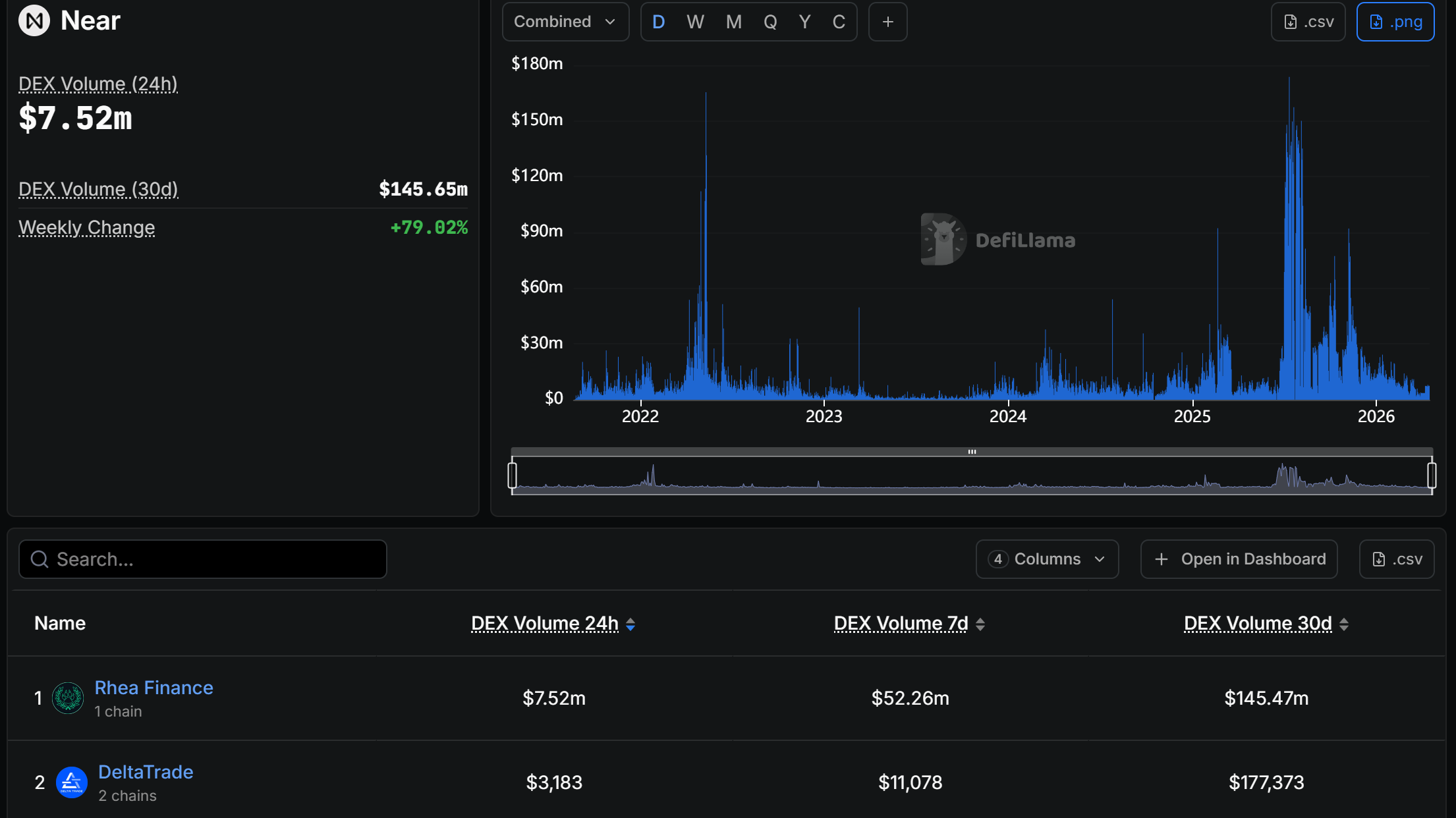
NEAR Protocol’s largest Decentralized Finance (DeFi) hub, Rhea Finance, suffered a $7.6 million exploit after an attacker manipulated its oracle and validation layer.
Blockchain security firm CertiK flagged the incident, confirming that assets were drained across multiple tokens.
How the Rhea Finance Exploit Unfolded
The attacker deployed fake token contracts and created fresh liquidity pools on the protocol. These pools likely distorted price feeds, misleading the oracle into validating fraudulent transactions.
According to CertiK, at least $7.6 million was extracted from Rhea Finance. Stolen funds included USDC, USDT, Zcash (ZEC), and NEAR (NEAR).
Vadim Zacodil, an ex-NEAR core contributor, confirmed the figures and warned users to monitor the situation closely.
Withdrawals are currently halted as the team works to contain further damage.
“The attacker created fake token contracts and added liquidity in fresh pools, likely misleading the oracle and validation layer,” CertiK noted.
Why This Matters for NEAR DeFi
Rhea Finance holds a dominant position in the NEAR ecosystem. Formed in early 2025 through the merger of Ref Finance and Burrow Finance, it serves as the primary DEX and lending layer on the network.
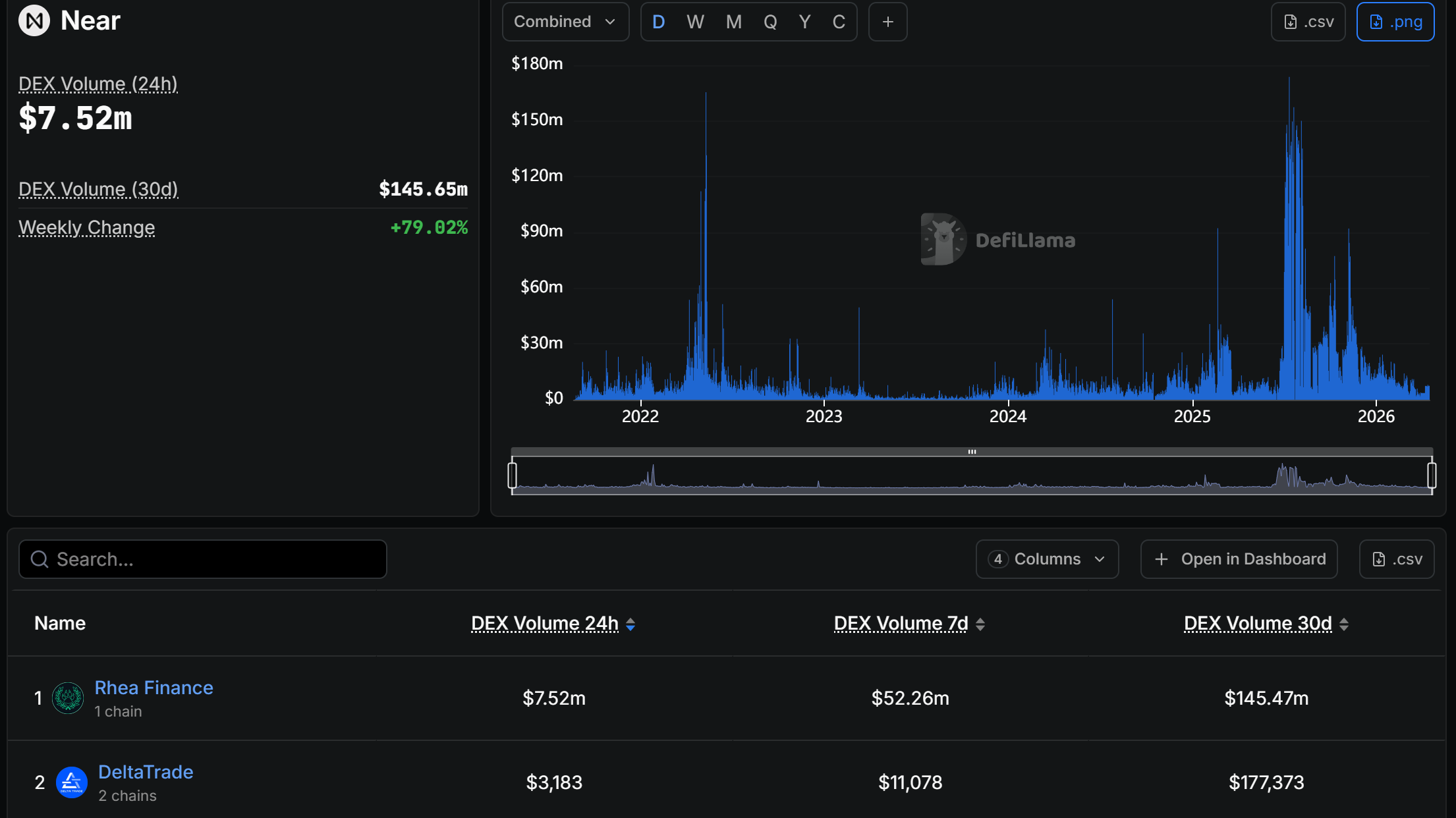
The protocol previously held over 95% of NEAR’s DeFi total value locked, making this exploit significant for the entire chain’s DeFi infrastructure.
Oracle manipulation remains one of the most persistent vulnerabilities in DeFi, with attackers repeatedly exploiting untested price feeds and thin liquidity.
The coming days will reveal the full scope of losses and whether Rhea Finance can secure affected user funds.
The post NEAR Protocol DeFi Hub Rhea Finance Loses $7.6 Million in Oracle Exploit appeared first on BeInCrypto.


The Stripe-incubated blockchain is pitching privacy as the missing piece for institutional stablecoin adoption.
Tempo, the payments-focused Layer 1 blockchain, on Wednesday introduced Tempo Zones, a new feature that lets enterprises run private stablecoin transactions on parallel blockchains connected to Tempo’s mainnet.
The product targets a core friction point for institutions exploring stablecoin rails: public blockchains broadcast every transaction by default. A company processing payroll, for example, would expose individual salary data on-chain, while a payment processor would leak confidential merchant volume with every settlement.
“The parties to a transaction should see the details, the broad public should not, all while retaining the usability and interoperability of stablecoin rails,” the Tempo team wrote in a blog post.
Zones serve as private execution environments where participants can transact without publicly revealing information. Assets remain interoperable with Tempo’s mainnet, meaning users inside a Zone can still access on-ramps, off-ramps, and decentralized exchange liquidity on the base layer.
The Zone operator, which can be the enterprise itself or a third-party infrastructure provider, has visibility into all transactions within its Zone for compliance and reporting purposes, but does not have custody of funds. Assets are locked in a smart contract on Tempo’s mainnet and can only be withdrawn by the owning user.
Tempo said enterprises managing payroll are among the first users of Zones, with broader production deployments planned in phases. The company is currently working with design partners across payroll, treasury, settlement, and tokenized deposit use cases.
The launch adds another layer to Tempo’s pitch to institutional users. The blockchain, which Stripe and Paradigm first unveiled in September 2025, went live on mainnet in March alongside the Machine Payments Protocol, an open standard for AI agent-to-service payments co-authored with Stripe. It raised $500 million in a Series A at a $5 billion valuation in October 2025, and recently onboarded Visa, Stripe, and Zodia Custody as validators.
This article was written with the assistance of AI workflows. All our stories are curated, edited and fact-checked by a human.
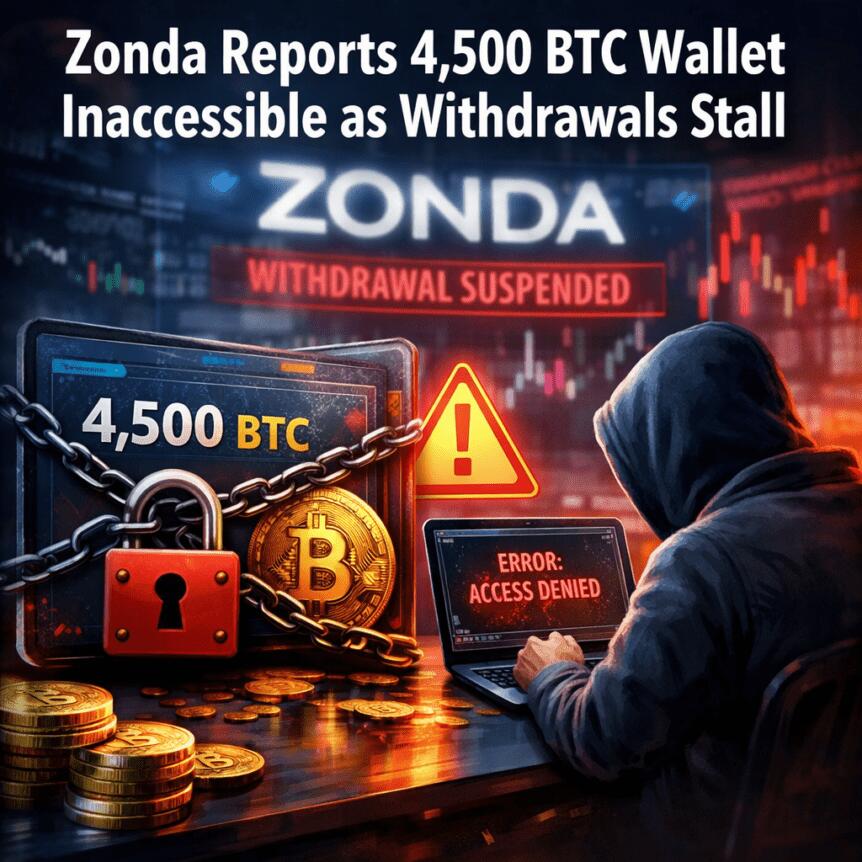
Polish crypto exchange Zonda disclosed that a cold wallet holding about 4,503 BTC is currently inaccessible as withdrawal requests spike and questions swirl around the platform’s governance. In a video posted on X, Zonda chief executive Przemysław Kral showed the wallet address and said the private keys were never handed over, arguing that the handover failed because founder and former chief executive Sylwester Suszek has been missing since 2022.
The disclosure arrives amid weeks of controversy linked to local media reports of a policing probe into Zonda, and a Recoveris analysis that warned the exchange could be insolvent given a sharp drop in the hot wallet balances. The address’s last on-chain activity dates back to November 2025, and the balance remains around 4,503 BTC, valued at roughly $334 million depending on the price at the time of measurement.
Previously, Kral had denied insolvency claims following Recoveris’ April 6 report, reiterating that Zonda remained solvent with more than 4,500 BTC in custody. In the latest video, he attributed the withdrawal pressure to an abnormal spike in requests, driven by negative media coverage. He noted that Zonda normally processes around 100,000 withdrawal requests per year, but more than 25,000 were filed within hours and days around early April. He also vowed to pursue legal action over what he described as false claims and to uphold customer obligations amid the withdrawal surge.
Polish lawmaker Tomasz Mentzen commented on X that Zonda may have lost access to its cold wallet following Suszek’s disappearance. While Kral did not say the funds were lost, he stressed that the private keys were never transferred during the handover. Suszek has been reported missing since March 2022, with coverage referencing alleged criminal ties among some of Zonda’s shareholders when the firm was known as BitBay.
Founded in Poland in 2014 and rebranded as Zonda in 2021, the exchange has been at the center of regulatory and political debate around crypto in the country. Kral told Cointelegraph in February that the company registered in Estonia amid regulatory uncertainty in Poland and delays implementing the European Union’s Markets in Crypto-Assets regime, known as MiCA. The broader context sees Poland balancing national policy with EU rules as regulators weigh stronger oversight of crypto firms and custody practices.
Key takeaways
- The Zonda cold wallet address holds about 4,503 BTC, last active in November 2025, valued at roughly $334 million as markets moved. The private keys were reportedly never handed over to the founders, complicating any potential access recovery.
- Kral attributed withdrawal pressure to an unusual spike around early April, with more than 25,000 withdrawal requests in a short period, far exceeding Zonda’s typical annual pace of around 100,000.
- Recoveris’ analysis and local media reports have fueled insolvency concerns, while Kral has publicly denied such claims and pledged to meet customer obligations while pursuing legal action over what he calls false accusations.
- The ongoing dispute intersects with regulatory dynamics in Poland and the EU, including MiCA-related uncertainties that prompted Zonda to register in Estonia and heightened scrutiny of the Polish crypto sector.
Disclosure of the inaccessible wallet and the stakes for users
The revelation that a sizable cold wallet could be out of reach raises immediate questions for customers relying on Zonda for funds custody and withdrawals. While Kral maintains that the private keys were never transferred, the situation underscores the fragility that can accompany custody arrangements when founders vanish or governance transitions stall. The wallet’s inactivity since late 2025 adds another layer of ambiguity about the future accessibility of those funds and how the exchange intends to honor withdrawal requests already in flight.
Market observers will be watching how Zonda navigates this impasse — whether through legal channels, potential third-party custodial interventions, or other mechanisms to restore confidence among users and counterparties. The balance between public assurances and on-chain realities is at the heart of investor and customer risk in a scenario where a substantial asset holdings appear to be stranded.
Regulatory scrutiny, solvency debates, and the Polish crypto frame
Media coverage of a possible Polish authorities probe has amplified a broader conversation about how crypto exchanges should be supervised in Poland and across the European Union. The Recoveris report, which suggested a potential insolvency risk based on on-chain balances, has interacted with local reporting to amplify investor concern, even as Zonda asserts solvency. The exchange’s leadership has argued that a sudden uptick in withdrawal demand, rather than balance mismanagement, explains the immediate stress around withdrawals.
The case sits at a crossroads of national policy and EU-wide rules. Zonda’s decision to register in Estonia, highlighted by Kral, reflects a strategic coping mechanism to navigate regulatory uncertainty within Poland and the slow rollout of MiCA. As policymakers debate stricter custody standards and clearer licensing pathways for crypto businesses, Zonda’s public custody incidents may sharpen the debate over how quickly and robustly regulators should intervene to protect consumers while fostering innovation.
The unfolding narrative also touches on the sensitive topic of Suszek’s disappearance and the historical governance of the company, which was previously BitBay before the rebrand. Reports of alleged ties between shareholders have added a criminal-justice dimension to the financial and regulatory questions surrounding Zonda. While there is no definitive public linkage announced between Suszek’s disappearance and the current liquidity concerns, the constellation of factors has intensified calls for stronger disclosure and more transparent governance in regional crypto ventures.
What to watch next for Zonda and the broader landscape
Moving forward, observers will scrutinize whether Zonda provides additional on-chain disclosures, updates on the status of the private keys, and any official statements clarifying the custody framework and customer guarantees. Regulators in Poland and across the EU will likely monitor how the exchange resolves withdrawal pressures, communicates with customers, and addresses governance questions stemming from Suszek’s absence and historical leadership changes. The Estonia registration and MiCA implications will be a recurring thread as the sector tests the balance between regulatory compliance and practical operations in a rapidly evolving policy environment.
Readers should stay tuned for any new statements from Zonda, any formal regulatory actions, and further analytical commentary from firms tracking custody risk and on-chain activity. The convergence of custody challenges, regulatory pressures, and a high-profile missing-founder case ensures that Zonda’s next moves will be read as a bellwether for governance standards and investor protection in Poland’s expanding crypto ecosystem.
Sources and context for this report include Zonda’s disclosed wallet narrative and Kral’s video statement, media reporting on the Polish probe, Recoveris’ analysis, on-chain data from Blockchain.com, and related regulatory discussions around MiCA and Poland’s crypto policy framework.


Bitcoin price prediction turns cautious on Thursday as BTC hovers near $74,921, with profit-taking slowing a ceasefire-driven rally that pulled in $597.5 million in spot ETF inflows over two days.
Summary
- Bitcoin traded at $74,921 on Thursday morning, up 1.7% in 24 hours and 5.5% over the week, as the US-Iran ceasefire rally stalled on profit-taking near the $75,000 zone.
- Spot Bitcoin ETFs drew $597.5 million in net inflows over the past two days, reflecting sustained institutional demand even as price momentum softened.
- IG analysts say a confirmed close above $76,100 is needed to signal bullish continuation, with $72,000 serving as the key support floor below.
Bitcoin (BTC) price prediction points to consolidation Thursday as BTC drifts near $74,921, held up by institutional demand but capped by profit-taking after a sharp week of gains tied to the US-Iran ceasefire. BTC is up 1.7% over the past 24 hours and 5.5% for the week, but the rally is losing steam at familiar resistance.
The S&P 500 set a record on Wednesday. Crypto did not follow at the same pace, underscoring a more cautious investor posture in digital assets relative to equities despite the improved geopolitical backdrop.
The $76,000 level has now rejected price three times. IG analysts wrote Wednesday that “a technical breakout above roughly $76,100 would signal bullish continuation but failure maintains range-bound trading.” The setup has not changed materially: positive macro sentiment from ceasefire hopes is being offset by intermittent profit-taking from traders who bought earlier in the week.
The SuperTrend indicator has flashed green on the daily chart and MACD lines crossed into positive territory, both pointing to underlying bullish structure. But BTC has failed to close above $75,000 on a sustained basis across multiple sessions.
ETF Inflows Provide the Floor
Twelve US spot Bitcoin ETF inflows totalled $597.5 million across the past two sessions, per SoSoValue data. Short liquidations added $152 million in forced buying pressure over the same window, providing mechanical support to the rally even as spot demand from retail traders remains subdued.
The combination keeps $72,000 as the structural floor. A break below that level would invalidate the current bullish thesis and expose BTC to a deeper correction, per the on-chart analysis.
What Moves the Price From Here
The path to $80,000 remains tied to geopolitics more than technicals. Trump told Fox News the Iran conflict is “close to over” and the White House said talks are “productive and ongoing.” Any confirmed ceasefire extension or positive development from resumed negotiations in Islamabad would likely trigger another ceasefire rally similar to last week’s 5% surge to $74,400.
Absent that catalyst, BTC looks likely to continue ranging between $72,000 and $76,000 until diplomatic clarity arrives or the FOMC meeting on April 28 provides fresh macro direction.

Sign on facade at shoe company Allbirds, Walnut Creek, California, August 25, 2025.
Smith Collection | Archive Photos | Getty Images
Retail traders stampeded into Allbirds after the troubled shoemaker slapped an artificial intelligence label on its business, a set-up that market history suggests rarely ends well once the initial hype fades.
Shares of the company skyrocketed as much as 582% on Wednesday after the firm detailed shocking plans to rebrand as NewBird AI and shift toward compute infrastructure. The surge added more than $100 million to its market value, which had been just $21 million a day earlier.
Retail investors were quick to embrace the new narrative, data from Vanda Research showed. Net purchases hit a record $5.2 million in a single day, surpassing even demand seen during the company’s 2021 IPO.

Allbirds year to date
This surge of speculative buying reflects a broader return of animal spirits among small traders as the broader stock market rebounded violently from losses triggered by geopolitical risks. The S&P 500 has entirely erased its losses associated from the Iran war and hit a fresh all-time high Thursday.
“The market is not pricing risk. It is pricing narrative. It is pricing the word ‘AI’ the same way it once priced the word ‘blockchain’ and before that the suffix ‘.com,’” Mark Malek, CIO at Siebert Financial, said in a note. “This is not analysis. This is pattern-matching on a buzzword by investors who have watched AI-adjacent stocks go parabolic and do not want to miss the next leg. The signal is not subtle.”
The rise of zero-commission trading platforms helped usher in a new generation of retail investors, lowering the cost of speculation and accelerating the spread of so-called meme trades. That dynamic was on full display during the 2021 GameStop episode, when coordinated buying by individual traders sent the stock soaring and inflicted heavy losses on short sellers, cementing a playbook that continues to resurface in different forms.
From karaoke to AI
A recent example underscores how these episodes can veer into the surreal. Algorhythm Holdings — a little-known karaoke machine and niche consumer electronics maker — stunned markets when it announced a pivot to an AI-driven logistics and compute platform.
“That shift in narrative was enough to spark a sharp pickup in retail flows, with buying persisting beyond the initial headline and helping drive a second leg higher in the stock,” Vanda Research said in a note of Algorhythm.
However, the enthusiasm proved fleeting as the shares have since round-tripped and are now back to roughly $1, underscoring how quickly such narrative-driven gains can evaporate.
The rally in Allbirds has quickly shown signs of strain, with the stock tumbling more than 20% on Thursday as momentum cooled.
Crypto World
Spartans Betting Platform Generates $40 Million GGR While Rollbit and BC.Game Cannot Keep Up

The digital wagering sector in April 2026 is witnessing a technical revolution where speed is the ultimate currency. While Rollbit and BC.Game have defined the previous era of crypto-native gambling, Spartans.com is rewriting the rules through sheer technical performance. During its record-breaking beta phase, Spartans processed $100,000,000 in total deposits, generating an impressive $40,000,000 in Gross Gaming Revenue (GGR).
Currently ranked 14th and climbing globally, the platform has established itself as the fastest withdrawal online casino by integrating proprietary “Degen Zone” technology, allowing for high-velocity wagering and instant payouts that legacy platforms simply cannot match.
Rollbit: The Crypto-Native Ecosystem
Rollbit has long been considered a pioneer in the crypto gambling space, successfully building a multifaceted ecosystem that blends traditional casino games with innovative features like NFT loans and a native token economy. In 2026, it remains a major destination for players who appreciate a broad range of crypto-integrated services.
However, the complexity of the Rollbit platform—designed to manage everything from a sportsbook to a token-burn mechanism—can sometimes lead to a slightly higher latency during peak wagering periods. While Rollbit offers a diverse experience, its core engine is not exclusively optimized for the ultra-high-frequency betting that modern “power users” demand.
Consequently, while it provides a reliable service, it faces stiff competition from specialized, high-velocity engines. For players prioritizing the absolute fastest execution and the most streamlined withdrawal process, the multifaceted nature of Rollbit can occasionally represent an operational trade-off in raw technical speed.
BC.Game: The Gamification Giant
BC.Game is the industry leader in social gamification, keeping its massive user base engaged through a continuous cycle of quests, daily spins, and community-focused incentives. Its platform is a masterclass in retention, offering a deep VIP hierarchy and a wide array of proprietary games. As of mid-April 2026, it continues to thrive by appealing to a broad demographic of social bettors.
However, this focus on gamification results in a “heavy” user interface that can struggle to provide the zero-latency experience required for high-frequency automated betting. BC.Game’s withdrawal infrastructure is robust, but it often involves multiple verification steps and native token conversions that can add time to the payout cycle.

For the elite tier of bettors who treat gambling as a high-performance activity, the social layers of BC.Game can feel like friction. While it remains a top-tier choice for entertainment, it lacks the specialized “Degen” focus found in newer, leaner platforms.
Spartans: High-Velocity GGR and the Degen Zone
Spartans.com has redefined what it means to be a high-performance gambling platform by focusing on the core essentials: speed, liquidity, and technical efficiency. Generating $40,000,000 in Gross Gaming Revenue (GGR) from $100,000,000 in total deposits during its beta phase is a testament to the platform’s unparalleled engagement. This massive revenue result is driven by the proprietary “Degen Zone”, a high-velocity wagering engine designed specifically for automated betting on original titles like Crash, Plinko, and Dice. The Degen Zone allows players to process thousands of wagers per hour with zero latency, making Spartans the definitive choice for the modern power user.
To complement this wagering speed, Spartans has established itself as the fastest withdrawal online casino by utilizing high-speed ADA (Cardano) and AVAX (Avalanche) multi-chain payment rails. These rails ensure that payouts are as instantaneous as the games themselves, bypassing the administrative delays common on other sites. Currently sitting at a 14th global ranking and climbing, Spartans has used its beta performance to prove that technical superiority leads to higher volume and better results.

While the platform offers over 5,900 games from 43+ providers, the “Degen Zone” remains its crown jewel, catering to a segment of the market that demands precision and pace. By stripping away the clutter of social gamification and focusing on raw performance, Spartans is successfully migrating high-stakes volume away from Rollbit and BC.Game, positioning itself as the elite standard for the August 1st global launch.
Conclusion
The technical gap between Rollbit, BC.Game, and Spartans.com is becoming the primary differentiator for the world’s most active bettors in 2026. While Rollbit offers a complex ecosystem and BC.Game excels in social engagement, Spartans.com has captured the high-performance market with its $40M GGR and specialized “Degen Zone.”
As the platform continues its ascent past the 14th global rank, it has firmly cemented its reputation as the fastest withdrawal online casino in the industry. For players who demand instant execution and liquid payouts, Spartans.com provides the ultimate technical edge in the modern crypto-gambling era.

Find Out More About Spartans:
Website: https://spartans.com/
Instagram: https://www.instagram.com/spartans/
Twitter/X: https://x.com/SpartansBet
YouTube: https://www.youtube.com/@SpartansBet
Disclaimer: This is a Press Release provided by a third party who is responsible for the content. Please conduct your own research before taking any action based on the content.

Sophie Rain Rips Sydney Sweeney Baby Scene In ‘Euphoria’

Alan Sugar’s ‘honest’ response over future of The Apprentice
Why is Advanced Micro Devices stock surging today?


-

 Politics6 days ago
US brings back mandatory military draft registration
-
 Sports6 days ago
Man United discover Nico Schlotterbeck transfer fee as defender reaches Dortmund agreement
-

 Fashion6 days ago
Weekend Open Thread: Veronica Beard
-

 Politics7 days ago
Malcolm In The Middle OG Turned Down ‘Buckets Of Money’ To Appear In Reboot
-

 Politics4 days ago
World Cup exit makes Italy enter crisis mode
-

 Business6 days ago
Tesla Model Y Tops China Auto Sales in March 2026 With 39,827 Registrations, Beating Cheaper EVs and Gas Cars
-

 Crypto World3 days ago
The SEC Conditionalises DeFi Platforms to Be Avoided for Broker Registration
-

 Crypto World3 days ago
SEC Signals Exemption for Crypto Interfaces From Broker Registration
-

 News Videos1 day ago
Secure crypto trading starts with an FIU-registered
-
 NewsBeat4 days ago
Pep Guardiola and Gary Neville agree over Arsenal title problem that benefits Man City
-

 Business5 days ago
Ireland Fuel Protests Enter Day 5 as Blockades Spark Shortages and Government Prepares Support Package
-

 Business6 days ago
OpenAI Halts Stargate UK Data Centre Project Over Energy Costs and Copyright Row
-

 Politics6 days ago
LBC Presenter Mocks Trump Over Iran War Failures
-

 Crypto World6 days ago
Federal judge blocks Arizona from bringing criminal charges against Kalshi
-

 NewsBeat2 days ago
Trump and Pope Leo: Behind their disagreement over Iran war
-

 Crypto World3 days ago
SEC Proposes Certain Crypto Interfaces Don’t Need to Register as Brokers
-
 NewsBeat4 days ago
JD Vance announces ‘no agreement’ with Iran over nuclear weapons fear
-

 Tech7 days ago
A version of Windows 10 released a decade ago is now eligible for additional security patches
-

 Business6 days ago
IMF retains floor for precautionary balances at SDR 20 billion
-

 Business6 days ago
Former Liverpool CEO eviscerates FIFA for World Cup ticket pricing
You must be logged in to post a comment Login