

Crypto World
France orders ISPs to block Polymarket as scrutiny widens



France’s National Gambling Authority has ordered internet service providers to block Polymarket, escalating a regulatory dispute that began in 2024. The Autorité nationale des jeux, known as the ANJ, said the prediction market platform promotes gambling services that are not authorized under French law.
Summary
- France ordered internet providers to block Polymarket after earlier geoblocking failed to restrict local access.
- ANJ cited illegal gambling, absent identity checks, and concerns that weather sensors may be hacked.
- Czech and EU actions show prediction markets face growing pressure across several regulatory frameworks worldwide.
France ordered the block on July 16 after the ANJ said users had circumvented an earlier geoblocking measure. The regulator has monitored Polymarket since November 2024 over concerns that its prediction markets amount to unauthorized gambling services in the country.
France moves from geoblocking to an ISP block
The ANJ said prediction market websites qualify as illegal gambling services under French law. It also warned that promoting an unauthorized gambling platform can carry a fine of up to €100,000. The same penalty can apply to people who publicly share odds or payout ratios to promote unlicensed gambling services.
The regulator said Polymarket’s audience in France continued to grow despite the earlier restriction. It recorded 578,751 visits and 205,057 unique visitors in June 2026. The ANJ said the platform’s homepage continued to display live odds, which it viewed as promotion of an unauthorized service. The authority blocked 1,290 URLs in 2025 under its administrative powers.
France is not the only European country taking action against the platform. The Czech Republic recently ordered internet service providers to block Polymarket, as reported by crypto.news, after authorities classified the platform as an unauthorized gambling service.
Regulator raises questions over user checks and market integrity
The ANJ also cited concerns about how some event markets operated. It said some bets “appeared to be rigged” and that weather sensors linked to certain markets “may have been hacked.” French prosecutors opened a cybercrime investigation on May 4, with the case assigned to the Office for Combating Cybercrime.
According to the regulator, the investigation also found that Polymarket services available to French and European users lacked an adequate user identification system. The ANJ said stronger identity and location checks would be needed to prevent people in France from accessing the platform.
Concerns about how prediction markets settle contracts have also attracted academic attention. A Stanford-led study identified possible incentives for settlement-price manipulation, as reported by crypto.news. The research examined five-minute Bitcoin prediction markets and estimated that about $1.28 million shifted from regular traders to more sophisticated participants.
European scrutiny of prediction markets keeps growing
Regulators across Europe are taking different approaches to prediction markets. Some authorities treat the platforms as gambling services, while financial regulators are assessing whether certain contracts fall under securities or derivatives rules.
The European Securities and Markets Authority recently said some event-based contracts could qualify as financial instruments under MiFID II. As reported by crypto.news, contracts that fall under those rules could also face existing European restrictions on binary options offered to retail traders.
The different approaches reflect the structure of prediction markets, where users trade contracts based on the outcome of elections, sporting events, economic releases and other future events. France has taken the position that Polymarket operates as an unauthorized gambling service and has now moved from restricting transactions to blocking access to the website.
Polymarket also faces pressure outside France
Polymarket and other prediction market operators are also facing legal disputes in the United States. Kentucky sued several platforms, including Polymarket and Kalshi, accusing them of offering sports betting without state licenses.
The Commodity Futures Trading Commission later challenged state intervention in federally regulated event contracts. The regulator’s dispute with Kentucky is part of a broader fight over who has authority to oversee prediction markets. The CFTC sued Kentucky as the regulatory conflict widened, as reported by crypto.news.
Polymarket has also faced security concerns. A frontend phishing attack resulted in losses of about $3.1 million across 11 wallets, with affected users set to receive refunds.
France’s latest order adds to the growing number of restrictions facing prediction market platforms. The ANJ said it would continue monitoring Polymarket and any measures introduced to verify users’ identities and locations before they can access its services.

Bitcoin continues to recover from its June capitulation but remains trapped beneath a major resistance cluster. Although buyers have managed to defend higher lows on the lower timeframe, the market is still approaching a critical confluence that could determine whether the recovery extends or transitions into another rejection.
BTC Price Analysis: The Daily Chart
On the daily timeframe, BTC continues to trade below the 100-day and 200-day moving averages, keeping the broader trend tilted to the downside.
The asset is now approaching the $65K-$66.5K supply zone, which also coincides with the descending long-term trendline. This confluence has capped every recovery attempt since the sharp breakdown in early June, making it the key barrier that bulls must reclaim to shift the higher-timeframe structure.
A successful breakout above this region would expose the next resistance between $72K and $74K. However, another rejection from the current supply zone would likely trigger a corrective move toward the $58K-$60K support area, which now represents the most important demand zone on the daily chart.
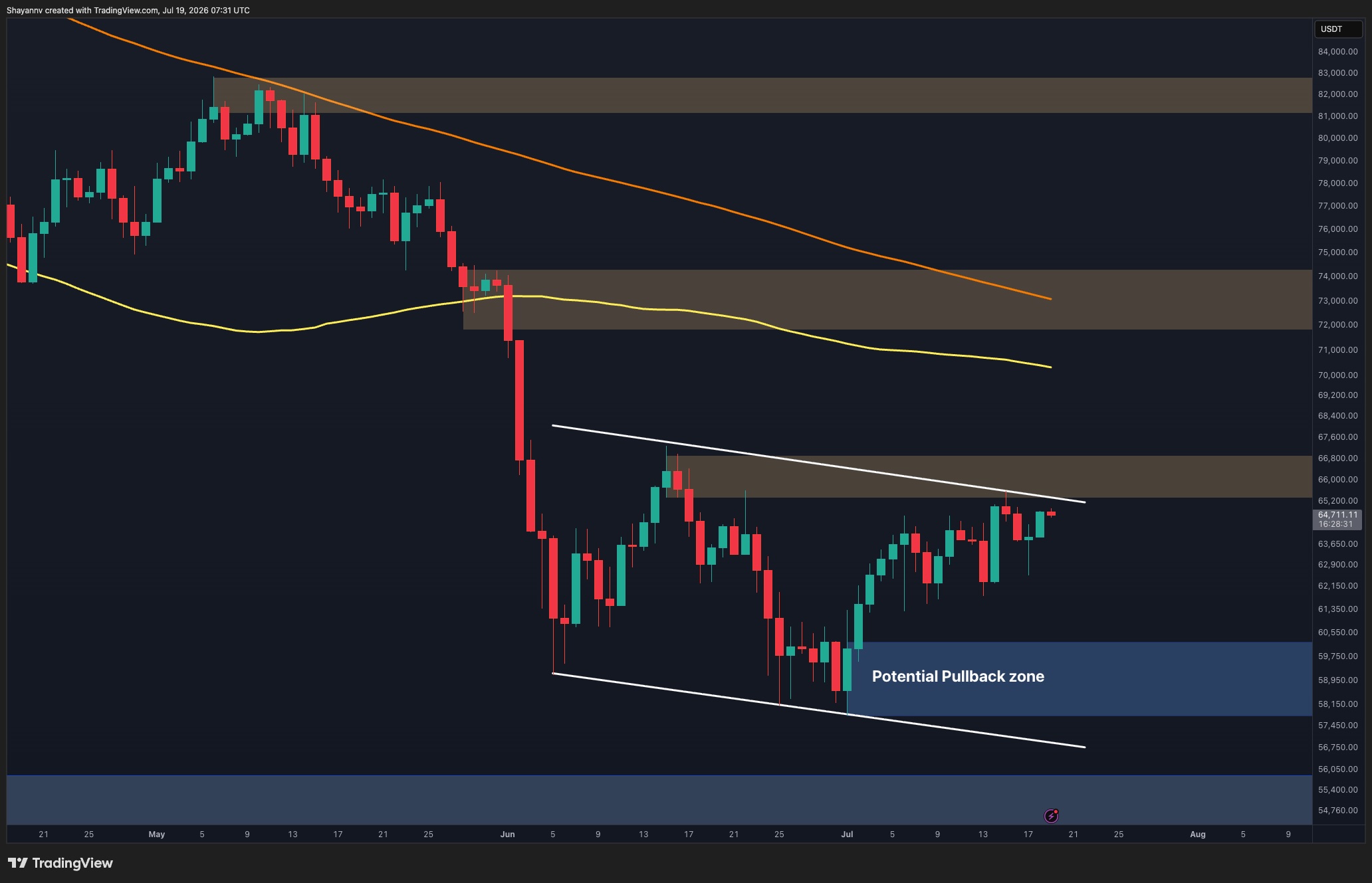
BTC/USDT 4-Hour Chart
The 4-hour chart shows Bitcoin consolidating within a rising channel after establishing a series of higher lows throughout July.
BTC is once again testing the upper boundary of the channel while simultaneously approaching the higher-timeframe supply zone around $65K-$66.5K. This creates a significant confluence of resistance, suggesting that bullish momentum is entering an important decision area.
As long as Bitcoin remains above the $61K-$62K support zone, buyers maintain a short-term advantage and another attempt to break the overhead resistance remains likely.
However, failure to overcome the confluence of the channel resistance, descending trendline, and supply zone could result in another pullback toward the $58K-$60K demand region. Since this price action pattern typically hints at a potential decline, Bitcoin is poised for another bearish leg, testing the lower demand zones.

Sentiment Analysis
The Realized Price UTXO Age Bands indicate that the realized prices of the 1-3 month and 3-6 month holder cohorts have converged near the current market structure, both sitting around the low $70K area.
Historically, the convergence of these younger holder cost bases often reflects a period of market transition, as recently accumulated coins begin to change hands at similar prices. At present, both realized price levels remain well above Bitcoin’s spot price, implying that these cohorts are still holding unrealized losses.
This reinforces the technical picture. While Bitcoin has recovered from its June lows, it remains below the realized cost basis of recent investors, suggesting that sentiment has not fully shifted back in favor of sustained accumulation.
A recovery above these realized price levels would strengthen the case for a broader trend reversal, whereas continued rejection below them would support the view that the current advance is still a relief rally within the broader bearish structure.

The post Bitcoin Price Analysis: Here’s the Most Likely BTC Scenario for Next Week appeared first on CryptoPotato.
This year, Tether rolled out USAT — launched with U.S. standards in mind and issued through U.S. banking partner Anchorage Digital. So far, it remains at a relatively low level of usage.
“Non-compliant stablecoins cannot be used by U.S. institutions when the safe harbor expires in 2028, but we don’t expect the market to wait,” said Kevin Wysocki, head of policy at Anchorage Digital, the crypto-native bank that manages a number of stablecoins. He said the company believes institutional users will move toward “compliant, bank-issued digital dollars well ahead of that deadline.”
Do they have two years?
GENIUS included a three-year grace period for compliance, and two years remain, after which U.S. crypto platforms won’t be able to offer stablecoins whose issuers haven’t checked all the regulatory boxes. However, there seems to be some disagreement over whether foreign issuers are meant to enjoy that same safe harbor. Some lawyers in finance assume that Tether gets until July 18, 2028, to comply, but others have suggested that foreign issuers would have to comply the moment GENIUS officially goes live, which is likely six months from now in January.
“Upon the effectiveness of the GENIUS Act, foreign issuers will need to immediately comply with lawful orders to seize and freeze coins held by illicit actors, but they will have a runway of approximately two more years to prepare for the additional requirements so that their coins may remain eligible for listing on U.S. centralized trading platforms,” said Justin Levine, a lawyer at Davis Polk who advises clients on stablecoin issues, adding that one of those remaining requirements — registration with the Office of the Comptroller of the Currency — is likely to require a “significant undertaking”
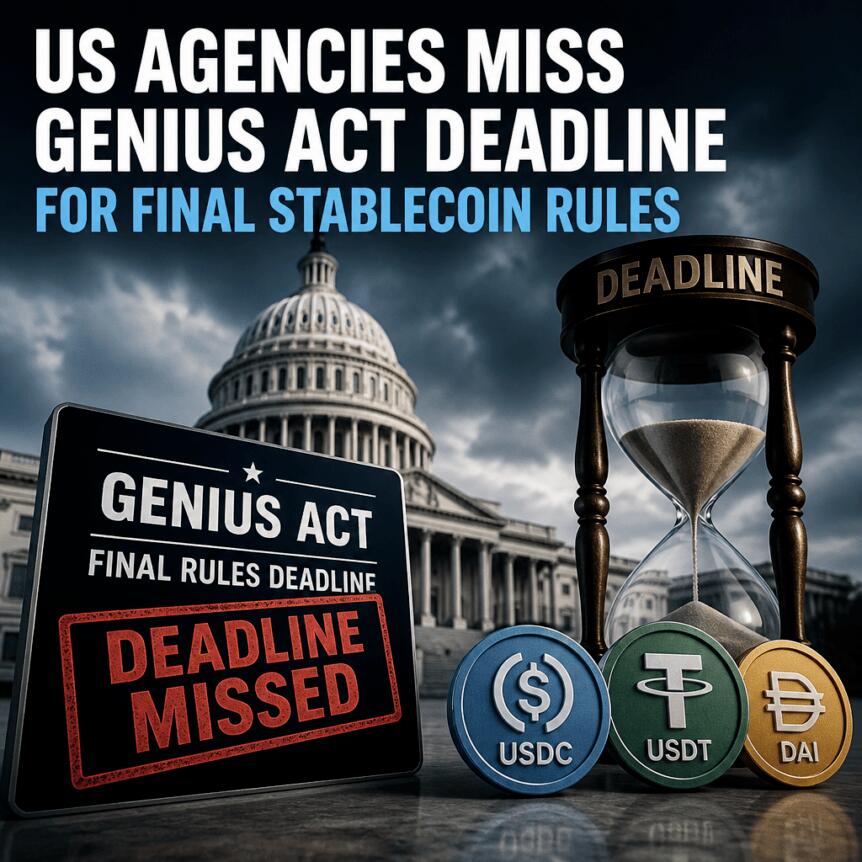
U.S. stablecoin regulators missed a key rulemaking deadline tied to the Guiding and Establishing National Innovation for US Stablecoins (GENIUS) Act, despite issuing multiple proposals and gathering public input over the past year. The deadline passed on Saturday, marking one year since the law was signed—yet no final regulations had been published by the end of that window.
The GENIUS Act, signed by President Donald Trump on July 18, 2025, created the first comprehensive federal regulatory framework for stablecoins. While several agencies advanced the process through notices of proposed rulemaking (NPRMs), rulemaking trackers maintained by Chapman and crypto investment firm Paradigm show that final rules were not issued before the statutory deadline.
Key takeaways
- Despite a full year of rule development, U.S. agencies had not released final GENIUS Act regulations by the deadline, according to Chapman and Paradigm trackers.
- GENIUS remains valid law, but the lack of final rules increases compliance uncertainty for stablecoin issuers and supervised institutions.
- Federal agencies—including the Treasury Department and banking regulators—published multiple NPRMs covering registration, supervision, reserve expectations, and AML-related implementation.
- Anchorage Digital used the one-year GENIUS milestone to renew a push for broader digital-asset market structure legislation through the CLARITY Act.
What the deadline miss means for stablecoin compliance
Missing the statutory deadline does not automatically invalidate the GENIUS Act itself. However, it can materially affect how quickly regulated entities can operationalize the framework. Stablecoin issuers, payment-focused platforms, and institutions planning to participate in issuance or custody have generally relied on final rules to guide compliance programs, governance processes, and supervisory expectations.
According to rulemaking trackers by law firm Chapman and Paradigm, multiple agencies published proposals during the past year but did not conclude the rulemaking process in time. The agencies named in the trackers include the Department of the Treasury, the Office of the Comptroller of the Currency (OCC), the Federal Deposit Insurance Corporation (FDIC), and the Federal Reserve Board, all of which issued NPRMs without publishing final versions before the deadline.
That gap is likely to be most consequential for issuers seeking clarity on how regulators intend to evaluate reserve management, supervisory standards, and compliance obligations—areas where the GENIUS framework is intended to bring consistency across federal oversight.
GENIUS’s first year: agencies issued 10 proposed rulemakings
Paradigm’s tracking data indicates that federal regulators issued 10 NPRMs during the GENIUS Act’s first year. The proposals spanned the act’s broader implementation and the mechanics of how different types of regulated entities would participate.
The U.S. Department of the Treasury released four proposals focused on implementation and eligibility questions, including how regulators should determine when state stablecoin regimes are “similar” to the federal framework, registration requirements for foreign stablecoin issuers, and guidance tied to anti-money laundering (AML) compliance.
Meanwhile, the OCC issued two NPRMs addressing nationally chartered payment stablecoin issuers, including approval requirements and supervisory standards intended for those entities.
The FDIC published one NPRM for FDIC-supervised institutions that issue payment stablecoins, centering on supervisory expectations and operational requirements such as reserve management.
The National Credit Union Administration (NCUA) also moved forward with proposed rules designed to enable federally insured credit unions to participate in stablecoin issuance.
Finally, federal banking agencies jointly proposed an interagency implementation rule meant to harmonize supervision across the OCC, Federal Reserve, and FDIC—an attempt to reduce inconsistencies in oversight that can arise when multiple regulators examine similar activities under different supervisory practices.
In practical terms, the breadth of proposals shows regulators were actively working through the architecture of GENIUS. Still, the failure to finalize the rules by the deadline leaves open questions about how the draft proposals will be resolved and what changes—if any—will be made after public comment periods close.
Anchorage renews its CLARITY push as GENIUS rules remain unfinished
As regulators continued to work through proposed GENIUS rules, Anchorage Digital—a federally chartered crypto bank—used the GENIUS one-year anniversary to call again for Congress to pass the Digital Asset Market Clarity Act (CLARITY). In a report published on Friday, Anchorage said it was “renewing” its request for lawmakers to extend stablecoin market-structure rules into the broader digital asset economy.
CLARITY is intended to establish the first federal regulatory framework for digital assets more broadly. Anchorage’s messaging also aligns with ongoing industry debate about how far existing banking rules should extend to stablecoins, particularly regarding whether yield offerings could be structured without triggering deposit-substitute concerns.
Earlier coverage noted that CLARITY advanced through the Senate Banking Committee in May. Industry groups, including state banking associations, have argued that the bill could enable crypto firms to offer yields on stablecoins without meeting requirements they say traditional banks must follow.
On July 13, the American Bankers Association (ABA) and the Independent Community Bankers of America (ICBA), among other state banking associations, sent a joint letter urging Senate leaders to provide more detail on CLARITY’s stablecoin yield provisions. The letter also argued that amendments are needed to ensure payment stablecoins remain transaction tools rather than operating like deposit substitutes.
Legislative uncertainty has also been visible in market participants’ expectations. On June 26, Galaxy Digital reportedly cut its odds of CLARITY becoming law in 2026 to 50%, citing the lack of a unified Senate Banking–Agriculture text, no firm floor schedule, and a narrowing legislative window as lawmakers near departure periods.
Taken together, the regulatory timeline under GENIUS and the parallel legislative push for CLARITY point to a broader policy reality for the sector: stablecoins are increasingly regulated through federal rulemaking, but questions about market structure and adjacent digital asset rules remain bound to Congress rather than agencies alone.
What to watch next as proposed rules move toward finality
With the GENIUS rulemaking deadline passed and final regulations still pending, stablecoin issuers and supervised institutions should watch for the agencies named in the rulemaking trackers to publish final rules—or revised drafts—after comment periods. Investors and operators may also want to monitor whether the interagency harmonization proposal results in more consistent supervisory expectations across regulators, and whether congressional momentum on CLARITY meaningfully changes the policy direction around stablecoin yields and broader digital asset market structure.
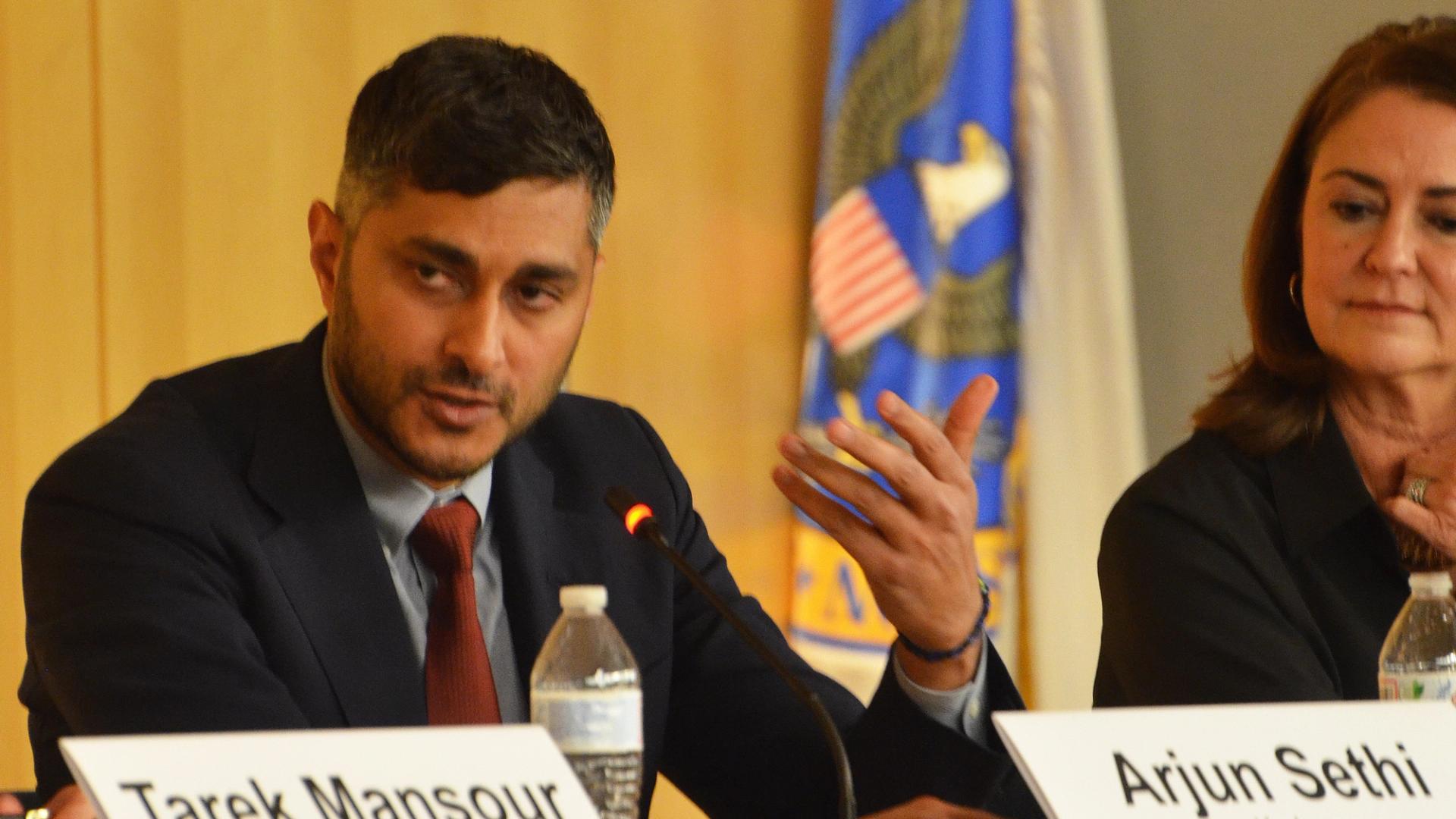
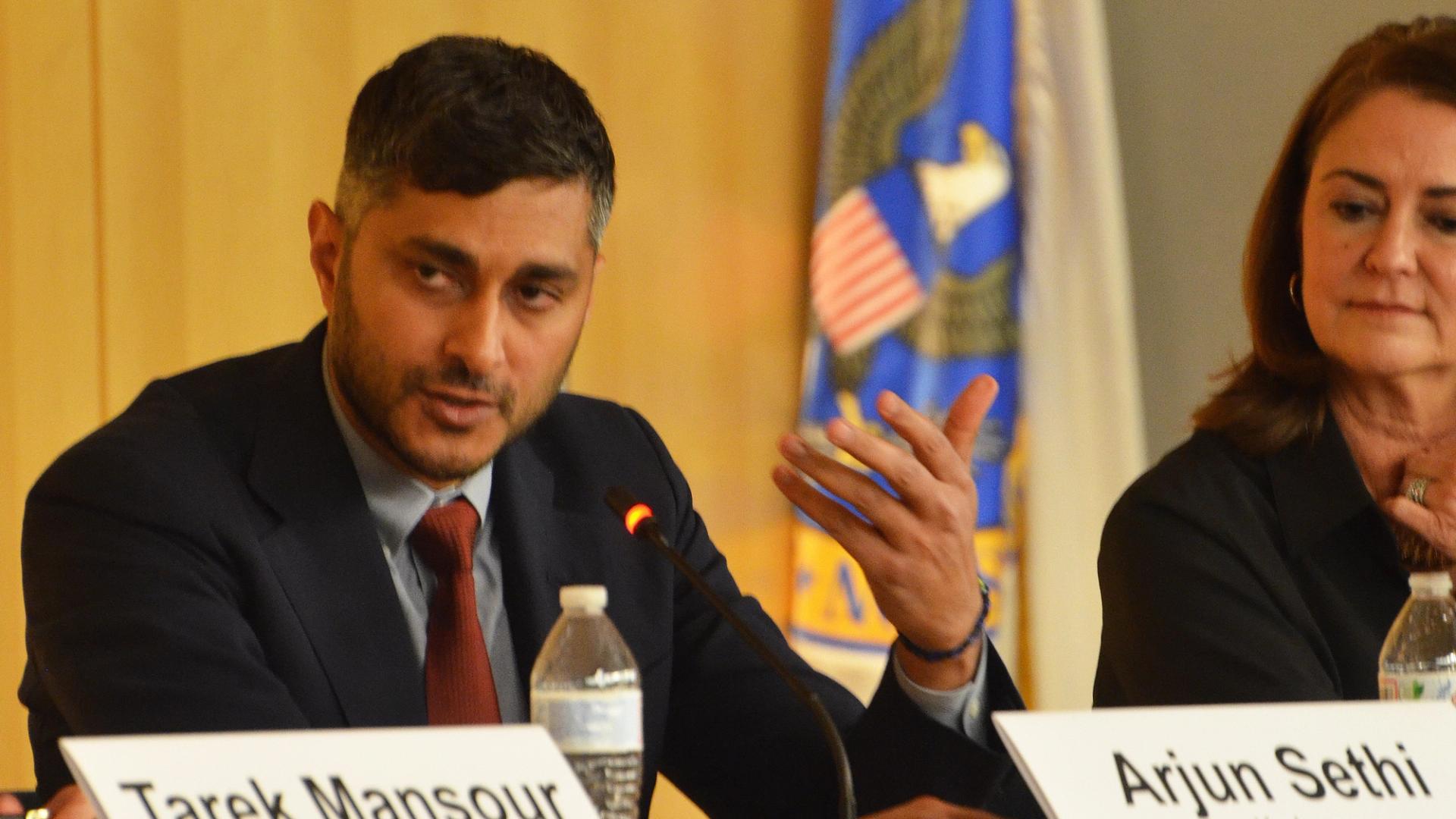
Derivatives account for the vast majority of crypto trading volumes, but options remain a relatively small corner of the market, dominated by a handful of established venues including Deribit, CME Group and Binance. New entrants are increasingly betting that broader adoption of options will follow the institutionalization of digital assets.
The move is the latest step in Kraken’s transformation from a crypto exchange into a broader financial platform offering trading, payments and other digital asset services.
Growing the market, not just market share
Rather than focusing solely on taking market share from incumbent venues, Theodorou believes the larger opportunity is expanding the addressable market by making options easier to use.
“The existing options market in crypto has been built for a narrow slice of the trader base,” Theodorou said.
“Our offering broadens access through a straightforward, dollar-settled contract in the same account clients already use for spot and futures,” she added.
A retail-first approach
According to Theodorou, the slow growth of crypto options is less a demand problem than a product design problem.
“The gap in crypto options isn’t demand, it’s design,” Theodorou said.
She notes that existing crypto options platforms have largely catered to institutional traders and market makers, while retail traders instead have gravitated toward perpetual futures, which became the industry’s dominant speculative product because of their relative simplicity.
US regulatory agencies missed the rulemaking deadline under the Guiding and Establishing National Innovation for US Stablecoins (GENIUS) Act on Saturday, which marked one year since the law was signed.
Several US regulatory agencies published proposed rules and collected public feedback during the past year, but no final regulations were issued before the deadline.
These agencies include the Department of the Treasury, the Office of the Comptroller of the Currency (OCC), the Federal Deposit Insurance Corporation (FDIC) and the Federal Reserve Board, which issued proposed rules but no final rules, according to rulemaking trackers by law firm Chapman and crypto investment company Paradigm.
Missing the statutory deadline does not invalidate the GENIUS Act, but the unfinished rules may result in regulatory uncertainty for stablecoin issuers.
The GENIUS Act established the first comprehensive federal regulatory framework for stablecoins in the US. The act was signed into law by US President Donald Trump on July 18, 2025.
Related: ABA, state banking groups push back on CLARITY Act stablecoin yield provisions
Regulators issued 10 rule proposals during the GENIUS Act’s first year
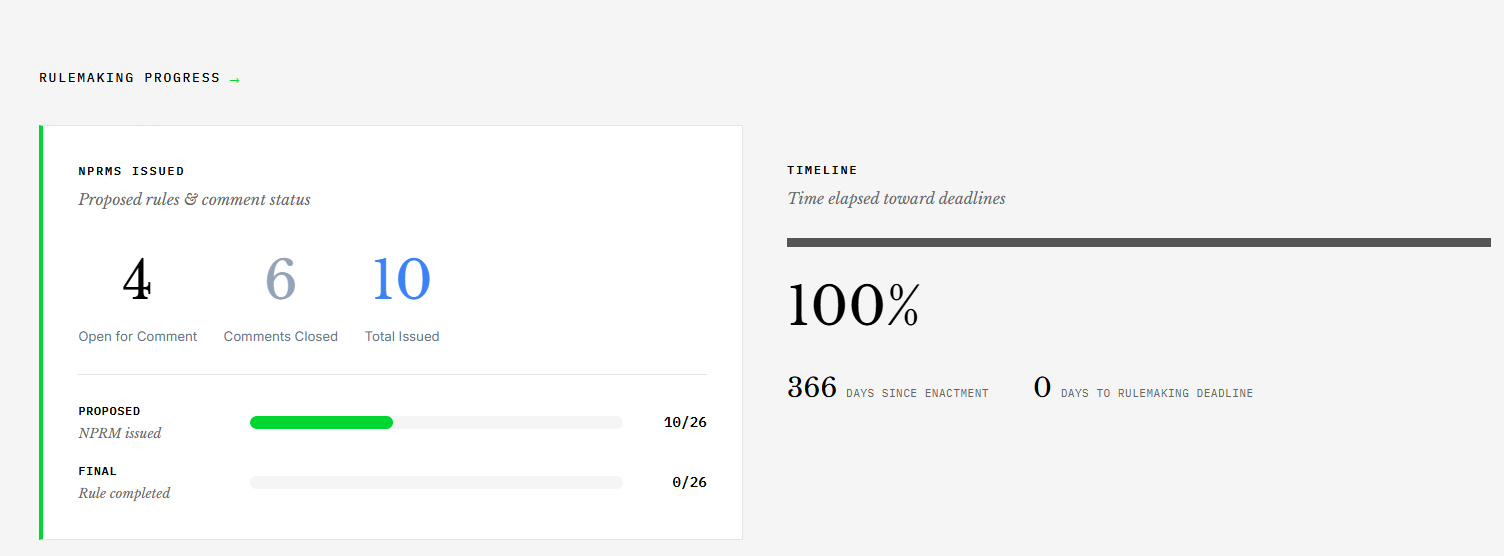
Federal regulators issued 10 notices of proposed rulemaking (NPRM) in the year since the GENIUS Act was signed into law, according to Paradigm.
The Treasury Department issued four proposals covering the broader implementation of the act, including standards for determining whether state stablecoin regulatory regimes are similar to the federal framework, registration requirements for foreign stablecoin issuers and guidelines for compliance with anti-money laundering measures.
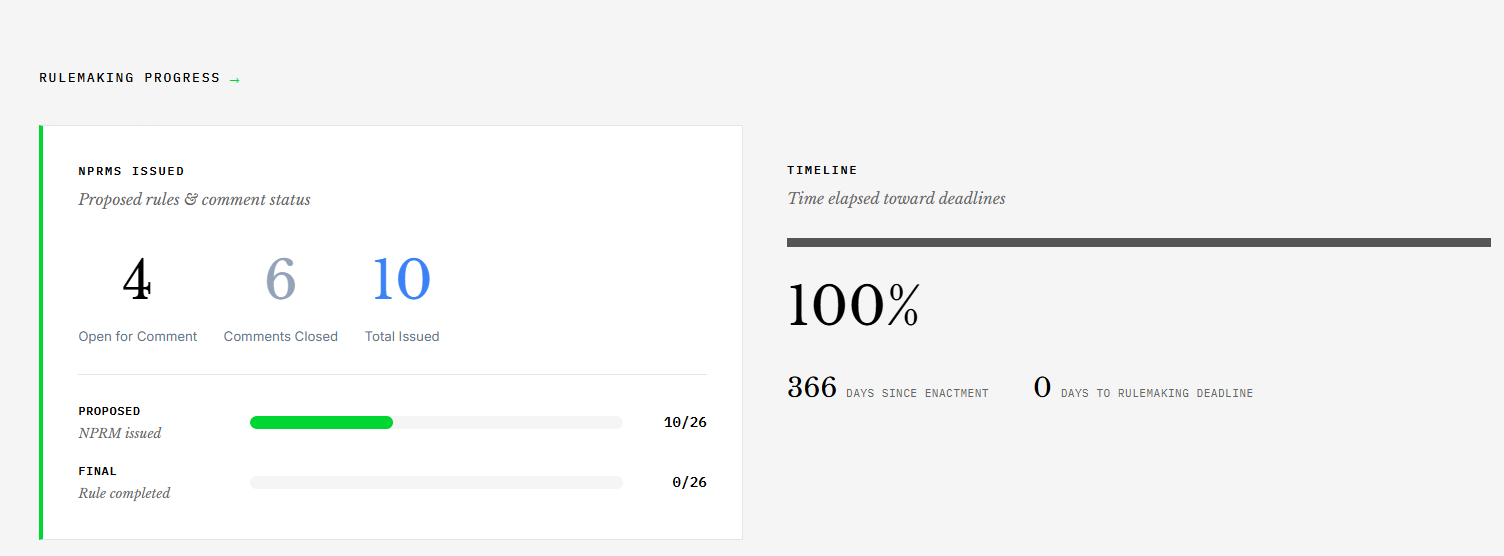
Rulemaking progress after the GENIUS Act was signed into law. Source: Paradigm.
The OCC issued two NPRMs covering nationally chartered payment stablecoin issuers, approval requirements and supervisory standards.
The FDIC issued one NPRM on FDIC-supervised institutions that issue payment stablecoins, focused on supervisory expectations and operational standards such as reserve management.
The National Credit Union Administration (NCUA) proposed rules enabling federally insured credit unions to participate in stablecoin issuance.
Finally, federal banking agencies jointly proposed an interagency implementation rule to harmonize supervision across the OCC, Federal Reserve and FDIC, aiming to ensure consistent supervisory expectations across all federal regulators.
Anchorage urges lawmakers to pass CLARITY Act
Federally chartered crypto bank Anchorage Digital has urged lawmakers to pass the Digital Asset Market Clarity Act (CLARITY).
“On GENIUS’ one-year anniversary, we’re renewing our call for Congress to pass the CLARITY Act and extend the clear market-structure rules that worked for stablecoins to the broader digital asset economy,” Anchorage Digital wrote in a Friday report.
The CLARITY Act seeks to establish the first federal regulatory framework for digital assets in the US. It cleared the Senate Banking Committee in May, though banking industry groups argued that it would allow crypto firms to offer yields on stablecoins without facing the same requirements as traditional banks.
On July 13, state banking associations, including the American Bankers Association (ABA) and the Independent Community Bankers of America (ICBA), sent a joint letter urging Senate leaders to provide more detail on the CLARITY Act’s stablecoin yield provisions and argued that new amendments need to prevent payment stablecoins from acting as deposit substitutes rather than pure transaction tools.
On June 26, Galaxy Digital cut its odds of the CLARITY Act becoming law in 2026 to 50%, citing the lack of a unified Senate Banking-Agriculture text, no firm floor schedule and a narrowing legislative window before lawmakers leave Washington.
Magazine: Gambling on random Pokémon cards: Onchain gagcha hits record high as crypto sinks

Kalshi’s logo appears on a smartphone placed on a reflective surface, with a blurry betting curve projected in the background in Creteil, France, on March 9, 2026, during a major scandal and $54 million lawsuit concerning bets related to recent strikes in Iran.
Nurphoto | Nurphoto | Getty Images
The 2026 FIFA World Cup has sent prediction market trading volumes across platforms soaring. And for Kalshi, it has delivered millions of new users.
Kalshi has brought in 3 million new users over the course of the tournament, the company shared with CNBC.
More than $1.2 billion has been traded on Kalshi’s contracts that ask traders to predict the winner of the World Cup, a record for a singular market. That market will officially close on Sunday, after Spain and Argentina compete in the final for the title.
“I don’t think there’s any game like football,” said Vijay Viswanathan, an associate dean of integrated marketing communications at Northwestern University, referring to soccer. “It’s played in about every country in the world … so in just terms of the total addressable market, there’s really nothing that comes close to the FIFA World Cup.”
Argentine fans react as their team scores against Egypt during a FIFA World Cup match watch party at Cerveceria La Tropica on July 07, 2026 in Miami, Florida. Argentina and Egypt are playing in the round-of-16 match in Atlanta.
Joe Raedle | Getty Images
Across the World Cup, Kalshi has made several moves to boost its brand. Those include a partnership with the official prediction market sponsor of the World Cup, ADI Predictstreet, to feature co-branding advertisements in stadiums. It also partnered with OpenAI last week to feature the company’s contract’s odds when users search about games in the tournament on ChatGPT.
But it also has featured a slew of advertisements with key faces in the soccer world: Croatian soccer star Luka Modric, longtime Real Madrid coach José Mourinho, and even a partnership with the Argentina national team. That deal got the company a feature in a post by superstar Lionel Messi on Instagram.
“Our volumes are where the news is at,” said Kalshi CEO Tarek Mansour, who takes on a lead role in guiding the company’s marketing strategy. “It’s a lot of the approach for the World Cup. … The most important thing is enable creativity based on what’s happening.”
Speed is key, too. One advertisement featuring former professional soccer stars playing a scrimmage with each other released on Friday was conceived, executed and released in 24 hours, Mansour said.
But Kalshi also launched ads with non-soccer celebrities around the tournament, too. An advertisement with actor Timothee Chalamet was released in June — around when he was garnering attention for his appearances at New York Knicks games during the NBA Finals — while a spot with Colombian singer J Balvin came out this month.
“This is also a way for them to say, ‘oh, but we’re also relevant to all these other people who might not be that interested in sports, too,’” said Elizabeth Johnson, executive director of the Wharton Neuroscience Initiative at the University of Pennsylvania. Johnson also teaches a visual marketing class at the university. “They’re seizing this moment to remind people about the ubiquitousness of what these prediction markets are.”
Leaning heavily into the sports event comes with risks, too. Sports event contracts are under scrutiny in a dispute between the federal government and the states. States argue those contracts are equivalent to sports betting, something state governments control.
Kalshi agrees with the federal government that the Commodity Futures Trading Commission — which regulates swaps and derivatives — has the sole power to regulate prediction markets.
Tarek Mansour, co-founder and CEO of Kalshi speaks during CNBC’s Squawk Box on June 24, 2026.
CNBC
Mansour dismissed those concerns, though, arguing its sports contracts are only under pressure from gambling companies worried about losing their dominant, incumbent positions.
Brian Sung, a partner in the derivatives and digital assets practice groups at Haynes Boone, doesn’t think the advertising strategies impact how courts may rule in the future, but said it does impact the view of prediction markets.
“It does kind of weaken their perception, in public or politics,” he said. “They are trying to push against this idea that they’re really only about sports. I mean, that is where the bulk of their activity is.”
Kalshi now moves onto turning those 3 million new users into recurring traders, which could be a challenge: volume on days when World Cup matches haven’t been played has been significantly lower than when the games are on.
Mansour added this cycle has happened before: a major event that drives volume higher, with a temporary decline after only for it to keep marching higher off of other events.
“You have to believe there’s not going to be any news after Sunday,” he said. “Maybe, … but the more probable thing is that there’s going to be like a bunch of things going on in the world, and Kalshi’s going to be there to service it.”
Disclosure: CNBC and Kalshi have a commercial relationship that includes customer acquisition and a minority investment.


Moonshot AI plans to list on the Hong Kong Stock Exchange within six months, people familiar with the matter say. The Beijing-based startup behind the Kimi chatbot has circulated a shareholder resolution to secure investor approval for the offering.
The filing follows a turbulent week for Moonshot, whose new Kimi K3 model briefly rattled global technology markets. Investors now watch whether the company can turn that momentum into a successful debut.
Kimi K3 AI Model Shakes Global Markets
Moonshot released Kimi K3 on July 16, an open-weight model built on roughly 2.8 trillion parameters. Its design uses a mixture-of-experts (MoE) architecture, which splits tasks across specialized sub-networks.
A one-million token context window helped it match several leading US models on coding benchmarks.
The launch triggered what traders called a fresh DeepSeek moment. Taiwan’s benchmark index fell more than 6%, and Japanese equities dropped 4%. The Nasdaq slid 1.5% in its worst session of the week, according to Fortune.
As a result, Hong Kong-listed rival Z.ai lost as much as 30% of its value. That marked its steepest single-day decline since its January listing. MiniMax Group shares dropped 16%, and Alibaba fell 4%, Bloomberg reported.
AI Funding Round Targets $30 Billion
Moonshot is simultaneously finalizing a round that could value the firm at more than $30 billion, sources told Bloomberg. That figure marks a nearly sevenfold jump from the $4.3 billion valuation it held in December, according to MLQ News.
In turn, the startup’s annual recurring revenue reportedly doubled to about $200 million by April. That is up from roughly $100 million in early March.
Rapid growth has fueled investor appetite even as Beijing restricts Chinese AI firms from taking foreign capital without clearance.
Restructuring Paves Way for Listing
To qualify for a Hong Kong listing, Moonshot is dismantling its offshore VIE structure. Chinese firms use that legal setup to route foreign investment around ownership limits. A joint venture model will replace it, following guidance from China’s securities regulator toward mainland-linked structures.
Moonshot is not the only lab eyeing a public debut. Rival DeepSeek is weighing an IPO after closing its first external funding round.
Meanwhile, the market reaction shows how closely AI headlines now move traditional risk assets. That echoes a June selloff that pulled Bitcoin toward $62,000.
However, Wall Street remains split on how to price the competition. JPMorgan has urged buying the dip in AI chip stocks, while Morgan Stanley favors hyperscalers instead.
If Moonshot’s listing proceeds on schedule, it will land amid Chinese developers’ continued gains. That trend is already challenging assumptions about who leads the global AI race.
The post Moonshot AI Plans Hong Kong IPO After Kimi K3 Model Debut appeared first on BeInCrypto.

South Korea’s Financial Supervisory Service (FSS) has reportedly begun a formal sanctions process related to the November 2025 $36 million exploit on Upbit, the country’s major crypto exchange operated by Dunamu. According to Yonhap News, the regulator has sent Dunamu an inspection opinion letter following a review of the incident.
The letter effectively opens the next stage of enforcement. It also gives Dunamu an opportunity to respond to the inspection findings before the FSS moves to notify the company of any proposed sanctions.
Key takeaways
- The FSS has reportedly issued an inspection opinion letter to Dunamu, kicking off a sanctions procedure after Upbit’s November 2025 $36 million hack.
- Yonhap reported that regulators are assessing whether Upbit violated the Virtual Asset User Protection Act, even though the law reportedly lacks direct penalties for cyberattacks and computer hacks.
- Upbit previously said it reimbursed affected customers using its own balance sheet funds and froze certain assets after the breach.
- Authorities are also weighing changes to South Korea’s Digital Asset Basic Act to add sanctions and compensation provisions for hacking and system failures.
- Upbit said it upgraded its wallet infrastructure after the incident and later introduced an automatic onchain tracing service intended to support recovery efforts.
FSS inspection letter launches enforcement step
Yonhap News reported Sunday that the FSS recently sent Dunamu an inspection opinion letter connected to the $36 million exploit that affected Upbit in late November 2025. The report frames the letter as the formal start of a sanctions process, with Dunamu able to respond to the findings before the regulator issues details of any proposed penalties.
The FSS is assessing whether the exchange breached the Virtual Asset User Protection Act. However, Yonhap noted that the statute does not provide direct sanctions provisions specifically for cyberattacks or computer hacking incidents.
This creates a compliance pressure point for exchanges and operators in South Korea: even when losses originate from security failures outside traditional financial market conduct, regulators are still attempting to map the incident to existing consumer protection obligations.
Criticism focused on delayed disclosure
Yonhap said Upbit faced criticism for delaying its announcement of the $36 million hack. The breach reportedly lasted about 54 minutes, beginning at 4:42 a.m. KST on November 27, but Upbit did not publicly disclose the incident until the end of the day.
The timing of the public disclosure, according to Yonhap, coincided with a merger-related event involving Naver Financial, after which the exchange finally announced the exploit. The regulatory review described in the report suggests that disclosure timing—along with incident handling—may be a key part of the FSS’s evaluation under the user protection framework.
Cointelegraph said it approached Dunamu for comment on the matter. No further response is included in the provided text.
Regulatory gap and proposed legislative changes
Yonhap also reported that South Korean authorities are considering how to address the current legal gap. The outlet said officials plan to add sanctions and compensation provisions for hacking and computer system failures into the second phase of the Digital Asset Basic Act.
For market participants, the significance is practical: a clearer statutory basis could shift enforcement from interpretive reviews—such as whether a hack violates broader user-protection obligations—to direct, incident-specific penalties and compensation duties. In other words, the likely focus may expand from “did the operator comply with existing rules?” to “did the operator meet explicit standards designed for cyber incidents?”
Until those amendments take effect, operators may remain exposed to enforcement theories rooted in consumer protection and operational responsibility, even where the law lacks cyberattack-specific sanction language.
Upbit’s response: reimbursements, wallet overhaul, and tracing
Upbit’s public response to the November 2025 exploit emphasized customer reimbursement and infrastructure changes. In a statement released after the incident, the exchange said it froze roughly 2.3 billion won (about $1.5 million) worth of funds. Upbit also said it would fully reimburse affected customers using its own balance sheet assets.
Separately, Upbit said it initiated an overhaul of its crypto wallet architecture after the exploit and migrated all assets from the wallets implicated in the incident. The exchange’s stated objective was to reduce exposure to potential vulnerabilities that could allow similar attacks to succeed.
In December 2025, Upbit said it developed an automatic onchain tracking service called the Onchain AI Tracer System, intended to trace the path of stolen funds and support recovery efforts.
These operational updates matter in the regulator’s context because they may influence how authorities assess whether Upbit took adequate steps both immediately after the breach and in the subsequent months. Even when reimbursement addresses direct user losses, regulators may still consider whether changes demonstrate robust incident prevention, transparent communication, and effective post-incident controls.
Upbit also ranks among the larger spot crypto exchanges in South Korea and globally, according to CoinMarketCap’s exchange rankings, which use scoring that includes traffic, liquidity, and trading volume.
Going forward, the key development to watch is Dunamu’s response to the FSS inspection opinion letter, since it will shape what sanctions—if any—are ultimately proposed. At the same time, traders and users should monitor the legislative process around the Digital Asset Basic Act’s next phase, because any move toward explicit hacking-related sanctions and compensation could materially alter how compliance is judged after major security incidents.

With the latest Consumer Price Index data for June already out, all economic eyes have now turned to the United States Federal Reserve and the upcoming FOMC meeting scheduled for the end of July.
Although inflation has cooled, there are still those pushing for an interest rate hike during the next meeting. The question is: what could happen to BTC and its price stagnation if that’s the case?
Big Macro Test Ahead?
The odds declined over the past week or so after the June inflation data showed a substantial drop to 3.5%. While that might be more misleading than it sounds, given the fact that oil prices are up in July due to the ceasefire breakdown, data from CME FedWatch show that experts believe there’s an 85% probability that policymakers will leave rates unchanged. In contrast, the odds of a 25-basis-point increase stand at a more modest 15%.
Those odds shifted after the CPI announcement on Tuesday given the softer-than-expected reading, which reinforces the market’s expectation that the Fed will not pivot on its current strategy. Nevertheless, there are some who continue to sound increasingly hawkish, including new Fed Chair Kevin Warsh and Dallas Fed President Lorie Logan.
Higher interest rates have been seen as a roadblock for BTC and other risk-on assets, as investors tend to become more defensive. Higher borrowing costs strengthen the appeal of lower-risk investments such as Treasury securities, while reducing liquidity throughout financial markets.
The latest major example of bitcoin plunging following the Fed’s aggressive tightening cycle was in 2022/2023. However, today’s market differs from previous cycles.
Will BTC Indeed Crash?
A large portion of the market reaction would likely depend on whether a rate hike catches investors completely off guard. Markets overwhelmingly expect rates to remain unchanged; an unexpected 25- or, more threateningly, 50-basis-point hike could trigger a sharp sell-off across equities, cryptocurrencies, and other risk assets.
However, the longer-term picture offers a different perspective. If the central bank raised rates because the local economy was still resilient and inflation proved harder to beat, stronger economic activity could continue to support corporate earnings and institutional investment appetite. BTC has proven in the past that it can recover quickly from macro-driven shocks, particularly when long-term demand stays intact.
For now, the landscape appears quite fragile, even as markets anticipate no rate changes. However, inflation is still above the Fed’s target, and several policymakers have doubled down on more hawkish stances, which could lead to some wild price moves if the central bank surprises investors with a July hike.
The post What Happens to Bitcoin if the Fed Raises Rates in July? appeared first on CryptoPotato.
A severe Cyclospora parasite outbreak tied to supplier Taylor Farms hit Walmart and Taco Bell this week. Both companies moved fast, with Walmart issuing recalls and Taco Bell cutting menu items on Friday.
US health officials confirmed the contamination link late Thursday, tracing cases to shredded iceberg lettuce grown in central Mexico. Both stocks closed lower on Friday as the fallout spread across the food supply chain.
What Caused the Parasite Outbreak
Cyclospora is a microscopic parasite that causes cyclosporiasis, an intestinal illness known for prolonged watery diarrhea and fatigue.
The Centers for Disease Control and Prevention (CDC) traced the outbreak to shredded iceberg lettuce grown in central Mexico. Taylor Farms, one of the largest salad producers in the country, supplied the contaminated batches.
Investigators traced illnesses to Taco Bell locations across five states. Taylor Farms then said Friday it would remove all iceberg lettuce sourced from the region. Historically, food-safety scares fade within weeks; this one moved unusually fast.
The CDC has confirmed more than 1,600 cases nationwide, with thousands more reports under review. However, broader stock market sentiment across equities had already turned cautious after a string of earnings surprises this month.
How Walmart and Taco Bell Responded
Walmart (WMT) pulled four bagged salad products from shelves as a precaution. The retailer, however, reported no confirmed illnesses linked to its own products. Taco Bell removed the supplier’s lettuce entirely and cut several menu items while it verifies new sourcing.
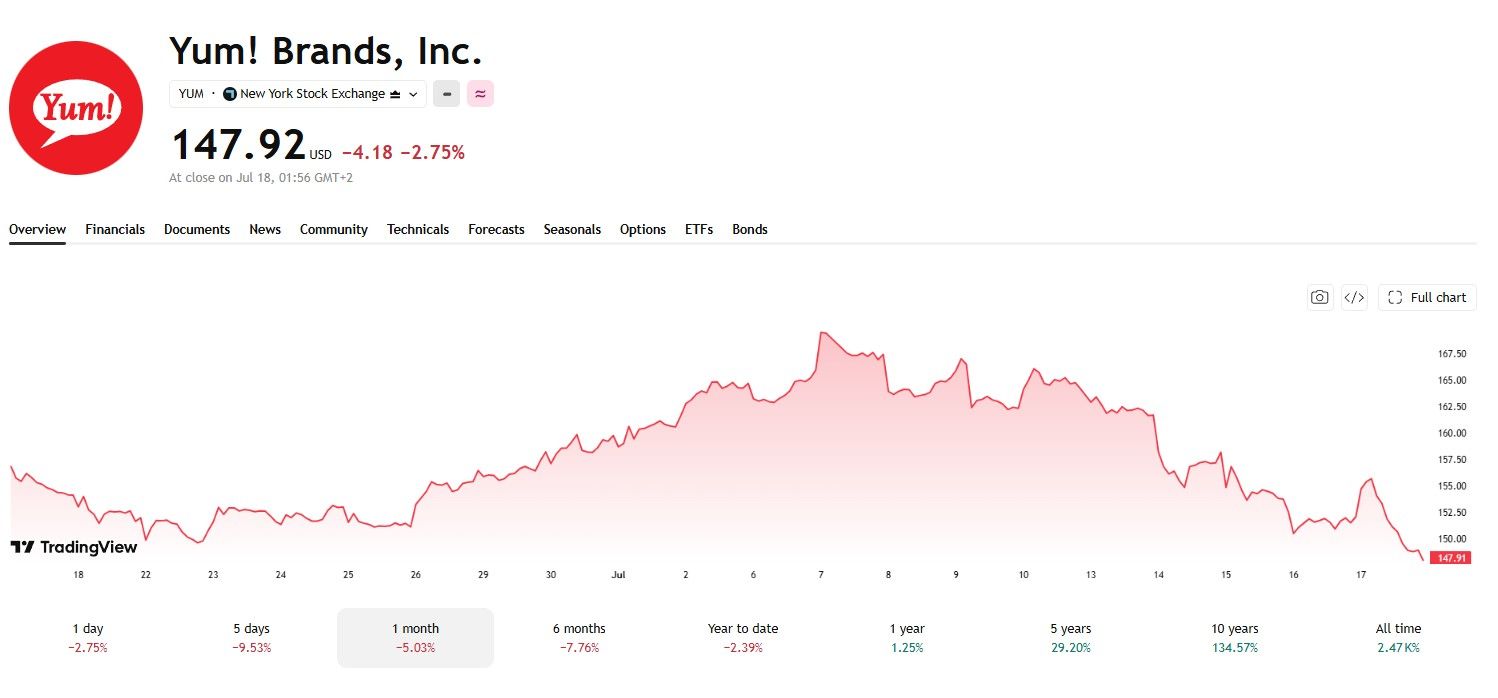
Yum Brands (YUM) shares fell 2.75% Friday to close at $147.92, and Walmart slipped 0.62% to $114.24. The reaction mirrors other sharp, single-stock swings this earnings season. Netflix shares sank after a third-quarter revenue guidance miss.
Meanwhile, Alphabet slid on a Gemini AI delay and a fresh EU order. In each case, one company-specific shock outweighed broader index calm.

Why Sweetgreen’s Rally Stands Out
Sweetgreen (SG) shares jumped 13.83% to close at $7.08. Regulators confirmed the chain does not use iceberg lettuce and was never part of the contaminated supply chain.
In contrast, Walmart and Yum Brands remain squarely inside the investigation’s scope. The stock had shed nearly 26% over the prior week as investors priced in guilt by association. That fear eased once a clearer picture emerged.

The swing recalls other abrupt reversals this year. SpaceX, for instance, saw a volatile Nasdaq-100 debut. Equity investors more broadly shifted toward record equity market exposure, even as bitcoin sat out the rally.
Sweetgreen’s next earnings report, due August 6, will show whether the relief rally reflects lasting confidence or a temporary reprieve.
Therefore, whether the sector’s swings prove temporary may depend on how quickly the Food and Drug Administration (FDA) closes its investigation. Meanwhile, investors will also watch whether other suppliers face scrutiny in the coming weeks.
The post Cyclospora Parasite Outbreak: Salad Recalls Trigger Sharp Stock Volatility appeared first on BeInCrypto.

Woman charged over murder of 75-year-old man in Bolton

The AI Bubble Looks A Lot Like Dot-Com Bust

Thomas Rhett and Niall Horan Postpone Concert Amid Storms


-
 NewsBeat3 days ago
London Mayor Sadiq Khan handed a peerage by Keir Starmer alongside 15 other Labour figures… just days before the PM leaves No10
-

 Fashion2 days ago
Weekend Open Thread – Corporette.com
-

 Politics1 day ago
The House | The City of London can help the new chancellor deliver growth in every postcode
-

 Politics4 days ago
Young campaigners urge incoming PM to act on outdoor junk food ads
-

 Crypto World4 days ago
CFTC blocks Kalshi from unwinding Michigan trades after court order
-

 Business3 days ago
Nvidia Stock Slips After Big Tuesday Rally as Huang Confirms Vera Rubin Chip Is Now in Production Today
-

 Crypto World1 day ago
Ripple Payments Joins MiCA With 14 Firms, Does It Mean Anything For XRP?
-
 Entertainment4 days ago
Disney’s Most Ambitious Failed Star Wars Attraction Is Coming to SDCC
-

 Crypto World2 days ago
Ripple wins EU-wide access as ESMA adds it to MiCA register
-

 Business3 days ago
Palantir Shares Rise After Expanded Nvidia Partnership and Fresh Analyst Upgrades Ahead of Earnings Day
-

 Crypto World3 days ago
Injective Submits SEC Transfer-Agent Registration to Onchain Ownership Records
-

 Tech5 days ago
Get Your ESP32 Sunny Side Up With This Solar Dev Board
-
 Crypto World2 days ago
Two July Windows Left: The CLARITY Act’s Senate Fight and What Failure Means
-

 NewsBeat2 days ago
Registration is now open for March for Men with Kev 2026
-

 News Videos5 days ago
XRP BOMBSHELL… XRP OMBOARDED FOR TRANSACTIONS!!!
-

 Tech5 days ago
Dark Secrets Emerge When Jailbreaking LLMs
-
 Sports4 days ago
New Cornerback Enters Vikings Trade Rumor Mill
-

 News Videos2 days ago
Money | Class 12 Economics | CBSE Board Exam 2026-27
-

 Business2 days ago
Banco Bilbao Vizcaya Argentaria, S.A. (BBVA) Discusses Global Macro Environment and Economic Outlook for Core Markets Transcript
-
 Crypto World3 days ago
Claude Fable 5 Slips to Second in AI Coding Leaderboard
You must be logged in to post a comment Login