

Crypto World
France Sets June 30 MiCA Licensing Deadline for Crypto Firms


The French financial regulator is tightening the noose on crypto operators that do not yet hold a national license. The Autorité des marchés financiers (AMF) has set a hard deadline of June 30 for crypto firms to secure the necessary authorizations to operate in France, with a clear expectation that noncompliant firms implement orderly wind-down plans to transfer customers and cease activity if licenses are not obtained. The warning was articulated by AMF President Marie-Anne Barbat-Layani during a press briefing, as Reuters reported.
Under the European Union’s Markets in Crypto Assets (MiCA) framework, crypto service providers are required to obtain a license to operate within the bloc, and a license obtained in one member state is intended to be portable to others through a passporting mechanism. This design aims to create a harmonized regulatory environment across the 27 EU member states, reducing cross-border frictions for compliant operators. Cointelegraph noted the passporting feature as part of MiCA’s regime, though the practical rollout remains a work in progress as national authorities interpret the rules during the transition period. Cointelegraph also reported that regulators continue to warn firms about approaching MiCA deadlines.
Following the AMF announcement, Cointelegraph reached out to the AMF for comment but did not receive an immediate response. The June 30 deadline arrives as MiCA compliance work intensifies across Europe, with many operators racing to align licensing, onboarding, and customer safeguards in multiple jurisdictions ahead of cross-border operations.
Beyond national licensing, the broader regulatory conversation in Europe centers on how MiCA will interact with potential centralized oversight. Some EU policymakers and industry observers advocate for stronger coordination through the European Securities and Markets Authority (ESMA), arguing that a centralized approach could streamline enforcement and reduce regulatory fragmentation. Critics warn that centralizing control could reallocate authority away from national regulators, threatening the passporting framework that underpins current cross-border licensing.
Key takeaways
- France imposes a June 30 deadline for crypto firms to obtain an operating license or exit the market, with wind-down plans required for those that fail to comply.
- MiCA licensing permits cross-border operation via passporting, elevating the importance of timely and compliant authorization across EU member states.
- Debate over ESMA’s potential centralization of crypto regulation could reshape the traditional passporting model and national regulatory sovereignty.
- Regulators are signaling possible MiCA updates, with public consultation contemplated if a broader overhaul is pursued, reflecting the maturing crypto market.
France’s deadline tightens MiCA enforcement in a cross-border context
The AMF’s enforcement posture highlights the urgency for platforms active in France to secure licenses under MiCA and to ensure robust consumer protections, including client asset safeguarding and transparent disclosures. The French watchdog’s stance also signals that national authorities are prepared to escalate enforcement where operators fail to comply, which could have ripple effects for related services such as custody, staking, and wallet provisioning offered to French customers.
From a compliance perspective, the June deadline underscores several practical pressures for firms: mapping out licensure strategies across EU states, aligning AML/KYC controls with MiCA requirements, and establishing orderly wind-down protocols that minimize customer disruption and preserve data and asset integrity. Jurisdictional parity remains a moving target as regulators implement MiCA provisions in diverse ways, even as the bloc seeks to preserve a common regulatory baseline. Reuters’ reporting on France’s stance provides a concrete indicator of the national-level enforcement posture that firms must monitor as they navigate the MiCA rollout.
MiCA enforcement architecture and the cross-border licensing debate
MiCA was designed to simplify cross-border service provision within the EU by allowing a single license to serve across member states, subject to national validations and ongoing supervisory oversight. This passporting feature is intended to reduce operational complexity for crypto firms and foster a more open European market for compliant operators. However, the same passporting mechanism faces political and regulatory scrutiny as discussions about ESMA’s role intensify.
Malta’s financial regulator, the MFSA, has publicly cautioned against premature changes to MiCA’s architecture. An MFSA spokesperson told Cointelegraph that any shift in the EU’s crypto regulatory framework should be approached with caution, as regulators need time to assess MiCA’s effects, given that the regulation became legally applicable in 2024. The comment reflects a broader anxiety among smaller member states that rapid centralization could disrupt established national supervisory practices.
In parallel, EU regulatory staff have signaled openness to revisiting MiCA’s design as the market matures. Peter Kerstens, an adviser on technological innovation and cybersecurity at the European Commission’s financial services directorate, suggested that MiCA may be overhauled to better reflect a maturing crypto ecosystem. He indicated that any potential changes would involve public consultation before any formal amendments are pursued. This stance points to a longer horizon for policy evolution, even as national regulators enforce current licensing requirements in the near term.
For market participants, the central question is how any future changes would affect cross-border operations, licensing timing, and the predictability of regulatory obligations. A more centralized model could potentially streamline enforcement, but it could also reduce national tailoring of rules to local markets. The ongoing discussion complicates compliance planning for exchanges, custodians, and issuing platforms that operate across multiple EU jurisdictions.
Regulatory trajectory and institutional implications for crypto firms
As MiCA implementation continues, crypto firms must align with national licensing regimes while anticipating possible policy shifts. The AMF’s deadline illustrates how national regulators are translating European-wide rules into concrete actions that affect market access, consumer protection, and orderly exit options for noncompliant operators. Firms should prioritize a comprehensive compliance program that covers licensing pathways, continuous regulatory reporting, and robust incident response and customer transition plans.
From an enforcement and banking perspective, national authorities’ emphasis on license attainment also intersects with AML/KYC regimes and potential interactions with traditional financial partners. Institutions collaborating with crypto firms are assessing risk frameworks to ensure that onboarding, transaction monitoring, and correspondent banking relationships meet both MiCA requirements and domestic supervisory expectations. The structural question of whether ESMA or member-state authorities should take a larger role remains unresolved, creating a degree of policy risk for firms planning multi-jurisdictional strategies.
Policy trajectory and market structure context
The enclosed policy debate around MiCA touches adjacent topics such as stablecoins regulation, DeFi gaps, and broader market resilience. The EU has opened consultations on MiCA-related updates, including potential refinements to stablecoin rules and questions around DeFi coverage. Those discussions signal that the regulatory framework will continue to evolve as the market demonstrates maturity, risk profiles, and the need for clearer compliance expectations. For institutions and service providers, watching these consultations and the timing of any formal proposals will be essential for long-range planning and risk management.
Taken together, the current environment underscores a nuanced transition: national authorities are enforcing MiCA in earnest, while supervisory bodies weigh a broader, centralized approach that could reshape cross-border licensing realities. The disconnect between enforcement timing and policy reform creates a window of regulatory uncertainty that firms must navigate with disciplined governance, clear licensing roadmaps, and robust customer safeguards.
As regulators assess the path forward, market participants should monitor announcements from the AMF and other national authorities, ESMA’s evolving stance on crypto oversight, and the European Commission’s consultation process on MiCA updates. These signals will help determine whether passporting remains the dominant mechanism for cross-border operations or if a more centralized regime emerges in the coming years.
Closing perspective: the June deadline in France is a concrete reminder that MiCA compliance remains a live, enforceable requirement across the EU. The unfolding debate over centralization versus national sovereignty will shape licensing dynamics, enforcement risk, and the scale at which crypto firms can operate within the bloc. Firms should prepare for potential policy shifts while maintaining strong compliance programs to navigate near-term regulatory pressures.
Disclosures: Cointelegraph is tracking MiCA-related developments and has engaged with regulators on related topics. For the regulatory milestone referenced above, Reuters reported on the AMF deadline and wind-down expectations. For related regulatory commentary and cross-border oversight debates, see reporting and analysis linked in the article.



An Iran-linked hacker group known as Handala says it breached FBI surveillance drones and threatened the 2026 World Cup, the SITE Intelligence Group revealed.
The warning lands days into a tournament already guarded by heavy federal security, and it names team buses as a possible target.
Who is Handala, the Iranian Hactivist Group?
Handala presents itself as a pro-Palestinian hacktivist collective. However, US officials and Western researchers assess it as a front for Iranian intelligence.
The group has targeted Israeli-linked entities and other countries since December 2023. Its activity sharpened after US-Israeli strikes on Tehran in February.
In March, Handala claimed it had hacked the email of FBI Director Kash Patel. It then published personal photos and other material.
Follow us on X to get the latest news as it happens
The Drone Threat and a Disputed Claim
Handala said in the statement quoted by The SITE Intelligence Group that it had access “for months” to footage from first-person view (FPV) drones used by the FBI.
The drones run facial recognition and license plate checks for counterterrorism. The group issued a direct warning.
“Better tighten your World Cup security, we don’t like some of those teams at all. Don’t forget: FPVs are everywhere; you never know when one might end up right in your team’s bus,” Handala said.
However, SITE questioned the group’s evidence. It found that one supposed hack video came from a software firm’s December 2024 promotion.
The State Department is offering up to $10 million for information leading to the identification of Handala members. The reward shows how seriously Washington treats the group.
The FIFA World Cup tournament runs through July 19 across 16 cities. Whether the threat proves real or not, it raises the security stakes for an event watched by billions.
Subscribe to our YouTube channel to watch leaders and journalists provide expert insights
The post Iran-Linked Hackers Threaten World Cup After Alleged FBI Drone Breach appeared first on BeInCrypto.


The comparison may indicate how much the U.S. crypto derivatives market could change over the next several years. While spot bitcoin ETFs opened the door for traditional investors to gain exposure to bitcoin through brokerage accounts, regulated perpetual futures could give both retail and institutional traders access to one of crypto’s most popular trading instruments without needing to use offshore venues.
Prediction market platform Kalshi, which launched U.S. perpetual futures last week, said on Wednesday that it already crossed $1 billion in trading volume.
Palmer argued that one reason perpetual futures became so successful outside the U.S. is their simplicity. Unlike dated futures, which require traders to manage expirations and contract rolls, perps allow positions to remain open indefinitely.
“I think it’s a simple derivative structure compared to some of the nuances of dealing with dated futures,” he said. “If I buy a June [future], then it expires, and if I want to keep my position on, I have to roll it.”
Kraken believes removing those complexities — and eventually allowing crypto assets to be used as collateral — could help bring U.S. traders closer to the experience available in international markets, he said.
For now, the company sees the launch of regulated perps as just the beginning. Despite crypto derivatives generating trillions of dollars in annual volume globally, Palmer said the U.S. market remains in its early stages.

Key Takeaways
- ARK Invest acquired 3.29 million SpaceX shares valued at $444M during the company’s Nasdaq launch
- The SpaceX public debut generated $75 billion, setting a new record for the largest IPO ever
- ARK liquidated $39.3M worth of Advanced Micro Devices stock across three ETFs simultaneously
- ARK reduced holdings in Rocket Lab — a company SpaceX identified as a competitive rival in regulatory filings
- The acquisition came after ARK divested positions in 20 firms totaling $222.87M one day earlier
On Friday, June 13, 2026, Cathie Wood’s ARK Invest executed a substantial strategic investment. The investment management firm acquired 3,291,184 SpaceX shares distributed across four exchange-traded funds, coinciding with the aerospace company’s historic Nasdaq listing.
The aggregate investment reached $444,309,840, allocated among the ARK Innovation ETF, ARK Autonomous Technology and Robotics ETF, ARK Next Generation Internet ETF, and ARK Space Exploration and Innovation ETF.
Space Exploration Technologies Corp., SPCX
Prior to going public, SpaceX represented ARK’s most significant position in its Venture Fund, accounting for more than 11% of net assets — surpassing both OpenAI and Anthropic.
ARK initially backed SpaceX through its Venture Fund in late 2023, when the aerospace manufacturer was valued under $200 billion. The company now commands a market capitalization of $2.11 trillion.
Historic Public Market Debut
The SpaceX IPO generated $75 billion through the distribution of 555.6 million shares, establishing it as the most substantial initial public offering on record.
Within ARKX, the SpaceX allocation immediately became a top-tier holding, constituting 6.89% of the fund’s composition.
ARK has consistently championed SpaceX’s business approach. “The company’s ability to re-use rockets results in structurally lower launch costs than competitors that will prove difficult to match,” the firm articulated in its investment rationale.
Portfolio Rebalancing: AMD and Rocket Lab Exit
To accommodate the SpaceX investment, ARK executed divestitures across numerous portfolio companies.
Concurrent with the SpaceX acquisition, ARK divested 80,536 shares of Advanced Micro Devices distributed across ARKQ, ARKW, and ARKX ETFs. The transaction yielded $39,337,809.
ARK simultaneously reduced its Rocket Lab exposure across ARKQ and ARKX, generating $5,824,625 from the sale.
The Rocket Lab divestiture timing proved noteworthy. SpaceX explicitly identified Rocket Lab as a competitive threat in its S-1 registration, characterizing it as a firm transitioning from small-lift capabilities into medium-lift payload services.
The preceding day, ARK had liquidated stakes in 20 separate entities worth $222.87 million. Teradyne represented the largest disposal at $76.6 million. Twist Bioscience, Iridium Communications, and Robinhood Markets were additionally reduced, combining for $64.2 million.
Further divestitures encompassed Tesla, Baidu, Roku, CrowdStrike, Cloudflare, and Veracyte holdings.
ARK disposed of 98,835 Roku shares for $11,824,619 and 39,850 Tesla shares valued at $15,906,127.
The consecutive two-day liquidation campaign created capacity throughout ARK’s ETF suite for the SpaceX allocation, which now ranks among the firm’s most substantial publicly traded equity positions.

Crypto World
Marvell (MRVL) Stock Soars on Adobe CFO Hire and Nvidia Endorsement Ahead of S&P 500 Addition

Key Takeaways
- Craig Ellis from B. Riley increased Marvell’s price target to $345 from $240, representing a 43.75% boost, while maintaining a Buy recommendation.
- Dan Durn, Adobe’s CFO with over three decades of finance expertise, has been appointed as Marvell’s new chief financial officer.
- Adobe shares dropped 8% following the CFO departure announcement, adding to a 51% year-over-year decline, while Marvell has surged 312% during the same timeframe.
- Jensen Huang, CEO of Nvidia, publicly declared Marvell could become “the next $1 trillion company” during the Computex conference.
- The chip designer’s addition to the S&P 500 index on June 22 is anticipated to expand institutional investor interest.
Craig Ellis, an analyst at B. Riley, has significantly increased his price target for Marvell Technology (MRVL) shares, pushing it to $345 from the previous $240 mark—representing an increase of approximately 44%. He continues to maintain a Buy recommendation on the semiconductor company. At the time of publication, shares were hovering near $228.
Marvell Technology, Inc., MRVL
The analyst cited three key catalysts behind his revised valuation: the appointment of a new chief financial officer, a high-profile endorsement at Computex involving Nvidia’s leadership, and the semiconductor firm’s imminent entry into the S&P 500.
This past Thursday, Marvell announced that Dan Durn, who currently holds the CFO position at Adobe (ADBE), will transition to Marvell beginning next Monday. He will succeed Willem Meintjes, who is departing after serving in the position for over three years.
Durn arrives with more than 30 years of financial leadership credentials, having held CFO positions at major technology firms including Adobe, Applied Materials, NXP, Freescale Semiconductor, and GlobalFoundries. Additionally, he has been a member of Marvell’s board of directors for the past two years.
Ellis characterized Durn as “a strong financial leader with a clear strategic focus and strong operational grasp,” drawing on previous professional interactions during Durn’s tenure at Applied Materials.
The announcement had adverse consequences for Adobe. Its stock tumbled 8% on Friday, compounding a 51% decrease over the past twelve months. The CFO’s exit follows earlier news that CEO Shantanu Narayen intends to step down from his position, with no replacement yet identified.
Jefferies analyst Brent Thill noted that Durn’s decision to join Marvell “suggests problems may be deeper at Adobe,” while raising concerns about the software company’s capacity to retain top executive talent.
Nvidia’s CEO Projects Trillion-Dollar Valuation for Marvell
During the Computex technology conference, Marvell CEO Matthew Murphy appeared alongside Nvidia CEO Jensen Huang. This public collaboration prompted Ellis to assess that the strategic partnership between Nvidia and Marvell has accelerated substantially.
Huang’s public statement identifying Marvell as “the next $1 trillion company” generated significant market attention. Ellis interprets this endorsement as validation of Marvell’s expansive market opportunity and its capacity to transform that potential into actual revenue. The two technology giants are currently collaborating on custom artificial intelligence processors, NVLink Fusion technology, Celestial platforms, and proprietary optical solutions.
Index Addition Scheduled for Late June
Marvell’s inclusion in the S&P 500 is confirmed for June 22. Ellis considers this a significant driver, projecting it will broaden the company’s investor profile both through passive index fund purchases and increased visibility among institutional money managers.
The Street’s consensus rating on MRVL stands at Strong Buy, supported by 24 Buy recommendations and four Hold ratings.
The mean analyst price target across Wall Street is $252, which trails the current trading price—indicating that the stock’s remarkable 229% gain year-to-date has exceeded most analyst projections.
The semiconductor sector ETF (SOXX) has climbed 99.7% year-to-date, while the software sector ETF (IGV) has declined 14.3%, highlighting the stark valuation divergence between these two technology subsectors.
Marvell shares were trading approximately 2% higher approaching Friday’s market close.
Crypto World
State Attorneys General Launch Multi-State Investigation Into OpenAI Ahead of Planned IPO

Key Takeaways
- State attorneys general from multiple jurisdictions have issued a subpoena to OpenAI demanding disclosure of internal documents related to consumer protection, data security, and user safety protocols
- The New York Attorney General’s office led the subpoena effort, requesting information on marketing tactics, data management procedures, protections for vulnerable populations, and AI response patterns
- Florida initiated the first state lawsuit against OpenAI, claiming the company deliberately launched a dangerous product despite warnings
- Florida authorities launched a criminal probe into ChatGPT’s potential connection to a mass shooting incident at Florida State University
- This regulatory scrutiny emerges shortly after OpenAI submitted confidential documents to the SEC for a planned initial public offering
Multiple state attorneys general have launched a coordinated investigation into OpenAI, delivering a formal subpoena to the artificial intelligence company on Friday, The Wall Street Journal confirmed. This legal action arrives as the company advances plans for going public through an initial public offering.
New York Attorney General Letitia James spearheaded the subpoena issuance. The legal demand seeks comprehensive documentation spanning numerous operational areas.
The requested materials encompass marketing and promotional activities, user interaction methodologies, management of consumer health information, services targeting elderly and underage users, neural network technologies, and corporate governance frameworks.
Investigators are particularly interested in examining AI sycophancy—a phenomenon where artificial intelligence systems demonstrate excessive agreement with user statements instead of providing objective, balanced information.
OpenAI released a statement indicating the company views the state attorneys general’s concerns with seriousness. The AI developer committed to cooperative dialogue with regulatory offices.
“AI is a new and powerful technology, and we work every day to safely bring its benefits to people in a responsible way,” an OpenAI spokesperson said.
Florida Files Lawsuit and Opens Criminal Investigation
Florida made history this month by becoming the first U.S. state to file litigation against OpenAI and its chief executive Sam Altman. The complaint alleges the organization deliberately deployed a hazardous product while disregarding safety concerns that it could cause user harm.
In April, Florida Attorney General James Uthmeier initiated a criminal investigation targeting OpenAI. This inquiry examines ChatGPT’s purported involvement in a mass shooting tragedy at Florida State University.
Law enforcement officials assert the perpetrator utilized the AI chatbot for consultation during the attack’s planning phase.
Wider Regulatory Pressure on Artificial Intelligence Firms
OpenAI isn’t alone in facing heightened oversight from state-level enforcement agencies.
Last December, 42 state attorneys general collaborated on correspondence addressed to OpenAI, Meta Platforms, Anthropic, Google, and xAI. The communication demanded enhanced protection mechanisms for at-risk populations and cautioned that AI developers may face liability for damaging chatbot responses.
California Attorney General Rob Bonta launched an independent inquiry earlier this year. His investigation examines allegations of sexually explicit content creation through xAI’s Grok chatbot, including purported images depicting women and minors.
The timing of this multi-jurisdiction subpoena presents significant challenges for OpenAI. The company submitted confidential IPO documentation to the Securities and Exchange Commission just weeks ago.
Regulatory investigations and legal challenges during this critical period may influence investor confidence and perceptions as the company approaches its anticipated public market debut.
OpenAI declined to provide further commentary beyond its original public statement.


Coinbase has launched 24/7 trading for U.S.-regulated gold and silver futures through Coinbase Derivatives Exchange.
Summary
- Coinbase launched 24/7 trading for U.S.-regulated gold and silver futures.
- Eligible traders can access one-ounce gold and 50-ounce silver contracts.
- The launch supports Coinbase’s “Everything Exchange” strategy beyond digital assets.
The new products let eligible U.S. traders access precious metals nearly every day, including weekends and holidays. The launch expands Coinbase beyond digital assets and adds traditional commodities to its always-on trading infrastructure.
Coinbase opens round-the-clock metals trading
Eligible traders can now buy and sell regulated gold and silver futures through participating brokers. The contracts include one troy ounce of gold and 50 troy ounces of silver. Coinbase listed Interactive Brokers and NinjaTrader among the platforms offering access to the products.
The launch changes how some U.S. traders access precious metals futures. Traditional commodity markets usually follow set trading hours and pause during weekends or holidays. Coinbase’s structure gives traders more time to react to economic data, geopolitical events, and market-moving headlines.
Coinbase CEO Brian Armstrong addressed the launch in a social media post. The company presented the move as another step from crypto’s always-open market model into traditional finance. Coinbase said continuous trading can support price discovery and give traders more flexibility during uncertain market periods.
Gold and silver remain major stores of value across global markets. Market estimates place gold above $13 trillion in value, while silver exceeds $1 trillion. Demand for both metals has stayed firm during inflation concerns, central bank buying, and geopolitical tension.
Launch fits Coinbase’s everything-exchange strategy
As it was revealed in our report, the new futures products fit Coinbase’s plan to build an “Everything App.” Over the past two years, the company has expanded into derivatives, perpetual futures, and stock-linked products. The addition of precious metals brings more traditional asset exposure onto Coinbase-linked infrastructure.
Coinbase has already offered gold and silver perpetual futures for eligible non-U.S. users. Those products settle in USDC and serve traders who prefer crypto-native market access. The U.S. futures launch adds regulated commodity products for domestic traders through the derivatives exchange.
The structure may also lower access barriers for some commodity traders. Precious metals futures have often served institutional traders because of contract sizes and brokerage requirements. Coinbase’s smaller contract design gives retail and professional traders another route into gold and silver exposure. For traders, the central change comes from timing. They can manage metal exposure without waiting for normal market sessions to reopen.
Crypto World
Market Highlights: SpaceX IPO Shatters Records, OpenAI Eyes Public Markets, and Energy Volatility
Key Takeaways
- SpaceX’s initial public offering became the biggest in history, securing roughly $75 billion with a temporary valuation near $2 trillion
- Reports indicate OpenAI submitted confidential IPO paperwork, generating significant market buzz
- Publicly traded space companies like Rocket Lab and AST SpaceMobile experienced substantial volatility after the SpaceX debut
- Crude oil markets fluctuated as U.S.-Iran relations moved between tension and potential negotiation
- The historic SpaceX offering may pave the way for public listings from OpenAI, Anthropic, Stripe, and similar high-profile companies
SpaceX Achieves Unprecedented IPO Milestone
SpaceX secured roughly $75 billion through its public market debut this week, establishing a new benchmark as the largest IPO in recorded history.
The aerospace manufacturer temporarily achieved a market capitalization nearing $2 trillion. Interest from institutional investors and individual traders exceeded expectations across the board.
This public offering represents a watershed moment for the commercial aerospace sector. Market observers suggest it may inspire other substantial private enterprises to pursue public listings in the near future.
For numerous market participants, this development transcended typical trading activity. It established space exploration as a legitimate, accessible investment category.
OpenAI Allegedly Submits Confidential Public Offering Documents
Media reports surfaced this week indicating OpenAI has quietly submitted documentation for a potential public listing.
Specific information remains scarce, yet the revelation instantly captured market interest. The artificial intelligence company has experienced explosive growth following ChatGPT’s mainstream acceptance and increasing corporate demand for AI solutions.
Numerous market analysts anticipate an eventual OpenAI public offering could become one of the most substantial technology listings in history.
Presently, market participants access OpenAI exposure through indirect channels via companies including Nvidia, Microsoft, and Broadcom. A public listing would fundamentally alter this dynamic.
Aerospace Sector Experiences Heightened Trading Activity
The enthusiasm surrounding SpaceX’s public debut created ripple effects throughout publicly available space industry investments.
Rocket Lab, AST SpaceMobile, Planet Labs, and Intuitive Machines all witnessed significant price fluctuations. Certain investors purchased these securities as proxy investments for the expanding space economy.
Alternatively, some market participants expressed concern that SpaceX’s offering might redirect investment capital away from smaller industry players temporarily.
Notwithstanding recent volatility, sustained interest in the aerospace sector persists. Satellite connectivity, orbital launch capabilities, military applications, and planetary monitoring maintain investor focus.
Crude Oil Markets React to Geopolitical Developments
Energy markets demonstrated notable movement this week as traders monitored evolving situations between the United States and Iran.
Commodity prices initially advanced on geopolitical uncertainty, subsequently retreating as expectations increased regarding potential diplomatic engagement.
These fluctuations affected energy producers, airline operators, and logistics companies. Market participants remain attentive since petroleum prices directly influence inflation metrics and household expenditures.
Further changes in Middle Eastern supply conditions could sustain elevated energy market activity throughout upcoming trading periods.
Implications of SpaceX’s Public Market Success for Future Offerings
The overwhelming demand demonstrated during the SpaceX listing confirmed investors maintain appetite for substantial growth-oriented enterprises.
Its achievement has intensified speculation regarding when additional prominent private companies might pursue public markets. Frequently mentioned candidates include OpenAI, Anthropic, Stripe, and Databricks.
Should these offerings materialize, both retail traders and institutional investors could obtain direct access to some of technology and artificial intelligence’s most significant players.
The SpaceX public offering accomplished more than establishing new records. It potentially redefined parameters for major technology listings heading into 2026.
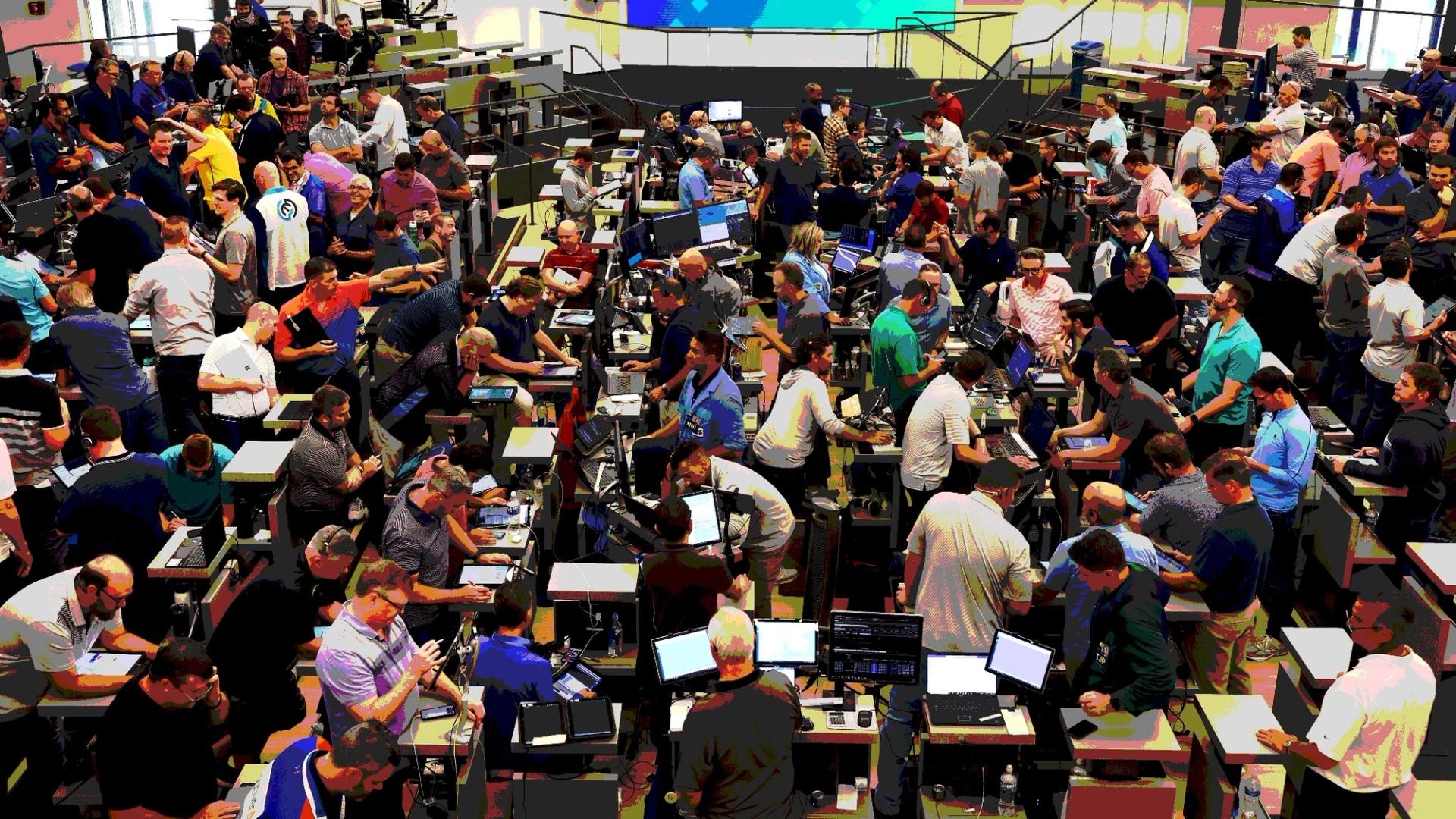
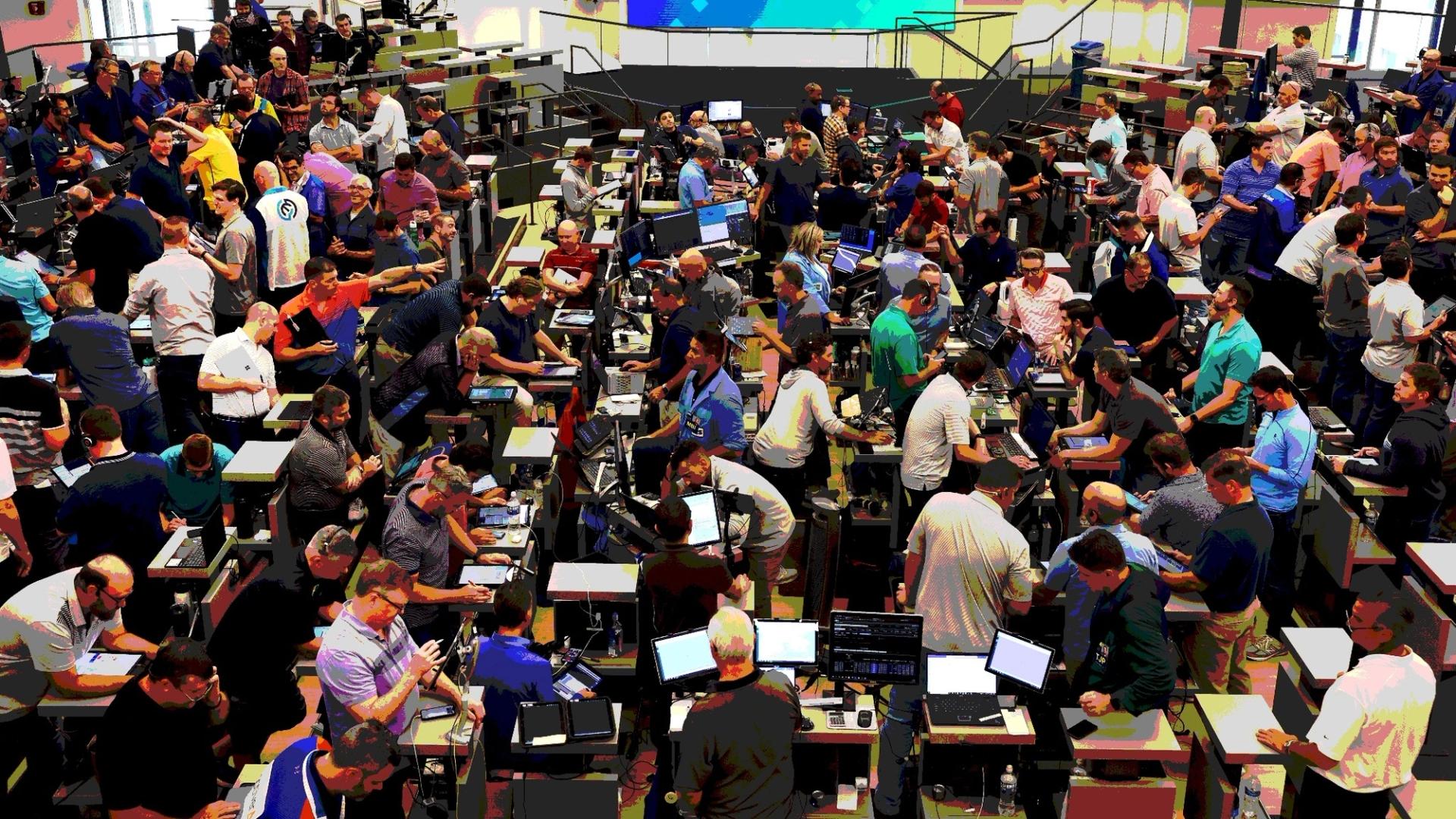
Those markets function because trading activity sits atop a vast network of credit relationships, clearing brokers and prime brokerage arrangements, Mercer says.
“That’s what the world’s economies and capital markets are built on,” he added.
When LMAX launched institutional crypto venue LMAX Digital in 2018, Mercer expected similar infrastructure would quickly emerge in digital assets. Eight years later, he believes its absence remains one of the industry’s biggest constraints.
Mercer remains an enthusiastic supporter of blockchain technology, citing instantaneous settlement amd transparent onchain records. But while atomic settlement and delivery-versus-payment transactions are valuable, he argues they are not sufficient for global capital markets.
“The world today is built on leverage and credit, and it will remain so,” Mercer says.
The collateral problem
A central challenge is the inability to move collateral efficiently between traditional and digital financial systems.
Today’s institutions often operate within separate regulatory and operational environments, with traditional assets, digital assets and stablecoins trapped inside distinct “walled gardens.” Collateral cannot move freely between them, reducing capital efficiency and limiting participation.
Market volatility during the first quarter highlighted the issue, Mercer said, as investors rotated between equities, gold and bitcoin in response to macroeconomic uncertainty.
“If you’ve pre-positioned fiat at a centralized exchange, you can’t necessarily deploy that collateral elsewhere when opportunities arise,” he said.

Key Takeaways
- ACN shares advanced 1.65% Friday, finishing at $170.28 and breaking a five-session decline, yet trading 46% under its 52-week peak of $317.31
- Vontobel Holding increased its ACN position by 36.8% during Q4, purchasing 43,637 additional shares valued at approximately $43.5 million
- Chief Executive Atsushi Egawa divested 4,872 shares at $177.14 on April 30 through a predetermined Rule 10b5-1 trading arrangement
- Truist shifted its stance on ACN from Buy to Hold while reducing the price objective from $260 down to $210; multiple firms followed suit with target reductions
- The consulting giant exceeded Q3 profit expectations, delivering EPS of $2.93 against the $2.84 forecast, with revenues reaching $18.04 billion
Shares of Accenture (ACN) climbed 1.65% during Friday’s trading session, settling at $170.28 and breaking a five-consecutive-day decline. The wider market also posted gains, with the S&P 500 advancing 0.50% while the Dow Jones increased 0.70%.
While Friday’s uptick provided temporary relief, ACN shares remain 46% beneath their 52-week peak of $317.31. This significant differential reflects the shift in market sentiment toward the stock over recent months.
Friday’s trading volume registered at 4.0 million shares, falling short of the 50-day average volume of 5.4 million, indicating the upward movement lacked strong institutional backing.
ACN began Friday’s session at $169.95. The stock has established a 12-month floor of $155.82 and maintains a market capitalization approaching $113 billion. Technical indicators show the 50-day moving average positioned at $181.79, with the 200-day moving average at $221.83 — both substantially above current price levels.
Institutional Accumulation Contrasts with Executive Divestment
Vontobel Holding expanded its ACN stake by 36.8% throughout Q4, acquiring 43,637 additional shares. The investment firm currently maintains 162,315 shares with an estimated value of $43.5 million.
Several major institutional players have also modified their holdings. Vanguard purchased 854,361 shares during Q4, elevating its total position beyond 66 million shares. Massachusetts Financial Services expanded its stake by 5.4%, adding 546,198 shares to its portfolio. Institutional ownership of ACN currently stands at 75.14%.
Meanwhile, Chief Executive Atsushi Egawa executed a sale of 4,872 shares on April 30 at an average transaction price of $177.14, generating approximately $863,000 in proceeds. This divestment occurred under a pre-established Rule 10b5-1 trading plan, leaving Egawa with 12,802 remaining shares.
The transaction decreased his direct ownership by 27.57%, a notable reduction despite the pre-planned nature of the sale.
Analyst Community Reassesses Valuation Expectations
Wall Street analysts have recently recalibrated their outlook on ACN. Truist made the most significant adjustment, downgrading the stock from Buy to Hold while slashing its price objective from $260 to $210 on June 1.
Wells Fargo reduced its target from $275 to $248 while preserving an Overweight rating. Morgan Stanley decreased its objective from $320 to $240, also keeping an Overweight stance. Royal Bank of Canada adjusted downward from $295 to $253 with an Outperform designation. BMO Capital Markets lowered its target from $300 to $230 alongside a Market Perform rating.
Notwithstanding these reductions, the consensus recommendation from 27 analysts maintains a Moderate Buy rating, with an average price target of $259.89 — suggesting approximately 53% upside from current levels.
Strong Quarterly Results and Consistent Dividend
ACN released its quarterly financial results on March 20, reporting earnings per share of $2.93, surpassing the analyst consensus of $2.84. The company generated $18.04 billion in revenue, exceeding the $17.80 billion projection, representing a 7.8% year-over-year increase.
The corporation distributed a quarterly dividend of $1.63 per share on May 15. This translates to an annualized dividend of $6.52, yielding 3.8% based on the current share price. The dividend payout ratio is calculated at 53.40%.
Analyst projections currently anticipate full-year earnings per share of $13.87 for the fiscal year.


Michael Saylor, co-founder of Strategy, the world’s largest publicly listed bitcoin holder, has a new term for Wall Street’s most elite stocks and a congratulatory message for Elon Musk.
Following SpaceX’s historic Nasdaq debut Friday, the Strategy chairman took to X to congratulate Musk, noting that with SpaceX now public, 25% of what he calls the “Mag8” firms now hold bitcoin on their balance sheets.
“Thanks to you, 25% of the Mag8 now holds bitcoin on the balance sheet,” Saylor wrote.
The Mag8 appears to be Saylor’s expanded version of the widely used Magnificent Seven group, which includes Apple, Microsoft, Nvidia, Alphabet, Amazon, Meta and Tesla. He has added SpaceX as the eighth member following its $1.75 trillion IPO, the largest public offering in history.
Both Tesla and SpaceX, the two Musk-led companies in the group, already held bitcoin on their balance sheets before the IPO.
SpaceX is already the eighth-largest public bitcoin holder, with 18,712 BTC on its balance sheet, according to BitcoinTreasuries.net. Tesla, meanwhile, holds 11,509 BTC.
Strategy remains the leader with a coin stash of 845,256 BTC worth over $54 billion.

Polymarket Down Today? Outage Hits Users Amid High-Stakes World Cup Betting on June 13 2026

Iran-Linked Hackers Threaten World Cup After Alleged FBI Drone Breach

David Beckham Gets Hollywood Star Without Son Brooklyn


-

 NewsBeat6 days ago
Alexander Zverev wins the French Open to finally earn a 1st Grand Slam title
-
 Entertainment7 days ago
The Best Mystery Series of All Time Is Surging on Streaming 30 Years After It Ended
-

 Crypto World5 days ago
Anatomy of the June crypto crash: Fed, Iran, Saylor
-

 Crypto World2 days ago
Oppenheimer backs SpaceX as $70 billion retail frenzy builds
-

 Crypto World2 days ago
Markets Rally as SpaceX IPO Looms Amid Iran Tensions and Inflation Surge
-
Crypto World7 days ago
Senator Cynthia Lummis Calls CLARITY Act the Most Consequential Financial Legislation of This Generation
-
 NewsBeat6 days ago
Alexander Zverev conquers demons and outlasts Flavio Cobolli to win French Open for first major title
-

 Tech6 days ago
Microsoft unveils seven homegrown AI models in new bid for ‘long term self-sufficiency’
-

 Business5 days ago
High Stakes for Wembanyama as New York Pushes for 3-0 Lead
-

 Tech6 days ago
Notion restores access to Anthropic after service disruption
-
 Business7 days ago
The Pain Points Taking a Fragile Tech Rally Down a Notch
-
 Crypto World5 days ago
Eli Lilly (LLY) Stock Surges 4% Following Breakthrough Sleep Apnea Trial Results
-
 Business6 days ago
The investment to transform historic St Helen’s ground in Swansea
-

 Crypto World6 days ago
Trump’s AI Ownership Plan Could Benefit Anthropic at OpenAI’s Expense
-
 Sports4 days ago
Bangladesh beat Australia after 20 years in ODIs, register only their second win over six-time world champions | Cricket News
-

 Tech12 hours ago
NanoClaw integrates JFrog registries to secure AI agent downloads
-

 Crypto World8 hours ago
Bitget enters Argentina’s regulated crypto market through PSAV registration
-

 Tech23 hours ago
This Week In Security: Microsoft On Microsoft, Register Your Domains, Linux On ARM, And FreeBSD Joins The File Cache Club
-

 Politics2 days ago
Politics Home | Healey Resignation Is “Colossal Failure Of Government”, Says Former Labour Defence Secretary
-

 Sports2 days ago
First Time Since 1971: Australia Register Historic Low In ODI Cricket
You must be logged in to post a comment Login