
Crypto World
Gen Z ‘nihilism’ is fueling a $100 trillion crypto derivatives boom, in response to a broken system

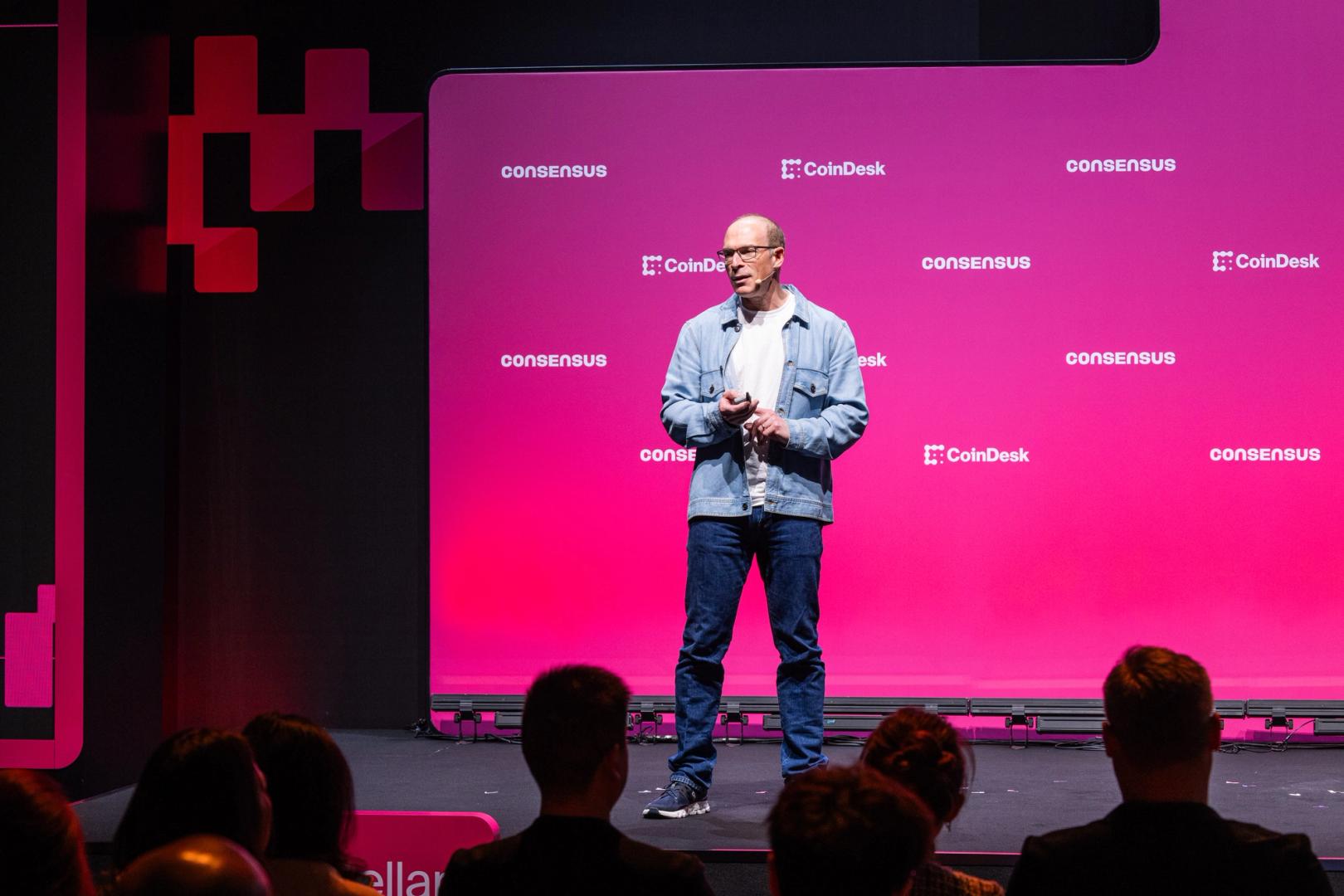
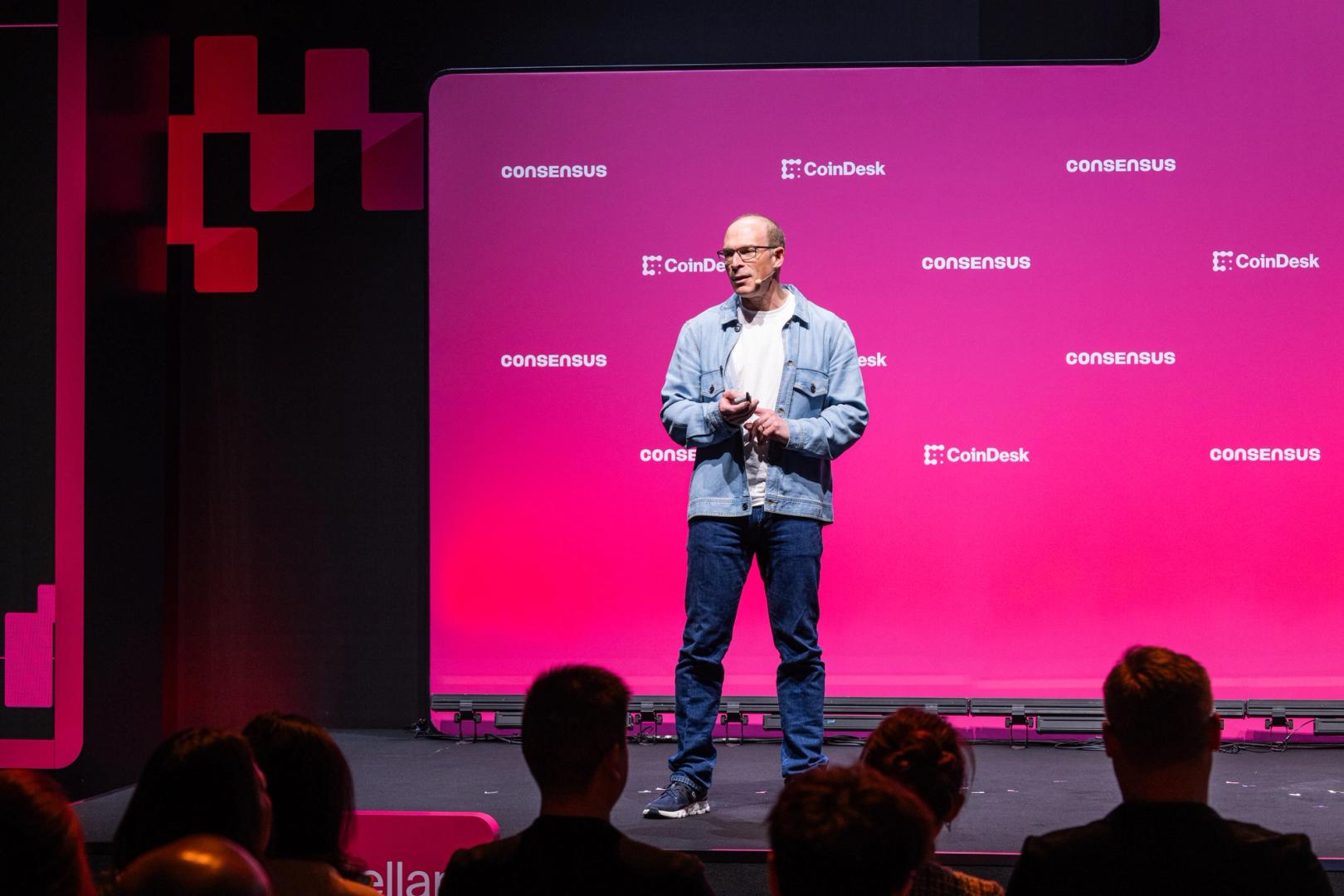
The surge in speculation driving prediction markets and leveraged bets on various sectors isn’t reckless, it’s rational, according to CoinFund managing partner David Pakman.
In a presentation during Consensus Hong Kong, Pakman reframed the behavior as “economic nihilism,” a calculated response by Gen Z to structural barriers in wealth building.
His case started with housing. For Gen X and Boomers, he said, the average home cost about 4.5 times their annual salary. For Gen Z, it’s closer to 7.5 times.
That shift, Pakman argued, effectively shuts younger people out of the housing market, long considered the cornerstone of middle-class wealth. Only 13% of 25-year-olds own their homes, over half of Gen Z investors now own crypto, he said.
With few traditional options, Pakman said younger generations are turning to high-risk bets, including memecoins, perpetual futures, zero-days-to-expiration options and prediction markets, not out of ignorance but as a strategy.
“It’s becoming actually rational to think that if the typical ways that long-term wealth creation is closed off to you, a small chance at a large return beats near certainty of slow decline,” he said.
He pointed to crypto perpetual contracts. These products, futures contracts that don’t expire, saw $100 trillion in notional volume last year, according to data he shared.
Prediction markets also exploded, from $100 million to $44 billion in just three years. While some pundits use them for political forecasting, Pakman said 80% of the activity is sports betting. Dune data paints a similar picture, with $1.8 billion out of $2 billion in daily prediction-market volumes centered on sports at the beginning of the month.
Pakman urged builders to meet it with better tools.
“It’s up to us in crypto to build products that allow the expression of risk in more transparent ways, that are more fair, have lower fees, and can be more transparent to both disclose risk and payout abilities,” he said.

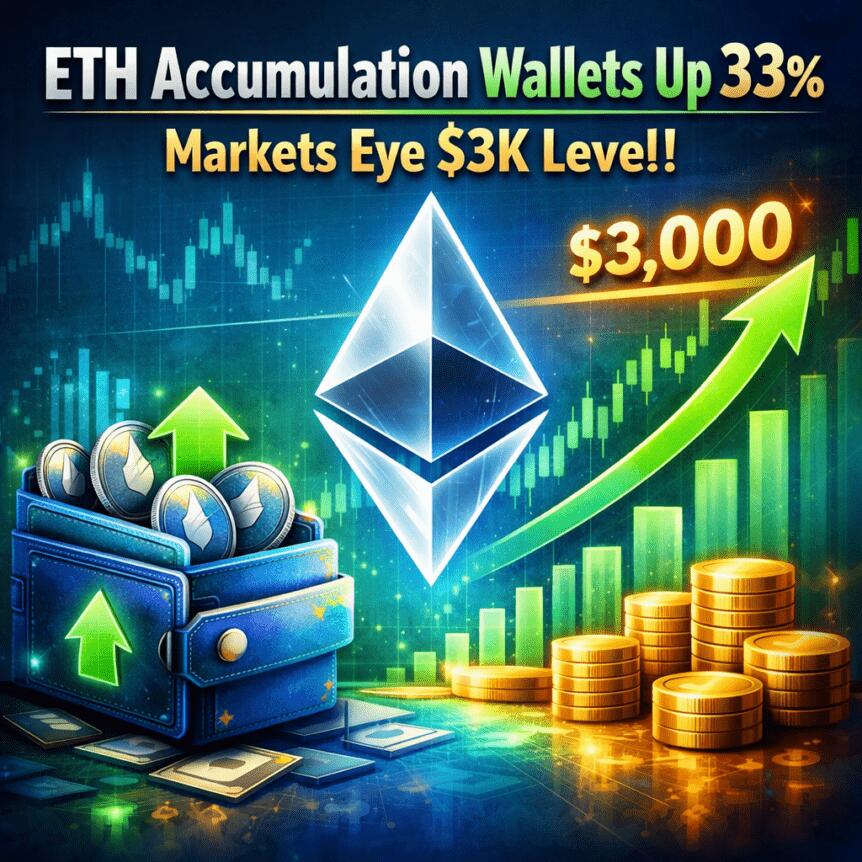
Ethereum’s ether (ETH) continued its ascent, trading near $2,400 after a rally that lifted the token about 38% from a swing low around $1,750. The move appears to be accompanied by a notable shift in on-chain activity and a growing cohort of long-term holders, prompting questions about whether this is a momentum bounce or the start of a structural shift in ETH demand.
On-chain data underpinning the move show a broad set of signals aligning with a more persistent bullish thesis. Daily active addresses surged 89% to 730,278 on April 5, up from 384,763, indicating heightened user interaction with the network as prices moved higher. In accumulation, inflows have intensified since mid-2025, reaching an all-time high of about 1.14 million ETH in November 2025. In 2026, daily inflows have averaged around 200,000 ETH, with a single-day spike surpassing 358,000 ETH on a recent Thursday. The stock of ETH held by accumulation addresses has grown by 6.5 million ETH to 26.16 million from 19.64 million on Jan. 1, a roughly 33% increase, suggesting rising conviction among long-horizon holders.
In parallel, staking dynamics reinforce the longer-term outlook. Data from Dune Analytics indicate that the total value of ETH staked stands at about 39.2 million ETH, reflecting a sizable base of capital committed to Ethereum’s proof-of-stake roadmap. At the same time, the supply of ETH on centralized exchanges has declined to multi-year lows, tightening liquidity on order books and potentially amplifying upside momentum if demand persists.
Key chart patterns point to higher targets
From a technical standpoint, ETH has formed a cup-and-handle pattern that could resume a bullish trajectory. A 12-hour close above the cup’s neckline near $2,400 would keep the uptrend intact, with the measured target defined by adding the cup’s depth to the breakout point approaching around $2,960 — roughly a 22% gain from current levels. A larger, ongoing cup-and-handle formation suggests a more ambitious target near $3,150, about 30% higher than present prices. The relative strength index has risen to around 68, indicating bulls are back in control without the market yet entering overbought territory.
“If the cup and handle pattern continues, I think we get to the golden zone next.”
Analysts have highlighted that this broader formation could signal a substantial move if it remains intact. The Skayeth, a trader known for chart observations on X, has noted that ETH appears to be setting up for a massive move as the pattern unfolds, adding fuel to the bullish narrative for traders watching the cup-and-handle geometry unfold in real time.
In practical terms, bulls will want to defend the $2,350–$2,400 zone to confirm a sustained breakout. If price action can close decisively above $2,400, the path toward higher targets becomes more credible, with market observers pointing to potential moves toward the $2,800 level and beyond toward roughly $3,050 if momentum remains with buyers.
These on-chain and technical signals align with the broader narrative that on-chain accumulation, rising staking activity, and tightening exchange liquidity could underpin a more durable ETH bid in the weeks ahead. The convergence of these data points—sustained address activity, persistent inflows into accumulation wallets, and a sizable stake base—helps explain why many market participants are framing this rally not merely as a bounce, but as part of a broader re-pricing of ETH’s risk premium and growth trajectory.
Still, the path forward hinges on several open questions. Will ETH maintain the breakout above the critical neckline, and how will macro liquidity and regulatory developments influence demand for staking and on-chain activity? While the current data paint a constructive picture, investors should watch for how the pattern holds in the face of shifting market risk sentiment and evolving market structure in the crypto ecosystem.
According to Cointelegraph, a close above the $2,400 level could bolster the case for ETH advancing to around $2,800 and later toward $3,050 if the momentum persists. As such, eyeing the $2,350–$2,400 region for sustained strength will be a key near-term signal for traders assessing risk and potential upside.
What to watch next is whether ETH can sustain a breakout beyond the neckline amid the interplay of on-chain accumulation, staking flows, and macro liquidity. If price action falters, the same signals that foreshadowed the rally—rising DAA, growing accumulation, and a tightening liquidity profile—will be the first to deteriorate and could limit upside in the near term.
Looking ahead, the crucial question remains: can ETH hold above the immediate support zone and carry the momentum into the next phase of the pattern, or will the market retreat test the strengths of the accumulation and staking thesis that underpins this rally?

TLDR:
- XRP’s SuperTrend flip signals a trend shift, with traders watching the $1.55 resistance level closely.
- Spot XRP ETFs lead in AUM, showing stronger investor demand compared to futures-based products.
- Franklin Templeton offers the lowest ETF fee at 0.19%, increasing competition among issuers.
- The XRP ETF market remains open, with no dominant leader as inflows are spread across providers.
XRP is gaining renewed market attention as technical indicators turn positive and institutional products expand. Recent data shows an improving price structure alongside growing ETF activity, with capital flows and fee competition shaping an early-stage market still searching for clear leadership.
XRP Trend Shift Meets Key Resistance
A recent post by Ali Charts noted a change in XRP’s technical outlook. The SuperTrend indicator flipped bullish on the daily chart for the first time since January 17. This shift follows months of sustained selling pressure.
The signal points to a possible trend reversal, although price confirmation remains essential. According to the same update, the $1.55 level stands as the immediate resistance. XRP has struggled to break above this zone in recent attempts.
A clean daily close above $1.55 could open the path toward a relief rally. The projected upside target sits near $1.90 if momentum continues. At the same time, the SuperTrend now acts as a trailing support level.
Price movement across XRP-linked exchange-traded products supports this trend. Most ETFs recorded gains between 1.3% and 2.6% during the same period. This alignment suggests consistent tracking and reflects broader market direction.
While the bullish signal is clear, the resistance level remains a short-term test. Market participants are watching closely for confirmation before positioning for further upside.
ETF Competition Builds as Fees and Structure Shape Flows
Alongside price action, XRP’s ETF ecosystem is expanding with multiple issuers entering the market. The current landscape shows a close race among providers, especially in assets under management.
Bitwise and Canary Capital lead the segment, each managing close to $287 million. Their near-equal standing shows that investor flows are still divided. No single issuer has taken control of the market.
Franklin Templeton follows with about $233.9 million, while 21Shares holds roughly $157.4 million. These firms remain competitive but trail the leading pair. Differences in timing and distribution may explain the gap.
Futures-based ETFs, including Teucrium and Volatility Shares, hold smaller shares of the market. Their assets stand at $114.6 million and $106.9 million, respectively. These products rely on derivatives rather than direct exposure.
Investor preference appears to favor spot ETFs over futures structures. Spot funds provide direct price exposure, which tends to attract long-term capital. Futures products often face higher operational costs.
Fees also play a central role in shaping demand. Franklin Templeton offers the lowest fee at 0.19%, positioning itself aggressively. Bitwise and 21Shares remain in a competitive range at 0.34% and 0.30%.
In contrast, Canary Capital charges 0.50%, while futures products carry higher costs. Teucrium’s fee reaches 1.89%, making it the most expensive option. These differences can influence long-term investor decisions.
The ETF market remains open, with no dominant leader yet. Capital continues to rotate as investors compare cost structures and exposure types. At the same time, participation from established asset managers signals broader institutional engagement.
XRP now sits at the intersection of technical recovery and expanding financial products. Price levels and ETF flows will likely guide the next phase of market direction.

Supreme Court news broke Friday as sources close to both justices confirmed to CBS News that neither Justice Samuel Alito nor Justice Clarence Thomas plans to retire this year, ending months of speculation that Trump might be able to lock in a fourth Supreme Court appointment before the November midterms.
Summary
- Alito, 76, has already hired all four law clerks for the upcoming annual term and intends to continue serving into at least 2027, sources close to the justice told ABC News, while Thomas, 77, the court’s longest-serving current member, is also expected to remain on the bench.
- The decision removes from the table what would have been a high-profile, high-stakes confirmation battle in an already compressed pre-midterm legislative calendar where Republicans are managing reconciliation, FISA, and multiple other priorities simultaneously.
- Trump told Fox Business this week that he is “prepared” to name two or three replacements if vacancies open, adding: “It could be two, could be three, could be one. I don’t know. I’m prepared to do it.”
Supreme Court news that both Alito and Thomas will remain on the bench removes the single biggest potential variable from the 2026 political calendar. A vacancy would have triggered a confirmation battle before a Senate that is already managing a compressed schedule and a hostile midterm environment. Republican leaders would have had to move through hearings, floor debate, and a party-line vote while simultaneously advancing the Big Beautiful Bill reconciliation package, the CLARITY Act markup, a full FISA reauthorization, and multiple other priorities.
Alito briefly had a health scare in March when he was hospitalized for dehydration after falling ill at a Philadelphia event. That episode renewed speculation he might step down. Sources told ABC News that despite that episode, he has remained active in the court’s work and hired his full complement of clerks for next term.
Trump raised the Ruth Bader Ginsburg comparison explicitly this week in his Fox Business interview, noting that she had declined to retire when she might have been replaced by a like-minded justice and then died while Trump was president, enabling the appointment of a conservative successor. “She really hurt herself within the Democrat Party,” he said.
The political logic is direct: Alito is 76 and Thomas is 77, both within four years of the average retirement age of 80 for justices since 2000. If Republicans lose the Senate in November, the next time they would likely hold both the White House and the Senate could leave both men well into their 80s. Stephen Breyer faced the same argument and ultimately retired in 2022 at 83 under Democratic pressure.
What Staying Put Means for the Court’s Balance
The 6-3 conservative supermajority remains intact regardless of what either justice decides. No replacement appointment changes the court’s ideological composition. What a vacancy would have done is extend Trump’s personal imprint on the court from three appointments to four or five, locking in that influence for potentially another generation.
The absence of a vacancy also matters for the Senate majority’s focus. Every week consumed by a confirmation battle is a week not available for the CLARITY Act markup, stablecoin legislation, or any other major crypto policy milestone that depends on Senate floor time. The compressed legislative gridlock that has already stalled crypto reform repeatedly would have become significantly worse under the weight of a Supreme Court confirmation.
Circle launched CPN Managed Payments on April 8, a fully managed stablecoin settlement solution that makes the Circle Payments Network accessible to banks, payment service providers, and fintechs without requiring them to manage digital assets, custody infrastructure, or blockchain operations directly.
Summary
- Partners interact entirely in fiat while Circle manages the complete digital asset lifecycle including USDC minting and burning, payment orchestration, compliance controls, and blockchain infrastructure, reducing the adoption barrier for institutions that lack crypto licenses or technical capacity.
- USDC has supported more than $70 trillion in total on-chain settlement since inception, with on-chain transaction volume approaching $12 trillion in the final quarter of 2025 alone, giving the network a scale foundation that new entrants join rather than build.
- Launch partners exploring the settlement use cases include global payment companies Veem, Thunes, and Worldline, with Circle managing the technical and regulatory complexity that has blocked most banks from accessing stablecoin rails directly.
Circle Payments Network’s new CPN Managed Payments offering solves the adoption problem that has kept most financial institutions on the sidelines of stablecoin settlement. Banks want faster, cheaper cross-border payments. They do not want to apply for crypto licenses, build custody systems, manage USDC wallets, or navigate compliance frameworks they do not yet have. CPN Managed Payments takes all of that off their plate.
“With CPN Managed Payments, we’re simplifying how institutions adopt and scale stablecoin payments,” said Nikhil Chandhok, Circle’s chief product and technology officer. “By combining issuance, liquidity, compliance, and programmable infrastructure into a unified solution, we are enabling financial institutions to embed stablecoin settlement into their existing payment stacks with enterprise-grade reliability and operational readiness.”
A payment service provider or fintech connects to the Circle Payments Network through a single integration. From that point, it sends and receives in fiat. Circle converts on the backend: minting USDC on the sending side, routing it across the blockchain, and burning it on the receiving side, with the beneficiary institution receiving local currency. The entire digital asset lifecycle, including compliance checks, chain routing, and liquidity management, runs inside Circle’s infrastructure.
The platform is composable by design. Institutions can begin with the fully managed model and gradually take on more direct ownership of USDC wallets and settlement infrastructure as their internal capabilities develop. The product is licensed through Circle Internet Financial, LLC, a registered Money Transmitter and BitLicense holder in New York. Circle holds money transmission licenses in 46 US states along with electronic money institution authorizations in Europe and Singapore.
Why the Timing Matters
The launch landed alongside White House and congressional activity on stablecoin regulation. The GENIUS Act and ongoing CLARITY Act discussions have both addressed how stablecoin yield and reserve backing should be structured, with CPN’s launch providing regulators with a functioning institutional settlement product as a reference point for what compliant stablecoin infrastructure actually looks like in practice.
Circle has positioned USDC explicitly as a compliance-first stablecoin, distinguishing it from offshore issuers like Tether. That positioning is central to its institutional pitch: banks and payment companies operating inside regulatory frameworks need a counterparty that shares the same operating environment. Thunes deputy CEO Chloé Mayenobe said the partnership allows the company to “seamlessly bridge traditional banks, mobile wallets, and digital assets,” creating what she described as “interoperability at scale.”
What It Means for the US Stablecoin Market
CPN Managed Payments arriving alongside Payward’s move to lock up US crypto USDC settlement infrastructure signals a structural consolidation of institutional-grade crypto payment and settlement rails in the United States under regulatory-compliant entities ahead of the legislative frameworks that will define the sector. The combination of Circle’s payment network, Payward’s derivatives clearing stack, and the CFTC’s expanding mandate creates the regulated infrastructure layer the US institutional market has been building toward since the first spot Bitcoin ETFs launched in 2024.
Key Highlights
- X rolled out Cashtags this Tuesday, enabling iPhone users across the US and Canada to access real-time stock and cryptocurrency information directly within the app
- Within 48 hours of going live, the tool reportedly generated approximately $1 billion in trading activity
- Wealthsimple, a Canadian investment platform, remains the sole integrated trading partner — no American brokerages have joined yet
- X has clarified it won’t facilitate actual trades; its role is limited to providing financial information and platform connections
- X Money, a peer-to-peer transaction platform featuring debit cards and interest-earning accounts, is currently under development
The social media platform X has witnessed approximately $1 billion in trading activity stemming from its recently introduced Cashtags functionality, according to a statement from Nikita Bier, the company’s product chief.
Bier shared this milestone on Friday through a post revealing aggregated metrics from X’s trading pilot program. The capability went live late Tuesday evening.
The Cashtags tool enables users to interact with stock or cryptocurrency symbols embedded in posts, providing immediate access to live pricing graphs and relevant discussion threads. Access is presently restricted to [[LINK_START_0]]iPhone[[LINK_END_0]] users located in the United States and Canada.
The rollout occurred just 24 hours following Bier’s post on X suggesting that cryptocurrency had experienced “a rough year” while teasing an upcoming solution.
X has made clear that it won’t function as a brokerage firm or handle trade execution. The platform’s strategy focuses on delivering financial information resources and establishing connections to external trading services.
“X has always been the best source of financial news for traders and investors,” Bier said. “Billions of dollars are allocated every day based on what people read on Timeline.”
Wealthsimple, the Canadian investment platform, stands as the inaugural and currently exclusive trading service with Cashtags integration. Canadian users can tap a Cashtag symbol and seamlessly transition to Wealthsimple’s mobile trading application.
As of now, no American brokerage firms have established partnerships with X.
Bier serves as an advisor to Solana Labs and became part of the X team in June 2024.
X Money Platform in Development Pipeline
X is simultaneously building X Money, a digital payment solution designed for peer-to-peer transactions. The planned features include a rewards-based debit card, interest-generating account options, and direct user-to-user money transfers.
An external testing phase for X Money commenced in early March, demonstrating a transaction between Elon Musk and entertainment icon William Shatner.
X has obtained money transmission authorizations in over 40 American states and maintains registration with the Financial Crimes Enforcement Network.
Whether cryptocurrency transactions will be incorporated into X Money remains undetermined. Financial analysts from Mizuho indicated this week that implementing crypto payment capabilities might encounter regulatory obstacles.
Building Toward the Everything App
The Cashtags capability represents a component of Musk’s broader ambition to transform X into a comprehensive “everything app,” integrating payment processing, online commerce, and financial information services.
With a user base exceeding 550 million monthly active participants, X possesses significant reach to challenge established financial data companies.
Cashtags functionality enables users to associate particular assets or smart contract identifiers with their posts. Selecting these tags reveals current market prices and aggregated discussions from throughout the platform.
Musk announced in March that X Money would become accessible to early public participants in April 2026.
Mizuho’s financial analysts highlighted possible regulatory challenges regarding cryptocurrency payment integration on the platform earlier this week.
Key Highlights
- Payward, Kraken’s parent entity, has entered an agreement to purchase Bitnomial for as much as $550 million through a combination of cash and equity
- Payward’s valuation stands at $20 billion following this transaction
- Bitnomial holds the distinction of being the first cryptocurrency-focused company to possess the complete trio of CFTC licenses required for operating a comprehensive U.S. derivatives operation
- American customers will gain access to spot margin trading, perpetual futures contracts, and options products under CFTC regulatory supervision
- Transaction completion is anticipated during the initial six months of 2026
Payward, the entity behind cryptocurrency exchange Kraken, has struck a deal to purchase Bitnomial, an American crypto derivatives trading platform, in a transaction worth up to $550 million. The acquisition involves both cash and stock components and establishes Payward’s valuation at $20 billion.
Bitnomial has been operating for more than ten years. The platform achieved a historic milestone by becoming the first cryptocurrency-focused enterprise to obtain the complete set of three Commodity Futures Trading Commission licenses essential for conducting a comprehensive derivatives operation in the United States — specifically, an exchange designation, clearinghouse registration, and broker-dealer authorization.
Developing these three critical licenses independently would have required Payward to invest many years of effort and resources. This strategic acquisition essentially accelerates that timeline dramatically.
Arjun Sethi, Co-CEO of Payward, stated: “This isn’t simply a company acquisition. We’re integrating the foundational infrastructure that enables the future of derivatives trading in America.”
Dave Ripley, CEO, shared via X: “This strategic combination broadens our operational capabilities to include the complete suite of CFTC regulatory licenses, enabling significant product diversification for U.S. markets across both conventional and digital asset finance.”
Upcoming Product Offerings
Kraken revealed on X that spot margin capabilities, perpetual futures instruments, and options contracts will become available on its platform under CFTC regulatory oversight. American clients will have direct access to these trading products.
The acquisition simultaneously strengthens Payward Services, the organization’s enterprise-focused division. Financial institutions, fintech companies, and brokerage firms will gain the ability to tap into regulated American derivatives markets through a unified application programming interface.
Bitnomial’s technological framework will merge with Payward’s worldwide reach and market liquidity across its portfolio of brands, encompassing both Kraken and NinjaTrader.
Payward’s Track Record of Strategic Acquisitions
This transaction represents another significant move in Payward’s expansion strategy. Earlier in 2025, the company completed a $1.5 billion acquisition of NinjaTrader, an American retail futures trading platform. Industry observers characterized that deal as the most substantial transaction bridging traditional finance and cryptocurrency sectors to date.
Prior to that landmark deal, Kraken purchased BCM during 2023 and subsequently acquired Small Exchange to strengthen its derivatives trading capabilities.
Payward’s acquisition history also includes purchasing a British cryptocurrency futures platform in 2019 and introducing a European Union derivatives product suite in 2025.
The Bitnomial acquisition continues this established approach — leveraging strategic purchases to secure regulatory approvals and operational infrastructure instead of developing these capabilities organically.
Public Offering Timeline Postponed
Kraken had been advancing preparations for a stock market debut. Payward filed a preliminary S-1 registration document with the Securities and Exchange Commission on November 19 of last year.
Nevertheless, the organization has temporarily suspended these public offering preparations citing challenging capital market conditions. Industry sources indicate the company remains receptive to pursuing a public listing when market dynamics become more favorable.
The Bitnomial acquisition encompasses complete ownership of Bitnomial’s equity and is projected to finalize during the first two quarters of 2026, subject to obtaining necessary regulatory clearances.
Key Highlights
- Wrapped XRP (wXRP) debuts on Solana blockchain through Hex Trust and LayerZero partnership
- Token now accessible on major platforms including Phantom, Jupiter, Titan Exchange, Meteora, and Byreal
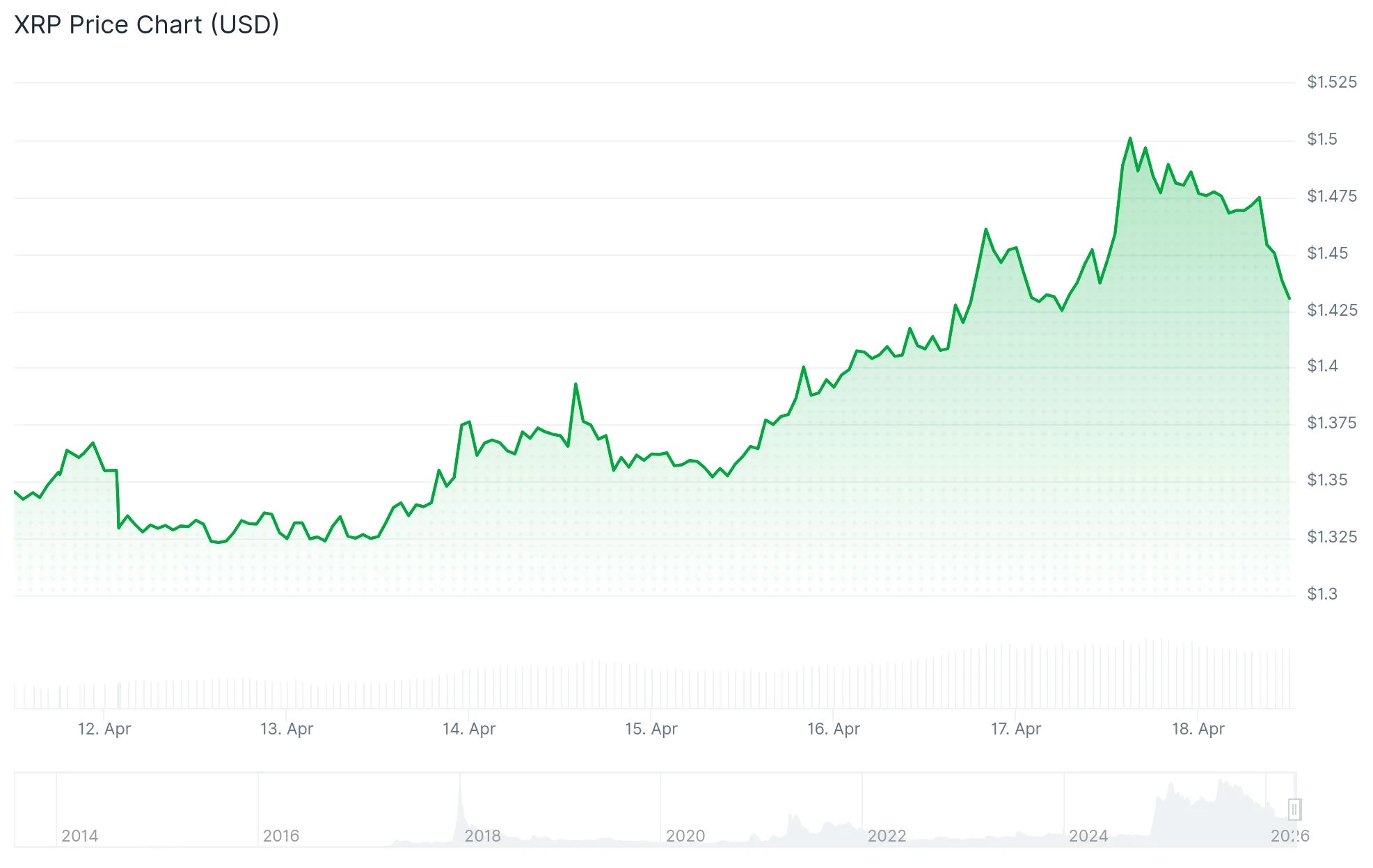
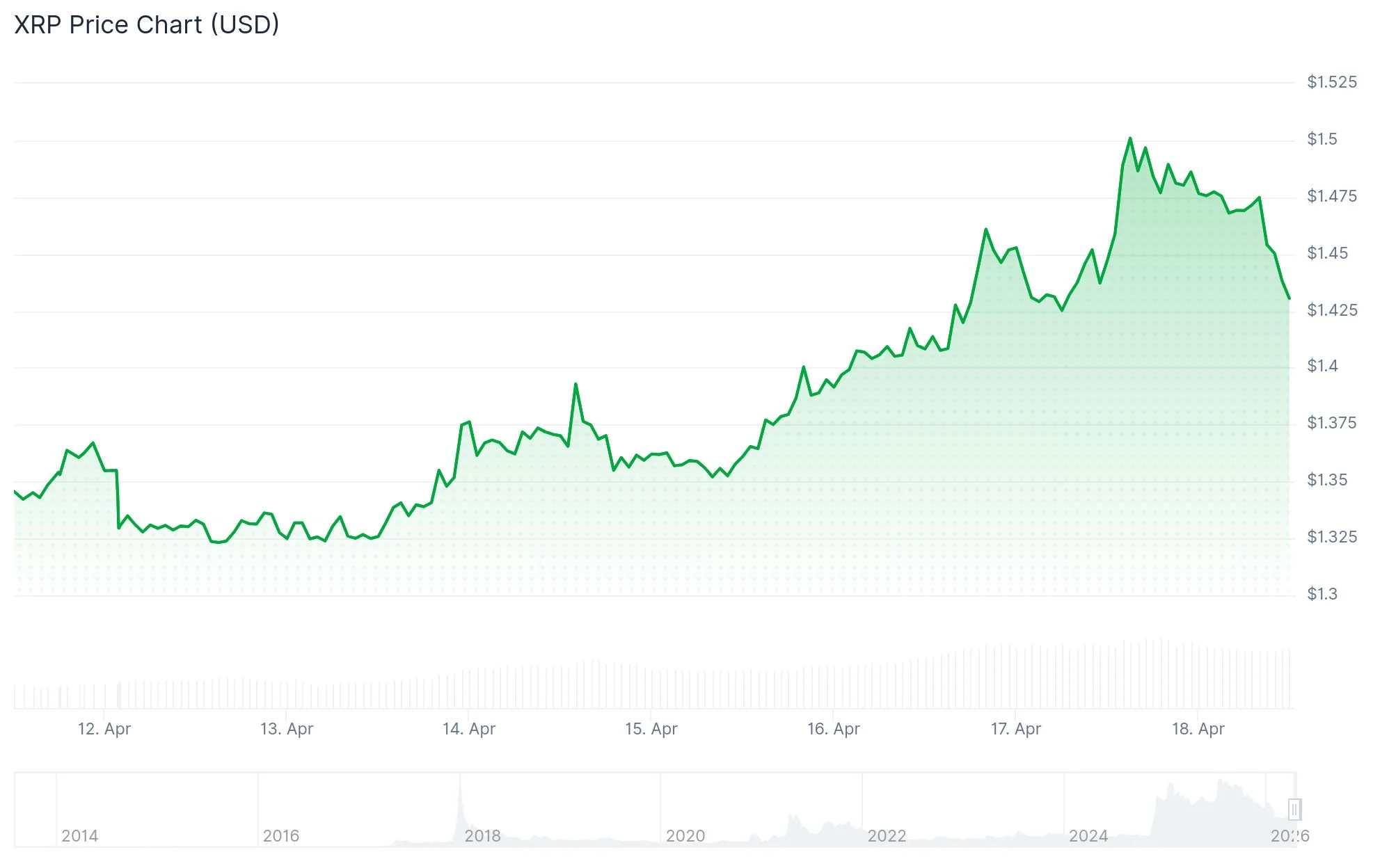
- XRP value surged 5.15% reaching $1.50 following the announcement before stabilizing at $1.48
- RippleX validates the deployment, highlighting increased cross-chain appetite for XRP
- Each wXRP token maintains 1:1 backing with native XRP secured in regulated custodial accounts
Ripple’s native digital asset has officially expanded its reach to the Solana ecosystem via a newly introduced wrapped variant known as wXRP. Solana announced the integration on Friday, April 17, 2026.
The Solana network shared on X: “BREAKING: XRP is live on Solana.” Accompanying the announcement was a brief promotional video showcasing the logos of Ripple, Solana, Hex Trust, and LayerZero — the four principal entities collaborating on this deployment.
This development enables wXRP accessibility across multiple Solana-native applications. Holders can now acquire, trade, and store wXRP through Phantom Wallet, Jupiter Exchange, Titan Exchange, Meteora, and Byreal platforms.
wXRP functions as a fully-backed derivative of XRP. Every wrapped token represents one genuine XRP maintained in isolated custody infrastructure operated by Hex Trust. Token minting and burning occur exclusively when corresponding XRP deposits or withdrawals are processed.
Technical Infrastructure Behind the Integration
The cross-chain deployment relies on infrastructure provided by Hex Trust and LayerZero. LayerZero facilitates the interoperability protocol connecting different blockchain networks, whereas Hex Trust oversees compliant custody solutions for the underlying XRP reserves.
This framework enables XRP investors to engage with Solana’s decentralized finance landscape without liquidating their holdings. Participants maintain their XRP market exposure while gaining access to Solana’s trading platforms, liquidity pools, and yield generation mechanisms.
Hex Trust initially revealed its wXRP issuance roadmap in December 2025. The announcement outlined plans to deploy wXRP across Solana, Ethereum, Optimism, and HyperEVM networks.
RippleX SVP Markus Infanger commented in December: “There’s growing demand to use XRP across the wider crypto ecosystem and institutions, and so we are excited to see Hex Trust address this demand.”
Market Response to wXRP Launch
XRP experienced an immediate 5.15% spike to $1.50 upon the announcement. At press time, the asset had stabilized at $1.48, maintaining a 4.12% daily gain.
Solana’s native SOL token similarly benefited, recording a 4% intraday increase to $89.86.
With a market capitalization exceeding $90 billion, XRP continues expanding its footprint. RippleX highlighted on X that “growing demand for $XRP is driving liquidity cross-chain.”
The cryptocurrency sector experienced broader recovery on Friday amid decreasing geopolitical concerns. News surfaced indicating Iran’s agreement to halt nuclear activities and reopen the Strait of Hormuz shipping route.
XRP maintained a trading price of $1.48 on Friday, April 17, 2026, in the aftermath of the wXRP Solana integration.
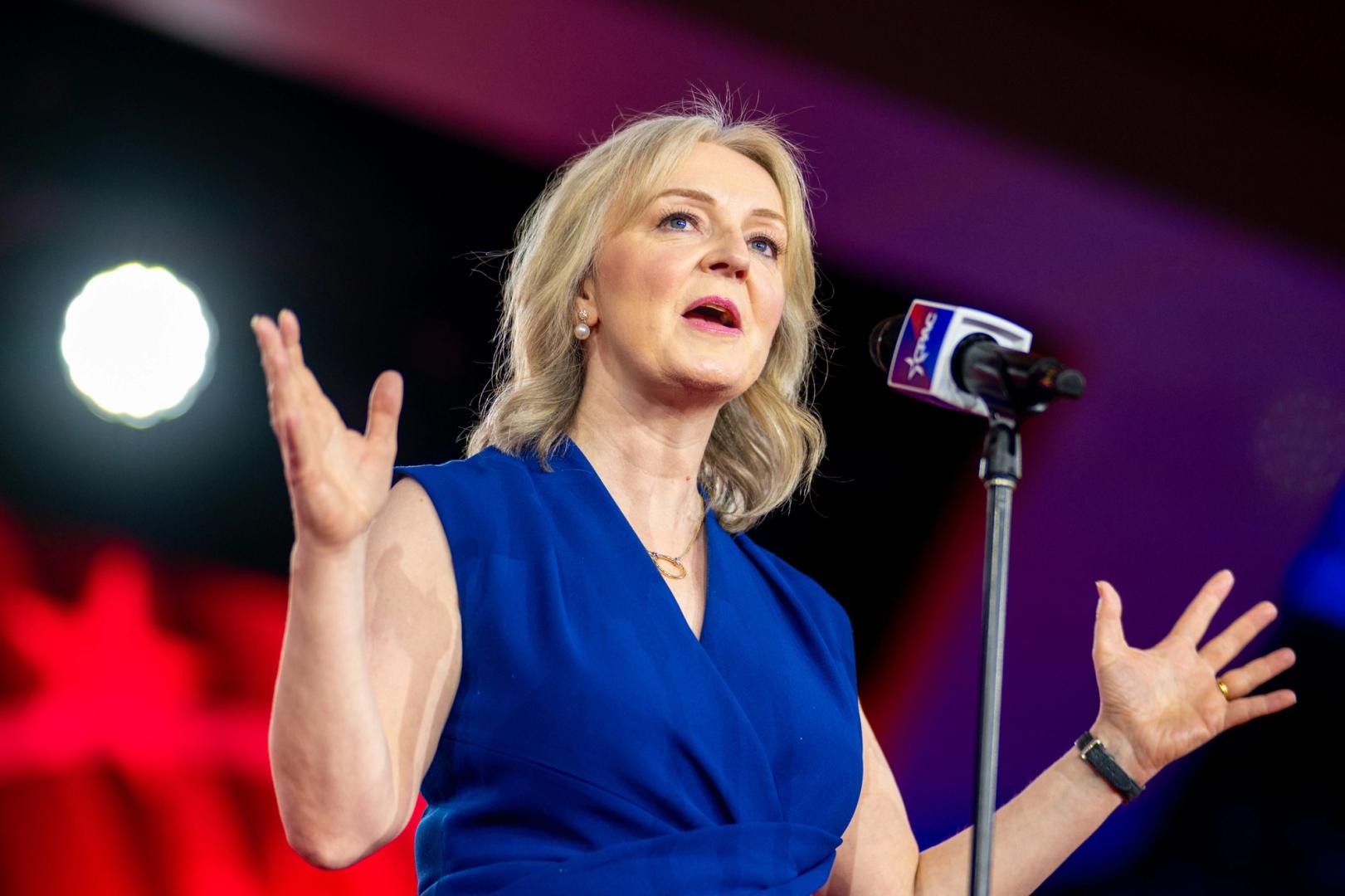
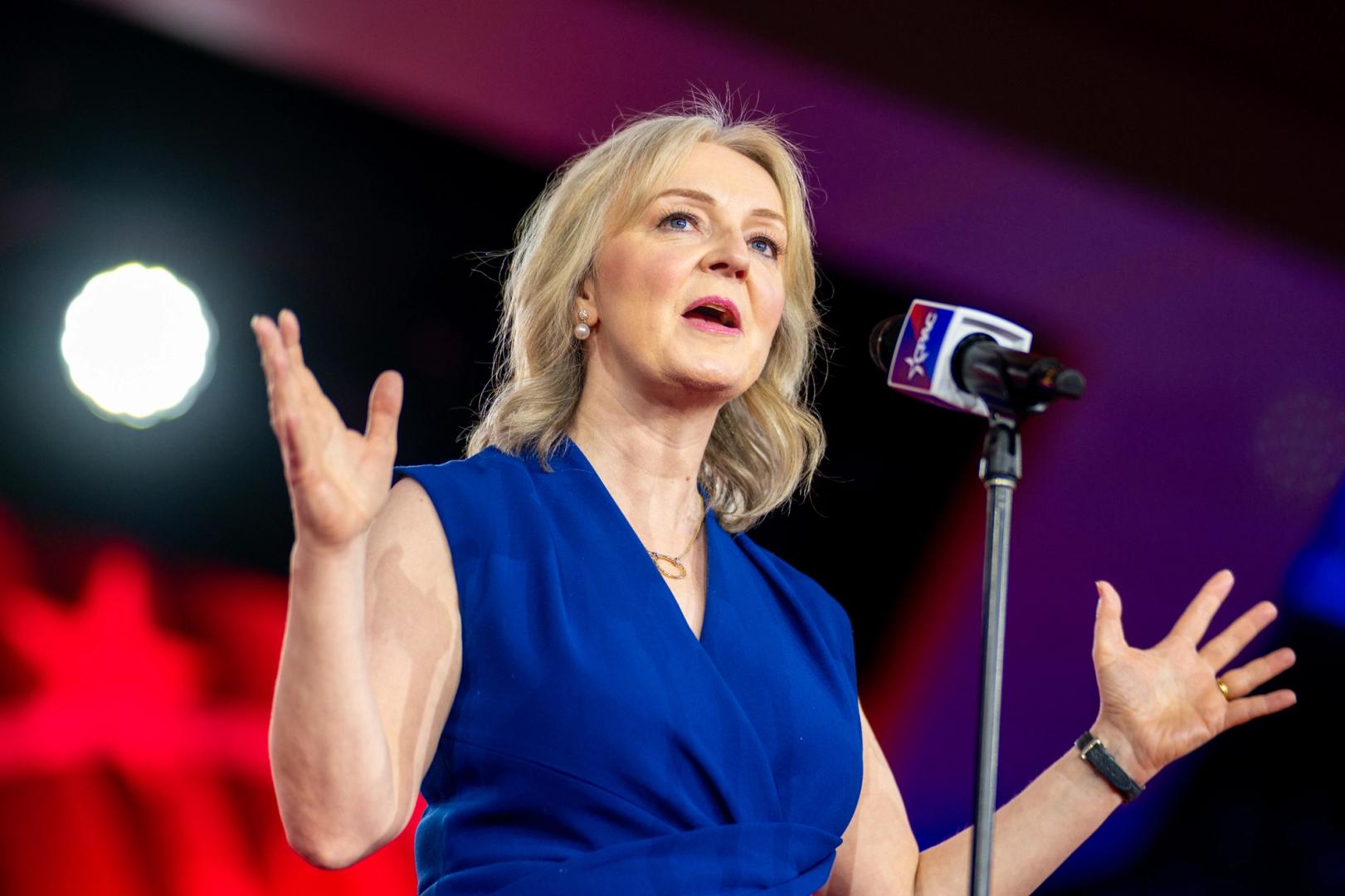
Liz Truss, the U.K.’s shortest-serving prime minister, said the country’s economy has been stagnating for decades and many of the problems result from a lack of sound money and the debasement of the currency, an erosion in the value of sterling caused by inflation and the printing of new banknotes.
Truss, who led a Conservative government for 45 days in 2022, said the financial situation strengthened her interest in bitcoin , which some observers see as a tool against debasement. She said she’s “very interested” in the cryptocurrency, which she first encountered when working at the Treasury and mentioned it there “to shake things up.” Truss was Chief Secretary to the Treasury for about two years until July 2019.
“A lot of the problems we have are due to debasement of our currency and lack of sound money,” Truss said in an interview with CoinDesk. The absence of serious debate around money in academia and government had become “quite sinister,” and discussions about monetary policy had become “a taboo” within government, despite its central role in driving economic outcomes.
For Truss, bitcoin sits alongside a wider concern about centralization and control. She warned the current system is geared toward increasing “centralized control” and limiting financial independence, particularly through regulation and taxation, and positioned bitcoin as part of a pushback against that trend.
The economy is on a “very negative trajectory,” she said, warning the country faces long-term decline driven by weak growth, rising state control and what she sees as a failure of monetary policy.
“We are getting relatively poorer, very quickly,” she said, pointing to high taxes, regulation and energy costs that make “the risk often not worth the reward” for entrepreneurs. “There’s a massive disincentive to work in this country.”
Reflecting on the fallout from Chancellor Kwasi Kwarteng‘s 2022 mini-budget that characterized her premiership, she maintained the resulting market turmoil exposed hidden fragilities rather than caused them. “There was a tinderbox in the system that people didn’t know about,” she said, pointing to leveraged pension strategies.
CPAC UK
Now outside government, Truss is focused on building a political movement, including CPAC UK, a three-day conference aimed at bringing together activists, entrepreneurs and voices from across the “sovereignty and liberty” movement. “We need a movement of people who understand what the problem is,” she said.
Framing the stakes bluntly, she added: “There are two choices, either we’re finished or we change it.”
AI hallucinations news moved from courtroom embarrassment to career consequence as the Nebraska Supreme Court ruled to suspend Omaha attorney Greg Lake until further notice, after a court brief he submitted in a divorce appeal contained 57 defective citations out of 63, including 20 fully fabricated case references and four completely invented cases that do not exist in any jurisdiction.
Summary
- Lake initially told justices he had uploaded the wrong version of the brief while traveling on his wedding anniversary with a broken computer, but later admitted to using AI, which the Nebraska Counsel for Discipline found constituted a failure of candor toward the court.
- The case originated from a 2025 divorce trial disputing the timing of asset division and child custody, with Lake filing the appeal brief on behalf of the husband, the brief then riddled with fictitious details from real Nebraska cases and wholly invented authorities.
- The Nebraska Supreme Court’s opinion noted that the mistakes “could have been easily discovered using traditional legal research services” and described the case as presenting “a novel issue for Nebraska courts,” serving as a public warning to all attorneys in the state.
AI hallucinations news has produced its most severe professional sanction in the United States to date as the Nebraska Supreme Court handed down an indefinite suspension of attorney Greg Lake on April 15, after months of proceedings that began when justices at oral argument in February noticed the brief contained errors they could not reconcile with any published Nebraska case law.
The brief had been filed in a divorce appeal disputing the effective date for dividing marital assets and child custody. Of 63 citations Lake made, 57 contained some form of defect. Twenty were what courts now call hallucinations: realistic-seeming but entirely fabricated references generated by an AI model that guessed plausibly at what the user was asking for and produced convincing-looking but nonexistent citations.
When a justice asked Lake during the February hearing how the errors had occurred, he said he had been on his 10th wedding anniversary, his computer had broken while traveling, and he had uploaded the wrong version of the brief. The justices found the explanation unconvincing. The Counsel for Discipline investigated and found a different account: that Lake had used AI to draft the brief and then denied it to the court, which constituted a violation of professional conduct rules requiring candor toward the tribunal.
The Nebraska Supreme Court’s unanimous opinion rejecting the brief and referring Lake for discipline in March stated plainly: “AI, like other technological tools, can be a benefit to the legal community, but it must be used with caution and humility.” The court called the errors easily preventable with basic verification through standard legal research platforms and found that Lake had shown a failure of his duty of candor.
The Broader Sanctions Landscape
Nebraska is not an isolated case. Researcher Damien Charlotin at HEC Paris, who maintains a database of AI hallucination cases in legal proceedings, now tracks more than 1,200 such cases globally, with approximately 800 from US courts. He has described the pace as reaching “ten cases from ten different courts on a single day.”
Oregon holds the largest aggregate sanction tied to a single attorney for AI-related filing errors, at $109,700. The Sixth Circuit imposed a $30,000 fine on two Tennessee attorneys, the largest federal appellate sanction yet linked to fabricated citations. Nebraska’s indefinite suspension, if upheld on any appeal, would be the first bar discipline action to suspend practice entirely over AI-related filing errors in the US, escalating the consequences from financial penalties to career suspension.
Why This Matters for the AI Sector
Each high-profile legal sanction tied to AI models sends a regulatory signal that calibrates how AI tools are permitted to be used in professional settings. For AI risks assessments across the investment and technology landscape, the legal profession’s response to hallucinations is the canary in the coalmine: it defines what “responsible deployment” means in the first high-stakes regulated environment to produce consequences. The AI tokens and AI infrastructure markets will face analogous regulatory frameworks as the same logic extends to financial advice, medical decisions, and government applications of the same underlying models.


One of the biggest short squeezes of 2026 came and went in a single session.
Bitcoin climbed to $78,000 late Friday, triggering $762 million in liquidations across 168,336 traders with $593 million of that on the short side, per CoinGlass.
By Saturday evening hours in Asia, bitcoin had pulled back to $76,091, up just 0.8% on the day, as Iran broadcast that the Strait of Hormuz was closed to maritime traffic again less than 24 hours after its foreign minister declared it fully open.
Two tanker owners told Bloomberg their vessels received Iranian radio transmissions shutting the waterway, with one supertanker reporting gunfire and aborting transit.
State news agency Nour said Hormuz had returned to “strict management and control by the armed forces” in response to a U.S. blockade of Iranian shipping. Several oil tankers that had raced toward the strait Friday on the initial reopening news turned back.
Friday’s breakout rally ended up in a $590 million shorts rout, with bets on bitcoin accounting for $381 million in liquidations, the largest share, followed by ether shorts at $167. Shorts outweighed longs by nearly four to one, the cleanest short-heavy breakdown in a liquidation event since February.
The setup had been building for weeks. Funding rates on bitcoin perpetuals were pinned negative, meaning shorts were paying longs a premium to hold their positions.
Friday’s Hormuz reopening was the catalyst that flipped it. Crude oil dropped nearly 10% to $85.90 per barrel on the initial headline, and bitcoin broke above the $76,000-$78,000 zone that has capped every rally attempt since the February 5 crash.
President Donald Trump then told reporters Friday night that Iran had agreed to an “unlimited” suspension of its nuclear program, though Tehran never confirmed the claim.
None of that survived into Saturday intact.
The market pattern is now familiar, where ceasefire headlines drives a rally but a reversal headline arrives before the breakout can consolidate. The forced unwind gets another setup to work against.
Ether held up better than bitcoin on the retreat, down just 0.2% over 24 hours while solana dropped 1.3% and dogecoin fell 2.1%. On a weekly basis, ether is still up 5.2%, XRP leads at 6.4%, BNB added 4.6%, and bitcoin sits at 4.5%.
Whether the $76,000 zone holds into Monday’s open is now the question. A clean weekly close above $76K would preserve the structural break even if the peace trade keeps whipsawing.
A loss of the level and bitcoin is back in the same range it has been trapped in since March, only this time with the short base that just got wiped looking to rebuild.
Counter-terror police launch investigation following another arson attack in London

Fall in provisions help ICICI Bank’s net profit in Q4 FY26

ETH accumulation wallets up 33%, markets eye $3K level


-
 NewsBeat6 days ago
Pep Guardiola and Gary Neville agree over Arsenal title problem that benefits Man City
-

 Crypto World5 days ago
The SEC Conditionalises DeFi Platforms to Be Avoided for Broker Registration
-

 Politics6 days ago
World Cup exit makes Italy enter crisis mode
-

 Crypto World5 days ago
SEC Signals Exemption for Crypto Interfaces From Broker Registration
-

 Fashion19 hours ago
Weekend Open Thread: Theodora Dress
-

 News Videos3 days ago
Secure crypto trading starts with an FIU-registered
-

 Sports1 day ago
NWFL Suspends Two Players Over Post-Match Clash in Ado-Ekiti
-

 Crypto World4 days ago
SEC Proposes Certain Crypto Interfaces Don’t Need to Register as Brokers
-

 Business7 days ago
Ireland Fuel Protests Enter Day 5 as Blockades Spark Shortages and Government Prepares Support Package
-

 NewsBeat4 days ago
Trump and Pope Leo: Behind their disagreement over Iran war
-

 Politics16 hours ago
Palestine barred from entering Canada for FIFA Congress
-
 NewsBeat6 days ago
JD Vance announces ‘no agreement’ with Iran over nuclear weapons fear
-

 Crypto World14 hours ago
Russia Pushes Bill to Criminalize Unregistered Crypto Services
-
Sports6 days ago
Dexter Lawrence, Stefon Diggs, Trading for De’Von Achane
-

 Crypto World5 days ago
Trump whales load up ahead of Mar-a-Lago luncheon.
-
Crypto World6 days ago
Sei Network Enters Quiet Reset Phase as On-Chain Metrics Signal a Slowdown in 2026
-
 Business2 days ago
Creo Medical agree sale of its manufacturing operation
-

 Sports5 days ago
NWFL opens Pathway for new Clubs ahead of 2026 Season
-
Business5 days ago
Kering slides after Morgan Stanley downgrade, Gucci woes loom
-
 Entertainment4 days ago
Karol G’s ‘Ultra Raunchy’ Coachella Set Gave ‘Satanic Vibes’
You must be logged in to post a comment Login