
Crypto World
Google Gemini AI Predicts +300% Move for Chainlink (LINK) by 2027

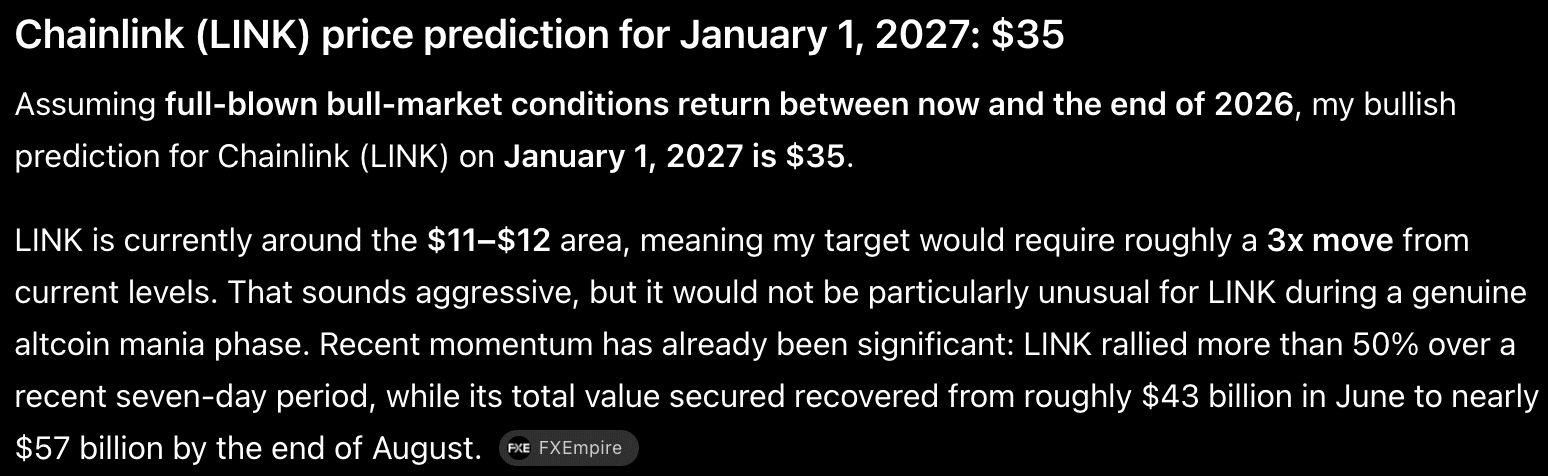
Assuming full-blown bull-market conditions return between now and the end of 2026, Google Gemini AI predicts that Chainlink (LINK) could be trading as high as $35 on January 1, 2027, if full-blown bull-market conditions return.
LINK is currently around $11–$12, so my target would require roughly a 3x move from current levels. That sounds aggressive, but it wouldn’t be unusual for LINK during a genuine altcoin mania phase.
Recent momentum has already been significant: LINK rallied more than 50% over a recent seven-day period, while its total value secured recovered from roughly $43Bn in June to nearly $57Bn by the end of August.
(SOURCE: Google Gemini AI Predicts LINK Price)
Google Gemini AI Predicts That Chainlink (LINK) Can Hit $35 buy January 1, 2027
The fundamental argument for LINK is perhaps stronger than in previous market cycles. Chainlink is increasingly positioned as essential infrastructure for tokenized assets, cross-chain transactions, and institutional blockchain applications, rather than merely being another DeFi token.
Chainlink’s Cross-Chain Interoperability Protocol (CCIP) continues to gain integrations, and its oracle infrastructure is increasingly utilized across various financial and blockchain applications. Recent developments include partnerships with Coinbase/Base, Aave, Robinhood Chain, and other institutional financial services.
There is also evident institutional demand. LINK spot ETF products have seen sustained positive inflows, with cumulative inflows reported to exceed $145 million by late August.
The key distinction in a full bull market is that valuations can significantly detach from current fundamentals. If Bitcoin reaches new highs, Ethereum enters a strong expansion phase, and capital shifts toward infrastructure and utility tokens, LINK could attract institutional and retail investment at the same time.
At $35, LINK would have a market capitalization of about $25 to $30Bn, depending on the circulating supply at that time. This figure is substantial but entirely plausible for one of the most established crypto infrastructure projects if the entire sector enters a speculative expansion.
Make Your Prediction Count With $25 For Free on Kalshi
The Technical Analysis Supporting the $30+ LINK Prediction
$LINK has a bullish fractal setting up. — Trader Symba (@Nebulabsxyz) September 11, 2026
Reclaim the level, consolidate above it, then expand. That’s basically what happened last time and what's possibly about to happen this time.
It's pointing towards $17-$18 this time  pic.twitter.com/kGgbjXxyIt
LINK’s technical picture is particularly interesting. It recently broke above a multi-month descending trendline and rebounded from the $7–$8 range, establishing the $10–$11 zone as key support.
Short-term technical analysis highlights $10.79–$11 as key support, while $12.50–$13 is the immediate breakout zone. If LINK sustains a move above $12.50, it could pave the way for targets at $15 and potentially $18.
On the longer-term weekly chart, $15 is a key level to watch. One recent analysis suggests that after a confirmed weekly breakout above $15, the next upside targets could be $20.76, $27.88, and $30.86, with about $38 representing the next major resistance level.
In a full bull market, a progression from $15 to $20-$28 and then to $30+ is technically plausible, with $35 becoming achievable once LINK establishes a new all-time high.
Supercharge Your Trading in 2026 With BloFin AI Trading Bots
As LINK Trades in a Tight Range, Traders Eye Early-Stage Plays Like LiquidChain
For traders holding major assets that have already accounted for most near-term catalysts, the current market flatness can create its own pull. Typically, capital gravitates toward asymmetric opportunities when blue-chip stocks stall.
LiquidChain (LIQUID) is positioning itself as a Layer 3 infrastructure solution that integrates the liquidity of Bitcoin, Ethereum, and Solana into a single execution environment.
Its “deploy-once” architecture lets developers build once and access all three ecosystems, preventing liquidity from fragmenting across chains. The presale token is currently priced at $0.014954, with $965,000 raised so far.
LiquidChain’s core features include a Unified Liquidity Layer, Single-Step Execution, and Verifiable Settlement. As always, do your own research (DYOR). For more information, visit the presale website.
Gain Special Access to Layer 3 Trading Here Earn $50 and Enter $300K Prize Draw on EdgeX
The post Google Gemini AI Predicts +300% Move for Chainlink (LINK) by 2027 appeared first on Cryptonews.

Crypto World
Warsh’s credibility is on the line this week as Trump policies put pressure on Fed to hike

President Donald Trump speaks with the new chairman of the Federal Reserve, Kevin Warsh, after a swearing-in ceremony in the East Room of the White House, in Washington, May 22, 2026.
Anna Moneymaker | Getty Images
Before President Donald Trump reels off angry Truth Social posts if the Federal Reserve hikes rates this week, he should look in the mirror: His policies are a big reason the central bank has to consider a rate increase.
In March, one month after the beginning of the Iran war, with oil near $100 a barrel, the average Fed official was still forecasting a rate cut this year and another one next year.
It was a sign of the Fed’s continued willingness to “look through” policies of the Trump administration that resulted in higher prices and to treat them as “one-offs.”
Six months later, the Fed stands on the verge of what markets expect to be the first rate hike since 2023. And futures markets predict this is will not be a one-off increase. At least three hikes are priced in through March of next year.
It’s a stark turnaround, but not one based on bad forecasting.
No president has publicly harangued and harassed the Fed more to lower interest rates. So it’s ironic that a direct line can be drawn from Trump’s policies to what looks like an inevitable rate increase Wednesday by the Fed, likely to be spearheaded by his handpicked Fed chairman, Kevin Warsh.
Tariffs and Iran
Two aspects of the president’s policies look to be forcing the hand of the Fed. First, the policies themselves. Tariffs and the Iran war have both resulted in sharp changes to the inflation outlook. But, second, and potentially more consequential, may be the inability to judge the trajectory of policy. The Iran war, six months on, looks to have no end in sight. The situation has clearly worsened with the temporary shutdown of the Saudi East-West pipeline. Fed officials need to consider that oil prices won’t be falling quickly.
The president himself no longer responds to crude price increases with a proclamation of an imminent deal with Iran. The surge in diesel prices to $6 a gallon threatens to push inflation deeper into the economy, such as food and transportation costs. The president said on Monday that diesel prices have risen more because of the war in Ukraine than the war in Iran.

WTI crude oil futures, YTD
The same is true for tariffs. Just last week, the president levied new tariffs on Canada in response to its retaliatory tariffs in response to U.S. tariffs. While small by themselves and unlikely to spark broader inflation, they will add to existing price pressures from the levies. The president has threatened even more tariffs on the second-largest U.S. trading partner. The message to the Fed once again is there is no guarantee of anything, especially tariffs, being one-off in the Trump presidency.
In his Jackson Hole, Wyoming, speech, Warsh said if the Fed wasn’t confident that underlying inflation was declining, it would have “work to do.” Warsh could gain that confidence with an apparent path to an end to the Iran war or some assurance that the president is satisfied with the current tariff regime.
The recent dissent by Minneapolis Fed President Neel Kashkari, though it didn’t mention the president or his policies, shows the growing concern with cumulative inflationary policies. Kashkari said he initially believed that the Fed could “look through” a one-time rise in prices from a supply shock.
Now, he wrote, “I increasingly believe that monetary policy does have an important role to play in addressing a series of successive supply shocks that might lead to entrenched higher inflation.” Kashkari noted that this was the response of the Fed to successive shocks in the 1970s. “Policymakers ultimately concluded that tight monetary policy was necessary to bring inflation back down despite their original supply shock diagnosis.”
Fed’s credibility at stake
The president has forced Warsh’s hand to hike in another, more subtle way. By calling so publicly for rate cuts and picking a Fed chairman whom he suggested was on board, the president undermined his own chair’s credibility from day one. The proof of this came from Warsh’s first congressional testimony where he said a sign of his independence came in his failure so far to cut rates as the president had desired.
Warsh would be unlikely to hike solely because of the credibility issue. But it could play a factor if it’s a close call, where the new chairman and the Fed would have more to lose by not hiking. Numerous Fed observers have noted that the chairman’s reputation faces a test this week after his hawkish speech in Jackson Hole.
“Everything is pointing in the direction of September as a time to move if Warsh and his colleagues are going to maintain credibility,” former Vice Chair Roger Ferguson said on CNBC.

Now, with inflation above target and no visibility on lower oil prices or stability of tariffs, the Fed chairman needs to pass the test that has faced his predecessors: proving to markets he’s willing to risk a downturn and defy the administration to combat inflation, no matter what party is in power.
It is never the Federal Reserve’s place to judge administration policy as good or bad. Its only job is to assess their impact on the economy. On that basis, given recent developments in Iran and the Trump administration’s actions regarding tariffs, it would seem difficult for the Fed to assess them as anything but leading to higher inflation in the months ahead.
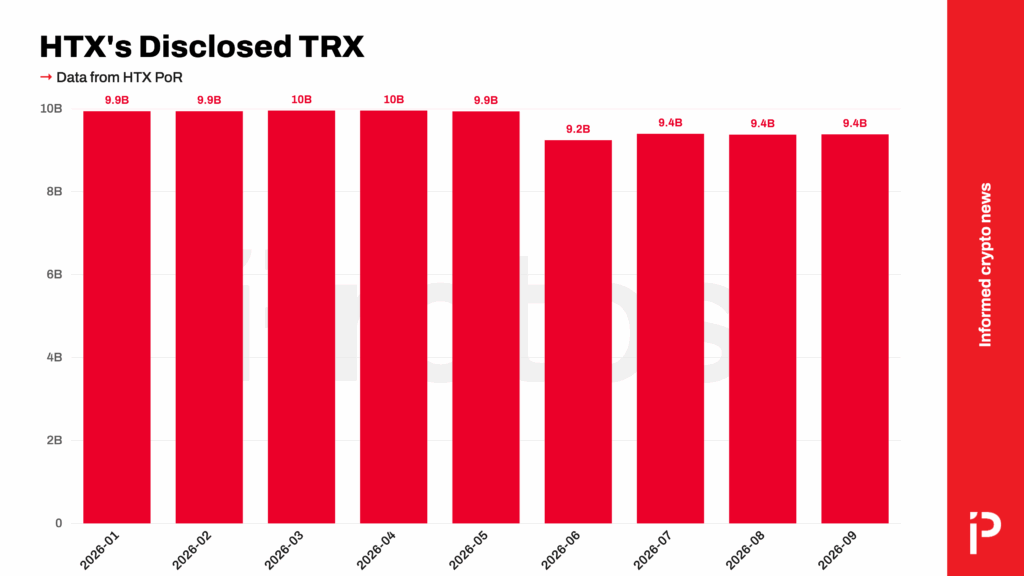
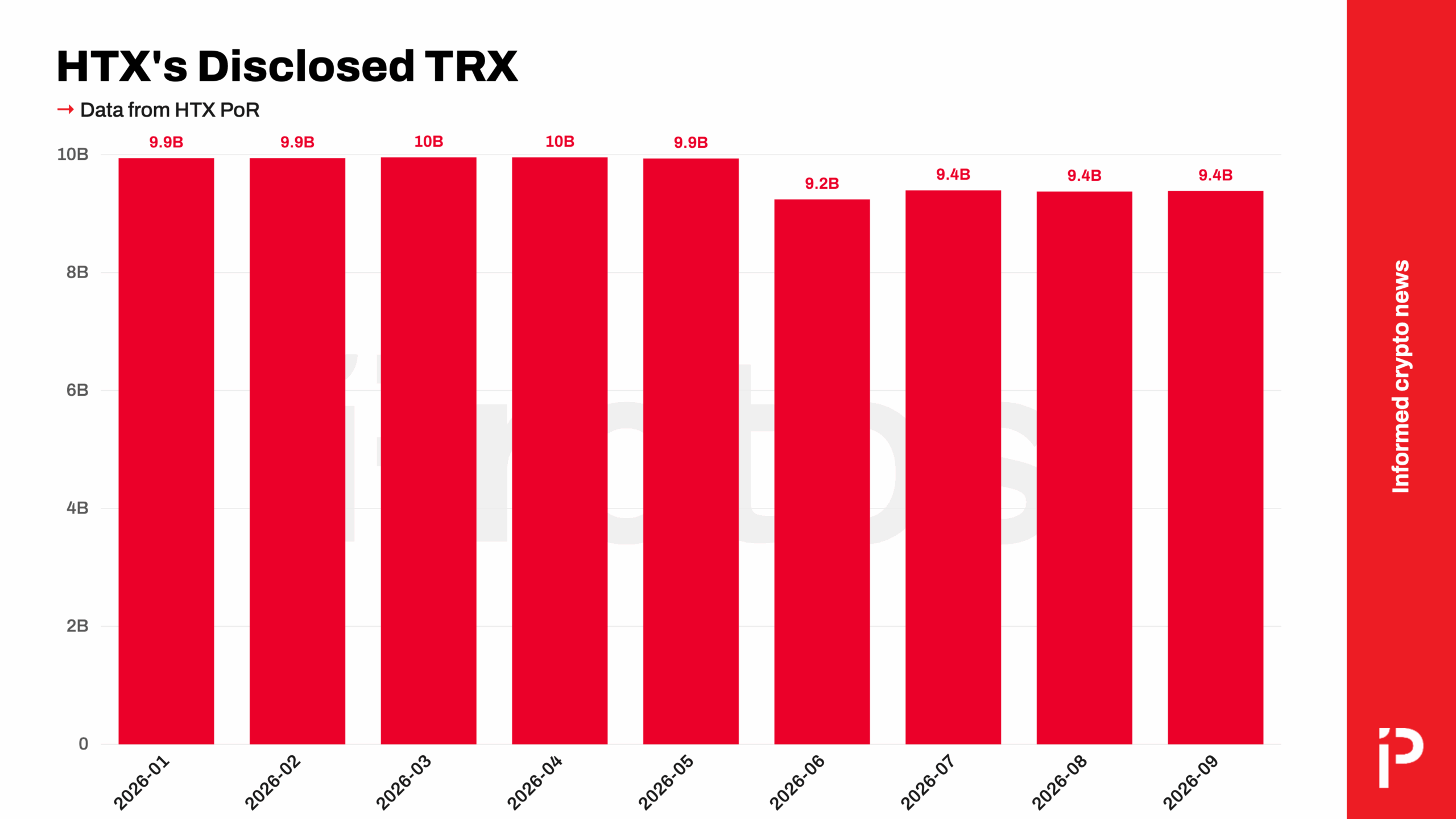
Back in June, proof-of-reserves for Justin Sun-owned HTX revealed a roughly-700 million drop in the quantity of TRX held at the exchange.
At today’s prices, these 700 million tokens are worth about $238 million.
A substantial portion of these assets ended up flowing into an address that supports Sun-owned Poloniex’s Super Representative, while some went to Binance.
Since then, HTX has been sanctioned by the European Union and the United Kingdom Foreign, Commonwealth & Development Office, making the location of HTX funds extraordinarily important.
Additionally, in the same proof-of-reserves where it disclosed the drop in TRX, it also reduced its disclosure for over $1 billion worth of other assets, now pointing towards an undisclosed “ThirdParty” custodian.
Protos was previously able to track a large portion of HTX’s Ethereum reserves to Poloniex.
Read more: Justin Sun’s Poloniex and HTX withdraw huge amounts from AAVE
We’ve since been able to track a portion of the TRX flow out of HTX before that June proof-of-reserves.
Specifically, in May, HTX moved 700 million TRX out of TAuUCiH4JVNBZmDnEDZkXEUXDARdGpXTmX, labeled as “HTX-Cold 6” and disclosed in the HTX proof-of-reserves.
This TRX was sent to multiple other addresses that we were able to identify.
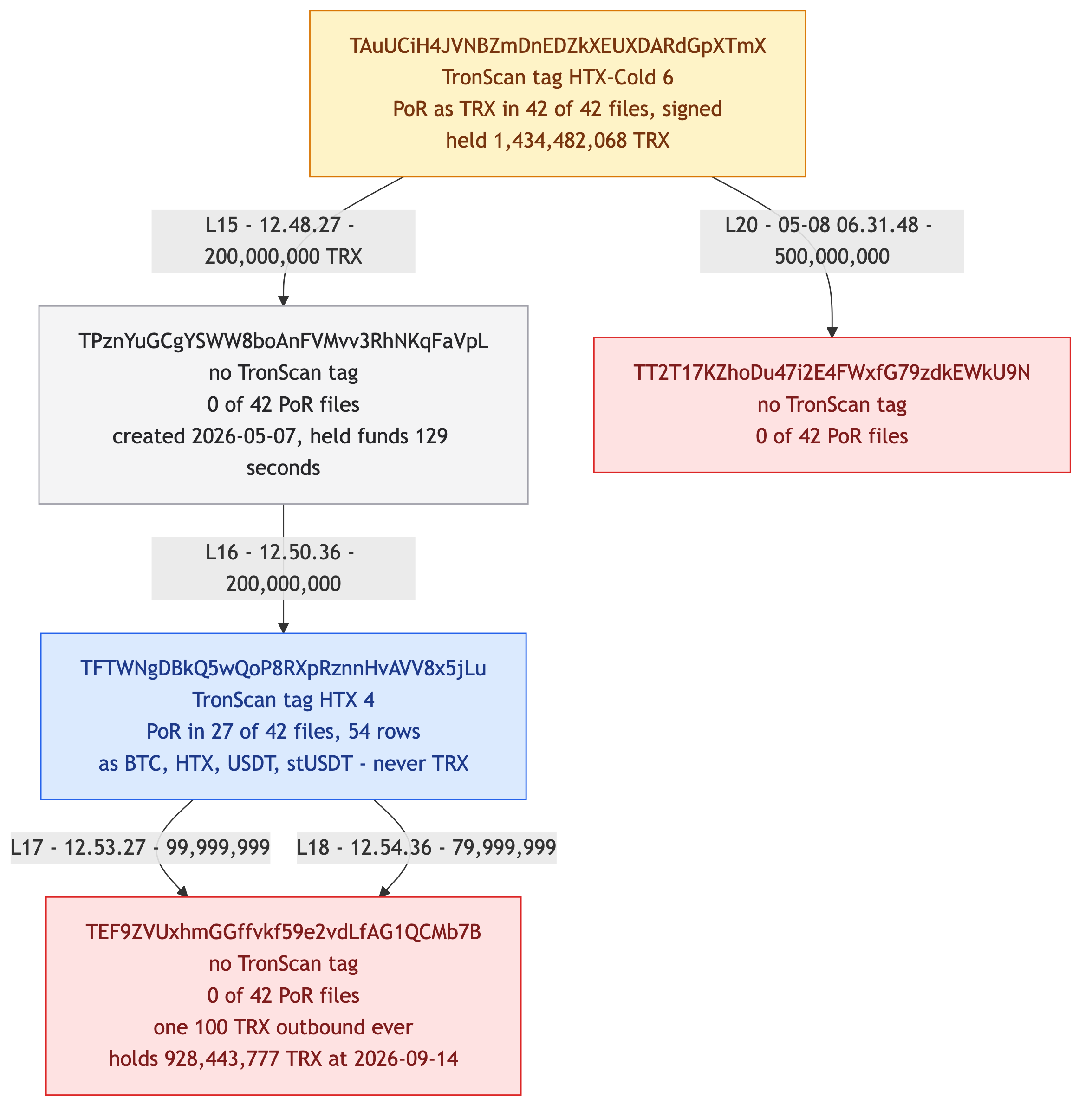
Two hundred million of these tokens were sent to TPznYuGCgYSWW8boAnFVMvv3RhNKqFaVpL.
These tokens were then forwarded to TFTWNgDBkQ5wQoP8RXpRznnHvAVV8x5jLu, an address which is labeled as “HTX 4” on Tronscan, which is also an address that was included in the proof-of-reserves (but has since been removed and never included TRX in its disclosed assets).
Of these 200 million tokens, 180 million were sent in two transactions to TEF9ZVUxhmGGffvkf59e2vdLfAG1QCMb7B (TEF9).
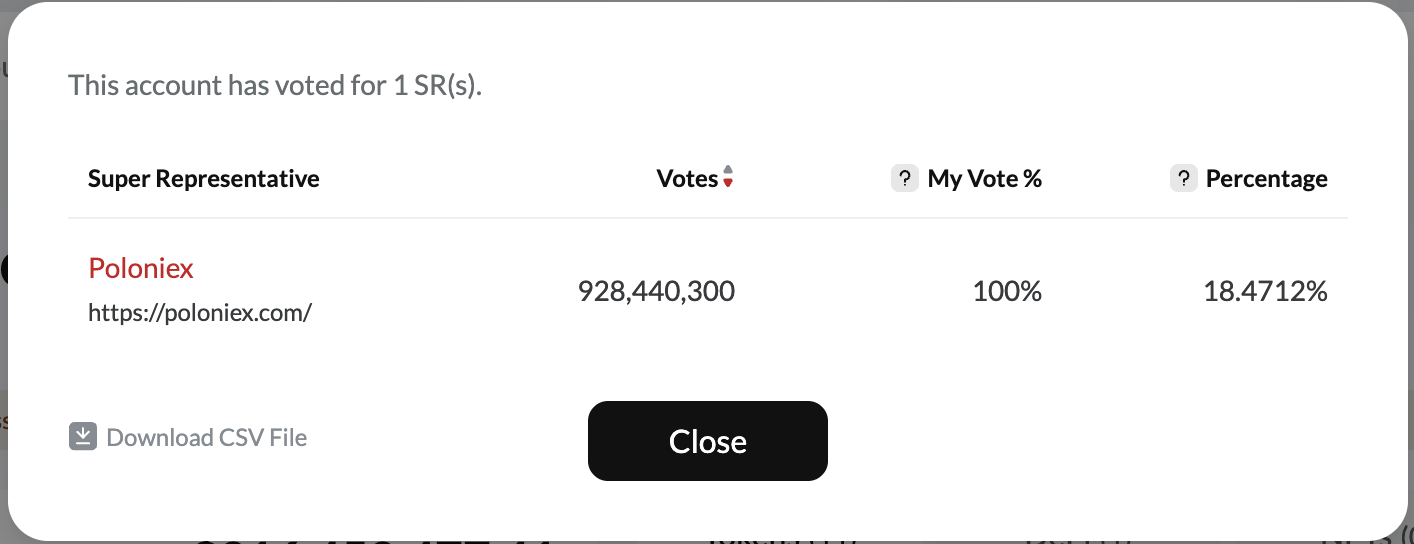
This unlabeled address currently votes 928 million TRX for the Poloniex Super Representative.
Returning to the other 500 million tokens, those funds were sent to TT2T17KZhoDu47i2E4FWxfG79zdkEWkU9N (TT2).
This is a notorious and controversial address.
Arkham Intelligence tags it as “Justin Sun?” It’s also an important redeemer of TrueUSD, a stablecoin deeply connected to Sun.
TT2 has delegated energy to HTX 4 before.
However, it’s worth noting that Sun has been evasive when asked about this address by Bloomberg previously.
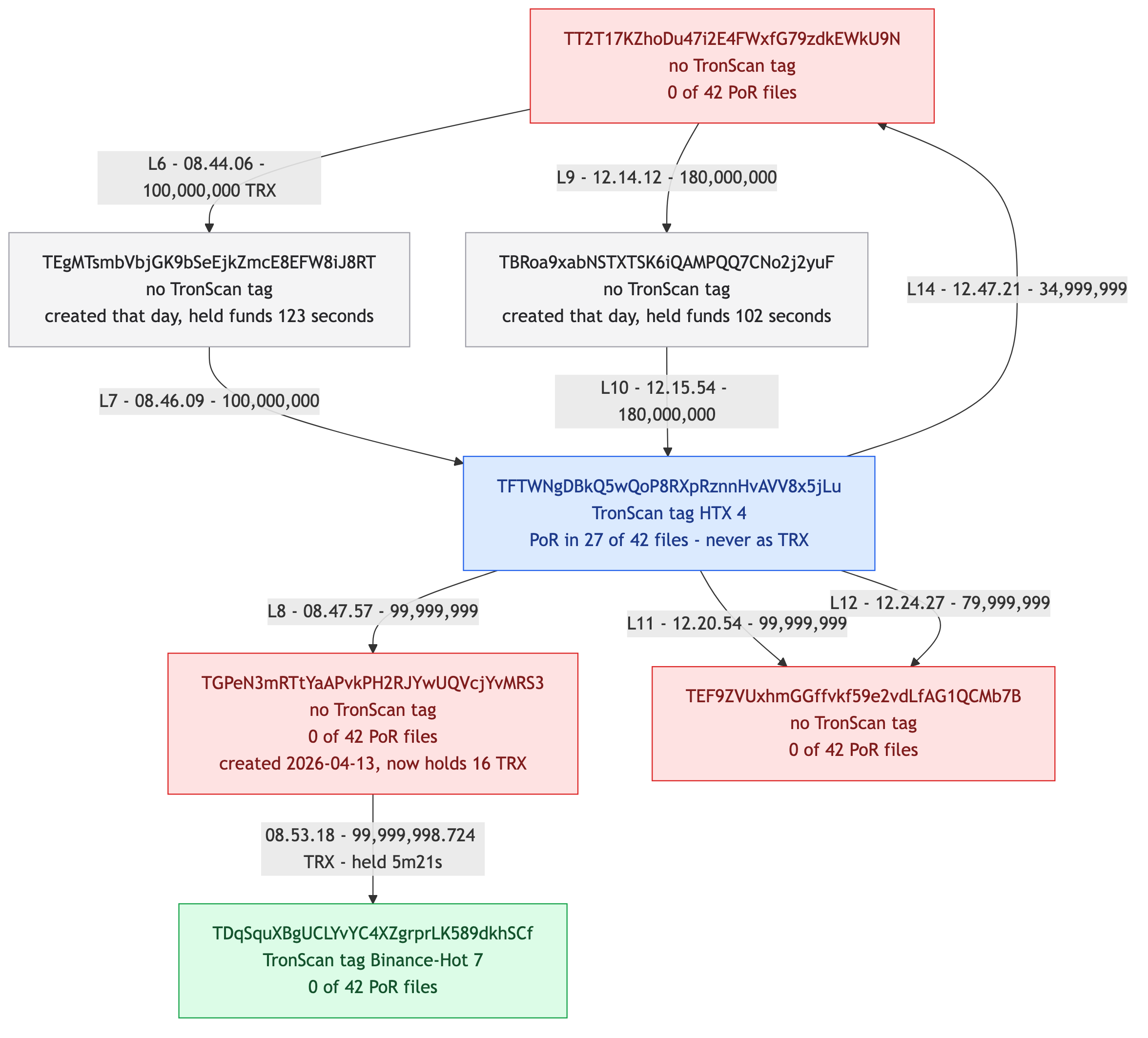
However, the day before these funds came in, TT2 made some interesting transactions.
It started by sending 100 million TRX to TEgMTsmbVbjGK9bSeEjkZmcE8EFW8iJ8RT, which immediately sent 100 million TRX to HTX 4.
HTX 4 then forwarded those funds to TGPeN3mRTtYaAPvkPH2RJYwUQVcjYvMRS3.
These funds were then forwarded to TDqSquXBgUCLYvYC4XZgrprLK589dkhSCf, an address that TRONScan labels as Binance-Hot 7.
So before receiving 500 million TRX out of the HTX reserves, it sent 100 million TRX to Binance.
That wasn’t the only interesting set of transfers out of TT2 that day.
It also sent 180 million TRX to TBRoa9xabNSTXTSK6iQAMPQQ7CNo2j2yuF.
This address quickly forwarded these funds to HTX 4.
HTX 4 then sent these funds onward, again, in two transactions to TEF9.
It also sent 35 million TRX to TT2, in some sense creating a loop of funds.
Broadly, this shows millions of dollars in TRX moving from HTX to a variety of addresses, including one address that supports Poloniex.
They also moved in a pattern similar to the stETH that Protos previously tracked out of HTX, including the use of briefly used burners.
However, we should note that these represent less than 10% of the total TRX held at HTX, and the most recent disclosure claims a total of 9.3 billion TRX, with 922 million of those currently lent on JustLend.
Got a tip? Send us an email securely via Protos Leaks. For more informed news and investigations, follow us on X, Bluesky, and Google News, or subscribe to our YouTube channel.


Eight banking groups on Monday said they want tighter limits on stablecoin rewards, keeping the ongoing banks-versus-crypto dispute alive in Congress.


President Donald Trump’s digital assets adviser spoke at a Washington event the day after a new compromise language was released for the Clarity Act.


Eight banking associations and 17 state attorneys general have challenged parts of the CLARITY Act before a Sep. 15 procedural vote that requires 60 Senate votes.
Summary
- Eight banking groups want lawmakers to tighten restrictions on rewards paid to stablecoin holders.
- The groups warned that interest-like incentives could pull deposits from banks and reduce lending.
- Seventeen state attorneys general said the bill could weaken state powers to pursue crypto fraud.
- The Sep. 15 vote would open debate on the bill rather than approve its final passage.
Eight banking associations wrote to Senate Majority Leader John Thune and Senate Minority Leader Chuck Schumer on Sep. 14, requesting changes to the CLARITY Act before the Senate considers whether to advance it.
Although the associations supported creating lasting rules for digital assets, they argued that the current language could let crypto companies offer stablecoin rewards that function like interest on bank deposits. Their requests center on Section 10404, which covers payments and incentives linked to payment stablecoins.
The banking letter adds another dispute to the Senate negotiations as lawmakers try to gather the 60 votes needed to proceed. Separately, a coalition led by New York Attorney General Letitia James has warned that federal preemption provisions could restrict state securities enforcement and make it harder to pursue crypto fraud.
Banks say stablecoin rewards could drain deposits
Bank deposits fund lending to households, farmers, small businesses, and local communities, the associations said. In their view, stablecoins that offer incentives similar to deposit interest could encourage customers to move money out of regulated banks.
“Deposits are the foundation of the banking system,” the groups said, arguing that deposit losses could “hinder the ability of depository institutions to extend credit to their customers.”
Section 10404 prohibits certain interest and yield payments, but the associations said its wording could leave room for rewards calculated from a customer’s stablecoin holdings. In particular, they objected to the word “solely” in subsection (c)(1)(A), saying the restriction might not cover incentives tied partly to a user’s balance.
The groups asked Congress to remove “solely” and revise references to “a payment stablecoin balance” and “an interest-bearing bank deposit.” Their proposal would target reward programs that resemble deposit interest, even if providers attach another condition to the payment.
Seeking a test based on economic effect, the associations also requested a “substantially similar” standard for stablecoin incentives. Such a test would allow regulators to examine whether a reward acts like bank interest instead of relying only on the name or structure chosen by its provider.
Another request concerns Section 10404(3)(B), which the banking groups want Congress to remove. They said the provision could permit companies to calculate rewards according to a stablecoin balance, the length of time an asset is held, or a customer’s tenure with a platform.
The latest Republican proposal would give the Treasury secretary authority to impose an 18-month circuit breaker on stablecoin rewards if payment stablecoins cause substantial deposit outflows from community banks. According to the revised Senate proposal, the 635-page draft contains 126 changes requested by Democratic negotiators.
Banking organizations, however, are asking lawmakers to prevent interest-like rewards through the bill itself instead of relying only on a temporary Treasury intervention after deposit losses occur.
State attorneys general want enforcement powers preserved
While banks have focused on deposits and lending, the state officials have objected to provisions governing the division of authority between federal and state regulators.
James led a bipartisan coalition of 17 attorneys general in urging the Senate to reject the current bill. The group said the legislation could let the Securities and Exchange Commission override parts of state securities regulation, including registration requirements used to oversee businesses selling investments to local residents.
“As written, the Clarity Act would embolden scammers and potentially strip attorneys general of our authority to protect our states’ investors and their wallets,” James said.
According to the coalition, granting the SEC power to preempt state registration authorities could create uncertainty over the cases that state officials may bring against crypto businesses. The concern applies directly to American investors because state securities agencies and attorneys general often investigate local complaints, seek restitution, and enforce state consumer-protection laws.
The officials also asked Congress to retain state registration systems and the existing federal-state enforcement partnership. Their position does not oppose federal crypto rules outright; instead, the coalition argued that a national framework should not remove state tools already used against fraud.
As previously covered by crypto.news, the revised bill would allow state attorneys general to enforce conflict-of-interest restrictions for public officials. James and the other officials said that the addition did not settle their separate concerns about securities registration and fraud enforcement.
Crypto losses support states’ fraud concerns
The attorneys general tied their warning to the amount of money Americans have lost through crypto-related schemes. According to figures cited by the coalition, complaints submitted to the FBI during 2025 involved $11.4 billion in cryptocurrency losses, up 22% from the previous year.
Such complaints can include several types of crime, and a complaint does not by itself establish that a violation occurred. Still, the coalition used the FBI total to argue that states need to retain their authority while digital-asset fraud continues to affect U.S. residents.
State regulators can pursue conduct under local securities, consumer-protection, and fraud laws, depending on the facts and the law in each jurisdiction. The attorneys general fear that unclear preemption language could lead defendants to challenge state cases by arguing that federal law has displaced local authority.
James raised similar objections in July, when she asked lawmakers to preserve state enforcement powers while strengthening provisions related to money laundering, ethics and investor protection. Monday’s coalition included officials from states such as California, Illinois, Arizona, Kansas, Ohio and Wisconsin.
The bipartisan membership gives the opposition a different character from the party negotiations taking place in the Senate. Rather than focusing on whether Democrats or Republicans control the final text, the attorneys general have framed their dispute around the powers their offices would retain after enactment.
CLARITY Act faces a 60-vote procedural test
The Senate is scheduled to hold its initial procedural vote on Sep. 15. The action would determine whether senators begin debating the legislation; it would not enact the CLARITY Act or send it to the president.
Republicans hold 53 Senate seats, meaning supporters need votes from at least seven members of the Democratic caucus if every Republican backs the motion. No Democratic leader had announced enough support to clear that threshold as of Sep. 14.
Lawmakers have negotiated disputes involving government ethics, stablecoin rewards, financial crime rules and protections for developers of noncustodial software. The latest draft also addresses the roles of the SEC and the Commodity Futures Trading Commission in supervising digital assets and crypto intermediaries.
The House passed its version of the CLARITY Act by a 294–134 vote in July 2025, while the Senate Banking Committee advanced its proposal 15–9 in May 2026. Senators did not hold a floor vote before the August recess as disagreements continued over several parts of the bill.
Earlier coverage of the scheduled procedural vote noted that Senate Majority Leader Thune filed cloture on Aug. 8. Treasury Secretary Scott Bessent has urged senators to approve the market-structure measure, while Galaxy Digital lowered its estimated chance of passage in 2026 from about 75% in May to roughly 10% in September.
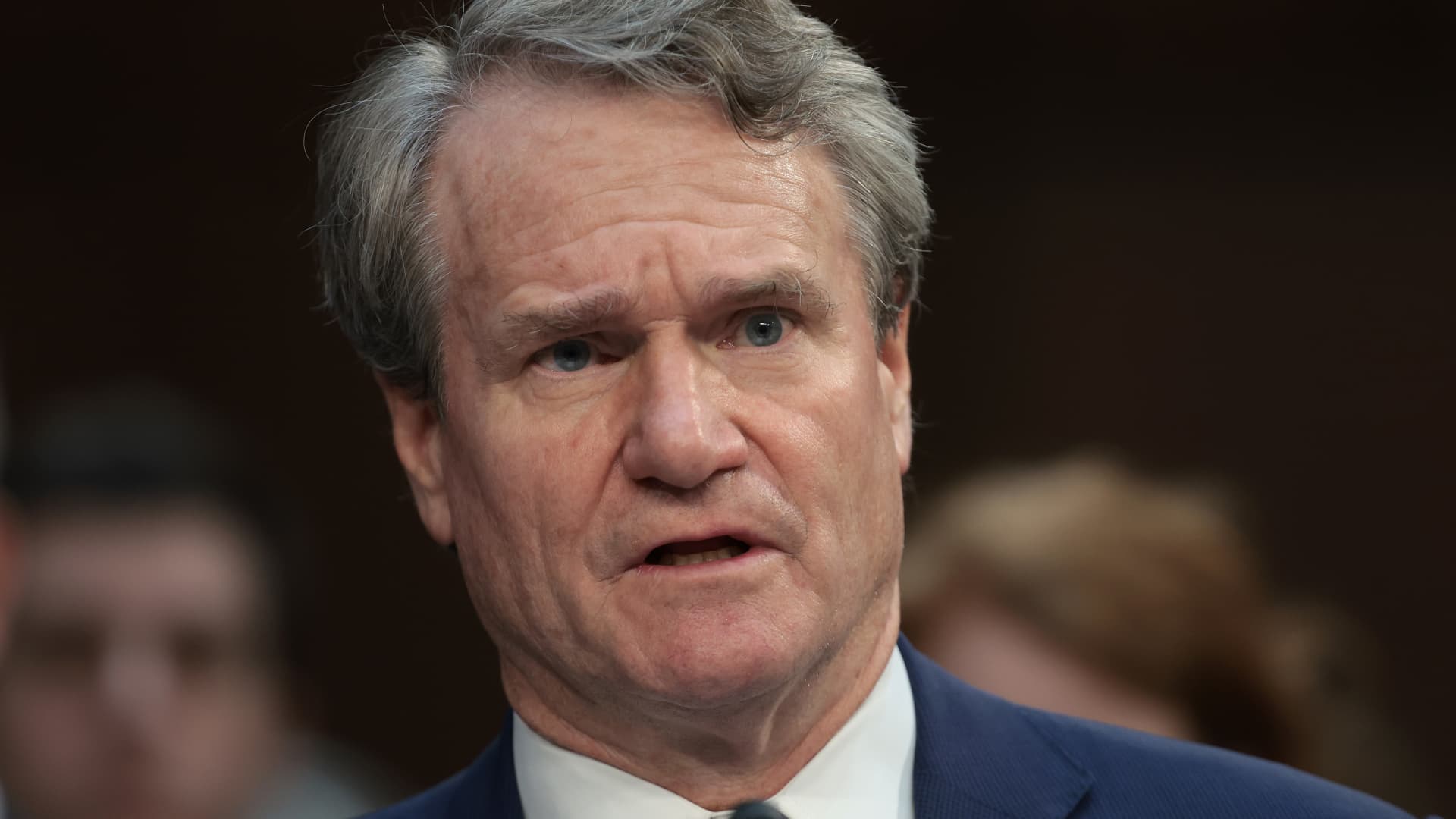
Brian Moynihan, Chairman and CEO of Bank of America, testifies during a Senate Banking Committee hearing at the Hart Senate Office Building on December 06, 2023 in Washington, DC.
Win Mcnamee | Getty Images
Bank of America is seeing a far more subdued few months for its Wall Street advisory and trading businesses after a blockbuster second quarter, CEO Brian Moynihan told analysts Monday.
Investment banking fees will likely decline by more than 10% in the third quarter from the year-earlier period, while trading revenue will be roughly flat, Moynihan said at a conference. That compares to a second quarter in which the bank posted a 50% jump in investment banking fees and a 33% jump in trading revenue.
“What we’re seeing is the market generally in investment banking is down 10%,” Moynihan said, citing Dealogic data. “We’re not as well positioned in some of the businesses that have more activity, so we’ll be down probably a bit more than that.”
Bank of America shares were down 5% in afternoon trading Monday following Moynihan’s comments.
The muted outlook from the country’s second-largest bank by assets could be an early signal that Wall Street’s AI-fueled advisory and trading boom might have hit turbulence.
While Moynihan pointed to a robust deal pipeline, particularly in middle-market investment banking, the projected double-digit decline in investment banking may make investors wonder if the industry’s surge in capital markets activity will prove short-lived.
Later Monday, Citigroup CFO Gonzalo Luchetti told analysts that investment banking is tracking for “low single digit” revenue growth in the third quarter, while trading was heading for “mid single digit” revenue growth.
Those figures could climb if Citigroup’s bankers and traders end the quarter on a strong note, he said.
“September is a key month,” Luchetti said. “These few weeks are very meaningful.”
The XRP Ledger processed a record 3,254 transactions in ledger 106,965,249 yesterday, but 2,000 of the news came from just 20 accounts sending identical 1-drop payments, each worth one-millionth of an XRP.
The new high overtook two earlier single-ledger marks of 2,713 and 2,768 transactions, both set within a day of the record. At least 890 transactions failed with tec result codes but still burned fees, and the 20-account batch alone paid about 0.04 XRP in fees while moving just 0.002 XRP.

Discover: The Best Token Presales
Twenty Wallets, One Ledger
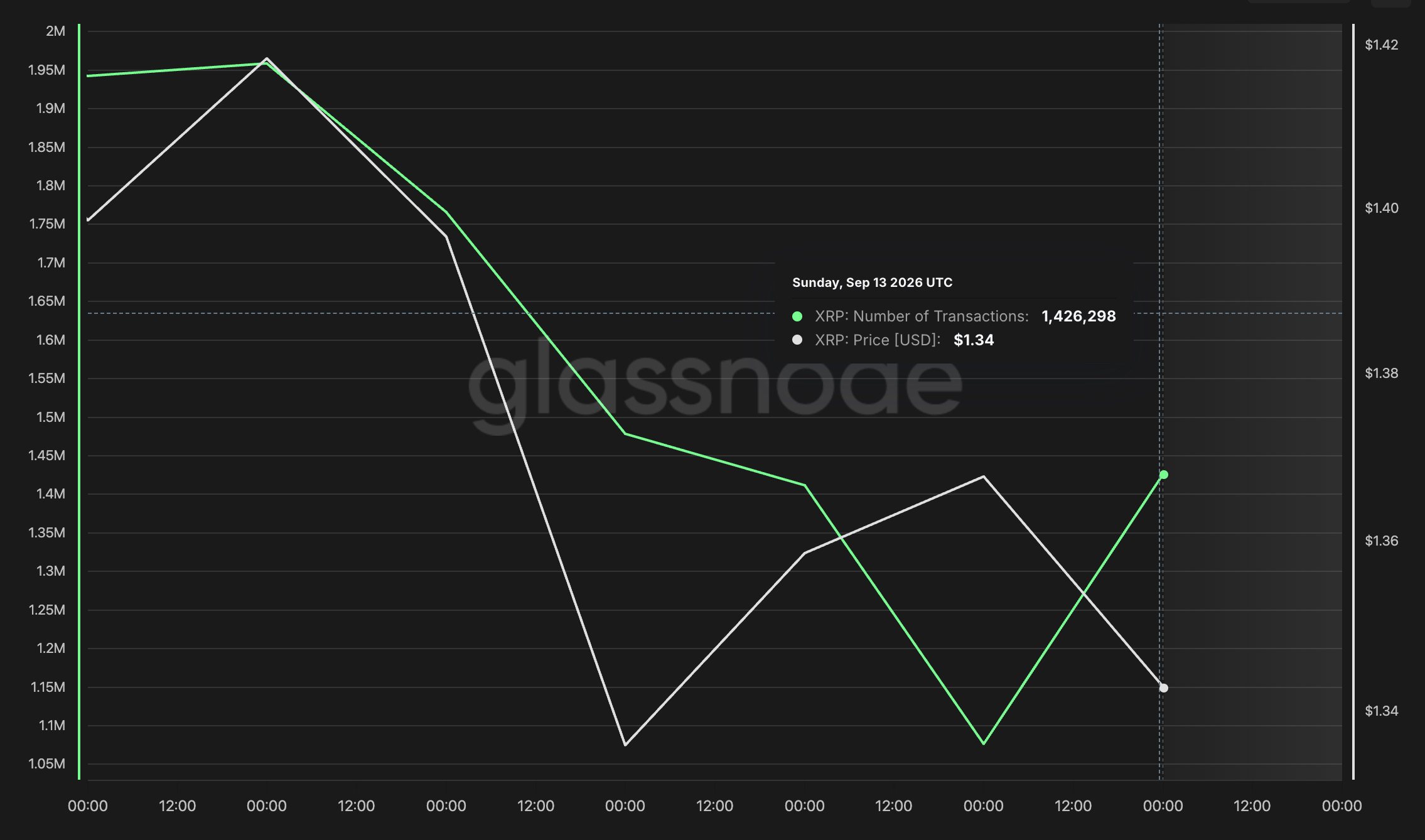
Ledger 106,965,249 closed on Sunday, Sept. 13, holding 3,254 transactions, a number far outside the normal range for the network. A scan of 7,600 consecutive ledgers from 18:00 UTC on Sept. 13 to 02:00 UTC on Sept. 14 found 638,801 transactions in total, an average of about 84 per ledger, with only 43 ledgers in that window topped 2,000 transactions, and only the record ledger cleared 2,800.
Twenty accounts sent exactly 100 transactions each, contributing 2,000 of the 3,254 total, and every one was a 1-drop payment. Combined, that batch moved just 0.002 XRP, less than a cent at current prices, while each transaction paid a 20-drop fee, meaning the group burned roughly five cents in aggregate to generate a transaction record with effectively zero economic transfer.
The remaining activity was more typical of ordinary XRP Ledger usage: 458 OfferCreate orders on the built-in decentralized exchange, 229 ticket creations, 74 check cashes, and 22 trust-line changes.
At least 890 transactions in the ledger failed outright with tec result codes, mostly payments whose paths ran dry or fill-or-kill orders that could not be filled. Daily XRPL activity stayed above 2 million transactions through early September, according to the report, peaking at 2.572 million on Sept. 3, so the concentrated 1-drop batch stands out as an anomaly rather than a continuation of a broader adoption trend.
As wallet concentration has shown elsewhere on XRP, a small cluster of addresses can distort network statistics without reflecting a shift in genuine demand.
Hussein Zangana, the XRP Ledger Foundation’s community director known as Vet on X, flagged the news in a public post and said the pattern most likely reflected throughput testing, noting that simple XRP payments place a very low load on the network. He did not identify who was behind the batch.
Earn $50 and Enter $300K Prize Draw on EdgeX
XRP News: Why The Fees Didn’t Spike?
Under XRPL’s own transaction-result documentation, a tec failure still destroys the XRP paid as a transaction cost and consumes a sequence number, even though the underlying action never completes. That means failed payments and unfilled offers padded the ledger’s transaction count without delivering any successful transfer, inflating the record’s headline number relative to its actual economic content.
The ledger absorbed the load without a fee spike because XRPL uses dynamic size limits rather than fixed block caps like Bitcoin. The network’s soft limit rises when a ledger contains more transactions than expected and falls if consensus takes longer than five seconds, and early Monday, the expected ledger size sat at 3,082 transactions with the open-ledger fee still at the 10-drop minimum.

A small sliver of the record ledger pointed to more substantive use: eight transactions carried memos from t54 labs’ x402 facilitator, the tool that lets AI agents pay for services in XRP and RLUSD, following the network’s milestone of 1 million AI agent transactions in July.
For traders, the takeaway is straightforward: a transaction record is not the same as a demand signal. The event is best read alongside other XRP catalysts this month that carry more direct implications for price, since whale-driven or bot-driven network activity has repeatedly diverged from actual buying pressure on XRP.
Trade XRP on Bybit and Get a Chance to Win Our $1,000 USDT Airdrop
The post XRP News: XRPL Records 2K Transactions from 20 Wallets appeared first on Cryptonews.
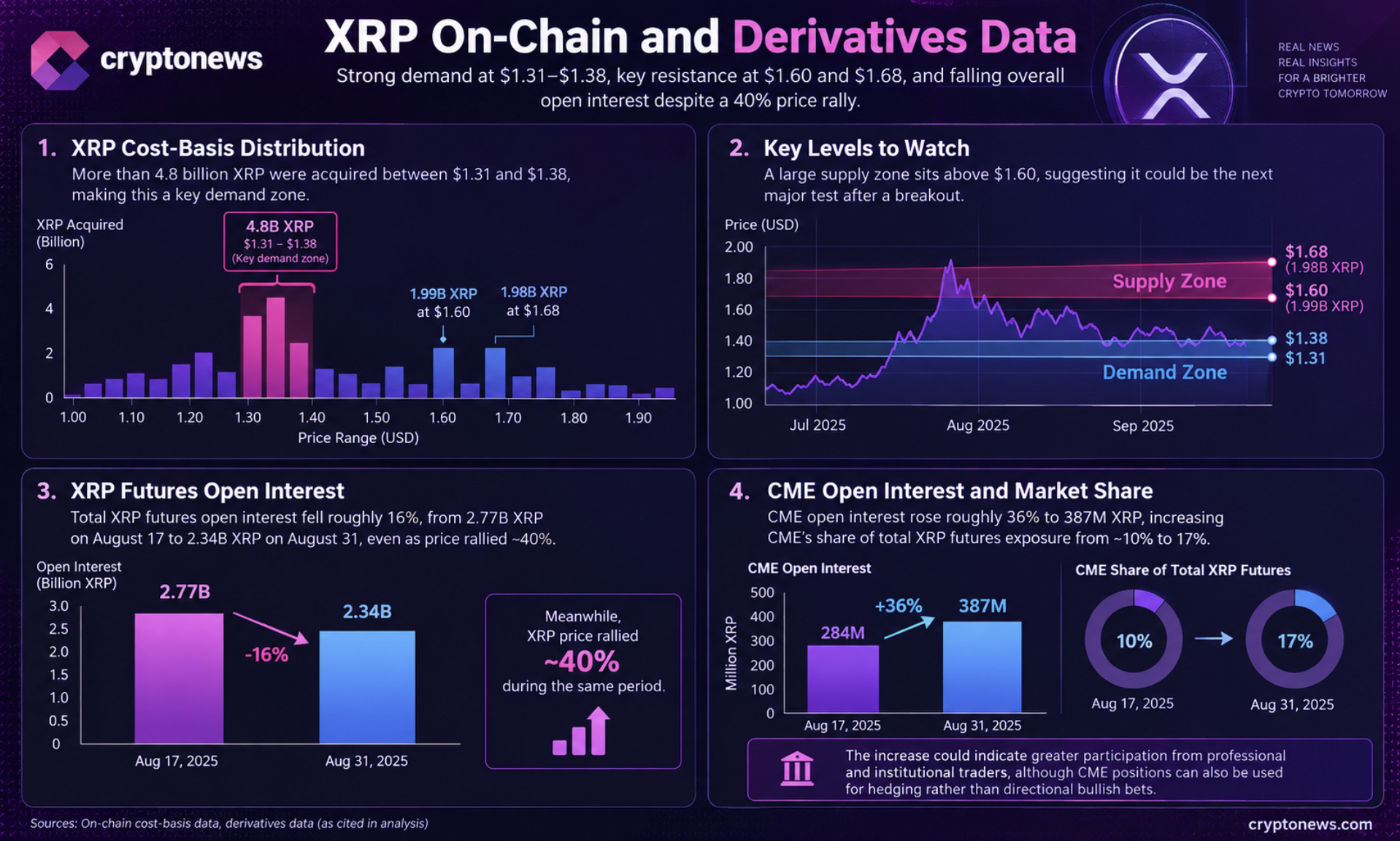
XRP price closed around $1.35 yesterday after trading as high as $1.43 two sessions earlier. Analyst identifies $1.38 as the level XRP needs to clear for a bullish breakout that could open a path toward $1.60. The setup remains conditional, however, with the token still trading near a closely watched support and resistance range.
Martinez, who posts as Ali Charts on X, has identified a triangle developing between $1.31-$1.35 support and $1.38 resistance. XRP needs to hold the support zone as it approaches the apex of that pattern, while a decisive move above $1.38 would confirm the breakout and could strengthen momentum.
Also, according to Ali, a break below $1.31 could instead weaken the near-term bullish structure and turn the current support area into resistance during a recovery.
Discover: The Best Token Presales
Why $1.38 XRP Matters More Than Most Price Resistance Levels?
Cost-basis data shows that more than 4.8 billion XRP were acquired between $1.31 and $1.38, making the band a potentially important demand zone. If buyers continue defending those levels, the concentration of holders near their acquisition prices could provide support beyond the triangle pattern itself.
The same data also highlights the resistance that may await above the breakout threshold. Approximately 1.99 billion XRP were acquired at around $1.60, followed by another 1.98 billion at around $1.68. That supply suggests $1.60 would be the next major test after a breakout rather than an unobstructed upside target.

Recent derivatives positioning provides a potentially constructive signal. Total XRP futures open interest fell roughly 16%, from 2.77 billion XRP on August 17 to 2.34 billion on August 31, even as XRP rallied almost 40% over the same period. That divergence suggests the rally was not simply driven by traders aggressively increasing leverage.
CME open interest rose roughly 36% to 387 million XRP, raising CME’s share of total XRP futures exposure from around 10% to 17%. The shift could indicate greater participation from professional and institutional traders, although CME positions can also be used for hedging rather than directional bullish bets.
Earn $50 and Enter $300K Prize Draw on EdgeX
The Technical Picture Isn’t Confirming Yet
Despite the potential bullish setup, XRP has not yet broken resistance. The 14-day RSI sits around 49.6, which is effectively neutral, while the MACD remains in a sell signal. XRP is also below its 50-, 100-, and 200-period simple moving averages, with the 200-period average near $1.39.
That alignment matters because the $1.38 breakout threshold sits near another technically significant moving-average resistance level. A decisive or convincing move above $1.38 would be needed to strengthen the bullish case, rather than leaving XRP below the major moving averages that currently remain overhead.
Trade XRP on Bybit and Get a Chance to Win Our $1,000 USDT Airdrop
The post XRP Triangle Puts $1.38 Resistance Ahead of $1.60 Test appeared first on Cryptonews.
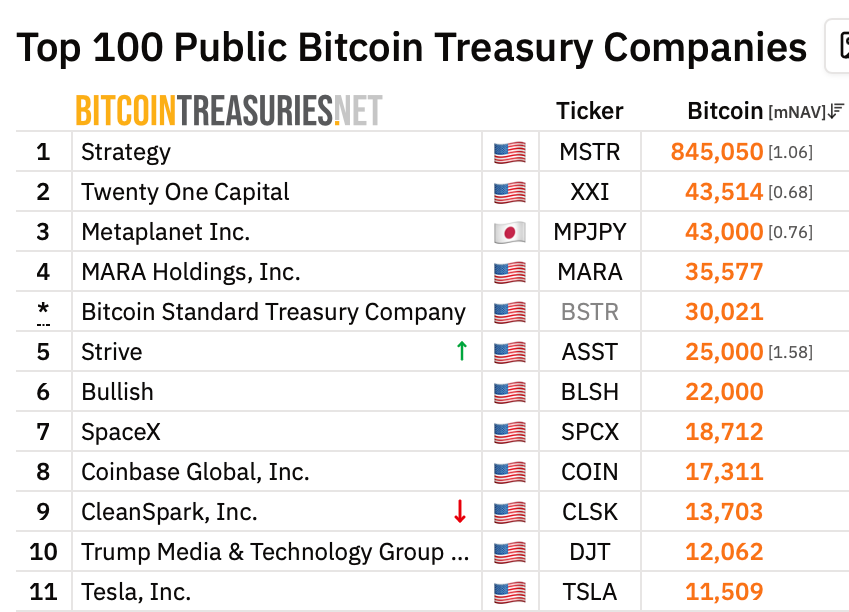
Strive, a top-five Bitcoin treasury company and asset manager, purchased 469 Bitcoin for about $36.6 million last week, bringing its holdings to 25,000 BTC.
According to a Monday filing with the US Securities and Exchange Commission, Strive acquired the Bitcoin between Sept. 8 and Sept. 11 at an average price of $77,954 per BTC, including fees and expenses.
The biggest crypto by market cap was last trading at $78,823, according to Coingecko data.
Strive CEO Matt Cole said the purchase was funded entirely through proceeds from sales of SATA, the company’s perpetual preferred stock, which has now surpassed $1 billion in notional value outstanding. The filing shows SATA shares outstanding increased by 402,541 over the same period to about 10.4 million shares.
As of Sept. 11, Strive also held $204.2 million in cash and cash equivalents and 505,000 shares of Strategy’s STRC preferred stock, valued at about $49.8 million.
Strive became the fifth-largest publicly traded corporate Bitcoin holder in late August, when a 1,800-BTC purchase pushed it past crypto exchange Bullish. The company was co-founded in 2022 by now-Ohio Republican gubernatorial candidate Vivek Ramaswamy and became a publicly traded Bitcoin treasury company in September 2025 following its merger with Asset Entities.
Related: Bitcoin rally sends crypto stocks soaring as miners, treasury companies jump
Strive valuation climbs alongside Bitcoin accumulation
Strive’s Nasdaq-traded shares gained more than 7% on Monday to around $29, extending a rally that has seen the stock price more than double over the past month, according to Yahoo Finance data.
The rally had already pushed Strive’s market capitalization above that of Metaplanet last week, despite the Japanese Bitcoin treasury company holding substantially more Bitcoin. As of Monday, Strive had a market capitalization of about $2.5 billion, compared with $1.9 billion for Metaplanet.
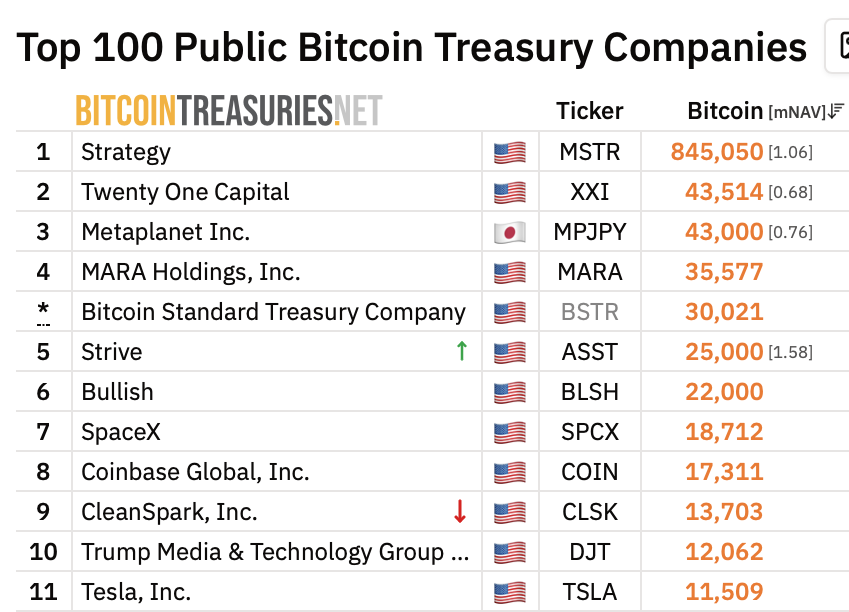
Top 10 Bitcoin treasury companies. Source: BitcoinTreasuries.NET
Strive’s rally has also pushed its shares above the $27 exercise price for warrants due to expire in mid-October. If warrant holders exercise them, they would buy Strive shares at $27 apiece, potentially providing the company with more than $700 million in new capital, according to BitcoinTreasuries.net.
Cole said earlier this month that it was “not out of the realm of possibility” for Strive to become the second-largest publicly traded corporate Bitcoin holder by year-end, though he said that was not his base case.
Magazine: Why are AI’s biggest companies suddenly asking to slow down?
Crypto World
Trump's $800 million stake into World Liberty Financial's token now has a timeline to becoming sellable
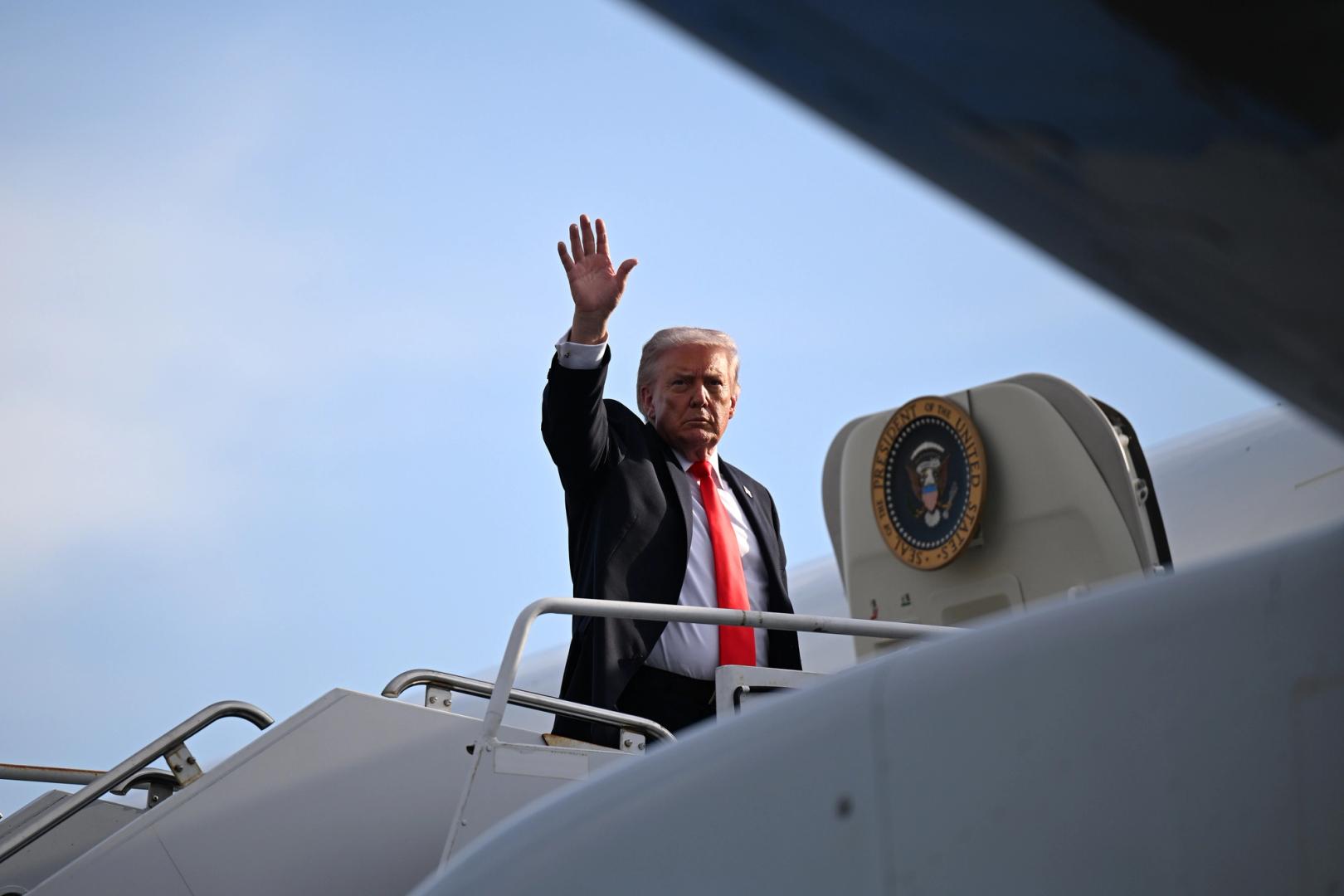
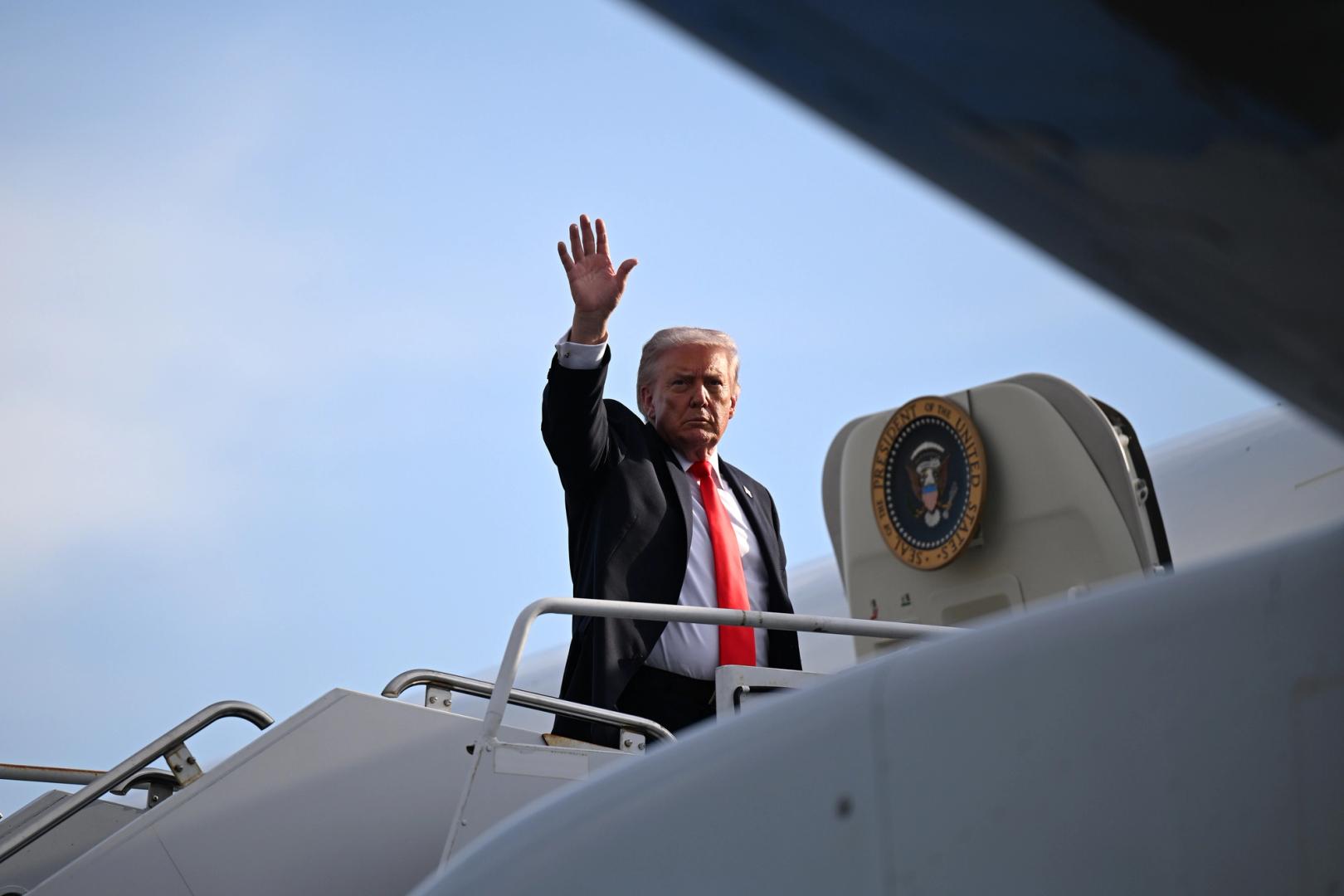
Onchain records show that an $800 million crypto stake that matched Donald Trump’s holding was moved into a vesting contract, locking any sales until 2028 after a mandatory 10% token burn.

Chargers HC Jim Harbaugh after Week 1 loss: ‘I wish we played our starters more in the preseason’

Countries Seek to Curb Social Media Addiction for Kids.

celebrating my success with my brother #trending #crypto #cryptocurrency #trading #shorts #like


-
 Tech6 days ago
Memory prices are slowing because buyers ran out of money
-

 Tech1 day ago
The Latest Weird Thing to Play Doom Is the Mapped-Out Brain of a Fruit Fly
-

 Business5 days ago
Micron Stock Climbs Above $1,031 as AI Memory Crunch and a $50 Billion Outlook Fuel the Rally
-

 Business5 days ago
AMD Stock Climbs After Management Lifts 2027 Data Center Outlook Toward $70 Billion in AI Sales
-

 Fashion3 days ago
Weekend Open Thread – Corporette.com
-

 Crypto World6 days ago
Bitcoin price risks $76K drop as $78K support weakens
-

 Crypto World6 days ago
Robinhood Stock: How To Take Advantage With Reduced Risk
-

 Crypto World3 days ago
XAG/USD: Silver’s Short-Term Rally Meets Its Moment of Truth
-

 Crypto World4 days ago
2 Chip Stocks Broke Out This Week. Neither Was Nvidia
-

 Crypto World6 days ago
Ethereum price stalls below $2,500 as ADX drops to 11
-

 Business4 days ago
10 Most-Streamed Songs On Spotify In 2026 So Far, Led By Ella Langley’s Dominant Run On The Charts This Year
-

 NewsBeat6 days ago
England up in reading, maths and science rankings as Scotland and Wales dip
-

 Tech4 days ago
Battery life is the only iPhone 18 Pro and iPhone Duo upgrade I care about. Apple didn’t disappoint
-

 Crypto World4 days ago
OKX launches 10x OpenAI, Anthropic X-Perps in Europe
-

 Crypto World3 days ago
Diesel Tops $6 a Gallon for the First Time as 28 States Set Records
-

 Crypto World6 days ago
Intel Stock Jumps 9% on Chip Price Hike Report, US Stake Gains $36 Billion
-

 Crypto World5 days ago
Bitcoin price risks $70K if $78K neckline breaks
-

 News Videos3 days ago
Facing Financial Fears
-

 NewsBeat6 days ago
What went right this week: an ‘historic’ fall in violent crime, plus more
-

 Tech5 days ago
Apple Watch Ultra 4 vs Watch Ultra 3: Should you really spend another $799?
You must be logged in to post a comment Login