
Crypto World
Google warns of iPhone exploit kit used to steal crypto wallets



Cybersecurity researchers are warning that a powerful iPhone exploit kit is increasingly being used in cybercrime campaigns targeting cryptocurrency users.
Summary
- Google researchers identified a powerful iOS exploit kit called Coruna containing 23 vulnerabilities across five exploit chains.
- The malware can scan devices for crypto wallet recovery phrases and financial data, potentially enabling attackers to drain funds.
- The tool reportedly moved from surveillance operations to nation-state espionage and eventually financially motivated cybercrime groups.
Hackers deploy iPhone exploit kit to harvest crypto wallet data
According to a new report from Google’s Threat Intelligence Group, the exploit framework, dubbed “Coruna,” contains five full iOS exploit chains and 23 vulnerabilities capable of compromising iPhones running operating systems between iOS 13 and iOS 17.2.1.
The exploit kit allows attackers to execute malicious code through web content by exploiting vulnerabilities in Apple’s WebKit browser engine and other components. Once a victim visits a compromised website, the framework fingerprints the device to identify the exact iPhone model and software version before deploying the most effective exploit chain.
Researchers say the malware can then deliver additional payloads designed to harvest sensitive data from the device, including cryptocurrency wallet information.
In some campaigns, the exploit kit was deployed through fake gambling and cryptocurrency websites that specifically targeted iPhone users.
The malicious payload was capable of scanning images and files on the device for keywords such as “backup phrase” or “bank account,” allowing attackers to extract recovery phrases and access crypto wallets.
Google’s investigation shows the exploit kit circulated among several threat actors over the past year. It was first observed in 2025 in surveillance operations, later used in watering-hole attacks against Ukrainian users by a suspected Russian espionage group, and eventually adopted by financially motivated hackers linked to China.
Security analysts say the case highlights a worrying trend where sophisticated spyware-grade exploits migrate from government or commercial surveillance tools into the broader cybercrime ecosystem.
Researchers recommend updating devices to the latest iOS versions, as the exploit kit does not affect the newest software releases.
The findings underscore the growing intersection between mobile security threats and cryptocurrency theft, with attackers increasingly targeting digital wallets stored on smartphones.

Summary
- Anonymous crypto commentator @DeepDishEnjoyer, known online as “peepeepoopoo,” went viral on March 24 after calling out degens for minting meme coins based on their persona and using them to scam each other, in a post that racked up 50,500 views, 582 likes, and 19 retweets.
- The account, a self-described bearish macro voice with 40,100 followers and a Substack based in Boston, Massachusetts, previously created a joke token called $THATSIT — explicitly telling everyone it was worth $0 — only to watch it pump to a $2.6 million market cap after Chinese traders mistook it for an artificial intelligence coin.
- Multiple “peepeepoopoo”-branded tokens now exist on pump.fun, with at least one PP variant reaching a market cap of $7,400 within 24 hours, illustrating how the platform’s frictionless token creation continues to feed a cycle of persona-based speculation and scams.
An anonymous crypto commentator who goes by “peepeepoopoo” on X ignited a wave of dark humor and genuine frustration across Crypto Twitter on March 24 after posting that strangers were minting meme coins off their online identity and then scamming each other with them — without any involvement or consent from the account itself. “They’re making fucking shitcoins out of me and scamming each other with it,” wrote @DeepDishEnjoyer, whose post accumulated 50,500 views within hours of publication.
The post struck a nerve precisely because the person behind it is not a celebrity or a major protocol figure — they are a pseudonymous, self-described “globalist” macro skeptic with a Substack, based in Boston, Massachusetts. With 40,100 followers and a persona built around bearish market commentary, the account had not actively promoted any token. In reply threads, @DeepDishEnjoyer framed their role in crypto discourse in deadpan terms: “I am more of a Jerome Powell figure, trying to independently dampen the market through guidance, and the cryptobulls are very mad at me for it.”
The irony runs deeper. The account previously created a joke token under the ticker $THATSIT, explicitly warning followers: “I told everyone it’s worth $0 and not to buy it.” Despite that disclaimer, the token was discovered by Chinese traders who, apparently noting that the creator was mutuals with prominent accounts in the artificial intelligence space, pumped it on the assumption it was an AI-related project. $THATSIT reached a market cap of $2.6 million before collapsing.
The dynamic playing out around @DeepDishEnjoyer is not isolated. Celebrity persona tokens have become a recurring feature of pump.fun’s ecosystem — from Caitlyn Jenner’s JENNER token, which briefly hit a $20 million market cap before its developer dumped all holdings, to a wave of influencer-adjacent coins that follow an increasingly predictable arc: hype, pump, rug. What distinguishes the “peepeepoopoo” situation is that the original account is actively mocking the process in real time, broadcasting its own victimization from a position of complete detachment.
Multiple tokens bearing the “peepeepoopoo” branding now circulate on pump.fun and PumpSwap, including one PP variant that reached a $7,400 market cap with a 149.76% 24-hour gain at the time of writing, and a PPPP variant previously listed on CoinGecko with a market cap equivalent to approximately $47,000. Neither is affiliated with @DeepDishEnjoyer.
The broader context matters. Pump.fun allows anyone to create a Solana token for less than $2, with no identity verification and no mechanism to prevent someone from deploying a coin under another person’s name, likeness, or online persona. That structural reality is what makes the complaint from @DeepDishEnjoyer both funny and illustrative: the platform is agnostic to consent. “At least nobody with a soul will get hurt,” the account wrote in a follow-up reply — an acknowledgment that the people buying these coins are likely not sympathetic victims.
Solana (SOL) is currently trading at $92.17, up 3.29% over the past 24 hours.
Crypto World
Franklin Templeton is putting its $1.7 trillion weight behind Ondo to bring 24/7 stock trading to the blockchain
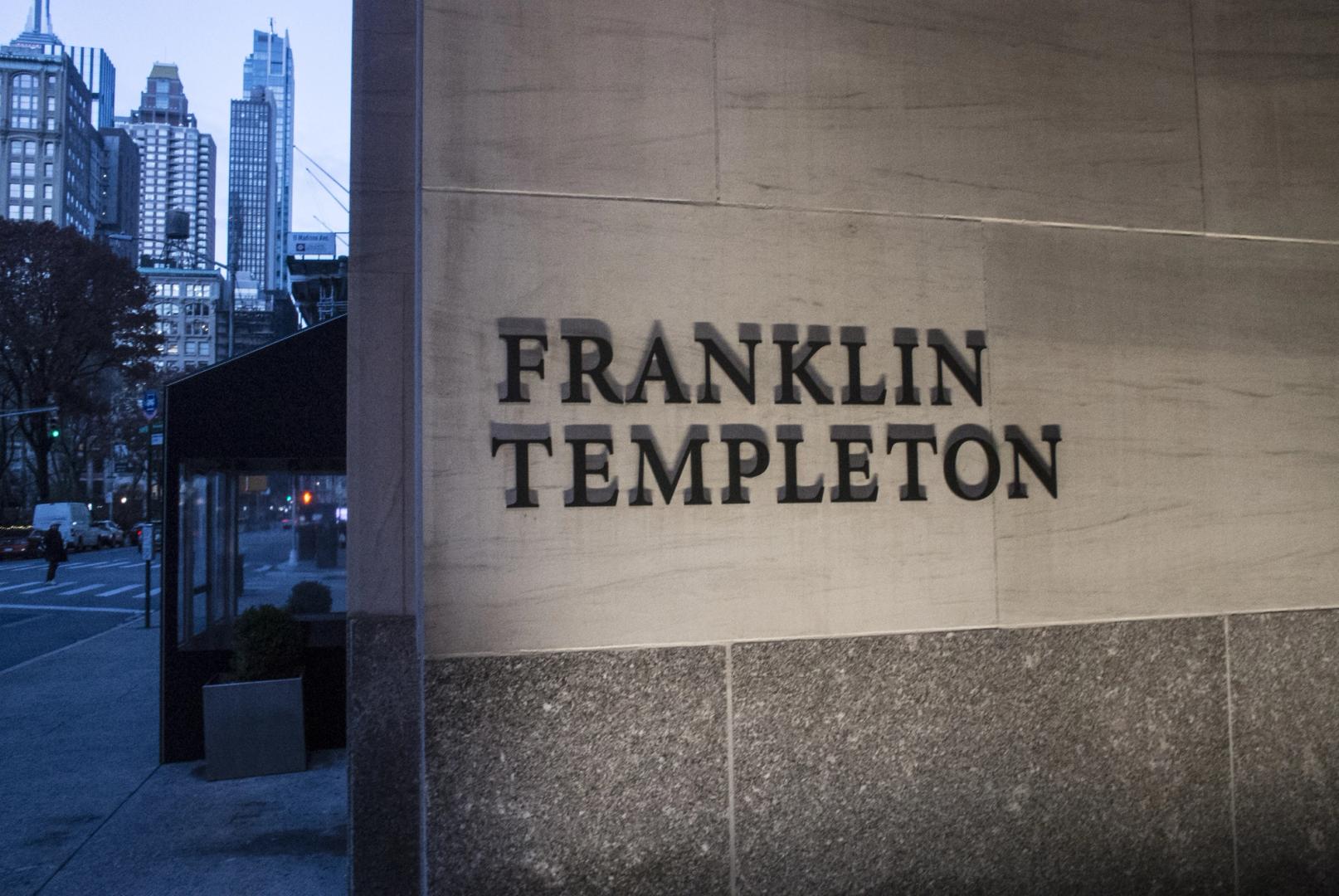
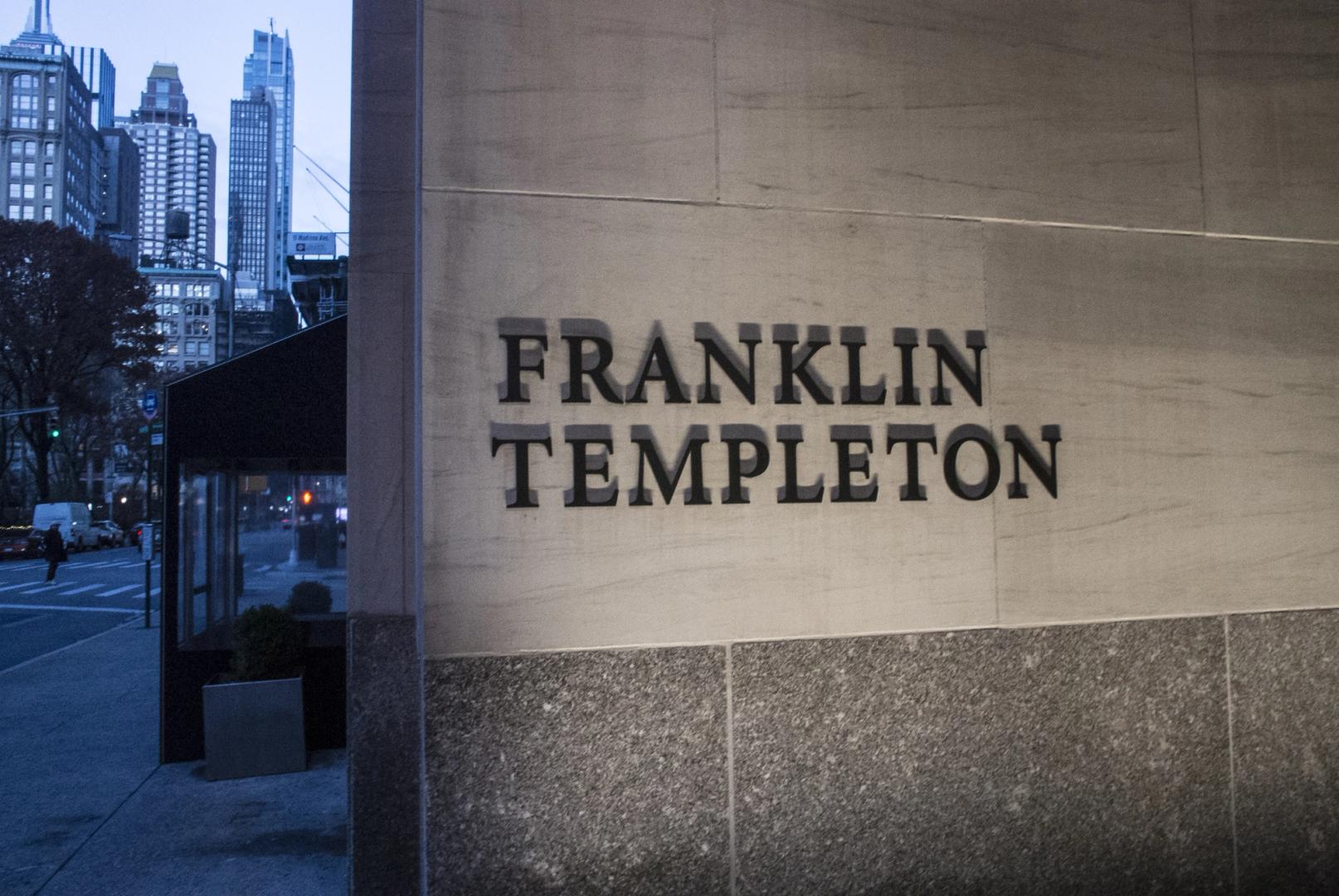
Ondo Finance said it will work with Franklin Templeton to bring tokenized versions of traditional investment products to blockchain users, a step that reflects a broader push to merge conventional finance with crypto infrastructure.
The effort centers on Ondo Global Markets, a platform that issues blockchain-based tokens backed by real-world assets such as publicly traded stocks and exchange-traded funds. These tokens track the value of underlying securities and can be held in digital wallets, allowing users to gain exposure without opening a brokerage account.
Franklin Templeton, which manages about $1.7 trillion in assets, will provide investment products and support the rollout. The firms also plan to launch education programs aimed at crypto-native users who may be unfamiliar with long-term portfolio strategies.
The partnership builds on a growing trend where large asset managers are testing blockchain rails to distribute products. Franklin Templeton has already developed digital asset tools, while others, including BlackRock, have explored tokenized funds and onchain settlement.
Ondo Global Markets, launched in September 2025, reports over $620 million in total value locked and more than $12 billion in trading volume across 60,000 users. The company says demand is coming from users who want exposure to traditional markets without the friction of cross-border accounts, currency conversions or trading hours.
The implications reach beyond convenience. Tokenization could reshape how assets move and who can access them. Traditional markets run on limited hours and layers of intermediaries. Blockchain systems, by contrast, operate round the clock and allow direct ownership through wallets.
Still, the shift will test how far tokenized securities can go within existing rules. Regulators have yet to fully address how these instruments should be treated when they move across borders and wallets rather than brokerages.
Competition is also building. A growing list of firms now offer tokenized funds, and major financial players are weighing how to defend their role as gatekeepers. If blockchain-based
distribution gains traction, it could chip away at the advantage long held by banks and brokers that control access to markets.
For Ondo and Franklin Templeton, the bet is that investors will prefer a model that blends familiar assets with new rails.
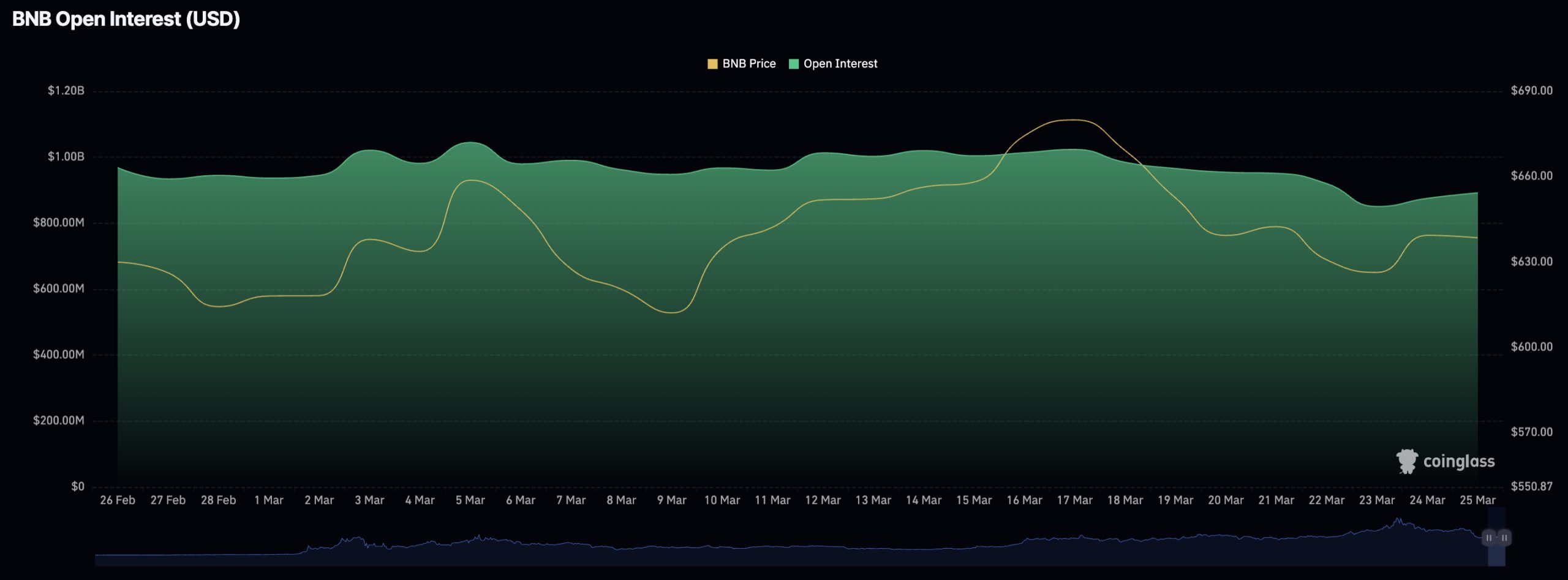
BNB price surged back towards the $650 mark as futures traders aggressively positioned for further upside following a bullish prediction. After touching an intraday low of $627 on Sunday, the asset rebounded to $645, signaling a potential sentiment shift across the broader altcoin market.
The bounce coincides with a cooling of geopolitical tensions and a sharp decline in crude oil prices below $90. This macro relief has injected liquidity back into risk assets, pushing Bitcoin back above $71,000 and dragging major altcoins upward.
While the spot market shows recovery, the derivatives data paints a more aggressive picture; open interest for BNB futures has spiked 6.5% to $891 million in just 24 hours. The market is waking up.

This surge in leverage suggests institutional confidence is returning to the Binance ecosystem despite recent regulatory quiet periods. With bulls targeting a breakout, current price action hinges on reclaiming key resistance levels established earlier in the quarter.
Discover: The best pre-launch token sales
BNB Price Prediction: Can Open Interest Drive Prices to $690?
The technical structure and prediction for BNB price has shifted from consolidation to accumulation. Trading at $646 at the time of this analysis, the price action is respecting a multi-week ascending trendline that has served as dynamic support. As long as the token holds above the $630 floor, the path of least resistance appears upward.
Derivatives metrics provide the strongest bullish signal. Data from CoinGlass indicates a long/short ratio of 2.11 on Binance, meaning buyers are overwhelming sellers by more than two to one. This creates a high-pressure environment where a move past immediate resistance could trigger a short squeeze.

Analysts are eyeing the $690 level as the critical breakout point. A clean 4-hour close above this line could open the door for a rapid extension toward the $700-$720 range. Conversely, failure to hold the $639 7-day SMA would invalidate the immediate bullish thesis, potentially sending price action back toward $620 support.
Discover: The best crypto to diversify your portfolio with
Traders Rotate to L3 Infrastructure as Gains Consolidate
While BNB offers stability and consistent ecosystem growth, the sheer market capitalization of major L1s often limits the potential for exponential short-term multiples (can a $90B asset 10x overnight? Unlikely). Consequently, volume often rotates from established giants into emerging infrastructure plays during consolidation phases.
Smart money is increasingly tracking Layer 3 (L3) solutions that promise to unify fragmented liquidity. LiquidChain ($LIQUID) has emerged as a focal point in this narrative, positioning itself as the “Cross-Chain Liquidity Layer” capable of fusing Bitcoin, Ethereum, and Solana execution environments.
A new layer emerges. Only a few see it first. — LiquidChain (@getliquidchain) March 24, 2026
The future is LiquidChain  ⟁https://t.co/vqvBcdSj94 pic.twitter.com/R7ZeZ0NPGl
The project distinguishes itself through a “Deploy-Once Architecture” and single-step execution, aiming to solve the user experience nightmare of bridging assets manually. The LiquidChain presale has already raised more than $600K, with early participants securing an entry price of $0.0143 with more than 1700% APY bonus. The contract is also audited by Certik, a benchmark in crypto safety.
Disclaimer: This article is for informational purposes only and does not constitute financial advice. Cryptocurrency investments are highly volatile and risky. Always do your own research.
The post BNB Price Prediction: Aggressive Spot Market and Bottlenecks appeared first on Cryptonews.
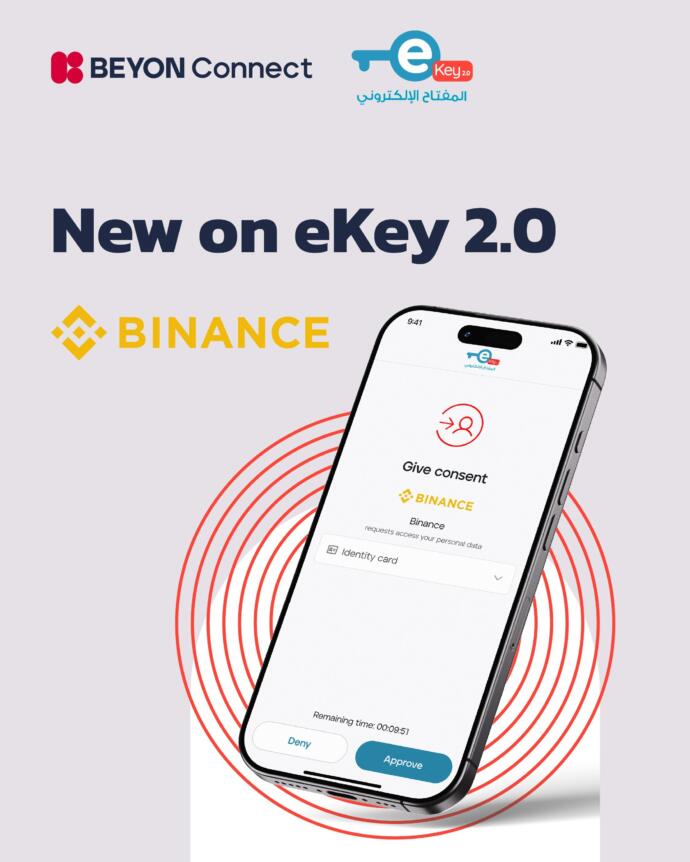
Binance Bahrain is expanding its onboarding framework by integrating Beyon Connect’s eKey 2.0 national identity solution to verify users during transactions. The announcement describes a collaboration that ties a government-backed digital identity to a leading crypto platform, aiming to improve security and streamline verification while preserving user convenience. By leveraging biometric authentication and 3D facial recognition, the solution seeks to reduce reliance on OTP-based methods and support a secure, compliant customer experience. The move reflects Bahrain’s ongoing digital transformation and its push to enable trusted private-sector access to regulated digital services through national identity infrastructure.
Key points
- eKey 2.0 integration will be used for secure digital verification during Binance Bahrain onboarding and transactions.
- The platform uses biometric authentication and 3D facial recognition, replacing OTP-based verification and aiming to reduce fraud.
- Beyon Connect holds exclusive reseller rights and the eKey 2.0 app is accessible via the Bahrain eGovernment App Store.
- The initiative is a national government product ready for wider use by government entities and the private sector.
Why it matters
This partnership links Bahrain’s national identity framework to a major financial service, potentially speeding secure onboarding for Binance Bahrain users and raising the bar for digital verification in regulated services. By relying on government-backed identity data and biometric authentication, the arrangement aims to improve security, reduce fraud risk, and simplify KYC without extensive infrastructure investment. The move aligns with Bahrain’s digital transformation goals and could influence how financial institutions and other sectors adopt national identity tools as part of everyday service delivery.
What to watch
- Rollout timeline and progress of the eKey 2.0 integration within Binance Bahrain onboarding.
- Real-world uptake by citizens/residents and any changes to the verification flow.
- Expansion of eKey 2.0 adoption across financial, telecoms, and government sectors in Bahrain.
Disclosure: The content below is a press release provided by the company or its PR representative. It is published for informational purposes.
Binance Bahrain Partners with Beyon Connect to Integrate eKey 2.0, Enhancing Secure and Seamless User Onboarding
March 25 2026, Bahrain: Binance Bahrain has announced a strategic partnership with Beyon Connect, enabling the integration of the Kingdom of Bahrain’s eKey 2.0 National Identity solution into the Binance Bahrain to enable secure digital verification of users when conducting transactions with Binance Bahrain . The collaboration marks a significant step in enhancing secure, seamless, and user-friendly digital verification for residents and nationals of Bahrain.
Through this partnership, Binance Bahrain is leveraging Beyon Connect’s exclusive reseller rights as an authorised reseller of the eKey 2.0 system, and the enhanced eKey application available through the eGovernment App Store (bahrain.bh/apps), operated by the Information and eGovernment Authority (iGA), to access reliable, verified government-backed user information required for Know Your Customer (KYC) processes. The integration allows eligible users to log in to Binance Bahrain’s services using eKey 2.0, enabling easy digital verification while maintaining the highest standards of security and compliance.
The enhanced eKey 2.0 National Identity solution is a cornerstone of Kingdom of Bahrain’s digital transformation journey and is a national government product ready for wider use by various government entities and the private sector. The solution supports reducing costs for current and future entities by enabling identity-matching mechanisms with high levels of information security, data protection, and user experience, without the need for investment in technologies or infrastructure. Powered by biometric-based authentication and 3D facial recognition (facial recognition), the platform replaces traditional OTP-based systems, significantly reducing fraud risks while enhancing convenience and overall user experience.
Trarik Erik, MENAT Lead, Binance,, commented: “We are proud to partner with Beyon Connect to integrate eKey 2.0 into Binance Bahrain’s onboarding journey. This collaboration reflects our commitment to supporting Bahrain’s innovation-driven digital vision, while delivering a seamless, secure, and efficient experience for users. By leveraging trusted national digital identity infrastructure, we are enabling citizens and residents to access regulated digital services with confidence.”
Beyon Connect CEO Chris Hild stated: “Trust and security are the foundations of financial services. Through eKey 2.0 we are enabling financial institutions to meet regulatory requirements with confidence, protect customers, and deliver faster and smarter services. This step represents an important advancement toward building a sophisticated and future-ready financial ecosystem in the Kingdom of Bahrain.”
The service is available to all citizens and residents of the Kingdom of Bahrain, accelerating registration processes and reducing barriers, while ensuring compliance with local regulatory and security requirements.The eKey 2.0 platform plays a vital role in empowering individuals and institutions by simplifying access to digital services, strengthening national security, and fostering private-sector innovation Its growing adoption across the financial, telecommunications, and government sectors reflects Bahrain’s ambition to establish its position at the forefront of the global digital economy.
About Beyon Connect
Beyon Connect, a subsidiary of the Beyon Group, is a leading provider of digital trust solutions and the developer of eKey 2.0 — Bahrain’s official platform for digital identity, secure authentication, and consent-based KYC.For more information visit: https://beyonconnect.com/
About Binance Bahrain
Binance Bahrain is part of Binance, a leading global blockchain ecosystem behind the world’s largest cryptocurrency exchange by trading volume and registered users. Binance is trusted by more than 260 million people in over 100 countries for its industry-leading security, transparency, and comprehensive suite of digital asset products and services. Binance is committed to supporting responsible innovation and building an inclusive crypto ecosystem that increases financial access and freedom.
For more information, visit: https://www.binance.bh

Key Highlights
- The memory chip manufacturer submitted a confidential filing to the SEC for a U.S. ADR listing, with plans to finalize the process by 2026
- SK Hynix aims to generate between $6.7 billion and $10 billion through this capital raising initiative
- Capital will be directed toward artificial intelligence infrastructure, including the Yongin HBM production cluster and an advanced packaging plant in Indiana
- During the annual shareholder gathering, CEO Kwak Noh-Jung announced plans to amass over 100 trillion won in net cash for strategic long-term investments
- Shares of SK Hynix climbed more than 5% in Seoul trading on Wednesday; the stock has appreciated approximately 60% since the beginning of the year
Shares of SK Hynix experienced a significant rally of over 5% during Wednesday’s trading session in Seoul following confirmation that the memory chip manufacturer had submitted a confidential filing to the U.S. Securities and Exchange Commission regarding a prospective Wall Street debut. The stock’s year-to-date performance shows an impressive gain of approximately 60%, building on a remarkable 274% surge recorded in 2025.
The South Korean chipmaker intends to introduce American Depositary Receipts on U.S. exchanges and is working toward finalizing this offering before the end of 2026. According to company statements, precise details surrounding the offering’s magnitude and timeline remain under development.
According to reports from Korean financial media outlets, the company has set a fundraising target in the range of 10 trillion to 15 trillion won — equivalent to approximately $6.7 billion to $10 billion based on prevailing exchange rates.
SK Hynix initially revealed its intentions to pursue a U.S. stock market presence in December of last year. This strategic initiative aims to secure additional capital necessary for manufacturing capacity expansion as the appetite for AI-optimized memory chips remains exceptionally strong.
As the global frontrunner in high-bandwidth memory chip production, SK Hynix supplies critical components for AI processing units manufactured by major clients including Nvidia. The surge in HBM demand has intensified dramatically, contributing to a worldwide shortage of memory products and upward pressure on pricing.
Major Infrastructure Investments Underway
The capital secured through this offering is anticipated to support the company’s high-bandwidth memory semiconductor manufacturing complex in Yongin, South Korea, including a $15 billion production facility, along with its sophisticated packaging operations in Indiana. Management is also evaluating the establishment of an AI-focused investment division based in Silicon Valley.
During Wednesday’s annual meeting with shareholders, Chief Executive Kwak Noh-Jung outlined the company’s objective to accumulate more than 100 trillion won in net cash reserves to support long-range strategic initiatives.
The company’s recently completed M15X fabrication plant in Cheongju, South Korea, reached operational status earlier than originally projected. Development work continues on both the Yongin manufacturing cluster and the Indiana advanced packaging facility.
A communication distributed to shareholders highlighted “unprecedented growth” occurring within the memory market, characterizing memory as “a key-value product that determines the performance of AI systems.”
Massive Equipment Procurement Agreement
Merely one day prior to announcing the SEC filing, SK Hynix revealed plans to acquire 11.95 trillion won ($7.97 billion) in cutting-edge semiconductor manufacturing equipment from ASML — representing one of the largest publicly disclosed procurement contracts for such technology on record.
The coordination between the ASML equipment purchase and the SEC filing submission signals a company acting decisively to cement its dominant position in the HBM marketplace ahead of competitors Samsung and Micron.
Samsung has been working aggressively to regain market share in the HBM segment, while Micron continues expanding its footprint as a domestically-based option for AI memory requirements in the United States.
SK Hynix indicated it will provide additional disclosures once specific parameters of the U.S. listing have been determined, or no later than six months following the initial submission.
The company’s ADR offering will utilize currently outstanding shares rather than issuing new equity, a structure that maintains value for existing shareholders.


Key Takeaways
- Amazon has finalized its purchase of Fauna Robotics, a humanoid robot company based in New York and established in 2024 by former engineers from Meta and Google.
- The startup’s flagship product, Sprout, is a bipedal humanoid robot measuring 3’6″ tall with a $50,000 price tag, operating on NVIDIA’s Jetson Orin technology.
- The transaction was completed last week, with no public disclosure of the acquisition price.
- Approximately 50 Fauna employees will transition to Amazon’s Personal Robotics Group in New York, functioning under the brand “Fauna, an Amazon company.”
- This acquisition follows closely on the heels of Amazon’s purchase of Rivr, a Swiss robotics company, indicating an aggressive expansion into consumer and delivery automation.
On Tuesday, Amazon publicly confirmed the completion of its acquisition of Fauna Robotics, a startup focused on humanoid robots that was launched in 2024 by engineering veterans from Meta and Google. The transaction reached its conclusion last week, although the purchase price remains undisclosed.
$AMZN has acquired Fauna Robotics marking its entry into the consumer humanoid market after the deal closed last week.
Fauna is developing a compact 42-inch humanoid called Sprout that can walk, grip objects, interact with people and even dance. pic.twitter.com/ibRfxcIOuT
— Shay Boloor (@StockSavvyShay) March 24, 2026
With this strategic purchase, Amazon enters the increasingly competitive arena of humanoid robotics, a sector that has witnessed substantial growth and innovation in recent years.
The flagship offering from Fauna is Sprout — a two-legged robot that stands at 3 feet 6 inches and tips the scales at 50 pounds. The design philosophy emphasizes accessibility and consumer appeal rather than industrial warehouse applications.
Priced at $50,000, Sprout is packaged with integrated software, gripper attachments, and a replaceable battery providing approximately 3 hours of operational time. The robot leverages NVIDIA’s Jetson Orin robotics computing platform and features memory capabilities that develop over time.
Sprout’s capabilities include walking, dancing, door manipulation, name recognition, and engaging in two-way conversations. Notable early adopters include Disney and Hyundai’s Boston Dynamics division.
The entire Fauna team of approximately 50 personnel will relocate to an Amazon facility in New York, maintaining operations under the designation “Fauna, an Amazon company.” Both co-founders, Rob Cochran and Josh Merel, will remain with the organization.
The integration places Fauna within Amazon’s Personal Robotics Group — a distinct division separate from the company’s warehouse automation operations.
Amazon’s Robotics Evolution
Amazon’s involvement in robotics extends over ten years. The company’s $775 million purchase of Kiva Systems in 2012 established the foundation for Amazon Robotics, which currently powers the company’s warehouse automation infrastructure.
Amazon previously ventured into the home robotics market with Astro, a $1,600 mobile household robot introduced in 2021 that continues to operate on an invitation-only basis. Sprout represents a more targeted consumer-focused initiative.
The Fauna acquisition arrives mere days after Amazon revealed its purchase of Rivr, a Swiss enterprise developing robotic solutions for last-mile delivery.
Intensifying Competition in Humanoid Robotics
Amazon enters an increasingly saturated marketplace. Tesla is advancing its Optimus humanoid robot at its Fremont manufacturing facility, with CEO Elon Musk projecting annual production of 1 million units.
Additional competitors in this domain include 1X, Figure AI, Apptronik, Agility Robotics, and China-based Unitree.
Amazon has indicated intentions to leverage its robotics knowledge, retail infrastructure, and devices division expertise to investigate potential applications for personal robots in consumer settings.
According to an Amazon spokesperson, the company is “excited about Fauna’s vision to build capable, safe, and fun robots for everyone.”
AMZN shares concluded Tuesday’s trading session with a 2.28% increase, gaining $4.73.
Solana price rises back above $90 with multi-billion-dollar volume as traders bet on congestion fixes, the Alpenglow upgrade, and SOL’s role as a leading high-throughput layer-1.
Summary
- Solana price is trading around $92–$93 today, with a market cap near $52.9 billion and 24-hour volume of roughly $4.2–$4.4 billion.
- The layer-1 token has gained about 3.3% over the past 24 hours and roughly 2.8% in the last seven days, outpacing the broader market’s 1.3% daily rise.
- Ongoing work to address network congestion and upcoming protocol upgrades are helping shape Solana’s position as a high-throughput Ethereum rival despite its history of outages.
Solana (SOL) price is changing hands around $92.39 today, up 0.62% in the last hour, 3.27% over the past 24 hours and 2.78% in the past week, giving it a market capitalization of about $52.88 billion and 24-hour trading volume near $4.18 billion. External dashboards place SOL’s current price in the $92.02–$92.64 band, with a circulating supply of roughly 572.25 million tokens, a market cap of around $52.65–$52.89 billion and 24-hour volume between about $4.34 billion and $4.39 billion. Over the past several sessions in March, daily closes have clustered roughly in an $86–$94 range, confirming a consolidation phase after a volatile start to the month.
That performance is unfolding in a firm market: the total crypto market cap stands near $2.45 trillion, up about 1.31% over the last day, putting Solana among the stronger large-cap performers over the same period. In earlier March snapshots, SOL traded around $84.56 with a market cap of $48.18 billion and 24-hour volume of $5.40 billion, then climbed toward the mid-$90 area with a market capitalization near $54 billion and daily volume described as “moderate,” highlighting a steady recovery rather than a single spike. Together, these figures point to a liquid, actively traded market where price is being driven by both spot demand and derivatives positioning.
Solana is a high-throughput layer-1 blockchain that combines a proof-of-stake consensus mechanism with a timing technique called proof of history, which allows validators to order transactions more efficiently and target tens of thousands of transactions per second. The network has become a core venue for decentralized finance, NFTs, and consumer apps, with SOL serving as the native asset for transaction fees, staking and collateral, firmly placing it in the layer-1 smart contract platform category rather than a DeFi protocol or AI token. Historically, this speed-focused design has come with a trade-off: Solana has experienced multiple outages and congestion episodes, including several multi-hour network halts in 2023 and earlier, which pushed developers and validators to prioritize stability improvements.
More recently, the project has been preparing a major core protocol overhaul known as Alpenglow, described as the most significant reconsideration of Solana’s architecture to date and expected in the first half of 2026. Community governance records show that about 98% of participating token holders backed the upgrade in a 2025 vote, indicating broad internal support for changes aimed at improving decentralization, throughput and fee dynamics. In parallel, client teams have rolled out updates such as version 1.17.31 and follow-on releases to mitigate persistent network congestion and transaction failures that surfaced during recent periods of high meme-coin and NFT activity.
Although detailed whale transaction feeds for Solana are spread across multiple analytics sites, available market metrics demonstrate heavy participation by larger traders and leveraged players. Historical data shows that on March 25, 2026, SOL traded in a $90.82–$93.21 band with daily volume around 4.43 billion units, corresponding to multi-billion-dollar turnover at current prices. Another dataset cites a volume-to-market-cap ratio near 8.2–8.3%, based on roughly $4.34–$4.39 billion in volume against a market cap just above $52.6 billion, a level of activity consistent with ongoing directional trading and derivatives hedging rather than solely passive holding.
Sector-wide, Solana is part of a cluster of alternative layer-1 networks that includes Ethereum, Avalanche and Sui, all of which compete on smart contract capacity but with different trade-offs in fees, security models and decentralization. Today, Ethereum trades around $2,180 with a market cap of about $263.11 billion and 24-hour volume near $19.19 billion, while Avalanche changes hands around $9.74 with a market cap of $4.21 billion and $262.28 million in daily volume, and Sui trades near $0.969 with a market cap of $3.78 billion and $382.72 million in 24-hour volume. This positions Solana as one of the most valuable and actively traded non-Ethereum smart contract platforms, a status that has persisted despite its checkered stability history and now rests heavily on the successful delivery of congestion fixes and the Alpenglow upgrade.
Within that broader landscape, Solana’s latest push back above $90 looks like a textbook consolidation rally in a flagship layer-1: price grinding higher in a defined range, supported by billions in daily volume and a clear catalyst path in the form of protocol upgrades and congestion relief.


Led by Prime Minister Keir Starmer, the U.K. government has announced an immediate moratorium on cryptocurrency donations to political parties, citing concerns that digital assets could be used to hide the origins of foreign money in British politics, according to the Press Association.
The move puts crypto at the centre of a wider crackdown on foreign interference, signaling that regulators are increasingly treating anonymous digital payments as a democratic risk rather than just a financial one.
The ban, triggered by the government-commissioned Rycroft review, covers donations of any size and takes effect today. Parties have 30 days from now to return any crypto received once legislation is passed, after which criminal penalties apply. Overseas donations from British expats will also be capped at £100,000 a year.
The review’s author, former senior civil servant Philip Rycroft, stopped short of calling for a permanent ban — framing the moratorium as a pause for regulation to catch up with reality. But with the rules written into the Representation of the People Bill currently going through Parliament, the bar to lift them is high.
“I wasn’t here to look out for the interests of any political party,” Rycroft said. “I was here to look out for the interest of our democratic processes.”
Members of Reform U.K., which currently leads polling data, walked out of Parliament during the announcement. Prime Minister Keir Starmer took a pointed swipe at Reform leader Nigel Farage, suggesting he would “say anything, no matter how divisive, if he is paid to do so.”

Quick Overview
- Nvidia shares advanced 1.6% in premarket hours Wednesday, trading at $177.97
- Arm Holdings unveiled the Arm AGI CPU for data centers, projecting $15B yearly revenue by 2031
- The Arm chip doesn’t directly challenge Nvidia’s GPU dominance but may overlap with Nvidia’s Vera CPU lineup
- Amazon Web Services committed to acquiring 1 million Nvidia GPUs for AI inference workloads, valued above $50 billion
- Nvidia restarts H200 chip manufacturing and develops China-compliant Groq 3 variants, potentially adding $32B in annual sales
Nvidia shares moved higher during early Wednesday sessions, brushing aside concerns about Arm Holdings’ entry into the AI chip arena. The development coincided with two significant revenue opportunities that had escaped widespread attention.
Arm revealed its inaugural data center CPU on Tuesday evening—the Arm AGI CPU—identifying Meta Platforms and OpenAI among its initial clients. During an after-hours investor presentation, Arm outlined aggressive financial targets, forecasting approximately $15 billion in yearly CPU revenue by 2031 as part of a comprehensive $25 billion revenue objective.
Arm shares surged 12% in premarket activity following the disclosure.
However, industry observers were swift to clarify that this new processor doesn’t directly challenge Nvidia’s flagship GPU offerings.
Benchmark Research’s Cody Acree noted that Arm’s strategy is “less about catching up to the accelerator wave and more about inserting itself deeper into the architecture that governs how AI infrastructure actually runs.”
Jensen Huang, Nvidia’s CEO, appeared in Arm’s promotional content, characterizing their nearly twenty-year collaboration as the backbone for “one seamless platform, from cloud to edge to AI factories.”
The competitive dynamic becomes more nuanced regarding Nvidia’s recently launched Vera CPUs, introduced during last week’s developer conference. J.P. Morgan’s Harlan Sur highlighted potential overlap between Arm’s chip and that product category. He additionally noted Meta’s existing agreement with Nvidia for Arm-architecture CPUs—complicating the competitive landscape.
Amazon Web Services Makes Massive Nvidia Commitment
Separately, Amazon Web Services revealed plans to procure 1 million Nvidia GPUs dedicated to AI inference capabilities. The announcement caught many off guard—AWS had previously promoted itself as housing “the largest cluster of non-Nvidia chips in the world” following its October 2025 Indiana data center deployment.
The agreement encompasses a “broad mix” of six supplementary Nvidia chip variants, including the recently announced Groq 3 inference processors, alongside Nvidia networking equipment. Industry estimates place the complete package well beyond $50 billion, with completion targeted by late 2027.
This singular agreement accounts for approximately 25% of Nvidia’s total 2025 annual revenue.
Chinese Market Revenue Resumes
CEO Jensen Huang confirmed last week that Nvidia is resuming manufacturing of its H200 processor—engineered to meet U.S. export control requirements—specifically for Chinese customers. Industry sources suggest a China-compliant Groq 3 variant is also under development.
Nvidia had incorporated zero Chinese data center sales into its Q1 projections. Throughout 2025, those revenues approximated $8 billion quarterly—roughly $32 billion on an annualized basis, representing about 15% of total 2025 revenue.
Together, the AWS contract and China market reentry represent over $82 billion in revenue streams absent from Nvidia’s current financial forecasts.
Nvidia shares traded 1.6% higher at $177.97 during premarket hours Wednesday, rebounding from a 0.3% decline in the previous session.
Key Insights
- Circle shares fell nearly 20% as draft rules threaten stablecoin reward models and user incentives
- Proposed limits on yield could reduce USDC adoption and weaken exchange-driven demand
- Tether audit plans and wallet freezes added pressure to Circle’s market position
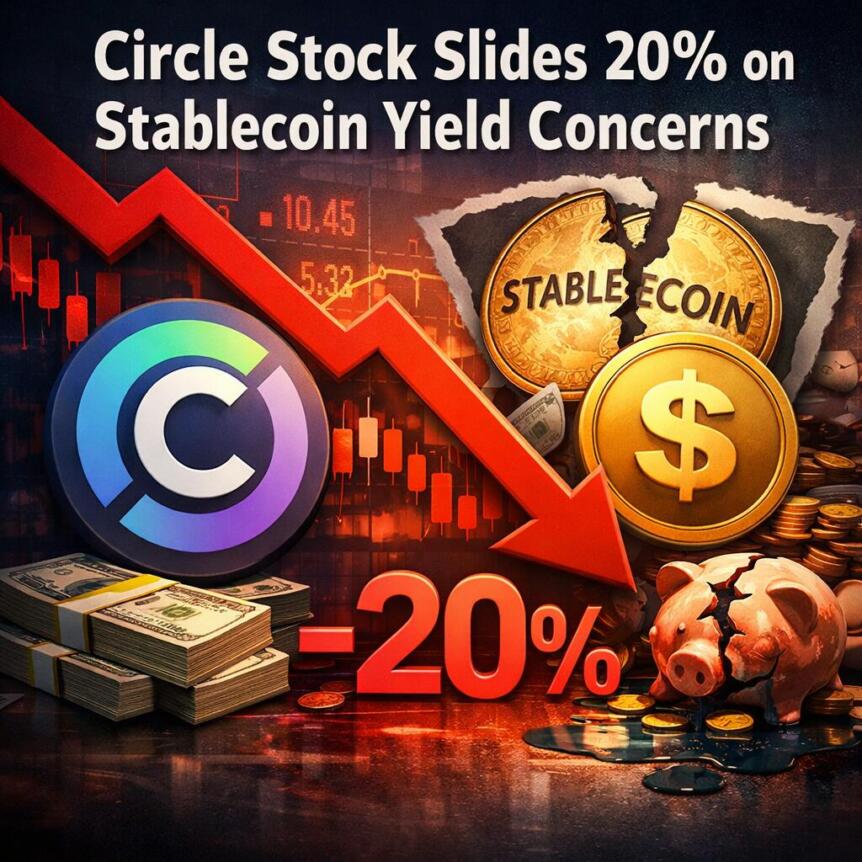
Shares of Circle Internet Group fell sharply on March 24, dropping nearly 20% in one session. The stock declined from about $127 to near $102. This marked one of its steepest recent losses. The decline came after a good surge in March where shares soared below $60 to over $130.
Source: TradingView
The trading volume rose through the downturn, signaling intense selling pressure. The action implied a swift change in investor mood. Market participants reacted to emerging concerns around stablecoin regulation.
The decline also affected related firms. Shares of Coinbase fell nearly 10% during the same session. Analysts linked the broader sell-off to uncertainty in the stablecoin sector.
Draft Proposal Targets Reward Structures
Reports indicated that draft legislative language could restrict how platforms offer stablecoin rewards. The proposal would prohibit yield for simply holding stablecoins. It would also ban incentives that resemble traditional interest payments.
The rules would apply to exchanges, brokers, and related services. However, the proposal allows activity-based rewards tied to user behavior. These include loyalty or promotional programs that do not function like interest.
Analysts noted that such restrictions could reduce the appeal of holding USD Coin. Rewards are used by many platforms to attract deposits and keep users. In absence of these incentives, stablecoins can be less competitive with bank products.
Competitive Pressure and Additional Developments
At the same time, Tether announced plans for a full financial audit. The move could improve its transparency profile. This development may narrow Circle’s perceived advantage as a compliant issuer.
Separately, reports indicated that Circle froze USDC balances linked to several wallets. The action related to an ongoing U.S. civil case, though details remain limited. These developments added further uncertainty for investors.
Analysts stated that limiting rewards could weaken long-term demand for USDC. Exchange-driven incentives currently support a significant share of stablecoin activity. Any reduction in these programs may affect user behavior and revenue models.
MLB MVP odds, picks, predictions: Best bets for AL, NL MVP awards in 2026

Kindle Colorsoft drops back to Black Friday price ahead of Amazon Spring Sale

Jessie J – Price Tag (Lyrics) Feat. B.O.B

Smart energy pays enters the US market, targeting scalable financial infrastructure

Why Israel is blocking foreign journalists from entering

Bitcoin: We’re Entering The Most Dangerous Phase
Jessie J – Price Tag (Lyrics) Feat. B.O.B

Bitcoin in You can now receive fee cashback while trading Check it out now. #Bitcoin #Ethereum

jio finance share latest news | jiofin share news today | jio financial services latest news
-
 Crypto World5 days ago
NIO (NIO) Stock Plunges 6.5% as Shelf Registration Sparks Dilution Worries
-

 Fashion5 days ago
Weekend Open Thread: Adidas – Corporette.com
-

 Politics5 days ago
Jenni Murray, Long-Serving Woman’s Hour Presenter, Dies Aged 75
-

 Crypto World4 days ago
Best Crypto to Buy Now: Strategy Just Spent $1.57 Billion on Bitcoin During Fear While Early Investors Quietly Enter Pepeto for 150x Potential
-
 NewsBeat6 hours ago
Manchester United reach agreement with Casemiro over contract clause amid transfer speculation
-

 News Videos7 days ago
RBA board divided on rate cut, unusually buoyant share market | Finance Report | ABC NEWS
-

 Crypto World4 days ago
Bitcoin Price News: Bhutan Sells $72 Million in BTC Under Fiscal Pressure, but the Smart Money Entering Pepeto Sees What the Market Does Not
-

 Tech5 days ago
inKONBINI Lets You Spend Summer Days Behind the Register
-

 Crypto World7 days ago
Canada’s FINTRAC revokes registrations of 23 crypto MSBs in AML crackdown
-

 Sports2 days ago
Remo Stars and Kano Pillars Strengthen Survival Hopes in NPFL
-
 NewsBeat7 days ago
Residents in North Lanarkshire reminded to register to vote in Scottish Parliament Election
-

 Politics6 days ago
Gender equality discussions at UN face pushbacks and US resistance
-

 Business3 days ago
No Winner in March 21 Drawing as Prize Rolls to $133 Million for Next
-

 Business7 days ago
Who Was Alex Pretti? 5 Key Facts About the ICU Nurse Killed by Federal Agents in Minneapolis
-

 Sports2 days ago
Gary Kirsten Accuses Pakistan Cricket Board Of ‘Interference’, Mohsin Naqvi Responds
-

 Tech3 days ago
Give Your Phone a Huge (and Free) Upgrade by Switching to Another Keyboard
-

 Tech7 days ago
Inventec’s bizarre VeilBook laptop hides its touchpad under a sliding keyboard just to give cooling fans a little breathing room
-

 Sports5 days ago
2026 Kentucky Derby horses, odds, futures, preview, date: Expert who nailed 12 Derby-Oaks Doubles enters picks
-
Sports6 days ago
Vikings Free Agency Enters Phase 2 with Key Questions
-

 Tech3 days ago
AI enters the chat: New Seattle dating app relies on tech to facilitate meaningful human connections
You must be logged in to post a comment Login