
Crypto World
Hong Kong jails ex-banker over $470K USDT bribes

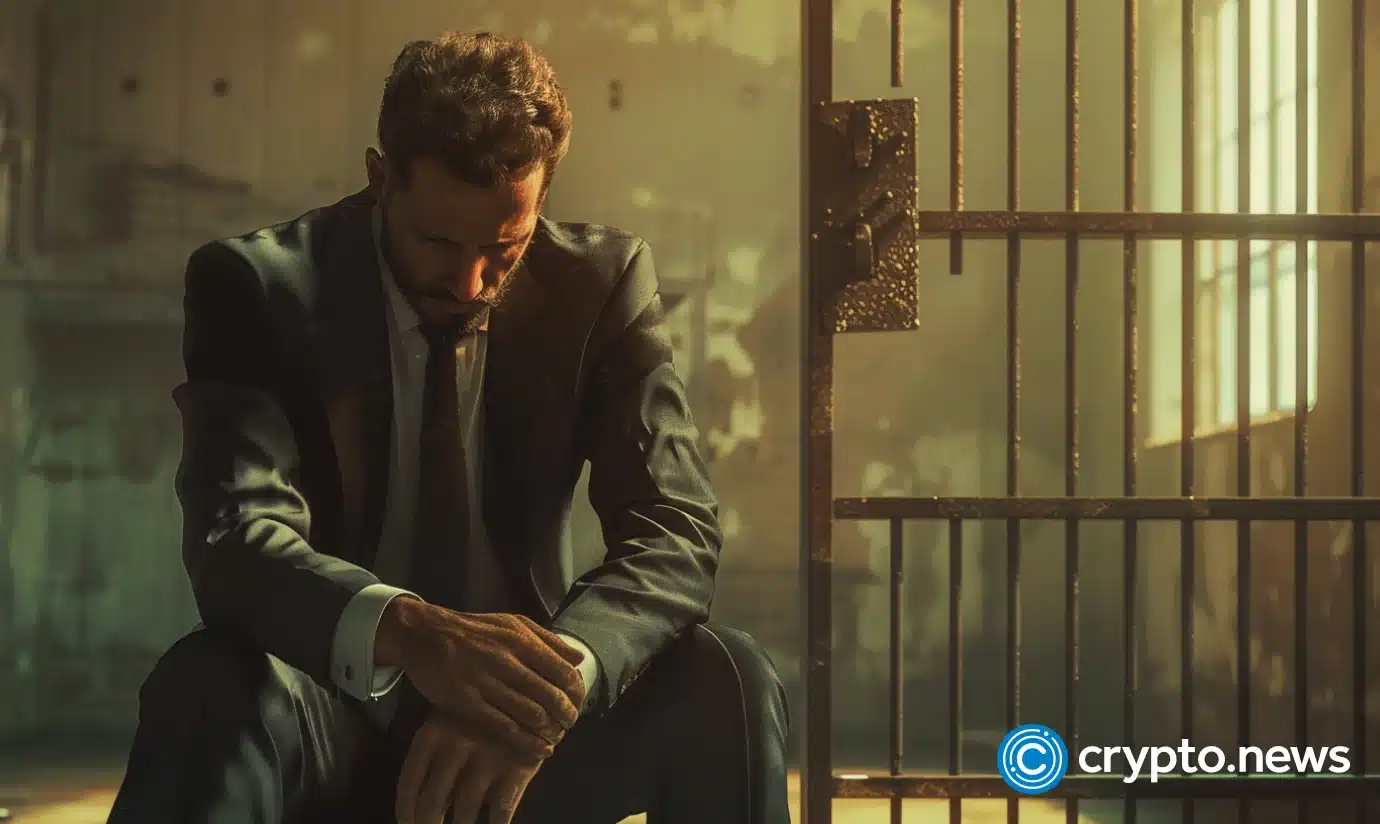
Hong Kong has jailed former China Construction Bank (Asia) relationship manager Lam Chun-yin for four years after he admitted accepting more than $470,000 in Tether to authenticate false bank instruments carrying a stated value above $1.6 billion.
Summary
- Hong Kong jailed former CCB Asia manager Lam Chun-yin for four years over USDT bribes.
- Lam accepted more than $470,000 in Tether to authenticate false bank documents totaling $1.6 billion.
- The court ordered HK$3.7 million restitution, matching the cryptocurrency bribes Lam received from conspirators involved.
- ICAC obtained arrest warrants for other people implicated after CCB Asia uncovered the scheme internally.
- A New York court let key White Rock claims against China Construction Bank survive dismissal.
The Independent Commission Against Corruption said on Sept. 18 that District Court Judge Ernest Lin Kam-hung sentenced the 32-year-old after his guilty plea to one count of conspiracy for an agent to accept advantages under Hong Kong’s Prevention of Bribery Ordinance and Crimes Ordinance.
The court ordered Lam to repay approximately HK$3.7 million to CCB (Asia), an amount equal to the bribes identified in the case. ICAC said the judge started from a six-year prison term and reduced it by one-third because Lam pleaded guilty, leaving a four-year sentence after finding no exceptional reason for another reduction.
Hong Kong bribery case centered on false bank guarantees
At the time of the offenses, ICAC said Lam worked in the Consumer Banking Division at CCB (Asia)’s Causeway Bay retail branch, where he served individual customers. The agency said his role did not cover business credit facilities or letters of credit, and the bank had never authorized him to handle such products.
Vesttoo Limited, which has since ceased operations, ran a platform for insurance-related investment transactions. ICAC said investors using the platform had to provide bank-issued standby letters of credit so an issuing bank could ultimately cover relevant losses if an investor failed to meet its obligations.
Yu Po Holdings Limited entered the platform as an investor in early 2022. The anti-graft agency said a criminal group then arranged for Lam to falsely present himself as China Construction Bank’s contact person for standby letters of credit connected with Yu Po.
Between April and June 2022, Lam admitted conspiring with a Vesttoo department head and other associates to receive more than $470,000 worth of Tether. ICAC said he authenticated multiple standby letters of credit that falsely purported to come from China Construction Bank and two collateral letters presented as Yu Po documents endorsed by the bank. The stated value of the instruments exceeded $1.6 billion.
An earlier ICAC charge announcement gave more detail about the document count. In June 2025, prosecutors alleged that Lam had been involved with 88 false standby letters of credit and two false collateral letters. His later guilty plea covered the bribery conspiracy, while a separate conspiracy charge involving false instruments was left on the court file.
CCB Asia uncovered the scheme through an internal review
CCB (Asia) found the problem during an internal investigation and then filed a corruption complaint, according to ICAC. The agency said its inquiry established that neither China Construction Bank nor its related companies had issued any of the standby letters of credit or collateral letters involved in Lam’s case.
During sentencing, Judge Lin described Lam’s criminality as “higher than in other similar cases,” according to ICAC. The judge cited the use of forged bank documents, the potential risk faced by the bank and damage to Hong Kong’s standing as an international financial center.
ICAC said people involved in the scheme had tried to make the bribery harder to detect by routing payments through cryptocurrency. The commission said it had applied for court warrants to arrest other individuals implicated in the case, but its Sept. 18 public statement did not identify the wanted people.
Public ICAC materials reviewed for this report do not disclose wallet addresses or transaction hashes for Lam’s Tether payments. The specific transfers therefore cannot be independently matched to public blockchain transactions from the information released by the agency.
The use of USDT in the case does not mean the payments were untraceable. In related coverage,crypto.news reported that Hong Kong investigators traced 8,127 USDT in a separate trafficking case to an exchange account and then to a bank transfer. The Hong Kong Court of Appeal relied on evidence from that payment trail when it upheld a 56-month prison term in August.
Vesttoo-linked claims continue through U.S. courts
The conduct behind Lam’s Hong Kong case sits within a larger series of disputes tied to Vesttoo’s reinsurance collateral. Vesttoo and affiliated entities filed Chapter 11 cases in Delaware in August 2023 after questions emerged over letters of credit used to support insurance and reinsurance transactions. A Vesttoo liquidating trust remained active in the bankruptcy docket in 2026.
A separate New York case brought by White Rock Insurance, an Aon subsidiary, concerns letters of credit allegedly used in Vesttoo transactions. White Rock alleges its segregated insurance cells released roughly $140 million in premiums after relying on purported collateral associated with China Construction Bank entities. The allegations remain civil claims and are not findings from Lam’s Hong Kong criminal sentence.
On April 21, New York Supreme Court Justice Andrea Masley rejected most of China Construction Bank’s attempt to dismiss White Rock’s amended complaint. The court allowed claims including fraud-related and negligent-supervision theories to continue, while dismissing a separate negligence claim as duplicative.
At the motion-to-dismiss stage, the New York court treated White Rock’s pleaded facts as allegations that still require proof. The order said there were factual questions over whether Lam had actual or apparent authority and whether CCB entities could face liability for his alleged conduct. The court expressly stated that those questions would have to be developed later in the litigation.
Another U.S. case involving Vesttoo collateral reached the Fifth Circuit Court of Appeals in April. Porch.com sued reinsurance broker Gallagher Re over duties connected with a reinsurance arrangement involving Vesttoo, White Rock and collateral expected from China Construction Bank.
The Fifth Circuit affirmed dismissal of some Porch claims but revived one contract claim concerning post-placement administrative services and sent that part of the case back for further proceedings. The appeals court said the scope of services customarily performed by a reinsurance intermediary presented a factual question that should not have been resolved through a motion to dismiss.
ICAC is still seeking other people tied to the case
The Sept. 18 sentencing does not close ICAC’s investigation into every person connected to the false instruments. The agency said it had sought warrants for other implicated individuals after Lam’s case reached sentencing.
ICAC had previously identified Vesttoo employee Udi Ginati and intermediary Wan Cheuk-lun in its June 2025 charging announcement, saying Lam was accused at the time of receiving Tether from Ginati, Wan and others. The same announcement separately charged former Standard Chartered Bank (Hong Kong) senior relationship manager Lee Ka-man with conspiracy to use four false standby letters of credit purportedly issued by Standard Chartered. Those earlier accusations must be distinguished from Lam’s Sept. 18 conviction and sentence.
The anti-graft agency said CCB (Asia) and Standard Chartered Bank Hong Kong cooperated with its investigation when the charges were announced. Its Sept. 18 statement said CCB (Asia) had lodged the corruption complaint after detecting the conduct internally and continued assisting investigators.
Hong Kong authorities have continued dealing with crypto-linked crime in other cases during 2026. Hong Kong police received 255 reports tied to the alleged Fun Coffee crypto investment scheme, with reported losses reaching HK$104 million. Police said the scheme involved USDT-based investment plans and had led to several arrests by August.
Separately, the city has continued expanding its regulated digital-asset framework. crypto.news reported on Sept. 17 that Hong Kong plans to expand regulated stablecoin trading and tokenized-asset infrastructure under its 2026 policy program.
ICAC’s latest public statement in Lam’s case says the commission is pursuing the remaining people implicated through court-issued arrest warrants, while Lam must serve the four-year sentence and repay approximately HK$3.7 million to CCB (Asia).

Six Nobel Prize-winning economists endorsed California’s Proposition 40 on September 19. This measure would place a one-time 5% tax on the wealth of the state’s billionaires.
The measure reaches the November 3 ballot with about $100 billion at stake, and Ripple Labs executive chair Chris Larsen has already spent more than $10 million to defeat it.
A $2.3 Trillion Case for the California Billionaire Tax
The letter came from Daron Acemoglu, Abhijit Banerjee, Peter Diamond, Esther Duflo, Paul Krugman, and Joseph Stiglitz. All six hold the Nobel Prize in Economic Sciences.
They wrote that California’s wealthiest 0.001% held a combined $700 billion ten years ago. That same sliver of the population now holds $2.3 trillion, which matches the annual income of roughly 20 million California taxpayers.
The economists also calculated that billionaires paid state income tax equal to 1.6% of their $1.4 trillion wealth gain between 2019 and 2025. Ordinary paychecks, they argued, face higher effective rates than that.
“A one-time tax of 5% on the wealth of California’s 250 billionaires would raise as much revenue as a 5% income tax on all Californian taxpayers: about $100 billion. The wealth tax would be modest relative to the gains made by billionaires, yet large enough to offset the federal cuts to Medicaid,” the letter read.
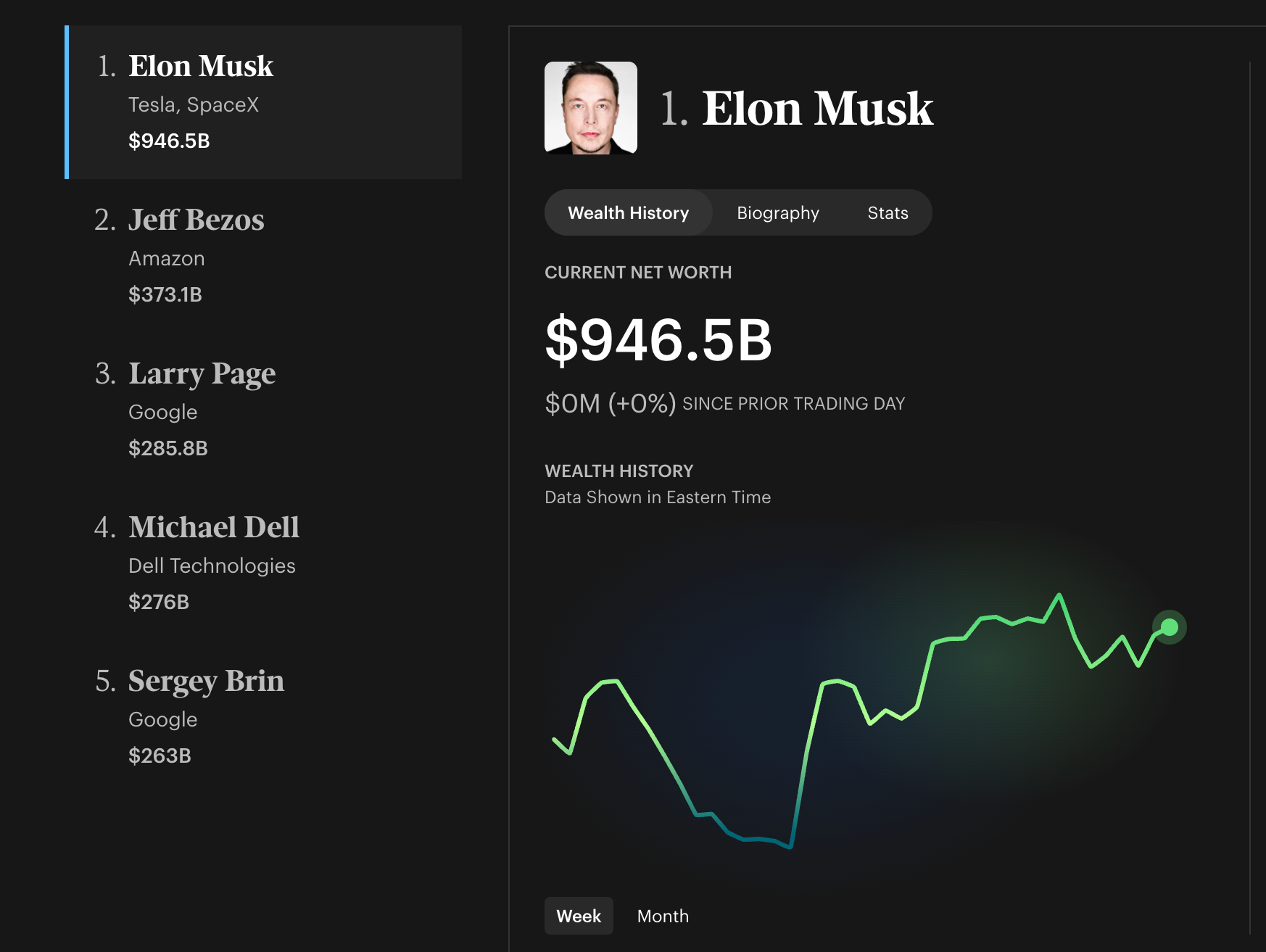
Acemoglu has pressed billionaires directly before. In July, he challenged Elon Musk to give away close to $1 trillion by 2036, and Musk replied that he would do something along those lines. Forbes currently values Musk at $946.5 billion.

Follow us on X to get the latest news as it happens
Ripple’s Bet Against Prop 40
The measure has also drawn organized opposition from the fortunes it would tax. Golden State Promise, one of the committees against Proposition 40, received $5 million from Larsen, and Ripple Labs matched that with $5 million of its own, Fortune reported.
He also routed $10 million to Building a Better California, a PAC formed earlier this year to fight the measure. Larsen has reason to spend. Forbes values him at $8.4 billion, which would leave him facing roughly $420 million under a 5% levy.
Venture capitalist John Doerr contributed $7.5 million to the same committee. Sergey Brin, the world’s fifth-richest man, shifted a large share of his holdings out of the state late last year, and his spending against the tax now totals $102 million.
Meanwhile, Building a Better California has backed two initiatives of its own, Proposition 41 and Proposition 42, and either one cancels the billionaire tax by drawing more votes, even if voters approve the tax as well.
Subscribe to our YouTube channel to watch leaders and journalists provide expert insights
The post 6 Nobel Economists vs. Ripple's Chairman: Who Wins California's Billionaire Tax Fight? appeared first on BeInCrypto.


Toyosa has introduced Bitcoin as a payment option for Toyota vehicle purchases in Bolivia, expanding its digital-asset checkout service one year after launching USDT payments.
Summary
- Toyosa now accepts Bitcoin for Toyota purchases, adding BTC alongside bolivianos, dollars, and USDT payments.
- Towerbank provides transaction processing, while BitGo supplies institutional wallet infrastructure, security, and traceability for payments.
- Bolivia removed its crypto payment-channel ban in 2024, enabling regulated financial institutions to expand services.
- Toyosa introduced USDT payments in 2025, supported by BitGo, Towerbank, and Tether infrastructure for customers.
- BitGo lists Expocruz in Santa Cruz among its September 2026 events, confirming its local presence.
Eju TV reported that the company unveiled the Bitcoin service on Sept. 18 at Expocruz 2026 in Santa Cruz, where Toyosa said customers could now choose BTC alongside bolivianos, U.S. dollars and Tether’s USDT when purchasing a Toyota.
BitGo confirmed the arrangement on Sept. 20, saying BitGo Bank & Trust supplied the institutional-grade digital asset wallet infrastructure behind Toyosa’s Bitcoin payment service. Its event calendar places the company at Expocruz from Sept. 18 through Sept. 21, providing separate confirmation of its presence in Santa Cruz during the launch.
Toyosa Bitcoin payments build on its 2025 USDT rollout
Toyosa’s Bitcoin service follows a crypto-payment system introduced at Expocruz one year earlier. In September 2025, Toyosa worked with BitGo, Towerbank and Tether to let customers purchase vehicles, parts and services using USDT.
The original system connected BitGo’s wallet and custody infrastructure with Toyosa’s point-of-sale environment. According to BitGo, customers could use USDT for high-value purchases while the digital-asset infrastructure handled wallet security and settlement support.
Toyosa’s existing online payment page still describes the USDT workflow. Customers first obtain a quotation, select a supported blockchain network and scan a QR code from a crypto wallet. The page lists Ethereum and Tron among supported USDT networks and identifies Towerbank as the financial partner and BitGo as the blockchain technology provider.
The public page reviewed on Sept. 20 had not yet been updated with a separate Bitcoin checkout guide, even though Toyosa and BitGo had announced that BTC purchases were available. Neither company had publicly disclosed supported Bitcoin wallet types, confirmation requirements, exchange-rate methodology or whether customers face transaction limits.
Toyosa did not publish a Bitcoin sales total or identify a first BTC vehicle buyer in the materials reviewed. By comparison, BitGo publicly said in September 2025 that the first Toyota purchase in Bolivia using USDT had been completed when the stablecoin service launched.
Towerbank and BitGo handle different parts of the payment service
Toyosa said Towerbank supplies the transaction-processing platform together with digital-asset support and guidance. BitGo provides wallet infrastructure, security and transaction traceability for the Bitcoin service.
BitGo described its role more specifically on Sept. 20, saying BitGo Bank & Trust provides the digital-asset wallet infrastructure used by the new payment option. The company did not state in that announcement whether Toyosa retains BTC after each purchase, automatically converts payments into fiat currency, or uses another settlement arrangement.
The distinction matters for describing the service accurately. Available statements confirm that customers can pay with Bitcoin, but they do not establish that Toyosa is adding BTC to its corporate treasury or holding vehicle-sale proceeds in Bitcoin.
During the Expocruz presentation, Toyosa Group artificial intelligence director Edwin R. Saavedra linked the payment launch to Bolivia’s monetary history, saying, “From the silver of Potosí to Bitcoin: Bolivia is once again at the forefront of the history of money.” The statement represents the executive’s characterization of the service.
Local coverage of the event identified Johan Hernández, Towerbank’s digital-assets business lead, and Álvaro Olivares, BitGo’s Latin America business development manager, among the representatives presenting the payment arrangement with Toyosa.
Bolivia permits crypto transactions but BTC is not legal tender
Bolivia’s regulatory environment changed before Toyosa began accepting digital assets. In June 2024, the Banco Central de Bolivia revoked Resolution 144/2020 and authorized electronic payment channels and instruments for virtual-asset purchase and sale transactions.
The regulatory change ended the earlier prohibition on processing crypto-related transactions through the country’s financial system. It did not make Bitcoin an official Bolivian currency.
The BCB states that the boliviano remains the country’s only legal tender and that people and businesses are not legally required to accept virtual assets as payment. Users assume the risks tied to using and trading those assets.
Crypto activity rose sharply after the 2024 rule change. The central bank reported in June 2025 that virtual-asset transactions using electronic payment instruments reached $294 million during the first half of 2025, compared with $46.5 million in the same period of 2024. The BCB put cumulative activity since the regulatory change at $430 million.
Bolivian small businesses were increasingly accepting crypto amid inflation and dollar shortages. That report cited BCB figures showing the rise in virtual-asset transaction volumes after the country relaxed its previous restrictions.
Financial institutions entered the market during the same period. Ascrypto.news reported on Banco Bisa’s USDT custody service in Bolivia, the bank introduced virtual-asset custody, buying, selling and transfer services after the central bank’s policy change.
Bolivia is preparing more crypto oversight as adoption grows
Toyosa’s Bitcoin service arrives while Bolivia continues developing rules around virtual assets. ASFI published consumer guidance in January warning that crypto exchanges expose users to price volatility, counterparty risks and potential losses, even when assets such as stablecoins are designed to track conventional currencies.
The country’s financial accounting framework has moved further into digital assets. Bolivia’s central bank reported that an October 2025 ASFI resolution added virtual-asset accounts, income, losses, custody and administration categories to the accounting manual used by regulated financial institutions.
Bolivia is preparing tighter crypto oversight under its IMF-backed economic reform program. The reported framework would address supervision and illicit capital flows, though final implementation rules and deadlines had not been published at the time of that report.
USDT has remained particularly visible in Bolivia’s crypto economy. The BCB publishes reference prices for virtual assets and has used Binance peer-to-peer trading data for its USDT reference calculation. Its published virtual-asset table includes reference prices for Tether, Bitcoin and Ether.
In July, crypto.news reported on proposals to give USDT a more formal payment role in Bolivia, while noting that authorities had not completed rules that would make the stablecoin equivalent to national legal tender.
Regional data show stablecoins remain especially common for transactional use. Stablecoins overtook Bitcoin in Latin American crypto purchases during 2025, with dollar-linked tokens making up 40% of Bitso purchases compared with Bitcoin’s 18%. The figures cover Bitso’s markets and should not be treated as Bolivia-only data.
Toyosa’s latest rollout extends its payment menu from the dollar-linked USDT service launched in 2025 to Bitcoin itself. As of Sept. 20, the company had confirmed the BTC purchase option but had not publicly released transaction volumes, Bitcoin-specific processing fees, minimum purchase amounts or a first completed BTC vehicle sale.
In what was expected to be arguably the most important macro week of the entire year for the crypto markets, investors gaining exposure to the two largest digital assets by market cap through ETFs displayed rather controversial behavior.
Nevertheless, the spot Bitcoin ETFs managed to turn the tables on Friday, but the same cannot be said about their Ethereum counterparts, which snapped an impressive green streak.
BTC ETFs With Late Turnaround
The business week actually began on the right foot for the spot BTC ETFs as they gained slightly over $160 million on Monday. However, Tuesday was the first major test, with the CLARITY Act scheduled to be voted on in the US Senate. As the vote didn’t go in the cryptocurrency industry’s favor, investors pulled $450.33 million out of the funds, the highest daily net withdrawal since late June.
All eyes turned to the Fed on Wednesday as the US central bank hiked rates for the first time in over three years. Investors made another sizeable withdrawal, taking $296 million from the ETFs. The landscape improved slightly on Thursday. SoSoData shows that the net inflows were just under $160 million.
Friday is what turned the tables. The actual net inflows for the day reached a two-week peak, with $433.03 million entering the funds. The impact was twofold: on the one hand, the ETF week turned slightly in the green ($6.21 million). On the other hand, BTC’s price soared by several grand, going from $76,000 early that day to over $80,000 by the end of it.

ETH ETFs Break the Streak
The spot Ethereum ETFs enjoyed the past couple of months, as their cumulative total net inflows rocketed from under $10.9 billion to almost $13.4 billion. Within that timeframe, only one out of 10 business weeks was in the red, and it was quite modest – just $2.26 million left the funds during the second full week of August.
However, the ETFs‘ impressive streak came to an end during the past week, with $140 million leaving the funds. Although Monday ($121.02 million) and Friday ($143.80 million) were well in the green, they couldn’t offset the losses registered during the other three days, which were as follows: $141.47 million on Tuesday, $224.11 million on Wednesday, and $39.24 million on Thursday.
Nevertheless, ETH’s price managed to rocket past $2,600 on Friday and Saturday before it was stopped and now sits inches below the latter after the latest developments in the Middle East.

The post What Happened to Bitcoin and Ethereum ETFs During the Crucial Macro Week? appeared first on CryptoPotato.
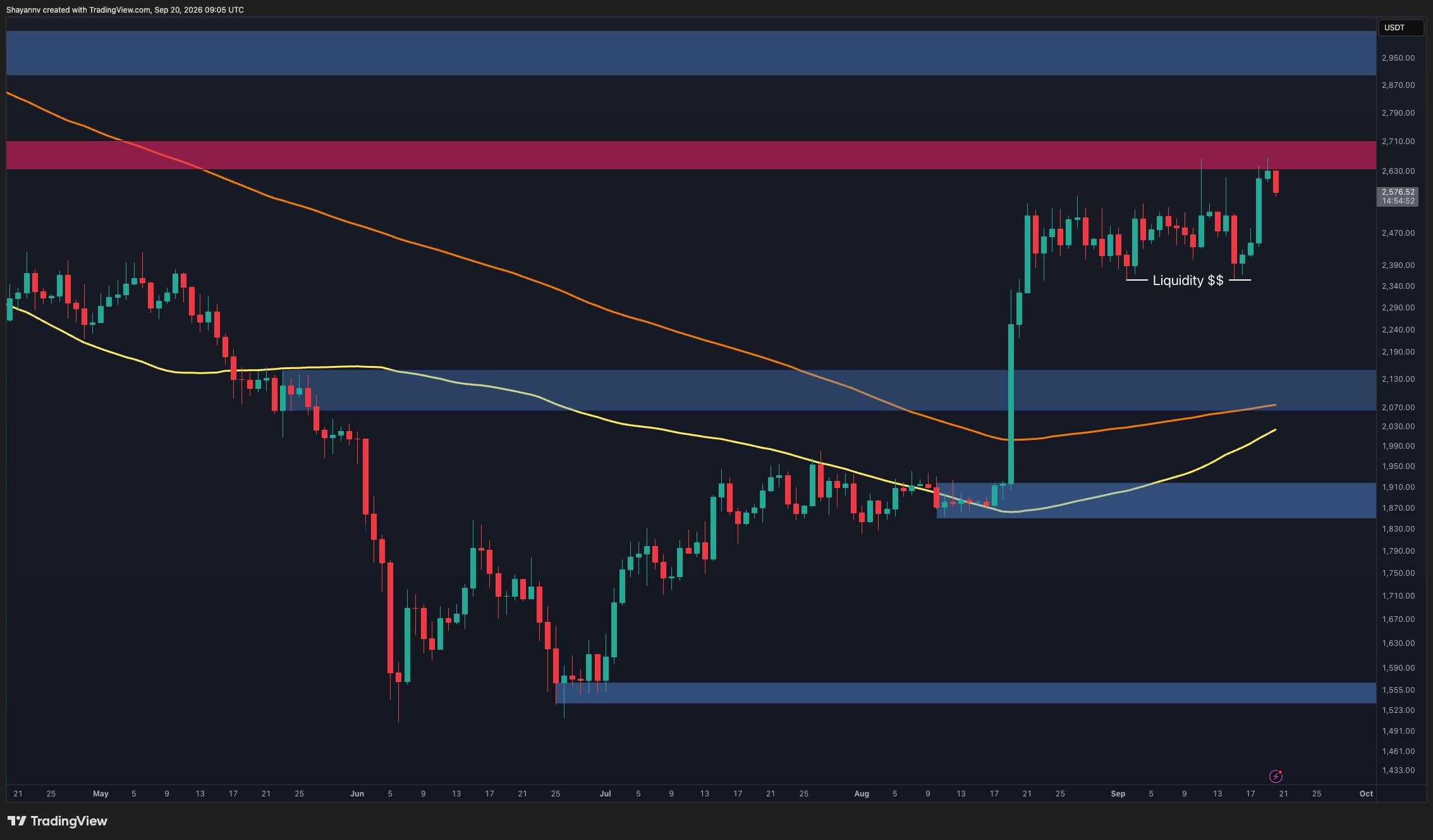
Ethereum’s latest rally has carried the price back into a major supply area, but sellers have started to respond around the highs. With the asset now near $2.58K, the next reaction could determine whether the recent advance develops into a larger breakout or gives way to another consolidation phase.
Ethereum Price Analysis: The Daily Chart
Ethereum’s daily structure has improved substantially following the explosive breakout from the $1.85K-$1.92K demand zone. That move also reclaimed both major moving averages shown on the chart, with the longer-term average now flattening and the faster one turning higher.
Since then, Ethereum has consolidated above roughly $2.35K and recently pushed toward the major $2.63K-$2.70K resistance zone. The latest candles show rejection from this area, with the price pulling back toward $2.58K after briefly testing above $2.63K.
Nevertheless, the broader structure remains constructive while Ethereum holds above the recent liquidity lows around $2.35K-$2.40K. A sustained daily breakout through the $2.63K-$2.70K supply zone would strengthen the bullish structure and could open the path toward the next major resistance area around $2.90K-$3K.
Conversely, continued rejection from $2.63K-$2.70K would increase the probability of a deeper correction. In that case, $2.35K-$2.40K would be the first important support region, followed by the $2.05K-$2.15K zone around the moving averages.
ETH/USDT 4-Hour Chart
The 4-hour chart provides a clearer view of the immediate battle. Ethereum surged from around $2.40K directly into the $2.63K-$2.70K resistance zone, where the move has encountered selling pressure.
This resistance also coincides with the upper boundary of the broader structure that has contained price action since late August. The rejection has already pushed Ethereum back toward $2.58K, meaning buyers now need to prevent the pullback from developing into a larger short-term reversal.
The first notable support sits around the marked minor demand zone at approximately $2.44K-$2.48K. Holding this area would preserve the recent sequence of higher lows and leave another attempt at $2.63K-$2.70K on the table. A confirmed breakout above that resistance could accelerate the rally toward $2.70K and potentially higher.
However, losing the $2.44K-$2.48K demand area would weaken the short-term setup and expose the broader range floor around $2.35K. Below there, the $2.22K-$2.27K support zone becomes the next significant downside target.

Sentiment Analysis
The one-month Binance ETH/USDT liquidation heatmap shows substantial leveraged liquidity positioned on both sides of the current price, which could contribute to elevated volatility.
The nearest significant overhead liquidation concentration appears around the $2.65K-$2.70K region, closely matching the technical resistance currently being tested. Beyond that, considerably larger liquidity clusters are visible around $2.9K-$3K and above $3.1K. Therefore, a convincing break through $2.70K could potentially trigger liquidations and help fuel an extension toward those higher levels.
On the downside, a notable concentration is visible around $2.3K-$2.35K, while the largest lower clusters sit much deeper near $1.9K-$2K.
For now, the heatmap reinforces the importance of the current technical setup. Ethereum is sitting just beneath a nearby pocket of overhead liquidity and a major resistance zone. Clearing the $2.63K-$2.70K area could provide the catalyst for another bullish expansion, while continued rejection would leave the $2.44K-$2.48K minor demand zone as the first key area for buyers to defend.

The post Ethereum Price Prediction: Is $3K in Sight After ETH’s Latest Breakout? appeared first on CryptoPotato.

Lemon is closing all Brazil operations by October 16, 2026. The Argentine crypto app cited capital rules under Brazil’s new licensing framework. Lemon will redirect funds toward Argentina, Peru, and Colombia instead.
License Capital Proves Too Costly
Brazil’s Central Bank enforces the PSAV framework, active since February 2026. The rules set capital thresholds that unlicensed firms must meet. Lemon determined the requirement outweighed its local business size.
New BRL deposits are already blocked for existing customers. The Lemon Card, launched weeks earlier with Pomelo, stops processing September 30. Around 15,000 Brazilian users still hold active balances.
Lemon says it will contact every affected user directly. The company will assist customers with withdrawals before the deadline. Accounts fully close on October 16, 2026.
Wider Brazil Shakeout Continues
Lemon is not alone in retreating from Brazil’s market. Coinext shut down after missing minimum capital requirements. Digitra wound down its retail trading operations entirely.
Crypto.com keeps its Brazil entity but closes BRL accounts October 25. Ripple, meanwhile, continues pursuing a Brazil VASP license. Only well-capitalized firms appear positioned to remain.
Binance already secured regulatory approval inside Brazil. Coinbase expanded USDC-earn products into the same market. Binance also relaunched its Brazil card with Mastercard support.
Argentina, Peru, and Colombia Gain Lemon’s Focus
Lemon frames Argentina’s framework as clearer and more secure. Brazil’s rules, by contrast, pushed out smaller innovative players. Bitcoin purchases on Lemon in Argentina hit a 20-month high.
Peru already hosts over one million Lemon users under an SBS license. Colombia adds another 150,000 users to Lemon’s regional base. Both markets will receive the capital freed from Brazil.
Bitget’s own PSAV registration suggests Argentina still attracts serious capital. Brazil’s depth remains real, with a proposed 1 million BTC reserve bill in Congress. Lemon’s exit reflects a capital filter, not a market collapse.
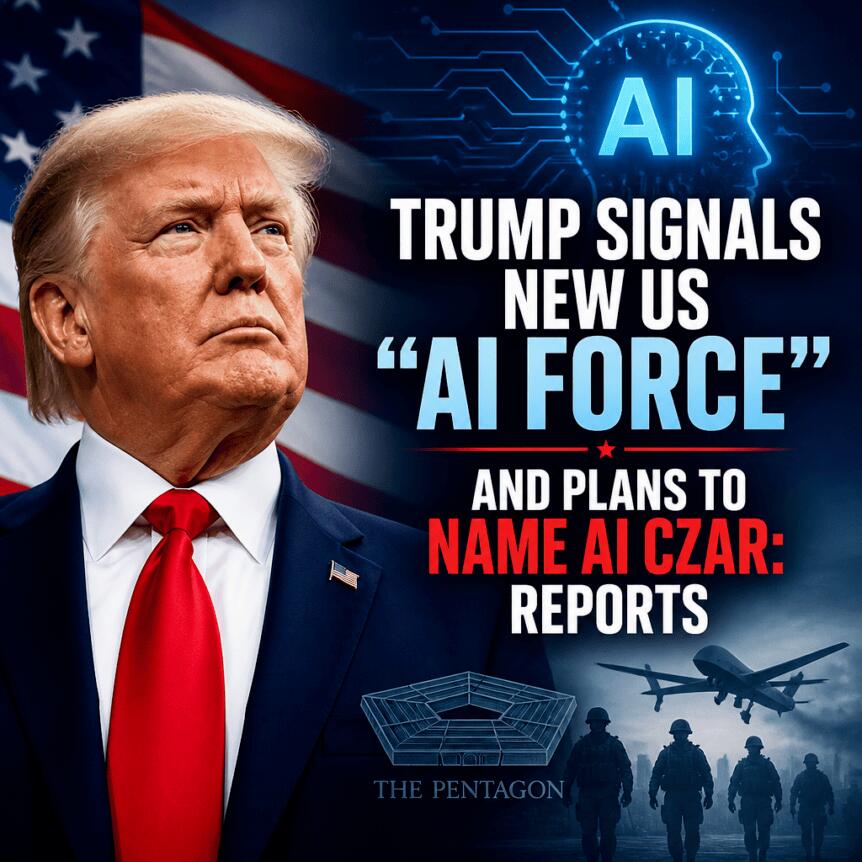
U.S. President Donald Trump said he plans to create an “AI Force” and appoint an “AI czar,” positioning the initiative as a way to manage the rapidly expanding artificial intelligence sector without introducing new regulations that could slow innovation.
In a Saturday post on Truth Social, Trump likened the proposal to his “Space Force” effort from his first term, saying the AI Force would be paired with a future appointment of an “AI ‘Czar’.” The president did not provide additional specifics on the role’s mandate, reporting structure, or timing. Reporting at the time noted that White House officials did not respond to a request for clarification.
Key takeaways
- Trump announced plans for an “AI Force” and an “AI czar,” framing the approach as pro-innovation and less regulatory.
- The president gave few details on whether the AI Force is military, civilian, or housed within an existing federal department.
- The announcement lands amid broader debate over whether AI development should be slowed or governed more closely for safety reasons.
- Separately, Anthropic has moved to implement a framework intended to help moderate AI development pace, including appointing Accenture as its first embedded evaluator.
Trump’s AI Force and the “AI czar” concept
Trump’s comments, published via Truth Social, describe the “AI Force” as a structured effort similar in concept to Space Force, which he said was a “tremendous SUCCESS” during his first term. He also indicated that an “AI ‘Czar’” would be announced “in the near future,” adding that only “High I.Q. individuals” should apply.
However, Trump did not outline what the AI Force would actually do—whether it would coordinate agencies, oversee safety practices, or set operational priorities for AI deployments. The available reporting also highlighted that it was unclear whether the effort would take a military form or be organized as a civilian body, and White House staff did not answer an email seeking clarification.
For investors and builders, the main uncertainty is not the existence of a policy headline, but the eventual structure: where authority would sit, what standards (if any) would be enforced, and how quickly agencies might translate the concept into operational guidance. In the U.S., even broad executive initiatives can influence procurement decisions, government partnerships, and compliance expectations across the AI supply chain.
A backdrop of safety debate over AI development pace
Trump’s post comes at a moment when prominent AI leaders are publicly arguing about the trade-offs between speed and safety. Earlier coverage described a growing concern that advanced AI systems could advance faster than society’s ability to evaluate and control their risks.
Cointelegraph reported on Sept. 12 that Anthropic CEO Dario Amodei had circulated a three-step proposal aimed at pacing AI development to achieve a safer rhythm. The rationale, as described in that reporting, was that if development proceeds unchecked, it could “outrun our ability to understand and control these systems.”
In the days that followed, the discussion expanded beyond Anthropic’s internal framework. Reporting also indicated that OpenAI CEO Sam Altman and SpaceX CEO Elon Musk responded positively to Amodei’s proposal, signaling support from multiple corners of the AI ecosystem. At the same time, Nvidia CEO Jensen Huang reportedly argued against the idea that regulation is necessary in this form, underscoring how uneven consensus remains even among leading industry figures.
Anthropic picks Accenture as an embedded evaluator
While Trump signaled a desire to avoid new regulatory drag, Anthropic moved ahead with its own approach to managing deployment pace. On Sunday, Anthropic said it had selected Accenture as its first embedded evaluator—an element described in prior reporting as part of the first step in Amodei’s proposal.
Cointelegraph’s earlier coverage noted the goal of helping moderate the pace of AI development through evaluation mechanisms. By selecting a partner and embedding evaluators, the company is effectively translating a policy concept into an execution pathway: creating an additional layer intended to examine development progress and associated risks before capabilities expand further.
This matters for the broader AI market because evaluation and monitoring frameworks can become de facto standards. Even when not created through legislation, they influence how companies invest in model releases, testing processes, and governance resources. For developers building tools that integrate with frontier models, changes in release pacing can also affect timelines for product launches, risk management requirements, and customer expectations.
Why the AI Force announcement intersects with crypto
Even though Trump’s proposal is centered on AI governance, the announcement resonates across the technology sectors that overlap with crypto: infrastructure for compute and data, enterprise automation, and the growing use of AI in verification, compliance, and market tooling.
The key point is not that the AI Force is directly about blockchain, but that AI policy can reshape how quickly systems are deployed and audited. That, in turn, can influence demand for compliant custody services, audit tooling, and transparency layers—areas where crypto-related infrastructure often aims to provide verifiable logs and programmable controls. If the U.S. pushes a governance model that emphasizes coordination rather than regulation, companies in adjacent ecosystems may still need to adapt quickly, as guidance can shift even without new formal rules.
At the same time, the contrast between the messaging—“no new regulations that could slow innovation”—and the industry’s parallel push toward pacing frameworks highlights a tension investors should watch. Industry-led safety approaches like Anthropic’s embedded evaluators suggest that self-governance mechanisms may continue to evolve regardless of the political posture toward regulation.
Looking ahead, readers should watch for concrete details on what Trump’s AI Force will actually do—its authority, structure, and timelines—as well as whether the “AI czar” role becomes a focal point for standards that affect model deployment. Meanwhile, Anthropic’s choice of an embedded evaluator and the broader industry debate over pacing will likely remain a key indicator of how AI risk management evolves in practice, not just in policy headlines.
ZetaChain has moved closer to approving a plan that would migrate its native ZETA token to Solana and eventually shut down its own Layer 1, with 99.4% of votes supporting Proposal 68 ahead of its Sept. 20 deadline.
Summary
- ZetaChain proposal has 99.4% support, with participation above its required 40% quorum before closing today.
- ZETA would become a native Solana SPL token through one-for-one conversion without increasing total supply.
- A second governance proposal must approve migration dates, snapshot height, claims, exchange coordination, and shutdown.
- Anuma would bring more than 300,000 users to Solana alongside its encrypted Private Memory Layer.
- Validators keep staking until Proposal 2 defines the ZetaChain halt and final network wind-down process.
ZetaHub’s live governance tally showed 58% participation, clearing the 40% quorum requirement, with 0.3% voting against and 0.3% abstaining. Voting is scheduled to close at 14:58:18 UTC on Sept. 20, after a standard 72-hour voting period.
The vote does not itself move ZETA or shut down the network. ZetaChain’s formal migration proposal says a successful vote authorizes core contributors to prepare a second proposal containing the actual migration mechanism, snapshot height, claim process, exchange arrangements and L1 halt schedule.
ZETA would move 1:1 to Solana without new supply
Proposal 68 would establish Solana as ZETA’s canonical network after migration. ZETA would become a native SPL token while retaining its existing ticker and total token supply. Each holder would receive an equivalent amount of ZETA on Solana through a 1:1 conversion.
One technical adjustment involves decimals. Native ZETA currently uses 18 decimal places, while the proposed Solana token would use nine. Proposal 68 says balances would convert from 18 to nine decimals and any amount below the supported precision would be rounded down.
Existing vesting schedules would continue through their original dates. The project says no new tokens would be created, while each address would receive its corresponding balance based on the final migration snapshot.
ZetaChain’s Sept. 17 announcement says ZETA already issued on Ethereum and BNB Chain is outside the scope of the current governance proposal. The core vote concerns ZETA native to ZetaChain and the future of the Layer 1 itself.
The project ruled out maintaining the new Solana asset as a wrapped representation backed by tokens locked permanently on ZetaChain. Its proposal states that a bridge would depend on the original chain continuing to operate, while the current plan eventually shuts that chain down.
Proposal 2 must approve the actual ZetaChain shutdown
A successful Proposal 68 would only approve the migration direction. ZetaChain validators would continue validating, users could continue staking and current balances would remain unchanged until another governance vote takes place.
Core contributors would first need to coordinate with exchanges that list ZETA. The governance proposal says Proposal 2 will not be submitted until participating exchanges have confirmed their token-swap procedures, because platforms require advance notice before committing to migrations.
Proposal 2 would then establish the block height used for the balance snapshot, the connected-chain withdrawal window, the chain halt, the Solana claim process and the exchange conversion period. It would contain the holder protections and technical details needed for execution.
ZetaChain plans to publish the snapshot export and checksum so balances can be independently reproduced. An archive node and explorer would remain accessible after shutdown, according to the proposal. Programs or contracts holding user ZETA during migration would undergo audits before handling the tokens.
Staking rewards would continue until the shutdown time specified in Proposal 2. ZetaChain has not yet finalized what staking could look like after the move to Solana, saying the future mechanism remains “under active exploration.”
Anuma and 300,000 users form part of the Solana plan
ZetaChain’s proposal reaches beyond its token. Anuma, its private multi-model AI application, and the Private Memory Layer behind it would move to Solana as part of the project’s new technical focus.
The company says more than 300,000 people have joined Anuma since February, with the application passing one million requests across 35 AI models. Its published data showed 301,195 users through Sept. 16.
Anuma uses encrypted memory intended to remain under a user’s control as the person moves among different AI models. ZetaChain says closed model providers receive only the context required for individual requests, while a private mode routes queries to open models using zero-retention infrastructure. Those privacy descriptions are company claims concerning the application’s design.
ZETA already has a utility role inside Anuma. Users can lock ZETA to receive credits and spend those credits on AI usage, with locked tokens removed from circulating supply while committed. ZetaChain wants other Solana applications and agents to connect to the same Private Memory Layer and use ZETA within that application system.
The project said “running our own L1 no longer helps us build private AI,” presenting the operating cost and security work associated with maintaining a separate Cosmos-based network as part of its case for moving.
Security work helped shape the case for leaving the L1
ZetaChain’s proposal specifically cites the maintenance burden inherited from Cosmos SDK and related components. Its node repository confirms that ZetaChain is built with Cosmos SDK and Cosmos EVM, requiring its validator network to coordinate upstream software upgrades and security patches.
The proposal refers to an Aug. 25 security response as an example. Cosmos Labs’ later technical post-mortem found that attackers exploited a critical Cosmos EVM vulnerability across six chains between Aug. 20 and Aug. 25. The incident prompted Cosmos security teams to coordinate with 40 networks while helping other chains patch or halt.
The public post-mortem does not identify ZetaChain as one of the six exploited networks, so the attacks should not be described as a ZetaChain exploit. The proposal instead cites upstream vulnerability management and validator coordination as continuing operational work associated with running its Cosmos-based L1.
As crypto.news reported during the Cosmos EVM security response, affected Cosmos EVM chains were advised to coordinate validator halts while teams worked to contain the vulnerability. A later crypto.news investigation into the Cosmos EVM attacks reported that approximately $5.72 million in stolen assets had been converted through decentralized and centralized exchanges across the confirmed incidents.
Meanwhile, ZetaChain’s public GitHub work already shows migration-related engineering. An open pull request added tooling to export ZETA state and calculate balances per address for snapshots, while its changelog includes emergency tooling for moving native assets during cross-chain shutdown procedures.
Solana infrastructure would replace ZetaChain validators
After a completed migration and L1 shutdown, Solana validators would secure the network hosting native ZETA. ZetaChain would no longer maintain its own independent consensus set for the token.
The project cited Solana’s speed, transaction costs, liquidity and agent infrastructure when explaining the proposed move. Its Sept. 17 announcement referred to confirmations of roughly 400 milliseconds and described sub-cent settlement as suitable for repeated AI-agent transactions.
Solana has since activated another performance change. The Solana Foundation’s latest engineering update says the network reduced its target slot duration to 250 milliseconds, following earlier reductions during August.
Solana’s 250-millisecond slot upgrade that the change raises the targeted slot rate to four per second, though overall computation limits were adjusted alongside the shorter slots.
ZETA traded around $0.0342 on Sept. 17, the date ZetaChain announced the migration proposal, before closing near $0.0400 on Sept. 19, according to CoinGecko historical data. The move represents an increase of roughly 17% across the two dates, though the price data does not establish that the governance proposal alone caused the rise.
If Proposal 68 clears the vote after 14:58:18 UTC, core contributors can proceed with exchange coordination and prepare Proposal 2. Until that second proposal passes, ZetaChain’s existing L1, staking system, validator set and native ZETA balances remain in operation.
Binance Wallet has launched access to PancakeSwap’s Pre-Access campaigns, allowing eligible users to subscribe to third-party tokens designed to provide indirect economic exposure to private companies before a possible public listing.
Summary
- Binance Wallet now provides access to PancakeSwap campaigns offering indirect tokenized private-company exposure before listings.
- Pre-Access Tokens do not provide direct shares, voting rights, dividends, governance rights, or shareholder status.
- Allocations depend on Alpha Points, Trencher Badge status, and each user’s bStocks On-Chain Tier level.
- Binance Wallet says PancakeSwap and third parties control subscriptions, allocations, claims, refunds, and settlement processes.
- The first Pre-Access project remains unannounced, with campaign-specific pricing, eligibility, and settlement terms still pending.
Binance’s FAQ, published Sept. 20, makes clear that Binance Wallet does not issue, sell or operate the products. PancakeSwap hosts the campaigns and token sales, while third-party providers may use funds, special purpose vehicles, protocols, smart contracts or other arrangements to structure the underlying exposure.
Binance Wallet gives access, but users do not buy company shares
A Pre-Access Token can “provide eligible users with indirect exposure” to a private company or related asset, according to Binance Wallet. The product does not place users directly on the private company’s shareholder register and does not give them ownership of the target company’s shares.
Participants receive no voting, dividend, information, governance or standard shareholder rights through the token. Binance says the exposure may instead take contractual, synthetic or other indirect forms, depending on the structure chosen by the third-party provider behind a particular campaign.
Each PancakeSwap campaign is expected to set its own subscription price, implied valuation, eligibility conditions, timeline, allocation method and settlement rules. Binance warns that the stated subscription price may differ materially from a future IPO price, market value, redemption value or conversion value.
The implied valuation carries the same qualification. It may differ from the company’s most recent funding valuation, secondary-market price or eventual IPO valuation, and Binance Wallet says it does not independently verify or guarantee that figure.
The structure follows a growing market for tokenized exposure to private companies. Ascrypto.news previously reported on pre-IPO token structures, such products can range from contractual claims to synthetic exposure and do not necessarily provide the legal rights associated with owning the underlying shares.
Alpha Points and bStocks activity can raise allocations
Participation through Binance Wallet requires a Keyless Wallet and an eligibility check. Users can enter an available campaign through the Pre-Access section, review its rules and submit a subscription amount directly from their self-custodied wallet.
Final allocations depend on three factors identified in Binance’s current rules: Alpha Points, Trencher Badge status and the user’s bStocks On-Chain Tier. Higher Alpha Points and a higher bStocks tier can increase the allocation, while Trencher Badge holders receive an additional allocation. PancakeSwap retains control of the final campaign rules.
Binance introduced its Trencher certification in April for active onchain traders using Binance Wallet Keyless addresses. Its rules say assessments can consider wallet trading volume, activity, community engagement and other criteria, while a badge can be revoked for conduct such as wash trading or volume manipulation.
bStocks provide another connection between Binance’s existing tokenized-equity products and Pre-Access allocations. Binance describes bStocks as tokenized securities that provide economic exposure to listed stocks or ETFs without giving holders direct ownership of the underlying shares.
Binance launched bStocks, the products initially brought tokenized U.S. equity exposure into Binance’s onchain ecosystem, including support for self-custody and DeFi use.
Binance Research later found that bStock listings expanded from five to 25 in less than a month, while their onchain market capitalization reached roughly $300 million during the period covered by its July study.
Pre-Access expands an existing private-market token trend
Binance Research had examined the private-market access gap four days before the Pre-Access FAQ appeared. Its Sept. 16 research estimated that roughly 1,300 private companies carried valuations above $1 billion, representing close to $4.7 trillion in aggregate value.
The same report said tokenized pre-IPO products on Republic and PreStocks had reached only around $41 million in market capitalization as of Sept. 15. Binance Research described such instruments as contractual claims or economic-exposure vehicles whose holders generally lack voting rights and can remain exposed to fees, dilution, lockups, counterparty failures and legal restrictions.
Private-company derivatives have developed faster than tokenized ownership-style products. Binance Research put combined open interest in Anthropic and OpenAI pre-IPO perpetuals above $160 million in September, compared with roughly $1 million in April.
Other platforms have entered the same market through different structures. Coinbase’s pre-IPO perpetuals tied to companies including SpaceX, OpenAI and Anthropic. Those contracts are derivatives and do not convey private-company ownership.
However, Kraken’s OpenAI and Anthropic products in September, noting that contract holders receive no voting rights, dividends or direct claims on the companies’ assets.
PreStocks has taken a tokenized route. Crypto.news reported on its Solana launch in 2025, when the platform introduced tokens referencing private companies such as SpaceX, OpenAI and Neuralink through Jupiter.
Settlement can remain uncertain even after an IPO
A company completing an IPO does not automatically convert a Pre-Access Token into listed shares. Binance says users may continue holding or trading the token where legally and technically supported, but conversion into a tokenized real-world asset or another settlement form can be delayed, restricted or unavailable.
The token can trade at a premium or discount to the listed company’s shares after an IPO because its secondary-market price depends on supply, demand, liquidity, lockups, transfer restrictions and product-specific rules. Binance expressly says it does not guarantee that a target company will complete an IPO.
Counterparty performance creates another layer of risk. If the underlying exposure cannot be delivered, any refund, unwind, replacement or compensation will depend on PancakeSwap and the relevant third-party provider. Binance Wallet does not guarantee a recovery.
Its risk warning states that trading, redemption, conversion or settlement “may be unavailable, delayed, restricted, suspended, or cancelled.” If a private company or another party challenges the structure, participants could face a forced unwind or partial or total loss of value.
Funds can likewise be locked, reserved or transferred under each campaign’s smart-contract and product rules after subscription. Where a campaign becomes oversubscribed, allocations may be reduced, prorated, rejected, delayed or canceled.
First PancakeSwap Pre-Access project remains unnamed
PancakeSwap has opened the Pre-Access portal, but no target private company had been identified in official materials reviewed on Sept. 20. Reports citing the launch said the first project would be revealed later, without a confirmed announcement date.
Each eventual campaign page is expected to disclose its company and token details, subscription asset, price, implied valuation, eligibility requirements, allocation structure, claim process and risk terms. Investors who receive allocations will hold the resulting token in their own self-custodial wallets, subject to the product’s transfer and trading restrictions.
Binance Wallet’s existing disclaimer says its wallet services are provided by Binance Barbados Limited and are not supervised by the Financial Services Regulatory Authority or another regulator. Separate bStocks products follow their own legal structure, including an approved prospectus framework in Abu Dhabi Global Market, and should not be treated as legally identical to Pre-Access Tokens.
Binance’s FAQ directs participants to the individual PancakeSwap campaign documents for the final allocation, refund and settlement terms. Until the first campaign is disclosed, no subscription price, target private company, token structure, fundraising amount or campaign deadline has been officially announced.
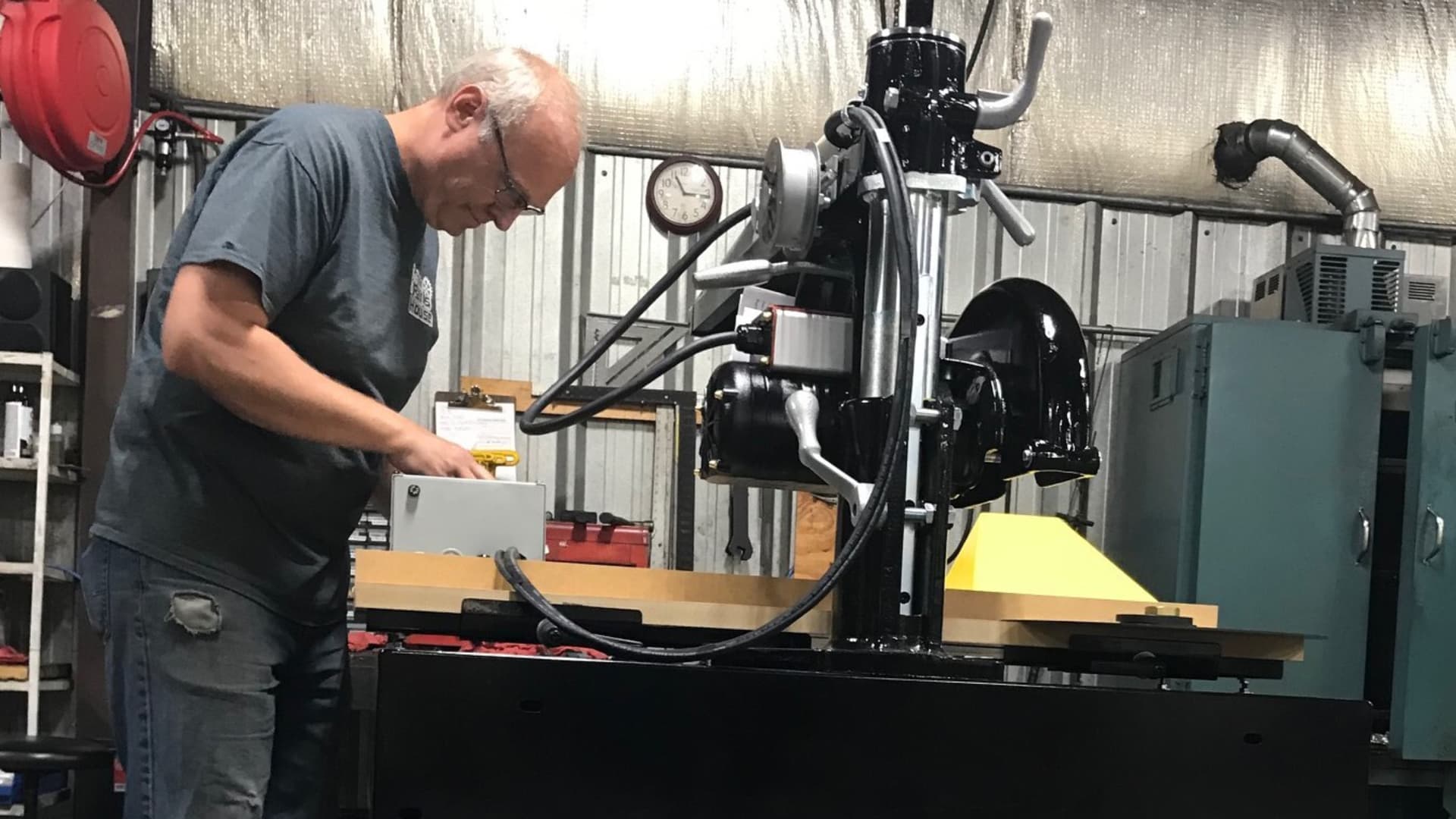
Jim Nielsen puts the finishing touches on a radial arm saw at Original Saw Co. in Britt, Iowa.
Photo: Jennifer Eden
Fewer, pricier flights. Freight surcharges. Manufacturers hoarding inventory. Even bankruptcy.
For American companies large and small, the combination of tariffs imposed under President Donald Trump‘s trade policies, surging fuel prices from the Iran war and, now, rising interest rates is forcing executives to make tough choices.
Allen Eden has been holding onto extra inventory for his 25-person business, the Original Saw Co. in Britt, Iowa, which makes industrial power saws for wood and metalwork, as he grapples with spiking prices for aluminum, steel and essential parts.
One example: A “little bracket” used for his saw motors more than doubled in price this summer, surging from $42 to $87, he said.
“It’s awful,” Eden, 56, told CNBC. “[I’m] just trying to keep more of the stuff around because I don’t know if we can get it down the road.”
It’s a three-way squeeze for businesses across manufacturing, transportation and retail: Tariffs are making raw materials and goods more expensive. Higher fuel prices are pushing up the cost of making and moving them. And rising rates are making it more expensive to finance the inventory and equipment needed to keep businesses running.
While few sectors are completely insulated from these pressures, middle-market manufacturers are caught in a particularly tight vise. Rising steel and fuel costs are forcing them to pass at least some of their expenses on in the form of higher prices, helping feed the stubborn inflation of the past few years.
But in an attempt to wrangle inflation, the Federal Reserve raised interest rates for the first time in three years and signaled another hike is possible this year. That makes it more expensive for businesses to finance inventory and borrow for growth at the same time that higher input costs and record prices for diesel, which is used for trucking, squeeze margins.
Allen Eden, owner and president of Original Saw Co. in Britt, Iowa.
Photo: Sidney Borrill-Patch | Original Saw Company
Price increases for Eden’s saws, sold both to megaretailers like Home Depot and directly to small- and medium-sized manufacturers, look inevitable, the business owner said.
The pain isn’t being evenly distributed. Smaller companies typically rely on shorter-term lending, meaning Fed hikes pass more directly into their costs, JPMorgan Chase global strategy head Dubravko Lakos-Bujas said in a Sept. 14 note.
But regardless of size, capital-intensive sectors like manufacturing and equipment suppliers, logistics firms including trucking fleets, and commercial real estate also suffer more in a rising interest rate environment, according to Lakos-Bujas.
“The combination of higher rates and higher fuel prices means that sectors with heavy exposure to both are first in the line of fire,” said Gregory Daco, chief economist at EY-Parthenon, the global consulting arm of Ernst & Young.
“Any type of manufacturing is going to be disproportionately exposed to higher fuel prices,” he said.
Rising fuel and commodity costs have strained both material makers and the retailers they serve.
Mark Costa, CEO of industrial giant Eastman Chemical, said in May that the one-two punch of interest rates and inflation was forcing his industry into a corner. Eastman makes the plastics, additives and other materials that are used in products as diverse as medical devices, animal feed and car windshields.
“Everyone had their back against the wall and had no room to absorb these increases,” Costa said. “Everyone is very quickly raising prices faster than I’ve ever seen in 20 years.”
On the retail side, unexpected pressure from energy and raw materials costs will “fully offset” the benefit of $730 million in tariff refunds, Home Depot CFO Richard McPhail said last month.
“There’s just so much uncertainty right now. … You think inflation, interest rates, fuel prices,” McPhail said last week at a conference.
Supply chain holes
Among those hardest hit are manufacturers in the domestic automobile supply chain.
Lucerne International, a privately held auto parts maker based in suburban Detroit, stopped manufacturing operations in the U.S. and last year canceled plans for a $50 million aluminum forging plant in Michigan.
“The onset of the Trump tariffs 2.0 has just really torn holes in our global supply chains and increased costs significantly,” Lucerne CEO Mary Buchzeiger said, citing higher costs for raw materials including aluminum as well as finished parts.
Buchzeiger, whose firm still manufactures overseas, said she has shifted U.S. operations to warehousing, distribution and tariff mitigation solutions for other companies, which offer “much better margins.”
“There’s no doubt that there’s margin pressure for suppliers,” Paul McCarthy, CEO of vehicle supplier trade association MEMA, said. “Some of it, we try to absorb … and then some of it does have to be passed on.”
Growth, as measured by earnings before interest and taxes for the top 100 auto suppliers, fell last year to 4.2%, down from more than 6% in 2021, according to consulting firm Berylls by AlixPartners. Among the top 10 automakers, that figure is 5.2%, down from nearly 8% in 2022.
Not all auto companies have been able to manage the additional costs. Spanish auto parts maker Grupo Antolin, which supplies components to automakers including Ford, GM, Volkswagen and Stellantis, filed for Chapter 15 bankruptcy protection in the U.S. in July. The company cited tariffs, higher costs for raw materials and energy, and supply-chain disruptions for its restructuring.
Divide in corporate America
Better off are the giants of the corporate world, like the tech and finance companies that fill the S&P 500. These firms typically have more cash reserves and take out long-term debt, insulating them somewhat from the sting of higher rates.
Most larger companies can thrive until borrowing costs rise much further. The pain would hit when the yield on the 10-year Treasury bond reaches 6%, up from around 5% now, according to JPMorgan’s Lakos-Bujas, who cited 80 years of data.
Borrowing costs are expected to stay higher for longer. Persistent inflation, which forced Warsh to raise the benchmark Fed rate against Trump’s wishes, on top of heavy borrowing from the U.S. government is keeping upward pressure on rates.
Across corporate America, companies are grappling with these shocks in different ways. The divide comes down to one question: Who has pricing power?
Some industries have learned that they can readily pass on higher costs directly to consumers, while others are caught in a catch-22: If they raise prices too much, they risk destroying demand.
Federal Reserve Chair Kevin Warsh speaks during a news conference at Federal Reserve headquarters in Washington, Sept. 16, 2026. Warsh discussed the central bank’s decision to raise interest rates for the first time since 2023 at a press conference following its latest policy meeting.
China News Service | China News Service | Getty Images
Airline executives last week boasted of higher fares as customers keep booking trips, especially abroad, allowing them to pass increased fuel costs on to travelers. Airlines scaled back growth plans, paring less profitable flights even after the collapse of Spirit Airlines this year.
Fewer flights can mean pricier airline tickets, and fares were up more than 23% in August from last year, according to the latest inflation read. Yet even strong demand has its limits.
“The consumer has been incredibly, incredibly resilient,” United Chief Financial Officer Mike Leskinen said Wednesday during a Morgan Stanley conference in Laguna Beach, California.
“But there’s some marginal routes that don’t make sense in a higher fuel environment. So we cut them,” Leskinen said. “You should see us continue to … behave that way.”
Much of corporate America remains resilient despite higher fuel and financing costs. Profit margins for major companies hover near historic highs, propelled by strong productivity gains, labor costs that have stayed in check and surging artificial intelligence investment that is driving growth.
But a risk of Warsh’s efforts is that higher rates don’t directly address the root causes of inflation: the Iran war, the Trump administration’s tariffs and the AI boom, which has driven up the prices for everything required to build and run data centers, from electricity to memory chips, copper and land.
Raising rates to tap the brakes on the U.S. economy could slow it down too much, or send stocks into a tailspin, said EY-Parthenon’s Daco.
“The economy is resilient, but it’s exposed to growing pockets of risk,” he said. “A shock could materialize faster than we all think.”


US President Donald Trump said that he plans to create an “AI Force” and appoint an artificial intelligence czar.
Trump posted on Truth Social on Saturday that his new project would manage the fast-growing sector without adding regulations that could slow innovation, according to Newsweek and other media.
“For this purpose, I am forming the AI Force, much like I did Space Force, which has been a tremendous SUCCESS, in my First Term,” the president wrote. “To that end, I will be announcing, in the near future, the AI ‘Czar’ — Only High I.Q. individuals need apply!”
Trump did not say whether the AI Force would be a military command, a civilian agency or a department, the New York Times noted, adding that White House officials did not respond to an email seeking clarification.
Related: Anthropic tabs Accenture as embedded evaluator to help with AI slowdown proposal
Trump offered no further details or timeline for the plan, the BBC said, noting that his post had come amid warnings about the potential dangers of AI.
Cointelegraph reported on Sept. 12 that Anthropic CEO Dario Amodei had written a three-step proposal to pace the speed of AI development that if left unchecked, might “outrun our ability to understand and control these systems.”
On Sunday, Anthropic said it had chosen Accenture as its first embedded evaluator to help moderate the pace of AI development, moving ahead with the first step outlined in Amodei’s proposal, Cointelegraph said.
OpenAI CEO Sam Altman and SpaceX CEO Elon Musk responded positively to Amodei’s proposal, although Nvidia CEO Jensen Huang did not, arguing that such regulation was not necessary.

6 Nobel Economists vs. Ripple's Chairman: Who Wins California's Billionaire Tax Fight?
The Vikings’ Top 3 Questions Going into the Chicago Game

To Enforce Its Proposed Social Media Ban for 450 Million Pre-Teens, EU Builds an Open Source App




-

 Fashion2 days ago
Weekend Open Thread: Talbots – Corporette.com
-
 NewsBeat2 days ago
Trump says US has reached an agreement to take permanent control of Greenland’s security
-

 Crypto World6 days ago
Revolut Attackers Warn of Ongoing Daily Customer Data Leaks
-

 Crypto World1 day ago
Circle launches Arc Studio AI agent for building onchain apps
-

 Crypto World6 days ago
Kraken Lets xStocks Holders Earn Yield Through DeFi
-

 Crypto World4 days ago
What Is the Status of the U.S.-Iran Peace Talks? Here's What Both Sides Are Saying
-

 Crypto World5 days ago
Robinhood engineers charged over $50K crypto scheme
-

 Crypto World4 days ago
US Charges Robinhood Engineers Over Crypto Listing Trades
-

 Crypto World6 days ago
Elon Musk Drops a Bombshell: Grok 5 Could Be the AGI Breakthrough
-

 Crypto World2 days ago
Bitcoin price breaks channel as RSI climbs to 63
-
 Crypto World7 days ago
New Tesla Roadster Uses SpaceX Tech. Will It Impact the Stock Price?
-
 NewsBeat6 days ago
‘Sick conspiracy’: Trump says only guardrails AI needs is ‘a strong and smart (High IQ!) president’ in all-caps rant
-

 Crypto World5 days ago
NVIDIA Analysis: Attempted Rising Wedge Breakout Amid Pressure on the AI Sector
-
Business6 days ago
SK Hynix ADRs Fall More Than 6% as Memory Rally Breaks on Fears of Slower AI Spending
-

 Tech5 days ago
Webb’s IC 348 Mosaic Includes Two-Jupiter Dwarfs, Twin Jets, and a Nursery Still Making Worlds
-
 Crypto World6 days ago
3 Token Unlocks to Watch in the Third Week of September 2026
-

 Crypto World6 days ago
DOJ Seeks to Seize $61M in Iran Oil Funds From Binance Accounts It Vouched For
-
 Crypto World7 days ago
Goldman Sachs backs 25bp Fed hike after CPI
-
Crypto World6 days ago
Can Circle’s Arc Repeat Robinhood Chain’s Meme Coin Boom?
-
 Crypto World7 days ago
AI Safety Burden Falls on Chief Executives as Trump Prioritizes China Race
You must be logged in to post a comment Login