

Crypto World
HTX Escalates Dispute With WLFI After Address Freeze


HTX has suspended trading of WLFI and USD1 assets after the World Liberty Financial team froze user tokens on HTX-linked addresses, escalating tensions over issuer control in crypto.
The exchange acted swiftly on June 5, 2026, at 13:00 UTC to protect users amid the unilateral freeze.
HTX Suspends WLFI and USD1 Trading After Asset Freeze
The WLFI project team restricted on-chain circulation of specific WLFI tokens in HTX-related addresses, citing an ongoing UK sanctions compliance review.
HTX stated these are not assets of any sanctioned entity or the exchange itself, they belong to individual users who legally purchased them.
“These are assets legally purchased and owned by individual users… To date, we have received no clear explanation regarding the legal basis, scope, standards, or resolution process behind this action,” HTX spokesperson stated.
HTX’s Decisive Response
To safeguard user assets, preserve market fairness, and reduce systemic risks, HTX immediately suspended these trading pairs:
- WLFI/USDT
- USD1/USDT
- BTC/USD1
- ETH/USD1
The exchange suspended USD1 deposits and withdrawals. All user USD1 holdings were automatically converted to USDT at a strict 1:1 ratio.
WLFI tokens remain safe on-chain, with withdrawals expected to resume once the freeze is lifted. HTX has formally requested WLFI to restore access.
Root Cause and Broader Context
The freeze traces directly to UK sanctions designating Huobi Global S.A. — the Panama-registered entity tied to HTX — on May 26, 2026, under Russia (Sanctions) (EU Exit) Regulations 2019.
The UK cited suspected facilitation of over $1.5 billion in flows supporting Russian sanctions evasion.
WLFI maintains risk-based sanctions compliance controls and has publicly reminded users of potential restrictions on associated addresses.
Its token smart contract includes an admin-controlled blacklist/freeze function, a capability previously exercised in 2025 disputes with large holders, including those linked to Justin Sun.
HTX was an early supporter of World Liberty Financial and the first major exchange to list USD1 on May 6, 2025. USD1 is a USD-pegged stablecoin with collateral held by BitGo Trust.
Why This Matters to Investors
The post HTX Escalates Dispute With WLFI After Address Freeze appeared first on BeInCrypto.

Ether treasury company Bitmine Immersion Technologies added more than 27,000 Ether to its holdings last week as the firm joined the Russell index tracking the largest 1,000 US companies.
Bitmine said Monday that after its latest $43 million purchase, it held just over 5.7 million Ether (ETH) bought at an average price of $1,569 per token and held 4.7% of the ETH supply of 120.7 million tokens, closer to its goal of owning 5% of Ether’s supply.
Bitmine chairman Tom Lee said the past week “was a challenging one for crypto investors as ETH fell by 8%, even as Ethereum witnessed notable positive developments such as the creation of Ethlabs, and even the Bank of England softened its stance around stablecoins.”
The latest Ether purchase adds to Bitmine’s lead as the largest public corporate holder of Ether. Meanwhile, its inclusion in the Russell 1000 means more investor demand for Bitmine shares, as many mutual funds, ETFs and pension funds track the Russell 1000 and must buy the stock once it’s added.
Related: Bitmine eyes dividend-paying preferred shares, echoing Strategy’s playbook
“Being added to the Russell 1000 is expected to add hundreds and possibly thousands of additional institutional investors as equity owners of Bitmine,” Lee said.
Lee had said in May, when Bitmine was first considered for the Russell index, that up to 25% of the market cap of a stock included in the index is held by passive index funds.
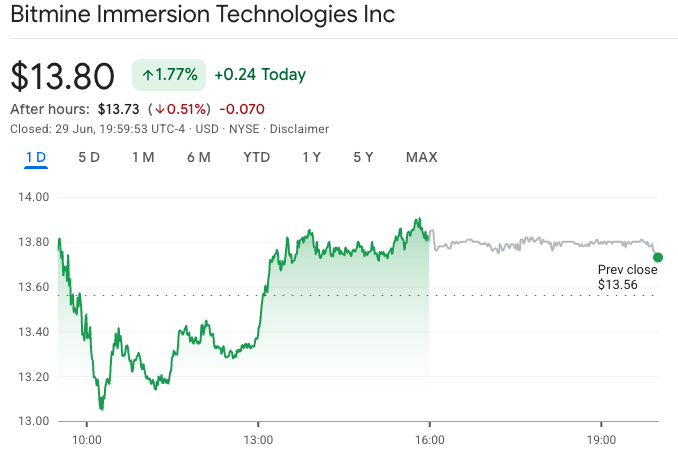
Shares in Bitmine (BMNR) gained 1.7% Monday to end trading at $13.80, but the company’s stock has slid 9% over the past trading week alongside Ether.
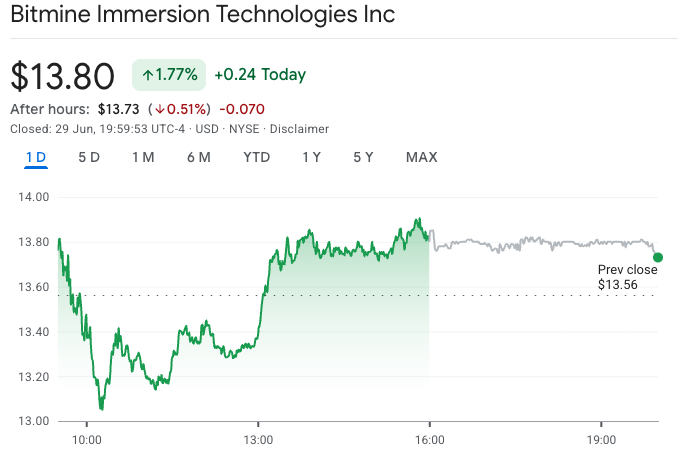
Shares in Bitmine rose Monday, stemming losses over the past trading week. Source: Google Finance
Meanwhile, rival crypto treasury firms Sharplink and Forward Industries, along with crypto exchange Gemini and crypto services firm Galaxy Digital, were also added to the Russell 3000 Index on Friday, which tracks the largest 3,000 US companies.
Ether fell below $1,600 last week, with Lee commenting that “it is not surprising to see ‘window dressing’ leading to investors reducing their holdings in assets that have fallen in the past three months.”
Magazine: Bitcoin slides to $58K, XRP hits $1 but onchain data promising: Market Moves

As more opinions on Strategy’s latest bitcoin (BTC) moves surface within the crypto community, trader Merlijn has countered Ripple CEO Brad Garlinghouse’s stance on the matter.
In a tweet addressing Garlinghouse’s remarks on Strategy’s recent BTC sale, Merlijn insisted that both Ripple and the business intelligence firm use the same funding models. In other words, the Ripple CEO is in no position to reprimand Strategy and Michael Saylor when they have similar approaches to the market.
Trader Challenges Garlinghouse’s Comments on Strategy
Over the weekend, CryptoPotato reported that Garlinghouse said during an interview with CNBC that Strategy’s Bitcoin model is hurting the crypto market. The leading Bitcoin treasury firm broke its BTC purchase streak weeks ago and sold some part of its holdings. The move sparked an uproar in the market, as the company has been one of the major drivers of BTC demand.
Although Strategy subsequently resumed BTC purchases, that sale triggered a lot of criticism from big names and market experts. Garlinghouse was of the opinion that Saylor has not been focused on how to build a strategy around the right features of BTC. He said the company’s purchase model added some excitement as BTC rallied; however, the same approach is now compounding negatively as the asset declines.
To the Ripple CEO, Strategy has been using a leveraged purchase model through the company’s Stretch stock, STRC. With the stock trading 25% below its par price of $100, the market is beginning to witness how Strategy’s model compounds negatively when BTC corrects. Garlinghouse believes Strategy should focus on creating long-term value and utility, not financial engineering through its BTC funding model.
Two Giants, Same Model
Although Merlijn believes Ripple CEO is right about STRC being in distress, the trader says Garlinghouse should not be attacking Saylor. Since Ripple funds itself by selling XRP from escrow every month, the company shares a similar model with Strategy.
In Merlijn’s eyes, Strategy and Ripple are just two giants with similar funding models that lean on the market they are defending. Since the funding models of both entities contribute to selling pressure for their individual assets, Merlijn sees no point in Garlinghouse’s criticism. It truly is quite ironic that Garlinghouse, who does not champion the “never sell your XRP” mantra, would reprimand Strategy for one bitcoin sale.
The post Crypto Analyst Challenges Ripple’s CEO Take on Strategy: ‘Two Giants, Same Model’ appeared first on CryptoPotato.
If you spend any time around Solana memecoins, you will hear about “the trenches.” It is where traders called degens fight over brand-new tokens that mostly go to zero, in a culture with its own language, rituals, and brutal economics. Here is what the trenches are, the slang you need to follow them, and the hard reality behind the romance.
Summary
- “The trenches” is crypto slang for the chaotic, high-risk frontier of on-chain memecoin trading, especially brand-new Solana tokens on launchpads like Pump.fun.
- The traders who operate there are called trenchers or degens, and the culture has its own dense vocabulary, rituals, and a war-themed self-image of survival against the odds.
- The trenches run on launchpads, decentralized exchanges, and fast trading tools, where tokens can rocket and collapse within minutes and bots compete for the first buys.
- The romance of life-changing gains is real but rare, and is built on heavy survivorship bias, since the large majority of tokens die fast and most participants lose money.
- Understanding the trenches and its slang is useful for following crypto culture and protecting yourself, but the honest framing is that it functions more like a casino than a market.
“The trenches” is crypto slang for the chaotic, high-risk frontier of on-chain memecoin trading, especially the world of brand-new Solana tokens launched on platforms like Pump.fun, where traders fight for fast profits amid rampant scams, bots, and a flood of coins that mostly go to zero. The phrase is a war metaphor, and it is chosen deliberately. To be “in the trenches” is to be down in the mud of the riskiest, fastest, most unforgiving part of crypto, trading tokens that are minutes old, against opponents who include automated bots and seasoned predators, where fortunes are made and lost in the time it takes to read a chart. It is a culture as much as an activity, with its own dense vocabulary, its own rituals and heroes, and its own grim economics.
The term has spread well beyond its origins, and you will now hear it used for the early, high-risk stage of any speculative crypto play, but its heartland is the Solana memecoin scene, where the conditions that birthed it, instant token creation, near-zero fees, and a permanent firehose of new coins, are most intense. This guide is a map of the trenches for people who want to understand the culture without necessarily entering it, or who are entering it and want to know what they are walking into. It explains what the trenches are and where they physically exist on-chain, the mindset and culture that define the people in them, a working glossary of the slang you need to follow any trenches conversation, how a typical trench play actually unfolds from launch to death or survival, a recent episode that captures the culture in motion, and, most importantly, the hard reality behind the romantic self-image.
That last part matters more than all the slang, because the trenches present themselves as a place of opportunity and camaraderie, and they are also a place where the overwhelming majority of participants lose money to a structure designed to extract it. Learning the language is the easy part. Understanding the economics is what protects you. This guide tries to do both, in that order, so that the culture is legible and the danger is unmistakable.
What the trenches are and where they live
At its core, the trenches refers to the earliest and riskiest stage of memecoin trading, where tokens are brand new and the action is fastest. The phrase captures both a place and a phase. As a phase, it means trading coins in their first minutes and hours of life, before they have established markets, when prices move violently and information is scarce. As a place, it refers to the venues and channels where this happens.
The trenches live on launchpads, above all the dominant Solana launchpad, where anyone can deploy a token in seconds and it begins trading immediately against a bonding curve. For readers new to that pricing model, the mechanism under every launch is the bonding curve, which automatically changes a token’s price as buyers and sellers move in and out. The trenches extend to the decentralized exchanges where tokens move after they graduate from those launchpads, and to the social channels, especially memecoin-focused chat groups, that are themselves often called the trenches, because that is where traders gather to share tips and coordinate.
The infrastructure of the trenches is built for speed, which shapes the entire experience. Traders use specialized tools and bots that let them buy a token within seconds of its launch, read on-chain data in real time, and execute faster than a human could click, because in a world where a coin can rise and fall in minutes, milliseconds of timing translate into enormous differences in entry price. This is why the trenches are not a level playing field: automated snipers and bots routinely buy into a token in its first moments, ahead of the humans who see it trending later. The reason all of this concentrated on Solana is structural: Solana’s very low fees and fast transaction speeds make it cheap and quick to launch coins and to trade them rapidly, which is exactly what a high-frequency, high-churn memecoin culture needs.
The launchpads that lowered the barrier to creating tokens did the rest. The trenches, then, are the on-chain frontier where the cheapest, fastest, most permissionless token creation meets the most speculative trading culture in crypto. The combination produces both the energy and the carnage the term implies. It is why the trenches feel like a live market, a chatroom, and a casino floor at the same time.
The mindset and the culture
The trenches have a distinct culture, and understanding the mindset is as important as understanding the mechanics, because the culture is part of what keeps people in a game that mostly loses them money. The self-image is heroic and martial: participants cast themselves as warriors surviving in hostile territory, enduring losses, hunting for the one coin that will pay for all the others. There is genuine camaraderie in it, a shared identity among people who understand a world outsiders find baffling or repellent, and a folklore of legendary trades and legendary traders. The dominant ethos is captured in the word degen, short for degenerate, which trenchers wear as a badge rather than an insult.
To be a degen in the trenches is to accept that you are gambling and to lean into it with a certain dark humor. That humor and identity are woven through the culture’s language and rituals. Trenchers talk about “locking in,” meaning to focus intensely on the goal of making money quickly with minimal effort, and about hunting for a “gem,” an undervalued coin spotted before the crowd. The culture prizes “alpha,” valuable information or insight shared among insiders, and it runs on a constant cycle of fear of missing out and fear of being wrong, the twin emotions that drive impulsive buying and panic selling.
There is a player-versus-player quality to it, an awareness that in a zero-sum scramble over a worthless token, your profit is someone else’s loss, which the culture acknowledges with a kind of cheerful brutality. All of this creates a powerful social pull. The trenches are not just a market; they are a community with a language, a value system, and an emotional rhythm. That social dimension is a large part of why people stay even as they lose, because belonging and the thrill of the hunt are their own rewards.
Recognizing the culture’s grip is important, because the same camaraderie that makes the trenches compelling is also what makes them hard to walk away from. The community tells itself stories about survival and conviction, and some of those stories are true. But many of them are also retrospective myths built around the tiny number of trades that worked. That is why the culture has to be understood together with the economics, not separately from them.
A working glossary of trench slang
To follow any conversation in the trenches, you need the vocabulary, and the slang is dense enough that an outsider can find a discussion incomprehensible. What follows is a working glossary of the most important terms, enough to read a typical trenches exchange. Begin with the people: a trencher or degen is a high-risk memecoin trader; a jeet is a derisive term for someone who sells too early or panic-sells, dumping on others; and a whale is a holder large enough to move a token’s price with their trades. The verbs of entry and exit matter too: to ape, or ape in, is to buy a token impulsively without much research; to snipe is to buy in the very first moments of a launch, usually with a bot; and to bundle is to coordinate multiple wallets to buy at launch, often to create a false impression of demand.
The lifecycle of a coin has its own terms. A fair launch means a token released with no presale or insider allocation, where everyone enters through the same curve. Graduation is the moment a token completes its bonding curve and moves to a normal exchange. A rug, or rug pull, is the most common trench ending: a scam where the creator pulls liquidity or dumps their holdings, collapsing the price to near zero.
A CTO, or community takeover, is when holders take over a coin the original creator abandoned, running it themselves to try to revive it. The emotional and evaluative vocabulary rounds it out: a gem is an undervalued find; alpha is valuable insight; FOMO and FUD are the fear of missing out and fear, uncertainty, and doubt that drive buying and selling; bags are the tokens you hold; to be underwater is to hold at a loss; and to moon or send it is to rise sharply or to take the plunge on a risky buy. Newer coinages appear constantly, such as a stimmy, slang adopted from stimulus payments to describe handing money to traders, which entered wide use when an influencer pledged to airdrop fees to the trenches. The vocabulary keeps evolving, but these terms form the durable core, and knowing them turns an impenetrable trenches conversation into something you can actually follow.
How a trench play unfolds
To see the culture and mechanics together, follow how a typical trench play unfolds from birth to death, because the lifecycle is remarkably consistent. It begins with a launch: someone deploys a new token on a launchpad, giving it a name, an image, and a ticker, and it starts trading instantly against its bonding curve. In the first seconds, before any human has really noticed, automated snipers and bots may buy in, taking the earliest and cheapest positions, sometimes coordinated across bundled wallets to create the look of organic demand. This is the first hard truth of the trenches: by the time a human sees a coin, bots have often already moved.
Next comes the attention phase. If the coin has a catchy theme, a connection to a trending narrative, or a push from an influencer or a coordinated group, it begins to spread across social channels, and human traders start to ape in, sending the price climbing up the curve as buying accelerates. If the momentum builds far enough, the coin graduates, its accumulated liquidity moving to a normal exchange, which can attract a fresh wave of traders who treat graduation as a sign of legitimacy. Then comes the decisive phase, which for the overwhelming majority of coins is the end.
As the early buyers and any insiders take profit, selling into the latecomers, the price stalls and reverses. If a creator or whale dumps a large position, or pulls liquidity outright in a rug, the price collapses toward zero, often within hours of the peak. Most coins simply fade as attention moves to the next launch and buyers stop arriving, the price bleeding down the curve as holders capitulate. A small number survive, and an even smaller number, occasionally, get a second life through a community takeover, when stubborn or spiteful holders seize the abandoned coin and try to rebuild momentum themselves, which usually fails but can, if executed well, give the holders a better exit.
This lifecycle, launch, snipe, hype, climb, distribution, collapse, plays out thousands of times a day, and recognizing its shape is the difference between understanding what you are watching and being its raw material. It is also why who profits from the churn matters. Launchpads, creators, and early entrants can profit from volume and timing even when the token itself has no lasting value. Late buyers often discover that the chart they are chasing is already in its distribution phase.
The trenches in action
A recent episode captures the culture vividly and ties the abstractions to a concrete moment. In late June 2026, a frenzy erupted around a cluster of Solana memecoins using the name of a prominent influencer, and it played out as a textbook trenches event. Multiple competing tokens using the same name launched at once, and the trading community flipped between them in exactly the player-versus-player scramble the culture is known for, with no single coin crowned the real one for a stretch as trenchers fought over which version would win. One version went parabolic, running to tens of millions in market cap within days, while dramatic individual outcomes, including a trader turning a few thousand dollars into hundreds of thousands, became the kind of folklore that draws more people into the next launch.
The episode also showcased the culture’s vocabulary and rituals in real time. The influencer at the center publicly took the side of the trenches against the launchpad, criticizing how it handled rewards and pledging to airdrop his accumulated fees back to traders, framing it in the community’s own slang as giving the trenches a stimmy because the platform would not. The word stimmy, the framing of small traders as a community owed a payout, the swarm of copycat tokens, the parabolic run, and the rapid churn all embodied the trenches in a single story. It also showcased the danger.
The same influencer disavowed other tokens trading on his name, copycats and impersonations proliferated, and the headline pump figures often did not survive a look at the actual on-chain data. The episode was the trenches in miniature, the camaraderie and the opportunity and the manipulation and the carnage all braided together, which is exactly why it drew such attention. For a student of the culture, it was a live demonstration of every dynamic this guide describes. It was also a reminder that behind the romance of the heroic trade sits a machine that mostly transfers money from latecomers to insiders and platforms.
The reality behind the romance
Strip away the war metaphors and the folklore, and the trenches are, in hard economic terms, a place where most participants lose money to a structure built to extract it, and saying so plainly is the most useful thing this guide can do. The data is unambiguous. Studies of Solana memecoin launches have found that roughly two out of three coins are effectively dead within their first day, with the vast majority of their liquidity gone, and that on the order of 80% or more lose over 90% of their value within about a week. Recent Pump.fun lifespan data showed the same pattern, with nearly seven in 10 reviewed launches recording their final bonding-curve trade on launch day.
By some estimates, the overwhelming majority of tokens launched on the dominant launchpad are scams, pump-and-dumps, or jokes with no lasting value. The life-changing gains that make the folklore are real, but they are extraordinarily rare, and they are visible precisely because they are rare, while the millions of losing trades are invisible. That produces a powerful survivorship bias: you hear about the trader who turned a few thousand into a fortune, never about the thousands who did the opposite. This is the same dynamic that makes the assets traded in the trenches so culturally powerful and financially dangerous.
The structural reality reinforces this. The platforms that host the trenches earn from trading volume regardless of whether any coin succeeds, so the house profits from the churn itself, much like a casino. Bots and insiders routinely get the earliest, cheapest positions, leaving the human trader who arrives on a trending coin to buy from people already in profit. Creator fees and large insider holdings give those who launch and promote coins tools and motives to manufacture hype around tokens they benefit from.
The emotional culture, the FOMO, the camaraderie, the heroic self-image, is itself part of what keeps people trading through losses. None of this means the trenches are not real or that no one ever profits; some skilled and disciplined traders do, and the culture has genuine creativity and community in it. But the honest framing, shared by the more responsible voices in the space, is that the trenches function far more like a casino than like an investment market, that the odds are structurally against the individual, and that anyone entering should treat it as gambling with money they can afford to lose entirely, not as a path to wealth. The slang is fun and the stories are thrilling, but the math is brutal, and the math is what determines what happens to almost everyone who goes in.
Frequently asked questions
What does “the trenches” mean in crypto?
The trenches is slang for the chaotic, high-risk frontier of on-chain memecoin trading, especially brand-new Solana tokens on launchpads like Pump.fun. It is a war metaphor: to be in the trenches is to trade coins that are minutes old, in the fastest and most unforgiving part of crypto, against opponents that include automated bots. The term refers to both a phase, the earliest and riskiest stage of a token’s life, and a place, the launchpads, exchanges, and chat groups where this trading happens. Memecoin-focused chat channels are themselves often called the trenches. The phrase has spread to mean the early high-risk stage of any speculative crypto play. In practice, though, its strongest association remains Solana memecoin trading, because Solana’s speed, low fees, and launchpad culture created the conditions where the slang took hold. It is less a formal market category than a cultural label for the most chaotic edge of on-chain speculation.
Who are “trenchers” and “degens”?
Trenchers are the traders who operate in the trenches, buying and selling brand-new memecoins. Degen, short for degenerate, is a closely related term that trenchers wear as a badge rather than an insult; it describes someone who takes large speculative risks, does minimal research, and embraces gambling openly. The culture is built around this identity: a self-image of risk-taking warriors hunting for the one coin that pays for all the losses. There is real camaraderie and folklore among them, a shared language and value system. That social identity is part of what makes the trenches compelling and part of what keeps people trading even as the structure causes most of them to lose money over time. It gives the activity a story larger than the trade itself. The danger is that the story can make repeated losses feel like proof of toughness rather than evidence that the odds are bad.
Where do the trenches actually happen?
On-chain, primarily on Solana. The trenches live on launchpads, above all the dominant Solana launchpad, where anyone can deploy a token in seconds and it trades instantly against a bonding curve, and on the decentralized exchanges where tokens move after they graduate. They also live in social channels, especially memecoin-focused chat groups that are themselves called the trenches. The infrastructure is built for speed, with specialized tools and bots that let traders buy within seconds of a launch and read on-chain data in real time. Solana became the heartland because its very low fees and fast transactions make it cheap and quick to launch and rapidly trade coins, which is exactly what the high-churn memecoin culture needs. The chain’s infrastructure makes small, fast trades economically possible in a way that would be harder on more expensive networks. That is why the trenches are as much a product of technical design as they are of internet culture.
What does “stimmy” mean, and other common slang?
A stimmy is slang, adopted from stimulus payments, for handing money to traders; it entered wide use when an influencer pledged to airdrop fees to the trenches. Other core terms include ape, to buy impulsively without research; snipe, to buy in a launch’s first moments, usually with a bot; rug, a scam where the creator collapses the price; CTO, a community takeover of an abandoned coin; jeet, a derisive term for someone who panic-sells; whale, a holder big enough to move the price; bags, the tokens you hold; alpha, valuable insight; and FOMO and FUD, the fear of missing out and the fear and doubt that drive buying and selling. The vocabulary evolves constantly, but these form its durable core. The slang matters because it does more than describe trades. It builds identity, signals belonging, and compresses complex market behavior into quick phrases that move through chats fast. Understanding it helps you follow the culture, but it should not make the activity seem safer than it is.
Can you actually make money in the trenches?
Some people do, but the odds are structurally against the individual, and most participants lose money. The data is stark: roughly two of three Solana memecoins are effectively dead within a day, and 80% or more lose over 90% of their value within about a week, while the overwhelming majority of launchpad tokens are scams, pump-and-dumps, or jokes. The life-changing gains that fuel the folklore are real but extremely rare, and they create survivorship bias because the countless losses are invisible. Bots and insiders get the earliest positions, platforms profit from the churn regardless of outcomes, and creator fees give promoters motives to manufacture hype. Skilled, disciplined traders exist, but the structure resembles a casino more than an investment market. The rare wins are easy to screenshot and share, while the typical losses disappear into wallet history. That imbalance is exactly why the romance of the trenches can be so misleading.
Is trading in the trenches a good idea?
This guide does not recommend it, and the honest framing is that the trenches function far more like a casino than an investment market, with the odds structurally against the individual participant. The platforms profit from trading volume regardless of whether coins succeed, bots and insiders take the best positions, and most tokens are designed to extract money from latecomers. The culture’s camaraderie and heroic self-image are genuine and are also part of what keeps people trading through losses. If someone chooses to participate anyway, the only responsible approach is to treat it strictly as gambling, risking only money they can afford to lose entirely, verifying contracts and holder concentration, and never mistaking the rare success stories for the typical outcome. That means treating every new coin as hostile until proven otherwise. It also means understanding that speed, information, and discipline matter, but even those do not erase structural disadvantages. The safest way to learn the trenches is as a culture and a warning before treating it as a trading venue.
This article is educational information about crypto culture, not financial advice or encouragement to trade memecoins. Descriptions of trenches culture, slang, and failure statistics reflect reporting available as of June 29, 2026, and can change. Memecoin trading is extremely high-risk, resembles gambling, and causes most participants to lose money. Verify any specific token or platform independently and consult a qualified professional before making any financial decision.
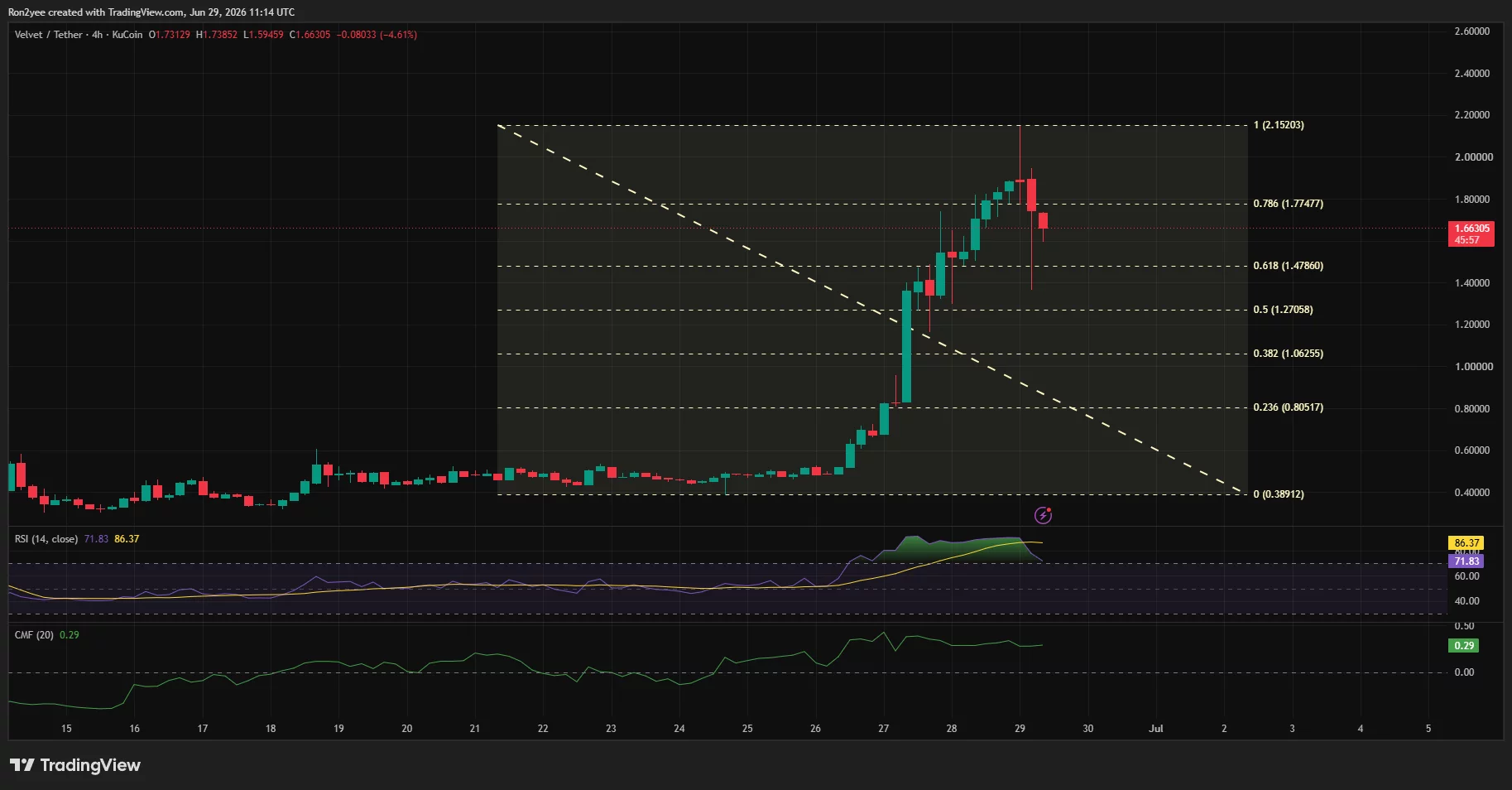
Velvet price has surged more than 300% in three days, climbing to a new all-time high above $2 after the protocol consolidated its Base network liquidity on Aerodrome Finance and expanded its synthetic pre-IPO trading markets.
Summary
- Velvet price has surged more than 300% to a new all-time high after migrating liquidity to Aerodrome Finance.
- The rally gained momentum as the protocol launched synthetic pre-IPO markets and broke above key technical resistance.
- Despite strong buying interest, a low TVL, DWF Labs transfers, and an upcoming token unlock pose risks to the uptrend.
According to Velvet, the protocol migrated all of its protocol-owned liquidity on Base to Aerodrome Finance, making the decentralized exchange its sole liquidity venue on the network. The move concentrated trading depth in one marketplace, reducing slippage and tightening spreads.
At nearly the same time, Velvet rolled out synthetic markets offering tokenized exposure to private companies, including SpaceX, drawing fresh attention from speculative traders and pushing the token from around $0.39 on June 26 to an intraday high of about $2.15 on June 29.
Technical indicators continue favoring buyers
Momentum accelerated after buyers forced VELVET above the $0.60-$0.67 resistance area that had capped previous recovery attempts. The breakout triggered a rapid move higher as short sellers exited positions and fresh buyers entered the market.
The four-hour chart shows VELVET has entered price discovery after printing a record high near $2.15 before easing toward $1.66 at the time of writing. Even after the pullback, the token continues trading above the key 61.8% Fibonacci retracement level around $1.48, a zone that could now act as the first major support if selling pressure increases.
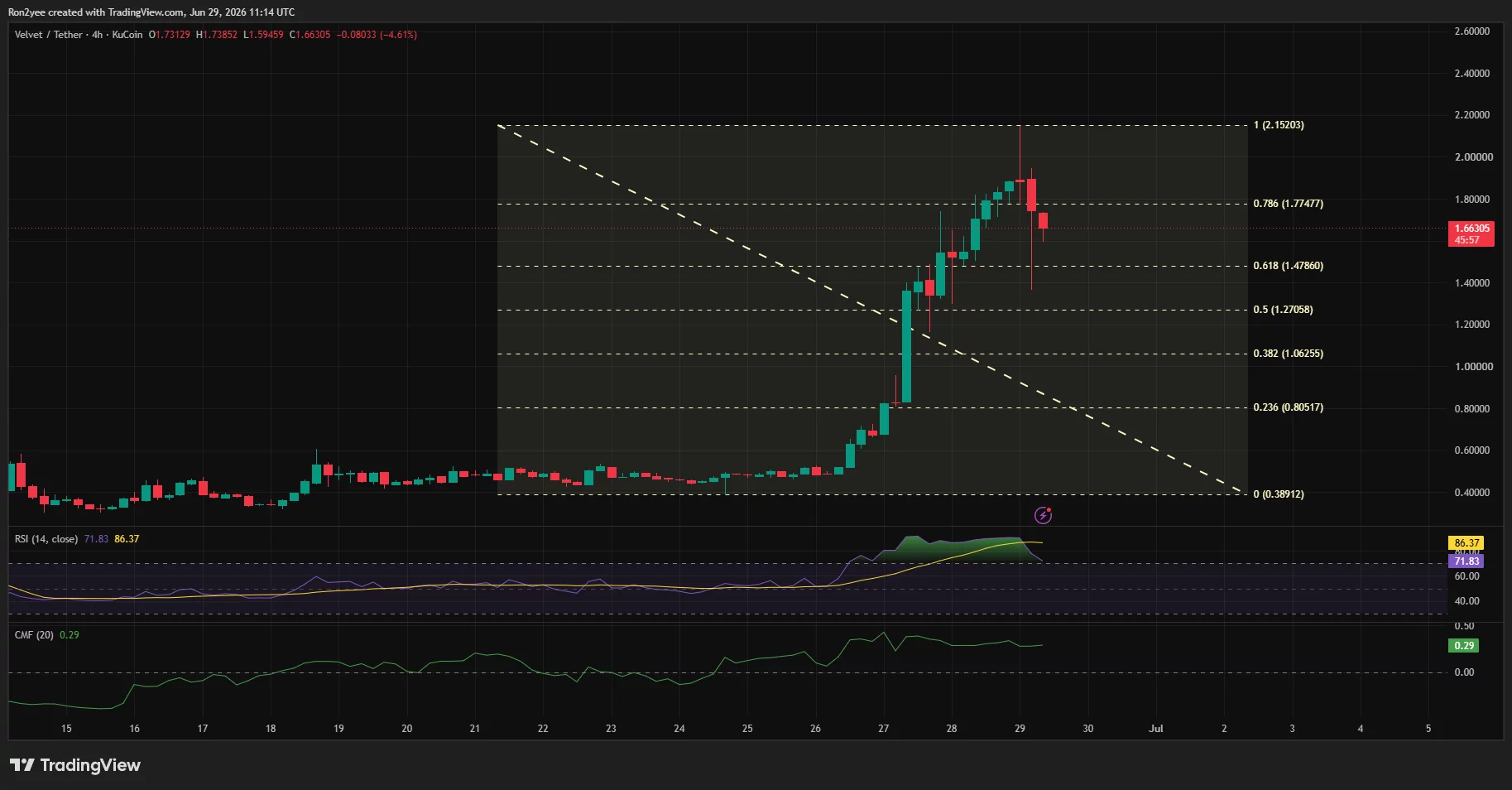
Technical indicators continue to favor the bulls despite signs that the rally is cooling. The Relative Strength Index remains above 70, indicating bullish momentum, although it has retreated from more extreme overbought readings.
At the same time, the Chaikin Money Flow indicator remains positive near 0.29, suggesting capital continues flowing into the asset despite profit-taking near record levels.
A recovery above the 78.6% Fibonacci level near $1.77 could open the door for another test of the $2.15 peak. On the downside, losing support around $1.48 would expose the next retracement levels near $1.27 and $1.06.
Valuation risks remain despite the breakout
Despite the sharp rally, blockchain data points to growing valuation concerns.
Market tracking platforms show Velvet’s fully diluted valuation has climbed to roughly $800 million, while the protocol’s total value locked stands at about $770,000. The large gap suggests the recent price increase has been driven primarily by speculation surrounding synthetic pre-IPO trading and artificial intelligence-linked decentralized finance narratives rather than by growth in on-chain activity.
On-chain transaction records also indicate that market maker DWF Labs transferred nearly 29 million VELVET tokens to centralized exchanges during the rally. Although the transactions do not necessarily confirm immediate sales, they have attracted attention because they coincide with significantly higher trading volumes.
Supply-side pressure could increase further in the coming weeks. Token unlock schedules show approximately 10.4 million VELVET tokens are expected to enter circulation on July 10, potentially adding fresh selling pressure if demand slows after the recent rally.
The surge has also come at a time when the cryptocurrency market remains relatively subdued. With expectations that the U.S. Federal Reserve will keep monetary policy restrictive and the U.S. Dollar Index staying elevated, Bitcoin and Ethereum have traded within relatively narrow ranges.
In that environment, speculative capital has increasingly concentrated in smaller narrative-driven tokens, allowing assets such as VELVET to produce outsized gains even as much of the digital asset market remains range-bound.
Disclosure: This article does not represent investment advice. The content and materials featured on this page are for educational purposes only.


Before a memecoin reaches a normal exchange, its price is not set by buyers and sellers meeting in a market. It is set by a formula. That formula is the bonding curve, and it is the engine behind nearly every Solana memecoin launch. Here is how a bonding curve works, why launchpads use it, and why understanding it is the difference between trading and reacting late.
Summary
- A bonding curve is a mathematical formula that sets a token’s price automatically based on how much of its supply has been bought, so the price rises as people buy and falls as they sell.
- It lets a token launch with instant liquidity and no pre-funded pool, because buyers trade against the curve’s contract rather than against other traders.
- On the leading Solana launchpad, a token sells along its curve until it “graduates,” at which point its accumulated liquidity moves to a normal exchange and the curve is left behind.
- Curves come in shapes, mainly linear and exponential, that determine how violently the price moves and how brutally late buyers are punished.
- A bonding curve is a pricing mechanism, not a safety mechanism, and the large majority of tokens launched on curves lose most of their value within days.
A bonding curve is a mathematical pricing formula that sets a token’s price automatically based on how much of its supply has already been bought, so that the price rises as people buy and falls as people sell, without needing the traditional matching of buyers and sellers in an order book or a pre-funded pool of liquidity. That definition contains the whole idea, but its consequences are profound, because the bonding curve is what made the modern memecoin explosion possible. In an ordinary market, a token’s price emerges from buyers and sellers placing orders that meet at an agreed price, which requires liquidity to exist before trading can happen. A bonding curve removes that requirement.
It lets a brand-new token trade from the very first moment, with its price determined by a formula rather than by a market, and with liquidity created automatically as people buy. This is why a person with no technical skill and a small amount of money can launch a coin that is instantly tradable, and it is why tens of thousands of new tokens can appear every day. The bonding curve is the mechanism underneath all of it. Because the bonding curve governs how a memecoin behaves in its earliest and most volatile phase, understanding it is the single most useful piece of technical knowledge for anyone trying to make sense of memecoin launches, even from a safe distance.
This guide explains what a bonding curve is and how trading against one works, why launchpads adopted the model, how it operates in practice on the dominant Solana launchpad including the all-important moment of graduation, the different curve shapes and why they matter, a worked example that traces a buy through the curve, the uses of bonding curves beyond memecoins, and the risks the curve does and does not protect against. The point is not to encourage trading these tokens, most of which lose nearly all their value, but to make the mechanism legible, because a person who understands the curve can at least see what is happening when a fresh token rockets and collapses, instead of reacting late to forces they cannot name. The curve is the rule of the game, and knowing the rule is the beginning of not being its victim.
What a bonding curve actually is
Start with how trading against a bonding curve differs from trading in a normal market, because the distinction is the key to everything. In a conventional exchange, when you buy a token, you are buying it from another person who is selling, and the price is whatever buyers and sellers agree on through their orders. With a bonding curve, there is no counterparty on the other side; you are trading against a smart contract that follows a formula. When you buy, you send the network’s currency, on Solana that is SOL, to the bonding curve contract, and the contract issues you tokens at a price determined by the formula, then moves the price up the curve.
When you sell, you send your tokens back to the contract, which removes them from circulation and returns SOL to you at the formula’s current price, then moves the price down the curve. The price is purely a function of how far along the curve the supply has been bought; more buying pushes it up, more selling pulls it down, automatically and without any human market-maker. The reason this is called a bonding curve is that the price follows a curve plotted against the supply sold. As more of the token’s supply is purchased and moves out along the curve, each successive token costs more than the last, so the price climbs as the coin sells.
Crucially, the currency that buyers send in does not go to a seller; it stays locked in the contract, where it serves as the token’s liquidity, the pool of value that backs the ability to sell tokens back later. This is how a bonding curve creates liquidity automatically: every purchase adds to the locked pool, so the token is tradable from its first moment without anyone having to fund a liquidity pool in advance. That self-contained quality, a contract that prices the token, holds the liquidity, and handles both buying and selling by formula, is what makes the bonding curve such a powerful launch mechanism. It collapses everything a normal token launch requires, smart-contract deployment, liquidity provision, market-making, into a single automated curve that anyone can use.
Why launchpads use bonding curves
The appeal of the bonding curve to a launchpad, and to the people launching coins, comes down to removing barriers, and seeing why clarifies the model’s role. Traditionally, issuing a token that people could actually trade was involved: a developer had to write and deploy a smart contract, then pre-fund a liquidity pool with a meaningful amount of capital so the token had something to trade against, since without liquidity a token cannot be bought or sold at a stable price. This required both technical skill and money up front, which kept token creation in the hands of relatively few. The bonding curve demolishes both barriers.
Because the curve provides liquidity automatically as people buy, no one has to pre-fund a pool, and because the launchpad handles the contract, no one has to write code. A creator needs only a name, an image, a ticker, and a tiny amount of the network’s currency to cover a creation fee. This is why bonding-curve launchpads turned token creation into a one-click activity and unleashed the flood of memecoins now defining parts of Solana. The model also delivers what the platforms call a fair launch, in the sense that every buyer enters through the same curve from the same starting point, with no presale or insider allocation funded in advance, so the earliest public buyer and the latest both interact with the same automated pricing.
One launchpad even folds in a measure against the oldest memecoin scam by having creators buy their own tokens through the same curve as everyone else at launch, rather than secretly hoarding a huge allocation to dump later, which levels the starting field somewhat even though it does not remove all risk. The bonding curve, then, is the technology that made memecoin creation cheap, instant, and open to anyone, which is simultaneously the source of its creative energy and the reason the space is flooded with low-quality and predatory tokens. The same mechanism that empowers a hobbyist empowers a scammer, because the curve does not care who is using it. The fees around that system also matter, which is why the fees layered on each curve trade became a central debate for memecoin launchpads.
How it works on the leading launchpad
To see the bonding curve in action, it helps to follow how it operates on the dominant Solana launchpad, where the mechanics are well defined. When a coin is created there, it is issued with a large fixed supply, commonly 1 billion tokens, and a major portion of that supply, around 800 million tokens, is placed on the bonding curve to be sold. As buyers send the network’s currency to the curve, they receive tokens and the price rises along the curve, climbing as more of those 800 million are purchased. In the early phase, the coin exists only on the curve, not on any normal exchange, so all of its trading happens against the formula.
Some launchpads add gamified milestones to this phase; one highlights a coin prominently on its homepage once the coin reaches a certain threshold of buying, which functions as free visibility that can attract more buyers and accelerate the climb. The pivotal event in a curve’s life is graduation, and understanding it is essential. A coin graduates when enough of its curve supply has been bought to reach a set threshold, often described as around a particular market-cap level. At graduation, the liquidity that has accumulated in the curve, the pool of currency buyers sent in, migrates out of the curve and into a normal liquidity pool on a decentralized exchange, where the token then trades like a conventional market with buyers and sellers instead of against the curve.
On the leading launchpad, the accumulated liquidity moves to its associated exchange and the liquidity-pool tokens are burned, which is meant to assure traders that no one controls and can withdraw that liquidity. Reaching graduation typically requires the curve to fill with a meaningful amount of the network’s currency, and migrating costs a small additional amount in fees, so a coin whose creator cannot or will not push it over the line can stall on the curve indefinitely, a state traders sometimes call limbo. Graduation is a meaningful milestone because it signals a coin attracted enough buying to reach a normal market, but as the risk section stresses, it is emphatically not a guarantee of safety. Once graduation happens, the next question is where liquidity goes after graduation, because the token leaves the formula-driven phase and enters a pool-based market.
Curve shapes and why they matter
Not all bonding curves are the same shape, and the shape determines how the price behaves, which has direct consequences for anyone trading on it. The two broad types are linear and exponential curves, and the difference is intuitive once you picture it. A linear curve raises the price by a steady increment for each unit of supply sold, so the price climbs in a straight, predictable line. To use a simple illustration that explainer sources cite, with a linear formula where the price starts at $1 and rises by a fixed step, the first token might cost $1 and the hundredth token $11, a smooth and modelable progression.
Because the increase is steady, a linear curve is easier to reason about: a trader can estimate how much the price will move as they buy, and can scale into a position with some idea of their average entry and the slippage they will incur. An exponential curve behaves very differently and more dangerously for latecomers. On an exponential curve, the price does not just rise; it accelerates, so each additional unit of supply pushes the price up by a larger amount than the last. This creates powerful incentives to buy early, because the earliest buyers get in before the acceleration, and it punishes late buyers brutally, because by the time social attention arrives and a crowd rushes in, the price may already have moved far up the steepening curve.
Latecomers pay dramatically more and have far less room for the price to rise further before they are underwater. The practical lesson is that the curve’s shape is itself information a trader should read: a linear curve allows methodical, sized entries, while an exponential curve rewards speed and savagely penalizes the momentum traders who arrive after the supply has already climbed. Notably, on the leading launchpad, linear-style curves have been associated with higher survival rates than fixed-price launches, because the automated, progressive pricing resists the instant dumps that plague other launch formats. The shape of the curve, in short, is not a technicality; it is a map of where the danger lies, including why curve entries move against you when the formula changes the price as demand arrives.
A worked example: tracing a buy through the curve
To make the mechanics concrete, follow a single buyer through a bonding curve, using simplified numbers for clarity. Imagine a fresh coin on a launchpad with a linear curve, early in its life, where only a small fraction of the 800 million curve tokens have been bought, so the price per token is still very low. A buyer, call her the early entrant, sends a modest amount of SOL to the curve contract. The contract issues her a large number of tokens at the current low price and nudges the price up the curve as her purchase moves the supply further along.
Because she bought early on a curve that has barely moved, her tokens are cheap and her average entry price is low. The currency she sent stays locked in the contract as liquidity. Now imagine the coin starts trending. A wave of new buyers sends SOL to the same curve, each purchase moving the supply further along and ratcheting the price higher.
A later buyer, the latecomer, arrives after the coin has been featured and hyped, when much of the curve supply has already been bought. He sends the same amount of SOL the early entrant did, but because the price has climbed far up the curve, he receives far fewer tokens at a much higher average price. If the curve is exponential, the gap is even more extreme, because the price accelerated as the crowd bought in. Should the hype fade and buyers start selling back to the curve, the price slides back down it, and the latecomer, who paid the high price, is underwater long before the early entrant is.
This is the core dynamic of bonding-curve trading laid bare: the curve mechanically rewards those who buy when the supply is low and punishes those who buy after attention has already pushed the price up. The early entrant’s advantage is not skill but position on the curve, and the latecomer’s disadvantage is structural. The example shows why, in this arena, timing relative to the curve matters more than the quality of the coin, and why so many people who chase a trending token arrive precisely when the curve has already made the trade dangerous. For a cultural view of that behavior, trading the curve in practice is what traders call life in the trenches.
Bonding curves beyond memecoins
Although memecoins are where most people encounter bonding curves, the mechanism is a general tool with legitimate uses, and recognizing that gives a fuller picture. The core idea, pricing a token by formula against its supply and providing liquidity automatically, is useful anywhere a project wants continuous, demand-driven issuance instead of a single fixed launch event. Some projects use bonding curves so that demand determines access and pricing over time, letting a token be issued gradually as people buy in, instead of forcing everything through one launch moment. This continuous-issuance model has appeared in corners of crypto beyond memecoins, including in social applications where the curve priced access to a creator or community, with one well-known social-token experiment matching the curve mechanism to its product in a way many later copycats did not.
The honest framing is that the bonding curve is a neutral piece of financial engineering whose character depends entirely on what it is attached to. On its constructive side, it solves a real problem: it lets a project bootstrap liquidity and discover price without a pre-funded pool or a centralized market-maker, which is genuinely useful for certain launch and issuance designs. On its speculative side, the same mechanism can price anything, including tokens with no purpose, and it works mechanically even when it works economically against the people buying. As one analysis put it, a bonding curve can price anything, but it cannot create lasting demand for something nobody wants to hold once the launch excitement fades.
That is the crux. The curve is excellent at manufacturing a price and a tradable market out of nothing, which is exactly why it powers both legitimate continuous-issuance designs and the endless churn of disposable memecoins. The technology is the same; the outcomes diverge based on whether there is any real reason to hold the token after the novelty wears off. Most of the time, in the memecoin context, there is not, even when a curve launch that went parabolic briefly makes the mechanism look like a wealth machine.
Risks: the curve is a mechanism, not a safety net
The most important thing to understand about a bonding curve is what it does not do, because misreading its protections is how people get hurt. A bonding curve sets a price and provides liquidity; it does not make a token safe, valuable, or likely to succeed. The hard data on this is sobering. Analyses of Solana memecoin launches have found that the large majority of tokens launched on bonding curves, on the order of 80% or more, lose more than 90% of their value within about a week, often tied to creators or insiders dumping once the curve phase ends and conditions change.
So the default expectation for a fresh curve launch should be a temporary opportunity at best and a near-certain loss at worst, not a durable asset. The curve’s automated pricing does nothing to change the fact that most of these tokens have no purpose and no reason for anyone to hold them once the initial excitement fades. Several specific risks deserve naming. Creator and insider dumping is common: once a curve completes or conditions shift, those holding large early positions may sell into the buyers who arrived later, collapsing the price.
Whale-driven distortion is another: a large buyer can push the price quickly up the curve to create the appearance of demand, then unwind into the crowd that follows. Graduation, despite feeling like a milestone, is not safety; a graduated coin trading on a normal exchange can still collapse if hype fades, whales sell, or new buyers stop arriving, and post-graduation liquidity can be thin. The curve’s shape compounds these dangers, with exponential curves punishing latecomers especially hard. And the broader environment is one in which, by some estimates, the overwhelming majority of launchpad tokens are scams, pump-and-dumps, or jokes with no lasting viability.
The clear-eyed conclusion is that a bonding curve is a clever pricing and liquidity mechanism, not a protective one, and that understanding the curve should make a person more cautious, not more confident. Knowing how the curve works lets you see the trap; it does not disarm it. The only reliable protection is to treat curve-launched tokens as high-risk speculation, to check holder concentration, liquidity, and curve shape before doing anything, and to never commit money you cannot afford to lose entirely.
Frequently asked questions
What is a bonding curve in simple terms?
A bonding curve is a formula that sets a token’s price based on how much of its supply has been bought, so the price rises as people buy and falls as they sell. Instead of trading against other people in a market, you trade against a smart contract that follows the formula: you send currency and receive tokens at the curve’s current price, which then moves up. The currency you send stays locked in the contract as the token’s liquidity. This lets a brand-new token be tradable instantly, with no pre-funded liquidity pool and no order book, which is why bonding curves power the one-click memecoin launches common on Solana
How does a token graduate from a bonding curve?
A token graduates when enough of its curve supply has been bought to reach a set threshold, often described around a particular market-cap level. At that point, the liquidity accumulated in the curve, the currency buyers sent in, migrates out of the curve into a normal liquidity pool on a decentralized exchange, where the token then trades like a conventional market between buyers and sellers instead of against the curve. On the leading Solana launchpad, the liquidity-pool tokens are burned at graduation so no one can withdraw that liquidity. Reaching graduation requires the curve to fill with a meaningful amount of currency, and a coin that never gets there can stall on the curve indefinitely.
What is the difference between linear and exponential curves?
The difference is how fast the price rises. A linear curve raises the price by a steady, fixed increment for each unit of supply sold, so the price climbs in a predictable straight line, which makes it easier to estimate slippage and scale into a position. An exponential curve accelerates, raising the price by a larger amount with each unit sold, so the price rises faster and faster. Exponential curves strongly reward early buyers and brutally punish late ones, because by the time a crowd arrives, the price may have already climbed steeply, leaving latecomers paying far more with much less upside.
Does a bonding curve make a token safe?
No. A bonding curve is a pricing and liquidity mechanism, not a safety mechanism. It sets a price and provides liquidity, but it does nothing to make a token valuable or likely to succeed. Analyses of Solana launches found that the large majority of bonding-curve tokens, around 80% or more, lose over 90% of their value within about a week, often when creators or insiders dump after the curve phase. Graduation is not safety either, since a graduated coin can still collapse.
Why do launchpads use bonding curves?
Because they remove the two big barriers to launching a tradable token: technical skill and upfront capital. Normally a creator would have to deploy a smart contract and pre-fund a liquidity pool so the token had something to trade against. A bonding curve eliminates both, because it provides liquidity automatically as people buy and the launchpad handles the contract, so a creator needs only a name, image, ticker, and a tiny fee. This turned token creation into a one-click activity and unleashed the flood of memecoins on Solana.
Can bonding curves be used for things other than memecoins?
Yes. The bonding curve is a general tool for any project that wants continuous, demand-driven token issuance instead of a single fixed launch, because it lets demand determine pricing and access over time while providing liquidity automatically. It has been used beyond memecoins, including in social applications where a curve priced access to a creator or community. The mechanism itself is neutral financial engineering; its character depends on what it is attached to. It can support legitimate continuous-issuance designs, and it can equally price tokens with no purpose.
This article is educational information, not financial advice. Descriptions of bonding-curve mechanics, launchpad behavior, and failure statistics reflect reporting available as of June 29, 2026, and can change. Tokens launched on bonding curves are extremely high-risk and the large majority lose most or all of their value. Nothing here encourages trading such tokens. Verify any specific platform’s mechanics independently and consult a qualified professional before making any decision.


J.P. Morgan's Kinexys blockchain has crossed $4 trillion in cumulative transactions and added five Asia-Pacific currencies, extending 24/7 settlement to the region's largest trade corridors. The bank added the Australian dollar, Hong Kong dollar, Japanese yen, Chinese renminbi and Singapore dollar… Read the full story at The Defiant
Disclosure: This article does not represent investment advice. The content and materials featured on this page are for educational purposes only.
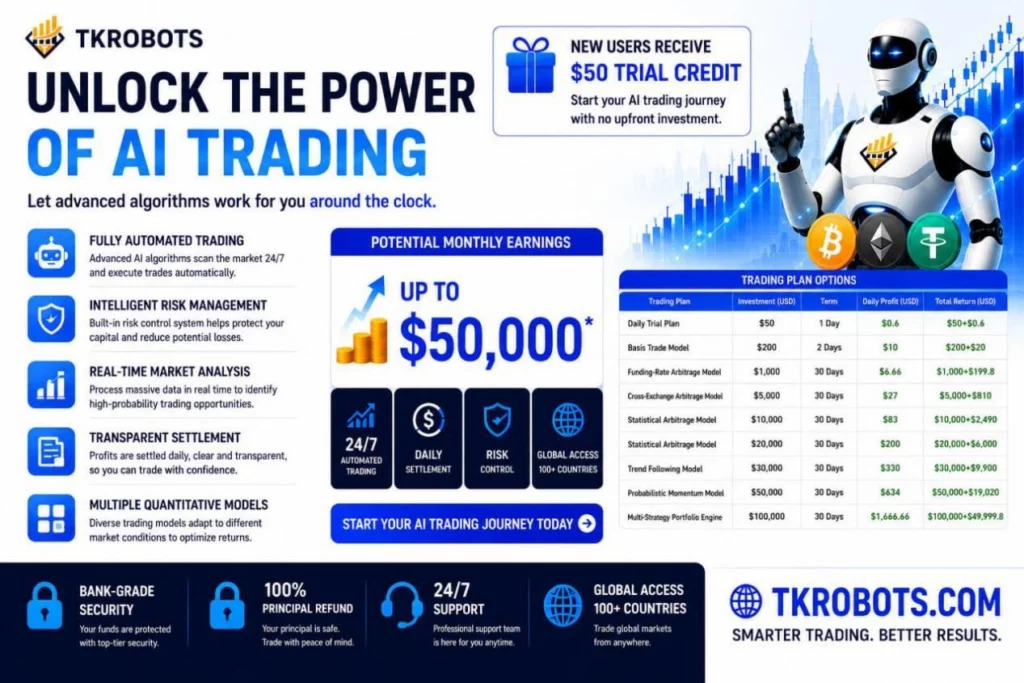
TKROBOTS is expanding its AI-powered crypto trading ecosystem, combining automation, analytics, and machine learning for digital asset investors.
Summary
- TKROBOTS launches an AI-powered crypto trading platform focused on automation and quantitative analytics.
- TKROBOTS combines AI, machine learning, and automation to simplify cryptocurrency trading for investors.
- The platform has expanded its AI trading ecosystem with automated execution and data-driven crypto market tools.
As artificial intelligence continues to transform global financial markets, TKROBOTS is positioning itself as an innovative AI-powered cryptocurrency trading platform focused on delivering intelligent automation, quantitative analytics, and advanced trading technology to digital asset investors worldwide.
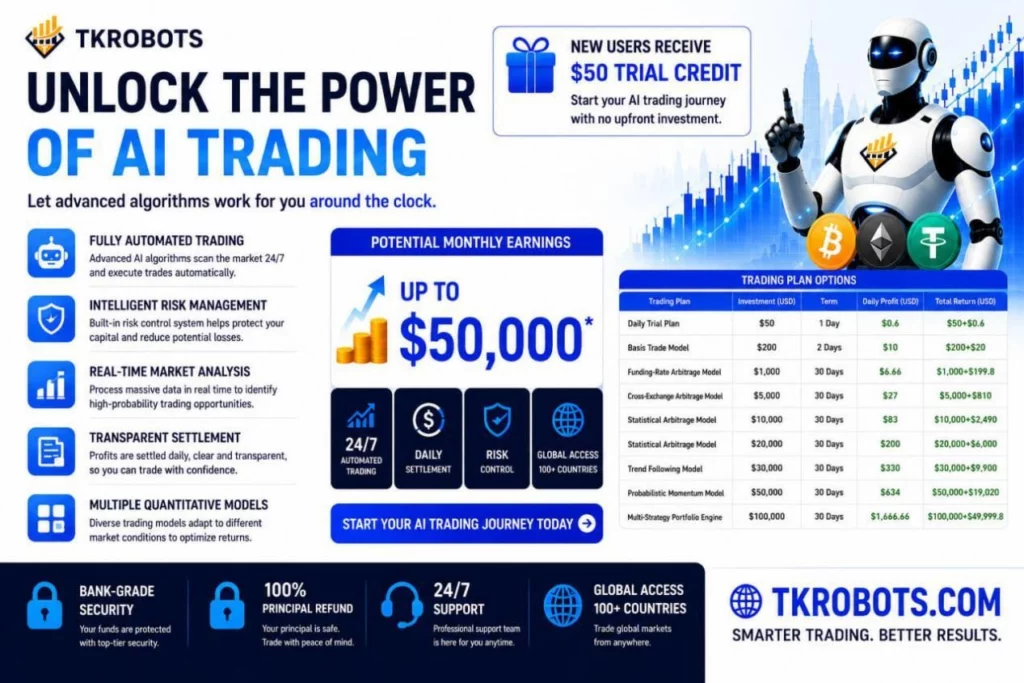
More than a trading tool, TKROBOTS is building an integrated ecosystem where artificial intelligence, machine learning, big-data analytics, and automated execution work together to simplify participation in cryptocurrency markets. The platform is designed to help users manage market complexity more efficiently while supporting informed trading decisions through technology.
A platform built around AI
At the core of TKROBOTS is a proprietary AI engine that continuously processes market data from cryptocurrency exchanges around the world. By combining quantitative models with machine learning algorithms, the platform evaluates market movements, identifies statistical patterns, and assists with strategy execution according to predefined user settings.
Rather than requiring users to monitor markets around the clock, TKROBOTS delivers technology that automates data analysis and streamlines selected trading workflows, allowing investors to stay connected to rapidly changing market conditions.
Simple registration process
Getting started with TKROBOTS is quick and straightforward:
1. Visit the official TKROBOTS website and create a secure account using an email address.
2. Deposit supported cryptocurrencies using the available funding methods.
3. Configure AI trading preferences or select from the available trading strategies.
4. Monitor your trading performance through the platform dashboard in real time.
Why investors choose TKROBOTS
TKROBOTS combines multiple technologies within one unified platform, offering users an intelligent trading experience supported by:
- AI-powered market analysis
- Automated strategy execution
- Real-time quantitative analytics
- Dynamic risk monitoring tools
- Portfolio management features
- User-friendly dashboard and mobile accessibility
- Continuous platform optimization through machine learning
The platform is designed to serve both newcomers and experienced cryptocurrency investors who value technology-driven decision support.
Designed for a global community
TKROBOTS has been developed with scalability and accessibility in mind, offering an intuitive user experience for a growing international community.
Users can create an account, explore available AI-supported trading solutions, customize their preferred settings, and access platform tools through a streamlined interface. The goal is to make advanced trading technology more accessible without requiring extensive technical expertise.
Continuous innovation
Innovation remains central to the TKROBOTS platform. The company continues to invest in artificial intelligence research, algorithm optimization, and infrastructure development to improve analytical capabilities, execution efficiency, and user experience.
As digital asset markets continue to evolve, TKROBOTS aims to expand its technology ecosystem while delivering intelligent tools that help users navigate increasingly data-driven financial environments.
About TKROBOTS
TKROBOTS is an AI-powered cryptocurrency trading platform focused on integrating artificial intelligence, machine learning, quantitative analytics, and automated trading technologies into a comprehensive digital asset ecosystem. The platform is committed to developing intelligent financial technology solutions that improve efficiency, enhance user experience, and support informed participation in cryptocurrency markets.
For more information, visit the official website.
Disclosure: This content is provided by a third party. Neither crypto.news nor the author of this article endorses any product mentioned on this page. Users should conduct their own research before taking any action related to the company.


Ripple says it has more than 300 institutional partners. The XRP community hears that as 300 banks buying XRP. The reality is that most of them use Ripple’s software without ever touching the token, and even the ones that do rarely hold it. This is the structural gap at the heart of why XRP’s price stays stuck while Ripple keeps winning.
Summary
- Ripple has more than 300 institutional partners, but roughly 60 percent use its messaging and software rails without ever touching XRP, while only about 40 percent use the On-Demand Liquidity product that involves the token.
- Even the partners that use On-Demand Liquidity generally do not hold XRP, because licensed exchanges and market makers handle the buying and selling, and the banks see only fiat in and fiat out.
- This split is the mechanical explanation for the long-standing gap between Ripple’s corporate success and XRP’s stuck price, since network adoption does not automatically translate into sustained token demand.
- The bullish rebuttal is that On-Demand Liquidity volume is real where it runs, that even momentary XRP demand creates buy pressure, and that token demand can come from ETF flows and regulation independent of settlement.
- For holders, the honest read is that partner counts measure Ripple’s business, not XRP demand, and the token’s fate depends on whether the On-Demand Liquidity share grows and its volume scales, plus channels like ETFs and regulatory clarity.
Ripple likes to say it has more than three hundred institutional partners, and the number sounds like exactly the validation XRP holders have waited years to see: hundreds of banks and payment companies, all signed up to Ripple, all presumably driving demand for the token. That is how the figure is usually heard in the community, as three hundred institutions buying and using XRP. The reality is very different, and confronting it honestly is essential for anyone who holds the token.
The large majority of Ripple’s partners use the company’s messaging and payment software without ever touching XRP, and even among the minority that use the product built around the token, almost none actually hold XRP. The partner count measures the size of Ripple’s business, not the demand for its associated asset, and the gap between those two things is the single best explanation for one of the most frustrating puzzles in crypto: why XRP’s price has stayed pinned near a dollar through 2026 even as Ripple racks up settlement deals, bank partnerships, and institutional wins.
This is not an argument that Ripple is failing or that XRP is worthless. It is an argument that the popular story, in which corporate adoption mechanically pulls the token price up with it, rests on a misunderstanding of how Ripple’s products actually work. There are really two Ripples: one that sells messaging and payment software to banks, which does not require XRP, and one that offers a liquidity service that uses XRP as a bridge, which does. Most partners signed up for the first. Understanding that split, and what it means for whether Ripple’s success ever reaches the token, is the purpose of this piece.
It covers the two different products Ripple sells, why even the token-using product rarely puts XRP on a bank’s balance sheet, the value-accrual problem this creates, the genuine bull-case rebuttal, the geographic concentration of the volume that does exist, and what would actually have to change for Ripple’s growth to start pulling XRP demand with it. The goal is to give holders an accurate map of where the token stands in Ripple’s empire, rather than the flattering version the partner count implies.
There are two different Ripples
The root of the confusion is that Ripple sells more than one thing, and only some of what it sells involves XRP. For most of its history, Ripple’s core enterprise offering has had two distinct components. The first is messaging and payment-connectivity software, historically associated with products that let banks send payment instructions and connect to one another more efficiently than the old correspondent system allows.
This software improves how banks communicate and process cross-border payments, but it does not require XRP at all; a bank can adopt it, become a Ripple partner, and never go near the token. The second component is On-Demand Liquidity, or ODL, the service that actually uses XRP as a bridge asset to move value between currencies without pre-funded accounts. ODL is the part of Ripple’s business that creates real XRP usage.
The crucial fact is how Ripple’s partners split between these two. By most accounts, only around forty percent of Ripple’s roughly three hundred partners use On-Demand Liquidity, the XRP-based product, while the other sixty percent or so use the messaging and software rails that do not touch XRP at all. So when the community hears three hundred partners and pictures three hundred sources of XRP demand, the accurate picture is closer to a bit more than a hundred partners using the token-based product, and a larger group using Ripple software that bypasses XRP entirely.
This is not hidden or scandalous; it simply reflects that many institutions wanted Ripple’s payments technology without taking on a volatile crypto asset. But it has enormous implications for the token, because it means the headline partner count overstates XRP demand by a wide margin. A bank can be a proud, public Ripple partner and contribute precisely nothing to XRP usage, and many are exactly that. The first step to understanding XRP’s stuck price is to stop counting all of Ripple’s partners as XRP customers, because most of them are not.
Even ODL partners do not hold XRP
It would be natural to assume that the forty percent of partners using On-Demand Liquidity are therefore buying and holding XRP, generating steady demand, but even that is largely not the case, and the reason cuts to the core of the value-accrual problem. The way ODL works, banks do not generally buy or hold XRP themselves. Instead, licensed exchanges and liquidity providers sit in the middle of the transaction.
When a bank uses ODL to send value across a corridor, the source currency is converted into XRP, the XRP moves across the ledger in seconds, and it is converted into the destination currency on the other side, but this buying and selling is handled by market makers and exchanges, not by the bank. From the bank’s perspective, it puts fiat in on one side and receives fiat out on the other, never holding the token in between. The XRP is touched only momentarily, by the liquidity providers facilitating the swap, before it is converted back.
This structure is deliberate and is actually part of ODL’s appeal to institutions: it lets banks access the speed and capital efficiency of XRP-based settlement while staying in their regulatory comfort zone, seeing only fiat on their books and never holding a volatile crypto asset. For the banks, that is a feature.
For XRP holders hoping that institutional adoption means institutions accumulating XRP, it is a disappointment, because it means even the token-using corner of Ripple’s business does not create the kind of sustained, buy-and-hold demand that would steadily lift the price. The demand ODL creates is real but fleeting: XRP is bought and sold in the same moment to bridge a payment, generating transactional throughput rather than lasting accumulation.
The momentary buying does create some genuine buy pressure, which the bull case rightly emphasizes, but it is a different and weaker force than the image of banks adding XRP to their reserves. So the picture sharpens: most partners do not touch XRP, and most of those that do touch it only in passing, through intermediaries, without ever holding it.
The value-accrual problem this creates
Put these facts together and you arrive at the deepest issue in the entire XRP story, the one that explains the stuck price more convincingly than any other: the problem of how value accrues to the token. A blockchain network, or in this case a payments business built around a token, can grow impressively while the token itself fails to capture that growth, if the activity does not translate into sustained demand for the asset.
That is precisely the situation the two-Ripples split creates. Ripple the company can keep signing partners, opening corridors, and processing more payments, and most of that growth flows through software that bypasses XRP or through an ODL process that touches XRP only momentarily via intermediaries. The corporate success is real, but the channel connecting it to token demand is far narrower than the partner count suggests.
This is the mechanical explanation for the puzzle that has frustrated XRP holders all year: Ripple keeps winning, and XRP keeps trading near a dollar beneath its major moving averages. The wins are concentrated in parts of the business that do not require holding the token, so they do not generate the buy-and-hold demand that would lift the price.
Layered on top is XRP’s large supply, including the enormous quantity Ripple holds in escrow and periodically releases, which means that even meaningful transactional demand must contend with substantial available supply. For demand to overwhelm that supply and move the price durably, the token would need usage on a scale that the current adoption pattern, heavy on XRP-free software and light on XRP accumulation, does not produce.
None of this means XRP cannot rise; it means the path from Ripple’s business growth to XRP’s price is not the automatic, mechanical link the bullish narrative assumes. The token does not appreciate simply because Ripple succeeds. It would appreciate if usage of the specific XRP-based product grew large enough that the momentary demand it generates, compounded across enormous volume, finally outweighed the supply. That is a much higher bar than signing the three-hundredth partner.
The escrow overhang that makes it worse
There is a supply-side dimension to the value-accrual problem that deserves its own attention, because it raises the bar that token demand must clear. A very large quantity of XRP sits in escrow controlled by Ripple, released into the market on a schedule over time, and this steady stream of new available supply is a structural feature of the token that has no equivalent in a fixed-supply asset. Whatever demand the network generates, whether the momentary buying of On-Demand Liquidity or the buy-and-hold demand of ETFs, must contend not only with the XRP already circulating but with the additional supply that periodically enters from escrow. This is part of why even real demand has struggled to move the price durably: it is pushing against a supply that keeps replenishing.
The interaction between the demand pattern and the supply schedule is the crux. If the token-using share of Ripple’s business were large and growing fast, the transactional demand it generates might comfortably absorb the escrow releases and then some, letting the price rise. But because most of Ripple’s activity bypasses the token, and the part that uses it does so only momentarily through intermediaries, the demand side has been too thin to overwhelm the supply side decisively. The result is a token that can trade sideways even during periods of corporate success, because the modest, fleeting demand from settlement is roughly matched by available and incoming supply.
Critics of Ripple have long pointed to the escrow releases as a persistent headwind, while the company argues the releases are managed responsibly and that it has an incentive not to suppress its own largest holding. Either way, the practical point for holders is that the value-accrual gap is not only about weak demand capture; it is about weak demand capture meeting a large and replenishing supply, which together explain why the price has been so resistant to the steady drumbeat of adoption headlines. For the token to break higher durably, demand would need to grow enough to clear both the circulating float and the escrow overhang at once, which is a higher bar than demand alone.
The bull case deserves a fair hearing
The picture so far is sobering, but the bullish rebuttal is substantive and deserves a fair hearing, because the situation is not as one-sided as the skeptical read alone implies. The first point in XRP’s favor is that the momentary demand ODL creates is still real demand. Every time the XRP-based product bridges a payment, XRP is genuinely bought, even if it is sold moments later, and at sufficient volume that continuous buying and selling represents real, ongoing market activity rather than nothing.
If the corridors using ODL grow and the volume flowing through them scales up, the cumulative buy pressure from all that bridging could become a meaningful force, particularly because it recurs constantly instead of being a one-time event. The bull case holds that the token-touching share of Ripple’s business is the part that matters, and that as it grows, so does the demand that flows through XRP.
The second point is that the forty percent is not fixed. Partners that adopted Ripple’s messaging software first can later convert to On-Demand Liquidity, and Ripple has every incentive to push that conversion, since it is the largest holder of XRP and benefits directly when XRP usage rises. If a meaningful share of the messaging-only majority converts to the XRP-based product over time, the demand base expands substantially.
The third and perhaps strongest point is that settlement throughput is not the only channel to XRP demand. The forces most capable of moving XRP, the institutional flows into spot ETFs and the regulatory clarity that the CLARITY Act would provide, operate largely independent of whether banks hold XRP in their settlement flows. ETF demand is buy-and-hold demand of exactly the kind ODL does not generate, and it has already drawn over a billion dollars into XRP funds.
Tokenized real-world assets settling on the XRP Ledger represent another growing source of activity. So the bull case is that the partner-count critique, while accurate about settlement mechanics, misses the channels, ETFs and regulation, that could drive XRP regardless of how banks handle their payment corridors. These are genuine counterpoints, and an honest holder should weigh them against the structural concern instead of dismissing either.
The geographic reality nobody mentions
A further dimension that rarely makes it into the bull-or-bear debate is where Ripple’s XRP-based volume actually flows, and it complicates the global-rail narrative in an important way. On-Demand Liquidity has been live in production for years, but its real usage has been concentrated in specific cross-border corridors instead of spread evenly across global finance.
The meaningful volume has historically clustered in particular regions, such as certain Middle East and Southeast Asia corridors, and more recently in Latin American routes involving institutions like Braza Bank and Mexican corridors involving Bitso. These are real flows with real value, and the busiest names on the XRP Ledger include identifiable financial institutions instead of anonymous wallets, which is a genuine point in the network’s favor. But the volume is geographically concentrated, not the worldwide banking rail the headline narrative implies.
This concentration matters for two reasons. First, it means XRP’s settlement demand depends heavily on a relatively small set of corridors, so the token’s utility-driven demand is less diversified and more exposed to the fortunes of those specific routes than a global-rail framing would suggest. Second, in the corridors where institutional settlement does happen on-chain, XRP increasingly competes for share against alternatives, including dollar stablecoins like USDC and Ripple’s own RLUSD, as well as emerging central-bank digital-currency projects, according to blockchain-analytics observations.
So even within the settlement niche where XRP is used, it is not unchallenged; it is one option competing for institutional flow against instruments that offer dollar stability. The honest synthesis is that XRP’s real settlement footprint is meaningful but concentrated and contested, which is a more accurate and more modest picture than the image of a token quietly powering the world’s bank transfers. For holders, this is another reason to track the actual volume in the actual corridors instead of the partner count or the global ambition.
What would actually change the picture
If the partner count is the wrong thing to watch, the natural question is what the right things are, and identifying them gives holders a far better framework than counting Ripple’s deals. The first and most direct change would be conversion: the messaging-only majority of partners moving onto On-Demand Liquidity, which would expand the share of Ripple’s business that actually uses XRP.
Watching whether the roughly forty percent figure grows over time is more informative than watching the total partner number rise, because growth in the token-using share is what expands XRP demand. The second is volume: even within the existing ODL base, the total value flowing through XRP-bridged corridors is what generates the cumulative buy pressure, so rising corridor volume matters more than new logos. A handful of high-volume corridors can move more XRP than dozens of low-volume partnerships.
Beyond settlement, the channels most likely to drive durable XRP demand are the ones that operate independent of how banks handle payments. Spot ETF flows are the clearest, because they represent genuine buy-and-hold demand, and their trajectory, whether they compound or stall, will say more about XRP’s institutional demand than any partner announcement. Regulatory clarity from the CLARITY Act is the second, because codifying XRP’s status could unlock institutional capital that settlement adoption alone never reaches. The growth of tokenized real-world assets on the XRP Ledger is a third, since it brings a different kind of activity and demand to the network.
The honest framework for a holder is therefore to stop treating Ripple’s partner count and corporate wins as proxies for XRP demand, because most of that activity bypasses or only momentarily touches the token, and to focus instead on the metrics that actually connect to demand: the ODL share and its volume, ETF flows, regulatory progress, and on-chain asset growth. The partner count tells you Ripple is a successful company. It tells you very little about whether XRP, the token, is capturing that success, which is the only question that matters for the price.
Frequently Asked Questions
Do banks that partner with Ripple actually use XRP?
Mostly not. Ripple has more than three hundred institutional partners, but only around forty percent use On-Demand Liquidity, the product that involves XRP as a bridge asset. The other sixty percent or so use Ripple’s messaging and payment software, which does not touch XRP at all. So a large majority of Ripple’s partners can be active customers without ever using the token. This is the key reason the partner count overstates XRP demand: many partners signed up for Ripple’s payments technology specifically without taking on a volatile crypto asset, and they contribute nothing to XRP usage despite being counted as partners.
If a bank uses On-Demand Liquidity, does it hold XRP?
Generally no, and this surprises many people. In On-Demand Liquidity, banks do not buy or hold XRP themselves. Licensed exchanges and liquidity providers handle the conversion: the source currency becomes XRP, the XRP moves across the ledger in seconds, and it is converted to the destination currency, all managed by market makers. The bank sees only fiat in and fiat out, never holding the token. This is deliberate, letting banks access XRP-based settlement speed while staying in their regulatory comfort zone. The result is that even the token-using part of Ripple’s business creates only momentary, transactional XRP demand instead of the buy-and-hold accumulation that would steadily lift the price.
Why does XRP’s price stay stuck if Ripple is so successful?
Because most of Ripple’s success flows through channels that bypass the token or touch it only momentarily. The majority of partners use XRP-free software, and even On-Demand Liquidity touches XRP only in passing through intermediaries, so Ripple’s corporate growth does not mechanically translate into sustained XRP demand. Add XRP’s large supply, including the escrow Ripple periodically releases, and transactional demand has to be very large to move the price durably. This value-accrual gap, between a thriving business and a token that does not capture its success, is the clearest explanation for why XRP has stayed near a dollar through 2026 even as Ripple keeps winning deals.
Is this a reason to be bearish on XRP?
Not necessarily, but it is a reason to be realistic about what drives the token. The structural critique shows that partner counts and corporate wins are poor proxies for XRP demand. But the bull case has real merit: On-Demand Liquidity volume is genuine demand where it runs, the token-using share of partners can grow as banks convert from messaging to liquidity, and the strongest demand channels, spot ETF inflows and regulatory clarity from the CLARITY Act, operate independent of bank settlement entirely. So the picture is not simply bearish; it is that XRP’s demand depends on specific things, the growth of On-Demand Liquidity volume and the independent channels of ETFs and regulation, instead of on Ripple’s overall business success.
Where is XRP actually used for settlement?
On-Demand Liquidity volume has historically been concentrated in specific cross-border corridors instead of spread across global banking. Meaningful usage has clustered in certain Middle East and Southeast Asia routes and, more recently, Latin American corridors involving institutions such as Braza Bank and Mexican routes involving Bitso. These are real flows, and the busiest names on the XRP Ledger are identifiable financial institutions. But the volume is geographically concentrated, not the worldwide rail the narrative implies, and within those corridors XRP competes for share against dollar stablecoins like USDC and Ripple’s own RLUSD. So XRP’s settlement footprint is meaningful but concentrated and contested instead of dominant.
What should XRP holders watch instead of the partner count?
Focus on the metrics that actually connect to token demand. The most direct is the share of partners using On-Demand Liquidity, currently around forty percent; whether that grows matters more than the total partner number. The second is the volume flowing through XRP-bridged corridors, since cumulative throughput is what generates buy pressure. Beyond settlement, watch spot ETF flows, which represent true buy-and-hold demand, regulatory progress on the CLARITY Act, which could unlock institutional capital, and the growth of tokenized assets on the XRP Ledger. These tell you whether XRP the token is capturing demand, which the partner count does not, because most partners never touch XRP.
This article is information, not investment advice. Figures on Ripple’s partners, On-Demand Liquidity usage, and corridor volumes reflect reporting and estimates available as of June 27, 2026, and can change. The relationship between Ripple’s business and XRP demand is a debated topic. Nothing here is a recommendation to buy or sell XRP or any asset. Verify current details from primary sources and consider your own circumstances before making any decision.
For years the XRP community has promised that XRP would flip SWIFT, the messaging network behind global banking. In 2026 the reality is stranger than the slogan. SWIFT is building its own blockchain ledger that pointedly leaves XRP out, even as XRP gets wired into SWIFT through a side door.
Summary
- The long-running claim that XRP will replace SWIFT has given way to a more complicated 2026 reality in which the two systems both compete and connect.
- SWIFT is a messaging network used by more than 11,000 institutions to move trillions of dollars a day, and it completed its migration to the ISO 20022 data standard in late 2025 and is now building its own blockchain shared ledger.
- That SWIFT ledger deliberately excludes public-network assets like XRP, keeping settlement in tokenized bank deposits, which undercuts the idea that XRP becomes the settlement rail.
- At the same time, a SWIFT integration with the payments firm Thunes gives banks optional access to Ripple’s liquidity products, including XRP as a bridge asset, so XRP is wired in as an option rather than a requirement.
- Ripple itself has hedged by pushing its RLUSD stablecoin as speed without volatility, pointing toward a future where XRP is one optional liquidity leg in a fragmented, interoperable system rather than the network that replaces SWIFT.
The single most durable promise in the XRP community is that XRP will one day replace SWIFT, the messaging network that sits behind nearly every international bank transfer on earth. It is a powerful story, the idea that a fast, cheap digital asset will sweep away a slow, decades-old system and capture the enormous value flowing through global payments, and it has motivated XRP holders for years. The trouble is that the story has always blurred two very different things: SWIFT, which is a messaging system that tells banks how to move money, and XRP, which is an asset that can actually move value.
In 2026, the relationship between the two has become more interesting and more complicated than the slogan suggests. SWIFT is not standing still, having finished a major data-standard overhaul and begun building its own blockchain ledger. Ripple, for its part, has quietly softened its rhetoric from replacing SWIFT to complementing it, and has hedged its own bets by leaning into a dollar stablecoin alongside XRP. The blunt replacement narrative no longer fits the facts.
What makes the question genuinely worth examining now is that both systems are making concrete moves that reveal how they actually see each other. SWIFT has built a blockchain ledger that deliberately leaves XRP out, a telling choice. Yet through a separate integration, XRP has been wired into SWIFT as an optional liquidity tool, an equally telling choice in the other direction.
The result is neither the clean replacement the bulls predicted nor the irrelevance the skeptics expected, but something messier: a fragmented, interoperable landscape in which XRP is one option among several, available but not required. This piece works through what SWIFT actually is and what Ripple actually built, the reality behind the ISO 20022 hype, SWIFT’s own blockchain project and why it excludes XRP, the side door through which XRP gets connected anyway, Ripple’s pivot toward its stablecoin, and an honest verdict on whether XRP is complementing the banking network or replacing it. The answer matters because so much of the XRP investment case rests on which of those two things is true.
What SWIFT actually is, and is not
To judge the rivalry clearly, you have to be precise about what SWIFT does, because the replacement narrative often gets this wrong. SWIFT is not a payment system that moves money; it is a messaging network that moves instructions about money. When a bank in one country needs to send funds to a bank in another, SWIFT carries the standardized message that says, in effect, pay this amount to this account.
The actual money moves separately, through the banks’ own accounts and the correspondent banking system. More than eleven thousand financial institutions use SWIFT, and the value of payments it helps coordinate runs into trillions of dollars every day, which makes it the central nervous system of cross-border finance. It is, above all, a trusted standard and a network, deeply embedded in how banks talk to one another.
The weaknesses the replacement narrative points to are real, but they live in the settlement layer beneath SWIFT, not strictly in SWIFT itself. Because a cross-border payment often hops through a chain of correspondent banks, each holding pre-funded accounts in various currencies and each taking a fee and adding delay, the traditional process can take one to three business days and is closed on weekends and holidays. A payment from Japan to Brazil might pass through three or four intermediaries before arriving.
SWIFT has worked to improve this. Its gpi service, launched in 2017, sped things up so that a large share of payments now credit within thirty minutes and effectively all within a day, with tracking along the way. But gpi modernized the messaging and tracking without changing the underlying correspondent-banking architecture, which still relies on pre-funded accounts and intermediaries. So SWIFT is best understood as the messaging and standards layer of a settlement system whose plumbing is slow, and the question is whether a blockchain alternative can replace that plumbing, the messaging layer, or both.
What Ripple actually built
Ripple’s pitch is aimed squarely at the settlement plumbing, and understanding its core product clarifies where XRP fits. Ripple is a blockchain financial-technology company built around the XRP Ledger, and its enterprise network, historically called RippleNet, lets financial institutions send payments to one another more directly than the correspondent system allows.
The mechanism that actually involves XRP is called On-Demand Liquidity, or ODL, and it is the heart of the XRP value proposition. Instead of a bank pre-funding accounts in every destination country, ODL converts the sending currency into XRP on a crypto exchange, moves that XRP across the XRP Ledger in three to five seconds, and converts it into the destination currency on the other side. The XRP acts as a bridge asset, a momentary carrier of value between two currencies, which removes the need for the expensive pre-funded accounts that slow the traditional system.
The advantages are concrete. An XRP Ledger transaction settles in seconds rather than days, costs a fraction of a cent, and runs around the clock, including weekends, with the network having processed billions of transactions cumulatively and supported tens of billions of dollars in liquidity volume. For a bank or payment provider, ODL promises to free up the capital that would otherwise sit idle in pre-funded foreign accounts, while settling far faster.
This is the genuine innovation behind the XRP thesis: not a new messaging standard, but a new way to handle the settlement leg, using a digital asset as a bridge so value can move without the correspondent-banking overhead. Whether this complements SWIFT or replaces it depends on whether banks adopt the bridge for the settlement leg while keeping SWIFT for messaging, or whether something more wholesale occurs. And as the rest of this piece shows, the 2026 evidence points firmly toward the former.
The ISO 20022 reality check
No discussion of Ripple versus SWIFT is complete without addressing ISO 20022, because few topics generate more confusion and hype in the XRP community. ISO 20022 is a global standard for the format of financial messages, replacing older, less structured message types with a richer format that carries far more data, such as detailed remittance information, compliance data, and structured identifiers.
It improves automation, transparency, and anti-money-laundering monitoring, and it has become the common language toward which the world’s major payment systems are migrating. SWIFT completed its full migration to ISO 20022 in November 2025, ending the long coexistence with legacy message types, a genuine milestone for global finance.
Here is where the confusion sets in. A persistent claim in XRP circles holds that XRP is ISO 20022 compliant in a way that guarantees it a central role once banks adopt the standard. The reality is more limited. Ripple did join the ISO 20022 standards body, becoming one of the first blockchain firms to do so, and RippleNet is built to send and receive ISO 20022 messages, which lets it interoperate cleanly with banks using the standard.
That is a real advantage for Ripple’s network. But the XRP token itself is not ISO 20022 certified, because ISO 20022 standardizes messaging formats and does not certify cryptocurrencies or blockchains at all. The standard governs how payment information is structured, not which asset settles a payment. So while RippleNet’s compliance gives Ripple a seat at the table and makes integration easier, the idea that ISO 20022 anoints XRP as the chosen settlement asset is a misreading.
The standard raises the bar for every payment solution, traditional or crypto, and SWIFT, as the established messaging hub that helped shape the standard, arguably benefits at least as much as Ripple does. ISO 20022 is a prerequisite for interoperability, not a victory for any single token.
SWIFT is not standing still
The replacement narrative tends to picture SWIFT as a static, aging incumbent waiting to be disrupted, but the 2026 reality is that SWIFT is actively building its own path into the blockchain era. After completing the ISO 20022 migration, SWIFT moved on to a more ambitious project: a blockchain-based shared ledger designed to enable round-the-clock cross-border settlement. Having run trials since 2025 with a group of more than forty banks, SWIFT completed the design phase of this ledger in early 2026 and began building its first working version, with the aim of processing real transactions before the end of the year.
The ledger is permissioned and compatible with common smart-contract tooling, and it is tied closely to the ISO 20022 messaging SWIFT already runs, so banks can plug into it through SWIFT’s trusted infrastructure instead of adopting an entirely new public blockchain.
Crucially, SWIFT has been explicit that this is about extending its existing role, not handing the rails to a competitor or issuing new money. Its chief innovation officer framed the effort as preserving settlement in central-bank money, commercial-bank money, or tokenized deposits, while adding the ability to lock in commitments, execute complex cross-border transactions atomically, and share a single auditable record across networks. In other words, SWIFT wants to keep value inside the regulated banking system while gaining the speed and programmability of a blockchain.
To get there, it has been stress-testing nearly every digital-asset rail available, running trials with major banks on tokenized deposits, tokenized bonds, and stablecoins, including a March 2026 interoperability trial that tested several stablecoins. The picture this paints is not of an incumbent asleep at the wheel, but of a network methodically absorbing blockchain technology into its own infrastructure, on its own terms, while keeping its central position as the orchestrator of global banking. That ambition sets up the most consequential detail for XRP holders.
The detail XRP holders cannot ignore
If SWIFT is building its own blockchain ledger, the obvious question for the XRP thesis is whether XRP is part of it, and the answer, pointedly, is no. SWIFT’s shared-ledger project is designed around tokenized bank deposits in currencies such as dollars, euros, and Canadian dollars, transferred between banks under the same regulations that govern wires, and it deliberately avoids public-network assets like XRP.
The design principle is that no value should escape regulated accounts, so reaching a public-ledger asset would require an additional step outside the system’s perimeter, a step the project intentionally does not take. SWIFT’s ledger is permissioned and built for the control and auditability that central banks and supervisors demand, which is precisely the opposite of XRP’s open, public network.
This is a genuinely important development that much of the bullish commentary glosses over. If banks get the round-the-clock, blockchain-based settlement they want from SWIFT’s own ledger, using tokenized deposits they already trust and within the regulated perimeter they are comfortable with, then a significant part of the problem ODL was meant to solve gets solved without XRP. SWIFT is, in effect, building a competitor to the settlement innovation that underpins the XRP thesis, and building it in a way that keeps XRP out by design.
For an XRP holder, this should temper any expectation that banks will inevitably route settlement through XRP simply because blockchain is faster. The institutions have a path to blockchain settlement that does not touch XRP at all, offered by the network they already use and trust. That does not mean XRP is shut out of the banking system entirely, because there is a side door, but it does mean the headline rail SWIFT is building is, by deliberate choice, an XRP-free one.
The side door: how XRP gets wired in anyway
The story has another turn, because even as SWIFT’s own ledger excludes XRP, XRP has been connected to SWIFT through a separate channel, and understanding this optionality is essential to an honest verdict. Through an integration involving the payments firm Thunes, the more than eleven thousand banks on the SWIFT network gain optional access to Ripple’s liquidity products, including XRP as a bridge asset.
The routing works in sequence: a company sends a payment via SWIFT, SWIFT can route it through Thunes, Thunes offers access to Ripple’s ODL infrastructure, and XRP settles that leg. The critical word in that sequence is optional. No step forces a bank to use XRP; the connection makes XRP available as one liquidity choice among others, not a mandated part of the flow.
This optionality is structurally meaningful, but it is a double-edged thing for XRP holders, and the distinction matters enormously for how to read the narrative. On one hand, being wired into SWIFT, even optionally, gives XRP distribution at a scale it could never reach through Ripple’s direct partnerships alone, putting an XRP settlement option in front of thousands of institutions. On the other hand, optional access creates demand optionality, not guaranteed volume.
The banks can use the XRP rail, but nothing compels them to, and many will default to the rails and assets they already know. So the SWIFT connection is real and potentially valuable, but it is a long way from the mandatory, network-wide adoption the replacement narrative imagined. The accurate way to hold it is that XRP now has a foot in the door of the world’s dominant banking network, as one option a bank can choose, while SWIFT simultaneously builds its own settlement ledger that bypasses XRP. Both things are true at once, which is exactly why the simple replace-or-die framing fails.
Ripple’s own pivot tells the story
Perhaps the clearest signal about whether XRP is replacing SWIFT comes from Ripple itself, which has been quietly repositioning in a way that speaks volumes. Alongside its push for XRP-based settlement, Ripple has been aggressively advancing its dollar-pegged stablecoin, RLUSD, and the rationale reveals how Ripple now sees the landscape.
RLUSD is fully reserved with cash and short-term government securities, audited regularly, and positioned as enterprise-grade infrastructure that offers the speed of blockchain rails without the price volatility of XRP. In effect, Ripple is offering banks and payment firms stablecoin-as-a-service: a way to get fast, programmable settlement while holding a stable dollar value instead of a fluctuating token. This directly complements SWIFT’s own tokenized-deposit strategy instead of trying to overthrow it.
The significance of this pivot is hard to overstate for the replacement debate. A company that truly believed XRP was on the verge of replacing SWIFT and capturing all that settlement value would have little reason to build a competing stablecoin product that settles without XRP. Ripple is hedging, building rails that work whether or not banks choose XRP, because it understands that enterprises often want stability over a bridge asset and that the future is more likely to be a fragmented mix of instruments than a single winner.
This is the same complementary posture Garlinghouse has signaled in softening from earlier replace-SWIFT rhetoric toward language about Ripple complementing existing systems. Ripple, in other words, has read the room. It is positioning itself as a provider of modern settlement infrastructure, of which XRP is one component and RLUSD is another, instead of betting everything on XRP displacing the incumbent network. When the company most invested in XRP’s success diversifies away from pure-XRP settlement, holders should take note of what that says about the realistic ceiling of the replacement thesis.
Complement or replace: the honest verdict
So where does this leave the question at the heart of the matter? The honest verdict is that XRP is complementing the banking network far more than replacing it, and that the 2026 evidence has largely retired the clean replacement narrative. The landscape that is actually forming is not winner-takes-all but fragmented and interoperable, a world in which several systems coexist and connect instead of one sweeping the others away.
SWIFT retains its position as the standards-setter and messaging hub of global finance, and it is extending that position into blockchain on its own terms, with a settlement ledger that keeps value inside the regulated banking system and deliberately excludes XRP. Ripple, meanwhile, controls a suite of modern settlement tools, including the XRP Ledger, the optional XRP bridge liquidity now reachable through SWIFT, and the RLUSD stablecoin, and it is selling all of them into a market that increasingly wants choice instead of a single rail.
Within that landscape, XRP’s realistic role is as one optional liquidity leg among many, valuable where it is chosen but never mandated, available to thousands of institutions through the SWIFT connection yet competing against tokenized deposits, stablecoins, and SWIFT’s own XRP-free ledger for each transaction. That is a meaningful role, and it is not nothing: a foot in the door of global banking, with genuine speed and cost advantages, is a real asset. But it is a long way from the world the slogan promised, in which XRP becomes the settlement rail of international finance and captures the value flowing across it.
For holders, the practical takeaway is to replace the binary replace-or-die framing with a more accurate one. XRP’s banking future is about optionality and adoption rates: how often institutions actually choose the XRP rail when given the option, and whether ODL volume grows enough to matter against the token’s large supply. The replacement dream made XRP a bet on inevitability. The complementary reality makes it a bet on competition, in which XRP must win each transaction against capable rivals, including the incumbent it was supposed to replace. That is a more sober thesis, but it is the one the facts now support.
Frequently Asked Questions
Is XRP going to replace SWIFT?
The 2026 evidence strongly suggests no, at least not in the wholesale way the community long predicted. SWIFT is a messaging network used by over eleven thousand institutions, and instead of being swept away, it has modernized, completing its ISO 20022 data-standard migration and building its own blockchain settlement ledger. That ledger deliberately excludes XRP, keeping value in tokenized bank deposits. XRP has been connected to SWIFT optionally through a Thunes integration, giving banks access to XRP as one liquidity choice, but participation is not required. The realistic picture is XRP complementing the banking network as one optional settlement tool, not replacing the network that coordinates global payments.
What is the difference between SWIFT and Ripple?
SWIFT is a messaging network that carries standardized instructions about payments between banks; it does not move the money itself, which travels separately through correspondent banking. Ripple is a blockchain company whose On-Demand Liquidity product actually moves value, converting a sending currency into XRP, moving it across the XRP Ledger in seconds, and converting it to the destination currency, which removes the need for pre-funded accounts. So SWIFT is primarily the messaging and standards layer, while Ripple targets the settlement layer beneath it. They operate at different points in the payment process, which is part of why they can complement each other instead of being pure substitutes.
Is XRP ISO 20022 compliant?
This is widely misunderstood. RippleNet, Ripple’s payment network, is built to handle ISO 20022 messages and Ripple joined the standards body, which helps its network interoperate with banks adopting the standard. But the XRP token itself is not ISO 20022 certified, because ISO 20022 is a messaging-format standard that does not certify cryptocurrencies or blockchains at all. It governs how payment data is structured, not which asset settles a payment. So the popular claim that ISO 20022 guarantees XRP a central role is a misreading. The standard raises the bar for all payment solutions and arguably benefits SWIFT, the established messaging hub, at least as much as it benefits Ripple.
Does SWIFT’s blockchain ledger use XRP?
No, and this is one of the most important developments for XRP holders. SWIFT’s blockchain shared ledger, which moved into its building phase in 2026, is designed around tokenized bank deposits and deliberately avoids public-network assets like XRP. It is permissioned, keeps value inside regulated accounts, and is built for the control and auditability central banks require. This means SWIFT is creating a path to round-the-clock blockchain settlement that does not involve XRP, solving much of the problem ODL was meant to address without the token. Banks wanting blockchain settlement have an XRP-free option from the network they already trust, which meaningfully tempers the case for inevitable XRP adoption.
How does XRP connect to SWIFT then?
Through a separate integration involving the payments firm Thunes. The arrangement gives the more than eleven thousand banks on SWIFT optional access to Ripple’s liquidity products, including XRP as a bridge asset. A payment can route from SWIFT through Thunes to Ripple’s ODL infrastructure, where XRP settles the leg. The key point is that this access is optional, not mandated. It gives XRP exposure to a vast network of institutions, which is truly valuable for distribution, but it creates demand optionality instead of guaranteed volume, since banks can choose the XRP rail but are never forced to use it over the alternatives available to them.
What does this mean for XRP’s value?
It reframes the XRP thesis from inevitability to competition. The replacement narrative implied XRP would automatically capture global settlement value; the complementary reality means XRP is one optional liquidity tool that must win each transaction against tokenized deposits, stablecoins, including Ripple’s own RLUSD, and SWIFT’s XRP-free ledger. XRP retains real advantages in speed, cost, and round-the-clock settlement, and its optional presence on SWIFT gives it broad distribution. But its value will depend on how often institutions actually choose the XRP rail and whether that volume grows enough to matter against XRP’s large supply, instead of on a wholesale replacement of SWIFT that the current evidence does not support.
This article is information, not investment advice. Details of SWIFT’s and Ripple’s products, integrations, and strategies reflect reporting available as of June 27, 2026, and can change. The competitive landscape in cross-border payments is evolving quickly. Nothing here is a recommendation to buy or sell XRP or any asset. Verify current details from primary sources and consider your own circumstances before making any decision.
The most profitable World Cup trade this month was not a Polymarket bet on Spain or France. It was a Tinder boom that helped lift Match Group (MTCH) stock.
The stock had slumped about 12% before the tournament began on June 11. It has since climbed roughly 13%, erasing those losses and pushing back near its highs for the year.

Prediction Markets Grabbed the Headlines
Sports betting drove most of the World Cup money story. On Polymarket, the tournament winner market has drawn hundreds of millions of dollars in wagers, with Spain and France the narrow favorites.
The buzz around World Cup prediction markets was easy to see. Sector open interest hit a record $1.48 billion in mid-June as fans piled into match outcomes.
Yet the smarter equity trade ran through dating apps. Match Group, the parent of Tinder and Hinge, watched its shares rebound as fresh engagement data reached investors.
Inside Tinder’s World Cup jump
Tinder logged its gains in the tournament’s first six days, from June 11 to 16. Compared with June 2025, US matches jumped almost 60%, while total users rose 15%.
Follow us on X to get the latest news as it happens
Across the 16 host cities in the United States, Mexico, and Canada, activity from international fans climbed 47%, according to data reported by Fast Company. The figures track the influx of traveling supporters.
That timing mattered. The data circulated in late June, just as Match Group shares closed at $37.17 on June 26 after a 6.4% jump.

The Quieter World Cup Trade
The rebound lands on a longer turnaround story. Tinder had shed users for nearly two years, drawing activist investors Elliott Investment Management and Starboard Value, who pushed for change and a new chief executive.
In March, Tinder registrations returned to year-over-year growth for the first time in almost two years, while Hinge revenue grew 28%. New CEO Spencer Rascoff framed the shift in the company’s first-quarter results.
Tinder works better today than it did before. Our product changes are resonating with Gen Z and driving improvements in leading indicators.
A World Cup engagement bump fits that narrative, which is why investors rewarded it. While bettors split their money between Polymarket and Kalshi, Match Group offered a calmer way to trade the same event.
Even so, the average analyst target sits near $40, a consensus Moderate Buy that leaves limited room above current levels.
The caution is in Match Group’s own numbers. Tinder paying users still fell 5% in the first quarter, so engagement has not yet become revenue.
With the final set for July 19, the test is whether the swiping outlasts the tournament. A few traders banked millions on Polymarket, but the cleaner bet was the stock.
The post The Hottest World Cup Trade Wasn’t Sports Betting, It Was Tinder appeared first on BeInCrypto.

Bitmine ETH Holdings Reach 5.7M After Joining Russell 1000

Former Japan FIFA World Cup hero Keisuke Honda reacts with message after Blue Samurai crash out of 2026 tournament

Security researchers tricked LLMs into giving them cocaine recipes by abusing role models for prompt injection


-
 Sports6 days ago
Two goals and an assist by sheer aura: Cristiano Ronaldo just entered the World Cup chat
-

 Fashion3 days ago
Weekend Open Thread: Staud – Corporette.com
-

 Politics4 days ago
The House | Manchesterism won’t survive the painful trade-offs unless it gets citizens on board
-

 Politics4 days ago
Potential 2028er World Cup attendee leaderboard
-

 News Videos1 day ago
MAJOR BITCOIN & MARKET UPDATE!!!! (MUST WATCH ASAP!!!)
-

 Business4 days ago
Asia stock markets slide as tech shares slump
-

 Tech4 days ago
A Look At A Gaggle Of Transputer Boards
-

 Crypto World6 days ago
Securitize Wraps Roubini's SEC-Registered ETF as Dubai VARA Digital Security
-
Crypto World6 days ago
Bitcoin (BTC) Dips Below $62K, Ethereum (ETH) Plunges 6% Daily: Market Watch
-
 Crypto World4 days ago
Dell (DELL) Shares Tumble Over 5% Following Analyst Downgrade to Hold
-

 Crypto World2 days ago
Coinbase, Circle Deepen Crypto Stock Losses Despite Resilient S&P 500
-
Business6 days ago
Entergy settles forward sale agreements, raises $672 million in cash proceeds
-

 Crypto World3 days ago
Kraken's xStocks Opens Bending Spoons IPO Registration to EEA Retail
-

 Sports3 days ago
FIH Pro League: India defeat Pakistan 7-1, register biggest win of campaign | Other Sports News
-

 Tech2 days ago
Bluekit phishing kit adopts browser-in-the-middle for login theft
-

 Tech3 days ago
Russian hackers now target Signal backup recovery keys
-

 Crypto World4 days ago
Bitcoin Sparks $600M Hourly Liquidations With $65,000 Set To Become Resistance
-
 Crypto World4 days ago
Hyperliquid Named on Singapore MAS Investor Alert Register
-

 Crypto World3 days ago
RTX holders must register wallets before token distribution begins
-
 Crypto World5 days ago
Ripple and SBI launch RLUSD in Japan after JFSA approval
You must be logged in to post a comment Login