

Crypto World
Japan’s Biggest Brokerages Open a New Door for Bitcoin and Ethereum Investment

Japan’s largest online brokerages are moving into digital assets. SBI Securities and Rakuten Securities are building in-house Bitcoin and Ethereum investment trusts for retail customers.
The shift could reshape how millions of Japanese investors reach crypto. Here is what the plan involves and why it matters now.
SBI and Rakuten Are Building In-House Bitcoin and Ethereum Bitcoin Investment Trusts in Japan
A crypto investment trust is a regulated fund that holds digital assets like Bitcoin, letting investors buy units instead of the coins themselves.
Today, most Japanese users still need a separate exchange account or wallet to buy crypto directly.
According to Nikkei, these trusts remove that friction. Investors could gain Bitcoin and Ethereum exposure through brokerage accounts they already use for stocks, bonds and funds. The product would feel closer to buying a mutual fund than trading on an exchange.
SBI Securities plans to sell products developed by group company SBI Global Asset Management. That firm is targeting roughly ¥5 trillion yen (nearly $32 billion), in assets within three years of launch.
SBI intends to manage the full chain internally, from product design to distribution.
Follow us on X to get the latest news as it happens
Rakuten Securities is following a similar path through Rakuten Investment Management. The company wants customers to trade these products directly inside its smartphone apps, matching how retail crypto activity already works.
Both groups already run licensed exchanges, so the infrastructure and regulatory relationships are largely in place.
The momentum reflects clearer rules ahead. In a Nikkei survey of 18 firms, 11 others, including Nomura, Daiwa and Mizuho Securities, said they would consider entering once the regulatory framework is finished.
That response shows broad interest from TradFi, even before the rules are complete.
Nomura and Daiwa have signaled plans to develop crypto trusts once the framework becomes clear. SMBC Group has formed a task force, while Asset Management One under Mizuho has started early research.
Japan’s Financial Services Agency is driving this change. It is reportedly weighing rules that would let investment trusts and exchange-traded funds hold crypto under the Investment Trust Act.
Spot crypto ETFs could be approved by 2028, with analysts estimating the market could reach around 6.4 billion dollars.
The reform connects to a wider policy shift. Japan recently reclassified crypto as a financial instrument, adding stronger market rules.
Those include annual disclosure requirements and insider trading restrictions, which bring digital assets closer to regulated securities.
What This Means for Investors and the Market
The timing follows a global pattern. Spot Bitcoin ETFs launched in the United States in early 2024, and those funds now hold tens of billions of dollars in assets. Hong Kong added its own Bitcoin and Ethereum products soon after.
Japan now wants to bring crypto closer to its mainstream wealth management industry.
For retail investors, that means familiar protections around custody, disclosure and reporting, handled through regulated financial groups they already trust.
The benefits are practical. Millions of people who already hold SBI or Rakuten accounts could add Bitcoin or Ethereum exposure without new signups.
There is no learning curve around exchanges and no anxiety about security breaches on unfamiliar platforms.

The trade-off is real, too. Holding units in a trust means investors do not own the Bitcoin directly.
That structure adds management fees and counterparty considerations that do not exist with direct ownership.
Fees will be a key factor to watch. In the United States, competition among ETF issuers drove costs down quickly and boosted adoption.
How the FSA responds to filings, and what fees SBI and Rakuten attach, could shape how fast Japanese investors move in.
The post Japan’s Biggest Brokerages Open a New Door for Bitcoin and Ethereum Investment appeared first on BeInCrypto.

Crypto World
Aptos Commits $50M to Build Institutional Trading and AI Infrastructure on Its Blockchain

TLDR:
- Aptos Foundation and Aptos Labs committed $50M targeting trading systems and autonomous AI workloads on-chain.
- Funding is split across in-house products, protocol upgrades, ZK research, and an external trading and AI fund.
- Aptos recorded an all-time low median block time of 28ms on May 12, strengthening its case for high-speed use.
- A governance vote on encrypted mempool is underway, a feature that hides transaction details until execution.
Aptos Foundation and Aptos Labs have committed $50 million to advance the Aptos blockchain stack. The funding targets protocol infrastructure, in-house products, research, and an external partner fund.
The initiative focuses on institutional-grade trading systems and autonomous AI workloads. This marks a shift from earlier ecosystem grants toward specific, protocol-level deliverables.
Aptos also recorded an all-time low median block time of 28ms on May 12, 2026.
Capital Directed at Four Core Development Areas
The $50 million commitment is divided across four distinct areas. Aptos will invest in existing in-house products, including Decibel, a perpetual futures and spot decentralized exchange. Shelby, a hot storage protocol built for AI agents with frequent data reads, also falls under this category.
Protocol-level development receives dedicated funding as well. This includes encrypted mempools, Financial Information eXchange (FIX) for inter-exchange communication, and CryptoCurrency eXchange Trading (CCXT).
CCXT allows developers to fetch market data and execute trades across multiple platforms through a single interface.
Research on zero-knowledge circuit compilers, which underpin features like Aptos Keyless, forms the third area of focus.
These compilers are central to privacy-preserving functionality on the network. The work is technical in nature and tied to long-term protocol security.
The fourth area is an external fund supporting trading firms and AI teams building on Aptos. Institutional desks require order book depth, MEV protection, and connectivity to existing systems. AI agents, meanwhile, need sub-second finality, low fees, and data structures suited to their access patterns.
Ecosystem Activity Picks Up Alongside Protocol Progress
Several ecosystem developments accompanied the funding announcement. Ekiden, a decentralized exchange on Aptos, closed a $2 million seed round on May 5. Investors included angels tied to GSR, Aptos Foundation, and LayerZero.
Cactus Custody added support for Decibel, giving institutions a way to participate in Central Limit Order Book trading without moving assets off custody. Thala’s tokenswap platform also crossed $2.5 billion in cumulative volume during this period.
On the network partnership side, tZERO Group announced plans to integrate its tokenization platform with Aptos. This would allow issuers to launch tokens tied to private company cap tables. BDACS also confirmed plans to launch KRW1, a stablecoin pegged to the Korean won.
A governance vote is currently underway for encrypted mempool adoption. The feature would keep transaction details hidden until execution.
Move Prover has also updated its system to support AI coding agents, allowing developers to interpret each call function without committing to a specific one.

Crypto traders are bracing for a risk-off Monday open after President Donald Trump signaled possible US strikes on Iran. He capped the warnings with a Truth Social image referencing nuclear escalation.
The reaction reflects fears of an oil-flow shock and renewed inflation pressure. Investors are likely to trim risk exposure into the start of the trading week.
Tuesday Situation Room Meeting Puts Markets on Edge
Trump is expected to convene a Situation Room meeting Tuesday to review military options against Iran. Vice President JD Vance, Secretary of State Marco Rubio, and Defense Secretary Pete Hegseth are set to attend.
Follow us on X to get the latest news as it happens
On Sunday, Trump warned Iran that the “Clock is Ticking” for a deal.
He added that “there won’t be anything left of them” without one. Verified flight trackers show a US Air Force airlift moving weapons and gear to bases across the region.
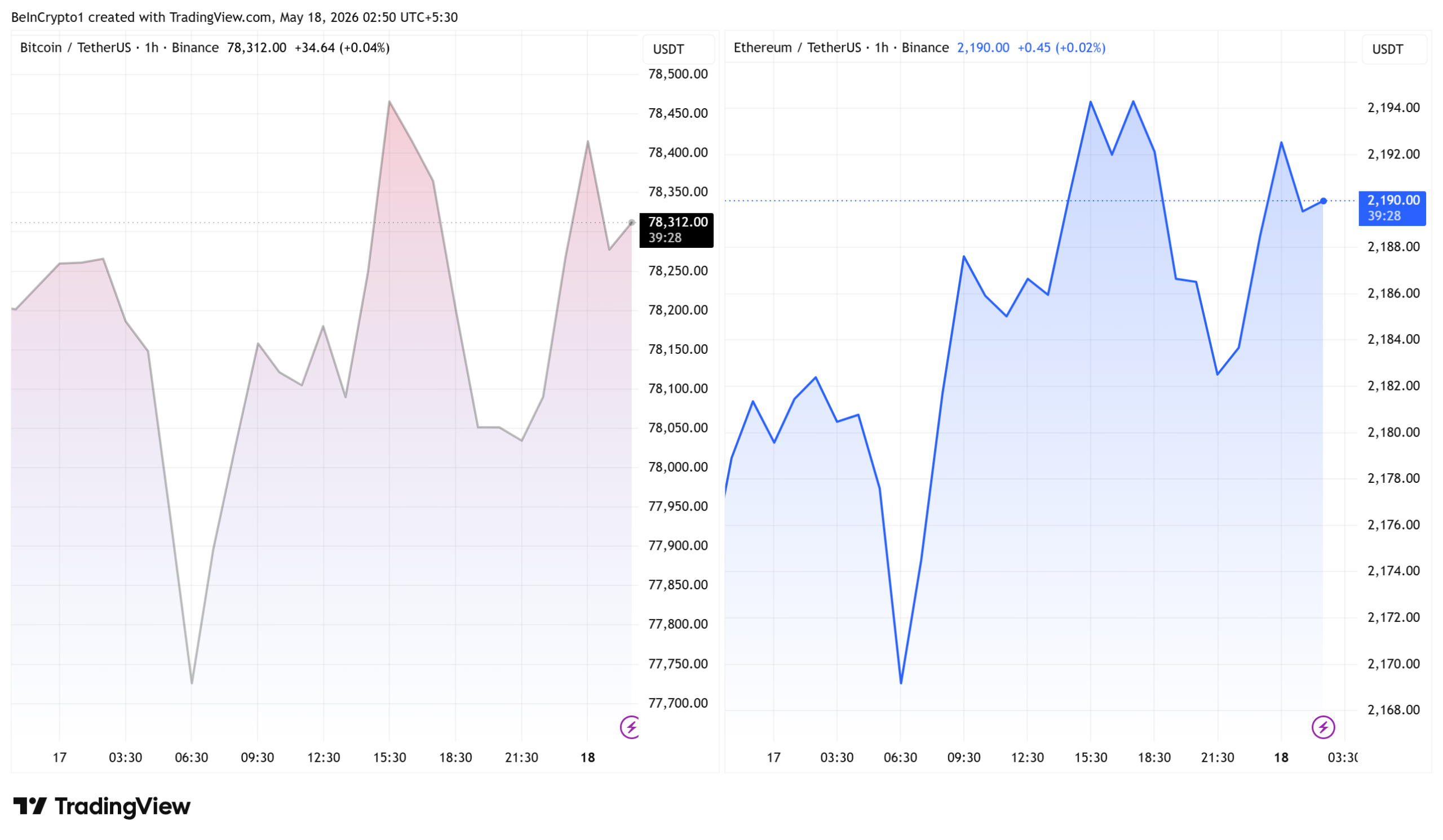
Bitcoin (BTC) traded near $78,312 on Sunday, down roughly 4% over the past week. Ether (ETH) sat near $2,188 after a 7.5% weekly drop.

Both assets enter a headline-driven session technically vulnerable.
Strait of Hormuz and Oil Risk in Focus
Analysts warn that any disruption to the Strait of Hormuz could push crude sharply higher. Prior modeling pointed to $105 to $165 per barrel depending on closure duration.
Higher oil would feed into US inflation, pressure Treasury yields, and delay anticipated Federal Reserve rate cuts. That combination has historically weighed on Bitcoin during similar geopolitical shocks.
Welp – risk off Monday/Tuesday i guess,” remarked one user in a post.
Other traders remain skeptical of an immediate large sell-off without sustained upward moves in Treasury yields.
Markets will watch Tuesday’s meeting and any follow-up Truth Social posts for signs of escalation or a return to talks.
“If you send in U.S. military troops into Iran, there is going to be a political revolution in America,” said former Congresswoman Marjorie Tailor.
The post Crypto Analysts Brace for Risk-Off Monday Open as Trump Teases Iran Nuclear Strike appeared first on BeInCrypto.
TLDR:
- Cross River Bank is listed as the issuer for X Money’s Visa Debit and Flex card beta products.
- The U.S. bank previously integrated Ripple’s payment protocol for cross-border transfers in 2014.
- No official material confirms XRP, RLUSD, or Ripple infrastructure inside X Money payments.
- X continues building its payments expansion through regulated banking and traditional card rails
Ripple-linked Cross River Bank X Money Visa Debit Card Beta is drawing fresh attention after leaked beta materials revealed a notable banking partner.
The development has renewed market focus on X’s payments expansion and Ripple’s long-standing banking relationships.
Cross River Bank Appears in X Money Beta Structure
As X continues to expand into payments, using a licensed banking partner, beta images linked to X Money show Cross River Bank as the issuer behind Visa Debit and Flex card products.
Many fintech companies rely on similar partnerships to issue cards, process payments, and manage deposits under regulatory frameworks.
Moreover, Visa integration suggests the product is built around familiar financial rails. Users would likely use standard debit functionality rather than crypto-native payment tools during the early rollout phase.
So far, the leaked materials only confirm the issuer relationship. There is still no public reference to blockchain settlement, digital asset functionality, or token-backed payments inside the beta environment.
The latest development is notable because payments remain central to Elon Musk’s long-term plans for X. A card-based financial product supports the broader goal of transforming the platform into a financial ecosystem.
Meanwhile, market participants continue watching for further disclosures. Future updates could provide more detail on account features, regional access, and possible expansion of X Money services.
For now, Cross River Bank’s presence remains the most concrete takeaway from the beta materials. That alone has been enough to spark fresh conversations across both fintech and crypto circles.
Ripple History Revives XRP Speculation
Attention around this rollout intensified due to Cross River Bank’s earlier relationship with Ripple. Back in 2014, the bank integrated Ripple’s payment protocol for faster international settlement flows between the United States and Europe.
That collaboration made Cross River one of Ripple’s earlier banking partners. Because of this history, the bank’s role inside X Money quickly triggered renewed discussion among XRP traders and market analysts.
However, the historical link does not confirm current integration, and no verified XRP support exists within X Money’s card or payment infrastructure at this stage.
This distinction remains important. Debit card systems can function entirely through banking rails without relying on XRP, RLUSD, or blockchain-based settlement mechanisms.
Still, the overlap is enough to keep the crypto market interested. X’s broader payments ambitions naturally create speculation whenever familiar digital asset names enter the conversation.
XRP traders continue monitoring whether future X Money disclosures introduce blockchain-linked features. Until then, the story remains centered on infrastructure rather than token adoption.
Crypto World
CME and Nasdaq to Launch Crypto Index Futures on June 8 for Broader Institutional Access
TLDR:
- CME and Nasdaq will launch the Nasdaq CME Crypto Index Futures on June 8, 2026, pending regulatory approval.
- The futures contract tracks seven cryptocurrencies: BTC, ETH, SOL, XRP, ADA, LINK, and XLM in one product.
- CME reported a 43% year-to-date rise in average daily crypto futures volume across its product lineup in 2026.
- Both standard and micro contract sizes will be available, with all contracts settling in U.S. dollars only.
CME Group and Nasdaq are set to launch a new crypto index futures product on June 8, 2026, pending regulatory approval.
The Nasdaq CME Crypto Index Futures will mark CME’s first market-cap-weighted crypto futures contract. It offers investors diversified exposure across seven major cryptocurrencies through a single regulated instrument.
This development represents a notable shift in how institutional investors can access the digital asset market.
A Multi-Asset Futures Contract Covering Seven Cryptocurrencies
The new futures product will track the Nasdaq CME Crypto Settlement Price Index. That index currently covers Bitcoin, Ethereum, Solana, XRP, Cardano, Chainlink, and Stellar.
Unlike single-asset contracts, this product gives investors broad crypto market exposure at once. Traders will not need to manage multiple positions across different digital assets.
CME plans to offer the contracts in two sizes to serve different investor types. Standard contracts will cater to institutional investors seeking large-scale exposure.
Micro contracts will suit smaller traders or those managing portfolio risk with precision. Both formats will settle in U.S. dollars, removing the need to hold actual cryptocurrencies.
Giovanni Vicioso, Global Head of Cryptocurrency Products at CME, addressed the demand driving this launch. He noted that the contracts are designed to meet increasing investor interest in regulated and transparent crypto access.
CME also reported that average daily volume across its crypto futures has risen 43% year-to-date in 2026. That figure points to a clear expansion in institutional crypto participation.
The product launch was originally expected in mid-March 2026, alongside single-asset futures for ADA, LINK, and XLM. The delay likely stems from regulatory or technical adjustments before the go-live date.
However, the confirmed June 8 schedule shows CME’s continued focus on growing its digital asset product range.
Nasdaq Sees Growing Institutional Demand for Crypto Benchmarks
Sean Wasserman, Head of Index Product Management at Nasdaq, addressed the broader context behind the launch. He noted that institutional investors increasingly want crypto benchmarks that mirror traditional finance standards.
Governance, transparency, and reliability are now key factors when selecting a crypto investment vehicle. This product is designed to meet those specific requirements.
Crypto ETFs have continued to attract capital throughout 2025 and into 2026. Regulated infrastructure across global markets has also expanded steadily during this period.
The addition of an index-based futures contract adds another layer of legitimacy to digital assets. Hedge funds, asset managers, and banks now have another structured entry point into crypto.
Until now, most institutional-grade crypto products centered heavily on Bitcoin and Ethereum alone. This new contract broadens that scope by including mid-cap assets like Stellar and Chainlink.
Portfolio managers can now track a more representative slice of the crypto market. That shift may draw in investors who previously viewed the space as too narrow or concentrated.
The June 8 launch, if approved, adds a meaningful product to CME’s crypto lineup. It reflects how far regulated digital asset infrastructure has advanced in recent years.

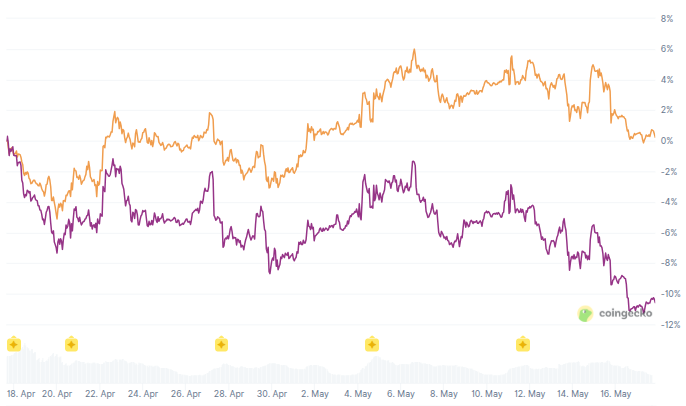
A new study by CoinGecko found that buying Bitcoin on US holidays has historically delivered much stronger short-term returns compared to regular trading days.
The analysis examined Bitcoin’s forward returns across different calendar days between May 1, 2013, and May 8, 2026, focusing on single-day gains after purchase.
BTC’s Strongest Next-Day Rallies
According to the data, US holidays recorded an average next-day Bitcoin return of 0.77%, compared to just 0.19% on non-holidays. CoinGecko found that holidays outperformed regular days in 11 of the 14 calendar years included in the study. Among regular weekdays, Mondays and Wednesdays posted the highest average next-day return at 0.38%, while Thursdays were the only day to produce a negative average return of 0.09%.
The report identified New Year’s Day as the strongest-performing holiday for Bitcoin purchases, with an average next-day return of 2.01% across 13 observations and a win rate of 84.6%, meaning Bitcoin rose the following day in 11 out of 13 years. Columbus Day posted the same 84.6% win rate alongside an average return of 1.70%, while Christmas generated a 1.46% average next-day gain with a 53.8% win rate.
CoinGecko said the New Year’s Day pattern may indicate the broader January momentum effect often seen in traditional financial markets, where investors deploy fresh capital at the start of a new year. The study added that Bitcoin may also benefit from a shift away from December tax-loss selling into renewed January positioning. The report noted that Bitcoin’s price on January 1 ranged from $313 in 2015 to $93,507 in 2025, yet the pattern of next-day gains remained relatively consistent throughout the period.
However, not all holidays produced positive results. Martin Luther King Jr. Day recorded the weakest performance with an average next-day negative return of 0.84%, largely influenced by Bitcoin’s 18.65% drop following January 15, 2018, during the early phase of the crypto bear market. Independence Day also averaged a negative return at 0.26%. Veterans Day showed an average gain of 1.75%, but CoinGecko warned that the figure was distorted by a few unusually large rallies, while the holiday’s win rate remained below 50%.
The study also found little meaningful difference in Bitcoin performance between weekdays and weekends. Weekdays averaged a 0.21% positive next-day return compared to 0.22% on weekends, which CoinGecko described as statistically insignificant due to Bitcoin’s 24/7 trading structure.
Over a one-year holding period, the day of purchase had almost no impact on long-term returns, as average annual gains across all weekdays remained within a narrow 2.4 percentage point range. CoinGecko added that while holiday purchases also showed slightly stronger one-year returns, the effect was likely indicative of broader market cycles rather than a continued holiday-driven trend.
Multiple Pressures Hit Bitcoin
As for Bitcoin’s latest price action, the asset is currently trading back above $80,000 after briefly slipping below that level earlier this week. Market experts said the decline was driven by several pressures hitting the market at once. On-chain data showed that Bitcoin exchange outflows had dropped sharply before the selloff, leaving more coins on trading platforms and increasing available sell-side supply.
At the same time, derivatives traders were aggressively building short positions while leveraged long exposure remained high. Once prices started falling, a wave of long liquidations accelerated the move downward. Rising inflation concerns following fresh US CPI and PPI data, alongside heavy whale selling, added further pressure to the market.
The post Best Time to Buy BTC? CoinGecko Points to These US Holidays appeared first on CryptoPotato.
TLDR:
- Ethereum is still trapped inside a descending channel after rejection at macro resistance.
- The $2,050 to $2,100 zone is now the most important support area for ETH bulls.
- A rebound from current levels could open the path toward $2,600 and possibly $2,800.
- ETH/BTC is testing long-term support, increasing focus on a possible altcoin rotation.
Ethereum’s price is approaching a decisive technical zone. Price is compressed between weakening support and stubborn resistance. Can bulls reclaim momentum or face another round of downside pressure?
Ethereum Bulls Defend Critical $2,100 Zone
Ethereum is trading at a key technical inflection point after another failed attempt to break higher resistance. The asset remains trapped inside a descending channel, reflecting market hesitation after weeks of unstable price action.
The latest rejection from the macro descending trendline reinforced seller dominance near upper liquidity levels. Each recent rally has followed the same pattern, with ETH pushing into resistance before quickly losing momentum. This repeated behavior has increased caution across the market.
Analysts now view the $2,050–$2,100 zone as Ethereum’s most important short-term structure. This area is serving as technical, psychological, and momentum support simultaneously. As long as Ethereum holds above this region, the broader recovery structure remains valid.
Price has also continued defending higher lows since the February sell-off. That pattern suggests buyers are still active beneath the surface despite weak breakout momentum. However, bulls must now shift from passive defense to aggressive expansion.
A rebound from the lower channel support could allow Ethereum to revisit the $2,600 resistance area. If buying volume strengthens during that move, ETH may also test the $2,800 zone, which remains a major psychological target.
A popular crypto analyst noted on X that Ethereum is now sitting at a “technical crossroads,” warning that bulls must show strength immediately or risk invalidating the bullish continuation setup.
ETH/BTC Setup Adds Pressure on Ethereum Recovery
Ethereum’s weakness is also visible against Bitcoin. The ETH/BTC pair has spent months trading beneath a major descending resistance trendline while Bitcoin maintained market leadership.
This underperformance has slowed momentum across the broader altcoin sector. Historically, altcoin rallies tend to strengthen when Ethereum begins outperforming Bitcoin. As a result, traders are monitoring ETH/BTC closely for signs of reversal.
The pair is currently testing a long-term support zone that has previously attracted demand. Similar setups in past cycles appeared near the end of Bitcoin dominance phases, often before capital rotated aggressively into alternative digital assets.
A recent analyst post on X stated that ETH/BTC is approaching one of the most important technical moments of the cycle. The analyst suggested that a breakout above resistance could trigger renewed risk appetite across the market.
For now, Ethereum remains compressed between falling resistance and weakening support. This tightening range usually ends with a strong directional move once one side loses control.
If bulls reclaim the macro trendline, market sentiment could improve rapidly. Until then, Ethereum price analysis continues pointing to a high-stakes battle where support preservation remains the immediate priority for traders.

Strategy chairman Michael Saylor indicated that the Bitcoin treasury company plans to buy more BTC in the coming week, while pressing retail shareholders to vote on a proxy that would enable semi-monthly dividend payouts on the STRC perpetual preferred stock. The push comes as Strategy continues to frame its large-scale crypto holdings as a core part of its capital strategy, supported by a recurring BTC-purchase tracker used by Saylor ahead of each treasury move.
StrategyTracker.com’s chart, which tracks Strategy’s BTC purchases over nearly six years, provides a backdrop for Saylor’s latest signal. According to StrategyTracker data, Strategy holds 818,869 Bitcoin, with a market capitalization pegged at about $67.2 billion when using a price near $77,997 per BTC at the time of publication. The chart has become a familiar preface to Strategy’s treasury activities for investors watching the company’s digital-asset stance.
In addition to the purchase signal, Strategy and its official social channels are urging retail shareholders—who own about 80% of STRC, Strategy’s Stretch perpetual preferred stock—to vote on a proxy that would allow semi-monthly distributions to STRC holders. The proposed shift would move away from monthly payments toward a twice-monthly payout cadence, a change Strategy argues would reduce reinvestment lag, bolster liquidity, improve market efficiency, and promote price stability for the security.
Related coverage: STRC investors face notable “dislocation” risk, according to analysts.
Key takeaways
- Strategy signals additional BTC purchases in the coming week, reinforcing its long-term treasury strategy and continuing use of StrategyTracker as a pacing tool.
- STRC shareholders are asked to vote on a proxy to permit semi-monthly dividend payments, with retail holders representing roughly 80% ownership of STRC.
- The June 8 proxy vote deadline has prompted a targeted mobilization, including a May 20 live Q&A with Michael Saylor and STRC CEO Phong Le for retail investors.
- Retail voter engagement remains a concern, as historical data show retail owners vote a minority share of their holdings compared with institutions (roughly 29% vs. 77%, per a Harvard Law School Forum note).
- Market watchers have highlighted potential mispricing risk around STRC, adding a governance dimension to the ongoing strategy and dividend debate.
Strategy’s BTC accumulation and the quarterly narrative
At the heart of the latest move is Strategy’s ongoing use of BTC as a treasury discipline, a theme Saylor has reinforced through public posts and data dashboards. The “Big Dot Energy” tweet accompanying the BTC-tracker chart captures the cadence of Strategy’s approach: a recurring signal that a new tranche might be purchased in the near term. While Saylor does not disclose exact timing beyond the signals, the pattern has become a familiar preface to Strategy’s quarterly and annual reporting cycles, signaling to investors that the bitcoin position remains a central component of the company’s capital allocation.
With 818,869 BTC on the balance sheet, the company’s BTC holdings underpin a market-cap footprint that, at current pricing, places Strategy among the larger crypto treasury holders. The precise valuation is fluid, but the latest figures placed Strategy’s BTC-generated market cap in the vicinity of $67.2 billion, illustrating the scale of its crypto stake relative to traditional asset classes. For investors, the data underscore how a single corporate treasury decision—additional BTC buys—can have outsized implications for relationships between crypto markets and equity-like exposures in digital-asset strategies.
Semi-monthly STRC dividends: what changes and why it matters
Strategy is asking STRC holders to approve a dividend amendment that would switch distributions to a semi-monthly cadence, rather than monthly. The company argues that more frequent, smaller payout intervals could reduce reinvestment lag, improve liquidity, and enhance market efficiency, potentially delivering more predictable cash flows for STRC investors and smoother price discovery in the open market.
The governance push hinges on broad retail participation. Strategy notes that retail investors own about 80% of STRC and frames the measure as one designed for that shareholder base. With the June 8 proxy deadline approaching, the campaign has escalated across Strategy’s social channels, including calls to vote and reminders about the potential benefits of semi-monthly distributions.
Retail turnout, governance dynamics, and what readers should watch
Even as Strategy urges broad participation, the historical record on proxy voting suggests retail turnout remains a struggle. A Harvard Law School Forum on Corporate Governance note from late last year highlighted that retail shareholders tend to cast ballots on roughly 29% of their owned shares, while institutional holders vote around 77%. The discrepancy underscores the edge that organized or infrequent voters can have in shaping STRC’s governance outcome, if turnout rates improve even modestly.
To help bridge the gap, Strategy has scheduled a live Q&A session for retail investors on May 20 at 5 p.m. Eastern Time, featuring Michael Saylor and STRC CEO Phong Le. Moderated by Natalie Brunell, the event will be streamed on YouTube and Strategy’s X account, with a submission form available for questions ahead of time. The session aims to address investor concerns directly and could influence last-minute voting behavior ahead of the proxy vote.
Industry observers have also noted that STRC carries its own set of risk factors beyond governance mechanics. Coverage in related outlets has highlighted mispricing risk around STRC and broader questions about the efficiency with which this particular security trades in secondary markets. Analysts have pointed to potential dislocations that could contextually affect STRC’s price response to dividend changes and retail-driven votes. For readers seeking deeper background, related coverage on STRC governance and liquidity considerations provides a broader frame for the vote’s potential impact.
Looking ahead, the outcome of the STRC proxy vote could illuminate how much influence retail holders have over a specialized equity-like instrument tied to a crypto-treasury strategy. If the semi-monthly plan is adopted, STRC could experience a more frequent payout cadence that, in theory, improves liquidity and reduces reinvestment lag—though the actual market response will hinge on turnout, investor sentiment toward Strategy’s BTC program, and how market participants price the new distribution profile.
With BTC purchases continuing to be signaled in the near term and the STRC governance question hanging on retail turnout, investors will want to watch not only the proxy results but also any new updates to Strategy’s BTC-buy cadence. The next few weeks will reveal whether Strategy’s ambitious capital-raising narrative—anchored by bitcoin and a reimagined dividend schedule—can translate into clearer value signals for both retail and professional investors.
Readers should stay tuned for results from the May 20 Q&A and updated STRC vote tallies as June 8 approaches. As always, the interplay between a public-facing crypto treasury strategy and a retail-heavy governance base will continue to shape STRC’s path and the broader perception of Strategy’s digital-asset framework.

Solana Positions Meme Coins as Network Infrastructure Tests
The Solana Foundation defended the rise of meme coin activity on the Solana blockchain by framing it as a real-time stress test for network performance. During a discussion with Fundstrat analyst Sean Farrell, Foundation president Lily Liu said meme coins function as a “production test” for the network rather than a core representation of the ecosystem.
NEW: @SolanaFndn President @calilyliu said “meme coins don’t define Solana,” calling them a “production test net” that helps prove Solana can handle real-world demand at scale. pic.twitter.com/YuZFcQme8j
— SolanaFloor (@SolanaFloor) May 17, 2026
Liu explained that high-volume speculative trading allows developers to measure how the blockchain performs under pressure. She noted that meme coins sit on one end of a broader spectrum of digital assets, while utility-focused applications occupy the other. According to Liu, the Solana meme coin network demonstrates its value through transaction speed and scalability during periods of heavy demand.
Data from June 2025 showed meme coins generated about 62% of Solana’s decentralized application revenue. The figure highlighted how closely the network’s short-term financial activity ties to speculative trading cycles. Instead of distancing the blockchain from that trend, the Foundation presented the activity as evidence of Solana’s technical capacity.
Solana Leadership Shows Different Views on Meme Coins
While Liu emphasized the infrastructure benefits, Anatoly Yakovenko expressed a different position on speculative assets. Yakovenko previously described NFTs and meme coins as “digital slop” that lack intrinsic value. His comments reflected ongoing debate within the crypto industry about the long-term role of speculative digital assets.
The Solana meme coin network gained broader public attention after the launch of the $TRUMP token in January 2026. The token, linked to Donald Trump, launched on Solana and quickly attracted mainstream attention. Shortly after, a meme token linked to Melania Trump also launched on the blockchain and reached an estimated market value of $1.6 billion.
Those launches increased transaction activity across Solana and pushed the network further into public discussions around political branding and speculative crypto assets. The Foundation argued that the surge also demonstrated the blockchain’s ability to process major spikes in user activity without significant disruption.
Cross-Chain Security Concerns Shift Attention to Chainlink
Lombard Finance announced plans to migrate more than $1 billion in Bitcoin-backed assets from LayerZero infrastructure to Chainlink CCIP. The decision followed a reported $292 million exploit tied to bridge infrastructure connected to KelpDAO’s rsETH product in April 2026.
Lombard stated that Chainlink CCIP offered stronger security protections through decentralized oracle validation systems and multiple verification layers. The migration forms part of a broader trend, with around $4 billion in assets reportedly moving away from LayerZero-based bridges.
The Solana meme coin network and the growing focus on cross-chain security both reflect how blockchain projects continue adapting to scalability and security demands. Investors now monitor whether speculative trading activity and infrastructure shifts can support long-term ecosystem growth without increasing systemic risks.
Kenyan detectives arrested Mildred Kache, the alleged mastermind of a fake gold deal that drained 431,380 Tether (USDT) from an American investor, the Directorate of Criminal Investigations (DCI) said on Sunday.
Kache was cornered at Crystal Villas in Kilimani, Nairobi. Her alleged accomplice, Ibrahim Yusuf Mohamed, fled before officers reached the property, abandoning a black Mercedes-Benz E50 now held as exhibit.
How the Alleged Scam Happened
The suspects told the investor they could supply 400 kilograms of gold bars. He flew to Nairobi to sign the agreement, then wired payment into bank accounts the group controlled, according to the DCI account.
After the funds landed, the alleged dealers stopped answering calls. No gold ever shipped. The victim then reported the loss, and detectives traced forensic leads to the Kilimani apartment where Kache, who also uses the name Sabreena Ayesha, was arrested.
The mismatch should have raised flags. At current market prices, 400 kilograms of gold would be worth far more than USDT 431,380 (almost $54 million), a discrepancy several observers pointed out under the DCI’s post.
Kache is in custody at the DCI’s Nairobi Regional Headquarters pending arraignment. Investigators say they are actively pursuing Mohamed and tracing the stolen funds.
A Familiar Pattern in Nairobi
Kilimani has surfaced repeatedly in similar scams targeting foreign nationals, with the playbook rarely changing.
Operators stage polished meetings, draft fake contracts, then vanish once the money clears, a pattern documented across many fraud cases.
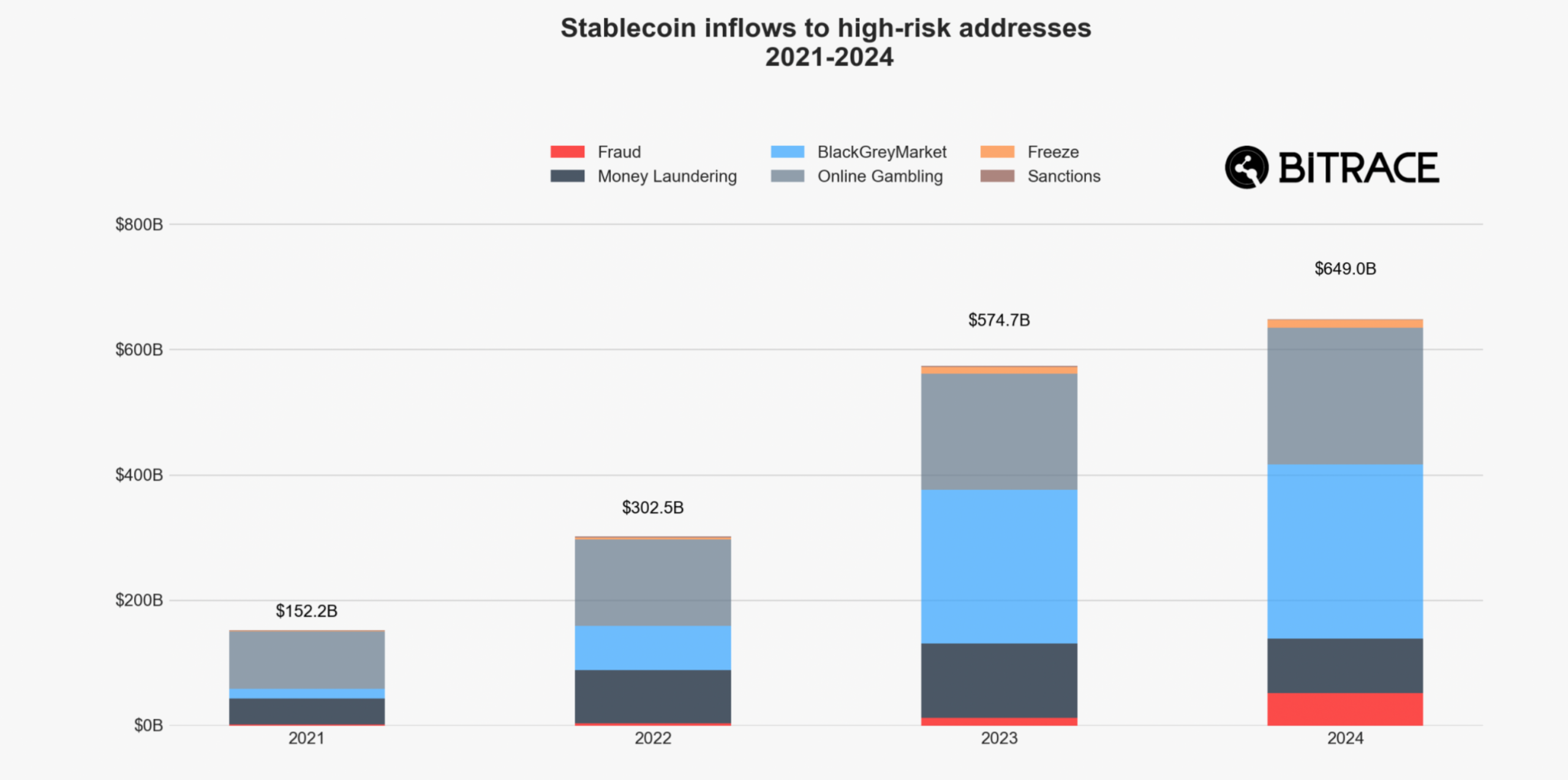
Stablecoin rails are central to the scheme. Investigators have flagged USDT as the preferred settlement asset for international fraud because transfers move in minutes and are difficult to reverse.

Kenya is also finalizing its first dedicated crypto law, which would expand reporting duties on suspicious flows.
The next milestone is Kache’s first court appearance. Whether any of the 431,380 USDT can be frozen on-chain will likely shape what the victim recovers.
The post Kenya Arrests Alleged Mastermind of $431,000 in USDT Fake Gold Scam appeared first on BeInCrypto.

Citadel Advisors Expands XRP ETF Holdings
Citadel Advisors has disclosed more than $1.7 million in XRP-related exchange-traded funds and trust products, according to market analyst Diana. The move adds to growing institutional participation in regulated cryptocurrency investment products tied to XRP.
The disclosed allocations show that Citadel XRP ETF exposure spans multiple issuers and investment structures. The hedge fund reportedly holds:
- $147,000 — Franklin XRP ETF
- $357,000 — Bitwise XRP ETF
- $362,000 — Canary XRP ETF
- $390,000 — Grayscale XRP
- $509,000 — Armada Acquisition Corp. II
Although the total remains small compared to Citadel’s wider portfolio, the allocation reflects ongoing institutional testing of crypto-linked financial products. Citadel Advisors manages assets across equities, fixed income, commodities, and quantitative strategies for pension funds, endowments, and other institutional investors. Market participants often view these early allocations as indicators of broader institutional direction.
Xrp Investment Products Record Rising Inflows
The increase in Citadel XRP ETF exposure comes as XRP-focused exchange-traded products continue attracting capital inflows. Market data from April 2026 showed XRP investment products recorded net inflows of about $81.59 million. The figures highlighted rising participation from institutional investors seeking regulated access to digital assets.
At the same time, interest in blockchain-based settlement systems and tokenization continues supporting XRP-related investment narratives. Financial firms and asset managers have increased focus on blockchain infrastructure that supports cross-border transfers and asset tokenization. As a result, XRP-linked products continue gaining visibility in regulated investment markets.
The broader crypto ETF sector has also expanded as institutional demand for diversified digital asset exposure increases. Asset managers now continue developing products that combine cryptocurrencies with traditional investment structures, allowing institutions to access digital assets through familiar regulated channels.
SEC Review Keeps Crypto ETF Market in Focus
The U.S. Securities and Exchange Commission recently reviewed a proposal from NYSE Arca involving crypto ETF structures linked to Bitcoin, Ethereum, Solana, and XRP. The proposal explored greater flexibility for mixed-asset crypto funds while also addressing derivatives classifications and commodity definitions.
Regulatory reviews remain a central factor shaping institutional crypto adoption. Firms continue monitoring how regulators classify crypto-related financial products and manage compliance requirements. The ongoing review process has encouraged more structured investment products tied to digital assets.
Citadel XRP ETF exposure, combined with rising XRP fund inflows and expanding regulatory discussions, reflects the continued integration of cryptocurrency products into institutional investment markets. While exposure levels remain measured, institutional firms continue building positions through regulated investment vehicles as digital asset infrastructure develops further.

Kandi Burruss Celebrates Her 50th Birthday With Steamy Photo

Financial Audit’s First Furry

Bournemouth vs Man City: Prediction, kick-off time, TV, live stream, team news, h2h results, odds

Manchester United reach agreement with Casemiro over contract clause amid transfer speculation

US brings back mandatory military draft registration

Steven Gerrard disagrees with Gary Neville over ‘shock’ Chelsea and Arsenal claim | Football


-

 Crypto World2 days ago
BloFin War of Whales 2026 Grand Prix opens registration for $5M trading championship
-

 Fashion2 days ago
Weekend Open Thread: Theory – Corporette.com
-

 Crypto World2 days ago
E-Estate Announces 1 Year Live: Washington DC Summit as Real Estate Tokenization Enters Its Next Phase
-

 Fashion6 days ago
Coffee Break: Travel Steam Iron
-

 Fashion7 days ago
What to Know Before Buying a Curling Wand or Curling Iron
-

 Politics6 days ago
What to expect when you’re expecting a budget
-

 Tech3 days ago
Tech Moves: Microsoft AI leader jumps to OpenAI; former AI2 exec joins Meta; and more
-

 Tech7 days ago
GM Agrees To Pay $12.75 Million To Settle California Lawsuit Over Misuse Of Customers’ Driving Data
-
Crypto World5 days ago
Bitcoin Suisse expands with Digital Asset License and Investment Business Act Registration Approval in Bermuda
-

 Tech6 days ago
GM agrees to $12.75M California settlement over sale of drivers’ data
-

 Politics5 days ago
Pakistan to enter Chinese capital market as war inflation bites
-

 Crypto World5 days ago
Bitcoin Suisse expands with Digital Asset License and Investment Business Act Registration Approval in Bermuda
-
 Crypto World3 days ago
Google’s Gemini AI Predicts Incredible Solana Price by the End of 2026
-

 Business2 days ago
H&R Real Estate Investment Trust (HR.UN:CA) Q1 2026 Earnings Call Transcript
-

 Tech2 days ago
Google reimburses Register sources who were victims of API fraud
-
 Entertainment7 days ago
Prime Video’s Forgotten but Brilliant 2-Part Horror Anthology Is a Perfect Binge
-
 Entertainment7 days ago
‘Rivals’ Season 2 Is Bigger, Better, and Raunchier Than Ever
-
 Tech7 days ago
University of Michigan’s $20M early OpenAI investment now worth $2B as Musk trial documents reveal endowment bet
-

 Tech7 days ago
Over-Engineered Cardboard PC Case Houses a Full Computer Without Compromising Style or Performance
-

 Sports2 days ago
Napoleonic enters 2026 Doomben 10,000 field via Abounding withdrawal
You must be logged in to post a comment Login