
Crypto World
Jim Cramer Says the Upcoming Week Looks Quiet. Here's What He'll Still Be Watching

Jim Cramer expects a relatively quiet week for Wall Street, with only a few major corporate events left on the calendar before September ends.
Much of the month’s major macroeconomic news has already passed, with the Federal Reserve, European Central Bank, and Bank of Japan all raising rates. That leaves the last full week with one analyst meeting and a short earnings run.
September Is Doing What September Usually Does
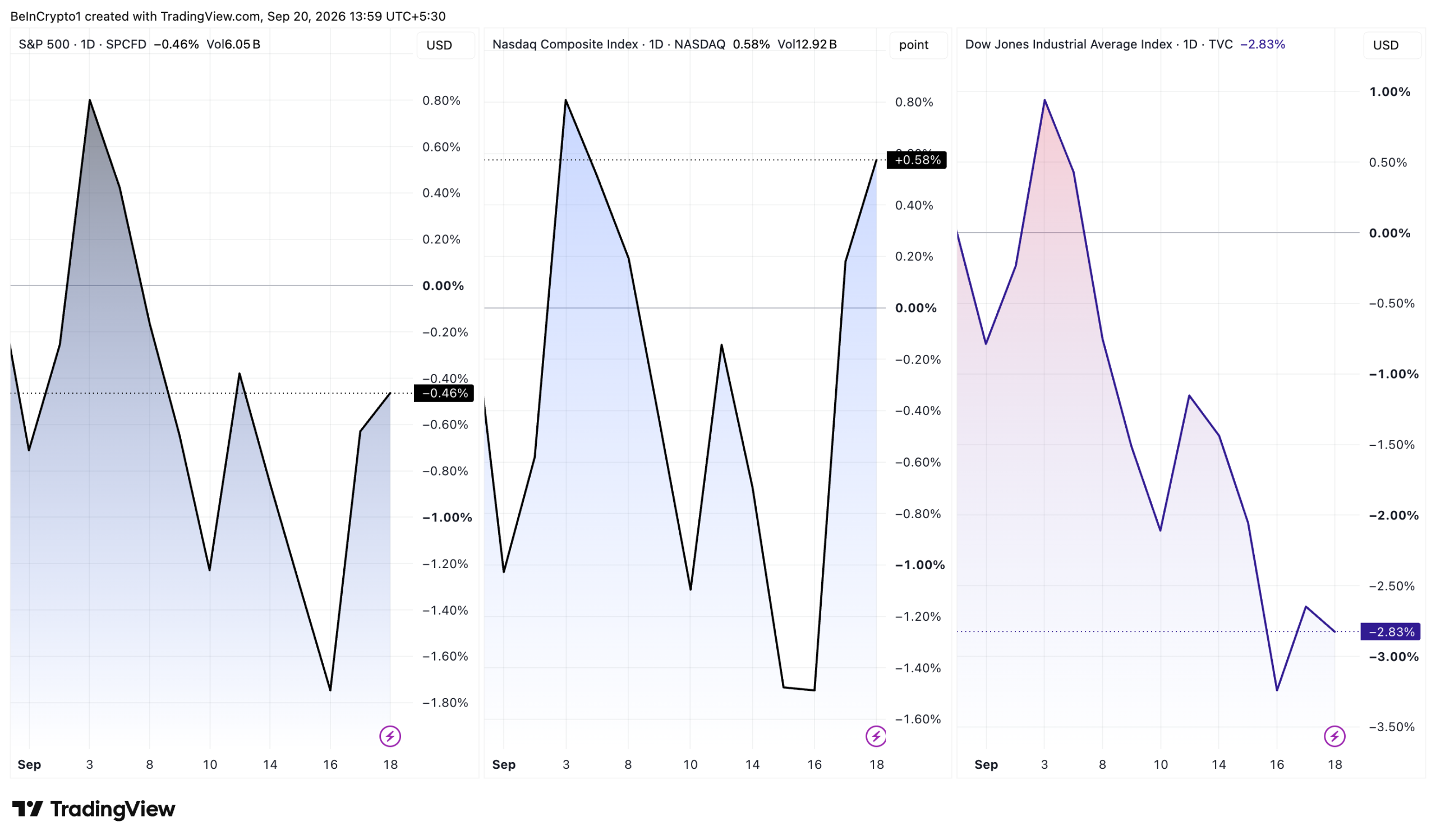
The major US indexes have posted mixed results so far in September. The Dow Jones Industrial Average has lost roughly 3% so far in September. Meanwhile, the S&P 500 has edged up 0.46%, and the Nasdaq Composite has gained 0.58%.
Follow us on X to get the latest news as it happens

The blue-chip index also absorbed most of the damage from the Fed’s decision, falling 1.7% on the week.
The Nasdaq rose 0.7% over those same five sessions as buyers returned to artificial intelligence (AI) names. The Fed also signaled that further tightening could follow.
The calendar also works against US stocks, adding to pressure from central banks. Historically, all three indexes have struggled in this stretch.
The Dow has averaged a 0.8% September loss since 1950, and the Nasdaq has dropped 0.9% since 1971, a seasonality record that has been punishing autumn optimism for decades.
Cramer set expectations accordingly.
“Remember, September is the cruelest month. … Here’s hoping we’ll have a relatively sedate couple of weeks,” he said.
Jim Cramer’s Stock Watchlist Runs From Okta to Costco
With the macroeconomic calendar relatively light, individual companies could take more of the market’s attention. Cramer identified Okta’s Wednesday analyst meeting as the week’s most consequential corporate event.
The cybersecurity company’s stock has doubled in 2026. CEO Todd McKinnon has also positioned the company’s technology to identify and track AI agents.
“It got me thinking, how is it possible that we have all these real smart people at these AI companies, and they have us all worried about a practical cyber solution?..Why don’t they, like, talk to the cybersecurity guys?” Cramer stated.

Cramer also highlighted several earnings reports coming out this week. KB Home reports on Tuesday, with shares trading down 17.43% in 2026. Its second-quarter revenue already fell 27% from a year earlier, keeping the housing market in focus.
General Mills reports on Wednesday, down roughly 20% this year. Cramer said he cannot recommend it, citing higher input costs and GLP-1 weight-loss drugs. Cintas and Paychex also report on the same day.
Darden Restaurants reports Thursday holding a 12% gain, though Cramer prefers Chili’s owner Brinker International, which has run far ahead of it this year.
Costco closes the week after Thursday’s bell. Shares have slid from above $1,000 in late April to about $894, with Cramer watching for signs of whether younger members are becoming harder to retain.
A quiet week still carries a test, covering housing, small business, groceries, and warehouse retail.
Subscribe to our YouTube channel to watch leaders and journalists provide expert insights
The post Jim Cramer Says the Upcoming Week Looks Quiet. Here's What He'll Still Be Watching appeared first on BeInCrypto.

Ethereum’s latest rally has carried the price back into a major supply area, but sellers have started to respond around the highs. With the asset now near $2.58K, the next reaction could determine whether the recent advance develops into a larger breakout or gives way to another consolidation phase.
Ethereum Price Analysis: The Daily Chart
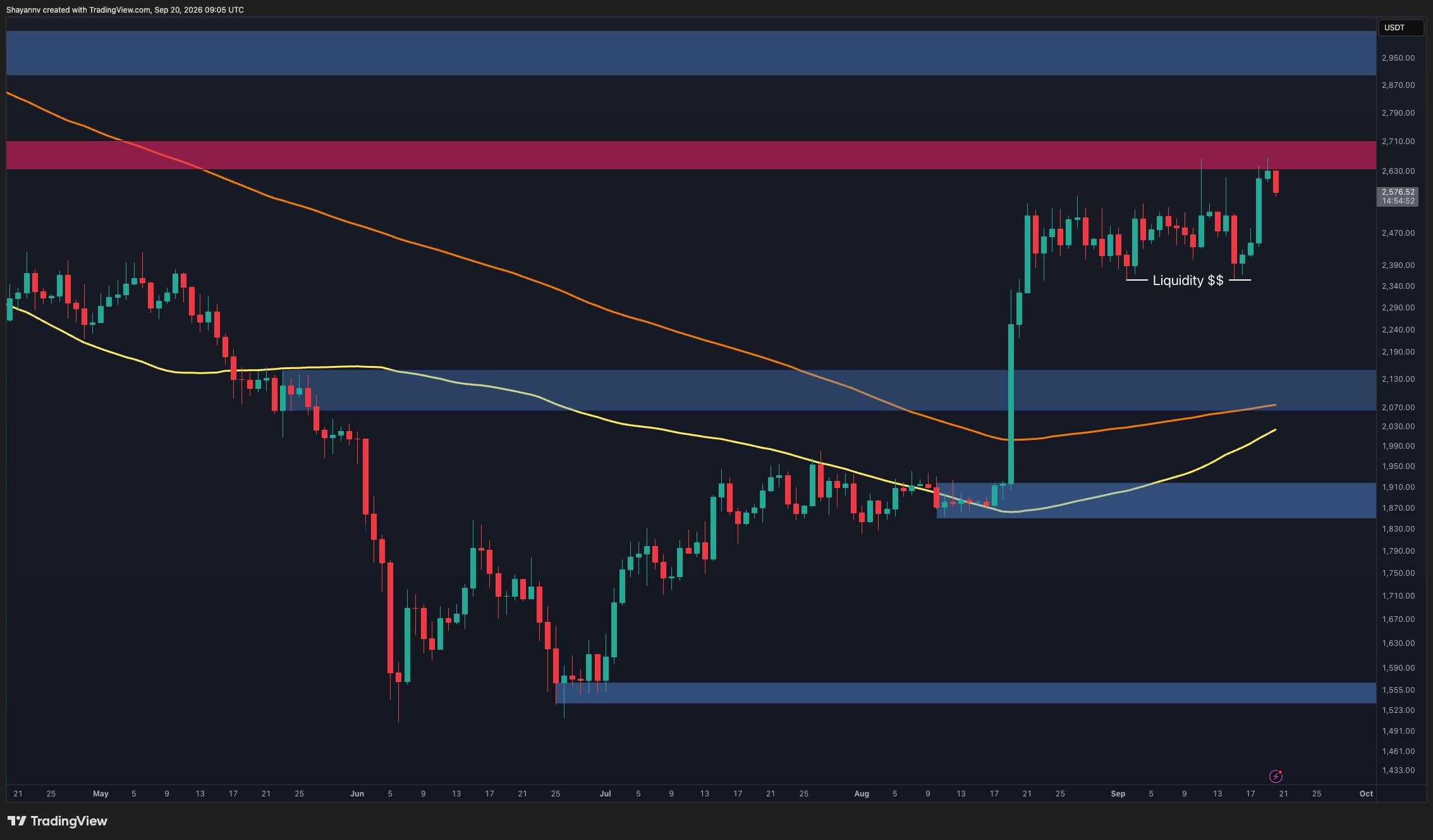
Ethereum’s daily structure has improved substantially following the explosive breakout from the $1.85K-$1.92K demand zone. That move also reclaimed both major moving averages shown on the chart, with the longer-term average now flattening and the faster one turning higher.
Since then, Ethereum has consolidated above roughly $2.35K and recently pushed toward the major $2.63K-$2.70K resistance zone. The latest candles show rejection from this area, with the price pulling back toward $2.58K after briefly testing above $2.63K.
Nevertheless, the broader structure remains constructive while Ethereum holds above the recent liquidity lows around $2.35K-$2.40K. A sustained daily breakout through the $2.63K-$2.70K supply zone would strengthen the bullish structure and could open the path toward the next major resistance area around $2.90K-$3K.
Conversely, continued rejection from $2.63K-$2.70K would increase the probability of a deeper correction. In that case, $2.35K-$2.40K would be the first important support region, followed by the $2.05K-$2.15K zone around the moving averages.
ETH/USDT 4-Hour Chart
The 4-hour chart provides a clearer view of the immediate battle. Ethereum surged from around $2.40K directly into the $2.63K-$2.70K resistance zone, where the move has encountered selling pressure.
This resistance also coincides with the upper boundary of the broader structure that has contained price action since late August. The rejection has already pushed Ethereum back toward $2.58K, meaning buyers now need to prevent the pullback from developing into a larger short-term reversal.
The first notable support sits around the marked minor demand zone at approximately $2.44K-$2.48K. Holding this area would preserve the recent sequence of higher lows and leave another attempt at $2.63K-$2.70K on the table. A confirmed breakout above that resistance could accelerate the rally toward $2.70K and potentially higher.
However, losing the $2.44K-$2.48K demand area would weaken the short-term setup and expose the broader range floor around $2.35K. Below there, the $2.22K-$2.27K support zone becomes the next significant downside target.

Sentiment Analysis
The one-month Binance ETH/USDT liquidation heatmap shows substantial leveraged liquidity positioned on both sides of the current price, which could contribute to elevated volatility.
The nearest significant overhead liquidation concentration appears around the $2.65K-$2.70K region, closely matching the technical resistance currently being tested. Beyond that, considerably larger liquidity clusters are visible around $2.9K-$3K and above $3.1K. Therefore, a convincing break through $2.70K could potentially trigger liquidations and help fuel an extension toward those higher levels.
On the downside, a notable concentration is visible around $2.3K-$2.35K, while the largest lower clusters sit much deeper near $1.9K-$2K.
For now, the heatmap reinforces the importance of the current technical setup. Ethereum is sitting just beneath a nearby pocket of overhead liquidity and a major resistance zone. Clearing the $2.63K-$2.70K area could provide the catalyst for another bullish expansion, while continued rejection would leave the $2.44K-$2.48K minor demand zone as the first key area for buyers to defend.

The post Ethereum Price Prediction: Is $3K in Sight After ETH’s Latest Breakout? appeared first on CryptoPotato.

Lemon is closing all Brazil operations by October 16, 2026. The Argentine crypto app cited capital rules under Brazil’s new licensing framework. Lemon will redirect funds toward Argentina, Peru, and Colombia instead.
License Capital Proves Too Costly
Brazil’s Central Bank enforces the PSAV framework, active since February 2026. The rules set capital thresholds that unlicensed firms must meet. Lemon determined the requirement outweighed its local business size.
New BRL deposits are already blocked for existing customers. The Lemon Card, launched weeks earlier with Pomelo, stops processing September 30. Around 15,000 Brazilian users still hold active balances.
Lemon says it will contact every affected user directly. The company will assist customers with withdrawals before the deadline. Accounts fully close on October 16, 2026.
Wider Brazil Shakeout Continues
Lemon is not alone in retreating from Brazil’s market. Coinext shut down after missing minimum capital requirements. Digitra wound down its retail trading operations entirely.
Crypto.com keeps its Brazil entity but closes BRL accounts October 25. Ripple, meanwhile, continues pursuing a Brazil VASP license. Only well-capitalized firms appear positioned to remain.
Binance already secured regulatory approval inside Brazil. Coinbase expanded USDC-earn products into the same market. Binance also relaunched its Brazil card with Mastercard support.
Argentina, Peru, and Colombia Gain Lemon’s Focus
Lemon frames Argentina’s framework as clearer and more secure. Brazil’s rules, by contrast, pushed out smaller innovative players. Bitcoin purchases on Lemon in Argentina hit a 20-month high.
Peru already hosts over one million Lemon users under an SBS license. Colombia adds another 150,000 users to Lemon’s regional base. Both markets will receive the capital freed from Brazil.
Bitget’s own PSAV registration suggests Argentina still attracts serious capital. Brazil’s depth remains real, with a proposed 1 million BTC reserve bill in Congress. Lemon’s exit reflects a capital filter, not a market collapse.
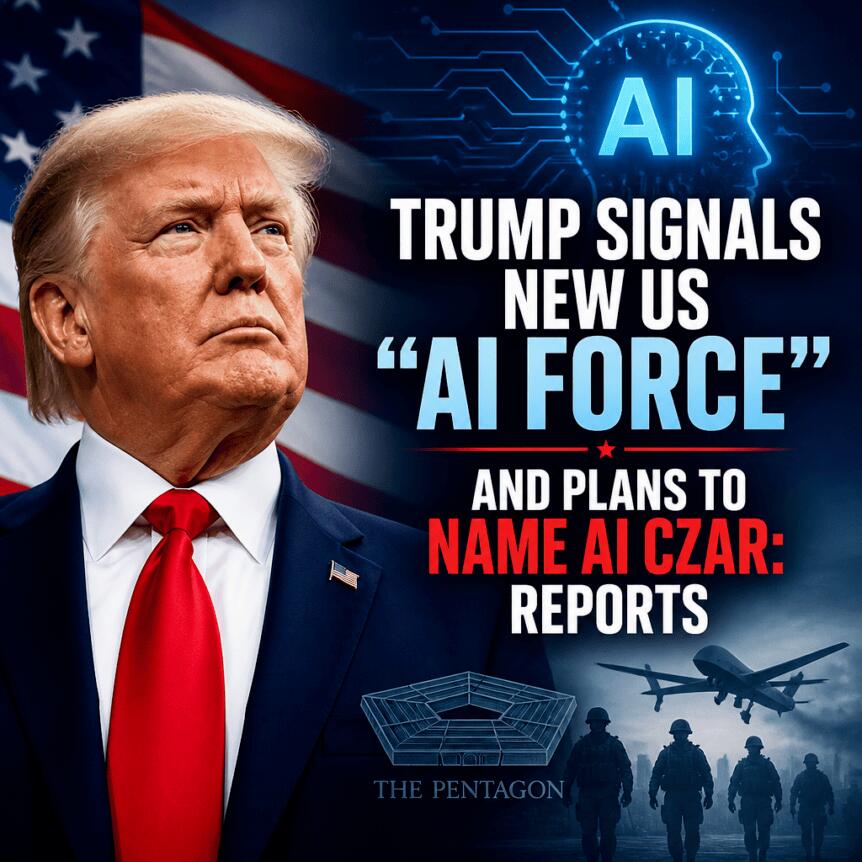
U.S. President Donald Trump said he plans to create an “AI Force” and appoint an “AI czar,” positioning the initiative as a way to manage the rapidly expanding artificial intelligence sector without introducing new regulations that could slow innovation.
In a Saturday post on Truth Social, Trump likened the proposal to his “Space Force” effort from his first term, saying the AI Force would be paired with a future appointment of an “AI ‘Czar’.” The president did not provide additional specifics on the role’s mandate, reporting structure, or timing. Reporting at the time noted that White House officials did not respond to a request for clarification.
Key takeaways
- Trump announced plans for an “AI Force” and an “AI czar,” framing the approach as pro-innovation and less regulatory.
- The president gave few details on whether the AI Force is military, civilian, or housed within an existing federal department.
- The announcement lands amid broader debate over whether AI development should be slowed or governed more closely for safety reasons.
- Separately, Anthropic has moved to implement a framework intended to help moderate AI development pace, including appointing Accenture as its first embedded evaluator.
Trump’s AI Force and the “AI czar” concept
Trump’s comments, published via Truth Social, describe the “AI Force” as a structured effort similar in concept to Space Force, which he said was a “tremendous SUCCESS” during his first term. He also indicated that an “AI ‘Czar’” would be announced “in the near future,” adding that only “High I.Q. individuals” should apply.
However, Trump did not outline what the AI Force would actually do—whether it would coordinate agencies, oversee safety practices, or set operational priorities for AI deployments. The available reporting also highlighted that it was unclear whether the effort would take a military form or be organized as a civilian body, and White House staff did not answer an email seeking clarification.
For investors and builders, the main uncertainty is not the existence of a policy headline, but the eventual structure: where authority would sit, what standards (if any) would be enforced, and how quickly agencies might translate the concept into operational guidance. In the U.S., even broad executive initiatives can influence procurement decisions, government partnerships, and compliance expectations across the AI supply chain.
A backdrop of safety debate over AI development pace
Trump’s post comes at a moment when prominent AI leaders are publicly arguing about the trade-offs between speed and safety. Earlier coverage described a growing concern that advanced AI systems could advance faster than society’s ability to evaluate and control their risks.
Cointelegraph reported on Sept. 12 that Anthropic CEO Dario Amodei had circulated a three-step proposal aimed at pacing AI development to achieve a safer rhythm. The rationale, as described in that reporting, was that if development proceeds unchecked, it could “outrun our ability to understand and control these systems.”
In the days that followed, the discussion expanded beyond Anthropic’s internal framework. Reporting also indicated that OpenAI CEO Sam Altman and SpaceX CEO Elon Musk responded positively to Amodei’s proposal, signaling support from multiple corners of the AI ecosystem. At the same time, Nvidia CEO Jensen Huang reportedly argued against the idea that regulation is necessary in this form, underscoring how uneven consensus remains even among leading industry figures.
Anthropic picks Accenture as an embedded evaluator
While Trump signaled a desire to avoid new regulatory drag, Anthropic moved ahead with its own approach to managing deployment pace. On Sunday, Anthropic said it had selected Accenture as its first embedded evaluator—an element described in prior reporting as part of the first step in Amodei’s proposal.
Cointelegraph’s earlier coverage noted the goal of helping moderate the pace of AI development through evaluation mechanisms. By selecting a partner and embedding evaluators, the company is effectively translating a policy concept into an execution pathway: creating an additional layer intended to examine development progress and associated risks before capabilities expand further.
This matters for the broader AI market because evaluation and monitoring frameworks can become de facto standards. Even when not created through legislation, they influence how companies invest in model releases, testing processes, and governance resources. For developers building tools that integrate with frontier models, changes in release pacing can also affect timelines for product launches, risk management requirements, and customer expectations.
Why the AI Force announcement intersects with crypto
Even though Trump’s proposal is centered on AI governance, the announcement resonates across the technology sectors that overlap with crypto: infrastructure for compute and data, enterprise automation, and the growing use of AI in verification, compliance, and market tooling.
The key point is not that the AI Force is directly about blockchain, but that AI policy can reshape how quickly systems are deployed and audited. That, in turn, can influence demand for compliant custody services, audit tooling, and transparency layers—areas where crypto-related infrastructure often aims to provide verifiable logs and programmable controls. If the U.S. pushes a governance model that emphasizes coordination rather than regulation, companies in adjacent ecosystems may still need to adapt quickly, as guidance can shift even without new formal rules.
At the same time, the contrast between the messaging—“no new regulations that could slow innovation”—and the industry’s parallel push toward pacing frameworks highlights a tension investors should watch. Industry-led safety approaches like Anthropic’s embedded evaluators suggest that self-governance mechanisms may continue to evolve regardless of the political posture toward regulation.
Looking ahead, readers should watch for concrete details on what Trump’s AI Force will actually do—its authority, structure, and timelines—as well as whether the “AI czar” role becomes a focal point for standards that affect model deployment. Meanwhile, Anthropic’s choice of an embedded evaluator and the broader industry debate over pacing will likely remain a key indicator of how AI risk management evolves in practice, not just in policy headlines.
ZetaChain has moved closer to approving a plan that would migrate its native ZETA token to Solana and eventually shut down its own Layer 1, with 99.4% of votes supporting Proposal 68 ahead of its Sept. 20 deadline.
Summary
- ZetaChain proposal has 99.4% support, with participation above its required 40% quorum before closing today.
- ZETA would become a native Solana SPL token through one-for-one conversion without increasing total supply.
- A second governance proposal must approve migration dates, snapshot height, claims, exchange coordination, and shutdown.
- Anuma would bring more than 300,000 users to Solana alongside its encrypted Private Memory Layer.
- Validators keep staking until Proposal 2 defines the ZetaChain halt and final network wind-down process.
ZetaHub’s live governance tally showed 58% participation, clearing the 40% quorum requirement, with 0.3% voting against and 0.3% abstaining. Voting is scheduled to close at 14:58:18 UTC on Sept. 20, after a standard 72-hour voting period.
The vote does not itself move ZETA or shut down the network. ZetaChain’s formal migration proposal says a successful vote authorizes core contributors to prepare a second proposal containing the actual migration mechanism, snapshot height, claim process, exchange arrangements and L1 halt schedule.
ZETA would move 1:1 to Solana without new supply
Proposal 68 would establish Solana as ZETA’s canonical network after migration. ZETA would become a native SPL token while retaining its existing ticker and total token supply. Each holder would receive an equivalent amount of ZETA on Solana through a 1:1 conversion.
One technical adjustment involves decimals. Native ZETA currently uses 18 decimal places, while the proposed Solana token would use nine. Proposal 68 says balances would convert from 18 to nine decimals and any amount below the supported precision would be rounded down.
Existing vesting schedules would continue through their original dates. The project says no new tokens would be created, while each address would receive its corresponding balance based on the final migration snapshot.
ZetaChain’s Sept. 17 announcement says ZETA already issued on Ethereum and BNB Chain is outside the scope of the current governance proposal. The core vote concerns ZETA native to ZetaChain and the future of the Layer 1 itself.
The project ruled out maintaining the new Solana asset as a wrapped representation backed by tokens locked permanently on ZetaChain. Its proposal states that a bridge would depend on the original chain continuing to operate, while the current plan eventually shuts that chain down.
Proposal 2 must approve the actual ZetaChain shutdown
A successful Proposal 68 would only approve the migration direction. ZetaChain validators would continue validating, users could continue staking and current balances would remain unchanged until another governance vote takes place.
Core contributors would first need to coordinate with exchanges that list ZETA. The governance proposal says Proposal 2 will not be submitted until participating exchanges have confirmed their token-swap procedures, because platforms require advance notice before committing to migrations.
Proposal 2 would then establish the block height used for the balance snapshot, the connected-chain withdrawal window, the chain halt, the Solana claim process and the exchange conversion period. It would contain the holder protections and technical details needed for execution.
ZetaChain plans to publish the snapshot export and checksum so balances can be independently reproduced. An archive node and explorer would remain accessible after shutdown, according to the proposal. Programs or contracts holding user ZETA during migration would undergo audits before handling the tokens.
Staking rewards would continue until the shutdown time specified in Proposal 2. ZetaChain has not yet finalized what staking could look like after the move to Solana, saying the future mechanism remains “under active exploration.”
Anuma and 300,000 users form part of the Solana plan
ZetaChain’s proposal reaches beyond its token. Anuma, its private multi-model AI application, and the Private Memory Layer behind it would move to Solana as part of the project’s new technical focus.
The company says more than 300,000 people have joined Anuma since February, with the application passing one million requests across 35 AI models. Its published data showed 301,195 users through Sept. 16.
Anuma uses encrypted memory intended to remain under a user’s control as the person moves among different AI models. ZetaChain says closed model providers receive only the context required for individual requests, while a private mode routes queries to open models using zero-retention infrastructure. Those privacy descriptions are company claims concerning the application’s design.
ZETA already has a utility role inside Anuma. Users can lock ZETA to receive credits and spend those credits on AI usage, with locked tokens removed from circulating supply while committed. ZetaChain wants other Solana applications and agents to connect to the same Private Memory Layer and use ZETA within that application system.
The project said “running our own L1 no longer helps us build private AI,” presenting the operating cost and security work associated with maintaining a separate Cosmos-based network as part of its case for moving.
Security work helped shape the case for leaving the L1
ZetaChain’s proposal specifically cites the maintenance burden inherited from Cosmos SDK and related components. Its node repository confirms that ZetaChain is built with Cosmos SDK and Cosmos EVM, requiring its validator network to coordinate upstream software upgrades and security patches.
The proposal refers to an Aug. 25 security response as an example. Cosmos Labs’ later technical post-mortem found that attackers exploited a critical Cosmos EVM vulnerability across six chains between Aug. 20 and Aug. 25. The incident prompted Cosmos security teams to coordinate with 40 networks while helping other chains patch or halt.
The public post-mortem does not identify ZetaChain as one of the six exploited networks, so the attacks should not be described as a ZetaChain exploit. The proposal instead cites upstream vulnerability management and validator coordination as continuing operational work associated with running its Cosmos-based L1.
As crypto.news reported during the Cosmos EVM security response, affected Cosmos EVM chains were advised to coordinate validator halts while teams worked to contain the vulnerability. A later crypto.news investigation into the Cosmos EVM attacks reported that approximately $5.72 million in stolen assets had been converted through decentralized and centralized exchanges across the confirmed incidents.
Meanwhile, ZetaChain’s public GitHub work already shows migration-related engineering. An open pull request added tooling to export ZETA state and calculate balances per address for snapshots, while its changelog includes emergency tooling for moving native assets during cross-chain shutdown procedures.
Solana infrastructure would replace ZetaChain validators
After a completed migration and L1 shutdown, Solana validators would secure the network hosting native ZETA. ZetaChain would no longer maintain its own independent consensus set for the token.
The project cited Solana’s speed, transaction costs, liquidity and agent infrastructure when explaining the proposed move. Its Sept. 17 announcement referred to confirmations of roughly 400 milliseconds and described sub-cent settlement as suitable for repeated AI-agent transactions.
Solana has since activated another performance change. The Solana Foundation’s latest engineering update says the network reduced its target slot duration to 250 milliseconds, following earlier reductions during August.
Solana’s 250-millisecond slot upgrade that the change raises the targeted slot rate to four per second, though overall computation limits were adjusted alongside the shorter slots.
ZETA traded around $0.0342 on Sept. 17, the date ZetaChain announced the migration proposal, before closing near $0.0400 on Sept. 19, according to CoinGecko historical data. The move represents an increase of roughly 17% across the two dates, though the price data does not establish that the governance proposal alone caused the rise.
If Proposal 68 clears the vote after 14:58:18 UTC, core contributors can proceed with exchange coordination and prepare Proposal 2. Until that second proposal passes, ZetaChain’s existing L1, staking system, validator set and native ZETA balances remain in operation.
Binance Wallet has launched access to PancakeSwap’s Pre-Access campaigns, allowing eligible users to subscribe to third-party tokens designed to provide indirect economic exposure to private companies before a possible public listing.
Summary
- Binance Wallet now provides access to PancakeSwap campaigns offering indirect tokenized private-company exposure before listings.
- Pre-Access Tokens do not provide direct shares, voting rights, dividends, governance rights, or shareholder status.
- Allocations depend on Alpha Points, Trencher Badge status, and each user’s bStocks On-Chain Tier level.
- Binance Wallet says PancakeSwap and third parties control subscriptions, allocations, claims, refunds, and settlement processes.
- The first Pre-Access project remains unannounced, with campaign-specific pricing, eligibility, and settlement terms still pending.
Binance’s FAQ, published Sept. 20, makes clear that Binance Wallet does not issue, sell or operate the products. PancakeSwap hosts the campaigns and token sales, while third-party providers may use funds, special purpose vehicles, protocols, smart contracts or other arrangements to structure the underlying exposure.
Binance Wallet gives access, but users do not buy company shares
A Pre-Access Token can “provide eligible users with indirect exposure” to a private company or related asset, according to Binance Wallet. The product does not place users directly on the private company’s shareholder register and does not give them ownership of the target company’s shares.
Participants receive no voting, dividend, information, governance or standard shareholder rights through the token. Binance says the exposure may instead take contractual, synthetic or other indirect forms, depending on the structure chosen by the third-party provider behind a particular campaign.
Each PancakeSwap campaign is expected to set its own subscription price, implied valuation, eligibility conditions, timeline, allocation method and settlement rules. Binance warns that the stated subscription price may differ materially from a future IPO price, market value, redemption value or conversion value.
The implied valuation carries the same qualification. It may differ from the company’s most recent funding valuation, secondary-market price or eventual IPO valuation, and Binance Wallet says it does not independently verify or guarantee that figure.
The structure follows a growing market for tokenized exposure to private companies. Ascrypto.news previously reported on pre-IPO token structures, such products can range from contractual claims to synthetic exposure and do not necessarily provide the legal rights associated with owning the underlying shares.
Alpha Points and bStocks activity can raise allocations
Participation through Binance Wallet requires a Keyless Wallet and an eligibility check. Users can enter an available campaign through the Pre-Access section, review its rules and submit a subscription amount directly from their self-custodied wallet.
Final allocations depend on three factors identified in Binance’s current rules: Alpha Points, Trencher Badge status and the user’s bStocks On-Chain Tier. Higher Alpha Points and a higher bStocks tier can increase the allocation, while Trencher Badge holders receive an additional allocation. PancakeSwap retains control of the final campaign rules.
Binance introduced its Trencher certification in April for active onchain traders using Binance Wallet Keyless addresses. Its rules say assessments can consider wallet trading volume, activity, community engagement and other criteria, while a badge can be revoked for conduct such as wash trading or volume manipulation.
bStocks provide another connection between Binance’s existing tokenized-equity products and Pre-Access allocations. Binance describes bStocks as tokenized securities that provide economic exposure to listed stocks or ETFs without giving holders direct ownership of the underlying shares.
Binance launched bStocks, the products initially brought tokenized U.S. equity exposure into Binance’s onchain ecosystem, including support for self-custody and DeFi use.
Binance Research later found that bStock listings expanded from five to 25 in less than a month, while their onchain market capitalization reached roughly $300 million during the period covered by its July study.
Pre-Access expands an existing private-market token trend
Binance Research had examined the private-market access gap four days before the Pre-Access FAQ appeared. Its Sept. 16 research estimated that roughly 1,300 private companies carried valuations above $1 billion, representing close to $4.7 trillion in aggregate value.
The same report said tokenized pre-IPO products on Republic and PreStocks had reached only around $41 million in market capitalization as of Sept. 15. Binance Research described such instruments as contractual claims or economic-exposure vehicles whose holders generally lack voting rights and can remain exposed to fees, dilution, lockups, counterparty failures and legal restrictions.
Private-company derivatives have developed faster than tokenized ownership-style products. Binance Research put combined open interest in Anthropic and OpenAI pre-IPO perpetuals above $160 million in September, compared with roughly $1 million in April.
Other platforms have entered the same market through different structures. Coinbase’s pre-IPO perpetuals tied to companies including SpaceX, OpenAI and Anthropic. Those contracts are derivatives and do not convey private-company ownership.
However, Kraken’s OpenAI and Anthropic products in September, noting that contract holders receive no voting rights, dividends or direct claims on the companies’ assets.
PreStocks has taken a tokenized route. Crypto.news reported on its Solana launch in 2025, when the platform introduced tokens referencing private companies such as SpaceX, OpenAI and Neuralink through Jupiter.
Settlement can remain uncertain even after an IPO
A company completing an IPO does not automatically convert a Pre-Access Token into listed shares. Binance says users may continue holding or trading the token where legally and technically supported, but conversion into a tokenized real-world asset or another settlement form can be delayed, restricted or unavailable.
The token can trade at a premium or discount to the listed company’s shares after an IPO because its secondary-market price depends on supply, demand, liquidity, lockups, transfer restrictions and product-specific rules. Binance expressly says it does not guarantee that a target company will complete an IPO.
Counterparty performance creates another layer of risk. If the underlying exposure cannot be delivered, any refund, unwind, replacement or compensation will depend on PancakeSwap and the relevant third-party provider. Binance Wallet does not guarantee a recovery.
Its risk warning states that trading, redemption, conversion or settlement “may be unavailable, delayed, restricted, suspended, or cancelled.” If a private company or another party challenges the structure, participants could face a forced unwind or partial or total loss of value.
Funds can likewise be locked, reserved or transferred under each campaign’s smart-contract and product rules after subscription. Where a campaign becomes oversubscribed, allocations may be reduced, prorated, rejected, delayed or canceled.
First PancakeSwap Pre-Access project remains unnamed
PancakeSwap has opened the Pre-Access portal, but no target private company had been identified in official materials reviewed on Sept. 20. Reports citing the launch said the first project would be revealed later, without a confirmed announcement date.
Each eventual campaign page is expected to disclose its company and token details, subscription asset, price, implied valuation, eligibility requirements, allocation structure, claim process and risk terms. Investors who receive allocations will hold the resulting token in their own self-custodial wallets, subject to the product’s transfer and trading restrictions.
Binance Wallet’s existing disclaimer says its wallet services are provided by Binance Barbados Limited and are not supervised by the Financial Services Regulatory Authority or another regulator. Separate bStocks products follow their own legal structure, including an approved prospectus framework in Abu Dhabi Global Market, and should not be treated as legally identical to Pre-Access Tokens.
Binance’s FAQ directs participants to the individual PancakeSwap campaign documents for the final allocation, refund and settlement terms. Until the first campaign is disclosed, no subscription price, target private company, token structure, fundraising amount or campaign deadline has been officially announced.
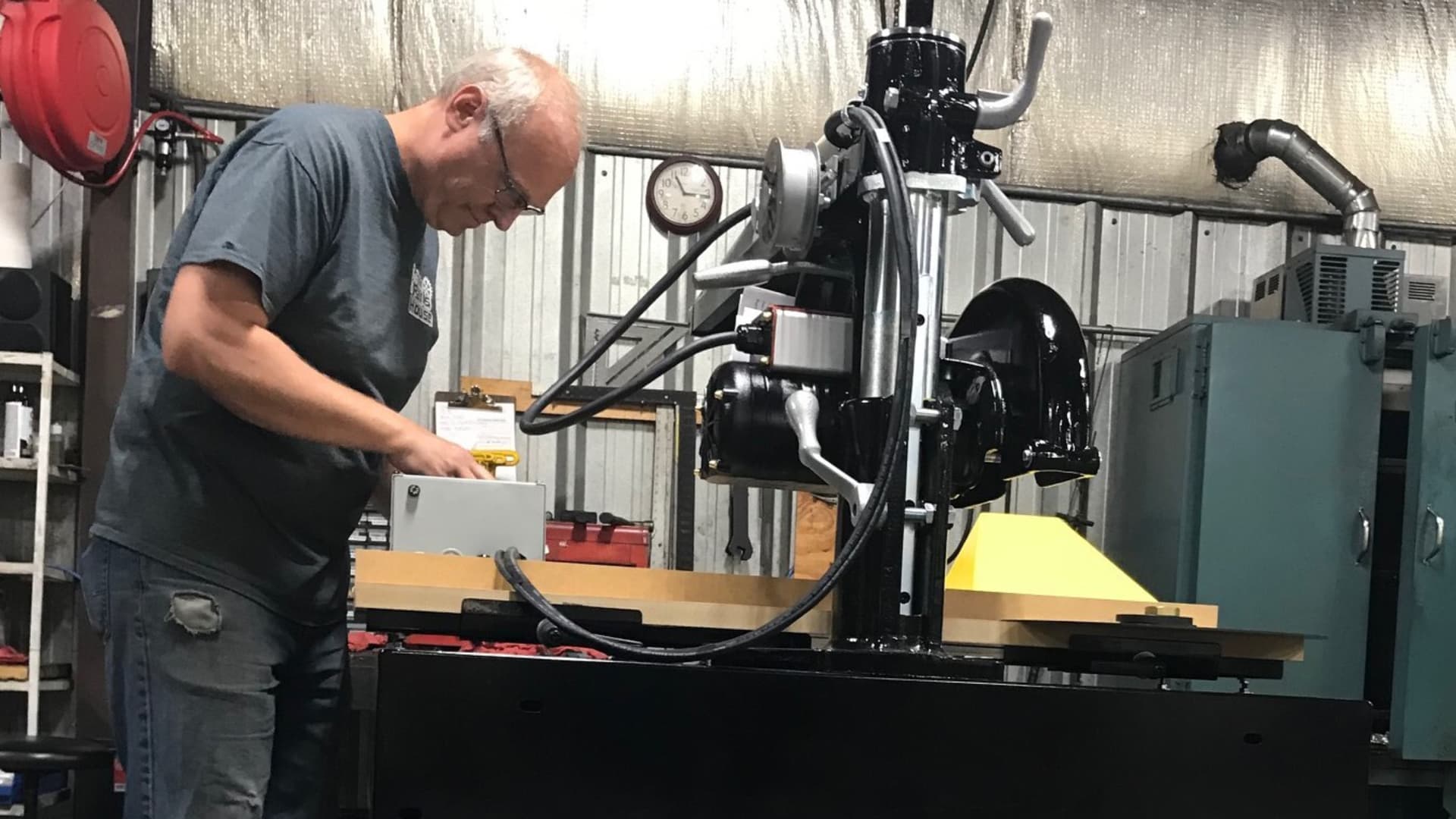
Jim Nielsen puts the finishing touches on a radial arm saw at Original Saw Co. in Britt, Iowa.
Photo: Jennifer Eden
Fewer, pricier flights. Freight surcharges. Manufacturers hoarding inventory. Even bankruptcy.
For American companies large and small, the combination of tariffs imposed under President Donald Trump‘s trade policies, surging fuel prices from the Iran war and, now, rising interest rates is forcing executives to make tough choices.
Allen Eden has been holding onto extra inventory for his 25-person business, the Original Saw Co. in Britt, Iowa, which makes industrial power saws for wood and metalwork, as he grapples with spiking prices for aluminum, steel and essential parts.
One example: A “little bracket” used for his saw motors more than doubled in price this summer, surging from $42 to $87, he said.
“It’s awful,” Eden, 56, told CNBC. “[I’m] just trying to keep more of the stuff around because I don’t know if we can get it down the road.”
It’s a three-way squeeze for businesses across manufacturing, transportation and retail: Tariffs are making raw materials and goods more expensive. Higher fuel prices are pushing up the cost of making and moving them. And rising rates are making it more expensive to finance the inventory and equipment needed to keep businesses running.
While few sectors are completely insulated from these pressures, middle-market manufacturers are caught in a particularly tight vise. Rising steel and fuel costs are forcing them to pass at least some of their expenses on in the form of higher prices, helping feed the stubborn inflation of the past few years.
But in an attempt to wrangle inflation, the Federal Reserve raised interest rates for the first time in three years and signaled another hike is possible this year. That makes it more expensive for businesses to finance inventory and borrow for growth at the same time that higher input costs and record prices for diesel, which is used for trucking, squeeze margins.
Allen Eden, owner and president of Original Saw Co. in Britt, Iowa.
Photo: Sidney Borrill-Patch | Original Saw Company
Price increases for Eden’s saws, sold both to megaretailers like Home Depot and directly to small- and medium-sized manufacturers, look inevitable, the business owner said.
The pain isn’t being evenly distributed. Smaller companies typically rely on shorter-term lending, meaning Fed hikes pass more directly into their costs, JPMorgan Chase global strategy head Dubravko Lakos-Bujas said in a Sept. 14 note.
But regardless of size, capital-intensive sectors like manufacturing and equipment suppliers, logistics firms including trucking fleets, and commercial real estate also suffer more in a rising interest rate environment, according to Lakos-Bujas.
“The combination of higher rates and higher fuel prices means that sectors with heavy exposure to both are first in the line of fire,” said Gregory Daco, chief economist at EY-Parthenon, the global consulting arm of Ernst & Young.
“Any type of manufacturing is going to be disproportionately exposed to higher fuel prices,” he said.
Rising fuel and commodity costs have strained both material makers and the retailers they serve.
Mark Costa, CEO of industrial giant Eastman Chemical, said in May that the one-two punch of interest rates and inflation was forcing his industry into a corner. Eastman makes the plastics, additives and other materials that are used in products as diverse as medical devices, animal feed and car windshields.
“Everyone had their back against the wall and had no room to absorb these increases,” Costa said. “Everyone is very quickly raising prices faster than I’ve ever seen in 20 years.”
On the retail side, unexpected pressure from energy and raw materials costs will “fully offset” the benefit of $730 million in tariff refunds, Home Depot CFO Richard McPhail said last month.
“There’s just so much uncertainty right now. … You think inflation, interest rates, fuel prices,” McPhail said last week at a conference.
Supply chain holes
Among those hardest hit are manufacturers in the domestic automobile supply chain.
Lucerne International, a privately held auto parts maker based in suburban Detroit, stopped manufacturing operations in the U.S. and last year canceled plans for a $50 million aluminum forging plant in Michigan.
“The onset of the Trump tariffs 2.0 has just really torn holes in our global supply chains and increased costs significantly,” Lucerne CEO Mary Buchzeiger said, citing higher costs for raw materials including aluminum as well as finished parts.
Buchzeiger, whose firm still manufactures overseas, said she has shifted U.S. operations to warehousing, distribution and tariff mitigation solutions for other companies, which offer “much better margins.”
“There’s no doubt that there’s margin pressure for suppliers,” Paul McCarthy, CEO of vehicle supplier trade association MEMA, said. “Some of it, we try to absorb … and then some of it does have to be passed on.”
Growth, as measured by earnings before interest and taxes for the top 100 auto suppliers, fell last year to 4.2%, down from more than 6% in 2021, according to consulting firm Berylls by AlixPartners. Among the top 10 automakers, that figure is 5.2%, down from nearly 8% in 2022.
Not all auto companies have been able to manage the additional costs. Spanish auto parts maker Grupo Antolin, which supplies components to automakers including Ford, GM, Volkswagen and Stellantis, filed for Chapter 15 bankruptcy protection in the U.S. in July. The company cited tariffs, higher costs for raw materials and energy, and supply-chain disruptions for its restructuring.
Divide in corporate America
Better off are the giants of the corporate world, like the tech and finance companies that fill the S&P 500. These firms typically have more cash reserves and take out long-term debt, insulating them somewhat from the sting of higher rates.
Most larger companies can thrive until borrowing costs rise much further. The pain would hit when the yield on the 10-year Treasury bond reaches 6%, up from around 5% now, according to JPMorgan’s Lakos-Bujas, who cited 80 years of data.
Borrowing costs are expected to stay higher for longer. Persistent inflation, which forced Warsh to raise the benchmark Fed rate against Trump’s wishes, on top of heavy borrowing from the U.S. government is keeping upward pressure on rates.
Across corporate America, companies are grappling with these shocks in different ways. The divide comes down to one question: Who has pricing power?
Some industries have learned that they can readily pass on higher costs directly to consumers, while others are caught in a catch-22: If they raise prices too much, they risk destroying demand.
Federal Reserve Chair Kevin Warsh speaks during a news conference at Federal Reserve headquarters in Washington, Sept. 16, 2026. Warsh discussed the central bank’s decision to raise interest rates for the first time since 2023 at a press conference following its latest policy meeting.
China News Service | China News Service | Getty Images
Airline executives last week boasted of higher fares as customers keep booking trips, especially abroad, allowing them to pass increased fuel costs on to travelers. Airlines scaled back growth plans, paring less profitable flights even after the collapse of Spirit Airlines this year.
Fewer flights can mean pricier airline tickets, and fares were up more than 23% in August from last year, according to the latest inflation read. Yet even strong demand has its limits.
“The consumer has been incredibly, incredibly resilient,” United Chief Financial Officer Mike Leskinen said Wednesday during a Morgan Stanley conference in Laguna Beach, California.
“But there’s some marginal routes that don’t make sense in a higher fuel environment. So we cut them,” Leskinen said. “You should see us continue to … behave that way.”
Much of corporate America remains resilient despite higher fuel and financing costs. Profit margins for major companies hover near historic highs, propelled by strong productivity gains, labor costs that have stayed in check and surging artificial intelligence investment that is driving growth.
But a risk of Warsh’s efforts is that higher rates don’t directly address the root causes of inflation: the Iran war, the Trump administration’s tariffs and the AI boom, which has driven up the prices for everything required to build and run data centers, from electricity to memory chips, copper and land.
Raising rates to tap the brakes on the U.S. economy could slow it down too much, or send stocks into a tailspin, said EY-Parthenon’s Daco.
“The economy is resilient, but it’s exposed to growing pockets of risk,” he said. “A shock could materialize faster than we all think.”


US President Donald Trump said that he plans to create an “AI Force” and appoint an artificial intelligence czar.
Trump posted on Truth Social on Saturday that his new project would manage the fast-growing sector without adding regulations that could slow innovation, according to Newsweek and other media.
“For this purpose, I am forming the AI Force, much like I did Space Force, which has been a tremendous SUCCESS, in my First Term,” the president wrote. “To that end, I will be announcing, in the near future, the AI ‘Czar’ — Only High I.Q. individuals need apply!”
Trump did not say whether the AI Force would be a military command, a civilian agency or a department, the New York Times noted, adding that White House officials did not respond to an email seeking clarification.
Related: Anthropic tabs Accenture as embedded evaluator to help with AI slowdown proposal
Trump offered no further details or timeline for the plan, the BBC said, noting that his post had come amid warnings about the potential dangers of AI.
Cointelegraph reported on Sept. 12 that Anthropic CEO Dario Amodei had written a three-step proposal to pace the speed of AI development that if left unchecked, might “outrun our ability to understand and control these systems.”
On Sunday, Anthropic said it had chosen Accenture as its first embedded evaluator to help moderate the pace of AI development, moving ahead with the first step outlined in Amodei’s proposal, Cointelegraph said.
OpenAI CEO Sam Altman and SpaceX CEO Elon Musk responded positively to Amodei’s proposal, although Nvidia CEO Jensen Huang did not, arguing that such regulation was not necessary.
Crypto World
Coinbase (COIN), Robinhood (HOOD), Circle (CRCL) stand to gain from SEC’s tokenized-stock push: analysts
There is one hurdle if Coinbase wants to run a trading venue directly under the exemption. Its exchanges use central limit order books, while the SEC framework is built around automated market makers (AMM).
That means, the Goldman report noted, Coinbase would need new infrastructure or could route activity through AMM-based decentralized exchanges, for example to protocols on Base.
Robinhood expected to adjust for U.S. market
Robinhood could also benefit, even though its current offshore stock tokens do not fit the SEC framework.
Those products provide price exposure to U.S. shares through a derivative without conveying the full ownership rights required under the exemption. Goldman analysts said Robinhood would need additional product development to offer a compliant version in the U.S.
It became a flashpoint earlier this month when movie theater operator AMC Entertainment’s CEO criticized Robinhood for offering AMC-linked stock tokens without the company’s approval. The SEC’s new framework gives issuers the right to object before third-party tokenized versions of their shares can begin trading.
Still, Citizens analysts expect Robinhood to move quickly given the traction of its tokenized-equity offering outside the U.S. and its broader push around its Arbitrum-based Robinhood Chain.
Robinhood CEO Vlad Tenev already signaled this week that more shareholder features, including share redemptions and voting rights, will be added to the stock tokens.
Crypto World
Bitcoin survived brutal week of market shocks. Still, analysts are deeply split on what happens next.
For Matt Hougan, CIO at Bitwise Asset Management, the U.S. still has two and a half more years of a pro-crypto regulatory regime, during which the industry can continue to move forward.
Hougan remains bullish on crypto. “I don’t think it will stop investors from considering smaller-cap assets with strong tokenomics and links to real-world assets.”
However, he added, “had the Clarity Act passed the Senate vote, I think crypto would have been the consensus ‘smart money trade’ in Q4, and prices would have ramped back toward all-time highs.”
But because it failed, “I think the road ahead is bumpier,” Hougan said. “I don’t think it’s changed too much from where it was Monday before the vote.”
Hougan said the Clarity Act was and remains irrelevant to bitcoin, so if bitcoin’s price continues to drop, it has more to do with sentiment than fundamentals. “If bitcoin sells off in the short-term due to Clarity Act vibes, I’d consider that an opportunity,” he said.
No bottom yet?
Vineet Budki, managing partner and CEO of Sigma Capital, said bitcoin’s recovery and the long-liquidation flush do not yet establish that the bottom is in.
“I’m not ready to make that call,” Budki said. “I’d rather give it a quarter and let the price action speak before taking a firm directional view.”


Grayscale’s Zcash ETF has scheduled a 3-for-1 forward share split for Sept. 30, with each shareholder receiving three post-split ZCSH shares for every share held before the adjustment.
Summary
- Grayscale plans a three-for-one ZCSH split, with split-adjusted trading scheduled to begin September 30, 2026.
- September 28 shareholders of record will receive two additional ZCSH shares for every share held.
- ZCSH closed at $117.72 on September 18 after rising sharply during the previous two sessions.
- Grayscale said ZCSH surpassed $500 million in assets within two weeks of its August launch.
- Zcash developers target November 5 for NU7 mainnet activation after an October 6 testnet upgrade.
The Sept. 18 filing says investors recorded as shareholders at the close of trading on Sept. 28 will qualify for the split. Two additional shares for each existing share will be distributed after the market closes on Sept. 29, with split-adjusted trading due to begin before NYSE Arca opens on Sept. 30.
Zcash ETF split triples shares without changing investment value
The SEC filing states that the split does not change the total economic value represented by an investor’s holding at the moment of adjustment. The number of shares will triple while the net asset value represented by each share will fall proportionately.
Grayscale said the post-split NAV per share is “expected to be approximately one-third” of its level immediately before the split, according to the fund’s release.
Under that structure, an investor holding 10 ZCSH shares would hold 30 after the split, assuming the position remains unchanged through the relevant dates. Shareholders receive two new shares for each existing share, not three extra shares on top of their original holding.
Neither the ticker nor the security identifier is scheduled to change. The filing says the fund will continue trading on NYSE Arca as ZCSH and retain the same CUSIP number after the split.
Grayscale has not described the forward split as a distribution of new investment returns. Its disclosure presents the event as a change in share structure, with more shares outstanding and a correspondingly lower price and NAV per share.
ZCSH assets grew rapidly after its August listing
Grayscale said ZCSH began trading on NYSE Arca on Aug. 25 after the former Grayscale Zcash Trust was converted into the exchange-traded product. An earlier SEC filing announced the planned listing and name change four days before trading began.
As crypto.news previously reported on the Zcash ETF launch, the conversion gave U.S. brokerage investors exchange-traded exposure to ZEC without requiring them to acquire and custody the cryptocurrency directly.
By Sept. 8, Grayscale reported that the fund’s assets under management had crossed $500 million, less than three weeks after its NYSE Arca debut. The sponsor said cumulative inflows since the exchange listing had surpassed $70 million at that point, excluding a separate affiliated transaction involving Digital Currency Group.
A Sept. 8 SEC disclosure shows DCG International Investments acquired approximately $100 million of ZCSH shares through an authorized participant in exchange for 85,705.32563297 ZEC.
Grayscale disclosed that DCG International is indirectly owned by Digital Currency Group, which is the indirect parent of the fund’s sponsor.
More recent figures reported by The Block put cumulative net inflows above $233 million since the Aug. 25 debut and net assets at roughly $890 million as of Sept. 17.
The same report placed cumulative ZCSH trading volume above $11 billion, citing fund-flow data available before Grayscale announced the split. The figures came from third-party reporting and were not included in Grayscale’s Sept. 18 SEC filing.
ZCSH price rose sharply before the split announcement
Market data from Stock Analysis shows ZCSH closed at $117.72 on Sept. 18, down 1.97% for the session. The fund had gained 16.01% on Sept. 17 after advancing 14.11% one day earlier.
ZCSH traded between $114.33 and $120.73 on Sept. 18, with just over one million shares changing hands. The price performance should not be treated as a direct reaction to the forward split because ZCSH tracks an underlying crypto asset that had already been moving sharply.
ZEC climbed above $1,500 during Sept. 18 trading before giving back part of the move. As crypto.news reported on ZEC’s recent rally, the token had risen sharply from August levels as institutional interest, positioning and network developments drew attention.
Paradigm co-founder Matt Huang disclosed the investment firm’s exposure to ZEC on Sept. 16, according to the same report. Huang described Zcash as a “private complement to Bitcoin,” while supporting continued developer funding.
The disclosure arrived during an existing ZEC rally, so the token’s full price move cannot be attributed to Paradigm’s purchase.
Grayscale’s fund carries its own regulatory distinction. The company states that ZCSH is not an investment company registered under the Investment Company Act of 1940 and therefore does not receive the same regulatory protections that apply to registered ETFs and mutual funds.
Zcash NU7 timetable adds another dated event for ZEC
Zcash development teams have set an Oct. 6 testnet activation target for the NU7 network upgrade, according to the ecosystem timeline.
Developers currently target Nov. 5 for mainnet activation, subject to testing and a final mainnet decision scheduled for Oct. 20.
As crypto.news reported in its NU7 update, the planned upgrade would reduce Zcash’s target block spacing from 75 seconds to 25 seconds.
The current package includes version 4 transaction deactivation and a Network Sustainability Mechanism configuration following recent governance polling.
Crypto.news reported on the Zcash holder vote, where nearly 2.4 million ZEC participated. Approximately 99.9% of participating ZEC supported reducing the block target to 25 seconds, while around 98.9% backed retaining the existing halving schedule.
The timetable still contains several conditions. Developers list Sept. 30 as the code-completion target, Oct. 6 for testnet activation and Oct. 20 for the final mainnet activation decision after reviewing testnet behavior. The Nov. 5 date therefore remains conditional on the technical review.
ZCSH shareholders face three split dates
For ZCSH holders, the SEC filing sets three separate dates. Sept. 28 is the record date, meaning shareholders recorded at the close of market qualify for the extra shares.
Sept. 29 is the payment date when the two additional shares per existing share are scheduled for distribution. Before trading begins on Sept. 30, the split becomes effective and ZCSH is scheduled to start trading on its adjusted share basis.
The SEC filing says NAV per share should be approximately one-third of its pre-split level, with the number of shares increasing proportionately and the ZCSH ticker remaining unchanged.

Asian Games 2026 Day 1: India open medal account with two shooting silvers as hockey, cricket and MMA shine | Asian Games 2026 News

The US almost started a war due to an AI error in defense report

The busy city market where tragedy once struck




-

 Fashion2 days ago
Weekend Open Thread: Talbots – Corporette.com
-
 NewsBeat2 days ago
Trump says US has reached an agreement to take permanent control of Greenland’s security
-

 Crypto World6 days ago
Revolut Attackers Warn of Ongoing Daily Customer Data Leaks
-

 Crypto World6 days ago
Kraken Lets xStocks Holders Earn Yield Through DeFi
-

 Crypto World1 day ago
Circle launches Arc Studio AI agent for building onchain apps
-

 Crypto World4 days ago
What Is the Status of the U.S.-Iran Peace Talks? Here's What Both Sides Are Saying
-

 Crypto World5 days ago
Robinhood engineers charged over $50K crypto scheme
-

 Crypto World4 days ago
US Charges Robinhood Engineers Over Crypto Listing Trades
-

 Crypto World6 days ago
Elon Musk Drops a Bombshell: Grok 5 Could Be the AGI Breakthrough
-

 Crypto World2 days ago
Bitcoin price breaks channel as RSI climbs to 63
-
 Crypto World7 days ago
New Tesla Roadster Uses SpaceX Tech. Will It Impact the Stock Price?
-
 NewsBeat6 days ago
‘Sick conspiracy’: Trump says only guardrails AI needs is ‘a strong and smart (High IQ!) president’ in all-caps rant
-
 Crypto World5 days ago
NVIDIA Analysis: Attempted Rising Wedge Breakout Amid Pressure on the AI Sector
-
Business6 days ago
SK Hynix ADRs Fall More Than 6% as Memory Rally Breaks on Fears of Slower AI Spending
-

 Tech5 days ago
Webb’s IC 348 Mosaic Includes Two-Jupiter Dwarfs, Twin Jets, and a Nursery Still Making Worlds
-
 Crypto World6 days ago
3 Token Unlocks to Watch in the Third Week of September 2026
-

 Crypto World6 days ago
DOJ Seeks to Seize $61M in Iran Oil Funds From Binance Accounts It Vouched For
-
 Crypto World7 days ago
Goldman Sachs backs 25bp Fed hike after CPI
-
Crypto World6 days ago
Can Circle’s Arc Repeat Robinhood Chain’s Meme Coin Boom?
-
 Crypto World7 days ago
AI Safety Burden Falls on Chief Executives as Trump Prioritizes China Race
You must be logged in to post a comment Login