
Crypto World
Kalshi loses emergency appeal bid against Utah



Kalshi has lost an emergency injunction request at the 10th Circuit, leaving Utah free to enforce its gambling laws while the prediction market operator pursues its appeal.
Summary
- The 10th Circuit denied Kalshi’s request for an injunction pending appeal.
- Utah may now bring civil or criminal enforcement action against the prediction market operator.
- States have won 12 consecutive federal rulings since an earlier Minnesota decision favored prediction markets.
- New Jersey has asked the Supreme Court to settle the federal-versus-state jurisdiction dispute.
Utah can enforce its gambling laws against Kalshi
Legal analyst Daniel Wallach said in an X post that the 10th U.S. Circuit Court of Appeals had denied Kalshi’s emergency motion for an injunction pending appeal.
Kalshi sought temporary protection after a federal judge allowed Utah to apply its gambling restrictions to the platform’s sports event contracts. The requested order would have stopped the state from bringing civil or criminal proceedings while the appeal remained before the 10th Circuit.
With the request denied, Wallach said Utah may enforce its laws during the appeal. The appellate court’s decision does not settle Kalshi’s challenge to the earlier ruling, but it removes the temporary protection the company sought against state action.
Kalshi initially sued Utah earlier in 2026 as the state prepared to tighten its restrictions on prediction markets. The company argued that Utah could not regulate contracts listed on an exchange registered with the Commodity Futures Trading Commission.
In August, U.S. District Judge Robert Shelby rejected Kalshi’s request to prevent enforcement. According to the Associated Press, Shelby found that the federal law cited by the platform did not stop Utah from applying its gambling rules.
Utah Attorney General Derek Brown said after the district court ruling that his office intended to enforce state law, although officials were still considering their available options. Utah’s rules prohibit proposition betting on events within a game, a category that accounts for an important part of the sports products offered by prediction markets.
Kalshi disagreed with Shelby’s decision and moved the dispute to the 10th Circuit. Its emergency filing sought protection during that process, rather than a final appellate ruling on whether federal derivatives law overrides Utah’s restrictions.
Kalshi argues that sports contracts fall under CFTC control
Kalshi’s legal position rests on its status as a CFTC-regulated designated contract market. The company classifies its sports products as event contracts or swaps governed by the federal Commodity Exchange Act, rather than wagers controlled by individual states.
State regulators dispute that description. Their lawsuits and enforcement actions generally argue that contracts tied to game results, player performance, and other sporting events function as sports bets, requiring operators to follow state licensing, age-limit, and consumer-protection rules.
The distinction determines whether Kalshi can provide the same sports markets across the United States or must change its products according to local gambling laws. State victories could require geofencing, product removals, or licensing in jurisdictions that classify the contracts as wagers.
For American users, the unresolved issue means access may depend on where they live. As crypto.news previously reported, 38 active prediction-market cases were pending across 21 states as of Sep. 8, while exchanges had received cease-and-desist letters in at least 10 jurisdictions, according to Casino.org’s Prediction Market Litigation Tracker.
Court orders have already produced different rules among states. Washington directed Kalshi to restrict contracts covering sports, elections, politics, entertainment, culture, technology, and science, while allowing markets tied to commodities, climate, economics, and finance to remain available.
In Michigan, a preliminary injunction required Kalshi to keep sports contracts unavailable to residents. The Michigan court order exposed the platform to possible fines of $500,000 for every day a court found it out of compliance.
States extend their winning run in federal courts
Wallach said the Utah order extended a run of 12 consecutive federal court decisions favoring states over prediction market operators since a Minnesota ruling had gone the other way.
In the Minnesota case, a federal judge granted preliminary relief that blocked the state’s proposed prediction-market ban shortly before it was due to take effect. Later decisions, however, have increasingly allowed regulators to apply state gambling laws while the underlying cases proceed.
One of the most important rulings came from the 9th U.S. Circuit Court of Appeals on Aug. 28. A unanimous panel concluded at the preliminary stage that Kalshi’s sports products were likely bets rather than swaps, allowing Nevada regulators to enforce their gaming requirements.
“The CFTC is not a national gambling regulator,” Circuit Judge Ryan Nelson wrote in the 9th Circuit opinion.
The Nevada appellate decision conflicted with an April ruling from the 3rd Circuit in Kalshi’s case against New Jersey. In that dispute, a divided panel kept an injunction in place and found that Kalshi had shown a reasonable likelihood of proving that its sports event contracts qualify as swaps under federal law.
According to Wallach, states have prevailed in 35 of 41 rulings involving requests for preliminary injunctions, temporary restraining orders, stays, or injunctions pending appeal. The figure represents an 85% success rate for states in those procedural contests.
Such orders do not always decide the full legal merits of a case. Courts considering emergency or preliminary relief assess factors including the applicant’s likelihood of success, possible irreparable harm and the public interest before the underlying litigation is complete.
Supreme Court petition could settle the jurisdiction dispute
New Jersey has asked the U.S. Supreme Court to review the 3rd Circuit decision that favored Kalshi. Filed on Sep. 2, the state’s petition asks whether the Commodity Exchange Act prevents states from applying sports-gambling laws to contracts offered through a CFTC-registered market.
The Supreme Court petition argues that Congress did not clearly remove state authority over sports wagering when it passed the Dodd-Frank Act. New Jersey also disputes the 3rd Circuit’s finding that the contracts may qualify as swaps covered by the CFTC’s exclusive jurisdiction.
Kalshi has maintained that federal oversight preempts conflicting state restrictions. Addressing New Jersey’s filing in a statement previously shared with Front Office Sports, the company said it remained confident in the lower courts’ rulings and that the petition had not changed its position.
The Supreme Court has not agreed to hear the case. Kalshi may respond to the petition before the justices decide whether to grant review, a step that requires support from at least four members of the court.
Polymarket traders were assigning a 31% probability that the Supreme Court would accept a sports event contract case by the end of 2026, according to market data cited in the original report. A prediction-market price represents participants’ trading positions rather than a judicial forecast or confirmation that the court will act.


Kraken told customers on Tuesday that withdrawals were stuck, the second service fault the exchange disclosed in a single day.
The notice went up shortly after 2 p.m. UTC. Kraken said it had identified the cause. However, it gave no timeline, no list of affected coins, and no account of what broke.
Funding Faults Pile Up at Kraken
Funding is the exchange’s term for money moving in and out, meaning deposits and withdrawals. Trading, the website and Kraken’s data feeds all stayed operational.
“We are aware of a temporary hiccup affecting withdrawals, which may be briefly delayed at this time,” read an excerpt on Kraken status page.
Follow us on X to get the latest news as it happens
The company’s status board listed 23 of its 725 funding services as degraded. Most of that damage predates Tuesday.
On September 4, the exchange paused deposits across more than 20 blockchain networks. Cosmos (ATOM) and Celestia (TIA) were among them, and that incident remains open.
A Bad Week Before a Big Year
Hours earlier, Kraken reported that account balance histories had gone stale. Daily figures have since recovered, while hourly figures remain behind.
Reliability carries unusual weight for the firm right now. BeInCrypto reported last week that Kraken parent Payward is wiring itself into Nasdaq and the London Stock Exchange. Meanwhile, the firm keeps delaying its own IPO, now aimed at 2027.
Institutional clients judge an exchange on whether money moves when they ask for it. A run of funding faults complicates that pitch. Payward is also preparing to sell tokenized London stocks to investors in 110 countries.
Kraken has not said what failed. Whether Tuesday’s problem is new, or another symptom of the September 4 outage, the next update should say.
The post Kraken Says Withdrawals Are Stuck as Funding Problems Hit 23 Services appeared first on BeInCrypto.
DBS and Citi settled a US dollar cross-border payment between Singapore and New York on September 5 using tokenized deposits on SWIFT’s shared ledger, clearing the transfer in minutes over a weekend when a conventional payment can take up to two business days.
The banks used tokenized deposits, commercial-bank money issued on a blockchain, with SWIFT’s ledger acting as an orchestration layer that matched and netted the obligations between the two institutions before final settlement ran through existing payment rails.
“In a global digital economy that never sleeps, businesses need to move money more quickly and efficiently across borders to stay competitive,” said Rachel Chew, Group Chief Operating Officer and Co-Head of Digital Assets, Global Transaction Services at DBS.
DBS Builds Out Tokenized Rails
DBS, Southeast Asia’s largest bank, launched DBS Token Services in 2024 and is the only Asian-headquartered bank in the 12-member core design group behind SWIFT’s ledger.
It also runs DBS Treasury Tokens, a permissioned blockchain for corporate treasury and liquidity management, and has teamed with Ripple and Franklin Templeton to launch tokenized repo markets on the XRP Ledger, listing Franklin’s sgBENJI money market token and Ripple’s RLUSD stablecoin on DBS Digital Exchange.
Asia’s outbound cross-border payments are projected to reach $24 trillion by 2033, up from $13.5 trillion in 2025, according to figures cited in the announcement, which also said half of finance leaders are exploring blockchain-based tools for liquidity and foreign exchange management.
“This milestone with DBS on Swift’s ledger reflects Citi’s commitment to building financial infrastructure for our clients and partners that is always-on, interoperable and fit for the future,” noted Mridula Iyer, Head of Services for Asia South at Citi.
Banks Line Up on Swift’s Ledger
The DBS-Citi payment follows the first live tokenized deposit transfer on the network, which HSBC and Standard Chartered ran on August 19.
“With our new ledger capability, we’re extending the trust and stability of established finance into the frontiers of digital money,” said Thierry Chilosi, Chief Business Officer at Swift. Seventeen banks from six continents, among them ANZ, BNP Paribas, MUFG, UBS and Wells Fargo, are piloting live transactions on the ledger, which Swift announced in September 2025 and had Consensys prototype.
Bank of America’s Mark Monaco has said clients are not “beating down the door” for tokenized deposits, though interest is growing. A competing US network, The Bridge, is being built by The Clearing House with JPMorgan, Bank of America, Citigroup, and Wells Fargo for the first half of 2027 and is open to all US banks.
The post DBS and Citi Settle 24/7 Cross-Border Dollar Payment on SWIFT’s Ledger appeared first on CryptoPotato.
Republican senators say the CLARITY Act is likely to fail when the Senate returns next week, according to Semafor. Crypto’s lobbying arm calls that pessimism a bargaining tactic rather than a count of votes.
The Digital Asset Market Clarity Act would decide which US regulator polices crypto trading. It has never reached a full Senate vote. The blockage is ethics language covering President Donald Trump and his family.
Named Republicans Put a Date on the Collapse
Sen. Mike Rounds of South Dakota told Semafor the outlook was poor. Two Democratic aides said negotiations over the ethics provision have barely moved since July.
“…if there’s no interest in the White House in trying to bridge the gap on the ethics language, it is going to fail,” Semafor reported, citing Sen. Thom Tillis of North Carolina.
Follow us on X to get the latest news as it happens
Senators vote at 2:15 p.m. ET on September 15, next Tuesday. That vote needs 60 supporters and only opens debate, so it cannot pass the bill by itself. The White House says Trump still wants the law and has already conceded sweeping ethics terms.
Sen. Roger Marshall of Kansas added that voters back home never raise the bill with him.
Democrats disagree. A Reuters/Ipsos survey in August found most Americans disapproved of the money the president’s family drew from digital assets.
The Lobby Says the Quotes Are Positioning
Alexander Grieve, vice president of government affairs at crypto investment firm Paradigm, reads the gloom as theater. He argues lawmakers leak pessimism to reporters to extract last-minute concessions from the White House or Senate leadership.
Bank lobbying and advertising money is still moving ahead of the vote, he notes, which would be odd spending on a corpse. He accepts the calendar is a real problem.
“But this thing is not dead, not by a longshot,” Grieve noted.
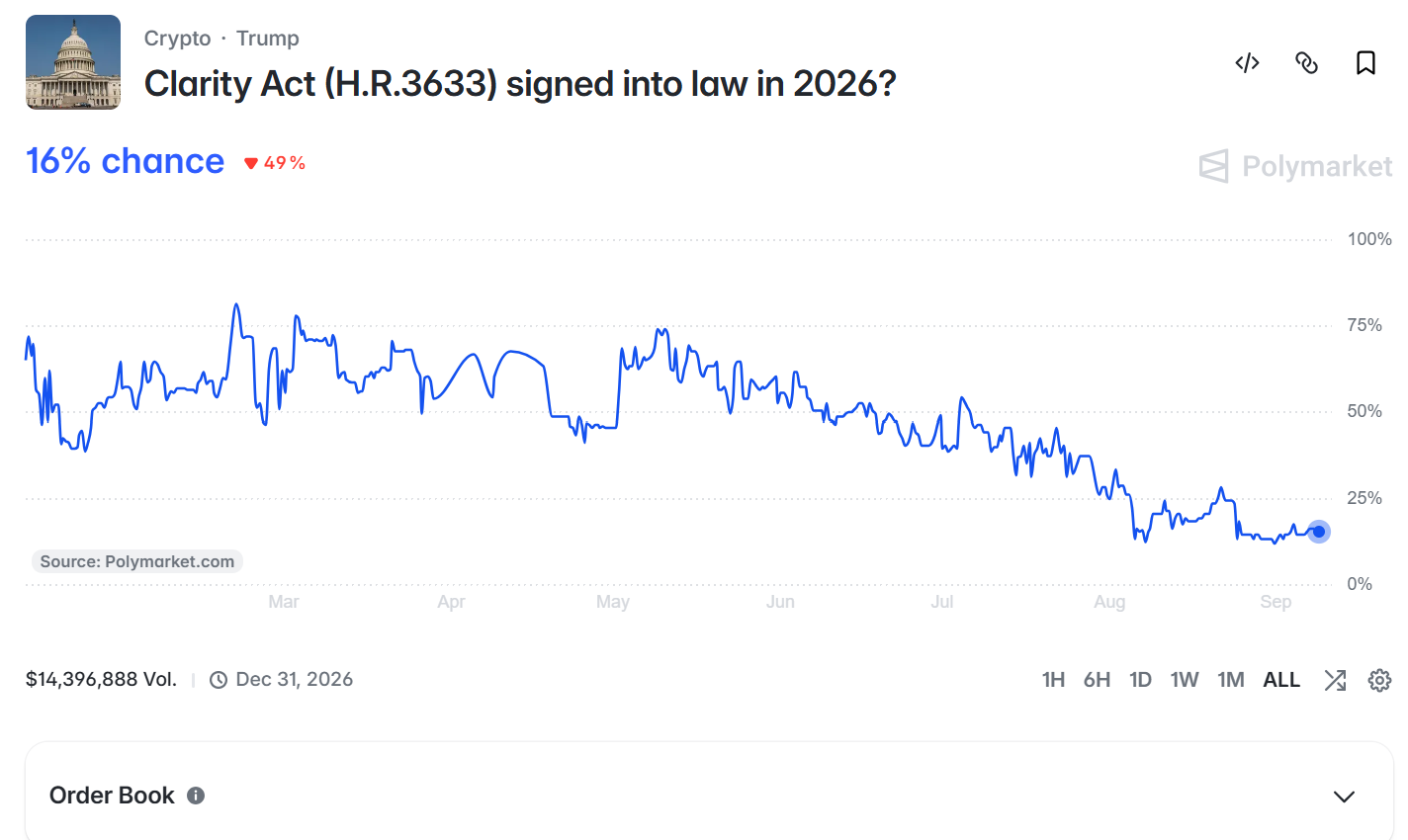
Traders side with the senators, with Polymarket pricing 2026 enactment near 16%, down from above 75% earlier this year.

BeInCrypto reported in August that the bill would likely fail at this month’s vote, and that Grayscale researchers saw the industry advancing without new legislation.
The Senate then disappears for almost all of October before the Nov. 3 midterms. Tuesday’s vote decides whether the ethics fight was ever a negotiation or simply a wall.
The post CLARITY Act Death Watch: Crypto Lobby Says Washington Is Bluffing appeared first on BeInCrypto.


In January 2026, a new community popped up on Reddit, the online message board site. Called /r/GirlDinnerDiaries, it now has a sizable 6 million members and invites people to post a photo of a meal—whether it’s something you’re eating while you post or another meal that gets at your state of mind—along with an anonymous blurb venting or soliciting advice. “My partner only feels disgust at the idea of me as a mom,” reads one. “I feel like it’s never going to be OK,” says another.
The point is to activate the feeling of sharing over food, but over the internet. The snapshots are messy, yet evocative: French fries consumed in a nightclub, a breakfast burrito in a diner, yesterday’s lunch eaten hastily over a keyboard with a plastic fork. The posts wax poetic about the fate of marriages and the bizarre serendipity of life. Reading these dishy dispatches feels like staying up late with friends you rarely see, working over all that’s gone down in your life in search of some meaning.
Why are millions of people so captivated by these nameless confessionals served with a side of candid, unposed food photography? Scientists who study self-disclosure—the act of sharing personal, sensitive information with others—have some thoughts about why we share our deepest, darkest secrets on the internet.
Revealing ourselves builds trust
Talking about yourself feels pleasurable, and there’s science to back that up, says Leslie John, a professor of business administration at Harvard Business School and author of the book Revealing. She points to experiments conducted by psychologists Diana Tamir and Jason Mitchell, where people having their brains scanned in an fMRI machine answered either normal trivia questions or questions about themselves. “They found that in the ones that got to self-disclose, the pleasure centers of the brain were activated,” says John. “That’s pretty powerful.”
Sharing feels good because it’s necessary for human social interaction, John speculates. “When you self-disclose, when you take the social risk—and it really is a social risk—of sharing something a little bit personal, a little sensitive, you’re modeling that you trust the recipient. That gesture is implicitly saying, ‘Hey, I trust you not to make a fool out of me; otherwise, I wouldn’t be sharing this.’ And when you do that, it causes the other person to trust you back. So trust begets trust,” she says.
In fact, John’s work has found that people are more interested in dating a hypothetical person who admits that they’ve done something terrible than someone who declines to answer the question. “It’s better sometimes to admit the worst possible thing than to conspicuously abstain,” she says.
Posting a photo of a paper plate with yesterday’s messy BBQ and a brownie you ate while processing getting fired is, in the age of the perfectly lit Instagram plate, a similar kind of move. “It’s super relatable,” says John. “Showing things that are unvarnished is kind of paradoxically attractive.”
How the internet changes the equation
Psychologists and sociologists used to think of self-disclosure mainly in the sense of sharing with people you know in real life, says sociologist Tamar Ashuri of Tel Aviv University. “The original studies back in the ’50s and ’60s on self-disclosure focus on face-to-face interactions,” she says. “In intimate relationships, people disclose, and it’s kind of an ultimate goal. You can’t sustain an intimate relationship if you don’t.” Another situation where people might self-disclose is the stranger-on-a-train context. It’s also face-to-face, but there is no lasting link, so the risks of disclosure are lower.
But the arrival of the internet, and social media especially, produced new forms of self-disclosure that scientists are still working to characterize and understand. In the case of /r/GirlDinnerDiaries, says Ashuri, posters are anonymously disclosing intimate thoughts in a public forum, stranger-on-a-train style, with no face-to-face interaction, and yet it is still somehow gratifying.
That combination emerged almost by accident, says the subreddit’s founder, a young woman named Taylor, who asked to be identified only by her first name. She had been posting frequently in another community, called Girl Dinner, and noticed a split: Some people wanted to know the slice-of-life stories behind the meals, while others only wanted to see the food. She created Girl Dinner Diaries as an overflow space for people who wanted both—and it took off almost immediately. “One of my favorite things is going out with the girls for some drinks and some appys and venting, getting it all off my chest,” Taylor says. Girl Dinner Diaries offered a place to do that without leaving the couch.
Not every diary is wrenching. Taylor’s favorite post is a happy one: A woman woke up to discover that her husband had created a scavenger hunt for her, then shared a photo of the pasta with burrata they ate that evening. “It looked quite fancy,” Taylor says. “It looked very delicious.”
Whether the story is heartwarming or devastating, the meal is an essential part of the formula. “Food provides a very positive, ordinary, culturally familiar medium,” Ashuri says. “But in this case, and this is what makes it so special, it allows people to express extraordinary issues…The food makes the extraordinary feel more ordinary.” She gives the example of one recent post, in which a woman posted a birthday cake and revealed that she and her son had celebrated his birthday in a domestic violence shelter. “I think this combination is extremely significant,” she says.
The setup allows posters to reveal what are sometimes extreme experiences to a community gathered around a shared sensibility—with the unifying force of a leftover chimichanga presiding over it all. Food helps make the extreme relatable. The subreddit also tightly controls who can enter the conversation: Only approved commenters are allowed to respond, adding a layer of protection to a forum built around unusually intimate disclosures.
Should we all be self-disclosing more?
There’s a happy medium to everything—don’t, perhaps, take to the web with every mental dip or life hiccup. And sharing online may not bring the same benefits as sharing in real life, cautions John. “Social media in so many ways facilitates self-disclosure,” she says. “But in many ways this medium doesn’t give you the benefit you’re looking for (e.g., real social bonding, connectedness).”
Indeed, research suggests that people who post to social media every day tend to score worse on measures of mental health. Posting online can give easy access to reassurance from others, but this behavior can sometimes become destructive—if we don’t get the reassurance we seek, that’s a big blow, and constant reassurance may not help in solving the larger problems.
But John thinks that in general, offline, we overestimate the harms of oversharing, while underestimating the costs of staying silent.
The impulse to put an experience into words may help even when no one else reads them. Some of social psychologist James Pennebaker’s research suggests that privately writing about traumatic events can provide significant psychological relief, and even boost the immune systems of some patients.
John never really applied her findings about disclosure to her own life, though, until she was working on her book about sharing. “Every time in my life that I could think of where I overshared, where I felt that cringe of TMI, it sucked in the moment. But every single time there was something amazing and redeeming in the long haul about it,” she says. “That made me think, ‘Oh wow, the decision we’re making is systematically biased’…You get immediate negative social feedback, but there are benefits too. People trust you, people like you, people confide in you. Those come down the road.”

That journey never left him. When the war ended, Europe was filled with people who had also lost their homes, their families and, in many cases, nearly their lives. Around 11 million people were displaced in Germany: Holocaust survivors, former prisoners of war, forced laborers, and others left in camps, waiting for the world to decide what came next.
My grandfather returned to Europe and put his medical training to work for people whose own lives had been broken by the same war he had fled. He joined the UN Relief and Rehabilitation Administration, one of the first humanitarian agencies and a precursor to UNHCR, the UN Refugee Agency. In a camp in Göttingen, Germany, he treated tuberculosis, typhoid, and people whose bodies had survived the war but still bore its scars.
The world had learned, at unbearable human cost, what happens when people fleeing war have nowhere safe to go. Through WWII, Families were turned away from protection, people returned to countries where they feared for their lives, and millions were left in camps because home was no longer safe or even existed at all.
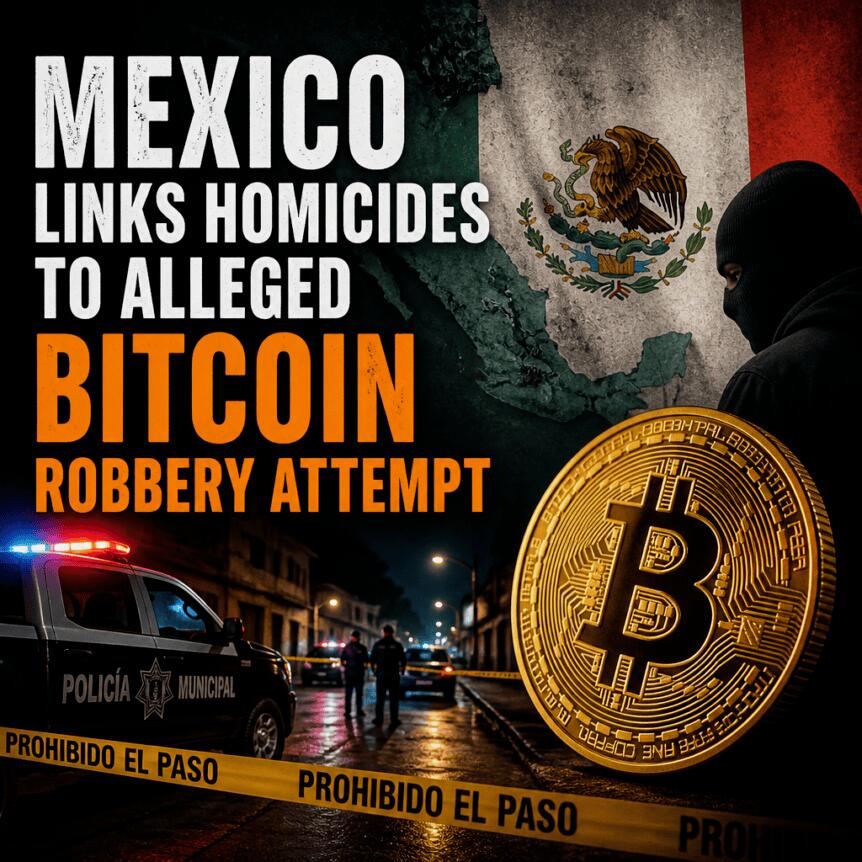
Investigators in Mexico say two suspects charged in the killing of four people allegedly targeted a “cold wallet” they believed held millions of dollars in Bitcoin. The case has drawn renewed attention to the growing trend of violent “wrench attacks,” in which criminals use coercion—often physical attacks or threats—to obtain crypto wallet access.
According to La Jornada, prosecutors in the State of Mexico (FGJEM) allege that Diego Sebastián and Gerardo—surnames withheld—were involved in the Sept. 2 murders in Atizapán de Zaragoza. A court hearing is scheduled for Wednesday, where a judge will decide whether sufficient evidence exists to continue criminal proceedings.
Key takeaways
- FGJEM alleges the suspects sought access to a Bitcoin cold wallet believed to contain millions, after entering the victims’ home.
- The case centers on the killings of Jonathan Meléndez, his pregnant wife, their daughter, and an employee, with the family’s dog also reported killed.
- If convicted, FGJEM statements reported by La Jornada suggest each homicide victim could carry a sentence ranging from 25 to 70 years.
- Blockchain security firm CertiK reports a rise in wrench attacks in the first half of 2026 compared with the same period in 2025.
- Chainalysis estimates indicate wrench attacks have generated more than $30 million in stolen crypto during H1 2026.
A domestic attack allegedly driven by expectations of large Bitcoin holdings
La Jornada, citing an FGJEM update, reports that two suspects were arrested following the Sept. 2 killings of Jonathan Meléndez, a keyboardist for rock band Camilo Séptimo; his pregnant wife; their daughter; and an employee at their home. The outlet also reports that the family’s golden retriever was killed during the incident.
The FGJEM announcement of the arrests was posted on X on Sept. 2, according to the case coverage referenced by FiscalíaEdomex. Prosecutors described a motive that, in this instance, appears tied directly to crypto custody: La Jornada says the suspects believed a “cold wallet” contained millions in Bitcoin.
Earlier reporting in the same case indicates prosecutors allege one suspect had a business relationship with one of the victims and used that connection to enter the home. Mexico’s security secretary, Omar García Harfuch, made similar points in a Sept. 2 X post, according to his account.
Next court step in Mexico’s State of Mexico case
As described by Diario de México, the two defendants are scheduled for a Wednesday hearing. At that session, a judge will decide whether there is enough evidence to proceed with criminal charges.
La Jornada also reports that, under FGJEM’s statements, the suspects could face penalties equivalent to 25 to 70 years in prison per homicide victim if convicted. The severity underscores how investigators are framing the alleged crime not only as murder but also as an effort to coerce access to cryptocurrency holdings.
Violence and coercion remain a major risk for crypto holders
This Mexican case fits a broader pattern known as “wrench attacks,” a term used in blockchain security reporting to describe violence or threats aimed at forcing victims to hand over cryptocurrency or provide access to their wallets.
Crypto security firm CertiK told Cointelegraph that the first half of 2026 included 20 publicly reported home invasions targeting crypto owners, up sharply from just a single incident reported in the same period in 2025. CertiK also identified 52 wrench attacks worldwide in H1 2026, up 33.3% from 39 incidents during the same timeframe in 2025.
Those figures align with other analytics estimating real-world losses. According to Cointelegraph reporting that cites Chainalysis estimates, criminals stole more than $30 million in crypto through wrench attacks in the first half of 2026.
Where the threat appears to be heading
CertiK’s reporting, referenced in the same coverage, also indicates wrench attacks increased in the prior year. It states that wrench attacks rose by 75% in 2025, reaching 72 verified cases worldwide. In that breakdown, France recorded the most incidents in 2025 with 19 confirmed cases, while Europe accounted for about 40% of global attacks.
Looking at the longer arc of coercion, Cointelegraph notes earlier cases involving wallet access demands after kidnappings and killings. For example, Russian outlet Fontanka reported in late 2025 on the murder of convicted crypto fraudster Roman Novak and his wife following an apparent kidnapping and demands for wallet access, as described by Fontanka.
While these incidents differ in geography and circumstances, the recurring theme is consistent: when criminals believe crypto is stored in a form that can be compelled—whether via a physical wallet setup or credentials that can be coerced—violence becomes a tool, not a byproduct.
For readers following the intersection of crypto and real-world security, the Wednesday hearing in Mexico will be the immediate development to watch. Beyond the court outcome, the larger question for the industry remains whether wrench attacks will keep expanding in frequency—and whether victims and wallet holders will adapt custody and security practices quickly enough to reduce the risk of criminals targeting physical access points to funds.


The $LAPTOP token will go live on Base with 1 billion tokens, a six-month founder lockup, and conditional burns tied to the 2028 election. The 20% airdrop targets wallets that bled money on $TRUMP, Substack subscribers, and the mailing list of Channel 5 journalist Andrew Callaghan.
Summary
- Hunter Biden will launch the $LAPTOP memecoin on Base on Sept. 9, with a total supply of 1 billion tokens and 30% locked to founders for six months.
- A 20% airdrop will go to wallets that lost money on the $TRUMP token, Biden’s Substack subscribers, and Andrew Callaghan’s Channel 5 mailing list.
- Up to 30% of supply faces conditional burns tied to 30 preset events, including a Democratic win in 2028, bitcoin hitting a new all-time high, and $LAPTOP flipping $TRUMP’s market cap.
- Tokens tied to unmet conditions will be donated to charity, not returned to the founding team.
- The launch comes as $TRUMP trades at $2.25, down 97% from its $73.43 peak, with 988,905 wallets sitting on combined losses of $3.81 billion.
On a Sunday evening in early September, Hunter Biden posted two words and a date to X: “$LAPTOP September 9.”
No whitepaper. No Medium thread explaining the vision. No staged Twitter Spaces with a rotating cast of influencers nodding along to vague promises about community. Just a ticker symbol ripped from the most infamous piece of consumer electronics in American political history, a launch date, and an image of the laptop that nearly ended his father’s presidential campaign.
Two days before the token goes live on Base, the announcement has already done what it was designed to do: make everyone talk about it. Dozens of copycat tokens have flooded Base, Solana, and Robinhood Chain, with the largest reaching a $1.3 million market cap before the real thing has even minted. The political memecoin market, a category that did not meaningfully exist 20 months ago, is about to get its most provocative entry yet.
The $LAPTOP token is not just another celebrity cash grab wearing a blockchain as a costume. Or at least, that is the argument its backers want you to hear. The tokenomics include a six-month founder lockup, a two-year vesting schedule, and a burn mechanism tied to 30 real-world events that could destroy nearly a third of the supply. The 20% airdrop targets a very specific audience: the roughly one million people who bought Donald Trump’s memecoin and watched it crater 97% from its January 2025 peak. Whether $LAPTOP is a genuine experiment in political tokenomics or an elaborate troll that happens to come with a smart contract, it has already become the most talked-about token launch of the fall.
The tokenomics: what Biden is actually selling
The $LAPTOP token has a fixed supply of 1 billion tokens on Base, the Ethereum layer-2 network built by Coinbase. The allocation breaks down into four tranches that tell you exactly what kind of project this is trying to be.
Founders, including Hunter Biden, hold 30% of the supply. Those 300 million tokens are locked for six months after the Sept. 9 launch and then vest linearly over two years. That means the earliest any founder token can hit the open market is March 2027, and the full allocation will not be unlocked until September 2028. By political memecoin standards, where insider dumps within hours of launch are the norm, that is a comparatively aggressive lockup. By the standards of any serious DeFi protocol, it is table stakes.
Twenty percent of the supply, or 200 million tokens, is reserved for airdrops across two rounds. The first round targets wallets that are underwater on the $TRUMP memecoin. The second goes to Biden’s Substack subscribers and the mailing list run by Andrew Callaghan, the video journalist behind Channel 5 on YouTube. The airdrop does not appear to require any purchase or swap. If you lost money on Trump’s token, or if you subscribe to Biden’s writing or Callaghan’s newsletter, you qualify.
Another 20% covers operations: exchange listings, market-making, liquidity provision, charitable donations, and legal and accounting costs. That is a broad bucket, and the lack of granularity here is worth flagging. “Operations” can mean almost anything, and the project has not published a detailed breakdown of how those 200 million tokens will be deployed.
The remaining 30%, or 300 million tokens, sits in a conditional burn pool tied to 30 preset events. If the conditions are met, the tokens are destroyed. If they are not met, they go to charity. The founding team does not get them back either way.
Why Base, and why now
The choice of Base over Solana is a deliberate break from the political memecoin playbook. Every major political token launched since January 2025, from $TRUMP to $MELANIA to Eric Adams’s ill-fated NYC token, landed on Solana. The chain’s low fees and fast finality made it the default for speculative token launches, and its culture of degenerate trading gave political tokens a ready-made audience.
Base is a different animal. As Coinbase’s Ethereum layer-2 network, it carries institutional credibility that Solana’s memecoin ecosystem does not. Base has grown into the largest layer-2 network by several metrics, with more than 410 DeFi protocols and $264 billion in cumulative transaction volume. It is also the chain where Coinbase has deployed its tokenized stock products, giving it a veneer of regulatory seriousness that matters when the person launching the token is the son of a former president who is also a convicted felon with unresolved legal exposure.
The timing is equally calculated. $TRUMP has been trading below $3 for weeks, and the Senators Elizabeth Warren and Richard Blumenthal sent a letter to SEC Chairman Paul Atkins in early August requesting a formal investigation into the token. The political mood around presidential memecoins has shifted from curiosity to outrage, and $LAPTOP is designed to ride that wave. Launching a token named after the laptop while Trump’s own token is down 97% is not subtle. It is not trying to be.
The airdrop: who gets free tokens and why
The airdrop mechanics are where $LAPTOP gets interesting, and where the project’s real thesis lives. The 200 million airdrop tokens are split across two rounds, and the targeting criteria are unlike anything the memecoin market has seen.
Round one goes to wallets that lost money on $TRUMP. According to blockchain analytics firm Nansen, 988,905 of the 1.48 million wallets that purchased $TRUMP since its January 2025 launch are sitting on combined realized and unrealized losses of $3.81 billion. That is roughly two-thirds of all buyers. The data is on-chain and verifiable, which means building a snapshot of qualifying wallets is technically straightforward. The harder question is how the $LAPTOP team defines “lost money.” Does a wallet need to be net negative on its entire $TRUMP position? Does it need to still hold the tokens? Does a wallet that bought at $50, sold at $10, and then bought back at $2 qualify? None of these details have been published.
Round two targets Biden’s Substack subscribers and Andrew Callaghan’s mailing list. Callaghan is the 27-year-old journalist behind Channel 5, a YouTube documentary series with 3.6 million subscribers that has covered everything from QAnon rallies to spring break chaos. His audience skews young, politically aware, and chronically online, which is precisely the demographic that trades memecoins. The inclusion of Callaghan’s list signals that $LAPTOP is not just targeting crypto natives. It wants to pull in people who have never connected a wallet to a DEX.
The bridge between email subscribers and on-chain airdrops is not obvious. Substack and mailing list subscribers will presumably need to connect a wallet to claim tokens, which introduces friction and potential security concerns. The project has not detailed this process.
The conditional burns: political derivatives by another name
The most unusual feature of $LAPTOP is its conditional burn mechanism. Up to 300 million tokens, 30% of the total supply, are tied to 30 preset events. When an event occurs, the corresponding token tranche is burned, permanently reducing the circulating supply. When a deadline passes without the condition being met, the tokens go to charity.
Three of the conditions have been disclosed publicly:
A Democrat wins the 2028 presidential election. This turns $LAPTOP into a de facto political prediction market token. If Democrats win, tokens burn and the remaining supply becomes scarcer. If Republicans win, the tokens go to charity. Holders are, in effect, making a directional bet on the 2028 election outcome every time they buy $LAPTOP.
Bitcoin reaches a new all-time high. Bitcoin’s current record sits near $109,000, set in January 2025. A new ATH would burn a tranche of $LAPTOP tokens, tying the memecoin’s supply mechanics to the performance of the broader crypto market.
$LAPTOP’s market cap overtakes $TRUMP’s market cap. With $TRUMP trading around $2.25 and holding a market cap near $613 million, this condition sets a specific market performance target. If $LAPTOP flips $TRUMP, tokens burn. If it does not, those tokens go to charity.
The remaining 27 conditions have not been revealed. The project has hinted they will include a mix of political, cultural, and crypto-market events, but the specifics are locked until after launch.
This structure creates something that does not have an exact precedent in crypto. The tokens are not governance tokens. They are not utility tokens. They are speculative instruments whose supply is programmatically linked to real-world outcomes. That is conceptually close to what prediction markets like Polymarket offer, but packaged in a memecoin wrapper with a political narrative baked into every trade.
The $TRUMP wreckage: why a million wallets are underwater
To understand why $LAPTOP’s airdrop targeting is so pointed, you need to understand the scale of the damage $TRUMP inflicted on retail buyers.
Donald Trump launched the $TRUMP memecoin on Solana on Jan. 17, 2025, three days before his second inauguration. The token hit $73.43 on Jan. 19, giving it a fully diluted valuation north of $70 billion and making it the most valuable memecoin in history by a wide margin. Then it collapsed.
By the time Melania Trump launched her own $MELANIA token the next day, $TRUMP had already shed more than half its value. The launch of $MELANIA pulled liquidity from $TRUMP and began its own death spiral, peaking near $13 and eventually falling more than 99% to roughly $0.11 as of September 2026.
$TRUMP’s decline was slower but just as brutal in aggregate. Through June 2026, Nansen’s blockchain data showed 988,905 wallets carrying $3.81 billion in combined losses. Meanwhile, Trump disclosed $636 million in personal income from the token in his 2026 financial disclosure, a figure that represented nearly three times the net gains of all other profitable buyers combined. Around 5,000 wallets made money. Everyone else subsidized the president’s payday.
The wealth transfer was so stark that it triggered a formal response from Congress. On Aug. 4, 2026, Senators Warren and Blumenthal wrote to SEC Chairman Atkins requesting a fraud investigation, arguing that the asymmetry between presidential profits and retail losses “raises questions about potentially fraudulent enrichment.” The SEC has not publicly responded.
Public Citizen, a consumer advocacy group, estimated in August that investors across five Trump-linked crypto products were at least $4.7 billion underwater. That figure includes roughly $3.2 billion attributed to $TRUMP holders and at least $1 billion connected to World Liberty Financial’s WLFI token.
These are the people $LAPTOP wants to airdrop free tokens to. The political framing is impossible to miss.
The political memecoin graveyard
$LAPTOP is entering a market segment with a perfect track record of destroying retail wealth. Every single political memecoin launched since January 2025 has followed the same arc: explosive launch, insider profits, catastrophic decline, and a trail of underwater holders who thought they were buying early.
$TRUMP set the template. $MELANIA copied it and collapsed faster, with the token’s team dumping 9.99 million tokens over just eight days in early trading. Insiders who bought $MELANIA in the two and a half minutes before Melania Trump’s public announcement scooped up 33.4% of the initial supply for $2.6 million, then watched as retail buyers pumped the price before selling into the rally.
Then came Eric Adams. The former New York City mayor launched his NYC token on Solana in January 2026, framing it as a tool to “fight antisemitism and anti-Americanism.” The token surged to a $580 million market cap before crashing 81% within minutes after a wallet linked to the deployer pulled $2.5 million in liquidity at the peak. Multiple accounts on X accused Adams of executing a rug pull. The token’s stated charitable purpose did not survive contact with the market.
The pattern is consistent enough to qualify as a category feature, not a bug. Political memecoins generate attention, attention drives speculative inflows, insiders sell into the liquidity, and retail buyers hold the bag. The question $LAPTOP faces is whether its structural differences, the lockup, the vesting, the conditional burns, the charity fallback, are enough to break the cycle. Skeptics will point out that having better tokenomics than a rug pull is a low bar.
The opposing case: why $LAPTOP could still go to zero
The structural criticisms of $LAPTOP are real and should be stated at full volume.
First, the 20% “operations” bucket is a black box. Two hundred million tokens earmarked for exchange listings, market-making, liquidity, charity, and legal costs, with no published breakdown, gives the team enormous discretion over a fifth of the supply. Good intentions and opaque allocations have coexisted in crypto before. They rarely coexist for long.
Second, the airdrop-to-TRUMP-losers mechanic is clever marketing, but it does not change the fundamental economics of memecoin launches. Airdrop recipients who receive free tokens tend to sell them immediately. If the majority of $LAPTOP’s airdrop goes to people who just lost money on a different memecoin, the selling pressure after distribution could be immense. Free tokens are not the same as committed holders.
Third, the conditional burn mechanism is only as trustworthy as the oracle that determines whether conditions are met. Who decides if a “Democrat wins the 2028 election”? What happens if the outcome is contested? How is “bitcoin ATH” defined: intraday wick or daily close? The smart contract’s resolution mechanism has not been published or audited.
Fourth, Hunter Biden is a polarizing figure who carries personal and legal baggage that extends well beyond crypto. He was convicted on federal gun charges in 2024 and pleaded guilty to federal tax charges the same year. His father pardoned him before leaving office. Attaching a token to this level of political controversy may generate attention, but it also invites regulatory scrutiny that could damage the project regardless of its on-chain mechanics.
Fifth, the political memecoin market has taught a clear lesson over the past 20 months: the only consistent winners are insiders and early sellers. $LAPTOP may have a longer lockup and a more creative distribution model, but it is still a memecoin named after a political scandal, launched by a politically exposed person, with no utility beyond speculation and narrative. The market has seen this movie before. The ending has not changed yet.
The laptop, the pardon, and the spectacle
The name itself is the product. In October 2020, the New York Post published a front-page story based on emails recovered from a laptop that Hunter Biden had left at a Delaware computer repair shop in 2019. The story alleged corruption involving Joe Biden, then the Democratic presidential nominee. Social media platforms blocked links to the article. Fifty-one former intelligence officials signed an open letter suggesting the laptop story bore “the classic earmarks of a Russian information operation.”
Forensic analysis later authenticated the emails. No evidence of Russian involvement materialized. The laptop became one of the most contested artifacts in modern American politics, a symbol that means completely different things depending on who is talking about it.
By turning the laptop into a memecoin ticker, Hunter Biden is doing something that only works in the specific cultural moment of 2026: reclaiming a scandal as a brand. The move follows a broader Biden family trajectory with digital assets that has been, at best, complicated. Joe Biden signed Executive Order 14067 in March 2022, establishing a “whole-of-government approach” to digital asset regulation that pleased almost nobody in the crypto industry. His administration’s SEC, under Gary Gensler, waged an aggressive enforcement campaign against crypto exchanges and token issuers. The idea of a Biden launching a memecoin would have been unthinkable two years ago.
But 2026 is not 2024. The president of the United States has a memecoin. The first lady had a memecoin. A former mayor of New York launched what many called a rug pull. A sitting U.S. senator has proposed legislation specifically to ban presidential memecoins. The Overton window for political tokens has not just moved. It has been removed from its frame entirely.
Hunter Biden is walking through the opening that Donald Trump created. The irony is thick enough to mine.
There is also a personal dimension that makes $LAPTOP different from every other political token. This is not a politician monetizing the office they hold. This is a private citizen monetizing the worst thing that ever happened to him. The laptop saga led to a federal investigation, a gun conviction, a tax guilty plea, and a presidential pardon that Joe Biden initially said he would never grant. By stamping “$LAPTOP” on a token, Hunter Biden is betting that the scandal’s cultural value as a meme now exceeds its weight as a liability. In a market where attention is the only commodity that reliably converts to price action, he might be right. Whether that makes it a good token or just a good headline is a question the market will answer starting Wednesday.
What to watch
- Airdrop snapshot methodology: The project has not disclosed how it will identify qualifying $TRUMP wallets or bridge email subscribers to on-chain claims. The mechanics of the snapshot, and whether it captures current holders, historical losers, or both, will determine who actually receives tokens and how much selling pressure follows distribution.
- Smart contract audit status: No audit has been publicly announced for the $LAPTOP contract. Given the conditional burn mechanism and its reliance on external event resolution, the quality and transparency of the code will be a critical trust signal for anyone considering participation.
- Regulatory response timeline: The SEC has an open inquiry into $TRUMP from Warren and Blumenthal. A second political memecoin launched by the opposing party’s most controversial family member will test whether regulators treat political tokens as a bipartisan problem or a partisan weapon.
- Conditional event resolution oracle: The mechanism for determining whether the 30 preset conditions have been met, who operates it, whether it is decentralized, and what dispute process exists, will separate a genuine experiment from a glorified trust exercise.
- First-week trading volume and holder distribution: The initial price action and the concentration of holdings after launch will reveal whether $LAPTOP attracts a broad base of retail holders or simply becomes another vehicle for a small number of whales to trade against airdrop recipients dumping free tokens.
What is the $LAPTOP memecoin?
$LAPTOP is a 1 billion-supply memecoin launching on Coinbase’s Base layer-2 network on Sept. 9, 2026. It was created by a founding team that includes Hunter Biden, and the token’s name references the laptop he left at a Delaware computer repair shop in 2019, which became a major political controversy.
Who qualifies for the $LAPTOP airdrop?
Three groups qualify: wallets that lost money trading the $TRUMP memecoin, subscribers to Hunter Biden’s Substack newsletter, and members of Andrew Callaghan’s Channel 5 mailing list. The project has not yet detailed the exact snapshot methodology or claim process.
How does the $LAPTOP founder lockup work?
The founding team, including Biden, holds 30% of the total supply. Those tokens are locked for six months after launch, meaning none can be sold before March 2027. After the lockup expires, the tokens vest linearly over two years, with the full allocation unlocking by September 2028.
What are the conditional burn events?
Up to 30% of the supply is tied to 30 preset real-world events. Three have been disclosed: a Democrat winning the 2028 presidential election, bitcoin hitting a new all-time high, and $LAPTOP’s market cap surpassing $TRUMP’s market cap. If conditions are met, the tokens are permanently burned. If not, they go to charity.
Why was Base chosen over Solana?
The project has not given an official reason, but the choice breaks from the Solana-centric pattern set by $TRUMP, $MELANIA, and other political memecoins. Base is Coinbase’s Ethereum layer-2 network and carries institutional credibility, lower fees than Ethereum mainnet, and a growing DeFi ecosystem with more than 410 protocols.
How much money did people lose on $TRUMP?
According to Nansen data from June 2026, 988,905 wallets were holding combined losses of $3.81 billion. The token peaked at $73.43 on Jan. 19, 2025, and trades around $2.25 as of early September 2026, a decline of approximately 97%.
Who is Andrew Callaghan and why is he involved?
Andrew Callaghan is a video journalist and the creator of Channel 5, a YouTube documentary series with 3.6 million subscribers. His mailing list is one of the three groups targeted for the $LAPTOP airdrop. His audience skews young, politically engaged, and internet-native, which aligns with the demographic the project is targeting.
Is $LAPTOP a good investment?
Every political memecoin launched since January 2025 has lost the vast majority of its value after launch. $TRUMP is down 97%, $MELANIA is down 99%, and Eric Adams’s NYC token crashed 81% within minutes. $LAPTOP has structural differences, including a longer lockup and conditional burns, but it remains a speculative memecoin with no underlying utility. This is educational analysis, not investment advice.
Disclaimer: This article was published on Sept. 7, 2026. The information provided is for educational purposes only and does not constitute financial, legal, or investment advice. Always conduct your own research before making any investment decisions.


The Sejm fell 25 votes short of overriding President Nawrocki’s veto, leaving Poland as the only EU member state without a domestic crypto licensing framework and forcing roughly 2,000 firms into regulatory exile.
Summary
- Poland’s lower house voted 241 to 198 to override President Karol Nawrocki’s veto, falling 25 votes short of the 266 needed for a three-fifths supermajority.
- The failed bill would have placed crypto firms under the Polish Financial Supervision Authority (KNF) and aligned domestic rules with the EU’s Markets in Crypto-Assets Regulation (MiCA).
- Nawrocki has now vetoed three successive versions of the legislation since December 2025, arguing each time that the proposed rules create excessive burdens and could drive companies abroad.
- Poland is now the only EU member state without a functioning MiCA framework, leaving an estimated 2,000 crypto firms unable to obtain domestic authorization.
- The regulatory vacuum deepens as the Zondacrypto fraud investigation widens, with losses exceeding 350 million zlotys and the exchange’s Estonian operator declared bankrupt in August 2026.
Every member state in the European Union has managed to stand up a domestic framework for the Markets in Crypto-Assets Regulation. Every member state except one. Poland, home to one of the bloc’s most active retail crypto markets, remains stuck in a political loop that has now consumed three separate bills, three presidential vetoes, and roughly nine months of legislative time.
On Sept. 4, 2026, the Sejm held its third override vote. The result was 241 in favor, 198 against, and three abstentions from the 442 lawmakers present. Under Poland’s constitution, an override requires a three-fifths supermajority, which meant 266 votes. The gap was 25. Not enormous, but enough to kill the bill and send lawmakers back to the drawing board for the fourth time.
The stakes are no longer abstract. MiCA’s transitional period ended on July 1, 2026, and every crypto-asset service provider operating in the EU must now hold a license issued by its home regulator or by a regulator in another member state. Poland’s KNF cannot issue those licenses because the Sejm never passed the legislation that would give it authority to do so. The result is a country where roughly 2,000 registered crypto firms exist in a regulatory dead zone, unable to get licensed at home and increasingly looking abroad.
What the bill actually contained
The legislation, formally titled the Act on Crypto-Asset Markets, would have created a national supervisory framework aligned with MiCA. Its core provisions fell into three categories: licensing, enforcement, and consumer protection.
On the licensing side, every crypto-asset service provider operating in Poland would have needed formal authorization from the KNF. This included exchanges, custodians, portfolio managers, transfer service providers, and platforms offering advice on digital assets. Token issuers would have faced a parallel set of disclosure and registration requirements. The process mirrored frameworks already in force across Germany, France, and the Netherlands, where regulators have been granting MiCA licenses since late 2025.
Enforcement powers were the most contested piece. The KNF would have gained authority to suspend transactions for up to 96 hours, with the possibility of extension. It could impose financial penalties on service providers and token issuers. Supervisory fees were capped at 0.4% of revenue for crypto service providers and up to 0.5% for token issuers. And in the provision that drew the most criticism from the president’s office, the KNF would have been empowered to block access to websites associated with unlicensed or fraudulent crypto operations.
Consumer protection measures included mandatory disclosure requirements for token issuers, rules around marketing communications, and criminal liability for certain violations connected to token issuance and the handling of client assets.
None of this was unusual by European standards. Germany now has 79 authorized crypto-asset service providers operating under nearly identical rules. France has licensed several major platforms. Even smaller jurisdictions like Malta and Cyprus moved faster. The bill Poland kept voting on was, by the standards of European crypto regulation, conventional.
Three vetoes, one president, zero progress
The legislative history reads like a recurring nightmare for Poland’s crypto industry.
The first version of the bill passed the Sejm in late November 2025. President Nawrocki vetoed it on Dec. 1, 2025. Lawmakers attempted to override the veto four days later on Dec. 5 and fell short, voting 243 to 192. The threshold was the same 266 votes.
A revised bill made its way through the legislative process and passed again. Nawrocki vetoed it on Feb. 12, 2026. The override attempt came on April 17 and failed once more, this time 243 to 191. The government had picked up exactly zero additional votes.
The third iteration arrived with what supporters described as significant revisions. Nawrocki disagreed. When he rejected it on June 11, 2026, he noted that lawmakers had addressed only one of the 16 changes his office had proposed. His response was blunt: “Bad law does not become good law simply because it is passed a hundred times.”
The September override vote produced 241 votes in favor, two fewer than either previous attempt. Whatever momentum the government had was actually eroding.
The president’s case against regulation
It would be easy to dismiss Nawrocki’s position as obstructionism. His critics in the governing coalition certainly do. But the president’s objections are specific enough to deserve examination on their merits.
His central argument is that the bill as written would impose costs and restrictions that disproportionately burden smaller Polish firms while doing little to prevent the kinds of fraud that have already occurred. The KNF’s proposed power to block websites is the example he returns to most often. In Nawrocki’s framing, that authority is a blunt instrument that could be used against legitimate businesses, particularly smaller operators without the legal resources to challenge an administrative takedown.
The supervisory fee structure is another sore point. A cap of 0.4% of revenue may sound modest, but for early-stage companies operating on thin margins, it represents a meaningful cost. Nawrocki’s office has argued that fees at that level, combined with the compliance overhead of full KNF supervision, would push smaller firms to register in jurisdictions with lighter regulatory burdens.
There is also a philosophical dimension. Nawrocki has positioned himself as a defender of Poland’s tech entrepreneurship culture. He argues that aggressive regulation of an emerging industry could stunt growth precisely when Poland should be competing for crypto talent and investment. His office submitted an alternative proposal that it described as offering stronger safeguards against fraud without imposing the same costs on legitimate companies. The governing coalition has not taken up that proposal.
The president’s position is not without political calculation. His opposition to the crypto bill plays well with a libertarian-leaning segment of Polish voters skeptical of state intervention in technology markets. Whether that politics serves Poland’s crypto industry or simply delays its integration into the European regulatory framework is the question that refuses to go away.
The Zondacrypto backdrop
The political fight over crypto regulation is playing out against the most serious exchange scandal in Polish history. Poland had already become the EU’s lone holdout after earlier vetoes, and the Zondacrypto collapse has turned an embarrassing distinction into a full-blown crisis. Zondacrypto, formerly known as BitBay and once the largest crypto exchange in Central and Eastern Europe, has collapsed in spectacular fashion.
The platform’s founder, Sylwester Suszek, disappeared in March 2022 under circumstances that remain unclear. The exchange continued operating under new management until April 2026, when it went offline and customer withdrawals stopped. Polish prosecutors have since charged five suspects in a probe that initially focused on fraud and money laundering involving at least 350 million zlotys, roughly $96 million. Investigators now say the total exposure may run as high as 2.4 billion zlotys, approximately $535 million, as the victim count surpasses 30,000.
BB Trade Estonia, the company that operated the exchange, was declared bankrupt by an Estonian court on Aug. 27, 2026. The first meeting of creditors is scheduled for Sept. 17.
The scandal’s political tentacles have reached deep into Warsaw. Polish Olympic Committee President Radoslaw Piesiewicz was detained on Aug. 27 in connection with alleged links to Zondacrypto’s management, including allegations that he received a 40,000 euro Patek Philippe watch. Before the September override vote, Prime Minister Donald Tusk disclosed witness testimony alleging a two million zloty payment arrangement involving a foundation connected to former Justice Minister Zbigniew Ziobro.
The irony is not lost on anyone. Nawrocki’s argument against regulation is that the bill overreaches. The Zondacrypto case is a textbook example of what happens when a major crypto platform operates with minimal oversight. Both sides claim the scandal supports their position. The government says it proves regulation is urgent. The president says it proves the existing proposals would not have prevented the fraud anyway.
Regulatory exile: where Polish firms are going
For the roughly 2,000 crypto firms registered in Poland, the legislative stalemate has stopped being a political story and started being a business crisis.
MiCA’s transitional period expired on July 1, 2026. After that date, any entity providing crypto-asset services to EU customers without a MiCA license is in breach of EU law. Poland’s firms cannot get licensed at home because the KNF lacks the authority to issue those licenses. That leaves two options: get licensed in another member state and passport services back into Poland, or shut down EU-facing operations entirely.
The passporting route is the one most firms are pursuing. Lithuania, Latvia, and Germany have emerged as the preferred destinations. Lithuania’s central bank has been actively courting crypto firms for years and has a streamlined application process. Latvia offers similar advantages with lower operating costs. Germany, despite its more demanding requirements, carries the weight of BaFin authorization and access to the eurozone’s largest economy.
The mechanics work like this: a Polish company sets up a subsidiary or redomiciles its EU entity to a country with a functioning MiCA framework. It applies for authorization from that country’s regulator. Once licensed, it can passport its services across all 27 member states, including Poland. The company can continue serving Polish customers under a license its own regulator was never empowered to grant.
The process is expensive and slow. MiCA applications can take months to process, and regulators in popular destination countries are dealing with backlogs. As of the July 1 deadline, 1,062 EEA crypto firms lacked authorization, and only 281 of 1,343 registered providers had secured full MiCA licenses. Polish firms are competing for regulatory attention with companies from across the continent.
The absurdity of the situation is hard to overstate. A Polish exchange that has operated legally for years, paid taxes in Warsaw, and employed Polish developers now needs permission from a Lithuanian or Latvian regulator to continue doing business in its own country. The legal framework allows it. The economics punish it. The company pays for office space in Vilnius it may never use, hires local compliance staff to satisfy a foreign regulator, and funnels licensing fees to a government that had nothing to do with building the business.
Some firms are not bothering with the relocation route at all. Smaller operators with limited capital and customer bases confined to Poland face a choice between spending tens of thousands of euros on a foreign license application or simply closing up shop. The ones that shut down do not show up in relocation statistics, but they represent real losses in employment and innovation.
The economic cost to Poland is real. Jobs, tax revenue, and technical talent are migrating to countries that got their frameworks in place on time. Every month of delay widens the gap.
How the rest of Europe moved forward
Poland’s predicament stands out precisely because the rest of the EU has managed to implement MiCA, even if not everyone did it gracefully.
Germany moved earliest and most aggressively. BaFin had already classified crypto custody as a regulated financial service before MiCA took full effect, which gave German firms a head start. By September 2026, Germany leads the EU with 79 authorized crypto-asset service providers. Major banks including Deutsche Bank, Commerzbank, and DZ Bank have entered the crypto market under MiCA authorization. DZ Bank’s move is particularly notable. The Frankfurt-based institution received BaFin approval to roll out crypto trading through the Volksbanken and Raiffeisenbanken cooperative banking network, potentially bringing crypto access to millions of retail customers who would never open an account on a dedicated exchange.
France authorized several large platforms through the AMF and has positioned Paris as a regulatory hub for crypto firms looking at Western European markets. The Netherlands, despite implementing one of the shorter transitional periods (ending June 30, 2025), processed authorizations efficiently through the AFM. Bitvavo, the largest Dutch exchange, was among the first platforms in Europe to receive full MiCA authorization.
Even countries with less developed crypto markets found ways to meet the deadline. The Czech Republic, Estonia, Luxembourg, and Malta all implemented the full 18-month transitional period and had their frameworks operational by July 2026. Cyprus authorized platforms through CySEC, including Revolut’s crypto subsidiary.
The contrast with Poland is stark. These countries faced the same regulatory complexity, the same MiCA requirements, and in many cases smaller administrative capacity. They got it done. Poland did not, and the reason is not technical but political.
The cost of being Europe’s crypto outlier
Poland is not a minor player in the European crypto market. Roughly 30% of Poles have invested in digital assets, according to a Kraken survey, making the country one of the most crypto-engaged societies in the EU. That penetration rate exceeds stock ownership (21.4%) and bond ownership (19%) in the same population. By some estimates, nearly eight million Poles interact with crypto in some capacity.
That level of retail engagement, combined with the absence of domestic regulation, creates a dangerous combination. Polish consumers using crypto platforms have no recourse to a domestic supervisor if something goes wrong. The Zondacrypto collapse demonstrated exactly how that plays out: tens of thousands of customers, hundreds of millions of zlotys in losses, and no regulatory authority with the tools or mandate to intervene before the damage was done.
The economic case is equally concerning. Poland has a strong technology sector with significant talent in fintech and blockchain development. Warsaw and Krakow both host growing communities of crypto developers and entrepreneurs. That talent is now being pulled toward jurisdictions where companies can actually operate under a clear legal framework. A Lithuanian license application may keep a company serving Polish customers, but the jobs, office space, and tax base move to Vilnius.
The AMLA factor adds another layer of urgency. The EU’s new Anti-Money Laundering Authority is launching in 2026 and will directly supervise the largest cross-border crypto firms for AML and CFT compliance. Polish firms operating without domestic MiCA authorization may face additional scrutiny from AMLA, which has the authority to coordinate enforcement actions across member states.
Then there is DAC8, the EU’s crypto tax reporting directive. From 2026, platforms must collect and report user transaction data to tax authorities. Without a functioning domestic framework, the integration of Polish firms into this reporting infrastructure is an open question that creates compliance risk for firms and revenue risk for the Polish state.
The reputational damage compounds the financial hit. International crypto companies evaluating European expansion now look at Poland and see a country that cannot pass a basic regulatory framework. That perception is hard to reverse, even if the Sejm eventually finds the votes. The firms that left are not coming back the moment a bill passes. They have signed leases, hired staff, and built relationships with regulators in other countries. Poland is not just losing time. It is losing the kind of institutional credibility that takes years to build.
What Nawrocki’s alternative looks like
The president’s office has not simply blocked legislation without offering an alternative. Nawrocki submitted his own proposal, though details remain limited and the governing coalition has shown no interest in advancing it.
What is known is that the alternative focuses on anti-fraud measures specifically, rather than creating a full supervisory framework. The president’s approach would target criminal conduct in crypto markets without imposing the same licensing and fee structure on all market participants. His office describes it as “stronger safeguards against fraud and financial crime without imposing the same costs on legitimate companies.”
Critics argue this misunderstands MiCA’s purpose. The EU regulation is not primarily an anti-fraud instrument. It is a market structure regulation designed to create a level playing field across member states, set minimum standards for consumer protection, and enable the passporting system that allows licensed firms to operate across borders. A narrower Polish law focused only on fraud prevention would not satisfy MiCA’s requirements and would not give the KNF the authority to issue the licenses that Polish firms need.
The political dynamics make the alternative proposal unlikely to advance. The governing coalition views Nawrocki’s vetoes as obstruction and has no incentive to adopt his framework. The president, in turn, has shown no willingness to sign legislation that resembles the bills he has already rejected three times. The result is a standoff with no obvious exit.
What to watch
- A fourth bill from the governing coalition. The government has signaled it will attempt another legislative push, but the timing and content remain unknown. Any new bill must either secure the 266 votes needed to survive a veto or incorporate enough of Nawrocki’s demands to earn his signature. Neither outcome looks straightforward.
- KNF licensing authority through executive action. Some legal scholars have suggested the government could grant KNF limited crypto supervisory powers through executive orders or regulatory interpretations, bypassing the need for new legislation. This approach would face legal challenges but could provide a stopgap.
- The pace of Polish firm relocation. The number of Polish companies applying for MiCA licenses in Lithuania, Latvia, and Germany will signal how much of the industry considers the domestic situation hopeless. A wave of departures could shift political pressure enough to break the deadlock.
- Zondacrypto creditors’ meeting on Sept. 17. The first meeting of creditors will clarify the scale of customer losses and could generate enough public anger to alter the political calculus. If losses exceed initial estimates, the case for regulation becomes harder for any politician to resist.
- European Commission enforcement action. Poland is now in breach of its MiCA implementation obligations. The Commission has the authority to launch infringement proceedings, which could result in financial penalties. Formal action from Brussels would transform the debate from a domestic political dispute into a matter of EU compliance.
Why did Poland’s parliament fail to override the veto?
The Sejm needed 266 votes for a three-fifths supermajority and got only 241. That left a 25-vote gap, with 198 lawmakers voting against the override and three abstaining. The constitution sets a high bar for veto overrides, and the governing coalition could not rally enough support from opposition parties.
How many times has President Nawrocki vetoed crypto legislation?
Three times. The first veto came on Dec. 1, 2025, the second on Feb. 12, 2026, and the third on June 11, 2026. Each override attempt failed, with the Sejm getting 243, 243, and 241 votes respectively against a 266-vote threshold.
What is MiCA and why does it matter for Poland?
MiCA is the EU’s Markets in Crypto-Assets Regulation, the first unified legal framework for crypto across all 27 member states. It requires every crypto service provider to hold a license from a national regulator. Poland cannot issue those licenses because the Sejm never passed the implementing legislation, leaving Polish firms in legal limbo.
What happens to Polish crypto companies without MiCA authorization?
They have two options. They can apply for a MiCA license in another EU country and then passport their services back into Poland, or they can stop serving EU customers. Most are pursuing the first option, with Lithuania, Latvia, and Germany as the most popular destinations.
Can Polish consumers still buy and sell crypto?
Yes, but with less protection than consumers in other EU countries. Polish users can access platforms licensed in other member states through the passporting system. They can also use non-EU platforms, though those may operate in a legal gray area. The key difference is that no Polish regulator has authority to oversee these transactions or intervene on behalf of consumers.
What is the Zondacrypto scandal?
Zondacrypto, formerly BitBay, was once the largest crypto exchange in Central and Eastern Europe. It collapsed in early 2026 with customer losses exceeding 350 million zlotys. Its founder disappeared in 2022, its Estonian operator was declared bankrupt in August 2026, and five suspects have been charged. The case has become a political flashpoint in the debate over crypto regulation.
Is Poland the only EU country without MiCA implementation?
Yes. Every other EU member state has implemented a domestic framework to enforce MiCA. Poland is the sole holdout, a distinction that puts its crypto industry at a competitive disadvantage and exposes the country to potential infringement proceedings from the European Commission.
Could a new bill pass with President Nawrocki still in office?
It is possible but difficult. The government would need to either find 25 additional votes for a veto override or draft a bill that addresses enough of the president’s 16 proposed changes to earn his signature. Given that three attempts have failed with diminishing vote counts, neither path is easy. This is educational analysis, not investment advice.
Disclaimer: This article was published on Sept. 7, 2026. The information provided is for educational purposes only and does not constitute financial, legal, or investment advice. Always conduct your own research before making any investment decisions.
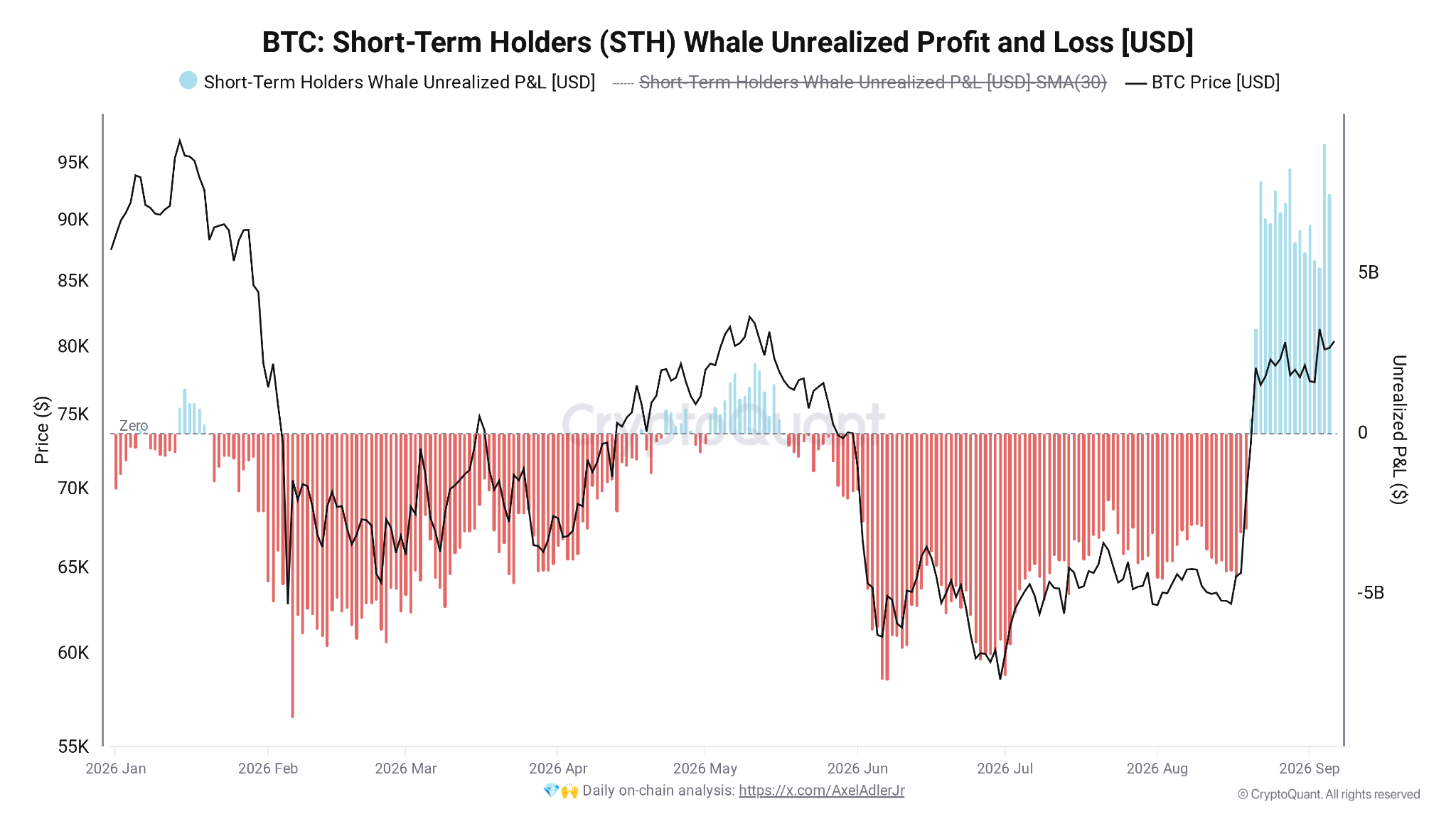
Bitcoin (BTC) whales have more reason to sell than at any time in Bitcoin’s recent history as their unrealized profits hit records.
Key points:
- Bitcoin short-term holder whales saw unrealized profits spike to $9 billion on Sept. 4, the largest reading ever tracked by CryptoQuant data.
- Profitability is sensitive to small BTC price fluctuations, falling by $1.5 billion on a 2% daily drop in BTC/USD.
- Binance exchange reserves are approaching two-year highs near 692,000 BTC.
Short-term holder whales sit on giant unrealized profits
Data from onchain analytics platform CryptoQuant shows that newer whale investors currently sit on unrealized gains worth exceeding $9 billion.
This is the largest figure CryptoQuant has recorded since it began tracking whale profitability in 2016. The reading concerns short-term holder (STH) whales — wallets holding coins that are less than six months old.
On Sept. 4, the STH whale cohort’s aggregate unrealized profit hit a new multi-year high of $9.07 billion. However, being sensitive to movements in spot price, it fell by 17% the day after as BTC/USD declined just under 2%. This is because the breakeven point of STH whales is closer to the current spot price than that of LTHs. The cost basis of STH whales currently sits near $69,000.
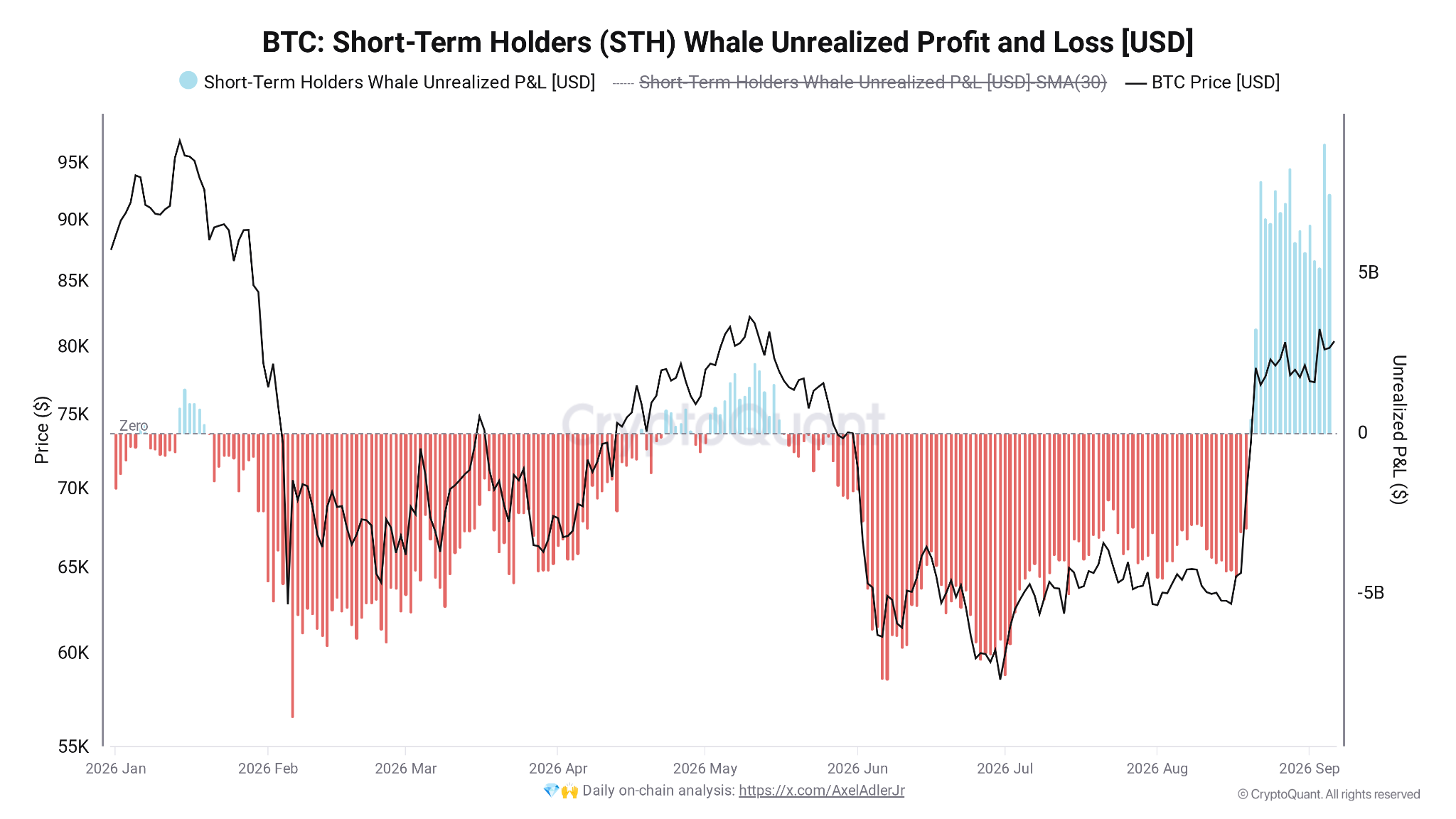
Bitcoin STH whale unrealized profit and loss. Source: CryptoQuant
In accompanying analysis, CryptoQuant warned that further BTC price downside may induce selling from STH whales, with newer investors traditionally seen as being speculative in nature and more sensitive to smaller market shifts.
“Unrealized profit at that scale is exposure. A cohort sitting on a record paper gain can turn into sellers the moment price wobbles, and STH whales are historically the fastest to take profit when it’s available,” it commented.
Binance BTC reserves near two-year high
Previously, Cointelegraph reported on existing ask liquidity on exchange order books keeping spot price pinned below $83,000.
Related: Yen intervention meets US inflation data: Five things to know in Bitcoin this week
The risk of selling from short-term holders is also indicated by onchain data, which shows growing inflows to exchanges since the start of May. On Sept. 2, BTC reserves on Binance, largest exchange, reached 691,658 BTC, the highest figure since November 2024.
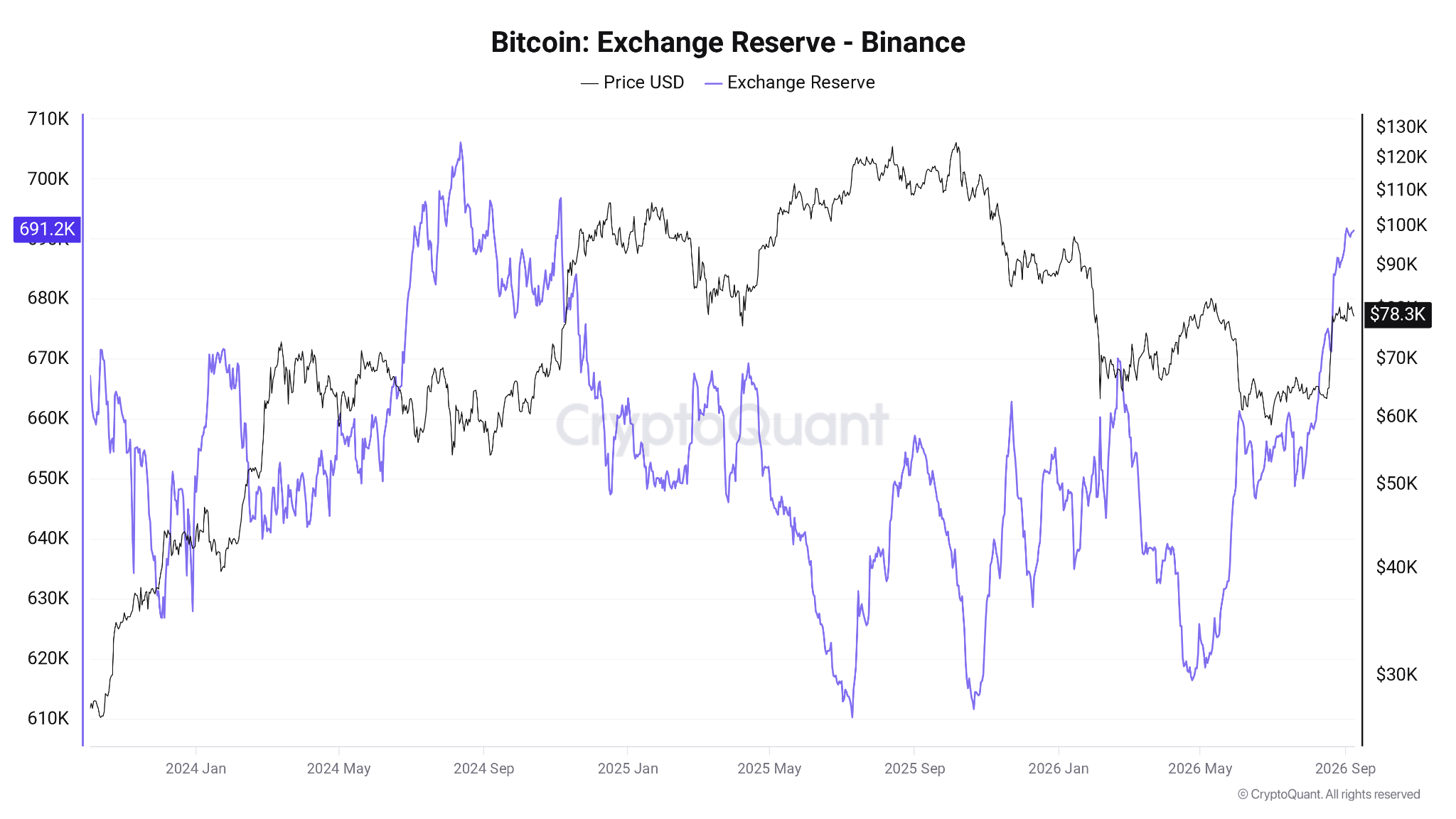
Binance BTC reserves. Source: CryptoQuant
Commenting on the trend, however, CryptoQuant described whale participation in exchange inflows as “relatively contained.”
“The key tension is clear: liquidity and positioning on Binance remain orderly, but the elevated reserve base means that any meaningful breakout above $83K will require strong, sustained spot absorption from ETFs and organic demand to clear the available supply,” it wrote on Sunday.
CryptoQuant reiterated the need for Bitcoin spot demand to reenter, a key factor missing from the market throughout 2026.


Bybit added USDT-settled perpetuals tracking EUR/USD, GBP/USD and USD/JPY, with 24/7 trading and leverage of up to 100x.

The idyllic village near Peterborough full of history that used to be an island

Reddit, Inc. (RDDT) Presents at Goldman Sachs Communacopia + Technology Conference 2026 Transcript

Kraken Says Withdrawals Are Stuck as Funding Problems Hit 23 Services


-
 Tech8 hours ago
Memory prices are slowing because buyers ran out of money
-

 NewsBeat7 hours ago
England up in reading, maths and science rankings as Scotland and Wales dip
-

 Business10 hours ago
Egyptian TV Presenter Sarah Khalifa, 11 Others Sentenced To Death In Major Drug Trafficking Case In Cairo
-
 Tech11 hours ago
Strong Password Policy and Password Manager Guide
-
 NewsBeat6 hours ago
Tehran’s assertive rhetoric signals a new and dangerous phase in conflict
-

 Crypto World11 hours ago
Visa expands stablecoin card network to 160 programs
-

 Tech5 hours ago
Google’s revived nuclear power plant gets $1.9B loan from US government
-

 Business10 hours ago
Claim Your Share Of $50 Million Disney Streaming Price Settlement By Sept. 8 Tonight
-

 Politics5 hours ago
The Ultimate September Reset Guide: How To Refresh Your Mind And Life This Autumn
-

 Business8 hours ago
US-Canada tariffs: Canada braces for prolonged trade war as counter-tariffs on US take effect
-

 Crypto World9 hours ago
Arm Stock: Arm Extends Reach To Physical AI
-
 Fashion6 hours ago
New tops for women from EGO
-

 Business5 hours ago
Corning Stock Climbs On Multibillion-Dollar Verizon Network Deal
-

 Tech5 hours ago
ESP32-P4 Powers Video Alarm Clock
-

 Entertainment5 hours ago
You Can See Everything Trailer Reveals A24’s Elizabeth Holmes Documentary
-
Crypto World5 hours ago
Zcash (ZEC) Rockets 2,200% as Privacy Coins Become Crypto’s Biggest Outlier
-

 Sports5 hours ago
How Much Is Florida State Coach Mike Norvell’s Buyout? Contract Details In 2026
-

 Crypto World11 hours ago
Stablecoins could save South Korean merchants up to $3.8 billion a year, budget office says
-

 Business11 hours ago
model backs CBD drinks brand
-
 Crypto World10 hours ago
Hyperliquid Season 3 Airdrop Wait Fuels a Meme Coin Machi Big Brother Promotes
You must be logged in to post a comment Login