

Crypto World
Kalshi Prediction Market Plans Crypto Perpetual Futures Launch On April 27

Kalshi is set to launch cryptocurrency perpetual futures trading on April 27, according to a report from The Information. The move would mark the prediction market platform’s entry into crypto derivatives.
The company, valued at $11 billion, teased the product via a cryptic LinkedIn video. A rotating torus shape appears alongside the word “Timeless” and the April 27 launch date in New York City.
What Kalshi Perpetual Futures Mean for Traders
Perpetual futures allow traders to speculate on asset prices without owning the underlying token. Unlike traditional futures, these contracts have no expiration date.
Positions stay open indefinitely, with a funding rate keeping prices aligned with spot markets.
The product name carries a clear signal. “Timeless” maps onto a contract designed to run continuously rather than settle on a fixed date.
John Wang, Kalshi’s Head of Crypto, argued in August 2025 that perpetual futures and prediction markets are functionally converging.
Why This Matters
Perpetuals are already the highest-volume product in crypto trading. US-regulated versions have gained traction, with Cboe recently launching Bitcoin and Ether perpetual futures.
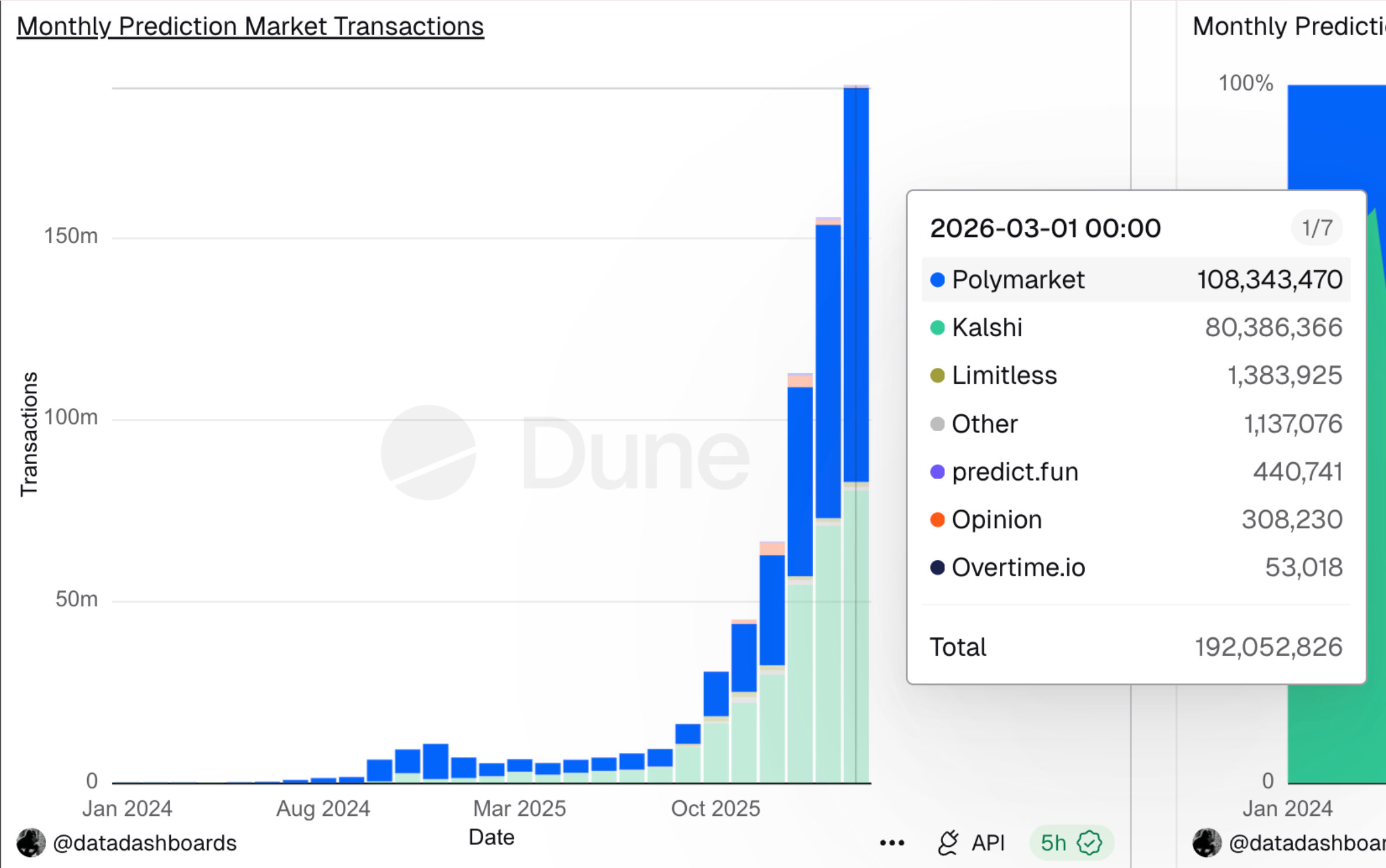
Prediction market transactions hit a record 192 million in March 2026.
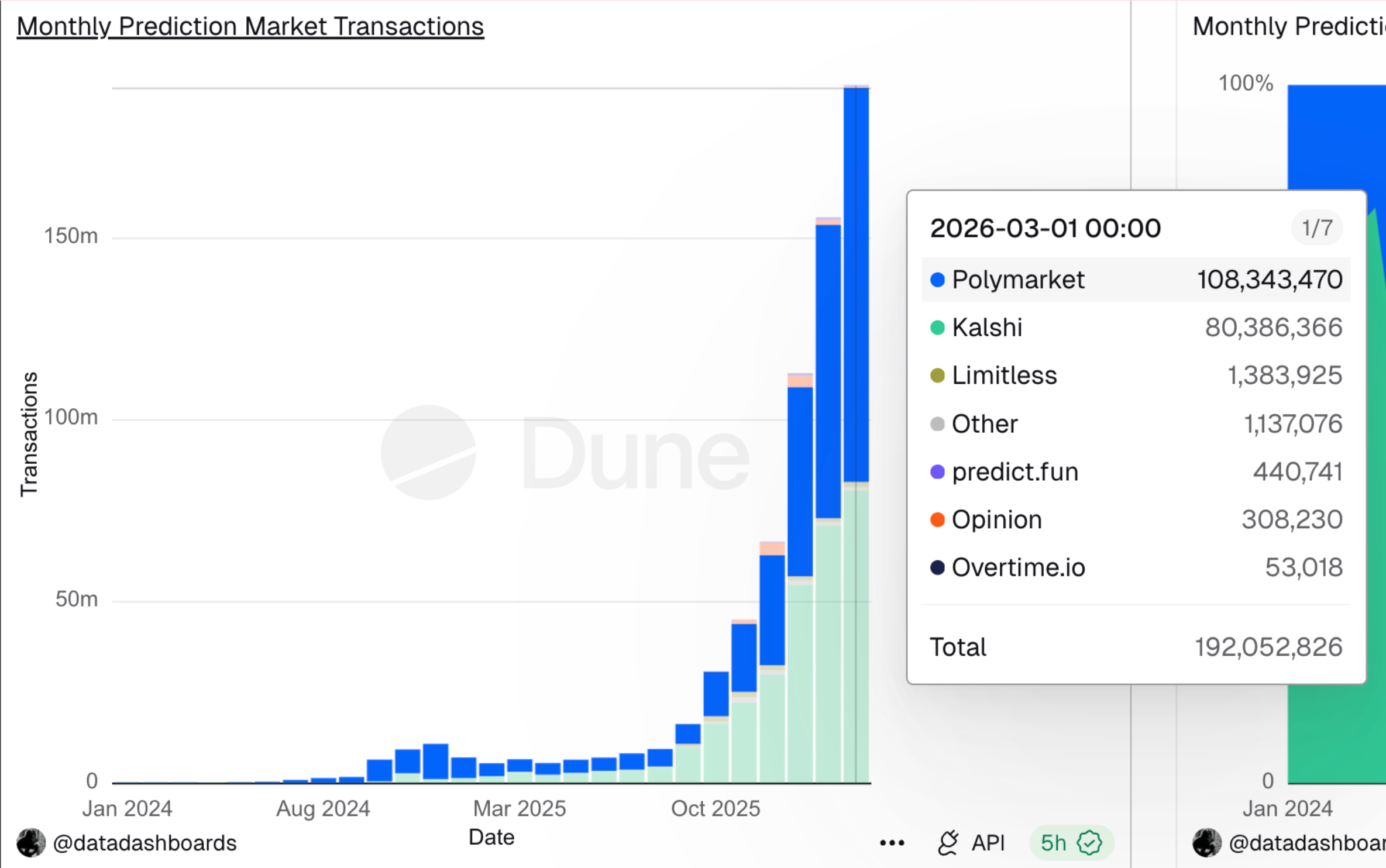
By merging perpetual futures mechanics with prediction market infrastructure, Kalshi could attract institutional traders. The model offers continuous exposure rather than event-based binary contracts.
The platform operates under CFTC oversight, which may provide a regulatory edge over offshore competitors. Adding perpetual contracts would also let liquidity accumulate continuously rather than dispersing each time an event contract resolves.
The full scope of the product will become clear on April 27.
The post Kalshi Prediction Market Plans Crypto Perpetual Futures Launch On April 27 appeared first on BeInCrypto.



Solana (SOL) treasury firm Upexi (UPXI) posted a $109.3 million net loss for the fiscal third quarter ended March 31, 2026.
This marks a 2,776% jump from the $3.8 million loss a year earlier, largely driven by Solana (SOL) treasury markdowns.
Solana Treasury Strategy Magnifies Upexi’s Quarterly Losses
In the press release, the firm said the net loss was driven by non-cash unrealized losses on digital assets, totaling $92.3 million during the quarter.
Still, the Solana-focused treasury strategy offered some bright spots. Gross profit climbed 179% year-over-year to $4.4 million.
In addition, the total quarterly revenue edged up to roughly $4.6 million, from $3.2 million in the same period of 2025.
“During the quarter, we grew the number of SOL held in our treasury by 9%, increased the number of tokens generated from staking, and repurchased approximately 2.5 million Upexi shares in the open market, all of which increased our Solana per share. Solana’s best-in-class performance, costs, and institutional adoption gives us conviction that we are building long-term shareholder value around the network that we believe will revolutionize global finance,” Allan Marshall, Chief Executive Officer of Upexi, said.
Follow us on X to get the latest news as it happens
The company also strengthened its balance sheet during the quarter, ending March 31 with $3.5 million in cash and equivalents and trimming short-term debt by about $7.6 million.
Capital activity was equally busy. Over the nine months ended March 31, Upexi bought back and retired 2,894,287 of its common shares under an active repurchase program. The firm also closed a $36 million private placement convertible note for 265,500 locked Solana tokens.
On the cost side, management has been making cuts. Upexi reduced the employee headcount to just 10, terminated a warehouse lease, and also eliminated several other general and administrative costs.
“Management estimates that by July 1, 2026, the ongoing cash expenses for operations and interest will be less than the treasury’s staking revenue at the current price of Solana,” the press release read.
Upexi is hardly alone in the red. Several digital asset treasury firms have absorbed quarterly losses amid declining crypto prices, putting pressure on their balance sheets.
Subscribe to our YouTube channel to watch leaders and journalists provide expert insights
The post Upexi Net Loss Balloons to $109 Million on Solana Treasury Markdown appeared first on BeInCrypto.

Banking giant JPMorgan has filed to launch a new tokenized money market fund on Ethereum. The fund allows stablecoin issuers to hold reserves in a regulated vehicle while earning interest.
The filing comes after Morgan Stanley announced its own money market fund called the Stablecoin Reserves Portfolio.
JPMorgan Files to Launch Tokenized Money Market Fund
The fund, called the OnChain Liquidity-Token Money Market Fund, will trade under the ticker JLTXX. According to a regulatory filing with the Securities and Exchange Commission, it will invest in US Treasury bills and overnight repurchase agreements collateralized by cash or US Treasurys. The fund will also comply with the GENIUS Act, signed in July, and be managed by JPMorgan’s Kinexys Digital Assets (KDA) unit. The filing adds that the fund utilizes a “permissioned system” sitting on top of blockchains. The fund is currently available only on Ethereum, but will be expanded to other networks in the future. The filing states, “The Ethereum blockchain, a public blockchain network, is currently the only available blockchain for use by investors, although expansion to other blockchains is anticipated in the future.”
Fund Details
Investors in the fund must commit a minimum investment of $1 million. The fund has a 0.16% annual fee after waivers. JPMorgan stated that the filing becomes effective on Wednesday, but has not disclosed the fund’s launch date. The fund also highlighted blockchain technology risk alongside interest rate changes and general market risks, noting that blockchain technology is relatively new and untested. The risks include the blockchain not functioning as intended, regulatory concerns, and unknown technical flaws.
Blockchain-based tokenization has attracted strong interest from Wall Street, with executives believing the technology offers greater efficiency in settlements and trading than traditional systems. According to RWA.xyz data, over $32 billion worth of real-world assets, including stocks, bonds, commodities, and real estate, are currently tokenized on-chain.
The fund is JPMorgan’s second crypto-linked initiative in a week following Ondo Finance’s collaboration with the bank’s Kinexys platform, Ripple, and Mastercard to settle tokenized treasuries on the XRP ledger. The upcoming tokenized money market fund will directly compete with BENJI, a tokenized money market fund from rival Franklin Templeton. BENJI is available on BNB Chain, Avalanche, and Canton.
JPMorgan’s Foray Into Tokenization
JLTXX is JPMorgan’s second tokenized product after the My OnChain Net Yield Fund (MONY). MONY launched in December on Ethereum and holds short-term debt securities with higher returns than bank deposits. JPMorgan also participated in a pilot transaction last week, moving the first tokenized US Treasury fund from the US to its Singapore bank account via the XRP ledger and interbank rails.
Disclaimer: This article is provided for informational purposes only. It is not offered or intended to be used as legal, tax, investment, financial, or other advice.
Crypto World
SharpLink’s Ethereum Bet Just Generated a $686 Million Loss: Is the Galaxy Deal News a Lifeline or a Vote of Confidence?
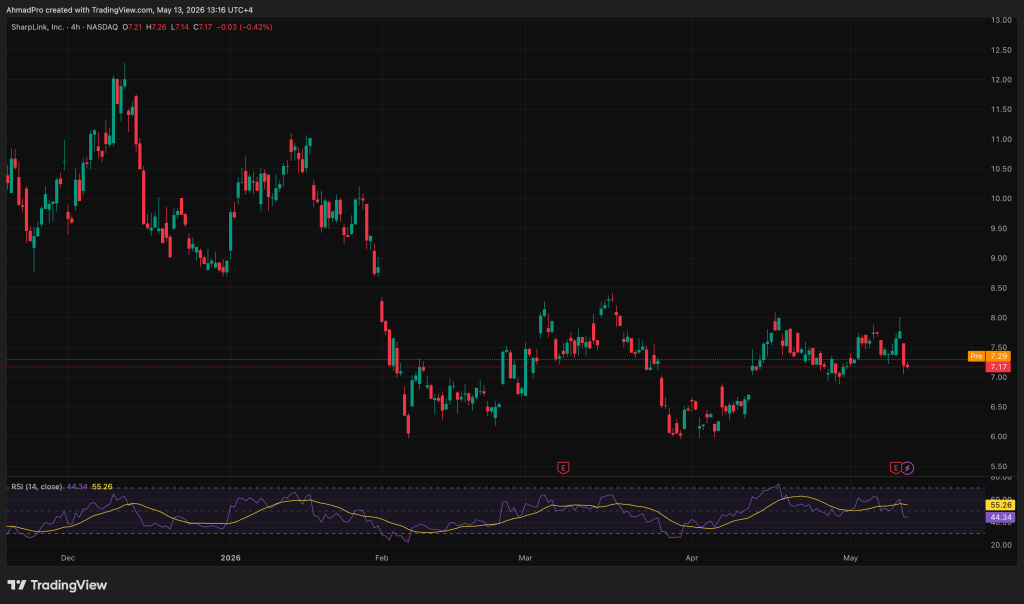
SharpLink posted a Q1 2026 net loss of nearly $686 million, driven almost entirely by $507 million in unrealized losses from its Ethereum treasury, a figure that dwarfs the firm’s less than $1 million loss in the same period last year. Bearish news for ETH treasuries.
The trigger was a 45% peak-to-trough ETH drawdown that turned the company’s aggressive accumulation strategy into a paper catastrophe under GAAP fair-value accounting rules.
The same earnings release announced a $125 million on-chain yield fund with Galaxy Digital, which some analysts are reading as a lifeline in disguise.
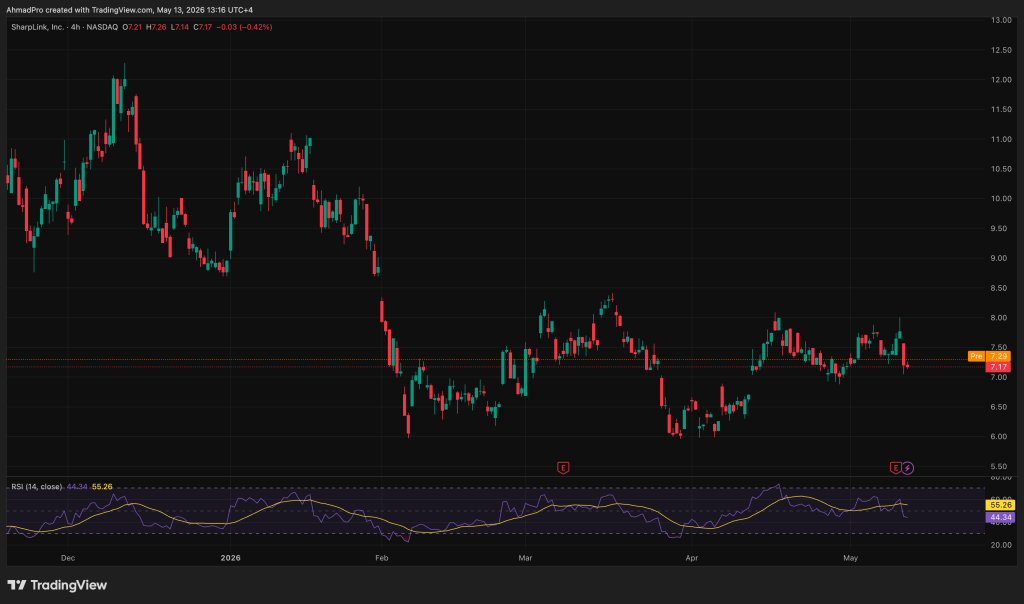
The tension at the center of this story is real: does the Galaxy deal signal institutional confidence in ETH staking infrastructure, or does it signal that SharpLink needed a structural backstop to stay credible? Those are not the same thing.
How a 45% ETH Drawdown Produced a $686M Loss, and Why the Math Works That Way
The mechanism here is worth understanding precisely, because it is not a trading loss or an operational failure in the traditional sense.
SharpLink holds approximately 872,984 ETH valued at roughly $2.1 billion at current prices. GAAP fair-value accounting requires the firm to mark those holdings to market at each reporting date, which means a price decline flows directly into the income statement as an unrealized loss – no ETH sold, no cash out the door.
ETH fell from approximately $3,354 on January 15, 2026, to $2,104 by March 31 – a drop of roughly 37% over the quarter alone, contributing the bulk of that $507 million unrealized hit.
Across the broader peak-to-trough cycle, the 45% ETH drawdown compressed the dollar value of SharpLink’s entire treasury position with mechanical precision. The larger the ETH stack, the larger the paper loss on the way down.
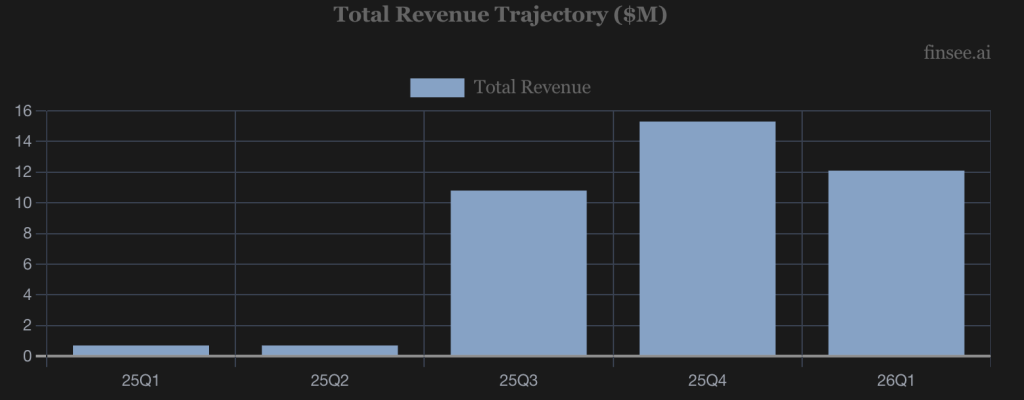
The staking revenue side did not come close to offsetting this. Q1 2026 revenues jumped to more than $12 million from under $1 million a year earlier, a genuine operational improvement powered by the firm’s staked Ethereum treasury.
SharpLink has accumulated 18,800 ETH in staking rewards since launching its treasury strategy in June 2025, running a mix of 66% native staking, 33% liquid staking, and 1% restaking. That is a functioning yield engine. It is just not a $507 million yield engine.
The distinction that matters analytically: this is not a validator economics failure, nor a leverage blowup. It is a concentration risk event, amplified by accounting standards that require mark-to-market recognition of assets that have not been liquidated.
SharpLink ended Q1 with $16.9 million in cash and 872,984 ETH still on its books. The loss is real on paper. The ETH is still there.
That said, the accounting and liquidity risks in institutional Ethereum staking operations are not theoretical. A 45% drawdown does not just create paper losses; it compresses the equity cushion that supports the entire treasury model and raises legitimate questions about what a further leg down would look like on the balance sheet.
Ethereum News: The Galaxy Digital Fund Is a Signal, But Not Necessarily the One Being Advertised
The $125 million on-chain yield fund announced alongside the Q1 results is structured as follows: $100 million comes from SharpLink’s staked ETH treasury, and $25 million from Galaxy Digital. Galaxy is responsible for protocol selection, exposure sizing, and ongoing monitoring of all on-chain deployments.
SharpLink brings the capital. Galaxy brings the operational oversight.
Galaxy Digital CEO Mike Novogratz framed the deal in sector terms: “Institutional capital is moving on-chain, and the infrastructure to support it has matured to a point where allocators can access yield, liquidity, and risk management with the same rigor they expect in traditional markets.”
That is a bullish read on institutional crypto broadly, and Galaxy’s own stock performance supports the narrative. GLXY shares are up 43% in the last month, recently trading at $30.92.
SharpLink CEO Joseph Chalom described the strategic direction as moving “beyond foundational staking into a broader set of on-chain opportunities,” emphasizing a “comprehensive risk-management framework” designed to deliver shareholder value across market cycles.
The language is disciplined. The timing raises a question worth naming: a firm reporting a $686 million quarterly loss is not negotiating from a position of strength.
The conflict of interest embedded in this structure is also worth naming. Galaxy is both a financial contributor to the fund and the entity managing its on-chain deployment decisions.
That does not make the partnership wrong. It does mean the assumption that Galaxy’s protocol selection is purely independent of its own positioning deserves scrutiny from investors and analysts watching this sector.
If ETH price recovers meaningfully through Q2 and Q3, the fund launch will look like a well-timed DeFi pivot that turned a paper-loss narrative into a yield-diversification story.
If ETH continues to grind lower, the $100 million deployed from SharpLink’s treasury into on-chain protocols will be exposed to additional mark-to-market pressure on top of the core holdings. The asymmetry runs in both directions.
The post SharpLink’s Ethereum Bet Just Generated a $686 Million Loss: Is the Galaxy Deal News a Lifeline or a Vote of Confidence? appeared first on Cryptonews.


Bitcoin , a leading indicator of risk sentiment, remains a paragon of stability ahead of President Donald Trump’s arrival in Beijing for talks with his Chinese counterpart, Xi Jinping.
The largest cryptocurrency recently traded 0.5% higher since midnight UTC at $80,900, in line with the gain of the CoinDesk 5 Index (CD5). All five members of the index advanced. The broader CoinDesk 20 Index (CD20) rose 1.3% while the CoinDesk 80 (CD80) was little changed, indicating a particular focus on the largest tokens.
The Trump-Xi talks are likely to cover tariffs, rare earth supply chains, and the Middle East. Any positive outcome, even a symbolic one on paper, could improve overall market sentiment and support risk assets
Ether (ETH) added 1.3% since midnight to $2,300 after the Ethereum Foundation published “Clear Signing,” a new standard designed to stop users from unknowingly approving malicious crypto transactions.
Among altcoins, Injective blockchain’s INJ token surged as much as 24%, the most since Feb. 19, alongside 5% gains in Polkadot’s DOT and the TRUMP memecoin.
Derivatives Positioning
- BNB futures open interest (OI) rose to 6.15 million tokens, up over 5% in 24 hours and the highest since April 3. The move points to fresh capital inflows.
- ZEC’s OI growth is the biggest among the major cryptocurrencies. Its 24-hour cumulative volume delta (CVD) is also positive and the highest among majors.
- That’s also a sign of new money flowing into the market, with traders buying via market orders rather than passive limit orders, signaling strong bullish sentiment.
- Still, the BNB market doesn’t look overheated. Funding rates remain below an annualized 10%, a sign of healthy bullish conditions without excessive leverage buildup. Its market capitalization has increased to $92.2 billion, the highest since March 18, reflecting renewed investor interest.
- OI in DOGE has increased 5.75% to 15.38 billion tokens, with its price chart pointing to a bullish crossover of the widely tracked 50- and 100-day simple moving averages. The token traded 4% higher at 11 cents as of writing. The other key metrics display a BNB-like bullish setup, suggesting improving speculative demand.
- Another standout is ether (ETH), the second-largest token by market value. OI in ether futures topped 15 million ETH, nearing last July’s record 15.30 million.
- The increasing demand for leverage, coupled with the relentless tightening of Bollinger Bands, suggests scope for a volatility boom.
- OI in bitcoin has held largely unchanged near 740K BTC in the past 24 hours, indicating relatively stable positioning in bitcoin compared to altcoins.
- Broadly speaking, most tokens, except BNB, XRP and TRX, have negative 24-hour CVDs, meaning the altcoin market is dominated by sellers shorting via market orders rather than passive limit orders. That signals lingering caution beneath the broader market strength.
- While macro risks pile up in the form of high inflation and hardening bond yields across the advanced world, the market remains calm. That’s evident from the continued decline in bitcoin’s and ether’s 30-day implied volatility indices. Ether’s EVIV index hit fresh year-to-date lows below 55%, while BVIV remains pinned near 40%, levels last seen in late January.
- The subdued volatility environment suggests traders are not yet pricing in major near-term turbulence.
- In the options market on Deribit, higher-strike call options continue to dominate volume rankings. Calls represent a bullish bet on the underlying BTC.
- As for block flows, put spreads and straddles emerged as preferred strategies over the past 24 hours, indicating traders are positioning for both downside protection and a potential volatility expansion.
Token Talk
- The DeFi United initiative seems to be restoring confidence in decentralized finance ecosystem, with the tokens of Aave , Arbitrum (ARB) and Lido (LDO) recovering over the past week.
- AAVE rose 3%, ARB gained 16% and LDO added 11% over seven days. ARB’s move stands out after the Kelp DAO exploit, which hit Arbitrum lending markets and left wrapped ether stranded across chains.
- The April 18 attack released unbacked rsETH through Kelp’s LayerZero OFT bridge. Aave’s incident report attributed the path to a forged LayerZero packet and a single-DVN configuration, while LayerZero linked the attack to North Korea’s Lazarus Group. It sparked a widespread recovery effort.
- Phase 1 of that recovery is now complete. The attacker’s rsETH on Arbitrum was burned, removing the unbacked supply, and Aave V3 positions tied to the exploiter were forcibly liquidated.
- The 117,132 rsETH, worth roughly $278 million, is set to be progressively refilled into the LayerZero bridge adapter over the next two weeks. Withdrawals are expected to resume within 24 hours of the first tranche.
- A separate legal process is ongoing for 30,765 ETH, roughly $71 million, frozen by Arbitrum’s Security Council. A U.S. federal court cleared an Arbitrum governance vote to move the funds to an Aave-controlled wallet while keeping the recovered ETH under court restrictions.
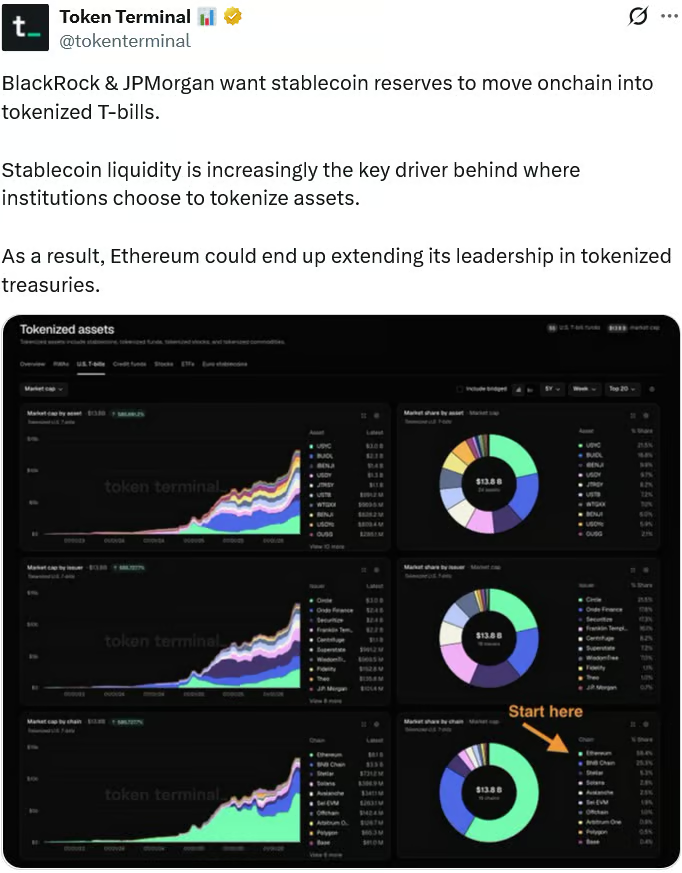
JPMorgan has filed to launch a tokenized money market fund on Ethereum, allowing stablecoin issuers to hold reserves backing their stablecoins in a regulated, cash-like vehicle while earning interest.
The “OnChain Liquidity-Token Money Market Fund,” ticker JLTXX, will invest in US Treasury bills and overnight repurchase agreements collateralized by US Treasurys or cash, according to a filing Tuesday with the US Securities and Exchange Commission. JLTXX seeks to comply with the GENIUS Act, a stablecoin-focused law signed in July.
Investors are subject to a $1 million minimum investment, and the fund carries a 0.16% annual fee after waivers. The fund will be managed by JPMorgan’s blockchain unit, Kinexys Digital Assets. The investment bank said the filing would take effect on Wednesday, though it did not disclose when it would launch the fund.
Blockchain-based tokenization has attracted growing interest from Wall Street executives in recent months, many of whom see the technology as offering greater operational efficiency for trading and settlement than traditional systems.
More than $32.2 billion worth of real-world assets, excluding stablecoins, are currently tokenized onchain, according to RWA.xyz data. Nearly every major asset class has been tokenized, including commodities, stocks, bonds and real estate.

Source: Token Terminal
Bloomberg analyst Eric Balchunas said JPMorgan’s JLTXX is also a “big deal” because the 0.16% fee is low for a money market fund with a stable asset value.
JPMorgan’s blockchain use cases
The launch of JLTXX follows JPMorgan’s first tokenized product, My OnChain Net Yield Fund, or MONY, which launched in December and also runs on Ethereum. MONY holds short-term debt securities designed to deliver returns higher than bank deposit rates, with interest and dividends accruing daily.
The filing for JLTXX also comes after a pilot transaction JPMorgan participated in last week, in which the first tokenized US Treasury fund moved from the US via XRP Ledger and interbank rails to one of JPMorgan’s Singapore bank accounts in a matter of seconds.
In April, Morgan Stanley launched the Stablecoin Reserves Portfolio, which allows stablecoin issuers to park reserves backing their fiat-pegged tokens in one of the bank’s money market funds while earning interest.
Related: Stablecoins behave like FX markets as liquidity splits: Eco CEO
However, the International Monetary Fund flagged several concerns about tokenization in a report in April, arguing that tokenization shifts risk from the banking system to shared ledgers and smart contract code, making it more difficult to intervene during “stress events.”
The IMF added that without legal clarity over ownership records and settlement finality, tokenized markets risk being “fragmented and peripheral.”
Several industry pundits, including “Shark Tank” investor Kevin O’Leary, have said crypto market structure legislation — such as the CLARITY Act — is needed to iron out these issues.
Magazine: Singapore isn’t a ‘crypto hub’ — it’s something better: StraitsX CEO


Vietnam could start official activity in its regulated crypto asset market as early as the third quarter of 2026.
Summary
- Vietnam could start regulated crypto market activity in Q3, moving demand toward licensed domestic platforms.
- Five firms passed initial screening, including bank affiliates, VIX Securities and Sun Group, Reuters reported.
- Chainalysis ranked Vietnam fourth globally in crypto adoption, reflecting strong retail and institutional activity nationwide demand.
Deputy Minister of Finance Nguyen Duc Chi gave the update at the Digital Trust in Finance 2026 forum in Hanoi on May 12.
Chi said “as early as the third quarter” Vietnam could witness the first official market activity under rules built for safety and transparency. The statement points to a more active phase for a market that has already entered a pilot period.
Five firms move through licensing process
The Ministry of Finance is working with the Ministry of Public Security and the State Bank of Vietnam to approve five companies for digital asset trading platform services. VnEconomy said the step forms part of Vietnam’s wider digital finance plan.
Reuters earlier reported that affiliates of Techcombank, VPBank and LPBank were among firms that passed an initial screening round. VIX Securities and Sun Group were also listed in the process.
Additionally, the new framework follows Vietnam’s five-year crypto market pilot. Earlier reports noted that licensed platforms will need to support trading in Vietnamese dong from 2026, with reporting and anti-money laundering duties included.
The policy aims to move part of Vietnam’s crypto activity away from offshore exchanges. Reuters reported that many local traders still use platforms such as Binance, OKX and Bybit because domestic regulated options remain limited.
Crypto adoption adds pressure for clear rules
Vietnam ranked fourth in Chainalysis’ 2025 Global Crypto Adoption Index, behind India, the United States and Pakistan. The country also ranked fourth for centralized service value received and sixth for DeFi value received.
Chainalysis said APAC was the fastest-growing region for onchain crypto activity in the 12 months ending June 2025. It cited India, Vietnam and Pakistan as key markets driving growth across centralized and decentralized services.
Vietnam’s legal framework is still in its pilot stage. VnEconomy reported in March that the framework will be reviewed during the five-year period and adjusted as market conditions change.
Officials are also working on tax, accounting and auditing rules for crypto service providers, issuers and trading firms. The Q3 target shows Vietnam is preparing to test regulated crypto trading while keeping oversight within local financial channels.
Crypto World
rsETH Recovery Underway as Kelp DAO and Aave Launch Restoration Plan After $292M Breach

Key Points
- Restoration efforts begin for rsETH following a devastating $292M security breach
- Two-week phased approach planned to refill 117,132 rsETH tokens
- Aave supports restoration initiative after completing critical recovery measures on Arbitrum
- Enhanced bridge security protocols implemented before resuming full operations
- Withdrawal functionality expected to return as final recovery stages progress
Following the completion of crucial recovery procedures from a $292 million security breach, Kelp DAO and Aave have initiated efforts to restore rsETH functionality. The protocols announced plans to redistribute 117,132 rsETH tokens into the LayerZero OFT adapter through a carefully structured two-week timeline. This significant development represents a critical milestone toward reinstating full platform capabilities, including withdrawal processing, deposit acceptance, token redemptions, cross-chain bridging, and rewards distribution.
Restoration Strategy for rsETH Tokens
Kelp DAO outlined that the token restoration will utilize resources from both the Aave Recovery Guardian and Kelp Recovery Safe. These assets will be transferred to the LayerZero OFT adapter on the Ethereum mainnet through multiple installments. Following the arrival of the initial installment, Kelp anticipates reactivating withdrawal capabilities within a 24-hour window.
According to the protocol’s statement, rsETH tokens on both the mainnet and Layer 2 ecosystems maintain complete backing. Nevertheless, standard platform functionality will only return once smart contract systems are reactivated. These standard features encompass deposit processing, token redemption services, cross-chain transfers, and claim distributions across all supported blockchain networks.
Kelp has also finalized comprehensive security enhancements across its LayerZero bridge infrastructure. The updated system mandates verification from four separate attestors alongside 64 block confirmations. Furthermore, the protocol eliminated all Layer 2-to-Layer 2 transfer pathways to minimize exposure to cross-chain vulnerabilities.
Aave’s Role in Recovery Implementation
Aave verified completion of initial recovery procedures connected to the security incident. The process involved eliminating the attacker’s rsETH holdings on Arbitrum following coordinated recovery actions. The protocol is now positioned to facilitate the staged restoration into the mainnet adapter.
The April 18 security breach resulted in the loss of 117,132 rsETH tokens and caused widespread disruption across multiple DeFi platforms. The perpetrator converted portions of the stolen holdings into Aave collateral to borrow WETH. This maneuver generated approximately $190 million in uncollateralized debt for the lending platform.
Subsequently, Aave participated in establishing DeFi United to mitigate broader market consequences. The alliance secured over $300 million in ETH pledges from prominent DeFi organizations. Consequently, the recovery initiative obtained sufficient backing to address the rsETH collateral deficit.
Ongoing Legal Proceedings
The Arbitrum Security Council immobilized approximately 30,766 ETH associated with the perpetrator on April 20. These assets were designated to contribute to the DeFi United restoration initiative. However, litigation in a U.S. court subsequently stalled the asset transfer timeline.
Claimants holding terrorism-related judgments against North Korea petitioned for authority over the frozen ETH. Their argument centered on assertions that the Lazarus Group executed the breach on behalf of North Korean interests. Aave contested the court directive, maintaining that misappropriated assets should be returned to impacted platform users.
A Manhattan court subsequently authorized Arbitrum to relocate ETH to an Aave-managed wallet. However, Aave remains prohibited from liquidating or redistributing these assets pending additional judicial authorization. In parallel developments, Kelp is transitioning rsETH bridge operations from LayerZero to Chainlink CCIP to establish enhanced security safeguards.



Charles Schwab, the brokerage giant that manages around $12 trillion in client assets, began the rollout of its spot cryptocurrency trading service for retail customers in the U.S.
An initial group of clients can now trade bitcoin and ether (ETH) on the Schwab Crypto platform, the company posted on X on Tuesday.
In July last year, CEO Rick Wurster said the company planned to introduce crypto trading in the near future, with a timeframe of first-half 2026 confirmed last month.
The Westlake, Texas-headquartered firm already offers crypto investments through exchange-traded funds (ETFs) and futures trading.
The ability to directly trade the actual assets through a company with the scale of Schwab could be a pivotal accelerator for mainstream crypto adoption.
As one of the largest brokerage firms in the world, Schwab could offer its roughly 35 million clients the opportunity to trade BTC and ETH in an environment they already recognize rather than having to register with a standalone crypto exchange.


Disclosure: This article does not represent investment advice. The content and materials featured on this page are for educational purposes only.
AJC Mining expands access to Bitcoin cloud mining with simplified online hash rate contracts.
Summary
- AJC Mining offers Bitcoin cloud mining contracts without hardware, maintenance, or setup requirements.
- AJC Mining provides mining calculators, flexible plans, and daily settlement tools for users.
- Built for beginners and experienced users, AJC Mining simplifies access to online mining participation.
The cryptocurrency market is once again attracting global attention. XRP-related headlines have highlighted a major shift in the digital asset industry: traditional financial institutions are increasing their exposure to blockchain-based assets, real-world tokenization is expanding into new markets such as Japan, and on-chain financial products are becoming more relevant to institutional investors.
These developments send a powerful signal to the global market: cryptocurrency is no longer only a speculative trend. It is becoming part of the broader financial infrastructure. As institutional capital continues to flow into digital assets, the long-term value foundation of the crypto market, especially Bitcoin, is becoming stronger.
For everyday investors, this creates an important question: how can they participate in the growth of the crypto industry without directly facing the extreme volatility of buying and selling coins in the spot market?
One practical answer is Bitcoin cloud mining.
Why Bitcoin cloud mining is becoming popular
Traditional cryptocurrency mining often requires expensive mining machines, technical knowledge, a stable electricity supply, cooling systems, and ongoing maintenance. For most individual users, building and managing a physical mining setup is costly and complicated.
Bitcoin cloud mining provides a more accessible alternative. Instead of buying mining hardware, users lease computing power, also known as hash rate, from remote mining facilities. This allows users to participate in Bitcoin production through an online platform without personally managing machines or infrastructure.
AJC Mining is designed to make this process easier for users who want to enter the mining industry with a lower barrier. By offering cloud-based mining contracts, AJC Mining allows users to access mining opportunities through a simple online dashboard.
Is cloud mining profitable?
One of the most searched questions in the industry is: Is cloud mining profitable?
The answer depends on several important factors, including the Bitcoin price, network mining difficulty, contract cost, platform service fees, and the amount of hash rate purchased. Since market conditions can change, users should always calculate potential earnings before selecting a mining plan.
This is why a mining profit calculator is an important tool for anyone considering cloud mining. By entering the contract cost, estimated Hash Rate, contract duration, and current market conditions, users can better understand possible daily and monthly mining income.
AJC Mining encourages users to evaluate plans carefully and choose contracts based on their own budget, risk tolerance, and long-term goals.
Why choose AJC Mining for cryptocurrency mining?
When searching for the best cloud mining platforms, users should pay attention to transparency, contract flexibility, payout rules, platform reputation, and ease of use.
AJC Mining focuses on providing a user-friendly cloud mining experience for both beginners and experienced crypto users. The platform offers cloud mining contracts that allow users to participate in Bitcoin mining without purchasing hardware, managing electricity costs, or dealing with technical maintenance.
Key advantages of AJC Mining include:
- Accessible Bitcoin cloud mining contracts
- Simple registration and account setup
- Daily earnings settlement according to contract terms
- Flexible contract options for different budgets
- Beginner-friendly platform interface
- Trial opportunities through free cloud mining rewards
- Tools such as a mining profit calculator to help users estimate potential returns
How to join AJC Mining?
The process for joining AJC Mining is relatively simple, making it ideal for new users with no prior mining experience.
Step 1: Register an account
Users can register an account via the official AJC Mining website. Upon successful registration, new users will receive a $15 reward.
(Click here to register now and claim a reward.)
Step 2: Select a cloud mining contract
The platform offers a variety of short-term and long-term cloud mining contracts for users to choose from. Users can make their selection based on their personal budget, desired contract duration, and profit objectives.
Step 3: Activate the contract
Once a contract has been selected, the system will automatically deploy the cloud-based computing power and settle earnings on a daily basis, in accordance with the terms of the contract.
AJC Mining cloud mining contract reference
| Contract Name | price | Daily Profit | Number of Days | Principal + Total Return |
| New User Experience Contract | $100 | $4 | 2 Days | $100 + $8 |
| Avalon Miner A15 | $500 | $6.25 | 5 Days | $500 + $31.25 |
| Litecoin Miner L9 | $1000 | $13 | 10 Days | $1000 + $130 |
| Bitcoin Miner S21 XP Imm | $5000 | $70 | 25 Days | $5000 + $1750 |
| Bitcoin Miner S21e XP Hyd | $10000 | $150 | 35 Days | $10000 + $5250 |
| ANTSPACE HW5 | $50000 | $900 | 45 Days | $50000 + $40500 |
The aforementioned contracts represent the various computing power plans offered by the platform. Users may select a cloud mining strategy that best suits their individual needs. AJC Mining emphasizes fixed terms, daily settlements, and automated operations, aiming to provide users with a more convenient cloud mining experience.
(Click here to view more cloud mining contracts.)
Free cloud mining: A smart way to start
For many new users, free cloud mining is the easiest way to understand how cloud mining works. Some platforms provide a small amount of free Hash Rate or registration bonus so users can test the system before purchasing a paid contract.
AJC Mining offers new users a registration reward, allowing them to experience the platform and learn how cloud mining contracts, daily settlements, and mining dashboards work.
However, free rewards should mainly be viewed as an educational starting point. Users who want to pursue more meaningful mining income may consider selecting a paid contract after reviewing the platform, calculating potential returns, and understanding the risks involved.
How to select the best cloud mining platforms
The growth of the crypto market has attracted many cloud mining providers, but not all platforms offer the same level of service. Before choosing a provider, users should compare several important factors.
First, a reliable cloud mining platform should clearly explain how its contracts work, including Hash Rate allocation, contract duration, payout rules, and possible fees. Second, the platform should provide tools that help users make informed decisions, such as a mining profit calculator. Third, users should review the platform’s reputation, support service, and operating history.
AJC Mining aims to position itself among the best cloud mining platforms by offering accessible cloud mining contracts, daily settlement mechanisms, and an easy-to-use experience for users interested in Bitcoin mining.
Hash rate: The core of Bitcoin cloud mining
In cryptocurrency mining, hash rate refers to the computing power used to process Bitcoin mining calculations. In general, a higher Hash Rate means more mining power is being contributed to the network.
For cloud mining users, Hash Rate is the key resource purchased through a contract. Instead of owning physical mining machines, users lease Hash Rate from the platform. This allows them to participate in Bitcoin mining without managing equipment.
When comparing cloud mining contracts, users should pay attention to the amount of Hash Rate included, the contract price, the duration, and the estimated payout. These factors directly affect potential mining performance.
AJC Mining and the future of Bitcoin cloud mining
As institutional adoption of digital assets continues to grow, Bitcoin remains one of the most important assets in the cryptocurrency market. While buying Bitcoin directly can expose users to price volatility, Bitcoin cloud mining offers another way to participate in the crypto economy.
AJC Mining provides an accessible path for users who want to explore Bitcoin mining without hardware investment. Through cloud-based Hash Rate contracts, daily settlement, and beginner-friendly tools, AJC Mining helps users enter the mining industry more conveniently.
For users asking “Is cloud mining profitable?”, the best approach is to calculate carefully, compare contract options, and start with a plan that matches their budget. A mining profit calculator can help users estimate potential returns before activating a contract.
Conclusion
The global crypto market is entering a new stage. From institutional XRP adoption to real-world tokenization and on-chain financial applications, blockchain technology is becoming more connected with traditional finance.
In this environment, Bitcoin cloud mining is attracting more attention as a practical way to participate in cryptocurrency mining without purchasing hardware. AJC Mining offers users a simple and accessible platform to lease hash rate, explore free cloud mining, use a mining profit calculator, and choose from flexible mining contracts.
For users searching for the best cloud mining platforms, AJC Mining provides a beginner-friendly option for entering the Bitcoin mining market.
Start the cloud mining journey with AJC Mining today and explore a more accessible way to participate in the future of digital assets.
For more information, visit the official website and download the mobile app.
Disclosure: This content is provided by a third party. Neither crypto.news nor the author of this article endorses any product mentioned on this page. Users should conduct their own research before taking any action related to the company.
The CPI announcement in the US yesterday showcased increasing inflation likely due to the war against Iran, and BTC dipped to under $80,000, but it managed to rebound almost immediately.
Binance Coin has surpassed XRP once again in terms of market cap after a 2.5% increase, while DOGE has solidified its spot in the top 10 alts following a 2% increase.
BTC Rebounds After CPI
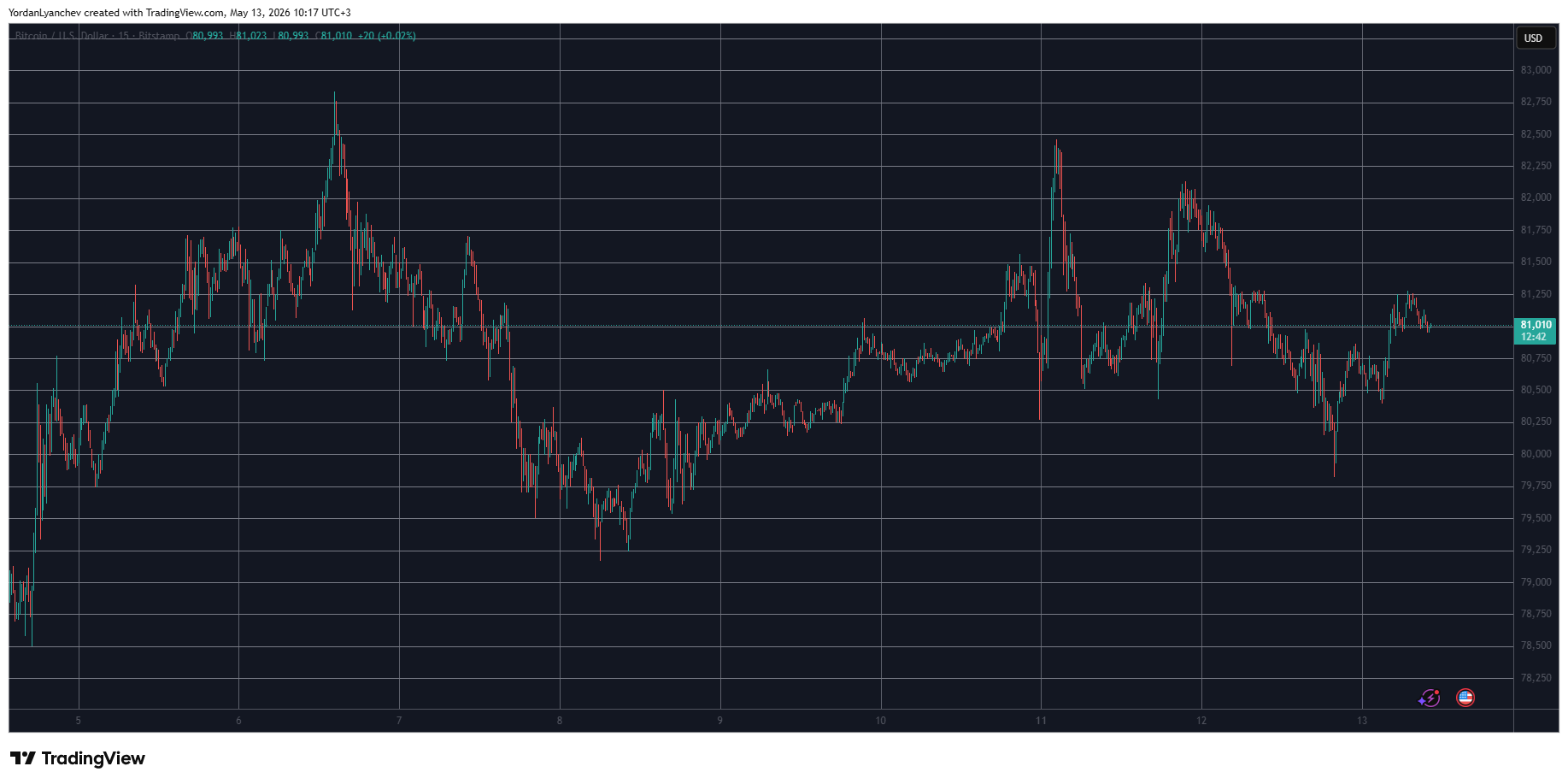
The primary cryptocurrency peaked at almost $83,000 last Wednesday before the subsequent rejection pushed it south to $79,100 by Friday. The gradual recovery began after that bounce off, and BTC reclaimed the $80,000 tag during the weekend.
More volatility ensued on Monday morning as the legacy financial markets opened. The cryptocurrency first dipped to $80,250 from $81,500 before it rocketed to $82,500 after reports that Iran had sent another peace proposal to the US. However, the POTUS quickly rejected it, and BTC crashed by $2,000 in minutes.
It tried another breakout on Tuesday, but it was stopped again at $82,000. The CPI numbers announced yesterday confirmed that inflation has been increasing, and BTC slipped a few hours after they went live to under $80,000. Nevertheless, it reacted well and now sits at around $81,000.
Its market capitalization remains sideways at around $1.620 trillion, while its dominance over the alts is still well above 58% on CG.
BNB Flips XRP
The battle for the fourth spot in terms of market cap continues, and Binance’s native token has emerged on top in the past 12 hours or so. BNB is up by 2.5%, which has helped it surpass XRP as the latter has remained sideways. HYPE, CC, BCH, TAO, and SUI are slightly in the red daily, while DOGE trades above $0.11 after another 2% daily increase.
Today’s most substantial gainer is NEAR, rocketing by almost 6% to $1.64. STABLE follows suit, while WLFI and TRUMP are also in the green as the POTUS went to China to meet with Xi Jinping.
In contrast, VVV has plummeted by over 17% daily to under $15. ONDO, TON, and PENGU are deep in the red as well.
The total crypto market cap has remained at around $2.780 trillion.

The post BTC Recovers From CPI-Induced Dip, Viral Token Plunges by 17% Daily: Market Watch appeared first on CryptoPotato.

Marathon world record holder Sabastian Sawe confirms next race after breaking two hours in London

Protect your enterprise now from the Shai-Hulud worm and npm vulnerability in 6 actionable steps

Panel approves $7.8m office plan for vacant Nedlands land

Manchester United reach agreement with Casemiro over contract clause amid transfer speculation

US brings back mandatory military draft registration

Steven Gerrard disagrees with Gary Neville over ‘shock’ Chelsea and Arsenal claim | Football


-
 Crypto World5 days ago
HarrisX Poll Found 52% of Registered Voters Support the CLARITY Act
-

 Fashion5 days ago
Weekend Open Thread: Marianne Dress
-

 Crypto World6 days ago
Upbit adds B3 Korean won pair as Base token gains Korea access
-
 NewsBeat6 days ago
NCP car park operator enters administration putting 340 UK sites at risk of closure
-

 Fashion2 days ago
Coffee Break: Travel Steam Iron
-

 Fashion2 days ago
What to Know Before Buying a Curling Wand or Curling Iron
-

 Tech3 days ago
Auto Enthusiast Carves Functional Two-Stroke Engine from Solid Metal
-

 Politics2 days ago
What to expect when you’re expecting a budget
-
 Business4 days ago
Ignore market noise, India’s long-term story intact, say D-Street bulls Ramesh Damani and Sunil Singhania
-

 Politics4 days ago
Politics Home Article | Starmer Enters The Danger Zone
-

 Crypto World7 days ago
BlackRock CEO Larry Fink Discusses a New Asset Class
-

 Tech2 days ago
GM Agrees To Pay $12.75 Million To Settle California Lawsuit Over Misuse Of Customers’ Driving Data
-

 Entertainment6 days ago
Sarah Paulson Called Out For Met Gala ‘Hypocrisy’
-

 Politics6 days ago
Simon Cowell Says He Was ‘Horrible’ To Susan Boyle During BGT Audition
-

 Entertainment6 days ago
General Hospital: Ric & Ava Bombshell – Ric’s Massive Secret Exposed!
-

 Crypto World6 days ago
Robinhood says Wall Street is building onchain
-

 Sports6 days ago
UEFA Champions League final schedule, teams, venue, live time and streaming | Football News
-

 Entertainment7 days ago
Bold and Beautiful Early Spoilers May 11-15: Steffy Revolted & Liam Overjoyed!
-

 Entertainment6 days ago
Why David Letterman Called CBS ‘Lying Weasels’
-

 Entertainment7 days ago
Sister Wives: Tony Flings Shade at Robyn in New Post
You must be logged in to post a comment Login