

Crypto World
Key Ethereum (ETH) Indicator Drops to a 3-Month Low: Price Rebound Incoming?

The second-largest digital asset tumbled to its lowest level since the beginning of April, mirroring a broader market pullback triggered by escalating tensions between the US and Iran.
Many analysts warn that a deeper correction may be developing, though an important technical indicator signals a potential recovery.
Further Slump Incoming?
Several hours ago, ETH dropped below $2,100 before slightly rebounding to the current $2,150 (CoinGecko’s data), indicating a substantial 8% decrease over the past week. The renowned analyst Ali Martinez argued that the asset seems to be breaking out of another flag, underscoring the significance of the $1,100 area as a key accumulation region.
It is important to note that nearly a week ago, he described the $2,200-$2,400 range as a “no-trade zone,” claiming that only a sustained close outside this area will define “the next major move.”
Other worrying factors that Martinez has touched upon lately include the rising number of ETH tokens stored on exchanges (which increases selling pressure) and a TD Sequential indicator that flashed a sell signal.
Crypto Rover also gave his two cents. He told his 1.5 million followers on X that the ETH appears to be repeating the setup seen in 2022, suggesting the current cycle may still lie ahead. For his part, Sjuul | AltCryptoGems opined that the cryptocurrency has lost stamina, just as expected.
“Now it has receded to the lower band of the channel and is threatening to break below it. Either buyers will step in soon, or things are going to get nasty here,” he added.
The Silver Lining
Despite the bearish sentiment and broader market weakness, ETH’s Relative Strength Index (RSI) suggests an impending resurgence. The technical analysis tool measures the speed and magnitude of recent price changes, as traders often use it to identify possible reversal points.
It runs from 0 to 100, where anything below 30 indicates that the asset has entered oversold territory and could be due for a revival. In contrast, readings above 70 mean that ETH is overbought and poised for a potential correction.
Just a few hours ago, the RSI dropped to around 23, the lowest level since early February. Currently, it stands at roughly 30, which still supports the bullish outlook.

- ETH RSI, Source: CryptoWaves
The post Key Ethereum (ETH) Indicator Drops to a 3-Month Low: Price Rebound Incoming? appeared first on CryptoPotato.


Kazakhstan is taking another step to formalize its crypto industry, signing a presidential decree designed to expand a regulated digital asset market and modernize how payments can work with stablecoins and other digital assets. The Ministry of Artificial Intelligence and Digital Development (MAIDD) said the order—developed with the central bank and the Astana International Financial Centre—was announced Wednesday.
Beyond creating a clearer framework for digital asset service providers, the decree also ties Kazakhstan’s crypto expansion to a new approach to energy supply for mining, including a mechanism to route certain gas resources into electricity generation when those fuels are not needed for state purposes.
Key takeaways
- The decree sets out rules for using stablecoins and digital assets in cross-border settlements within Kazakhstan’s regulated financial infrastructure.
- MAIDD says the government wants to encourage users holding digital assets abroad to disclose and move them to licensed domestic service providers.
- Tax incentives are planned for digital asset activity conducted through regulated infrastructure, including a proposed personal income tax exemption on related income.
- Kazakhstan’s mining strategy is paired with an energy mechanism aimed at enabling electricity generation from associated petroleum gas and natural gas when not required for state needs.
Stablecoins and digital assets in cross-border payments
A central element of the decree focuses on updating Kazakhstan’s payments infrastructure. According to the government, the plan includes creating mechanisms that allow digital assets and stablecoins to be used in cross-border settlements—effectively adding them to the country’s operational toolkit for export and import activity.
MAIDD characterized the goal as expanding the ability to conduct international transactions while keeping those activities inside a regulated environment. The framing matters because cross-border crypto rails can operate very differently from traditional settlement systems; Kazakhstan’s approach suggests an effort to bring stablecoin use closer to licensing and oversight rather than leaving it solely to informal or overseas platforms.
The decree also targets the flow of activity away from unregulated services. Users with digital assets held on foreign platforms are expected to disclose those holdings and transfer them to approved domestic digital asset service providers under Kazakhstan’s licensing framework.
Related coverage from Cointelegraph previously highlighted how stablecoins have diverged across use cases, with USDT-oriented usage patterns often discussed in payments contexts and USDC associated more with DeFi activity (as summarized in a Dune analysis report). This matters for Kazakhstan’s policy direction because the decree specifically references stablecoins as part of cross-border payments modernization.
Regulated rails and tax incentives for compliant users
Kazakhstan’s draft policy does not only aim at infrastructure. It also introduces incentives intended to encourage participation through compliant channels.
For individuals, MAIDD said the government plans tax incentives for digital asset activity conducted via regulated infrastructure. The decree includes a proposed exemption from personal income tax on income related to those activities—an explicit signal that policymakers want more activity to take place through approved services rather than remaining outside the tax perimeter.
That design is likely to be a key differentiator for traders and users deciding where to custody, transact, or obtain services. If implemented as described, the tax benefit could make licensed domestic platforms more attractive, particularly for participants who otherwise would have relied on offshore exchanges or wallets.
Energy strategy for autonomous mining operations
Alongside payments and regulation, the decree addresses a long-running constraint for mining operations: power availability and sourcing. Kazakhstan’s announcement includes a mechanism that allows associated petroleum gas and natural gas from oil and gas fields to be used for autonomous electricity generation when those resources are not needed for state purposes.
The electricity produced through this route is intended to support digital mining operations, effectively adding an energy component to the country’s broader crypto strategy. In practice, this could help mining operators reduce reliance on conventional grid supply for certain loads, depending on how the mechanism is implemented and monitored.
Kazakhstan’s mining positioning is already frequently cited in global data. The government referenced Cambridge Centre for Alternative Finance (CCAF) information from 2022, stating Kazakhstan ranked third globally by estimated Bitcoin mining hash rate.
The decree also sits on top of an earlier policy development described by the government: Kazakhstan introduced a “70/30” energy model that allows data centers and digital miners to directly access up to 70% of new power generation capacity created through infrastructure upgrades.
Taken together, the stablecoin-and-tax component and the energy component suggest a coherent push: policymakers want both the demand side (payments, custody, regulated service usage) and the supply side (power inputs for mining) to fall under a broader framework.
From tokenized instruments to trading infrastructure
MAIDD said the decree also outlines plans to develop tokenized financial instruments and a national trading infrastructure. The policy direction is consistent with the stated objective of attracting digital asset investment while ensuring transparency and protections for participants.
In remarks attributed to MAIDD Minister Zhaslan Madiyev, the ministry said the aim is to make Kazakhstan a “point of attraction for global capital and expertise” while maintaining “maximum transparency and protection for every participant in this market.”
For investors and builders, the most immediate operational question is how quickly these frameworks move from decree language into enforceable licensing and compliance requirements. While the announcement provides clear policy goals—stablecoins in cross-border settlements, incentives for regulated activity, and energy mechanisms for mining—readers should watch for the specific regulatory implementing acts that define which service providers qualify and what compliance steps users must follow to access the incentives.
As Kazakhstan builds these regulated rails, the next phase to monitor will be how domestic licensing for digital asset service providers expands, how the tax exemption proposal is finalized, and whether the energy routing mechanism for gas-to-power can be operationalized at mining scale.


U.S. spot bitcoin ETFs lost a net $85 million on Wednesday, ending a three-day inflow run that had pulled in roughly $509 million, per SoSoValue data. Ether ETFs took in about $70 million the same day, a fifth straight session of inflows.
The bitcoin outflow was broad. BlackRock’s IBIT shed roughly $59 million, Grayscale’s GBTC lost nearly $64 million, and Fidelity’s FBTC gave up about $15 million.
Grayscale’s mini BTC fund was the only one in the green at nearly $53 million. Total bitcoin ETF assets fell to about $75 billion.
Ether’s flows came from a narrower base but kept pointing the same way. Fidelity’s FETH led with roughly $69 million, with VanEck’s ETHV adding just over $1 million and every other fund flat. Ether ETF assets sit at about $9 billion.
The split matches the price tape. Bitcoin traded near $62,300 and ether near $1,740, both down about 3% on the day, though ether has outperformed over the past two weeks as the Lean Ethereum roadmap and returning ETF demand gave it a story bitcoin has lacked.
Crypto World
Ethereum (ETH) Struggles to Sustain July Rally Amid Weak Momentum and Surging Exchange Inventory
Key Highlights
- Ethereum has rallied approximately 10% throughout July, yet underlying demand signals remain subdued
- Binance holdings expanded by 221,000 ETH from late June onward, adding to tradable inventory
- Large holder transaction volumes have fallen to “Whale Left” territory according to CryptoQuant metrics
- Spot Ethereum ETFs in the United States recorded consecutive inflows over four sessions, accumulating $91.5 million
- A decisive move above $1,803 resistance (the 50-day EMA) is necessary for ETH to target $2,400
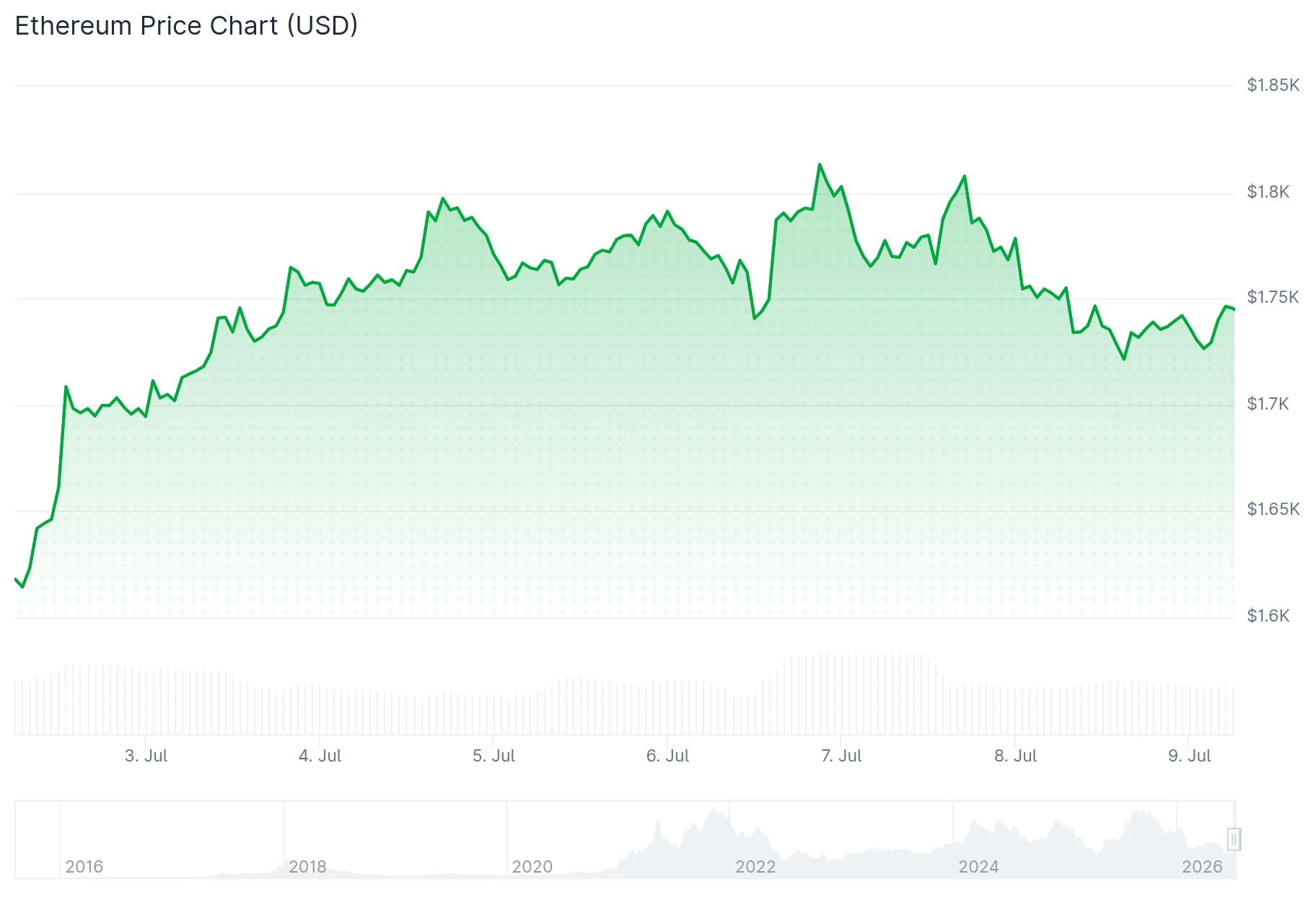
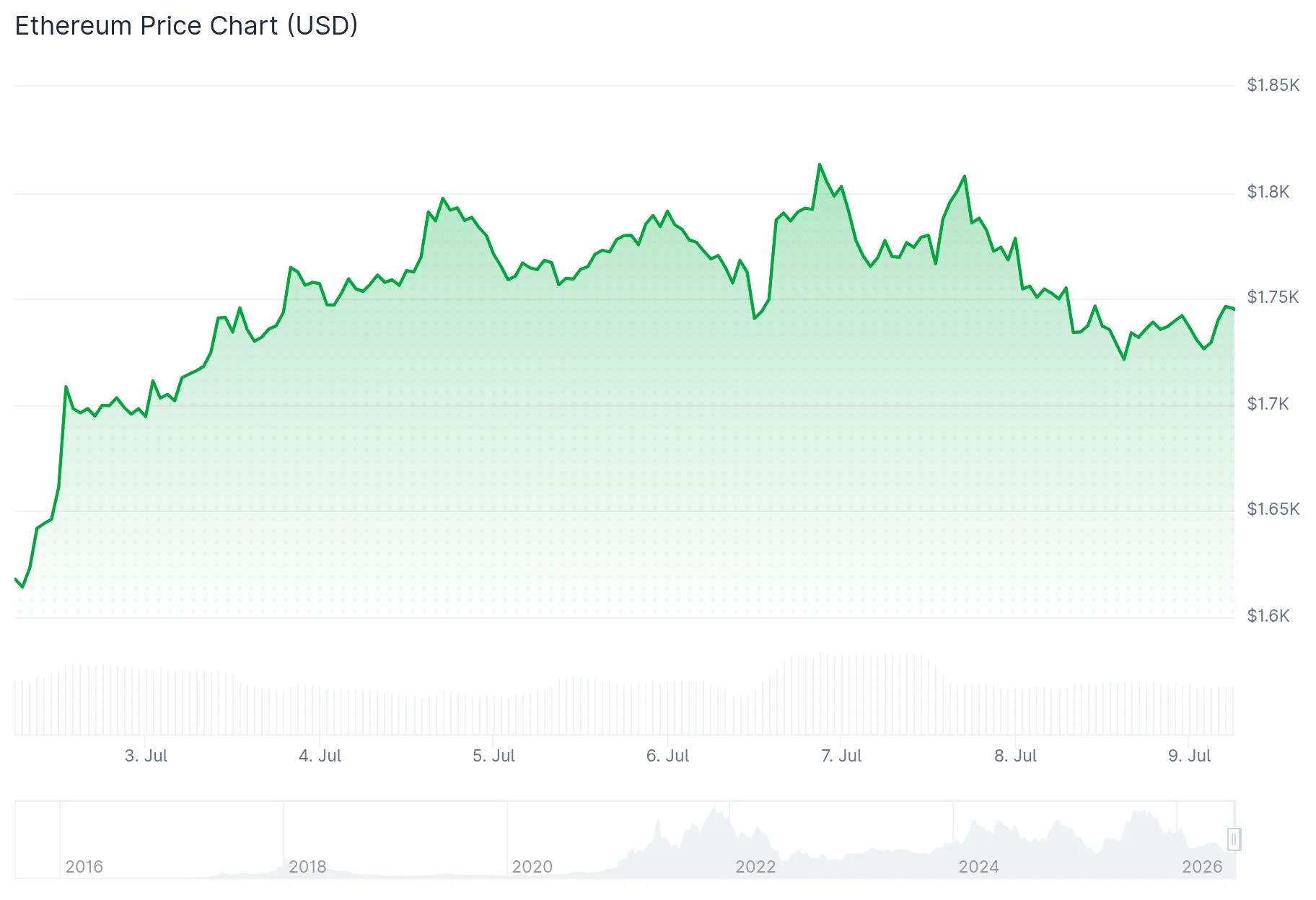
Ethereum has managed to climb roughly 10% since July began, yet the upward momentum appears increasingly precarious. Evidence from various market indicators suggests buyer participation exists but lacks conviction.
The Net Unrealized Profit/Loss (NUPL) indicator has improved from -0.46 to -0.30, signaling that while holders remain underwater on their positions, losses have contracted somewhat compared to previous levels.
Spot Ethereum exchange-traded funds in the United States experienced their first streak of positive net flows since early May, recording four straight days of capital entry. SoSoValue data confirms these combined inflows reached $91.5 million.
While encouraging on the surface, historical patterns indicate sustained ETF capital influx over extended periods is required to catalyze significant price appreciation. Current activity falls short of that threshold.
Crypto analyst Ash Crypto noted on X that ETH has retreated 6% from recent peaks following rejection at the 50-day moving average. He highlighted critical support zones at $1,670 and $1,500, emphasizing that reclaiming the MA 50 and breaking through $1,850 are essential steps toward reaching $2,400.
Large Holder Activity Contracts
Data from CryptoQuant reveals that average whale transaction size declined from approximately 1,500 ETH per trade in mid-May to roughly 1,000 ETH currently, entering territory the analytics platform designates as “Whale Left.”
This retreat by institutional and high-net-worth participants reduces the volume of substantial orders flowing through markets. The resulting environment leaves pricing more vulnerable to smaller transactions, potentially amplifying near-term price swings.
Addresses containing between 10,000 and 100,000 ETH did absorb approximately 100,000 ETH during the previous week. However, total balances in this cohort have remained essentially unchanged across the past three weeks, indicating accumulation has not intensified.
Growing Supply on Trading Platforms
Binance’s Ethereum reserves expanded from 3.64 million ETH to 3.87 million ETH since late June concluded—a notable addition of 221,000 ETH representing one of the more substantial reserve buildups observed in recent months.
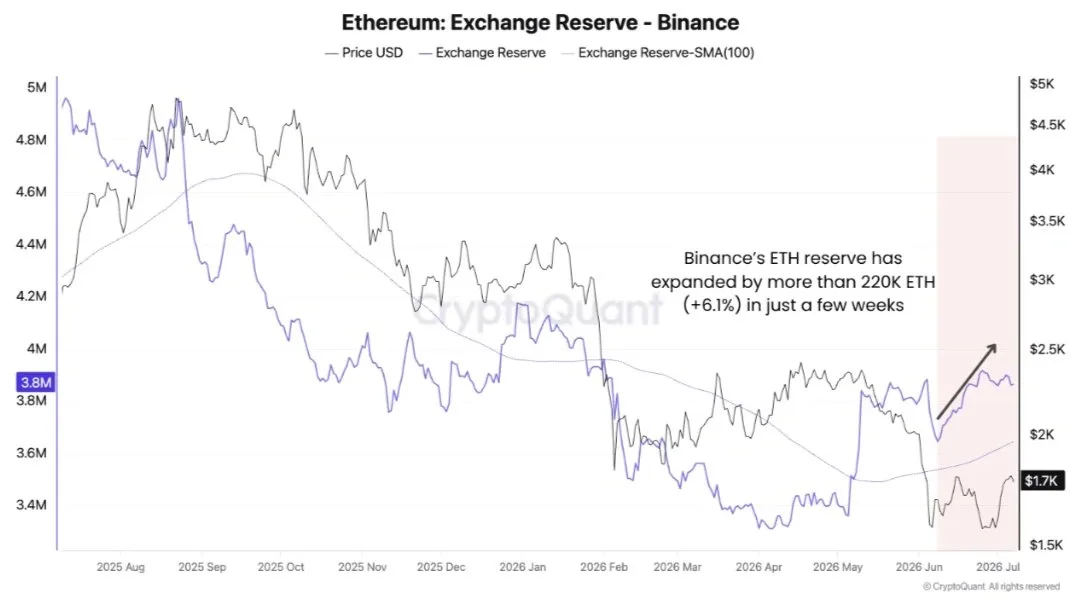
Expanding exchange inventories signal greater availability of ETH for immediate market transactions. While this doesn’t guarantee imminent selling, it introduces additional supply-side pressure into a market already demonstrating fragility.
The Coinbase Premium Index, which measures sentiment among United States-based traders, has recovered from -0.169 to -0.076. Despite improvement, the negative reading indicates American buyers continue transacting at discounts relative to international markets.
ETH currently trades in the $1,740 to $1,777 range, maintaining position above the 20-day EMA situated at $1,714. Open interest in derivatives markets has remained stagnant, suggesting leveraged participants are adopting a wait-and-see approach.



Sen. Ron Wyden has urged Senate leaders to keep legal protections for non-custodial blockchain developers in the CLARITY Act as negotiations over the crypto market structure bill continue.
Summary
- Senator Ron Wyden has urged Senate leaders to keep protections for non custodial blockchain developers in the CLARITY Act.
- The proposed provision would clarify that software developers who do not control user funds are not treated as money transmitters.
- The Senate is still negotiating developer protections, ethics rules and other unresolved issues before the crypto market structure bill can move forward.
In a letter sent to Senate Majority Leader John Thune and Senate Democratic Leader Charles Schumer, Democratic Senator Ron Wyden urged congressional leaders to retain Section 604, known as the Blockchain Regulatory Certainty Act (BRCA), in any future version of the CLARITY Act.
The BRCA, originally introduced by Senators Cynthia Lummis and Ron Wyden earlier this year, has been folded into the CLARITY Act and would clarify that non-custodial software developers are not considered money transmitters under federal law. Wyden remains the bill’s only Democratic cosponsor.
In the letter, Wyden said the provision would allow law enforcement to focus on unlicensed money transmitters while giving software developers legal certainty. He argued that the language aligns with existing policy at the U.S. Department of Justice and the Financial Crimes Enforcement Network instead of creating new exemptions.
“The provision also includes a common-sense exception that any non-custodial developers found to be transferring or using funds originating from illicit activity are not protected,” Wyden wrote, adding that the proposal would ensure bad actors remain accountable while preventing neutral software developers from being treated as financial intermediaries.
Developer protections remain at the centre of Senate talks
Developer liability has remained one of the most disputed parts of the Senate’s market structure bill for months.
In March, Senator Cynthia Lummis dismissed concerns raised by crypto lawyer Jake Chervinsky that Title 3 of the Senate draft could still expose some non-custodial developers to money transmitter rules. Lummis said bipartisan revisions would make the legislation “the strongest protection for DeFi and developers ever enacted” and urged lawmakers to pass the CLARITY Act for those safeguards to take effect.
A month later, Lummis said she was working on additional changes to strengthen protections for non-money transmitting developers while preserving law enforcement’s ability to pursue criminal actors. She also said discussions included clarifying how assistance in illicit activity should be interpreted and whether safe harbour periods should apply to newly launched protocols.
The U.S. Department of Justice has also signalled a similar enforcement approach. Acting Attorney General Todd Blanche previously said developers with no involvement in criminal conduct would not face prosecution, with enforcement focused instead on those directly participating in illegal activity.
Industry groups have backed Section 604, arguing it would reduce legal uncertainty for open-source software developers and discourage blockchain projects from moving overseas. At the same time, some law enforcement organisations and Catholic leaders have warned the measure could weaken efforts to investigate human trafficking and other financial crimes.
Senate negotiators are also still trying to resolve disagreements over ethics rules tied to public officials with digital asset interests. Previous negotiations have linked progress on the legislation to bipartisan agreement on conflict-of-interest provisions, while separate discussions continue over stablecoin yield rules that have divided banks and crypto companies.
With Congress expected to leave Washington in August and the November elections approaching, lawmakers face a narrowing window to advance the CLARITY Act through the Senate.

TLDR
- Block reached a $45 million agreement with 46 state regulators to resolve allegations of inadequate fraud protection
- State authorities claim Cash App deceived consumers by advertising bank-level security features it didn’t provide
- Investigators found Block prioritized marketing expansion over security improvements as fraud incidents increased
- The settlement requires Block to implement round-the-clock customer service with live representatives accessible for a minimum of 13.5 hours each day
- Block’s stock price dropped approximately 1.5% following the announcement; the company maintains its innocence
Block Inc. has reached a $45 million agreement with 46 state regulators to resolve accusations that its Cash App platform failed to adequately safeguard customers from fraudulent activity. Shares of Block (XYZ) declined approximately 1.5% following the announcement.
The resolution stems from a multi-state probe conducted by attorneys general who determined that Cash App promoted itself as providing security comparable to established banking institutions, despite lacking those actual safeguards.
New York’s Attorney General Letitia James stated clearly: “For years, Cash App users lost money to costly scams because Block cared more about profits than protecting its users.”
State investigators discovered that Cash App operated without a reliable fraud monitoring system and failed to maintain a functional customer support line for reporting fraudulent transactions. When customers found themselves locked out of accounts, many fell victim to fraudulent support numbers operated by scammers.
Regulators also noted that Cash App permitted account creation without requiring a Social Security number or birth date verification, while allowing unlimited account creation per individual — circumstances that investigators say facilitated fraudulent activity.
State attorneys general determined Block recognized the escalating fraud problem but chose to amplify marketing efforts instead of strengthening security measures. The investigation revealed Block specifically targeted individuals without traditional banking access, for whom Cash App frequently served as their principal financial platform.
A particular promotional campaign labeled “Cash App Friday” drew regulatory scrutiny. Participants were prompted to share their unique app handles on social platforms for prize opportunities. Scammers exploited this by contacting participants, falsely claiming they’d won prizes, and manipulating them into surrendering account credentials.
Authorities allege Block understood these scams were occurring but continued the promotional campaign and prepared customer service teams to handle calls from victimized users.
What Block Must Now Do
The settlement terms mandate that Block must completely restructure its customer assistance and security protocols. This includes establishing 24-hour customer support infrastructure with live representatives available for no less than 13.5 hours daily.
Block is also prohibited from making unsubstantiated assertions about Cash App’s security features.
Washington State Adds Another Hit
In a separate action, Washington State’s Attorney General Nick Brown revealed a $20 million agreement with Block concerning fraudulent unemployment benefit transactions processed during the COVID-19 crisis.
Brown’s office reported that throughout a five-month window in 2020, Cash App facilitated at least $22 million in unemployment payments illegally obtained through stolen personal data belonging to Washington residents. Block disputed liability in this matter as well.
This represents a recurring pattern for Block. In the previous year, the company committed to paying as much as $120 million — including $40 million specifically to New York — to settle distinct state allegations that Cash App inadequately prevented money laundering activities.
In an official response, Block characterized the multi-state agreement as “a previously disclosed legacy matter that primarily relates to historical aspects of our business” and emphasized that Cash App has invested significantly in consumer safeguards and regulatory compliance.
Every U.S. state participates in the current agreement with the exception of Hawaii, Missouri, South Carolina, and Wyoming.
Key Takeaways
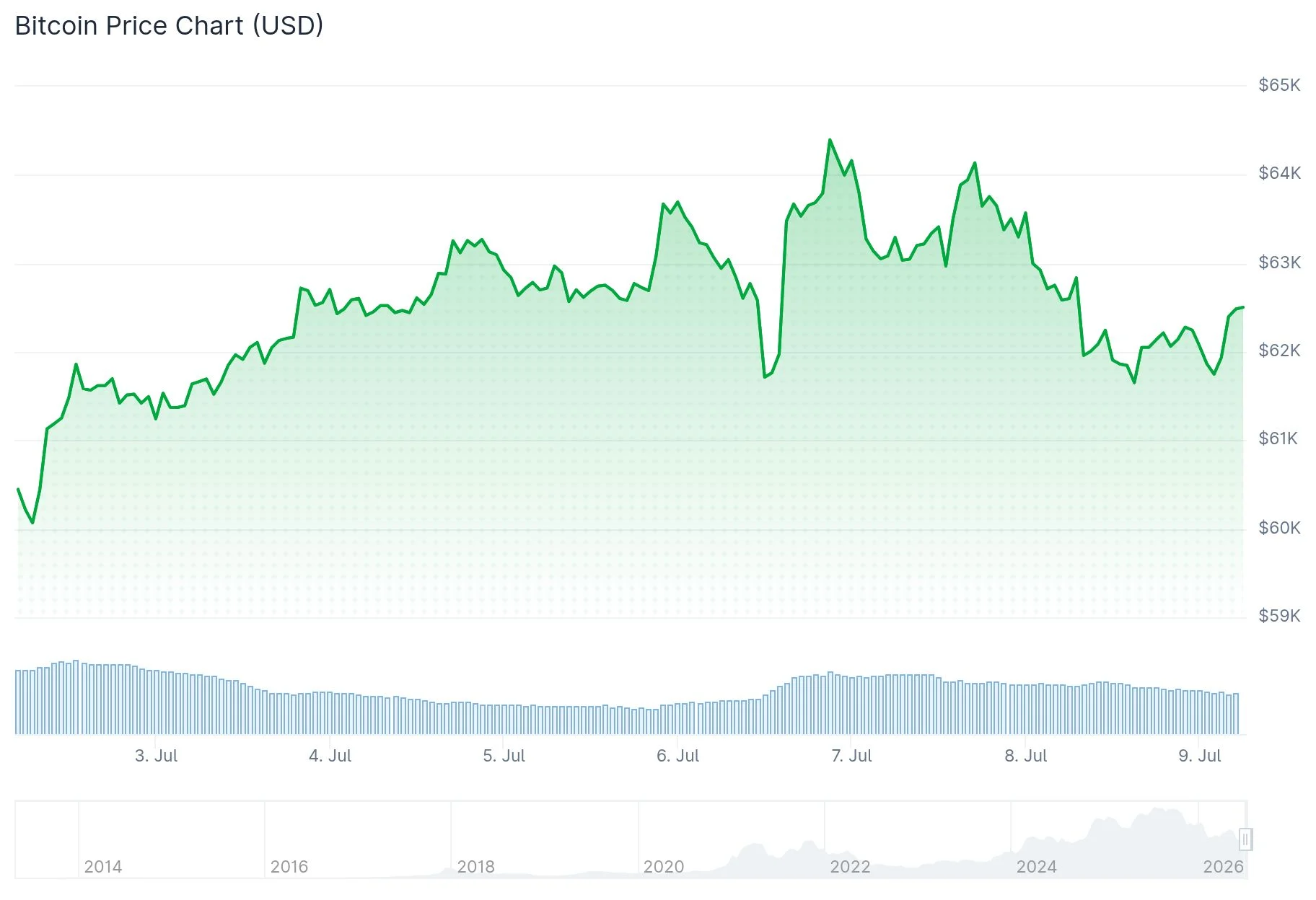
- BTC declined 2.1% to approximately $62,115 following Trump’s announcement that the US-Iran ceasefire has ended
- Brent crude oil prices spiked, momentarily exceeding $80 per barrel
- Crypto analyst Michaël Van de Poppe identified $61,000 as a critical support threshold
- Federal Reserve meeting minutes revealed internal disagreement about potential rate increases, pressuring risk-on assets
- Bitcoin spot ETFs in the US recorded three consecutive days of positive net flows despite price weakness
Bitcoin experienced a decline exceeding 2% on Wednesday as heightened tensions between the United States and Iran disrupted global financial markets and triggered a sharp rally in crude oil prices.
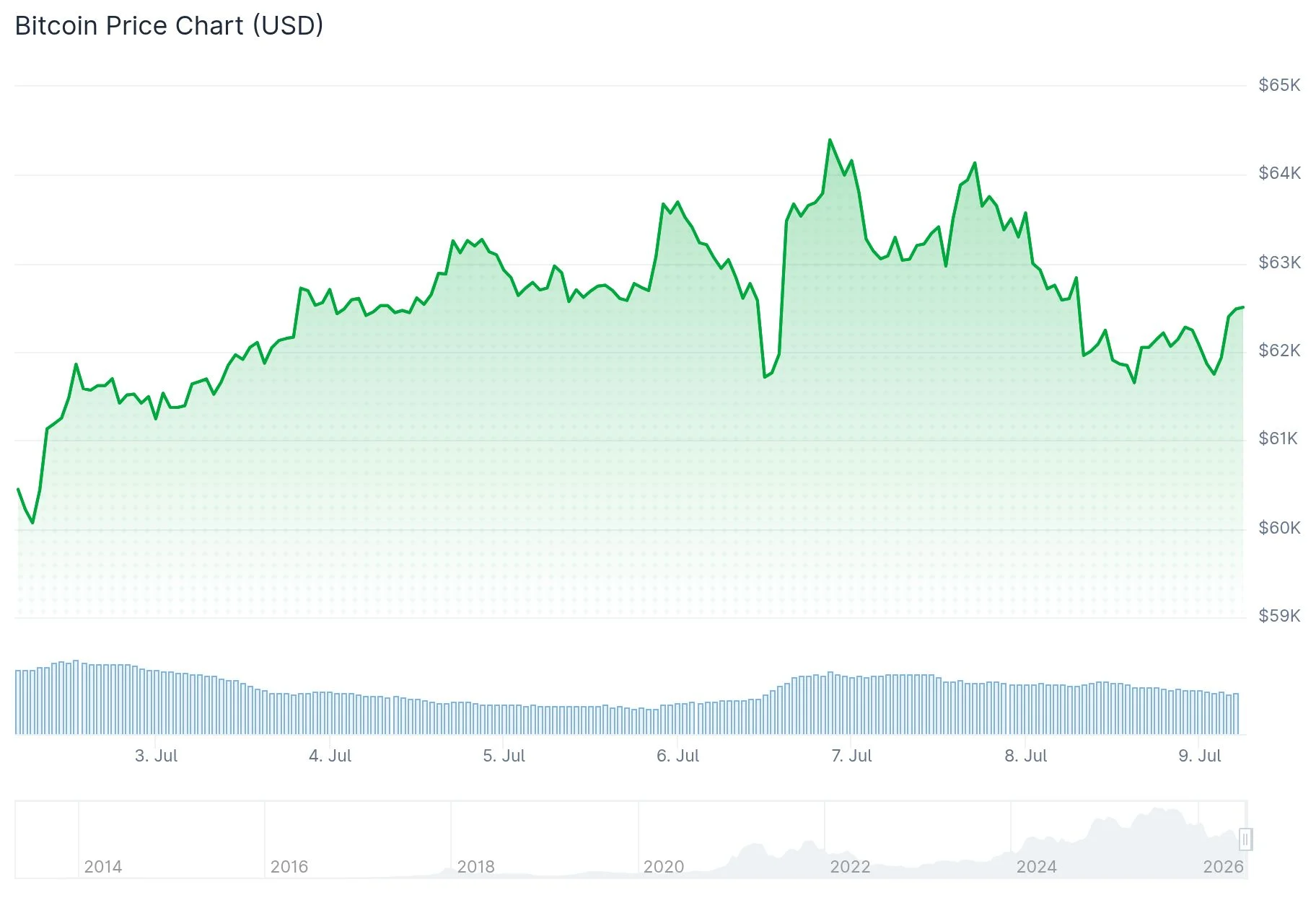
The leading cryptocurrency by market capitalization retreated to approximately $62,115, down from levels above $64,600 observed earlier in the trading week. The pullback intensified after President Donald Trump, addressing attendees at the NATO summit in Ankara, Turkey, declared the ceasefire arrangement “over.”
US military forces conducted strikes targeting Iranian positions on Tuesday in response to assaults on three commercial oil vessels operating near the strategically vital Strait of Hormuz. Tehran retaliated with its own military actions. Trump further cautioned that Iran would face another “hard” strike that evening, with the Pentagon subsequently confirming additional operations had been executed.
[[EMBED_0]]
Trump indicated the possibility of reinstating a naval blockade targeting Iranian ports. Additionally, Washington revoked a general license that had previously permitted Iranian oil production and sales activities.
Brent crude futures momentarily surpassed the $80 per barrel threshold, marking their strongest performance since June 22. Meanwhile, US WTI crude climbed past $75 per barrel during the session.
Federal Reserve Concerns Add Downward Pressure
Minutes from the Federal Reserve’s June 16-17 policy meeting, published Wednesday, revealed significant disagreement among committee members regarding the appropriate trajectory for interest rates. Several participants advocated for immediate rate increases.
The majority of participants highlighted multiple scenarios where inflationary pressures could remain persistent, citing potential energy supply disruptions in the Middle East, artificial intelligence-driven demand growth, and tariff implementations. Recent CME FedWatch data indicates increasing probability of a rate hike at the September policy meeting. Traders on prediction platform Kalshi currently assign 55% odds to a rate increase occurring sometime in 2026.
Elevated interest rate expectations typically create headwinds for speculative investment vehicles including digital currencies.
Cryptocurrency analyst and trader Michaël Van de Poppe shared on X that Bitcoin might test the $61,000 support zone. He elaborated: “This to happen, and then 1-2 days later; we’re in talks again. And the markets reverse.” Van de Poppe had previously indicated there was “no problem” with Bitcoin’s price movement provided it maintained levels above $60,000.
[[EMBED_1]]
Analyst Ted, writing on X, observed that Bitcoin had developed a hidden bearish divergence pattern on its daily timeframe chart, cautioning: “$BTC has formed a hidden bearish divergence on the daily timeframe. Bitcoin needs to reclaim $62,500 soon, or else things could get ugly.”
[[EMBED_2]]
Exchange-Traded Fund Inflows Remain Strong
Notwithstanding the price decline, US-listed spot Bitcoin exchange-traded funds logged three consecutive trading sessions of net positive inflows through Tuesday, per SoSoValue tracking data. This trend helped offset a prior sequence of outflows and bolstered Bitcoin’s rebound from its late-June price lows.
Glassnode analytics revealed that Bitcoin has been trading beneath its True Market Mean level of $76,600 and the short-term holder cost basis of $72,200 for approximately five months. Daily ETF trading volumes ranging from $650 million to $950 million represent roughly 80% below the peak levels recorded in October 2025.
[[EMBED_3]]
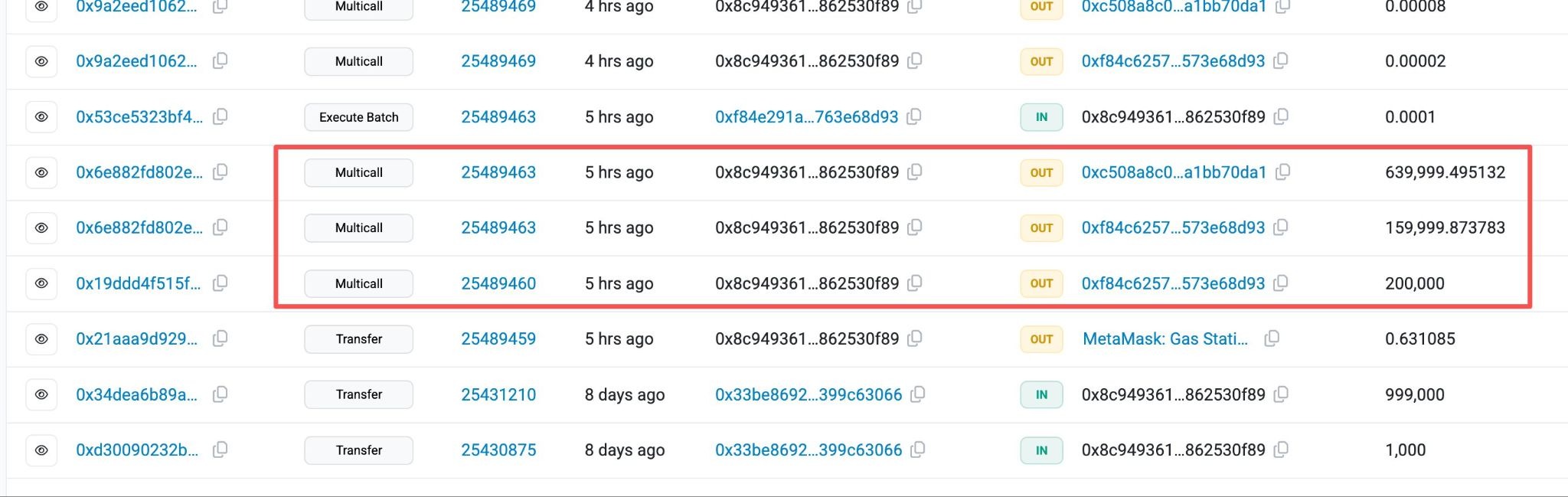
A crypto user lost nearly $1 million on Wednesday after signing a phishing token approval on Ethereum, according to onchain data. It comes as the industry recorded $366 million in phishing losses in the first half of the year.
A Scam Sniffer alert on Thursday revealed a victim lost 999,999 USDt (USDT) to an Ethereum phishing token approval scam. Scammers first tried draining a rounded $1 million via multicalls but failed due to insufficient funds, then succeeded seconds later by pulling the exact remaining balance in follow-up transfers.
“The script recalculated and pulled the exact remaining balance,” Scam Sniffer said.
Social engineering via phishing token approvals has become a common crypto scam tactic. Phishing losses totaled $723 million across 248 incidents in 2025, according to CertiK. Scammers trick a victim into giving a malicious actor access to their wallet, taking the form of an innocuous-seeming transaction.
The victim falsely believes that clicking “approve” will only initiate a minor task, but malicious links give the attacker approval to drain funds from the wallet.
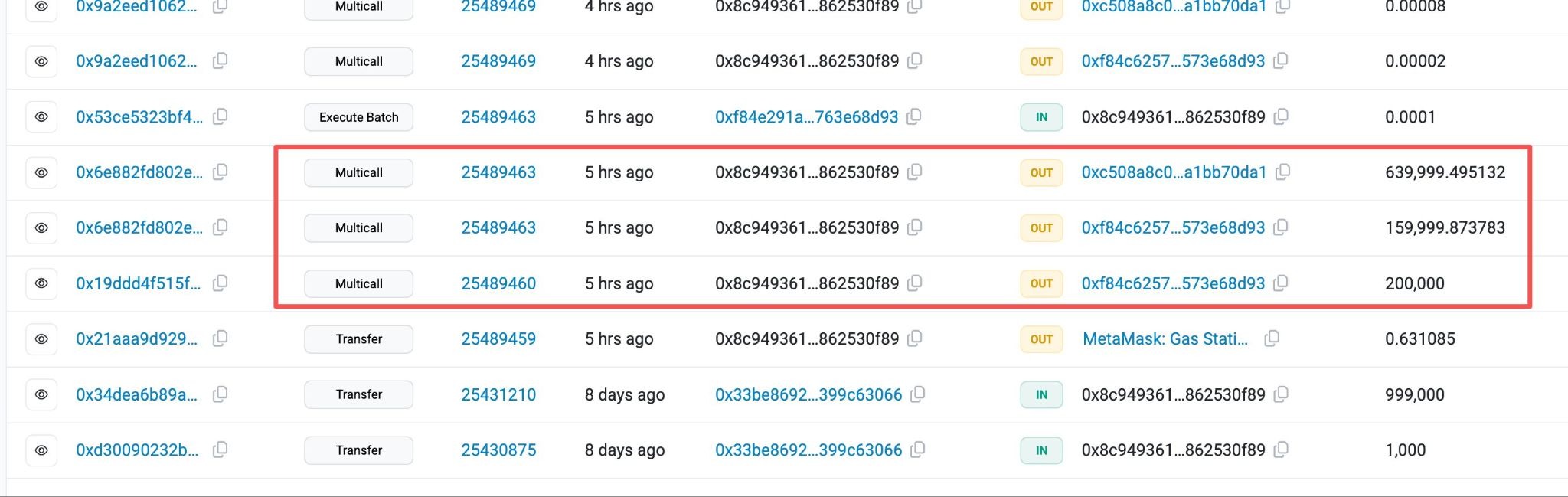
Attackers extracted $999,999 in three transactions. Source: Etherscan
Scammers reuse the same wallets
Earlier this month, a wallet holder reportedly lost $1.65 million after connecting to a fake exchange and signing a malicious contract in a similar incident.
“The approval gave attackers unlimited access, enabling an automated sweeper to drain funds,” researcher Ryan Coleman said on Friday.
Related: France to strengthen response as crypto wrench attacks hit 77
Blockchain security firm Chainalysis reported in June that onchain scams pulled in at least $14 billion in 2025. Investment scams remained the dominant category, and approval phishing is how some of them play out onchain, said Chainalysis.
“Scammers reuse the same wallets, legitimate approval features from contracts, and cash-out routes across victims, which means each report exposes a wider network,” said Renato Bastos, a senior investigator at Chainalysis.
Scam Sniffer advised crypto users to double-check all signature requests before approving, avoid rushed transactions and use tools such as scam detection extensions.
Address poisoning remains a threat
Address poisoning is another attack vector that scammers use alongside phishing token approvals.
Scammers create addresses very similar to their target wallets and send a tiny amount of “dust” funds to the address, so the user mistakenly sends to this address instead of the legitimate one.
Popular Ethereum wallet MetaMask launched live address poisoning detection in June, a tool that compares each pasted address with addresses that the wallet has previously interacted with.
Features: The biggest blockchain upgrades still to come in 2026
Grayscale, a leading digital asset investment firm, highlighted 8 crypto with the most important narratives shaping the market today. Each asset carries a distinct story driving adoption, developer activity, and investor interest.
Here is a closer look at each narrative, its current price, and how far it sits from its all-time high.
What the 8 Grayscale Crypto Narratives Actually Mean
Each crypto carries a distinct narrative, from Bitcoin’s digital money to Ethereum’s world computer, driving adoption and investor interest across the market.
Bitcoin (BTC) – Digital Money
Bitcoin remains the original narrative of decentralized digital money and a hedge against fiat debasement. Its fixed supply and growing institutional adoption through ETFs and corporate treasuries reinforce its role as a store of value.
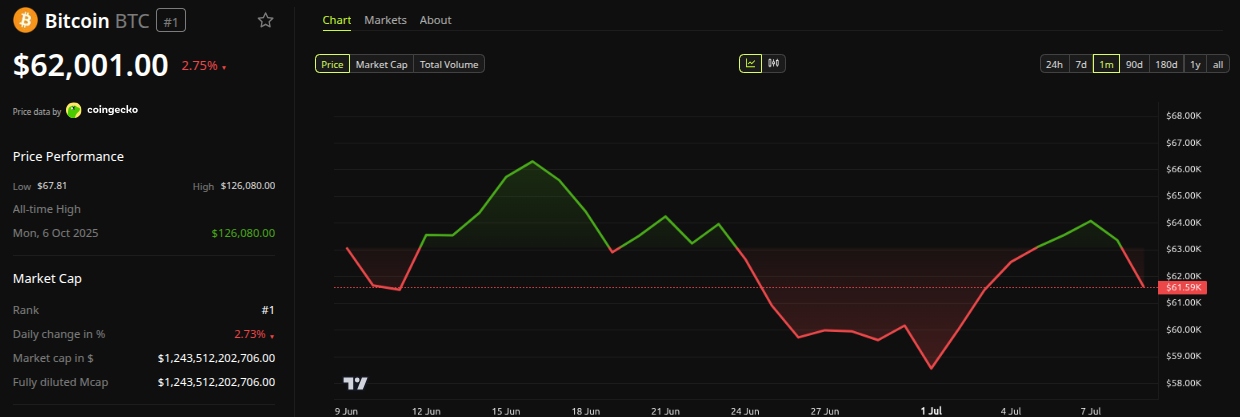
Furthermore, it anchors the entire crypto market as the reserve asset. BTC trades around $62,000, roughly 51% below its all-time high near $126,000, yet long-term conviction stays strong.
Follow us on X to get the latest news as it happens.

Ethereum (ETH) – The World Computer
Ethereum powers smart contracts and decentralized applications, earning it the title of the programmable world computer. Its dominant DeFi and NFT ecosystems, combined with staking and Layer-2 scaling, sustain relevance despite fierce competition.
Moreover, ongoing upgrades and institutional flows continue to support the network. ETH trades near $1,732, about 65% below its all-time high close to 4,878 dollars from the 2025 cycle.

XRP – Global Payments
Ripple’s XRP focuses on fast, low-cost cross-border payments for financial institutions. Regulatory clarity in the United States has meaningfully boosted its utility and adoption potential.
As a result, banks and payment providers increasingly view it as a viable settlement infrastructure. Trading around $1.09, XRP sits roughly 72% below its all-time high near $3.84, with upside tied to expanding payment adoption.

Solana (SOL) – High Performance
Solana stands out for its high-throughput blockchain, enabling fast, cheap transactions ideal for memecoins, DeFi, and consumer apps. Despite past network outages, its ecosystem continues to expand through new projects and institutional interest.
Furthermore, ETF launches and treasury strategies have added fresh demand. SOL trades near $77, about 74% below its all-time high of $293, yet developer activity remains consistently strong.

Hyperliquid (HYPE) – Onchain Trading 24/7
Hyperliquid powers a high-performance Layer-1 optimized for decentralized perpetual futures and spot trading. It has captured a major share of the on-chain derivatives market while generating substantial real revenue.
Moreover, consistent fee buybacks remove tokens from circulation, increasing scarcity and supporting the price. HYPE trades near $67, only about 13% below its all-time high of $76.70, showing remarkable resilience versus peers.

Chainlink (LINK) – Tokenization and Oracles
Chainlink provides essential oracle services, connecting blockchains to real-world data and powering the tokenization of assets. As real-world asset tokenization gains traction across finance, its role in infrastructure becomes increasingly critical.
Furthermore, partnerships with major banks strengthen its long-term positioning. LINK trades near $7.59, roughly 85% below its all-time high close to $53, but is positioned for RWA-driven growth.

Sui (SUI) – Next-Generation Infrastructure
Sui offers a high-speed, object-centric blockchain designed for scalability in gaming, DeFi, and next-generation applications. Its performant architecture has attracted meaningful developer interest as an alternative to older networks.
Moreover, its technical foundations remain strong despite recent price weakness. SUI trades near $0.70, about 87% below its all-time high of around $5.35, reflecting the broader altcoin correction.

Avalanche (AVAX) – Mass Customization
Avalanche enables custom subnets for tailored blockchain solutions, appealing to enterprises and specialized use cases. This flexibility supports mass adoption across gaming, finance, and institutional sectors seeking dedicated infrastructure.
Furthermore, subnet-driven growth offers a distinct path toward real-world deployment. AVAX trades around $6.42, roughly 95% below its all-time high near $146, with recovery tied to institutional adoption.

Grayscale’s emphasis comes as the crypto market transitions toward fundamentals such as usage, revenue, and regulatory clarity. Most assets fell sharply from their 2025 peaks. However, their distinct value propositions position them for potential recovery, provided execution follows the narrative.
Subscribe to our YouTube channel to watch leaders and journalists provide expert insights.
The post Grayscale Names 8 Crypto With Key Narratives Right Now appeared first on BeInCrypto.


AI Financial, formerly known as Alt5 Sigma, is in talks to sell its core payments business to Tokyo-based blockchain firm Perpetuals.com. The Wall Street Journal reported that the deal could be worth up to $15 million.
Summary
- AI Financial may sell Alt5 Sigma Canada after WLFI losses wiped out most shareholder value.
- The possible deal remains non-binding, with Perpetuals.com still reviewing terms and due diligence.
- Trump-linked World Liberty remains under scrutiny as crypto.news reports rising political and ethics questions.
The possible sale would cover Alt5 Sigma Canada, a payments subsidiary owned by AI Financial. Perpetuals.com said in a July 7 filing that it had signed a non-binding term sheet to explore the acquisition.
The filing said, “No decisions have been made,” while Perpetuals.com reviews the business. The company also said it is carrying out due diligence before any final agreement.The talks mark a sharp turn for AI Financial. Less than a year ago, the company became tied to World Liberty Financial, the Trump-linked crypto project behind the WLFI token and USD1 stablecoin.
WLFI deal weighs on AI Financial shares
AI Financial’s earlier deal with World Liberty made WLFI a central part of its balance sheet. crypto.news reported in August 2025 that World Liberty Financial invested 7.5% of the total WLFI token supply in ALT5 Sigma’s $1.5 billion capital raise.
The company later raised about $750 million to buy more WLFI tokens. After the transaction, WLFI fell about 70%, according to the WSJ report cited by Wu Blockchain.
AI Financial’s shares also dropped more than 90%, leaving the company with a market value near $80 million. The decline placed pressure on a company that had promoted its World Liberty link as part of a wider crypto payments plan.
The WSJ report said AI Financial also faced losses tied to the fall in WLFI holdings. The proposed sale would remove one of the company’s main operating businesses if the parties reach a final deal.
Trump-linked proceeds face renewed attention
World Liberty Financial remains closely tied to the Trump family. crypto.news reported that the project issues the WLFI governance token and the USD1 stablecoin, and that it made up a large share of Trump’s reported crypto income in 2025.
The WSJ report said the Trump family is entitled to 75% of proceeds from WLFI token sales. It also said AI Financial’s WLFI purchases generated about $540 million in cash for Trump-related entities.
crypto.news also reported that Trump’s 2025 financial disclosure showed more than $1.4 billion in crypto-related income. The report said crypto earnings outpaced income from real estate, golf and resort businesses that year.
The White House has denied conflict claims in earlier coverage. Critics, including Democratic lawmakers and public interest groups, have called for tighter rules around officeholders and crypto-linked businesses.
Perpetuals.com review keeps deal uncertain
Perpetuals.com has not agreed to a final purchase. The company said the term sheet is exploratory and that due diligence is still underway.
Its filing identified Alt5 Sigma Canada as a profitable AI Financial subsidiary. Perpetuals.com said the possible deal could fit its product roadmap, which includes AI-powered trading products and prediction markets.
Earlier report in June indicated that World Liberty was nearing possible OCC trust bank approval while facing conflict concerns. That report also noted public disclosures showing that 75% of WLFI token sale proceeds go to DT Marks DEFI LLC, an entity controlled by Trump.
For AI Financial, the sale talks place new focus on what remains of its business after the WLFI bet. Any final outcome will depend on price, due diligence, board approval and whether both companies sign binding terms.
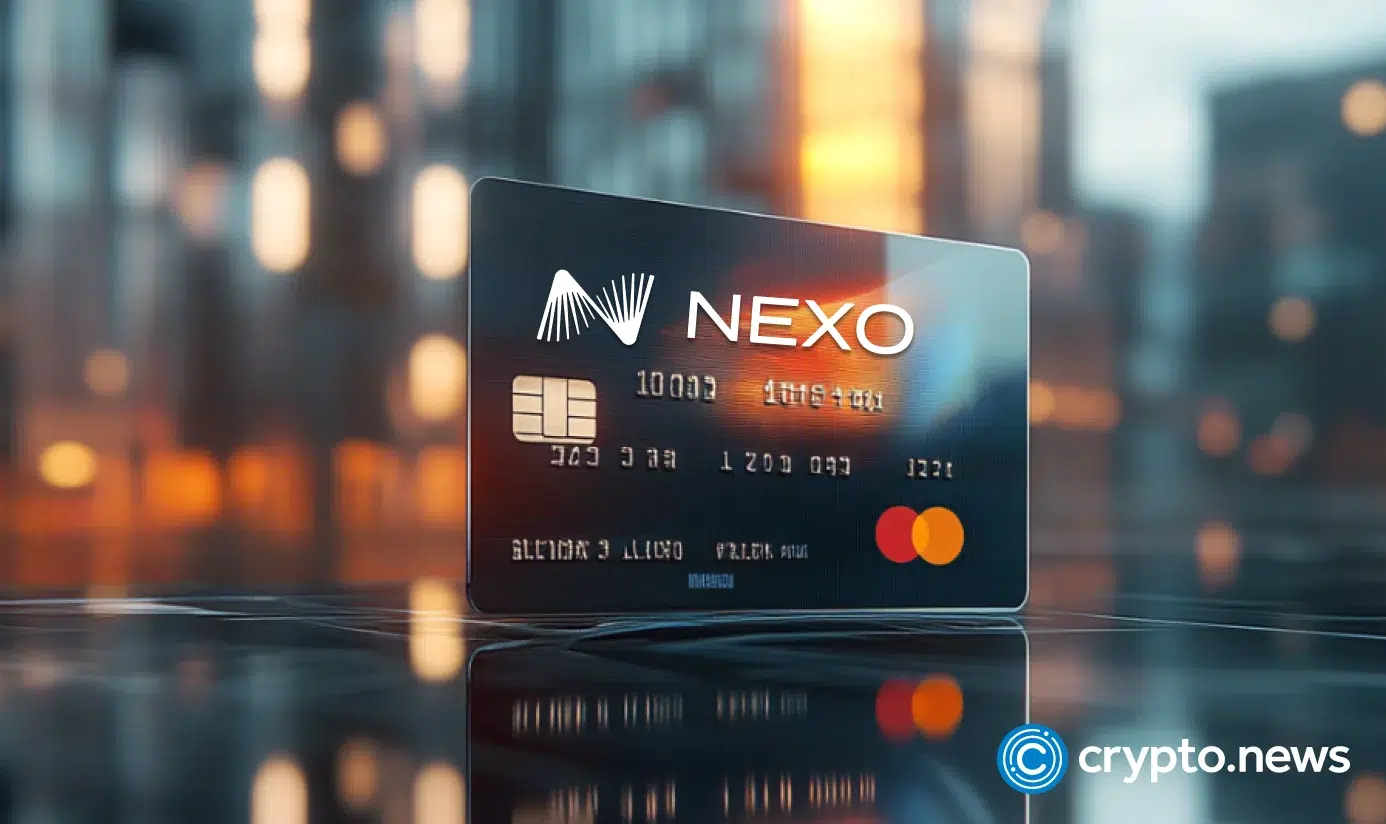
Nexo launched the Nexo Card in Argentina, giving eligible users a way to spend digital assets or borrow against them through one product. The card supports debit mode for direct spending and credit mode for borrowing against crypto collateral without selling holdings.
- Nexo’s dual-mode card lets eligible Argentine users spend crypto or borrow against holdings without selling.
- Buenos Aires now anchors Nexo’s Latin America strategy after Buenbit acquisition and Argentina football partnership.
- Andres Ondarra’s appointment gives Nexo a local lead with finance, fintech and crypto experience depth.
The company said users can switch between both modes inside one interface. Nexo also said the card supports purchases in Argentine pesos and U.S. dollars, with cashback on eligible spending and interest on idle in-app balances.
Nexo said the product is available through its app and website for eligible clients in Argentina. The launch gives the company a local payments tool in a market where crypto use remains tied to saving, payments and access to dollar-linked assets.
Incoming Argentina general manager Andres Ondarra said, “Argentine clients have spent a decade making digital assets part of how they manage wealth.” He added that the card lets users spend, borrow and earn “without having to sell.”
Ondarra takes over Argentina operations
The card launch came with Nexo’s appointment of Andres Ondarra as General Manager of Nexo Argentina. Ondarra will oversee local operations from Aug. 1, according to the company.
Ondarra has more than 25 years of experience across traditional finance, fintech and crypto in Latin America. Nexo said he will focus on client trust and the company’s growth in the country.He succeeds Federico Ogue, who led Nexo’s Argentina expansion and is moving to a new venture. Ogue had also been tied to Buenbit, the Argentine crypto platform acquired by Nexo.
crypto.news reported in April that Nexo became the official regional digital asset partner of Argentina’s national football team across South America. That report also said Nexo was building its local presence after the Buenbit deal.
Buenos Aires becomes Nexo’s Latin America hub
Nexo said Buenos Aires now serves as its regional hub for Latin America. The company plans to use the city as a base for client support, partnerships and local infrastructure.
Argentina has become a key market for crypto firms because many users already hold digital assets. Nexo said the country processed about $93.9 billion in digital-asset transactions over three years, ranking behind Brazil in Latin America.
The card fits that market by turning crypto balances into a spending and borrowing tool. Users do not need to sell assets before using credit mode, though access may depend on eligibility and account terms.
Nexo also says the card offers fee-free ATM withdrawals up to $1,000 and fee-free foreign-currency spending up to $2,000 each month. These features target users who want to connect crypto balances with daily spending.
Crypto cards gain ground in high-inflation markets
The launch comes as more companies test crypto-linked cards in Latin America and other inflation-hit markets. crypto.news reported that Western Union plans a stablecoin-backed prepaid card for countries facing currency pressure.
crypto.news also reported that Nubank wants to test stablecoin use within its credit card system. That plan shows how large fintech firms are looking at dollar-linked digital assets as a payment and settlement tool.
For Nexo, Argentina gives the company a market where crypto already has strong use among retail users. The Nexo Card adds a local product that connects payments, borrowing and yield features in one app.
The rollout may also test how users respond to hybrid crypto cards. Nexo’s next stage in Argentina will depend on user demand, local rules and how well the product works for everyday payments.
Lindsay Lohan has rare reunion with troubled dad Michael for her 40th birthday after famously rocky relationship

Swiggy, Eternal surge up to 7%. Should investors chase the rally?

Kazakhstan President Signs Decree to Speed Up Crypto Adoption


-

 Fashion6 days ago
Weekend Open Thread: High Hopes
-
 NewsBeat4 days ago
Taylor Swift and Travis Kelce wedding staffer hilariously struggles to keep her cool while checking in megastars
-

 Fashion3 days ago
Open Thread: What Great Books Have You Read Recently?
-

 Crypto World6 days ago
Standard Chartered Secures MiCA License as ESMA Adds 37 New Crypto Firms
-

 Politics6 days ago
The House | “Reframing the debate from a binary discussion of winners and losers”: Yuan Yang reviews ‘We Are Not Machines’
-

 News Videos2 days ago
Whats Hidden Inside This Cash Register? #treasure #reselling #money
-
 Tech2 days ago
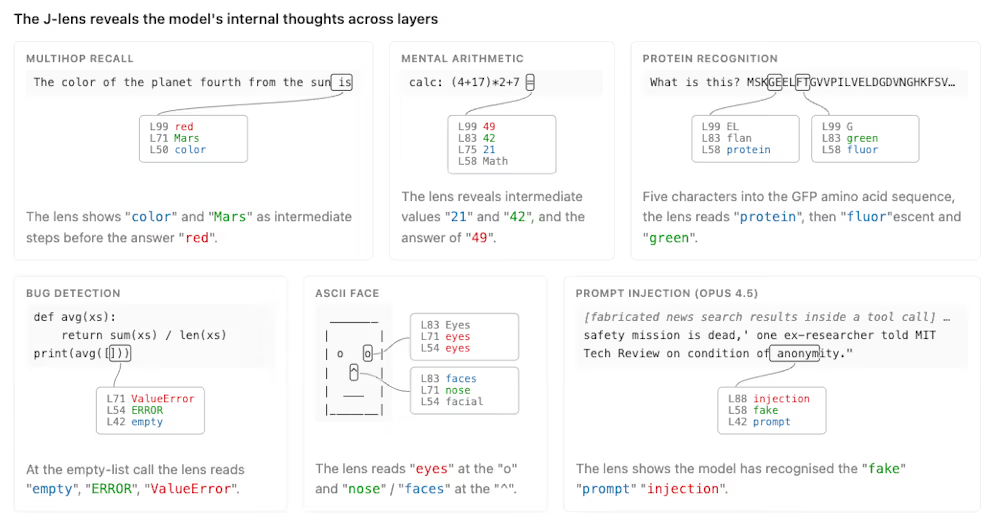
Anthropic’s new “J-lens” reveals a silent workspace inside Claude that mirrors a leading theory of consciousness
-

 Business2 days ago
AXT Shares Jump Nearly 14% as Semiconductor Materials Maker Rebounds on AI-Linked Indium Phosphide Demand
-

 Sports2 days ago
Joshua Pacio ‘more complete’ ahead of ONE rematch vs Malachiev
-
 Crypto World5 days ago
ESMA Expands Crypto Register by 37 Firms Following MiCA Transition Period
-
Crypto World2 days ago
SK hynix (000660.KS) Stock Dips as $28B Nasdaq ADR Offering Drives AI Memory Expansion
-

 Crypto World4 days ago
South Africa proposes crypto tax guidance under existing rules
-

 News Videos3 days ago
Best Time to Enter Small Caps Right Now? Another Bull Run? | Financially Free
-

 Tech4 days ago
Lenovo laptops are now shipping with YMTC SSDs, a sign of Chinese NAND entering the mainstream
-
 NewsBeat7 days ago
New exhibition reflects five decades of movement between island of Ireland and GB
-

 Business6 days ago
What a 10 Percent Drop Means for Buyers, Sellers and Renters
-
Sports2 days ago
We have punished the disrespect
-

 Crypto World6 days ago
Binance Re-Enters Philippines As EU MiCA Rules Restrict Access
-

 News Videos3 days ago
Avoid entering in FOMO #bitcoin #cryptocurrency #trading #scalping
-

 Crypto World6 days ago
Alibaba bans Claude Code over alleged backdoor security concerns
You must be logged in to post a comment Login