

Crypto World
LayerZero Eyes Wall Street Growth as Security Concerns Shadow Cross-Chain Ambitions

LayerZero is going deeper into finance. It wants to be part of the infrastructure for Wall Street institutions. The company has a protocol that lets different blockchains work together. Now it is promoting an idea that focuses on blockchain infrastructure for institutions.
LayerZero Expands Beyond Cross-Chain Transfers
Some people are worried about the security of systems that work with blockchains. LayerZero is known for its technology that enables messages to be sent across multiple blockchains. It has spent years building tools that help assets and data move between different blockchains. LayerZero connects more than 160 blockchain networks. It is one of the platforms that helps different blockchains work together in the crypto industry.
Recently, LayerZero has been focusing on getting institutions to use its technology. The company started a project called Zero this year. Zero is a blockchain infrastructure project that helps with financial trades, settlements, and tokenization. Big financial companies like Citadel Securities, DTCC, and ICE are supporting this project.
This is part of a trend. Many crypto companies are trying to work with Wall Street because it is getting more interested in tokenized assets and systems that use blockchain for settlements. LayerZero is pushing to be a part of this trend. It wants to help traditional finance institutions use blockchain technology.
Rivals Highlight Security Risks
LayerZero is still facing a lot of questions about the security of its chain technology, even though many institutions are supporting it.
Cross-chain bridges and messaging protocols are often targeted by hackers who look for weaknesses in the system to steal money. Over the past few years, hackers have stolen billions of dollars.
Recently, there was a problem with a bridge that uses LayerZero’s technology. The problem resulted in losses of $300 million. This incident intensified debate about the safety of cross-chain technology. Some competing companies were very critical, and a few projects are now looking for alternative approaches to cross-chain transactions.
Institutional Race Heats Up
These companies say that big investors need to be sure the technology is secure before they put in significant capital. Some projects have already moved to interoperability networks because of security concerns.
LayerZero says that its system is flexible and allows developers to choose how they want to secure their transactions. The company believes that cross-chain technology is essential for the future of blockchain, especially when real-world assets are moved across different networks.
More traditional financial institutions are exploring blockchain technology, meaning competition among companies that provide interoperability services will intensify. To succeed, these companies need to be secure, scalable, and able to comply with regulation.
Conclusion
LayerZero is trying to get into the finance sector on Wall Street. This is an attempt to combine traditional finance and blockchain technology. However, the company faces a challenge: it needs to prove that its technology is secure enough for institutional investors. The outcome will be important for the future of blockchain and tokenized finance.
LayerZero needs to show that its cross-chain technology is safe. If it can do this, it will be a step forward for the company and the industry.


Key Takeaways
- Uber has allocated approximately $500 million to self-driving technology firm Nuro via a combination of upfront capital and performance-based payments.
- This arrangement forms part of a trilateral partnership involving Nuro and Lucid to launch 35,000 autonomous taxis across Uber’s platform.
- These vehicles will utilize Lucid Gravity SUVs equipped with Nuro’s autonomous driving technology.
- Nuro has successfully achieved its initial benchmarks, triggering the release of the first installment of performance-tied financing.
- Future disbursements depend on driverless trials scheduled for later this year, completely autonomous passenger services by year’s end, and expanded deployment in 2027.
On June 4, Reuters disclosed that Uber Technologies (UBER) has pledged approximately $500 million to self-driving vehicle developer Nuro, according to confidential sources. UBER stock registered a 0.10% gain following the announcement.
This financial commitment exceeds Uber’s original contribution and combines equity investment with performance-contingent funding mechanisms. The move expands upon Uber’s involvement in Nuro’s $203 million financing round, which assigned the startup a $6 billion valuation.
Nuro’s investor roster includes Nvidia and SoftBank, providing substantial financial backing as the company accelerates its self-driving technology initiatives.
The central objective involves deploying 35,000 autonomous taxis built on Lucid Gravity SUVs, alongside upcoming midsize vehicle variants. These automobiles will incorporate Nuro’s autonomous driving platform and function within Uber’s ride-sharing ecosystem.
Uber previously announced a $500 million investment in Lucid, positioning itself as a significant financial participant throughout various segments of the value chain — spanning vehicle manufacturing, software development, and service delivery.
Performance Benchmarks Trigger Initial Funding
The performance-based component of this agreement follows a structured framework built around specific development and operational objectives. Reuters’ sources indicate that Nuro has already met the first series of these predetermined targets.
This achievement has triggered the distribution of the initial performance-contingent capital allocation to Nuro. Subsequent payments hinge on conducting driverless trials later this year, launching completely autonomous passenger services before December, and implementing widespread service availability in 2027.
Nuro is presently conducting trials with safety operators in California’s San Francisco Bay Area in preparation for a public launch scheduled for later this year.
This past April, Nuro obtained California regulatory approval to test autonomous Lucid Gravity vehicles without safety operators across designated counties. The following month in May, the company secured permission to transport passengers during supervised trial operations.
Nuro Transitions From Package Delivery to Passenger Transport
Nuro initially developed compact autonomous delivery vehicles before strategically shifting in 2024 toward licensing its self-driving software to automotive manufacturers and transportation service providers. The Uber partnership represents a cornerstone of this strategic realignment.
This robotaxi deployment would constitute a significant milestone in that transformation, repositioning Nuro from a specialized delivery solution provider to a competitive force in the passenger transportation sector.
Meanwhile, Uber maintains a diversified strategy across multiple autonomous vehicle collaborations. The company has established self-driving partnerships with Baidu, Rivian, and Wayve, while also facilitating Waymo services in specific American markets.
UBER’s present price-to-earnings ratio stands at 17.88, accompanied by a GF Score of 83 out of 100. Recent insider transactions over the previous three months reveal $2.2 million in stock disposals, including a single sale of 30,000 shares.
Nuro’s latest California regulatory clearance, issued in May, permitted passenger transport during supervised testing phases — an essential prerequisite before launching any completely driverless commercial operations.


Key Highlights
- Google’s parent company completed an $84.75 billion equity financing round — marking the biggest AI-linked capital raise in market history
- The final amount exceeded the originally announced $80 billion target and features a $10 billion private transaction with Berkshire Hathaway
- Major Wall Street firms Goldman Sachs, JPMorgan, and Morgan Stanley served as joint book-running managers
- Anthony Gutman, Goldman Sachs International co-CEO, described the transaction as entering “unprecedented territory” in capital markets
- Shares of GOOGL finished Wednesday’s session down 0.76% at $358.68 as market participants assessed potential shareholder dilution
Shares of Alphabet (GOOGL) ended Wednesday’s trading session at $358.68, declining 0.76% following the tech giant’s decision to expand its equity fundraising to $84.75 billion — a significant increase from the $80 billion initially disclosed earlier this week.
This fundraising represents one of the most substantial equity capital events ever executed in connection with artificial intelligence expansion. In an exclusive conversation with CNBC, Anthony Gutman, co-CEO of Goldman Sachs International, characterized the transaction as pushing capital markets into uncharted waters.
“Let’s start by saying this is unprecedented territory, so we all enter it with a degree of humility and caution,” Gutman said in an exclusive interview Wednesday on CNBC’s Europe Early Edition.
The stock experienced downward pressure as market participants digested the implications of shareholder dilution. By expanding the total share count, existing stockholders face potential value compression unless the company delivers returns that justify the increased capital base.
The company stated the proceeds will be deployed toward AI computational infrastructure to address what it characterized as “unprecedented customer demand.” Its Gemini application has attracted nearly 900 million monthly active users.
Within the broader offering, Berkshire Hathaway committed $10 billion through a private placement arrangement. Under the leadership of Greg Abel, who succeeded Warren Buffett, Berkshire is providing anchor investor support for the transaction.
The trio of Goldman Sachs, JPMorgan Chase, and Morgan Stanley are managing the underwritten component as joint book-runners. Goldman additionally serves as the placement agent for the private portion.
Investor Sentiment and Market Reception
According to Gutman, demand from institutional investors for substantial equity issuances continues at elevated levels. When evaluated as a proportion of overall equity market capitalization, the offering appears “very manageable,” he noted.
“The Alphabet issuance yesterday augurs well for the pipeline. That was just a record level of issuance on any level,” he added.
Broader market indices displayed mixed performance on Wednesday. The S&P 500 retreated 0.74% to finish at 7,553.68. The technology-heavy Nasdaq declined 0.89%, closing at 26,854.
Among technology sector competitors, Meta posted gains of 4.24%, ending at $622.98. Microsoft experienced a 3.17% decline to close at $427.34.
The Broader Capital Markets Environment
Alphabet’s capital raise arrives as 2026 positions itself to become a banner year for capital markets transactions.
SpaceX has scheduled its initial public offering for June 12, pursuing a $1.75 trillion valuation on the Nasdaq exchange — which would establish it as the largest IPO in financial market history.
Artificial intelligence companies OpenAI and Anthropic have similarly revealed intentions to pursue public listings before year-end.
Gutman referred to these as “exceptional companies” and expressed confidence in their ability to successfully raise capital provided they execute the process correctly.
Since its 2004 market debut, Alphabet’s stock has appreciated 14,202%. The company currently commands a market capitalization of $4.3 trillion.
Wednesday’s trading activity for GOOGL occurred within a range of $358.10 to $366.39, with approximately 2 million shares changing hands — substantially below the 28.9 million share average daily trading volume.
Investors will be closely monitoring the company’s forthcoming quarterly earnings release and capital spending projections to evaluate whether returns from AI infrastructure investments will validate the massive capital deployment.
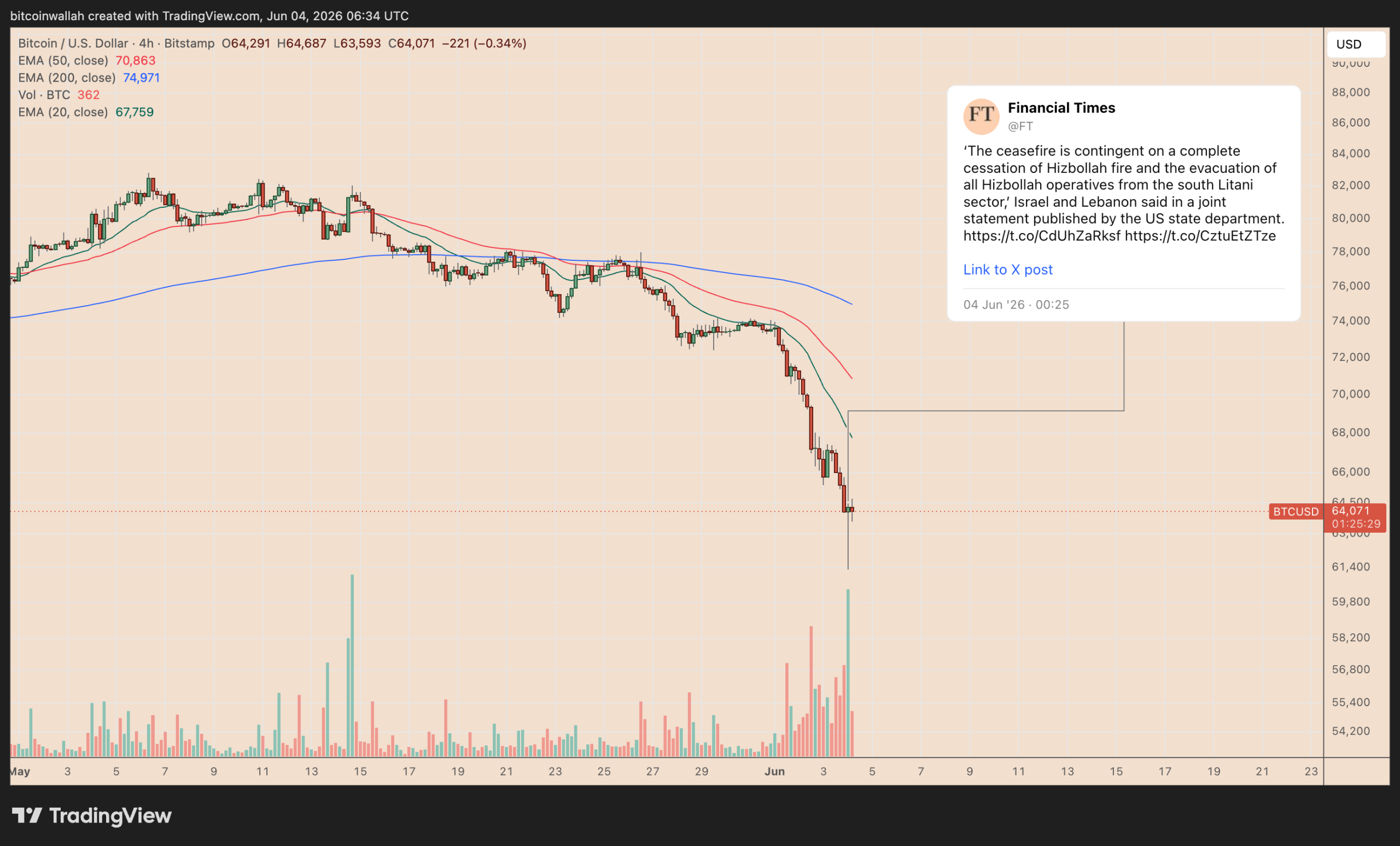
Bitcoin’s (BTC) brief plunge toward the $60,000 area triggered more than $600 million in long liquidations, raising doubts over whether the latest rebound marks a real bottom or only a relief bounce after a leverage flush.
BTC price may rebound toward $70,000 next
BTC fell to roughly $61,300 on Thursday before recovering 5.52% to around $64,690, with the rebound coinciding with reports that Israel and Lebanon had agreed to implement a ceasefire.
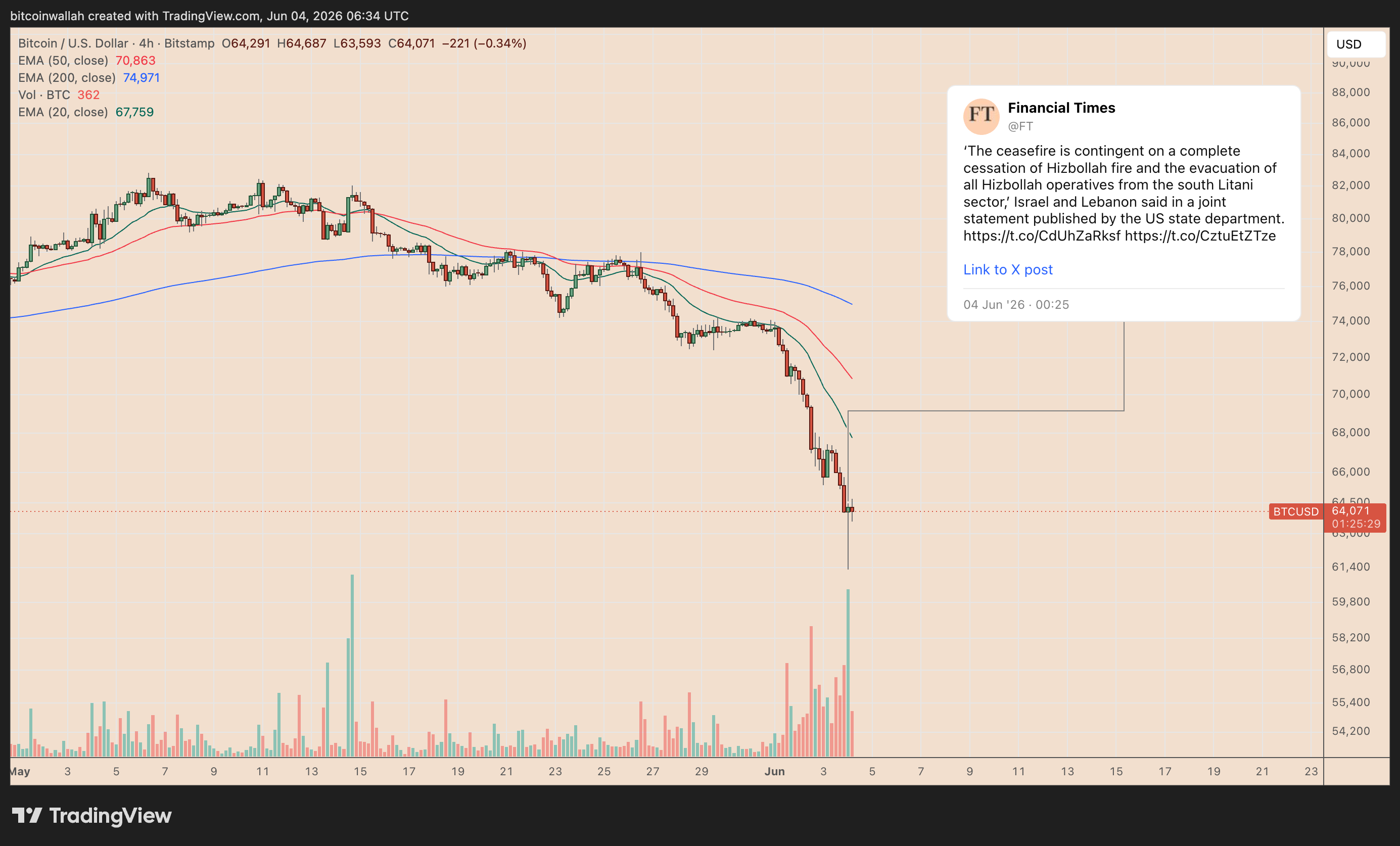
BTC/USD four-hour chart. Source: TradingView
The volatile move liquidated over $737 million in BTC positions on a 24-hour rolling basis, with long traders taking most of the hit, according to data resource CoinGlass.
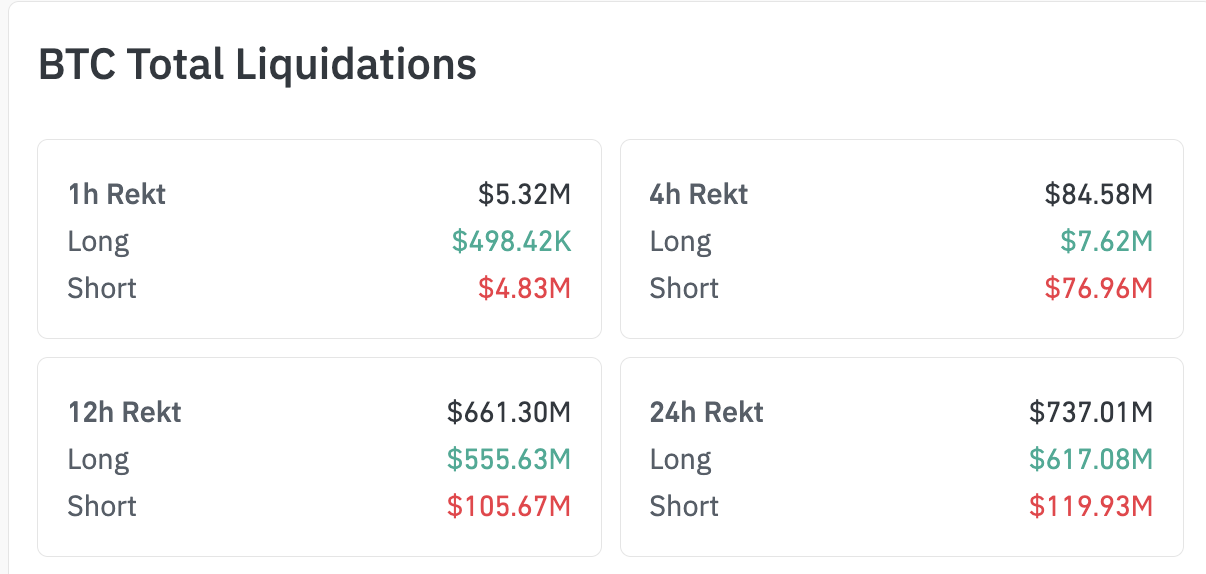
BTC total liquidations. Source: CoinGlass
Over $617 million in long positions were wiped out, showing how aggressively bullish traders were positioned before the sell-off.
Still, Bitcoin’s sharp 5.52% rebound encouraged some traders to call for a bottom.
Trader RidaaXBT said BTC could stage a relief bounce toward the $69,000–$70,000 range, implying that the liquidation-driven selloff may have exhausted near-term sellers.
Related: Analyst says Bitcoin’s $60K bottom signals weaken bear-market forecast
Analyst ZordXBT shared a similar view, pointing to Bitcoin’s long downside wick as a sign that buyers stepped in aggressively near the lows.
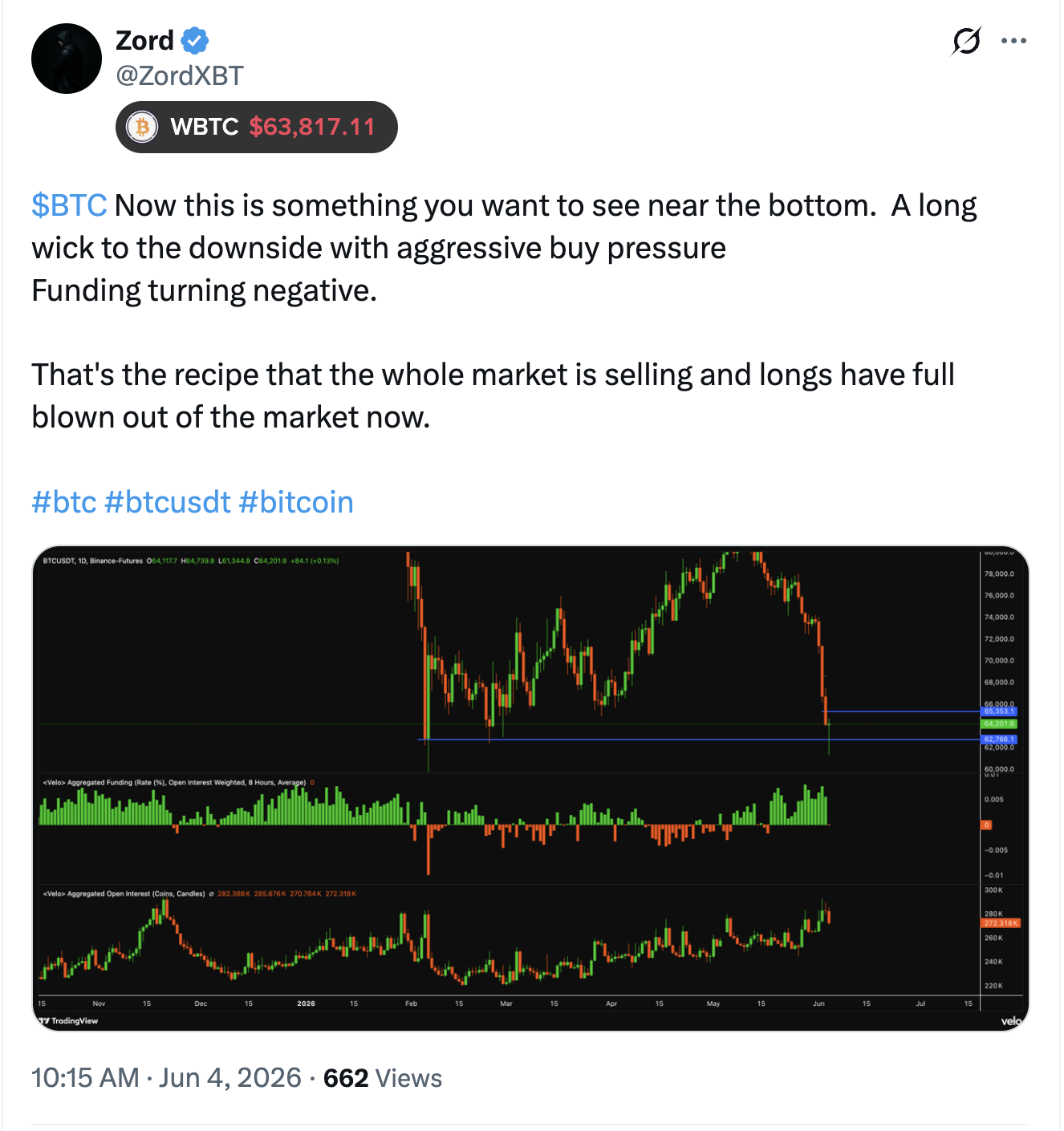
Source: X
On the other hand, crypto trader Hitman42.eth warned that BTC bulls may be celebrating too early, noting that the Bitcoin bounce may end up trapping bulls.
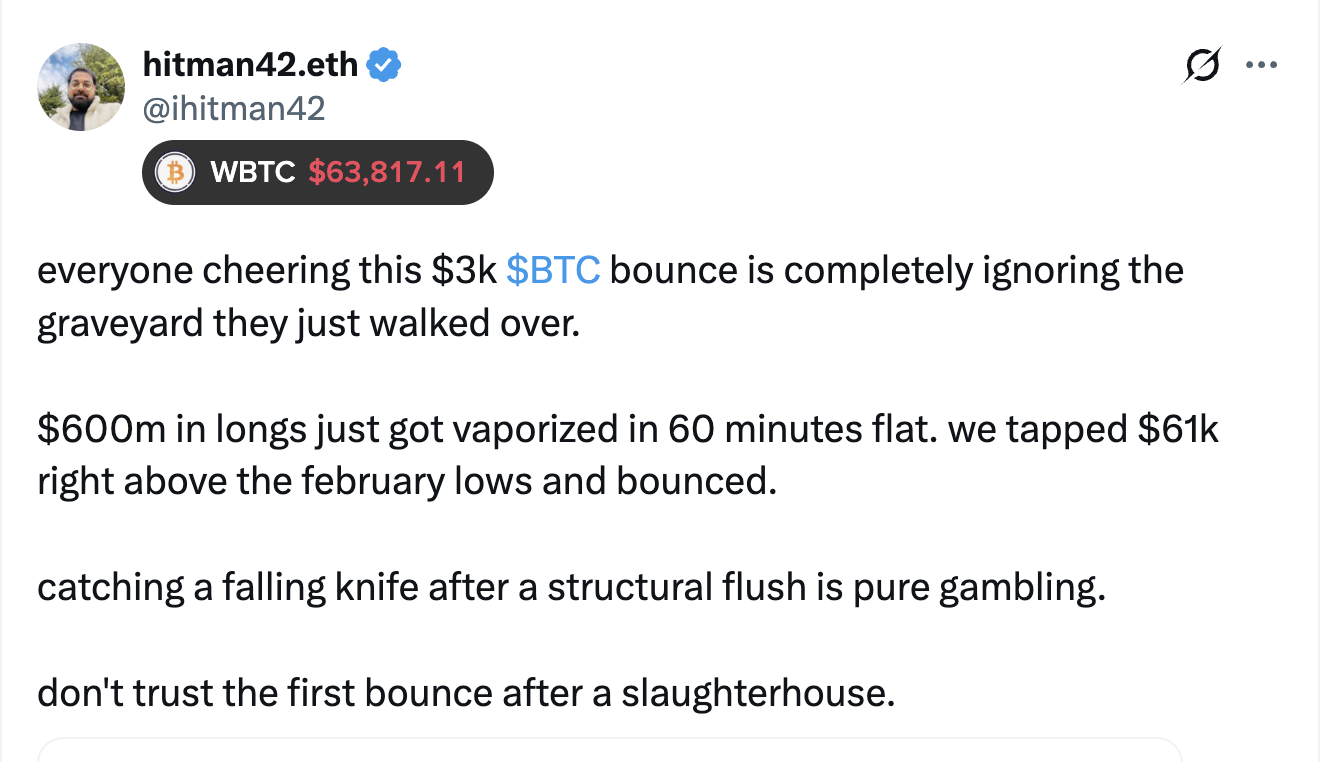
Source: X
Bitcoin bear flag keeps $50K target in play
Bitcoin’s weekly chart still shows a bear flag breakdown in progress, keeping the risk of a deeper drop toward the $50,000–$52,000 area alive. The setup follows BTC’s failure to reclaim the flag’s upper trend line, with rising volumes adding weight to the downside move.
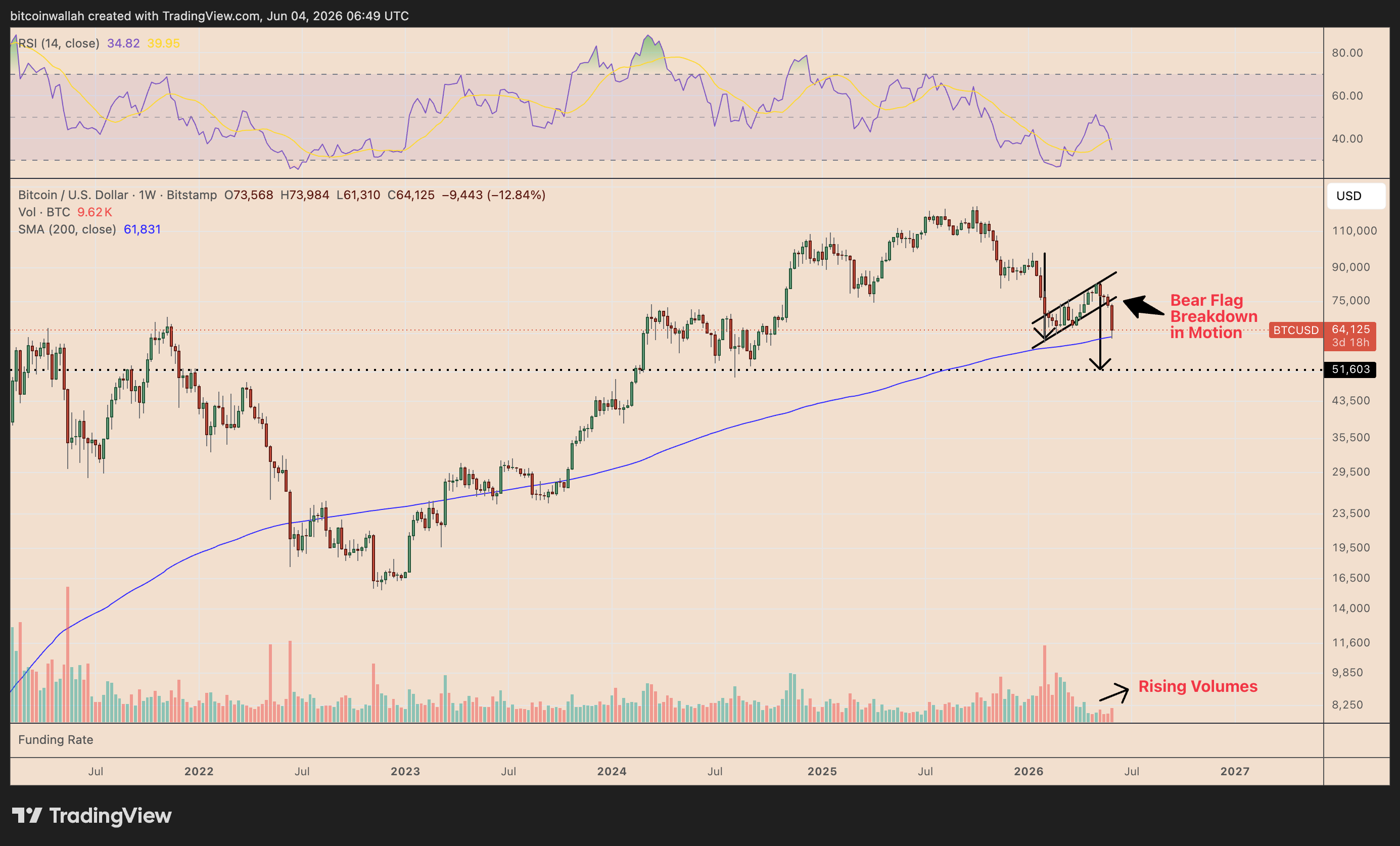
BTC/USD weekly chart. Source: TradingView
However, the bearish scenario is not confirmed as long as BTC trades above its 200-week simple moving average (200-week SMA, blue line) at around $61,800. This level has acted as a major cycle-bottom zone in past Bitcoin bear markets, including 2015, 2018 and 2020.
A strong rebound from the 200-week SMA would weaken, or potentially invalidate, the bear flag breakdown, putting BTC price in position to test $70,000 as the next upside target.

Lessons Traditional Finance Can Learn from Decentralized Finance
For years, the relationship between Wall Street and Decentralized Finance (DeFi) seemed adversarial.
Traditional finance (TradFi) viewed DeFi as an experimental corner of the internet filled with speculative assets, anonymous developers, and untested protocols. Meanwhile, DeFi advocates often portrayed banks and financial institutions as outdated middlemen destined to be replaced by code.
Yet beneath the headlines and ideological debates, something interesting has been happening.
Many of the world’s largest financial institutions have begun studying, testing, and in some cases adopting concepts pioneered by DeFi.
The reason is simple: DeFi has become one of the largest real-world experiments in financial infrastructure ever conducted. It has processed trillions of dollars in transactions, coordinated global liquidity without centralized operators, and demonstrated new models for market-making, lending, settlement, and asset ownership.
Wall Street may not be embracing DeFi publicly, but it is paying close attention.
DeFi Built Financial Infrastructure from Scratch
Traditional financial systems evolved over decades.
Banks, clearinghouses, brokers, custodians, payment processors, and regulators all became layers within a complex ecosystem. While this structure provides stability, it also creates friction.
A simple securities transaction can require multiple intermediaries, delayed settlement periods, and extensive reconciliation between institutions.
DeFi approached the problem differently.
Instead of building around institutions, it built around programmable rules.
Smart contracts automate functions traditionally handled by intermediaries:
- Lending
- Borrowing
- Trading
- Settlement
- Collateral management
- Yield distribution
The result is a financial system capable of operating continuously, globally, and transparently.
For Wall Street, this raises an important question:
What if financial infrastructure could become software?
The Efficiency of 24/7 Markets
Traditional financial markets have operating hours.
Stock exchanges close. Banks observe weekends. International transfers can take days.
DeFi never sleeps.
Protocols operate twenty-four hours a day, seven days a week, across every time zone.
Liquidity remains accessible regardless of geography, holidays, or business hours.
While regulators and institutions may not be ready for fully nonstop markets, they recognize the efficiency advantages.
As global finance becomes increasingly digital, the expectation of continuous access may become difficult to ignore.
Transparency as a Competitive Advantage
One of DeFi’s most overlooked innovations is radical transparency.
In traditional finance, market participants often operate with limited visibility into:
- Liquidity positions
- Counterparty risk
- Reserve holdings
- Settlement activity
DeFi changes that.
Every transaction is publicly verifiable on-chain.
Users can inspect protocol reserves, lending activity, treasury balances, and historical performance in real time.
Transparency does not eliminate risk.
However, it significantly reduces information asymmetry.
For institutions increasingly focused on compliance, auditing, and risk management, transparent systems offer powerful advantages.
Automated Market Making Changed Liquidity
Perhaps no DeFi innovation has attracted more institutional attention than Automated Market Makers (AMMs).
Before DeFi, electronic markets largely relied on order books and professional market makers.
Protocols such as automated liquidity pools demonstrated that liquidity could be supplied algorithmically by participants worldwide.
This innovation transformed how markets could function.
Even institutions that never directly interact with decentralized exchanges have studied AMM mechanics because they reveal alternative approaches to liquidity provision.
The broader lesson is that market infrastructure can be redesigned rather than merely optimized.
Instant Settlement Is Hard to Ignore
One of the highest costs in traditional finance comes from settlement delays.
Trades often require multiple layers of verification and clearing before final ownership is finalized.
DeFi introduced near-instant settlement.
Transactions execute, settle, and become visible on-chain within minutes or seconds.
This dramatically reduces:
- Counterparty risk
- Operational complexity
- Capital lock-up requirements
- Reconciliation costs
Financial institutions have taken notice because settlement efficiency directly impacts profitability.
The possibility of tokenized securities settling in real time is becoming an increasingly serious topic among banks and asset managers.
Tokenization Is the Bridge Between Worlds
Among all DeFi concepts, tokenization may have the greatest long-term impact.
Tokenization transforms real-world assets into blockchain-based representations.
Examples include:
- Real estate
- Bonds
- Stocks
- Commodities
- Private credit
- Money market funds
For Wall Street, tokenization offers a path toward:
- Faster settlement
- Fractional ownership
- Increased liquidity
- Global accessibility
- Reduced administrative overhead
Rather than replacing traditional assets, tokenization modernizes how those assets move through financial systems.
This is one reason many institutions are exploring blockchain infrastructure despite remaining cautious about cryptocurrencies themselves.
Open Innovation Moves Faster
Traditional finance often innovates through large organizations, lengthy approval processes, and significant regulatory oversight.
DeFi innovates through open-source collaboration.
Developers worldwide can contribute improvements, launch new protocols, or experiment with novel economic models.
This creates a rapid feedback loop.
Ideas are tested in months rather than years.
Not every experiment succeeds.
In fact, many fail.
But the pace of innovation remains unmatched.
Wall Street increasingly understands that some of the most valuable financial innovations may emerge from open networks rather than corporate research departments.
What TradFi Should Learn
The most important lesson is not that banks should become decentralized.
It is hoped that financial infrastructure can become more efficient, transparent, and programmable.
TradFi can learn from DeFi in several key areas:
1. Transparency Builds Trust
Users increasingly expect visibility into how systems operate.
2. Automation Reduces Costs
Smart contracts demonstrate how software can replace manual processes.
3. Settlement Speed Matters
Capital efficiency improves when transactions settle faster.
4. Open Systems Accelerate Innovation
Collaborative development can uncover solutions faster than closed ecosystems.
5. Global Accessibility Creates Opportunity
Financial services no longer need to be constrained by geography.
Conclusion
The future of finance is unlikely to be purely traditional or purely decentralized.
Instead, it will probably be a hybrid system that combines the strengths of both worlds.
Traditional finance brings regulatory experience, institutional trust, and deep pools of capital.
DeFi contributes transparency, programmability, efficiency, and innovation.
That is why Wall Street is quietly studying DeFi.
Not because decentralized finance has already won, but because it has proven that many assumptions about how financial systems must operate are no longer fixed.
The institutions that learn these lessons early may be the ones that define the next generation of global finance.
REQUEST AN ARTICLE
Crypto World
WISeKey (WKEY) Shares Drop as WISeSat Progresses Toward Nasdaq Launch Under WSAT Symbol

Key Takeaways
-
WISeKey shares retreat as WISeSat subsidiary progresses with Nasdaq listing under WSAT symbol.
-
Satellite subsidiary submits updated confidential SEC registration for anticipated public market debut.
-
Stock faces downward pressure following disclosure of SPAC transaction advancement.
-
WISeSat pursues independent Nasdaq presence through WSAT ticker while parent company shares decline.
-
Parent company experiences continued selloff as satellite unit completes regulatory filing milestone.
Shares of WISeKey International Holding (WKEY) declined following disclosure of a regulatory filing advancement for its satellite subsidiary WISeSat’s forthcoming Nasdaq debut. The stock settled at $8.25, representing a 6.99% decrease, and continued sliding to $8.17 during pre-market activity. The decline reflected investor concerns surrounding the proposed space technology merger transaction.
WISeKey International Holding AG, WKEY
Satellite Subsidiary Progresses With Public Market Plans
According to WISeKey’s announcement, WISeSat.Space Holdings Corp. filed an updated confidential Form F-4 registration draft with the Securities and Exchange Commission on May 29, 2026. This submission advances the satellite company’s merger with Columbus Acquisition Corp. Upon deal completion, the merged entity anticipates commencing Nasdaq trading operations under the WSAT ticker symbol.
The transaction stems from a Business Combination Agreement executed November 9, 2025, involving WISeSat, CAC, Pubco, WISeKey, and WISeSat Merger Sub Corp. Following consummation, both WISeSat and CAC will operate as Pubco subsidiaries. The arrangement remains contingent upon SEC clearance, Columbus Acquisition shareholder consent, and Nasdaq listing authorization.
The satellite division operates via WISeSat.Space AG, concentrating on protected orbital infrastructure solutions. Its mission encompasses secure communications channels, digital authentication systems, encrypted data transmission, and defense-oriented space technologies. The enterprise leverages WISeKey’s established expertise in cybersecurity protocols, identity verification, and semiconductor engineering.
Parent Company Shares Decline Despite Regulatory Milestone
Trading activity for WKEY remained bearish following the filing disclosure. Shares concluded regular trading at $8.25 following the 6.99% drop, then extended losses by 0.96% before market open. This movement brought the pre-market price to $8.17, demonstrating persistent selling pressure.
The negative market response accompanied the transaction’s progression into additional regulatory stages. While a confidential amended registration draft represents forward movement, it doesn’t finalize the combination. Furthermore, the public Form F-4 remains pending effectiveness with the SEC.
WISeKey disclosed the advisory team supporting the merger. Maxim Group LLC serves as sole financial advisor to WISeKey. Legal counsel includes Ellenoff Grossman & Schole representing WISeSat and Pubco, alongside Loeb & Loeb advising CAC.
Company Overview and Strategic Direction
WISeKey’s core operations span cybersecurity solutions, digital identity platforms, and internet-connected device security. The company maintains dual listings under WIHN on Switzerland’s SIX Exchange and WKEY on Nasdaq. Its WISeSat division represents expansion into orbital secure connectivity infrastructure.
The satellite subsidiary focuses on quantum-resistant communication networks delivered through protected space-based systems. WISeSat intends to integrate orbital services with verification technologies, digital identity frameworks, and protected information exchange protocols. Target markets include government agencies, corporate entities, and industries requiring encrypted communications.
The planned WSAT listing would establish WISeSat as an independent publicly-traded entity. Nevertheless, the arrangement awaits final documentation and shareholder authorization. During this interim period, WKEY shares remain under selling pressure as investors evaluate transaction completion risks.
PI crashed 10% this week. Will the key support hold?
PI Network (PI) Price Predictions: Analysis
Key support levels: $0.13, $0.10
Key resistance levels: $0.16, $0.20
Market Crash Sends PI to Key Support
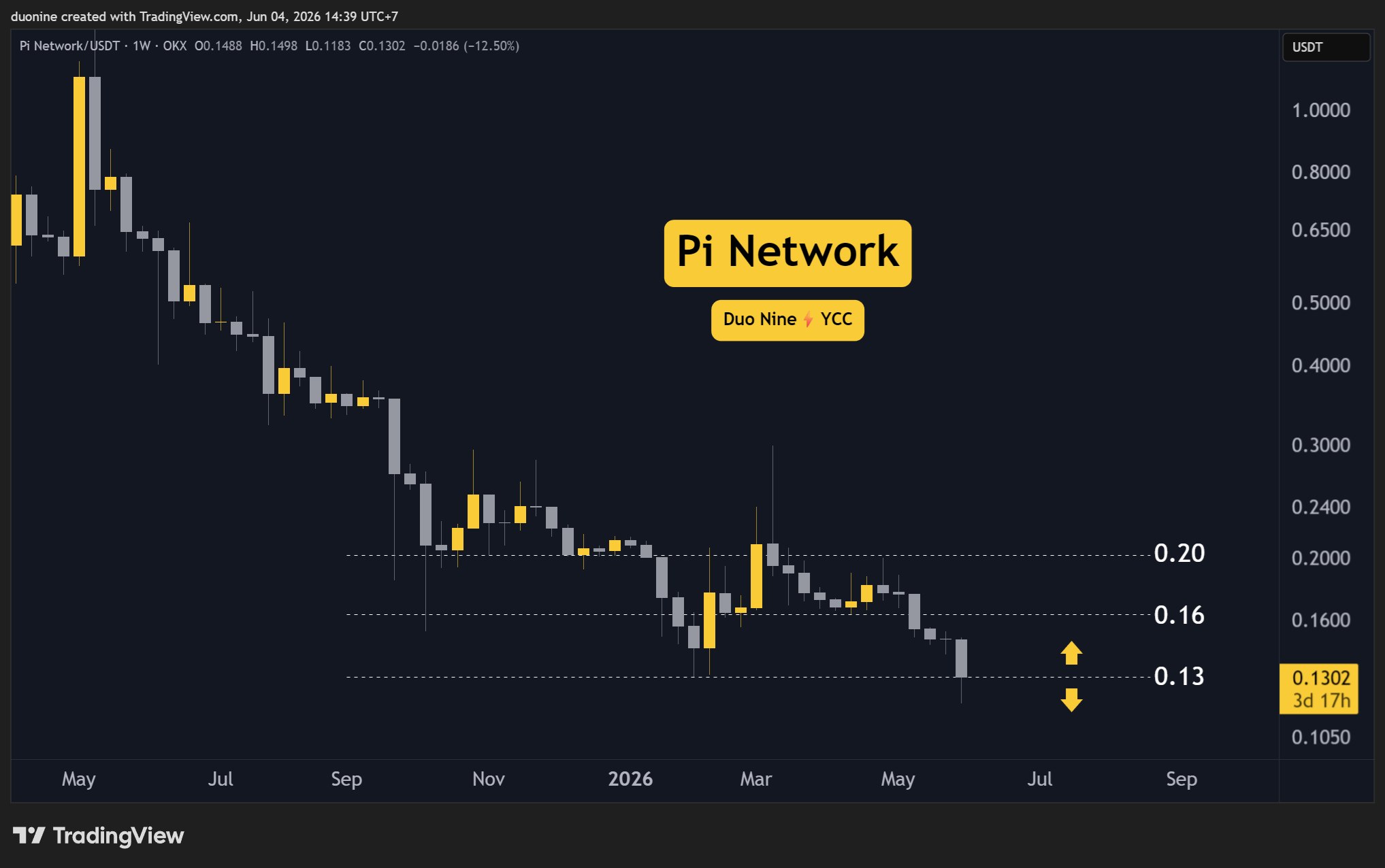
This week, PI set a new record low after crashing by 10%. This has driven the price to the $0.13 key support level. Buyers have returned here, but the outlook remains bearish as selling volume has been increasing over the past few days.
Because the price made a lower low, the downtrend remains intact and may continue to make new lows. For that to be confirmed, the current support at $0.13 has to turn into resistance.
Sellers Dominate
On the 3-day timeframe, sellers have dominated for 8 consecutive candles and pushed the price 30% lower. This aggressive selloff started as soon as the support at $0.16 failed to contain sellers.
If $0.13 also becomes resistance in the future, a similar pattern could materialize, with the downtrend accelerating and reaching new lows. If so, the next key target will be $0.10.

Daily RSI is Oversold
This most recent price drop has pushed the daily RSI into oversold territory, at under 30 points. At the time of this post, the RSI is around 25 points with no signs of a reversal and lower levels likely.
Nevertheless, this also indicates that sellers are getting greedy here, and a bounce or relief rally is more likely in the future. Therefore, best to watch the price action at $0.13. If that holds as support, buyers could have an opening to return.

The post Pi Network (PI) Price Predictions for This Week (June 4) appeared first on CryptoPotato.
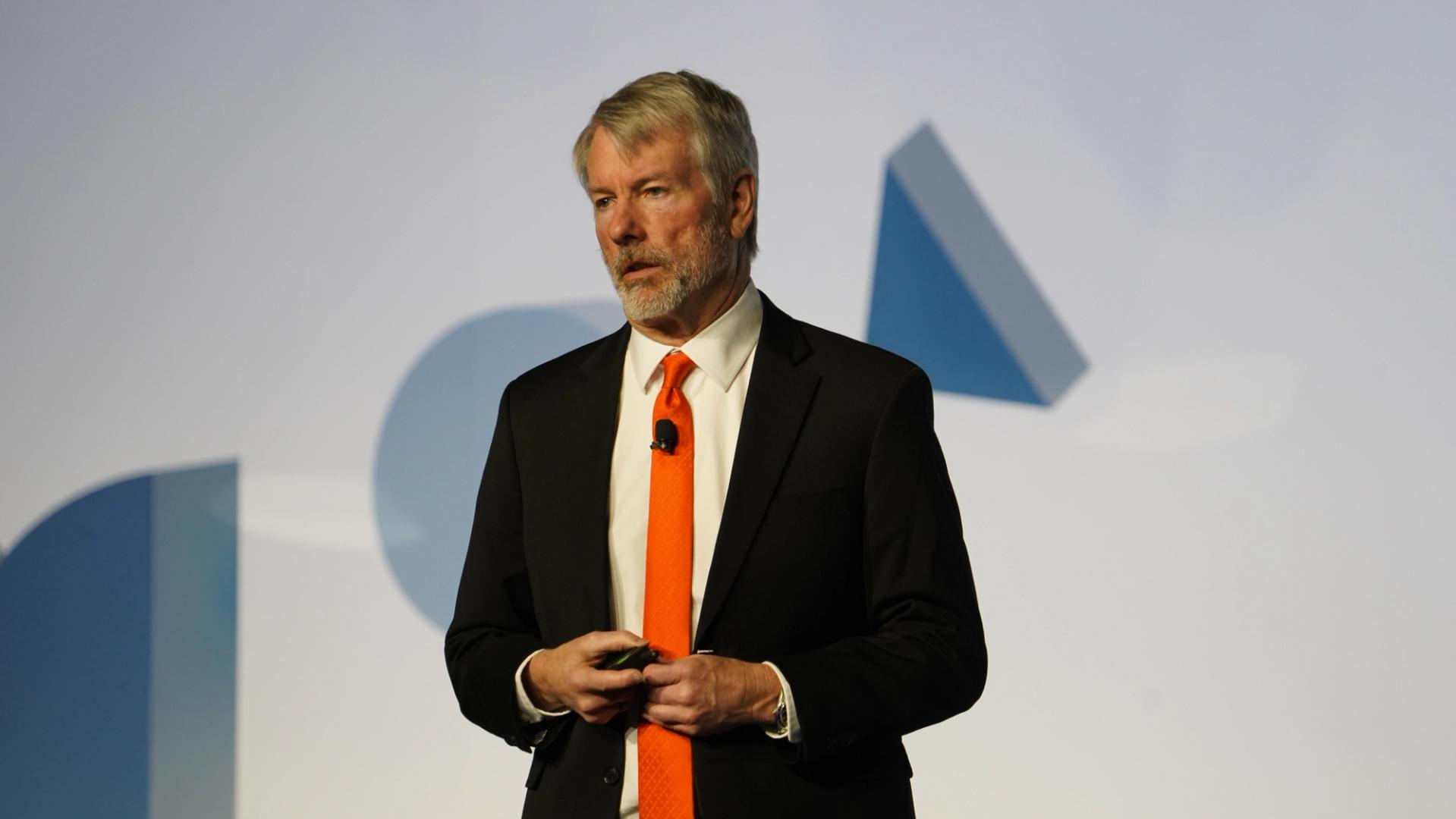
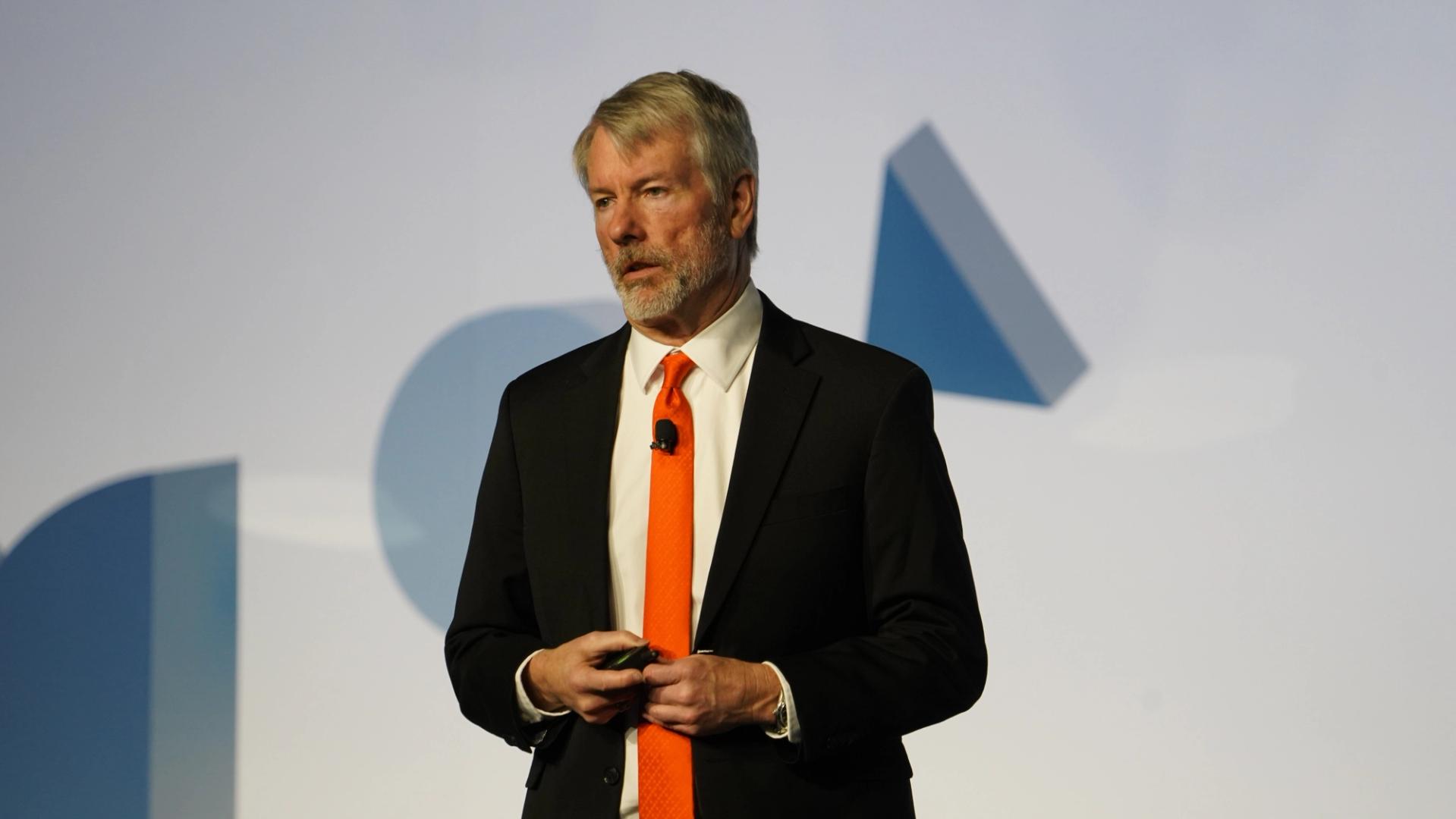
Strategy’s recent bitcoin sale, the first in more than three years, sparked a major dispute on Polymarket, with the dispute settlement body led by UMA token holders ultimately ruling against bettors who wagered the sale would occur by May 31.
The controversy began after Strategy disclosed in a June 1 filing that it had sold 32 bitcoin between May 26 and May 31. Traders who bought Yes on the May market argued the company had clearly sold bitcoin before the deadline. Others countered that the transaction was not publicly disclosed until June 1 and therefore should not count toward a May 31 cutoff.
UMA token holders, who serve as the dispute-resolution layer for Polymarket’s oracle system, sided decisively with the latter view.
The resolution means bettors who wagered that Strategy would sell bitcoin by May 31 lost despite the company later disclosing the sale occurred during the final week of May. The June contract, meanwhile, resolved Yes because the transaction became public during June.
The result was driven by a handful of large token holders, which undercuts the core promise of decentralized finance where governance is democratized and not led by few whales.
The biggest vote came from borntoolate.eth, which cast 3.11 million voting weight for No. Other major No votes included UMA contributor Kevin Chan with 1.53 million voting weight and several wallets casting more than 1 million each. Together, the four largest No voters controlled nearly 7 million voting weight, more than 25 times the entire Yes side.
Several wallets identified as affiliated with Risk Labs, the company behind UMA, also voted No, alongside other prominent UMA ecosystem participants.
Not everyone is pleased with the resolution. Galaxy Research, which had significant exposure to the May contract, pushed back sharply on X. The firm stressed that Strategy explicitly sold the 32 Bitcoin between May 26 and May 31, and that the market’s resolution criteria should focus on when the sale occurred — not when it was publicly announced on June 1.
“Strategy’s SEC-filed Form 8k explicitly stated that Strategy sold between May 26–31. A plain reading of the resolution criteria would suggest that the market should have resolved to YES, hence the controversy,” the firm said.
Investment bank Goldman Sachs has teamed up with fund servicing giant Apex Group and digital asset exchange Archax to tokenize real estate, the firms said on Thursday.
Infrastructure provider Ownera and real estate investment manager LRC Group are also included in the debut of the blockchain-native real estate fund.
The tokenization of real-world assets (RWAs) is all the rage among crypto native firms and traditional finance players alike, but real estate has so far proved elusive as an asset class, at least in terms of scalable distribution.
The fund combines blockchain-native issuance with established fund structures, according to a press release, and is “designed to enhance operational efficiency and transparency, while enabling potential future transferability and maintaining robust governance and regulatory oversight.”
The fund shares are tokenized using GS DAP, Goldman Sachs’ blockchain platform. LRC Group acts as manager and Archax serves as custodian for the regulated digital securities and the first distribution partner. Ownera facilitates connectivity between participants and distribution channels.
Apex Group is providing Alternative Investment Fund Manager services through Fundrock LIS, along with fund administration and depositary services of assets other than financial instruments through Apex Fund Services Luxembourg.
“Issuing blockchain native fund units on GS DAP enables investment in real estate assets with precision while unlocking more seamless transferability in the future,” said Mathew McDermott, global head of digital assets at Goldman Sachs.
Crypto World
Taiwan Semiconductor (TSM) Stock Drops as CEO Projects Years-Long AI Chip Supply Shortage

Key Takeaways
- Taiwan Semiconductor’s CEO C.C. Wei informed investors that chip manufacturing capacity will remain insufficient to satisfy AI demand for the foreseeable future, despite expanding US operations.
- The chipmaker maintained its annual revenue growth projection exceeding 30%.
- TSMC intends to construct at least four more US fabrication facilities beyond the six currently scheduled, demanding approximately $100 billion in additional investment.
- The CEO acknowledged acquiring ASML’s High-NA EUV lithography systems but stated mass production deployment awaits economic viability.
- Taiwan Semiconductor shares declined 1.7% in Taipei trading following Broadcom’s lackluster guidance.
Taiwan Semiconductor Manufacturing (TSM) stock experienced a 1.7% decline during Thursday’s Taipei session after Chief Executive C.C. Wei informed investors the semiconductor giant cannot satisfy AI-fueled chip demand for years ahead — despite substantial new manufacturing facilities launching in the United States.
Taiwan Semiconductor Manufacturing Company Limited, TSM
“Customer demand will exceed our capacity for an extended period,” Wei stated during the company’s annual investor gathering in Hsinchu, Taiwan.
Despite Thursday’s pullback, Taiwan Semiconductor shares have surged more than fourfold during the previous three years, propelled by remarkable expansion in its primary business serving semiconductor clients including Nvidia and AMD.
Wei reaffirmed TSMC’s projection for annual revenue expansion surpassing 30%. The semiconductor manufacturer elevated this guidance recently in April, simultaneously indicating capital expenditures would likely approach the upper boundary of a range extending to $56 billion.
The capacity shortage originates from industry leaders. Major cloud computing giants are projected to allocate a collective $725 billion toward AI infrastructure throughout this year, with TSMC serving as the critical provider for cutting-edge processors enabling substantial portions of this expansion.
Notwithstanding supply limitations, Wei indicated TSMC will avoid implementing aggressive pricing increases. The objective, he emphasized, centers on maintaining business consistency and reliability for clients.
American Manufacturing Footprint Expands
Under a bilateral US-Taiwan commercial arrangement, TSMC projects constructing a minimum of four additional semiconductor fabrication plants across the United States, supplementing six facilities already outlined. This represents roughly $100 billion in fresh capital obligations, exceeding the $165 billion previously allocated.
Wei noted two Arizona land parcels TSMC has secured should adequately accommodate its American expansion requirements for ten years.
The American initiative partly addresses client demands. Nvidia, Broadcom, and competing firms are vying for production capacity at TSMC’s most sophisticated manufacturing nodes, while geographical diversification mitigates geopolitical and logistics vulnerabilities.
TSMC personnel will also benefit from the growth. Wei confirmed employees will receive average compensation bonuses increasing beyond 30% this year, as mounting pressure encourages AI sector leaders to share prosperity more broadly.
Advanced Manufacturing Equipment Already Secured
Wei responded to investor questions regarding TSMC’s positioning in next-generation semiconductor production technology, particularly concerning ASML’s High-NA EUV lithography equipment.
These systems, capable of creating smaller and more densely packed transistor patterns than existing machinery, command prices reaching $400 million per unit. Intel has already integrated the technology. TSMC has not yet implemented it for volume manufacturing.
Wei confirmed Taiwan Semiconductor has acquired the equipment and is performing research and development activities. The constraint involves economics rather than technical capabilities. TSMC will only introduce the machines into production environments once utilizing them becomes financially sustainable at scale.
“We have secured that equipment, and our engineering teams are vigorously pursuing relevant research and development initiatives. It simply hasn’t reached deployment for high-volume manufacturing,” Wei explained.
He refused to disclose the quantity of units TSMC has purchased.
The statements echo comparable commentary from TSMC executive Kevin Zhang during April, when he characterized the new systems as “extremely costly” and stated current objectives remain attainable using standard EUV equipment. Those remarks temporarily pressured ASML stock downward.
Wei informed shareholders Thursday that TSMC’s present priority involves optimizing existing chipmaking equipment performance to lower production expenses.
Bitcoin’s price decline from earlier this week was not a one-time thing, as the asset’s troubles intensified in the past 12 hours or so with another fresh nosedive to a multi-month low.
BTC dragged most alts with it, liquidating more than 270,000 over-leveraged traders in the process.
The Drop
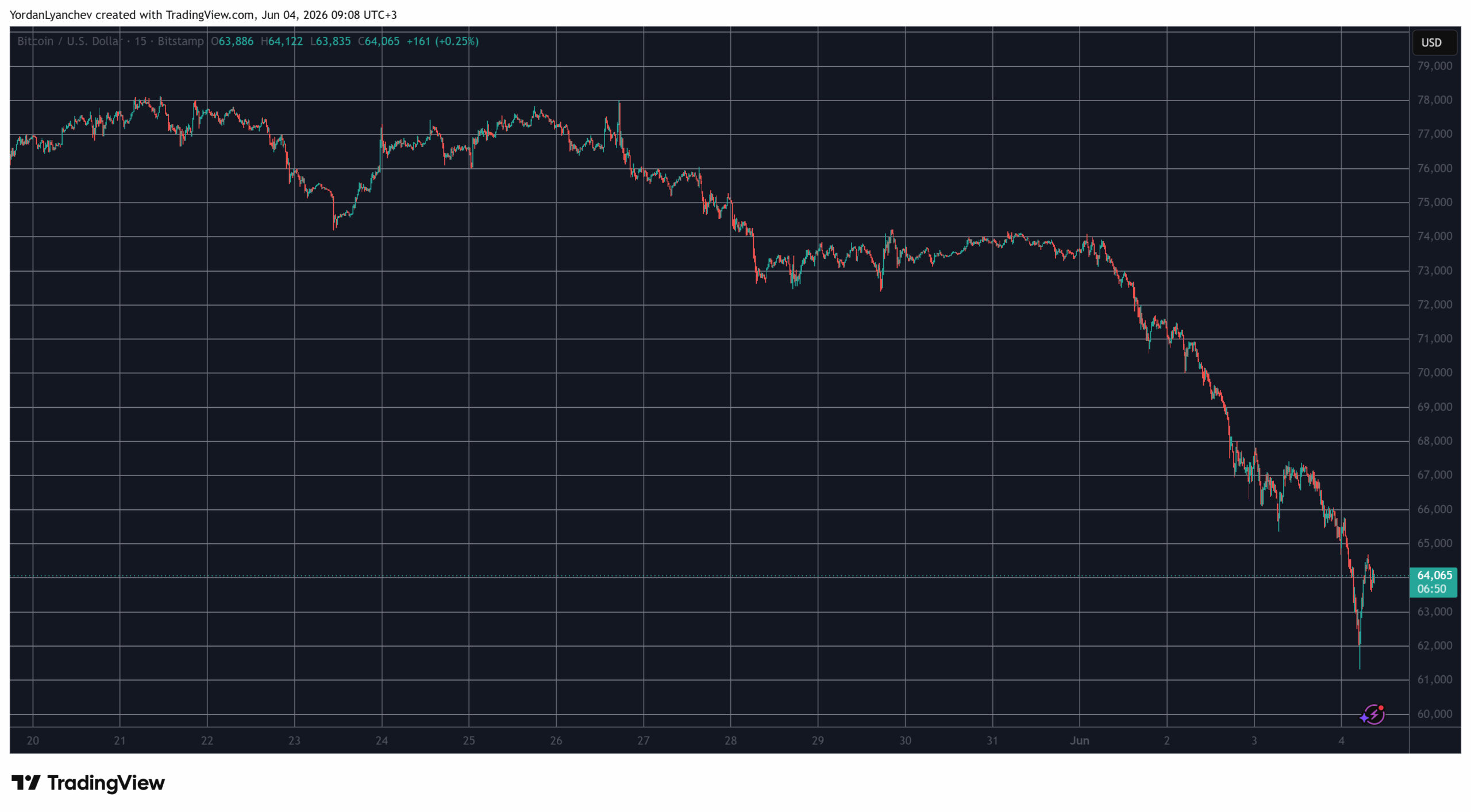
It now feels like an eternity, but just a few weeks ago bitcoin stood high at $82,000 before its mind-blowing downhill run began. As reported earlier this week, the situation worsened at the start of June with a nosedive to just over $65,000. BTC managed to recover some ground and stood at $67,000 yesterday before the bears took complete control of the market earlier this morning.
As the chart below demonstrates, bitcoin slumped to just over $61,000 on Bitstamp (and other exchanges), for the first time in four months. In early February, it plunged to $60,000, which many analysts believed was the ultimately low during this bear cycle. Now, though, the landscape looks different.
As Crypto Fabrik noted, the bears appear in total control, and the popular analyst predicted another leg down that can drive BTC to and under $55,000.
The altcoins were not spared. Ethereum dumped to a 14-month low earlier today at just over $1,700. Some analysts, though, speculated that this might be a proper buy-the-dip opportunity.
Aside from HYPE, which appears to be defying the overall market crash, most other alts are down by over 5%. Some, such as TON, have dumped by more than 12% daily.
Liquidations Rocket
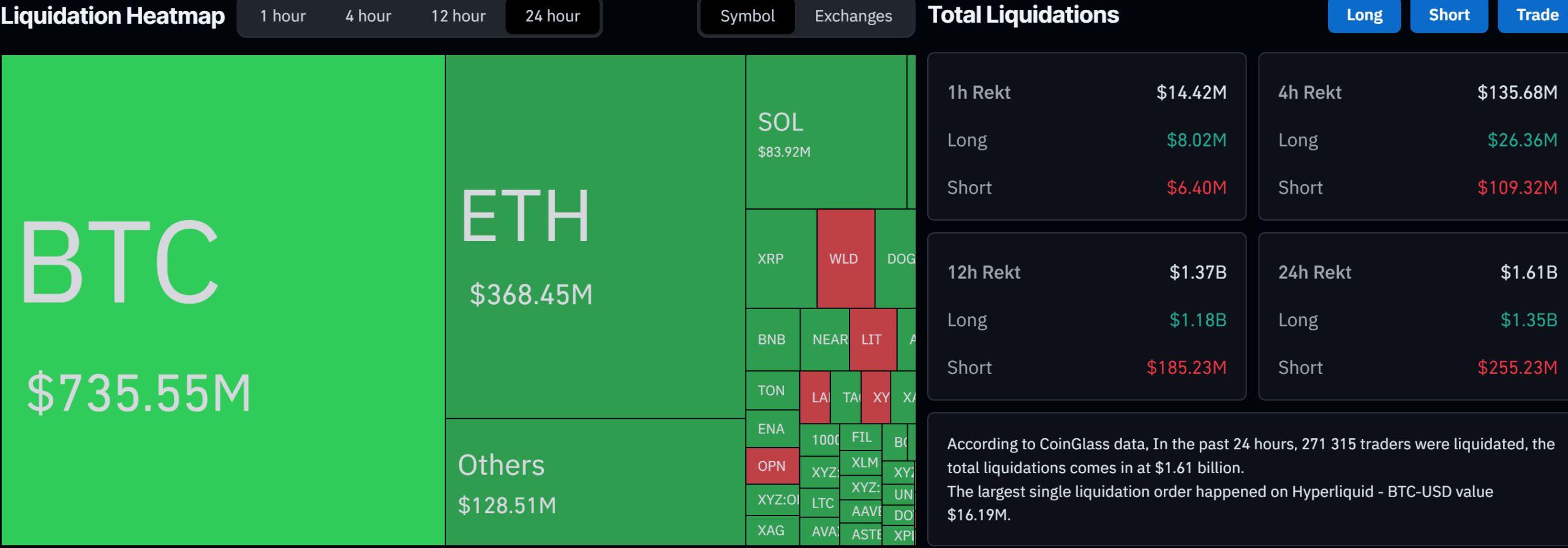
This intense volatility has, expectedly, led to a sharp uptick in the total value of wrecked positions. Data on CoinGlass shows that more than 270,000 traders have been wiped out in the past 24 hours, while the actual liquidated value is up to $1.61 billion within the same timeframe.
Longs are responsible for the lion’s share ($1.35 billion). Bitcoin’s liquidations are also the highest by a large margin (2x that of ETH’s), with more than $735 million in longs being wiped out daily.
The single-largest liquidation took place on Hyperliquid and was worth north of $16 million.
The post Bitcoin’s Massive Plunge Toward $61K Leaves Over $1.6B in Liquidations appeared first on CryptoPotato.

8 Habits to Practice Daily That Lead to God’s Financial Blessing

Asda to cut 1000 jobs as supermarket makes automation push

Miley Cyrus Confronts Mother Tish Over Projecting Dreams in Candid Child Stardom Podcast Talk



-

 Tech6 days ago
Waymo dominates autonomous vehicle registrations as Tesla trails behind
-

 News Videos6 days ago
This is BROKEN! INSANE 5x MONEY CAR WASH WEEK! The NEW GTA Online UPDATE Today! (GTA5 New Update)
-
 Tech5 days ago
SpaceX just won a second Golden Dome contract. This one is $4.16 billion.
-

 Business3 days ago
Jade Biosciences, Inc. (JBIO) Discusses Positive Interim Results From JADE101 Phase I Healthy Volunteer Study and Development Plans Transcript
-

 News Videos6 days ago
SHE IS KILLING XRP!!! WATCH URGENT AND ACT FAST
-
 NewsBeat5 days ago
FIRST NIGHT REVIEW: Take That bring the Circus back to life in spectacular sun-soaked style
-

 Business5 days ago
Is the Spurs Phenom Already Better Than Prime Diesel?
-
Crypto World6 days ago
CFTC Has Approved the First Regulated Bitcoin Perpetual Contract in the U.S.
-

 Politics5 days ago
The House | Inside Andy Burnham’s Makerfield Campaign: “Nobody Thinks This Is In The Bag”
-

 Sports1 day ago
French Open 2026 results: Alexander Zverev beats Rafael Jodar and will play Jakub Mensik in semi-finals
-
 NewsBeat6 days ago
Novak Djokovic v Joao Fonseca LIVE: French Open latest scores and results after Jannik Sinner’s shocking collapse
-
 Entertainment5 days ago
Weak ‘Supergirl’ Box Office Tracking Amid Milly Alcock Backlash
-
 Crypto World6 days ago
Snowflake (SNOW) Stock Rallies on Strong Q1 Results and AI Product Growth
-

 Entertainment6 days ago
Maddox Jolie-Pitt Legally Requests to Drop Brad’s Surname
-

 Tech2 days ago
CryZENx Releases Fresh Playable Content Deep Inside Jabu-Jabu for His Ocarina of Time Remake
-

 Business5 days ago
Demand Conditions Improve In Chemicals Sector In April 2026
-
 Entertainment5 days ago
One of the Greatest Sitcoms of All Time Shoots Up Apple TV’s Charts 11 Years Later
-
 Crypto World6 days ago
MicroStrategy Moves $30 Million in BTC to Coinbase Prime: Is the Bitcoin Sell-Off Already Here?
-

 Tech6 days ago
This Week In Security: Ubiquiti Fixes, And FreeBSD Joins The Club You Don’t Want To Join
-
 Entertainment6 days ago
Bruce Willis’ Generosity Resurfaces Amid His Dementia
You must be logged in to post a comment Login