

Crypto World
Lido DAO Surges to 10-Week High: What’s Driving the Rally?

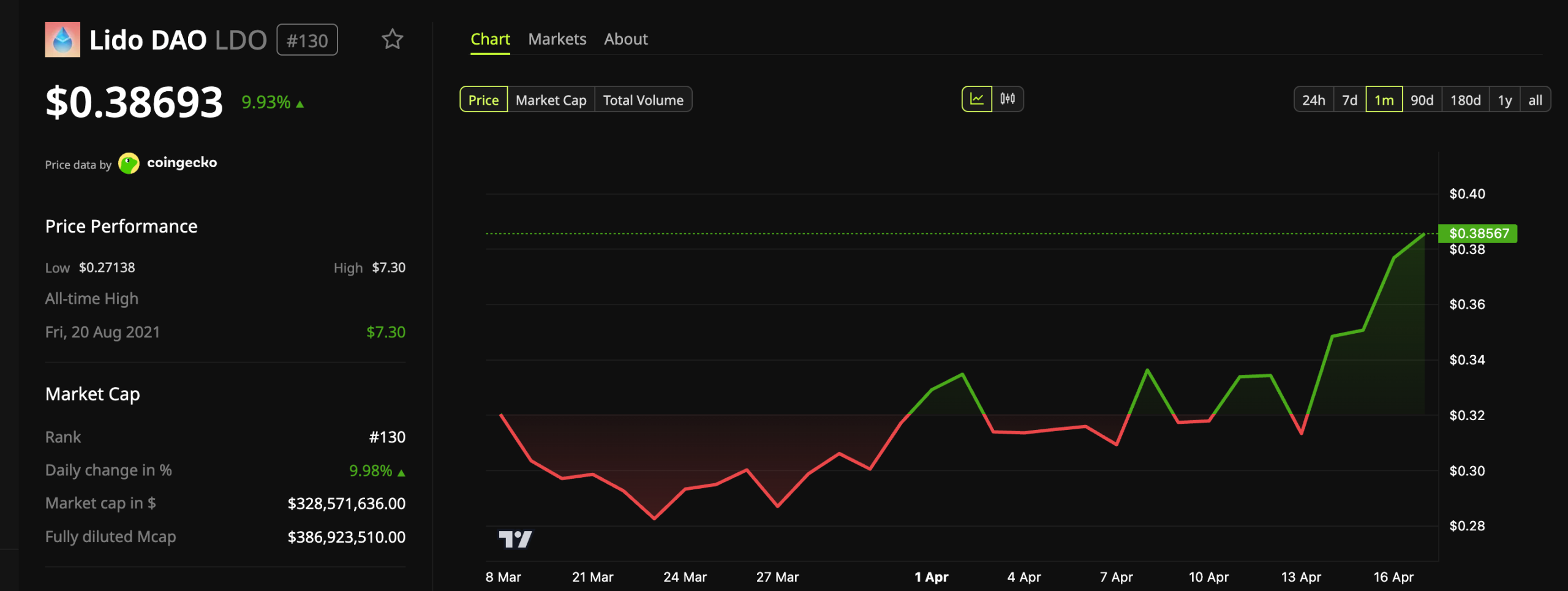
Lido DAO (LDO) has diverged from the broader market weakness, extending its upward momentum to reach a 10-week high.
During early Asian trading hours, the token climbed to an intraday high of $0.39. At press time, it traded at $0.38, up approximately 10% over the past 24 hours. This contrasted with the total market’s 0.18% dip.
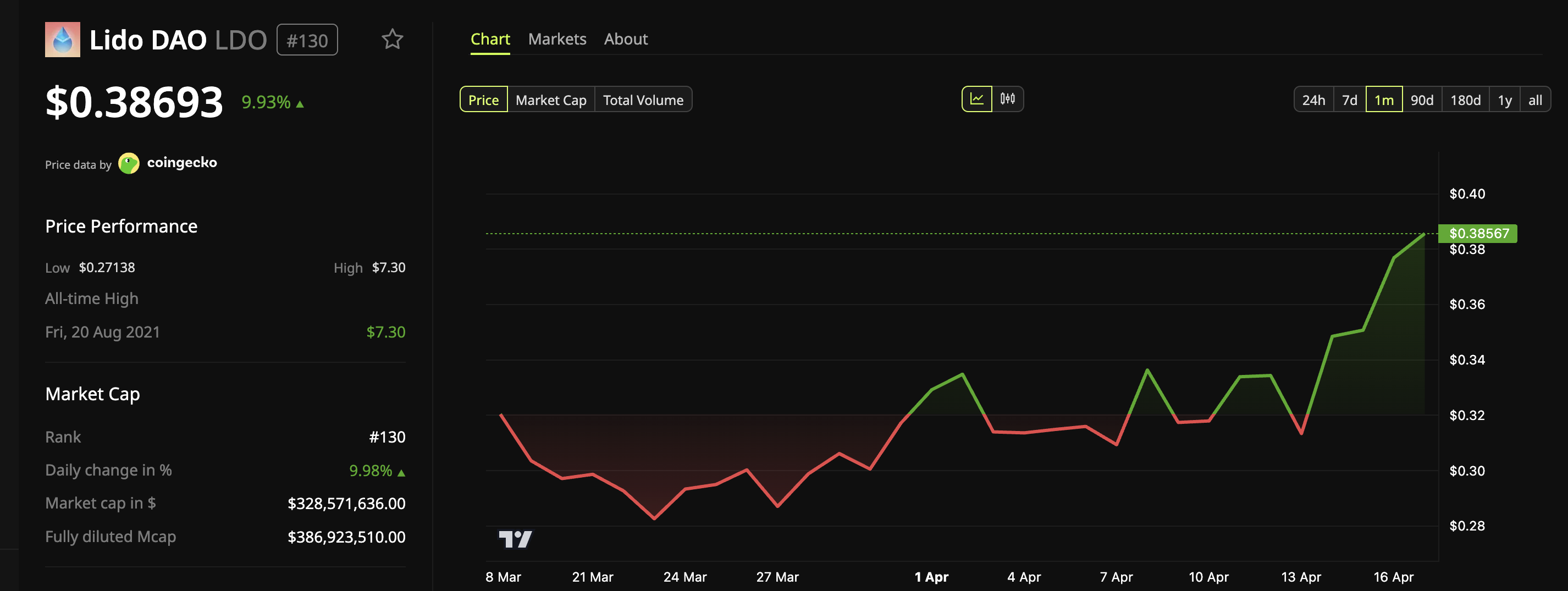
This latest move builds on a recent recovery, with LDO posting weekly gains of over 23% according to BeInCrypto Markets data. Its market capitalization stood at over $328.5 million, with a 24-hour trading volume of over $60 million.
Follow us on X to get the latest news as it happens
Holder Accumulation Fuels Lido DAO’s Rally
Network activity suggests the rally has fundamental backing. Santiment reported that Lido DAO recorded 141 new wallets created in a single day.
This marked the highest network growth reading in two months. The analytics firm tied this uptick to LDO’s price gain.
“This has helped fuel (and justify) the +21% price boost in the past 48 hours,” the post read.
Nansen data reinforced the accumulation thesis. The top 100 LDO addresses increased their combined holdings to 792.77 million tokens, up 1.1% in one day.
Meanwhile, exchange reserves dropped nearly 1% over 24 hours and 2.92% on a weekly basis.
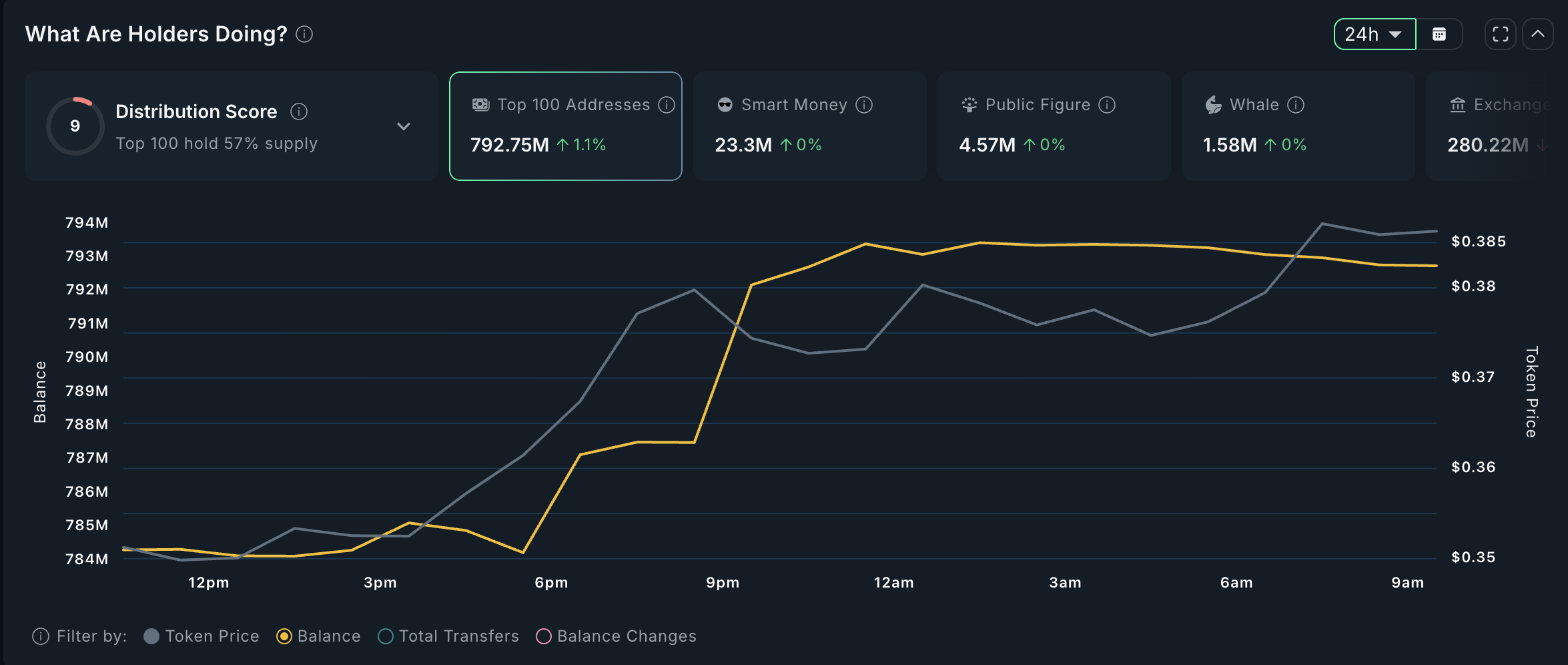
Declining exchange reserves typically signal reduced selling pressure. When tokens move off exchanges and into private wallets, it suggests holders are positioning for longer-term gains rather than preparing to sell.
The rally coincides with a governance proposal from the Lido Ecosystem Operations team to spend up to 10,000 stETH, roughly $20 million, from the DAO treasury to buy back LDO tokens.
Taken together, the signals point to improving underlying demand for LDO. If these trends persist, particularly alongside the proposed buyback initiative, the token might sustain its upward trajectory in the near term.
However, broader market conditions still remain a key factor in determining whether this rally evolves into a more durable trend.
The post Lido DAO Surges to 10-Week High: What’s Driving the Rally? appeared first on BeInCrypto.

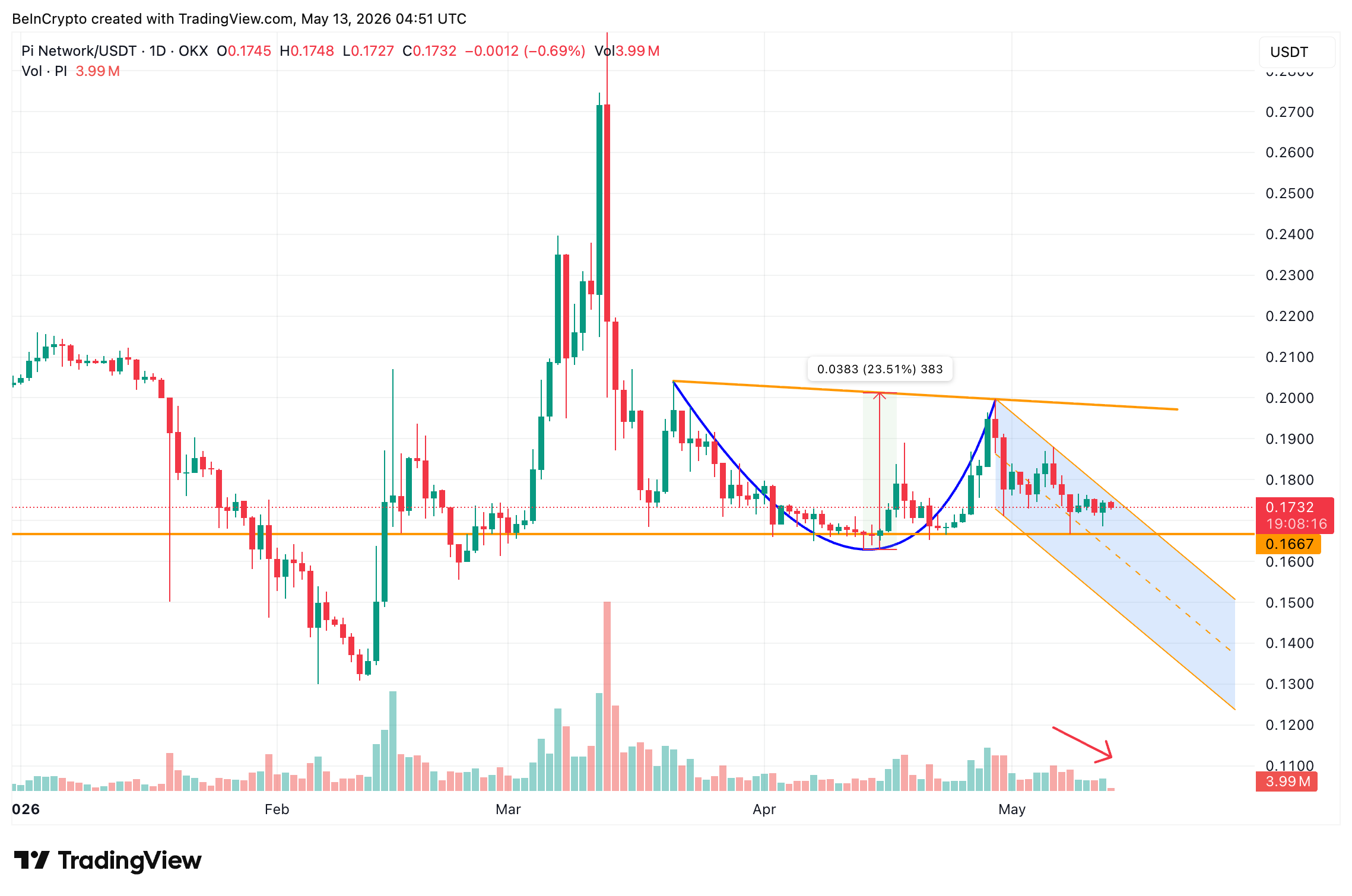
Pi Coin (PI) price has carved out a cup and handle pattern between late March and early May. The handle consolidation has extended long enough to test the pattern’s validity, but a scheduled May 15 catalyst could set up a 23% breakout revival.
PiScan, the Pi Network block explorer, is in scheduled maintenance until May 15. On-chain sentiment has dropped sharply during the same window, possibly tied to the explorer being offline. The Pi Coin price chart still holds the pattern, and Chaikin Money Flow remains in positive territory. The next few sessions will show how the signals resolve together.
Cup and Handle Pattern Awaits a May 15 Decision
The Pi Coin price chart has been forming a cup and handle pattern since late March. The cup completed by late April, and the handle has been consolidating in a descending channel since.
Want more token insights like this? Sign up for Editor Harsh Notariya’s Daily Crypto Newsletter here.
The handle has lasted longer than a textbook setup typically holds. Extended handle consolidations often invalidate the pattern as buyers exhaust before the breakout.

Selling volume across the handle, however, has compressed steadily. The compression keeps the breakout scenario open even as the duration stretches. The next on-calendar catalyst sits on May 15, when PiScan, the Pi Network block explorer, is scheduled to resume operations after a protocol upgrade.

That timing aligns with where the handle structure would typically resolve in one direction or another.
Pi Network On-Chain Sentiment Drops Alongside PiScan Maintenance
PiScan, the Pi Network block explorer, is currently under a protocol upgrade to version 23. The official service notice lists indexing infrastructure and on-chain data analytics services as affected. The expected completion date is May 15.
Pi Network on-chain sentiment, which tracks the volume of positive mentions and signals across social channels, has dropped during the same window. The Positive Sentiment metric peaked at 10.24 on May 8, followed by one of Pi Coin price’s stronger moves since early May. The metric has since fallen to 1.49.

The sentiment drop could be related to PiScan being offline. With the block explorer’s indexing infrastructure under upgrade, the on-chain data flow that typically fuels sentiment discussion might be reduced during this window. If PiScan resumes on schedule, the data flow returns. Whether that lifts sentiment back toward the May 8 reading is the open question.
Pi Coin Price Holds Above $0.16 With Chaikin Money Flow Positive
Pi Coin price trades at $0.17 on the daily chart, holding within the handle consolidation. Two signals frame the setup.
The Chaikin Money Flow (CMF) indicator, a proxy for large money flows, sits at 0.10. The reading is still in positive territory despite the prolonged handle consolidation. The CMF is also testing the upper boundary of a descending trendline that has held since early March.
The technical levels frame the resistance stack above the current price. Pi Coin price needs to clear $0.18 to confirm a handle breakout. A push above $0.19, the 0.786 Fib level, confirms a neckline breakout. The pattern’s measured move target extends toward $0.24, a roughly 23% move above the breakout zone.

Support sits at $0.16, the 0 Fibonacci anchor and the floor of the cup. A daily close below $0.16 almost invalidates the cup and handle structure. A clean daily close above $0.18 keeps the breakout scenario alive. A close below $0.16 invalidates the pattern.
The post Did Pi Coin Price Just Flash a Date for a 23% Breakout Revival? appeared first on BeInCrypto.

In crypto, few announcements create as much excitement as a “token burn.” Prices sometimes jump, communities celebrate, and social media fills with bullish reactions. But what exactly is a token burn, and does it really make a project more valuable?
For beginners, token burns can sound complicated. In reality, the concept is simple: token burns permanently remove coins or tokens from circulation. The goal is usually to reduce supply, create scarcity, or strengthen a project’s economic model.
Here’s a clear breakdown of how token burns work, why crypto projects use them, and why burns don’t always guarantee long-term value.
What Is a Token Burn?
A token burn happens when a cryptocurrency project sends tokens to a wallet address that nobody can access or control. This wallet is often called a “burn address” or “dead wallet.”
Once tokens are sent there, they are effectively destroyed forever because nobody has the private keys needed to move them again.
Think of it like this:
- Total token supply = all existing tokens
- Burned tokens = permanently removed from circulation
- Remaining supply = fewer tokens available in the market
If a project originally had 1 billion tokens and burns 100 million, the circulating supply decreases to 900 million.
Why Do Projects Burn Tokens?
Projects burn tokens for several reasons, ranging from economic strategy to pure marketing.
1. Supply Reduction
The most common reason is reducing supply.
In traditional economics, scarcity can increase value if demand remains strong. Crypto projects apply the same idea.
If fewer tokens exist while user demand stays the same or grows, the token could theoretically become more valuable over time.
This is why many investors view burns as a bullish event.
Deflationary Tokenomics Explained
Some crypto projects are designed to be “deflationary.”
A deflationary asset becomes scarcer over time because tokens are continuously removed from circulation.
Popular burn mechanisms include:
- Burning a percentage of transaction fees
- Burning part of the project revenue
- Scheduled quarterly burns
- Automatic burns through smart contracts
The idea is similar to stock buybacks in traditional finance, where companies reduce the number of shares available in the market.
How Token Burns Affect Price
Many beginners assume:
“If supply goes down, price must go up.”
But crypto markets are more complicated than that.
Price depends on both:
A token burn can help price appreciation only if people still want to buy, hold, or use the token.
If demand is weak, burning tokens alone may have little effect.
Example:
- A project burns 10% of the supply
- But user activity drops sharply
- Investors lose interest
- Price still falls despite the burn
This is why utility and adoption matter far more than burns alone.
Types of Token Burns
Manual Burns
The project team decides when and how many tokens to burn.
These are usually announced publicly to create transparency and community engagement.
Example:
- Quarterly burns
- Revenue-based burns
- Milestone celebrations
While the announcement sounds impressive, the actual market impact may be minimal.
This is why experienced investors always ask:
- Where did the burned tokens come from?
- Were they actively circulating?
- Does the burn affect real supply and demand?
Famous Examples of Token Burns
Several major crypto ecosystems use burns as part of their tokenomics strategy.
BNB
BNB regularly performs quarterly token burns using exchange revenue. The goal is to reduce the total supply over time gradually.
Ethereum
Ethereum introduced a burn mechanism through EIP-1559, where part of the transaction fees gets permanently burned during network activity.
This means heavy network usage can reduce the growth of the ETH supply.
Shiba Inu
Shiba Inu heavily promotes community-driven burns as part of its ecosystem narrative, though debates continue about the long-term economic impact.
Common Misunderstandings About Token Burns
“Burns Guarantee Higher Prices”
False.
Burns can support scarcity, but they cannot replace:
- Product utility
- User adoption
- Revenue generation
- Strong community growth
“Big Burns Always Matter”
Not necessarily.
Burning inactive or locked tokens may create headlines without significantly changing market conditions.
“Deflation Means Infinite Growth”
Also false.
A shrinking supply only matters if demand remains healthy.
Without real ecosystem activity, scarcity alone cannot sustain long-term value.
What Investors Should Look At
When evaluating token burns, focus on these questions:
Is the burn connected to real revenue?
Burns backed by actual platform income tend to be more sustainable.
Is the token widely used?
Utility creates demand.
Are burns consistent?
Predictable tokenomics are usually healthier than random hype-driven events.
Does the ecosystem continue growing?
Burns work best alongside expanding adoption and network activity.
Final Thoughts
Token burns are one of the most talked-about mechanisms in crypto because they combine economics, psychology, and marketing into a single event.
At their best, burns can:
- Reduce supply
- Strengthen tokenomics
- Reward long-term holders
- Reflect real ecosystem growth
At their worst, they become little more than promotional tactics designed to create temporary hype.
The key lesson for beginners is simple:
A token burn alone does not create value. Sustainable value comes from real utility, active users, strong products, and growing demand.
Burns can support a healthy ecosystem — but they cannot replace one.
REQUEST AN ARTICLE
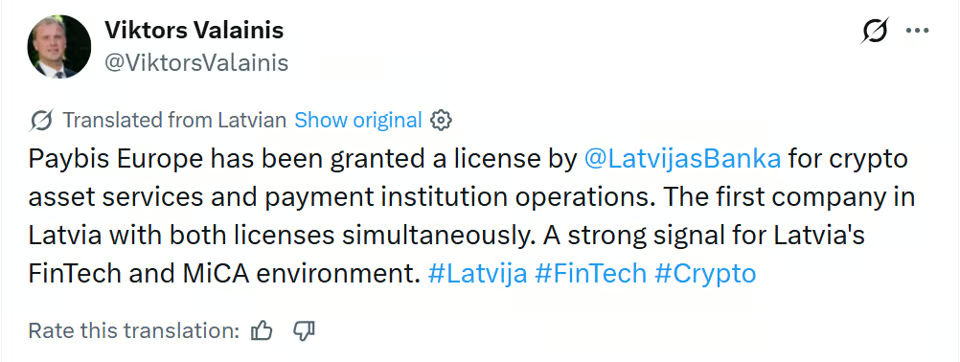
Cryptocurrency platform Paybis has received two licences from Latvia’s central bank, including one for crypto-asset services under the European Union’s Markets in Crypto-Assets Regulation (MiCA) and another for payment institution operations under Payment Services Directive 2 (PSD2).
The licences were issued by the Supervision Committee of Latvijas Banka on May 12 to SIA Paybis Europe, the company’s EU entity, according to an announcement from the central bank. Paybis is the third company in Latvia to receive a MiCA CASP licence, the central bank said.
The MiCA licence covers custody and administration of crypto assets on behalf of clients, exchange of crypto-assets for funds or other crypto assets, execution of orders, transfer services and crypto asset advisory, Latvijas Banka said. The central bank added that the PSD2 payment institution licence enables Paybis’s EU entity to execute payments and make transfers to payment accounts.
Paybis CEO and co-founder Innokenty Isers said the dual licensing allows the firm “to make a broad, future-focused offering, including working with stablecoins.”
Related: MiCA has made euro stablecoins safe but weak, new report argues
Paybis eyes B2B crypto infrastructure push
Konstantins Vasilenko, co-founder and chief business development officer of Paybis, told Cointelegraph that Paybis is targeting business clients with a white-label crypto infrastructure stack, covering on/off-ramps, buy/sell/swap, payment acceptance and stablecoin payouts. These services would be delivered through a single API, allowing companies to offer crypto services to their own customers without building their own regulated setup.
“This is where the combination of MiCA CASP authorisation and PSD2 PI licensing is particularly important, because it allows us to connect crypto asset services with regulated payment rails,” he added.

Source: Viktors Valainis, Minister of Economics of Latvia
Founded in 2014, Paybis supports 90 cryptocurrencies and serves seven million users across 180 countries. It also holds money services business licences in the US and Canada.
Related: MiCA-licensed Banking Circle joins bank stablecoin settlement race in Europe
EU weighs “MiCA 2” amid rising scrutiny
In April, a European Commission adviser said the EU’s MiCA crypto regulation is likely to evolve over time, with the Commission planning a public consultation to assess whether the rules are working for market participants. Speaking at Paris Blockchain Week 2026, Peter Kerstens said it would be “rather unusual” if there were no “MiCA 2” at some point, noting that EU financial legislation typically develops in stages.
The comments came amid growing scrutiny and opposition from the crypto industry. Stablecoin issuer Circle has pushed back on euro stablecoin thresholds, while policymakers debate whether supervision of major crypto firms should be centralized under the European Securities and Markets Authority.
Magazine: Singapore isn’t a ‘crypto hub’ — it’s something better: StraitsX CEO


Key takeaways
- Bitcoin recovers slightly on Wednesday after finding support below $80,000.
- US-listed spot ETF saw outflows of $233 million on Tuesday,
Bitcoin finds support at a key level
Bitcoin (BTC) has slightly rebounded and is currently trading above $81,000 on Wednesday, following a retest of a critical technical support level the previous day.
The price surge is attributed to a recent correction and support found near the psychological $80,000 mark. As market participants await the Senate Banking Committee’s vote on the Clarity Act on Thursday, there are early indications that this could be a near-term catalyst for Bitcoin’s future price action.
Institutional demand appears to be showing some caution this week. Spot BTC Exchange-Traded Funds (ETFs) recorded a notable outflow of $233.25 million on Tuesday, after a modest inflow of $27.29 million the previous day, according to CoinGlass data.
If these outflows persist or intensify in the coming days, Bitcoin may experience a price correction. However, the focus remains on the Senate Banking Committee’s upcoming vote on the Clarity Act, which is anticipated to have a significant impact on the crypto market.
Bitcoin’s recent price action has lost momentum as it faces resistance around the 200-day Exponential Moving Average (EMA), hovering near $82,000.
The ongoing consolidation suggests that Bitcoin is taking a breather after a strong rally since early April. However, the outlook remains bullish, with the largest cryptocurrency by market capitalization potentially poised to resume its upward trend. Analysts are optimistic that the Clarity Act, which is expected to be voted on Thursday, could trigger a breakout for Bitcoin.
Bitcoin price forecast: BTC consolidating above key EMAs
Despite some caution in institutional demand, Bitcoin is showing a bullish near-term bias, with support holding above the 50-day and 100-day Exponential Moving Averages (EMAs).
These EMAs are clustered just below $76,800 and are part of a parallel channel, suggesting ongoing consolidation in the price action.
The Relative Strength Index (RSI) on the daily chart is near 61, indicating positive momentum without being overextended.
Meanwhile, a slightly negative Moving Average Convergence Divergence (MACD) reading points to moderating upside pressure, rather than a reversal, as Bitcoin remains below the 200-day EMA near $82,100.
If the rally persists, Bitcoin will face initial resistance at the 200-day EMA around $82,100, followed by the 61.8% Fibonacci retracement level near $83,440 and a horizontal barrier at $84,410.

A sustained break above this resistance zone could open the door for a run toward the January peak of around $97,925.
However, if the bears regain control, support is seen at the psychological $80,000 level, with further support zones near the 50% retracement at $78,960 and the 100-day and 50-day EMAs around $76,730 and $76,420, respectively.
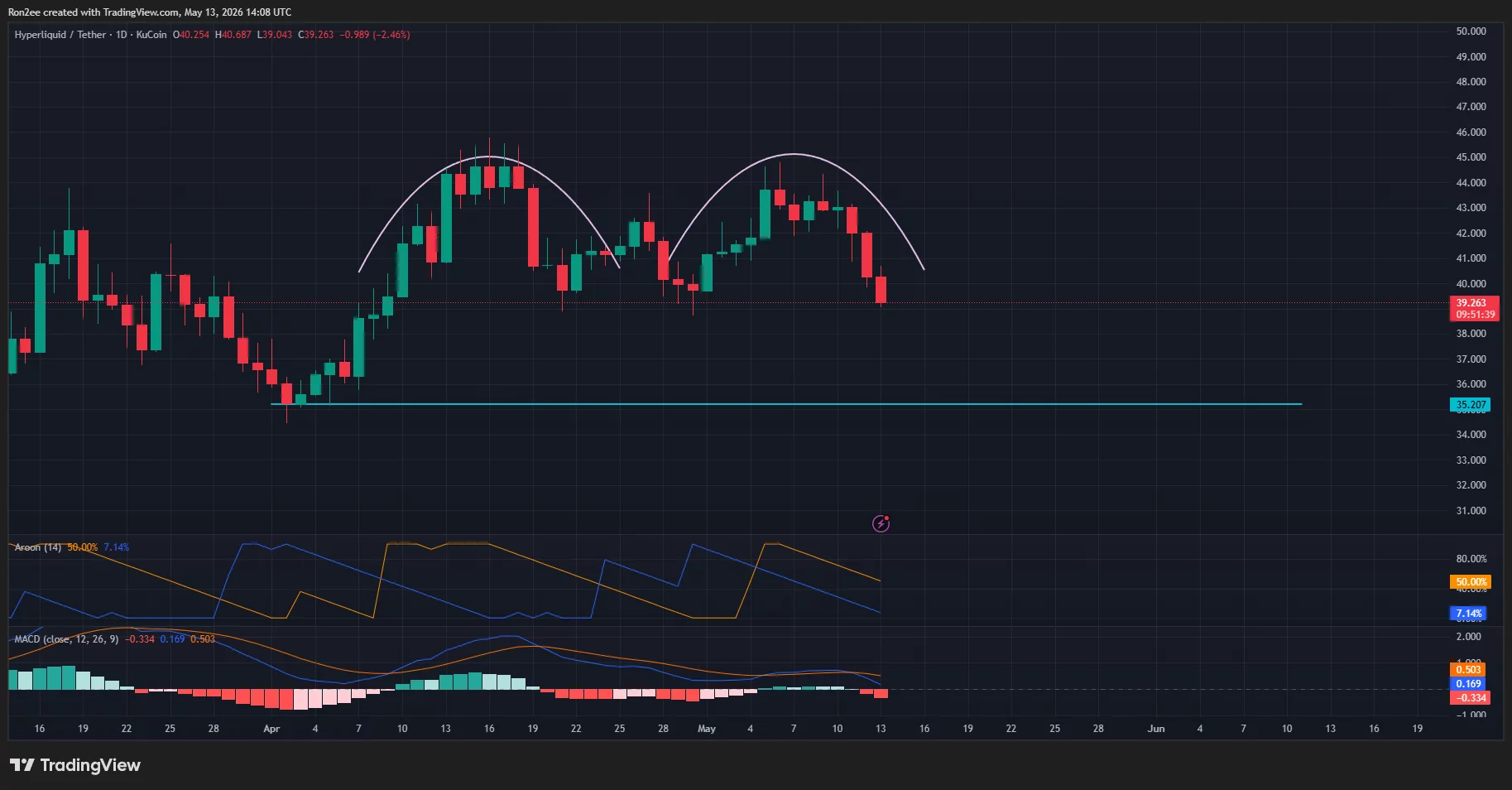
Hyperliquid price extended its decline on Tuesday after failing to hold above a key resistance zone, raising concerns that a bearish double top pattern may now be forming on the daily chart.
Summary
- Hyperliquid price fell toward $39 after forming a potential bearish double top pattern near the $44–$45 resistance zone.
- Whale positioning on Hyperliquid reached $4.236 billion, with long and short exposure remaining nearly balanced at a 0.98 ratio.
- A bearish MACD crossover and weakening momentum indicators raised the risk of a deeper correction toward the key $35 support level.
According to data from crypto.news, Hyperliquid (HYPE) price dropped to around $39.2 at press time on May 13 after briefly trading above $44 earlier this month. Despite the recent pullback, the token still remains significantly above its April lows near the $35 region.
The latest correction comes as whale positioning on Hyperliquid reached roughly $4.236 billion in total exposure, with large traders showing an unusually balanced stance between bullish and bearish bets. Long positions accounted for around $2.099 billion, while short positions stood slightly higher near $2.137 billion, producing a near-neutral long-short ratio of 0.98.
The positioning suggests that institutional and high-net-worth traders remain uncertain on the market’s near-term direction despite elevated volatility across digital assets.
At the same time, investor sentiment surrounding the Hyperliquid ecosystem has remained relatively strong following the launch of the first U.S.-listed exchange-traded funds tied to the HYPE token by 21Shares. The products include a spot ETF with staking exposure alongside a leveraged fund linked to the decentralized derivatives platform.
The ETF launch further strengthened Hyperliquid’s growing institutional profile as the protocol continues dominating decentralized perpetual futures trading. The platform currently controls a substantial share of decentralized perpetual open interest while processing billions of dollars in daily trading volume.
However, traders appear to have started locking in profits after HYPE repeatedly failed to break above the key $44–$45 resistance zone over the past several weeks.
Hyperliquid price analysis
On the daily chart, Hyperliquid price appears to have formed a bearish double top pattern with two major peaks established near the $44–$45 region. Typically, a double top pattern signals weakening bullish momentum and often precedes a deeper correction once the neckline support breaks.
The neckline of the pattern currently sits near the $35.2 support zone, which also aligns with a major horizontal support area that buyers defended aggressively during the April consolidation phase.
A look at the MACD indicator reinforces the weakening momentum outlook. The MACD histogram has turned negative again, while the MACD line has crossed below the signal line, confirming a bearish crossover and suggesting that downside pressure may continue building in the short term.
Meanwhile, the Aroon indicator also points to fading bullish momentum. The Aroon Up indicator has declined toward the 50% level while the Aroon Down remains subdued near 7%, signaling that buyers are gradually losing control of the trend even though broader bearish dominance has not yet fully emerged.
If sellers manage to push HYPE below the neckline support near $35, the bearish double top setup could trigger a larger correction toward the $31–$32 region.
On the upside, bulls would likely need to reclaim the $44 resistance area to invalidate the bearish structure and restore momentum toward the psychological $50 level.
Disclosure: This article does not represent investment advice. The content and materials featured on this page are for educational purposes only.
Crypto World
Brickken and Magma partner to deliver Net Asset Value (NAV) oracle for tokenized real estate

Built on Magma’s Digital Twin Token (DTT) and Brickken’s institutional tokenization infrastructure to close the data gap that has held tokenized real estate back.
Crypto World
Trump Crypto Project Just Burned $6.67 Million in Tokens: Is This Enough to Save World Liberty Financial (WLFI) From Its Downtrend?
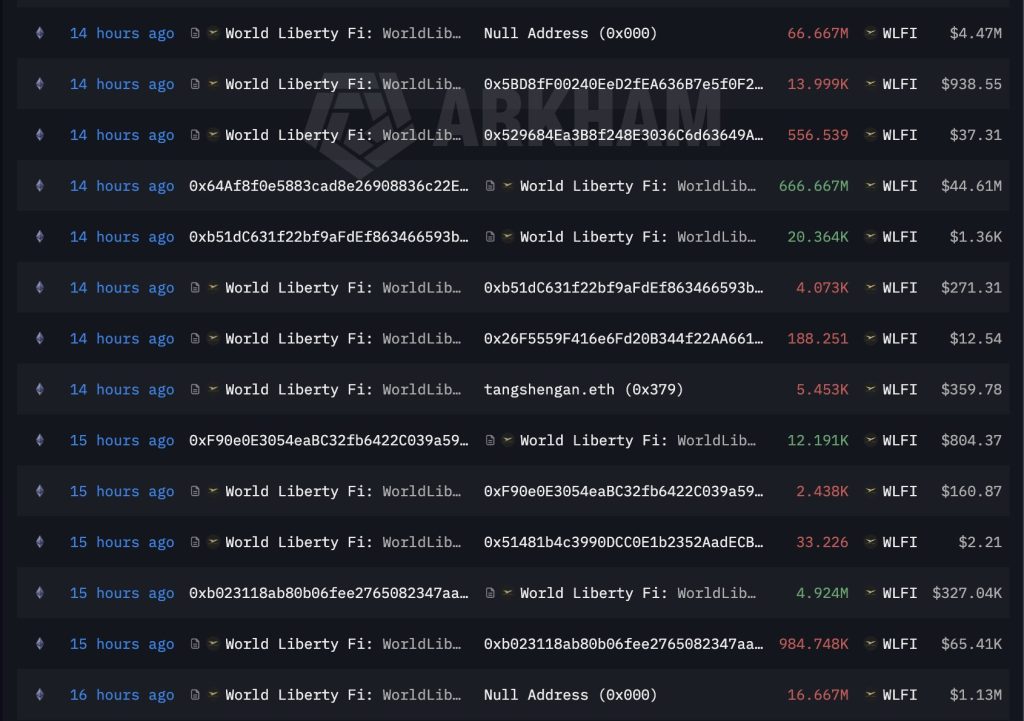
World Liberty Financial (WLFI) Crypto has torched $6.67 million worth of $WLFI tokens in under 24 hours, and the broader crypto market is watching.
The question is whether WLFI’s supply shock can cut through a market increasingly sceptical of politically connected DeFi projects.
Blockchain analyst EmberCN confirmed the burn: four team-linked addresses transferred one billion WLFI tokens into an unlocked vesting contract, then permanently removed 100 million, exactly 10%, via a burn mechanism.
The remaining 900 million tokens stay locked under a revised unlock schedule. This follows a plan announced last month to delay unlocks for contributors and founders, bundled with the commitment to burn a tenth of those allocations.
The move reduces near-term selling pressure from insiders, a signal of long-term alignment, or at least the appearance of it.
Can World Liberty Financial (WLFI) Crypto Reclaim $0.08 This Month?
WLFI is sitting at $0.0686 on the 4h chart, and this is a chart that tells a straightforward story of a coin that has been in a downtrend since launch, with no meaningful base built yet.
Price opened around $0.14 to $0.19 in early January and has been bleeding consistently lower ever since, hitting a recent low around $0.050 before a small bounce back to the current $0.068 level.
That bounce off $0.050 is the only remotely constructive thing on this chart, but it is too early to call it a base because price has not shown any ability to hold a level for more than a few sessions before continuing lower, and the overall structure is still a series of lower highs with no clear accumulation zone forming.
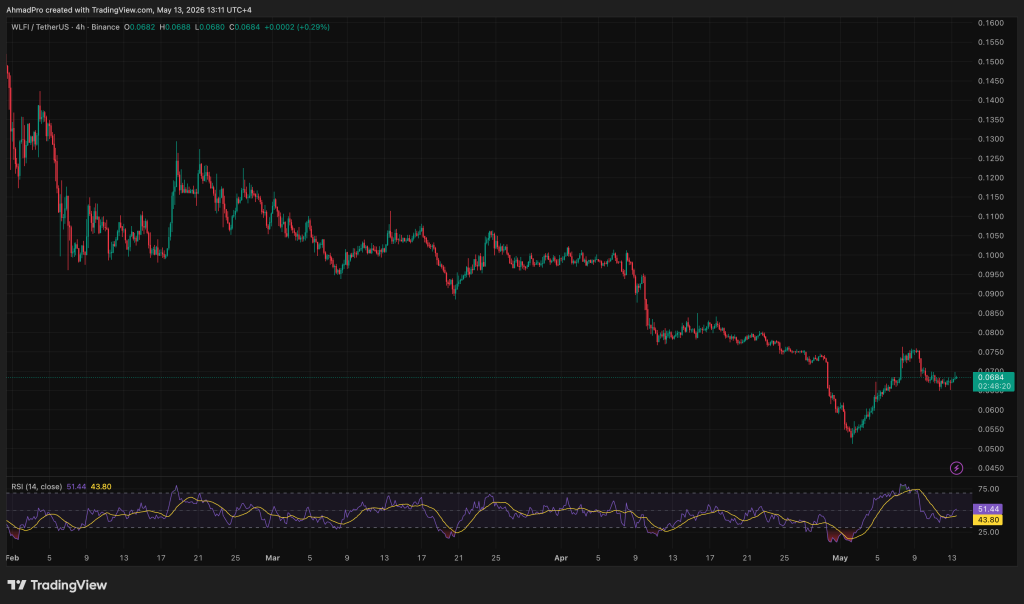
The $0.075 to $0.080 range is the first level of resistance from the most recent consolidation, and it is the level any recovery attempt needs to clear before the picture starts improving even marginally.
On the downside, the $0.050 low is the only real floor on the chart, and a break below it puts the price in completely uncharted territory with no support reference points below.
This is a high-risk chart with no confirmed bottom, no base structure, and a downtrend that has been intact since day one. The bounce from $0.050 could develop into something, but there is nothing here yet to suggest the selling is done.
Here is Why Bitcoin Hyper Could Outperform WLFI Next
With Bitcoin grinding at a key decision point and compressed upside at current market caps, rotation into early-stage infrastructure plays is picking up.
The WLFI burn itself underscores a broader theme: tokenomics discipline and genuine utility are separating credible projects from noise. Early-stage positioning, before price discovery, is where asymmetric returns historically originate.
Bitcoin Hyper (HYPER) is making a direct play on Bitcoin’s core limitations. It’s the first Bitcoin Layer 2 to integrate the Solana Virtual Machine (SVM), delivering sub-second finality and low-cost smart contract execution while inheriting Bitcoin’s security.
That’s a technically ambitious combination; SVM performance benchmarks have beaten Solana itself in early tests, which is either a bold claim or a genuine engineering leap (the on-chain data will settle that debate at launch).
The numbers are concrete: $HYPER is priced at $0.01368, with $32,676,096.88 raised to date. Staking rewards are live, with high APY available to current presale participants.
The project’s presale has already crossed $32M, meaningful traction for an infrastructure-layer bet. As with any presale, smart contract risk and execution uncertainty apply. Research the project independently before committing capital.
The post Trump Crypto Project Just Burned $6.67 Million in Tokens: Is This Enough to Save World Liberty Financial (WLFI) From Its Downtrend? appeared first on Cryptonews.


Key takeaways
- ATOM extends its gains, trading above $2.10 on Wednesday, up over 8% so far this week.
- The technical outlook suggests a further upward rally in the near term
ATOM trading volume hits multi-month highs
Cosmos Hub (ATOM) continues its bullish rally, currently trading above $2.10, up more than 8% this week.
On-chain data reveals a positive outlook, with ATOM’s trading volume surging to $120.74 million on Wednesday, marking the highest level since early February.
This surge in trading volume indicates growing trader interest and liquidity, further boosting ATOM’s upside momentum.
Santiment’s data suggests an increase in demand, with spot markets showing buy-side dominance and generally neutral conditions across other metrics, pointing to potential for continued upward movement.
The rally comes after Cosmos Hub announced a new partnership with Injective. Starting soon, the USDC stablecoin from Injective will be integrated into the Cosmos Hub ecosystem.
This integration ensures long-term support for USDC, solidifying the relationship for at least four years.
The partnership will enhance liquidity, cross-chain interoperability, and introduce a buyback mechanism for ATOM tokens.
The Cross-Chain Transfer Protocol (CCTP) will facilitate one-signature transfers, with the protocol fees used to buy back ATOM tokens programmatically.
This move is bullish for both Cosmos Hub and ATOM in the long term, as it strengthens the ecosystem and introduces new demand drivers.
Cosmos Hub price forecast: ATOM aims for $2.34
The ATOM/USD 4-hour chart is bullish and efficient as the coin is outperforming the broader crypto market.
ATOM is trading at $2.15 on Wednesday, marking a 8% increase this week. The token remains above key support levels, with the 50-day and 100-day Exponential Moving Averages (EMAs) at $1.90 and $1.97, respectively.
This keeps the near-term bullish trend intact as ATOM pushes further away from its broken descending trend line.
The Relative Strength Index (RSI) has surged into overbought territory, currently around 75, while the Moving Average Convergence Divergence (MACD) line stays above zero with a positive spread, suggesting strong bullish momentum but cautioning against overextension.
If the bullish trend continues, initial resistance is found at the 200-day EMA around $2.34, followed by the 38.2% Fibonacci retracement at $2.39.
A sustained break above this resistance zone could open the path to further gains, with potential targets at the 50% retracement near $2.63 and the 61.8% retracement level at $2.88.

However, if the market undergoes a correction, immediate support is seen at the 23.6% Fibonacci retracement at $2.09, followed by the 100-day EMA at $1.97 and the 50-day EMA near $1.90.
A deeper pullback could occur if these levels are lost, with further support near the former trendline break area at $1.75 and the lower horizontal support around $1.65.
Every market has its dominant players. In online sports betting, two names have occupied the top positions for long enough that most people stopped questioning them. DraftKings built the most recognisable betting brand in the United States. Bet365 built what many consider the definitive international sportsbook. Between them, they have set the terms for what online gambling looks like for a very large number of players.
But markets evolve. Player expectations shift. And in 2026, a new platform called ZunaBet is entering the conversation — not by trying to replicate what DraftKings and Bet365 do, but by building something specifically for the players those platforms have never fully served.
This article looks at all three. What the established platforms do well, where they fall short, and why ZunaBet is generating attention from a particular and growing segment of the market.
DraftKings: America’s Sportsbook
DraftKings did not come from nowhere. It started as a daily fantasy sports platform, spent years building an audience of sports-engaged, financially active users, and was positioned better than almost any competitor when the US Supreme Court’s 2018 ruling began opening state-by-state sports betting legalisation. The platform moved fast, spent heavily, and converted its fantasy user base into a sportsbook audience more effectively than traditional operators could manage.
Today DraftKings operates a full sportsbook and online casino across multiple licensed US states. The sportsbook covers NFL, NBA, MLB, and NHL in depth, with soccer, golf, tennis, and international markets expanding the offering. In-play betting is polished and the mobile app is among the most downloaded in the gambling category. The casino has grown across licensed states — slots, live dealer tables, and RNG games building out the product beyond its sportsbook origins.
Crypto is partially supported in some states, but the platform is fundamentally fiat-first. The payment infrastructure was built for traditional banking and cryptocurrency exists at the edges rather than forming the foundation. The Dynasty Rewards loyalty programme operates on a tiered points system — Dynasty Dollars earned through wagering, redeemable for site credits. The tiers are structured and the upper levels carry real benefits, but the actual return rate as a percentage is not stated plainly. Most players find the mechanics functional but not particularly transparent.
DraftKings is the right platform for the American sports bettor who wants a polished, mobile-first product built for US regulations and US sports culture. Its limitations — partial crypto support, complex loyalty mechanics, and a fiat-first infrastructure — are largely inherited from the environment it was built within.
Bet365: The International Standard
Bet365 has been building its sportsbook since 2000. Twenty-five years of focused product development, regulatory approvals across the UK, Malta, Gibraltar, Australia, and dozens of other jurisdictions, and a marketing presence that has made it one of the most recognised gambling brands in the world.
The sportsbook is where Bet365 earns its reputation. Football coverage is the benchmark — market depth, in-play quality, and live streaming across competitions from the top European leagues down to matches most operators do not bother covering. Tennis, cricket, basketball, American sports, horse racing, and golf are all present at the same depth. For a sports bettor in an international regulated market, Bet365 is the default recommendation for good reason.
The casino offers slots, live dealer games, and RNG table games as a solid secondary product. The platform is stable, the brand carries trust built across decades, and the regulatory standing is among the strongest of any operator in the industry.
Crypto is not supported at all. Cards, bank transfers, and e-wallets are the options. The loyalty programme accumulates points through wagering, redeemable for free bets and bonuses. It has operated in broadly the same form for years without meaningful structural change. The real return rate is not communicated plainly.
Bet365 serves its core audience — the international sports bettor in a regulated fiat market — better than almost anyone. Outside that profile, it has not moved to accommodate changing player expectations.
What Both Platforms Share
Looking at DraftKings and Bet365 together, two consistent limitations stand out.
The first is cryptocurrency. DraftKings has partial support in limited markets. Bet365 has none. In 2026, this is a more significant gap than it might appear. Crypto ownership has moved well past early adopter status into mainstream financial behaviour. A meaningful and growing portion of online gambling players holds and transacts in Bitcoin, Ethereum, USDT, Solana, or other currencies as a routine part of their financial lives. For those players, fiat-only or fiat-first platforms require conversion, fees, and engagement with banking infrastructure they have specifically moved away from.
The second is loyalty transparency. Both platforms run points-based programmes where the real return rate is embedded in mechanics that require effort to calculate. Players accumulate balances and redeem for bonuses without ever being told plainly what percentage of their wagering is coming back to them. This model has been the industry standard for so long that most platforms have never questioned it. But the players who have encountered rakeback-based systems — where a defined percentage is returned at a clearly stated rate — find it difficult to return to opacity.
These are structural gaps, not surface-level complaints. They define the audience that both DraftKings and Bet365 were never built to serve — and they define exactly who ZunaBet is building for.
ZunaBet: The Platform Getting Attention in 2026
ZunaBet launched in 2026 under Strathvale Group Ltd with an Anjouan gaming licence. The team behind it brings over 20 years of combined industry experience. It did not inherit a fiat payment system, a loyalty programme designed in the early 2000s, or a regulatory geography that shapes product decisions. It built from scratch, in 2026, with a clear picture of the player it was designed to serve.
Crypto at the foundation. More than 20 cryptocurrencies are supported — Bitcoin, Ethereum, USDT across multiple chains, Solana, Dogecoin, Cardano, XRP, and others. No platform processing fees. Fast withdrawals. This is not a fiat platform with a crypto deposit option. Crypto is the infrastructure the entire platform is built on. For players who have been navigating workarounds to use traditional platforms, the experience is immediately different.
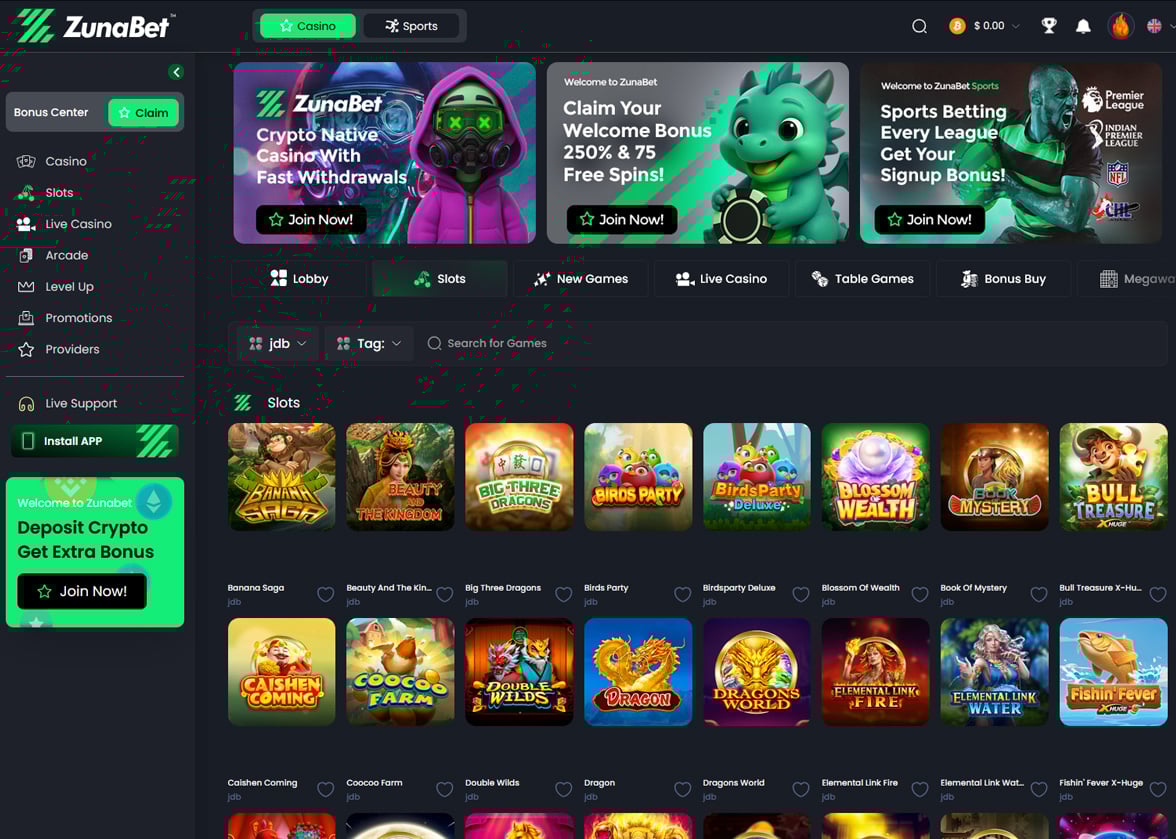
A game library that competes at the top level. Over 11,000 titles from more than 63 providers including Pragmatic Play, Hacksaw Gaming, Evolution, Yggdrasil, and BGaming. Slots account for the majority, but live dealer games and RNG table games are both substantively covered. By volume and provider depth this is one of the largest crypto casino libraries in the market — and it competes with the casino side of either established platform on content alone.
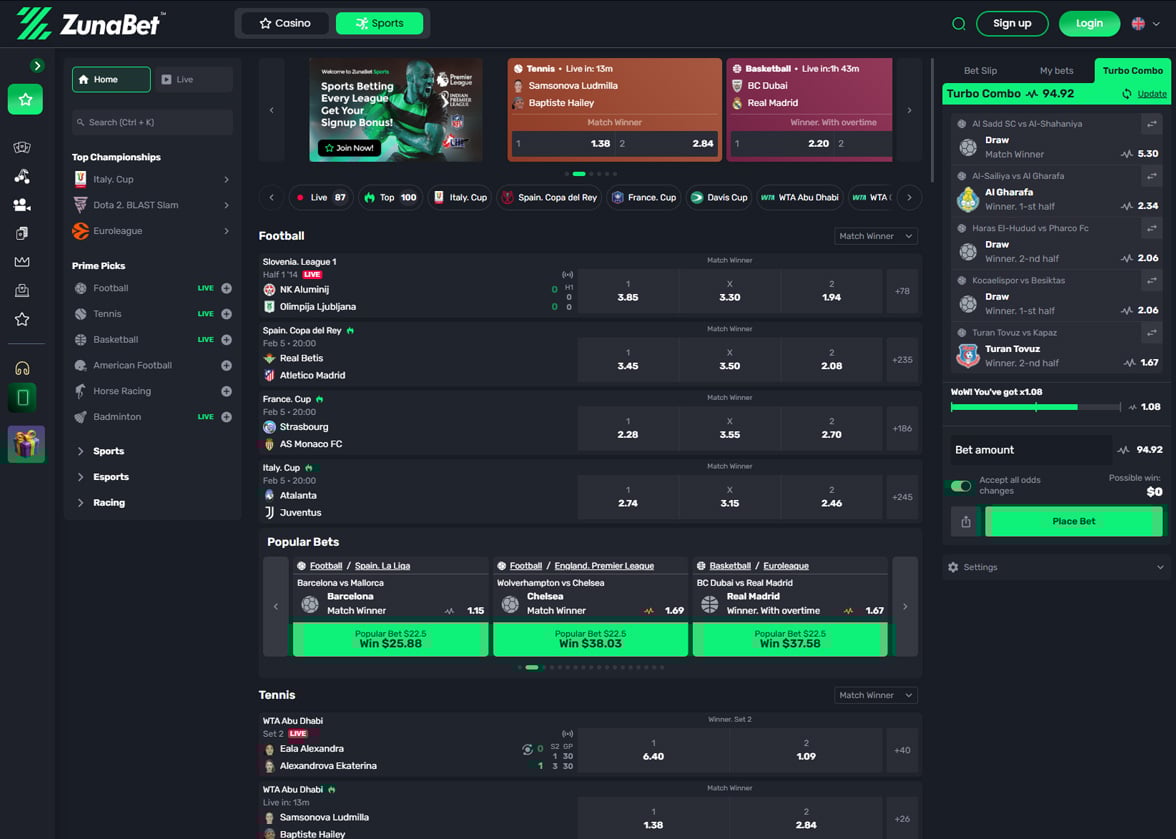
A sportsbook that is part of the platform. Football, basketball, tennis, NHL, and major global sports alongside esports markets for CS2, Dota 2, League of Legends, and Valorant. Virtual sports and combat sports included. Casino and sportsbook live in the same product — not linked, not adjacent, the same place. Players who move between casino and sports betting do so without switching platforms or managing separate experiences.
Technology built for modern usage. Dedicated apps for iOS, Android, Windows, and MacOS. Dark-themed HTML5 interface, fast-loading across devices. 24/7 live chat support always available.
The Welcome Offer: $5,000 and 75 Free Spins
ZunaBet welcomes new players with a bonus structured across three deposits.
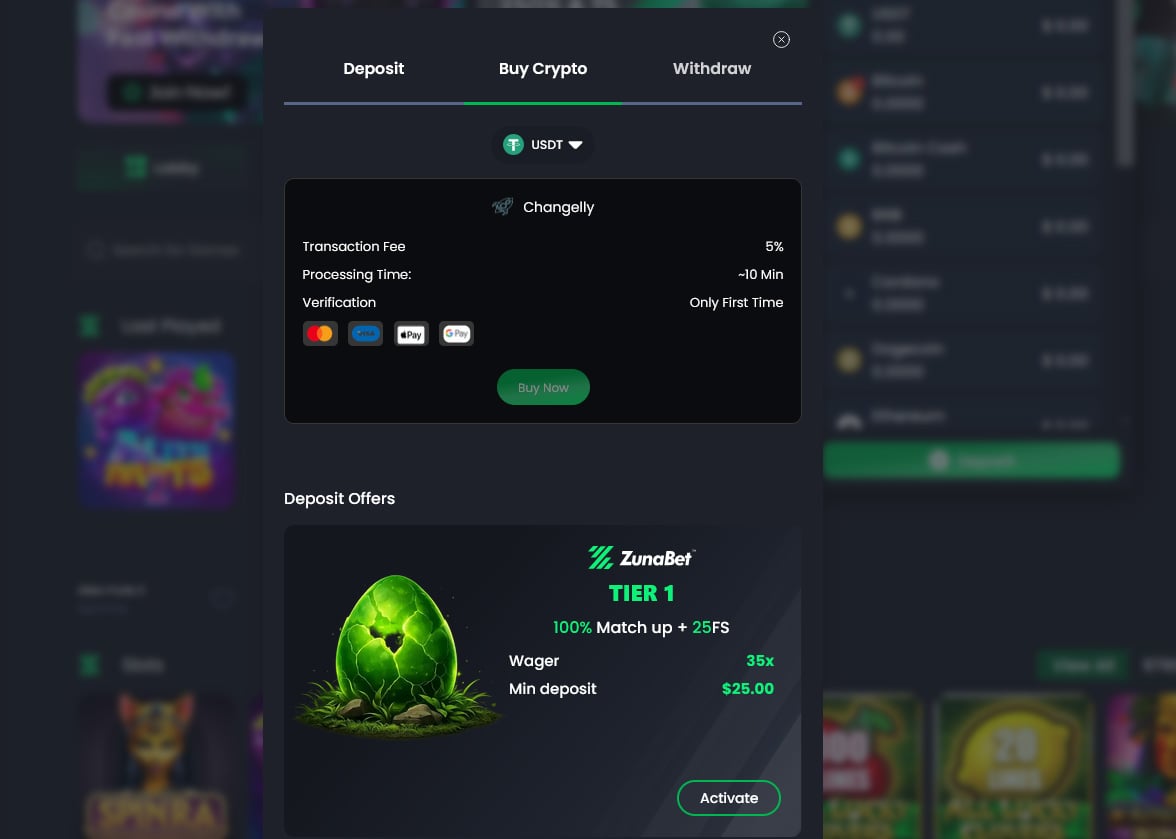
First deposit: 100% match up to $2,000 plus 25 free spins. Second deposit: 50% match up to $1,500 plus 25 spins. Third deposit: 100% match up to $1,500 plus a final 25 spins.
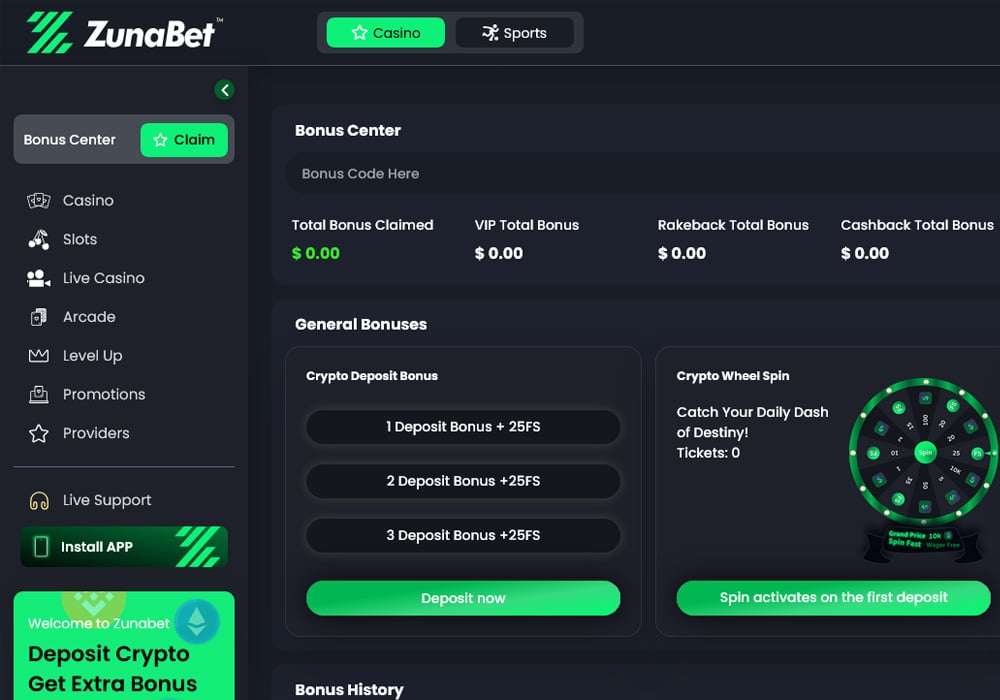
Total value: up to $5,000 in matched funds and 75 free spins across the opening three deposits. Spreading the offer across multiple deposits keeps value active across the early experience on the platform and rewards players for continuing to engage rather than treating the welcome bonus as a single transaction.
The Loyalty Question: Where ZunaBet Pulls Ahead
The comparison between ZunaBet’s loyalty programme and those at DraftKings and Bet365 is the starkest illustration of the difference between old and new platform thinking.
Dynasty Rewards and Bet365 points both operate on the same core model: wager, earn points, redeem for bonuses. The rate of return is never stated as a plain percentage. Players trust the system without being shown the number behind it.
ZunaBet shows the number.
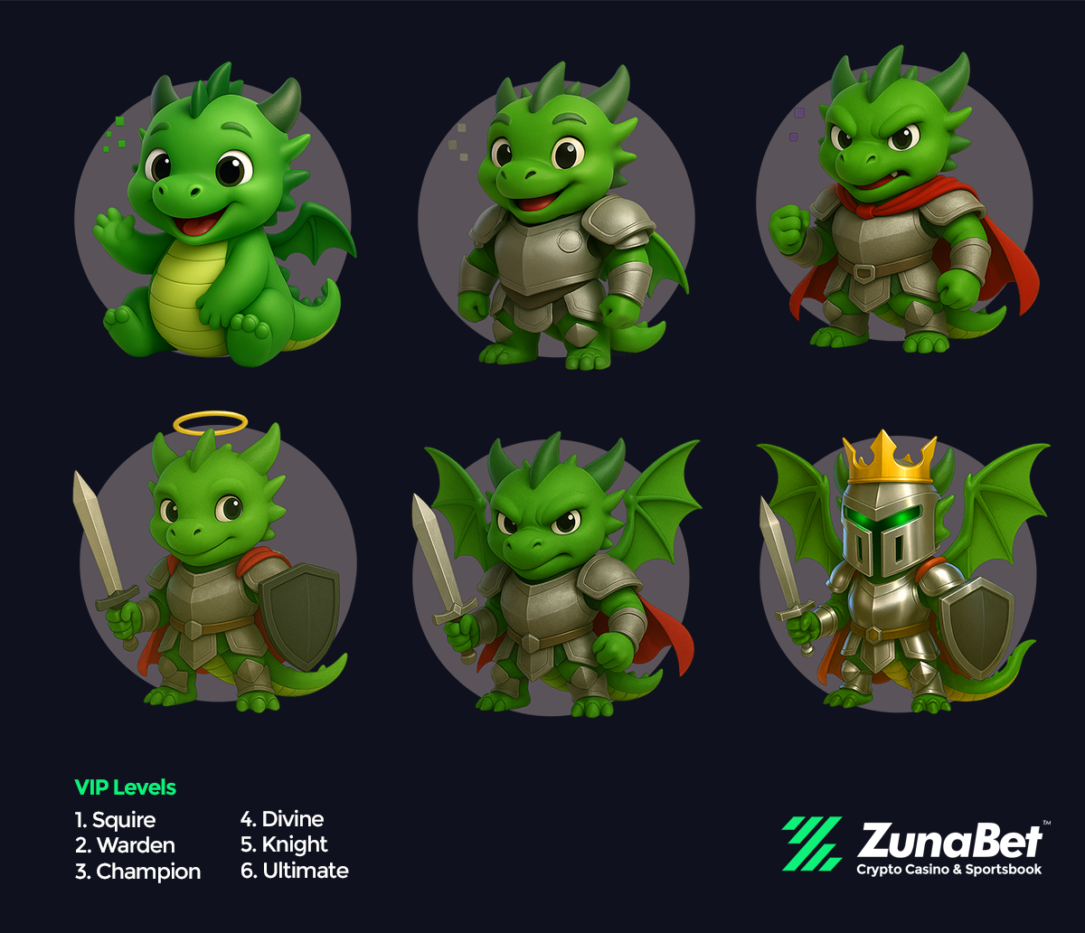
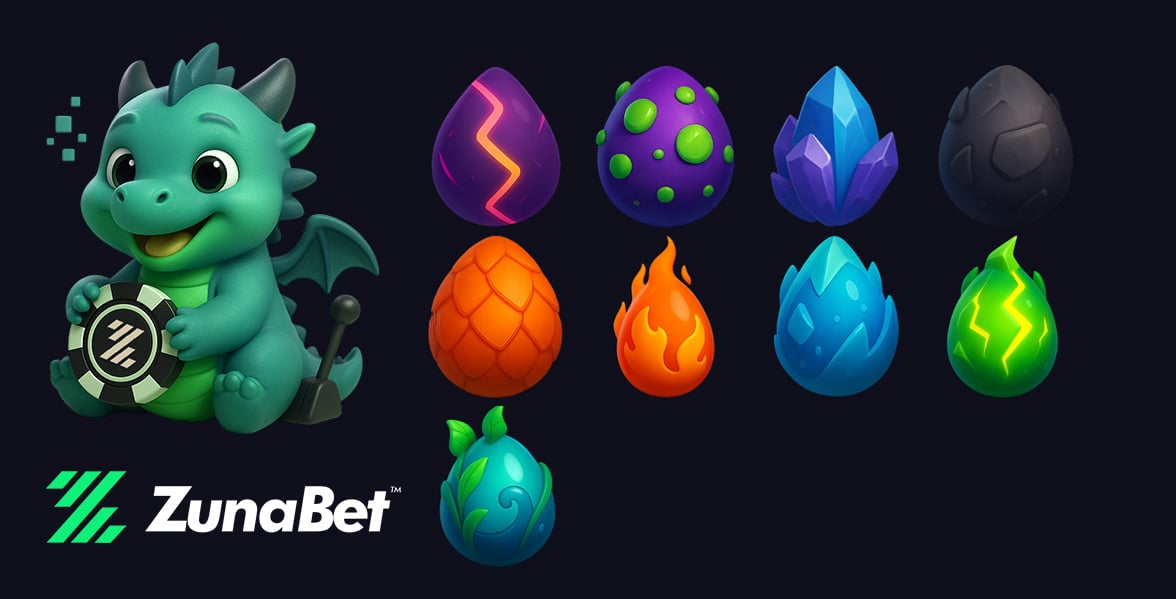
The dragon evolution loyalty system runs through six named tiers — Squire, Warden, Champion, Divine, Knight, and Ultimate. Each tier carries a defined rakeback percentage. Squire earns 1% of losses returned. Ultimate earns 20%. The rate is stated. It applies. It comes back to the player. No calculation required.
Alongside the rakeback, each tier adds benefits: free spins up to 1,000, VIP club access, double wheel spins, and a gamified identity built around a mascot called Zuno. The programme has both structure and personality — something traditional loyalty systems rarely manage simultaneously.
At 20% rakeback for the highest tier, ZunaBet returns one in every five dollars lost over time to its most engaged players. For regular, high-volume players that compounds into a substantial ongoing financial benefit that neither Dynasty Rewards nor Bet365 points can match in value or in the simple fact of being transparent about it.
Is ZunaBet the Alternative Players Are Watching?
The question in the headline has a straightforward answer: for a specific type of player, yes.
DraftKings is not losing its core US sports betting audience to ZunaBet. Bet365 is not losing its international regulated market players. Both platforms serve their audiences well and will continue to do so.
What ZunaBet represents is a new option for the player who sits outside both those profiles — the crypto user, the player who wants to know what their loyalty is worth, the person who expects casino, sportsbook, and esports to exist in one place without compromise. That player has existed for years without a platform built around them.
In 2026, they have one. And based on what ZunaBet has launched with — the game library, the sportsbook depth, the crypto infrastructure, and the most transparent loyalty programme in its class — the attention it is receiving is entirely justified.
The old names defined what online gambling looked like for one generation of players. ZunaBet is part of what it looks like for the next.
Disclaimer: This is a Press Release provided by a third party who is responsible for the content. Please conduct your own research before taking any action based on the content.



Americans are sending Washington a clear message: the United States should lead the future of digital finance, not fall behind while other countries write the rules. A new national HarrisX survey of registered voters found that 70% say the U.S. should have already passed crypto legislation, 62% say it is important for America to set the global rules for digital finance, and 60% prefer clear federal legislation over case-by-case enforcement.
That makes the Senate Banking Committee’s decision to mark up the Clarity Act a critical next step toward giving the United States a workable framework for digital asset markets.
For years, Washington treated digital assets as a moving target. The technology evolved quickly, the market was volatile, and policymakers were still sorting out the risks and opportunities. That is no longer the case. Lawmakers, regulators and staff have now spent years studying these markets, engaging stakeholders and wrestling with difficult questions around consumer protection, market integrity, custody, trading and disclosure.
The industry has changed as well. A sector that once spoke in scattered, often conflicting voices has become more disciplined in its engagement with policymakers. That matters because durable legislation comes from sustained engagement, practical proposals and a willingness to work through tradeoffs.
The House made that much clear when it passed the CLARITY Act with strong bipartisan support. That vote did not resolve every outstanding question, but it established something important: digital asset market structure belongs squarely on Congress’s agenda. The Senate now has a chance to build on that foundation.
It is doing so with a stronger policy foundation than it had even a year ago. The SEC and the CFTC have taken steps to improve coordination and clarify how existing law applies to parts of the market. Those efforts are important, but they also underscore the limits of agency action. Only Congress can provide durable rules on regulatory boundaries, registration requirements, market oversight and the treatment of digital assets that do not fit neatly within older frameworks.
Meanwhile, the market has continued to move ahead. Following the signing of the GENIUS Act, stablecoins have grown rapidly and are becoming more connected to mainstream payments infrastructure. Tokenization is moving from concept to institutional experimentation. Major financial firms are testing blockchain-based systems for settlement and other market functions. Public blockchain networks are increasingly part of that activity.
Some of that development is taking place on networks like Solana. PayPal expanded PYUSD to Solana to support faster, lower-cost payment use cases. Visa has included Solana in its stablecoin settlement work. And SoFi, which launched SoFiUSD in December, has said parts of its broader digital asset banking platform are expected to leverage Solana alongside other networks. These examples show how digital asset markets are becoming more connected to real financial activity.
It’s clear: Digital assets are the next generation of financial infrastructure.
Congress should legislate with that reality in mind. A market structure bill has to do difficult, important work. It has to draw workable lines between regulators. It has to establish clear rules for market participants while ensuring robust consumer protections. And it has to account for the fact that blockchain networks and digital asset markets do not map neatly onto categories built for earlier generations of financial products.
That is precisely why markup matters. It requires lawmakers to engage real legislative text in public. Members debate substance, offer amendments, narrow disagreements and test whether a proposal is ready to move. On legislation this consequential, that process is where serious policymaking happens.
For digital asset legislation to last, it must be bipartisan. A framework written on a party-line basis will be fragile from the start. Rules that shape markets endure when both parties help write them. The good news is that more lawmakers on both sides of the aisle now understand the stakes. They understand the need for consumer protection, the importance of market integrity and the cost of leaving a growing sector trapped in legal uncertainty.
The United States has deep capital markets, strong institutions, world-class entrepreneurs and a long history of leading in financial innovation. It should bring those strengths to digital assets as well. Clear rules will protect consumers, strengthen markets and give responsible builders the confidence to operate and invest in the United States.
Digital asset markets will continue to grow. Capital will move. Infrastructure will be built. The question is whether the United States will shape that future with clear rules, credible oversight and the confidence to lead.
The Senate can help answer that question now by moving this legislation forward and closer to the President’s desk. It’s critical that it does.

Miles traveled for all 32 NFL teams, with 49ers set for grueling season

Supreme Court Breaks Another Election To Make Sure Black Voters Are Disenfranchised

20 lakhs per day #reality #money #harshgujral #rajshamani

Manchester United reach agreement with Casemiro over contract clause amid transfer speculation

US brings back mandatory military draft registration

Steven Gerrard disagrees with Gary Neville over ‘shock’ Chelsea and Arsenal claim | Football


-
 Crypto World5 days ago
HarrisX Poll Found 52% of Registered Voters Support the CLARITY Act
-

 Fashion5 days ago
Weekend Open Thread: Marianne Dress
-

 Crypto World6 days ago
Upbit adds B3 Korean won pair as Base token gains Korea access
-
 NewsBeat6 days ago
NCP car park operator enters administration putting 340 UK sites at risk of closure
-

 Fashion2 days ago
Coffee Break: Travel Steam Iron
-

 Fashion3 days ago
What to Know Before Buying a Curling Wand or Curling Iron
-

 Tech3 days ago
Auto Enthusiast Carves Functional Two-Stroke Engine from Solid Metal
-

 Politics2 days ago
What to expect when you’re expecting a budget
-
 Business4 days ago
Ignore market noise, India’s long-term story intact, say D-Street bulls Ramesh Damani and Sunil Singhania
-

 Politics4 days ago
Politics Home Article | Starmer Enters The Danger Zone
-

 Tech2 days ago
GM Agrees To Pay $12.75 Million To Settle California Lawsuit Over Misuse Of Customers’ Driving Data
-

 Politics6 days ago
Simon Cowell Says He Was ‘Horrible’ To Susan Boyle During BGT Audition
-

 Entertainment6 days ago
Sarah Paulson Called Out For Met Gala ‘Hypocrisy’
-

 Entertainment6 days ago
General Hospital: Ric & Ava Bombshell – Ric’s Massive Secret Exposed!
-

 Crypto World6 days ago
Robinhood says Wall Street is building onchain
-

 Entertainment7 days ago
Bold and Beautiful Early Spoilers May 11-15: Steffy Revolted & Liam Overjoyed!
-
 Sports6 days ago
UEFA Champions League final schedule, teams, venue, live time and streaming | Football News
-

 Entertainment6 days ago
Why David Letterman Called CBS ‘Lying Weasels’
-

 Fashion7 days ago
The Best Work Pants for Women in 2026
-
 Sports6 days ago
Mike Tyson speaks out on status of Floyd Mayweather fight
You must be logged in to post a comment Login