

Crypto World
Markets in ‘greed’ mode as AI firms ready IPOs

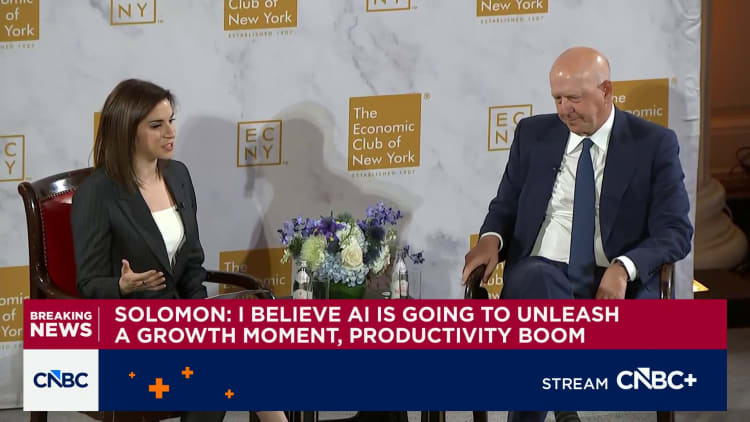

Goldman Sachs CEO David Solomon said Tuesday that investors have shifted decisively into “greed” mode as markets are poised to test an unprecedented fundraising wave for giant artificial intelligence firms.
Asked by CNBC’s Leslie Picker whether markets could support a string of massive equity offerings from the upcoming IPOs of OpenAI, Anthropic and SpaceX, Solomon said that there is ample capital available for the deals.
“There’s plenty of liquidity in the system if the world continues to remain as optimistic,” Solomon said. “We are definitely in a moment where there’s more greed than there is fear.”
Solomon’s comments come as investors prepare for what will be one of the busiest periods for equity issuance in years. The two leading AI model providers, as well as SpaceX, which includes Elon Musk’s AI company, could go public at trillion dollar-valuations just as other firms are seeking vast sums to fund data centers, chips and infrastructure, raising questions about whether markets can absorb the supply.
Solomon, whose bank is playing a key role in several of the deals, downplayed those concerns. Alphabet’s recent stock performance after announcing plans for an $80 billion equity raise was proof that markets are still receptive to AI, he said.
“The stock is trading very well,” Solomon said. “This is the first actual concrete data point for bringing something of this scale, and it’s encouraging.”
Robust equity and debt markets are prompting companies to raise money while markets are allowing it, he said.
“When capital’s available, if you’re capital consumptive and it’s available, take the capital,” Solomon said.
Solomon acknowledged that the fundraising wave is unprecedented in size, but argued that record levels of wealth and liquidity across markets support the activity. He also said gains generated by AI companies could create a self-reinforcing cycle as employees and investors recycle profits into taxes and new ventures.
Greed can “turn into fear very quickly, but that doesn’t mean it will,” Solomon said. “Exuberance can go on for big periods of time. …There’s a good chance that we’re earlier in the cycle than later.”

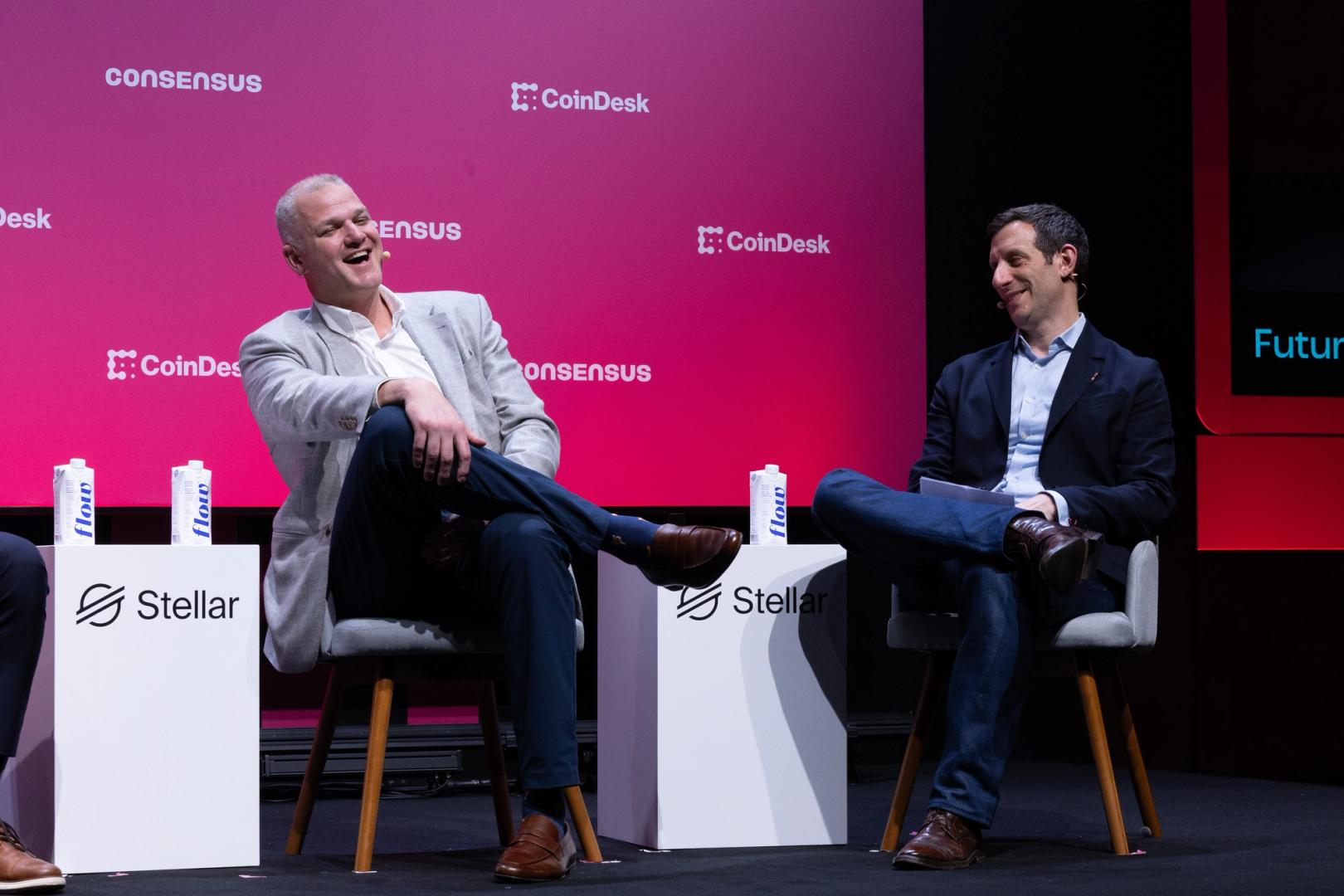
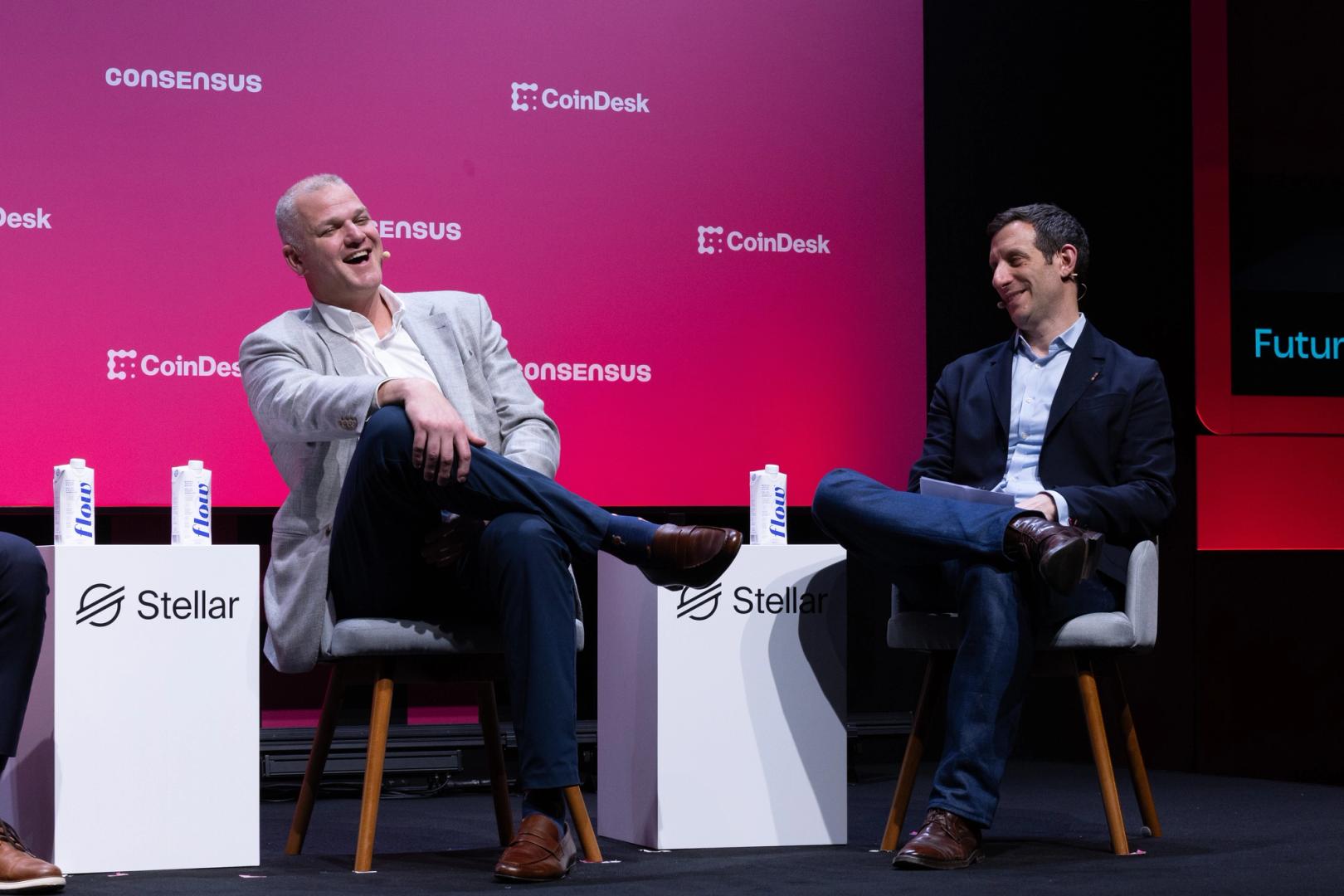
Galaxy Digital (GLXY) said Tuesday it had launched over-the-counter (OTC) prediction markets trading for institutional investors, becoming one of the first major digital asset firms to offer large-scale access to event-driven markets through a bilateral trading framework.
The Nasdaq-listed company said that the new service, offered through its global markets trading desk, will allow hedge funds, family offices and other institutional investors to trade contracts tied to political, economic and geopolitical events while accessing liquidity and trade sizes typically unavailable through retail-focused prediction market platforms.
Shares of the company are down 6% on Tuesday, in line with the broader crypto stock market.
The launch comes as prediction markets have gained traction among investors seeking ways to express views on real-world events ranging from elections and central bank decisions to regulatory developments. Platforms such as Kalshi and Polymarket have experienced rapid growth over the past two years, with many crypto-native companies entering the market.
Galaxy said its offering initially covers non-sports event contracts traded on Kalshi and Polymarket, with plans to expand to additional venues. The firm will also allow clients to combine prediction market positions with hedges across equities, commodities and other asset classes, creating broader event-driven investment strategies.
As part of the launch, Galaxy facilitated a $10 million trade with crypto-focused hedge fund Arca tied to the outcome of the proposed CLARITY Act, legislation that would establish a regulatory framework for digital assets in the United States.
“Event-driven markets are becoming core to how sophisticated investors express macro views, and they deserve institutional infrastructure to match,” Jason Urban, Galaxy’s global co-head of digital assets, said in a statement.
Jeff Dorman, Arca’s chief investment officer, said prediction markets offered an effective way to hedge the fund’s exposure to ongoing negotiations in Washington surrounding crypto regulation, but that liquidity constraints on existing platforms made it difficult for large investors to participate directly.
The move reflects a broader institutionalization of prediction markets, a sector that has historically been dominated by retail traders. By acting as a principal counterparty, Galaxy can warehouse risk and facilitate larger transactions while providing greater discretion than exchange-based trading.
Earlier today, Polymarket completed its first block trade in a transaction between crypto broker FalconX and trading tech startup Anera Labs.
Industry observers say the entrance of firms such as Galaxy could help deepen liquidity and improve pricing efficiency in prediction markets by bringing professional investors into the space. Supporters argue that greater institutional participation could make market prices more useful as indicators of future outcomes, while critics caution that regulatory uncertainty remains a key challenge for the sector.
The launch further expands Galaxy’s growing derivatives and trading business. The New York-based firm, which provides institutional digital asset trading, asset management, staking and tokenization services, has increasingly positioned itself as a bridge between traditional financial markets and emerging digital asset infrastructure.
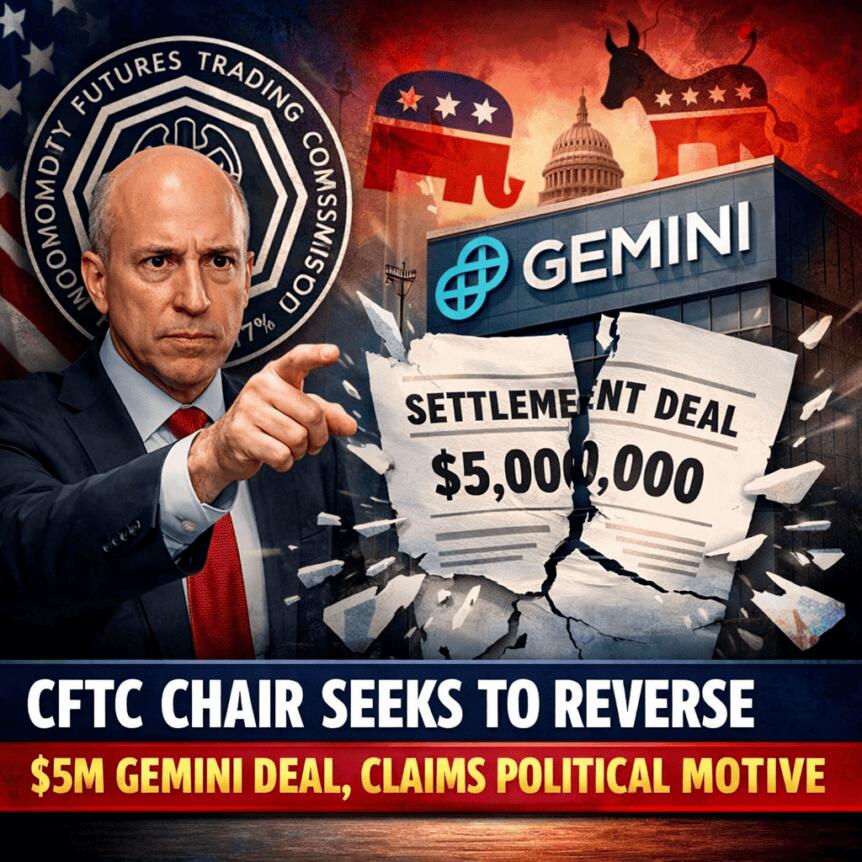
US Commodity Futures Trading Commission (CFTC) Chair Michael Selig has framed enforcement actions taken against Gemini as politically targeted by the Biden administration, arguing that the agency should reset its posture to a nonpartisan baseline. In remarks sent to mainstream media and reproduced in part in a CNBC interview, Selig contended that enforcement has been weaponized and pledged a fresh start focused on rule of law rather than politics. He also signaled that recent staff reductions in the agency may reflect an emphasis on addressing what he characterized as “lawfare” against the crypto industry.
“The Biden administration weaponized the federal agencies against the crypto industry and many other industries,” Selig stated. “They politically targeted people like the Winklevoss twins, and that’s not acceptable. We’re righting those wrongs. We’re gonna start fresh. The agency should not be used to engage in lawfare.”
According to the context provided by Cointelegraph, Selig’s remarks come as the CFTC pursued a nuanced realignment of its enforcement approach after a period of controversy surrounding Gemini. The agency, under his leadership, has also moved to reverse a prior settlement against Gemini—an action the commission described as part of its ongoing effort to revisit and, where appropriate, correct past positions.
In the same timeframe, the CFTC sought a federal court’s intervention to vacate a $5 million settlement with Gemini that had been reached in January 2025, prior to Selig’s accession as chair. Gemini’s co-founders, Tyler and Cameron Winklevoss, have longstanding political ties, including donations to Donald Trump’s 2024 campaign and attendance at White House events related to administration initiatives, including the GENIUS Act’s signature ceremony. Selig declined to discuss the specifics of the Gemini matter, noting that the investigation and litigation remain active, but underscored the broader aim of ensuring enforcement actions reflect neutral, nonpolitical application of the law.
“I’m not going to get into the facts, because this is an active investigation, litigation, but what is important here is that to the extent the agency was used to politically target folks, we’re reversing that, and we’re starting fresh,” Selig told CNBC in the interview. Cointelegraph notes that this framing fits into a broader narrative about regulatory reorientation under the current leadership.
Key takeaways
- The CFTC chair alleges political targeting of Gemini’s founders by the Biden administration, framing enforcement as partisan prior to his tenure.
- The agency moved to vacate a previously agreed $5 million settlement with Gemini, signaling a broader reexamination of past actions.
- Selig positions federal commodities law as superseding state prerogatives in certain market structures, reinforcing a centralized enforcement stance.
Gemini settlement, litigation, and enforcement posture
Under Michael Selig, the CFTC has actively pursued steps aimed at recalibrating prior enforcement outcomes. In a development cited by outlets familiar with the matter, the commission asked a federal court to vacate the January 2025 Gemini settlement, a move that would undo the framework of the previously agreed resolution. The timing and rationale for the move appear to align with Selig’s stated objective of “starting fresh” and ensuring enforcement actions are grounded in robust legal merit rather than political considerations. While the agency has not disclosed detailed grounds for seeking to unwind the settlement, the action underscores a willingness to revisit high-profile cases that occurred before his tenure.
Gemini’s founders, Tyler and Cameron Winklevoss, have publicly engaged in U.S. political fundraising and policy events in recent years, including help for President Trump’s campaign and participation in administration-led initiatives such as GENIUS Act signings. While Selig declined to discuss the factual matrix of the Gemini case during interview remarks, he reiterated that the ongoing investigation and litigation will dictate the procedural trajectory, even as he asserts a broader corrective aim at the agency’s enforcement posture.
Analysts note that this move—if sustained—could carry significant implications for normalization and predictability of CFTC enforcement, particularly for crypto platforms that navigated earlier settlements. It also frames the Gemini matter within a broader discourse about the independence of investigative actions from political influence, a concern repeatedly raised by lawmakers and industry observers.
Federal law, state authority, and the regulatory landscape
In his public statements and policy orientation, Selig has reaffirmed the CFTC’s stance that federal commodities law can supersede state regulations in certain domains—most notably in the governance of prediction markets. The agency has pursued litigation against state authorities, including Minnesota, challenging restive measures to curtail or ban such platforms. This posture signals a continued push to centralize regulatory authority over core crypto-futures and related markets, reinforcing a federal framework for compliance and enforcement that may limit state-level maneuvering by policymakers and market participants alike.
These dynamics come at a moment when U.S. policymakers, regulators, and industry participants are wrestling with a complex patchwork of jurisdictional authority, licensing regimes, and cross-border compliance considerations. The enforcement approach described by Selig—emphasizing the primacy of federal standards—could influence how crypto exchanges and prediction-market operators structure products, manage risk, and coordinate with supervising authorities across states and, where relevant, international jurisdictions.
Conversations around leadership and governance within the CFTC have intensified in 2025 and 2026, as resignations and departures contributed to Selig’s status as the agency’s sole commissioner. The absence of a complete bipartisan panel raises questions about policy continuity and the breadth of perspectives shaping rulemaking and enforcement priorities. In public statements, lawmakers have urged President Trump to nominate a bipartisan slate of commissioners to restore a full five-member leadership body, though no new appointments had been announced as of the latest briefings. The evolving leadership dynamic adds a layer of regulatory risk for firms seeking stable, long-term compliance expectations from the agency.
Legal and policy implications for the industry
The described reset carries practical implications for crypto firms, including exchanges, lenders, and market participants engaged in derivative-like products and paid-of-interest structures. A renewed emphasis on nonpartisan enforcement could affect risk management, internal investigations, and the cadence of regulatory disclosures. For entities operating in the United States, the shift may influence how material enforcement actions are communicated to investors, and how compliance frameworks are structured to withstand potential policy pivots at the federal level.
The policy trajectory also intersects with broader regulatory initiatives, including ongoing discussions around stablecoins, banking access, licensing regimes, and cross-border regulatory alignment. While specific rulemakings are not detailed in Selig’s public remarks, the broader context points to heightened scrutiny of crypto-native products under a centralized enforcement paradigm, with potential ripple effects on ancillary services such as custody, settlement, and risk management infrastructures.
Closing perspective
As the CFTC continues its review of past actions and charts a path toward what Selig describes as a “fresh start,” industry observers will monitor how the agency balances enforcement rigor with procedural fairness and transparency. The Gemini matter, the leadership question at the agency, and the broader federal-state dynamic together illustrate a regulatory landscape in flux—one that could shape compliance expectations, product design, and cross-border operations for years to come.

Bitcoin’s on-chain activity remains well below the levels seen during the peak of the 2021 bull market. In May 2021, the network averaged roughly 1.12 million active addresses per day and nearly 489,000 newly created wallets daily.
Today, those figures have dropped to around 624,000 active addresses and 278,000 new wallets per day. Compared to the 2021 bull market peak, these figures are down by roughly 44% and 43%, respectively, according to Santiment.
Fewer Wallets, Fewer Transactions
Active addresses are commonly used to measure how many unique participants are transacting on the network, while network growth tracks the creation of new addresses interacting with Bitcoin for the first time. Based on these metrics, Santiment said Bitcoin is attracting fewer new participants and generating less day-to-day transactional activity than it did during the height of retail-driven enthusiasm five years ago.
The decline has occurred even as BTC’s price has remained well above its 2021 levels for much of the current market cycle. Santiment explained that one factor behind the trend could be the increasing role of spot Bitcoin ETFs and other institutional investment vehicles, which allow investors to gain exposure to the asset without moving coins on-chain or creating new wallets.
The firm also noted that many long-term holders have become increasingly passive, choosing to store their BTC rather than transact frequently. As a result, the network remains highly valuable but is less active than it was during the retail-fueled rally of 2021. However, Santiment said the slowdown in activity should not automatically be viewed as a bearish signal.
Strong price swings have historically encouraged more activity on the Bitcoin network. This time, the decline appears to be linked to a lack of major price movement, as well as growing interest from investors in traditional markets such as equities and gold.
Attention Returns Despite Weak Activity
Investor attention in the broader crypto market has begun to recover. May witnessed a renewed focus on digital assets, with discussions surrounding Bitcoin rising by roughly 24% compared to April. According to Santiment, the increase indicates that traders are once again positioning for opportunities in the crypto market, even as capital deployment remains selective and broader participation is still weak.
At the same time, the firm observed a growing shift of investor attention toward traditional equities. Strong performances from technology, artificial intelligence (AI), semiconductor, and defense stocks have encouraged many traders to diversify beyond crypto, while discussions around stocks and ETFs have become increasingly common within crypto-focused communities.
Regulatory developments also remained a major point of interest. Santiment noted that optimism surrounding the CLARITY Act continued to build throughout May, as market participants anticipated long-awaited regulatory guidance for digital assets in the United States. However, repeated delays and procedural hurdles left the legislation unresolved by month-end, which turned some of the initial optimism into frustration.
Meanwhile, Strategy remained one of the most closely watched Bitcoin-related companies. The firm’s disclosure of a 32 BTC sale – the first publicly reported Bitcoin sale in its history – sparked debate over whether its long-standing “never sell” philosophy is evolving. But the sale appears tied to managing preferred stock obligations rather than a change in Strategy’s Bitcoin approach. The company still holds 843,706 BTC.
The post The Surprising Disconnect Between Bitcoin’s Price and Network Activity appeared first on CryptoPotato.
Crypto World
CFTC Chair Claims Gemini Case was Politically Motivated, Seeks to Reverse $5M Settlement
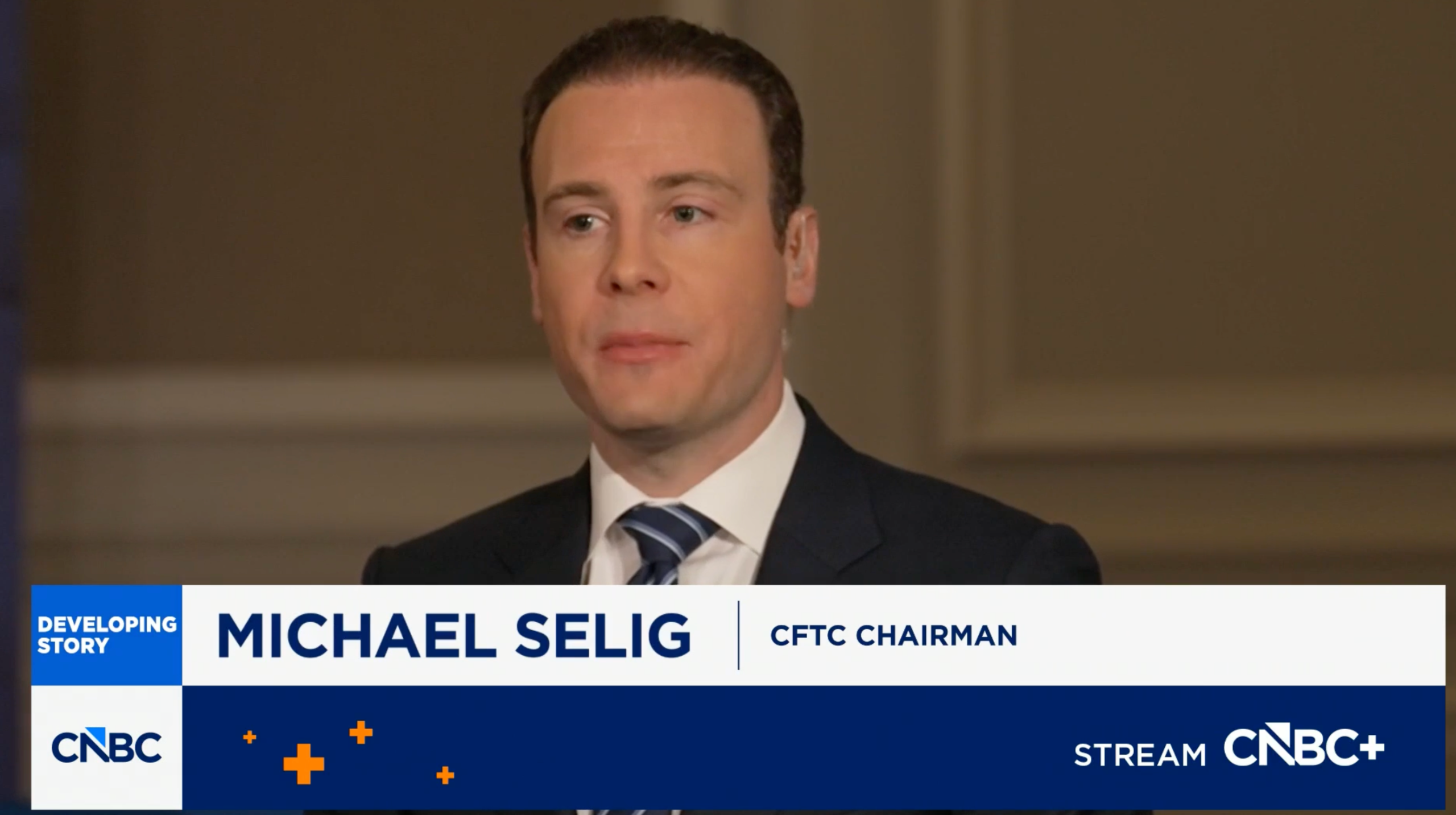
US Commodity Futures Trading Commission (CFTC) Chair Michael Selig is claiming that the agency under former President Joe Biden “politically targeted” the co-founders of cryptocurrency exchange Gemini through enforcement actions.
In a Tuesday CNBC interview, Selig said under his leadership, the CFTC was “trying to get back to a baseline” on enforcement, after what he claimed was politicization by the Biden administration. While the Selig acknowledged that he is a political appointee nominated by US President Donald Trump, he claimed that the recently reported staff cuts targeted people “engaging in lawfare.”
“The Biden administration weaponized the federal agencies against the crypto industry and many other industries,” said Selig. “They politically targeted people like the Winklevoss twins, and that’s not acceptable. We’re righting those wrongs. We’re gonna start fresh. The agency should not be used to engage in lawfare.”
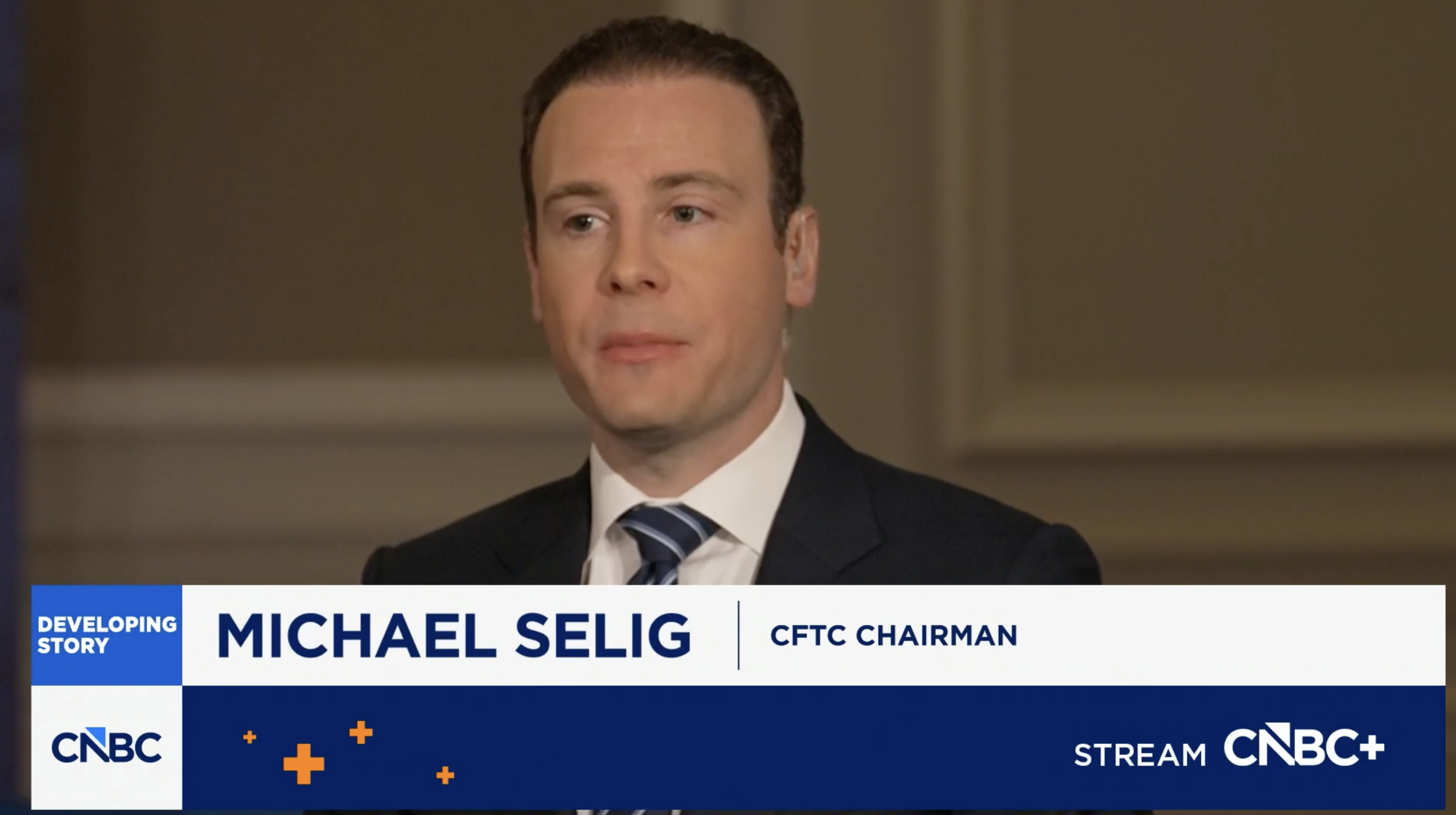
Michael Selig in Tuesday interview. Source: CNBC
Under Selig, the CFTC last week moved for a federal court to vacate the agency’s $5 million settlement with Gemini, which it reached in January 2025 before the commission was under the Trump administration. Gemini co-founders Tyler and Cameron Winklevoss each donated $1 million to Trump’s 2024 election campaign and have since attended White House events with the president, including the signing ceremony for the stablecoin-related GENIUS Act.
“I’m not going to get into the facts, because this is an active investigation, litigation rather,” said Selig. “But what is important here is that to the extent the agency was used to politically target folks, we’re reversing that, and we’re starting fresh.”
Related: CFTC backs crypto perpetual contracts, issues advisory on 24/7 trading
According to former CFTC Chair Timothy Massad, it was “extraordinarily unusual” for the agency to attempt to reverse its position on a previously settled case like Gemini’s. Cointelegraph reached out to the CFTC and Gemini for comment but did not receive an immediate response.
Selig leads CFTC policy as the agency’s sole commissioner and chair
Under Selig, the CFTC has taken the position that federal commodities law supersedes individual US states’ authority over prediction market platforms like Kalshi and Polymarket. The commission has filed lawsuits against Minnesota and other jurisdictions attempting to restrict or ban prediction markets.
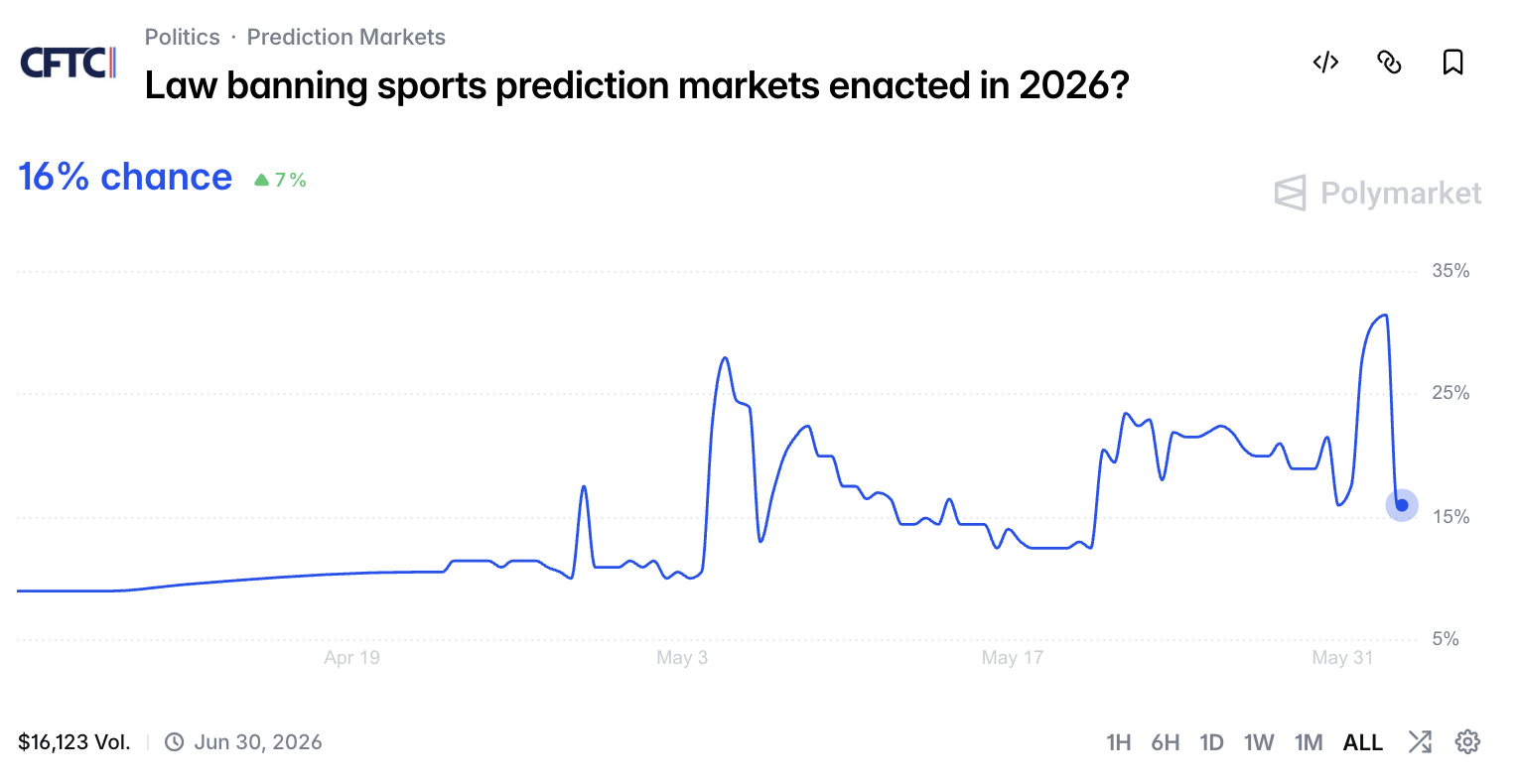
Source: Polymarket
Selig remains the agency’s sole commissioner following a string of resignations and departures from its leadership in 2025, including former acting chair Caroline Pham. Many US lawmakers have urged Trump to fill the agency’s five-person leadership panel with a bipartisan group of regulators, but the president had not announced any picks as of Tuesday.
Magazine: HYPE chases $100 target, ETH could dump below $1800: Market Moves


Donald Trump has announced via his social media site, Truth Social, that he will be elevating William J. Pulte, the current director of the Federal Housing Finance Agency (FHFA) and the chairman of Fannie Mae and Freddie Mac, to acting Director of National Intelligence (DNI).
Pulte will apparently retain his posts at the FHFA and Fannie Mae and Freddie Mac alongside his new role.
The DNI position was created during George W. Bush’s administration and was meant to unify and oversee the disparate parts of the United States Intelligence Community (IC).
This position was last held by Tulsi Gabbard, who resigned in May.
Pulte’s Alleged Scams
Pulte has been embroiled in a number of controversies both during his time in the private sector and his tenure in public service.
He was an important promoter of the $ZACK memecoin, which was founded by Edward Constantinescu.
Constantinescu was later accused by the Department of Justice and Securities and Exchange Commission of defrauding investors through this pump-and-dump scheme.
Lawyers for Pulte told Mother Jones that he did not profit from his promotion of this allegedly fraudulent project.
Mother Jones also reported on a donation from Team Pulte Inc. to One World Love.
Pulte claimed in tax filings that this donation was for “assistance to underserved people,” however, it seems that this entity was actually tied to Binnall Law Group, which was representing Trump’s nonsensical election fraud claims.
This eventually led to a letter from Senators Elizabeth Warren and Ron Wyden to Pulte to discuss the purpose of this donation.
Read more: Fartcoin won’t help you buy a house unless it’s on Coinbase
Finally, in his tenure at FHFA, Pulte has been responsible for multiple criminal referrals directed at enemies of Trump. This has included trying to start criminal cases against Letitia James, Lisa Cook, and Jerome Powell.
Pulte’s unprecedented lawfare often centered around thin claims of mortgage fraud, ironic considering that according to reporting from Reuters, his father and stepmother have committed a very similar offense, declaring multiple residences as their primary residence.
Even more strikingly, it turns out that his claim against Cook seems to be entirely false, deepening concerns that Pulte was acting out Trump’s desire to assault Federal Reserve intelligence.
If Pulte is serving as an attack dog for Trump, who is willing to ignore legal and moral constraints, then as acting DNI he will now have expanded access to information and resources to advance Trump’s assaults.
Got a tip? Send us an email securely via Protos Leaks. For more informed news and investigations, follow us on X, Bluesky, and Google News, or subscribe to our YouTube channel.
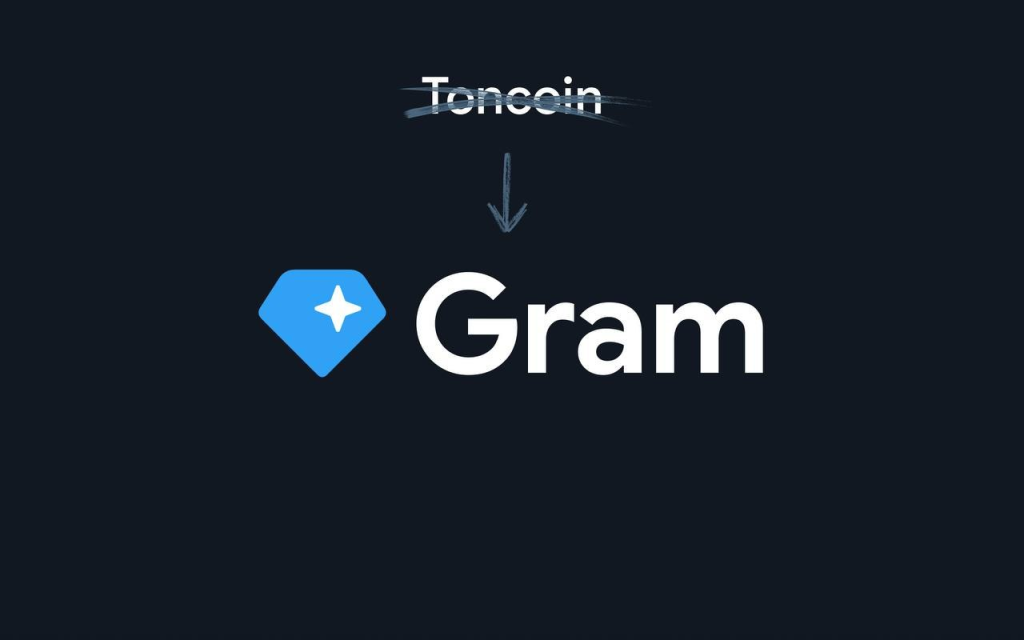
The TON Foundation is rebranding its native token from Toncoin to Gram, reviving the name attached to Telegram’s original 2018 blockchain project and signaling a deliberate push to convert the messaging platform’s 900 million monthly active users into on-chain participants.
The change is cosmetic, no token swap, no technical migration, no new asset issuance, but the strategic logic is anything but superficial.
The rebrand arrives as Telegram founder Pavel Durov frames the rename as step four of seven in his publicly stated ‘Make TON Great Again’ roadmap, with steps five through seven still undisclosed.
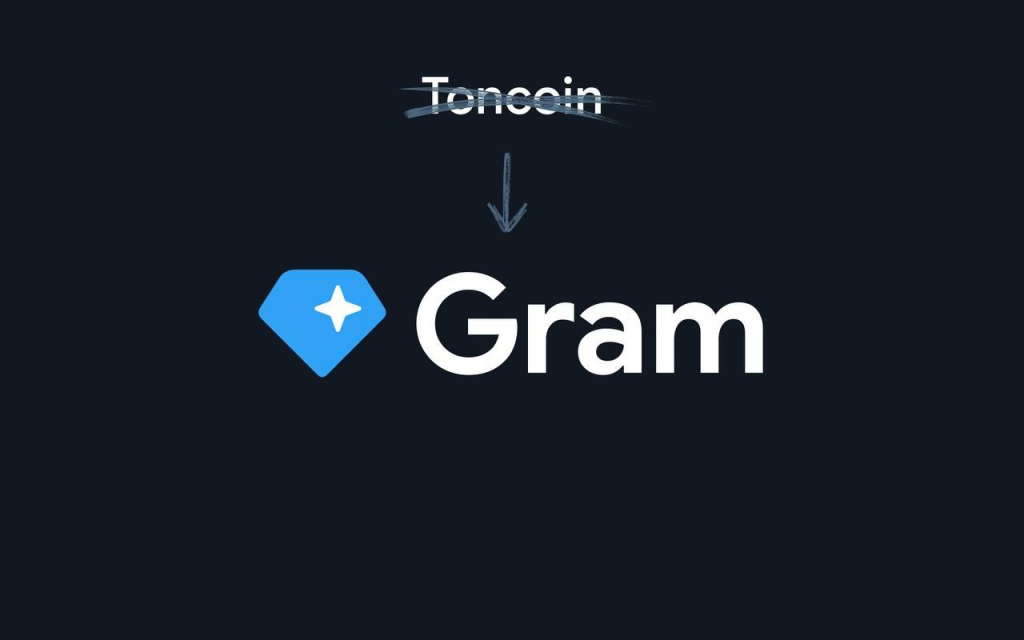
The compounding dynamic here is regulatory history. Gram was the name at the center of a landmark SEC enforcement action that forced Telegram to return $1.2 billion to investors in 2020.
Reviving that name is a calculated bet that the current TON ecosystem has enough structural distance from that legal episode to reclaim the brand without inheriting its liability.
Discover: The Best Crypto to Diversify Your Portfolio
Gram’s History: $1.7B ICO, SEC Intervention, and the Rebrand From Toncoin That Brings It Full Circle
The transmission mechanism from name change to user acquisition is straightforward: reduce the cognitive gap between Telegram’s brand identity and its native crypto asset.
Toncoin meant nothing to a first-time Telegram user. Gram, short, familiar, tied to Telegram’s original vision – does.
The historical weight behind that word is significant. Telegram raised approximately $1.7 billion through private token sales tied to Gram in 2018, positioning it as the currency layer for the Telegram Open Network.
The SEC intervened in 2019, alleging the offering constituted an unregistered securities sale. Telegram settled in 2020, agreeing to return roughly $1.2 billion to investors and pay an $18.5 million civil penalty, then stepped away from the project entirely.
The network survived through open-source development and community stewardship, eventually relaunching as The Open Network under the TON Foundation, with Toncoin as its community-run asset.
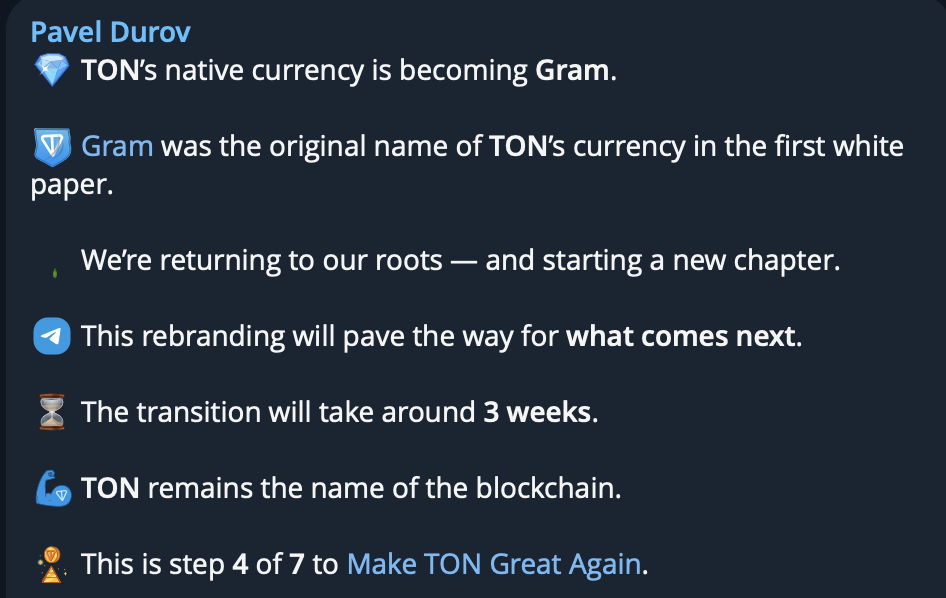
Now, with Telegram intending to become the primary ecosystem administrator and largest validator, a governance shift explicitly flagged in the MTONGA roadmap, the ecosystem is reasserting its original identity while structurally differentiating itself from the entity that faced SEC enforcement.
The rebrand rolls out over approximately three weeks across wallets, infrastructure providers, and ecosystem applications. User balances, staking positions, and network operations remain unchanged throughout.
900 Million Users as Addressable Market: What the Gram Rebrand Actually Unlocks
Telegram’s monthly active user base is one of the largest untapped crypto distribution channels.
The structural opportunity is not speculative; it is conditional on conversion rates. If the TON ecosystem converts even 1% of Telegram’s active base into regular Gram wallet users, that is 9 million participants, a figure that rivals the active user counts of several top-ten blockchain networks.
The friction point has always been brand coherence. Telegram users encounter TON Space wallet, mini-apps, and bot-based payment tools that reference a token called Toncoin with the ticker TON, a label that carries no intuitive connection to the Telegram product they already use daily.
Gram closes that gap. The analogy to WeChat Pay’s embedded finance model is instructive: WeChat did not ask users to understand digital payments architecture; it made transacting feel native to the messaging interface.
Gram positions The Open Network to pursue an equivalent integration depth inside Telegram’s super-app environment, covering payments, gaming, stablecoins, and mini-app monetization.
Market participants responded immediately. Toncoin surged 19% following the announcement, reaching approximately $2.21 in early trading before retracing toward $2.00.
Discover: The Best Token Presales
The post Toncoin (TON) Revives ‘Gram’ Token Name in Bold Bid to Own Telegram’s 900M Users appeared first on Cryptonews.

Santiment flagged a sharp spike in XRP Exchange Flow Balance, with 22.80 million tokens, or the largest daily net inflow of 2026, hitting centralized exchanges as the price slumped to $1.27. That deposit wave, likely panic selling, was swiftly followed by a net withdrawal of 25.24 million XRP, flipping the flow negative.
Why is it bullish? When outflows overwhelm inflows, it usually shows holders pulling coins off exchanges for custody. It’s a data point to institutional-grade positioning.
22.80M XRP hit exchanges on May 28… — Xaif Crypto (@Xaif_Crypto) May 30, 2026

then 25.24M XRP walked right back off exchanges on May 29-30 
someone used that dip to load up heavy  https://t.co/A4OLFqvP2q pic.twitter.com/oddNfiNe7b
Discover: The Best Crypto to Diversify Your Portfolio
Can XRP Price Push Back? Will Consolidation Deepen?
XRP is almost clearly range-bound. After printing a weekly high near $1.36, the asset has pulled back to the $1.26 zone, a 6% pullback this week, though still better doing better than 10% Bitcoin’s dip. It’s not good, but major Altcoins like XRP have been showing strength.
Key support sits in the $1.13–$1.21 band. Multiple analysts on TradingView describe this zone as a demand floor that has absorbed prior selling pressure. Local resistance clusters between $1.4 and $1.50, where XRP has been failing to hold a breakout for many times.

The exchange flow data showing 25.24 million XRP pulled off exchanges suggests reduced sell-side pressure at current levels.
XRP ETF is still going green, and is probably the single largest variable. If that narrative holds, support likely holds with it.
Discover: The Best Token Presales
LiquidChain Offers Bigger Upside Potential
Here’s the tension in XRP’s setup. Even the bull case, a move to its all-time high, represents a 2.3x from current prices. Meaningful. But for traders who missed XRP at $0.01 or Bitcoin at $200, the question is whether early-stage infrastructure plays offer a different risk profile entirely.
LiquidChain ($LIQUID) is a Layer 3 infrastructure project currently in presale, positioning itself as a cross-chain liquidity layer that fuses Bitcoin, Ethereum, and Solana liquidity into a single execution environment.
The master plan being formulated. — LiquidChain (@getliquidchain) May 31, 2026
 ⟁https://t.co/vqvBcdSQYC pic.twitter.com/pAs9sHhkmi
The core proposition, deploy once, access all three ecosystems, targets the fragmentation problem that has limited capital efficiency across chains. Features include a Unified Liquidity Layer, Single-Step Execution, Verifiable Settlement, and Deploy-Once Architecture.
Presale price stands at $0.01465, with $820K raised to date. At that entry, the distance between the current price and any meaningful exchange listing represents the kind of asymmetry that large-cap consolidations rarely offer.
Research LiquidChain before the presale phase concludes.
The post XRP Price Stalls But Metrics Hint A Rally Coming With Big Flows appeared first on Cryptonews.
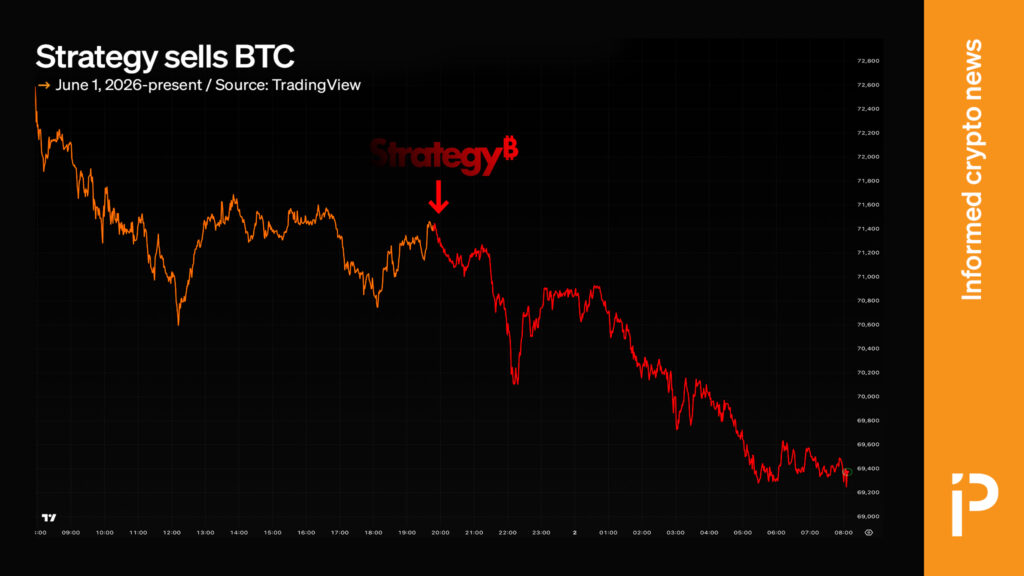
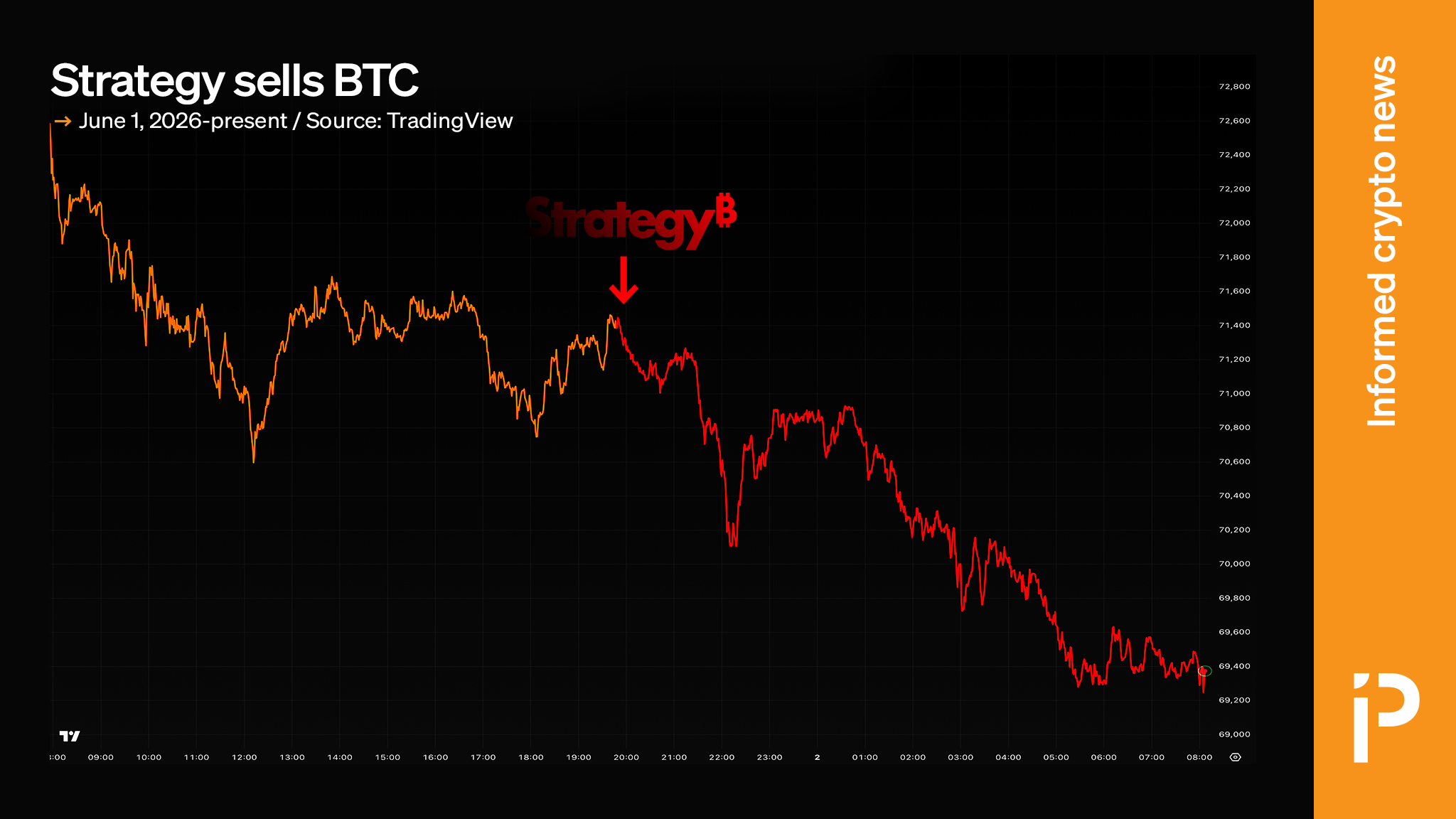
Bitcoin (BTC) fell 4.4% within 24 hours of Strategy (formerly MicroStrategy) disclosing its voluntary sale of 32 BTC. Two hours later, it fell another 2%.
That sale, which reneged on multiple promises to never sell by Strategy leaders like founder Michael Saylor, preceded a decline from $72,500 per BTC at the time of the firm’s 8-K to $69,300 precisely 24 hours later.
Strategy is the second-largest known BTC investor besides its creator, Satoshi Nakamoto. The company has amassed 4.2% of the asset’s circulating supply, and its holdings exclusively increased since December 2022 until yesterday’s disclosure.
Yesterday’s sale disclosure, albeit just 0.004% of its stack, spooked countless media outlets who covered Saylor’s bearish reversal across mainstream media yesterday including CNBC, The Wall Street Journal, AOL, TheStreet, Gizmodo, and Forbes.
The disclosure’s reporting period was May 26-31 during which the sale actually occurred.
‘Never. No. We’re not sellers. We’re only acquiring and holding BTC.’
Saylor has become a minor celebrity in recent months after an aggressive media and ad campaign for STRC, Strategy’s 11.5% dividend-yielding, quasi-pegged stock that he dubiously believes is a competitor to high-yield bank accounts.
Google queries for his name reached an all-time high this year.
STRC, which doesn’t hold a stable value nor guarantee repayment of principal, has attracted four-fifths retail ownership attracted to its simplistic promotions.
It also enjoyed the credibility of the company’s BTC stack and its founder’s lapsed promises to never sell, such as his promise to Bloomberg, “Never. No. We’re not sellers. We’re only acquiring and holding BTC.”
For the first time in years, Strategy pocketed roughly $2.5 million by selling BTC at an average price of $77,135, slightly above the company’s blended cost basis of $75,699.
Proceeds of the sale, the 8-K filing noted with cinematic irony, will fund dividends on the company’s preferred shares like STRC.
“Proceeds from the bitcoin sales are expected to be used to fund distributions on preferred stock.”
-Strategy 8-K
Strategy selling BTC to ‘innoculate’ the market
Not that it reduced the irony, but Saylor had telegraphed the sale in advance.
Specifically, on his first quarter earnings call last month, he said Strategy would probably sell a little BTC to “inoculate” the market as to his willingness to sell, despite his prior promises.
Read more: STRC controversy goes mainstream
There are, of course, other macro factors that contributed to the sell-off in digital assets. The Crypto Fear & Greed Index hit 23 out of 100 yesterday, putting it firmly back in “Extreme Fear” territory.
Oil prices jumped, gold prices fell, and AI stocks continued to roar higher while siphoning speculative capital from crypto.
In summary, Strategy’s sale handed a jittery, bearish market a headline that fit the mood. Primed for bad news, many traders interpreted any disposal by the most committed buyer as a sell signal.
STRC, which Strategy tries to keep trading near $100 per share, traded below $95.60 today.
The message many market participants heard this week was that, at any moment, even the most consistent BTC bid could become an offer.
The last time the company sold, in December 2022, it offloaded 704 coins for a tax write-off purpose. It quickly bought back 810 BTC, two days later.
Got a tip? Send us an email securely via Protos Leaks. For more informed news and investigations, follow us on X, Bluesky, and Google News, or subscribe to our YouTube channel.
Coinbase Ventures has purchased ENA tokens on the open market as Coinbase and Ethena prepare a new partnership focused on on-chain finance and savings products.
Summary
- Coinbase Ventures bought ENA tokens on the open market rather than participating in a discounted private round.
- Ethena said the purchase came alongside a new partnership with Coinbase focused on on-chain finance and savings products.
- Coinbase Ventures confirmed the ENA purchase and said Ethena plays a key role in on-chain finance.
Ethena said in an official X post on Tuesday that Coinbase Ventures made its first disclosed open-market investment in the protocol’s ENA token, while Coinbase and Ethena also agreed to work together on products for Coinbase users. The company said the first growth initiative from the partnership will launch next week, though it did not name the product.
Coinbase Ventures takes public ENA position
Coinbase Ventures confirmed the purchase in a separate X post, saying it backed Ethena through an open-market buy of ENA. The venture arm said Ethena plays a key role in on-chain finance and added that it expects closer work between Ethena, Coinbase, and USDC.
The transaction differs from the usual venture model used by Coinbase Ventures. According to Coinbase Ventures’ website, the firm has made more than 600 investments across crypto and web3 since its launch in 2018, with most deals involving seed or early-stage private rounds.
In this case, Coinbase Ventures bought ENA from the public market rather than through a discounted private allocation. Ethena did not disclose the number of tokens purchased, the average price, or any wallet addresses tied to the transaction.
Ethena partnership targets Coinbase users
According to Ethena’s announcement, the partnership will focus on expanding on-chain finance and savings products to Coinbase’s user base. Ethena said Coinbase has more than 100 million users, a figure Coinbase previously reported after crossing 100 million verified users in 2022.
The partnership could bring more attention to Ethena’s main products, USDe and sUSDe. USDe is Ethena’s synthetic dollar asset, while sUSDe is the staked version designed to generate yield.
Coinbase reported $294 billion in platform assets at the end of the first quarter. Ethena did not say whether the upcoming launch will involve USDe, sUSDe, ENA, or a separate Coinbase product.
Ethena’s TVL and revenue remain in focus
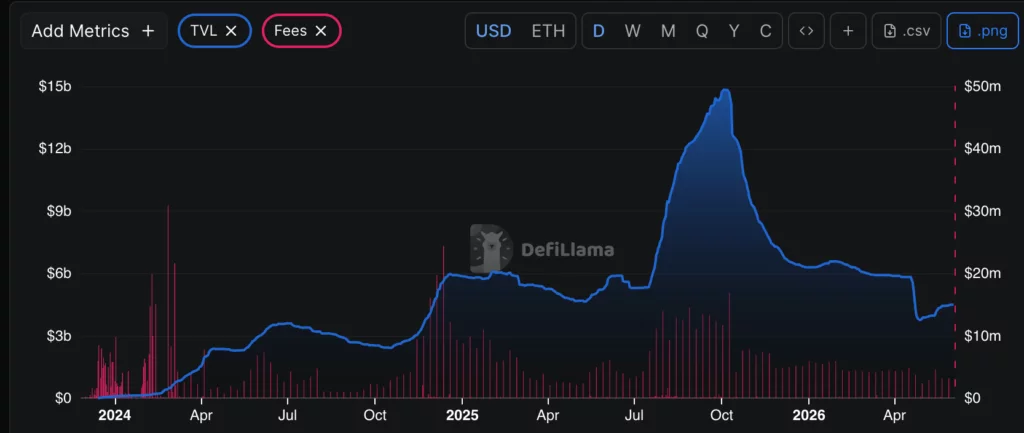
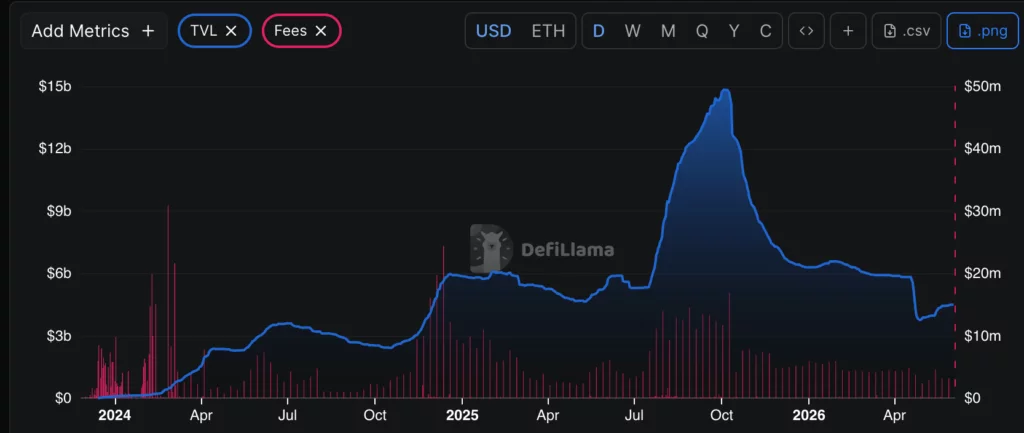
According to DefiLlama data cited in the announcement context, Ethena holds about $5.4 billion in total value locked. The USDe contract accounts for about $4.5 billion of that amount.
Source: DefiLlama
DefiLlama data also show Ethena is generating $178 million in annualized fees. The protocol has generated $972 million in cumulative fees and $332 million in cumulative protocol revenue since Ethena Labs was founded by Guy Young in 2023.
ENA, the protocol’s governance token, has a market capitalization of about $859 million and a fully diluted valuation of roughly $1.4 billion, based on the same market data.
ENA rises after the announcement
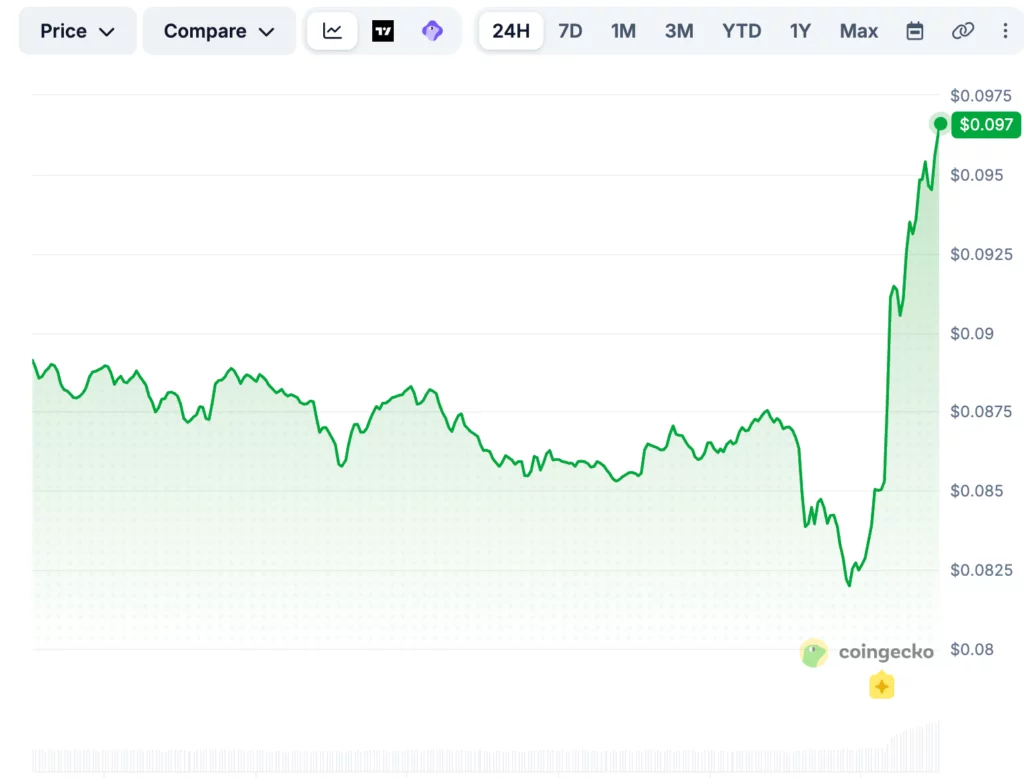
Market data showed ENA rose 8.3% over the past 24 hours after the announcement. DefiLlama showed 24-hour ENA trading volume of $168 million.
Source: Coinglass
At the same time, DefiLlama showed $178 million in on-chain ENA volume through Uniswap V3 and Aerodrome. The reported on-chain volume exceeded the centralized exchange flow during the period.
Ethena and Coinbase have not provided more details on the product expected next week. Coinbase already serves as the primary custodian for ENA held by the Ethena Labs core team and Foundation under a previous Coinbase Prime agreement.

Key Highlights
- Movement deploys licensed infrastructure to enable global stablecoin transactions
- New payment channels in US, EU, and Canada focus on remittance corridors
- Network foundation repurchases significant token allocation from early investors
- Platform bridges traditional banking systems with blockchain settlement technology
- Infrastructure aims to serve financially underserved populations in developing nations
Movement has obtained regulatory approval for licensed payment infrastructure spanning the United States, European Union, and Canada. This strategic expansion reinforces the network’s commitment to stablecoin-based settlement systems, international money transfers, and dollar-denominated savings solutions. The initiative specifically addresses markets where conventional financial systems impose significant friction and expense.
Addressing the Global Remittance Challenge
The network intends to bridge licensed financial infrastructure with blockchain-based settlement mechanisms to accelerate international money transfers. Movement now prioritizes remittance services, corporate treasury solutions, and banking products designed for populations with limited access to financial services. This represents a deliberate pivot from broad blockchain growth initiatives toward functional payment infrastructure.
The platform argues that existing financial networks continue to impose burdensome costs and delays on users worldwide. World Bank data indicates that remittance flows to developing and middle-income nations totaled $685 billion throughout 2024. Despite this massive volume, senders faced average transaction fees of 6.36% for cross-border transfers.
Movement seeks to eliminate these inefficiencies by leveraging stablecoin settlement technology combined with regulated partner channels. The infrastructure enables financial technology companies and digital banks to offer payment services, dollar-based savings accounts, and interest-bearing products. Importantly, this approach minimizes dependence on traditional correspondent banking relationships and prefunded nostro accounts.
Foundation Executes Strategic Token Buyback
The Movement Network Foundation recently acquired approximately 19% of tokens that had been distributed to initial backers. This repurchase represented roughly 4.2% of the entire token circulation. The foundation characterized this action as aligned with its commitment to token holders and payments infrastructure development.
The company has not publicly identified the specific regulated entities providing access to its payment channels. However, it confirmed that the infrastructure encompasses significant markets throughout North America and the European region. This access creates pathways between conventional banking infrastructure and decentralized settlement networks.
Movement has reinforced this approach through multiple ecosystem collaborations. KAST has onboarded more than 18,000 verified participants spanning over 160 nations using Movement-enabled products. Additionally, Circle deployed USDCx on the platform as a stablecoin with one-to-one backing by native USDC reserves.
Stablecoins Emerge as Critical Financial Infrastructure
Digital dollar tokens have become foundational to numerous blockchain expansion initiatives. Movement aligns with ecosystems including Solana, Polygon, and Aptos in emphasizing payments and financial services infrastructure. This shift positions blockchain platforms in direct competition with established settlement and money transfer networks.
The platform has cultivated partnerships across savings products, yield generation, digital wallets, and tokenized tangible assets. Sorted Wallet, Yuzu Money, Oro, Avant Protocol, and Zoth contribute various components to this technology foundation. These solutions encompass mobile-accessible wallets, dollar-based returns, precious metal storage, and institutional-quality real-world asset yields.
Movement’s strategic reorientation follows the passage of the GENIUS Act, which established regulatory clarity for payment stablecoins in the United States. The legislation intensified attention on compliant stablecoin offerings and reserve-backed financial instruments. Movement now frames its payment infrastructure as connecting regulated traditional finance with blockchain-based settlement technology.

![The Crypto Dump Is Just Beginning! Prepare For Mega Buying Opportunities [ETH & SOL Targets]](https://wordupnews.com/wp-content/uploads/2026/06/1780429707_maxresdefault-80x80.jpg)
The Crypto Dump Is Just Beginning! Prepare For Mega Buying Opportunities [ETH & SOL Targets]

New DWP eligibility verification powers explained for benefit claimants

Barcel USA introduces Takis-branded hot sauce

HarrisX Poll Found 52% of Registered Voters Support the CLARITY Act

BloFin War of Whales 2026 Grand Prix opens registration for $5M trading championship

Blockchain.com files with SEC for U.S. IPO
The Crypto Dump Is Just Beginning! Prepare For Mega Buying Opportunities [ETH & SOL Targets]

Musk financial crisis worse than you think

Coin Infinite Loop – #coin #money #loop #infinite #transition #relax #satisfying #discover #macro
-

 NewsBeat6 days ago
Israel says it has killed new Hamas military leader in Gaza City airstrikes
-

 Tech7 days ago
NASA taps Blue Origin to deliver lunar rovers for Moon Base initiative
-

 News Videos4 days ago
This is BROKEN! INSANE 5x MONEY CAR WASH WEEK! The NEW GTA Online UPDATE Today! (GTA5 New Update)
-

 News Videos7 days ago
XRP *JUST* SUCCEEDED!!!! CLARITY ACT EXPOSED!!! (SHE EXPOSED IT)
-
Crypto World7 days ago
Micron Crosses $1 Trillion Market Cap as AI Demand Reshapes Memory Sector
-
 Tech3 days ago
SpaceX just won a second Golden Dome contract. This one is $4.16 billion.
-

 Business7 days ago
Selena Gomez Reportedly Upset Over Benny Blanco’s Comments on Her ‘Terrible’ Diet
-

 Tech5 days ago
Waymo dominates autonomous vehicle registrations as Tesla trails behind
-

 News Videos4 days ago
SHE IS KILLING XRP!!! WATCH URGENT AND ACT FAST
-
 NewsBeat4 days ago
FIRST NIGHT REVIEW: Take That bring the Circus back to life in spectacular sun-soaked style
-

 Tech6 days ago
The Samsung pay deal is the moment Korean unions changed register
-

 Business23 hours ago
Jade Biosciences, Inc. (JBIO) Discusses Positive Interim Results From JADE101 Phase I Healthy Volunteer Study and Development Plans Transcript
-

 Tech7 days ago
Millions of AI agents imperiled by critical vulnerability in open source package
-
Crypto World4 days ago
CFTC Has Approved the First Regulated Bitcoin Perpetual Contract in the U.S.
-
Crypto World6 days ago
SpaceX’s $2 Trillion IPO: Why Tech Giants Nvidia (NVDA), Apple (AAPL), and Microsoft (MSFT) May Face Pressure
-
 Entertainment6 days ago
The Most Misunderstood Sci-Fi Horror Movie of the Last 10 Years Just Took Over Netflix
-

 Crypto World7 days ago
Spain blocks prediction markets Polymarket Kalshi
-
 Crypto World4 days ago
Snowflake (SNOW) Stock Rallies on Strong Q1 Results and AI Product Growth
-
 NewsBeat4 days ago
Novak Djokovic v Joao Fonseca LIVE: French Open latest scores and results after Jannik Sinner’s shocking collapse
-
 Entertainment4 days ago
Weak ‘Supergirl’ Box Office Tracking Amid Milly Alcock Backlash
You must be logged in to post a comment Login