

Crypto World
Marvell (MRVL) Sees Price Target Surge to $180 as Analysts Eye Optical Growth


Key Takeaways
- TD Cowen doubled its price target on Marvell (MRVL) to $180 from $90, maintaining a Hold rating on the semiconductor stock.
- The stock has surged over 100% in a three-month period, driven primarily by bullish forward earnings expectations.
- Company leadership forecasts optics segment expansion exceeding 50% across the next 24 months.
- Both RBC Capital and BofA Securities established $200 price objectives, emphasizing AI networking infrastructure and optical technology capabilities.
- The company completed its acquisition of Swiss photonics specialist Polariton Technologies to expand its optical interconnect capabilities.
The semiconductor giant Marvell Technology has delivered exceptional performance that’s capturing significant Wall Street attention. Over the past half-year, the company’s shares have skyrocketed 111%, with 2024 year-to-date performance exceeding 115%. As Thursday’s trading began, shares hovered near their recent peak levels.
Marvell Technology, Inc., MRVL
On Thursday, Joshua Buchalter from TD Cowen elevated his MRVL price objective to $180 from the previous $90 mark, pointing to sustained momentum within the optical infrastructure sector. The analyst retained his Hold recommendation.
Buchalter offered a measured perspective on the recent rally. He noted that the stock’s dramatic appreciation may have incorporated considerable future optimism, potentially raising expectations ahead of Marvell’s May 27 earnings announcement.
The topic of custom XPU exposure continues to generate investor debate, though TD Cowen anticipates limited new information on this subject during the forthcoming earnings discussion.
Even while keeping its Hold stance, TD Cowen elevated its long-term data center projections. The firm now anticipates $1.3 trillion in data center silicon expenditure by decade’s end, representing an increase from its previous $1.2 trillion forecast.
Optical Technology Segment Powers Confidence
The upward revision in forecasts connects directly to what Cowen describes as a “bifurcation within the infrastructure trade.” Major accelerator manufacturers have experienced relative weakness lately, whereas optical-focused companies like Marvell have gained ground amid expectations of imminent supply constraints.
Marvell leadership has communicated expectations for optics segment growth surpassing 50% during the upcoming two-year period. This projection has become a cornerstone of analyst bullishness throughout the investment community.
RBC Capital elevated its MRVL price objective to $200 while keeping its Outperform designation. The investment bank emphasized robust performance in Marvell’s optical division and AWS chip manufacturing as primary catalysts.
BofA Securities similarly established a $200 benchmark, underscoring the growing AI networking infrastructure marketplace.
Strategic Acquisition Strengthens Portfolio
Marvell recently finalized its purchase of Polariton Technologies, a Swiss firm specializing in plasmonics-enabled silicon photonics solutions. This transaction is projected to enhance Marvell’s optical technology capabilities, particularly for coherent optics and data center interconnect uses.
The acquisition aligns with Marvell’s broader strategic initiative to establish itself as a critical player in the AI data center infrastructure ecosystem, especially as demand intensifies for high-performance optical interconnect solutions.
According to InvestingPro analysis, MRVL currently appears overvalued compared to its Fair Value calculation, earning placement on the platform’s Most Overvalued securities roster.
Marvell is set to report quarterly results on May 27. Market participants will closely scrutinize commentary regarding the optics business outlook and any developments concerning custom XPU initiatives.



The military government of Myanmar released the text of a bill aimed at combating online fraudsters, with several penalties related to cryptocurrencies and scam centers.
According to the text of the Anti-Online Fraud Bill, made public on Thursday, Myanmar’s parliament, the Pyidaungsu Hluttaw, proposed the law in response to online fraud in the country, which it said challenged its “sovereignty and stability.”
The law stated that anyone who was convicted of committing “digital currency fraud” or online fraud could face from ten years to life in prison, and possibly the death penalty.
In addition, the law set out conditions under which the death penalty would be imposed, including those related to the country’s scam centers. Anyone responsible for the death of an individual who had been coerced or exploited into committing online fraud would receive a sentence of death.

Source: Myanmar government
The proposed law and its potential penalties were some of the most severe imposed globally for digital currency fraudsters amid scam centers cropping up in areas of Southeast Asia. In January, China reportedly ordered the execution of 11 people linked to Myanmar scam centers that had been responsible for trafficking Chinese nationals.
Related: Scammers use Gmail dot alias trick to spoof Robinhood in phishing scam
International authorities have been working to combat human trafficking in scam centers that continue to con people globally through schemes like pig butchering, romance scams, fake investments and more. The US announced in April that they had worked with authorities in China and Dubai to arrest more than 200 people and shutter nine centers.
Myanmar’s military overthrew its civilian government in a 2021 coup d’état, resulting in its parliament not reconvening until March 2026 following elections the Council on Foreign Relations called “neither free nor fair.” According to a Wednesday notice, the government is scheduled to meet the first week of June and may consider the bill at that time.
Americans lost billions to crypto scams in 2025
According to an FBI report released in April, Americans’ losses from crypto-related scams were more than $11 billion in 2025 and more than $20 billion overall through online fraud. The agency cited a March executive order from US President Donald Trump, who authorized officials to work against “scam centers and cybercrime.”
“The [US Attorney’s Office in the District of Columbia] Scam Center Strike Force is investigating the worst scam compounds located in Southeast Asia,” said the FBI report. “Strike Force teams focus on identifying and pursuing key leaders—including Chinese organized crime affiliates operating in Cambodia, Laos, and Burma—to bring them to justice.”
Magazine: ETH stalls at $2.4K five times, SOL to rally to $120: Market Moves


Myanmar’s military published a draft bill on May 14 proposing life in prison for crypto scam operators.
Summary
- Myanmar’s Anti-Online Scam Bill proposes life imprisonment for operating digital currency scam centers.
- The bill allows the death penalty for individuals using violence, torture or unlawful detention to force victims into scam work.
- Myanmar’s military-backed parliament is next scheduled to sit in the first week of June to advance the legislation.
The draft legislation, called the Anti-Online Scam Bill, states that anyone convicted of “digital currency fraud” or running an online scam center faces a sentence ranging from ten years to life in prison.
The bill permits capital punishment for operators who use “violence, torture, unlawful arrest and detention, or cruel treatment against another person for the purpose of forcing them to commit online scams.”
Military bill targets digital currency fraud with maximum sentences
Myanmar’s military-backed parliament, which analysts describe as a rubber-stamp legislature, is next scheduled to sit in the first week of June.
The bill is the first piece of legislation introduced by the new government led by coup leader Min Aung Hlaing, who assumed the civilian presidency last month.
Internet fraud compounds have become a major regional crisis. The FBI reported that cryptocurrency-related fraud losses in the United States reached $11.4 billion in its most recent crime report, with more than half of all internet crime losses tied to crypto schemes. Many of the networks behind those losses operate out of Southeast Asian compounds.
US authorities have escalated enforcement pressure. The DOJ froze $701 million in crypto tied to global scam networks in April 2026, naming Myanmar and Cambodia-based compounds that rely on trafficked or coerced workers to execute large-scale fraud.
The scale of Myanmar’s operations is well-documented. Chainalysis found that romance scammers operating from the KK Park compound in Myawaddy alone siphoned nearly $100 million in crypto from global victims between 2022 and 2024.
The bill is part of a broader regional shift. Cambodia adopted anti-fraud legislation in March 2026 with prison sentences up to 10 years for ringleaders. Singapore plans to launch a dedicated Cyber Command enforcement unit in July 2026.
Crypto World
BeInCrypto 100 Institutional Awards Nomination: KuCoin for Leader in Digital Asset Adoption and Best Trading Infrastructure

Digital asset adoption is moving into a more practical phase. The question is no longer which exchange has the loudest retail brand. It is which platform can give brokers, fintechs, institutions, and traders the infrastructure to connect with digital asset markets at scale.
KuCoin is nominated for Leader in Digital Asset Adoption and Best Trading Infrastructure at the BeInCrypto Institutional 100 Awards 2026.
Adoption Metric
Last Verified Data
Registered users
40M+
Active footprint
200+ countries and regions
Broker and fintech partners
1,000+
Regulatory footprint
AUSTRAC registration, MiCAR-CASP via KuCoin EU
Payment products
KuCoin Pay, KuCard
KuCoin Institutional Infrastructure Snapshot
The nomination reflects KuCoin’s shift from a retail trading venue to a broader liquidity and infrastructure provider. The exchange says it has surpassed 40 million users worldwide, while its institutional business now serves more than 1,000 broker and fintech partners.
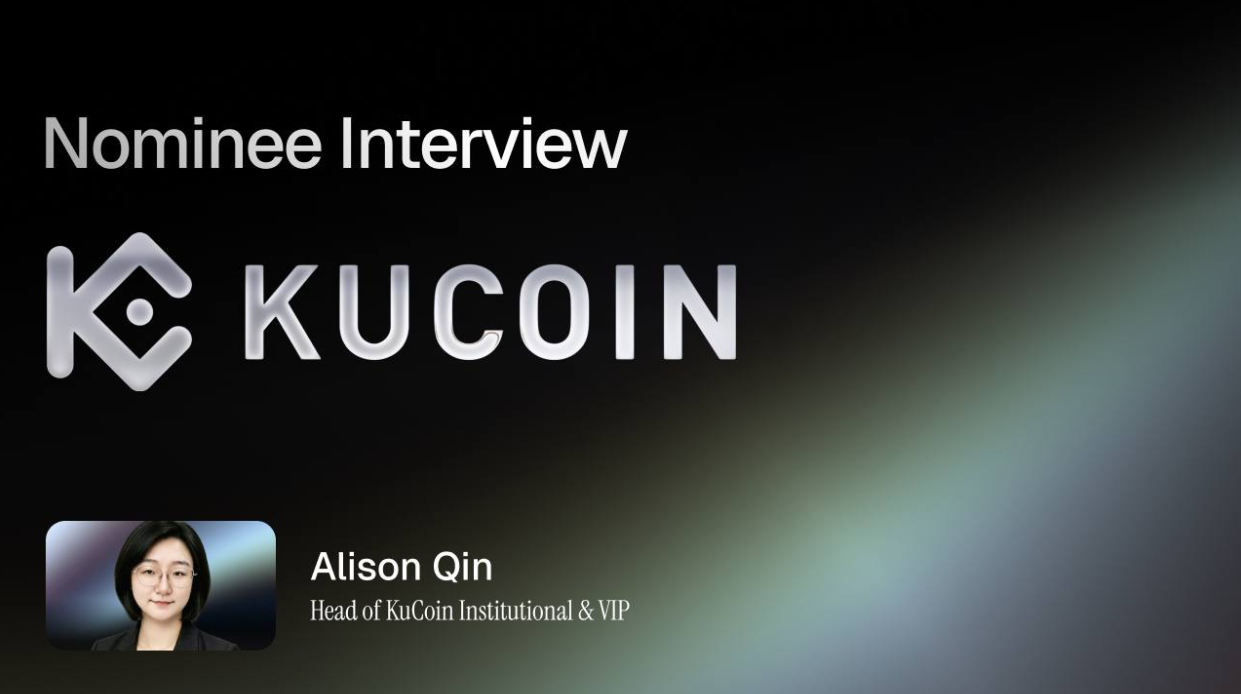
In a BeInCrypto adjudication interview, Alison Qin, Head of KuCoin Institutional & VIP, described the change clearly.
“The industry has recognized that retail attention is transient, but infrastructure is foundational. KuCoin has fundamentally outpaced traditional retail marketing by transforming into a high-fidelity liquidity engine for over 1,000 brokers and fintech partners,” Qin said.
| Infrastructure Metric | Last Verified Data |
| Unified Trading Account | Spot, futures, and margin assets in one capital pool |
| OES integrations | BitGo Singapore Go Network, Cactus Custody, Ceffu MirrorX |
| RWA collateral framework | RCMS with UBS uMINT and Asseto CASH+ |
| Crypto-as-a-Service | Nearly 80 partners globally with liquidity solutions across partner ecosystems |
| Collateral support | BTC, ETH, and tokenized RWA assets |
Same Firm. Two Scoring Sheets
KuCoin’s dual nomination rests on two linked stories.
For Leader in Digital Asset Adoption, the case centers on distribution. KuCoin operates across more than 200 countries and regions, supports payment products such as KuCoin Pay and KuCard, and has expanded its regulated footprint through AUSTRAC registration in Australia and a MiCAR authorization for KuCoin EU in Austria.
The MiCAR approval allows KuCoin EU to offer regulated crypto-asset services across the European Economic Area.
For Best Trading Infrastructure, the case centers on how KuCoin is changing the way institutions access liquidity.
The clearest example is its Off-Exchange Settlement framework. Institutional clients can trade on KuCoin while keeping assets with a qualified custodian.
KuCoin has live integrations with BitGo’s Go Network and Ceffu’s MirrorX, both designed to reduce prefunding and counterparty risk by separating custody from exchange execution.
That matters because institutional traders don’t just need an order book. They need custody separation, settlement controls, collateral efficiency, and execution access that fit regulated workflows.
The UTA Advantage
KuCoin’s infrastructure nomination also centers on its Unified Trading Account, launched in 2026.
UTA allows traders to consolidate spot, futures, and margin assets into a single account. KuCoin says the system supports shared margin, integrated risk management, and lower-latency order placement, cancellation, and message updates for professional and high-frequency traders.
“When our Unified Trading Account architecture is paired with global data transparency, it levels the playing field,” Qin said. “We don’t ask for trust; we provide the data that makes trust inevitable.”
That data layer expanded in April 2026, when KuCoin made its futures market data available on TradingView. The integration gives TradingView’s 100 million-plus users access to KuCoin perpetual futures symbols, real-time market data, and liquidity insights directly inside TradingView charts.
Turning RWA Collateral Into Trading Infrastructure
KuCoin’s strongest institutional story is its RWA Collateral Mirroring Solution, or RCMS.
Through the framework, institutions can use tokenized real-world assets as trading collateral without moving the underlying assets out of their regulated structure.
In 2025, KuCoin partnered with DigiFT to support UBS uMINT, a tokenized money market fund product, as off-exchange collateral. DigiFT described the integration as a way for tokenholders to use their funds as collateral through KuCoin’s mirroring program while improving capital efficiency.
KuCoin later expanded the framework with Asseto’s CASH+, a tokenized product linked to a USD money market fund. KuCoin Institutional said the integration helps institutions deploy capital across traditional and digital markets while preserving yield and maintaining asset control.
This is where KuCoin’s two nominations overlap. Adoption is no longer only about user growth. It is about whether real financial instruments can move into the crypto market structure without breaking custody, compliance, or collateral rules.
The BeInCrypto Institutional 100 Awards recognize firms building the systems that could define the next phase of digital finance.
KuCoin’s nomination reflects its role in turning exchange infrastructure into a bridge for brokers, institutions, tokenized assets, and global digital asset users.
The post BeInCrypto 100 Institutional Awards Nomination: KuCoin for Leader in Digital Asset Adoption and Best Trading Infrastructure appeared first on BeInCrypto.

Key Takeaways
- Bank of America’s Justin Post predicts Google will reveal an advanced Gemini LLM at its May 19 I/O conference
- The upgraded Gemini version may feature enhanced reasoning capabilities, improved coding functions, multimodal processing, and extended context windows
- Agentic AI functionality is anticipated as the central focus, featuring enhanced integration throughout Chrome, Gmail, Maps, and Android platforms
- BofA reaffirms its Buy recommendation with a price objective of $430, suggesting approximately 8% potential gains
- Elevated market expectations present downside risk if product reveals fail to impress investors
Alphabet’s marquee Google I/O developer event is set to launch on May 19, and financial analysts are positioning for what’s expected to be a significant showcase.
Justin Post, an analyst at Bank of America, outlined his projections in a Friday research note, indicating he foresees a comprehensive suite of artificial intelligence reveals focused on Gemini technology and autonomous agent functionality.
GOOGL shares declined 0.96% on Friday in anticipation of the upcoming conference.
Bank of America projects Google will introduce a cutting-edge iteration of its Gemini large language model—possibly designated as version 4 or a substantial 3.X enhancement. This forthcoming model is anticipated to deliver advances in logical reasoning, programming capabilities, multimodal functionality, and extended context processing.
Additionally, more efficient and cost-effective Flash versions are expected, alongside enhanced models designed for video creation, image synthesis, and audio generation.
Autonomous AI Agents Expected to Dominate Conference
Agentic AI is projected to serve as the primary focus of the developer conference. Industry reports indicate Google is developing autonomous task execution features spanning Chrome, Gmail, Maps, Calendar, Search, and Android operating systems.
This evolution means Gemini could handle restaurant bookings, calendar modifications, form completion, and e-commerce workflows—all with minimal user intervention.
Chrome browser functionality is particularly highlighted. AI-enhanced browsing may enable Gemini to directly engage with web platforms and execute complex multi-step processes, though transaction approval would still require user authorization.
Google might also enhance its AI assistant with persistent memory features, real-time camera interaction capabilities, and proactive contextual assistance.
Search Evolution and Wearable Technology Updates Expected
Regarding search functionality, Post anticipates improvements to AI Mode features, framing it as a complimentary AI assistant offering superior personalization and cross-application integration.
Smart glasses capabilities are also projected to receive significant coverage, with Post observing that developments in this category could generate interest ahead of a possible second-half product launch.
Post indicates that ongoing Gemini advancements would bolster Google Cloud platform adoption and consumer interaction—two metrics under close market scrutiny.
However, he acknowledges that widespread implementation of autonomous agent systems will likely require years rather than months. Users will continue prioritizing efficiency and affordability from specialized applications.
“We would expect Booking and Expedia to be key partners in any agentic announcements around travel, while we would not expect Amazon to be an early partner for eCommerce,” Post said.
With Google shares trading around 27x projected 2027 earnings, Post suggests “AI surprises” will probably be necessary to drive valuation multiples higher.
Post identifies one notable risk: investor expectations entering I/O are considerably elevated. Should the product announcements disappoint, the stock could experience short-term selling pressure.
Bank of America upheld its Buy rating alongside a $430 price objective. This target represents approximately 8% appreciation potential from present trading levels.
Wall Street’s consensus price target stands at $426.44, similarly indicating roughly 7% upside potential. Among 33 analysts tracking the stock, 28 assign it a Buy rating while 5 recommend Hold. The overall consensus ranks as Strong Buy.


The Shiller cyclically adjusted price-to-earnings ratio for U.S. stocks is nearing the 1999 peak seen during the dot-com bubble.
Cryptocurrency ATM company Bitcoin Depot reported “substantial doubts” about the company’s ability to continue operating amid ongoing litigation and a challenging regulatory environment.
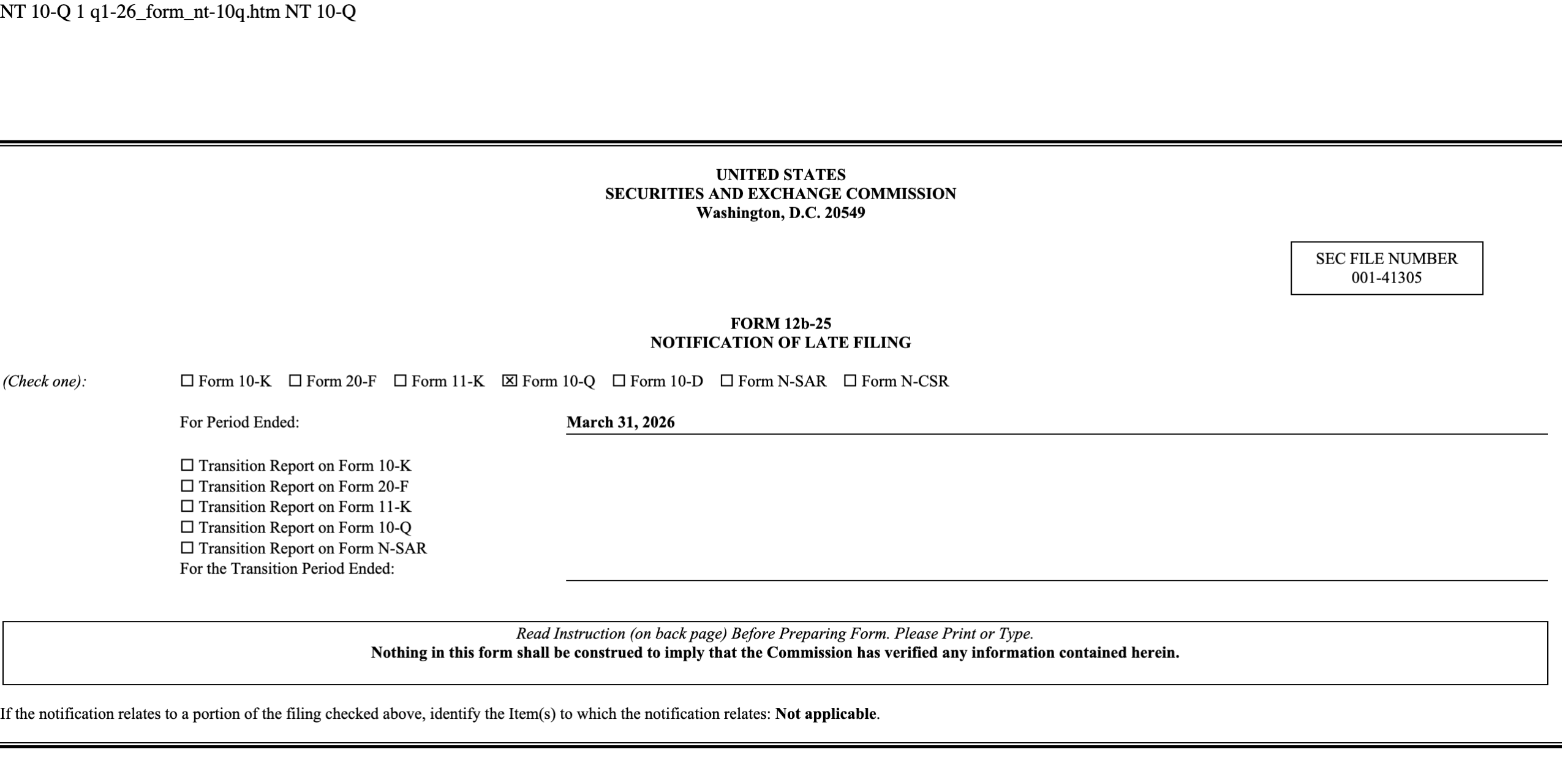
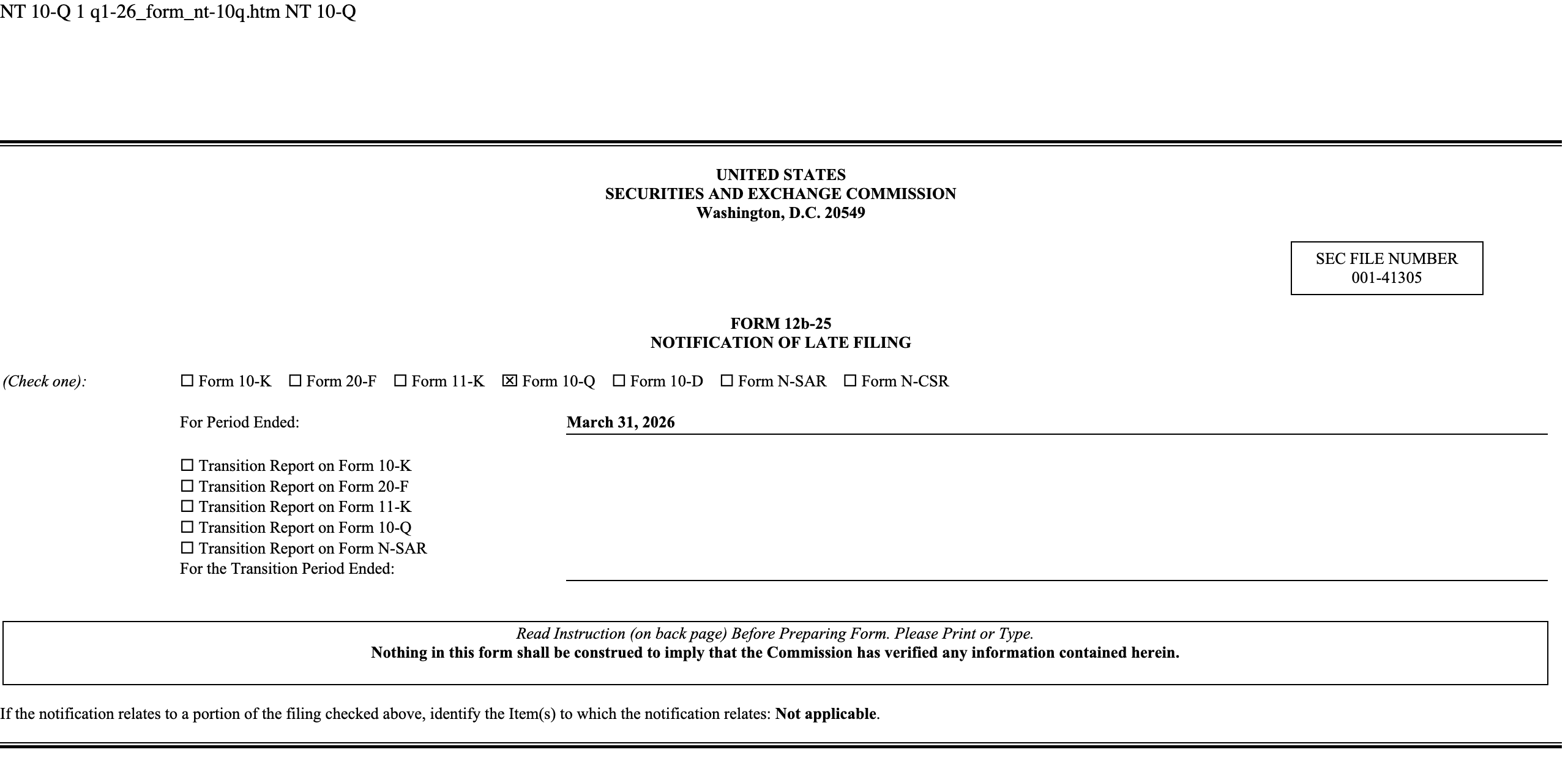
In a Form 10-Q filing with the US Securities and Exchange Commission (SEC) on Tuesday, Bitcoin Depot chief financial officer David Gray reported that the company had accrued more than $20 million in legal judgments in the fourth quarter of 2025 and “ongoing litigation matters.” The company also reported “substantial year-over-year declines in revenue” amid US states and municipalities passing laws and regulations banning or restricting crypto ATMs.
“As a result of these factors, management has concluded that substantial doubt exists about the Company’s ability to continue as a going concern,” said the report.
Source: SEC
The litigation affecting Bitcoin Depot included $1.9 million paid to Maine’s Consumer Credit Protection Bureau in January, with the company facing additional lawsuits from Massachusetts, Iowa and other state-level authorities. Individual municipalities have also been passing ordinances or laws restricting crypto kiosks and ATMs amid concerns that residents may be victims of scams.
Related: Crypto ATM losses surge 33% in 2025 as AI superpowers scams: CertiK
According to its SEC filing, Bitcoin Depot reported that its revenue decreased by $80.7 million for the three months ending March 31 compared to that in the first quarter of 2025, “primarily due to a decrease in transaction volume driven by a combination of regulatory impacts and enhanced compliance controls.” The company also reported a net loss of $9.5 million over the same period.
In March, Bitcoin Depot appointed Alex Holmes as CEO, replacing Scott Buchanan, who served in the position for three months. Holmes was the CEO of MoneyGram from 2016 until 2024, where, according to Bitcoin Depot, he had a reputation for “global regulatory compliance.”
Shares of Bitcoin Depot on the Nasdaq under the ticker BTM declined by more than 40% in the previous five days, from $5.01 to $2.93.
Canada weighing countrywide crypto ATM ban
In April, the Canadian government released its Spring Economic Update for 2026, which said policymakers “propose to ban crypto ATMs” in response to scammers and criminals using the machines for money laundering. Under the proposal, Canadians would still be allowed to buy digital assets from brick-and-mortar money services businesses.
Bitcoin Depot reported to have about 220 machines deployed across Canada at the time of publication.
Magazine: ETH stalls at $2.4K five times, SOL to rally to $120: Market Moves


Bitcoin miner turned AI infrastructure operator secures one of the sector’s largest financings as investor demand drives multiple upsizes.
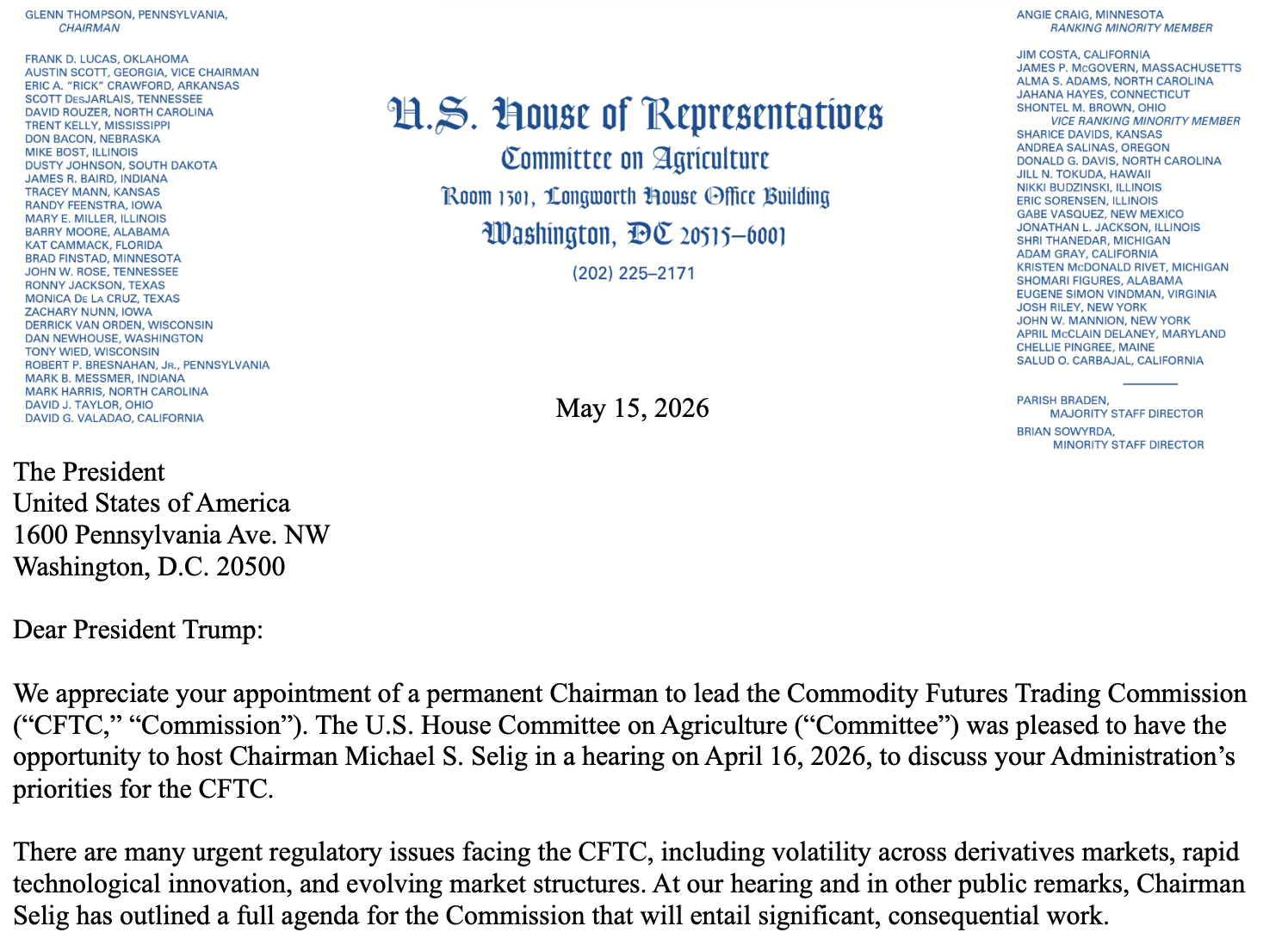
The Republican chair and Democratic ranking member of the US House of Representatives Committee on Agriculture have called on President Donald Trump to fully staff the leadership at a key financial regulator, citing the potential impact of a crypto market structure bill.
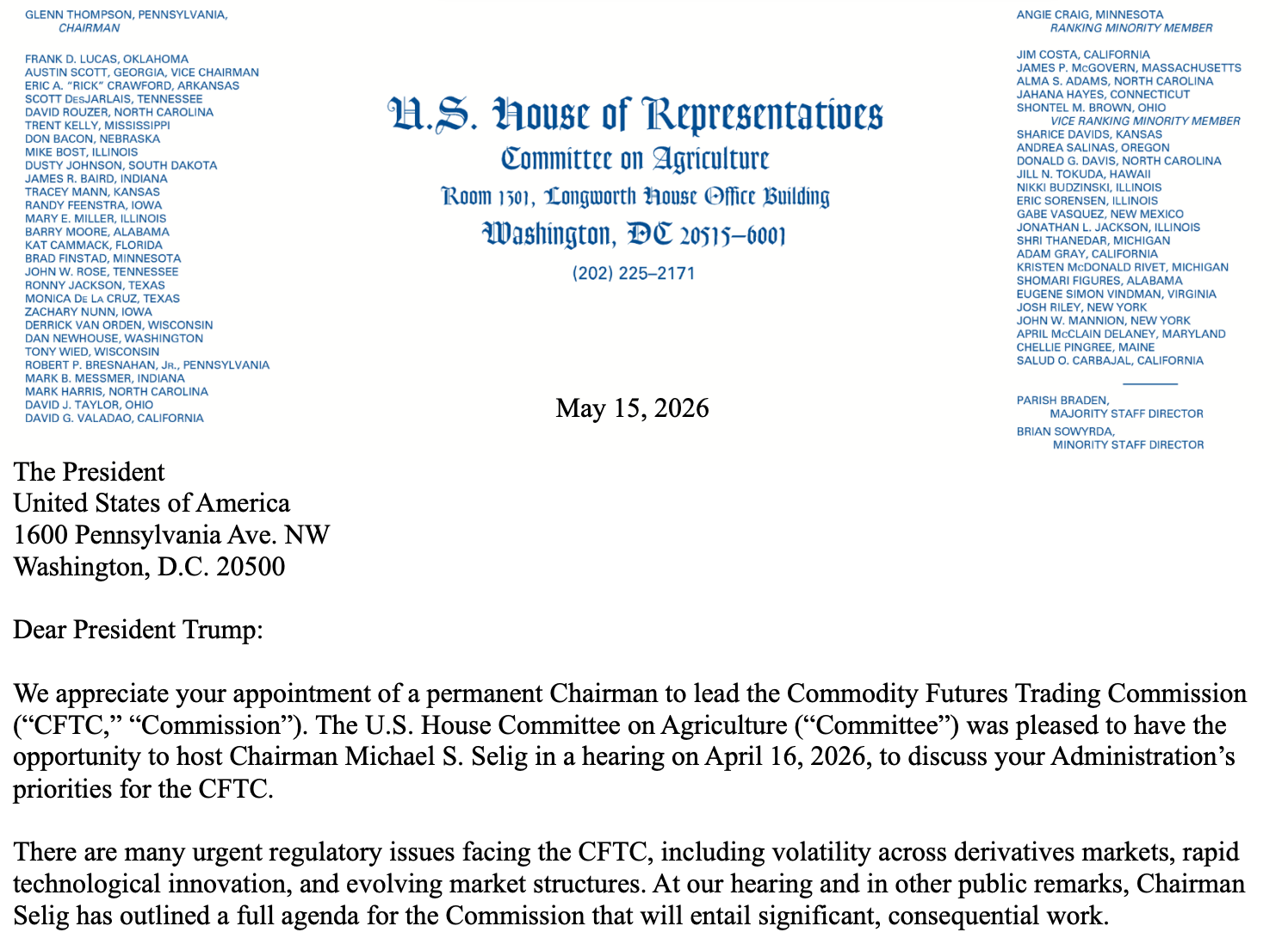
In a Friday letter to Trump, House Agriculture Committee Chair Glenn Thompson and ranking member Angie Craig asked the president to “nominate a full panel” of bipartisan leaders for the US Commodity Futures Trading Commission (CFTC). The representatives cited “urgent regulatory issues” facing the US regulator in addition to a “significant rulemaking process” required if the Digital Asset Market Clarity Act (CLARITY) becomes law.
“Ensuring the Commission is well-equipped as the leading derivatives markets regulator in the world is a bipartisan priority for the members of our Committee,” said Thompson and Craig. “A complete commission will allow the agency to best fulfill its mandate of promoting integrity, resilience, and vibrancy of US derivatives markets and will advance US leadership.”
Source: US House Agriculture Committee
Michael Selig is currently the sole commissioner at the CFTC, taking over after the resignation of acting chair Caroline Pham in December 2025. Under Selig, the commission has taken many positions aligning with the administration’s policies, including claiming “exclusive jurisdiction” over prediction markets.
Related: CFTC no-action letter eases event contract reporting rules
In an April hearing with the House Agriculture Committee, Selig said he had no intention of “slow[ing] down” on rulemaking, despite the lack of four other commissioners. The CFTC chair signed a memorandum of understanding with the US Securities and Exchange Commission in March to coordinate oversight of markets, including digital assets.
The CFTC under the CLARITY Act
On Thursday, lawmakers in the Senate Banking Committee voted to advance the CLARITY Act, setting the bill up for a potential floor vote in the chamber. The bill, expected to give the CFTC more authority in overseeing and regulating digital asset markets, would have significant implications for crypto users and companies.
Although the Senate had not scheduled a vote for the bill as of Friday, the dearth of leadership at the CFTC hasn’t gone unnoticed by lawmakers considering crypto market structure. Democratic Senator Amy Klobuchar, who sits on the Senate Agriculture Committee, proposed an amendment to the bill in January requiring that it not take effect “until at least four [CFTC] commissioners” were nominated and confirmed.
As of Friday, Trump had not publicly announced any picks for CFTC commissioners. Any nominations would likely need weeks or months to move through the Senate for consideration and potential votes.
Magazine: ETH stalls at $2.4K five times, SOL to rally to $120: Market Moves

THORChain suspended trading operations after attackers drained over $10 million across several blockchain networks. The exploit affected Bitcoin, Ethereum, BNB Smart Chain, and Base-linked assets through unauthorised withdrawals. Meanwhile, RUNE dropped sharply as trading activity surged across spot and derivatives markets.
THORChain Activates Emergency Halt After Exploit
THORChain paused all swaps and trading operations after security researchers detected suspicious outflows from protocol-linked wallets. The decentralised liquidity protocol triggered its emergency mechanism to reduce further losses and protect liquidity providers. As a result, network validators halted key services across affected chains.
Blockchain investigator ZachXBT reported losses exceeding $10 million on May 15 through multiple compromised wallets. The exploit targeted THORChain router contracts connected to Bitcoin, Ethereum, BNB Smart Chain, and Base infrastructure. Furthermore, researchers traced stolen assets across several token holdings and blockchain addresses.
Security firms identified wallets containing large amounts of Bitcoin, Ethereum, BNB, USDT, USDC, and wrapped Bitcoin assets. Analytics platforms also linked the wallets to rapid fund movements after the exploit occurred. Consequently, THORChain developers and node operators moved quickly to contain broader liquidity risks.
Multi-Chain Exploits Renew Concerns Around DeFi Infrastructure
The latest exploit renewed concerns surrounding decentralised finance interoperability and cross-chain liquidity protocols. THORChain supports swaps between independent blockchains without centralised exchanges or custodians. However, the architecture increases operational complexity and expands possible attack surfaces.
Cross-chain protocols continue attracting hackers because they manage large liquidity pools across multiple blockchain ecosystems. Attackers often target bridge contracts, router systems, and liquidity mechanisms handling cross-chain asset transfers. Therefore, several protocols increased monitoring systems and emergency controls during the past year.
THORChain already faced security challenges in previous years involving smart contract vulnerabilities and operational disruptions. The latest exploit marked another major setback for the protocol during ongoing market volatility. Meanwhile, developers continued assessing the exact technical cause behind the incident.
The attack also followed another major decentralised finance exploit involving KelpDAO earlier this year. KelpDAO reportedly suffered losses exceeding $290 million through a LayerZero-powered bridge vulnerability. That incident also raised concerns about possible contagion risks affecting connected DeFi protocols.
Protocols linked to cross-chain infrastructure remain vulnerable because attackers exploit communication layers between independent blockchain networks. Additionally, rapid transaction execution often complicates response efforts during active exploits. As a result, several platforms introduced automatic shutdown systems and enhanced wallet monitoring tools.
RUNE Drops Sharply While Derivatives Activity Increases
RUNE recorded steep losses after news of the exploit spread across cryptocurrency trading platforms and blockchain communities. The token dropped nearly 12% within hours and reached an intraday low near $0.502. However, trading activity increased sharply as market participants reacted to the security breach.
At the time of reporting, RUNE traded around $0.520 after fluctuating between $0.502 and $0.597 during the session. Trading volume also surged nearly 140% within 24 hours across major exchanges. Consequently, the token ranked among the session’s most active digital assets.
Derivatives activity increased despite falling prices, according to data from CoinGlass. THORChain futures’ open interest climbed above $24.8 million within a short period after the exploit emerged. Binance and Bybit also recorded strong increases in RUNE-linked futures positions.
The sharp rise in futures activity reflected heightened speculative trading following the protocol’s operational halt and security concerns. Traders increased leveraged positions as volatility expanded across cryptocurrency markets during the session. Meanwhile, THORChain teams continued investigating the exploit and monitoring suspicious wallet movements.
The incident added further pressure on decentralised finance platforms already facing regulatory scrutiny and persistent security threats. Cross-chain systems remain important for blockchain interoperability and decentralised asset transfers across networks. However, recurring exploits continue testing confidence in the sector’s long-term operational security.
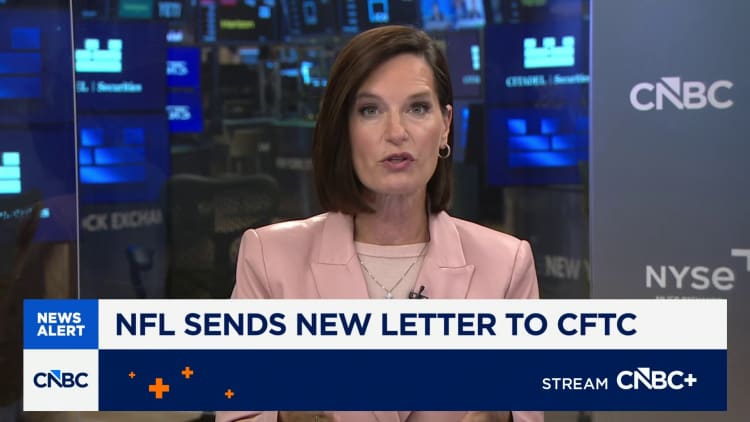

The National Football League outlined to the Commodities and Futures Trading Commission its views on how sports-related prediction markets should be regulated as the industry continues to experience massive growth, according to a letter reviewed by CNBC.
Recommendations include banning certain event contracts and raising the age requirement for participation.
Senior vice president for government affairs and public policy for the NFL Brendon Plack penned the letter on Friday to CFTC Chairman Michael Selig, where regulators are currently in a rulemaking process regarding the markets. Plack said the slew of recommendations are to preserve the ethics of the league.
“These suggestions are aimed at (i) protecting the integrity of the sporting events to which the prediction contracts relate, and (ii) protecting participants in these prediction markets from fraudulent or manipulative behavior,” he wrote.
The NFL wants a number of contracts they deem to be easily manipulable by a singular person banned, like on if a kicker will miss a field goal or a quarterback’s first pass will be incomplete. Contracts on things that are “knowable in advance” like the first play of the game or trading on “inherently objectionable” events like injuries should also be restricted, the NFL said.
Plack also wrote that the league wants “mentions” contracts for broadcasters, where participants put money on different words they think an individual will say on television, prohibited too.
The NFL also called for raising the age requirement for participants in sports-related prediction markets to 21 years old. That would align with typical age requirements for online sports betting, but prediction markets currently allow users starting at 18 years old to trade on their platforms.
Plack consistently refers to state-level gambling regulations as a model to follow when developing guardrails for sports-related prediction market contracts. He even recommends the National Futures Association enter agreements with state gaming regulatory authorities to share data and improve enforcement mechanisms to catch individuals who shouldn’t be allowed to trade.
Michael Selig, President Donald Trump’s nominee to lead the Commodity Futures Trading Commission speaks during a Senate Agriculture, Nutrition, and Forestry Committee hearing on Capitol Hill on Nov. 19, 2025 in Washington, DC.
Andrew Harnik | Getty Images
However, Selig views these markets, including the sports-related ones, as different from gambling. He reiterated to Axios this week that sportsbooks and these contracts are “two separate things.”
The CFTC has taken several states to court over their legal interventions with prediction market platforms. States argue their power to regulate sports betting means they have jurisdiction over these platforms, while the commission argues these contracts are swaps and thus fall under its regulatory power.
Other recommendations from the NFL include a request for the CFTC to create a unique certification process for contracts that are related to an individual player’s performance or susceptible to manipulation. Currently, most event contracts are approved through a self-certification process by the prediction market platforms.
It’s not just public sector regulators struggling with the arrival of these platforms. Sportsbook companies DraftKings and FanDuel parent Flutter have seen their stocks suffer in the past year as prediction markets’ sports business has grown.
Plack also writes the league believes prediction market platforms should enter agreements with sport governing bodies to establish and enforce a list of prohibited participants in sports event contracts, including league employees to minimize chances of insider trading.
The league also believes platforms should be required to ban margin trading, a risky practice where borrowed money is traded, to protect consumers. “The permittance of event contracts that are not fully collateralized, as some have suggested, particularly related to sports markets, could amplify addictive behavior and loss risk,” Plack wrote.
— CNBC’s Contessa Brewer, Jessica Golden and Ananya Chetia contributed reporting

Cardiff seal URC play-off place after sensational victory over the Stormers

Taiyo Yuden Co., Ltd. 2026 Q4 – Results – Earnings Call Presentation (OTCMKTS:TYOYY) 2026-05-15

Myanmar’s Military Government Proposes Life in Prison for Crypto Scammers

Manchester United reach agreement with Casemiro over contract clause amid transfer speculation

US brings back mandatory military draft registration

Steven Gerrard disagrees with Gary Neville over ‘shock’ Chelsea and Arsenal claim | Football


-

 Fashion4 days ago
Coffee Break: Travel Steam Iron
-

 Politics7 days ago
Politics Home Article | Starmer Enters The Danger Zone
-

 Fashion5 days ago
What to Know Before Buying a Curling Wand or Curling Iron
-

 Politics4 days ago
What to expect when you’re expecting a budget
-

 Tech6 days ago
Auto Enthusiast Carves Functional Two-Stroke Engine from Solid Metal
-

 Fashion6 hours ago
Weekend Open Thread: Theory – Corporette.com
-
 Business7 days ago
Ignore market noise, India’s long-term story intact, say D-Street bulls Ramesh Damani and Sunil Singhania
-

 Tech5 days ago
GM Agrees To Pay $12.75 Million To Settle California Lawsuit Over Misuse Of Customers’ Driving Data
-

 Crypto World7 days ago
PROS explodes 48% as Upbit and Bithumb listings ignite demand
-

 Crypto World6 days ago
CZ says US crypto rivals tried to block Trump pardon
-

 Tech4 days ago
GM agrees to $12.75M California settlement over sale of drivers’ data
-

 Tech19 hours ago
Tech Moves: Microsoft AI leader jumps to OpenAI; former AI2 exec joins Meta; and more
-
Crypto World3 days ago
Bitcoin Suisse expands with Digital Asset License and Investment Business Act Registration Approval in Bermuda
-

 Crypto World6 hours ago
E-Estate Announces 1 Year Live: Washington DC Summit as Real Estate Tokenization Enters Its Next Phase
-

 Politics3 days ago
Pakistan to enter Chinese capital market as war inflation bites
-
 Crypto World7 days ago
Pi Network Hits 421K Mainnet Nodes Ahead of Protocol 23 Smart Contract Launch
-
 Crypto World1 day ago
Google’s Gemini AI Predicts Incredible Solana Price by the End of 2026
-
 Sports7 days ago
‘Not bothered’ – Michael Carrick gives update on Manchester United head coach role
-

 Entertainment7 days ago
Pooh Shiesty Pleads Not Guilty In Gucci Mane Kidnapping Case
-

 Crypto World3 days ago
Bitcoin Suisse expands with Digital Asset License and Investment Business Act Registration Approval in Bermuda
You must be logged in to post a comment Login