





Connect with us
DAPA Banner
DAPA Coin
DAPA
COIN PAYMENT ASSET
PRIVACY · BLOCKDAG · HOMOMORPHIC ENCRYPTION · RUST
ElGamal Encrypted MINE DAPA
🚫 GENESIS SOLD OUT
DAPAPAY COMING

Tech

General Catalyst posted VC rage bait and it worked, especially on a16z

Published

on

One of the most entertaining moments in VC this week was a piece of rage-bait marketing from General Catalyst.

In a now-viral post on X that parodies the old Mac vs. PC commercials, the venture firm — better known as GC — posted a “VC vs GC” video on Wednesday. The VC was played by a tall actor in a baggy shirt and vest with a distinctly large, bald head — an apparent dig at Andreessen Horowitz co-founder Marc Andreessen. (But the real Andreessen never looks that disheveled).

The GC character was played by a man with a thick head of dark hair, white kicks, and a tendency to stare deeply into the camera. He was clearly supposed to represent actor Justin Long’s cooler, “hipper” Mac character from the original commercials, in contrast to John Hodgman’s straight-laced “square” PC persona.

GC asks VC about his robotic dog.

Advertisement

VC explains, “This is Woof AI” and then extols the virtues of the artificial companion (you don’t need to walk it or break the news to the kids when it dies!) and declares, “You’ll never want a real dog after this.” VC mentions that his firm is leading the seed round and pitches GC to join the cap table.

GC explains how people like real dogs and remarks, “I’d love to hear more, but we actually have a really high bar around responsibility for these things.”

Then VC kicks the AI dog and the dog chases him off the screen. The post has now been viewed 2.4 million times with hundreds of shares and comments, and thousands of likes.

I’d have to read so far between the lines that I’d be off the page and peering into another book to unpack this, but I’ll try anyway. The message, roughly: Other VCs, and a16z in particular, will fund anything. GC won’t. (I asked about this. GC hasn’t responded.)

Advertisement

It’s a pointed argument if so, and not entirely without basis. Andreessen’s firm frequently invests in companies that are considered controversial, like the surveillance startup Flock Safety, AI notetaker Cluely, and Adam Neumann’s Flow. But the same measure could just as easily be applied to General Catalyst. GC’s portfolio includes Anduril, Percepta, and Polymarket.

My takeaway is that GC wanted to show an a16z-type character kicking a dog, without anyone actually kicking an actual dog because that would be a major problem.

Many of the comments on the video seemed to find the video, and the choice to post it, cringe. Plenty liked and loved it, too.

Compulsive X user Andreessen himself couldn’t resist responding, many, many times. He said it made GC look “smarmy” and said, “Stay tuned for our upcoming ad campaign, ‘We’re the VC who doesn’t sneer at your idea.’” He kept going from there. My personal favorite was: “The thing they got right is the relative heights.”

Advertisement

As others noted, you know you’ve hit the right rage bait when the target takes it.

There were plenty of a16z partners and staffers who came to Andreessen’s defense, too. So much so that their reactions drew lots of comments. My personal favorite in this category was from VSC Ventures VC Jay Kapoor: “GC vs. A16Z beef is like Kendrick vs. Drake for people who know what a 409A valuation is.”

When you purchase through links in our articles, we may earn a small commission. This doesn’t affect our editorial independence.

Source link

Advertisement
Continue Reading
Click to comment

You must be logged in to post a comment Login

Leave a Reply

Tech

A Student Engineer Built His Own Walking Star Wars Droid

Published

on

Custom-Built Disneyland Star Wars Droid Robot
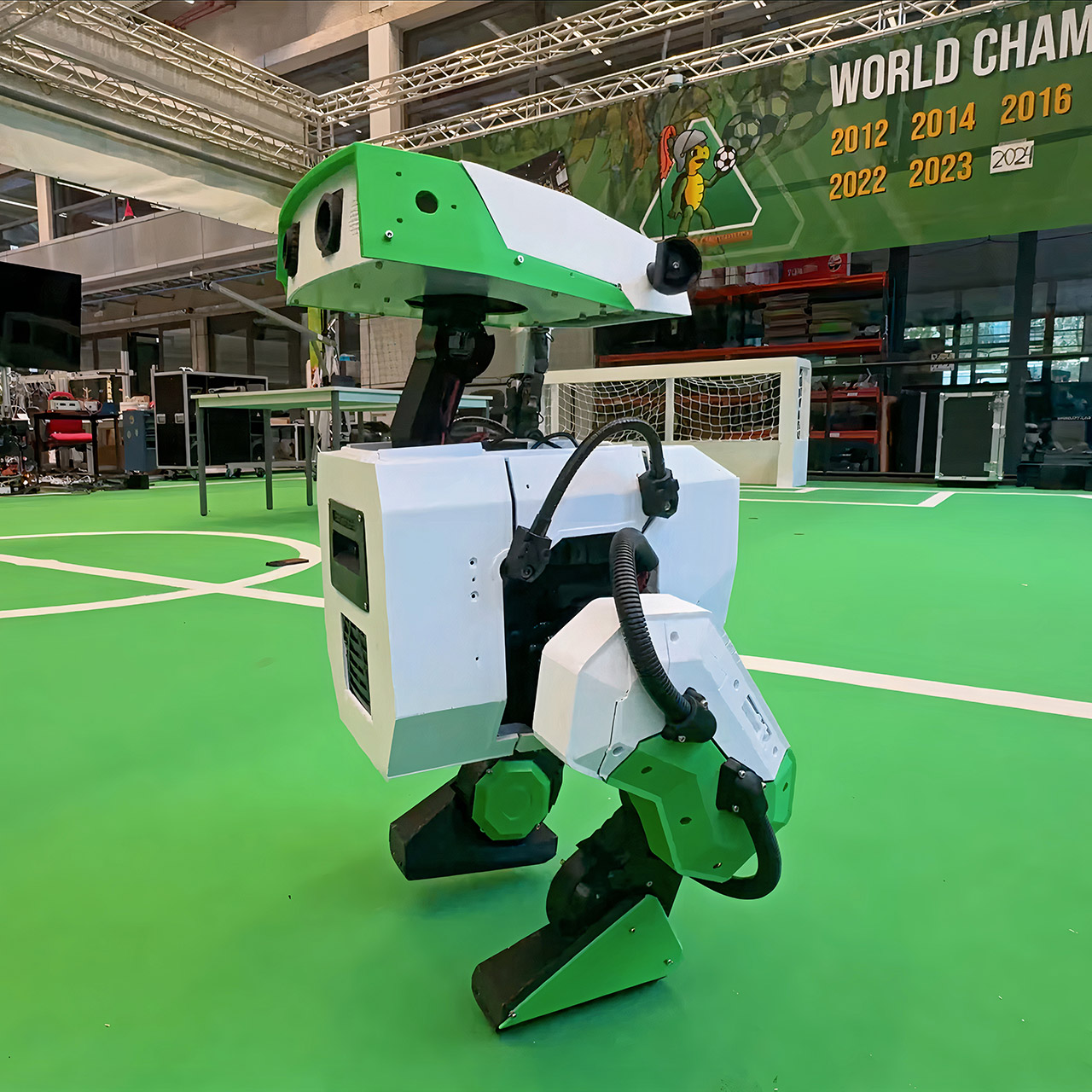
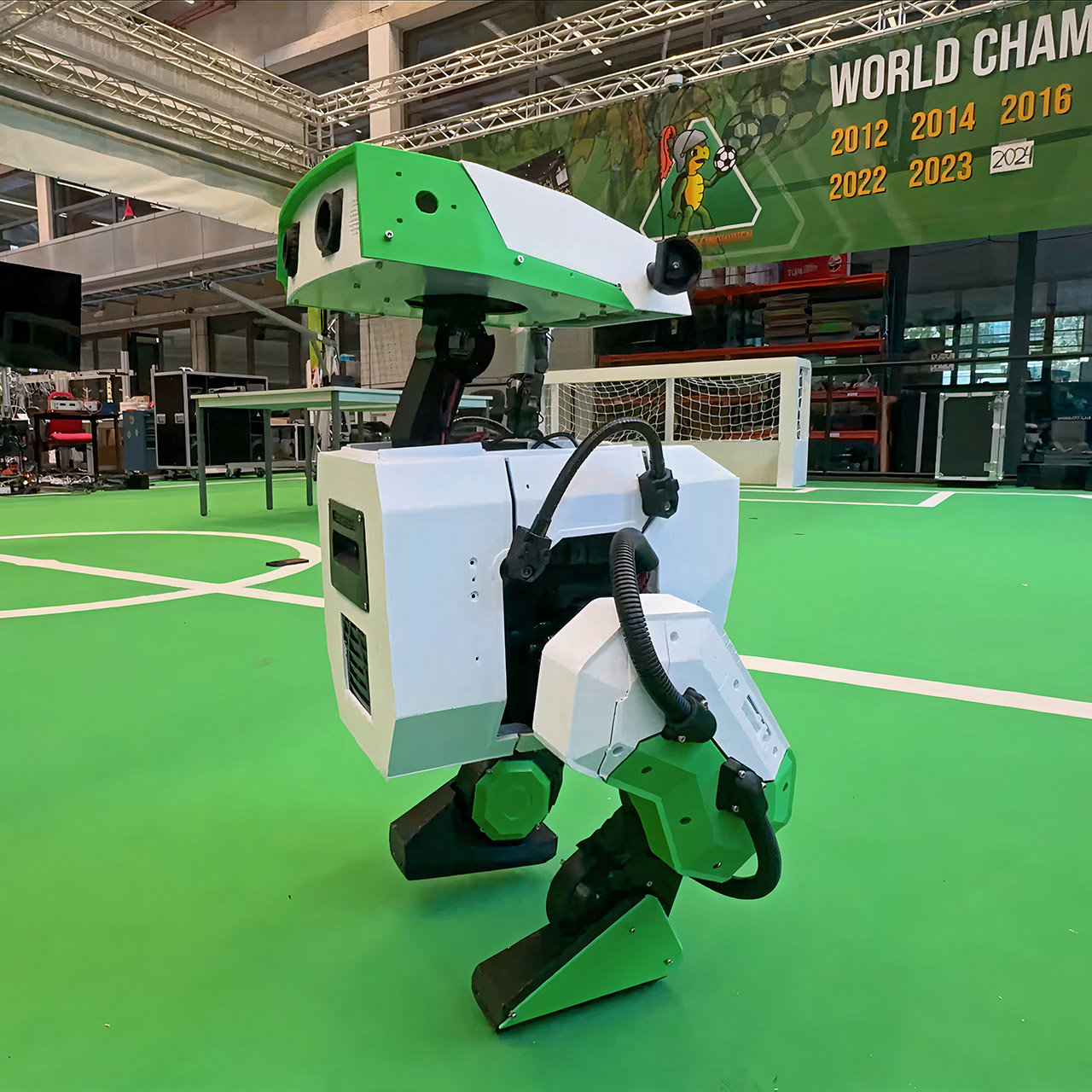
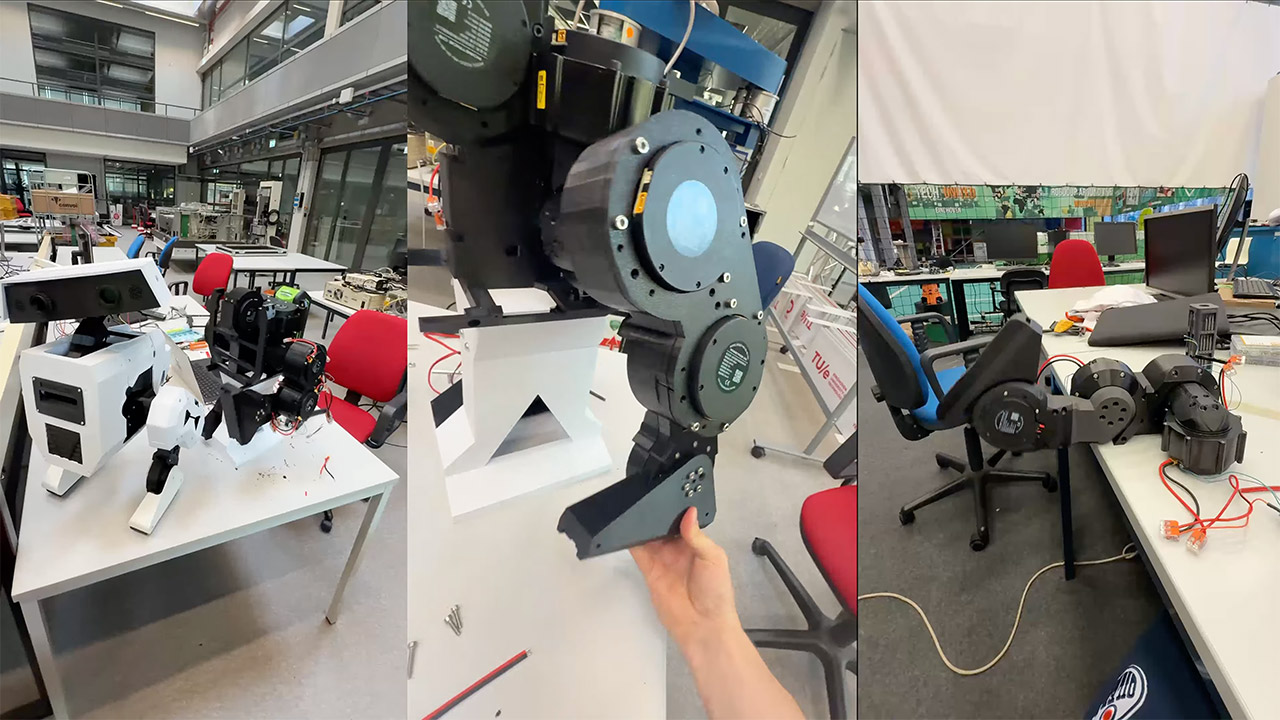
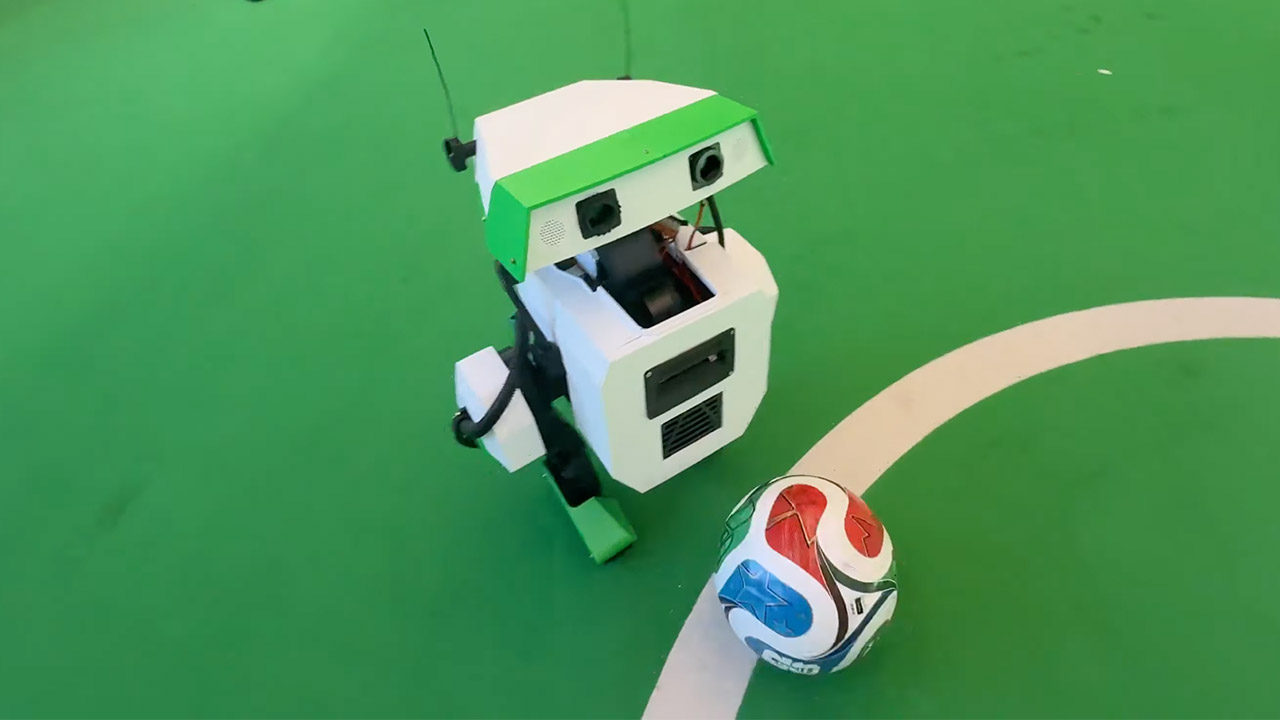
Kayden Knapik set out to copy one of Disney’s BD-X droids from the Star Wars areas in their parks. He had no big budget and only basic robotics experience when he started his bachelor’s thesis project. The finished machine walks on two legs, turns on command, keeps its balance even when nudged, and moves its antennas to show feelings. All of it runs on parts bought online and printed at home.


Knapik chose the BD-X because the droids look simple but move with a lot of personality in the parks. Disney keeps full-sized versions locked away and never sells them to the public. He wanted something similar enough for people to see and touch without requiring a ticket. His version is nearly the same height as the park models and employs the same type of brain that Disney picked for its own robots.

Sale


Bambu Lab A1 mini 3D Printer + LED Lamp Kit, Set Up in 20 Mins, High Speed & Precision, Full-Auto…
  • A1 mini + LED Lamp Kit for Creative Light Projects: Bring your ideas to life with the included LED Lamp Kit. Simply print compatible lamp models and…
  • The Perfect 3D Printer for Beginners: A1 mini 3D Printer is designed to make 3D printing easy from day one with automatic calibration, simple setup…
  • Experience the Bambu Lab Ecosystem: Access MakerWorld’s huge library of ready-to-print models, manage prints through the Bambu Handy app, and enjoy…

Custom-Built Disneyland Star Wars Droid Robot
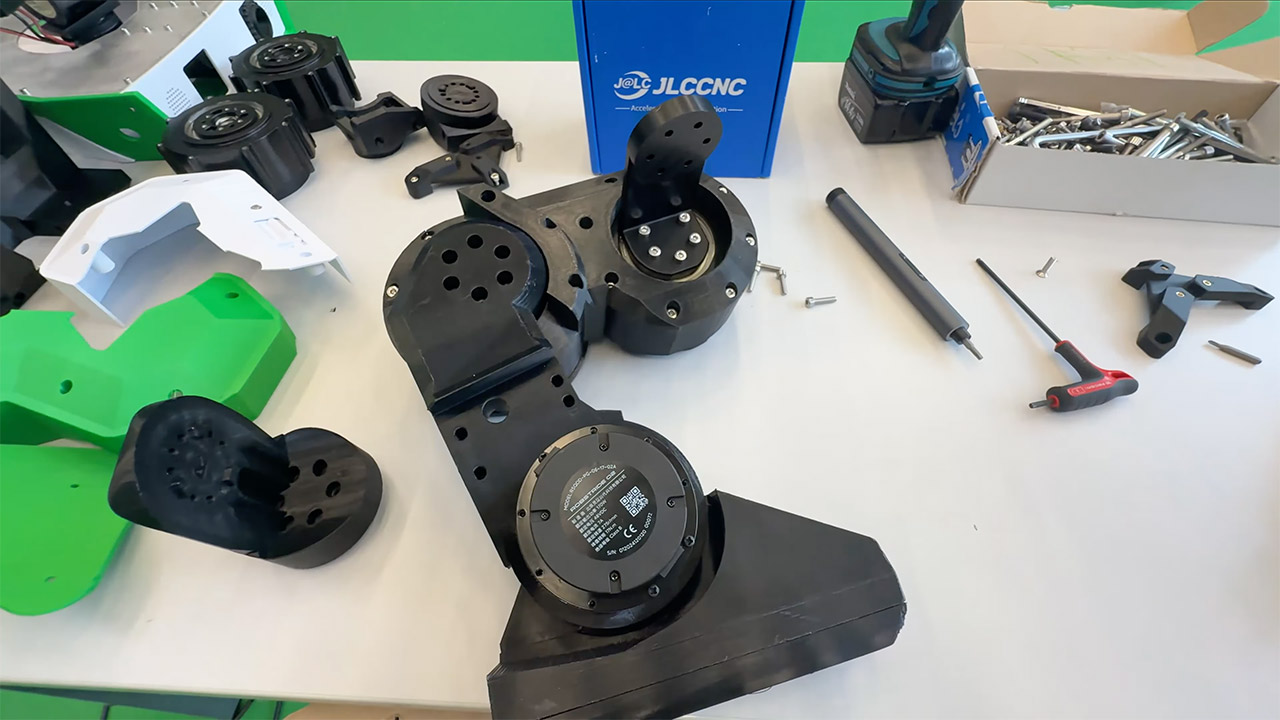
Sixteen Robstride motors drive every joint, which actually offers high torque at a price a heck of a lot lower than the custom gear Disney uses. The total set of motors cost roughly $2800. For identical hardware, Disney’s version would cost roughly $7,500, just for the legs. A regular 40-volt lithium-ion battery from a lawn mower is utilized to power the device because it is safe and easy to replace. The sensors inside each joint detect its position, and an inertial measurement unit monitors tilt and direction, allowing the droid to adjust itself as needed.

Custom-Built Disneyland Star Wars Droid Robot
The majority of the body began as plastic printed on a standard 3D printer, however PETG with extra infill was insufficient to withstand daily stress, as the hips began to shatter under full motor power. Knapik replaced the essential joints with aluminum parts made on a CNC machine. That adjustment only took a few days, but it effectively stopped the brakes. Everything else still prints at home if you’re ready to work with his open-source files.

Custom-Built Disneyland Star Wars Droid Robot
It’s the software that moves the legs without requiring any line-by-line walking code. Knapik created a digital clone of the robot within an NVIDIA simulation program and had it practice millions and millions of small efforts at remaining upright and moving ahead. Each run involved random weight changes, surface grip, and motor timing, allowing the robot to learn to deal with a variety of real-world conditions. Once training was completed, the same policy was simply applied to the actual hardware. The gait was choppy at first, but he eventually matched the simulation delays to the physical motors. After that, the droid’s gait improved dramatically, and it was soon walking forward, backward, and using voice commands.

Custom-Built Disneyland Star Wars Droid Robot
Total spending is still cheap enough that Knapik has begun drawing concepts for a smaller version at about $400. The CAD files, training code, and assembly notes are all stored on a public GitHub page named BDX-R. If you have a 3D printer and basic skills, you may download the file and begin creating your own. The open approach is all about breaking down the traditional barriers that keep advanced robotics out of reach for everyday people.
[Source]

Advertisement

Source link

Continue Reading

Tech

Google reimburses Register sources who were victims of API fraud

Published

on

Two of the Google Cloud developers who were hit with bills for thousands of dollars following unauthorized API calls to Gemini models have had their bills reversed, the users told The Register  in recent days. But Google plans to continue automatically expanding users’ spending limits, leaving them and countless other customers vulnerable to bills they cannot afford, whether from fraud or a sudden traffic surge.

Australia-based developer Isuru Fonseka – whose usage bill skyrocketed to $17,000 in minutes after Google automatically upgraded his $250 spending tier when a hacker took control of his account – told us that he was happy to put this behind him. 

“It’s so good. It felt like they were just giving me the run around until your article. I just hope they fix it properly for everyone,” he said. “It’s great that the article was able to get the refund but it’s sad that it had to go to that level for them to process it urgently.” 

Despite refunding his money, Google seems to have lost a customer. Fonseka said that he has since ensured his API cannot be used with Google’s stable of AI products, and will likely try one of the independent foundation models if he needs those features. 

Advertisement

“I’ve disabled Gemini on everything – if I ever plan to use AI on my projects, I’m better off using it via a different service such as OpenRouter or going directly to one of the other LLM providers – just as a way to keep Gemini out of my account and the risk as low as possible,” he said. 

Fonseka said he was blindsided by a Google policy that allowed the company to automatically upgrade a user’s billing tier without permission or adequate warning. He had thought by signing up for a user tier with a $250 spending cap that his bills would be restricted to that amount. It was only after attackers exploited his API key that he learned Google would upgrade the cap automatically based on his history of spending. 

While Google acknowledged that the automatic tier upgrades allowed credential hijackers to rack up thousands of dollars in bills in cases like the one Fonseka described to The Register, it said it has not reconsidered the policy.

In a statement to The Register, Google said that it wants to prioritize access to Google Cloud services without interruption, preferring to prevent service outages over respecting users’ budget preferences.

Advertisement

“With our automated growth tiers, we helped businesses scale as usage increased, built on their historic reputation of payments and usage,” a Google spokesperson told us in a statement. “This prevents their business having a hard service outage once they pass an artificial system quota.”

Tiers vs spending caps

There is some confusion between Google’s usage tiers and its newly introduced spending caps, and Google’s documentation hasn’t helped much. 

Google says its users can set their usage tiers not to exceed a certain spending level. For example the maximum spending allowed by a Tier 1 user like Fonseka is $250. However, if the account is older than 30 days and if, over the lifetime of their work with Google, they have spent at least $1,000, then Google will automatically allow that account to spend up to $100,000. So good customers have the most to fear from fraud or from an unexpected spike in usage.

In several cases shared on social media, Google users were only aware of this after their credit cards were billed thousands of dollars.  

Advertisement

On April 22, Google introduced a trial of hard caps on spending within Google Cloud, but those are in a preview and are approved on a case-by-case basis. 

“We’re excited to announce that Spend Caps are coming soon to Google Cloud. Designed to work with Google Cloud Budgets, FinOps and DevOps can set budgets that enforce automated cost boundaries (caps) at the project level for AIS, Agent Platform, Cloud Run, Cloud Run Functions, and Maps,” Google wrote. “These caps alert and ultimately pause API traffic once your set budget is reached, but leave your resources intact. If you need the traffic to resume, simply suspend the Spend Cap.” 

Spend caps can only be set per project for a single, eligible service, Google said. Eligible services for this preview include Gemini API, Agent Platform (previously known as VertexAI), Cloud Run, Cloud Run Functions, Maps, Google said. 

Users who apply for a spending cap will have their submissions reviewed on a “one to two week basis” and customers are added in the order they submitted. 

Advertisement

“Once onboarded, you will receive an email with instructions on how to access the feature as well as details on how to submit feedback,” Google writes in its sign up page. 

Rod Danan, CEO of Prentus, a company that helps job applicants with interview preparation and tracks job placements for universities, told The Register earlier this week that he saw his bill skyrocket to $10,000 in just 30 minutes of usage by attackers who exploited his public API key. 

Google forgave the charges on Thursday, he said. 

“They got back to me today agreeing to a refund,” he told us. “It’s definitely relieving. You want to focus on the business. You don’t want to have to focus on going and getting refunds from some crazy charges.” 

Advertisement

He said the stress of running a startup is hard enough without the addition of fighting one of the largest companies in the world imposing erroneous five-figure charges. 

“I’m happy that it’s behind me. I wish it was easier,” he said. “I’ve learned, yeah, definitely don’t give up. Be annoying whenever something is wrong and just keep pushing. Again, try to make it as public as possible, get louder and louder until the people you need to hear you actually hear you.” 

Google said any unauthorized use of API keys will be investigated and it historically has treated customers compassionately when there is clear evidence of fraud or error. 

“We take reports of credential abuse and the financial security of our customers extremely seriously; and as you know are investigating these specific cases you have pointed to and we will work directly with any impacted users to resolve charges resulting from fraudulent activity,” Google said. ®

Advertisement

Source link

Continue Reading

Tech

RJ Scaringe has raised more than $12B across three startups and investors still want more

Published

on

Investors can’t seem to get enough of RJ Scaringe or his ideas.

In less than a decade, the serial entrepreneur best known for his EV company Rivian has raised more than $12.3 billion from venture capital firms, as well as from strategic and institutional investors for his three — and counting — startups. If the latest $400 million raise for his new venture Mind Robotics is an indicator, investors are still happily piling in.

Outsized raises for newly minted startups have become more common in recent years. But those hundred-million-plus seed rounds have generally been reserved for buzzy defense tech startups or AI companies founded by former OpenAI or Anthropic employees.

Those supersized seeds certainly weren’t flowing toward something as niche as an electric micromobility startup. And yet in 2025, Scaringe raised $105 million for exactly that — a startup called Also, which he founded that same year. The total has since surpassed $300 million, with DoorDash among its backers.

Advertisement

Jiten Behl, partner at Eclipse and former chief growth officer at Rivian, has spent years watching and learning from Scaringe. His firm is now one of Scaringe’s biggest backers, leading rounds in both Also and Mind Robotics — Scaringe’s industrial AI and robotics startup that he also founded last year.

Storytelling and communication are one of his superpowers, according to Behl, who joined Rivian when the company had just a handful of employees.

“When RJ explains a certain issue, topic, opportunity, vision, he just has this very unique ability to communicate it so effectively, and it comes across so credible,” Behl said. “He’s not trying to undersell the difficulty or oversell the opportunity, and that’s an art.”

Scaringe isn’t the only serial entrepreneur to repeatedly attract massive amounts of capital, but founders who can raise billions across multiple ventures remain rare. A self-professed car enthusiast who earned his doctorate in mechanical engineering from MIT, Scaringe joins a small cadre of entrepreneurs that includes Tesla CEO and SpaceX co-founder Elon Musk, OpenAI CEO Sam Altman, Anduril and Oculus founder Palmer Luckey, and Jack Dorsey, who founded Square (now called Block) and Twitter.

Advertisement

The difference, at least in the view of some investors TechCrunch spoke to, is that he is able to separate selling the idea from selling himself. “He is very comfortable and confident in his own personality, and he’s not trying to be an Elon,” Behl said, noting that many have tried to make the comparison over the years.

“It’s not about him,” another insider familiar with Scaringe’s companies told TechCrunch. “When you talk to him, he has enthusiasm about the product that is completely external.”

Of course, there is confidence and even a little ego, the same source mused, but “it doesn’t weigh on you.” The source also added that Scaringe has a unique ability to make you feel like the most special person in the room — a sentiment others echoed.

Giving that kind of undivided attention to an investor, supplier, or exec at a manufacturer is a challenge at the scale Scaringe is attempting. He is running three companies, often traveling between Palo Alto, Irvine, Rivian’s factory in Normal, Illinois, and a second factory soon to open in Georgia. And then there is family — Scaringe has three sons with his ex-wife.

Advertisement

Joe Fath, another partner at Eclipse, credits his open-mindedness and collaborative nature for helping him attract investment and juggle these connected, yet disparate businesses.

He noted that Scaringe also “has the rare combination of being a truly great engineer while also having an exceptional instinct for product design,” said Fath, who previously worked at a major Rivian backer, T. Rowe Price. “Very few founders can operate at that level technically while also understanding what resonates emotionally with customers — both consumers and commercial buyers. That combination is incredibly uncommon and has clearly been part of what makes Rivian’s products, and now Also and Mind’s, so differentiated.”

The pace of Scaringe’s fundraising over the past eight years is particularly notable and doesn’t seem to be slowing.

More than $11 billion, and by far the largest slice of VC and strategic capital, went into Rivian — most of it between 2018 and its blockbuster IPO in 2021. That’s a startling timeline, especially considering the company, initially called Mainstream Motors, had existed since 2009. For years, Rivian operated as a small, unknown entity until its breakout moment in late 2018 at the Los Angeles Auto Show, when it revealed prototypes of its all-electric R1T truck and R1S SUV.

Advertisement

The money soon flowed, and from every direction. In early 2019 and just a couple of months after that reveal, Rivian raised a $700 million funding round led by Amazon. U.S. automaker Ford would invest $500 million and make plans to collaborate on a since-scrapped future EV program. Cox Automotive contributed $350 million. Rivian would close out the year with a $1.3 billion round — its fourth in 2019 — led by funds and accounts advised by T. Rowe Price Associates, with additional participation from Amazon, Ford, and funds managed by BlackRock.

In July 2020, Rivian raised $2.5 billion and another $2.65 billion six months later. As whispers of an IPO got louder, Rivian closed another $2.5 billion private funding round led by Amazon’s Climate Pledge Fund, D1 Capital Partners, Ford Motor, and funds and accounts advised by T. Rowe Price Associates Inc. Third Point, Fidelity Management and Research Company, Dragoneer Investment Group, and Coatue also participated.

Then the IPO came. Rivian raised nearly $12 billion in gross proceeds after locking in $78 per share. Its market cap hit $100 billion when it debuted on Nasdaq in November 2021. Today, it stands at $18.2 billion, a significant comedown that also reflects the broader struggles of the EV sector.

The ability to raise that much capital, despite those headwinds, is exceptional. But Scaringe didn’t stop with Rivian. If anything, the pace has accelerated. Also and Mind Robotics have together raised more than $1.3 billion so far, with Mind Robotics moving especially fast: $115 million in its first year, $500 million in March, and another $400 million just this week.

Advertisement

Rivian also continues to land notable backers through high-profile deals like the $5.8 billion joint venture with Volkswagen Group and a robotaxi partnership valued at up to $1.25 billion with Uber.

“Now, the big question is, how much can he do?” Behl said. “That’s a question [that] already assumes that he’s reaching his limit. The thing is, he doesn’t look at it that way. His perspective is that there is huge value to be created, there is huge impact to be created, and I just have to do it.”

When you purchase through links in our articles, we may earn a small commission. This doesn’t affect our editorial independence.

Source link

Advertisement
Continue Reading

Tech

How to watch the 2026 Eurovision Song Contest Grand Final online for FREE from anywhere

Published

on

Watch the 2026 Eurovision Grand Final tonight at 8pm (May 16) to see 25 acts compete for the glitziest crown in music. The winner will, as ever, be chosen by wildly unfair judging based on ancient ties between nations and the prevailing political climate.

But after two pulsating semi-finals, who exactly is in the mix to come out on tops. The general consensus is that will probably be Finland (Linda Lampenius & Pete Parkkonen with “Liekinheitin”), Greece (Akylas and “Ferto”) or Denmark (Søren Torpegaard’s “Før vi går hjem”).

Source link

Continue Reading

Tech

Kioxia and Dell Cram Nearly 10PB Into a Single 2U Server

Published

on

BrianFagioli writes: Kioxia and Dell Technologies say they have built a 2U server configuration capable of scaling to 9.8PB of flash storage, which is the sort of density that would have sounded impossible just a few years ago. The setup combines a Dell PowerEdge R7725xd Server with 40 Kioxia LC9 Series 245.76TB NVMe SSDs and AMD EPYC processors. According to Kioxia, matching the same capacity with more common 30.72TB SSDs would require seven additional servers and another 280 drives.

The companies are pitching the hardware squarely at AI and hyperscale workloads, where storage is rapidly becoming a bottleneck alongside compute. Kioxia claims the denser configuration can dramatically reduce power consumption and rack space requirements while remaining air cooled. The announcement also highlights how quickly enterprise storage capacities are escalating as organizations race to support larger AI models, massive datasets, and increasingly demanding data pipelines.

Source link

Continue Reading

Tech

5 Pickup Trucks From The ’60s That Look Even Cooler Today

Published

on


Unfettered design disappeared from the automotive world decades ago. Safety requirements, governmental regulations, and advances in aerodynamics have reduced what was once an artistic discipline into an engineering discipline. As a result, many modern cars are beginning to look similar. The amorphous crossover, the standard pickup truck, and the bland sedan come in shades of grey, navy, and black. Once upon a time, there were fewer restrictions, and manufacturers had a little more freedom to exercise creativity.

As a result, plenty of the classic cars and pickups of yesteryear lure automotive fans with unique aesthetics that are impossible to replicate today. In honor of the good ol’ days, we check out the history and performance behind designs that have gained iconic status five decades after they hit the market. These aren’t necessarily the best pickup trucks to come out of the 1960s, but they are definitely amongst the coolest looking.

Advertisement

1960 Studebaker Champ

Studebaker Automobiles isn’t the first manufacturer that comes to mind when you think pickup trucks. Founded in 1852, the brand got its start building wagons before entering the automobile space. By 1960, however, the once-proud brand was entering its final decade.

Pickup trucks were undergoing a transformation during the 1960s. Once purely utilitarian, by the late 1950s, manufacturers were turning toward car-like designs, with more comfortable interiors and smoother rides. The Studebaker Champ is one example of this evolutionary stage of pickup design.

Advertisement

The Studebaker Champ pickup truck debuted in 1960, but it wasn’t an all-new design. It saved money by using components and sheet metal from the pre-existing Studebaker Lark compact, essentially hitching a pickup bed to the Lark’s front end. With a pair of engine options, including 170- and 245-cubic-inch six-cylinders making 90 and 118 horsepower, respectively, the bubble-fendered pickup came in ½- and ¾-ton models.

Not only was the Champ a warmed-over Frankenstein of parts, but its nameplate was reminiscent of the Studebaker Champion sedan produced from 1939 to 1958. Alas, the Champ was not enough to save Studebaker, which went out of business in 1966. But we still have the unique looks and lines of the short-lived but distinctive Champ.

Advertisement

1963 Ford Falcon Ranchero

Ford got into the car-truck combination business with the Ranchero in 1958. Ultimately overshadowed by the Chevrolet El Camino that arrived in 1959, the Ranchero nonetheless holds a special place in the classic pickup portion of our hearts.

Inspiration for the Ranchero came from the Land Down Under. The Australian market was nuts for what was called coupe-utility vehicles, or utes. Ford wanted to capitalize on its success with the so-called utes in North America. It tapped its car division, which built the Ford Falcon, to build the Ranchero. The Ranchero was produced for seven generations between 1957 and 1979. The second generation arrived for the 1960 model year, retaining a certain straitlaced ’50s aesthetic that marks a transition between ’50s and ’60s design mores.

The Ranchero could hold more payload than the El Camino despite its 144-cubic-inch six-cylinder engine being smaller than Chevrolet’s V8 options. With pickup trucks increasingly skewing toward lane-filling behemoths, maybe Ford can look into bringing back the car-truck combo. Except, as of 2026, it doesn’t sell a single traditional sedan to convert.

Advertisement

1965 Chevrolet C10

The Chevrolet C10 may be the most quintessential pickup truck in history. Its 39-year career began when it debuted in 1960. Set up to compete with Ford’s successful (and even longer-running) F-line, it was a competitive unit that put to use everything Chevrolet had learned building pickups since 1918.

In 1965, the C10 was still in its first generation. It was only available with a standard cab, though buyers could choose between 6.5- and 8-foot beds. It was more farm truck than highway cruiser, with inline six and V8 engine options ranging from 135 to 220 horsepower. An odd overbit hood contains signal lamps underneath, which the grille is plastered with from headlight to headlight, almost making it look like it’s smiling. A trim cabin and flat lines running to the bed (except for the gorgeous sidestep models — another characteristic missing from modern pickups) give it a look that suggests it was once as comfortable in the dirt as it is now on the pedestal at car shows.

The first-gen C10 retains a distinctive Americana vibe, evoking greasers and drive-in movies. Chevrolet wanted to differentiate its new C10 line from its 1950s products, taking a clean-sheet approach to introduce radical design changes. The resulting truck is certainly outdated now, but it holds a place in history as a bygone era of American manufacturing.

Advertisement

1965 Jeep Forward Control Series

Jeep recently re-entered the pickup truck game by resurrecting its Gladiator nameplate in 2020, but it’s not the Gladiator we’re looking back at. Jeep once was a major player in pickups, and its 1966 Forward Control (FC) series was a friendly little pickup truck designed as a practical hauler.

Cab-forward design allowed truck makers to maximize the available space of the wheelbase by placing the engine beneath the cab rather than under a long hood. Volkswagen, Ford, and Chevrolet all got in on the action, but our favorite interpretation belongs to Jeep. The Jeep Forward Control Series hit the market in 1957 and had essentially run its course by 1966. It offered two wheelbase choices and engines ranging from a 72-horsepower four-cylinder to a 115-horsepower inline-six.

Advertisement

The Jeep Forward Control Series doesn’t look like much of anything on the road today. It was a utilitarian hauler with superior visibility and a distinctly Jeep grille — though that’s about the only design cue that is recognizably Jeep. The FC ultimately faced competition from the likes of the Chevrolet Corvair Rampside and Volkswagen Transporter pickup. About 30,000 FCs rolled off the assembly line during its production run, making it somewhat difficult to find today.

Advertisement

1968 Dodge Power Wagon

The Power Wagon was based on Dodge trucks that served during World War II, and if that’s not enough of a proving ground for you, then you must be pretty rough on your trucks. The nameplate debuted in 1946 for the post-war civilian market. America was facing an extended period of growth, and Dodge had just the truck to get it done.

High on utility and low on comfort, the Power Wagon was used (and revered) by government agencies for rough-and-tumble work. Dodge has made plenty of hay out of its high-output Hemi V8s over the past several decades, but the Power Wagon was primarily known for inline-six engines. Rugged and reliable, the U.S. Navy, the Park Service, the Department of Fish and Wildlife, and others put it to the test over the years

By the 1960s, the Power Wagon line was mid-stride — the last model would roll off the line in 1980 — but it hit a high point in design. The final year of the first generation was 1968, after which the Power Wagon was designated export-only as part of a government program, despite protests from the U.S. Forest Service, which loved the Mopar workhorse. Part of the reason (aside from emissions) was that its design was still based on the 1946 aesthetic, which itself dated to pre-war styles. The result was a truck that was hopelessly outdated by contemporary standards, but looks pretty darn cool to us today. In fact, we’re lobbying Dodge to bring this classic pickup truck back to the masses.

Advertisement


Source link

Advertisement
Continue Reading

Tech

Homemade Ice Cream Just Got A Whole Lot Simpler This Summer with the CuisinArt FastFreeze

Published

on

CuisinArt FastFreeze Ice Cream Maker ICE-FD10
Hot afternoons demand something cold and sweet right when the craving strikes, yet store pints cost plenty and rarely match what fresh ingredients deliver at home. Traditional machines take time to churn and leave bowls to clean afterward, so many people stick with whatever sits in the freezer section. The CuisinArt FastFreeze Ice Cream Maker (ICE-FD10), priced at $97.56 (was $120), changes that routine entirely by handling the heavy work in under a minute once the base sits ready.


Preparation is so simple that all you have to do is pour a few ingredients into a half-pint cup and freeze for a day. From there, simply twist the wand onto the cup, choose a preset from the five solid possibilities, and push it down, and you’ll have a treat ready to go. After a few spins, ice cream becomes silky smooth, sorbet remains bright and fruity, slushies become icy and ideal for hot days, and milkshakes blend up smooth without the need for any pre-freezer prep at all. To top it all off, each serving is the perfect size for one person, with no leftovers to clutter up the freezer or waste.

Sale


Cuisinart Ice Cream Maker – Cuisinart FastFreeze 5-in-1 Ice Cream, Milkshakes, Slushies, Sorbets and…
  • 5-IN-1 FROZEN DESSERT MAKER: Cuisinart FastFreeze Ice Cream Maker delivers 5-in-1 functionality to make half a pint of frozen desserts in minutes…
  • EASY TO USE: Automatic ice cream machine with five preset programs makes frozen dessert styles instantly, including ice cream, milkshakes, slushies…
  • HEALTH-CONSCIOUS TREATS: Health-conscious users can make frozen treats including non-dairy ice cream, protein milk shakes or fruit-based sorbets.

CuisinArt FastFreeze Ice Cream Maker ICe-FD10
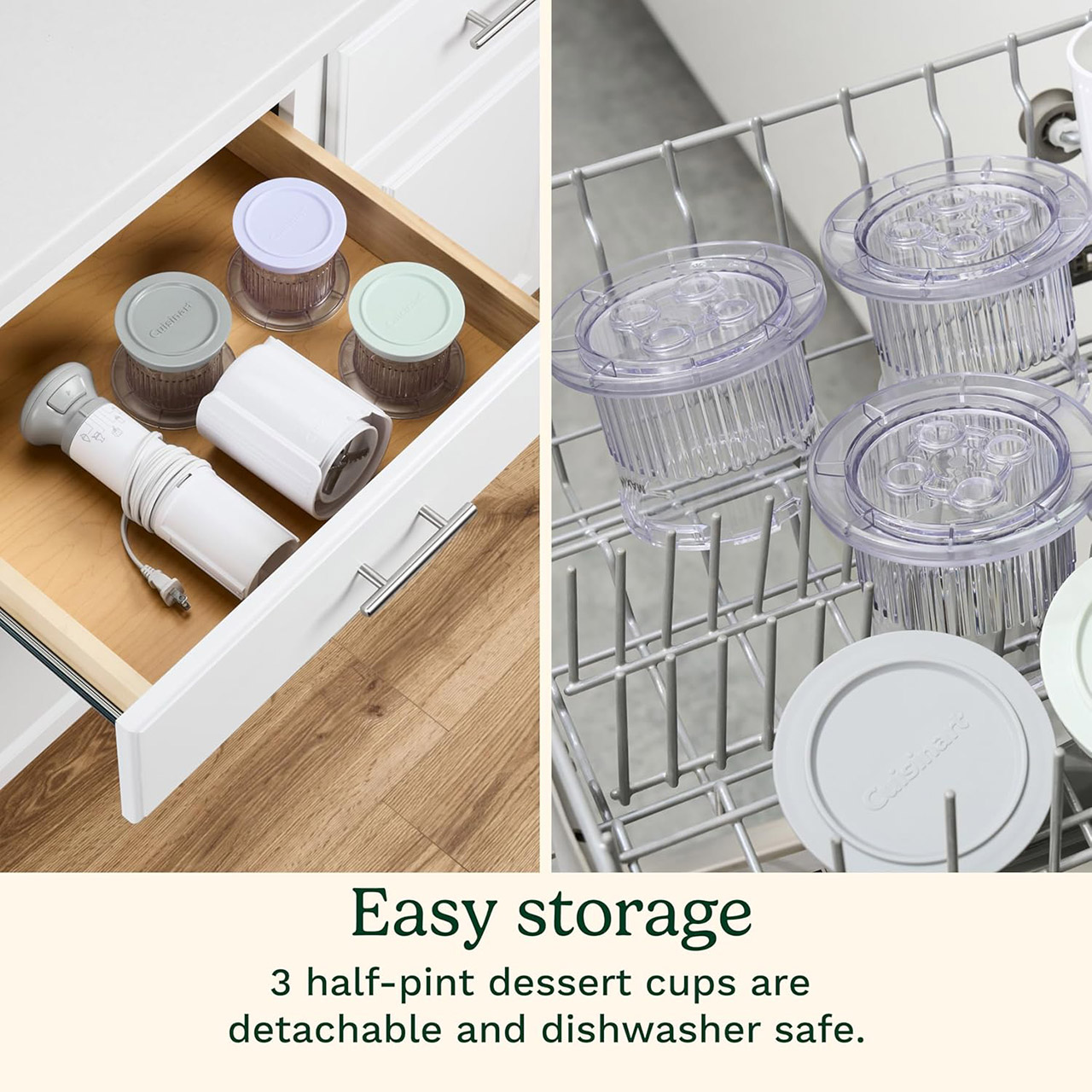
Storage is a breeze because the entire wand disassembles into pieces that go into the kitchen drawer among all of the other culinary tools. The cups stack nicely in the freezer and are then washed in the dishwasher, as all that is required to clean the blade is a brief rinse. The item is so quiet, it operates without even disturbing the area, unlike those large heavy machines that usually appear to be rumbling around.

CuisinArt FastFreeze Ice Cream Maker ICe-FD10
Customization is the name of the game with this device, especially if you don’t have much free time. Start with a mango and cream foundation, then add some actual mango chunks at the end to create a mango ice cream that tastes like it came directly from the shop. Want a post-workout treat that tastes like dessert? Throw in some protein powder and peanut butter, and you’re ready to go. Cookie dough and candy bits combine well without becoming damaged, and the half-pint size is ideal for experimenting with new combinations without committing to a whole recipe. Recipes in the manual or online suggestions will provide you with some inspiration to get you started, but you can also wing it with whatever you have in the cupboard and still come out with something wonderful.

CuisinArt FastFreeze Ice Cream Maker ICe-FD10
In terms of cost, it’s a no-brainer because it pays for itself quickly when you consider how much you’ll save on store-bought ice cream. A single store-bought pint might cost several dollars, whereas making your own allows you to use components you already have on hand. Over the course of a few weeks, the machine will have more than paid for itself simply by reducing impulse purchases and improving control over sugar and nutritional ingredients.

Advertisement

Source link

Continue Reading

Tech

Google Could Limit New Gmail Accounts to Only 5GB of Free Storage

Published

on

Google may cut the free storage for new Gmail accounts from 15GB to 5GB, according to a report from Android Authority. Those who want a storage upgrade from those 5GB accounts would need to provide a phone number to Google to unlock the extra gigabytes.

A Google representative confirmed that it’s trying out new account options.

“We’re testing a new storage policy for new accounts created in select regions that will help us continue to provide a high-quality storage service to our users, while encouraging users to improve their account security and data recovery,” the representative said in a statement to CNET.

Advertisement

Typically, a verified phone number blocks multiaccount storage abuse and secures Google profiles with a reliable recovery method. Some online speculate that the move could also be a way for Google to encourage more people to subscribe to paid cloud storage plans under Google One. 

It’s unclear if the regions where this is being tested include the US. Android Authority reported that accounts with only 5GB of storage were primarily in African countries.

Google has been expanding the tiers of paid accounts it offers, combining Gemini AI features into bundles. It recently added three new tiers focused on AI features, starting at $8 a month with 200GB of storage included.

Google’s storage space

When Gmail debuted in 2004, it offered users a full 1GB of storage, which fundamentally changed the way many people used email: They could keep everything and search for what they needed. 

Advertisement

The next year, Google doubled the amount of free storage to 2GB. The storage kept ticking up, to 7GB, then 10GB and finally to 15GB in 2013, when Google Drive, Google Phones and Gmail merged into a shared pool of data for users.

Why did Google do it? In 2013, CNET wrote: “Google — as we all know — is in the business of making money. If Google is offering you more storage, then there is something that extra storage helps you do that will help Google make more money.”

One reason Gmail succeeded over other email services in the early days was lowering the barrier to entry, as Google increased free access to services across the platform, making it less likely that customers would leave for competitors.

These days, Google is battling its competitors on the AI front, which explains why it’s increasingly bundling Gemini AI features with the email, photo and document services users have come to depend on.

Advertisement

Source link

Continue Reading

Tech

AMD Is Bringing Improved FSR 4 Upscaling To Its Older GPUs

Published

on

AMD says FSR 4.1 will finally bring its newer hardware-accelerated upscaling technology to older Radeon GPUs. “The rollout will begin in July with RDNA3- and 3.5-based GPUs, which include the Radeon RX 7000 series, as well as integrated GPUs like the Radeon 890M and Radeon 8060S,” reports Ars Technica. “In ‘early 2027,’ support will also be extended to the RDNA2 architecture, which includes the Radeon RX 6000 series, integrated GPUs like the Radeon 680M, and the Steam Deck’s GPU. This would also open the door to supporting FSR 4 on the PlayStation 5 and Xbox Series X and S, all of which also use RDNA2-based GPUs.” From the report: [AMD Computing and Graphics SVP Jack Huynh’s] short video presentation didn’t get into performance comparisons, but did mention that AMD had to work to get FSR 4’s superior hardware-backed upscaling working on its older graphics architectures. RDNA4 includes AI accelerators that support the FP8 data format in the hardware, and porting FSR 4 to older GPUs meant getting it running on the integer-based INT8 hardware in the RDNA3 and RDNA2-based GPUs.

This may mean that FSR 4.1 running on an RDNA3 or RDNA2-based GPU may come with a larger performance hit relative to RDNA4 cards, or that image quality may differ slightly. Modders have already worked to get FSR4 working on INT8-supporting GPUs, and the older GPUs reportedly see a 10 to 20 percent performance hit relative to FSR 3.1 running on the same hardware. AMD’s official implementation may or may not improve on these numbers.

[…] Any games that support FSR 4 should be able to support FSR 4.1 running on Radeon 7000-series cards; users will presumably be able to install a driver update in July that enables the new feature. Games that support the older FSR 3.1 can also be forced to use FSR 4 in the Radeon graphics driver.

Source link

Advertisement
Continue Reading

Tech

In 2026, what medtech skills will empower you to face the future head on?

Published

on

The medtech space, like most STEM fields, has evolved exponentially, so what skills might help you keep your head above water?

The medtech space is incredibly diverse with careers in a range of areas, with many requiring unique skills or a resume of cross-compatible abilities. That is to say, it can be difficult as a student selecting a college course, or indeed a graduate looking at post-bachelor degrees, to identify the skills most suited to a future career in the medtech industry.

Well SiliconRepublic.com is here to help. While this list is by no means exhaustive, it will give you an idea of some of the skills you should prioritise if you want to develop a broad range of abilities in an ever-evolving and highly skilled field. Without further ado, here are some of the most crucial skills in any medtech career.

Regulation

It is fair to say that regardless of which aspect of medtech you specialise in, or which avenue your professional life goes down, you are going to require a degree of knowledge in how the sector is regulated. The regulatory landscape is undergoing significant transformation as evolving frameworks in Europe and the US make an impact.

Advertisement

EUDAMED, the European Database on Medical Devices, is set to come into effect in late May and is just one of the critical frameworks students and professionals in this area will have to become familiar with. 

Europe is also in the process of revising its Medical Device Regulation and In Vitro Diagnostic Regulation policies, a task that began in late 2025.

The point is, medical frameworks and requirements are always going to be subject to revision and change. To that point, it’s the job of a professional in this space not just to understand the rules that govern their own country, but to have a greater understanding of the global ecosystem.

AI and automation

To what extent AI and automation are going to play a role in modern-day healthcare is unclear. Some would say it will only be used when needed and others would argue that it is becoming a significant element of the medtech scene. Regardless of where you fall between the two schools of thought, knowing how to wield AI and automation in healthcare is undoubtedly a useful and potentially necessary addition to a medtech skillset.

Advertisement

Since its inception, AI and automated technologies have been used to create wearables that monitor health, accelerate drug discovery and administer treatments and therapies for conditions that impact quality of life.

People considering a career that amalgamates AI, medtech and entrepreneurship could benefit from researching how AI impacts the medtech space, the application of AI for medical devices, how to bring a device to market and commercialisation. For the more technical experience, an understanding of robotics, automation, engineering and programming languages will be crucial. 

Quantum

To what extent quantum might impact the medtech space is also up for debate, as the field is still in some parts theoretical. But what is not theoretical is that quantum computing has the potential to address many of the globe’s most pressing health-related challenges, in that it could accelerate drug discovery, improve diagnostics, personalise treatment and aid research far more quickly than current methods allow.

With that in mind skills in this space could certainly give a student or professional an edge when it comes time to secure a position or further a career.

Advertisement

If this sounds like an opportunity you would be interested in, start studying quantum mechanics, quantum computing, quantum-related cybersecurity and ensure you have a strong understanding of both the ethics involved and any regulation covering quantum and the medtech space. A basis in maths and physics is also going to be a great help. Quantum is in some ways a new frontier for STEM professionals, so this is certainly a skill worthy of a future-focused, adventurous and ambitious person. 

Soft skills

You can’t talk about cross-functional skills without mentioning soft skills. You may not think soft skills rank as highly as technical abilities when it comes to preparing for a future career, but you would be wrong.

Skills that empower communication, that advance learning, that establish and build upon networks, that create opportunities for you in competitive landscapes, are immensely valuable and should not be overlooked.

In the medtech sector, employers will likely value employees who can work independently but also work as part of a team, they will prize presentation skills and acknowledge those who can contribute not just to the research, but to the wider team as a motivator and leader. So don’t neglect soft skills as you become a technical wizard. 

Advertisement

Don’t miss out on the knowledge you need to succeed. Sign up for the Daily Brief, Silicon Republic’s digest of need-to-know sci-tech news.

Source link

Advertisement
Continue Reading

Trending

Copyright © 2025