

Crypto World
Meme mogul James Wynn says the easy-money era is over for memecoins

High-leverage trader James Wynn has declared that the “lottery ticket” phase of memecoins is finished, arguing the sector is now saturated and structurally tilted toward insiders at the top.
Summary
- Wynn says memecoins are “dead” as a once-in-a-lifetime niche gives way to saturated markets and diluted market caps.
- Critics note Wynn made and lost nearly $100 million on high-leverage bets before calling time on the sector.
- On-chain and market data suggest not a disappearance of memecoins, but a brutal survival-of-the-fittest regime.
James Wynn, the hyper-leveraged crypto trader who turned a roughly $7,000 bet on Pepe (PEPE) into about $25 million before later losing close to $100 million on Bitcoin and meme coin positions, now says the memecoin dream is effectively over. In a post on X to his more than 36,000 followers, Wynn wrote, “I’m pretty sure meme coins are dead, I’m pretty confident they’ll never really come back,” arguing that what “was once a niche of a lifetime if you lived through it from 2017-2024” has been saturated by supply and financialized extraction.
He claimed that going from “a few K into a million dollars is like winning the lottery now. Borderline impossible,” framing today’s memecoin landscape as a system where “they’ll all supply controlled (yes needed), but ultimately just profit making machines for people at the top.” Wynn’s pivot comes less than a year after he allegedly amassed between $80 million and $87 million through aggressive, 20x–40x leveraged trades on Hyperliquid, at one point running a 40x Bitcoin long worth roughly $1.25 billion that briefly showed around $100 million in unrealized profit before cascading liquidations erased nearly the entire haul.
Wynn’s rise, crash, and backlash
Wynn first rose to prominence in 2023 as a “high-risk leverage trader and memecoin maxi,” after parlaying a small PEPE position into tens of millions of dollars and then recycling those gains into even larger directional bets. According to reporting on his trades, he built his fortune on the very dynamics he now criticizes: thin-liquidity tokens, community-driven hype, and reflexive leverage that could push valuations from under $10 billion toward the $100 billion range for the wider memecoin sector in a single cycle.
In May 2025, Wynn’s luck turned violently. After opening a massive 40x Bitcoin long with an entry near $107,993, his position was progressively liquidated as BTC slid below $106,330 and then toward $104,150, crystallizing losses that reports put at nearly $100 million in less than a week and marking one of the largest documented on-chain trading wipeouts. Crypto.news later detailed how, despite losing almost $100 million, Wynn quickly returned to Hyperliquid, selling about $4.12 million in Hyperliquid (HYPE) tokens and re-entering with a new 945 BTC long using 40x leverage, a position sized around $99.7 million at the time.
Community reaction to his latest comments has been sharply divided. One X user, posting under the handle @0xVengeanceArab, dismissed Wynn’s comments by referencing alleged $25 million liquidations and multiple rug-like meme launches, telling him to “just shut fuck up,” while another, @wocknottriss, wrote that the trader has “been wrong about everything in the past 11 months,” calling his bearishness on memes a contrarian bullish signal.
Traders and builders active in the space argue that what has died is not memecoins themselves, but the uniquely forgiving market structure that allowed near-random tickets to 100x with minimal diligence. An account named Pump Research wrote in reply that “Memecoins aren’t dead, the easy money phase is,” adding that “what’s dying is low-quality launches with no community” while “projects with real holders who actually believe and stick around” are the ones surviving as capital gets choosier.
Analysts tracking the sector describe exactly that polarization. Research highlighted by 0x资讯 suggests that while total meme coin market capitalization climbed from around $20 billion in 2024 to as high as a projected $140 billion, the spoils have concentrated into a handful of blue-chip names like Dogecoin (DOGE), Shiba Inu (SHIB), and PEPE, with large numbers of low-quality tokens effectively zeroed out. Crypto.news has likewise chronicled how Dogecoin’s market cap alone punched through $60 billion during the last cycle as it rallied to roughly $0.428, cementing DOGE as a structural large-cap asset even as smaller memes came and went.
Even within PEPE, where Wynn first achieved notoriety, recent coverage shows a more mature, range-bound market rather than a casino where any wallet can spin a $7,000 ticket into life-changing wealth. As of early 2026, PEPE has traded near $0.0000043, down roughly 64% over the year but still supported by around $600 million in 24-hour volume, with technical setups focused on incremental mean reversion instead of parabolic blow-offs.
Other commentators see structural changes in token design as the final blow to the old memecoin fantasy. As one account, @yourr_finans, put it, going from “2,000 to 1 million tokens did more damage than any bear market,” with “lottery odds” moving from improbable to “actual lottery odds” as supply structures and launch mechanics were optimized to extract value for insiders while stapling tokens to nominal “utility.”
For Wynn, the conclusion is that the sector “needs to evolve into something else,” even if he admits he doesn’t yet know what form that next speculative meta will take. Whether that future belongs to DOGE-scale brands, utility-wrapped memes, or entirely new cultural formats, the one constant is that the free lunch he and others feasted on from 2017 to 2024 is gone—and that the people now calling memecoins “dead” are often the same ones who helped build, and then break, the game.
In previous crypto.news coverage, the site profiled Wynn as “crypto’s boldest whale,” detailing his $1.1 billion Bitcoin perp bet on Hyperliquid and Moonpig (MOONPIG) punts that pushed the token’s market cap to about $80 million during one of its spikes. Another crypto.news report documented how Wynn’s side wallet later dumped roughly 10.9 million MOONPIG tokens worth about $120,000, underscoring the reflexive, whale-driven flows that have come to define the memecoin economy he now declares finished.


Iran has declared the Strait of Hormuz closed after the US launched additional strikes on Thursday.
The Iranian military command announced the closure of the key waterway, saying any vessel attempting passage will be shot at, according to Reuters.
US Central Command (CENTCOM) reported that it had launched strikes on Iranian military surveillance capabilities, communication systems, and air defense sites across the country.
“The strikes are in response to Iran’s unwarranted and continued aggression. US forces remain vigilant, lethal, and ready,” it stated on Thursday.
The news caused crude oil prices to rise more than 2.5%, with WTI hitting $93.50 per barrel and Brent crude topping $95, further pressuring global energy prices.
CPI Print Adds to Headwinds
The US Consumer Price Index rose to 4.2%, its highest level for three years, on Thursday as inflation continues to climb.
The inflation surge has derailed expectations that the Federal Reserve would cut rates this year, and analysts are now preparing for a rate hike.
“This pretty much cements ‘higher for longer’ with even modest hike risk later this year under new Chair Warsh, keeping real yields elevated, the dollar stronger, and liquidity tighter,” said Andri Fauzan Adziima, research lead at Bitrue Research Institute.
“As a result, BTC feels fragile near $62K, still behaving like high-beta tech rather than a true hedge, while gold faces some near-term pressure despite its longer-term inflation appeal.”
Nevertheless, permabull “Sykodelic” said that long-term holders have “never had this much conviction,” because they now hold the highest ever amount at over 16.5 million BTC despite almost half being underwater.
What this data shows us is that long-term holders have added more than ever, and are happy to hold in loss, he said.
“After several heavy sell-offs on Bitcoin, it’s very likely we have reached the point that it’s only the truly convicted left.”
Longterm holders have never had this much conviction.
And they have also never been in this deep of a loss across the board.
Bitcoin longterm holders now hold the most amount ever, at over 16.5m Bitcoins.
And almost half of those coins are in loss, at the largest amount ever,… pic.twitter.com/CweqStF6pD
— Sykodelic
(@Sykodelic_) June 10, 2026
Crypto Market Outlook
However, the short-term crypto market outlook isn’t good.
While there has been no immediate reaction to the latest escalations in the Middle East, prospects of recovery over the next few months are diminishing.
Total capitalization is at roughly $2.2 trillion, near the lows last seen in October 2024.
Bitcoin dropped below $61,000 on Wednesday but recovered to top $62,000 during Thursday morning Asian trading. However, the path of least resistance for BTC and its brethren is down.
The post Bitcoin Fragile at $62K as Iran Closes Strait of Hormuz, US Inflation Hits 3-Year High appeared first on CryptoPotato.


Ethena Labs has named Anchorage Digital — the only federally chartered crypto bank in the U.S. — as the collateral manager for its institutional lending business, the two companies said in a joint announcement Tuesday. Borrower collateral will sit inside Anchorage's regulated custody framework… Read the full story at The Defiant

Kristin Smith, CEO of the Solana Institute, is pushing the Senate to pass the CLARITY Act with its open-source developer protections fully intact, arguing that validators, non-custodial wallet providers, and software maintainers who do not control user funds should not be classified as financial intermediaries or money transmitters under federal law.
Smith made the case in a thread on X, saying the bill “has a real shot at passing the Senate”, but only if the protective language survives the floor process.
1/ The Clarity Act has a real shot at passing the Senate. — Kristin Smith (@KristinSmith) June 9, 2026
Getting it right means protecting the developers who build public blockchains. Getting it wrong risks pushing them – and the future of this technology – offshore.
The CLARITY Act cleared the Senate Banking Committee 15–9 in May 2026, with two Democrats joining Republicans, and has since been placed on the Senate Legislative Calendar with a potential floor vote expected later this summer.
More than 60 crypto CEOs and founders signed an open letter backing the developer protections, including Solana co-founder Anatoly Yakovenko, Coinbase, a16z crypto, Uniswap, Kraken, Paradigm, and Ledger, an unusually broad coalition spanning exchanges, venture firms, and protocol builders.
Smith has described the coming weeks as make-or-break for securing a vote before the August recess.
Discover: The Best Crypto to Diversify Your Portfolio
CLARITY Act: What Smith Is Actually Asking the Senate to Preserve
Smith’s core argument is a structural one. Open-source developers, validators, and non-custodial wallet providers do not take custody of user funds, do not execute transactions on behalf of users, and exercise no control over how their published code is used.
Treating them as brokers or custodians, or worse, money transmitters under 18 U.S.C. § 1960, would impose financial intermediary obligations on actors who are, in practice, publishing software and maintaining infrastructure.
That is the classification problem Smith wants the Senate to close.
The vehicle for doing so is the Blockchain Regulatory Certainty Act (BRCA), introduced in January 2026 by Senators Cynthia Lummis and Ron Wyden as a bipartisan proposal to codify FinCEN’s 2019 guidance distinguishing software developers from custodial money transmitters.
The BRCA is folded into the CLARITY Act as Section 604, alongside Section 601, which carves out developers from SEC registration requirements. Both provisions are now central bargaining points, not peripheral language.
The stakes of weakening this language are concrete. Without explicit protections, open-source library developers, validator operators, and teams behind non-custodial wallets like Phantom could face liability exposure solely for publishing code, the same legal theory that drove the prosecution of Tornado Cash developer Roman Storm and that has already pushed some builders offshore.
SEC Commissioner Hester Peirce has publicly argued that publishing open-source blockchain code is a protected First Amendment activity and should not automatically create intermediary status, framing that aligns directly with Smith’s Senate push.
The concern for crypto regulation broadly is that, absent clear statutory language, enforcement discretion fills the gap, and discretion is not a compliance standard.
The post Solana Institute CEO Pushes Senate to Pass CLARITY Act With Open-Source Protections appeared first on Cryptonews.

[PRESS RELEASE – Willemstad, Curaçao, June 11th, 2026]
1win is inviting users to compete for a total of 5,000,000 USDT in rewards during the FIFA World Cup 2026. The new Football World Cup tournament by 1win will run between June 11 and July 19, 2026, allowing thousands of users to compete for prizes while enjoying the biggest football event of the year.
In the Football World Cup tournament, registered users can participate in online games and place bets on their favorite teams to compete for rewards of up to 500,000 USDT for top-ranked players. With a total prize pool of 5,000,000 USDT, thousands of participants will have the opportunity to win prizes based on their positions on the leaderboard.
How to Participate
- A minimum bet of 1 USDT (or the equivalent in the account currency) with odds of 1.5 or higher on any FIFA World Cup 2026 match is required.
- Points continue to accumulate through eligible games or qualifying sports bets.
- The leaderboard determines rankings and eligibility for rewards.
Points are awarded based on wager amounts and tournament multipliers. The more points a user earns, the higher their position on the leaderboard.
The Football World Cup tournament is available in selected regions where 1win services are offered, and participation is permitted by local laws and regulations. Regional restrictions apply to users from Australia, the United Kingdom, Hong Kong, Israel, Iran, Kazakhstan, Malaysia, North Korea, Singapore, the United States, Taiwan, and the Philippines.
Winners will be announced no later than August 7, 2026, following the completion of the tournament and verification of results. Full tournament rules, participation requirements, prize distribution details, and applicable restrictions are available on the official 1win website.
About 1win
Founded in 2016, 1win is a global crypto-focused online entertainment platform. 1win offers a wide range of gaming products adapted to regional audiences. The brand has active collaborations with international public figures, including actor Johnny Sins, martial artist Jon Jones, and Olympic champion and UFC fighter Gable Steveson. In 2026, 1win welcomed UFC champion Ilia Topuria and rapper Tyga as new members of the 1win VIP community.
The post Football, Crypto and $5 Million of Rewards in 1win’s World Cup Mega Tournament appeared first on CryptoPotato.
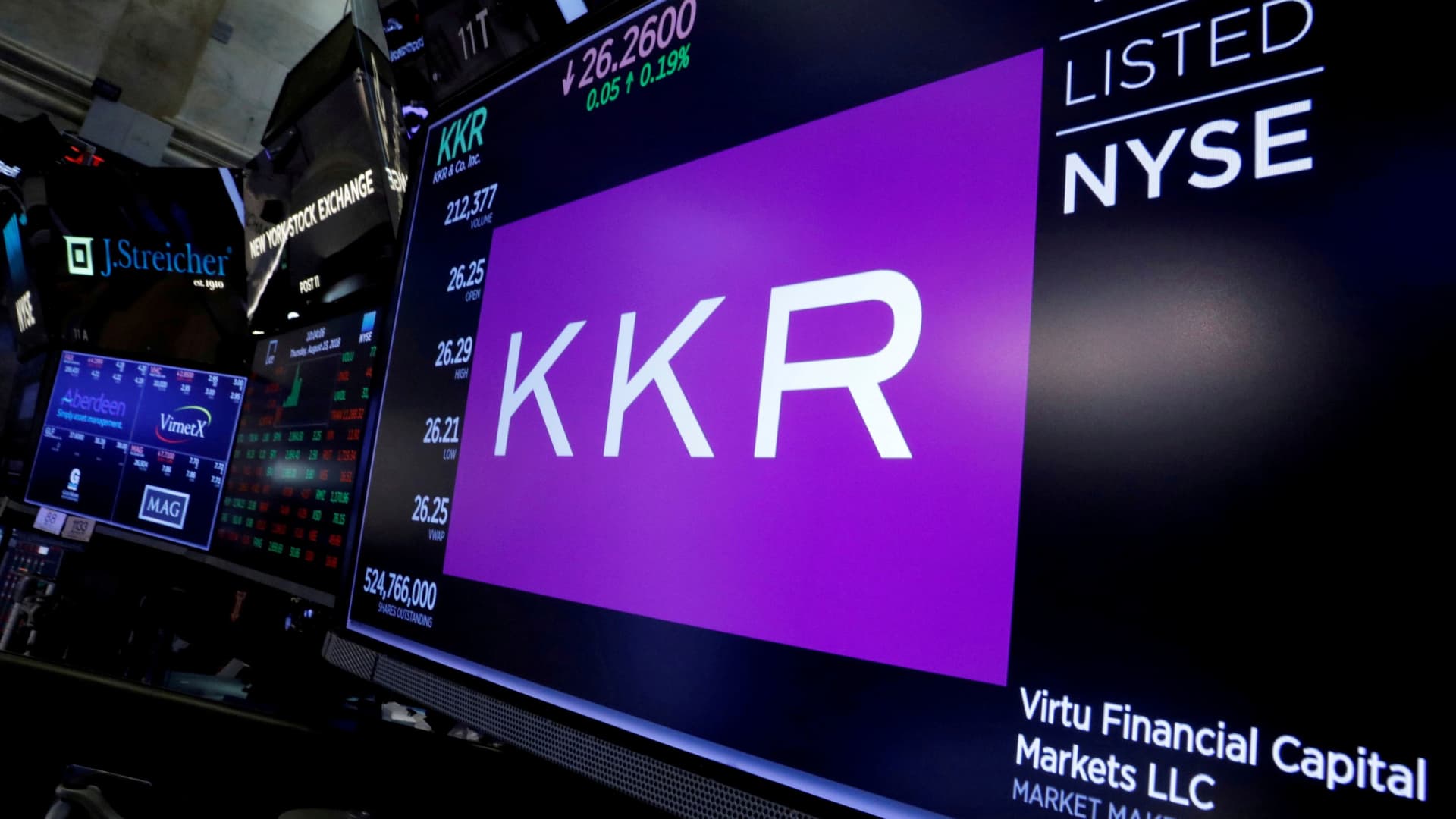
A KKR logo displayed on the floor of the New York Stock Exchange on Aug. 23, 2018.
Brendan McDermid | Reuters
U.S.-based investment giant KKR expects the AI-driven productivity boom is only just getting started, but said it could mean growth is concentrated in just a few sectors.
That’s according to the firm’s mid-year report distributed Thursday.
While AI-driven productivity gains will play out in coming years, “the offset is that intensifying strategic competition will likely make economic growth more concentrated across fewer industries and, at times, more extreme than anything we have seen since the start of the second industrial revolution in the 1870s,” wrote Henry H. McVey, head of global macro and asset allocation and CIO of KKR balance sheet.
McVey described an investing landscape where some parts of the economy and markets are “starved,” while others are “flush.” Technology, high-end services and government spending are areas of “enormously concentrated” growth, he noted.
KKR said the defense and power sectors are the most likely winners when it looked at broader long-term trends. “There is a broad-based and growing focus on the security and resiliency of supply chains across nations and industries, despite higher costs for inputs,” the report said.
Here are three of McVey’s other key takeaways for investors:
Asia will continue to outperform in public and private markets
“We think Japan and Korea still look cheap, as earnings are likely to surprise on the upside in both 2026 and 2027,” McVey said. He noted China’s property drag is the main reason KKR still isn’t overly optimistic on the country’s assets.
Chinese yuan strengthens
However, KKR forecasts the Chinese currency will strengthen as the U.S. dollar peaks, with a forecast of about 6.5 yuan per greenback by 2027.
Wheat
“Agriculture is increasingly joining energy security, defense, and critical minerals as a strategic, policy-backed sector likely to attract sustained investment,” McVey said, noting the USDA forecasts U.S. wheat production for 2026 to 2027 will be the lowest since 1972, with prices rising to three-year highs.
The New York State Department of Financial Services and the European Banking Authority signed a memorandum of understanding on Tuesday establishing the first formal supervisory information-sharing channel between the regulator that licenses the largest US dollar stablecoin issuers and the EU… Read the full story at The Defiant
Jesse of Apex Crypto is in the news as he argues that XRP is being deliberately held down in price. His primary exhibit is a 2021 Citibank document that originally used the phrase “Regulated Internet of Value” before the terminology was quietly shifted to “Regulated Liability Network.” According to him, this change was made because the original wording made the connection to Ripple too obvious.
XRP’s price history gives the argument its surface credibility. The token reached $3.84 during the 2018 bull run and touched $3.60 earlier in the current cycle. Between those two peaks, it spent the better part of a decade moving sideways while Bitcoin compounded far higher.

For a token with Ripple’s institutional reach and the Interledger Protocol’s design ambitions, this flat trajectory is, at minimum, a question worth asking. The Regulated Liability Network, as described by Citibank’s Tony McLaughlin, is a shared ledger framework for tokenized bank deposits. It’s a concept that sits structurally close to what Ripple has been building toward since the company’s founding.
Discover: The Best Crypto to Diversify Your Portfolio
Beyond XRP News: The Citibank Document and the Institutional Incentive Logic
Jesse’s argument runs as a causal chain: Citibank published a 2021 document using the “Regulated Internet of Value” phrase that maps directly onto Ripple’s own Internet of Value thesis and the Interledger Protocol. Later, Citi reissued the concept under the name “Regulated Liability Network,” stripping the Ripple association in the process.
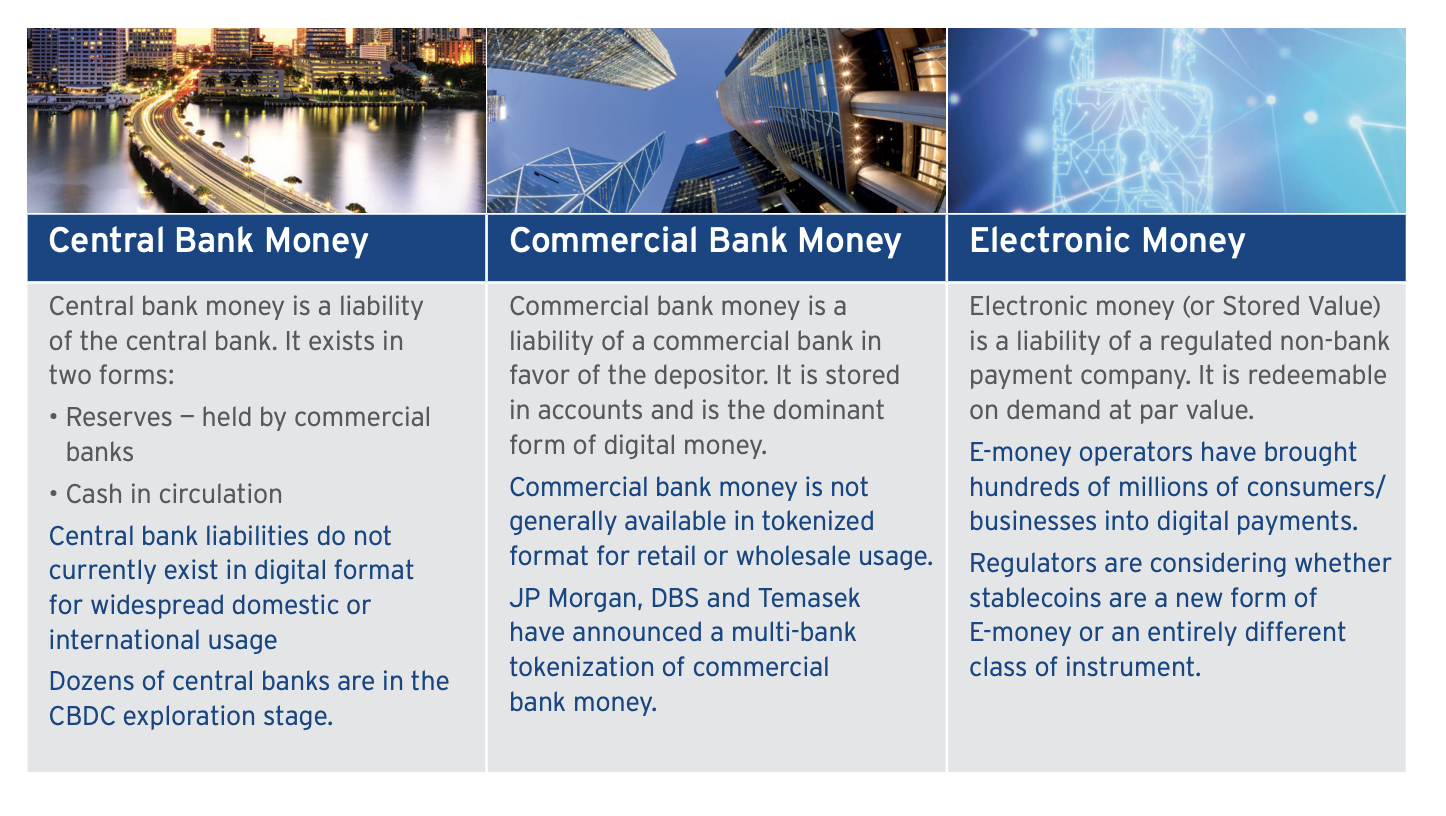
The chain extends further. McLaughlin has publicly described the Regulated Liability Network and the shared ledger concept as the same idea. The Bank for International Settlements has separately discussed a unified ledger architecture that could replace correspondent banking infrastructure and eventually displace SWIFT as the backbone of cross-border settlement.
Jesse’s logic: if XRP or a derivative of Ripple’s protocol sits underneath that infrastructure, the last thing institutional architects want is a wildly volatile asset.
Ripple CEO Brad Garlinghouse has publicly stated in the news that XRP multi-billion-dollar daily volume makes it too liquid for any single entity to control, and Ripple CTO David Schwartz has pointed out that XRP’s performance tracks other large-cap altcoins.
— STEPH IS CRYPTO (@Steph_iscrypto) December 20, 2025
 BREAKING:
RIPPLE CEO BRAD GARLINGHOUSE: “NOBODY IS IN A POSITION TO MANIPULATE $XRP PRICES.” pic.twitter.com/p511UTtR3S
Crucially, the SEC’s roughly 18-month investigation before its 2020 enforcement action produced no findings of price manipulation by Ripple. Jesse does not present hard evidence of coordinated suppression; his case rests on document interpretation and circumstantial institutional linkages, not disclosed trading records or regulatory filings.
The question, as Jesse himself frames it, remains unresolved. But the crypto research community has taken note: pattern-matching between institutional settlement infrastructure and XRP’s decade of flat performance is no longer a fringe exercise.
Discover: The Best Token Presales
The post XRP News: Price Being Suppressed? Researcher Reveals Why Ripple Token Isn’t Soaring appeared first on Cryptonews.

TLDR:
- Senate negotiators failed to resolve a major ethics dispute tied to the Clarity Act this week.
- White House officials met law enforcement groups over concerns about blockchain crime enforcement.
- Democratic support hinges on stronger ethics provisions linked to Trump’s crypto ventures.
- House lawmakers reviewed crypto tax reforms as Congress races against a tight calendar.
The Senate’s push to advance the Clarity Act encountered fresh resistance this week as lawmakers failed to resolve a key ethics dispute tied to the legislation. Negotiators left a closed-door meeting without an agreement, raising new questions about the bill’s path to a floor vote.
At the same time, the White House stepped up efforts to address concerns from law enforcement organizations. The developments arrive as Congress faces a shrinking legislative window before the August recess.
Clarity Act Ethics Debate Delays Senate Progress
A bipartisan group of senators met Tuesday alongside White House Crypto Council Executive Director Patrick Witt to revisit an ethics agreement discussed before the Senate Banking Committee markup in May.
The talks included Senators Kirsten Gillibrand, Ruben Gallego, Bernie Moreno, and Cynthia Lummis. However, participants failed to reach a new consensus.
According to reporting cited by Eleanor Terrett and Crypto In America, Republicans and White House officials withdrew support for parts of a tentative agreement discussed earlier.
One disputed provision would have allowed state attorneys general to challenge the Department of Justice over failures to enforce ethics rules involving President Donald Trump.
Republican negotiators raised concerns that the mechanism could create broader legal risks for members of Congress. Legal questions also emerged regarding whether state officials could compel federal enforcement actions.
Democratic lawmakers viewed the revisions as a departure from previous discussions. As a result, negotiations ended without a breakthrough, and participants reportedly described the process as difficult.
The negotiating group plans to meet again Thursday. Ethics provisions remain a central issue for Democrats seeking stronger safeguards related to Trump’s crypto business interests.
Clarity Act Law Enforcement and Crypto Tax Issues Gain Focus
Beyond ethics concerns, lawmakers continue to debate how the Clarity Act could affect criminal investigations involving blockchain technology.
The White House Crypto Council scheduled a meeting with representatives from the National Sheriffs’ Association, Fraternal Order of Police, National District Attorneys’ Association, and federal agencies.
Discussions will focus on Section 604, also known as the Blockchain Regulatory Certainty Act. The provision seeks to clarify that non-custodial software developers are not responsible for third-party misuse of their code unless they intentionally support illegal activity.
Some law enforcement groups fear the language could complicate efforts to pursue criminals operating through blockchain networks. Administration officials plan to argue that existing enforcement tools would remain intact.
Support from law enforcement remains critical. Senators Mark Warner and Catherine Cortez Masto have indicated that unresolved enforcement concerns could affect support for the legislation.
Meanwhile, the House Ways and Means Committee turned its attention to crypto taxes. During a hearing Tuesday, lawmakers reviewed six Republican-backed bills and a discussion draft covering digital asset taxation.
The proposals address mining rewards, staking income, reporting requirements, crypto donations, tax treatment parity, and disclosure programs. Industry participants welcomed several measures but noted the absence of a de minimis exemption for small Bitcoin transactions.
With only 31 Senate session days remaining before the August recess, lawmakers face increasing pressure to resolve both regulatory and tax issues tied to the broader crypto framework.



The Federal Reserve, the Office of the Comptroller of the Currency and the Federal Deposit Insurance Corporation on Tuesday jointly reissued 15 interagency supervisory documents with every reference to "reputation risk" stripped out — the latest piece of a methodical Trump-era dismantling of the… Read the full story at The Defiant


Crypto caught a modest bid on Thursday after Wednesday’s inflation report showed underlying price pressures staying contained. Bitcoin rose about 1.9% over 24 hours to roughly $62,600, leading the majors, per CoinDesk data.
Headline inflation rose 0.5% on the month and 4.2% over the year, the fastest annual pace since April 2023, but energy did most of the work, climbing 3.9% on the month and accounting for more than 60% of the increase as oil rose on the Iran conflict.
Core inflation, which strips out food and energy and is the gauge the Federal Reserve leans on, rose just 0.2% on the month, below the 0.3% forecast, and 2.9% over the year.
The bounce is shallow and concentrated in bitcoin. BTC is down less than 1% over the past seven days, holding its 200-week average, while the rest of the top tokens remain deep in the red on the week. Ether is off about 6.5% at roughly $1,651, XRP down 7.5% near $1.12, Solana down 7.4% around $65, and dogecoin off 7%. BNB held up better at a 2.1% weekly loss.
Traders now await Fed’s June 17 meeting, where markets expect no change to rates. The hot headline gives hawks cover to stay restrictive, while the soft core gives doves room to argue the pressure is narrow and energy-driven.
Another widely-cited catalyst is the public offering of Elon Musk-owned satellite, rockets and AI company SpaceX, which prices later Thursday and is expected to start trading on Friday at a $1.8 trillion valuation.
Shares for the company are already four times oversubscribed, with some singular entities bidding as much as $10 billion for the stock, per Bloomberg.
Bitcoin Fragile at $62K as Iran Closes Strait of Hormuz, US Inflation Hits 3-Year High

What Time Does Love Island USA Air? Season 8 Release Schedule

Financial and Investment Tips #financialplanning #investmenttips #investmentstrategy

HarrisX Poll Found 52% of Registered Voters Support the CLARITY Act

BloFin War of Whales 2026 Grand Prix opens registration for $5M trading championship

Blockchain.com files with SEC for U.S. IPO
Financial and Investment Tips #financialplanning #investmenttips #investmentstrategy

Financial and Investment Tips #financialplanning #investmenttips #investmentstrategy #investmentstra

The Reality of Crypto ‘Wrench Attacks’ & Kidnapping @TheWeeklyByBitcoincom #gaming #cryptocurrency
-

 Fashion6 days ago
Weekend Open Thread: Evereve – Corporette.com
-
 Crypto World6 days ago
Jensen Huang Approves Samsung, SK Hynix, and Micron for NVIDIA (NVDA) HBM4 Memory Supply
-

 Crypto World3 days ago
Anatomy of the June crypto crash: Fed, Iran, Saylor
-
 Entertainment4 days ago
The Best Mystery Series of All Time Is Surging on Streaming 30 Years After It Ended
-

 NewsBeat3 days ago
Alexander Zverev wins the French Open to finally earn a 1st Grand Slam title
-

 Tech5 days ago
Suspicious Polyfill login prompts pop up on Toshiba, Muji websites
-
Crypto World4 days ago
Senator Cynthia Lummis Calls CLARITY Act the Most Consequential Financial Legislation of This Generation
-

 Tech6 days ago
Microsoft launches MXC, an OS-level sandbox for AI agents, with OpenAI and Nvidia already on board
-

 Tech4 days ago
Microsoft unveils seven homegrown AI models in new bid for ‘long term self-sufficiency’
-

 Business6 days ago
(VIDEO) Justin Bieber Delivers Surprise Happy Birthday Serenade to Diners at Los Angeles Mexican Restaurant
-
 Business4 days ago
The Pain Points Taking a Fragile Tech Rally Down a Notch
-
 Crypto World3 days ago
Eli Lilly (LLY) Stock Surges 4% Following Breakthrough Sleep Apnea Trial Results
-
Crypto World6 days ago
LBank Surpasses 25 Million Users Worldwide as AFA Partnership Continues to Drive Global Growth
-

 Tech5 days ago
Von der Leyen’s AI envoy pick draws conflict-of-interest fire
-

 Business3 days ago
High Stakes for Wembanyama as New York Pushes for 3-0 Lead
-

 Tech6 days ago
Meta steals a tactic from Tesla and builds data centers in tents
-

 Crypto World4 days ago
Trump’s AI Ownership Plan Could Benefit Anthropic at OpenAI’s Expense
-

 Tech5 days ago
Hackers now exploit SolarWinds Serv-U flaw to crash servers
-
 Sports2 days ago
Bangladesh beat Australia after 20 years in ODIs, register only their second win over six-time world champions | Cricket News
-

 Tech3 days ago
Notion restores access to Anthropic after service disruption
You must be logged in to post a comment Login