
Crypto World
Meta Targets Early September for Hatch, Its Consumer AI Agent

Meta Platforms is reportedly planning to launch a consumer AI agent, known internally as Hatch, within the coming weeks. Documents reviewed by The Information also show an October target for a new model, Watermelon.
The release anchors Chief Executive Mark Zuckerberg’s ambition to monetize Meta’s AI investments and diversify revenue. The AI spending has weighed substantially on the company’s cash flow.
Meta Plans Subscription AI Agent Hatch as It Seeks To Diversify Revenue
Meta has weighed a tiered subscription for Hatch, according to the documents. Premium access could cost up to $199.99 per month and include higher usage limits. The documents put the release in late August or early September.
The stakes show up in Meta’s own numbers. The firm reported $60.8 billion in second-quarter revenue. Advertising delivered $59.4 billion of that, more than 97% of the total.
Everything else is quite small. Reality Labs brought in $431 million, while other revenue reached $1.01 billion.
Meanwhile, the AI buildout continues to grow. Meta raised the floor of its 2026 capital expenditure range to $130 billion from $125 billion. The ceiling stayed at $145 billion.
Capital expenditures reached $31.08 billion in the quarter. Operating cash flow of $31.86 billion left just $784 million in free cash flow. The figure was $8.55 billion a year earlier.
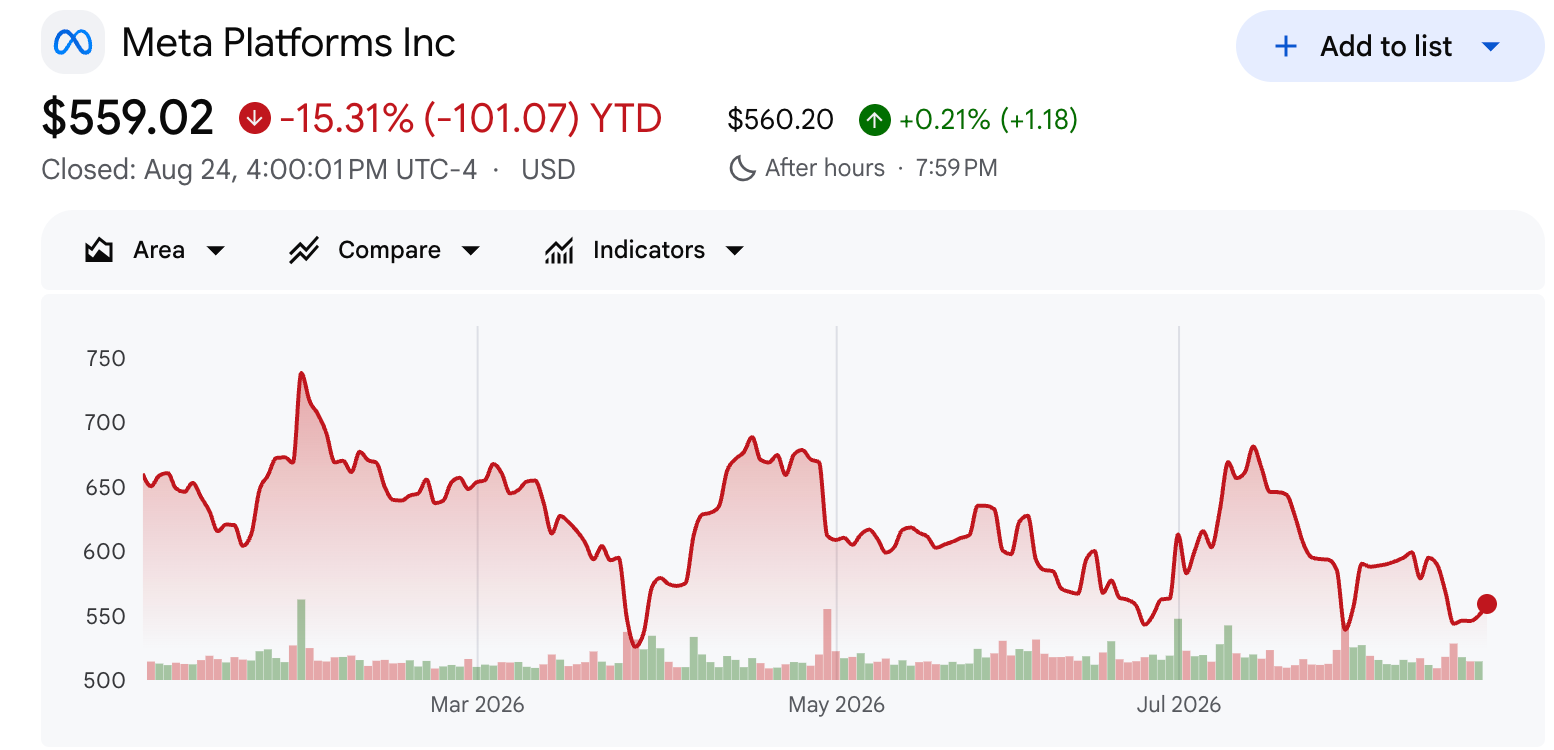
Investors have not rewarded the buildout so far. META closed Monday at $559.02, valuing the company at nearly $1.42 trillion, and the shares have fallen by over 15% this year.

A youth-safety trial in Oakland has also added pressure. Bank of America keeps a Buy rating and an $810 target. Mizuho is wary, comparing the case to the tobacco litigation of the 1990s.
Hatch would give Meta a consumer revenue line that does not depend on advertisers. Whether subscribers pay enough to matter against a $145 billion spending year is the open question.
Follow us on X to get the latest news as it happens
What Meta’s AI Agent Will Do
Hatch has been trained to work across DoorDash, Etsy, Reddit, Yelp, and Outlook. Early prototypes show a customizable dashboard featuring tools and skills created by AI agents.
Meta is also preparing a WhatsApp platform that lets users integrate and interact with third-party AI agents. The company could begin testing the platform with a limited group of users as soon as this week.
The company has shipped several models this year. Muse Spark arrived in April, version 1.1 in July, and version 1.2 alongside the Muse Code agent in August.
Whether Watermelon will join the Muse family remains unclear. Meta is estimated to report its third-quarter earnings on October 28, the same month Watermelon is due. Neither product will have had long to prove its economics by then.
Subscribe to our YouTube channel to watch leaders and journalists provide expert insights
The post Meta Targets Early September for Hatch, Its Consumer AI Agent appeared first on BeInCrypto.

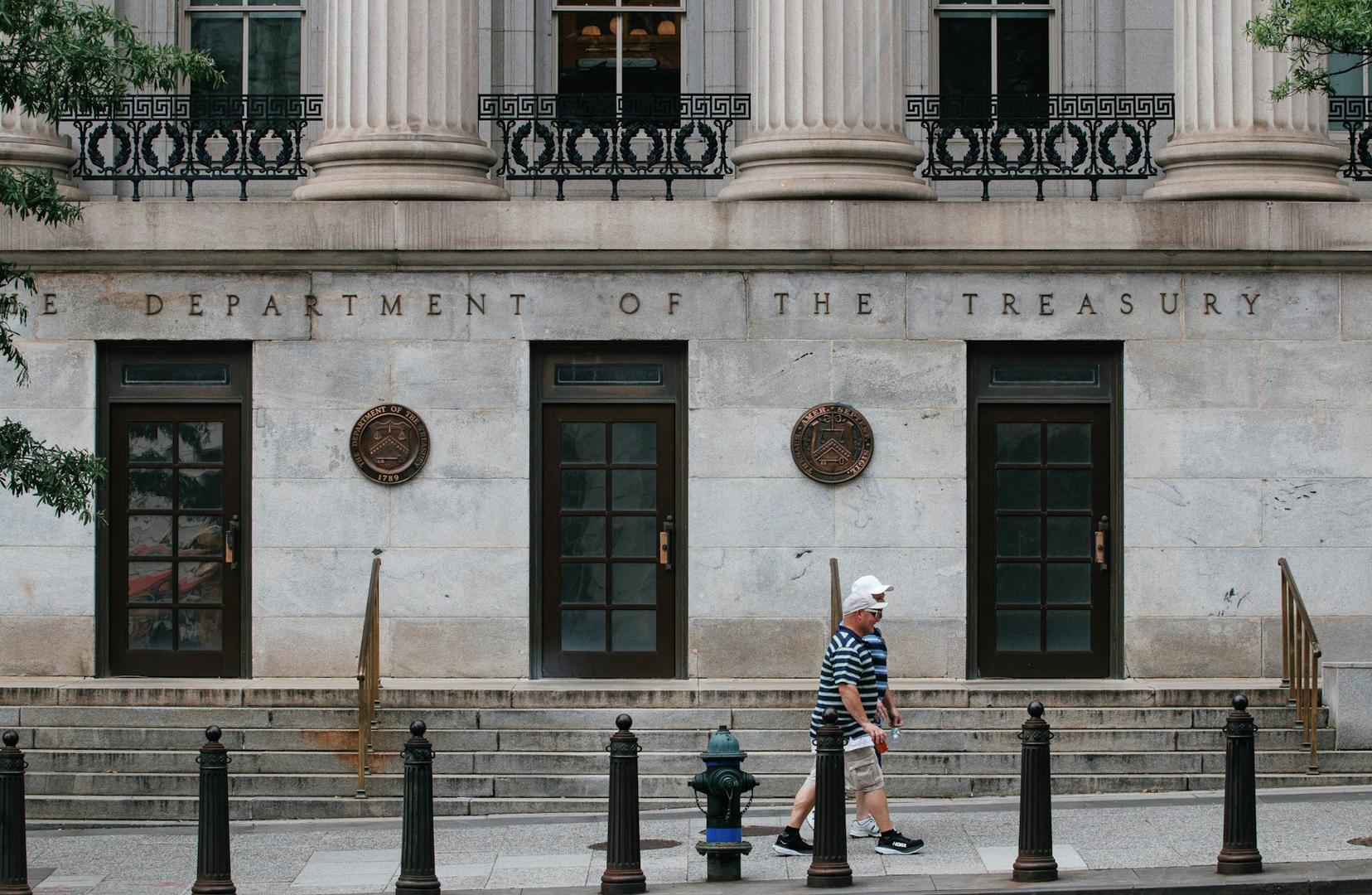
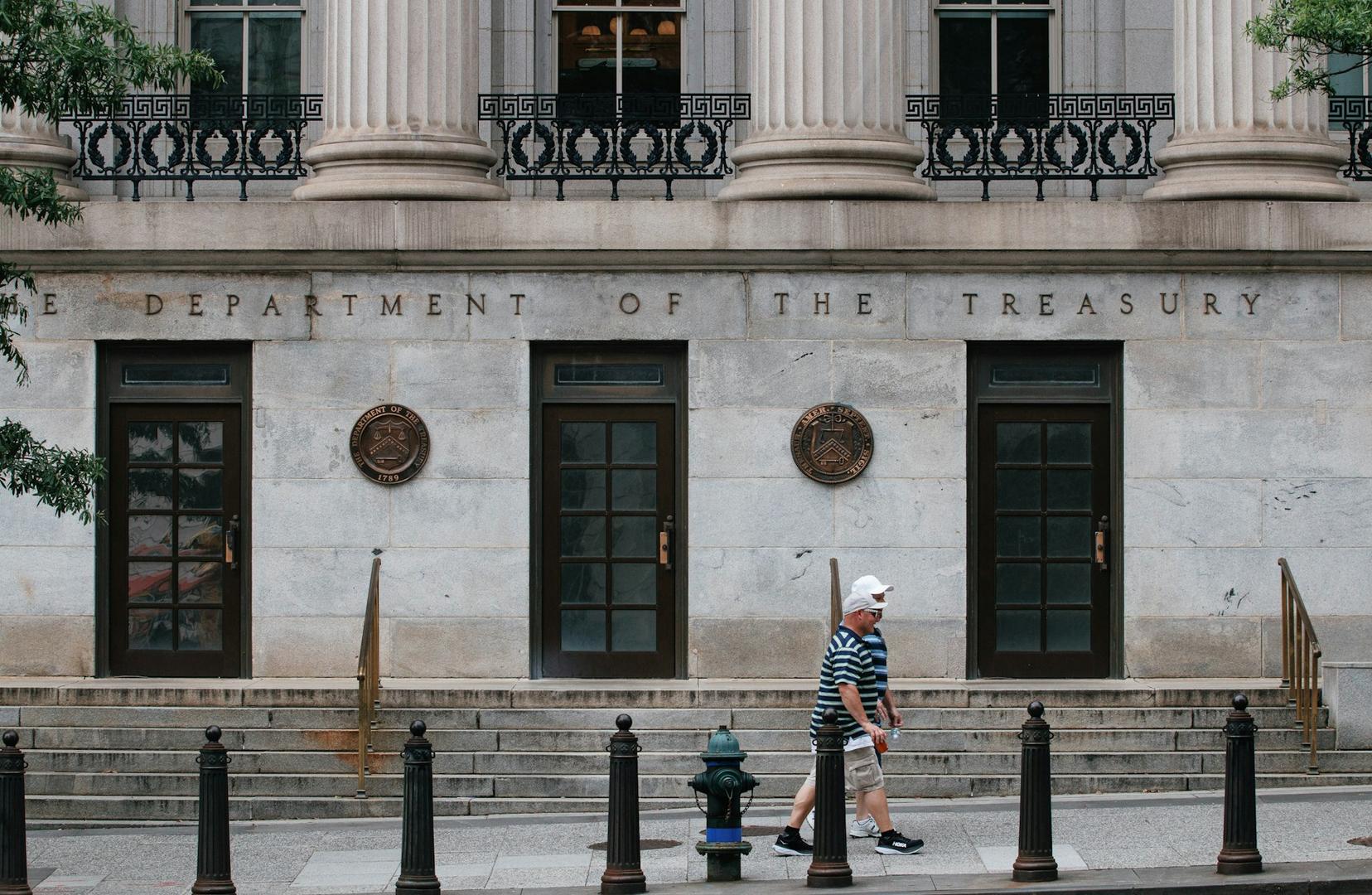
Treasury says Ivan Obukhov processed over $100 million in crypto for IRGC-QF oil sales since 2023.


Fortune Protocol has integrated Polymarket liquidity into Fortune Markets, adding another source of prediction markets alongside Predict.fun while giving users a single interface to compare liquidity, volume and market probabilities.
Summary
- Fortune Protocol has added Polymarket liquidity to Fortune Markets alongside Predict.fun.
- Users can compare liquidity, trading volume and probabilities across markets in one interface.
- The updated trading flow includes outcome selection and position previews.
- A unified Portfolio combines open positions, resolved markets and trading history.
Fortune Protocol said in an X announcement on Aug. 25 that Polymarket liquidity was now live on the platform, bringing markets from both Polymarket and the previously integrated Predict.fun into what it describes as a unified market layer.
The integration allows Fortune Markets users to browse event markets supplied through different liquidity sources without moving between separate prediction platforms. Market information is displayed through a redesigned interface that lets traders compare liquidity, trading volume and implied probabilities before selecting a market.
Alongside the additional liquidity, Fortune has changed its trading flow to include outcome selection and a position preview. Its Portfolio section has also been combined into one view covering open positions, settled markets and a user’s full trading history.
“More markets. More liquidity. One Fortune,” the project said while announcing the update.
Fortune Protocol brings Polymarket liquidity into one interface
Fortune Protocol describes Fortune Markets as a prediction market product built around aggregated access, with liquidity from outside venues brought into a common interface. The latest addition puts Polymarket beside Predict.fun as the two named liquidity sources currently available through the product.
Under the new market design, users can examine comparable information across markets before trading, including how much liquidity is available, the volume recorded by a market and the probability implied by its pricing.
Fortune said the updated trading process also lets a user select an outcome and preview the resulting position before proceeding. Once trades have been made, the unified Portfolio provides access to active positions, markets that have already resolved and previous trading activity.
The project said it plans to continue integrating liquidity from established prediction market venues as it builds the unified market layer. According to Fortune, combining different liquidity sources is intended to give users a more efficient way to access and trade prediction markets from one place.
Predict.fun already has integrations elsewhere in the crypto market. In April, crypto.news reported on Predict.fun powering prediction-market access inside Binance Wallet for eligible users.
Through that integration, prediction-market activity is executed on-chain using Predict.fun smart contracts, while Predict.fun operates the events, pricing and resolution rules. Users can access markets covering areas including sports, economics, world events, culture and crypto, with outcome prices representing the probability assigned by traders to each result.
Polymarket has been expanding its own liquidity infrastructure
Fortune’s addition of Polymarket comes after the prediction market operator made changes to its own trading infrastructure earlier this year.
In April, Polymarket launched CLOB v2, introducing new exchange contracts, a rewritten central limit order book backend and Polymarket USD, or pUSD, as its collateral token.
The upgrade was accompanied by a $1 million liquidity rewards program designed to attract market makers and deepen order books across Polymarket’s event contracts. Polymarket also added support that allows front ends and other builders to route orders and track trading flow through its infrastructure.
Those changes matter for aggregation products because liquidity determines how easily traders can enter and exit a prediction market and how closely prices can track changes in market expectations. Fortune’s redesigned interface makes liquidity one of the metrics displayed when users compare available markets.
Polymarket’s trading model uses event contracts whose prices change as traders buy and sell different outcomes. A contract priced at 60 cents, for example, represents an implied probability of roughly 60% before considerations such as market structure, liquidity and trading costs.
Fortune has not disclosed separate volume or liquidity figures for the Polymarket markets made available through its interface.
Prediction market liquidity has drawn professional trading firms
Liquidity has become a larger focus across prediction markets as trading activity has increased.
During May, Wintermute entered prediction market making, providing continuous two-way quotes across several prediction platforms. Aggregate monthly trading volume across the sector had passed $20 billion at the time, while Wintermute described liquidity as still early by institutional market standards.
Jake Ostrovskis, Wintermute’s head of OTC trading, said there was “clear demand for these markets” but liquidity remained insufficient. The firm said tighter spreads and more trading capacity could improve the quality of probabilities produced by event markets.
Market makers provide competing bids and offers that can reduce the gap between prices available to buyers and sellers. For prediction platforms, deeper order books can also make it easier for traders to execute larger positions without moving a contract’s price as sharply.
Fortune’s model approaches the same liquidity issue from the user interface side by pulling markets supplied by multiple venues into one place and allowing traders to examine them before choosing where to take a position.
Aggregating prediction markets is becoming a separate product category
Other firms have also started building products designed around access to several prediction platforms.
Paradigm has been developing a prediction terminal for professional traders and market makers. The project, which began in late 2025, was designed to provide tools for analyzing and routing liquidity across on-chain and regulated prediction platforms.
Paradigm had also begun aggregating prediction-market data into a public dashboard and was considering an internal market-making operation and an index that could package several event markets into one product.
Fortune’s product is focused on bringing the markets themselves into a unified trading interface. Its latest update adds Polymarket to the Predict.fun liquidity already available, while the redesigned Portfolio keeps open positions, resolved contracts and trade history under the same account view.
The protocol said it would continue adding liquidity from other mainstream prediction markets as Fortune Markets develops its unified market layer.


Metaplanet transferred 1,000 Bitcoin, worth approximately $79.77 million, to Coinbase Prime on Aug. 25, according to blockchain analytics account Lookonchain.
Summary
- Metaplanet transferred 1,000 Bitcoin worth roughly $80 million to wallets attributed to Coinbase Prime today.
- The transfer alone does not establish a sale because Coinbase Prime provides institutional custody services.
- Metaplanet officially holds 43,000 Bitcoin, valued near $3.4 billion at current market prices this week.
- Super League sold 475,598 shares, generating approximately $2.23 million in gross ATM offering proceeds reported.
- Metaplanet’s Super League transaction remains subject to shareholder approval and targets closing during fourth-quarter 2026.
The transfer follows several large movements involving the Japanese company’s 43,000 BTC treasury. However, neither Metaplanet nor Coinbase had identified the latest movement as a sale when checked Tuesday.
Metaplanet’s Coinbase Prime transfer does not prove a sale
Lookonchain described the transaction as a deposit into Coinbase Prime. Prime provides institutional trading, financing and custody services. Moving Bitcoin there can precede a sale, but it can also reflect custody management, collateral arrangements or internal account transfers.
“Metaplanet deposited another 1,000 BTC into Coinbase Prime,” Lookonchain reported. The destination attribution is an on-chain analyst’s assessment, not confirmation that Coinbase executed a sale.
Metaplanet has addressed similar speculation before. On Aug. 12, CEO Simon Gerovich said the company moved 5,014 BTC between custodial addresses without selling any coins. Its reported holdings remained unchanged at 43,000 BTC.
As crypto.news reported, analysts had initially observed 3,881 BTC leaving Metaplanet-linked wallets during that earlier movement. Subsequent company clarification showed why a blockchain transfer should not automatically be treated as a disposal.
Metaplanet’s 43,000 BTC figure requires price context
Metaplanet reported holding 43,000 BTC after acquiring 2,823 BTC during the second quarter. Its disclosed average acquisition price was approximately 15.3 million yen per coin. Lookonchain converted that figure to an estimated $96,191.
At that average, the position’s estimated acquisition cost would be approximately $4.14 billion. Lookonchain’s separate $3.48 billion figure represents an approximate market valuation near current prices, rather than the amount Metaplanet originally paid.
The latest transfer also does not necessarily reduce Metaplanet’s holdings. Bitcoin held through a Coinbase Prime account could remain under the company’s beneficial ownership. An official treasury update or evidence of subsequent asset sales would be needed to confirm a reduction.
U.S. Bitcoin treasury transaction remains pending
The transfer comes one week after Metaplanet agreed to contribute 2,100 BTC and $2.5 million to Nasdaq-listed Super League Enterprise. The proposed transaction would turn Super League into a U.S. Bitcoin treasury platform named Superplanet.
Metaplanet would receive 44.86 million common shares, preferred shares and warrants. It expects to own approximately 95.7% of the resulting company. The planned Nasdaq ticker is SUPA.
The 2,100 BTC contribution would remain within Metaplanet’s consolidated group after closing. In related coverage, the companies valued the initial investment at about $134.6 million.
There is no official evidence connecting Tuesday’s 1,000 BTC transfer with that transaction. The timing permits that possibility, but neither company has identified the transferred coins as part of the pending contribution.
Super League completed its first ATM allocation
Separately, Super League reported selling 475,598 shares for approximately $2.23 million in gross proceeds through its at-the-market program. The completed sales followed an Aug. 18 agreement with Benchmark and StoneX.
The company subsequently authorized another $2.27 million of ATM capacity. That additional amount represents shares available for future sale, not completed financing. Agents receive a 1% commission on gross proceeds from each sale.
The larger Superplanet transaction still requires Super League shareholder approval, Nasdaq requirements and applicable procedures in the U.S. and Japan. The companies are targeting a fourth-quarter 2026 closing.
Until Metaplanet issues another treasury disclosure, the verified development is a 1,000 BTC movement to wallets attributed to Coinbase Prime. Describing it as a confirmed sale would go beyond the available evidence.


Chinese state-affiliated hackers now run twice as many attacks as they did before handing mundane work to DeepSeek and open-source artificial intelligence (AI) systems, according to Taiwanese threat intelligence firm TeamT5.
Attribution remains imprecise. The firm cannot tie every intrusion to a specific system, though it said that DeepSeek remains a popular choice among hackers.
Why Cheap AI Beats Frontier Models for Attackers
The finding inverts a common assumption that the risk of offensive AI lies mainly with the most advanced systems. Instead, operators are now scaling output using relatively weaker tools.
Cost and permissiveness drive that choice. Moonshot’s Kimi K3 is more powerful. Yet, TeamT5 has logged no incidents involving it and considers its running costs prohibitive for hackers.
Charles Li, chief analyst at TeamT5, framed the trade-off directly.
“DeepSeek is the AI of choice for Chinese hackers because it’s relatively powerful with very low cyber guardrails. Western models are highly sought-after but their guardrails are much more strict and require a lot more effort to bypass,” Li said.
Follow us on X to get the latest news as it happens
How Hackers Use AI
TeamT5 obtained scripts and logs, placing DeepSeek across multiple attack stages. A group called Grimfengxi used it to generate exploit code. Teleboyi used it to gather 1,000 IP addresses and map a target’s domains.
Huapi hit a Taiwanese company’s email system with a Chinese model that researchers believe was DeepSeek. Western tools appear too.
TeamT5 said a group tracked as Slime22 breached a Taiwanese technology firm’s systems, installed Kali, and directed Claude Code to run lateral movement. Operators bypassed safeguards by claiming to be engineers conducting authorized tests.
Meanwhile, CyCraft traced a 10-person Chinese startup selling intrusion software for 300,000 to 500,000 yuan, or roughly $44,500 to $74,000. At least four hacking groups bought it. The company also used ChatGPT during an attack.
A spokesperson for OpenAI said the firm is committed to identifying, preventing, and disrupting attempts to abuse its models.
Meanwhile, Chinese groups are not alone in this shift. North Korea’s Kimsuky is also testing local models.
Anthropic reached a broader conclusion in June, finding that AI now handles advanced attack work for hackers who lack the skill to do it themselves.
Subscribe to our YouTube channel to watch leaders and journalists provide expert insights
The post Chinese State Hackers Double Attack Volume After Adopting AI, Report Shows appeared first on BeInCrypto.


Stablecoin card spending has crossed $10.9 billion in cumulative volume as RedotPay projected that annual spending through the products could quadruple to $50 billion by 2028.
Summary
- Stablecoin cards have processed more than $10.9 billion in cumulative spending.
- July card spending topped $1 billion for the first time, according to Paymentscan.
- RedotPay expects annual stablecoin card spending to reach $50 billion by 2028.
- The company cited adoption, clearer regulation and cross border payment use as growth drivers.
RedotPay said in an Aug. 25 blog post that the industry recorded more than $1 billion in card spending during July for the first time, citing independent payments data provider Paymentscan, as usage continued to rise across markets in Latin America, Africa and Asia-Pacific.
The stablecoin payments company expects the industry to process its next $10 billion in eight months after taking roughly three years to reach the first $10 billion. By 2028, RedotPay expects stablecoin-powered cards to be handling $50 billion in annualized spending.
“When you consider that over $20 trillion will be spent this year on traditional cards, $50 billion per year no longer seems unattainable,” the company said.
Paymentscan data showed July 2026 as the largest month recorded for the sector. Its headline dataset put stablecoin card spending at about $1.04 billion during the month, compared with roughly $339 million in July 2025.
RedotPay attributed its forecast to its own operating data, adoption patterns in several developing markets, clearer rules for stablecoin businesses and increasing use of digital dollars for payments, remittances and foreign exchange services.
Stablecoin card spending has accelerated in 2026
Stablecoin cards connect cryptocurrency balances to existing card networks, allowing users to pay merchants while stablecoins or other digital assets are converted or settled through the infrastructure behind the transaction.
RedotPay said the products have moved from an experimental payment method toward regular consumer use. When the company launched its first card about three years ago, it estimated that the entire industry was processing around $60,000 each month. Current volumes can reach the same amount in roughly four minutes, according to its blog.
Jonathan Chan, RedotPay’s head of partnerships and co-founder, said the company was seeing demand from customers who use stablecoins to handle ordinary financial needs instead of cryptocurrency trading.
“Stablecoin-powered cards have reached their mainstream moment, hitting all-time highs in spending volume on the strength of their utility in daily life,” Chan said.
“Our users are not necessarily crypto traders. They are people who found a better way to manage their finances because the previous options they had weren’t good enough. This is where the growth will come from.”
The company pointed to customers using the cards for expenses such as groceries, subscriptions, travel and rent across more than 100 countries. RedotPay also cited examples of users who need access to international digital services, mobile wallets or dollar-denominated balances where local banking products do not provide the same options.
Consumer card products have also become a larger part of RedotPay’s own business. In July, crypto.news previously reported that the company had launched an XRP Ledger-powered product allowing customers to pledge XRP as collateral and access a credit line settled in Ripple USD.
The product uses a 50% loan-to-value ratio and allows the borrowed value to be spent through Visa merchants while customers retain exposure to their pledged XRP. At the time, RedotPay reported more than 8 million users in over 100 countries and roughly $12 billion in annualized payment volume.
RedotPay now puts its annualized payment volume at approximately $14 billion and annualized revenue at more than $180 million. The company said it has built a profitable business while expanding its stablecoin payment services.
Clearer rules and better products are supporting card use
Explaining the increase in card activity, RedotPay identified regulatory developments as one of the factors that have made consumers and payment companies more willing to use stablecoin-based services.
The company said clearer requirements in important markets have given established operators a more defined framework for licensing and compliance while giving potential customers more confidence in stablecoin products.
Product improvements have played a role as well, according to RedotPay. Interfaces have become easier to use, fiat-to-crypto and crypto-to-fiat services have expanded their coverage, conversion pricing has improved and customer support has become more developed.
RedotPay expects fast-growing payment companies to spend more on licenses and compliance as transaction volumes rise. It also expects traditional financial companies to make more use of stablecoin settlement infrastructure, while additional providers connect blockchain networks with existing banking rails.
The company has begun building its own U.S. regulatory footprint. RedotPay said it recently obtained its first U.S. money transmitter license and has applications pending in more than 20 additional states.
Card networks have been adding stablecoin settlement services at the same time. In June, Mastercard added support for settlement using six regulated dollar-backed stablecoins, including USDC, PayPal USD, Ripple USD, Global Dollar, Pax Dollar and SoFiUSD.
Mastercard said the system can settle transactions outside normal banking hours, including weekends and holidays, while retaining existing card payment processes. Supported blockchain networks included Ethereum, Solana and the XRP Ledger.
Stripe has also been building stablecoin card infrastructure through Bridge. A July report detailed how the program expanded into more than 100 markets after Stripe acquired the stablecoin infrastructure company.
Former Stripe stablecoin partnerships head Connor Fitzgerald said the team established sponsor bank and card network relationships, built stablecoin settlement infrastructure in the United States and took annualized payment volume from zero into the tens of millions of dollars.
Stablecoin payments extend beyond consumer checkout
Card spending represents one part of the stablecoin payments market, with cross-border settlement, remittances and business payments accounting for other use cases that RedotPay expects to support future adoption.
In May, BridgerPay co-founder and CEO Ran Cohen said stablecoin payment demand remained concentrated in cross-border settlement, business-to-business payouts and treasury operations. Cohen expected stablecoins to expand through business payment flows without displacing conventional cards at merchant checkouts.
RedotPay’s model connects the two systems by allowing users to fund spending from digital assets while relying on existing card networks for merchant acceptance.
The company identified Latin America, Africa and Asia-Pacific as important markets in its forecast. RedotPay said customers in such regions can use stablecoins for dollar savings, international purchases, travel spending and access to payment products that may not be available through their local banks.
Cross-border use also gives stablecoin cards a role in remittances and foreign exchange, according to the company, particularly where customers already hold digital dollars and need to convert or spend them without moving funds through several financial services.
RedotPay said competition among companies connecting traditional banking systems with stablecoins could reduce costs as more providers enter the sector. The company expects established financial institutions to increase their use of stablecoin rails as payment infrastructure develops.
Its 2028 projection would put annual stablecoin card spending at $50 billion, roughly four times the current annualized level cited by the company, while remaining a small fraction of the more than $20 trillion RedotPay expects consumers to spend using traditional cards this year.
The company currently serves more than 8 million users globally, with pending money transmitter license applications in more than 20 U.S. states alongside the first state license it has already received.
Crypto World
Live updates: Bitcoin ETFs draw a sixth straight day of inflows as the rally holds above $80,000
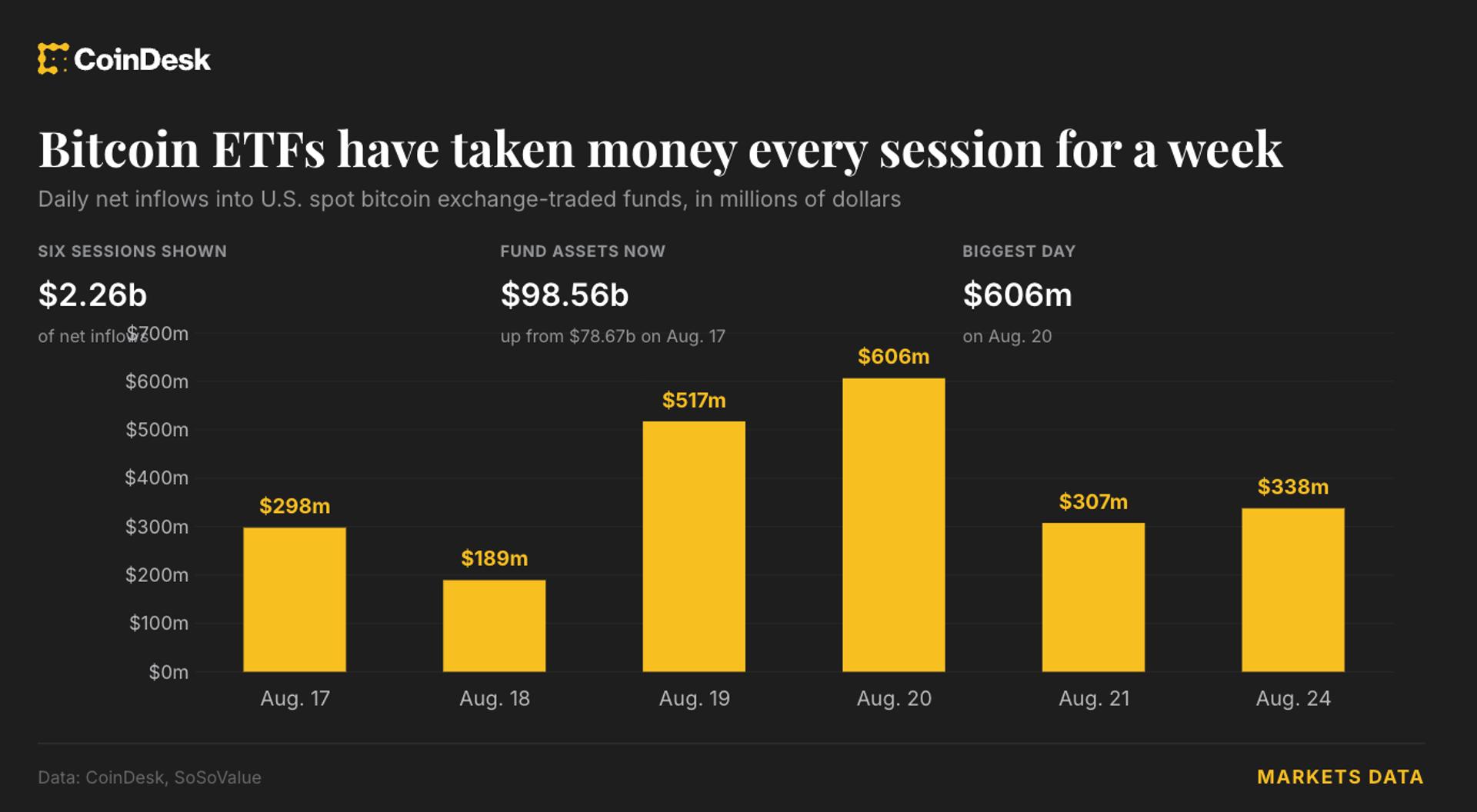
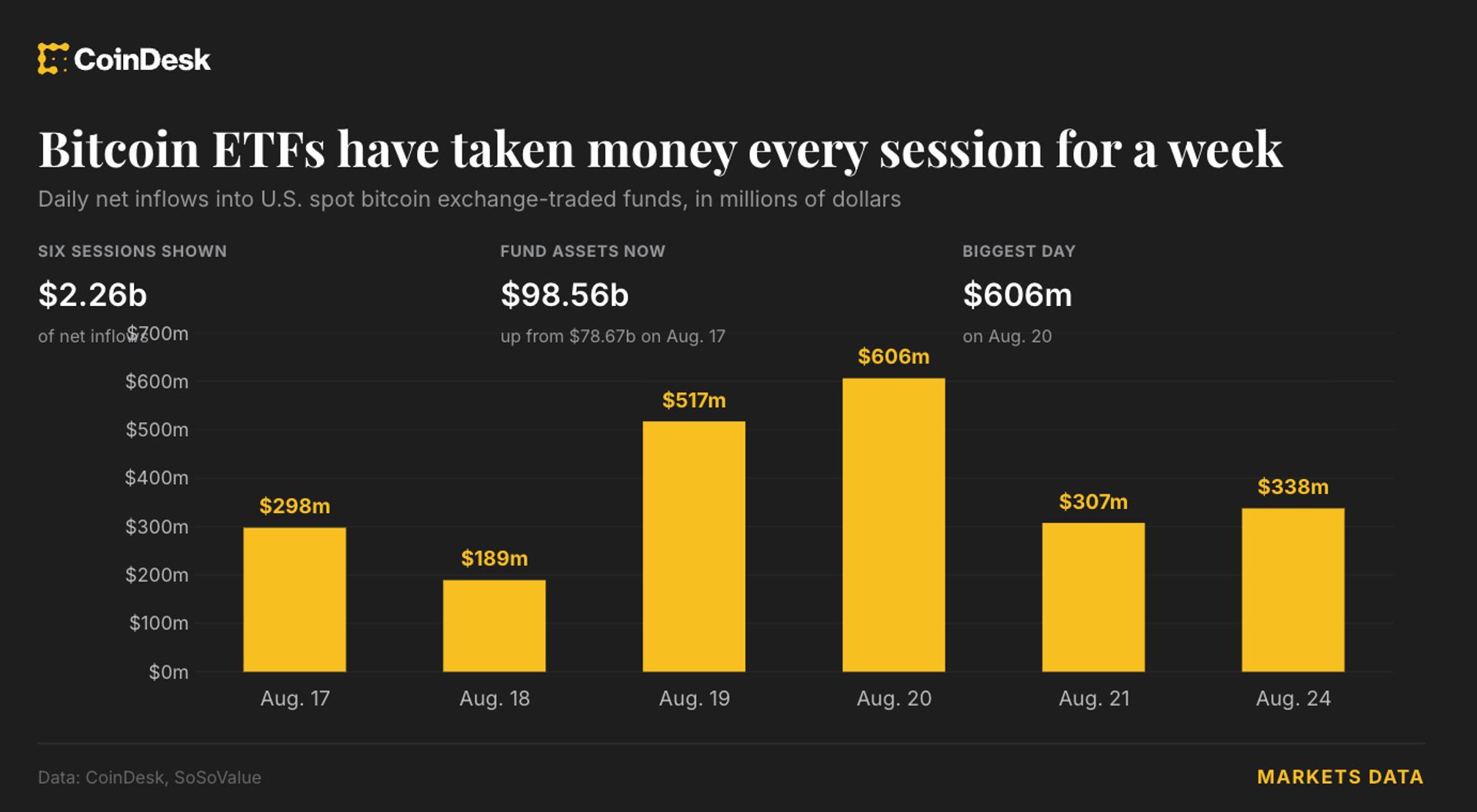
Spot bitcoin funds took in $337.56 million on Aug. 24, extending an unbroken run of inflows that has now put real money behind a rally that started with a short squeeze.


Cointelegraph is committed to providing independent, high-quality journalism across the crypto, blockchain, AI, and fintech industries.
All news, reviews, and analyses are produced with full journalistic independence and integrity. For more details on our standards and processes, please read our Editorial Policy.
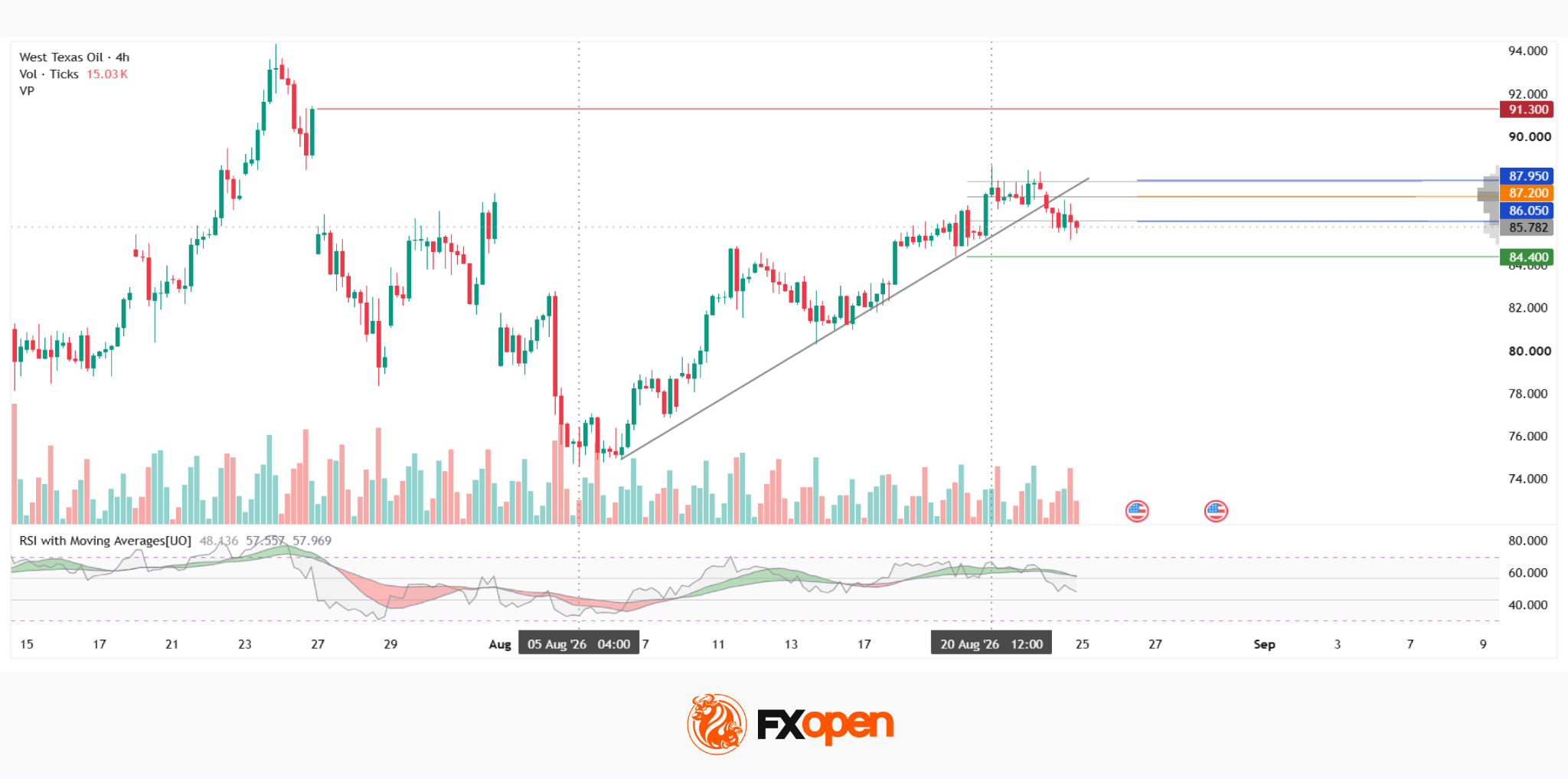
WTI crude fell more than 2% on Monday, 24 August, as market participants took profits amid expectations that the US could announce a new round of sanctions against Iran. Additional pressure came from a warning by the Iranian authority responsible for the Persian Gulf and Strait of Hormuz, which said vessels violating transit rules could face fines or detention.
At the same time, the US Energy Information Administration (EIA), in its 11 August forecast, expects the average Brent price to remain around $85 per barrel in the third quarter. Persistently low commercial crude inventories in the US could also help limit the downside and prevent a deeper decline.
Technical Analysis of WTI
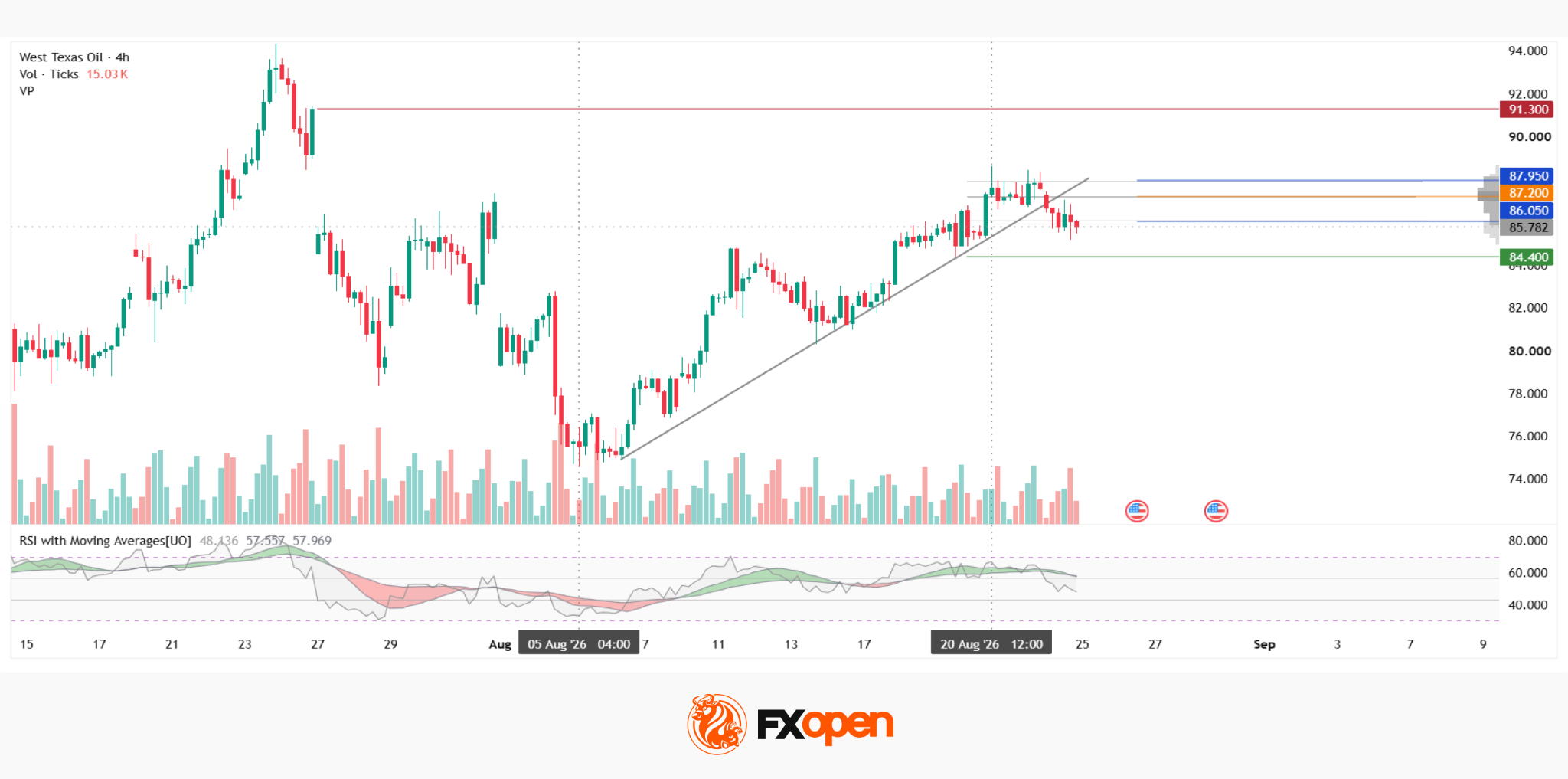
On the four-hour XTI/USD chart, prices had been moving within a short-term uptrend since the beginning of August. The trendline repeatedly acted as support during previous pullbacks, but the price is now attempting to break below it while also moving beneath the lower boundary of the current market profile at $86.05.
If the downside move gains traction, the next potential support area is around $84.40.
A false breakout followed by a renewed advance would bring several technical levels into focus. The first is the Point of Control (POC) at $87.20, followed by the upper profile boundary at $87.95. The overall depth of the market profile is also worth monitoring: the narrower the profile, the less buying pressure may be required to overcome it.
Above the main concentration of trading activity lies the red resistance zone at $91.30.
The RSI + MAs indicator currently shows readings of 48, 57 and 57. RSI has returned to the neutral area following the pullback, but notably remained below the overbought zone throughout virtually the entire uptrend. At the same time, both moving averages remain positive and are holding above the neutral threshold.
Key Takeaways
The break below the ascending trendline has yet to receive confirmation from the momentum indicators. The moving averages remaining above the neutral zone cast some doubt on the sustainability of the current decline.
The next move could depend heavily on the scale and severity of any new US sanctions against Iran. A stronger-than-expected sanctions package could increase pressure on oil prices, while more limited measures may allow the market to refocus on tight US inventories and provide support for WTI.
Start trading commodity CFDs with tight spreads (additional fees may apply). Open your trading account now or learn more about trading commodity CFDs with FXOpen.
This article represents the opinion of the Companies operating under the FXOpen brand only. It is not to be construed as an offer, solicitation, or recommendation with respect to products and services provided by the Companies operating under the FXOpen brand, nor is it to be considered financial advice.

The CLARITY Act cleared a Senate Banking Committee vote and now sits on the chamber’s legislative calendar after a cloture motion was filed on August 8, according to congressional records. That procedural motion is the next real test as the bill needs 60 votes just to proceed to floor debate, a bar it has not yet cleared.
The bill, formally H.R. 3633 or the Digital Asset Market Clarity Act, passed the House 294-134 in July 2025 with meaningful Democratic support. It would split oversight of digital assets between the SEC and CFTC, a jurisdictional question that has shaped enforcement uncertainty across the industry for years.

President Donald Trump hosted crypto executives at the White House on August 19, calling on Congress to pass what he termed a “fair version” of the CLARITY Act. Coinbase CEO Brian Armstrong, Robinhood CEO Vlad Tenev, and Kraken co-CEO Arjun Sethi were among the attendees, alongside CFTC Chair Michael Selig and SEC Chair Paul Atkins.
That optics push doesn’t change the math on the Senate floor. Democrats and some Republicans have withheld support over conflict-of-interest language tied to Trump’s own crypto holdings. Reuters reported he has earned more than $1.4 billion from family crypto ventures since taking office. Not just that, a Reuters/Ipsos poll this week found a majority of Americans believe those holdings have inappropriately shaped policy.
Discover: The Best Token Presales
Why Should We Care
CLARITY’s core function is resolving the securities-versus-commodity question that has driven years of SEC enforcement actions and left token issuers guessing at their own legal status.
CFTC Chairman Selig has signaled the agency could use existing statutory authority to build out a market-structure regime even without new legislation. SEC itself has separately proposed rules exempting certain token offerings from securities treatment.
— U.S. Securities and Exchange Commission (@SECGov) August 18, 2026
 TODAY: The SEC proposed new rules, “Regulation Crypto Assets,” that would create a clear and fit-for-purpose framework for certain investment contracts involving crypto assets. pic.twitter.com/SAA2sErMXF
That matters for positioning: a stalled bill pushes the regulatory center of gravity toward agency rulemaking rather than statute, which is inherently more reversible with the next administration or the next commissioner. Market structure clarity via legislation is durable; clarity via agency discretion is not.
Trade Crypto Before The Clarity ACT on Bybit and Get a Chance to Win Our $1,000 USDT Airdrop
What Happens Next for The CLARITY Act?
Reporting has pointed to mid-September, with September 15 discussed as a tentative target for the cloture vote. Though that date is not confirmed in the congressional record and should be treated as a planning window rather than a lock.
If cloture fails, the bill’s path forward within the current Congress narrows sharply, given a limited legislative calendar and competing priorities.
If it clears 60 votes, the substitute text reported out of Senate Banking in June, a roughly 600-page revision merging Banking and Agriculture committee work, would move to floor debate. Either outcome resolves a multi-year overhang on token classification, which is why the vote count.
Discover: The Best Crypto to Diversify Your Portfolio
The post CLARITY Act 60-Vote Hurdle Puts Crypto Rules in Focus Days After White House Meeting appeared first on Cryptonews.


Tokenized U.S. treasury and money market funds are one of the fastest-growing segments in the digital asset markets, growing fifteenfold in two years.

oddworld x reezy x og keemo – money

Organised crime arrests as police investigate A66 crash that killed seven

U.S. widens Iran crackdown to encompass crypto, gold, shipping and technology





-

 Fashion4 days ago
Weekend Open Thread: Madewell – Corporette.com
-

 Business3 days ago
Musk’s Tesla, SpaceX Confirm $16.8 Billion ‘Terafab’ Chip Plant as World’s Largest Building in Texas
-

 Crypto World3 days ago
anatomy of crypto’s biggest liquidation event since 2021
-

 Business7 days ago
SMA Solar Technology AG (SMTGY) Q2 2026 Earnings Call Transcript
-

 Politics3 days ago
6 months on, Irish renters crushed by effects of government housing bill
-
 NewsBeat3 days ago
The ‘Lucky Dip Gang’ causing carnage for clicks: After five thugs were killed speeding in the wrong direction on a motorway, GUY ADAMS investigates a sick new trend… and why police aren’t even allowed to pursue them
-

 Tech6 days ago
GLM-5.3 hits the API at $1.4/$4.4 per million tokens
-

 News Videos5 days ago
Don’t Leave Your Financial Future To Chance | August 19, 2026
-

 Business2 days ago
Mystery AI Model ‘Ox Alpha’ Draws Developers With Free Access as Chinese Lab Origins Remain Debated
-

 Business5 days ago
Five Below: Kids Discount Retailer Reaps Rich Rewards
-

 Business7 days ago
Stock Market Today: Tech Futures Slide As Treasury Yields Jump; Nvidia, Micron, Sandisk Sell Off
-

 Business6 days ago
Marvell Shares Jump 7% as Google Chip Deal Confirms Custom AI Silicon Partnership, Analysts
-

 Tech7 days ago
Ken Okuyama’s Kode89 Supercar Features Three Pedals and a Choice of V12s
-

 Politics7 days ago
The House Opinion Article | Security means more than military spending
-

 Sports2 days ago
Deshaun Watson fires back at Browns fans after being booed: ‘It’s a disrespectful thing’
-

 Fashion7 days ago
The Best Wide Leg Pants to Wear to Work
-

 Crypto World7 days ago
Sherlock Takes Audit Engine Public After Months of Quiet Testing
-

 Fashion7 days ago
Flat sandals on sale at Esska
-

 Tech5 days ago
OpenAI confirms ChatGPT is down as logins and signups fail
-

 Business4 days ago
UK firms in critical financial distress rise 9% to 53,756
You must be logged in to post a comment Login