
Crypto World
Nigel Farage’s Reform UK lands $97 million donations from two crypto billionaires in 24 hours

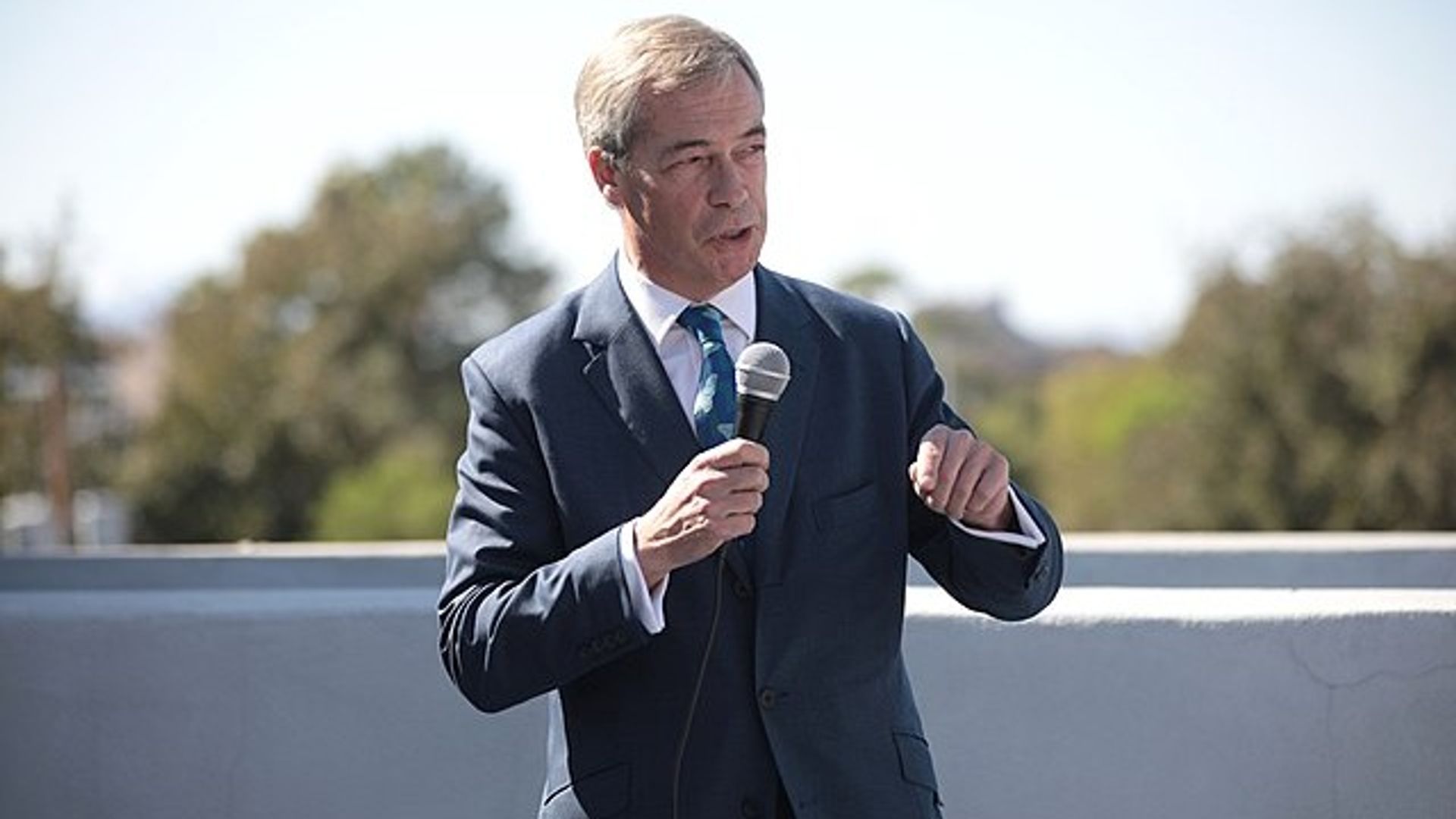
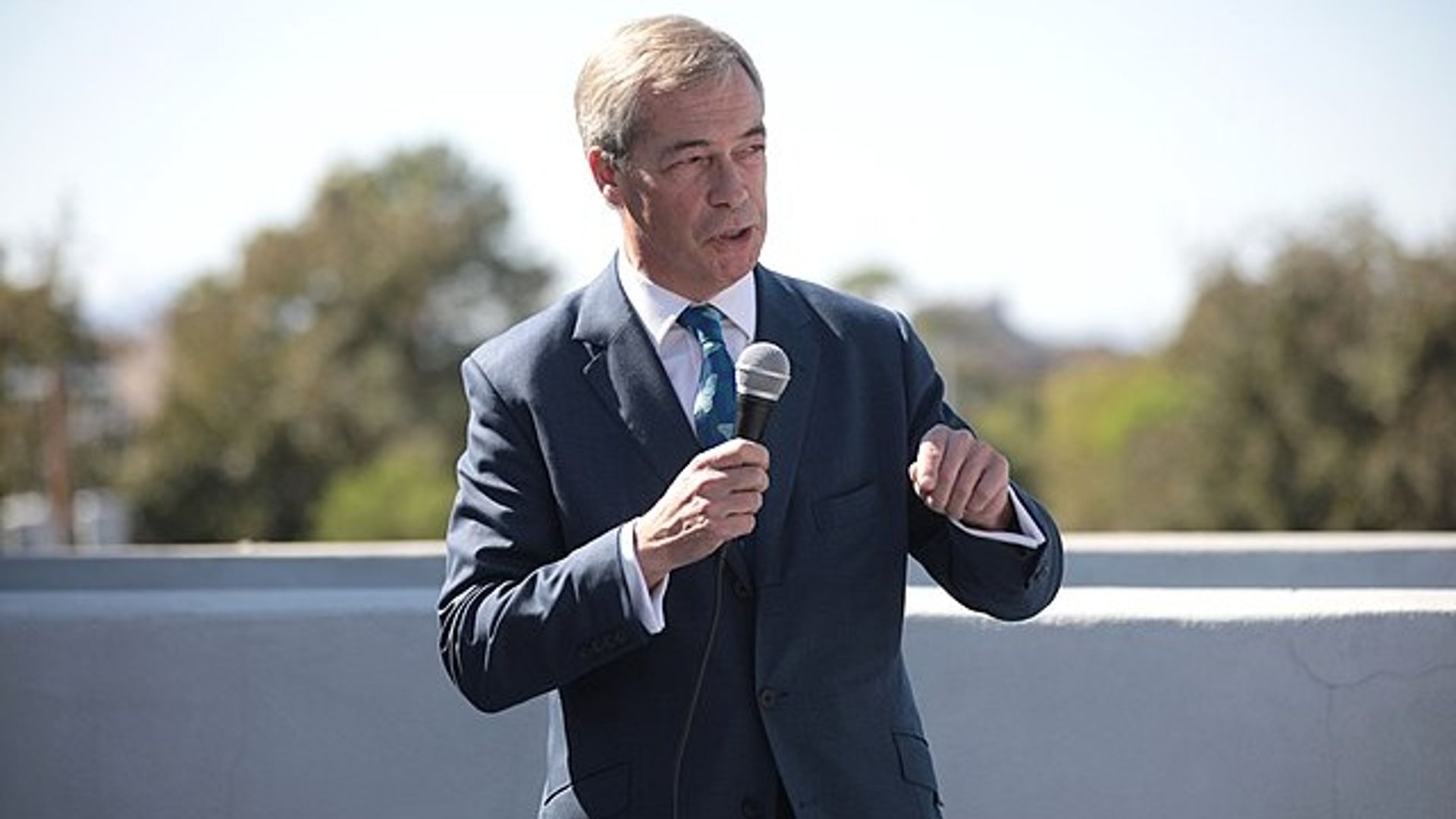
The combined haul equals the largest individual political donations in U.K. history, sharply scaling up crypto industry backing.


The Securities and Exchange Board of India (SEBI) and the Reserve Bank of India (RBI) have launched a pilot infrastructure for issuing, holding, trading, and settling corporate bonds as digital tokens.
Called Demat 2.0, the model is being integrated directly into the nation’s existing regulated securities market, unlike many tokenization experiments built on standalone blockchain platforms.
$116M Tokenized and Counting
India’s approach allows corporate bonds to be created natively on a distributed ledger maintained by market infrastructure institutions, with ownership records held by the country’s statutory depositories. As written on Demat 2.0’s explanatory page, the system is connected to the RBI’s wholesale digital rupee through its Unified Market Interface. This allows the securities and cash legs of a transaction to settle at the same time.
This so-called atomic delivery-versus-payment model eliminates the period previously needed when one party has transferred an asset while still waiting for the other side to complete the payment. The statement also noted that three companies have already issued tokenized bonds worth a total of ₹1,025 crore (or $116 million).
REC Limited led the charge, becoming the first issuer on September 7, raising ₹500 crore from 18 investors. Larsen & Toubro followed suit with the same amount from four investors, while IIFL raised ₹25 crore from a single investor on September 9.
SEBI said issuers can receive funds on the same day as bidding, compared with the traditional two-to-three-day process. Secondary-market investors could get their proceeds immediately as well.
Smart contracts can also automate coupon and redemption payments directly into investors’ CBDC wallets. Separately, investors can use their existing demat accounts rather than create an entirely different blockchain wallet infrastructure.
Beyond Bonds?
The statement noted that tokenized bonds remain legally identical to conventional ones as existing rules covering credit ratings, disclosures, debenture trustees, and investor protection continue to apply. Given the evident growth of the real-world asset (RWA) industry, India’s authorities said the rollout of their local system will come in three stages.
The current phase is focused on institutional corporate bond issuance. The second will introduce secondary-market trading and expand access to retail investors, while the last one could bring additional regulated entities onto the network and explore tokenization of other financial instruments.
The infrastructure remains private and permissioned, with nodes initially operated by depositories and stock exchanges. This is important because India’s initiative is not an attempt to move its securities markets onto public blockchains; rather, it aims to combine DLT-based ownership, smart contracts, and central-bank money within its existing financial system.
The post India’s Demat 2.0 Could Change Bond Tokenization: Here’s How It Works appeared first on CryptoPotato.
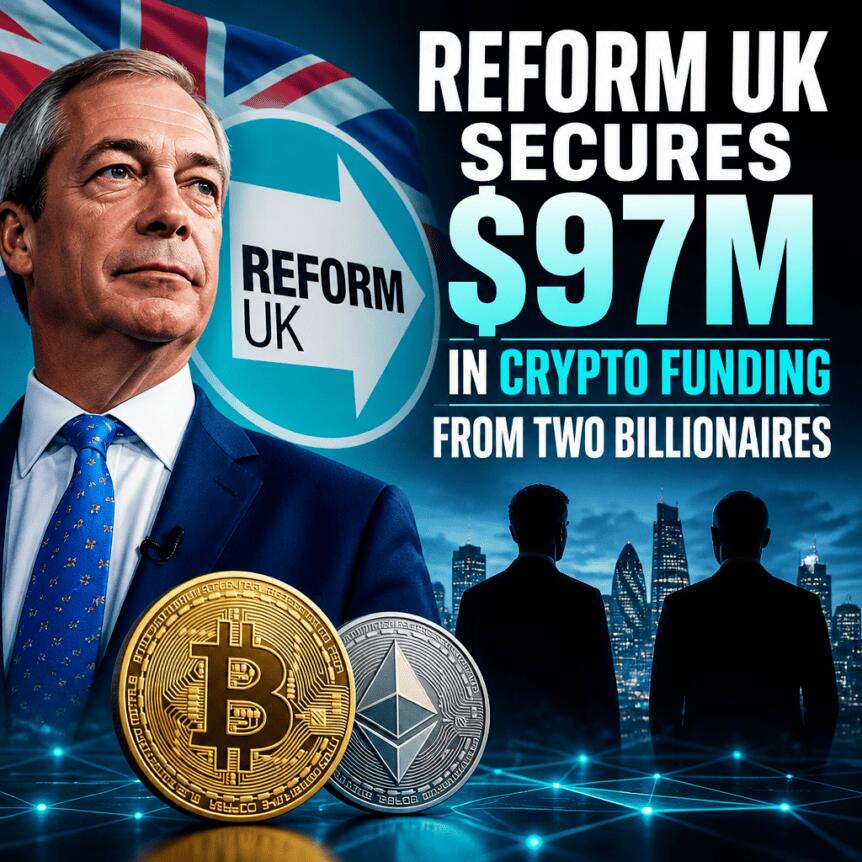
Nigel Farage’s Reform UK has received a total of £72 million (about $97 million) from two crypto-linked billionaires, after Christopher Harborne matched a record donation initially announced by Ben Delo. The pair’s contributions are described as the largest ever given to a British political party, according to reporting cited in the original coverage.
Harborne announced on Saturday that he would donate £36 million, following Delo’s earlier announcement. Reuters reported Farage’s response, noting that Reform welcomed the donations as a way to ensure the party can compete in the upcoming political fight.
Key takeaways
- Reform UK received £72 million total, combining contributions of £36 million each from Ben Delo and Christopher Harborne.
- Harborne matched Delo’s donation after Delo announced his package the day earlier.
- The funding is framed by Reform as enabling a “level playing field” for the next general election campaign.
- The donations come amid ongoing political scrutiny in the UK over crypto-linked financial influence, following an earlier Farage scandal.
- Delo’s background includes a US legal resolution tied to BitMEX-related charges and a later presidential pardon, per earlier Cointelegraph reporting.
Why the donations are drawing attention
The scale of the donations is itself notable: the combined £72 million is presented in the original report as the largest ever made to a British political party, underscoring how quickly Reform has become a focal point for debates over money in UK politics.
Harborne said he was motivated to match Delo’s donation and, according to a quote carried by The Telegraph in the underlying report, he expected no direct personal outcome—describing it as support for a party “ready for government.” Delo, a co-founder of the BitMEX cryptocurrency exchange, said he wanted to help ensure a “fair fight” at the polls.
In remarks attributed to The Telegraph, the funding timeline was also used to manage risk around potential legal or administrative interruption. Delo described the donation as effectively £1 million per month until a general election expected in 2029, but said he paid the entire amount up front so it could not be blocked, rather than drip-feeding funds over time.
Reform’s “level playing field” argument
Farage welcomed both donations, stating that the money would allow Reform to contest the next general election on “a level playing field,” Reuters reported. That framing is important for understanding how Reform is positioning the contributions: rather than describing them as advantage-making capital, the party’s leadership is presenting the donations as a mechanism to counterbalance the resources of other parties.
However, the political context is not purely about campaign budgeting. The original coverage points to heightened scrutiny from UK lawmakers after Reform became associated with crypto-linked figures and large transfers during a period that has already seen contested discussion about whether digital-asset money should be treated differently under UK campaign finance rules.
Scrutiny after the earlier crypto funding controversy
Last month, Cointelegraph reported that Farage was under investigation after receiving millions of dollars in donations and gifts connected to the crypto industry. The underlying reporting cited Christopher Harborne and George Cottrell among the figures tied to the controversy, while noting that Farage denied wrongdoing.
Cointelegraph also reported that Farage resigned as a Member of Parliament in July amid the crypto scandal. The resignation triggered a by-election that Farage won with 63% of the vote, according to the original piece, ahead of a satirical candidate known as Count Binface.
Beyond individual allegations, the donations have intensified broader concerns among lawmakers about the potential influence of digital assets on UK political decision-making. In the underlying report, it was noted that Labour MPs were reportedly considering making a crypto-donation moratorium—announced in March pending legislation—permanent, in response to what Farage characterized as “gifts” from Harborne and Cottrell.
Taken together, the new donations place Reform’s campaign financing squarely inside an active policy debate: whether limits on crypto-related political giving are necessary, and how any such limits might be enforced in practice as crypto industry figures continue to engage with UK electoral politics.
Delo’s US legal history and pardon
The wider scrutiny around the donation also intersects with the personal legal history of one of the donors. Earlier Cointelegraph reporting stated that Delo was one of three BitMEX co-founders who pleaded guilty in the US to federal charges tied to violations of the Bank Secrecy Act.
That reporting added that Delo agreed to pay a $10 million fine in 2022 but did not serve prison time. It further noted that Delo, alongside Arthur Hayes and Samuel Reed, later received a presidential pardon from then-President Donald Trump in March 2025.
While the donation news is focused on UK politics, this US dimension is relevant for readers trying to understand why crypto-linked political contributions are polarizing: the donations are not only raising questions about UK campaign finance oversight, but also resurfacing attention to the donors’ broader regulatory and legal track records.
Looking ahead, investors, voters, and political watchers will likely focus on two practical questions: whether UK authorities or lawmakers introduce additional restrictions on crypto-related political donations, and how Reform responds to ongoing inquiries as the party prepares for the next general election. The larger issue behind the headline figure is how—or whether—crypto money will be treated as ordinary political funding as the debate over fairness and influence continues to escalate.
Teucrium has pushed back the launch of its short XRP ETF (exchange-traded fund) for the 19th time. A filing dated September 11 moves the earliest possible start to October 11, 2026.
The fund is built to pay investors when XRP falls. Its mirror image, which pays when XRP rises, has been trading since April 2025.
19 XRP Short ETF Filings and Not One Launch
Public records held by the US Securities and Exchange Commission show the same three-page document arriving roughly every month since April 4, 2025. Each one does a single job. It moves the date.
The newest filing carries no explanation beyond the new date. Strategy, fees, and risk warnings all stay untouched.
Even that date is not a launch date. It marks the first day the fund is permitted to start trading, and permission is not the same as arrival.
The first postponement landed four days before the 2x long XRP fund began trading on the New York Stock Exchange. Teucrium sold the upside version and shelved the downside one.
No regulator blocked this. The company chose each delay itself.
Why the Bet Against XRP Never Reached the Market
The product aims to move twice as much as XRP does each day, in the opposite direction. It would never sell any XRP. Instead, it would use contracts with trading firms that pay out when the price drops.
Teucrium has never explained the holdup in any filing.
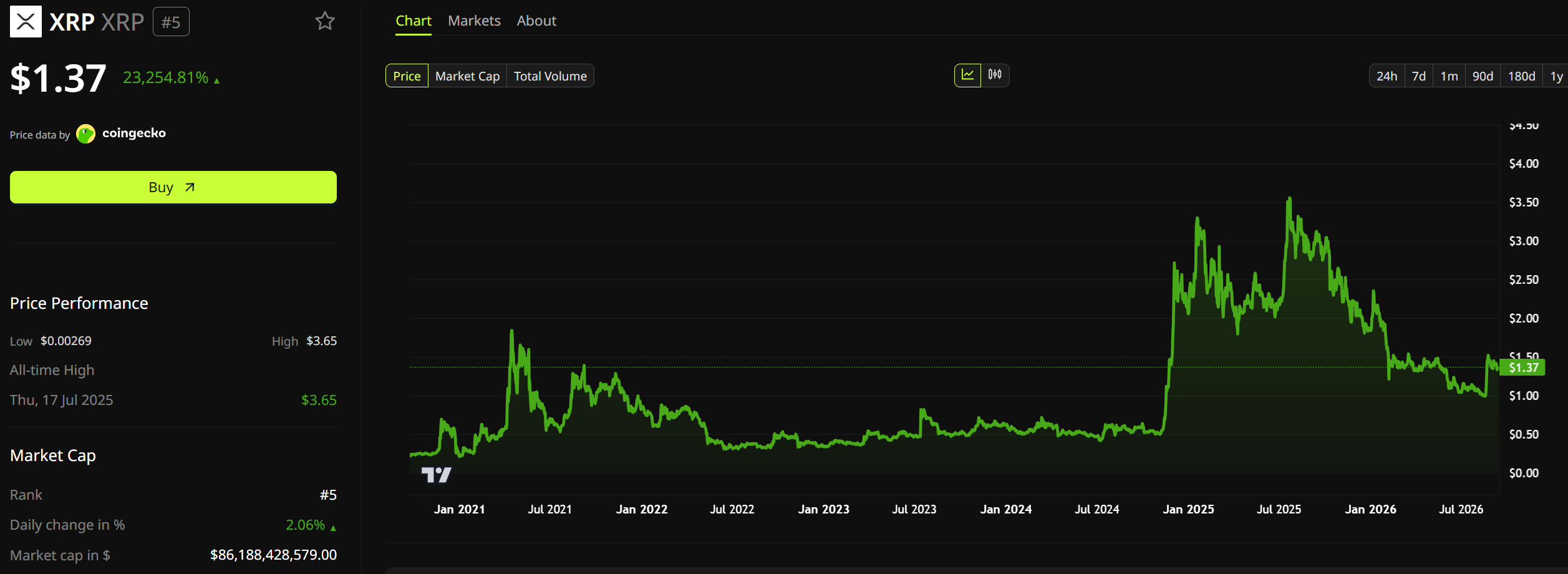
Meanwhile, the thing the fund was designed for happened without it. XRP peaked at $3.65 in July 2025 and now trades near $1.37, suggesting a drawdown of over 60%. Anyone wanting a listed way to bet against that slide had none.

Ordinary funds that simply hold XRP did arrive, and money kept flowing in. Over their past 20 trading days those funds took in $190.5 million, with withdrawals on a single day.
Buyers stayed put through the decline. Cumulative inflows since launch now stand at $1.70 billion. What nobody could buy was the other side of the trade.

October 11 marks the 20th deadline for this fund. After 19 postponements, the sharper question is what changes if it ever does launch.
The post The ETF Built to Bet Against XRP Price Has a New Launch Date appeared first on BeInCrypto.
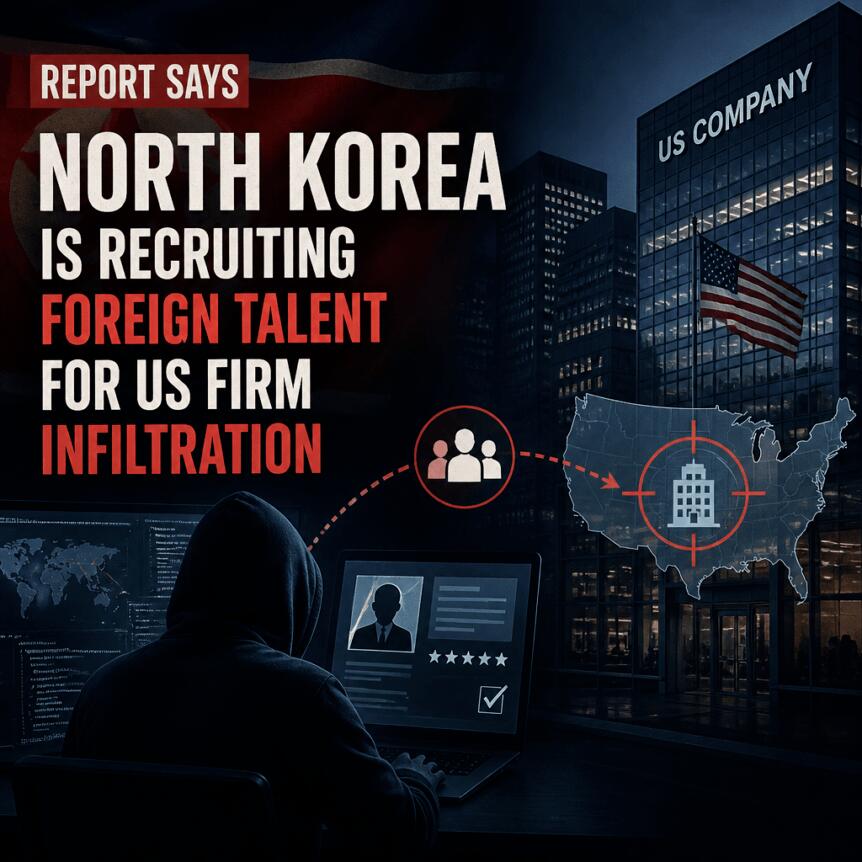
North Korea’s cyber and financial theft efforts are increasingly relying on remote workers based in third countries, according to a report published by NBC. The scheme reportedly involves recruiting foreign IT workers—such as people located in Iran and Lebanon—to help North Korean-linked actors infiltrate US companies and route funds back to the DPRK in support of its weapons programs.
The renewed focus on “outsourced” digital labor comes after a July alert issued by the US government and multiple foreign agencies, warning that North Korean IT workers actively seek contracts with the aim of remitting salaries to parent agencies in North Korea. The alert also described these workers as potential insider threats, including roles in data exfiltration and cryptocurrency theft.
Key takeaways
- US and partner agencies warned in July that DPRK-linked IT workers use employment contracts to funnel pay back to North Korean agencies.
- NBC reports North Korea is using remote workers from third countries—reportedly including Iran and Lebanon—to pass job interviews and gain access to US firms.
- After contracts are obtained, NBC says North Korean operatives often take over the positions.
- The reported tactics extend to cryptocurrency theft, with some candidates allegedly being offered crypto compensation for part-time work.
- Broader reporting ties North Korea’s cyber operations to large crypto losses, underscoring how persistent these campaigns can be.
A US warning highlights contract-driven infiltration
The July alert cited by NBC frames the DPRK’s approach as more than typical hacking. Instead, it emphasizes how North Korean-linked IT workers attempt to gain entry through normal business channels—seeking contracts and leveraging employment relationships to access internal systems.
According to the alert, these workers “seek out contracts with the intent of remitting their salaries to their parent North Korean agencies.” It also describes them as posing an insider threat to companies, with participation in data exfiltration and cryptocurrency theft, as well as the theft of sensitive information. That combination points to a multi-stage method: gain a role legitimately or semi-legitimately, then convert that access into monetizable outcomes and compromised data.
Third-country remote staffing as a growing tactic
NBC reports that as governments have moved to counter DPRK efforts, the strategy has shifted toward recruiting remote IT workers from outside North Korea. The report says foreign workers are scouted—NBC specifically mentions LinkedIn—as North Korean-linked actors attempt to recruit people who can pass initial screening and interviews for remote positions.
Once those work contracts are obtained, NBC says the remote workers are typically followed by a transfer of control, with the roles then “usually” taken over by North Korean operatives. For firms hiring contractors—particularly those operating across borders—this is an important nuance: the risk is not only external malware or credential theft. It also includes what happens after a contractor is onboarded and gains legitimate access to development environments, internal documentation, or payment-related workflows.
NBC also reports that some of the foreign recruits were offered cryptocurrency—about $500 monthly in at least one case—in exchange for part-time work, described as “interview associates.” That detail matters for compliance teams: it suggests intermediated recruitment and payment schemes may be used to normalize crypto transfers in otherwise ordinary hiring processes.
The July alert’s themes—remittance intent, insider-threat potential, and links to crypto theft—appear consistent with what NBC portrays as a practical hiring pipeline. If implemented as described, the scheme reduces friction for DPRK actors by blending into legitimate commercial operations while still creating pathways to exfiltrate data and move value.
Crypto losses connected to DPRK activity remain substantial
The hiring/infiltration angle is part of a broader pattern that has repeatedly surfaced in cybersecurity reporting. Cointelegraph previously reported in May, citing CrowdStrike, that North Korean state-affiliated hackers were responsible for more than $2 billion in crypto losses in 2025—an estimated 51% increase year-on-year.
While the NBC report focuses on recruitment and insider access, the continued magnitude of crypto losses—per the CrowdStrike-cited figure—suggests that monetization channels (including cryptocurrency-related theft) remain a central goal. In practice, insider positioning and data access can accelerate theft by expanding the target set: not only wallets and exchanges, but also internal systems that may contain credentials, private keys, payment rails, or proprietary information that can be leveraged for further attacks.
For crypto investors and market participants, this matters because large-scale theft and follow-on laundering attempts can affect confidence in compliance and custody systems, and they can increase perceived regulatory pressure on the broader industry. Even when theft is confined to specific victims, the ecosystem-level narrative tends to build around repeat offenders and persistent attack methods.
Sanctions pressures, but limited signs of economic slowdown
Alongside the cyber narrative, economic reporting suggests sanctions have not prevented North Korea from sustaining activity at home. Cointelegraph previously noted, citing the Bank of Korea, that North Korea’s GDP increased 3.5% in 2025 despite global sanctions.
That estimate doesn’t prove the cyber recruitment scheme directly caused macro outcomes—but it provides context for why such operations may remain attractive to the DPRK. If the country’s economy is not collapsing under sanctions, then actors may have continued resources and incentives to invest in complex infiltration strategies that require coordination across borders and jurisdictions.
From a risk-management perspective, this implies that defensive measures must be ongoing. If North Korea can adjust recruitment tactics—shifting to remote third-country workers and using crypto compensation for part-time roles—then security teams should expect further evolution in how these threats blend into normal business processes.
What companies should watch next
As the details reported by NBC and the July alert suggest contract-based insider risk tied to crypto remittances, the most urgent question for employers and vendors is how these schemes will be detected in practice. Firms should track warning signals around contractor onboarding—especially scenarios involving unusually fast access to sensitive systems, crypto-focused payment arrangements, or patterns consistent with insider takeover after initial screening—while cybersecurity and compliance teams closely monitor how DPRK-linked recruiting methods develop.
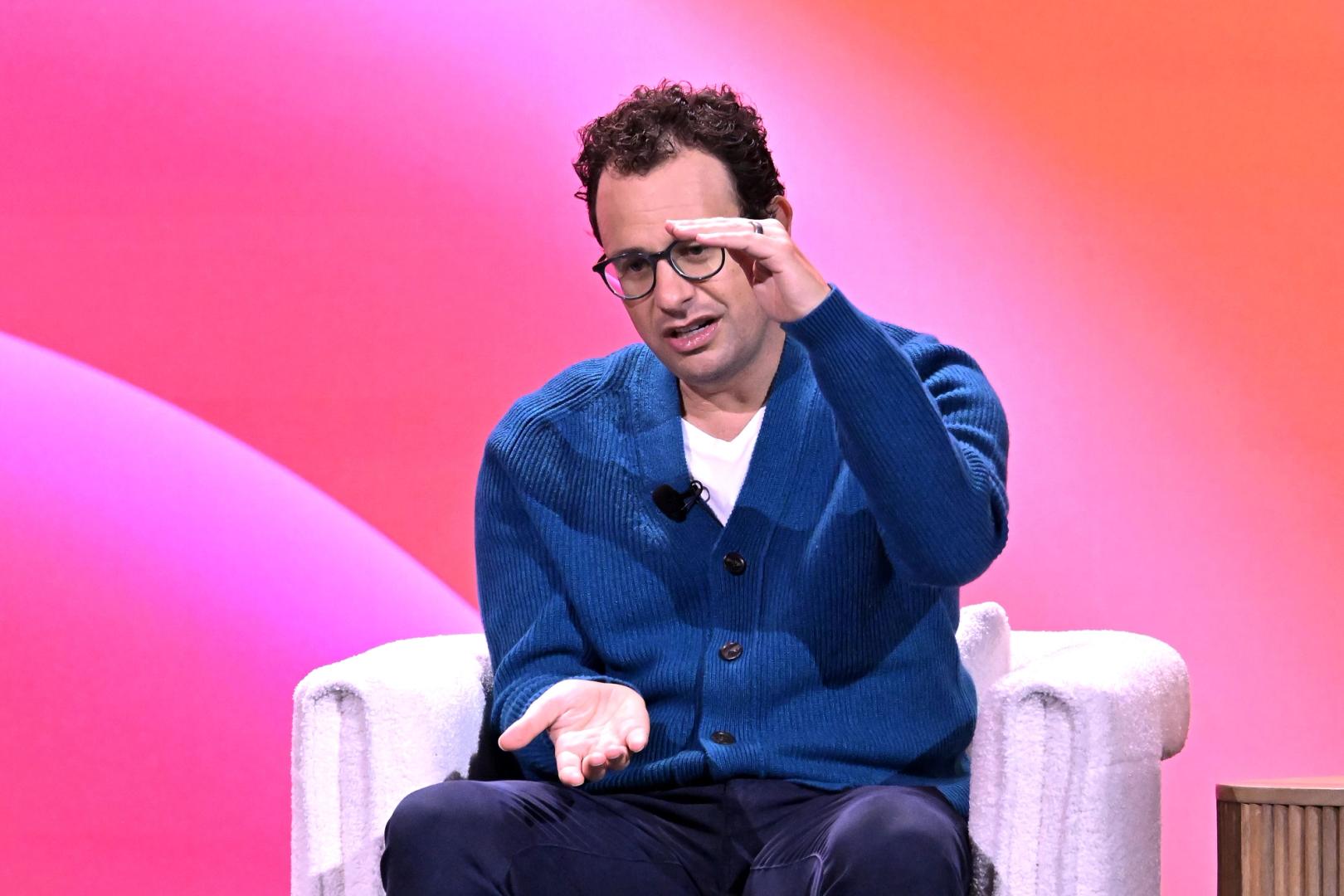
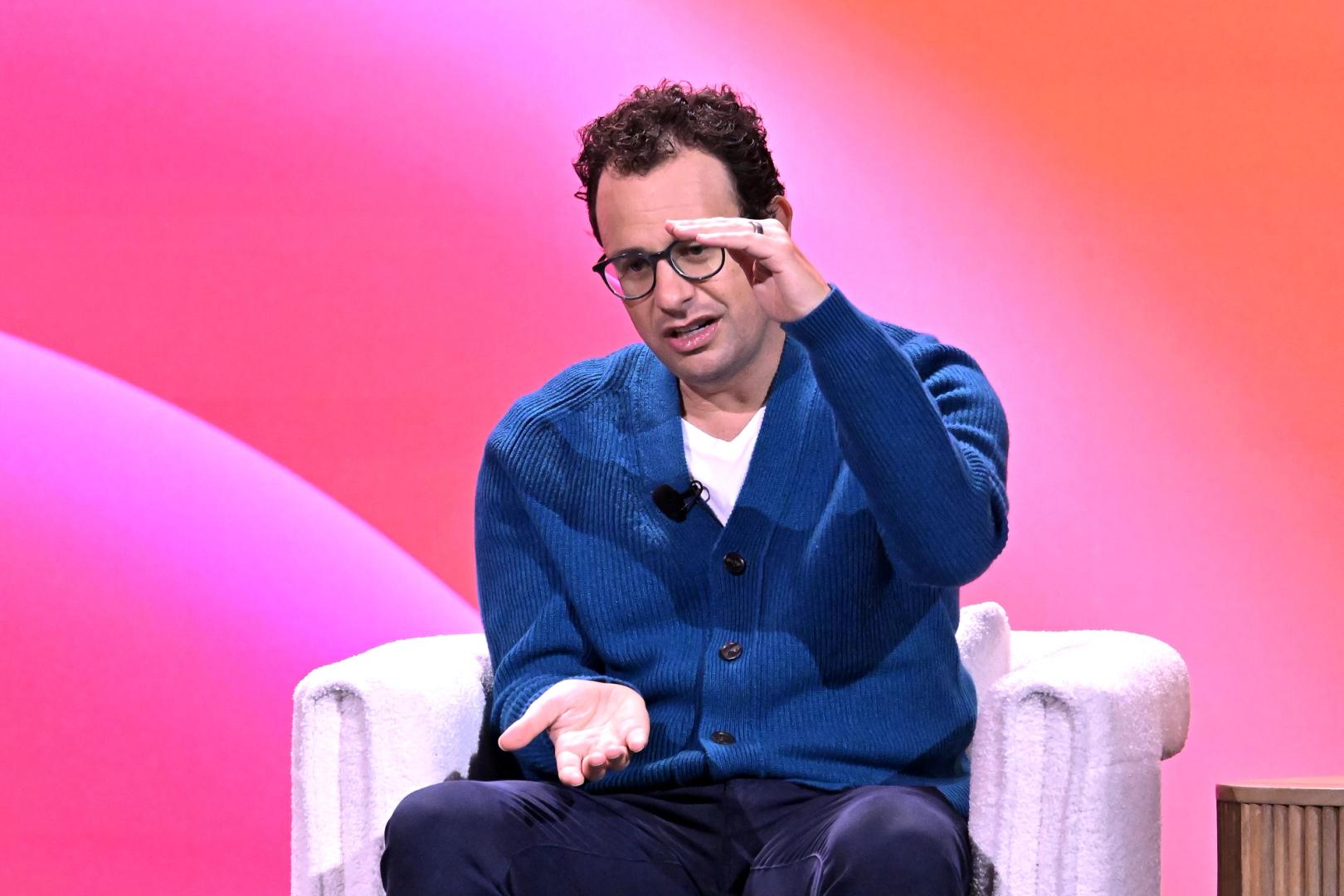
Anthropic’s Dario Amodei, OpenAI’s Sam Altman and Elon Musk have agreed on an unusual position: frontier AI development may need to slow as systems become capable of helping build their own successors.
Swiss-based asset manager 21Shares has outlined its investment case for XRP, citing regulatory clarity, institutional access, growing XRPL utility, and a predictable supply.
Nevertheless, it outlined one major risk, which continues to haunt the underlying asset.
Why Bullish on XRP?
Given Ripple’s years-long battle with the US Securities and Exchange Commission and the favorable outcome in the past year or so, 21Shares’ report identified regulatory clarity as the first pillar. The conclusion in August 2025 removed what the asset manager described as a major compliance obstacle for institutions, and the regulatory environment for the asset improved further in 2026, giving it considerably clearer treatment than it had under the previous SEC tenure.
Perhaps related to regulatory clarity is the second pillar: expanding institutional access. Recall that several spot XRP ETFs hit Wall Street last November and attracted over $1 billion in a month and a half. As recently reported, the cumulative inflows reached a new all-time high above $1.7 billion, even during this difficult year for the asset.
Next, 21Shares outlined the actual network usage, as the report noted that XRP Ledger has processed close to $500 billion in on-chain value during the past 12 months. At the same time, Ripple’s RLUSD stablecoin expanded from a market cap of $72 million to $1.6 billion in less than two years.
Tokenized assets on XRPL have also grown substantially, recently hitting $4 billion. The network continues to target payments, stablecoins, and real-world assets.
Crypto commentator Vincent Van Code also weighed in on 21Shares’ report, arguing that Ripple’s broader infrastructure strengthens that proposition. They described it as an “out-of-the-box, turnkey end-to-end solution” for institutions looking to adopt digital assets.
Lastly, the report mentioned XRP’s fixed maximum supply of 100 billion tokens, with no ongoing inflation schedule and a small amount permanently burned through transaction fees.
Major Uncertainty
Despite all the bullish comments explained above, 21Shares highlighted an important weakness in that thesis, as more XRPL usage does not automatically mean more XRP demand. Institutions can use the network while holding XRP only temporarily. In some cases, they might only barely use the token.
The crucial question here is whether expanding payments, stablecoins, and tokenized assets will ultimately translate into sustainable value accrual for XRP.
For investors convinced that global finance will increasingly move on-chain, 21Shares argued that XRP provides one of the more regulated and institutionally connected ways to gain exposure to that trend. However, the investment case still depends on adoption eventually translating into actual demand for the underlying asset, which continues to struggle against the $1.40 resistance as of press time.
The post Why Ripple (XRP)? 21Shares Highlights 4 Reasons Investors Should Take Notice appeared first on CryptoPotato.
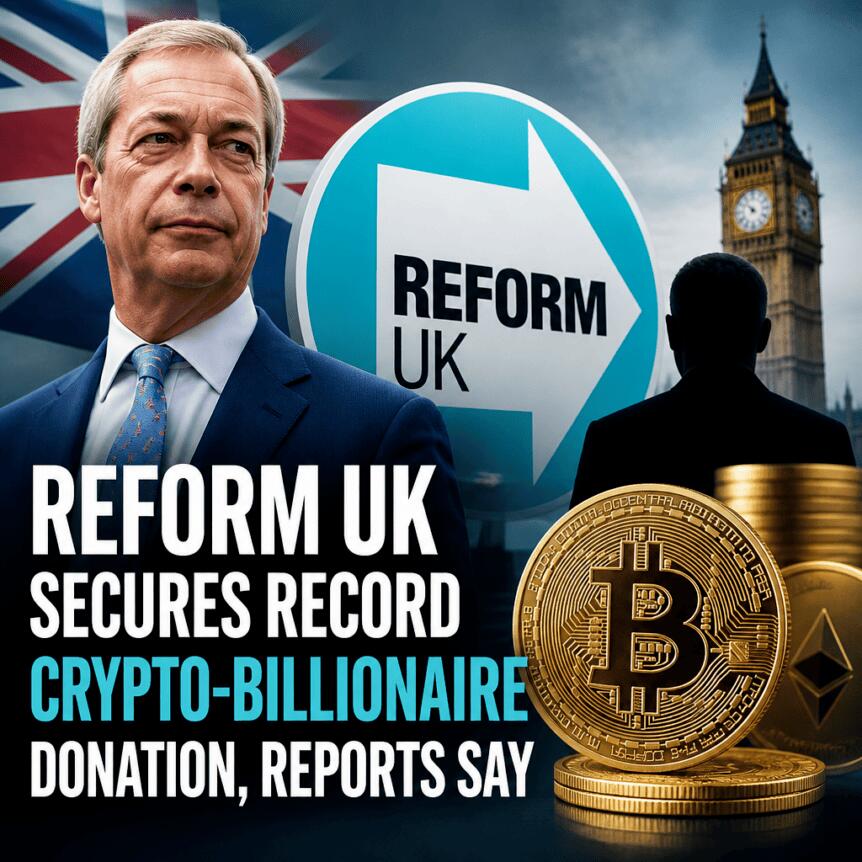
Ben Delo, a co-founder of the BitMEX cryptocurrency exchange and a prominent UK crypto figure, has donated £36 million (about $49 million) to Nigel Farage’s Reform UK, according to reports from the DPA and other UK media. The payment is described as the largest single donation ever made to a British political party.
Delo said the contribution was intended to help Reform UK ensure a “fair fight” in the run-up to the next stage of voting. The move lands amid an ongoing UK political debate about whether donations and gifts tied to the crypto industry can distort elections and how lawmakers should regulate them.
Key takeaways
- Ben Delo reportedly gave £36 million to Reform UK, the biggest political-party donation in the UK, according to DPA and other media.
- Delo frames the donation as a way to enable a “fair fight” at the polls.
- Reform UK’s earlier major crypto-linked donors included Christopher Harborne, who previously gave £9 million.
- UK politicians have been debating whether to impose a permanent ban or moratorium on crypto donations in response to the Farage donation controversy.
- Delo’s background includes prior US federal charges tied to the Bank Secrecy Act; he later received a presidential pardon, according to prior reporting.
Why the £36 million donation is drawing scrutiny
The reported £36 million donation by Ben Delo gives fresh fuel to concerns about the influence of digital-asset wealth in British elections. It also intensifies a controversy that has already prompted investigations and parliamentary fallout.
Earlier reporting from Cointelegraph said Farage was under investigation after receiving millions of dollars’ worth of donations and gifts from figures connected to the crypto sector, including Christopher Harborne and George Cottrell. Delo’s latest contribution is therefore not happening in a vacuum—it follows a sequence of political and legal developments that have put the spotlight on how the UK treats crypto-related political funding.
For investors and builders in the crypto industry, the political implications are not abstract. Election funding that draws from large, market-aligned fortunes can shape the policy environment affecting digital asset regulation, compliance expectations, and future tax or licensing rules.
Reform UK’s fundraising and the “fair fight” rationale
Delo reportedly said he donated the money to ensure a “fair fight” at the polls. Farage responded by expressing confidence in Reform UK and describing the party as the only one capable, in his view, of reversing the country’s economic decline.
The scale of the donation also contrasts with earlier fundraising milestones for Reform UK. Cointelegraph previously noted that Delo’s fellow crypto-linked donors included Harborne, who gave £9 million to the party last August, making him the second-largest donor behind Delo’s reported contribution.
According to The Telegraph, the £36 million was structured as £1 million per month up to the general election in 2029, but Delo made the full payment upfront so it could not be blocked. That detail matters because the controversy around crypto donations in the UK has increasingly focused not only on who funds political parties, but also on how such funding is timed and administered.
Investigation backdrop: resignation, by-election, and lawmakers’ response
In July, Nigel Farage resigned his position as a Member of Parliament amid the crypto donation scandal, which triggered a by-election that Reform UK won with 63% of the vote—ahead of a satirical candidate, Count Binface, as described in prior coverage.
Cointelegraph previously reported that Labour MPs were considering making a moratorium on crypto donations—announced in March and pending legislation—permanent in response to the situation Farage described as “gifts” from Harborne and Cottrell. The reported Delo donation adds new pressure to those discussions, because it demonstrates that large-scale political funding tied to crypto-linked wealth can continue even as lawmakers weigh whether existing rules are adequate.
More broadly, the case highlights a tension in UK political life: the desire to attract legitimacy and investment while also addressing concerns that opaque or poorly understood funding channels could undermine public trust in democratic processes.
Delo’s legal history and what the pardon means for the political debate
Ben Delo’s political visibility is also tied to his legal history in the United States. Cointelegraph previously reported that Delo, one of three BitMEX co-founders, pleaded guilty to federal charges related to violations of the Bank Secrecy Act. Cointelegraph also reported that Delo agreed to pay a $10 million fine in 2022 and did not serve prison time.
Importantly for context, earlier reporting also states that Delo and his colleagues Arthur Hayes and Samuel Reed received a pardon from US President Donald Trump in March 2025. While a pardon does not erase prior conduct in the public record, it can change how figures are perceived legally and politically, including their ability to participate openly in public life and major funding decisions.
For UK lawmakers trying to decide on permanent restrictions, the Delo case underscores a practical dilemma: regulating political influence often requires judgments about risk, reputation, and compliance—rather than relying only on the presence or absence of formal convictions.
What to watch next
As Reform UK faces fresh attention following the reported £36 million donation, the key question is whether UK lawmakers move beyond debate toward binding, enforceable rules on crypto-linked political funding. Readers should watch for signs of whether the proposed permanent moratorium evolves into legislation—and how parties and donors respond to any new compliance expectations.


In July, Moonshot AI released the world’s largest free artificial intelligence (AI) model. Eight weeks later, the company is filing police reports.
Kimi K3 arrived on July 16. Anyone could download it and run it. In an industry that guards its best work, that was rare. But then the servers buckled.
A Launch That Ate Its Own Computers
Four days in, Moonshot stopped selling new subscriptions. Paying members kept their seats as everyone else waited.
“Over the past 48 hours, demand has pushed close to the limits of our current capacity,” the team said in a statement.
That was the loudest the company would be all summer.
On September 11, Moonshot pushed a smaller model, K2.8 Preview, across its coding platform. Read the changelog closely and something odd appears. Some K3 requests now get answered by the smaller model instead.
However, that same week, Anthropic accused Moonshot of quietly passing Kimi users’ questions to Claude. It said Moonshot showed Claude’s answers as Kimi’s own work. In a single 10-day window, it counted nearly 300,000 handoffs routed through 5,380 fake accounts.
One of those users was probably military, Anthropic says. They uploaded footage from hundreds of security cameras in Chengdu and asked whether a man was behaving strangely.
Here is the uncomfortable part. All of it rests on Anthropic’s own logs. No regulator has tested any of it. BeInCrypto reported on September 1 that Anthropic had already shipped a block against this. That was 10 days before its September threat report named a single company.
Then came the claim that Moonshot’s founder had been taken away after the Anthropic report.
On Saturday, the company answered.
“The information circulating online regarding the founder and employees is completely fabricated and malicious slander. We have immediately reported the matter to the police and will pursue legal action against those responsible for spreading the rumors,” Moonshot AI said on Saturday.
No newspaper has confirmed an arrest. No agency has confirmed an investigation. What is confirmed is stranger. The year’s biggest open AI model is now partly handled by something smaller, and the fullest account of where its users’ questions went was written in San Francisco.
The post 8 Weeks After Kimi K3 Launch, Moonshot AI is Filing Police Reports appeared first on BeInCrypto.

The challenge is not simply producing more food. Agricultural production has increased in Africa over the last few decades, but growth isn’t necessarily durable. Agri-food supports two-thirds of African livelihoods and generates a third of the continent’s GDP. But farmers generate less value than their counterparts elsewhere: about $1,500 per worker annually versus $4,300 globally, according to figures from AGRA, the organization formerly known as the Alliance for a Green Revolution in Africa. Higher profits mean more farmers can afford to stay in the business and younger people will be enticed to join, thereby creating a more sustainable food system for the continent.
Profitable farming isn’t just about feeding people, as important as that is. A developed agriculture sector creates opportunities for investment in processing, trading, and other functions along the agriculture value chain, leading to further economic growth opportunities. Only around 12-15% of Africa’s agricultural GDP comes from processing, compared to more than 60% in developed regions, according to AGRA. And agricultural outputs can be the basis of new industries: think of biofuels. From a climate perspective, too, higher profits create adaptive capacity. Farmers with margin can invest in irrigation, improved seeds, better soil health, or simply absorb a bad season.
The analyst at CryptoQuant weighed in on BTC’s notable price resurgence, which drove the asset from under $65,000 to over $82,000 within a few weeks, and, more specifically, on the subsequent rejection and what could follow around the corner.
They believe the overall setup remains constructive, but the cryptocurrency has to overcome a stack of technical and on-chain resistance levels, which are right in front of it.
Which Level Decides BTC’s Fate?
The weekly report by CryptoQuant identified Bitcoin’s 365-day moving average, currently located at $81,700, as the asset’s most important level. Recall that BTC briefly exceeded that level at the start of September, but the bears stepped up and quickly rejected the move.
Historically, bull markets have “officially” begun once the cryptocurrency closes above this moving average. A successful close above $81,700 could confirm a new bullish phase and open the door for another major leg up. However, its continuous inability to break through could lead to a longer consolidation phase or even to a more profound decline.
On the downside, bitcoin’s rally won’t be confirmed by simply moving past the $81,700 obstacle, as there are a few others on the way up. At first, CryptoQuant found the 3x Metcalfe valuation band, which sits at $83,600 and stands as the next big resistance. This level halted BTC in May and has previously coincided with important cycle turning points.
If taken down, there’s one more at $88,700, which is the trader realized-price upper band. History shows that selling has intensified once the cryptocurrency approaches this line because active traders begin sitting on increasingly large unrealized profits.
539K BTC
CryptoQuant noted that the most immediate problem is considerably closer as long-term holders sold as much as 539,000 units between $77,100 and $80,200 throughout the year, creating what the analysts described as the heaviest nearby on-chain supply wall.
Bitcoin would need to absorb this supply before making another convincing attempt north, while the downside is better defined. The 200-day MA around $70,000 represents the first major technical support, followed by another substantial on-chain cluster between $62,000 and $65,000, where approximately 476,000 BTC were accumulated this year.
Overall, CQ’s analysts are still bullish on BTC, but under one critical condition: the asset must clear $81,700 soon, then $83,600, and eventually $88,700 before the recovery can develop into a more profound rally.
The post Bitcoin’s 24% Rally Hit a Wall: CryptoQuant Reveals What Comes Next appeared first on CryptoPotato.

Noche UFC Best Bets: Two KO Picks Worth Targeting

The ‘brilliant’ area in the shadow of Addenbrooke’s hospital where residents feel ‘lucky’

Inflation reflects growth dynamics in India: Christopher Wood

Memory prices are slowing because buyers ran out of money

Micron Stock Climbs Above $1,031 as AI Memory Crunch and a $50 Billion Outlook Fuel the Rally

AMD Stock Climbs After Management Lifts 2027 Data Center Outlook Toward $70 Billion in AI Sales


-
Tech4 days ago
Memory prices are slowing because buyers ran out of money
-
 Business3 days ago
Micron Stock Climbs Above $1,031 as AI Memory Crunch and a $50 Billion Outlook Fuel the Rally
-
 Business3 days ago
AMD Stock Climbs After Management Lifts 2027 Data Center Outlook Toward $70 Billion in AI Sales
-

 Crypto World4 days ago
Bitcoin price risks $76K drop as $78K support weakens
-

 Crypto World4 days ago
Robinhood Stock: How To Take Advantage With Reduced Risk
-

 Crypto World4 days ago
Ethereum price stalls below $2,500 as ADX drops to 11
-

 NewsBeat4 days ago
England up in reading, maths and science rankings as Scotland and Wales dip
-

 Fashion1 day ago
Weekend Open Thread – Corporette.com
-

 Crypto World2 days ago
2 Chip Stocks Broke Out This Week. Neither Was Nvidia
-

 Crypto World2 days ago
OKX launches 10x OpenAI, Anthropic X-Perps in Europe
-

 Crypto World1 day ago
XAG/USD: Silver’s Short-Term Rally Meets Its Moment of Truth
-
 Crypto World4 days ago
Intel Stock Jumps 9% on Chip Price Hike Report, US Stake Gains $36 Billion
-

 NewsBeat4 days ago
What went right this week: an ‘historic’ fall in violent crime, plus more
-

 Crypto World1 day ago
Diesel Tops $6 a Gallon for the First Time as 28 States Set Records
-

 Crypto World3 days ago
Bitcoin price risks $70K if $78K neckline breaks
-
 Business4 days ago
Meta debuts long-awaited personal AI agent, Muse
-
Crypto World2 days ago
Ethereum Price Analysis: Consolidation at $2.5K Tests Momentum as On-Chain Activity Surges
-
 Crypto World4 days ago
Bitcoin price holds near $79K as cycle drawdowns narrow
-
 Crypto World3 days ago
Ethereum price breakout hinges on a close above $2,535
-

 Entertainment3 days ago
Case Sees Major Update As Jury Deliberations Begin
You must be logged in to post a comment Login