
Crypto World
NSA Accesses Anthropic Model After Pentagon Blacklist


TLDR
- The NSA reportedly used Anthropic’s Mythos Preview despite a Pentagon supply chain risk designation.
- Axios cited sources who confirmed the NSA accessed the model after the restriction.
- The Pentagon labeled Anthropic a supply chain risk in March over safeguard disputes.
- The dispute involved Anthropic’s refusal to loosen controls tied to autonomous weapons and surveillance.
- Anthropic limited Mythos Preview access to about 40 organizations due to offensive cyber capabilities.
The National Security Agency has used Anthropic’s Mythos Preview despite a Pentagon supply chain risk designation. Axios cited multiple sources who confirmed the agency’s access to the model. The report shows internal differences across federal departments over Anthropic technology use.
Anthropic Model Access Expands Inside NSA
Axios reported that two sources confirmed NSA use of Mythos Preview. One source said the department expanded usage beyond limited internal testing.
However, the Pentagon designated Anthropic as a supply chain risk in March. The designation restricted the company’s technology in military contracts after a policy dispute.
The dispute centered on Anthropic’s refusal to loosen safeguards. The company declined to adjust controls linked to autonomous weapons and domestic surveillance systems.
As a result, the Pentagon limited procurement pathways for Anthropic products. Still, Axios reported that the NSA accessed Mythos through existing channels.
The report did not explain the technical route used for access. However, it confirmed that usage occurred after the risk designation.
Axios stated that it remains unclear how the NSA deployed the model. Yet, other authorized organizations have used Mythos to scan systems for vulnerabilities.
Anthropic limited Mythos Preview access to about 40 organizations. The company restricted access because of the model’s offensive cyber capabilities.
Sources told Axios that the NSA relied on the model’s security testing features. They did not describe operational outcomes or contract values.
The report did not state whether the NSA violated formal procurement rules. It also did not clarify if the usage involved classified systems.
White House Engages Anthropic Leadership
The White House has explored options to work with Anthropic despite the ongoing court dispute. Axios reported that discussions took place at senior levels.
Anthropic CEO Dario Amodei met White House Chief of Staff Susie Wiles. He also met Treasury Secretary Scott Bessent to discuss government usage.
Axios reported that Amodei addressed Mythos access and broader security practices. The outlet cited a source familiar with the meeting.
The meeting occurred while the court fight over the Pentagon designation continued. However, officials have not announced any policy change.
The White House did not publicly outline next steps. Still, the talks showed active engagement with Anthropic leadership.
Anthropic has defended its safeguards in previous statements. The company has said it maintains strict controls over high-risk applications.
Pentagon officials have not rescinded the supply chain risk designation. Therefore, formal contract limits remain in place.
Axios reported that agency-level adoption may differ from procurement policy. However, it did not provide internal compliance details.


TLDR
- Tether acquired 1.95 million shares in Antalpha through the company’s 2025 Nasdaq IPO.
- The stake gives Tether about 8.2% ownership in the Bitmain-linked bitcoin mining finance firm.
- Antalpha raised about $49 million in its IPO at a price of $12.80 per share.
- The company reported nearly $80 million in 2025 revenue, up 68% year over year.
- Antalpha’s net income rose to $18.5 million, more than triple the prior year.
Tether confirmed that it acquired nearly two million shares in bitcoin mining finance firm Antalpha through its 2025 IPO. The disclosure appeared in a regulatory filing released on Monday. The filing shows that Tether now owns about 8.2% of Antalpha’s outstanding equity.
Tether Builds Position in Antalpha After IPO
Tether purchased 1.95 million shares in Antalpha during the company’s Nasdaq debut in May 2025. The filing states that Tether acquired more than half of the shares offered to investors. As a result, Tether became one of the largest participants in the $49 million offering priced at $12.80 per share.
Antalpha operates as a financing partner to Bitmain, the largest crypto mining hardware manufacturer. The company provides loans secured by bitcoin and mining equipment. It also supports miners with funding for hardware purchases and operating costs.
Antalpha reported full-year 2025 revenue of nearly $80 million, reflecting a 68% annual increase. The company posted net income of $18.5 million, more than triple the prior year’s result. These figures came from its latest financial results filed after the IPO.
However, Antalpha shares have declined since listing on Nasdaq under the ticker ANTA. The stock trades near $9.30, which marks a drop of more than 27% from the IPO price. Market data on Monday reflected this performance.
Several public bitcoin mining operators have reduced direct mining exposure. Some companies have shifted resources toward AI and high-performance computing infrastructure. This sector shift has coincided with pressure on mining-related equities.
Tether Expands Investment Activity Across Crypto and Technology
Tether has increased its investment activity across crypto infrastructure and related technologies. The company recently backed a $134 million private placement tied to Stablecoin Development Corporation. That vehicle aims to provide exposure to the Sky ecosystem.
In 2026, Tether co-led a $7.5 million funding round in Utexo. Utexo builds USDT settlement infrastructure on the Bitcoin network. The company also joined a $5.2 million seed round for Ark Labs.
Ark Labs develops programmable finance rails on Bitcoin. The firm focuses on expanding utility for digital assets within payment systems. These investments align with Tether’s stated focus on crypto infrastructure.
Outside digital assets, Tether acquired a strategic stake in sleep technology company Eight Sleep. The transaction valued Eight Sleep at $1.5 billion. The move formed part of Tether’s push into AI and consumer hardware.
On Monday, RWA startup Kaio announced that Tether joined its $8 million strategic funding round. Kaio disclosed the participation in a public statement. The announcement marked Tether’s latest disclosed investment activity.

Bybit has led an $8 million Series A for Hata, a dual-licensed digital asset exchange operating in Malaysia, marking a notable push into Southeast Asia’s evolving crypto regulatory landscape. The round, which followed Bybit’s earlier $4.2 million seed investment, is aimed at boosting liquidity, expanding the user base, and developing additional digital asset products as Hata scales in the country.
Hata operates under licenses from Malaysia’s Securities Commission and the Labuan Financial Services Authority, enabling it to offer trading and custody services for digital assets within the Southeast Asian nation. Since launching in 2023, the platform reports more than 209,000 registered users and processed 1.04 billion Malaysian ringgits (about $225 million) in transaction volume in 2025, underscoring growing demand for compliant onshore crypto access.
Ben Zhou, Bybit’s co-founder and CEO, described Malaysia as strategically important, noting its digitally engaged population and long-term potential for asset adoption across Southeast Asia. Bybit itself sits among the world’s largest crypto exchanges by trading volume, with CoinMarketCap ranking it as the fifth-largest platform globally.
Beyond Southeast Asia, Bybit has deepened its commitment to the Middle East. In March, the firm named Derek Dai as the new country manager for the MENA region to spearhead expansion and partnerships, despite ongoing regional tensions. The executive said the Middle East is emerging as a key crypto market, with Bybit targeting expanded access to local currencies, including the UAE dirham, and closer collaboration with banks and payment providers in the coming months.
Related reading: Rwanda swats Bybit’s P2P platform offering franc-to-crypto trading
Key takeaways
- Bybit-led $8 million Series A fuels Hata’s growth in Malaysia, with prior seed funding of $4.2 million contributing to its onshore expansion agenda.
- Hata operates under dual licensing from Malaysia’s Securities Commission and the Labuan Financial Services Authority, enabling trading and custody of digital assets in-country.
- Malaysia’s regulatory push includes a Digital Asset Innovation Hub sandbox and a broader three-year roadmap from Bank Negara Malaysia to explore asset tokenization and cross-border settlement.
- Bybit’s regional strategy extends beyond Malaysia into the Middle East, with a dedicated MENA leadership and plans to broaden local currency access and banking partnerships.
Malaysia’s regulatory sandbox as a testing ground for digital assets
The fundraising comes amid a broader regulatory push in Malaysia to create a structured framework for digital assets. In June, Malaysia unveiled the Digital Asset Innovation Hub as a regulatory sandbox, allowing fintechs and digital asset firms to pilot use cases such as programmable payments, ringgit-backed stablecoins, and supply chain financing under central bank oversight. The aim is to test and refine practical applications of tokenized finance within a controlled environment before wider market rollout.
That same month saw notable industry activity, with a Crown Prince-owned telecom company launching a ringgit-backed stablecoin called RMJDT on the Zetrix blockchain within the sandbox framework. These developments illustrate Malaysia’s intent to balance innovation with consumer protection and regulatory clarity as the sector matures.
Bank Negara Malaysia (BNM) has signaled a longitudinal, three-year plan to explore asset tokenization, including pilots for tokenized deposits, stablecoins, and cross-border settlement via its Digital Asset Innovation Hub. The central bank has formed an industry working group co-led with the Securities Commission Malaysia to coordinate use cases and address regulatory and legal considerations as the market evolves.
What Bybit’s regional push means for investors and users
Bybit’s investment in Hata aligns with a wider pattern of exchanges pursuing onshore hubs that offer regulated access to digital assets while expanding liquidity and product depth. For investors, the Malaysia-focused funding round signals confidence in a credible regulatory pathway that could attract more institutional liquidity and user adoption as the market scales. For users, the move could translate into more competitive trading options, improved custody solutions, and a broader suite of asset offerings under compliant standards.
The Middle East leg of Bybit’s expansion strategy further broadens the firm’s geographic footprint at a time when regional crypto markets are intensifying activity despite ongoing geopolitical headwinds. With Dai at the helm in MENA, Bybit aims to broaden UAE dirham access and foster partnerships with banks and payment providers, potentially unlocking smoother onramps for retail and institutional participants alike.
Analysts familiar with the space note that the regulatory sandbox in Malaysia could become a proving ground for cross-border tokenization concepts, while Bybit’s regional expansion could accelerate the adoption cycle in the MENA region. If these efforts translate into measurable liquidity improvements and broader product offerings, they could set a precedent for other exchanges looking to operate vertically integrated, licenced platforms in emerging markets.
What to watch next
In the near term, observers should monitor how Hata leverages the fresh funding to enhance liquidity and user growth, and whether subsequent regulatory milestones in Malaysia unlock additional onshore listings and product pilots. In the Middle East, the pace of collaborations with banks and payment providers will be a key indicator of Bybit’s ability to convert strategic commitments into practical access for users and merchants. Finally, Malaysia’s regulatory sandbox activity—alongside the central bank’s tokenization roadmap—will shape the broader environment for digital assets and could influence how exchanges approach onshore operations in the region.
TLDR
- Revolut CEO Nik Storonsky said the company will not pursue an IPO before 2028.
- He confirmed that the public listing remains at least two years away.
- Revolut recently secured its full UK banking license after a five-year regulatory process.
- The company has applied again for a US bank charter to access Federal Reserve payments.
- The US license would allow Revolut to offer loans and credit cards directly to customers.
Revolut will not pursue a public listing before 2028, according to Chief Executive Nik Storonsky. He confirmed that the company plans to stay private for at least two more years. Meanwhile, Revolut continues to expand its banking footprint in the United States and the United Kingdom.
Revolut Delays IPO While Strengthening Banking Credentials
Nik Storonsky addressed the company’s listing plans during an interview with David Rubenstein. He said an initial public offering remains “at least two years away,” and he confirmed that the timeline has not changed. Therefore, any potential market debut would take place in 2028.
He stated that the company does not face pressure to accelerate the listing process. Instead, management plans to focus on operations and regulatory progress. Storonsky also said that as a bank, “it’s super important to have trust,” and he linked that goal to long-term planning.
Revolut secured its full UK banking license after a five-year regulatory process. The approval allows the company to operate as a fully licensed bank in its home market. As a result, it can expand traditional banking services under direct supervision.
The firm also renewed efforts in the United States. Last month, it applied for a US bank license that would provide Federal Reserve payment access. That charter would also allow the company to issue loans and credit cards directly to American customers.
Secondary Sales and Financial Growth Support Private Runway
Before pursuing an IPO, Revolut plans to consider more secondary share sales. The company uses these transactions to provide liquidity to employees and early investors. It typically conducts a secondary offering every one to two years.
The most recent secondary sale closed in November at a $75 billion valuation. That figure rose from $45 billion recorded a year earlier. Bloomberg reported in February that the company may consider another secondary transaction in 2026.
Nvidia and Coatue Management rank among Revolut’s leading backers. These investors supported the company during recent funding rounds. However, management continues to prioritize private market flexibility over immediate public exposure.
Revolut reported about $6 billion in revenue for 2025. Profits climbed 57% year over year to nearly $2.3 billion. The company marked its fifth consecutive profitable year.
It ended 2025 with more than 68 million customers across 40 markets. The platform also offers trading access to over 300 digital tokens. This feature places Revolut among the more crypto-friendly banking platforms in Europe.
Storonsky reiterated that trust remains central to the company’s strategy. He emphasized operational strength before any public listing. The company continues to evaluate secondary share options as it targets a potential IPO in 2028.

Wenn Sie auf der Suche nach einem Online Casino in Österreich sind, sind Sie bei uns genau richtig. Wir haben uns bemüßt, die besten Online Casinos in Österreich für Sie auszuwählen, damit Sie sicherstellen können, dass Sie in einem sicheren und seriösen Umfeld spielen können.
Ein Online Casino in Österreich muss bestimmte Kriterien erfüllen, um als seriös und sicher zu gelten. Dazu gehören eine gültige Lizenz, eine sichere und zuverlässige Zahlungsmethode, eine breite Palette an Spielen und einem guten Kundenservice.
Wir haben uns bemüßt, diese Kriterien sorgfältig zu überprüfen, um sicherzustellen, dass die Online Casinos in Österreich, die wir empfehlen, Ihren Erwartungen entsprechen. Wir haben uns auch bemüßt, die verschiedenen Spiele und Funktionen, die diese Online Casinos anbieten, sorgfältig zu überprüfen, um sicherzustellen, dass Sie die beste Spiel- und Unterhaltungserfahrung haben.
Unser Team von Experten hat sich bemüßt, die Online Casinos in Österreich sorgfältig zu überprüfen, um sicherzustellen, dass Sie die beste Erfahrung haben. Wir haben uns bemüßt, die verschiedenen Spiele und Funktionen, die diese Online Casinos anbieten, sorgfältig zu überprüfen, um sicherzustellen, dass Sie die beste Spiel- und Unterhaltungserfahrung haben.
Wir sind sicher, dass Sie die beste Erfahrung haben werden, wenn Sie eines unserer empfohlenen Online Casinos in Österreich auswählen. Wir wünschen Ihnen viel Glück und Spaß bei Ihrem Online-Glücksspiel-Erlebnis!
Die Top-5 Online Casinos in Österreich:
1. Casino online Österreich – Ein Online Casino mit einer breiten Palette an Spielen und Funktionen.
2. Online Casino – Ein Online Casino mit einer sicheren und zuverlässigen Zahlungsmethode.
3. Casino online – Ein Online Casino mit einem guten Kundenservice.
4. Online Casino Österreich – Ein Online Casino mit einer gültigen Lizenz.
5. Casino online – Ein Online Casino mit einer breiten Palette an Spielen und Funktionen.
Top-Anbieter für Spielautomaten und Tischspiele
Die Auswahl eines geeigneten Online-Casinos in Österreich kann für Spieler, die auf die Suche nach den besten Spielautomaten und Tischspielen sind, eine Herausforderung darstellen. Um Ihnen bei dieser Entscheidung zu helfen, haben wir eine Auswahl der Top-Anbieter für Spielautomaten und Tischspiele in Österreich zusammengestellt.
Einige der besten Online-Casinos in Österreich, die Spielautomaten und Tischspiele anbieten, sind:
1. https://wkv-media.at/ online Österreich, das von der österreichischen Regierung lizenziert ist und eine breite Palette an Spielautomaten und Tischspielen bietet.
2. https://wkv-media.at/ Casino, das von der MGA lizenziert ist und eine Vielzahl an Spielautomaten und Tischspielen anbietet, darunter auch einige der beliebtesten Spiele wie Book of Ra und Blackjack.
3. https://wkv-media.at/ Casino, das von der Curacao Gaming Commission lizenziert ist und eine breite Palette an Spielautomaten und Tischspielen bietet, darunter auch einige der beliebtesten Spiele wie Starburst und Roulette.
4. https://wkv-media.at/ Casino, das von top online casinos österreich der MGA lizenziert ist und eine Vielzahl an Spielautomaten und Tischspielen anbietet, darunter auch einige der beliebtesten Spiele wie Book of Ra und Blackjack.
5. https://wkv-media.at/ Casino, das von der MGA lizenziert ist und eine breite Palette an Spielautomaten und Tischspielen bietet, darunter auch einige der beliebtesten Spiele wie Starburst und Roulette.
Wenn Sie auf der Suche nach einem Online-Casino in Österreich sind, das Spielautomaten und Tischspiele anbietet, sollten Sie sich an diese Top-Anbieter wenden. Sie bieten Ihnen eine sichere und faire Spielumgebung, eine breite Palette an Spielen und eine Vielzahl an Bonusangeboten.
Wie wählt man das beste Online Casino aus?
Wenn Sie sich für ein Online Casino in Österreich entscheiden möchten, gibt es einige wichtige Faktoren, die Sie beachten sollten. Ein Online Casino Österreich legal ist nur dann sicher und vertrauenswürdig, wenn es von der Regierung genehmigt wurde und bestimmte Sicherheitsstandards erfüllt.
Ein erstes Kriterium ist die Lizenz. Ein Online Casino Österreich sollte eine gültige Lizenz von der Regierung haben, um sicherzustellen, dass es sich um ein seriöses Unternehmen handelt. Eine Lizenz bedeutet, dass das Casino von der Regierung genehmigt wurde und bestimmte Sicherheitsstandards erfüllt.
Ein weiteres wichtiges Kriterium ist die Auswahl an Spielen. Ein Online Casino Österreich sollte eine breite Palette an Spielen anbieten, um sicherzustellen, dass Sie sich unterhalten können. Von klassischen Tischspielen wie Blackjack und Roulette bis hin zu modernen Slots und Video-Spielen gibt es eine Vielzahl an Möglichkeiten, um Ihre Zeit zu verbringen.
Die Bedeutung von Sicherheit und Datenschutz
Sicherheit und Datenschutz sind zwei weitere wichtige Faktoren, die Sie bei der Auswahl eines Online Casinos Österreich beachten sollten. Ein Online Casino Österreich sollte sicherstellen, dass Ihre persönlichen Daten und Ihre Geldtransaktionen sicher sind. Dies kann durch die Verwendung von SSL-Verschlüsselung und andere Sicherheitsmaßnahmen erreicht werden.
Ein weiteres Kriterium ist die Zahlungsmethoden. Ein Online Casino Österreich sollte eine Vielzahl an Zahlungsmethoden anbieten, um sicherzustellen, dass Sie Ihre Geldtransaktionen leicht und bequem durchführen können. Von Kreditkarten bis hin zu E-Wallets gibt es eine Vielzahl an Möglichkeiten, um Ihre Geldtransaktionen durchzuführen.
Ein letztes Kriterium ist die Bonusangebote. Ein Online Casino Österreich sollte Bonusangebote anbieten, um sicherzustellen, dass Sie sich unterhalten können. Von Willkommensbonus bis hin zu Reload-Bonus gibt es eine Vielzahl an Möglichkeiten, um Ihre Zeit zu verbringen.
Insgesamt gibt es einige wichtige Faktoren, die Sie bei der Auswahl eines Online Casinos Österreich beachten sollten. Von Lizenz bis hin zu Bonusangebot gibt es eine Vielzahl an Kriterien, die Sie beachten sollten, um sicherzustellen, dass Sie das beste Online Casino Österreich finden.
Reguläre Lizenz und sichere Zahlungsmethoden
Wenn Sie sich für ein Online-Casino in Österreich entscheiden, ist es wichtig, dass Sie sich sicherstellen, dass das Casino eine reguläre Lizenz besitzt. Eine solche Lizenz garantiert, dass das Casino unter strengem Regulierungsrahmen steht und dass alle Aktionen transparent und rechtskonform sind.
Einige der besten Online-Casinos in Österreich haben eine Lizenz von der Österreichischen Lotterien- und Casinos-Aktiengesellschaft (Österreichische Lotterien- und Casinos-Aktiengesellschaft), die die Regulierung und Überwachung der Online-Casinos in Österreich überwacht.
Sichere Zahlungsmethoden
Ein weiterer wichtiger Aspekt ist die Sicherheit Ihrer Zahlungsmethoden. Ein seriöses Online-Casino sollte Ihnen verschiedene sichere Zahlungsmethoden an die Hand geben, wie zum Beispiel Kreditkarten, Banküberweisungen oder E-Wallets wie Neteller oder Skrill.
Es ist wichtig, dass Sie sich sicherstellen, dass das Casino die neuesten Sicherheitsstandards einhält und dass alle Transaktionen SSL-Verschlüsselt sind. Dies garantiert, dass Ihre Transaktionen sicher und geschützt sind.
Einige Online-Casinos in Österreich bieten auch weitere Sicherheitsfunktionen, wie zum Beispiel 2-Faktor-Authentifizierung oder Biometrische Authentifizierung. Diese Funktionen helfen, Ihre Identität und Ihre Transaktionen zu schützen.
Insgesamt ist es wichtig, dass Sie sich sicherstellen, dass das Online-Casino, das Sie auswählen, eine reguläre Lizenz besitzt und sichere Zahlungsmethoden an die Hand gibt. Dies garantiert, dass Sie sichere und transparente Aktionen erwartet.
TLDR
- U.S. spot Bitcoin ETFs recorded $996.4 million in net inflows last week, marking the strongest weekly intake since mid-January.
- The three-week inflow streak added more than $1.8 billion and pushed year-to-date flows above $1 billion.
- BlackRock’s IBIT led weekly inflows with $906 million, capturing the majority of new allocations.
- Morgan Stanley’s MSBT posted $71 million in inflows during its first full trading week after launch.
- Ethereum spot ETFs recorded $275.8 million in net inflows over the same period.
U.S. spot Bitcoin ETFs attracted $996.4 million in net inflows last week, marking the strongest intake since mid-January. The three-week streak pushed total additions above $1.8 billion and lifted year-to-date flows past $1 billion. Cumulative net flows now stand near $58 billion, closing the gap with the $62.8 billion peak.
Bitcoin ETFs Draw Fresh Capital as Weekly Inflows Surge
U.S. spot Bitcoin ETFs extended their inflow streak for a third straight week as capital returned to the sector. The products recorded $996.4 million in net inflows, according to market data. This weekly total marked the highest level since mid-January and reversed earlier redemptions.
BlackRock’s IBIT led weekly issuance with $906 million in net inflows. Meanwhile, Morgan Stanley’s MSBT recorded $71 million during its first full trading week after its April 8 launch. Ethereum spot ETFs also reported $275.8 million in net inflows over the same period.
Morgan Stanley’s MSBT posted $116 million in net inflows during its first week on the market. The fund carries a 0.14% fee and competes in a crowded ETF segment. The firm manages $1.9 trillion in assets, according to public disclosures.
Accumulation Pace Lifts Cumulative Flows Toward Peak
ETF issuers purchased 8,572 BTC on Friday alone as demand accelerated. Over ten days, net accumulation reached 24,197 BTC across U.S. products. Total ETF holdings now sit 3.71% below the October 10, 2025 peak.
Cumulative net flows across spot Bitcoin ETFs approach $58 billion. The category reached a peak of $62.8 billion before recent volatility. The current gap between cumulative and peak flows stands near $5 billion.
Market data shows that ETF demand absorbs a large share of newly mined bitcoin supply. Mining issuance remains limited compared with ETF accumulation rates. This imbalance continues to shape liquidity across spot trading venues.
Flow concentration remains visible across larger products. IBIT captures the majority of weekly allocations within the category. Smaller funds report uneven participation, although MSBT recorded early traction.
Price trends continue to align with ETF flow regimes. Periods of inflows often coincide with stronger bid support in spot markets. Conversely, redemption phases reduce demand absorption across exchanges.
Global exchange-traded products reflect a similar direction in cumulative demand. Institutional allocators continue to add exposure through regulated vehicles. ETF holdings remain close to record levels despite recent price declines.

Key Insights
- The breakout for SHIB is confirmed by increased volume and new higher lows, which indicate an increasing demand in the market.
- The volume of derivatives trades exceeds $249 million with the growth of open interest.
- Resistance at the range between $0.0000065 and $0.0000072 will define further momentum to the upside.
SHIB Technical Breakout Suggests Bull Momentum Continues
Following a technical breakdown, the Shiba Inu (SHIB) is now moving ahead into a new phase as it breaks out of its consolidation. A price break above a symmetrical triangle is certainly a positive sign of change for Shiba Inu’s price pattern with an evident rise in trading volumes, meaning buyers have become active enough to lift prices above the restricted zone.
The breakout has not been a random movement but rather is coupled with rising bottoms as the token experiences lower dips before moving forward again. Such a development shows that we are moving into another form of a bull structure as the weaker neutral structure has already faded away into nothingness.
Price Structure and Moving Average Analysis Favoring Trend
From a technical perspective, there are signs that the breakout is being sustained based on price action on SHIB. The token has been able to stay above the previous resistance level, turning it into support.
Moreover, the 20-day exponential moving average acts as a support to prices, aiding their motion. On the other hand, the 50-day exponential moving average is flattening, showing less bearishness in the market. This means that sellers are losing their momentum while buyers are gaining more strength in pushing up prices.
Another positive indicator is the higher lows being formed as a result of buying coming early into the game. This keeps lower lows from forming, and buyers continue to take advantage by staying in control. So long as the token stays above the breakout level, upward price movement will likely be favored.
Derivatives Volume Demonstrates High Market Participation
The increase in market participation can also be seen in the rise of derivatives trading. The number of trades made in the derivatives market has risen sharply by more than 50%, with a volume of over $249 million. This is a clear sign of high interest shown by traders who are getting ready to make a profit from the token.
Another important indicator is an increase in open interest. It currently stands at around $64 million, meaning that fresh money continues to be invested in the market. Such growth in volume and interest generally speaks to growing trends in the market.
One interesting thing about this is that there isn’t too much of a shift in the long/short ratio, which is relatively even. Such an even distribution eliminates a high chance of a sudden drop due to massive market leverage. This means that the trend will progress gradually and steadily.
The decrease in exchange outflow is another sign that the holders are choosing to accumulate tokens rather than sell them.
Resistance Levels Will Determine Future Breakout Stage
Even with the positive trend, it is essential to note that the SHIB coin will be subjected to an important resistance zone of $0.0000065 and $0.0000072. This zone represents a historical resistance level, which will influence the future performance of the asset.
If SHIB can surpass this resistance level, it will pave the way for further appreciation towards the target prices of $0.0000075 and $0.0000080. On the other hand, if it fails, it will lead to a temporary period of consolidation.
Support Levels Continue To Be Important For Stability
On the other hand, the support level of $0.0000060 which was formed by the previous breakout will act as the immediate support. The retention of the support level will be important for stability and continuation of the bullish trend as its failure would result in the price falling to lower levels of $0.0000058.
The SHIB crypto is currently trading between the confirmation and rejection zones. Its breakout from the higher levels above the resistance will continue to build momentum whereas a break below the support level might result in the price correcting for a bit before rallying again.
SHIB crypto is on the verge of making an upward rally after breaking through a critical resistance level supported by rising volume and market activity.
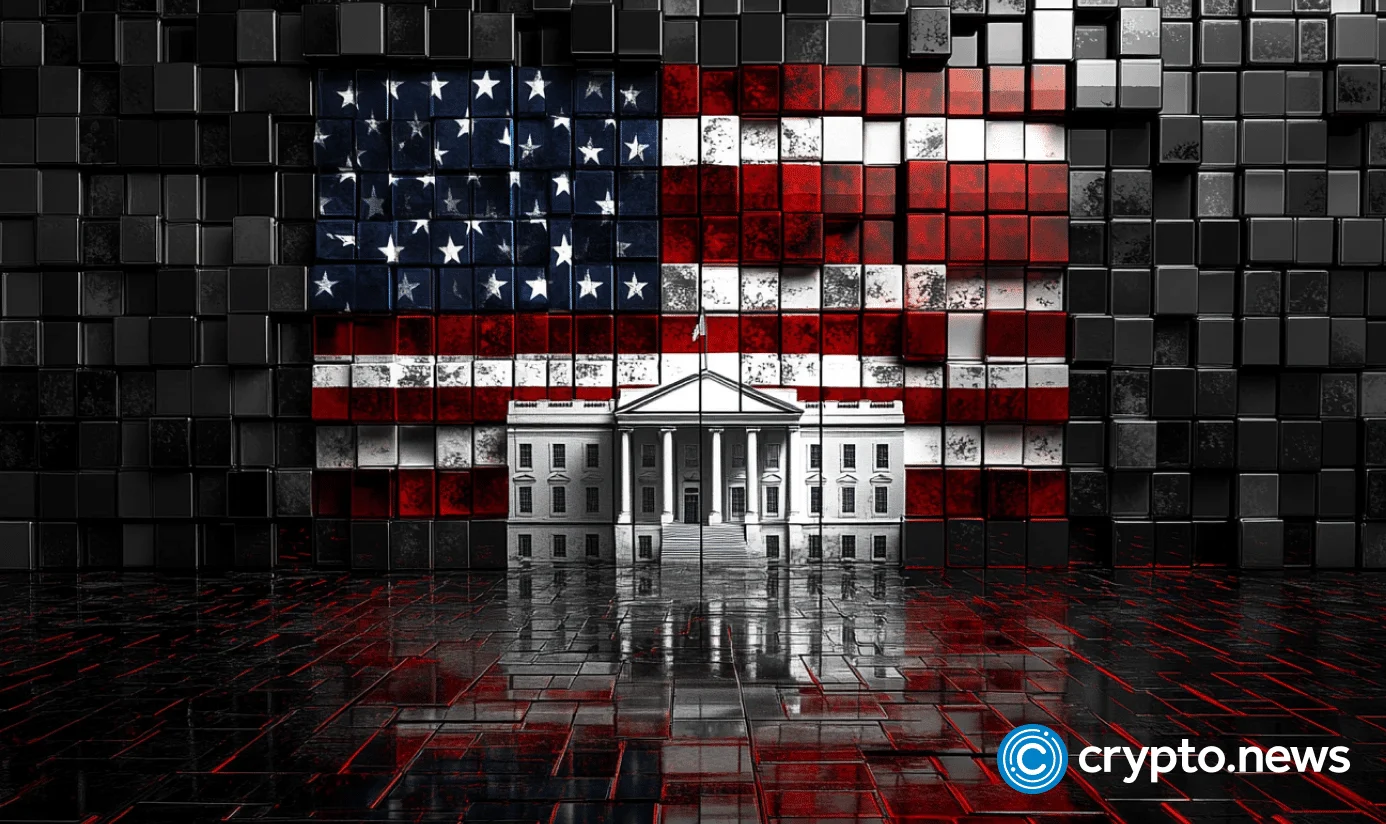
US election news arrived Sunday when Michigan Attorney General Dana Nessel formally rejected a Department of Justice demand for ballots and voting materials from Wayne County, which includes Detroit, calling the request “as absurd as it is baseless” in a joint statement with Governor Gretchen Whitmer and Secretary of State Jocelyn Benson.
Summary
- The DOJ, via Assistant Attorney General Harmeet Dhillon, sent a letter to the Wayne County clerk demanding 2024 presidential election ballots, ballot receipts, and ballot envelopes based on Wayne County’s alleged “history” of irregular voting.
- Nessel argued the request does not meet the legal standard for compelling states to produce ballots, that its scope is too broad, and that the 43 clerks across Wayne County are not within the DOJ’s jurisdiction on the allegations cited.
- The action follows the FBI’s January seizure of 2020 ballots from Fulton County, Georgia, as part of a broader Trump administration effort to probe elections in battleground states the president falsely claims were stolen.
US election news from Michigan produced a sharp legal and political confrontation Sunday as the state’s top law enforcement officer refused to comply with a federal demand for Detroit-area election records. Attorney General Dana Nessel, Governor Gretchen Whitmer, and Secretary of State Jocelyn Benson issued a joint statement calling the DOJ request part of a systematic effort to weaponize federal law enforcement against state-administered elections.
“Once again, President Trump is weaponizing the Justice Department in an attempt to sabotage our democratic process and turn it into his own personal agency to interfere in state elections,” Nessel said in the statement.
The DOJ letter, signed by Dhillon, cited Wayne County’s unspecified “history” as the basis for demanding 2024 presidential election ballots. Federal and state courts have repeatedly rejected the specific fraud allegations the administration has tied to the Detroit ballot-counting center, finding no credible evidence to support the conspiracy theories that originated there in 2020.
Nessel argued on three grounds. First, “speculative evidence of election fraud” does not meet the legal threshold required to compel states to turn over ballots. Second, the request is too broad in scope relative to the specific allegations. Third, the 43 individual clerks across Wayne County who retain the ballots are not subject to a DOJ demand connected to allegations outside their jurisdictions.
Michigan’s elections are administered at the local level by those clerks, who report voting data to the county. Nessel said federal, state, and local officials have repeatedly investigated and found no evidence of widespread voter fraud in the state, calling the few cases her office prosecuted from the 2020 election “infinitesimal” compared to the total voter count.
CNN reported that the DOJ has not yet publicly responded to Nessel’s letter. The Trump administration has suggested the federal government could get “involved” in vote counting if it determines states are not adequately administering elections.
The Broader Pattern of Ballot Seizures Across States
Michigan is not the only state in the administration’s crosshairs. The FBI seized 2020 ballots from Fulton County, Georgia in January, years after Trump pressured then-Georgia Secretary of State Brad Raffensperger to “find” the votes to overturn his 2020 loss. In that case, a lawyer for Fulton County warned a federal judge that failing to scrutinize the search warrant used could embolden the administration to seize ballots during a future election.
FBI Director Kash Patel said on Fox News Sunday that arrests over the 2020 elections are coming “this week,” adding a law enforcement dimension to what critics describe as a political pressure campaign against state election officials in states the president lost. The simultaneous pursuit of ballots across multiple states, combined with Patel’s arrest comments, raises the question of whether the administration is building toward intervention in the November 2026 midterm elections.
What This Means for the Midterm Environment
The confrontation over Detroit-area ballots is unfolding three months before the primary season peaks. The administration’s posture toward state election officials in swing states directly shapes the electoral environment that will determine whether Republicans retain their congressional majorities. The midterm pressure on the legislative calendar, already compressed by the Iran ceasefire negotiations, the reconciliation bill, and FISA reauthorization, is now compounded by a federal-state standoff that will consume political and legal attention through the summer.
For crypto reform advocates, each political confrontation that draws the administration’s attention and political capital away from the legislative agenda is a direct risk factor. The CLARITY Act markup, already delayed by broader political gridlock, depends on a Senate majority focused on legislation rather than managing a constitutional dispute over ballot access across multiple states simultaneously.
Crypto World
BeInCrypto 100 Institutional Awards Nomination: Moody’s Ratings for Best Digital Asset Ratings & Analytics Provider
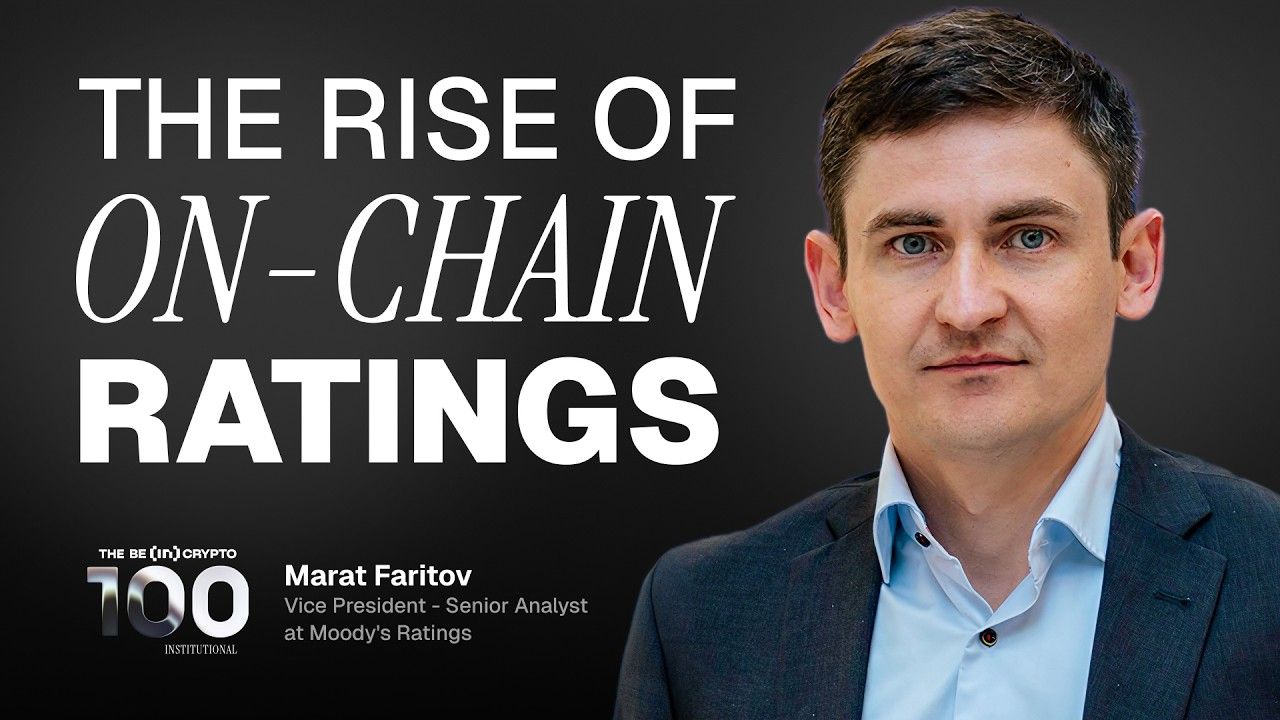
Tokenized real-world assets have crossed $16 billion in 2026. Tokenized US Treasuries alone account for roughly $9 billion. Major players like DTCC, JPMorgan, and BlackRock are actively building on these rails.
Yet behind the issuance and settlement layers sits a quieter system. Institutional capital still depends on independent credit analysis. That is where Moody’s Ratings operates.
On March 17, 2026, Moody’s Ratings became the first credit rating agency to publish its credit ratings directly on-chain.
The firm is now nominated for Best Digital Asset Ratings & Analytics Provider at the BeInCrypto Institutional 100 Awards 2026.
Credit Ratings Move On-Chain for the First Time
The nomination centers on the launch of the Token Integration Engine (TIE) on the Canton Network. The system allows Moody’s credit ratings to be distributed directly into blockchain-based financial workflows.
For the first time, a credit rating becomes machine-readable on-chain. Smart contracts and financial applications can query it in real time. This removes reliance on static reports or proprietary terminals.
Moody’s operates its own node on Canton. Participation is issuer-led, with ratings published under the same governance standards used off-chain. Access remains permissioned for institutional participants.
The network itself includes institutions such as Goldman Sachs, HSBC, BNP Paribas, and Franklin Templeton. It is used for tokenized assets, collateral management, and settlement.
| Founded | Employees | Revenue (FY25) | Ticker | NRSRO | Canton Network |
| 1909 | 16,000 | $7.72B | NYSE: MCO | Yes (SEC) | First CRA Node |
Data reflects Moody’s FY2025 filings and March 2026 disclosures.
Extending Credit Discipline to Stablecoins
Alongside TIE, Moody’s Ratings introduced a formal Stablecoin Rating Methodology. This is the first framework of its kind from a major credit rating agency.
The methodology evaluates reserve quality, market risk, operational design, and structural features. Stablecoins with similar structures can receive different ratings based on asset quality and risk exposure.
This extends traditional credit analysis into a new asset class. It mirrors the rigor applied to banks and money market funds.
The work builds on earlier experiments. In June 2025, Moody’s embedded a credit rating into a tokenized municipal bond on the Solana through a pilot with Alphaledger. That project showed ratings could be attached directly to tokenized securities.
Moody’s has also expanded its analytics layer. Its Digital Asset Monitor tracks risk across more than 25 stablecoins using AI-driven models. It assesses issuer risk, liquidity, and reserve transparency.
In parallel, a strategic alliance with Elliptic combines on-chain intelligence with Moody’s off-chain counterparty data. This creates a more integrated risk view across digital assets.
Together, these systems form a full stack. Credit ratings, risk analytics, and data distribution now operate across both traditional and blockchain environments.
The significance is structural. Credit ratings are no longer separate from financial infrastructure. They can now be embedded directly into how assets move and settle on-chain.
The BeInCrypto Institutional 100 Awards focus on firms building core infrastructure for digital finance. Moody’s nomination reflects its role in bringing institutional-grade credit analysis into blockchain-based markets.
The post BeInCrypto 100 Institutional Awards Nomination: Moody’s Ratings for Best Digital Asset Ratings & Analytics Provider appeared first on BeInCrypto.


Kash Patel news broke Monday as the FBI Director filed a $250 million defamation lawsuit against The Atlantic and reporter Sarah Fitzpatrick in US District Court in Washington, alleging the magazine published “false and obviously fabricated allegations” in a story that reported Patel had alarmed colleagues with episodes of excessive drinking, unexplained absences, and behavior described as erratic during his tenure as FBI director.
Summary
- The suit alleges The Atlantic acted with “actual malice” and gave the FBI less than two hours to respond to 19 detailed allegations before publishing, calling the deadline “arbitrary and unreasonable.”
- The Atlantic said it stands by its reporting and called the lawsuit meritless, noting the story was based on interviews with more than two dozen people including current and former FBI officials, congressional members, and political operatives.
- The 19-page filing cites 17 specific claims it calls false, including allegations that Patel drank “to the point of obvious intoxication” and that meetings were rescheduled because of his alcohol-fueled nights.
Kash Patel news on Monday centers on the FBI director taking direct legal action against one of the country’s most prominent news organizations over a story that triggered immediate Democratic calls for his resignation. The lawsuit, filed in US District Court in the District of Columbia, seeks $250 million in damages from The Atlantic and Fitzpatrick personally, framing the article as a coordinated attempt to destroy Patel’s reputation and force him out of office.
“They were given the truth before they published, and they chose to print falsehoods anyway,” Patel said in a statement. “I took this job to protect the American people and this FBI has delivered the most prolific reduction in crime in US history.”
The Atlantic responded directly: “We stand by our reporting on Kash Patel, and we will vigorously defend The Atlantic and our journalists against this meritless lawsuit.”
Fitzpatrick’s story, published last week, reported that colleagues had grown alarmed by Patel’s conduct, describing excessive drinking and unexplained absences. The filing specifically challenges 17 claims, including that Patel was known to drink “to the point of obvious intoxication” at Ned’s Club in Washington, that early meetings were rescheduled because of alcohol-fueled nights, and that his security detail had difficulty waking him, in one instance requesting breaching equipment because Patel was “unreachable behind locked doors.”
Patel’s lawyers allege that The Atlantic was “expressly warned, hours before publication, that the central allegations were categorically false” and that the magazine “failed to take even the most basic investigative steps” that would have refuted the claims. The suit also argues Fitzpatrick could not get a single named source to support the core allegations, relying entirely on anonymous sources the filing describes as “highly partisan with an ax to grind.”
The Atlantic has said the story was thoroughly reported, based on interviews with more than two dozen people across government, Congress, the hospitality industry, and political operations.
The Legal Standard Patel Must Meet
As FBI director and a public figure, Patel faces an extremely high legal bar. Under the 1964 Supreme Court ruling in New York Times v. Sullivan, a public figure must prove the publisher acted with “actual malice,” meaning the publisher either knew the content was false or showed reckless disregard for whether it was true or false.
First Amendment lawyer Adam Steinbaugh described the complaint as allegations that “don’t even hit the backboard” in meeting the actual malice standard. He noted the suit’s likely primary effect: making other media outlets weigh the cost of defending against even a meritless lawsuit before publishing stories about powerful government officials. Defamation lawsuits against news organizations are frequently dismissed before reaching discovery, the stage at which both sides would exchange evidence and take sworn testimony.
What the Suit Signals About Press Freedom
The lawsuit arrives alongside FBI Director Patel’s Sunday statement that arrests over the 2020 election are coming “this week,” a comment that has drawn its own attention about the direction of the bureau. Together, the two actions reinforce a posture of aggressive legal and institutional action against institutions the administration views as hostile.
For the broader political environment affecting crypto reform, each confrontation between the administration and press or political opponents consumes attention and political capital that would otherwise be available for legislation. The CLARITY Act markup, the stablecoin bill, and broader digital asset regulation all depend on a Senate calendar that is already competing with the Iran ceasefire negotiations, reconciliation, FISA, and now a federal-state ballot standoff in Michigan. High-profile legal actions by senior administration officials add another variable to an already crowded environment.

The Bank for International Settlements (BIS) is advocating tighter international coordination on stablecoins, warning that USD-denominated tokens could pose material risks to financial stability and economic policy if their scale rivals traditional money. The BIS perspective emerged from remarks by General Manager Pablo Hernández de Cos at a Bank of Japan seminar in Tokyo, where he stressed that current stablecoin arrangements do not yet meet the standards required for widespread everyday payments, despite offering potential benefits such as faster cross-border transfers and deepened smart-contract integration.
De Cos highlighted the largest USD-backed stablecoins, including USDT and USDC, as illustrative cases. He argued that these tokens exhibit features closer to investment products than cash-like money, citing fee structures, redemption constraints on primary markets, and episodes where prices deviate from par in secondary trading. In the BIS view, such dynamics give stablecoins ETF-like characteristics and introduce run and contagion risks because issuers typically hold reserves composed of short-term government debt and bank deposits. In a stress scenario, rapid outflows could force the sale of these reserves into constrained markets or transmit funding pressures to the banking system.
The BIS warnings come amid a broader regulatory dialogue on how to manage fast-growing stablecoins and other tokenized forms of money. De Cos also noted that activity on public, permissionless blockchains and with unhosted wallets sits largely outside conventional Anti-Money Laundering (AML) and Counter-Terrorism Financing (CTF) controls, raising concerns that stablecoins could be misused without tailored safeguards at on- and off-ramps.
Key takeaways
- The BIS urges international coordination to mitigate stability risks from large USD-backed stablecoins, arguing they could affect monetary policy and financial stability if they gain substantial scale.
- USDT and USDC are described as sharing characteristics with investment products rather than cash-like money, due to redemption features, fees, and price dislocations from par.
- Reserve assets backing stablecoins—primarily short-term government debt and bank deposits—may become a source of systemic risk through rapid outflows and forced asset sales in stressed markets.
- Regulators emphasize that much stablecoin activity operates outside traditional AML/CTF oversight, underscoring the need for bespoke safeguards at exchange gateways and wallet interfaces.
- Regulatory responses are being observed globally, with Europe, the UK, and Switzerland pursuing tighter controls or pilot programs to assess how stablecoins fit within existing financial frameworks.
Global regulatory momentum and Europe’s tightening stance
The BIS remarks sit within a wider policy debate about how to regulate stablecoins and other tokenized money. In Europe, policymakers are actively considering tighter controls on non-euro stablecoins and related instruments, beyond the current Markets in Crypto-Assets Regulation (MiCA). Earlier reports noted that Bank of France officials have urged the European Union to curb non-euro-denominated stablecoins used in everyday payments and to tighten restrictions on issuing the same coin inside and outside the bloc to reduce regulatory arbitrage during periods of stress.
The European Central Bank (ECB) has also contrasted euro-stablecoins with tokenized money market funds, pointing out that while both enable liquidity transformation and carry run risk, they differ in transparency, liquidity management, and regulatory oversight. Those differences could influence how stress propagates through funding markets and how institutions manage associated risk—information that is central to policy design and supervisory expectations.
Cross-border policy dynamics: UK and Switzerland as case studies
In the United Kingdom, lawmakers examined the stability implications of stablecoins as part of a bespoke regime under development for fiat-backed tokens. During a parliamentary inquiry, questions were raised about whether stablecoins could drain commercial bank deposits, trigger runs akin to those seen in some private banks, or facilitate illicit activity, underscoring the need for robust regulatory guardrails in a market that remains highly interconnected with traditional finance.
Switzerland’s approach illustrates a different regulatory trajectory. UBS and several domestic banks launched a franc-denominated stablecoin pilot in a sandbox environment on the heels of broader efforts to explore blockchain-enabled franc payments while anchoring the instrument in a tightly regulated financial system. The initiative signals an emphasis on practical testing within a controlled regulatory perimeter, balancing innovation with risk management and compliance standards.
These developments reflect a broader policy trend: as stablecoins scale, policymakers are seeking coherence across jurisdictions to address cross-border issues, supervisory alignment, and consumer protection—all within the framework of MiCA, existing banking regulation, and AML/CTF regimes. The overlaps among market structure, liquidity transformation, and regulatory oversight are increasingly central to institutional planning and compliance strategies for banks, exchanges, and other financial market participants.
Closing perspective
As policymakers weigh the proper balance between fostering innovation and safeguarding financial stability, the key question is how to design safeguards that are effective across borders, assets, and chains. The coming months are likely to bring further policy consultations and potential revisions to cross-border rules, as authorities seek to close gaps in oversight while preserving the efficiency and resilience benefits that tokenized money can offer.
Best New Spring Arrivals at Amazon, Nordstrom, Quince and More

Union Budget 2026 LIVE: Finance Minister Nirmala Sitharaman’s Budget Speech | Budget 2026 | Sansad

‘Starmer on collision course’ and ‘I didn’t know I was fibbing’

Manchester United reach agreement with Casemiro over contract clause amid transfer speculation

Steven Gerrard disagrees with Gary Neville over ‘shock’ Chelsea and Arsenal claim | Football

US brings back mandatory military draft registration
Union Budget 2026 LIVE: Finance Minister Nirmala Sitharaman’s Budget Speech | Budget 2026 | Sansad

Why I’m NOT Buying Crypto in 2025 | Wait for THIS Signal! | Deepak Wadhwa & @accurate_arun #crypto

Harusnya Mindset KEUANGAN Para Sandwich Generation Tuh Gini! | SUARA BERKELAS #14
-

 NewsBeat7 days ago
Trump and Pope Leo: Behind their disagreement over Iran war
-

 Fashion3 days ago
Weekend Open Thread: Theodora Dress
-

 News Videos6 days ago
Secure crypto trading starts with an FIU-registered
-

 Sports4 days ago
NWFL Suspends Two Players Over Post-Match Clash in Ado-Ekiti
-

 Crypto World7 days ago
SEC Proposes Certain Crypto Interfaces Don’t Need to Register as Brokers
-

 Business1 day ago
Powerball Result April 18, 2026: No Jackpot Winner in Powerball Draw: $75 Million Rolls Over
-

 Crypto World3 days ago
Russia Pushes Bill to Criminalize Unregistered Crypto Services
-

 Politics5 hours ago
Gary Stevenson delivers timely reminder to register to vote as deadline TODAY
-

 Politics3 days ago
Palestine barred from entering Canada for FIFA Congress
-
 Business4 days ago
Creo Medical agree sale of its manufacturing operation
-

 Politics2 days ago
Zack Polanski demands ‘council homes not luxury flats for foreign investors’
-
 Entertainment7 days ago
Brand New Day’ Footage Reveals the Devastating Impact of ‘Now Way Home’
-

 Crypto World3 days ago
Russia Introduces Bill To Criminalize Unregistered Crypto Services
-

 Tech2 days ago
Auto Enthusiast Scores Running Tesla Model 3 for Two Grand and Turns It Into Bare-Bones Go-Kart
-

 Tech5 days ago
‘Avatar: Aang, The Last Airbender’ Leaked Online. Some Fans Say Paramount Deserves the Fallout
-

 Tech6 days ago
Microsoft adds Windows protections for malicious Remote Desktop files
-

 Crypto World6 days ago
X Launches New Cashtag Feature for Stocks and Crypto: X
-

 Sports7 days ago
Younger Than Sachin Tendulkar: Vaibhav Sooryavanshi Set To Make Historic India Debut
-

 Entertainment6 days ago
Prince Carter Brings Fans Front Row and Backstage at Boys 4 Life Tour
-
 Entertainment6 days ago
Dave Portnoy Slams Dianna Russini: ‘Makes Zero Sense’
You must be logged in to post a comment Login