

Crypto World
One Record Funding Spike Sent XRP Price Tumbling, but Dip Buying Surged 610%

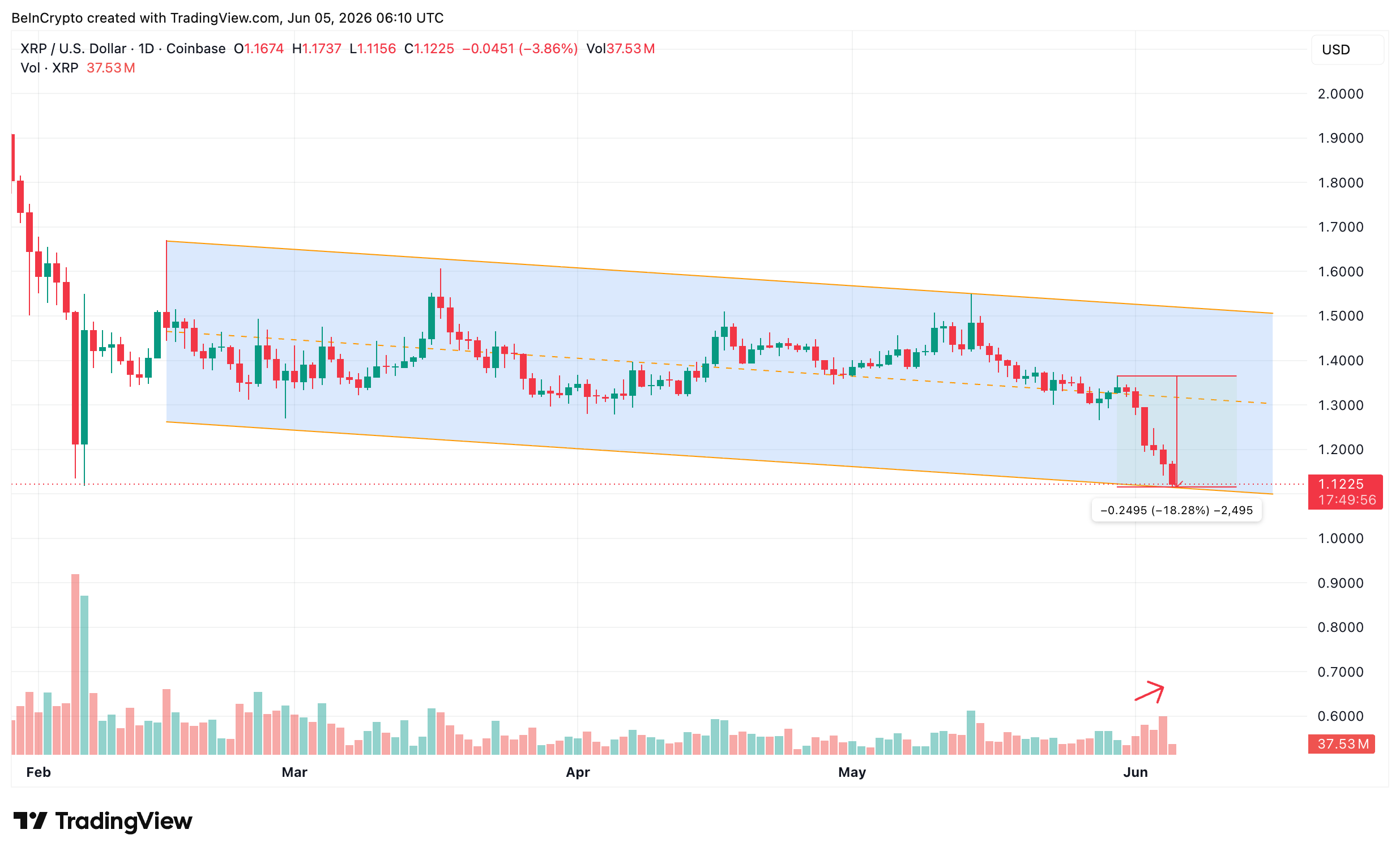
The XRP price fell to around $1.12, down close to 4% on the day, after derivatives funding spiked to its highest level in over a year and then unwound into a sharp 18% slide from late May.
The setup pairs a record long-positioning signal with a falling price channel, while a surge in steady spot buying complicates a purely bearish read. Each layer feeds the next.
Price Channel Weakens as Sell Volume Builds
The XRP price has traded inside a falling channel since February 15, a pattern where price drifts lower between two parallel down-sloping lines. It now sits near the lower line, the first sign of structural strain.
Want more token insights like this? Sign up for Editor Harsh Notariya’s Daily Crypto Newsletter here.
Sell-side volume has risen steadily since May 31, adding force to the move toward that lower boundary. Rising volume into a channel edge often precedes a test of whether the pattern holds.

That mix frames the bull and bear split early. A bounce off the lower line would keep the channel intact and favor the bulls. A clean break lower would open the bearish path. What turned the screw, however, was not the chart alone. It was a record in the derivatives market.
Record Funding Rate Signals a Crowded Long Trade
XRP’s funding rate, a recurring fee that longs pay shorts when bullish bets dominate, surged to about 0.0456 on June 1. That marks its highest reading in more than a year. The very next day deeper corrections across the crypto market started.
The spike points to heavy long positioning piled into one side of the trade. Set against the calmer readings through April and May, the jump shows a sudden crowd of leveraged buyers.

Crowded longs raise the risk of a cascade. When price slips, those positions face liquidation, and forced selling can feed on itself in a long flush.
That derivatives stress explains the speed of the drop. Yet it also hints the crash may be leveraged-driven rather than a broad exit, which the next signal supports.
Spot Buyers Step In Even as XRP Price Falls
Here the story turns against a fully bearish read. XRP’s exchange net position change, a metric tracking coins moving onto or off exchanges, has stayed negative since May 16, meaning more coins are leaving exchanges than arriving.
Coins leaving exchanges usually signals accumulation rather than intent to sell. Since May 30, the XRP price has corrected about 18%, falling from $1.34 toward current levels.
Over that same window, net outflows deepened from roughly negative $456 million to about negative $3.24 billion, a rise of close to 610%. That is a steep jump in buying pressure against a falling price.

The chart’s rising sell volume and the deepening exchange outflows seem to clash, but they are not measuring the same thing. The sell volume comes from a single venue on the price chart, a one-exchange read of activity. The exchange net position change, by contrast, tracks cumulative daily rolling flows across all exchanges, and it shows coins still leaving rather than arriving.
A burst of selling on one venue can sit alongside net accumulation everywhere else. Set against the record funding spike, that points to leveraged positioning as the more likely driver of the drop than a broad spot exit.
This tension sets up the price levels that now decide the direction.
XRP Price Levels That Decide the Next Move
The XRP price now trades near $1.12, and the levels drawn from the May 14 swing high and May 30 swing low frame both cases.
On the bear side, $1.11 is the pivot. A daily close below it would break the falling channel, and the channel projects a possible move of roughly 26% toward the $0.89 to $0.82 zone if selling holds. Below $1.11, the next support sits near $1.07.
On the bull side, a reclaim of $1.13 and then $1.18 would weaken the breakdown case. With funding already turning negative as the spike unwinds, continued spot buying could pressure late shorts, and a push above $1.18 could spark a short squeeze.

The risk to watch is repeated bottom-fishing. Traders adding fresh longs into a weak tape may still face liquidation until a clear bottom signal appears. For now, $1.11 separates a channel hold from a deeper bearish leg, while $1.18 is the line bulls must reclaim to flip momentum.
The post One Record Funding Spike Sent XRP Price Tumbling, but Dip Buying Surged 610% appeared first on BeInCrypto.


Flare Network’s XRP-based decentralized finance ecosystem reached a new milestone with an automated liquidity rollover. The process moved over $4 million in capital between fixed-term yield markets without disrupting trading activity.
The rollover took place on June 4, 2026, when the largest stXRP fixed-term pool on Spectra Finance reached maturity. Managed through GamiLabs’ FXRP MetaVault, the process automatically transferred liquidity into successor pools expiring on August 27 and November 26, 2026.
How MetaVaults Managed the stXRP Liquidity Transition
MetaVaults were introduced in February 2026 to address operational challenges associated with fixed-term yield tokenization. The system uses a single smart contract to monitor expiries, select new markets, and route liquidity according to predefined on-chain rules.
Under the model, liquidity providers deposit assets once and receive a vault token representing their position. The vault then manages future rollovers automatically, removing the need for users to manually withdraw and redeploy funds whenever a market expires.
The transition addresses a long-standing issue in fixed-term DeFi markets known as the expiry cliff. In many cases, maturing pools lead to fragmented liquidity and reduced market activity as participants move capital into new pools.
During the June rollover, liquidity was already available in the replacement markets before the original pool matured. This helped maintain continuous market depth and avoided the disruption often associated with fixed-term expiries.
The significance of the rollover was amplified by the scale of the maturing market. The stXRP pool recorded more than $25 million in lifetime trading volume during its four-month duration. By May, it was delivering double-digit fixed rates, reflecting sustained activity ahead of expiry.
Spectra Finance Yield Infrastructure
Spectra Finance remains one of the most active yield trading platforms on Flare, supporting structured yield products through FXRP. FXRP serves as a trustless and overcollateralized representation of XRP within Flare’s FAssets framework.
GamiLabs oversees the FXRP MetaVault, while Firelight issues stXRP used within the ecosystem. Together with Spectra’s protocol infrastructure, these components support a growing market for XRP-denominated yield strategies.
The operational impact of this structure is highlighted by comments from Spectra Finance co-founder Gaspard Peduzzi. According to him, the MetaVault framework turns expiry events into continuous market transitions. He added that this approach could support deeper and more efficient XRP yield markets by reducing operational friction linked to fixed-term maturities.
The post $4M XRP Liquidity Rollover Marks Major Achievement for Flare appeared first on CryptoPotato.

Key Takeaways
- New Glenn, Blue Origin’s flagship rocket, suffered a catastrophic explosion at its Cape Canaveral launch facility in late May 2026, causing significant infrastructure damage.
- Within a week of the disaster, Jeff Bezos announced via X that the company has identified a “solid path forward” to resume launches before year-end 2026.
- Shares of AST SpaceMobile plummeted 15% immediately following the explosion and continue trading approximately $26 below pre-incident prices.
- Karman, which manufactures components for New Glenn, experienced a 13% stock decline to $57.50 and has yet to recover meaningfully.
- Despite market turbulence, both affected companies maintain their original business projections, with AST SpaceMobile targeting early 2027 for commercial operations.
A catastrophic failure struck Blue Origin in late May 2026 when its New Glenn rocket exploded at Cape Canaveral’s launch complex in Florida. The incident caused substantial damage to critical launch facilities and triggered significant volatility across space industry equities.
Just seven days after the disaster, Amazon founder and Blue Origin owner Jeff Bezos took to X to reassure stakeholders, stating the company is running a “24/7 operation with a solid path forward to launch this year.” Blue Origin’s CEO David Limp had expressed similar confidence days earlier.
Market Reaction: Space Stocks Take a Hit
The explosion’s impact on related companies was immediate and severe. AST SpaceMobile shares plunged 15% in the trading session following the incident. The stock remains depressed, currently hovering around $107—roughly $26 below its pre-explosion valuation.
Karman, a key supplier providing specialized components for the New Glenn launch vehicle, saw its stock crater 13% to $57.50. Trading has remained stagnant near that level in subsequent sessions.
Even Amazon experienced modest losses, with shares dipping approximately 1% after the explosion became public.
Adrian Helfort, chief investment officer at Westwood, characterized the explosion as “a pretty big setback, an under-appreciated setback.” He emphasized the risks of relying on a single dependable launch provider. “SpaceX is great, but you can’t have just one supplier,” Helfort stated.
Business Outlook Remains Resilient
Despite the stock market turbulence, both AST SpaceMobile and Karman assert that the explosion hasn’t altered their fundamental business trajectories.
At the William Blair 46th Annual Growth Stock Conference held this week, AST SpaceMobile executives confirmed their beta direct-to-device service launch remains scheduled for later in 2026. The company continues to target the first half of 2027 for full commercial service deployment. Additionally, AST announced it secured authorization for 10×10 spectrum utilization in Brazil.
Karman CEO Jon Rambeau emphasized that the company’s space division growth projections should remain intact despite the setback. Rambeau disclosed that Karman has already secured over 90% visibility needed to achieve the midpoint of its annual revenue forecast, which projects 25% organic expansion.
William Blair analyst Louie DiPalma characterized Bezos’ confident messaging as encouraging for the broader space sector. DiPalma noted that Blue Origin serves as AST’s primary launch partner and that Karman provides New Glenn with exclusive components, including specialized aerodynamic interstage assemblies and advanced panel protection systems. William Blair’s analysis suggests New Glenn accounts for approximately 5% of Karman’s total revenue.
New Glenn represents a significant advancement in heavy-lift capabilities, designed to transport 45 metric tons to low Earth orbit. For perspective, SpaceX’s workhorse Falcon 9 rocket delivers roughly 23 metric tons.
The space sector has demonstrated remarkable strength recently despite the setback. AST SpaceMobile shares have surged 68% over the trailing month. Rocket Lab has climbed 52% during the same timeframe, while Firefly has gained 31%.
Market enthusiasm has been building in anticipation of SpaceX’s highly anticipated public offering, scheduled to price next week at an estimated $1.8 trillion valuation.

Crypto World
Bitcoin Crumbles Toward $60K, Strategy Sold BTC, Zcash Faces Critical Vulnerability: Weekly Crypto Recap
It was quite the week for the cryptocurrency markets, dominated to a very large extent by the bears. Here’s the breakdown.
The previous weekend was quite sluggish, although BTC had already declined to $74,000 from the May top of almost $83,000. However, the worst was yet to take place. As the new business week and month began on Monday, bitcoin experienced a quick and painful decline. It first dumped toward $70,000, and even though that psychological level held the first breakdown attempt, it eventually gave in, and the landscape quickly worsened.
The cryptocurrency kept losing key support levels one after the other, and each bounce-off attempt was halted in its tracks. The bears appear to be in full control, even today on Friday. Earlier today, BTC dipped below $62,000 again and slipped to $61,000. It rebounded to $63,000 within minutes, which only increased the liquidations across the board, only to be rejected again.
The latest leg down transpired minutes ago when the asset slumped below $61,000 to chart a fresh four-month low. Thus, the cryptocurrency has lost well over $20,000 since its mid-May top as it now struggles to remain above the coveted $60,000 support.
The weekly decline is quite obvious and striking. BTC has plummeted by 15% since this time last Friday, and by a whopping 26% monthly. Its market cap has shed over $400 billion in weeks and is down to $1.2 trillion on CG. Even its dominance over the alts took a hit, even though many have charted similar or even worse declines.
Some of the notable examples include ADA, which is down by over 30% following Charles Hoskinson’s decision to take a break, and Zcash’s 41% drop after some technical vulnerabilities were uncovered earlier.
Market Data
Market Cap: $2.18T | 24H Vol: $138B | BTC Dominance: 55.7%
BTC: $60,650 (-15.5%) | ETH: $1,600 (-17%) | XRP: $1.11 (-14%)

This Week’s Crypto Headlines You Can’t Miss
Strategy Sold Bitcoin, But It’s Not What You May Think. Bitcoin’s big troubles began shortly after Strategy announced its first sale in years. Although it disposed of a very tiny portion of its BTC holdings, it still triggered a community reaction and perhaps led to a significant worsening in the overall market sentiment.
Peter Schiff Warns Bitcoin Could Plunge Below $20K as Complacency Sets In. In an entirely expected comment on X, Peter Schiff took advantage of BTC’s price crash and predicted an even bigger calamity to $20,000 if the $50,000 support is lost.
Strive Doubles Down on Bitcoin With $185M Buy, Holdings Near 19,000 BTC. Unlike Strategy, Strive made its first purchase in a long time, expanding its holdings to almost 19,000 BTC after a substantial $185 million accumulation of the asset.
Arthur Hayes Dumps Entire Zcash (ZEC) Position After Major Flaw Emerges. Shortly after the news of Zcash’s issues went viral on X, Arthur Hayes, who had been supporting the project for a while, said he had disposed of his entire ZEC position, citing a lot of uncertainty.
Cardano (ADA) Faces Make-or-Break Moment as Social Buzz and Network Activity Explode. Hoskinson’s break, combined with ADA’s massive price calamity, led to a significant increase for Cardano, with the social media activity going wild.
Ethereum Crashing to 14-Month Low Is a ‘Screaming Buy-The-Dip Opportunity’ – Analyst. ETH was not spared by the overall market crash, dumping to consecutive 14-month lows at under $1,800 and then to $1,600. Some analysts, though, believe this could be a proper buy-the-dip opportunity.
Charts
This week, we have a chart analysis of Ethereum, Ripple, Cardano, Binance Coin, and Hyperliquid – click here for the complete price analysis.
The post Bitcoin Crumbles Toward $60K, Strategy Sold BTC, Zcash Faces Critical Vulnerability: Weekly Crypto Recap appeared first on CryptoPotato.


Visa has tested stablecoin settlement using Brale’s SBC token on the Canton Network, as global stablecoin issuance has surpassed $300 billion, according to S&P Global Ratings.
Summary
- Visa, Brale, and Canton Network are testing private stablecoin settlement using SBC, a U.S.- dollar-backed stablecoin, on a permissioned blockchain network.
- The pilot examines whether financial institutions can settle transactions on-chain while keeping sensitive payment and settlement data hidden from public view.
According to a joint announcement from Visa, Brale, and Canton Network participants, the companies have launched a proof of concept that examines whether privacy-enabled blockchain infrastructure can support institutional stablecoin payments without exposing sensitive transaction details.
The test uses SBC, a U.S. dollar-backed stablecoin issued by Brale, to simulate settlement activity on Canton while Visa evaluates whether the token could become part of its stablecoin settlement program.
Rather than focusing on public blockchain networks, the initiative centers on a permissioned environment built for financial institutions that require tighter control over transaction visibility.
Over the past several years, Visa has steadily expanded its work with blockchain-based payments.
Earlier programs allowed settlement in Circle’s USDC on public networks such as Ethereum, while more recent projects have explored stablecoin-funded payments, tokenized asset spending, and crypto reward cards across multiple markets.
Canton network tested for private institutional payments
Developed by Digital Asset, Canton connects permissioned blockchain applications used by institutions including JPMorgan, Goldman Sachs, BNP Paribas, and the Depository Trust & Clearing Corporation.
Unlike public blockchains, Canton is structured so transaction data is visible only to involved parties and authorized regulators. The network is also designed to support atomic settlement across tokenized assets, digital cash instruments, and other financial contracts.
In the latest proof of concept, Visa and Brale said they are assessing whether Canton can provide faster and more programmable settlement while allowing banks, payment firms, and market infrastructure providers to maintain strict controls over confidential transaction and settlement information.
The project arrives as stablecoins continue to attract attention beyond cryptocurrency trading. S&P Global Ratings said in a report published Thursday that stablecoin issuance has exceeded $300 billion globally across multiple currencies, although most activity remains tied to crypto markets.
S&P Global Ratings stated that payment stablecoins complying with the Guiding and Establishing National Innovation in U.S. Stablecoins, or GENIUS Act, could expand into merchant payments, remittances, and commercial transactions once regulatory frameworks are finalized.
The ratings agency identified cross-border payments as one of the most promising early applications, while noting that current stablecoin payment volumes still account for only a small portion of international payment activity.
Recent Visa initiatives show how the company has been testing digital asset payments across different segments of the market.
In May, Visa partnered with WeFi to explore stablecoin-funded card payments in parts of Europe, Asia, and Latin America.
Another project announced this month enabled users of a Tether and Fasset-issued Visa card to spend tokenized gold while earning rewards denominated in Tether Gold.
Separately, SBI Group launched a Visa-linked card in Japan that provides Bitcoin, Ethereum, and XRP rewards through SBI VC Trade.
Banks weigh opportunities and risks
Beyond settlement efficiency, S&P Global Ratings said stablecoins could affect traditional banking economics over time by reducing a portion of payment-related revenue and moving some funding away from insured retail deposits toward larger wholesale balances.
At the same time, the ratings agency said banks that issue their own stablecoins or tokenized deposits could benefit from new fee income and funding opportunities.
According to S&P Global Ratings, these incentives are encouraging large financial institutions to evaluate infrastructure capable of supporting regulated payment stablecoins and tokenized deposit products while preserving privacy requirements expected in institutional markets.
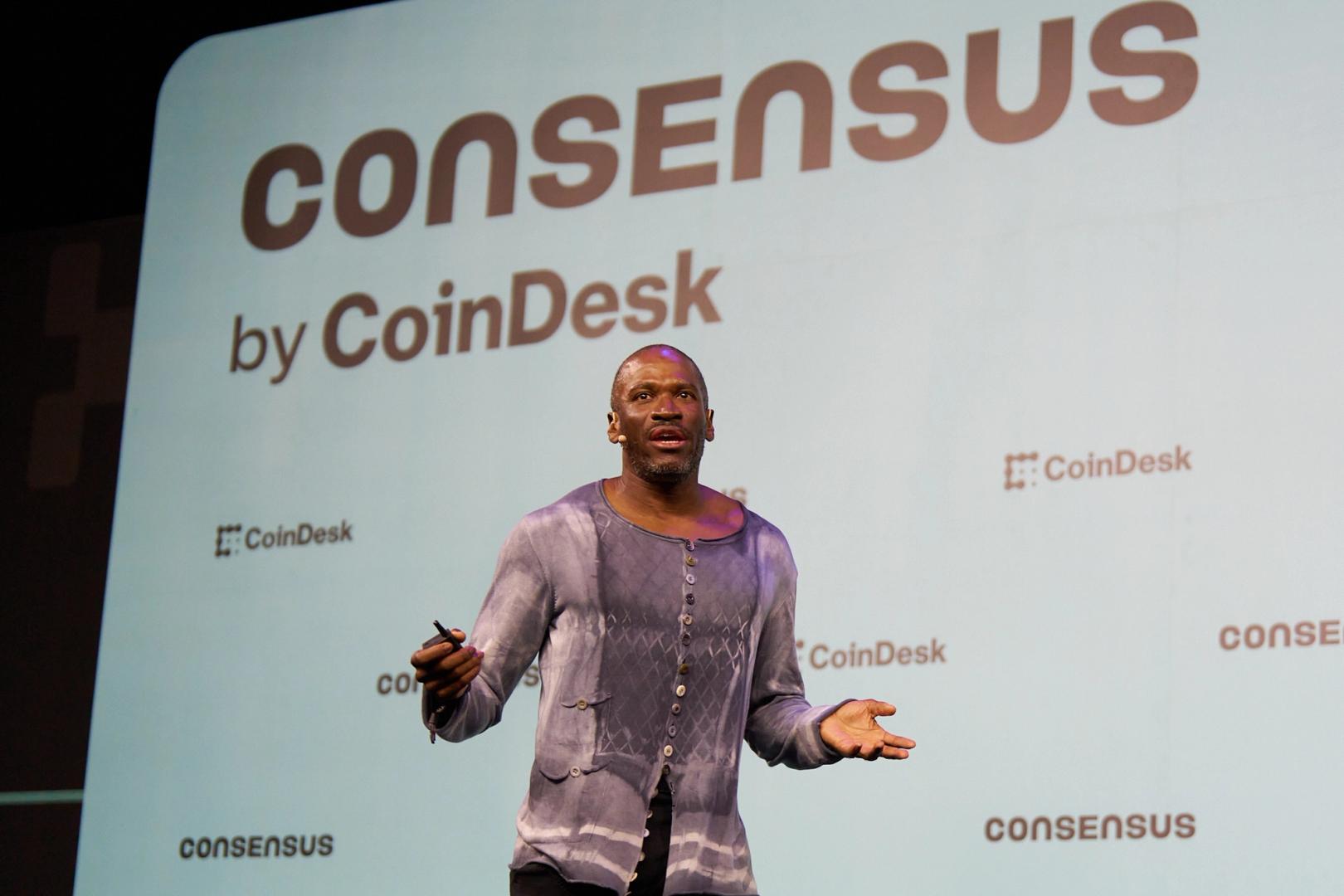
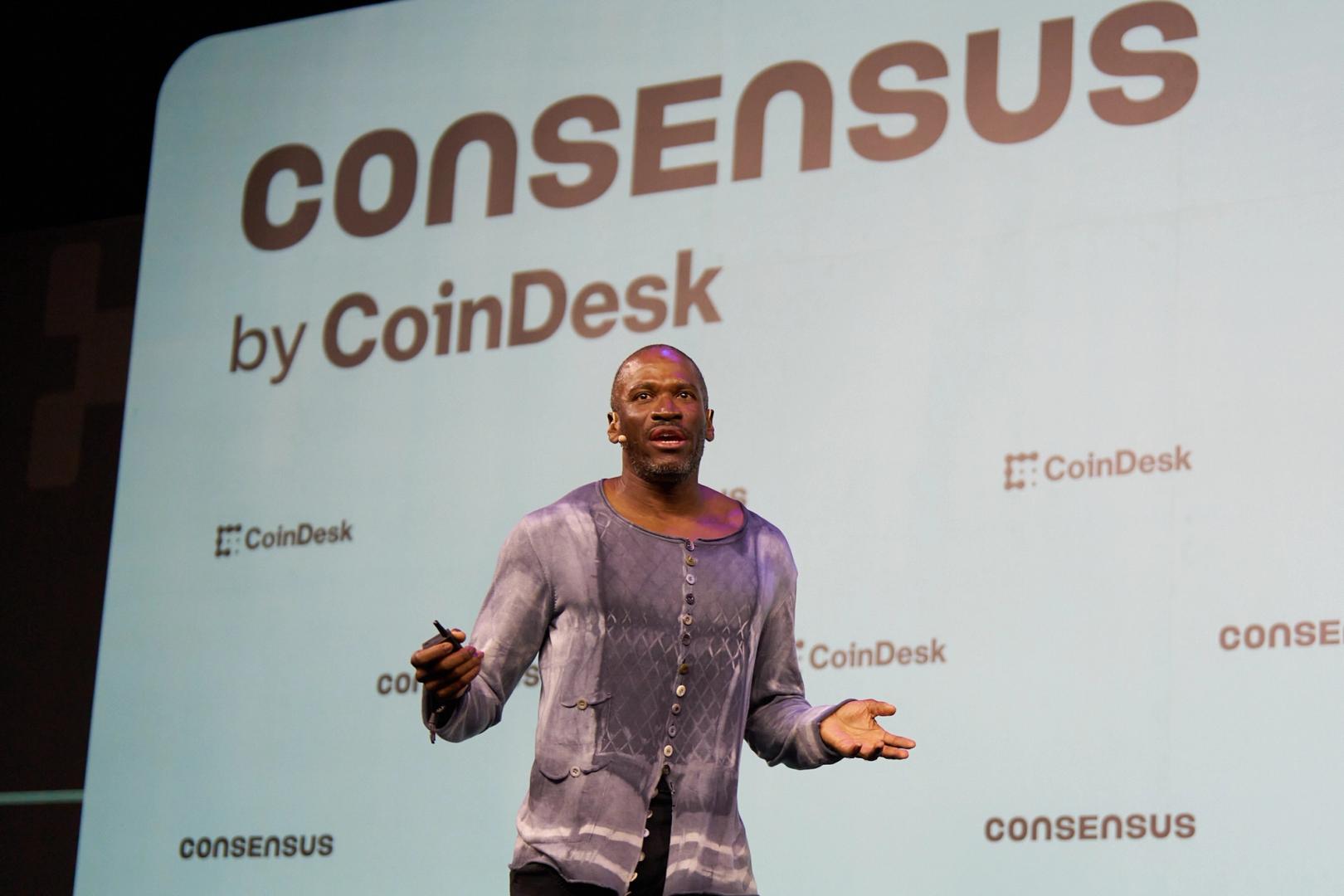
Arthur Hayes, chief investment officer of Maelstromfund, said he liquidated his entire zcash (ZEC) position after a developer disclosed a potential critical vulnerability in the network’s Orchard Pool.
Hayes, who previously championed the privacy token, said on X that while he believed it was extremely unlikely that any minting would take place, it could not be cryptographically proven impossible.
The now-plugged vulnerability was disclosed by Shielded Labs, which said a major issue went undetected for four years and could have allowed a hacker to print unlimited counterfeit tokens, damaging trust in the crypto’s supply and its value. The token slumped following the announcement and was recently down 42% over 24 hours.
“I read about the exploit yesterday, and didn’t appreciate how it violated my narrative mental map,” said Hayes. “The 30% dump made me rethink, and I had to take profit on the entire position.”
The vulnerability, present since 2022, was discovered on May 29 and fixed June 1, Shielded Labs said.
Hayes, who also co-founded the BitMex exchange, said he would reevaluate his stance moving forward and that, if his assumptions were proven incorrect, he would buy ZEC again “hopefully at lower prices.”
Blockchain analytics and intelligence firm Arkham wrote on X that one large investor lost over half the value of his $174 million ZEC stash.
“He hasn’t sold ZEC for 6 months. Ouch,” said Arkham.
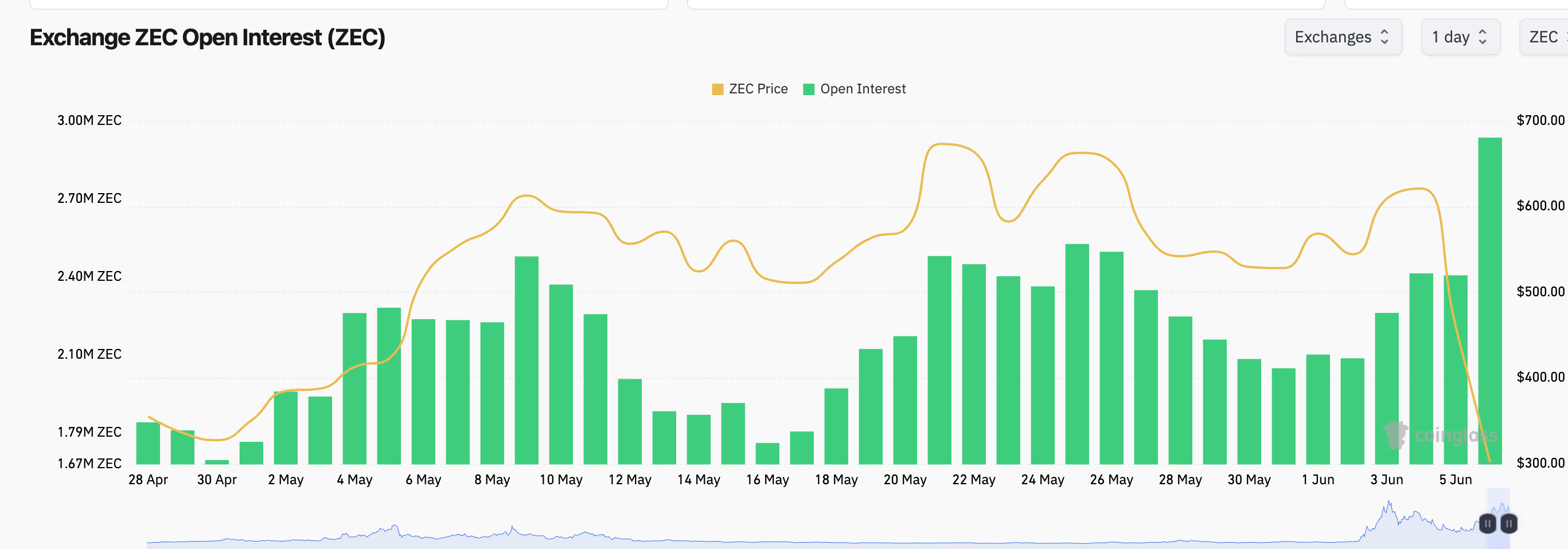
Bearish bets on privacy-focused zcash (ZEC) climbed to a record as the token slumped as much as 50% in 24 hours after a now-plugged vulnerability in its Orchard pool was disclosed.
ZEC recorded roughly $118 million in forced liquidations over the period, CoinGlass data shows.
That is remarkably small for a token whose price halved, suggesting the selling came mostly from spot held tokens rather than a futures-driven move. Only about 14% of zcash’s leveraged positions got wiped out; the number would have been far larger if a leverage cascade had driven the slide.
In comparison, about $335 million in bitcoin -tracked futures were liquidated over the same window even though the largest cryptocurrency fell only a few percent. Ether slipped a similar amount and liquidated $278 million.
Open interest — the total value of unsettled futures bets — rose to a record high in ZEC terms, suggesting traders opened new positions rather than closing them.

The long/short ratio, the number of traders betting on an increase versus a decline, shows those positions skewed bearish. On Binance, the ratio sat below 1 across retail investors at 0.77, whale accounts at 0.80 and whale positions at 0.85. Traders on OKX were more bearish, with retail at 0.67 and whale accounts at 0.72. Only Bybit’s retail traders leaned long, at 1.49.
Short investors sell securities they don’t actually own, betting the price will drop before they need to close out their positions and they’ll profit from the difference. Long investors own the securities to benefit from any increase.
The ratio indicates zcash is heavily shorted after a spot-led drop. If the selling slows and the price steadies, those shorts could be forced to buy to cover their positions, fueling a sharp bounce.
It’s worth remembering that ZEC, even after losing more than half its value in two weeks, is still up roughly 490% over the past year.
No way of knowing
The catalyst for the price drop was the disclosure by nonprofit Zcash developer Shielded Labs of a vulnerability in Zcash’s Orchard privacy pool that, if exploited, could have let an attacker create counterfeit ZEC that no one could detect.
The Orchard flaw had been live since the pool debuted in May 2022, going unnoticed for four years. It was found only last week by security engineer Taylor Hornby using Anthropic’s Opus 4.8 model and patched in an emergency fix by June 1.
The damage is less about the bug itself, which is now closed, than what Shielded Labs admitted alongside it. Because of the way Orchard’s privacy works, there is no cryptographic way to prove whether anyone exploited the flaw before it was fixed.
The firm said it probably was not, but it cannot be sure, and that uncertainty hangs over the token’s entire supply.
Arthur Hayes, the chief investment officer of Maelstrom, said he sold his entire zcash position as a result.

The memecoin “cult” that encouraged a raid on Punch the monkey’s enclosure at Ichikawa Zoo has offered a $50,000 bounty to anybody willing to skydive into a 2026 World Cup match and invade the pitch.
This outlandish request was part of a new bounty program launched by memecoin platform Pump Fun.
The bounty, uploaded by thememecoincult, had a 30-day deadline and offered $40,000 to anybody willing to skydive into an ongoing World Cup match while dressed as a mascot for $MEMECOIN.
It also offered takers an extra $10,000 if they could run around the pitch for 30 seconds after they land.
The bounty was live for roughly 14 hours. However, Pump Fun and its moderators — or the memecoin group itself — appear to have removed it.

Read more: Crypto clout chasers arrested after Punch the monkey stunt
The bounty said, “Please make sure to obey local laws, get permission if necessary, and be safe.”
It stressed that it required footage of the stunt to be acknowledged by the media and that it wouldn’t accept AI-generated footage.
Anybody looking to complete the challenge and pocket the $50,000 is unlikely to be granted permission. Indeed, the Canadian soccer Northern Super League states, “Fans are prohibited from entering the pitch or restricted areas,” so it’s safe to assume similar rules would apply to the World Cup.
Regardless, the group behind the challenge is going as far as to offer to pay for the legal and travel expenses for the wannabe pitch invader. This also suggests that the group knows what it’s encouraging is likely to break the law or at the very least match rules.

The first games of the tournament are slated to take place in Mexico, followed by two matches in Toronto and then Los Angeles the next day.
Memecoin ‘cult’ isn’t shy of deplorable stunts
This isn’t the first time this memecoin group has encouraged controversial stunts. Last May, it hosted a $1 million competition to generate viral content based around its token.
This encouraged two men to trespass into the enclosure belonging to Punch, a macaque monkey that went viral along with his IKEA plushie.
When the stunt was announced, the creators said, “We want to remind everyone to respect local laws and never put yourselves, others, or any animals at risk.”
Read more: Over 50% of Pump Fun token traders lost money this month, report
The project has also posted bounties on Pump Fun that offer $3,520 to set a car on fire while dressed as their mascot, and $14,082 to beat a mascot-themed marathon world record.
Many users on X have noted that the Pump Fun bounty program is “dangerous,” compared it to the dystopian TV show Black Mirror, and warned, “There’s zero way this ends well.”
Even Epic Games founder and CEO Tim Sweeney posted, “What could possibly go wrong.”
Read more: ‘Crypto Robin Hood’ faked prison for clout, rugged memecoins for Palestine
After the World Cup skydiving bounty was removed, the next highest bounty of $23,504 asks users to interview the family of Henry Nowak’s killer, or one of the officers present during his arrest.
Footage of the British teenager’s death has sparked political debate and protests across the UK, despite his parents asking people not to use his murder “to create further division, hatred or tension.”
Got a tip? Send us an email securely via Protos Leaks. For more informed news and investigations, follow us on X, Bluesky, and Google News, or subscribe to our YouTube channel.

Key Takeaways
- Merlin (MRLN) shares climbed approximately 32% on Friday following successful completion of the Critical Design Review (CDR) for its C-130J autonomous aircraft program with U.S. Special Operations Command
- Completing the CDR confirms the system’s design readiness and transitions the program from development to aircraft integration phase
- The company will now begin a structured testing campaign that includes comprehensive aircraft-level evaluations
- This work is conducted under an IDIQ contract aimed at decreasing pilot workload throughout all flight stages
- Merlin’s artificial intelligence-driven autonomy platform operates on Lockheed Martin C-130J aircraft, with possibilities for broader platform adoption
Shares of Merlin, Inc. (MRLN) were changing hands at approximately $9.54 during Friday’s morning session, marking a surge of roughly 32.7% for the trading day. The rally followed the company’s announcement that it successfully passed the Critical Design Review (CDR) milestone for its C-130J autonomous flight program in partnership with the U.S. Special Operations Command (USSOCOM).
Prior to the market opening bell, the stock had already climbed approximately 29.5% during pre-market hours.
The CDR represents a significant technical checkpoint. Passing this review verifies that the system design meets requirements and authorizes progression to subsequent development stages.
Following this successful review, Merlin advances from design development into aircraft integration operations. The program will subsequently enter a structured testing phase incorporating full aircraft-level evaluations.
This initiative operates under an indefinite-delivery, indefinite-quantity (IDIQ) contract that USSOCOM previously granted to Merlin. The primary objective centers on minimizing crew workload during every flight phase.
CEO Matt George highlighted the significance of reaching this milestone. “Completing the Critical Design Review validates the architecture we’ve built for safe, scalable autonomy on large aircraft like the C-130J,” George stated. “As we move into integration, ground testing, and eventually flight demonstrations, we’re focused on proving autonomy from takeoff to touchdown.”
Understanding the Technology
Merlin’s artificial intelligence-driven autonomy platform functions aboard Lockheed Martin (LMT) C-130J aircraft operated by USSOCOM. The company positions itself as a provider of cockpit autonomy solutions.
The program encompasses potential expansion opportunities—extending to additional Department of Defense aircraft platforms as well as commercial aviation applications. While these expansion paths haven’t been officially announced, they represent possibilities within the existing contract framework.
Technical Analysis of the Stock
Friday’s rally propelled MRLN above its 50-day simple moving average ($9.29) for the first time in recent weeks, positioning shares 31.7% higher than the 20-day SMA ($7.44).
However, the longer-term technical outlook remains challenging. The stock continues trading 37% beneath its 100-day SMA and approximately 50% under its 200-day SMA. The broader moving average configuration remains in bearish territory.
The 52-week peak occurred in April around $17.00. A subsequent decline in May drove shares to a 52-week bottom of $5.78. While Friday’s movement represents a substantial recovery, the stock remains significantly below previous highs.
MACD indicators reveal strengthening momentum—the indicator trades above its signal line with a positive histogram reading—indicating accelerating buying interest from recent lows.
A critical support zone to monitor sits at $8.50, representing a nearby pivot point just beneath the 50-day moving average region.
As of publication time, MRLN is trading at $9.54, representing a 32.73% gain for the session.
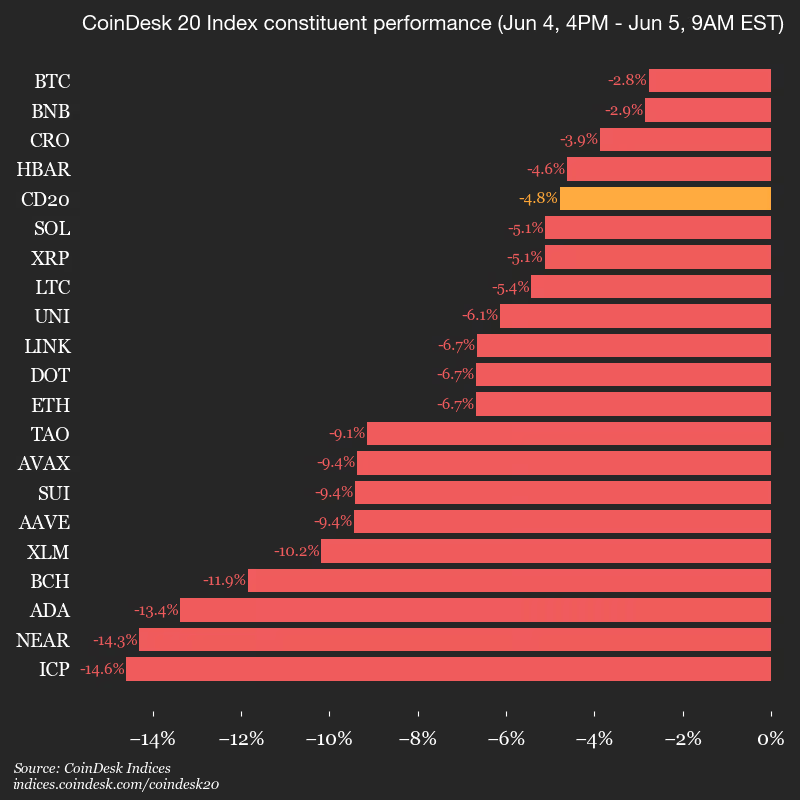
CoinDesk Indices presents its daily market update, highlighting the performance of leaders and laggards in the CoinDesk 20 Index.
The CoinDesk 20 is currently trading at 1681.25, down 4.8% (-84.48) since 4 p.m. ET on Thursday.
All 20 assets are trading lower.

Leaders: BTC (-2.8%) and BNB (-2.9%).
Laggards: ICP (-14.6%) and NEAR (-14.3%).
The CoinDesk 20 is a broad-based index traded on multiple platforms in several regions globally.

Key Highlights
-
FFAI shares recover following healthcare sector robot introduction
-
Master humanoid robot deployed at Los Angeles dental facility
-
Pre-market trading shows upward movement for FFAI following robot announcement
-
Company expands embodied AI ambitions with dental practice implementation
-
Healthcare deployment represents milestone in Faraday’s robotics expansion
Shares of Faraday Future Intelligent Electric Inc. (FFAI) moved forward in its embodied artificial intelligence initiative following the installation of its Master humanoid robot at a dental practice in Los Angeles. This deployment represents the company’s inaugural healthcare application for its EAI technology. At the same time, FFAI stock experienced a modest recovery during pre-market hours after declining in the prior trading session.
Healthcare Sector Welcomes Faraday’s Master Robot
Faraday Future completed the installation of its Master humanoid robot at Wonderful Life Dental Group’s Los Angeles location. According to the company, the robot will assist with administrative functions at the dental facility’s front desk. Its responsibilities will include handling patient arrivals, locating scheduled appointments, supporting reception operations, and providing directional assistance.
The company clarified that the robot will not participate in clinical operations or medical treatments at this stage. As such, this initial implementation concentrates on administrative operations rather than patient care activities. This approach maintains the robot’s function within office management and patient service domains.
Faraday Future characterized this installation as its inaugural practical healthcare application for EAI robotics. The company further connected this achievement to its broader expansion across service-oriented environments. Beyond the medical field, it pursues applications in educational institutions, hospitality venues, entertainment, security operations, inspection tasks, and directional services.
Master Robot Advances Faraday’s Embodied AI Vision
According to Faraday Future, Master possesses the capability to interact in over 50 languages. This functionality benefits medical facilities serving diverse patient populations. Consequently, the company anticipates the robot will enhance accessibility and streamline front-desk operations.
Dr. Jack Y. Pai, who owns Wonderful Life Dental Group, expressed interest in incorporating innovative technology into the practice. He indicated the robot could assist with patient navigation and minimize operational bottlenecks. He characterized Master as an intelligent support system for both staff members and patient engagement.
Faraday Future indicated this installation advances its comprehensive multi-format EAI robotics strategy. The company maintains ongoing development of humanoid and bionic robots designed for practical applications. Its objective is to align each robotic configuration with the most suitable commercial environment.
FFAI Stock Shows Recovery Following Previous Day’s Drop
FFAI concluded the previous session at $0.3332, declining 2.57%, before climbing during pre-market hours. The stock subsequently reached $0.3357, gaining 0.75%, reflecting moderate investor interest. Nevertheless, the increase remained limited following the previous day’s retreat.
Faraday Future Intelligent Electric Inc., FFAI
The stock movement occurred as Faraday Future emphasized initial interest in EAI robot installations. The company indicated this delivery strengthens its conviction in its distribution objectives. It aims for 200 units during the initial delivery phase and 1,500 units throughout the complete fiscal year.
Faraday Future originated as an electric automobile manufacturer but currently advocates for an expanded EAI platform. The organization has broadened its scope beyond automotive production into robotics technology. Therefore, the dental facility introduction provides FFAI with a notable operational achievement in its EAI expansion.

Putin slams Western sanctions as damaging to the global economy

When Is 1st Game For World Cup 2026? Mexico vs South Africa to Kick Off 2026 FIFA World Cup
$4M XRP Liquidity Rollover Marks Major Achievement for Flare



-

 Business4 days ago
Jade Biosciences, Inc. (JBIO) Discusses Positive Interim Results From JADE101 Phase I Healthy Volunteer Study and Development Plans Transcript
-
 Tech6 days ago
SpaceX just won a second Golden Dome contract. This one is $4.16 billion.
-

 News Videos7 days ago
SHE IS KILLING XRP!!! WATCH URGENT AND ACT FAST
-

 Sports3 days ago
French Open 2026 results: Alexander Zverev beats Rafael Jodar and will play Jakub Mensik in semi-finals
-
 NewsBeat7 days ago
FIRST NIGHT REVIEW: Take That bring the Circus back to life in spectacular sun-soaked style
-

 Business6 days ago
Is the Spurs Phenom Already Better Than Prime Diesel?
-

 Tech3 days ago
CryZENx Releases Fresh Playable Content Deep Inside Jabu-Jabu for His Ocarina of Time Remake
-
 NewsBeat7 days ago
Novak Djokovic v Joao Fonseca LIVE: French Open latest scores and results after Jannik Sinner’s shocking collapse
-
Crypto World7 days ago
CFTC Has Approved the First Regulated Bitcoin Perpetual Contract in the U.S.
-

 Politics6 days ago
The House | Inside Andy Burnham’s Makerfield Campaign: “Nobody Thinks This Is In The Bag”
-
Crypto World5 hours ago
LBank Surpasses 25 Million Users Worldwide as AFA Partnership Continues to Drive Global Growth
-
 Entertainment7 days ago
Bruce Willis’ Generosity Resurfaces Amid His Dementia
-
 Entertainment7 days ago
Weak ‘Supergirl’ Box Office Tracking Amid Milly Alcock Backlash
-
 Crypto World7 days ago
Snowflake (SNOW) Stock Rallies on Strong Q1 Results and AI Product Growth
-
 Entertainment6 days ago
One of the Greatest Sitcoms of All Time Shoots Up Apple TV’s Charts 11 Years Later
-

 Business6 days ago
Demand Conditions Improve In Chemicals Sector In April 2026
-
 Business2 days ago
Trump Taps Housing Chief Bill Pulte as Acting Intelligence Director After Gabbard Exit
-
 Crypto World7 days ago
MicroStrategy Moves $30 Million in BTC to Coinbase Prime: Is the Bitcoin Sell-Off Already Here?
-
 Crypto World3 days ago
Seagate (STX) Stock Surges to Record High on AI Boom and Legal Settlement
-
 NewsBeat6 days ago
Everything you need to know as Cambridge’s Strawberry Fair returns after cancelled year
You must be logged in to post a comment Login